
WHAT A LAP! @JoeAchilles1 BMW M3 Touring at 24 Hours of Nürburgring! | Ep 89 | Drive Torque Podcast
About this episode
The Drive Torque crew sets the scene at the Nürburgring for the 24-hour weekend and explains the BMW M Corso parade lap—“literally about an hour before the race itself starts.” They then grid-walk and talk lineup details, including a lime rock grey M3 Touring, and discuss how the N24 route blends the Nordschleife with the GP circuit. On track, they navigate blind, high-speed corners, talk tire rules and downforce, and marvel at how the M3 Touring’s carbon bucket seats make passengers feel the G-forces.
Don't forget to send us your questions or subject for future episodes.
Subscribe/Follow, give us a rating and give us a follow on Instagram for all the latest Podcast news - https://www.instagram.com/drivetorque...
Cheers and see you at the next one 👊
Nurburgring
"…live from the Devil's Diner at the Nurburgring. 24 hour race. The 24 hour race at the Nurburgring."
The Nürburgring is a well-known race track in Germany. It’s famous for being tough, which is why it’s such a big deal for endurance races.
The Nürburgring is a famous German racing circuit known for its challenging layout and long history in motorsport. In endurance racing, its complexity makes car setup, driver consistency, and reliability especially critical.
24 hour race
"24 hour race. The 24 hour race at the Nurburgring."
A 24-hour race is a race where cars keep going for an entire day. Drivers swap out and teams do pit stops so the car can last the whole time.
A 24-hour race is an endurance event where cars run continuously for a full day, typically with driver changes and pit stops. The Nürburgring’s long, demanding layout makes endurance setup and consistency especially important.

Bmw M
"...eached out to my good friend Fabian, who works at BMW M and BMW Motorsport and he very kindly said that w..."
The BMW M Coupe (E36) is a sporty two-door BMW made in the E36 generation. It’s a special, limited version meant to be more performance-focused than a regular 3 Series. People talk about it because it’s uncommon and has a strong enthusiast reputation.
The BMW M Coupe (E36) is a rare, track-oriented version of the E36 3 Series, built with a distinctive two-door coupe body and M-badged performance. It’s significant because it’s a limited-production model that many enthusiasts view as a purer, more characterful take on the E36 era. It’s the kind of car that comes up when discussing BMW M history and standout special models.
M Corso lap
"…he very kindly said that we could bring my new car down because it's a BMW and do the M Corso lap, which is basically like a parade lap, literally about an hour before the race itself starts."
An M Corso lap is a parade-style lap associated with BMW M events, where cars go around the track for the crowd rather than racing at full competitive pace. It’s used to build atmosphere and let spectators see the cars up close before the race begins.
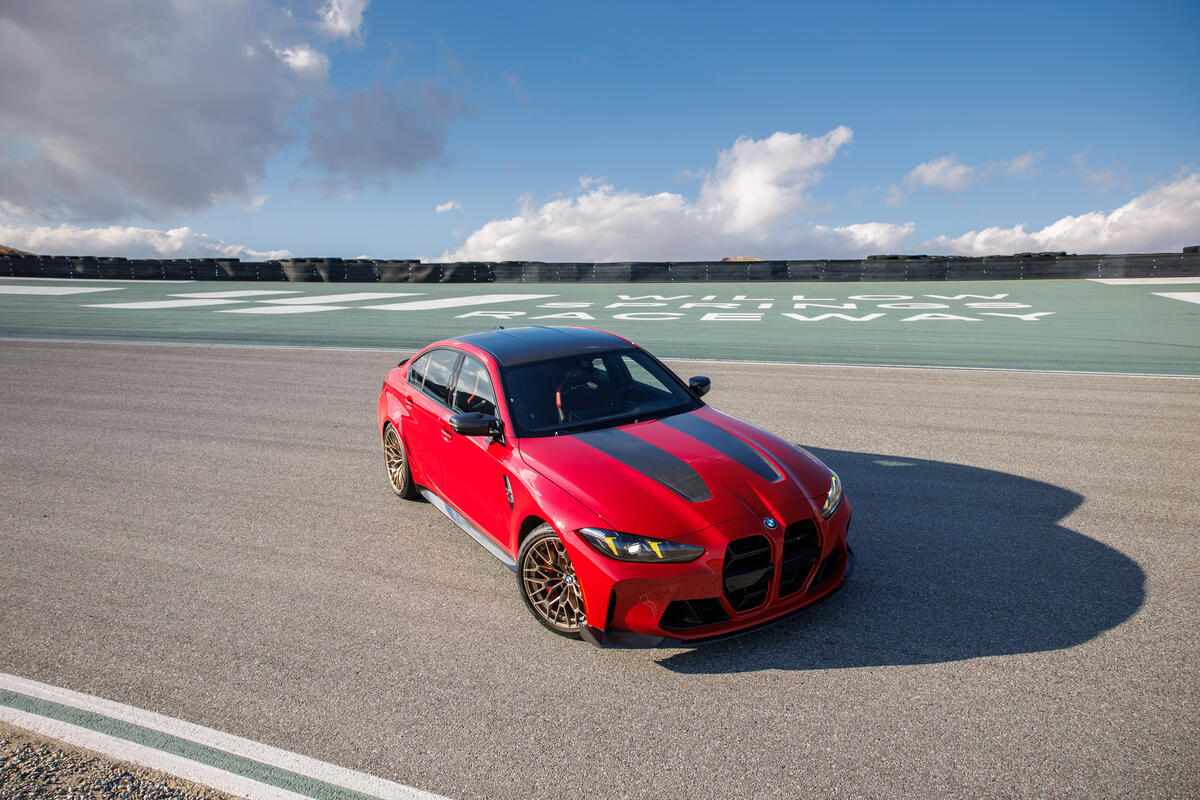
BMW M3 Touring
"…we thought, well, like, why don't we do a podcast episode, literally during the lap with Patrick as well… and in the M3 Touring. But before it kicks off…"
The BMW M3 Touring is a fast BMW wagon made by BMW’s performance team (M). It’s the specific car they’re talking about at the Nürburgring before the race starts.
The BMW M3 Touring is a performance wagon from BMW’s M division, combining the M3’s high-performance character with a practical estate body. In this episode it’s the specific car the hosts are about to show around before the Nürburgring race weekend action.
developed on the track or made for the streets
"That's why we always say developed on the track or made for the streets. [161.1s] But it's so funny to drive the car, you normally just test and only these spy shots exist"
“Developed on the track or made for the streets” is a development philosophy: use track testing to validate performance and then tune the car for everyday drivability. It’s a way to communicate that the car’s performance isn’t just theoretical—it’s been tested under real driving loads.

BMW E30
"... front of potentially the biggest icon of all the E30. Absolutely stunning."
The BMW 3 Series is a compact car made by BMW, designed to feel sporty to drive. The E30 is one older version that many people consider a classic. It’s mentioned because it’s an important model in BMW’s history.
The BMW 3 Series is a long-running compact executive car line known for sporty handling and a strong enthusiast following. In the context of the E30, it’s often discussed as an icon because its design and driving feel helped define the “modern classic” BMW formula. It comes up in podcasts when people talk about standout generations and why they still matter today.
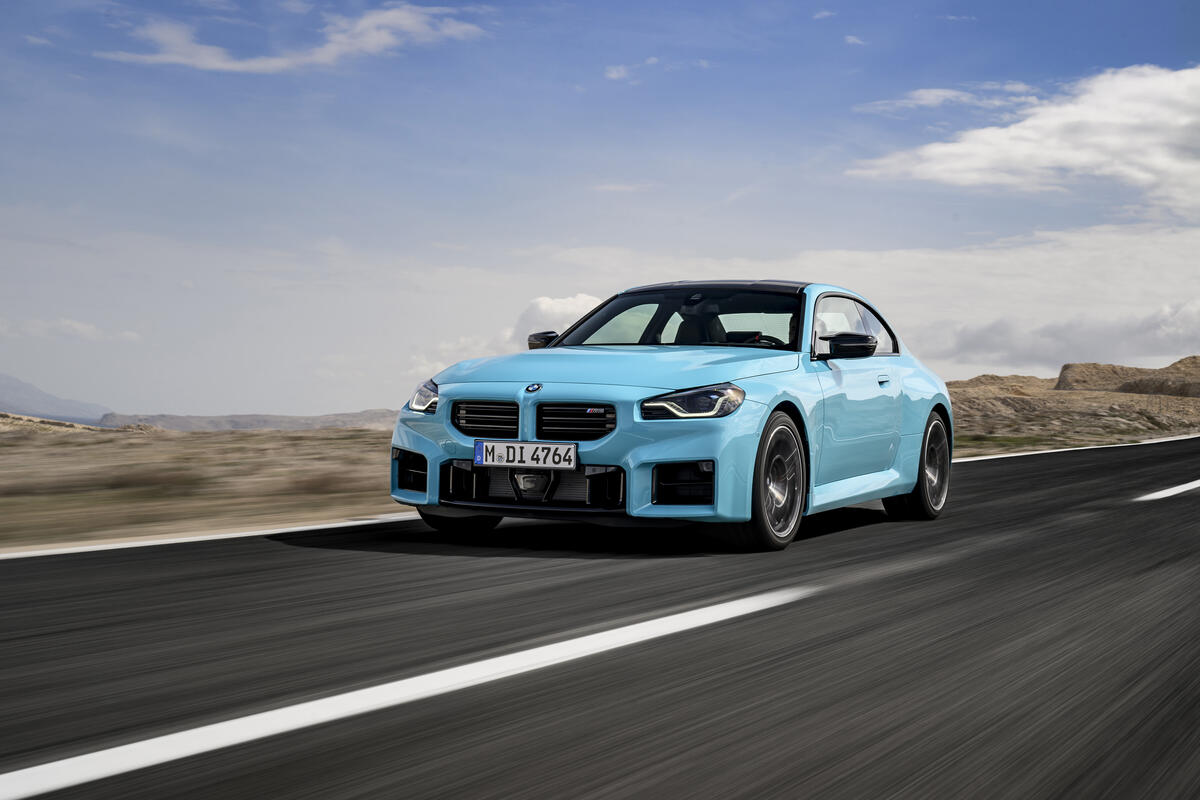
BMW M2 CS
"But I mean, we've got, you know, the velvet blue M2 CS next to me. About that XM. That's nice."
The BMW M2 CS is a sportier version of the BMW M2. The hosts are saying they’ve got one right next to the M3 Touring.
The BMW M2 CS is a track-leaning, higher-performance variant of the BMW M2, typically tuned for sharper response and a more focused driving experience than the standard model. In the segment, it’s mentioned as a nearby car, implying it’s part of the same enthusiast lineup.

BMW XM
"About that XM. That's nice. I don't know about the XM, but this looks like British Racing Green X5M competition."
The BMW XM is BMW’s big, powerful SUV. The host isn’t sure about it, but it’s one of the cars they’re looking at.
The BMW XM is BMW’s high-performance SUV, positioned as a more powerful, more aggressive alternative to typical luxury crossovers. Here, the host comments on it directly, contrasting it with other BMW performance models in the lineup.

BMW X5M Competition
"I don't know about the XM, but this looks like British Racing Green X5M competition. Very nice."
The BMW X5M Competition is a high-performance version of the X5 SUV. The host is pointing out a particular one in British Racing Green.
The BMW X5M Competition is the performance version of the X5, tuned for higher output and more aggressive handling than a standard X5. The host identifies it by color (British Racing Green) and trim (“Competition”), indicating a specific spec rather than just any X5.

BMW M5 Touring
"We've got an M5 Touring in Fire Red, which obviously brings back a lot of memories. It's on the wrong tyres though, but we won't mention that."
The BMW M5 Touring is a super-fast BMW wagon. The host is excited because it reminds them of something from their past.
The BMW M5 Touring is the M5’s wagon version, pairing BMW’s high-performance M5 hardware with the practicality of a long-roof body. The host calls out the Fire Red color and says it brings back memories, suggesting personal significance beyond just a casual mention.
wrong tyres
"We've got an M5 Touring in Fire Red, which obviously brings back a lot of memories. It's on the wrong tyres though, but we won't mention that."
“Wrong tyres” means the tires fitted to the car don’t match the intended spec for grip, speed rating, or use case. On performance cars, tire choice strongly affects traction, braking, and how confidently the car can be driven.

Volkswagen GTI
"And then up front, I think we should go and have a look at some of the older stuff because this is a bit awesome. And I have to point out, there's obviously a Volkswagen event here as well, GTI, some"
The Volkswagen GTI is a sporty version of the Golf hatchback. The host is saying there’s also a Volkswagen event here, including a GTI.
The Volkswagen GTI is a performance-oriented trim of the Volkswagen Golf, known for being a practical hatchback with a sporty driving feel. The host mentions a Volkswagen event with a GTI present, indicating the show includes mainstream enthusiast staples alongside the BMWs.
Michelin Pilot Sport 5 energy tires
"[383.6s] And what's interesting is it's on Michelin Pilot Sport 5 energy tires, which is a brand [388.6s] new tire that we all went to launch of very recently."
These are Michelin performance tires called Pilot Sport 5 “energy.” The “energy” part is about using less effort to roll, while still aiming to keep good grip—important when you’re trying to put power down.
“Pilot Sport 5” is Michelin’s performance tire line, and the “energy” version is tuned for efficiency and reduced rolling resistance. On a high-performance electric concept, tire choice matters because it affects grip, heat, and how effectively torque can be turned into acceleration.
four electric motors
"[392.3s] And the really interesting thing that Frank was saying is it's got four electric motors, [396.8s] one for each wheel. [398.0s] Yes. [398.6s] And then they independently manage the power and torque delivery across all four wheels,"
Instead of one motor driving the whole car, this setup uses four motors—one per wheel. That means the car can decide how much push each tire gets, which helps it stay grippy and stable.
Using four electric motors—one for each wheel—lets the car control how much torque each tire gets independently. That enables more precise traction management and can improve cornering behavior by tailoring drive force to the grip available at each wheel.
independently manage the power and torque delivery across all four wheels
"[398.6s] And then they independently manage the power and torque delivery across all four wheels, [402.5s] which is just really cool."
The car can control the power to each wheel separately. That helps it use grip more efficiently—so it can accelerate and turn with better control.
This describes torque vectoring-style control, where the car’s software can vary torque at each wheel rather than sending the same drive force everywhere. The benefit is that it can better match wheel torque to traction, helping the car rotate and accelerate more effectively through a lap.
N24
"So for those of you that aren't familiar with the N24, they combine the Nordschleife with the GP circuit and start, finish straight is right in front of us."
N24 is short for the Nürburgring 24 Hours race. It’s a long endurance event where cars run for a full day on parts of the Nürburgring track.
N24 refers to the Nürburgring 24 Hours, a 24-hour endurance race held at Germany’s Nürburgring. In this context, the hosts explain how the event uses both the Nordschleife (the long “North Loop”) and the GP circuit, with the start/finish straight near the pits.
Nordschleife
"So for those of you that aren't familiar with the N24, they combine the Nordschleife with the GP circuit and start, finish straight is right in front of us."
The Nordschleife is the famous long Nürburgring track section. It’s the part that’s known for being twisty and challenging.
The Nordschleife is the “North Loop” section of the Nürburgring, known for its long, complex layout and elevation changes. The hosts mention it because the N24 endurance race combines it with the GP circuit for the event’s full route.
GP circuit
"they combine the Nordschleife with the GP circuit and start, finish straight is right in front of us. So that's where the race cars would go."
The GP circuit is the main Nürburgring track layout used for many races. For the 24-hour event, the route connects it with the longer Nordschleife section.
The GP circuit is the shorter, modern Nürburgring layout used for Grand Prix-style racing. In the segment, the hosts describe how the N24 route links the GP circuit to the Nordschleife, including where cars join back onto the longer track.
Sabine Schmitz
"And now we're going into Sabine Schmitz. Everyone's just..."
Sabine Schmitz is a famous German racing driver tied to Nürburgring. The track has a section named after her, and the hosts are pointing out where they’re heading.
Sabine Schmitz is a legendary German racing driver closely associated with Nürburgring, especially for her ability to drive the Nordschleife at speed. The hosts reference “going into Sabine Schmitz” because it’s a named section/turn on the Nürburgring course.
central carbon bucket
"Jerry, you didn't expect the central carbon bucket in the back here?"
A “carbon bucket” is a racing-style seat made from carbon fiber, shaped like a bucket to hold the driver firmly during hard cornering. The “central” placement suggests a motorsport-style seating position (often used to reduce movement and improve driver control), and the hosts call it out as a notable feature in the car.

Citroen AMI
"... you up if you... If I came over that kerb in the Ami, even at 28 miles an hour, the thing would flip o..."
The Citroën AMI is a tiny electric car made for city trips. It’s designed to go slowly and be easy to park and drive. Because it’s very light, it can be more likely to tip or get thrown around if you hit something or hit a curb.
The Citroën AMI is a very small, low-speed electric microcar designed for short-distance urban driving. In the podcast context, it’s being used to illustrate how light and compact it is—so even at modest speeds, it can behave dramatically in an accident scenario. That kind of discussion often comes up when people talk about vehicle safety and how mass affects crash outcomes.

Dacia Logan
"So that Dacia, what is it? [1039.8s] Dacia. [1040.6s] Oh, the Dacia Logan. [1041.5s] Dacia Logan, yeah."
The Dacia Logan is a low-cost car model. In a race, it’s the kind of car that can struggle if the track has big climbs because it may not have as much power as faster cars.
The Dacia Logan is a budget-focused compact sedan/hatchback sold in many markets, known for being inexpensive and simple to run. In endurance racing contexts, cars like the Logan are often discussed in terms of whether their relatively modest power can cope with steep climbs and sustained load.
Döttinger
"before we head down the Döttinger. Döttinger. Does it still have the Audi bridge?"
Döttinger is a well-known fast section of the Nürburgring track. Drivers use it as a landmark because what you do there affects how quickly you can get ready for the next part of the lap.
“Döttinger” refers to the Döttinger Höhe section of the Nürburgring Nordschleife, a long, fast stretch where cars build speed before braking for the next complex. It’s a key reference point because lap time there is heavily influenced by how well you carry speed and set up for the following turns.
Audi bridge
"Does it still have the Audi bridge? I hope so. That's kind of iconic. ... And the Audi bridge as well."
The “Audi bridge” is a recognizable landmark on the Nürburgring. People mention it to help everyone picture exactly where the cars are on the lap.
The “Audi bridge” is a famous Nordschleife landmark—an overhead bridge associated with Audi signage—used by drivers and spectators to identify where they are on the lap. Mentioning it signals they’re talking about a recognizable, high-speed section and whether the track’s iconic features are still present.
carbon buckets
"but I've had to be grabbing onto your two carbon buckets and bracing my feet."
These are special racing-style seats made with carbon fiber. They’re shaped to hold you in place better than a normal seat, especially when the car is pulling hard in turns.
“Carbon buckets” refers to carbon-fiber racing seat shells shaped like deep buckets. They hold the driver’s body more securely during hard cornering and impacts, which helps reduce fatigue and improves control in high-G situations.
G-Force
"Well, it'd probably give the camo and the viewers a bit of an idea of the G-Force."
G-force is how hard the car is accelerating or turning compared to normal gravity. In racing, it can get very high, which is why people feel like they’re being pushed into the seat.
G-force is the acceleration load the body feels, expressed in “G” units (multiples of Earth’s gravity). In motorsport, higher G-forces mean stronger cornering forces and braking/acceleration loads, which is why seats and harnesses matter so much.
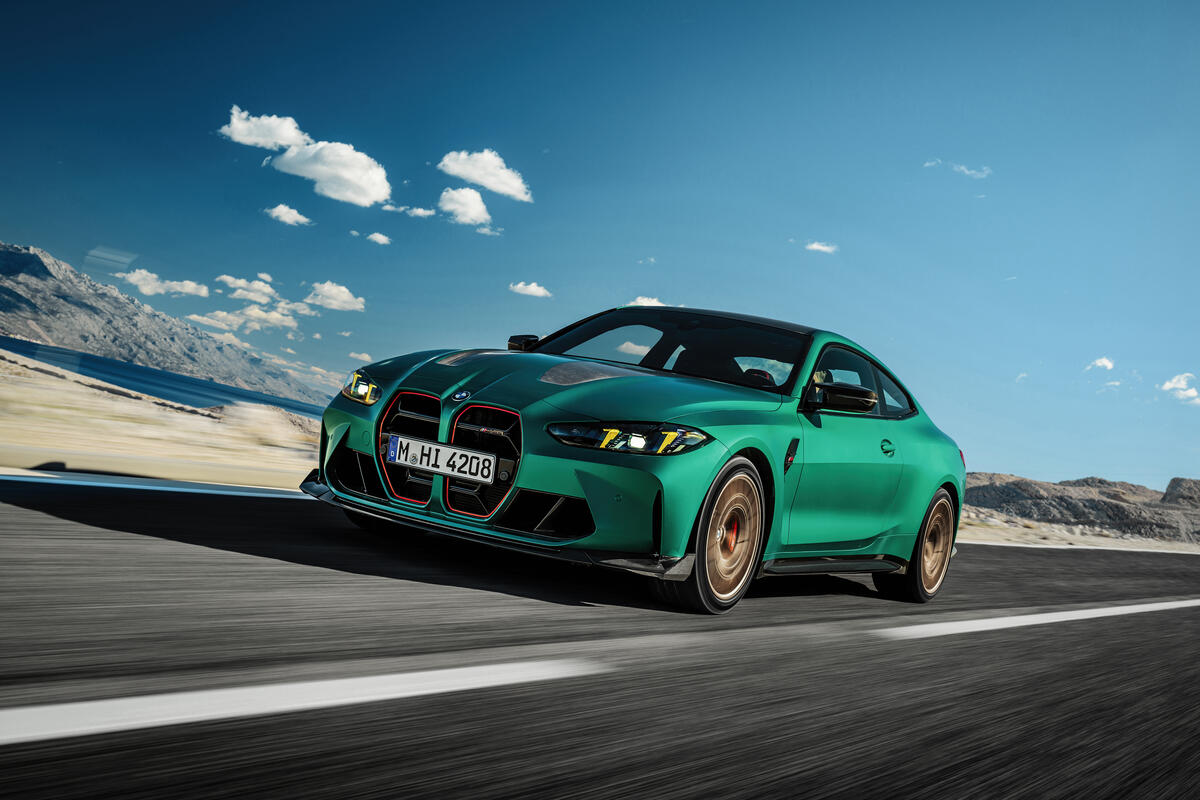
BMW M4
"So, it's a sand individual M4 competition with white wheels."
The BMW M4 Competition is a high-performance BMW M version of the 4 Series. It’s meant to feel sharper and faster than the regular M4, with more track-oriented tuning.
The BMW M4 Competition is a performance version of the BMW 4 Series, tuned by BMW M for stronger power and quicker response. In enthusiast circles, “Competition” typically means a more track-focused setup than the standard M4, often with firmer suspension and more aggressive calibration.

G-Class Gwagon
"I mean, it's pretty far-fetched. G-wagon colour. Yeah, G-wagon colour."
The G-Class is a large, boxy SUV made for both comfort and off-road ability. People recognize it easily by its shape, and it’s often mentioned in conversations about standout, iconic cars. The podcast reference to its color is about how recognizable the vehicle is.
The G-Class (often called the G-Wagon) is a boxy, body-on-frame luxury SUV known for its rugged styling and off-road capability. In the podcast context, it’s referenced mainly as a recognizable “icon” vehicle, including talk about its color. It’s commonly discussed because it stands out visually and has a long reputation for durability and presence.
Michelin Jumbo
"Can you not tell? I mean, you've got Michelin Jumbo."
“Michelin Jumbo” sounds like something Michelin-branded at the event. The transcript doesn’t clearly say what it is, so it may be a specific product or just a big display/promo item.
“Michelin Jumbo” appears to refer to a Michelin-branded product or display/packaging associated with the event. Without more context in the transcript, it’s not possible to confirm whether this is a specific tire model, a promotional item, or an on-site setup.
downforce
"So, Joe, quick question. The wing on the back of that M3, how much downforce do you think that gives?"
Downforce is the “pushing down” effect from aerodynamic parts like a rear wing. It helps the tires grip the road better, especially when you’re going fast, but it can also make the car less efficient.
Downforce is the downward aerodynamic force created by parts like wings and spoilers. More downforce increases tire grip at speed, helping the car hold the road through corners—at the cost of added drag.
M Performance
"and I think that's what annoys me about a lot of M Performance products these days, is just for show. Is that an M Performance product?"
“M Performance” is BMW’s performance-focused line—parts and models that are meant to feel sportier. Here, they’re saying some of those parts might look cool but don’t always add real driving improvement.
BMW’s “M Performance” line refers to factory-backed performance accessories and models positioned between the standard BMW range and the full M cars. In this discussion, they’re arguing that some M Performance parts are more about appearance than meaningful performance gains.
SP9
"The N24 with the GT3 class, but it's actually called, what's the actual class called? SP9. Yeah."
SP9 is the race’s name for a top class of cars. In this context, it’s the class that corresponds to GT3-style cars.
SP9 is a class designation used in Nürburgring endurance racing for top-spec GT3-category cars. When the hosts say “The N24 with the GT3 class… it’s actually called… SP9,” they’re pointing out that the event uses its own class naming even though the cars are GT3-derived.
open tires
"It's one of the only racers at this level with open tires, isn't it? Like you can pick any tire brand."
It means the race lets teams use different tire brands. They just have to follow the rules for the right type/spec of tire.
“Open tires” means the racing series doesn’t restrict teams to a single tire manufacturer. Teams can choose from multiple brands as long as the tires meet the series rules (“within spec”).
within spec
"As long as they're within spec, you can run Michelins, you can run other brands, and so it's a great place to showcase that performance."
It means the tires have to meet the race’s technical rules. Different brands can be allowed, but they still must be approved by the rules.
“Within spec” refers to tires meeting the technical requirements set by the series—dimensions, construction, compound rules, and other limits. Even if multiple brands are allowed, only tires that comply with the spec can be used.
Request an Explanation
Heard something you'd like explained? We'll add it to this episode.
Sign in to request explanations for terms you heard.
Want to learn more?
Browse our glossary for plain-English explanations of automotive terms, jargon, and concepts.
Help improve this episode
See something that's not quite right? Our annotations are AI-generated and can sometimes miss the mark. Click the flag icon on any annotation to suggest a correction.