
We Found Max Verstappen’s Tyres at Nürburgring 24 Hours & so much more | Ep 90 | Drive Torque Podcast
About this episode
At the Nürburgring 24 Hours, the hosts break down how the Nordschleife and GP circuit combine, why the formation lap is so long, and what Max Verstappen’s first-year entry does for the crowd. From Michelin’s massive tyre logistics and rapid weather swings to live recovery, code 60 zones, and wet-to-dry tyre choices, the episode follows the race’s endurance rhythm. They also tour the paddock, spot BMWs and other GT traffic, and describe the carousel’s brutal night-time drama.
Don't forget to send us your questions or subject for future episodes.
Subscribe/Follow, give us a rating and give us a follow on Instagram for all the latest Podcast news - https://www.instagram.com/drivetorque...
Cheers and see you at the next one 👊
Nürburgring
"We're here at the 24-hour race, Nürburgring, and if you watched the last episode, we finished that essentially after doing a lap on the BMW M Corsa lap."
Nürburgring is a legendary race track in Germany. It has different layouts, and in a 24-hour race they use it to see which cars can stay fast and consistent for a whole day.
Nürburgring is a famous motorsport venue in Germany, best known for the Nordschleife (the “North Loop”) and the shorter GP circuit. In a 24-hour race context, it’s used to test endurance, braking stability, and driver concentration over long stints.

Bmw M
"...inished that essentially after doing a lap on the BMW M Corsa lap. Yeah. But we're here with Mantai Racin..."
The BMW M Coupe (E36) is a smaller, older BMW sports car made for performance driving. It’s a two-door coupe and is known for being fun to drive on a track. The podcast brings it up in the context of doing laps and comparing how it performs.
The BMW M Coupe (E36) is a two-door, performance-focused model from the E36 generation, built to deliver a more compact, driver-oriented driving experience. It’s often discussed among enthusiasts because it’s a specific, classic BMW M-era coupe with a strong reputation for balance and feel. In the podcast, it’s being referenced as part of a track-lap or event discussion, highlighting its role in the session.
Mantai Racing
"But we're here with Mantai Racing in Michelin UK, and all of the cars are going out for their formation lap."
Mantai Racing is a racing team that has cars entered in this endurance event. They’re responsible for getting the car ready and coordinating how it’s driven and serviced during the race.
Mantai Racing is a motorsport team/entrant mentioned as being present at the Nürburgring 24-hour event. In endurance racing, teams like this manage car preparation, driver lineups, and pit strategy across long stints.
Michelin UK
"But we're here with Mantai Racing in Michelin UK, and all of the cars are going out for their formation lap."
Michelin UK is part of Michelin, the tire company. Tires matter a lot in endurance racing, so their presence at the event is a big part of what’s going on.
Michelin UK refers to Michelin’s UK organization, tied here to the event coverage and presumably tire involvement. Michelin is a major tire supplier in motorsport, and tire choice is central to endurance performance.
formation lap
"all of the cars are going out for their formation lap. Yeah, yeah. Which is a long formation lap because it's like 20 or kilometres."
A formation lap is the slow, organized lap before the race starts. The goal is to get the cars ready—especially the tires—while keeping everything safe and orderly.
A formation lap is the controlled warm-up lap where cars follow a set order before the race start. It helps teams get tires up to temperature and ensures everyone is staged safely before the clock begins.
GP circuit
"and then you've got the GP circuit, which you can kind of see behind the wheel over there. You can see some of the cars going around doing their formation lap."
The GP circuit is a shorter version of the Nürburgring track. In a race, using it means the cars have to be good at more than just the hardest Nordschleife sections.
The GP circuit is the shorter Nürburgring layout used alongside the Nordschleife. Endurance events may combine sections so teams must balance speed and stability across very different track characteristics.
Max Versaphin
"number two, because if you've been living under a rock, Max Versaphin is racing his own car and own team here for the first year. So it's really ramped it up."
Max Verstappen is a famous Formula 1 race driver. They’re saying he’s racing in this 24-hour event with his own team, which is why there’s extra hype and a bigger crowd.
Max Verstappen (transcribed here as “Max Versaphin”) is a top Formula 1 driver, and his participation in a 24-hour race is a big deal because it brings elite single-seater talent into endurance racing. The hosts note he’s racing his own car and team for the first year, which increases attention.
grid walk
"They did the grid walk and unlike last year, because we went on to the grid for the grid walk last year and it was rammed and we got next to Grello and kind of saw all their Manthey team."
A grid walk is a pre-race event where people walk around the cars lined up for the start. It’s like a behind-the-scenes look before the race begins.
A grid walk is when teams, media, and guests walk through the starting grid before the race. It’s a chance to see cars up close, meet drivers, and capture pre-race details before the cars go out.
VIP badge
"This year, they took the first 10 cars and they put them at the front behind a separate barrier with a separate VIP badge, which we didn't have."
A VIP badge is a special pass that lets you access certain areas at the event. It’s used to control entry to restricted hospitality or team areas.
A VIP badge is an access credential that controls where people can go at a motorsport venue. In practice, it determines entry to restricted areas like team zones or hospitality spaces.
Manthey racing
"be with Manthey racing. It's very, very cool. Massive thanks to Michelin for inviting us out here [125.1s] and to Manthey racing for hosting us."
Manthey Racing is a racing team. They run cars in endurance races and have garages where the team works on the cars during the event.
Manthey Racing is a motorsport team best known for Porsche GT racing programs and for running cars in endurance events. When the hosts mention Manthey hosting and garages, they’re referring to the team’s operational base where cars are prepared and serviced.
tyre changes
"I can't remember any numbers, but there's lots of tyres in there and they do lots of tyre changes. [197.2s] Obviously, being here in the Eiffel region of Germany..."
A “tyre change” is when the team swaps the tires during the race. Endurance races are long, so tires wear out and the track can get wetter or drier, so teams change them to keep grip.
In endurance racing, “tyre changes” are scheduled pit stops where teams swap tires to match evolving track conditions (temperature, rain, debris, and wear). Because tires degrade over time, changing them is often the difference between staying fast and falling off pace.
Eiffel region of Germany
"Obviously, being here in the Eiffel region of Germany, well it's dry at the moment, [201.9s] but it could rain in 10 minutes and then the sun might be out in 15 minutes..."
They’re talking about the area in Germany where Nürburgring is. The weather can change fast, and in racing that affects tire grip and when teams need to swap tires.
The Eiffel region is in western Germany, and it’s where the Nürburgring is located. Weather swings there are a big deal for endurance racing because grip can change quickly, forcing frequent tire-change decisions.
live timing screens
"[287.6s] screens up there. When the race is right, you've got the live timing screens and they also feed [293.2s] live footage from both of their cars."
Live timing screens are the real-time scoreboard for the race. They show things like who’s where and how fast each car is going right now.
Live timing screens show real-time race data such as lap times, gaps, and positions. In endurance racing, this is crucial because strategy and tire management can change quickly over long stints.
Porsche 911
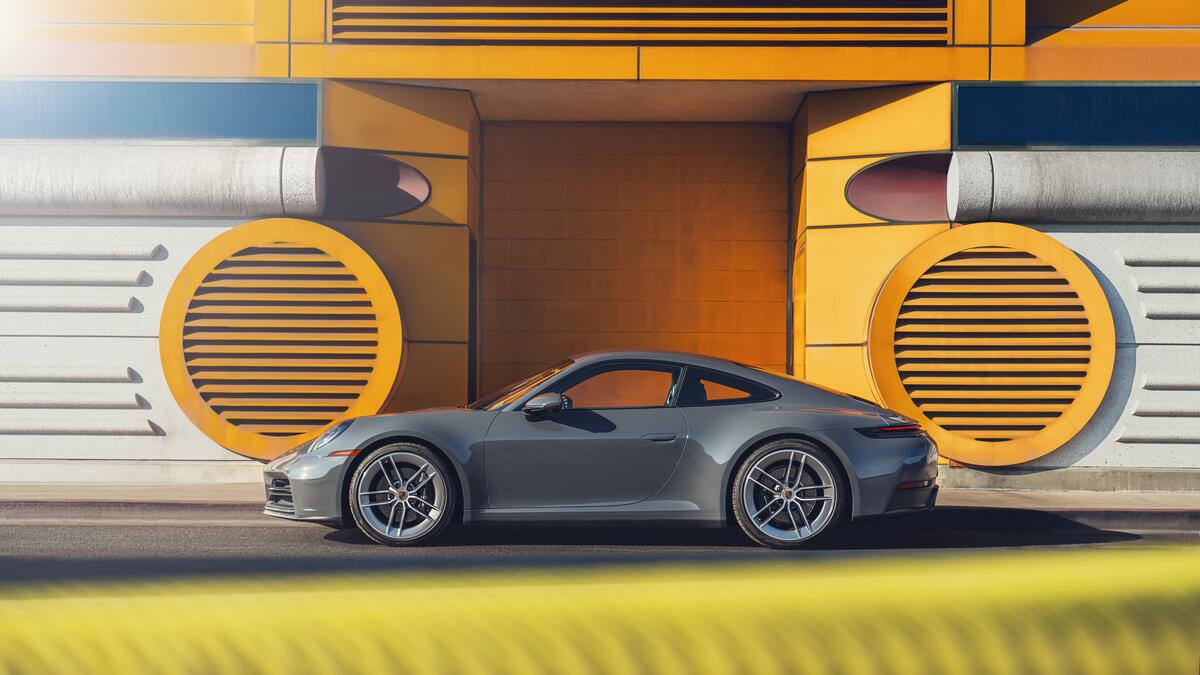
"[287.6s] screens up there. When the race is right, you've got the live timing screens and they also feed [293.2s] live footage from both of their cars. And I love the fact that their cars are number 911 and 992."
They’re talking about Porsche 911 cars—one is from the newer “992” generation. The point is that Manthey runs multiple 911s in the event.
The speaker references Manthey’s cars by “number 911 and 992,” which points to Porsche’s 911 model family. “992” specifically is the internal generation code for the modern 911, while “911” here is the other 911-generation car in their lineup.
technical?
"[316.4s] We're actually here last year and Manthey were that close to winning. And it was only like, [323.3s] what would you call it, a technical? Yeah, well, they had to come in together with another car ..."
A “technical” is when race officials look at whether a car followed the rules. In this case, they decided it didn’t go Manthey’s way and added a penalty.
A “technical” refers to a rules/technical compliance issue investigated by race officials (e.g., car setup or components not matching regulations). The speaker describes a dispute where stewards imposed a time penalty after determining the outcome.
warming up their tires
"[361.4s] a start finish line right there. ... [368.1s] along the Dottinger Her warming up their tires, because ... it's actually really cold."
Before the race, drivers need to get their tires hot so they grip the road. If the tires are cold, the car can feel slippery and less controllable.
Warming up tires means bringing the tire’s temperature up so it can generate grip. Cold tires don’t grip as well, so drivers and teams focus on getting heat into the rubber before the start to avoid sliding and to establish pace immediately.
Dottinger Her
"[368.1s] along the Dottinger Her warming up their tires, because as Ted talks about upstairs, it's actually [373.3s] really cold."
“Dottinger Her” refers to the Dottinger Höhe section of the Nürburgring Nordschleife, a fast stretch where cars build speed. The speaker ties it to the start phase, noting that teams use the approach to get tire temperatures up in cold conditions.
GT3 cars
"[379.3s] they start in groups. So the first group, to my understanding, is essentially GT3 cars, [384.4s] the fastest group."
GT3 is a type of race car class used in endurance racing. Cars in this class are designed to compete under similar rules, and they’re typically fast.
GT3 is a class of race cars built to a standardized set of rules for customer racing. In endurance events, GT3 cars often form one of the first starting groups because they’re among the faster categories.
start in groups
"[379.3s] they start in groups. So the first group, to my understanding, is essentially GT3 cars, [384.4s] the fastest group."
Instead of all cars starting at the exact same moment, they’re sent out in groups. That helps avoid chaos and makes the start safer, especially with different car classes.
Starting in groups means the race field is released in batches rather than all at once, usually based on class and expected pace. This reduces traffic conflicts and helps manage safety and strategy at the beginning of an endurance race.
GT3s
"GT3s are going to go around and catch the slowest ones, which they do very quickly. But they're all punching up now."
GT3 is a type of race car category. These cars are based on real sports cars, but they’re built and regulated for racing, and they often have to share the track with slower cars during endurance races.
GT3 refers to the FIA GT3 racing class, which uses production-based sports cars with standardized rules for balance of performance. GT3 cars are designed for endurance events and often run in mixed traffic with slower classes, which creates bottlenecks at starts and key corners.
road position
"the pressure and the nose, you want to, you want to make a decent start. You want to get a decent road position. Yep. But you also don't want to come together with anybody."
Road position is basically where your car is placed on the track compared to the other cars. A good position helps you avoid crashes and gives you a better line into the next corner.
“Road position” in racing means where a car sits relative to the racing line and other cars as you approach braking zones and corners. In a crowded start, getting road position helps you avoid contact while also setting up the best entry into the next corner.
tone one
"Oh, fantastic. Straight into tone one, which is just a complete bottleneck. Look at that. It looks like it. I mean, I mean, getting their elbows out there. Everyone's through."
“Tone one” sounds like a specific section or phase right after the start. The important part is that it turns into a traffic jam where cars bunch up and have to be careful.
“Tone one” appears to refer to a specific race start/traffic phase or sector/zone the hosts are using as shorthand for where the field compresses. The key point in the audio is that it becomes a bottleneck immediately after the start, forcing cars to slow and bunch up.
bottleneck
"Oh, fantastic. Straight into tone one, which is just a complete bottleneck. Look at that. Look at that. I mean, I mean, getting their elbows out there."
A bottleneck is a part of the track where cars get squeezed together. It’s harder to pass there, so everyone slows down and it can get chaotic.
A bottleneck is a section of track where many cars are forced into less space or slower speed, usually due to a narrow corner, heavy traffic, or limited passing opportunities. In endurance races, bottlenecks at the start can cause contact risk and can also dictate how quickly the field can sort itself out.
cold tire spin
"It's one of the bin. Oh, that's the first, the top BM. Okay, he's back on. It was just a spin, probably a cold tire spin."
A cold tire spin happens when the tires aren’t warm yet, so they don’t grip well. If the driver accelerates too hard, the wheels can spin and the car can lose control.
A “cold tire spin” is when tires that haven’t reached operating temperature lose grip and spin during acceleration or under load. Cold tires have less grip because the rubber is stiffer, so even small throttle inputs can trigger wheelspin—especially right after the start or after a safety car period.
T13
"So we're a couple of hours into the race and we've come down to, well, formally known as T13. Nowadays known as the Sabina Schmitz, which is right towards the start of the actual Nordschleife lap."
T13 is a specific corner/section on the Nürburgring track. When people say T13, they mean “this exact spot,” which helps everyone follow where the action is happening.
T13 is a named corner/sector marker at Nürburgring used for describing where incidents and timing happen. The hosts note it’s “formally known as T13,” which helps listeners map the race action to a specific part of the Nordschleife lap.
Sabina Schmitz
"So we're a couple of hours into the race and we've come down to, well, formally known as T13. Nowadays known as the Sabina Schmitz, which is right towards the start of the actual Nordschleife lap."
Sabina Schmitz is a famous Nürburgring driver. This name is used for a particular corner/section of the track, so it tells you where on the Nordschleife the race action is happening.
Sabina Schmitz is the namesake of a Nürburgring corner/section (here replacing the older “T13” label). She was a well-known Nürburgring driver and TV personality, and the naming reflects her association with the track and its culture.
Nordschleife
"Nowadays known as the Sabina Schmitz, which is right towards the start of the actual Nordschleife lap. It's a great corner and it is absolutely packed down here, as you can imagine."
The Nordschleife is the long, twisty part of the Nürburgring. It’s known for being challenging, so races there are a real test of staying focused and driving smoothly for hours.
The Nordschleife is the “north loop” of the Nürburgring, famous for its long length, elevation changes, and complex corner sequence. Endurance races use it because it tests consistency and driver concentration over many laps, not just peak speed.
Nürburgris
"But out and about, driving around Nürburgris itself and around the area, it's just rammed, isn't it?"
They’re talking about the Nürburgring in Germany—the big race track complex where the 24-hour race happens. Fans and teams hang around different parts of the venue during the event.
This is a misspoken reference to Nürburgring, the famous German motorsport venue near the town of Nürburg. In the context of the Nürburgring 24 Hours, it’s where the race action and fan areas are concentrated.
N24
"And these are where all the real fans are, really. We're so lucky to be in the hospitality, but the real fans at the N24 for me are out here."
“N24” means the Nürburgring 24 Hours, a long endurance race on the Nürburgring. The hosts are explaining how race interruptions work there.
“N24” is shorthand for the Nürburgring 24 Hours, the endurance race held at the Nürburgring. It has a distinctive approach to incidents compared with Formula One, including how yellow flags and recoveries are handled.
yellow flag
"if you watch something like Formula One, as soon as there's an off, yellow flag comes out and then before you know it, it's a safety car"
A yellow flag is the warning signal that something is wrong on the track. Drivers have to slow down and drive carefully because there may be an accident or debris ahead.
A yellow flag is a race-control signal meaning there’s a hazard on track (like debris or an accident) and drivers must slow down and be ready for caution. The host contrasts how yellow-flag periods can escalate in other series versus how the N24 manages incidents.
safety car
"and then before you know it, it's a safety car and they might even red flag the race."
A safety car is when a special car comes out to slow everyone down and keep the track controlled after an incident. It helps marshals and crews deal with the problem safely.
A safety car is a pace vehicle that takes over the track to control speed during serious incidents. The host notes that in Formula One, yellow flags can lead to a safety car, while the Nürburgring 24 Hours typically avoids red-flagging.
red flag
"and they might even red flag the race. They never red flag the N24."
A red flag means the race is stopped. It’s used when the situation is too dangerous to keep driving at racing speed.
A red flag stops the race entirely because conditions are unsafe or the incident is too serious to continue. The host says they “never red flag the N24,” meaning the event usually keeps running using other procedures instead.
double wave yellow section
"So if there's a big accident, they'll double wave yellow section it."
It means the caution warnings are being shown more strongly than usual. The idea is that drivers should slow down more and be extra careful because the danger is bigger.
“Double wave yellow” refers to an intensified caution period where marshals display yellow flags in a way that signals a more serious hazard or a larger affected area. The host uses it to explain how the N24 manages big incidents without stopping the race.
live recovery
"And then they do this thing called live recovery. So basically, the pickup trucks come onto the circuit and they recover the cars while the other cars are still going around."
Live recovery is when officials remove a crashed car while other race cars are still driving around the track. It’s tense because the recovery vehicles and race cars share the same circuit at the same time.
Live recovery is an endurance-racing procedure where damaged cars are recovered while the rest of the field continues circulating under caution. The host describes pickup trucks/flatbeds entering the circuit to remove cars even though other cars are still running, which is why it feels so intense and scary.
sidewall
"Yes. That's an old school. That's a vintage one. I think that's been on there for a few years. It's in the bumps, in the sidewall."
The sidewall is the part of the tire on the outside edge, not the rubber in the middle that touches the road. If something is “in the sidewall,” it means the tire has marks or wear on that outer area.
The sidewall is the tire’s outer wall between the tread and the bead that mounts the tire to the wheel. When the host says it’s “in the bumps” and “in the sidewall,” they’re pointing to visible tire wear or damage patterns on that outer section.
racing tyre
"How about like tractor tyre, racing tyre? I know, right? Two ends of the extreme."
A racing tyre is a special tire made for track driving. It’s designed to grip hard and handle the heat from fast laps, not just normal street use.
A racing tyre is a performance tire built for grip and heat management under track conditions. Compared with everyday tires, racing tires are designed to work in a narrower temperature and load range, which is why endurance events like N24 can show dramatic tire condition changes.
closing speeds
"The other thing, when you come out, I always find the closing speeds between the different cars. I know we mentioned it at the beginning of the race."
Closing speed means how fast a faster car is gaining on a slower one. In races with different car classes on track, that difference can be really obvious.
Closing speed is how quickly one car catches up to another—relative speed between two vehicles. In endurance racing, big closing-speed differences between slower and faster classes make traffic management and overtaking more noticeable.
Michelin wet weather tyre
"because, and we can say this, the Michelin wet weather tyre is a much better wet weather [836.6s] tyre than a lot of its competitors."
When it rains, tires can lose grip. A wet-weather tire is designed to keep traction in rain, and Michelin is the brand making that specific tire.
A wet-weather tire is built to maintain grip when the track is slick from rain. Michelin is the tire brand, and the host is specifically comparing its wet-weather tire to competitors, implying it performs better in standing water and reduced traction conditions.

R8
"This is its live recovery. This is coming to recover that R8. [873.3s] That is... And look how slow that's going."
The R8 is a high-performance Audi supercar. In this moment, it’s being recovered after an accident during the event.
The R8 refers to the Audi R8, a mid-engine supercar known for its performance and track presence. Here it’s mentioned in the context of a live recovery, suggesting it was involved in an incident during the race.
North Cipher
"But in between the GP circuit and our circuit, [913.0s] or the North Cipher, we've got a public road behind those trees."
This is a named part of the track complex the host is using to orient where they are. They’re pointing out that there’s a public road nearby in that area.
“North Cipher” appears to be a track-area name the host uses to describe a specific section of the Nürburgring complex. It’s mentioned while explaining how a public road runs behind trees between two circuit areas.
Speed 60 zone
"we're actually just about to enter the [942.0s] Speed 60 zone, which is where all of the cars are guarded to their cars."
A Speed 60 zone is an area where race control tells drivers to slow down to about 60. It’s for safety while officials deal with an accident nearby.
A “Speed 60 zone” is a race-control safety measure where cars must reduce speed to 60 (typically km/h) in a specific area. It’s used to protect marshals and allow safe recovery of incidents that are close to the racing surface.
limiters on the wheel
"Most of them have limiters on the wheel and it just gives the Marshalls [954.5s] staff at times a safety recover the accident"
During safety periods, cars may be forced to drive slower. A limiter on the steering wheel helps control that speed so drivers can’t accidentally exceed the rule.
A speed limiter on the steering wheel is a driver-controlled (or driver-activated) device that caps maximum speed during safety phases. In endurance racing, it helps ensure cars obey mandated slow zones consistently while marshals recover incidents.
code 60
"we are basically at the code 60 here. So you'll see the cars flying in [1017.8s] and they have to be doing 60 or below there. Otherwise they get like massive, massive time penalties."
In the race, “code 60” means officials are warning that the track is dangerous. Cars have to drive at about 60 km/h or slower in that area, and if they don’t, they can get big penalties.
“Code 60” is a race-control safety speed limit used during endurance events when conditions are hazardous (like rain or an incident). It means cars must slow to 60 km/h or below in the affected sector, and exceeding it can trigger large penalties.
slick
"One's a slick and one's a wet. And why is this a wet then, Ped? ... Whereas this is a full slick with no tread pattern, so no good in the"
A slick is a race tire with smooth rubber and no grooves. It works great on dry pavement, but when it’s wet it can struggle because it can’t push water out of the way.
A slick tire is a race tire with no tread pattern. Because there’s no tread to channel water, slicks generally aren’t safe or effective in wet conditions, but they can provide maximum grip on dry track.
tyre starts to degrade really quickly
"The problem with that is when it's not wet, these blocks will start to move around. They overheat and then the tyre starts to degrade really quickly."
In tire terms, “degrade” means the rubber and tread behavior deteriorate faster than expected, often due to heat and operating conditions. In this case, wet-tire tread blocks can overheat when used on a dry track, accelerating wear and performance loss.
aquaplaning
"but as soon as you start getting a layer of water, then it can't expel water and you start aquaplaning and all that kind of stuff. I think it's all down to the temperature as well, because if you start losing a temp and it's damp, then you're finished."
Aquaplaning is when your tires lose contact with the road because water builds up underneath them. The car can start to feel slippery or unresponsive, especially when you’re turning or braking. It depends on how deep the water is and how good the tire tread is at pushing water away.
Aquaplaning is when a car rides up on a thin layer of water instead of maintaining tire contact with the road. Once that happens, steering and braking grip drop sharply because the tires can’t clear water effectively. It’s strongly influenced by tire tread, water depth, and tire temperature.
tyre fitting bay
"Well, we're inside the tyre fitting bay here and it's very busy, as you can imagine. And very noisy. There's lots of things going on."
A tyre fitting bay is the dedicated area in a racing paddock where teams remove and install tires during service. It’s set up for speed and organization, with tools, tire stacks, and mechanics working in a controlled workflow. The transcript emphasizes it’s busy and noisy, reflecting the service intensity of endurance racing.
intermediate tyre
"This is the intermediate tyre. But actually, it's a slick tyre and then these grooves are hand cut in it to make it into an intermediate tyre. And this is a special tyre."
An intermediate tyre is for “in-between” weather—like damp roads or light rain. It’s not as aggressively grooved as a full wet tyre, but it has some grooves to deal with small amounts of water. The goal is to keep grip without the extra drag of full wet tread.
An intermediate tyre is a rain tyre meant for damp or mixed conditions—typically when it’s not raining hard enough for full wet tires. In this segment, they explain that the intermediate is based on a slick but has grooves added by hand to create limited water evacuation. That compromise helps it work when there’s some standing water but not enough to require full wet tread.
tread depth
"And the grooves, they have to be a minimum of 5% of the tread depth of the tyre. If it's 4%, then they're not glassed as a wet tyre."
Tread depth is how “deep” the tire’s grooves are. Deeper grooves can move more water out of the way. The transcript mentions that there are rules about how much of the tire’s depth needs to be grooved for it to count as a wet tire.
Tread depth is how much rubber is available in the tire’s grooves before they wear down. In wet-tire classification, the transcript says the grooves must be at least a minimum percentage of the tread depth; otherwise the tire isn’t considered a wet tyre. That ties directly to how effectively the tire can evacuate water.
wet tyre
"But essentially, yeah, there's full wet just behind over here, which we talked about on the outside. That's a brand new one. Nice fresh one."
A wet tyre is built for rainy conditions. It has grooves that help push water out from under the tire so the car can still grip the road. That’s what helps reduce the chance of skidding on standing water.
A wet tyre (often called a full wet) is designed with deep tread grooves to channel water away and maintain grip in heavy rain. The tread pattern helps prevent water from building up under the tire, reducing the risk of aquaplaning. In the transcript, they also mention rules about how much of the tread depth must be grooved to qualify as a wet tyre.
compounds
"And with the full slicks, we've got three different compounds, soft, medium and hard. And because it's quite cold for this race,"
Tire compounds are different types of rubber. Softer rubber usually grips better but wears out sooner, while harder rubber lasts longer but may not grip as strongly. Racing tires often offer multiple compound choices for different track conditions.
Tire compounds are different rubber formulations used within the same tire design, tuned for grip versus durability. Softer compounds generally provide more traction but wear faster, while harder compounds last longer but may offer less peak grip. The transcript mentions soft, medium, and hard compounds for the full slicks.
softs
"they're predominantly using softs. And Pete, how many tyres did Mr and bring to the event this weekend?"
“Softs” are a type of racing tire rubber. They usually grip better, but they wear out sooner than harder tires.
“Softs” refers to a tire compound choice—softer rubber that generally provides more grip but wears faster. Endurance races often use different compound strategies, so “softs” are typically chosen for faster stints rather than maximum longevity.
rim
"You can see the wheels on top and then the guys here will fit a bit like when you go to a tyre fitters and you might watch the tyres being fitted. So they'll fit the tyre onto the rim."
A rim is the metal wheel part. The tire gets mounted onto it before the car can use the wheel.
A rim is the wheel’s metal part that the tire mounts onto. In the segment, the hosts describe the process of fitting the tire onto the rim, inflating it, and then finishing with wheel balancing.
balancing machine
"They'll then put the air in the tyre and then right at the end of this line is a balancing machine where they put the balancing weights on it."
A balancing machine checks whether the wheel spins smoothly. If it’s not perfectly even, it tells you where to add small weights to reduce shaking.
A balancing machine measures how evenly a wheel/tire assembly spins, then indicates where to add small weights. The goal is to reduce vibration at speed and help the tire wear more evenly over time.
Pierre Alves
"And we've just been told that we've got a very special guest to come on the podcast. Pierre Alves. He's the global head of Michelin's endurance motorsport program."
Pierre Alves is a Michelin executive focused on endurance racing. In other words, he oversees Michelin’s work on tires for long races.
Pierre Alves is described as the global head of Michelin’s endurance motorsport program. That role puts him in charge of Michelin’s long-distance racing efforts, including tire development and support for endurance events.
temperature window
"but they are working in different temperature window from the track temperature. So that's why we need to provide the same grip depending of the weather."
The “temperature window” is the temperature range where the tire works best. If it’s too cold or too hot, it won’t grip as well.
A “temperature window” is the range of tire temperatures where a compound delivers its intended grip and wear behavior. Outside that window, the tire can feel greasy (too cold) or lose performance as it overheats.
logistical nightmare
"So that must be a bit of a nightmare, a logistical nightmare because last year it was really hot here and this year it's quite cold."
In a long race, tire logistics are hard because weather can change. Teams have to make sure they have the right tires on hand at the right time, which takes a lot of planning.
In endurance racing, tire logistics are a “logistical nightmare” because teams must stock and transport multiple tire types and compounds for changing weather over a long event. The challenge is coordinating production timing, storage, and ensuring the right tires are available when conditions shift.
Père Montferrand
"When I say best case is when all the cars finish the races, we are around 40% of the quantity that we are bringing here that are going to be used. So if 60% they are going back to Père Montferrand."
They’re talking about where the tires go after the race. If not all of them get used, they get sent back to storage/another location instead of being consumed on track.
“Père Montferrand” is referenced as the destination where unused tires are returned after the race. In this context, it highlights how endurance tire supply chains include not just on-track usage but also post-event distribution and storage.
monsoon tire
"Have you seen wet tire? It's called a monsoon tire. You know, when there's a lot of water, we have this pattern and when there is a lot less water,"
A “monsoon tire” is made for extreme rain. It’s designed to keep the car gripping even when there’s a lot of water on the track.
A “monsoon tire” is an extreme wet-weather tire designed for very heavy rain and lots of standing water. Its tread pattern and water evacuation are tuned to maintain grip when the track is flooded rather than just damp.
groove
"But the groove we are making is not to evacuate water, it's just to bring some heat on the tire."
A groove is the channel cut into the tire’s tread. It can help move water away, and in some tire designs it also helps the tire warm up so it grips better as the track dries.
In tire talk, “groove” refers to the channels in the tread pattern that direct water and control contact with the road. Here, the host distinguishes between grooves meant to evacuate water versus grooves/patterning meant mainly to bring heat into the tire during drying conditions.
cup 2
"It looks an awful lot like a cup 2. Exactly. You know, it's inspired by the cup 2."
“Cup 2” is a specific Michelin tire line. The point of the comparison is that this endurance tire is designed to grip in wet conditions and then keep working as the track dries, by using a different tread/compound strategy than Cup 2.
“Cup 2” refers to Michelin’s tire family used in wet conditions, where the tread pattern and compound are tuned for grip and heat management. The speaker compares the discussed endurance wet/drying tire’s pattern and compound behavior against Cup 2, noting it’s softer and designed to work through wet-to-dry transitions.
stick
"when the track, you know, we have a dry line. Yeah. So this tire is robust enough to continue to race with this tire until we switch directly to a stick."
“Stick” is slang for the dry tire that works best once the track is fully dry. They’re saying you switch to that type of tire when conditions improve.
In racing tire-speak, “stick” is shorthand for a dry tire that provides maximum grip on a dry surface. The speaker contrasts switching from wet/drying tires to a “stick” when the track develops a dry line.
endurance tire
"It's all the knowledge that we have how to make an endurance tire. Yeah. Yeah. Yeah. A deterrent to look after the tires and bring them back."
An endurance tire is designed for very long races. It has to keep working reliably for hours, not just for a short sprint, and it’s engineered to handle the heat and wear of racing over time.
An endurance tire is built for long races where the tire must stay consistent over many hours, handling heat cycles and repeated stints. The speaker frames the value as the know-how to make an endurance tire that can survive the event and be managed/returned rather than being sold to competitors.
trickle down technology
"And yeah, it just brings a whole different dimension to, to the race and, and why it's so important. And I think that for me, I love the trickle down technology into road tires"
“Trickle down technology” means ideas invented for racing eventually end up in regular products you can buy. In this case, tire tech learned on track can influence road tires.
“Trickle down technology” is the idea that innovations developed in high-end racing eventually make their way into consumer products. In tires, racing can accelerate learning about compounds, tread patterns, and heat management that later influence road tire designs.
approach from track to street
"So it's going, this is what we call the approach from track to street. Yeah. You know, all what we learn here, it will be transferred on the road car in coming years."
It means racing tech eventually makes its way into regular cars. The tires (and other parts) get better because they were tested and refined on a race track first.
“Track to street” is the idea that technologies developed for racing—like tire construction and compound choices—can be adapted for road cars. The goal is to transfer grip, durability, and feedback improvements from motorsport into everyday driving.
2050 strategy
"Can you just tell us a bit about the kind of recycling? Because I know there's the 2050 strategy where you're trying to get all of the tires being completely 100% renewables."
A “2050 strategy” refers to a long-term sustainability plan with targets aimed at the year 2050. Here, it’s mentioned in relation to making tires fully renewable (100% renewables) and improving recycling and material sourcing.
Clermont-Ferrand
"So it means we collect back all the used tires. We are sending back to Clermont-Ferrand. And all the sticks go through a factory which paralyzes, you know, to extract some materials inside,"
Clermont-Ferrand is a place in France. In this episode, it’s where the used tires get sent for processing and recycling.
Clermont-Ferrand is a city in France that the speaker references as the destination for used-tire processing. In this context, it’s where the recycled tire materials are handled by a dedicated facility.
carbon black
"And all the sticks go through a factory which paralyzes, you know, to extract some materials inside, like the carbon black, some oils and metal."
Carbon black is an ingredient inside rubber that helps tires last longer and stay strong. When tires are recycled, that material can be recovered and used again.
Carbon black is a fine carbon material used in tire rubber to improve strength and durability. In recycling, it can be extracted from used tires and reused as a raw material in other rubber products.
reused as energy
"And the rest of the tire is reused as energy. So that's why we send them to the cement factory."
After recycling pulls out useful materials, the rest of the tire can be burned in a controlled way to make heat or electricity. So it’s not just thrown away.
When the speaker says the remaining tire material is “reused as energy,” they mean the leftover tire fraction is used as a fuel. This is typically done via energy recovery processes that convert tire material into heat or electricity.
pits
"It's being towed back to the pits as we speak, which is really sad because it looked like it was going to be a good battle, at least between that and the Max Verstappen car."
The pits are the team’s area next to the track where the car comes in for service. If a car is towed there, it likely can’t keep racing and needs repairs.
In endurance racing, the “pits” are the service area where teams stop the car for repairs, refueling, and driver changes. When a car is towed back to the pits, it usually means it can’t continue on track and needs team attention.
Norsleife
"Yeah, M&U GP. The Norsleife. It looks so good, doesn't it? It does. And then you can see them coming back off the Norsleife down that way."
They mean the Nürburgring Nordschleife, the long and very twisty part of the track. It’s famous for being challenging, with lots of ups and downs and corners.
“Norsleife” is the Nürburgring Nordschleife, the famous long, twisty section of the Nürburgring circuit. It’s known for big elevation changes and a layout that’s much more demanding than many modern tracks, which is why it’s a benchmark for endurance racing.

Audi Rs3
"...ou can see all of that from here. What's that, an RS3? Wow. No, S3. And what's really interesting is we..."
The Audi RS 3 is a fast, sporty version of a compact Audi. It’s designed to be quicker and more performance-focused than a regular model. The podcast mentions it because someone spotted it while watching cars on track.
The Audi RS 3 is a high-performance compact car from Audi’s RS lineup, built for quick acceleration and sporty handling in a smaller package. It’s commonly discussed because it blends everyday usability with track-capable performance, making it a frequent subject in driving and lap-time conversations. In the podcast, it’s mentioned as a car spotted from a viewing area, showing how recognizable and noteworthy it is.

Audi S3
"What's that, an RS3? Wow. No, S3. [2031.0s] And what's really interesting is we've just seen the Dacia Logan go through that left-hander."
The Audi RS3 is a high-performance version of Audi’s A3. In this moment, the host is trying to identify a car they can see from far away.
The Audi RS3 is a performance version of the compact A3, known for its quick acceleration and sporty all-wheel-drive setup. Here, the host is using it as a quick visual guess for what they’re seeing on track.

Dacia Logan
"And what's really interesting is we've just seen the Dacia Logan go through that left-hander. [2035.7s] And because it's one of the slowest speed corners on the track, all the GT3 cars aren't really [2041.2s] utilizing their aero through there."
The Dacia Logan is a low-cost car model from Dacia. The interesting part is that you can see it on the same track as much faster race cars, and it highlights how different cars behave in the same corner.
The Dacia Logan is a budget-friendly sedan/hatch platform from Dacia, and it’s notable here because it’s being observed on track alongside much faster GT3 cars. The host points out how it goes through a slow corner, which affects how much the racing cars can use their aerodynamic advantage there.
Brunchen
"there. It's been about five or six cars that have run wide on the exit of Brunchen. And we've literally been watching it happen live, which has just been nuts."
Brunchen is a named turn on the Nürburgring. In wet conditions, it’s a place where cars can lose traction and go wide when they’re trying to accelerate out.
Brunchen is a specific corner/section of the Nürburgring circuit used in the 24-hour race layout. It’s known for being a braking/turn-in zone where cars can run wide on corner exit, especially when grip is poor.
low traction surface
"And it's got, we've seen they've got a red-yellow low traction surface. Hey, do you want to take the mic?"
A low traction surface is track pavement that provides less grip than normal—often due to rain, rubbering, or surface condition. On such surfaces, tires can’t generate as much lateral force, so cars are more likely to slide, spin, or run wide.

Audi RS4
"Oh, it's great to see you out here. I know I bumped into you at the, at the Euro tunnel, which was random. You're loving your RS4."
The Audi RS4 is a high-performance Audi based on the A4. It’s the kind of car enthusiasts buy for quicker acceleration and sharper driving feel.
The Audi RS4 is a performance version of the regular Audi A4, built to deliver a more aggressive, enthusiast-focused driving experience. In this segment it’s mentioned as Taylor’s current car, tying the conversation to real-world ownership rather than track-only talk.
Flexi Plus
"You're loving your RS4. Yeah, loving the Flexi Plus. Yes, exactly. I only just finished that yesterday."
Flexi Plus appears to be a named add-on plan or service for car ownership. It’s the kind of thing that can change what support or coverage you get while you drive.
Flexi Plus sounds like a service or subscription package tied to the speaker’s car ownership (likely related to coverage, roadside assistance, or a plan). It’s not a standard automotive performance term, but it’s a named product/service that affects how the car is used day-to-day.
YouTube Corner
"Well, that's why they call it YouTube Corner. It's exactly why they call it YouTube Corner. You bump into YouTubers."
They’re calling a particular area “YouTube Corner” because that’s where they often see YouTubers hanging around. It’s basically a humorous local nickname for a meeting spot.
“YouTube Corner” is a nickname for a spot on the event grounds where the hosts expect to run into content creators. It’s used here as a playful way to explain why they keep bumping into YouTubers in that area.
Max Verstappen
"And I think the plan is Max Verstappen. Max Verstappen. And I'm not even a Max Verstappen fan."
Max Verstappen is a very famous race driver. The hosts are saying he has a good chance in this event.
Max Verstappen is a top Formula 1 driver known for aggressive, high-speed racing and strong racecraft. In this segment, the hosts are talking about his chances in the Nürburgring 24 Hours context.
G81 M3 Touring
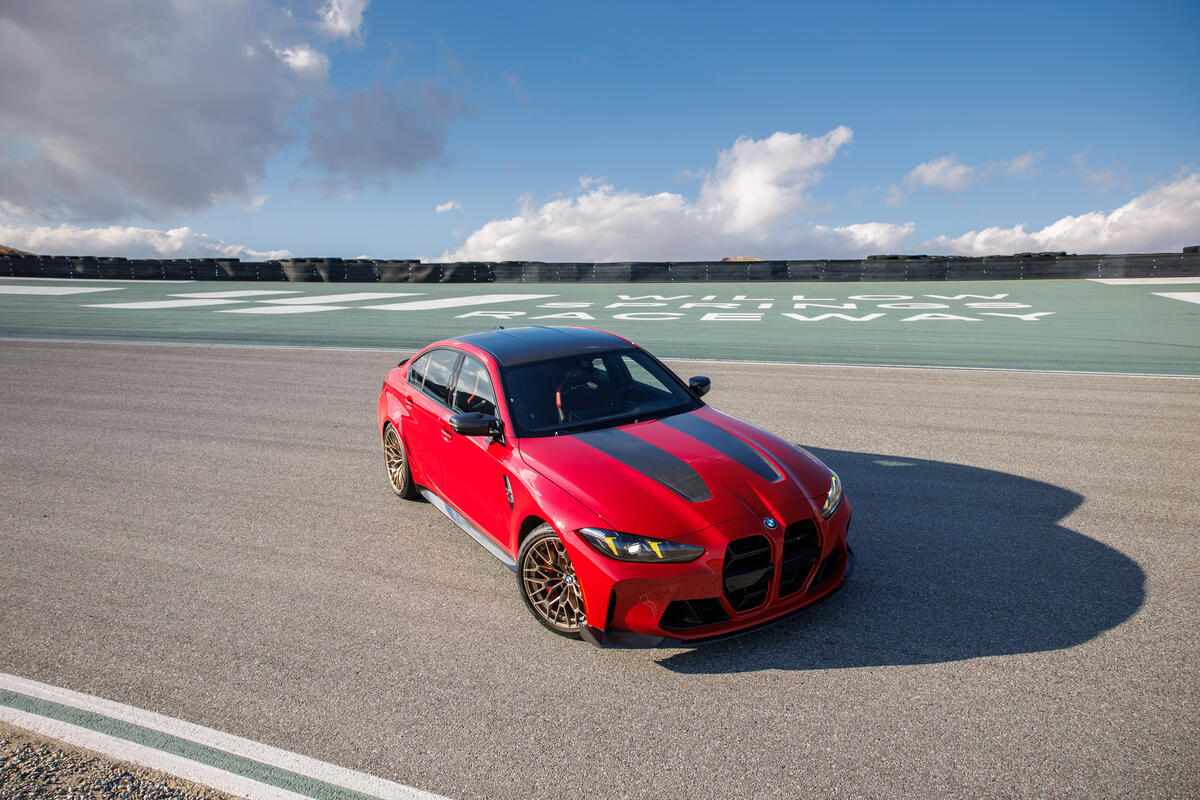
"another big shout out to the G81 M3 Touring, which is in third place at the moment."
This is a BMW M3 wagon. It’s basically an M3, but in a station-wagon shape, and the hosts are talking about how well it’s doing in the race right now.
The BMW G81 M3 Touring is the M3 wagon variant, built on BMW’s G81 platform. It’s notable because it brings the M3’s performance focus to a practical wagon body, and here it’s being discussed in the context of race positioning.
carousel
"I think we should sort of slowly head down to the carousel, because it's something we do every year."
The “carousel” is a specific part of the Nürburgring track. It’s a corner section the hosts like to visit because you can watch the cars go by really close up.
In Nürburgring 24 Hours talk, the “carousel” is a named section of the circuit with a distinctive flow of corners. The hosts are describing their yearly walk to that area to watch cars pass very closely.
Nord Stream
"But other interesting fact, this is the highest point of the Nord Stream. Oh, okay. I didn't know that."
They’re using “Nord Stream” as a spot on the track area. They’re saying it’s the highest point there, so after that you go downhill toward the next section.
“Nord Stream” here refers to a specific location/feature on the Nürburgring 24 Hours route that the hosts are using as a landmark. They’re pointing out that it’s the highest point on that part of the course, so the rest of the walk is downhill toward the carousel.
V8s
"Yeah. [2524.5s] V8s. Long live V8s. I guess we best walk all the way back through the crazy Germans again."
“V8s” are cars with an eight-cylinder engine. It’s a classic engine layout that many people love for its sound and feel.
“V8s” means engines with eight cylinders arranged in a V shape. The hosts are using it as shorthand for the sound and character of V8-powered race cars they’re seeing at the event.
pit box
"We're in the, uh, Manthey pit box and it was quite when we got here, but suddenly it's an [2674.7s] absolute hive of activity."
A pit box is the specific marked bay in the pit lane assigned to a team. It’s where the car stops for service during a race, and pit crews work within that confined space to complete tire changes and other tasks safely and quickly.
F1
"I guess the big difference between this mate, isn't it, is in F1, it's like [2686.4s] two and a half seconds for a pit stop. Here, there's a minimum time for a pit stop."
F1 means Formula 1, the highest level of open-wheel racing. They’re comparing how pit stops work in F1 versus longer endurance races where rules can force the car to stay in the pits longer.
F1 is Formula 1, the top tier of open-wheel racing run under FIA rules. The hosts compare pit-stop timing norms in F1 (very fast, often just a few seconds) versus endurance racing where pit stops can be governed by minimum-time rules.
oil on the circuit
"And we're just talking to one of the guys about the oil on the circuit that took the Grelo out yesterday. And the challenge is because they don't close the track down and so on when there is an accident."
Oil on the track is dangerous because it makes the surface slippery. If a car hits it, the tires can lose grip and the driver can lose control quickly.
Oil on the circuit is a serious hazard in endurance racing because it dramatically reduces tire grip. If a car drives through it, the tires can lose traction instantly, which can lead to spins, crashes, or stalled running.

GT3
"But it's got, you know, a proper front-running GT3 over there. Just amazing."
GT3 is a type of race car category used in endurance racing. It’s usually the faster, more purpose-built class that competes for the front of the pack.
GT3 refers to the FIA GT3 racing class, where cars are built and homologated for customer racing with performance balancing. In endurance events like Nürburgring 24 Hours, GT3 cars are typically the “front-running” machinery compared with older or lower-tier entries.
track limits
"Yeah, we're not allowed to stand over that red line, basically. I am on the limit. That's track limits right there."
“Track limits” means the official edges of the track. If you go over the line (like using the runoff or curbs too much), officials can penalize you.
“Track limits” are the boundaries drivers are allowed to use while staying on the official racing surface. Exceeding them can trigger penalties or disqualification in many series, especially when drivers use runoff/curbs to gain speed or position.
puncture
"That, the working on one side here, that suggests possibly another puncture here, David. To me, another AMG driver sitting just to the right, they are... Now, let's go back to the garage."
A “puncture” means the tire got damaged and started losing air. In a race, that’s a big problem because it can force the team to stop and fix things quickly.
A “puncture” in racing usually means a tire has been damaged by debris or contact, causing rapid air loss. In endurance events, even a single puncture can force immediate pit work and can also trigger secondary issues like suspension damage or sensor faults.

AMG
"That, the working on one side here, that suggests possibly another puncture here, David. To me, another AMG driver sitting just to the right, they are... Now, let's go back to the garage."
AMG is Mercedes’ performance brand. If they say “another AMG driver,” it means another Mercedes-AMG car is involved in the situation they’re watching.
AMG is Mercedes-Benz’s performance division, known for building high-output engines and race-oriented drivetrains. When the hosts mention “another AMG driver,” they’re referring to a Mercedes-AMG team/car in the race field.
right rear wheel
"They've taken the right rear wheel off completely, so this could be suspension, maybe something to do with a sensor under the back of there as well. What drama, David, this is."
The “right rear wheel” is the back wheel on the right side. If they take it off completely, they’re likely checking the tire or something connected to that rear corner.
The “right rear wheel” is the wheel on the passenger-side rear (from the driver’s perspective, it’s the rear corner on the right). Removing it completely suggests the team suspects a wheel/tire issue and may also be checking related components like suspension parts or wheel-speed sensing.
sensor
"They've taken the right rear wheel off completely, so this could be suspension, maybe something to do with a sensor under the back of there as well. What drama, David, this is."
A “sensor” is a device that measures what’s happening on the car. If they think a sensor is involved, it could mean the car is detecting a problem and the team needs to check the readings or the sensor itself.
In modern race cars, “sensors” monitor things like wheel speed, suspension movement, and other parameters so the car can detect faults and sometimes adjust systems. If a sensor is suspected after a wheel comes off, it can point to an electrical/fitment issue or damage from the incident.
BMW M4
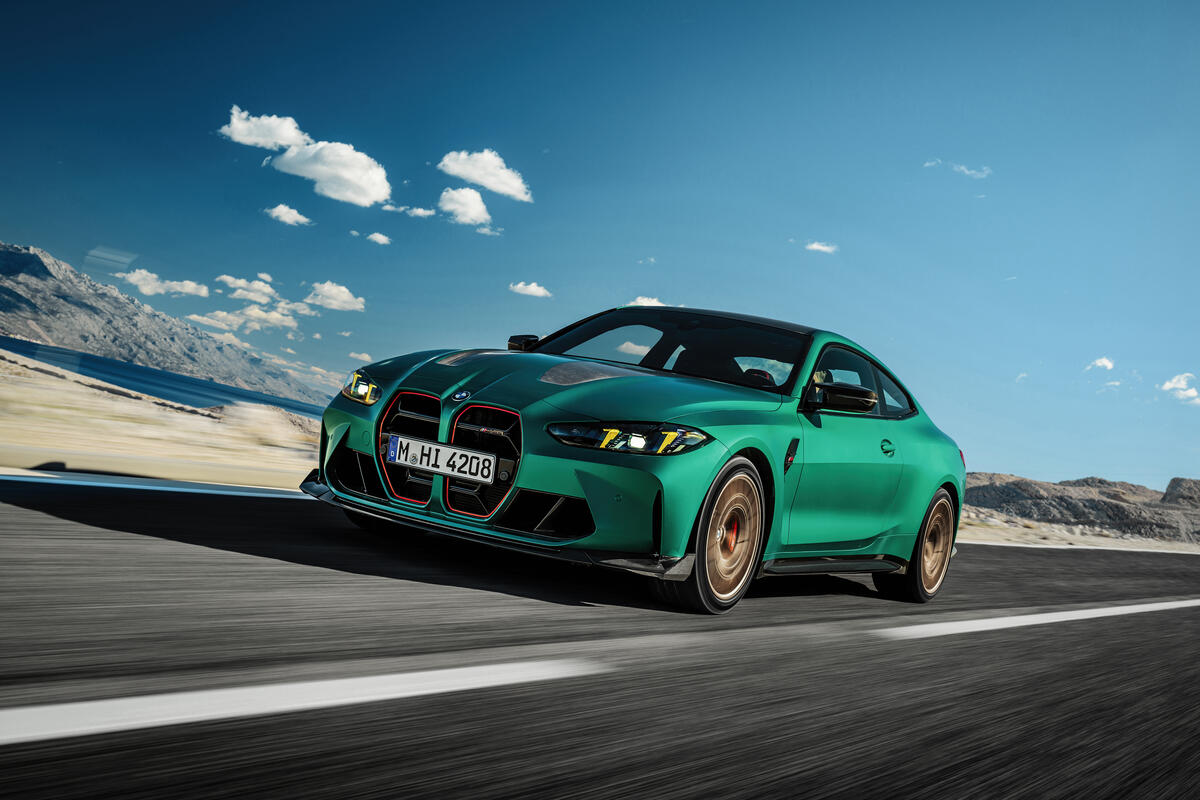
"We're here with BMW, or on their stand, at least, and they've currently got their M4 in fourth place."
This is a BMW M4 being raced in a track-racing setup (GT3). They’re talking about how well it’s doing in the race and how its grip and aero seem to be working out.
The BMW M4 is BMW’s performance coupe platform, and in this context it’s being raced as a GT3-spec car. The hosts are discussing its running position and how its aerodynamics and traction behavior compare to other entries during the Nürburgring 24 Hours.
aero
"We're not sure about its aero. They tested it clearly. But what they found out is, actually, the aero's worked an awful lot better than they thought it was going to."
“Aero” is short for aerodynamics—how the car’s shape and wings push the car down onto the track. They’re saying the wing design/position helps the car get grip sooner when accelerating out of turns.
In motorsport, “aero” refers to aerodynamic effects—how airflow over the car creates downforce and stability at speed. Here, the hosts discuss how the touring car’s rear wing placement changes when air reaches the wing, which in turn affects how quickly downforce builds and how well the car grips out of corners.
overrun
"We've got a beautiful Aston, it's V8, just screams past. The overrun on the Aston is just, ah, it's what dreams are made of."
Overrun is what happens when you lift off the gas and the engine slows the car down (engine braking). They’re saying the Aston’s engine braking sounds and feels really special as it goes by.
In racing, “overrun” is the deceleration/engine-braking phase when you lift off the throttle, often producing a characteristic sound and behavior. The hosts are praising the Aston’s overrun feel/sound as it passes—suggesting strong engine braking and a satisfying drivetrain response.
Michelin tyres
"But what's most important is the Mercedes is on Michelin tyres. Yeah, exactly. And I've just had to Google this, but Michelin up till now have had 25 overall wins at the end 24."
Michelin is a tire brand. In a long race, the tires have to keep working for hours, so which brand you run can change how fast and how stable the car feels. The host is saying the Mercedes is using Michelin tires, which is a good sign.
Michelin is a tire brand, and in endurance racing the tire choice can strongly affect grip, wear rate, and how consistently a car performs over long stints. The host is pointing out that the Mercedes is running on Michelin tires, which matters because tire performance often decides race outcomes.

Hyundai Elantra
"So BM, yeah, unfortunately, the M4's 28 seconds off third place, which, when you think about it, every 24 hours is absolutely nothing. So the Hyundai Elantra is the only car that has a little flutter."
The Hyundai Elantra is a regular passenger car model from Hyundai. The host is talking about it in the context of the race, saying it’s the only one that seems to be having a little moment or variation.
The Hyundai Elantra is a compact car model, and in endurance racing it can appear in touring-car style categories depending on the event’s rules. Here, the host mentions the Elantra as the only car showing a “flutter,” implying a small change in its on-track situation or pace.

Ford Mustang
"...very on it. It looks so good, doesn't it? Oh, the Mustang going through there as well. I've still, the spee..."
The Ford Mustang is a sports car made by Ford. It’s known for its sporty look and for being available in different performance versions. In the podcast, it’s mentioned while it’s driving through a track section.
The Ford Mustang is a long-running American sports car known for its classic styling and wide range of performance trims. It’s frequently mentioned in driving and track conversations because it’s popular, easy to recognize, and can be configured for different levels of speed and handling. In the podcast context, it’s being highlighted as it moves through a driving section, emphasizing its presence and performance on track.
fastest sectors
"And apparently last night, it changes obviously when the temperature drops at night. He said it was, it was setting fastest sectors in places, which is just unreal."
“Fastest sectors” means the quickest time in a specific section of the track, not the whole lap. At endurance events, sector-by-sector pace is a key way to show where a car is gaining—especially when conditions like nighttime temperature change grip.
Request an Explanation
Heard something you'd like explained? We'll add it to this episode.
Sign in to request explanations for terms you heard.
Want to learn more?
Browse our glossary for plain-English explanations of automotive terms, jargon, and concepts.
Help improve this episode
See something that's not quite right? Our annotations are AI-generated and can sometimes miss the mark. Click the flag icon on any annotation to suggest a correction.