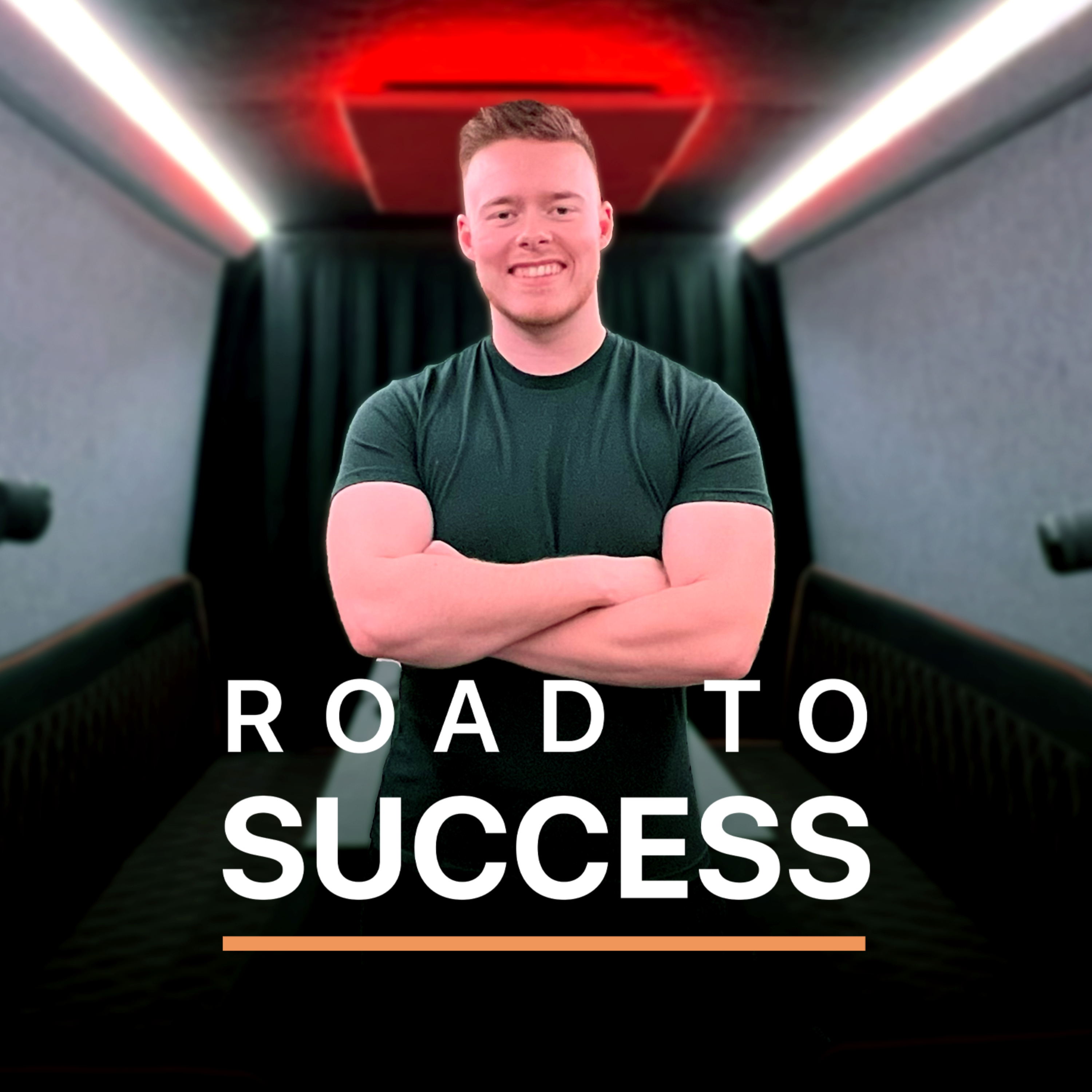
Freddie Hunt, son of legendary F1 driver James Hunt, shares his unique perspective on life, racing, and the impact of his father's legacy. He discusses his first meeting with Niki Lauda, his experiences watching the film 'Rush,' and the misconceptions it portrayed about his father. Freddie reflects on his own journey from polo to motorsport, the challenges of finding sponsorship, and the pressures of racing under his father's name. He also opens up about his life on a remote Scottish farm, his fashion brand, and his aspirations in racing, including a desire to compete at Le Mans.
Step inside the extraordinary life of Freddie Hunt, son of Formula 1 legend James Hunt, as he opens up like never before. From a childhood shaped by loss to the pressures of carrying one of racing’s most iconic surnames, Freddie shares how he found his own identity—on the track, on a Scottish farm, and far beyond the world of motorsport.
Don’t forget to subscribe to our channel for more exciting content about your favourite shows and celebrities. Hit the bell icon to stay updated on all our latest episodes
👍 Like, Comment, and Share this episode. Join our discussion in the comments section
"...what it was like to be in old Formula One was actually watching Rush, because I have grown up with the new age of Formula One."
Formula One is a type of car racing that involves very fast cars competing in races called Grands Prix. It's known for its exciting speed and advanced technology.
Formula One is the highest class of single-seater auto racing, recognized by the Fédération Internationale de l'Automobile (FIA). It features a series of races known as Grands Prix, held on various circuits around the world, showcasing advanced technology and engineering in motorsport.
"...and I think that's got no traction control, no ABS."
Traction control is a system in cars that helps keep the wheels from spinning too much when you accelerate. It helps the car stay stable and not slide around, especially on wet or slippery roads.
Traction control is a technology that helps prevent wheel spin during acceleration by adjusting engine power or applying brakes to specific wheels. This enhances vehicle stability and control, especially in slippery conditions.
"...and I think that's got no traction control, no ABS."
ABS, or Anti-lock Braking System, is a feature in cars that helps prevent the wheels from stopping completely when you brake hard. This helps you steer better and avoid skidding.
ABS stands for Anti-lock Braking System, a safety feature that prevents the wheels from locking up during hard braking. This allows the driver to maintain steering control while braking, especially in emergency situations.
"And you found yourself going up the hill in a Masarati. So, like, what were you like in that moment?"
Maserati is a brand that makes fancy and fast cars. They're known for being stylish and powerful, and many people dream of driving one.
Maserati is a luxury Italian automotive manufacturer known for its high-performance sports cars and sedans. The brand is often associated with elegance and speed, making it a popular choice among car enthusiasts.
"...so I think tested for F1 Benetton, but didn't quite get any further than that..."
Formula 1 is a type of car racing that involves very fast cars competing in races around the world. It's considered the top level of motorsport and features some of the most advanced technology in racing.
Formula 1 (F1) is the highest class of single-seater auto racing, governed by the Fédération Internationale de l'Automobile (FIA). It features a series of races known as Grands Prix, held on various circuits around the world, and is known for its high-speed competition and advanced technology.
"...tested for F1 Benetton, but didn't quite get any further than that..."
Benetton is a well-known brand that makes clothes, but they also owned a racing team in Formula 1. Their team was successful in the 1980s and 1990s, winning several championships.
Benetton is an Italian fashion brand that was also involved in Formula 1 racing as a team owner and sponsor. The Benetton Formula team was active in the F1 circuit during the 1980s and 1990s, achieving significant success, including multiple World Championships.
"...and was still in the industry as well, with Team Lotus and various other things..."
Team Lotus is a famous racing team that competed in Formula 1. They were known for their creative car designs and won many championships in the past.
Team Lotus was a British Formula 1 racing team that was highly successful during the 1960s and 1970s. Known for its innovative designs and engineering, it won multiple World Championships and is considered one of the most iconic teams in F1 history.
"...I did a Formula Ford test and a Formula Palmer Audi test in the UK."
Formula Ford is a type of racing that uses small, fast cars. It's a way for new drivers to learn how to race before moving on to bigger competitions.
Formula Ford is a single-seater racing category that serves as an entry-level series for aspiring race car drivers. It features lightweight cars powered by Ford engines, providing a platform for drivers to develop their skills in open-wheel racing.
"...I did a Formula Ford test and a Formula Palmer Audi test in the UK."
Formula Palmer Audi is a type of racing series that uses special cars with Audi engines. It's designed for drivers to learn and improve their racing abilities.
Formula Palmer Audi was a racing series that combined elements of Formula racing with Audi engines. It provided a platform for drivers to gain experience in single-seater cars and develop their racing skills.
"...I did some Formula BMW testing. So I did a good..."
Formula BMW is a racing series for young drivers using small, fast cars with BMW engines. It's a way for them to gain experience before moving to more advanced racing.
Formula BMW was a single-seater racing series designed to provide young drivers with the opportunity to develop their skills in a competitive environment. The cars were powered by BMW engines and aimed to bridge the gap between karting and higher levels of motorsport.
"And the Formula Fords with no downforce slides around a lot. I remember sort of having to point the car a few feet inside the apex to hit the apex, because they sort of, they slide out."
Downforce is what helps keep a car on the ground when it's going fast. It makes the car stick to the road better, especially when turning.
Downforce is the aerodynamic force that pushes a car down towards the road, increasing traction and stability at high speeds. It is crucial in racing to maintain control during cornering.
"and they put me on slicks. I was the fastest on the track."
Slicks are special tires used in racing that don't have any grooves or patterns. This helps them stick better to the track, especially when it's dry, allowing cars to go faster.
Slicks are racing tires that have a smooth surface without any tread patterns, providing maximum contact with the road for better grip during dry conditions. They are commonly used in motorsports for enhanced performance.
"...got the clutch just right, launched off the line. So before the braking zone,..."
The clutch is a part of the car that helps you change gears. It lets you start moving from a stop without stalling the engine.
The clutch is a mechanical component that connects and disconnects the engine from the transmission, allowing the driver to change gears smoothly. Proper clutch control is crucial for launching a car effectively from a standstill.
A corner is a turn in the racetrack that drivers have to go around. How they handle the corner can affect their speed and control of the car.
In racing, a corner refers to a turn in the track where drivers must navigate carefully to maintain speed and control. Different corners require different techniques and strategies to optimize performance.
"...to race in the TC 2000 series over there. I now knew that Formula One was pretty much impossible."
TC 2000 is a type of car racing in Argentina where regular cars are modified to race against each other. It's popular and has a lot of exciting competition.
The TC 2000 series is a touring car racing series based in Argentina, featuring modified production cars. It is known for its competitive racing and has produced many talented drivers over the years.
"...there would be either high-level touring cars or Le Mans endurance racing. I thought, well, I wanted to stay in Argentina..."
Le Mans endurance racing is a type of car race that lasts for 24 hours. Teams try to drive as far as possible in that time, which means they need to balance speed with making sure their cars don't break down.
Le Mans endurance racing refers to a series of long-distance races, most famously the 24 Hours of Le Mans, where teams compete to cover the most distance in a 24-hour period. This type of racing tests not only the speed of the cars but also their durability and the efficiency of pit stops.
"...the car wasn't great, because the engine was down in power, and then I got tagged from some tip from behind that spun me around."
An engine is what makes a car go. It takes fuel and turns it into power to move the car forward. If the engine isn't working well, the car won't be fast.
The engine is the heart of a car, converting fuel into mechanical energy to propel the vehicle. In racing, engine performance is crucial as it directly affects speed and acceleration.
"And then I got in a GT car later in 2015, and I was good again in terms of my lap times were improving..."
GT cars are sports cars made for fast driving and long trips. They are built to be both comfortable and powerful, making them great for racing and everyday use.
A GT car, or Gran Turismo car, is designed for high-speed driving and long-distance travel, often featuring a blend of performance and comfort. These cars are typically used in racing series and are known for their capability on both the track and the road.
LMP3 cars are special race cars built for endurance racing. They are very light and fast, allowing them to compete in long races against other high-performance vehicles.
LMP3 cars are a class of prototype racing cars used in endurance racing, specifically designed for the European Le Mans Series and other similar competitions. They are known for their lightweight construction and high performance, making them capable of competing at high speeds.
"...not in the full 24-hour race, but it was the Le Mans Cup. And we did that full season in 2022."
The Le Mans Cup is a racing series that includes shorter races for different types of race cars. It's a way for drivers to gain experience before competing in the famous 24-hour Le Mans race.
The Le Mans Cup is a sports car racing series that serves as a stepping stone for teams and drivers aiming to compete in the prestigious 24 Hours of Le Mans. It features a variety of prototype and GT cars racing in shorter events compared to the full 24-hour race.
"We did one race in the German prototype cup, and we had a first and third, I think, in the two races there."
The German Prototype Cup is a racing competition in Germany where teams race special cars called prototypes. These races test the skills of both the drivers and the teams that build the cars.
The German Prototype Cup is a racing series in Germany that features prototype race cars, including LMP3 vehicles. It provides a platform for teams to compete in endurance racing, showcasing engineering and driving skills.
"...because the team had not run at LMP3 Cup before. They were a GT team, right, engineering."
LMP3 Cup is a type of racing series where teams race special cars called LMP3s. These cars are made for long races and are usually less expensive to run than other racing prototypes.
The LMP3 Cup is a racing series featuring Le Mans Prototype 3 (LMP3) cars, which are designed for endurance racing. These cars are typically used as entry-level prototypes in endurance racing events, allowing teams to compete in a cost-effective manner.
"Yeah, a Le Mans 24-hour, which I haven't done yet. I really want to do that."
The Le Mans 24-hour is a famous car race where drivers compete for 24 hours non-stop. It's known for being very tough on both the cars and the drivers.
The Le Mans 24-hour is one of the most prestigious endurance races in the world, held annually in France. It challenges teams and drivers to race for 24 hours straight, testing not only speed but also reliability and strategy.
"...I haven't driven around Nürburgring yet. So I don't know, the Norse life, I'd love to do that."
The Nürburgring is a well-known race track in Germany that is famous for being very difficult. Many car makers test their cars there, and it's a popular place for racing events.
The Nürburgring is a famous racetrack in Germany known for its challenging layout and is often referred to as the 'Green Hell.' It is used for both racing and testing by manufacturers and is a popular destination for car enthusiasts.
"And, you know, LMP2, I test the LMP2 once, which was wonderful, but they're a lot faster than the LMP3 car."
LMP2 is a type of race car used in long-distance races. It's faster than another type called LMP3, making it more competitive in events like the famous Le Mans race.
LMP2 refers to a class of racing cars used in endurance racing, particularly in events like the 24 Hours of Le Mans. These cars are designed for high performance and are faster than LMP3 cars, which are a lower category in the same racing series.
"...I think Max Spars is all drivers on the grid and most drivers that ever existed."
Max Verstappen is a famous race car driver in Formula One. Many people think he is very skilled and one of the best drivers on the track.
Max Verstappen is a Dutch Formula One driver known for his exceptional talent and aggressive driving style. He has won multiple races and is considered one of the top drivers in the sport today.
Select text to request an explanation
What was the first time that you met Nicky Louder?
I was in the form of ADC Masters.
The first thing he said to me before he even shook my hand
was just as he sort of got to me.
He said, like, I loved your father.
Freddie!
Please welcome Freddie Hunt.
Who am I?
Ah, of course.
As soon as you questioned that shit,
I mean, I left school when I was young.
I was a professional career in polo,
and then switched to motorsport.
Now, I didn't know that the drivers had to find the money themselves.
I thought, great, I'll go racing, I'll get paid,
and it'll be wonderful.
How wrong was I?
He was sadly only five years old when your dad passed away.
People live and they die,
and then when people die, that is very sad.
But it is part of life, something we've all got to do.
What was your experience when watching Rush for the first time?
They changed a few details, unfortunately,
and sort of key details,
and they casted Dad very well with Chris Hemsworth,
very much for the end of the film,
because it showed a picture of actual Dad,
and I wasn't expecting that.
But did that make you miss him more,
or miss the fact that you hadn't had that time with him more?
Freddie, you carry one of the most iconic names in motor racing.
Your father, James Hunt, is remembered as a fearless champion,
playboy, and legend.
But in your own words, who are you and what do you do?
Who am I?
Well, it's an interesting question, actually.
How does one answer that, apart from my name and...
I suppose, somewhat a bit of a loner.
I like my own company,
but I live on a pretty remote farm in Scotland,
but I don't like to be there too much,
so I travel around quite a bit,
and that's one of the reasons I'm down here,
is because I'm seeing friends.
I like mostly countryside and nature,
but I guess I'm not easily satisfied with
the normal day-to-day life.
Some people can seem to have a normal job
and be quite satisfied with that,
going to the pub in the evening and holiday once a year.
I'm not really like that.
I left school when I was young
to pursue a professional career in polo
and then switched to motorsport,
and now I'm running my own fashion brand,
so there's lots of different things,
and perhaps Jack of all trades, master of none.
Maybe I don't know.
When I hear you talk about where you currently live,
reside up in the top of Scotland,
very remote, kind of on your own,
it's very peaceful existence,
and what I find fascinating, though,
is running through your veins is clearly
an element of speed,
precision, competitiveness
that you don't necessarily put together
with that kind of peaceful environment
that you surround yourself with.
So what age did you kind of discover
that you had this competitive spirit?
Probably really when I started polo after school.
I played sports at school,
but I was never really a great team sportsman,
but I was always a B team in rugby.
I never played football, but B team in rugby and stuff.
But then when I started playing polo,
I grew up on horses, you see.
So, yeah, I think that's when it really, really kicked off.
I was 13 when I started,
and 15 when I started playing tournaments,
and 16 I left school to turn professional.
And it really is a wonderful sport,
and I'd love to play again one day.
Well, two things that horses and vehicles share in common
is horse power, speed, thrill, and danger.
And one of the first times I experienced
what it was like to be in old Formula One
was actually watching Rush,
because I have grown up with the new age of Formula One.
I started watching from probably 2011-2012
and have been hooked ever since
the ages of Drive to Survive and the newer stuff.
So given that ability to look back
on what that racing was like,
now makes me look twice every time I go past
a older Skat style of Formula One car
or something a little bit special,
and I think that's got no traction control,
no ABS.
That is absolutely raw.
Now, that was my experience when watching Rush
for the first time.
What was yours?
Good movie on the whole,
but they changed a few details, unfortunately,
into a key detail,
so it didn't really paint the truer's picture.
And actually, Ron held the response
when I asked him about that,
why did you deviate from the truth?
He said, well, the truth was too awesome,
people wouldn't believe it.
I thought it was a bit of a strange answer.
But, yeah, good movie on the whole,
but one sad part,
I think they casted Dad very well
with Chris Hemsworth.
Daniel Brawl did a masterpiece of Nicky Lauder,
but I don't think Chris quite did Dad justice,
and he didn't seem to capture his personality very well.
I thought he came across a little bit cocky and arrogant,
and I don't think Dad was that.
He was more sort of...
He was certainly very naughty and mischievous, my father,
but he was more humble about it, I think.
Now, I've kind of listened to you saying that before
on various podcasts and little clips.
I saw you doing an interview walking around a golf course once,
and it was quite fun, and you kind of went into that.
But I read some of the comments underneath that,
and I thought that's how I kind of complied
some of my questions today,
because I understand if you're kind of watching that off the bat,
why some people would think, well, hang on a second,
and now you were sadly only five years old when your dad passed away.
What is it about then to now that got you to know him
so well as a personality?
Mostly just sort of stories from friends and family.
I mean, mostly I've learned, you know, I've had a lot from the media.
Many things I've had to, you know, double fact check myself and stuff like that.
You know, reading, you know, his books,
there was one book, James Hunt Against All Laws, was written with dad
when he was still alive, and that's a great one for information.
And some of his, we do have some of his handwritten notes at home,
which is very interesting, is his diaries and stuff like that, which is cool.
So yeah, just those little bits and pieces over the years,
and just hearing stories, even from strangers who I, you know,
had only ever met him once, just hearing nice stories about him, which is...
Would you say that, like, your family would compare you to him?
Often, do they say that you two are quite similar?
Certainly in looks, yes.
Sometimes one would stop as if you'd seen a ghost and...
I know, I think certainly in looks and sort of mannerisms were very similar.
I guess in behaviour we're not dissimilar, but we're not the same, of course.
Yeah, so we are fairly similar, I guess.
So talk me through ages zero to five.
Like, we all struggle to remember things about them,
but we kind of have moments that we still latch onto,
like little pictures, windows into our earliest years.
What was yours?
Honestly, very vague memories,
but I think the first three years of my life I was sort of handicapped.
I had to have an operation at the age of three or four.
I don't know exactly, my mum's gone now, so she can answer.
But basically, I was in an operation, I was 18, 19,
I spent death, which affected my balance,
and obviously I didn't talk for ages because of this.
And I think mum took me to multiple doctors and said,
he's a lovely little boy with Mrs Hunt, there's nothing wrong with him,
and eventually the doctor finally said,
okay, I think there is something wrong with this job.
I was like, I've actually seen a home video of me,
and I was sort of all over the place crashing into things.
I think a dribbling mess.
Considering that you ended up in racing cars on the grid competing professionally,
as well as in polo,
it's quite the difference from there to there.
Yeah, yeah.
I guess I was able to catch up rather fast from here.
After the operation, it sort of cleared my,
I think it was, I don't know, blocked up sinuses,
which may have blocked up ears as well or something like that.
But I was a dribbling mess with no balance,
or very little balance basically.
But any of the memories from home,
I remember the house quite well,
I remember Spag Bowl with one of Dad's favourite meals.
I remember he had his own special bowl for that meal.
I remember a few times going to the Grand Prix,
which I presumably was,
I think pretty sure was Silverstone.
I don't think we would have travelled overseas with him
when he was commentating,
but we probably went to Silverstone a few times.
Just, what else can I remember?
His A35 van.
The indicator up here.
My brother and I used to fight over who gets to put the indicator on.
Yeah, just normal memories.
And obviously at that age I was completely unaware
that my father was anything special,
or as one would be at five, I suppose.
And actually I didn't really know that he was anything special
until much later on, even when I started racing,
up until the point when he started racing.
I knew he was a world champion,
but I didn't really quite understand the gravity of his fame
and his popularity until I started racing myself.
Then being approached by so many journalists and photographers
and stuff in the spotlight a bit,
and I realised he was quite special.
I always look for a pivotal story or a pivotal moment
that opens that window and makes us realise those kind of things
in those moments.
And for me, I heard you talk about when you're at Donington
in one of your first races,
and it's only when you had that realisation of who he was
that it kind of manifested into a pressure
that you felt on yourself when you were actually racing,
because weren't you two seconds off your pace
in the race versus your practice?
Yeah.
Is that what changed?
Yeah, I think so.
One's mental state is a real bugger,
because if I could have just not put that pressure on myself,
you know, I could have done an awful lot better.
But yeah, I felt this...
Yeah, the pressure came from myself,
but you know, there was no one actually pressuring me,
but I think it's just lots of people watching me,
and I didn't really know how to cope with it.
I'd never been taught how to cope with it,
and I wasn't expecting it, so...
Do you think it would have been even harder
if the movie had been out by then?
I don't know, because maybe I would have been more prepared
for it then, or I could have been harder.
I don't know.
I think when people look at Formula One drivers
like they would do your dad in the movie,
or Senna, or any of the guys that now
clipping on their Richard Millays
before their interviews, like at the end of the race,
they would think that that comes with obscene wealth,
with obscene gain,
and that that would kind of be passed down
to the kind of future generations.
But that wasn't necessarily the story for you guys, was it?
You actually had it quite hard.
Or financially.
Yeah, I mean, in the 70s,
they certainly didn't earn anything like they do nowadays.
I think dad, after 76,
then he was obviously earning quite well,
but there was only three years after that
that he raced for, well, two and a half seasons.
And then he wasn't very good with his money, really.
Well, I think he just made some bad investments
or got screwed.
I don't know the details, but basically when he died,
he was in debt, and it was his life insurance
that covered my education.
Was you quite surprised by that,
although you can't really grasp that when you're five?
No, I had no idea. It was completely oblivious.
So your mum then pivoted and put you into
the kind of horse side of things, Polo?
Exactly, yeah.
And when did you realise that that wasn't necessarily for you?
Because I know you were really good at it,
and you want to get back into it now.
So it's clearly a passion,
but you still had to pursue that goal of racing.
Yeah, I mean, it was just kind of fate intervening, really.
I, you know, the same,
on the same day of deciding to stop the purl if,
well, at least pause it for now.
I was invited to Goodwood that same day,
and the reason was we ran out of money, ran out of horsepower.
I didn't really have a choice.
We've got to sell what's left of the horses.
I can't plan them anymore after this season,
and, you know, so we've got to sell them,
because my level had gone up,
and my horses, you know, as they go down.
So I needed fresh horses up here,
which would be, you know,
that's about a half million quid for a full string
of good horses, good youngsters.
You know, you need six or seven at that level,
and you probably want to be providing
really good young horses to keep you going for a few years.
You know, the best part of a hundred grand each.
Yeah.
And that made you pivot into something
that's equally as expensive as in motor sports.
Did you have any idea?
No, I didn't.
No, I was completely ignorant.
I thought, great, I'll go racing.
I'll get paid, and it'll be wonderful.
How wrong was I?
You know, I didn't know that the drivers
had to find the money themselves.
So talk to me about how you got to the grid.
What made you get to the grid?
So first of all, I was invited,
right at the Goodwood Festival Speed.
Like I said, that same day,
I was on Friday evening,
I popped into town to go and rent a movie,
and I went to the pub for a pint,
bumped into a friend,
and he said, come to Goodwood next day.
So I did.
And they put me in a racing car.
It was Jody Kidd, actually.
He was the boyfriend of Jody Kidd at the time.
And Jody said, yeah, if you want to drive the car,
I'll go ahead.
So, great, off I went.
And I thought, well, this is a lot of funness,
and I like this.
See, anyone listening to that now,
when they think of Goodwood,
and all the marshals up the hill,
and the hay bales,
and all kinds of colours of different wrist passes
to get here, there, and everywhere,
they wouldn't necessarily think
that if they'd just turn up at Festival of Speed,
they'd end up in a racing car going up a hill.
Well, I didn't know that.
I don't think Masarasi did.
And it was just very, very at the moment.
I was wearing Jody's overall pretending to be her.
I didn't have a racing licence at all.
Goodwood didn't know about this.
And you'd only passed your driving test
a few weeks prior?
Yeah, it must have been.
Weeks or a couple of months, not long at all.
And you found yourself going up the hill in a Masarasi.
So, like, what were you like in that moment?
Were you just, like, full of laughs lapping it up,
or what was going through your head?
A major adrenaline, because, you know,
I'd never driven a car like this before,
and I was aware of the power of it,
although it was a GC4,
so compared to what I've been racing now recently,
it was relatively slow,
but compared to my road car, it was very, very fast.
And I was aware that a lot of fans,
a lot of people were watching,
so I didn't want to crash it.
But, yeah, wow, I mean, feeling the power of that
and the noise and everything and the smells.
I think a lot of the smells of the race of the cars
may have brought back some nostalgic memories
from being at racetracks with Dad.
And, yeah, it was just really, really exciting.
And then the chap who invites me,
and this guy called Andre,
he was an ex-racing driver turned polo player,
and he said to me, Fred, you're not a bad polo player,
but you haven't got the money for it,
and you've got a farm behind you,
so I suggest you go racing if you're good at it
and you like it with your name.
You could probably make a career out of it,
so I thought, well, that sounds pretty sensible,
better than getting an office job,
or I know some other nine to five,
because I really didn't want to do that.
As I rang my uncle's dad's little brother,
and I said, this is what's happened,
this is what I'd like to do, how do I go about it?
And why did he know?
So, David Hunt, Dad's youngest brother,
raced and got up to 4,000 or 3,000,
so I think tested for F1 Benetton,
but didn't quite get any further than that,
so he wasn't experienced in the sport,
and was still in the industry as well,
with Team Lotus and various other things.
So what was his reaction to hearing
that you wanted to get into a racing car?
The first thing he said was, ring me back in a week
if you're still serious.
And did that only increase the hunger
and the passion over that week to want to do it?
Probably, I can't really remember,
but I remember putting the horse on the market
straight away and I ring him back a few days later,
and I said, yeah, I know the horses,
I'm serious. Many of you might not know this,
but away from the recordings that I do in my van studios,
I've actually got a digital marketing agency.
Now, we specialize in a lot of automotive clients,
but we cover everything really.
Our team is made up of PPC specialists,
SEO specialists, and the most talented designers
I've ever seen, which have done work
like the Starnagloss website,
the TWR website, and many more.
We've actually just built icon box
for the Auto Alex crew as well,
meaning that people that watch their channel
can buy their favorite merch seamlessly and in style.
So if you're interested in starting a project
and you'd love to speak to us,
just tap the link below and let's hop on a call.
So how did that transpire from you getting there
to actually being on the grid?
How much money did you need to find,
and what did you first get into?
So we looked at three championships.
Well, firstly, to do my license at Silverstone,
did my arduous test at Silverstone,
and then I did a Formula Ford test
and a Formula Palmer Audi test in the UK.
Then I went to Malaysia,
because Uncle David friend there was still there,
actually, and I did some Formula BMW testing.
So I did a good, when they were three,
three and a half weeks, and I did a good 10 days testing.
So that was my first real time to get to know a car properly.
And it was, yeah.
In hindsight, I was, with my consuming experience I had,
it was actually a lot quicker than I realized at the time,
but no one really ever told me that.
I was half a second off, and I knew that half,
I knew enough to know that half a second
is a long way from the front row in most categories.
That's all I was thinking about,
but no one ever told me actually for this level of experience,
that's pretty impressive.
Because you've never had any, like, formal training.
Nothing, nothing.
I mean, when I started, I didn't even know there was a difference
between a road time and a racing time.
I was so ignorant.
I knew nothing about cars.
And never been in a car?
Never been in a car.
Well, I've got a few pairs you go, you know,
four strokes, but not for racing cars.
Did you feel that it came naturally,
were you enjoying being in the car?
Yeah, very much so, very much so.
I remember the test at Snesston in the,
in the Formula Ford, and it was,
actually was this my first test,
it was this later on.
I can't remember.
No, I think this was maybe after,
yeah, I think this was after Malaysia.
So that was 2006, December,
so this must have been January, February, or March.
And the Formula Fords with no downforce
slides around a lot.
I remember sort of having to point the car a few feet
inside the apex to hit the apex,
because they sort of, they slide out.
But it came really well to me,
and it was, I think it was wet to begin with,
and then it started drying out,
and they put me on slicks.
I was the fastest on the track.
There were no, I think, none of last season's drivers,
or maybe one or two, but none of the front runners.
But they were fixing, you know,
guys could have been carting for several years
and coming to Formula Ford now.
I think I was the fastest on the circuit,
in the Formula Fords at least.
And so they put me onto slicks,
and it never should be that crash pretty quick
on the, on the drying track in slicks,
which caused a bit of an argument
between my uncle and the team.
But I was, yeah,
I just felt pretty comfortable in the car.
Do you believe in like natural talent?
Do you believe it is handed down, like raw speed?
I don't know if it's hereditary or not,
it probably is.
But yeah, some people, you know,
can try for a long, long time and never get it,
and never, never be that quick.
Did you get more help with the name behind you,
because people wanted you to get into those racing seats?
Or did you think that it was going to be a lot easier
than it actually was?
Yeah, I certainly underestimated how hard it would be
to find, you know, the sponsorship.
And I was pretty lucky in the first season,
I got help from a few family, friends,
and I had a few small commercial sponsors,
but most of it was, you know, donations essentially.
And actually one of the partners of the team,
one of the owners of the team he invested for,
you know, with a commercial gain to that.
And so it was a combination of things,
but they weren't, I think only 10% of the budget
was actual stickers on the car, if you know what I mean.
And was that with belief that you would have
this hereditary raw talent, raw speed?
Because if you're going to those investors,
you're going to that team like,
no, I've never carted, I've never had that experience,
never had anything, but I am a hunt.
Yeah, well, I think my uncle did most of the talking,
to be honest, and he was in that sponsorship industry.
I think he was better at marketing
than he was at driving himself.
I think he admitted that.
So he was leading most of the negotiations.
But yeah, I mean, I was aware that I was fairly quick,
you know, when I saw the lap times
compared to other drivers.
And actually looking back in Malaysia,
there was myself, one experienced young driver,
Jasmine Jafar, he's now in world endurance temperature.
And a few other drivers,
and I think I was quicker than all the others,
if I remember rightly, maybe one that was,
you had some experience, he was quicker than me,
but all the other new drivers weren't as quick as me.
So that gave me some confidence.
You're on a build, you're building confidence,
you're building speed, you realize you're quick.
What was the bit that then suddenly it got really hard?
Yeah, that was it.
But I think at the first race at Donnington,
well, it was the second race of the season,
we missed the first race of the season,
I was at Alton Park.
And the first race at Donnington,
I think it was then that it was just so many people watching me,
reading can photographers and journalists.
And I was so sort of wrapped up in my own emotions
that I didn't even see the bloody checker flag.
I did two extra laps in the first race.
Well, second race, because the first race I crashed
and took out five cars.
Made a hell of a start, hilarious.
I qualified about 18th, I think,
and got the clutch just right, launched off the line.
So before the braking zone,
I already passed about a few cars.
And then everyone went to the inside to cover the inside.
I stayed in the outside and braked where I could brake
because there was no one preventing me,
making me brake earlier.
And so I passed several more cars there
and then carried nice speed into the corner.
And so I think I was up to about 6th or 7th
by the halfway through the first corner.
But then I just dipped a tyre on the axle in the grass
and then which turned me into the pack
and spun me into the pack and took out four or five other cars.
So it was a bit of a front page of most sport news.
It's Hump the Shunt Junior.
So thanks for that, guys.
How did that transpire into how you were feeling?
Because was the goal already sitting in that car
to get to Formula One?
It was then, yeah, absolutely.
The media coverage being called Hump the Shunt Junior
didn't help me at all.
Yeah, it was a frustrating time.
I didn't know my own mind very well then.
I'm still learning it now, I think, as we all are.
But as we do over the course of our life,
but it's just going to read and understand
what was going on in my head.
I didn't know what it was pressure.
I didn't know what to do.
But now it took me quite a few years.
I stopped racing in 2009 because of this issue.
It only got worse and worse.
In 2009, two and a half years after starting, I stopped.
And then in 2014, that's when I came back
and I was living in Argentina at the time
and I went to a race meeting.
I was a spectator and that's when I decided,
oh, maybe I can race again.
And by that time, I'd processed a lot of information in my mind
and I could sort of, I'd matured a lot.
So you still wanted to go racing?
You still wanted to make it happen.
So how did you start that again?
Well, I tried to find sponsorship in Argentina
to race in the TC 2000 series over there.
I now knew that Formula One was pretty much impossible.
So I wasn't aiming for that.
So I thought, what's the next best thing?
There would be either high-level touring cars
or Le Mans endurance racing.
I thought, well, I wanted to stay in Argentina,
but anyway, couldn't find enough budget out there.
I found some, but not enough.
So I came back to the UK and I was my first race.
I did a Formula Ford race just to sort of get the dust off
and that went really well.
Sadly, the engine was down in power
so the finishing result wasn't very good.
I didn't actually finish the race
because I think I got tagged from someone else and spun around.
But anyway, the point was my mind was better
and I was matching my own pace.
If not, I was even getting quicker and quicker in the races.
So that gave me a lot of confidence boost.
Oh my, so I can actually do this.
I was right.
I haven't matured enough.
And then after that, most of the time,
I was getting quicker and quicker
and then sadly, later that year, since 2014,
then I did the MRF championship.
But only two months before that started,
my mum passed away and I'll confess I drank too much
and I was feeling ghastly.
And so my head was not good in these races either
and I wasn't very comfortable in the cars in the MRF.
For some reason, I just couldn't seem to find grip
and then it went miles off the pace
and again, the mental demons came back
and no self-belief and it all went wrong again a bit.
But then what was the next?
But what I find fascinating about that time stamp
for a minute, that date, 2014,
is that's a year after Rush was released.
So was watching that film,
even though you weren't necessarily pleased
with how Chris Hemmerworth played your father,
was there still a resurgence to get back in a car
and did any of it come from watching Rush?
Yeah, I think so.
Well, not an encouragement to get back in the car
just from watching the film, but the film made me aware that
you know, if Dad's more, you know,
the hunting name is now more in the spotlight again
that might be more attractive.
I might be now a little bit more attractive to sponsors again
just from a pure marketing point of view.
So it was encouraging for the movie coming out for sure.
Just take me to 2013, a year before that race in Argentina,
presumably.
The film comes out.
How much consultation before Rush came out
did they actually do with you?
Did they? Nothing.
No, I mean, my brother and I went alive in those days,
so none with us, but they did speak to my uncle,
two of my uncles they were talking to,
and the McLaren, you know, obviously other people,
but within the family, you know,
the producers spoke to my uncles,
to my David Norm or Peter's actual name,
but Tom and I, my brother, we weren't involved at all.
Because I heard that the actor that played Niki Lauda
actually spent two weeks living with him,
like to get inside the mind of him before playing that part.
Yes.
Which seems like that wasn't necessarily done on the side of you.
Well, that's what upset me a little bit about Chris.
I don't think he did any research.
Well, he didn't contact the family once
to try and learn a bit about the personality,
and that's what I thought.
Either he's just, he's winging this,
or he's been directed to act like that,
in that way, and I don't know which one he was,
but the fact that he didn't contact the family once,
and in contrast, you know, Daniel Broad lived with Niki
for a couple of weeks to really do some proper homework,
and I thought, well, there's quite a difference
in professionalism there.
See, when I sit down to watch a film,
if it's like a big film,
there's something that could be impactful for argument.
Say, like, I love Formula One,
so when I went to go and watch the F1 movie recently,
I was almost like, right, this better be good,
because I love this sport.
This better be good.
I'm about to spend two hours of my life in this cinema.
This better be good, and to be fair, I really enjoyed it.
I did really like it.
But for you, where were you?
Like, just set the scenes.
There might be some gold in there, like,
where were you when you first sat down to watch that film?
How did you feel?
Was there, like, a sense of bloody hope this is good?
I think so, yeah.
That was at the premiere in London, Leicester Square,
when I first saw it.
And it was quite a big event, you know, red carpet
and all that stuff.
I think there was...
I can't really remember what I thought,
sort of, in the moment, watching the film,
but I remember getting very emotional at the end of the film
because it showed a picture of actual dad,
and I wasn't expecting that,
and so I needed a few minutes alone after that.
But I think it may have been after the seconds I'm watching it,
and I really sort of started to look at it with a different...
Yeah, when you first see something,
and particularly with all that going on around you,
you know, the big London premiere.
But to be honest, I can't remember that well.
So did that make you...
I mean, I really drunk that night at the party,
and I've probably wiped a bit of my memories, please.
But did that make you miss him more,
or miss the fact that you hadn't had that time with him more?
I don't know.
I don't really think about that.
I mean, it's life, people live and they die.
And then when people die, that is very sad,
but it is part of life, something we've all got to do,
and it's straight up we don't actually talk about it more.
It's really odd, because it's something that we all have to do.
One of the only things that we all do the same is dying,
but we don't talk about that.
But no, I've just sort of accepted it.
I mean, maybe there is some subconscious,
a resentment for Dad for abandoning me,
but nothing conscious.
What was the first time that you met Nicky Louder?
When was the first time you met Nicky Louder?
Because I saw an interview that you actually did with him
with, I think it was Formula One themselves.
I've seen you meet him.
I think you're in the Mercedes F1 garage.
But had you met him prior to watching the film?
Briefly at Hockenheim in 2009,
when I was in the Formula ADC Masters,
Matias, his son was in the DTM,
and Nicky was there and we had a quick chat on the grid.
Actually, the first thing he said to me,
before he even shook my hand,
was just as he sort of got to me,
he said the first words he had said to me was,
I loved your father, and that was very emotional.
If you're enjoying the episode of Road to Success,
please like and subscribe to the channel.
And if you fancy taking a closer look at my fashion brand,
it is LKHUNTS.com.
Do you think they, in the film,
made it out to be more of a hatred than it actually was?
Absolutely. That's one of the details,
the main details that they changed,
which I thought was really daft.
Dad and Nicky were really good friends.
They were very close friends and they showed in the movie
in the meeting in Formula Three,
where the truth is they arrived at that race together
in the same car coming from the same flat.
And I verified this with Nicky.
I said, I heard that you and Dad lived together.
And he said, yeah, not full-time,
but we did share a flat every now and again.
Did you ever ask Nicky what he thought of the film?
I think I probably did.
I can't remember any unusual answer.
I think he probably said, yeah, it was good.
The first time you had a proper conversation with him,
was that sit-down for like Formula One?
How did that happen?
Did they call you up to kind of bring you two together for that chat?
I can't remember who organised it.
No, the first one was...
So, we did a documentary with Matthias Loud and myself
and Matthias Racing against each other.
And I think it was the guy that organised that,
put Nicky and I together just for some nice content, really, I suppose.
And that's what they wanted.
And it's great for me to have a good chat with Nicky.
So, was that on your racing from kind of 2014 onwards,
where we were getting with that there?
Was that when like, even though, yeah, she got spun out of the first race,
did you get any further with that kind of stuff?
Sorry, I don't know.
You were racing in 2014, you got to say someone out on the first race.
What was it like then after that?
So, I had the confidence up,
because I said my head was better, although the car wasn't great,
because the engine was down in power,
and then I got tagged from some tip from behind that spun me around.
But anyway, yeah, my confidence up,
because I wasn't putting the pressure on myself like I did before.
But then like, so I got to the MRF Championship later that year,
which was December 2014, only a couple of months after Mum died.
And my head was all over the place again, but understandably.
And then I got in a GT car later in 2015,
and I was good again in terms of my lap times were improving
during the race rather than going all over the place
and I could focus and concentrate on my own race rather than
what's going wrong and who's watching me and who's quicker than me
and all the other thoughts that go through a negative head, as it were.
Was that one of the favourite series you raced in then?
My favourite is definitely the LMP3 cars.
Well, looking back, I mean, I would love to race the class,
the Formula Fords again, the originals, because they are so much fun.
I suppose Formula Ford and LMP3 are been the most enjoyable cars.
LMP3 are really nice, and I've had some success in those recently.
Because you raced at Le Mans as well, right?
Yeah, not in the full 24-hour race, but it was the Le Mans Cup.
And we did that full season in 2022.
I had my first taste, actually, in LMP3 in Esterel.
Must have been 2018, I think.
And then 2019, I raced at Le Mans in the Le Mans Cup in just a one-off race.
That was quite good.
That was my first taste at Le Mans, and I was quite quick.
I really enjoyed it.
I love Le Mans.
It was a hell of a circuit.
And then in 2022, I managed to get a full season with a decent team.
And we did the full season.
We came second in the championship, and we won the last race this season.
We had three other podiums that year.
We had a race win in the...
We did one race in the German prototype cup, and we had a first and third, I think,
in the two races there.
And, yeah, I mean, I think we could have won the championship in 2022.
If we had some preseason testing, all our testing got COVID cancelled,
and then snowed off.
So we turned up to the first race with a shopping trolley,
because the team had not run at LMP3 Cup before.
They were a GT team, right, engineering.
So they were guessing how to set it up.
So the car wasn't very competitive at the first race.
In the second race, we had a penalty.
That was a mistake by ourselves, and we had some break problems during the practice.
We had much practice, but we crossed the line in fourth,
but then got penalised, so no points there.
So we actually on paper finished 19th, because we had basically petted too early.
I think a minute too early, that was the problem.
And then the third race, which was Le Mans, then we were on the podium.
And I think we could have won both races.
We were so far ahead, sort of over and after mid-distance,
after I handed the car over to my teammate,
but then they brought out the safety car and bunched everyone up together.
So we had a 10 or 20-second lead.
But then they brought the safety car and bunched everyone up together,
and that happened several times throughout the season,
which was bloody annoying.
When you build up a 20-30-second lead, which I did at the beginning,
and then you bring out the safety car and it gets ruined.
So we could have easily had three wins that season.
Had they not been safety cars.
Was that podium like a highlight moment?
What did that feel like standing on there?
Because when you watch the film and you look back at some of those times,
I specifically pick out the big bokeh rings of flowers
that used to go around the neck when drivers won the bottle of champagne.
Was that finally that moment that you could be like,
oh my God, we're close to winning now.
We're on the podium.
It was, yeah, massive confidence boost.
I think for my teammate as well, Matt, he's a lovely guy.
Yeah, a huge moment.
I think it was a good party that night.
Do you have your dad's celebration skills?
Uh, maybe.
Talk us through the evening.
I can't remember.
You can't remember.
No, I remember being really hungover the next day.
Yeah, drinking champagne in the truck with the team
often in the evening and then the blow off.
That does sound like a hunt to be fair,
but this is why I'm kind of fascinated by the other side of your life,
which is the kind of peaceful existence up on the farm.
I've heard you talk so passionately about your pigs, about your animals,
about everything that goes on up there,
and it couldn't really be to a lot of people further away
from those celebratory moments after a podium in at Le Mans.
They're so kind of far away from each other.
What was the reason that you decided to purchase a farm up in Scotland?
Um, it was very spontaneous.
I had essentially a job offer up there.
I mean, I went up there anyway, but this was during COVID times.
All the sponsors pulled out because of COVID
and racing, it looked like it was coming to an end.
And that's where your income had been coming from was your asset.
Um, so I was working for a friend on a sporting estate in Scotland.
And then he invited me to come and do a bit of work,
you know, run a business with him on the isle of Butte.
And, um, so I said yes.
And so I moved to a place on Butte.
And it was actually funny, the house I've got now,
I'd seen six months before from the top of the hill,
not realizing that it was empty.
And at that time, not realizing that I was going to move to Scotland,
but I thought, oh, I'm lucky by that, I'll get my left arm for that.
And then six months later, that house was mine.
So why was that? What made you think that?
Just the remote location of it.
And it's just a little farm in the middle of its own Glen,
no neighbors.
Well, there is one other farm, you know,
just three quarters of a mile further up the Glen.
Um, but it's just peaceful and quiet, but not so remote.
It's not like I'm several drives, several hours drive into the Highlands.
You know, I'm still within two hours of Glasgow and Glasgow Airport,
10 minutes from a town.
Um, I've got to see around me. I like being near the sea.
I'm not really much of a sailor or anything like that.
Um, but I do like the ocean.
I just had lots of things that I liked.
And the price of the property was very attractive as well.
And I thought, you know, this is a nice amount of land that I can, um,
you know, have my own, you feed, I can feed myself,
which is also attractive to me because I don't trust what's in supermarket food.
Do you think that would be any similarity with what you know about your dad?
Could you ever have seen from what you know,
your dad doing something like that?
I mean, that was a bit of a non-conformist.
I mean, you know, he could have done, but he was also,
he wasn't really much of a country with my dad.
He was just, he was more of a town, I suppose,
than he was, I don't think he had a bit of it.
So do you think that side comes from your mother?
Yes. Yeah. 100%.
So talk us through the farm.
What's on it? What have you currently got and like,
how much of your life does that take up?
Pig's sheep and poultry and a vegetable patch.
And the veggie patch is actually the most time-consuming of all of them.
It's the weeding. If you're growing organic with no spraying,
not spraying any, you've got to pick bloody weeds by hand
and there's a pain in the arse,
but you've got to keep on top of them.
And then you end up with a jungle of weeds.
It's a nightmare.
So that's the most time-consuming for sure.
And the hardest work is just growing the vegetables,
but it's really rewarding.
I mean, I buy very little from the supermarket these days,
just dairy and tobacco basically, and just salt and spices,
everything else that's just from the farm.
So you've finished picking and eating from the farm,
although there's never a finish really, is there?
And in between that, you get in the car or get on a plane
and come down and go racing.
And how frequent is that?
Well, sadly, I haven't actually raced since 2023.
I mean, I plan to, I would like to race more,
but I'm focusing on other businesses now
because I'm getting on a bit for a professional driver
and I've got to make some money.
So that's why I launched the fashion brand,
which I should have been wearing now,
two years ago with a friend of mine.
And so that's the main focus now.
But I'm still keeping my ears open for sponsors
and UN teams if I can race.
If I get the opportunity, I will. I'd love to.
So what makes you passionate about fashion?
To be honest, I've never actually been that into fashion.
But I do, my friend presented me with the idea
we met in 2014 in that MRF championship
and he came up with the idea.
And I actually just really like the idea of it.
So it's all handmade with natural fabrics.
And so we want to be as sustainable as one can be
in this world.
So everything you see here is all mattress,
all silk linen, silk threads,
apart from the metal, which won't go...
I think there might be a tiny bit of polyester in this zip,
which we didn't make ourselves,
but apart from that, it's 100% natural fabric and it's art.
And I love wildlife and the initial concept,
which is still our main thing, is based around wildlife.
So I thought, well, this is wonderful
because I need to make a business,
need to run a business, need to make some money.
I don't want to get a proper job.
I love the idea of it.
And then I never realized that I would actually have
a bit of creative side at me.
And I'm really getting into it,
enjoying the creative side of it now,
designing the clothes.
So a bit like motorsport,
it never crossed my mind before,
but once I got into it, I really enjoyed it.
I want to go back to Nicky for a second
because you spoke about life and death earlier
and how we should probably talk about that a little bit more
and how that's the thing that everybody kind of has in common.
What was that like for you when you heard that Nicky had passed?
It was upsetting, but I didn't know that I wasn't close to him.
So, you know, yeah, I mean, I'm all now when someone passes.
I don't think of the person that's passed.
I think of the person who's left behind and how they're coping.
Because, you know, it's pretty tough for people
because I think we are unprepared for it.
And I think a lot of people still believe,
well, a lot of people do believe that this is it.
You know, when we die, that's it's game over.
And I know that not to be true.
I can't explain how I know that, but I do know that.
We have a eternal soul.
So that's why death to me is not the end of the world.
It's just the next step.
But the people that don't have my faith,
it's very hard for them.
So when someone dies,
I don't think about the people they've left behind
or the actual person that's now in a peaceful state.
Do you think your dad's biggest smile moment looking down
would have been that podium at the moment?
No.
I think my own spiritual growth would be the most proud of, I think.
Being on the farm up in Scotland,
does that give you a sense of contentment?
Being able to provide for yourself,
being able to feed yourself or the rest of it?
Do you find peace in the contentment of it?
Yeah, absolutely.
How quiet is it up there?
Silent.
I mean, the fields around me are occupied by tenant farmers,
so I hear their quad bikes and stuff sometimes,
and there's a bit of planting going on in the field
and the hill behind me.
So there's tractors and stuff going up, but it's quiet.
I think what I'm fascinated by is we spoke about earlier
kind of natural talent being passed down as potentially hereditary.
Like, you get in the car and you just know the feel.
When I watch and have seen the videos and images
of what your dad was like as a person,
I can't necessarily imagine him to cope
in, say, such a peaceful environment
with no people, nobody around.
I know you said a lot of that comes from your mother
with a love of horses, but do you think
he would have coped from what you know?
I don't know.
Probably, yeah.
I think anyone can cope.
I mean, well, I wouldn't want to be up there 12 months of the year.
Continuously.
I do get cabin fever for sure.
You know, I miss my friends.
I miss socialising.
On the island, yeah, I've got some friends ever.
They're not close mates.
So, yeah, I actually don't realise I'm getting cabin fever
until I leave the place.
This year, I spent more time there this summer
than I have in the past five years since I moved up there.
And when I've left, come down south or gone abroad,
I was like, whew, actually, crikey.
So it doesn't make you want to come back down?
No.
Not to live permanently.
No, there's way too much people and traffic down here.
And, you know, this new building is going up everywhere,
which breaks my heart when I see this lovely countryside
and, you know, some people call it progress and development.
I see it as destruction.
It upsets me.
So, do you think the key to happiness for you is peace?
I think it's key to happiness for anyone, isn't it?
It depends because if someone's chasing something competitive
in terms of a title or a world championship,
sometimes the key to happiness is actually pushing through peace
and going through absolute terror in some cases
to just get the thing that they think will give them peace.
So maybe not necessarily.
I mean, yeah, if some people are satisfied once they've reached that target
and that gives them peace, then great.
But I think a lot of people, they might reach that goal
and then realize, well, actually, they're still not quite content.
They've got to go on to do other things.
I mean, some people, you know, after a time and they carry on doing other things
and you're trying to make more money and all sorts of things.
So I think we've got to learn to enjoy the ride rather than, you know,
it's about the journey, not the destination.
Do you think that there's still some journey to be had with you in racing?
Yeah, I like things.
Is there something that you'd love to do that you still think is achievable
that you haven't yet done yet?
Yeah, a Le Mans 24-hour, which I haven't done yet.
I really want to do that.
Other endurance races, you know, I'd love to race at Bathurst,
for example, I haven't driven around Nürburgring yet.
So I don't know, the Norse life, I'd love to do that.
And, you know, LMP2, I test the LMP2 once, which was wonderful,
but they're a lot faster than the LMP3 car.
And I'd like to get to that level.
Do you still watch Formula One?
Yeah.
What do you think of the current spread of drivers?
Who springs to mind has the talent that you believe your dad to have had?
Well, firstly, I think Max Spars is all drivers on the grid
and most drivers that ever existed.
I think he's just phenomenal.
He really is.
But I think there's a really high stand of driving now.
They're all really, they're all bloody good.
They're all really, really quick.
I mean, Lando and Oscar have really on it.
You've got Lewis and Lewis, Lewis will move.
Nothing needs to be said more there.
He's a hell of a driver.
And, you know, they're all really, they're all really good.
Alonso is still, you know, he's ancient now, but he's still going strong.
Incredible, yeah.
When you see what's happened to Oscar in the last few races
and we're recording this podcast with, say, I think it's four left
at the end of the season, just off the back of Brazil.
Do you see the pressure on him like it was for you
when you hopped in that car at Dunnington?
Possibly, yeah.
And Lando earlier on in the season, I can see it now
that in drivers it's mental thing, is it?
He's lucky.
Well, he's not lucky.
He's a few tenths off his pace, but I guess once you...
You know, I was on my first season,
my nerves would put me two seconds off my pace
and his nerves put in two tenths off his pace
because he's got it so drilled into his muscular memory.
But yeah, I mean, the crash he had in the sprint race,
that may have been, I don't know, not thinking 100% clearly
because of his nerves, I don't know.
You're very authentic and what I mean by that as well is
F1 in the past used to be extremely authentic,
you know, drivers sat on the wall smoking a fag after a race
or they've got their girls around them and...
It was just so much more of a theatre, almost.
It was so much kind of passion and authenticity coming through.
Does it frustrate you when you watch the drivers these days
that have been like media trained to the hilts,
not actually being them true selves in front of camera?
Yeah, it does.
It is a shame, but it's because of the media.
For the same reason, yeah, they can't say anything
without getting twisted around and taking out a context.
You know, just the journalists can't be trusted as simple as that.
Do you think you would be able to conform to such media standards
to present yourself in such a way,
or do you think you'd still be the guy smoking a fag on the wall?
Well, if I was at that level, I'd have to stop smoking.
I don't think I could be fit enough.
But yeah, I'd like to.
But if I were still smoking, no, I wouldn't hide it.
Yeah, the media training, I would probably...
Yeah, because I am very open and honest.
I could easily open my mouth and say the wrong thing
without thinking it through properly.
I'd probably have a team member on either side
with a stick ready to clout me if I was about to say something stupid.
Well, I think it's been fascinating to hear your story
of why racing matters to you,
what you felt getting in a car in those earliest times,
everything that you're doing now, like your fashion brand
and why you seek peace up in the remote areas of Scotland,
and you also live a life at more than 100 miles an hour.
So I just want to say thank you for joining me so much on Road to Success,
and hopefully we'll see you back here in the future.
Yeah, you're welcome. Thanks.
Request an explanation for:
Request an Explanation
Heard something you'd like explained? We'll add it to this episode.
Sign in to request explanations for terms you heard.
Want to learn more?
Browse our glossary for plain-English explanations of automotive terms, jargon, and concepts.
See something that's not quite right? Our annotations are AI-generated and can sometimes miss the mark.
Click the flag icon on any annotation to suggest a correction.