President Trump's visit to Detroit stirred controversy as he defended tariffs and emissions standards while touring Ford's F-150 plant, where he had a heated exchange with a worker. The episode also highlights the Detroit Auto Show, where Dodge, Ford, and Hyundai won top awards, and Honda unveiled a new logo. A significant discussion centers on polling data revealing a 20-point decrease in Republican resistance to electric vehicles over three years, with insights from Mike Murphy of EVs for All America on the implications for automakers amidst changing political sentiments.
President Donald Trump visited Detroit to tout tariffs and flipped off a worker at Ford’s F-150 plant. Bill Ford defends the automaker’s nearly $20 billion EV write-down. Plus, new polling shows Republican resistance to EVs has eased 20 points over three years as cultural hostility declines, though purchase interest dipped recently. Mike Murphy of EVs for All America explains what’s driving the shift and why only 28 percent of auto consumers rate Trump as a friend of the industry.
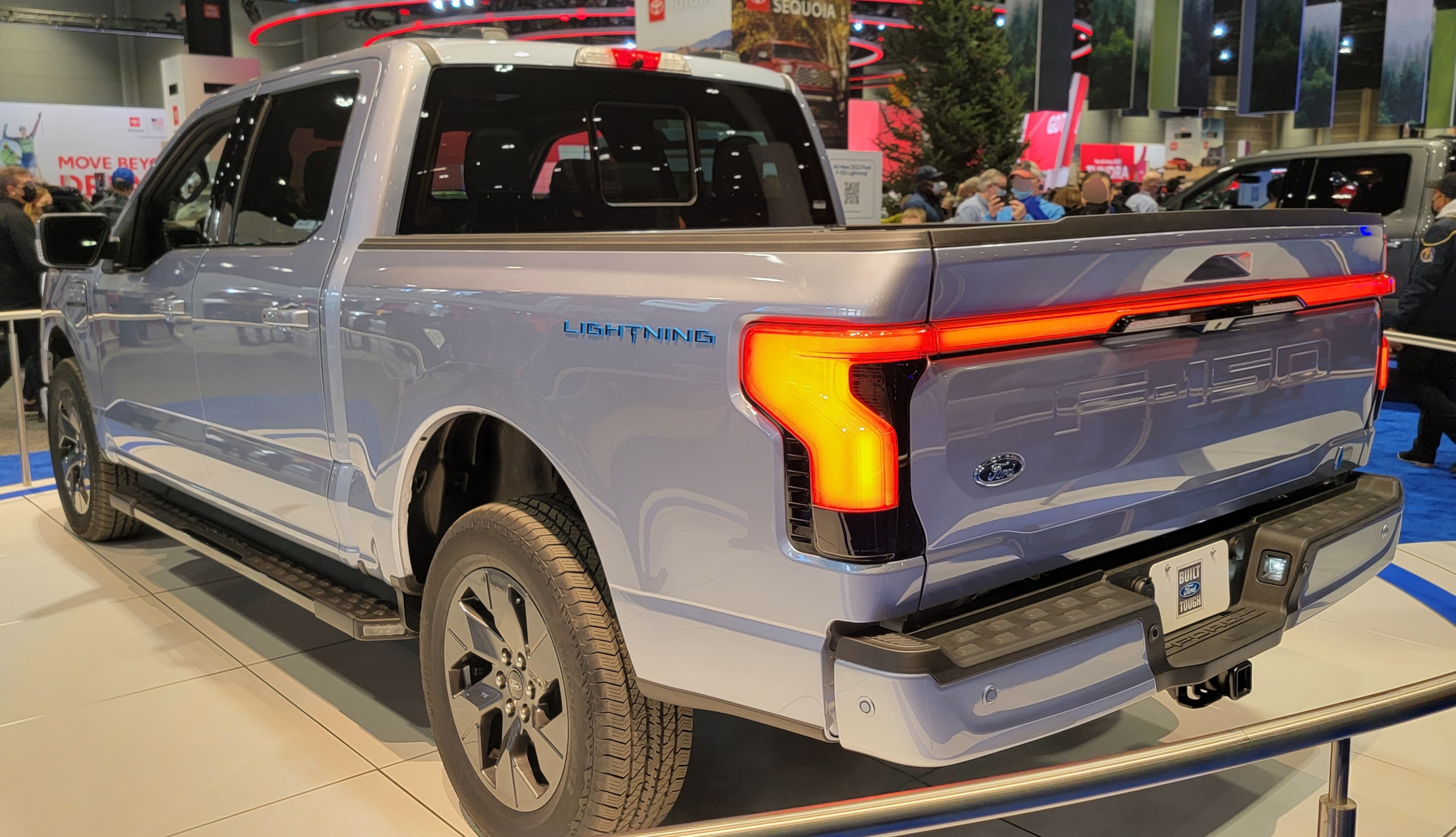
"...to tout tariffs and tour Ford's F-150 plant, where he flipped off a worker who heckled him..."
The Ford F-150 is a popular pickup truck that people use for work and everyday driving. It's known for being strong and reliable.
The Ford F-150 is a full-size pickup truck known for its durability and versatility. It's one of the best-selling vehicles in the United States, popular for both personal and commercial use.
"...dodged Ford and Hyundai win Nactoy Awards at the Detroit Auto Show..."
The Nactoy Awards are awards given to the best new cars and trucks in North America. They are decided by a group of car experts and journalists.
The Nactoy Awards, or North American Car, Truck, and Utility of the Year Awards, are prestigious automotive awards given annually to recognize excellence in new vehicles. Winners are selected by a panel of automotive journalists and industry experts.
"...and Honda unveils a redesigned logo as part of what it's calling a second founding for the automaker."
Honda is a car company from Japan that makes reliable cars and motorcycles. They are known for their good fuel economy and safety features.
Honda is a well-known Japanese automaker recognized for its reliable vehicles, including cars, motorcycles, and power equipment. The company is also noted for its innovations in fuel efficiency and safety technology.
"...new polling reveals Republican resistance to EVs has eased 20 points over three years..."
EVs are electric cars that run on batteries instead of gas. They are better for the environment and can save money on fuel.
EVs, or electric vehicles, are cars that are powered entirely by electricity rather than gasoline or diesel. They are known for being environmentally friendly and often have lower operating costs compared to traditional vehicles.
"Ford's Maverick Lobo took home truck of the year..."
The Ford Maverick Lobo is a small truck that is good for driving around the city and carrying things.
The Ford Maverick Lobo is a compact pickup truck that combines versatility with efficiency, appealing to urban drivers and those needing a practical vehicle.
"Ford showed the Bronco RTR the night before the media day."
The Ford Bronco RTR is a special version of the Bronco SUV that has been upgraded for better off-road capabilities and a more aggressive look. RTR is a brand that makes performance parts for Ford cars.
The Ford Bronco RTR is a modified version of the classic Bronco, designed for off-road performance and style. RTR, which stands for 'Ready to Rock', is a brand known for its performance upgrades and accessories for Ford vehicles.
"...d for the year ahead, but I think a little bit on edge as well. Not surprised at all."
The Ford Edge is a type of vehicle called a crossover SUV, which means it combines features of cars and trucks. It's designed to be roomy and comfortable, making it a good option for people who need space for passengers or cargo.
The Ford Edge is a midsize crossover SUV that has been in production since 2006. It is known for its spacious interior, comfortable ride, and a range of available technology features, making it a popular choice for families and individuals alike.
A mid-sized pickup is a truck that is not too big and not too small, making it easier to drive while still being useful for carrying things.
A mid-sized pickup is a type of truck that is larger than compact pickups but smaller than full-size pickups, offering a balance of utility and maneuverability.
"...the F-150s and the Broncos and the Mustangs of the world that are making money hand over fist."
The Ford Mustang is a famous sports car that many people love for its speed and style. It's been around for a long time and is considered a classic.
The Ford Mustang is an iconic American muscle car known for its performance and sporty design. It has a rich history and remains popular among car enthusiasts.
"...it's going to be very hard to get mass electrification, which is very bad news for an American auto industry..."
Mass electrification means getting a lot of people to switch from gas-powered cars to electric cars. This is important for helping the environment.
Mass electrification refers to the widespread adoption of electric vehicles across the automotive market. This transition is crucial for reducing carbon emissions and achieving sustainability goals in the transportation sector.
"...what is clearly going to be the dominant powertrain of the future over the next 30, 30 years."
A powertrain is what makes a car move. It includes the engine or motor and all the parts that help it work together to drive the car.
A powertrain is the group of components that generate power and deliver it to the road. In vehicles, this typically includes the engine, transmission, and drivetrain. In the context of EVs, the powertrain is usually electric motors and batteries.
Select text to request an explanation
Welcome to Daily Drive for Wednesday, January 14, 2026.
I'm Kellan Walker in Las Vegas.
Today on the show, President Trump visited Detroit to tout tariffs and tour Ford's F-150
plant, where he flipped off a worker who heckled him, dodged Ford and Hyundai win Nactoy Awards
at the Detroit Auto Show, and Honda unveils a redesigned logo as part of what it's calling
a second founding for the automaker.
Plus, new polling reveals Republican resistance to EVs has eased 20 points over three years.
And Mike Murphy of EVs for All America explains why automakers should care.
EVs were connected to Biden.
Biden's gone now, so a little bit of the accelerant for all the political squabbling is gone.
Let's run through all the news you need to know to keep up in the auto industry.
Ahead of the Detroit Auto Show, President Donald Trump visited the Motor City on Monday
to tout his administration's policies, defending tariffs and moves to gut emissions standards.
Speaking at the Detroit Economic Club, Trump reiterated his openness to letting Chinese
automakers open factories in the U.S.
They want to come in and build a plant and hire you and hire your friends and your neighbors.
That's great.
I love that.
Let China come in, let Japan come in.
They are, and they'll be building plants, but they're using our labor.
Earlier, Trump toured Ford's Dearborn truck plant with CEO Jim Farley, viewing an American
flag wrap Super Duty pickup Ford plans to build for the U.S.'s 250th anniversary.
But the visit ended with Trump flipping off a worker who heckled him as he exited.
Ford suspended the worker, who said he has no regrets whatsoever.
More on that in a minute with automotive news Ford reporter Michael Martinez.
To kick off the Detroit Auto Show, the North American car, truck and utility vehicle of
the year awards went to Dodge, Ford and Hyundai.
The Dodge Charger won car of the year, marking Dodge's first ever nomination in the category.
Ford's Maverick Lobo took home truck of the year, giving Ford its sixth straight win in that segment.
And the Hyundai Palisade captured utility vehicle of the year, Hyundai's second win since the
category launched in 2017.
50 automotive journalists from North American outlets voted on the winners.
And Honda is unveiling a redesigned logo starting in 2027.
The Japanese automaker is calling it a second founding for the company.
The minimalist H mark drops the border ring and features wider, tilted arms representing
outstretched hands serving customers.
It'll debut on next generation EVs and hybrids including the Zero Series, though Honda hasn't
confirmed if gas only models will get the new badge.
Honda says the refresh extends beyond vehicles to dealerships, communications and motorsports.
You can see Honda's redesigned logo at AutoNews.com.
And those are today's headlines.
You can find more details on all those stories at AutoNews.com.
The Detroit auto show was underway at Huntington Place this week.
Our own Michael Martinez covers Ford in a UAW for automotive news and he's been on the show floor.
Mike, welcome to Daily Drive.
Thanks for having me, Kyle.
Mike, what's the vibe at the show?
What are you seeing and hearing from automakers and suppliers?
Well, I'll be honest with you.
The vibe isn't that great.
We've talked a lot in recent years about how the show isn't what it once was pre-pandemic.
And I don't think that's ever going to change.
You see maybe a few more displays, a little more excitement than even last year,
but it pales in comparison.
I'll give you a couple examples.
I was on the show floor this morning and talked with a few people.
There was one PR person from a company I won't name who had been doing a stint in Europe.
And now that person's back in the United States.
And this is the first show they've been to, I believe, before the pandemic.
And they told me they were shocked because of how much open space there is
and how different it was compared to the last time they were there in a bad way.
Another interaction I had with a European analyst,
first time in North America at this show, who goes to many shows around the world.
And again, was shocked at how little there was for North America at the Detroit auto show.
So in terms of reveals, there was a grand total of one.
Ford showed the Bronco RTR the night before the media day.
But to get to your question about what the vibe is like,
what automakers and analysts are saying, I think the overall theme is there's still
some cautious apprehension about how the year is going to play out, similar to 2025.
Tariffs may have settled down a bit, but there's still a lot of uncertainty there.
Companies are still trying to navigate new federal policy and rising affordability concerns.
So everybody is excited for the year ahead, but I think a little bit on edge as well.
Not surprised at all.
Bill Ford defended the company's nearly $20 billion EV write down saying it was about
recognizing what reality was in the marketplace.
Walk us through what Ford executives are saying about their EV strategy now.
Yeah, so this was sort of the first chance we've had to talk to Ford's executives since
they made that announcement about the $20 billion charge about killing the lightning
in December.
They were at the auto show at that Bronco RTR reveal.
And again, they basically said, like you alluded to, it's recognizing reality that we weren't
making the kind of money.
We weren't making any money, frankly, on EVs.
The volumes weren't what we projected.
So it was better to pull the plug, so to speak.
But at the same time, Ford stressed that they're not backing away from EVs.
They're just changing the strategy.
They're not doing these large, expensive pickups and SUVs anymore.
They're focusing on the entry level part of the market.
With this new platform that's coming in a few years, it's going to underpin a mid-sized pickup
for $30,000.
So I think that's the right strategy.
And the executives are still pretty bullish on the company's prospects because they do have
the F-150s and the Broncos and the Mustangs of the world that are making money hand over fist.
And that can help them sort of survive whatever is going on in the EV world right now until
they figure out that sound business plan.
Now, Mike, before you go, we got to talk about Trump's visit to the Dearborn truck plant,
where he gave the middle finger to an employee who heckled him.
What do we know about the worker and his status at the company?
And how is Ford reacting to all of this?
Yeah, this is interesting because I'm sure when Ford hosted the president of the United States,
they did not expect this to be what everyone was talking about.
And it's a bit unfortunate in that sense.
But we know that worker has been suspended.
The UAW issued a statement not that long ago saying they're going to fight to make sure
that worker gets all his protections under his contract.
Bill Ford addressed this at the auto show last night a few hours after the incident happened.
He said he was disappointed because he wanted to be a good host for the president.
And he realized that this was going to mar what was otherwise a positive tour,
a positive visit for Ford with the president and the folks he was with.
He said, hey, this was six seconds out of an hour tour and it's unfortunate.
But it is what it is.
Interesting though, there's some folks who supported what that worker is doing,
who have started a GoFundMe page that has raised over $300,000 at this point as of early
in the afternoon.
I'm sure that number is going to continue to grow.
You saw the White House issue a statement saying they thought the president's reaction
to him was completely appropriate in giving him the middle finger and saying some expletives
that we can't repeat on the podcast.
But sort of a wild moment in this tour that involved Trump seeing how the F-150s were made
and really praising Ford for its industrial capabilities.
It was only six seconds, but it's the six seconds that everyone will remember.
Mike Martinez, thank you so much for joining me.
Thanks, Bill.
You can read all of our reporting from the Detroit Auto Show at AutoNews.com.
Coming up, Mike Murphy of EVs for All America discusses new polling that shows Republican
resistance to EVs has eased 20 points over three years and why this long-term cultural shift
matters even as short-term purchase interest has dipped.
That's next on Daily Drive.
If you're an automotive supplier and you know your team is building the next big thing,
prove it on the industry's biggest innovation stage.
Automotive News is now accepting applications for the 2026 PACE program.
PACE awards recognize traditional and non-traditional suppliers worldwide
for new product, process, and business model innovation,
and entries must be innovations already commercialized through a sale to an automaker.
Still pre-commercial but past the pilot stage, PACE pilot recognizes post-pilot
pre-commercial innovations across automotive and future mobility, products, software,
IT systems, and processes with the potential to revolutionize an automaker's business.
All submissions are reviewed by an independent panel of judges,
and MIMA is the exclusive lead sponsor.
Ready to be recognized? Apply by February 9th at AutoNews.com.
Welcome back to Daily Drive. I'm Kellan Walker.
New polling from EVs for all America reveals that Republican resistance to electric vehicles
has eased significantly over three years, but Republican openness to actually buying an EV
has dipped five percentage points in the past year. Mike Murphy is founder and CEO of EVs for
All America. He spoke with our own Jake Nier about what's driving these shifts and what they mean
for automakers. Mike Murphy, as always, it's great to have you on the Daily Drive podcast.
It is great to be here, Jake. I'm a multi-time caller and a multi-time listener, so I'm a big fan.
Excellent. This is wonderfully time because, as you know, I am just, as of recording time,
hot off President Trump's visit here to Detroit, where he talked about EVs, he talked about the
automotive industry, didn't break a whole lot of news. I've definitely gotten into that brain
space for today. First of all, you have a really interesting study out here. I want to start with
something that might be surprising to some people, and that's that your latest research shows that
Republican hostility toward EVs has dropped 20 points over three years. What's driving that shift
and why should auto industry executives care about this trend?
Well, that's a fantastic question, Jake. I was a general in the Republican Party for a long time,
but I grew up in Detroit around the auto industry, and I care a lot about it,
and I'm too old to learn Chinese. So I founded this thing three years ago to kind of bring what
we've learned in political marketing and political polling to get inside this Republican knee-jerk
hatred for EVs. What caused it? How do we fix it? Auto executives ought to care because if you look
at what we poll, which we call the car commerce market, basically Americans with a family income,
total family income of $50,000 a year higher. That's about two-thirds of the presidential electorate,
but it's well over 80% of the new and used car market. Republicans are 40% of that group.
They're the plurality. Democrats are 36%. So if Republicans rule out EVs, it's going to be very
hard to get mass electrification, which is very bad news for an American auto industry, or that of
our allies who manufacture here and in North America to get the scale they need to be world
competitive in what is clearly going to be the dominant powertrain of the future over the next
30, 30 years. So we're here to help the companies learn how to market better to get around a political
problem, which is new to them. I was at one C-suite in the company. What do we spend on
research a lot? Do we ever ask people because there's this huge EV thing among Republicans?
No, we ask them any cup holders you want. Well, we'd better learn to. So we've been welcomed into
a lot of OEMs, and they've all found our data, especially the CMOs, very helpful, and that's
why we were created. So as far as your question, I'm a politician. So first of all, I've got my
speech. Don't filibuster here. Yeah, exactly. You have a hook, and you're not afraid to use it.
We ask a lot of head shrinker questions. We do a poll every November of car covers,
and one of them is we do a series of statements. Do you agree or disagree with this statement?
And one of my favorite statements is kind of a tell, is agree or disagree. EVs are for people who
see the world differently than I do. That's the two Americas, the culture war, all the swamp
that EVs have become stuck in. In November of 23, 59% of Republicans agreed with that statement.
EVs are not for people who see the world like I do. It's for the other side, quote-unquote,
and 41% disagreed. That's an 18-point difference. Then in November of 24, it had closed to 52-48,
and in November of 25, it's 51% for the first time a majority disagree with that statement,
and 49% agree. So when you look at the trend lines on our data, and anybody can read our data deck
that we put out, by the way, you can be the CEO of an auto company or the CMO and just go to
evsforallamerica.org. It's all there, 72 slides, enjoy. So the word of mouth on EVs are very good,
and we know that because the data shows if you buy an EV, there's an 80% or better chance you're
going to become a permanent EV driver. So the more EVs that sell, the more word of mouth. It's
kind of like the old German warfare movie. In four days, the whole world will have, you know,
it grows. And so that's been happening. That's one. Two, we have the Trump-Elon Musk bromance.
Elon has crazy numbers. He is incredibly, he's as partisan as Sean Hannity. So Democrats hate
Elon Musk. Elon's favorable, unfavorable rating with Democrats is 86 unfavorable, 18 favorable.
I mean, that's world-class. And the other hand, with Republicans who tend to be still more EV
skeptical or even hostile, Elon's numbers are 67 positive, 33 negative. So Elon becoming a known
Republican figure, even though he's had his ups and downs with Trump, and we have a lot of that in
the data here, has still been a signal to Republicans that EVs are okay. Finally, we're not in the middle
of the campaign. In the last presidential campaign, there was well over $25 million spent
trashing EVs by the refining industry and by the Trump campaign. A lot of it in Michigan, by the way,
where most of the pounding on EVs by the Trump campaign happened. Kamala Harris never responded
with advertising. Slotkin did. She won, Harris lost. Because EVs are really a jobs issue. The whole
key to selling more is get off the environmental virtue stuff, which is actually holding EVs back,
faster, fun to drive, no gas, less repairs. The last thing about Elon, just quickly,
we asked opinions of a few notable car brands among people seriously interested in buying an EV
in the next year or so, which is about 18% in our data. Chevy's doing fine, 76 over 24, favorable,
unfavorable. Toyota, which is always the strongest favorable brand, even though they're not as EV
helpful as some other brands, is 91 favorable, 9 unfavorable. Mercedes, 88 favorable, 12. Cadillac,
76 over 24, right there was Chevy. Tesla, 54 favorable, 46 unfavorable. I'm serious about
buying an EV. That one to one ratio in politics is not a good one. So, Elon has helped make EVs
interesting to Republicans in a macro sense, but he has been in the shorter sense in the current EV
market, a thousand pound anchor around the brand. I am glad I'm not the Tesla CMO, because I would
be sitting at my desk at 4 AM holding a bottle of whiskey and a revolver just silently crying,
because that brand has taken such a beating among the sectorate of the electorate that they most
want to sell a car to. It is fascinating that it seems like Elon Musk's stance on this and his
closeness to President Trump and his own personal movement toward being more and more politically
right wing could be such a liability for his own company, but for EVs overall, it seems like there's
a lot of thawing among Republicans. Maybe he has something to do with it also. Again, I just came
from the Trump speech where Trump actually spoke highly about EVs himself, even though they had
their big falling out. He and Elon Musk, he said, I like Elon. I like his products. I just don't
think that they should be mandated for everybody in such a short period of time. And I wonder about
that. If there's any evidence to suggest that now that we are in an environment where EVs are not
being regulated, that Trump has gone after California's waiver, the EPA's emissions standards,
and all of these things, is it possible that Republicans are also just saying, well,
now that the government's kind of out of it, maybe I don't feel so strongly about them.
Yeah, there's some of that. It's also that EVs were connected to Biden. Biden's gone now, so a
little bit of the accelerant for all the political squabbling is gone. The problem with President
Trump is he'll talk a good EV game once in a while, but the policy actions have been terrible.
I mean, I'm a conservative. I don't like subsidies. I don't like so-called mandates,
so EVs were never mandated. There was pressure on the industry to admit less CO2. It was kind of
ironic that Tesla made most of his money through essentially corporate welfare, selling credits
to meet a government requirement. But the problem is if you're ford and you're trying to sell vehicles
around the world, and China is willing to sell vehicles at a loss, and if you try to form the
Beijing branch of the UAW, they throw you in jail, so it's an unfair competition. And so the
Chinese, I had a friend who's on our board who's a national security naval intelligence person,
then was US ambassador to Singapore under Secretary of Commerce for Asia and the Bush
administration. He puts it pretty succinctly, which is the Chinese don't have an economic
strategy for EVs. They have a political strategy. What is it? Deindustrialize the competition.
You wipe out the American auto industry. That's very good for China's strategic power. Same thing
for Europe. We'll make money later, but first we're going to cripple the industrial backbone
of our rivals. Not necessarily enemies, but rivals. The Chinese want to dominate this century. They
want it to be their 20th century. So this is, they're willing to, you know, of the 100 or so
Chinese EV brands, only three make money, and you have to kind of trust communist Chinese
accounting to believe that, but it's probably true. You know, they are spending their federal and
regional subsidy money to conquest markets everywhere to deindustrialize the democratic
competition. That is a huge issue. So if you're president and you're down Trump, you say, I don't
like subsidies. Well, if the other side is writing a blank check to destroy you, and it's hard to make
a profit on a vehicle, one of the auto CEOs, senior executives said, you know, I have to
work for Wall Street, not the communist Chinese government blank checkbook. It's very hard to
compete with that. Donald Trump's living in a dream world, you know? And what happens? You get
British Leyland, where have a lot of tariff walls where make fewer and fewer cars, and they won't
be very competitive anymore. Interesting that you bring that up. One thing that really struck me
in the speech in Detroit today was Trump saying, let China in. You know, basically,
I don't care where they're based, if they're employing Americans, let's get them here. But
your polling shows that 88% of Republicans worry about losing manufacturing jobs to China,
with 53% worrying a lot. I'm curious, you know, what you make of that, and you know, maybe there's
a disconnect here, maybe, between Trump and his base? Is that is that fair? I think a little bit.
You know, we did a poll last year of only Republicans all across the country to kind of
crack this thing. And we asked a lot of China questions. The first thing is nobody knows,
we asked Republican voters, which country makes the most cars in the world? And a third of them
said USA number one. Another third said Japan with US second. Only a third, one out of three,
knew that China was the biggest auto manufacturing in the world. And then we said just China generally
compete fairly or unfairly in international trade. 8% said fairly, 92% said unfairly. And then we
said, well, what about losing manufacturing? It may threaten our national security. 88% of
Republicans said they worry about that with over half worrying a lot. We said China manufactured
three times as many cars as us last year. Is that a good thing or a bad thing? Or are you unsure?
Two thirds said a bad thing, only 3% said a good thing. So the real problem, there's China
concerned, but they don't know. The vast bulk of the Republican rank and file has no idea how
powerful China is in cars. And, you know, I don't mind Chinese companies to some extent
manufacturing here. But if the Chinese are allowed to enter this market, the conquest it
with labor practices that would last about an hour, even in a non-union American plant,
let alone a UAW plant, very dangerous. You can hear more from our own Jake Nier's conversation
with Evie's for all America CEO, Mike Murphy on this week's bonus episode of the show available
Sunday morning. That's daily drive for today. I'm Kellen Walker. Thanks to our own John Irwin,
Michael Martinez, Nick Bunkley, Hans Grimel, and Riley Hodder for their reporting for today's
podcast. You can get the latest news on Evie polling data, the Detroit Auto Show, and everything
happening in the auto industry at AutoNews.com. We'd love to hear from you. Let us know what
you think of the show and the topics we covered today. Send us an email at dailydrive at autonews.com
or leave us a voicemail at 313-444-2774. And if you enjoyed the podcast, remember to like,
leave a review, and subscribe so you never miss an episode.
Request an explanation for:
9 cars
Scroll for more
9 cars featured
Request an Explanation
Heard something you'd like explained? We'll add it to this episode.
Sign in to request explanations for terms you heard.
Want to learn more?
Browse our glossary for plain-English explanations of automotive terms, jargon, and concepts.
See something that's not quite right? Our annotations are AI-generated and can sometimes miss the mark.
Click the flag icon on any annotation to suggest a correction.