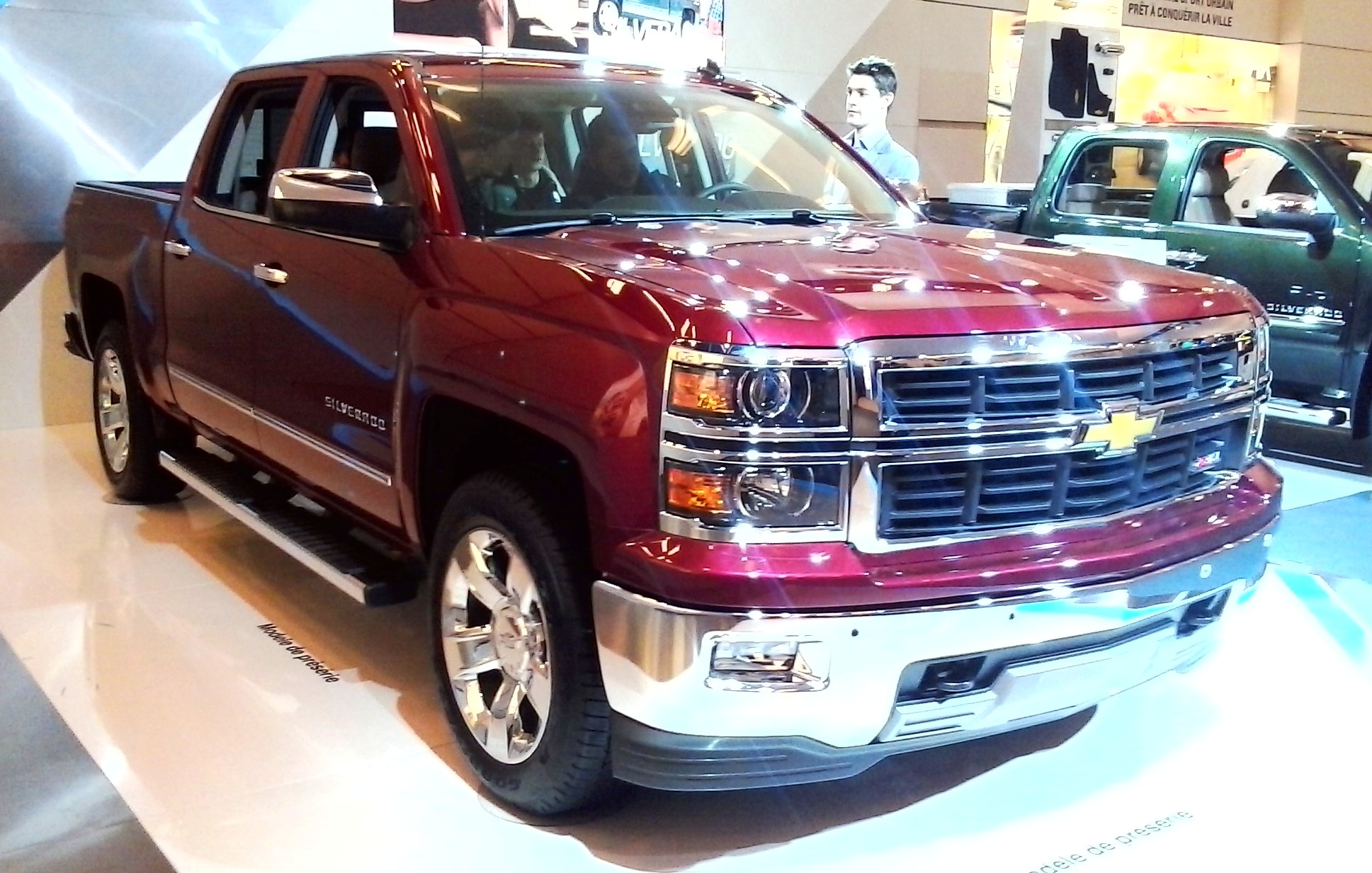
General Motors is cutting a shift at its Oshawa plant, resulting in 700 layoffs, while Amovio announces 4,000 job cuts in R&D amid market challenges. Ford's Lisa Drake is appointed to lead its new battery energy storage division. A significant discussion features Stephanie Manning from MADD, advocating for mandatory impairment prevention technology in vehicles, likening it to the seatbelt's life-saving impact. The episode delves into legislative debates surrounding this technology and the potential for reducing drunk driving fatalities.
"...0 workers. The plant east of Toronto builds Chevy Silverados. GM delayed this move in September because of hi..."
The Chevrolet Silverado is a big truck that people use for carrying heavy loads and towing things like trailers. It's popular because it can handle tough jobs and comes in many different styles to fit different needs.
The Chevrolet Silverado is a full-size pickup truck known for its robust performance, versatility, and capability. It has been a significant player in the truck market, often praised for its towing capacity and range of configurations, making it a popular choice for both work and leisure.
"...battle to adapt in the technology race toward electric vehicles and software-based features while facing stiff competition from China."
Electric vehicles are cars that run on electricity instead of gasoline. They are becoming more popular because they are better for the environment.
Electric vehicles (EVs) are cars that are powered entirely or partially by electricity, typically using batteries instead of traditional internal combustion engines. The automotive industry is rapidly transitioning towards EVs due to environmental concerns and advancements in technology.
"Ford has named Lisa Drake, president of its new battery energy storage business, Ford Energy. Drake will oversee everything from battery sale manufacturing to system assembly and sales."
Battery energy storage means keeping energy in batteries so it can be used later. This is important for using renewable energy and electric cars.
Battery energy storage refers to systems that store energy for later use, often utilizing batteries to capture energy from renewable sources or during off-peak times. This technology is crucial for managing energy supply and demand, especially with the rise of electric vehicles.
"Ford is ending production of the escape crossover this year. Steve Blazing is chairman of the Ford National Dealer Council..."
The Ford Escape is a small SUV that many people use for everyday driving. It's known for being practical and having a lot of space for passengers and cargo.
The Ford Escape is a compact crossover SUV that has been popular for its versatility and practicality. It offers a range of features and options, making it suitable for families and individuals alike.
"...mer on the Lincoln side and obviously, you know, Corsairs are going away too and they have so few products ..."
The Lincoln Corsair is a fancy small SUV that provides a comfortable ride and lots of nice features. It's designed to appeal to people who want a stylish vehicle with a bit of luxury.
The Lincoln Corsair is a compact luxury SUV that offers a blend of comfort, technology, and performance. It is part of Lincoln's effort to modernize its lineup and attract younger buyers, making it significant in the luxury SUV market.
"...ey have so few products that it's sort of, okay, Nautilus is really the only thing, you know, the next step..."
The Lincoln Nautilus is a larger, upscale SUV that focuses on making your ride smooth and enjoyable. It's designed for people who want a bit more luxury and space in their vehicle.
The Lincoln Nautilus is a midsize luxury SUV that emphasizes comfort and advanced technology. It represents Lincoln's commitment to providing a refined driving experience, making it an important model in their lineup as they focus on fewer products.
"...you could do Bronco Sport, you could do Maverick, you could step up into Explorer..."
The Ford Bronco Sport is a smaller SUV that is good for both driving in the city and going off-road. It's designed for people who like adventure and outdoor activities.
The Ford Bronco Sport is a compact SUV that combines off-road capabilities with everyday usability. It is part of the Bronco family, which is known for its rugged design and adventurous spirit.
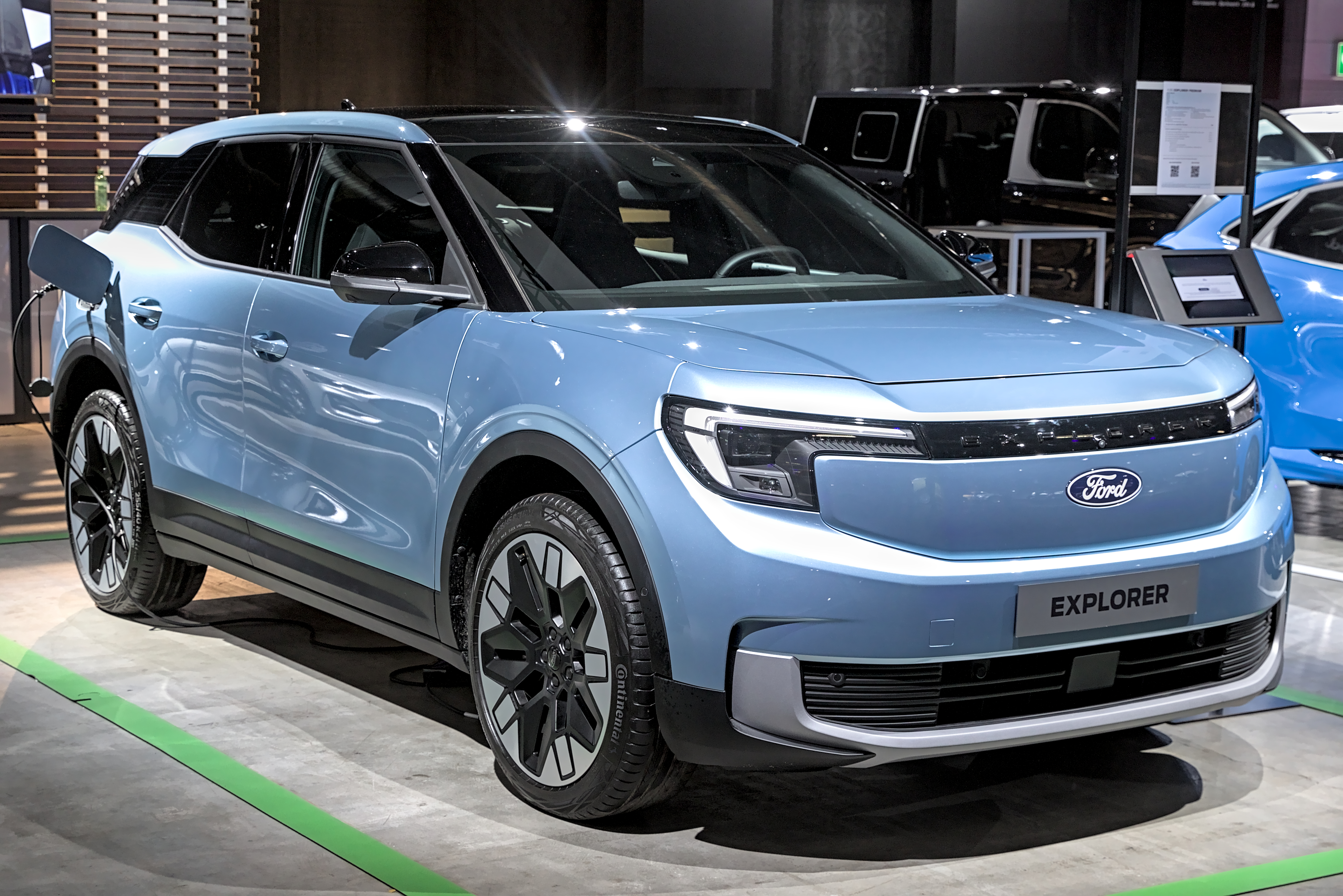
"...you could do Bronco Sport, you could do Maverick, you could step up into Explorer..."
The Ford Explorer is a medium-sized SUV that has a lot of room for families and their stuff. It's comfortable to drive and good for long trips.
The Ford Explorer is a mid-size SUV that is popular for its spacious interior and family-friendly features. It is known for its comfort and capability, making it suitable for both city driving and road trips.
"...The Halt Drunk Driving Act is the next version of that. It will save more than 10,000 lives every year, and a lot of the same arguments are what we're dealing with now..."
The Halt Drunk Driving Act is a proposed law that would require new cars to have technology to prevent drunk driving, much like how seatbelt laws were created to keep people safe in cars.
The Halt Drunk Driving Act is a proposed law aimed at implementing anti-drunk driving technology in all new vehicles, similar to how seatbelt laws were established. It is expected to significantly reduce fatalities caused by impaired driving.
"...the second piece is what does the car do? And it can differ if the car detects a person is at point 08 or above..."
'Point 08' means having a certain amount of alcohol in your blood, specifically 0.08%. If someone has this level or higher, they are not allowed to drive because it affects their ability to operate a vehicle safely.
'Point 08' refers to a blood alcohol concentration (BAC) level of 0.08%, which is the legal limit for driving in many jurisdictions. If a driver's BAC is at or above this level, they are considered legally impaired.
"...the system knows if you are at 0.08 BAC or above without you having to direct any breath at all. So then there's touch based systems..."
BAC means Blood Alcohol Concentration. It's a way to measure how much alcohol is in your blood, which helps to see if someone is too drunk to drive safely.
BAC stands for Blood Alcohol Concentration, which measures the amount of alcohol in a person's bloodstream. In the context of automotive safety, it is often used to determine whether a driver is legally impaired.
"...and then DMS is another option as well. I think, again, MAD is technology neutral..."
DMS means Driver Monitoring System. It's a technology that watches how attentive a driver is, helping to keep them safe while driving.
DMS stands for Driver Monitoring System, a technology designed to monitor the driver's attention and alertness. It can help prevent accidents by ensuring that drivers remain focused on the road.
"...but when the auto industry who has thousands of the brightest and most brilliant engineers in the world decides to..."
MAD means Mobility as a Driver. It's about using new technologies in cars to make driving safer and more efficient.
MAD stands for Mobility as a Driver, a concept that emphasizes the integration of various technologies in vehicles to enhance safety and efficiency. It reflects the shift towards smarter automotive solutions.
Select text to request an explanation
This podcast is brought to you by Reynolds and Reynolds, the industry leader in automotive
technology. Learn how Spark AI, Reynolds Unified AI data layer, can help you unlock your full
potential by visiting rayray.com slash spark dash AI. That's R-E-Y, R-E-Y dot com slash Spark dash AI.
Welcome to Daily Drive for Wednesday, January 28th, 2026. I'm Kellan Walker in Las Vegas. Today
on the show, GM is cutting the third shift at its Oshawa assembly plant laying off 700 workers.
Amovio cuts 4,000 R&D jobs worldwide and Ford names Lisa Drake to lead its new battery energy
storage business. Plus, Stephanie Manning of Mothers Against Drunk Driving joins the show
to explain the organization's support for impairment prevention technology. Essentially,
this is the next seatbelt. Let's run through all the news you need to know to keep up in the
auto industry. General Motors is cutting the third shift at its Oshawa assembly plant Thursday,
laying off about 700 workers. The plant east of Toronto builds Chevy Silverados.
GM delayed this move in September because of high demand. But now it's happening.
Uniform local 222 president Jeff Gray says the blame is clear. Oshawa is losing 50,000 light duty
pickups a year while Fort Wayne, Indiana gains 50,000. US President Donald Trump imposed up to
25% tariffs on Canadian-made vehicles last April. GM hasn't directly linked the shift cut to tariffs
but cited forecasted demand and the evolving trade environment when announcing the plan last May.
Continental spin-off Amovio is cutting up to 4,000 research and development jobs worldwide.
That's as the German supplier faces what it calls a challenging market environment
and intensifying competition. The cuts will be largely complete by year's end.
They'll affect staff in Germany, India, Singapore, Romania, Serbia, and Mexico.
Amovio is part of a broader wave of German supplier cuts. ZF and Robert Bosch together
accounted for more than 30,000 job reductions. Suppliers are battling to adapt in the technology
race toward electric vehicles and software-based features while facing stiff competition from
China. Amovio says automation played a role in reducing development positions.
And Ford has named Lisa Drake, president of its new battery energy storage business,
Ford Energy. Drake will oversee everything from battery sale manufacturing to system assembly
and sales. This marks a significant pivot for Ford as it repurposes billions in battery plant
investments after canceling upcoming EVs. The automaker plans to convert its Kentucky battery
plant with a $2 billion investment to serve data centers and utilities rather than vehicles.
Drake is a 30-year Ford veteran. She's been named twice for automotive news 100 leading women.
And those are today's headlines. You can find more details on all those stories at autonews.com.
Ford is ending production of the escape crossover this year. Steve Blazing is chairman of the
Ford National Dealer Council and owner of Blazing Motor Company in Minot, North Dakota.
He spoke with automotive news Ford reporter Michael Martinez about the strategy to keep escape
customers in the Ford family and why dealers are tracking retention rates as a top priority.
Here's an excerpt from that conversation. Did you agree with Ford's decision or maybe if you could
speak on behalf of counsel as a whole, did counsel agree with Ford's decision to end production of
the escape? Good question. You know, unfortunately, those product decisions, we don't get to play a
part in their process and how they plan a product cycle. The dealers all wish we still have escape
since it was such a great product or still is such a great product. But with the selldown of
escape, our job now is to make sure we keep those customers in the Ford family and we offset
the loss of the volume with other lines. So we're working close with Ford to accomplish both goals.
The good news, even with the selldown of escape, we're keeping a vast majority of those owners
coming out of escape in the Ford family. Could you talk about the strategy a bit in terms of
where they go? Because it seems like, you know, I was talking with Matt Demmer on the Lincoln side
and obviously, you know, Corsairs are going away too and they have so few products that it's sort
of, okay, Nautilus is really the only thing, you know, the next step. But with Ford, there's,
you know, a variety. You could do Bronco Sport, you could do Maverick, you could step up into
Explorer. Where do you think the biggest opportunity will be? Where do you see most customers going?
Our goal is to move those customers into another Ford product. So we're working very close with
Ford to make sure that we have the proper packages and payment walks for those customers. So we see
those customers going into Explorer Base, Explorer Active, Bronco Sport, and Maverick. And we track
this, this is one of our key priorities. So we track this every month with Ford. And nationally,
right now, our lease renewals from escape owners going into another product are tracking at a very
high renewal rate into other Ford products. So those product lines seem to be where most of our
customers are going. And the retention of those customers is one of our biggest priorities.
And then the other option would be through Ford Blue Advantage. But we're really trying to keep
them in Explorer, Bronco Sport, or Maverick. Automotive news Ford reporter Michael Martinez
spoke with Ford National Dealer Council Chairman Steve Blazing. You can find more on that story
at AutoNews.com. Coming up next, Mads Stephanie Manning discusses why she thinks impairment
prevention technology should be mandated in all new vehicles. That's next on Daily Drive.
If you're an automotive supplier, and you know your team is building the next big thing,
prove it on the industry's biggest innovation stage. Automotive news is now accepting
applications for the 2026 PACE program. PACE awards recognize traditional and
non-traditional suppliers worldwide for new product, process, and business model innovation.
And entries must be innovations already commercialized through a sale to an automaker.
Still pre-commercial but past the pilot stage, PACE pilot recognizes post-pilot pre-commercial
innovations across automotive and future mobility, products, software, IT systems,
and processes with the potential to revolutionize an automaker's business. All submissions are
reviewed by an independent panel of judges and MIMA is the exclusive lead sponsor. Ready to be
recognized? Apply by February 9th at AutoNews.com. When your AI tools are siloed, lost data, duplicate
entries, and confusion are inevitable. Spark AI isn't another AI tool to manage. Instead,
it's a unified AI data layer, changing the game by ensuring your solutions are making life easier
and working at their highest capacity. Don't miss Spark at NADA. Watch Ray, our new AI assistant,
bring everything together in one intuitive command center for smart, fast decision-making.
Ray answers your questions at any time, providing instant messaging, insights,
help videos, or live support. Instantly analyze your sales history and market trends or generate
a sales report with one prompt. You can even ask which cars to buy at auction today for the best
return. Schedule an appointment at our booth for everything from a short demo to a full
retail management system demonstration using our core AI products. Visit rayray.com.nada.
That's r-e-y r-e-y.com.nada. Welcome back to Daily Drive. I'm Kellan Walker.
Two bills in Congress would take very different approaches to requiring impairment prevention
technology in vehicles. One would eliminate rulemaking requirements while the other would
encourage the technology. The debate has automakers caught between NHTSA waiting for them to develop
the tech and manufacturers waiting for NHTSA to finalize the rule. Stephanie Manning is Chief
Government Affairs Officer for Mothers Against Drunk Driving, or MADD. She spoke with automotive news
tech and innovation reporter Molly Boygon. Here's a piece of that conversation.
Mothers Against Drunk Driving's Chief Government Affairs Officer Stephanie Manning,
thanks so much for joining us. Thanks so much for having me.
So there are two bills in Congress right now being considered in Congress right now related to
impairment prevention technology in cars. And one would functionally eliminate the need for
rulemaking and requirements for that technology and the other would encourage it. Why is there
disagreement in Congress about this issue? So I think there's a very small minority of members
that have concerns about privacy and some other issues that we're happy to sit down and negotiate
on. We agree that consumer data should not be sold, stored, or shared. We are an organization of
consumers as well. And we are purely looking at the Halt Drunk Driving Act as looking for
anti-drunk driving technology that doesn't create privacy issues for consumers, that doesn't share
their data, it's prevention. It is preventing illegal drunk drivers from being able to operate
their vehicles and break the law and put millions of road users at risk every day.
There are over 12,000 people killed every year in drunk driving crashes.
The numbers gone up 22% since 2019 and 400,000 serious injuries due to drunk driving.
We've got to take a more proactive stance on solving the problem and the bipartisan Halt
Drunk Driving Law is just that thing. So can you tell us a little bit more about what's in the law,
what would it require? Yeah, the Halt Drunk Driving Act is a bipartisan measure that was attached to
IIJA, the nation's infrastructure law, and there were multiple hearings on the Halt Drunk Driving
Act against strong bipartisan support. And what mad victims and survivors have been advocating for
for 15 years is first a research program to determine if there could be technology invented
essentially to stop this violent crime. We know now the answer is yes, that there is technology
that can do this. There's many different types of technology that can do it. And Halt basically
took years and years of research and codified directing the Department of Transportation to
write a Federal Motor Vehicle Safety Standard that requires anti-drunk driving technology on
all new vehicles. Essentially, this is the next seatbelt. Seatbelts came under fire
decades ago in the 80s, and it was a lot of the same arguments then against seatbelts, freedom,
personal choice. We feel, obviously, we've supported seatbelt laws, primary belt laws,
and everybody buckling up for decades. That law now saves over 15,000 lives every year.
The Halt Drunk Driving Act is the next version of that. It will save more than 10,000 lives every
year, and a lot of the same arguments are what we're dealing with now. We're just going to keep
going until this technology is in every vehicle. So I just want to also say that the first part is
the car can determine whether the driver is illegally impaired. And then the second piece is
what does the car do? And it can differ if the car detects a person is at point 08 or above
when they start the car, but before they operate it, they won't be able to operate the vehicle.
If the car detects impairment while the driver is actively driving the car, then there's a question
of what does the car actually do? In the meantime, while that's being debated at the Department
of Transportation and within the auto industry, there has been a technical working group of
which I'm a member that says, right now, to get this started and start saving lives now,
you can significantly reduce the speed to reduce crash risk. That's a very easy first step on the
road to eliminating all drunk driving on the highways. This is going to be a reality. It's
just a question of when it happens and how we get there. So yes, you're identifying, NITSA has to
make these annual reports to Congress about progress on this rulemaking. And in reviewing
those reports, I did see that countermeasure point. What does the vehicle do as an area of sort of
confusion or a need for additional research? And NITSA in its reports to Congress says that
it's trying to basically avoid any unintended consequences of something like that. So it
sounds like you're saying that there is sort of a relatively easy solution or obvious solution.
Why do you think that the agency is having so much trouble moving that forward?
Look, I understand there are a lot of issues that come up and the agency under whatever
administration we're talking about, whether it was the last administration or the current
administration, a lot of the same issues continue to come up. Our point is, and I'm speaking on
behalf of thousands and thousands of victims and survivors who lost children, other loved ones or
who are severely injured themselves, they engage in this advocacy because they don't want other
families to experience the same trauma that they live with daily. And this crime is 100%
preventable. So what we say to the Department of Transportation, to members of Congress,
to the auto industry, and everybody engaged in this debate is for every issue that's raised,
there is a solution. And MAD stands ready to work in a very collaborative manner on what those
solutions look like, whether it's what kind of technology, we are technology neutral,
but what's ready now, let's start putting that on cars now. So we don't save over 10,000 lives
a year initially, we only save 9,000 lives a year initially, we just want to get the process started.
And I think what's really encouraging is MAD just honored our 45th anniversary this past
September, we had hundreds of victims and survivors come to DC, meet with members of
Congress, meet with the administration, we had great meetings all around on both sides of the
aisle. And I think the thing that's really encouraging is the Insurance Institute for
Highway Safety participated in our events around our 45th and made an incredible announcement
that this type of technology will be included in the Insurance Institute's top safety picks
either by 2030 or before. So that's already moving the industry in addition to Euro NCAP.
And we know there are a lot of people in the auto industry, a lot of companies that are really
looking at this and thinking, okay, we know this is the right thing to do, how do we get there?
And I think MAD just stands ready, we want to work collaboratively with industry, with the
administration to just figure out, let's not point out all the different reasons why we can't do it
now, let's figure out how to get started and what's reasonable for consumers and the industry and
advocates. One other thing I found really interesting in reviewing the NHTSA reports to Congress
is that the bipartisan infrastructure law mandated passive detection technology.
So saying it's not going to be something that you have to actively breathe a puff of air into
in order to detect impairment, but that that complicates the issue because then the industry
will be reliant on passive detection systems, which so far introduce some additional complexity.
For example, if you're relying on a camera based system, there's a NHTSA identified a risk that
someone who's merely drowsy, which by the way has its own potential safety risk, but someone who's
merely drowsy would be incorrectly generating a false positive and therefore determined to be
impaired. Do you think that passive detection is the way forward or do you think that the
government will have to eventually require active detection? I think passive detection is
absolutely feasible. There are several different types of technologies that are being looked at.
Research developed or are already developed, whether those are breath based systems like the
DADS program, which has been a government funded research program with the auto industry for 18
years, 18 years, we've been looking at this program. It's time to hand that technology and I believe
that's happening now over to the auto industry so that they can take it and figure out how to
build it into their particular models and how they want to sort of apply that to meet the halt
requirements or the insurance institute requirements. But that's a system where you get in your car,
you put on your seatbelt and by the time you click it, the system knows if you are at 0.08 BAC or
above without you having to direct any breath at all. So then there's touch based systems that are
being developed and I've been told are ready or will be ready by the end of the year. And then DMS
is another option as well. I think, again, MAD is technology neutral, but when the auto industry
who has thousands of the brightest and most brilliant engineers in the world decides to
tackle an issue, whatever it is, they can do it. And we've been talking about this issue with the
auto industry and government leaders for 18 years. And I think victims and survivors, we got the
law done, we got it in place with a bipartisan coalition of members, we're going to continue to
make sure that that law stays in place firmly as there is a small, small minority of members who
continue to go after it as we also work on implementation. And I think, again, whatever
hurdles are brought up, there are solutions for, we want to start working on those solutions.
How do we take some steps forward? One of the things we've been talking with lawmakers and the
administration about is, let's convene, let's bring the auto industry, the administration,
members and MAD and others who support this effort, bring everybody together to start talking
through in a collaborative way on solutions. I think that's part of the problem is that everybody's
been sort of talking in silos. You're either for solving drunk driving or you're not, right?
This is a violent crime that's been going on for a very long time that we now have real technological
solutions for. We have a cure. We just need to figure out how that cure is put in place, right?
We don't want to wait and keep having the same conversations we've been having for 18 years.
We're interested in solutions. What do those solutions look like? Who are going to be the
first movers and the first adopters of this technology? Who's going to do focus groups with
their consumers to figure out what consumers want? Which, by the way, whether it's the auto industry
or MAD or Johns Hopkins, all surveys point to incredible support from the public,
two-thirds to three-quarters of all Americans not only support the technology, anti-drunk
driving technology, they support the federal mandate to require the technology in all vehicles.
This is something that there is a lot of public support for.
In 2026, drunk driving should no longer exist. I shouldn't be talking to new victims and
survivors every day I'm at work explaining to them how they can help us keep this law in place
and get it implemented. But here we are, right? And all we're saying is let's sit down together
and figure out solutions to every obstacle raised.
That's Daily Drive for today. I'm Kellan Walker. Thanks to Automotive News Executive
Producer Jake Neer as well as our own Michael Martinez for his reporting for today's podcast.
We also had reporting from David Kennedy of our sibling publication Automotive News Canada.
You can get the latest news on federal safety regulations, retail, and everything happening
in the auto industry at AutoNews.com. We'd love to hear from you. Let us know what you think of
the show and the topics we covered today. Send us an email at dailydrive at autonews.com
or leave us a voicemail at 313-444-2774. And if you enjoyed the podcast,
remember to like, leave a review, and subscribe so you never miss an episode.
Request an explanation for:
7 cars
Scroll for more
7 cars featured
Request an Explanation
Heard something you'd like explained? We'll add it to this episode.
Sign in to request explanations for terms you heard.
Want to learn more?
Browse our glossary for plain-English explanations of automotive terms, jargon, and concepts.
See something that's not quite right? Our annotations are AI-generated and can sometimes miss the mark.
Click the flag icon on any annotation to suggest a correction.