Janice Showers, founder of CarGirls, discusses the often overlooked importance of effective communication in dealerships, particularly through phone interactions. She highlights the challenges faced by dealership staff in handling calls and the need for better training to enhance customer experience. The conversation delves into the role of Business Development Centers (BDC) in retaining customers and maximizing profits, emphasizing the significance of human connection over AI solutions. Showers shares insights on preparing for customer appointments and fostering a team-oriented atmosphere to improve service delivery.
Topics:customer retentionphone communicationbusiness development centerstraining staffhuman connectionlease renewalscustomer experienceteam dynamicsAI in dealershipsservice preparation
In this episode my guest is Janis Showers, founder of The Car Girls, who has spent more than 25 years helping dealerships turn phone calls and customer conversations into lasting relationships and profit.
We dig into why the simplest interaction—the phone call—is still one of the biggest stumbling blocks in 2025, and what that says about the way dealers connect with their customers. Janis shares what she’s seeing inside stores right now: why younger staff avoid the phone, how lease renewals are often handled poorly, and where BDC teams can become the heartbeat of the entire operation.
You’ll hear real examples of what happens when dealerships don’t prepare for appointments, the hidden trust that’s either built or broken at the first hello, and why human connection will always matter more than automation.
If you’ve ever wondered why missed calls keep turning into missed sales—or how your team can be empowered to own the customer experience instead of passing it around—this episode will give you plenty to think about and act on.
"...was pulling out the old Dodge truck before it was Ram, the old binder. Let's go to here and let's start..."
Select text to request an explanation
This episode is brought to you by Flex Dealer.
Hey Auto Industry, thanks so much for joining me on this episode of the Dealer Playbook Podcast,
joined by Janice Showers, the founder of the CarGirls.
We're going to be talking about how to retain customers, how to build profit by connecting in smart ways.
Stay tuned.
Hey Janice, thanks for joining me on the Dealer Playbook.
Hi Michael, thank you for having me, my pleasure.
Any time I get to connect with a fellow country person, I enjoy, I enjoy.
Gosh, there's so many things I want to talk to you about, and I think I want to start here.
I mean, you've been now doing the CarGirls for over 12 years, is that right?
Yeah, we're both.
Over 12 years.
We've been talking about 12 years.
And here we are, it's 2025 at time of recording for all the people in the future.
And people still don't know how to talk on the phone.
I want to know, I want to know why we are still answering the phone.
I've seen mothers or heavy breathing or sucking on a breath mint.
And, and I'm curious, right out of the gates, I think we just need to bury the AI aspect of the conversation and move on.
But I feel like, man, well, this is just giving way to the whole, well, this is why you need an AI answering machine or an answering service.
But I mean, Janice, I just called the dealership the other day and I'm gonna, and I get it.
I know AI, this is the worst day I will ever be in blah, blah, blah.
But I called this dealership and it was like, hey, thanks for calling ABC Motors.
I'm your AI agent.
How can I help you?
And so I said, I'm looking for service and then a seven second pause.
If I understand correctly, you're looking for someone in service.
Yes, I am.
Can you tell me a little bit more?
It was the most infuriating experience I've ever had in my life.
And I worry that we're using how poorly the humans are answering the phones as the use case for why we need AI answering the phone.
But AI is currently doing a very good job either.
What are you seeing from your vantage point across the groups and the dealerships that you work with?
Do you know that recent stat that came out?
I don't know if it was an ADA, a study that was done that 25% of all calls, maybe don't go unanswered but go misdirected.
Customer hangs up, but a frustration.
I would think that's true.
I phone a lot of dealerships, test a lot of numbers and it is hard to get through.
I mean, we all know that anyone who's called the dealership understands that.
And I always say this about people who work in dealerships, they're trying their best.
I mean, I spent 25 years in a store.
We want to help customers.
The people there want to help customers, but they're spread very thin.
And I think that's part of the problem.
And also we're seeing that new generation come up and they're afraid of the phone.
I was in a dealership, but I watched somebody watching the phone ring.
It's hilarious.
Don't be with that.
It's not the first time I've been in a dealership, but I just picked up the phone.
Good morning, service.
Just answer it.
And then we'll figure it out.
And something I'm actually training at a dealership right now.
I'm training five girls.
They're all brand new to the car business.
Here I go dragging five women into the car business.
Probably never get them out.
And again, they're just that fear of the phone.
So just trying to get over that.
And I'm getting them to pump that phone muscle and then build that phone muscle.
It's something we've lost.
They're just all tech stall, you know, all computer.
And we've maybe lost some of that human interaction and AI certainly isn't helping.
I think this kind of leads to where, you know, where I'd love to get to with you.
But I guess the in between question before we get there is why are we afraid of the phone?
Well, I think young, the younger generation, maybe they don't,
they're not trained well enough to how to answer the call.
So that's what I was doing in this dealership is giving them some training.
And I like people on the phone who can act, dance and sing.
So we have to give them some knowledge to, to be able to take ownership of the call.
That's key.
And let's stop bouncing people around.
Let's figure out what they need.
Let's call people back.
Let's email people back and get them the information they're looking for.
And I think we have to empower the people that are in the stores to get them that information.
Okay.
And not like this service advisor keeping it.
No, no, I got it.
I'll talk to the customer more than one person can communicate.
And, and I think that's key, giving them the responsibility to own the phone call and do what, you know, and do what's needed.
Giving them the tools to figure out, you know what, you know, for example, we had a vehicle customers on the side of the road.
There are no start.
And they have to, you know, they've broken down on the side of the road.
They have talked to advisor.
No, we need the car towed in.
So that person needs to know, you know, are the under warranty?
Can I give them, you know, the roadside assistance number?
Can I give them the advice they could join CAA on the road?
Should I give them our local tow truck?
How close is it?
Can we go out and pick up the car?
Like to give them so they know, okay, you know, there's only so many scenarios when somebody calls in.
It's not like, I'm not saying there's only one or two.
There could be a customer in a dozen different situations, but we can train a dozen situations.
So we can empower the person who answers the phone to over, you know, look after the customer.
That's what's key.
Let's look after people and not just bounce them around.
What is the customer need in that moment?
So again, customer driven process.
Let's drive the process based on the customer's needs.
Starts with listening.
This is so interesting to me because inherent in all of that, where you just landed that plane with listening,
this idea of really paying attention to understand or perceive their needs
and marrying that to maybe why we're afraid of the phone because we,
it's almost like everything has become conflict these days where a customer's calling because,
and we'll get into this, maybe they're, you know, interested in leasing
or they're wanting to get an appraisal or, you know, whatever it might be,
they have their motivator, maybe they're a service client, they have their motivator for calling.
But the way that the human articulates why they're calling can sometimes seem like a big objection
or a big complaint or a big whatever.
And maybe that's what we're afraid of.
So I want to kind of, and hey, those listening and watching buckle up because we're about to dig in.
I want to talk through some of the reasons why people are interacting with the dealership.
And I want to, I want to just position these for you and get your insights into some of the friction points,
some of what your experience has shown you works really well, especially keying in on the BDC.
I started with asking you about the answering of the phone because in my opinion, especially as a marketer,
the, the best marketing in the world, the most expensive marketing in the world only works
if it integrates into that dealership operation effectively.
And by that, I suggest to say that BDC in particular might actually just be one of the most important departments in the entire dealership.
We talk so much about profit centers, there's variable, there's fixed, there's finance, et cetera, et cetera.
And we emphasize technicians and we emphasize, you know, finance training, we emphasize all these things.
But what about the first interaction that the customer has with somebody inside of that dealership?
The person who answered the phone or who should be picking up the phone and not just staring at it while it rings.
From your experience, what are some of the common reasons why that phone is ringing?
And then maybe what we can do is get into the challenges that cause friction in that customer's experience and what we can do about it.
Sure. For example, you mentioned leasing, let's jump off there.
It was so we have leases that are maturing.
And I like to say most dealerships are doing a good job with their lease portfolio with their lease maturity.
But that's not what I, that's not what I see.
I'm answering the phones inbound for a couple of big service clients.
So I'm taking a lot of service calls.
Sales is my specialty, but I do a lot of work in service.
Believe it or not, I hear people saying, I haven't, my lease is coming up in a week and I haven't heard from anybody.
And when you're like, you haven't heard from anybody yet, it's a week.
So like at the very minimum, you know, I have a 12 month leasing expiry process that I put into place where we're contacting the customer starting at,
and even farther out now, especially with crazy use car values that we can get people out of leases earlier.
So should we be looking at it at 24 and 18 months prior to expiry?
Maybe, depending if it's a vehicle we need.
But let's start it and let the customer drive that process between that time that's ticking down between, you know, that 18 or 12 month mark on when the lease is expiring.
And let's connect with the customer, develop a relationship, reconnect with them.
Maybe their salesperson is gone.
And that's why nobody's calling them they're an orphan in the dealership.
I love to capture leasing customers who come in for service and are leasing from another dealership.
Why wouldn't we let if you have somebody who's really on the ball, I'm following up another dealer's lease, lease renewals because they're not.
So so what I'm what I find though, let's say we get that customer to a point.
Let's even let's say we call them at the 12 month mark.
They're ready to come in a year prior to when the lease is expiring.
And I collect some basic information in that BDC we've reached out to the customer.
In terms of how many kilometers they're driving now, if the vehicle has been in an accident, what the customer is looking for.
If, you know, are they considering same vehicle or model up model down.
We collect that basic information.
And then I always follow up when I set an appointment.
I'm driving a customer into the dealership for a certain date.
Then, you know, let's set this appointment for weeks out.
I'll set a reminder.
Let's remind the customer or the dealership may be sending a text.
They get a reminder.
And then I have a, I'm going back to check the CRM next day or late the same day to check that the customer showed and look for the sales person's notes.
Oftentimes I don't see any notes because the sales person is leaving one.
So we don't know.
And whether I'm, you know, doing remote BDC or if that's right in the store.
I mean, how do we know the customer showed unless the sales person let us know.
So we follow up with the customer.
How was your appointment?
Did you get all the information you need?
Was everything okay?
Oftentimes what I'm hearing, for example, on this lease appointment is that the dealership was not prepared.
Nobody was ready for them.
They command and they didn't even know, even though they told me how many kilometers they had or were they in an accident.
The dealership just isn't prepared.
And with the, for the lease renewal, and it reminds me, Ford used to do an amazing job of this.
Back when Ford had the highest lease retention, they would have a huddle.
And I used to copy them when I worked for Chrysler because Chrysler didn't have much of a lease retention process.
So I copied what Ford was doing and they'd have a huddle with the use car manager, with the sales manager, with the sales person.
Okay, is this car worth what the buyout is?
Are we planning to send it back to Ford or are we going to buy it and put it retail it on the lot?
Is there any equity?
What vehicle, you know, do they want?
Let's look at the notes.
Okay, they're going to model down.
You know, they were in something big, they're ready for something smaller.
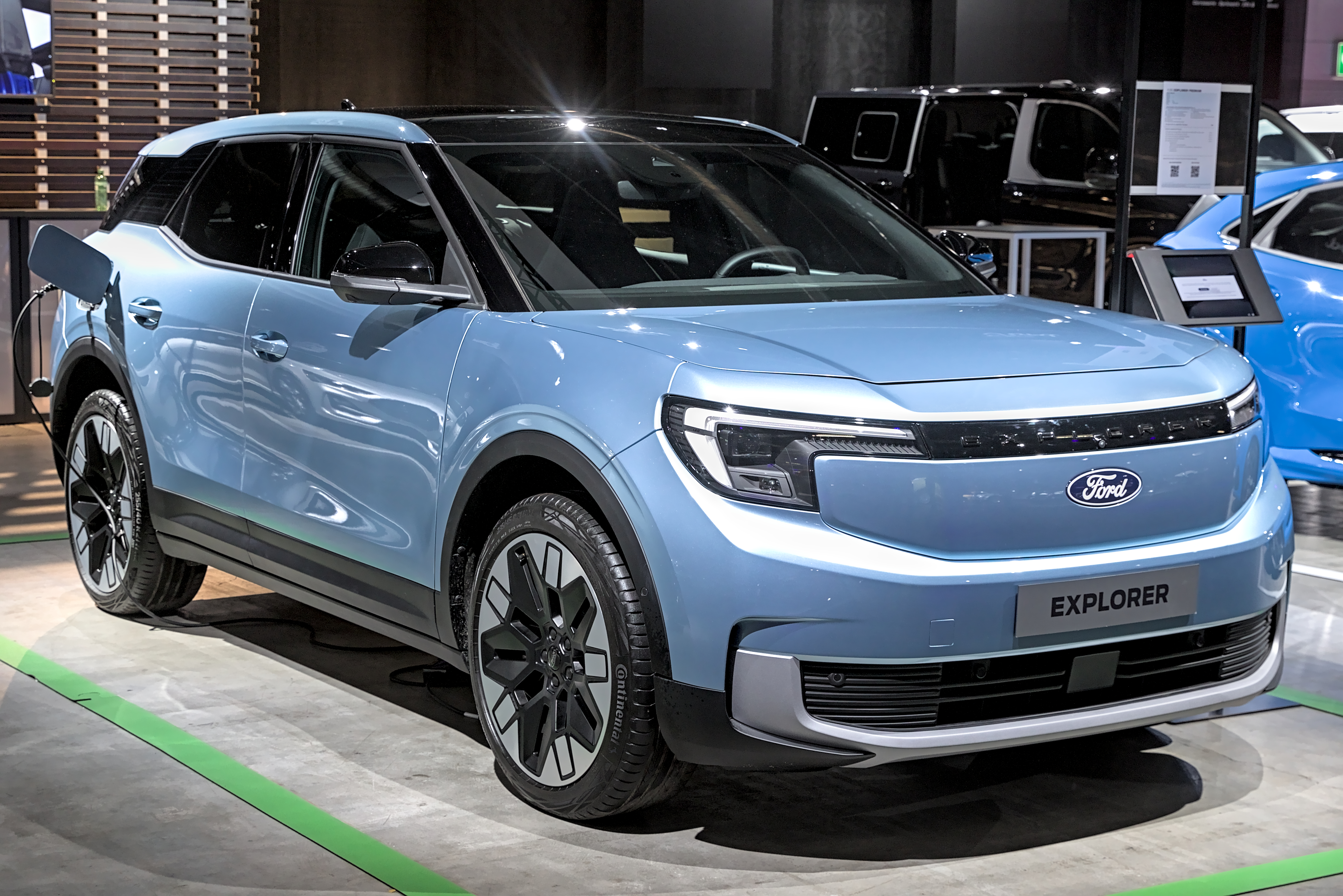
It's been six years, maybe they don't want the Explorer, you know, a Bronco Sport will do for them.
So let's pull the car out and have it ready.
Like, I just find salespeople are prepared for the appointments and customers don't like it.
Now, this is where we get back into this is it's still going on this four hour process in the dealership.
Why can't the car be ready?
Like Grant Cardone used to say buying a car's got to be fast, fun and easy.
Let's pull the car up.
Let's have it ready.
Let's jewel it.
I never mind never see salespeople doing any walk around.
Let's have all the terms ready out of customer tell me they didn't know how many kilometers I was allowed.
I was like, what's my mileage at this point now?
Oh, well, now they're going to log into the Ford system.
Now they're going to pull up the lease now they're going to look at it.
Oh, give me a minute.
Like, I don't want to give you a minute.
I had an appointment set.
You should have this all down a paper and you should know I was allowed 20,000 kilometers a year.
I'm looking at a mileage penalty.
Have that prepared?
Why couldn't we prep some numbers for this customer?
Have it ready to go?
So that's what I'm seeing.
So for example, on a lease renewal, I don't see that old Ford red carpet huddle,
which I thought was really good strong process.
Prepare for that, that leasing customer.
Have cars ready, numbers ready.
Let's go.
I mean, very quickly, I think you could, you could close this customer and get them right into a new vehicle and grab the trade 12 months prior.
Let's get the payout from Ford credit or from, you know, and let's figure out the numbers,
what the balance is, less the interest on earned.
Like, do we really have to figure that out in front of the customer while they're sitting there?
Can we not have had, you know, a couple of worksheets ready to go where we could have presented them with some, with some numbers and ready to go.
Instead of doing all that when the customer arrives.
And I've just heard it so many times from so many customers.
I walked in there.
They didn't know how many kilometers.
They're allowed.
They didn't even realize I was coming.
Oh, oh yeah, you're coming in today.
Like, they wanted to be expected.
Like, appointment process.
I worked in dealerships in the States where they had, you know, the signboard, welcome, Mr. and Mrs. Jones.
And they grabbed their second they come in, they're waiting for them.
Let's prepare the receptionist with the list of today's appointments so she can greet people.
Instead, we're, I find dealers are overloading people a little bit.
So I got the receptionist, she's got the phone in her hand.
She's doing licensing and she's stalking in a dealer trade and the customer comes up to her.
She's like, huh?
Instead of welcome, Mr. and Mrs. Smith, we've been expecting you.
We're happy to see you.
Michael, your, your product specialist is waiting for you and he's prepared.
Let's go.
Instead of that, just come in and we look like a mess.
Hey, does your marketing agency suck?
Listen, before we hop back into this episode, I know you know me as the host of the dealer playbook,
but did you also know that I'm the CEO of Flex Dealer, an agency that's helping dealers
capture better quality leads from local SEO and hyper-targeted ads that convert?
So if you want to sell more cars and finally have a partner that's in it with you that doesn't suck,
visit flexdealer.com.
Let's hop back into this episode.
You know what I wrote down here as, as you were walking me through this?
I wrote down a couple of things.
The importance of building trust early and often.
There's, there's so many touch points, right?
That you, you just articulated that could have either built trust further or completely destroy it for the customer.
And then I thought about the implication of how quickly technology is evolving.
And I wrote down, we don't have to worry about AI putting us out of a job because we're,
we've been slowly putting ourselves out of a job for too long.
And, and when you think about it that way, it's like, oh wait, and I don't mean that to sound facetious.
I don't mean it to sound, you know, denigrating in any way.
What I think I'm really getting at is, oh, then that must also mean that we have the ability to put ourselves into the job,
put ourselves into more work to develop out further to do something.
I love, I loved how you articulated this handoff from, from, you know, BDC to the sales professional,
because both of those things are human to human connection, which is something that I believe so deeply in that I believe is going
to be even more valuable in a tech augmented world that, that our human nature desires to be connected with another human being.
And you walking me through that makes me see even deeper how important that role is going to be this kind of guest experience coordinator
who makes sure that everything is ready and prepared.
What is the auction, Michael? Like if I think about it, like how does that lease renewal process get automated?
Does the, does the AI automatically send the customer out, you know, half a dozen payment scenarios on new vehicles?
You know, I love one of those, that DMS, I think it's Deskit, where you can pull your own lever so you can go in there
and change your term and your rate and, you know, is that AI where the customer becomes their own sales manager?
Well, you know, I think, well, maybe there's some aspects of it, but I do think we, we might go through a phase of exploring that deeply.
And then we're going to get to a place where, where we're going to do what we always do.
Can I just talk to somebody? You know, because it's just in us.
It's like the robot will never trust me, but I want to trust my human nature is I want to trust and be trusted.
Robot will never trust me back. I want to be seen and see. I want to hear and be heard.
Like there's so many elements that trickle down to my today's thesis,
which is as long as human beings desire to drive vehicles, then we're going to desire to want to talk to somebody about.
Well, I mean, with people ordering their own cars. So although you've seen that website, I feel like you have to be an engineer
how to figure out, and, you know, you're talking to somebody who had that, you know,
when I was 20 years old, I was pulling out the old Dodge truck before it was Ram, the old binder.
Let's go to here and let's start looking at.
Look, I mean, here in the States, to your point here in the States with Carvana,
you can go and get pre approved on Carvana. But if you're not paying attention, you don't realize you're paying a 29% interest rate
on a vehicle that's already priced above market.
You know, like, I'll use a Ford Explorer, for example, you can buy a 2018 Ford Explorer decked out from a dealer here in the United States
for whatever it is in US dollar 29 grand, 27 grand, you go on Carvana.
The exact same one at a 29% interest rate based on your prequel is is 36.
You're like, wait a minute.
And I and to your point, though, I, yeah, people can go do that. Great.
Is there a market for it? Of course, look at what Carvana stocks are doing.
But for those of us who want to know the nuance, the context of like, but am I getting a good deal here?
It's one thing to be lazy and be like, yeah, I guess I'll just pay $500 on the lease.
It's another thing for a human being to be like, wait a minute, I looked at your deal.
You can actually get the same one for 275.
You can actually get, I know these are, these are 90s numbers, but you know what I mean?
That's a buyer beware, right?
It is, it is a buyer beware scenario that we're in where if I trust too much the technology,
who do I have to cross reference? Who's experienced?
Can I cross reference against to know if I'm even getting a good deal?
Yeah, yeah. Well, I believe you have to do your homework. It's a big ticket item.
You know, if we're going to let AI sell us, well, that be prepared to pay the top price in the highest interest rate.
You're going to pay the AI tax.
On that note, like you just said, okay, can I just talk to somebody?
So let's say somebody is in the middle of some kind of an online buying process
and they get to a point where, uh, I'm not sure about my interest rate and I'm not sure about this.
I have questions. Can I just talk to somebody and they get someone on the phone?
I call it the dreaded phone appointment.
As oftentimes, I mean, you know, you talk about, are we ready to handle the customer when they're ready to talk to us?
And that can be very hard to marry up, right?
Do we have the person with the tools and the knowledge and the skills to talk to the client when they're ready to be talked to?
It's connecting these two people together.
The sales specialist, somebody, you know, who has gone to, you know, Jeep school and four-wheel drive school and understands,
you know, can really figure out what the customer needs.
I mean, can we lay it on AI that the customer's towing us, you know, a 4,500-pound trailer?
Is this vehicle going to do it? Do they need the trailer packaged? Do they need the sway bars?
You know, I don't know that AI is at that, certainly at that point where we get into some, you know,
something that's as intricate as that.
And then they want to lease it and how many kilometers do they need and their trade.
And yeah, you know, it can be done. I don't think we're there yet.
Somebody's buying a $120,000 truck.
Do we want a little bit of service?
Well, I guess, again, I guess they're buying the Teslas online.
But what I was going to say on the, let's call it the phone appointment.
And I see this with a lot of dealers.
I do business with dealers in, you know, Northern Ontario where, you know,
there may be a couple hours from the dealership and they can't just pop in.
It's not 10 minutes away.
And so we set a phone appointment.
The salesperson is taking an up.
The other guy who was supposed to take the walking customer didn't show up.
He took him.
He's out on a test drive.
It's phone call time.
We don't connect, right?
The customer sitting or waiting for a phone call.
We don't call them.
So one of the things that I like to do for best practice,
I'd like to set a nice wide time for the customer and the salesperson to connect.
Oftentimes I'll see them set an appointment at 10 a.m.
or what, you know, what if the guy's out getting a coffee at 10 a.m.
or someone's in the bathroom at 10 a.m. on that day.
Let's, you know, I like to spread that out and say an afternoon, a morning.
Let's get an email, a text, and, you know, let's connect with the customer that way.
Hey, Mr. Customer, I'm calling you in 10 minutes.
So I just don't think there is enough, you know, what I hear is, yeah,
I called, nobody answered like from the salesperson.
So they didn't connect with a call.
You know, I stepped away from my desk for a few minutes.
I didn't get a message.
So, you know, I just that dreaded phone appointment.
And again, I find the salesperson isn't prepared even for that.
Let's say we did set a phone appointment because I listen to calls.
I do a lot of call listening for dealers.
Give them some feedback.
I hate the old, let's, let me look, let me pull up.
Why do we, you know, you knew you were going to talk to a customer that morning.
Why couldn't we, again, have something prepared and have some numbers prepared.
That's what people want and give some people some information.
You said it's, you know, all the information can people can do it themselves.
But they don't, they want help.
So let's just give them the information and work with them and create value.
And then create value for them to visit in person and make that two hour drive.
Really, that's what about, I'll find a lot of people will call dealerships.
They want to connect on the phone first to get that vibe.
You know, am I calling the right place?
Do I want to do business with these people?
Is it the right person?
So they need to sharpen their phone skills, be ready to make a connection on the
phone that leads to an in person visit with a close deal or sell the car over the
phone.
I'm fine with that too.
Or, oh, this is a new brand new thing.
Can we go to somebody's house?
I think clutch is making some headway with that.
You know, I've been to many customers homes and brought a car and had a
coffee at their kitchen table and made headway there.
So I think there's room for that personalized service, especially with the
price of cars of these days.
You've said it a few times and I think it's a real great place to kind of bring
full circle, which is make a connection.
Not a connection like they answered the phone, like make a connection with that
human being.
You just said it.
Like you've had plenty of coffees at someone's kitchen table.
I think it's just paints a really beautiful portrait of what our industry
could be, which I think people would desire more and more, right?
And then I guess the last thing that I want to talk about in conjunction with
what you just said about calling and getting the vibe and having a good
experience and making a connection on the phone is how do you help dealers
then fulfill the promise of that vibe in person once the customer shows up?
Because I think sometimes that's lacking.
You might have a great BDR who is doing a great job on the phone,
who is really personable, but then that customer shows up to the
dealership and like you said in your first example, nobody's prepared
and it falls apart.
I'll tell you what I think.
Who's driving this business?
It's a customer different process.
I'll tell you what I, the manager, the general manager, the general sales
manager, get out of your office, sir.
That's my or ma'am, miss, get out of your office.
You greet the customers.
Oh, that's a new concept, but that works.
Welcome each and every customer and then turn them over to the sales
person.
I love a manager driven appointment.
So take control.
Somebody needs to be overseeing this and we're not just leaving the,
we're not just leaving a customer to the, to the rookie sales person
who's, you know, who's been there two weeks.
Hi, Mr. Customer.
Welcome.
I'm the general manager here.
It's Michael who's going to be looking after you, but I want to
introduce myself and let you know that I am going to be involved
and make sure that you get the best, the best process possible.
You know, the best experience possible.
So it starts with getting involved.
And you know what, I was thinking about this.
Do you remember the, do you know when you go in a restaurant and
it's not just one server or you ask somebody, oh yeah, I'll get
your service.
I'll get your server.
You want to, oh, excuse me.
Can we get some water?
Oh, I'll tell your server.
Right.
Or you go by, can I get, yeah, absolutely.
And they have the team, the team concept.
Okay.
And that's what I see lacking at the dealership.
A team concept.
It's all this, you know, this, this, everyone needs a commission
and let's fight for the each other's customers.
And instead of a team, I'd love to see where the whole team
looks is involved and is looking after the customer right
down from management, right down to the porter.
Everyone is involved and being kind.
The old Disney lets everyone say hello to a customer and be
friendly and kind.
Just some kindness, Michael.
I don't feel it anymore in dealerships.
I thought would feel different, you know, where everybody
is out there to look after the customer and make sure they
get taken care of.
Yeah.
I mean, unreasonable hospitality is definitely a book that
everybody needs to read in our industry.
And also to your point about Disney, you just made me think
of this, there's actual science here that nobody can
really explain, which is, and I'm going to, I'm going to
bring it all together, I promise, but it's the direct
correlation of people who give to charity and up always
earning more the following year.
And then they give more and then they end up earning
more.
And this has been so documented, this concept of give,
give, give.
And when you were talking about the concept of the
server, oh no, well, that's not my table.
So I'm not going to, you know, versus the teams that
help one another.
It's kind of the same concept in my mind where it's
like, wait, if I could just get out of my own head and
realize that, yeah, that's not my customer, but I
want them to have a great experience.
There's reciprocity there that is going to pay back
dividends to me.
Maybe I can't articulate the exact one, two, three of
it all, but I know what's going to happen.
And, and I, to your point, Janice, what would an
organization, a dealership look like if everyone was
trained or understood this concept that when you
serve, when you give, when you are kind, it flows
back to you tenfold.
And we can't explain how it just happens.
You know, it just happens.
Well, you've given me so much to think about.
We're going to have to have you back because I know
you've got way more information that, that you
want to share with everybody and I want to hear
it.
But for now we got to put a pin in it.
I'm so glad that we were able to connect.
How can those great, great, great to jump on
here and, you know, and talk about appointments
and phone calls and dealers, which is, you
know, that's all I do.
I'm, I'm into it right up to my eyes and
every day I hear different things.
So I can hear it.
Well, thank you.
How can those listening or watching connect with
you?
Oh, we can check out my website.
It's the cargirlsplural.ca.
You can find us online.
There's a list of our services and you can
email us info at thecargirls.ca.
Love it.
Janice showers.
Thanks so much for joining me on the dealer
playbook.
Thank you, Michael.
Request an explanation for:
3 cars
3 cars featured
Request an Explanation
Heard something you'd like explained? We'll add it to this episode.
Sign in to request explanations for terms you heard.
Want to learn more?
Browse our glossary for plain-English explanations of automotive terms, jargon, and concepts.
See something that's not quite right? Our annotations are AI-generated and can sometimes miss the mark.
Click the flag icon on any annotation to suggest a correction.