
Jasmine Green | @six_four_stout
About this episode
Jasmine Green (@six_four_stout) talks through her wildly detailed Toyota Hilux “Stout” build—how it started as a mini-truck project, then evolved into a decade-in-the-paddock dream with heavy chopping, bead rolling, and razor-clean metal finishing. She explains her artistic background, her patience-driven metalwork process, and how she’s designing the chassis in CAD (Fusion 360) to stay legal in Australia. The conversation also covers her hydraulics plan, engineering constraints, tool preferences, future goals like engraving and custom paint, and her favorite shows and first car.
This week on Oil & Whiskey, we sit down with Jasmine Green, better known as @six_four_stout.If you’ve seen her work, you already know. Some of the cleanest metal shaping and fabrication out there right now, all coming out of a shed in Australia.Jasmine walks us through how it all started, from getting into mini trucks with her first Hilux to building her now well-known Toyota Stout. What began as a simple project quickly turned into something much bigger, pushing her skills in metal shaping, design, and fabrication further than expected.We get into her process, learning as she goes, figuring things out without everything planned, and the mindset it takes to tackle builds at this level. A lot of the work you see is not mapped out ahead of time. It’s built piece by piece through creativity and problem solving.
Roadster Shop
"Podcast: Oil and Whiskey with Roadster Shop [15.6s] Welcome back, another episode of Oil and Whiskey."
Roadster Shop is a custom car company that builds and sells special projects. Since they run this podcast, they’re basically setting the stage for the kind of car work and builds you’ll hear about.
Roadster Shop is a well-known specialty automotive shop focused on building and selling modernized classic cars, especially Porsche-based hot rods and custom projects. In this episode, they’re the podcast host/brand behind “Oil and Whiskey,” so it’s useful context for listeners about the kind of builds being discussed.
Australian sheet metal
"[47.5s] I just always know you always know it's some of the nicest looking metal work out there. [52.4s] It's got it's got that Australian sheet metal, it's got the Australian sheet metal [56.5s] because it always looks different."
“Australian sheet metal” means the body panels/metal parts used on the car came from Australia or were made to match Australian versions. Using different panels can make the car look noticeably different from similar builds.
“Australian sheet metal” refers to body panels and metalwork sourced or shaped in Australia, which can differ in fitment, proportions, and styling details compared with other markets. In custom builds, that can be a big part of why the car looks distinct—panel shapes and how they line up affect the whole silhouette.
covid era
"[74.6s] I know that we became or at least I became where like during the covid era of, [79.7s] you know, have a little more time on your hands to search Instagram."
The “covid era” is referenced as the time when the speaker had more free time to search Instagram and discover builds. For car enthusiasts, this period often accelerated online communities, which in turn influenced what people built—more inspiration, more networking, and more access to niche parts and metalwork.
bead roller
"And then I'm like, holy shit. I mean, this is killer, killer fad work, unbelievable metal work. How the hell did you get started?"
A bead roller is a tool that presses patterns into sheet metal to make raised lines. Those lines can make the metal stronger and also look really cool.
A bead roller is a metalworking tool used to form raised “beads” in sheet metal. Those beads add strength and stiffness while also creating decorative lines, which is why it shows up in custom fabrication.

Toyota Hilux
"...f in mini trucking. So my first car was a Toyota Hilux. And I wanted to modify it."
The Toyota Hilux is a pickup truck, meaning it’s built to carry cargo and handle rough roads better than many regular cars. It’s often chosen as a first vehicle because it’s tough and can be modified. In the podcast, it’s brought up because the speaker wanted to change it and make it their own.
The Toyota Hilux is a pickup truck known for its durability and off-road capability, which is why it’s a popular choice for people who want a truck they can modify. In the podcast context, it’s mentioned as someone’s first car and as a base for customization, which fits the Hilux’s reputation as a practical platform. That makes it a natural topic when talking about modifying vehicles and learning how to work on cars.
airbag it
"It kind of escalated like it was this. I just wanted to airbag it. And then, yeah, I did a lot of the sheet metal work,"
“Airbagging” means putting an air suspension system on the truck so you can change how high or low it sits. People do it for looks and to get the exact stance they want.
“Airbagging” a vehicle means using an air suspension system so the ride height can be raised or lowered on demand. It’s common in custom truck and “mini trucking” scenes because it lets owners dial in stance and smoothness while still driving normally.
bead rolling
"And there's a bit of bead rolling in it and pretty much I finished that build. [160.7s] And I wanted to put everything that I learned whilst building that car into this new build..."
Bead rolling is when you press a pattern into thin sheet metal so it becomes stronger. It can also make the metal look more interesting because it creates raised lines.
Bead rolling is a metalworking technique where a tool forms raised “beads” in sheet metal. Those beads add stiffness and strength without adding much weight, and they can also create distinctive styling lines on custom bodywork.
chop it up
"You know, you can just with mini truck and like you can kind of just, you know, chop it up, do what you want."
“Chop it up” is slang for cutting and reshaping a vehicle’s body—most commonly lowering the roofline or removing sections to change proportions. In hot-rod and custom circles, it’s a shorthand for aggressive fabrication to achieve a specific look.
mini truck
"You know, you can just with mini truck and like you can kind of just, you know, chop it up, do what you want."
A “mini truck” is a smaller pickup truck that a lot of people customize. Because it’s smaller, it’s easier to cut, fit, and modify parts to get the look and feel they want.
“Mini truck” refers to small-displacement pickup trucks that are popular in the custom scene. People often modify them for stance, styling, and drivability, and the smaller platform makes fabrication and interior work more approachable.
auto trimmer
"Well, the stouts is my personal build on the side, but I'm a qualified auto trimmer, so upholsterer by trade."
An auto trimmer is the person who works on the inside of cars—like seats and interior fabric or leather. They make sure everything fits neatly and looks clean.
An auto trimmer is a professional who installs and repairs vehicle interior materials like upholstery, headliners, and trim panels. Their work often includes fitting materials precisely around seats, door cards, and custom interior builds.
metal fabrication
"And yeah, I do a bit of trimming there and a bit of metal fabrication as well."
Metal fabrication is making parts out of metal—cutting, shaping, and welding them. On custom cars, it’s how people build custom brackets and structural pieces.
Metal fabrication is the process of cutting, shaping, and welding metal to create or modify parts. In custom builds, it’s commonly used for brackets, mounts, body modifications, and chassis-related components.
chassis design and chassis building
"He's focused, focuses more on like the chassis design and like chassis building, mini trucks, notches, yeah, getting into hot rods and stuff now."
Chassis design/build is about the car’s “skeleton.” It’s what everything else mounts to, and it affects how the car handles and how strong it is.
Chassis design and building refers to engineering the vehicle’s structural foundation—often including the frame layout, mounting points, and how the suspension and drivetrain attach. In custom hot rods, this work is critical because it determines strength, geometry, and how the car drives.
notches
"He's focused, focuses more on like the chassis design and like chassis building, mini trucks, notches, yeah, getting into hot rods and stuff now."
In custom builds, “notches” usually means cutting small sections out of the frame so other parts can fit. It’s often done for clearance when lowering a truck, but it has to be done safely.
“Notches” in a custom chassis context usually means cutting relief sections into the frame or components to clear suspension parts, improve ride height, or allow tighter fitment. It’s a common technique in lowered trucks and hot rods, but it must be done carefully to maintain structural integrity.
hot rods
"He's focused, focuses more on like the chassis design and like chassis building, mini trucks, notches, yeah, getting into hot rods and stuff now."
Hot rods are cars that have been modified to look cool and drive better. People often do custom work on the body and mechanical parts to get that classic style.
Hot rods are modified cars—often older American-style platforms—built for a mix of performance and style. The term is strongly associated with custom fabrication, engine/drivetrain upgrades, and traditional styling cues.
airbags
"And, and it was probably just going to be originally on airbags, but I want to, yeah, put it on hydraulics just because I've done airbags."
Airbags here means an air suspension system that can raise or lower the truck. People like it because you can adjust how low the car sits, but it’s more complex than regular springs.
Airbags (air suspension) use compressed air in flexible bags to raise or lower the vehicle. They’re popular in custom builds because you can adjust ride height for stance and comfort, but they require planning for fitment, control systems, and reliability.
hydraulics
"And, and it was probably just going to be originally on airbags, but I want to, yeah, put it on hydraulics just because I've done airbags."
Hydraulics means the truck’s suspension is controlled by fluid pressure, letting it drop or lift. It can look really cool and be very adjustable, but it’s usually more involved to set up and maintain than simpler suspension.
Hydraulics in a vehicle build typically refers to a hydraulic suspension system that can actively raise/lower the car. Compared with airbags, hydraulics can offer a more dramatic, controllable “drop,” but it adds complexity—hoses, pumps, fluid maintenance, and careful safety/fitment.

Stout Toyota Stout
"Like pretty much what I want to do is take the Toyota Stout, which is an old farm truck. Like they're not really that aesthetically pleasing. And yeah, I want to change all the proportions."
A Toyota Stout is an older Toyota truck. Here, the builder is customizing it heavily—cutting and reshaping parts—so it looks more modern and “luxury-like” instead of like a basic farm truck.
The Toyota Stout is a classic Japanese pickup/farm truck from Toyota’s earlier lineup. In this build, the host is treating it like a canvas for a custom restyle—changing how the truck’s body proportions look and how it flows visually from front to back.
chopped it so much and move things around
"And yeah, I want to change all the proportions. So that's why I've chopped it so much and move things around. And I want to make it flow really nicely from front to back."
“Chopping” is when you cut and reshape parts of the body to change how the truck looks. Moving things around helps the proportions look right, like the truck was designed that way from the start.
“Chopping” and moving body components is a common custom-truck technique to change proportions—often by sectioning, reshaping, and relocating panels or structural elements. The goal is usually a more cohesive visual flow (front-to-back) and a stance that looks intentional rather than like a stock farm truck.
heavy modifications
"I mean, you've cut that truck every which way. [614.8s] There's some, some heavy modifications that require full commitment. [619.5s] Not really."
“Heavy modifications” refers to major changes to a vehicle’s body and structure rather than bolt-on upgrades. In custom truck culture, these projects often require careful planning and fabrication because once you cut and weld, you can’t easily revert without redoing work.
section the truck
"I think a lot of the things you're doing, the reason I'm asking is because a lot of people [670.0s] would be like, shit, like when you section, like section the truck, when you make the [678.5s] roof skin, when you build all these complex shapes, you sort of reach a point where you're like, [683.3s] fuck, I'm in trouble, you know, I'm in trouble."
“Sectioning” means cutting the truck’s body and re-welding it so the shape changes. It’s a big job because it can affect how everything lines up, like the roof and doors.
“Sectioning” a truck usually means cutting the body and welding in additional metal to change the vehicle’s proportions—often to lower the stance or create a custom look. It’s a major fabrication step that affects structural integrity, panel alignment, and how the roof/doors fit afterward.
roof skin
"I think a lot of the things you're doing, the reason I'm asking is because a lot of people [670.0s] would be like, shit, like when you section, like section the truck, when you make the [678.5s] roof skin, when you build all these complex shapes, you sort of reach a point where you're like, [683.3s] fuck, I'm in trouble, you know, I'm in trouble."
A “roof skin” is the outer sheet-metal panel of the roof. Replacing or fabricating one is common in custom builds because it allows the builder to create new roof contours, integrate a chopped roofline, and match complex curves to the rest of the body.
rockers
"Didn't you start on like rockers and pillars and firewall and stuff like that on mostly rust repair and replacement."
Rockers are the metal panels along the bottom sides of the car. They often rust because they get hit by water, salt, and road grime, and they help the car stay stiff.
“Rockers” are the rocker panels along the lower sides of a car’s body. They’re common rust-prone areas because they’re exposed to road spray and debris, and they’re also structural for side impact stiffness.
firewall
"Didn't you start on like rockers and pillars and firewall and stuff like that on mostly rust repair and replacement."
The firewall is the big metal wall between the engine area and the inside of the car. If it’s rusty, it needs solid repair because it helps keep the cabin sealed and safe.
The firewall is the metal wall separating the engine bay from the cabin. It’s a critical structural and sealing surface, so rust repair typically requires careful fitment to maintain proper alignment and prevent fumes/water intrusion.
pillars
"Didn't you start on like rockers and pillars and firewall and stuff like that on mostly rust repair and replacement."
Pillars are the vertical metal supports around the doors and roof. If they rust, you usually have to cut out the bad metal and weld in new pieces so the doors and roof fit correctly again.
“Pillars” are the vertical body structures (like A-, B-, and C-pillars) that support the roof and door openings. When they rust, repairs often involve cutting back to solid metal and welding in new sections to restore both strength and alignment.
rust repair and replacement
"Didn't you start on like rockers and pillars and firewall and stuff like that on mostly rust repair and replacement."
Rust repair and replacement means cutting out the rusty metal and putting in new metal. It’s important because it helps stop the rust from coming back and keeps the car solid.
Rust repair and replacement is the process of removing corroded metal and welding in new panels or sections. In restoration, the goal isn’t just cosmetic—proper repairs restore structural strength and prevent the rust from spreading.
floor work
"Then you started to get into floor work at what point, because obviously it's now it's, it's over the top, right?"
Floor work means fixing the metal in the bottom of the car—usually the floor pans. It matters a lot because it affects how the car sits and how everything inside mounts, especially if rust is involved.
“Floor work” refers to repairing or replacing the vehicle’s floor pans and related structural sections. It’s often where rust becomes severe, and good floor repairs require precise metalwork so the car’s geometry, seat mounts, and driveline clearances stay correct.
cab mounts
"[953.5s] Well, yeah, the cab, I'm trying to just get everything in the cab working at the moment. [961.2s] But I still haven't done the cab mounts. [964.9s] But see, I mean, I'm building, I'm designing the chassis as well."
Cab mounts are the brackets/points that hold the cab to the car’s frame. If you’re rebuilding the frame or swapping sections, you have to place these mounts carefully so everything lines up.
Cab mounts are the structural attachment points that secure the cab (the driver/passenger compartment) to the chassis or frame. In a project like this, cab mounts can’t be finalized until the chassis and any added sections (like a rear clip) are positioned correctly, because the mount locations must match the rest of the structure.
rear clip
"[968.7s] So it's going to get a rear clip on it. [971.0s] And then it will probably dictate where the cab mounts go. [975.5s] So there's a lot of it that sort of works together."
A “rear clip” is a replacement section of the car’s rear structure—often including parts of the body and frame rails—swapped in during a restoration or custom build. It affects where mounts and panels line up, which is why the speaker says it will dictate cab mount locations and requires staged welding before the cab can come off.
fitment
"[995.6s] which is tacked to some box section on the chassis. [999.4s] So whilst I can get behind every panel, I'm just trying to, you know, check fitment. [1004.8s] That's why I did the doors."
Fitment is how well parts align and fit together—panel gaps, mounting positions, and clearances. In fabrication, checking fitment is critical before final welding or finishing because small positioning errors can compound and make later assembly difficult.
safari window
"[1004.8s] That's why I did the doors. [1007.4s] Actually, yeah, starting to think about the rear window. [1010.5s] I want to like make like a safari window there."
A “safari window” is a style of side/rear window opening (often associated with off-road or classic wagon aesthetics) that’s typically integrated into the inner structure and can be designed for visibility and airflow. Because it requires cutting and welding into the inner structure, the builder needs to plan when the cab can be removed and when welding operations can be completed.
CAD (Fusion 360)
"...I’ve been trying to design the chassis in CAD, so in Fusion 360. So because we have a CNC class..."
CAD is how you design parts on a computer before you make them. Fusion 360 is one of those programs, and it helps you plan the chassis so the pieces fit together and can be cut accurately.
CAD is computer-aided design software used to model parts and assemblies before anything is built. Fusion 360 is a popular CAD/CAM tool that lets builders design components, check fitment, and prepare geometry for manufacturing like CNC cutting.
CNC class
"...So because we have a CNC class, so I want to design it all and then have it all interlock and then cut it out..."
CNC (computer numerical control) machining uses programmed toolpaths to cut or shape metal and other materials with high precision. In a chassis build, CNC work helps ensure the designed parts interlock correctly and can be produced consistently.

Ford Fusion
"... been trying to design the chassis in CAD, so in Fusion 360. So because we have a CNC class, so I want t..."
The Ford Fusion is a regular everyday car meant for commuting and carrying people. It’s often used as a reference for projects because it’s a common car you can find information and parts for. In a discussion about designing parts, it may be mentioned as the kind of car someone wants to work on.
The Ford Fusion is a mid-size sedan (and in some markets, a related wagon configuration) built for everyday commuting and family use. In a podcast context about CAD and CNC work, it may come up as a real-world platform people choose to study, measure, or modify because it’s common and has plenty of parts and documentation. It’s the kind of car that can be discussed in relation to chassis design, fabrication, or practical engineering projects.
independently constructed vehicle (ICV)
"...it’s a lot easier to get a car through registration if it uses the original chassis, because otherwise it becomes an ICV, which is an independently constructed vehicle. And yeah, it gets very expensive..."
An ICV is basically a “built-from-scratch or heavily rebuilt” car in the eyes of the law. If you keep the original chassis, the paperwork is usually easier; if you don’t, you may have to follow tougher rules and spend more to get it approved.
An independently constructed vehicle (ICV) is a legal category for a car that’s built or heavily modified rather than simply repaired. In places like Australia, using the original chassis can keep the build in a simpler registration pathway, while an ICV triggers stricter compliance and cost.
four-link
"...just four link, wishbone upper and because it’s on hydraulics..."
A four-link is a suspension setup that uses multiple arms to hold the rear axle in the right position. It helps the car keep traction and move smoothly when the suspension travels.
A four-link is a rear suspension layout that uses four control arms to locate the axle and manage how it moves under acceleration, braking, and cornering. It’s commonly used in custom and off-road builds because it can be tuned for ride height, traction, and articulation.
wishbone upper
"...just four link, wishbone upper and because it’s on hydraulics..."
A wishbone is a shaped control arm that helps guide how the suspension moves. Using it on the upper side helps the wheels stay positioned correctly as the car goes over bumps.
An upper wishbone (A-shaped control arm) is part of the suspension geometry that controls the axle’s movement and alignment. Pairing a wishbone upper with a four-link lower setup helps tune camber/toe behavior as the suspension articulates.
three wheel
"...get a fair amount of lift out of it and be able to three wheel. So it needs to be able to articulate quite a lot..."
“Three wheel” means getting one wheel off the ground so the car is supported by only three wheels. To do it reliably, the suspension has to move a lot and still keep the car stable.
“Three wheel” refers to intentionally lifting one wheel so the vehicle rides on the other three. Achieving this requires enough suspension articulation and lift capability, plus careful geometry so the car remains controllable and doesn’t bind or lose stability.
articulate
"...So it needs to be able to articulate quite a lot, which is also a challenge in getting it through legally."
Articulation is how much the suspension can “flex” and let the wheels move up and down. More articulation helps the car handle uneven ground and can lift a wheel, but it’s also harder to engineer safely.
Articulation is how much the suspension can move relative to the chassis—especially how far the wheels can travel over uneven surfaces. More articulation helps achieve extreme wheel lift (like “three wheel”), but it can be harder to keep legal and safe on public roads.
certified by an engineer (sign-off)
"Like it’s got to be certified by an engineer. So pretty much it’s just a person who’s qualified to oversee the work and sign it off..."
For big modifications, an engineer has to review the work and officially approve it. They sign off that it’s safe to drive on public roads, which can make unusual builds harder to get approved.
In Australia, certain vehicle modifications—especially major suspension/chassis changes—must be assessed and certified by a qualified engineer. The engineer signs off that the modifications are safe and compliant for road use, which can be a major hurdle for extreme builds.
auto leveling system
"I'll have to limit what it can do, it'll need like a level ride, like a auto leveling system, just like airbags."
An auto leveling system tries to keep the car sitting level even when you add weight or change conditions. That helps the car handle more predictably and keeps things like clearance and lighting more consistent.
An auto leveling system keeps the vehicle’s ride height consistent by automatically adjusting suspension height as load changes. This helps maintain handling geometry and headlight/ground clearance consistency, similar in purpose to how airbags can maintain ride height.
coilover
"So it's going to run on a coilover at the back. So it's sort of like a bell crank set up."
A coilover is a suspension part that uses a spring and shock together. It can often be adjusted to change how high or low the car sits.
A coilover is a suspension setup that combines a coil spring with a shock absorber, often with an adjustable perch for ride height. In this context, the coilover at the rear is part of the mechanism that allows the system to control ride height.
bell crank
"So it's sort of like a bell crank set up. So the hydraulic cylinder is purely there just to adjust the height."
A bell crank is a lever that helps convert movement from one form into another. In a suspension system, it can help translate hydraulic motion into raising or lowering the car.
A bell crank is a lever mechanism that changes the direction of force and can also change mechanical advantage. Here, it’s described as part of the linkage that turns hydraulic cylinder movement into suspension height adjustment.
hydraulic cylinder
"So the hydraulic cylinder is purely there just to adjust the height."
A hydraulic cylinder is like a powered piston that moves in and out using fluid pressure. In this setup, it’s used to raise or lower the car’s suspension height.
A hydraulic cylinder is a device that uses pressurized fluid to create linear force, moving a piston in and out. In this system, the cylinder is used specifically to adjust ride height, likely by pushing/pulling the linkage connected to the suspension.
lower control arm
"It's mounted from the chassis to the lower control arm. And the suspension travel, it'll see travel apart from when it's on the ground,"
The lower control arm is a metal link that holds the wheel in place. When the road gets bumpy, it lets the wheel move up and down while keeping it pointed the right way.
A lower control arm is a suspension link that connects the chassis to the wheel assembly. It helps control wheel motion and alignment while absorbing bumps, and it’s a key part of how the suspension “travels” over uneven roads.
suspension travel
"And the suspension travel, it'll see travel apart from when it's on the ground, but pretty much throughout its whole suspension, like its whole travel range. There'll be a solid push rod unless it's being adjusted."
Suspension travel is how much the suspension can move when the car goes over bumps. More travel can help the tires stay in contact, but it also needs to be packaged correctly so parts don’t run out of room.
Suspension travel is the distance the suspension components can move through their range from full droop to full compression. It matters because it affects ride comfort, grip, and how likely the suspension is to bottom out or hit internal limits.
push rod
"There'll be a solid push rod unless it's being adjusted. It's just pretty much adjustable push rod then. Yeah, yeah, you'd say that."
A push rod is a link that moves when the wheel moves. Instead of the spring/damper being directly in line, the push rod helps “send” that movement to where the spring and shock are mounted.
A push rod is a suspension link that transfers motion from the wheel/suspension to another component, often a rocker or bell crank, which then actuates the spring/damper. In push-rod setups, packaging and leverage ratios can be tuned for the desired ride and handling.
trailer stub axle
"I wanted to use a trailer stub axle for the bell crank pivot. And yeah, it's got to be at a certain load rating. So he's going to get back to me whether that's suitable."
A trailer stub axle is a wheel-support part from a trailer. Repurposing it for a suspension pivot can save time, but you have to make sure it’s strong enough for the forces on a car.
A trailer stub axle is a hub/axle component used on trailers, typically designed to carry wheel loads. Using one as a suspension bell crank pivot is an example of repurposing an existing part, but it requires verifying the load rating and fitment.
load rating
"And yeah, it's got to be at a certain load rating. So he's going to get back to me whether that's suitable. Otherwise, I'll have to make something."
Load rating is how much force a part can handle before it’s not safe anymore. For suspension parts, you want a high enough rating because they get hit with big forces every time you drive over bumps.
Load rating is the maximum force or load a component is designed to withstand safely. In suspension design, using parts with insufficient load rating can lead to deformation, accelerated wear, or failure under repeated impacts.
bearings
"For the bearings and all the shafts and stuff, yeah. Yeah, that's it. This is the bearings that are the problem, the load rating on the bearings. So yeah, if they're all good, then that part of the suspensions, yeah,"
Bearings are the parts that let shafts move smoothly with less friction. In a suspension, they take a lot of force, so the right bearing strength matters for reliability.
Bearings support rotating or oscillating shafts and allow smooth motion under load. In suspension linkages, bearing load rating and durability are critical because they see high forces and must survive repeated cycles without excessive play.
mock up
"She's tying some stuff together. Fucking mock up, dude. Get a template."
A mock-up is a rough test version of a part or assembly. It’s used to make sure it fits and lines up before you build the real thing.
A mock-up is a preliminary assembly or trial fit used to check fitment, alignment, and packaging before final parts are made. In suspension fabrication, mock-ups help verify that components will sit in the correct plane and clear other parts.
template
"Get a template. I get it. ... You're building a template and the jig."
A template is a guide you trace or copy so your parts come out the right shape and size. It’s a way to make sure everything lines up before you commit to final fabrication.
A template is a pattern used to transfer measurements and shapes accurately during fabrication. Using templates is especially important for suspension-related work because small alignment errors can change wheel travel and handling.
A-arm
"Well, that's because when she mentioned some of the dodgy stuff you see in the US, there's some people that would run that A-arm exactly. That would be the finished product."
An A-arm is a suspension link that holds the wheel in the right position. It helps the wheel move smoothly over bumps, and it also affects how the car steers and handles.
An A-arm (also called a control arm) is part of a vehicle’s suspension that connects the wheel to the chassis. The geometry of the A-arm affects how the wheel moves and how the car handles, especially under cornering and bumps.
ball joint
"But I see how what you did and how you got to where you're at to hold those three pieces basically in the correct plane of what they were and adjust your ball joint angle some. You're building a template and the jig."
A ball joint is like a flexible pivot in the suspension. It lets parts move through suspension travel while keeping the wheel pointed the right way.
A ball joint is a pivot connection in the suspension that allows the control arm to move while maintaining steering and alignment. Changing or adjusting ball-joint angle can be important for achieving correct suspension geometry and ride/handling behavior.
jig
"You're building a template and the jig. But from there to then as sexy as these parts came out to be, everything just nests."
A jig is a tool that holds things in place while you build or modify parts. It helps you get the alignment right so everything lines up correctly.
A jig is a custom fixture used to hold parts in the correct position while you work. In fabrication, a jig helps ensure repeatable alignment and geometry so the finished suspension components fit and function as intended.
upper hat assemblies
"That particular piece that we're looking at, like the upper hat assemblies, the pair of them. What is it?"
Those “upper hat assemblies” are the parts at the top of the suspension strut. They help hold the spring/strut in place and connect it to the car, which affects how the car sits and handles.
“Upper hat assemblies” refers to the top mounting components of a suspension strut/shock assembly. They’re part of the structure that locates the spring/strut and connects the suspension to the chassis, so they matter for alignment, ride height, and how the suspension loads the body.
90s high-lux arms
"Yeah, there's a lot in it because I had to use part of the original. So well, it's not the original star arms. I use 90s high-lux arms because I've got an abundance of 90s high-luxes in the paddock from building my previous car."
“High-lux arms” are suspension control arms—basically the links that locate the wheel. If you change them, the wheel’s position and alignment can change, which can affect steering feel and tire wear.
“High-lux arms” sounds like a specific aftermarket or OEM suspension control-arm variant used for a 1990s-era setup. Control arms are key suspension links that set wheel position and alignment geometry, so choosing a particular arm design can change handling and how easily the car can be engineered/approved.
engineering
"To get it through engineering, if I went with a fully fabricated arm, it would need some really expensive testing. It would all have to be sort of modeled and tested."
Here, “engineering” means getting the car’s modifications approved so they’re legal and safe. If you build parts from scratch, you usually need extra proof (testing or calculations) to satisfy the rules.
In this context, “engineering” refers to the approval process required to get a modified car legally cleared for road use (or a specific jurisdiction’s compliance). When you fabricate major suspension components, regulators often require evidence like modeling, testing, and documentation to prove safety and performance.
use a factory arm and modify it
"So a loophole around that is to use a factory arm and modify it. But I don't think the engineer quite expected me to modify it that much."
This is a workaround for approval: instead of making a brand-new suspension arm, you start with an original factory arm and change it. That can sometimes make the approval process easier because the base part is already proven.
This describes a common compliance strategy: starting with a factory (OEM) suspension arm and then modifying it rather than fabricating a completely new part. The idea is that regulators may treat the base component as already validated, reducing the amount of new testing/documentation required—though the extent of modification still matters.
modifying it or building it from scratch
"We're splitting hairs there on modifying it or building it from scratch."
They’re talking about two ways to do a project: tweak what already exists, or make the whole thing yourself from the ground up. Each approach can change how expensive and how time-consuming the build is.
The hosts are contrasting two approaches: modifying an existing setup versus fabricating/building a new one from raw materials. In automotive work, this affects cost, time, and how well the result integrates with the rest of the vehicle.
new technique
"every little project, you're like either exploring a new skill, trying a new technique, picking up a new skill."
They mean learning a specific method for doing the work. Getting better at the “how” is often what makes the final result look and fit better.
“Technique” here refers to a specific method used during fabrication or restoration—like how parts are measured, fitted, finished, or assembled. Learning new techniques is often what turns a basic repair into a higher-quality build.
round bar thing
"Oh, this is just the round bar thing. Like this little detail there was cool."
They’re calling out a small part with a round shape. Details like that can make a project look more finished, even if it’s not a big mechanical change.
“Round bar” likely refers to a small, round-profile metal component or trim detail used on the project. Even minor hardware or fabrication details can significantly change the look and perceived quality of a build.
handmade fabrication
"Well, it's nice to see the element of handmade. [1603.5s] I'm never one of those guys who's like, [1605.8s] fucking handmade, like you can't machine it."
When people say “handmade” in car building, they mean the parts were made by skilled people instead of being stamped out in a factory. It usually shows up in how well the parts fit and how good the finishing looks.
“Handmade” in automotive builds usually refers to parts made or finished by hand rather than mass-produced. It often implies craftsmanship in metalwork, fitment, and surface finishing—though it doesn’t mean the part can’t be machined or engineered.
stainless vents
"But I love the little stainless vents, the little door vents. [1645.9s] Where are they at?"
Vents are openings that let air move through or around the car. Using stainless just means the parts are corrosion-resistant and usually look cleaner for longer.
Stainless vents are openings (often in the bodywork) that help manage airflow and heat around components. On custom builds, they’re also a visual detail that can match the car’s overall design language.
door vents
"But I love the little stainless vents, the little door vents. [1645.9s] Where are they at?"
Door vents are little openings in the door. They can help with airflow, but sometimes they’re mainly there because they look cool.
Door vents are openings in the door area that can be functional (airflow/heat management) or purely stylistic on a restomod/custom. Their placement and shape are often used to tie the bodywork together visually.
door visors
"I think I saw them. [1646.5s] Oh, the little visors. [1648.7s] Yeah, little door visors."
Door visors are small pieces that sit above the window/door opening. They can help keep rain out and they also add a finished, custom look.
Door visors are small covers mounted above or near window/door openings to help with water management and airflow. In custom builds, they also act as a trim piece that can be shaped to match the rest of the fabrication.
chrome vs stainless finish
"It saves me money on chrome because chrome is going to be really expensive, but when it does come to that time... Now it's not, you know, got to go chrome or paint or whatever."
They’re comparing two ways to make metal look shiny: chrome plating versus polishing stainless steel. Chrome can cost a lot and needs special work, while stainless can be made shiny by polishing it yourself.
The hosts compare a chrome-plated look to a polished stainless look. Chrome plating can be expensive and requires specialized processes, while polished stainless can achieve a similar “finished” appearance without going through plating or paint.

Model A
"That was one of the first things I did on the Model A we built at home years ago. I built like a little stainless switch plate and like contoured it to the 32 dash and polished it."
The Ford Model A is an old classic car that people often modify or build from at home. In this story, they made a small stainless part for their Model A dash and polished it for a custom look.
The Ford Model A is a classic early-1930s car that’s commonly used as a base for home builds and hot rods. Here, the speaker mentions doing a stainless dash-related piece for a Model A project, highlighting how classic cars often get custom metalwork.
stainless switch plate
"I built like a little stainless switch plate and like contoured it to the 32 dash and polished it. I was so proud of myself."
A switch plate is the little panel where switches are mounted. Using stainless and shaping it to match the dash helps it look clean and last longer.
A switch plate is the panel that mounts switches (like for lights or accessories) in the dash area. Making one from stainless and contouring it to the dash is a common customization approach to improve fit, finish, and durability.
32 dash
"I built like a little stainless switch plate and like contoured it to the 32 dash and polished it. I was so proud of myself."
“32 dash” means they were using a 1932-style dashboard shape. They made their metal part fit that dash so it looks like it belongs there.
“32 dash” refers to a 1932-style dashboard being used as the shape/template for the custom part. In hot-rod and classic-car builds, people often swap in later or different dash components and then fabricate trim pieces to match the contours.
metal forming tools
"Tell me about these tools. So I've been following these metal masters tools. We don't have them in the States, but you see it pop up a little bit here and there."
They’re talking about the shop tools used to shape metal for car builds and repairs. Different tools are better for different jobs—like making curves, adding strength, or forming metal with consistent force.
The segment centers on metal forming tools used in fabrication—like bead rollers, shrinker-stretchers, and power hammers—to shape sheet metal accurately. Understanding what each tool does helps you choose the right process for panel curvature, stiffness, and fitment.
shrinker stretcher
"The hammers, the bead rollers, shrinker stretcher, all that stuff. Is it quality stuff? How do you like working with it?"
A shrinker-stretcher is a tool that helps you reshape sheet metal. It can make a panel “shorter” (shrink) or “longer” (stretch) in specific areas so you can form curves more easily.
A shrinker-stretcher is a metal-forming tool used to change sheet-metal dimensions. By shrinking or stretching the panel in controlled spots, it helps you create curves and fitment without heavy hammering or heat.
power hammer
"You get the hammers reciprocating too? Or is it just a power hammer? It's a power hammer. But it can be either in spring mode or rigid mode."
A power hammer is a hammer that’s driven by a motor or hydraulics, so it hits with steady force. It’s used to shape metal faster and more consistently than doing everything by hand.
A power hammer is a mechanized hammer used for metal forming and shaping with consistent force. In a shop context, it’s often used for heavier work than hand hammering, and it can be configured for different forming modes.
rigid mode
"It's a power hammer. But it can be either in spring mode or rigid mode. So it can work like a full max as well."
Rigid mode is the power hammer setting that makes the hits feel more firm and direct. It’s useful when you want the metal to move in a more controlled, predictable way.
“Rigid mode” is a power-hammer configuration that delivers a more direct, fixed impact compared to a compliant setup. That typically suits operations where you want a firmer hit and more predictable deformation.
spring mode
"It's a power hammer. But it can be either in spring mode or rigid mode. So it can work like a full max as well."
Spring mode is a setting on a power hammer that makes the action feel more flexible. That can help you shape metal more gently and with better control.
“Spring mode” refers to a power-hammer setup where the machine behaves more like a springy, controlled impact rather than a rigid, fixed strike. This can help with forming operations that benefit from compliance and smoother metal movement.
metal shaping
"The, um, what are some skills, whether it be metal shaping, welding, finishing, painting, bodywork, what are some things that you are still looking to learn?"
Metal shaping is how you form metal into the exact curves and shapes you want. It’s a common step in custom bodywork and fabrication.
Metal shaping is the set of fabrication techniques used to form sheet metal or other metal pieces into specific shapes—often for custom body panels or trim. It can involve tools like hammers/dollies, English wheels, or press forming depending on the material and desired shape.
welding
"The, um, what are some skills, whether it be metal shaping, welding, finishing, painting, bodywork, what are some things that you are still looking to learn?"
Welding is how you attach metal pieces together so they become one solid joint. It’s essential for many custom car builds.
Welding is the process of joining metal parts by melting and fusing them (or using heat plus filler). In custom fabrication, it’s used for structural repairs, panel fitting, and building brackets or mounts.
bodywork
"The, um, what are some skills, whether it be metal shaping, welding, finishing, painting, bodywork, what are some things that you are still looking to learn?"
Bodywork is what makes the outside of the car look right—fixing dents, shaping panels, and getting the surface ready for paint.
Bodywork refers to the processes of shaping, repairing, and refining a vehicle’s exterior panels—especially to achieve the final fit, lines, and surface quality. It often includes metalwork, filler, sanding, and prep for paint.
engraver
"Yeah, um, well, I just bought an engraver because I want to do like, you know, your low rider kind of engraving on some of the, you know, the metal or like the stainless and aluminum work,"
An engraver is a tool that carves designs into metal. People use it to add custom patterns or lettering to parts like trim or panels.
An engraver is a tool used to cut or etch designs into metal surfaces. For automotive-style customization, engraving can be used on stainless steel or aluminum trim to add low-rider-inspired detailing.
low rider kind of engraving
"Yeah, um, well, I just bought an engraver because I want to do like, you know, your low rider kind of engraving on some of the, you know, the metal or like the stainless and aluminum work,"
Low-rider engraving is decorative metal artwork—like patterns or designs cut into metal. It’s a style choice that takes practice to do cleanly.
Low-rider engraving typically refers to decorative metal etching/cutting styles associated with low-rider culture—often featuring ornamental patterns, script, or custom motifs. It’s more about visual detailing than performance, but it requires careful layout and steady hand control.
custom paint
"Um, and then eventually I want to learn custom paint. So like full sort of paneled paint, multi-layer sort of, yeah."
Custom paint is a tailored finishing process that goes beyond a basic color change—often involving special colors, clear coats, and unique application techniques. In enthusiast builds, it’s used to create depth, color-shift effects, and show-quality surface finish.
paneled paint
"Um, and then eventually I want to learn custom paint. So like full sort of paneled paint, multi-layer sort of, yeah."
Paneled paint is when the paint job is done in sections, like different panels or areas with intentional lines or patterns. It usually requires careful taping so everything lines up.
Paneled paint refers to a style where different sections of the vehicle are painted in a coordinated, panel-by-panel way—often to create sharp visual separation or a custom pattern. It’s closely tied to custom bodywork and requires careful masking and alignment.
multi-layer
"Um, and then eventually I want to learn custom paint. So like full sort of paneled paint, multi-layer sort of, yeah."
Multi-layer paint means you build the color in steps—layer by layer—so it looks deeper and lasts longer. The key is letting each layer set up correctly before the next.
Multi-layer paint is a finishing approach where multiple coats (and sometimes different materials/effects) are applied in sequence to build color depth and durability. Each layer must be properly prepped and cured so the final clear coat and finish look even and consistent.
wrapping up the cab
"It looks like she's been working on it's only been a year and a half and this thing's almost like wrapping up the cab at 36 to like 17 years. I'm just kidding."
“Wrapping up the cab” is workshop slang for finishing the cab/bodywork portion of a build—typically meaning the metalwork and fitment are near complete. In restoration and custom projects, the cab is often a major milestone because it sets the overall shape and panel alignment before paint and final assembly.
coach builders
"So do you communicate with any of those guys? Any metal shapers, coach builders bouncing back in DMs with if you reach a snag or."
Coach builders are people who specialize in making the car’s body and sometimes the interior. They’re the kind of craftsmen you’d call for custom builds or high-end restorations.
Coach builders are specialist craftsmen who build or modify a car’s body and interior—often for bespoke or restoration work. In modern terms, they’re closely related to custom bodywork and “carrozzeria”-style tailoring, where the chassis and the body are treated as separate projects.
metal shapers
"So do you communicate with any of those guys? Any metal shapers, coach builders bouncing back in DMs with if you reach a snag or."
Metal shapers are skilled people who shape sheet metal by hand to make body panels fit and look right. They’re especially important for restoring older cars where original parts aren’t available.
Metal shapers are artisans who form sheet metal into complex shapes using hand tools and specialized techniques. In classic car and restoration circles, they’re essential for creating accurate body panels, repairing damage, and achieving factory-like contours without relying on off-the-shelf parts.
stout build
"...because that's what I'm trying to sort of emulate with the stout build, just that that 60s style, you know, with all the trims and patterns and textures."
A “stout build” is basically a custom style goal. The idea is to make the car look like all the parts belong together, with a consistent theme—here, inspired by the 1960s.
A “stout build” is a custom-car styling approach where the goal is a cohesive, intentional look—often with period-correct details and a consistent visual theme. In this segment, it’s tied to emulating 1960s-era design cues like trims, patterns, and textures.
airbrush
"...there's no sense in spending all this time learning how to make it in metal, just airbrush that shit on there. You know, airbrush the door handle."
Airbrushing is a way to spray paint very precisely using a small tool. In this context, it’s being used to “fake” details with paint so the car looks like it has certain trim or styling without doing heavy bodywork.
Airbrushing is a paint technique that uses compressed air to spray fine, controlled layers—often used for graphics, pinstriping, and faux finishes. Here it’s mentioned as a way to create visual details (like door-handle styling or trim looks) without doing all the metal fabrication.

Chevrolet Bel Air
"...airbrush the door handle. You make it look like Bel Air, whatever you want, you know, 57 Bel Air trim."
Bel Air is a classic Chevrolet style people love from the 1950s. The speaker is saying you can paint/airbrush details to make your custom car look like it has that old-school “57 Bel Air” trim.
“Bel Air” is a Chevrolet nameplate associated with classic full-size cars, especially the 1950s/early-1960s styling. The speaker references “57 Bel Air trim” as an aesthetic target, using airbrushed details to evoke that vintage look on a custom build.
pro street
"It's pros because pro streets coming back. Pro street, I could see, but I think it'll pro street will omit the airbrushing portion of it."
“Pro street” is a style of modified car that blends street drivability with performance-oriented upgrades, often paired with aggressive stance and showy visuals. The term is commonly associated with cars built to look like they belong on the street while still being capable and performance-focused.
wild graphics
"I'm not saying you should airbrush trim, but airbrushing and wild graphics and stuff's coming back... I could see maybe wild graphics."
Wild graphics are the big, loud designs you see on some custom cars—like stripes, decals, or painted artwork meant to stand out.
“Wild graphics” is a custom-car term for bold, eye-catching decals or painted designs—think exaggerated stripes, murals, or high-contrast patterns. It’s often discussed as part of the broader “custom” aesthetic cycle, where certain looks return as trends.
trend cycles in car styling
"I feel like the trim might be kind of like fanny packs... Some people tried to maybe dabble it, bringing it back and it didn't stick... things swing around even if it's done for fun."
They’re basically talking about how car looks go in and out of style. Something can be popular for a while, fade away, and then come back later.
The speakers are describing how certain exterior styling elements (like airbrushed trim and graphics) come in and out of fashion. In car culture, these “trend cycles” often depend on what’s popular in shows, social media, and the broader custom scene at the time.
OBS builds
"I mean, we've we've dabbled around in things on some OBS builds, whatever, with a nod to the 80s and stuff like that."
“OBS” is a nickname for an older style of Ford truck body. People say “OBS builds” when they’re building or modifying one of those classic trucks, often with modern upgrades.
“OBS” is shorthand for the older Ford “OBS” body style, most commonly referring to the 1980s–early 1990s F-Series trucks. In the tuning/restomod world, “OBS builds” usually means modern upgrades (suspension, wheels, powertrain tweaks) while keeping the classic truck look.
Tweed interior
"I think Tweed interior. You'll see Tweed interior come back. Yeah, we just did it. Yeah, we did it in John's truck."
A “tweed interior” refers to using tweed fabric (or tweed-style upholstery) for seats and trim. It’s a classic, heritage-inspired look that’s often chosen to give a truck or car a vintage, upscale vibe.
57 bell air trim
"We should get Jeremy from Lucky Strike to airbrush some 57 bell air trim on your raptor. Be cool."
They’re referencing the look of a 1957 Chevrolet Bel Air. The idea is to borrow that classic trim style and apply it as a custom paint/trim detail on a modern vehicle.
“57 Bell Air trim” appears to reference a 1957 Chevrolet Bel Air styling cue—specifically the trim/appearance people associate with that model year. The hosts are using it as a visual inspiration for a modern truck’s custom paint/trim treatment.
Lucky Strike
"We should get Jeremy from Lucky Strike to airbrush some 57 bell air trim on your raptor. Be cool."
They mention “Lucky Strike” as the person they want to do the airbrushing. It’s basically calling out a specialist who can paint custom designs for cars.
Lucky Strike is mentioned as the person/source they want to hire for airbrushing. For listeners, this highlights the role of specialized custom paint artists and shops in achieving high-end show finishes.
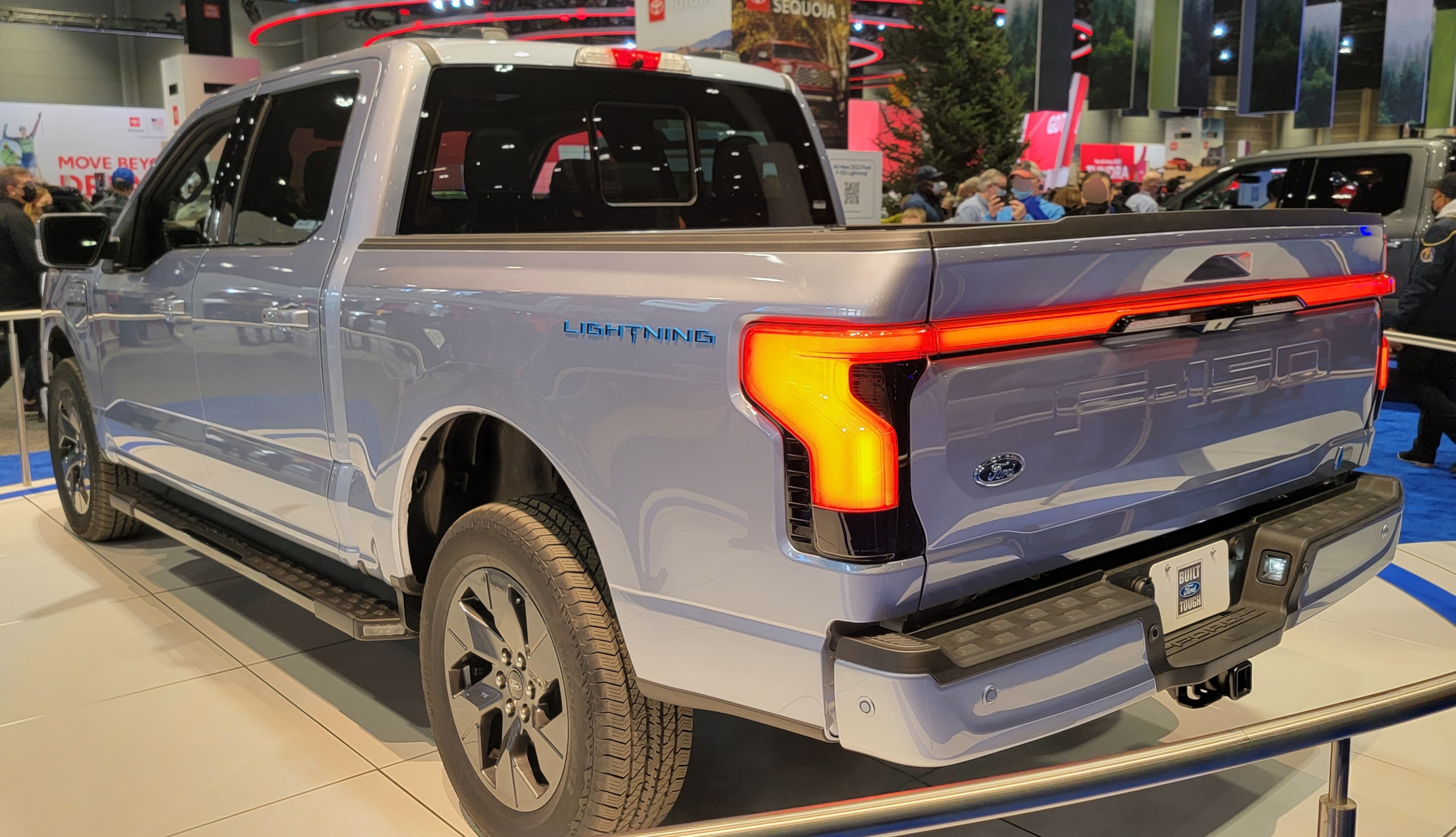
F-150 Raptor
"... Strike to airbrush some 57 bell air trim on your raptor. Be cool."
The Ford F-150 is a large pickup truck that people use for hauling and daily driving. A “Raptor” is a more performance-oriented version of the F-150, and the podcast mentions customizing it with paint and trim. That’s why it comes up—because it’s a popular truck to personalize.
The Ford F-150 is a full-size pickup truck that’s widely used for work and everyday driving, with many available trims and customization options. The podcast context mentions airbrushing and styling a “Raptor,” which is a performance-focused F-150 variant, showing how the truck can be a canvas for visual mods. That’s why it may be discussed—because it’s a common platform for personalization and appearance upgrades.
good guys
"Just so you know, this week's standard questions is brought to you by good guys, Rod and Custom Association. Good guys is kind enough to come on as a sponsor of the standard questions."
“Good Guys” is a well-known organization that puts on classic car shows. In this episode, they’re sponsoring the Q&A segment, tying it to the car-show community.
“Good Guys” refers to the Goodguys Rod & Custom Association, a major classic car show organizer in the U.S. Their involvement here matters because it frames the “standard questions” around the culture and community of traditional hot-rodding and show builds.
pre-65 only
"They got over 500 curated and iconic pre-65, pre-65 only."
“Pre-65 only” means only cars from before 1965 are allowed. So the show focuses on older, classic hot rods rather than newer builds.
“Pre-65 only” means the show is limited to vehicles built before model year 1965. That kind of rule shapes the event’s vibe toward early hot rods and classic styling, and it affects what cars you’ll see.
Builders' Choice Awards
"So Bobby Allaway and Allaway's Hot Rod Shop is doing the Builders' Choice Awards."
Builders' Choice Awards are trophies picked by people who build cars. It’s a way to honor the best work and ideas at the show.
“Builders' Choice Awards” are awards where the judging is tied to builders’ preferences—often recognizing craftsmanship, creativity, and execution. The hosts specifically say Bobby Allaway and Allaway's Hot Rod Shop are doing these awards.
York Speed Shop
"York Speed Shop is doing the members only Speak Easy Lounge presented by Ethos Craft Brewing."
York Speed Shop is another hot-rod-related business helping with the event. They’re running a special members-only lounge area.
York Speed Shop is mentioned as running the “members only Speak Easy Lounge.” Speed shops often sponsor or operate event areas to connect enthusiasts with brands and services.
Request an Explanation
Heard something you'd like explained? We'll add it to this episode.
Sign in to request explanations for terms you heard.
Want to learn more?
Browse our glossary for plain-English explanations of automotive terms, jargon, and concepts.
Help improve this episode
See something that's not quite right? Our annotations are AI-generated and can sometimes miss the mark. Click the flag icon on any annotation to suggest a correction.