
Jill and Tom dive into the latest automotive news, including the discontinuation of Jeep's 4Xe line and insights from Jill's recent test drive of Zeekr vehicles at CES. They discuss the implications of electric vehicle demand on the power grid with sustainability expert Robert Colangelo, who reveals that data centers are becoming a significant strain on electricity resources. The episode explores the challenges and misconceptions surrounding the grid's capacity to support EVs, while also touching on the evolving landscape of automotive technology and market trends.
Jill is back in the co-host seat this week for a topic-packed episode. Tom opens the show asking if $61,000 seems like a lot for a Hyundai—any Hyundai. The hosts discuss the Korean maker’s luxury/value equation, and note that Tom’s test car, a 2026 Palisade Calligraphy Hybrid is, without question, a luxury vehicle. Listen in for more of the conversation.
Tom goes on to share his frustration with Stellantis for killing all of Jeep’s “4Xe” plug-in hybrids, along with the Chrysler Pacifica Hybrid. Listen in for some crankiness.
Still in the first segment, Jill details her CES Chinese-car adventure. Jill was able to take short drives in a number of luxury electric Zeekr models (a division of Volvo’s parent company Geely) and came away very impressed. Her quick takes on these vehicles are worth a listen. Are these premium EVs coming to the U.S? here’s the scoop.
In the second segment, Jill and Tom are joined by friend of show and sustainability expert Robert Collangelo. Robert addresses the fallacy that EVs are a threat to the U.S. electric grid, and details the real power-consumption challenges that lay ahead for the country. It’s a great conversation you don’t want to miss.
In the last segment Jill is subjected to Tom’s “Is it a Dodge?” quiz.
"I just drove the Hyundai Palisade Calligraphy hybrid. Yes. A lot of words. A lot of words. A lot of syllables. For a lot of the vehicle."
The Hyundai Palisade is a large SUV that can fit a lot of passengers and cargo. The Calligraphy Hybrid is a fancy version that uses both gas and electric power to save on fuel.
The Hyundai Palisade is a midsize SUV known for its spacious interior and family-friendly features. The Calligraphy trim is the top-of-the-line version, offering luxury features and a hybrid option for improved fuel efficiency.
A hybrid car uses both a regular gasoline engine and an electric motor to help save fuel and reduce pollution. It can switch between the two or use both at the same time.
A hybrid vehicle combines a conventional internal combustion engine with an electric propulsion system, aiming to improve fuel efficiency and reduce emissions. Hybrids can operate on either the engine, the electric motor, or both.
"If people remember the Equus, it was a premium sedan."
The Hyundai Equus is a luxury car made by Hyundai. It was designed to be a high-end vehicle with lots of features, similar to more famous luxury brands.
The Hyundai Equus was a full-size luxury sedan produced by Hyundai, known for its premium features and comfort. It aimed to compete with established luxury brands but was less recognized in the market.
"Right. It's kind of where Genesis came from. Right."
The Hyundai Genesis is a fancy car made by Hyundai that started being sold in 2008. It's known for being comfortable and having a lot of cool features, which helped Hyundai make a name for itself in the luxury car world.
The Hyundai Genesis is a luxury sedan that was first introduced in 2008, marking Hyundai's entry into the premium automotive market. It has been praised for its high-quality interior, advanced technology, and strong performance, leading to the establishment of Hyundai's Genesis brand.
"...that's kind of a WYSIWYG price. I think especially when you're at the calligraphy trim, there are no options."
WYSIWYG means that the price you see is the price you pay, with no surprises later. It's a way to show that everything is included in the price.
WYSIWYG stands for 'What You See Is What You Get,' meaning the price reflects the actual cost without hidden fees or additional options. This transparency can be appealing to buyers who want to avoid unexpected costs.
"I do remember driving, this was two years ago, the Cadillac XT6. The discontinued Cadillac XT6, which is a two-row crossover, and it's a Cadillac."
The Cadillac XT6 is a luxury SUV that offers a lot of space and comfort. However, it is no longer being made.
The Cadillac XT6 is a midsize luxury crossover SUV that was introduced by Cadillac. It features a spacious interior and advanced technology, but it has been discontinued.
"...they use this horrible thing called stair step incentives, which really forced you to give away cars at some point to make money. Like in between steps on the stair step, you can get yourself into trouble."
Stair step incentives are bonuses given to car dealers for selling a certain number of cars. They can make dealers feel pressured to sell cars cheaply, which might not be good for their profits.
Stair step incentives are a type of sales incentive used by manufacturers to encourage dealerships to sell more vehicles. They create a tiered structure where dealers receive bonuses for reaching certain sales targets, but can lead to pressure to sell cars at lower prices, sometimes even at a loss.
"It's actually a Mitsubishi Outlander. No, not the plug-in."
The Mitsubishi Outlander is a type of SUV that is popular for families because it has a lot of space and can be used for different purposes, like driving in the city or going on trips.
The Mitsubishi Outlander is a compact crossover SUV known for its practicality and spacious interior. It offers various powertrain options, including traditional gasoline engines and hybrid variants.
"My Hammy laments now extend to stuff further at Stellantis. And you probably saw this, but Stellantis has killed all of its Jeep 4xE products."
Stellantis is a big car company that makes many different brands of cars, like Jeep and Dodge. They are known for creating a variety of vehicles, from trucks to small cars.
Stellantis is a multinational automotive manufacturing corporation formed from the merger of Fiat Chrysler Automobiles and PSA Group. It owns several well-known brands, including Jeep, Dodge, and Peugeot.
"And 4xE was weird anyway because they were trying to sell it in certain states where they were trying to get tax credits."
4xE is a term used for a type of car that can run on electricity and gasoline. It helps save fuel and is better for the environment.
The 4xE designation refers to a plug-in hybrid system that combines an electric motor with a gasoline engine, allowing for both electric and hybrid driving modes. This system is designed to improve fuel efficiency and reduce emissions.
"But 4xE was a plug-in hybrid system used a turbocharged four-cylinder engine, 17 kilowatt-hour battery, and you had to plug it in."
A turbocharged four-cylinder engine is a type of engine that uses a turbo to make it more powerful while still being small. It helps the car go faster without using too much fuel.
A turbocharged four-cylinder engine uses a turbocharger to increase the engine's power output without significantly increasing its size. This allows for better performance and efficiency compared to naturally aspirated engines.
"But 4xE was a plug-in hybrid system used a turbocharged four-cylinder engine, 17 kilowatt-hour battery, and you had to plug it in."
A 17 kilowatt-hour battery is like a big storage tank for electricity in the car. It helps the car run on electric power for a certain distance before needing to use gasoline.
A 17 kilowatt-hour battery is a measure of the battery's energy storage capacity, indicating how much energy it can store and provide for electric driving. This capacity affects the vehicle's all-electric range.
"And it was like, I want to say 20 miles of all-electric range. Depended on the car."
All-electric range is how far a car can drive using just electricity before it needs to use gasoline. It's important for knowing how much you can drive without filling up.
All-electric range refers to the distance a plug-in hybrid or electric vehicle can travel using only electric power before the gasoline engine kicks in. This range is important for understanding how far the vehicle can go without using fuel.
"But it was in the Wrangler and the Grand Cherokee. Yeah."
The Jeep Grand Cherokee is a larger SUV that offers both off-road and city driving capabilities. It's comfortable and has a lot of space for passengers and cargo.
The Jeep Grand Cherokee is a mid-size SUV that combines off-road capability with on-road comfort. It's known for its spacious interior and advanced technology features.
"And it was going to be in the Renegade, or Gladiator, but that never happened. Right."
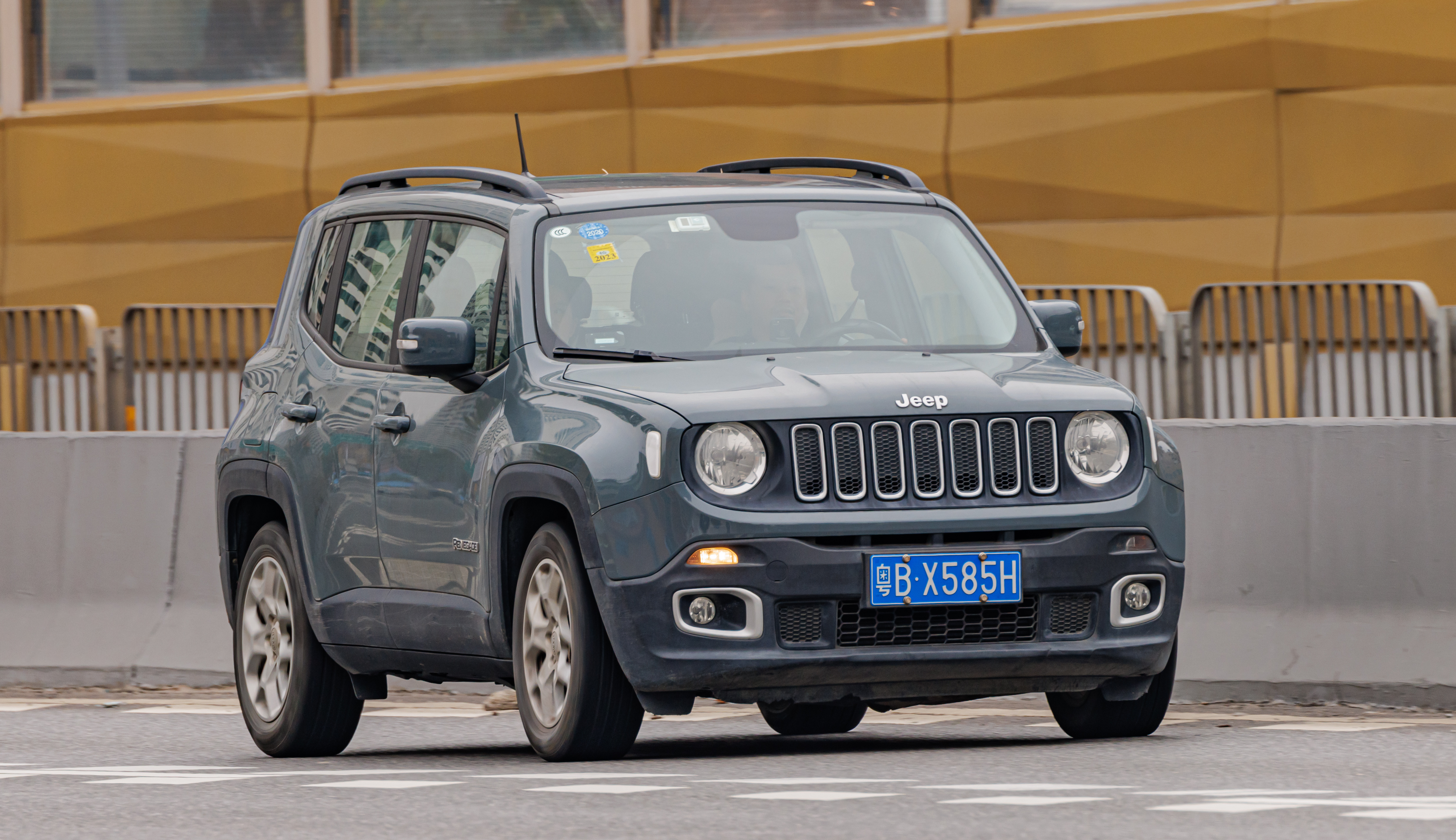
The Jeep Renegade is a smaller SUV that is good for both city driving and some off-road adventures. It's compact and easy to maneuver.
The Jeep Renegade is a subcompact SUV that offers a blend of off-road capability and urban practicality. It's designed for drivers who want a smaller vehicle with Jeep's rugged heritage.
"And I think it was going to be in the upcoming Cherokee, wasn't it? There was something about that."
The Jeep Cherokee is a mid-size SUV that can go off-road but is also comfortable for everyday driving. It has a lot of space and modern features.
The Jeep Cherokee is a mid-size SUV known for its off-road capability and comfortable ride. It features modern technology and a spacious interior, making it suitable for families and adventure seekers alike.
"And a plug-in hybrid more of an E-rev in the Grand Wagoneer. Right. Which would have been probably similar to what we're going to see in the RAM."
The Grand Wagoneer is a big, fancy SUV made by Jeep. It has lots of space inside and can handle rough roads while also offering some high-tech features.
The Jeep Grand Wagoneer is a luxury SUV that combines rugged off-road capability with upscale features and technology. It is known for its spacious interior and advanced hybrid options.
"Which would have been probably similar to what we're going to see in the RAM. Right. Also, different system unrelated, they're going to kill the hybrid Pacifica."
RAM is a brand that makes trucks. They are known for being strong and good for carrying heavy loads or towing things.
Ram is a brand known for its trucks and commercial vehicles, offering a range of models that emphasize performance, capability, and utility. The RAM trucks are popular for their towing capacity and rugged design.
"Also, different system unrelated, they're going to kill the hybrid Pacifica. Right. Right. Yeah, they're essentially killing all of their plug-in hybrids, but not the extended range RAM."
The Pacifica is a family minivan made by Chrysler. It has a lot of room for passengers and cargo, and there's a version that can run on electricity as well as gas.
The Chrysler Pacifica is a minivan known for its spacious interior, family-friendly features, and available hybrid variant. It offers advanced safety features and technology for modern families.
"And then we'll see the Jeep Recon, I assume. Yeah. We'll still see that."
The Jeep Recon is a new electric SUV from Jeep, known for its off-road abilities. It's part of Jeep's effort to create electric vehicles while keeping their adventurous spirit.
The Jeep Recon is an electric SUV that emphasizes off-road capability, aligning with Jeep's rugged brand identity. It is designed to offer a blend of traditional Jeep features with modern electric vehicle technology.
"...built on the same platform as the Wagoneer S."
The Wagoneer S is a luxury SUV from Jeep that offers a lot of space and modern features. It's aimed at people looking for a comfortable and high-end vehicle.
The Wagoneer S is a luxury SUV from Jeep, designed to compete in the premium SUV market. It features a spacious interior and advanced technology, making it suitable for families and luxury buyers.
"...what the impact would be of the scaled-back CAFE standards and their massive at Stalantis. Oh, yeah."
CAFE standards are rules that set how fuel-efficient cars need to be. They help make sure cars use less gas and are better for the environment.
CAFE stands for Corporate Average Fuel Economy, which are regulations aimed at improving the average fuel economy of cars and trucks sold in the United States. These standards are important for reducing fuel consumption and greenhouse gas emissions.
"...bring back all the V8s. Yeah, bring back the V8s, kill the plug-in hybrids."
A V8 engine has eight cylinders arranged in a V shape, which helps it produce a lot of power. It's commonly used in powerful cars and trucks.
A V8 engine is an eight-cylinder engine configuration where the cylinders are arranged in a V shape. This design is known for providing high power and performance, often found in muscle cars and trucks.
"So I just, I had the Dodge Charger 6-Pak and I post a lot of stuff on TikTok and YouTube."
The Dodge Charger 6-Pak is a type of car that is known for being fast and powerful. It's part of the Dodge Charger lineup, which is famous for its muscle car style.
The Dodge Charger 6-Pak refers to a specific variant of the Dodge Charger, known for its performance and muscle car heritage. It typically features a powerful engine and sporty design, appealing to enthusiasts of American muscle cars.
"...the comments come in that it's a crappy car because it doesn't have a Hemi."
Hemi is a type of engine that has a special shape which helps it run better and produce more power. It's often used in powerful cars like some Dodge models.
Hemi refers to a type of engine design characterized by hemispherical combustion chambers, which allows for more efficient airflow and combustion. Hemi engines are known for their power and performance, commonly found in various Dodge and Chrysler vehicles.
"...So it's like 69 GTO, 400, 394. That's not a real X-Racial."
The Pontiac GTO is a well-known muscle car from the late 1960s, famous for its speed and powerful engines. The 1969 version is especially popular among collectors.
The Pontiac GTO is a classic American muscle car that was produced from 1964 to 1974. The 1969 model is particularly famous for its powerful engine options and performance capabilities, making it a favorite among car enthusiasts.
"I'm just saying that I just drove here in a CX-70, Mazda CX-70 Turbo, faster than these cars. That's all I'm saying."
The Mazda CX-70 Turbo is a type of SUV that has a turbo engine, making it faster and more powerful than some other vehicles. It's designed for everyday use and can be a fun car to drive.
The Mazda CX-70 Turbo is a compact SUV that offers a balance of performance and practicality. It features a turbocharged engine, which provides a boost in power compared to naturally aspirated models.
"...I really just like the hybrids in the Mazda CX-70 and CX-90. Okay, interesting."
The Mazda CX-90 is a hybrid SUV that combines a gasoline engine with electric power for better fuel efficiency and a comfortable ride.
The Mazda CX-90 is another hybrid SUV from Mazda, designed to offer luxury features and a smooth driving experience. It is part of Mazda's push towards more efficient vehicles.
"...we were at Las Vegas Speedway. Yeah, they're not street legal."
Las Vegas Speedway is a famous racetrack in Las Vegas where cars can be driven at high speeds in a safe environment. It's often used for racing events and car testing.
Las Vegas Speedway is a motorsport complex located in Las Vegas, Nevada, known for hosting various racing events including NASCAR and other motorsport activities. It's a popular venue for automotive testing and racing due to its multiple track configurations.
The Polestar 4 is a new electric SUV made by Polestar, which is a brand that focuses on making fast and eco-friendly cars. It's designed to be stylish and help the environment.
The Polestar 4 is an electric SUV that represents Polestar's commitment to performance and sustainability. As part of Volvo's performance brand, it combines cutting-edge technology with a focus on reducing environmental impact.
"...g electric cars there already. I think the Volvo EX90 is built in South Carolina. And I think the Volv..."
The Volvo EX90 is a new electric SUV made by Volvo, a company known for its focus on safety. It's designed to be environmentally friendly and has a lot of space inside, making it a good choice for families.
The Volvo EX90 is an all-electric SUV that represents Volvo's commitment to sustainability and innovation in the automotive industry. Built in South Carolina, it features advanced safety technology and a spacious interior, making it a significant addition to the growing electric vehicle market.
"...s built in South Carolina. And I think the Volvo S60 sedan is built on there. So it's fairly flexible..."
The Volvo S60 is a smaller luxury car made by Volvo, known for being safe and stylish. It's made in South Carolina and is a good option for people looking for a nice car that feels premium.
The Volvo S60 is a compact executive sedan that combines performance, safety, and Scandinavian design. Built in South Carolina, it showcases Volvo's commitment to quality and innovation, making it a popular choice among luxury sedan buyers.
"... if that model name was ever used by dodge. Okay. Lancer. No. Yes. I'm thinking Mitsubishi Lancer. Well, ..."
The Mitsubishi Lancer is a small car that was popular for being fun to drive and had a sportier version called the Lancer Evolution. It was made for many years until 2017.
The Mitsubishi Lancer is a compact car that gained popularity for its sporty design and performance-oriented variants, particularly the Lancer Evolution. It was produced from the late 1970s until 2017, making it a notable model in Mitsubishi's lineup.
"...points. I gave you one. Your favorite phrase. The Aries. Was there a Dodge Aries? No. Yes."
The Dodge Aries was a small car made by Dodge in the 1980s. It was popular because it was cheap to buy and good on gas, which made it a practical choice for many drivers.
The Dodge Aries was a compact car produced in the 1980s, known for its affordability and practicality. It played a significant role in Dodge's lineup during a time when fuel efficiency and compact designs were becoming increasingly important.
"...the Dodge Intrepid. Not one of these. All right. Fury. Yes. No. Damn it. You got to basically slide out..."
The Plymouth Fury was a big car made by Plymouth that was popular from the 1950s to the 1980s. It was known for looking cool and having strong engines, and it even showed up in movies!
The Plymouth Fury was a full-size car produced by Plymouth from the 1950s to the 1980s, known for its stylish design and powerful engine options. It became a cultural icon, often appearing in films and television, and is remembered for its role in the muscle car era.
"...ury was a midsize car that was a corollary to the Dodge Coronet. Okay. All right. They used the Fury name a litt..."
The Dodge Coronet was a mid-sized car made by Dodge that was around from the 1940s to the 1970s. It could be used as a family car or a fast muscle car, which made it popular in different ways.
The Dodge Coronet was a mid-size car produced by Dodge from the 1940s to the 1970s, known for its performance and versatility. It served various roles over the years, from a family sedan to a muscle car, making it a significant model in Dodge's history.
Car
Pontiac Coronet
"...s a midsize car that was a corollary to the Dodge Coronet. Okay. All right. They used the Fury name a litt..."
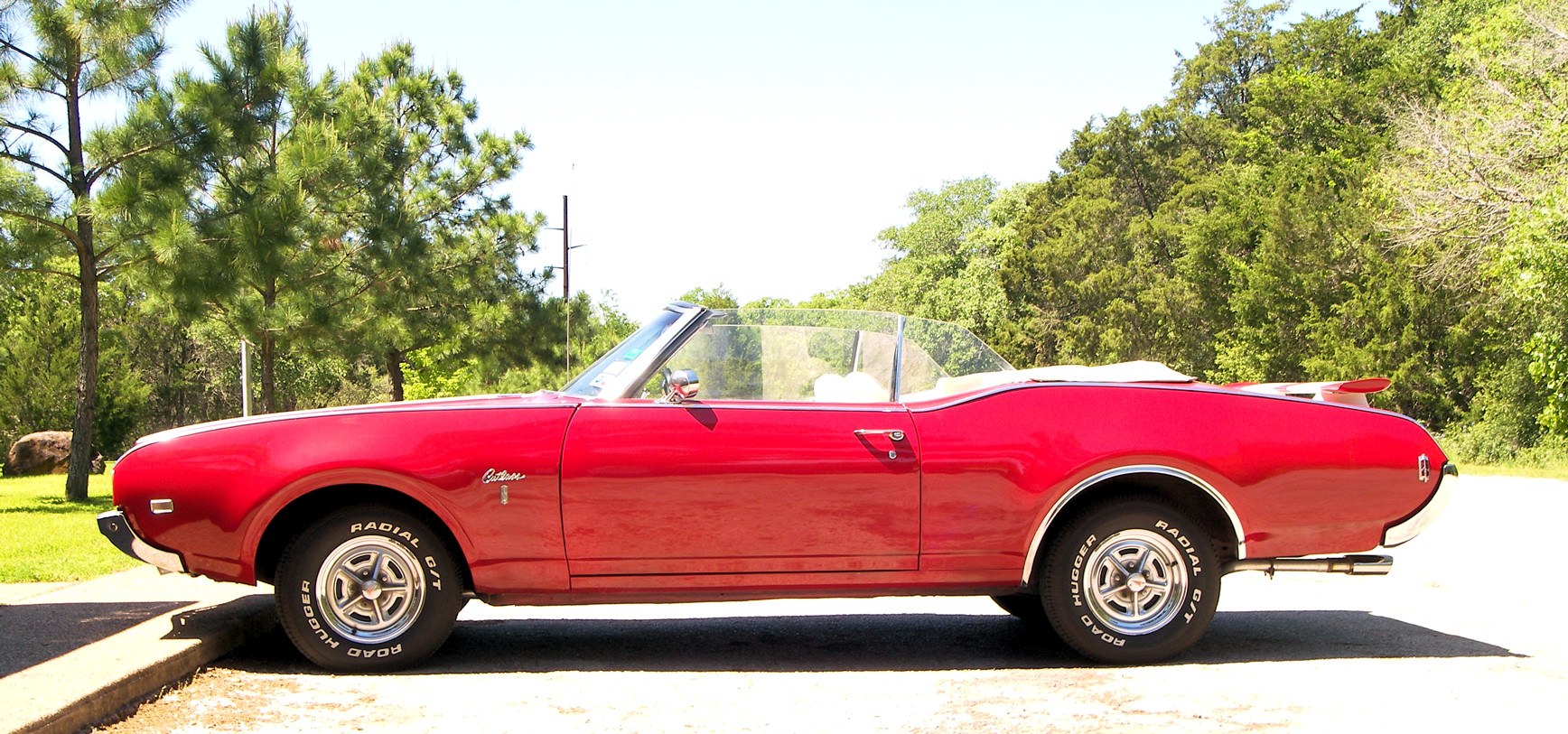
"... Fury name a little bit like those who really use Cutlass. Okay. Which is to say carelessly and frequently..."
The Oldsmobile Cutlass was a popular car in America from the 1960s to the 1990s. It came in different shapes and sizes, which made it a favorite among many drivers.
The Oldsmobile Cutlass was a mid-size car that became one of the best-selling cars in America during its production from the 1960s to the 1990s. Known for its variety of body styles and engine options, it played a significant role in the American automotive landscape.
"...n. No. No. That was a Plymouth. The Dodge was the Omni. Same car. So sold like crazy. These were based ..."
The Dodge Omni was a small car made by Dodge in the 1980s that was easy to drive and affordable. It was one of the first cars from Dodge to have the front wheels drive it, which was a new idea back then.
The Dodge Omni was a compact hatchback produced in the 1980s, known for its practicality and affordability. It was one of the first front-wheel-drive cars from Dodge, contributing to the shift in automotive design during that era.
"...opular. They were basically shaped like the first rabbits. They were two box Econobox cars and very popula..."
The Volkswagen Rabbit is a small car that has been around since the 1970s and is known for being practical and fun to drive. It's also called the Golf in some places, and many people like it for its good gas mileage.
The Volkswagen Rabbit, known as the Golf in many markets, is a compact car that has been popular since its introduction in the mid-1970s. Renowned for its practicality, efficiency, and fun driving experience, it remains a staple in Volkswagen's lineup.
Select text to request an explanation
Whether you drive a car, need a car, or just occasionally bummer ride with friends, you've
come to the right place.
Join Jill and Tom as they break down everything that's going on in the auto world.
New car reviews, shopping tips, driving green, electric cars, classic cars, and plenty of
great guests.
This is the Consumer Guide Car Stuff podcast.
All right, this is the Consumer Guide Car Stuff podcast.
I am indeed Tom Appel.
Thank you.
Thank you for joining us this week.
When you have a chance, you know the drill, check us out at ConsumerGuide.com.
Lots of stuff there.
Reviews, fun stuff, classic car stuff.
I just did a piece.
Jill, I'm going to draw you in early.
Okay.
How about the GM Companion Brands?
Okay.
I think we talked a little bit about them.
I'm sad that they are lost to history because they're super interesting.
Okay.
So we'll talk about those later before we have a moment.
But that's all there plus our 2026 Best Buy, so be sure and check those out.
That voice was indeed Jill Simonillo, contributing editor here at Consumer Guide, North American
Car of the Year juror, active freelancer, and you just got off a plane from Las Vegas.
I did.
Um, the Consumer Electronic Show by my read, not a lot of car stuff except for a lot of
car stuff.
Like it was all Chinese.
Yes.
So, and you were there, you were called kind of at the last minute to go check out stuff
from Geely.
Yes.
And specifically Zeekr.
Yes.
So, we'll get back to that in a moment, but Geely is a conglomerate.
It's a big company.
It is privately held by one guy, kind of, kind of an Elon Musk style guy.
He's very enigmatic and he makes a lot of media noise in China, but I don't think he's controversial
except for how fast and he's becoming powerful.
Right.
But there's a lot of stuff going on there.
So we'll talk about that in a little bit.
Um, later in the show, Robert Colangelo joins us.
Yes.
Formerly the host of GreenSense Radio.
He's gotten very deep into sustainability and he's got some very interesting news about
the grid and where power is going to come from.
Okay.
And here's, here's something.
I talked to him today a little bit about what we're going to talk about.
The grid is not as healthy as it could be and our future power is not certain.
Stuff has to happen.
I feel like that's going to surprise nobody at all.
Well, what will surprise you is, is that one of these sort of anti EV things that was frequently
thrown around was the grid can't handle it.
Right.
Frustrating for a couple of reasons.
One that I knew and it's like, well, the grid is more or less for profit.
So don't people want to make more money and don't they want to sell more electricity?
I don't know that the grid is this monolithic thing that can't be fixed or changed.
So that was one thing.
But the other is the truth is that EV demand, EV power demand is relatively low.
Yeah.
And especially when people are charging overnight, when, you know, people are sleeping and not
using electricity.
Right.
Exactly.
So we'll get to that in a moment.
I have to throw out a fun fact for you and then you can correct something for me.
I just drove the Hyundai Palisade calligraphy hybrid.
Yes.
A lot of words.
A lot of words.
A lot of syllables.
For a lot of the vehicle.
Well, yes.
It is a lot of a vehicle.
It's a very, very impressive vehicle.
The hybrid is very good.
But there's one number I just want to throw out there and just see if it startles you.
Okay.
$61,000.
I mean, it should, but it doesn't.
Yeah.
I think this is the most expensive Hyundai brand vehicle I've driven, unless the old
Equus got that expensive.
If people remember the Equus, it was a premium sedan.
Right.
It's kind of where Genesis came from.
Right.
And I don't have the numbers in front of me at the moment.
I will GTS.
But Ionic 9, I'm wondering where that pricing is.
Oh, yeah.
That would be more.
Yeah.
That'll be more.
That'll get to 70 because it's electric.
You're right.
It's electric.
It's electric.
But this being a conventional hybrid, so I don't know, Hyundai's been moving upscale.
They haven't been raising their prices.
Nothing about this vehicle seems inadequate at that price.
No.
Again, Hyundai's are no longer bargains.
They're still values.
Yes.
There's nothing about this car I didn't like.
It's a $61,000 Hyundai.
At some point, I was just sitting down going, huh?
That's a $61,000 Hyundai.
Yeah.
And I mean, what's really interesting and why I think Hyundai is still a value is the
fact that that's kind of a WYSIWYG price.
What you see is what you get.
I think especially when you're at the calligraphy trim, there are no options.
So that's the all-in pricing of what you're going to pay.
But if you were buying a comparable vehicle from Ford or a luxury automaker like BMW or
whatever, there are always options to compare apples to apples.
I do remember driving, this was two years ago, the Cadillac XT6.
The discontinued Cadillac XT6, which is a two-row crossover, and it's a Cadillac.
And that came to $75,000.
So this is not less nice, really, for $14,000 less two years later.
No, ultra-suede materials on the roof line are really beautiful accents and finishing
touches.
You know, the powertrain is amazing.
You know, Palisade is one of the vehicles up for Car of the Year, which will be announced
this week.
Ah.
All right, you remember a couple of weeks ago we had Tiago on the show?
We did.
I didn't write down Tiago's last name and I forgot it.
Thank you, Tiago Castro.
At the time, he was head of Infiniti.
Yes.
Well, that changed.
It did.
Like overnight, it changed.
Yeah, he's now head of, he's vice president of marketing and sales for Nissan and Infiniti.
Yes.
Congratulations, Tiago.
Yeah.
Especially because he seems so young.
Well, he's been around a long time, but he seems young.
He's been around the block a couple of times.
But no, I mean, yes, definitely congratulations to him.
And you know, I was listening to some of the chatter and it sounds like he, because he's
been around so long, he has this relationship with the dealer network that should serve
him well in this new position.
It is the dealers that are the biggest problem here.
Dealers want to defect from Nissan.
And part of it was desperate drives under the past administration over in Nissan to really
power through sales at any cost.
And they use this horrible thing called stair step incentives, which really forced you
to give away cars at some point to make money.
Like in between steps on the stair step, you can get yourself into trouble.
And at the end of the month, it made more sense for you to just give away for free a
couple of vehicles than not make those sales.
It was a terrible, terrible thing and it was terrible for dealer profitability.
So he's got to kind of fix that because dealers are still mad about that.
And they've got product, right?
Nissan's got product.
Good product.
Yeah.
Really good product.
And there's a rogue hybrid coming.
Yes.
It's actually a Mitsubishi Outlander.
No, not the plug-in.
They're also going to do, I forgot what they called it now, the e-power system, which is
like plug-in hybrid, but whatever.
But not.
Yeah.
It's not going to matter to consumers, but it should improve fuel economy.
Speaking of fuel economy and stuff we don't care about anymore.
Clearly.
My Hammy laments now extend to stuff further at Stellantis.
And you probably saw this, but Stellantis has killed all of its Jeep 4xE products.
Yeah, I did.
And 4xE was weird anyway because they were trying to sell it in certain states where
they were trying to get tax credits.
But 4xE was a plug-in hybrid system used a turbocharged four-cylinder engine,
17 kilowatt-hour battery, and you had to plug it in.
And for a little while, it ran really smoothly.
And then that four-cylinder kicked in, and then it ran kind of roughly.
Yeah.
And it was like, I want to say 20 miles of all-electric range.
Depended on the car.
Yeah.
But it was in the Wrangler and the Grand Cherokee.
Yeah.
And it was going to be in the Renegade, or Gladiator, but that never happened.
Right.
And I think it was going to be in the upcoming Cherokee, wasn't it?
There was something about that.
I think that was a different system.
But there was some talk about a plug-in hybrid in the coming Cherokee.
Right.
And a plug-in hybrid more of an E-rev in the Grand Wagoneer.
Right.
Which would have been probably similar to what we're going to see in the RAM.
Right.
Also, different system unrelated, they're going to kill the hybrid Pacifica.
Right.
Right.
Yeah, they're essentially killing all of their plug-in hybrids, but not the extended range RAM.
Right.
And I will say that the 4xE vehicles have been plagued with problems.
I know a couple of people who own them, and they are under, I want to say, a do not drive order
right now.
And so I don't know if this is a result of we just can't figure out what the problem is,
or if they're like, we're wasting too much money on this.
I don't know what happened here.
My favorite is the do not plug, or park it in your house order.
Yeah, yeah.
Yeah, park it in your driveway, please, in case it catches on fire.
So, yeah, I guess they're not going to have that problem anymore.
Well, they have the existing ones, because they were selling pretty well when I have numbers here.
35% of Wranglers were 4xE, and 15% of Grand Cherokees.
So a good amount of...
Decent chunk.
Yeah, of vehicles that sold well.
That's a lot of vehicles.
So kind of a bummer.
And the additional bummer here is that we were conditioned as the media to really dig the 4xE
because it was going to be good off-road.
Right.
And they even built a couple of chargers at trailheads and stuff.
And you're like, all right, I guess I'm in.
I'm buying into this.
And now we shouldn't.
Scratch that, reverse it.
Oh, man.
So I don't know where that's going.
And then we'll see the Jeep Recon, I assume.
Yeah.
We'll still see that.
Well, so the Jeep Recon is built on the same platform as the Wagoneer S.
And so...
There's a code for that.
It's like Stella Lard Electric.
Yeah, the STLA, Stella.
Yeah, Stella.
But yeah, I can't not say that whenever I see the Stella.
Is that streetcar named Desire?
Yep.
Okay.
Stella.
But so, yeah, I would presume part of the announcement that they made is that they are
focusing on their fully electric vehicles.
So we had wondered what the impact would be of the of the scaled-back
CAFE standards and their massive at Stalantis.
Oh, yeah.
They're killing...
Bring back all the V8s.
Yeah, bring back the V8s, kill the plug-in hybrids.
Kill the plug-in hybrids, bring back all the power.
Well, you know what I find really ironic about this whole situation?
And I keep getting it.
So I just, I had the Dodge Charger 6-Pak and I post a lot of stuff on TikTok and YouTube.
And invariably, the comments come in that it's a crappy car because it doesn't have a
Hemi.
And I'm just like, okay, so you want to pay a couple thousand dollars more for an engine
that has less power.
Got it.
It's funny, too.
Got it.
I've been watching and they're fantastic.
And I don't know who's chunking these up.
But Facebook Reels, is that what it is?
Facebook Reels?
People are posting these one-minute videos of classic drag races.
And they're posting information about the car.
So it's like 69 GTO, 400, 394.
That's not a real X-Racial.
390 rear-actual, four-speed versus a Cheval 396 or the 410 and whatever.
So if you know, you know, and you're watching these things and they're fantastic.
But the funny thing is, I'm sure that these are all classic cars, though,
that people are racing them stock and you're not going to hurt them.
But they're not that fast.
Like by contemporary standards, these things that we draw...
It's like a turtle race.
They're way faster than that.
I'm just saying that I just drove here in a CX-70, Mazda CX-70 Turbo,
faster than these cars.
That's all I'm saying.
Mazda CX-70, pretty amazing car.
It's a great car, if you don't get the hybrid.
But anyway.
I'm sensing a theme here.
No, I really just like the hybrids in the Mazda CX-70 and CX-90.
Okay, interesting.
The six-cylinder engine that they added a couple years ago
when these vehicles were introduced, super smooth.
They're good, they're smooth, they're efficient,
and they make these cars luxury cars.
Not even near luxury.
They're just fantastic.
And the hybrid drivetrain is really wonky.
It stalls, it stutters, it changes gears.
It does all sorts of weird things it shouldn't do.
As Damon Bell used to say, it does business with itself.
Okay.
I'm not asking questions.
All right.
You went to Vegas and you actually drove some Chinese cars.
I did.
Did you drive all of the...
I have a list here.
Sort of.
So you drove Zikers.
Yes.
And there was the X, the 7X, the 9X, the 001.
And did you drive the 7GT?
No.
And I did not drive the 9X.
I...
Okay.
That was just on display.
I believe that is just now starting to come out.
So that was on display in the Geely booth.
And I drove a couple of Lincoln Cows.
And then I drove one of the branded Geely vehicles as well.
So let's elaborate on Lincoln Co.
Because there's no way we can say that and make it...
Without sounding like Lincoln.
Right.
It's actually Link.
LYNK and Ampersand Co.
And if you look at them on social media, it's like LYNKCO.
Is there like their handle?
It is a terrible name for US distribution.
But we're talking about Geely, the bigger company.
And the first company they were trying to introduce
to Americans was Link and Co.
And 15 years ago or so, maybe 12, 10 years ago,
they tried to sell these vehicles to us,
which were at the time entirely Volvo-based.
So the technology was familiar to us.
But they were going to be the first subscription vehicles.
Oh yeah.
Yeah.
And we were going to rent these by the month.
Yes.
And that's when they were full-blooded subscription
like at its most entertaining potential where
you could switch cars every month.
You only paid them a fee that covered the insurance.
The only thing you paid for was gas.
Right.
And yeah, there's all this cool stuff about it.
And none of that ever happened.
It did not.
And a couple of companies tried this
and they couldn't make it work.
And part of the problem is at some point
what you're distributing is used cars.
Yeah.
All of a sudden they sign a new car.
It's a car with 3,500 miles on it, 7,500 miles on it.
What are you paying for?
Yeah.
A used car?
That's weird.
But that was Link and Co.
Yeah.
Other companies in the fold are Geely,
which does gasoline-powered vehicles.
Something called Geely Galaxy that does what the Chinese
call new energy, which is plug-in hybrid electric.
And if anyone's doing it, fuel cell.
Link and Co.
Something called Radar Auto I've never heard of.
Volvo.
Polestar.
Lotus, which I don't think sells a street legal.
Oh no, they sell an electric car in the US right now.
Proton, which was a Malaysian company.
Smart, which I didn't realize was still doing business.
And something that's new to me, never heard of it, GU.
It's a high-tech premium brand.
Oh, oh, okay.
They are linked up with Baidu, which is China's Amazon.
Got it.
Okay.
All right, so that's it.
But you got to drive these darn things.
I did.
I did.
It was a very interesting program because,
so I do want to say these vehicles are already on sale in Mexico.
And they all had Mexican plates.
And they were covered up with the name of the car on it.
Really?
Yes.
But they had Mexican plates on them and what?
The name of the car, like Zeekr 007, was on top of the Mexican plate.
So you weren't looking at the Mexican plate.
So they kind of covered up.
But we were not allowed to drive on the street.
We were out of racetrack.
We were at Las Vegas Speedway.
Yeah, they're not street legal.
And no, so they're not street legal.
And we went to the racetrack and we were able to do a couple,
like do laps of them.
Now I have to say there were nine cars and there were probably 100 journalists.
So you can imagine we did not have a lot of time in the vehicle.
But I did spend the most time with the 7X.
And I fell in love with that car.
I thought it was really cool.
The technology was interesting.
The handling on the track was really smooth.
And it wasn't push you back in your seat fast like insane fast, but it was smooth fast.
It made me think of like a luxury Lincoln type vehicle.
Yeah, I think that the Chinese audience is less into power than we are.
Yeah, yeah, yeah.
Also, they don't have any place to exploit the power.
Everything's crowded.
Yeah.
And so this was just, it was smooth and comfortable and it just handled the curves.
We went through a slalom and it was just, it was nice.
And I sat in one of the cars for like 20 minutes and just poked out all the buttons
and played with all the things.
And I walked away thinking, why can't we have nice things?
Really?
Yeah.
I've heard this before.
So build quality?
Amazing.
Materials quality?
Like phenomenal.
Like you talking about the Hyundai Palisade calligraphy better than that.
That's all very interesting.
All the vehicles you drove were built in China?
I think yes.
So let's talk about, so you drove these vehicles are definitely impressive.
Did you drive the 001?
Yes.
Because that is our Polestar 4.
Yes.
Basically.
Does it look the same?
No.
Okay.
No.
And so, and like the, was it the Zeekr X is like the Volvo EX30 built on the same platform.
And again, doesn't, doesn't look alike.
You know, they, they don't share really any of the design elements.
They just share the platform.
Interesting.
So we're running out of time here and we could talk about this later after the quiz.
But, but why is Zeekr showing cars to American journalists?
Because they are seriously considering a play in the United States.
I managed to talk to Ash Sutliff, I think, is it Sutliff?
In, who's the Global Communication Director.
Schedule him as an upcoming guest.
We are in communications with it.
So he, he sent me his email address.
I reached out to him on LinkedIn, he sent me his email address.
So we are in conversation.
I think it's going to happen.
Wonderful.
But so I was talking to him kind of informally before we went out to drive the cars.
And I was like, I asked him that very question, like why?
And he said, because we are seriously looking at how we can bring cars to the United States.
And I said, okay, are all of them or what, what brand are you bringing?
And he, he mentioned Zeekr as the likeliest candidate and especially.
It's the brand we hear most about.
Yeah, because of the connection and the ability potentially to build it
in South Carolina at the Volvo plant.
We're out of time, but I've got two questions for you.
So I'm obviously going to break rules here.
But Zeekr as a luxury brand, what does it compare most to?
More, more Lexus, more Audi, more Mercedes?
That's a tough one.
I mean, with the powertrain and the overall calm quietness that you get inside,
I would probably put it more towards Lincoln.
Lincoln.
Because it's definitely not sporty.
And Lincoln does well in China.
So that's a very interesting connection.
Yeah, it's not, it's not sporty.
And the other question was if they were to build, if they were to sell vehicles in the US,
I believe they've got to do an end play to get around current laws.
So are they talking about building in Mexico or building in South Carolina?
Volvo has a factory in South Carolina underutilized at the moment.
Yeah, they mentioned South Carolina when we were having conversations and hopefully Ash can
clarify some of these things when we get them on the show.
They're building electric cars there already.
I think the Volvo EX90 is built in South Carolina.
And I think the Volvo S60 sedan is built on there.
So it's fairly flexible.
Yeah.
I think I'd have to check on that.
It's not a huge factory.
They could expand it.
Yeah.
So interesting.
Yeah.
I mean, I found the whole process fascinating.
And I just walked away, like one of the Mexican journalists who was there like interviewed me
and she's like, what is the one word you would use to describe this?
And I said, impressive.
Mexican journalists is interesting because it'd be interesting to get her take
because they could also build cars down there.
Yeah.
They do, doesn't she build vehicles in Mexico or are they going to?
I don't know.
I think they're planning to.
Yeah.
For the Mexican market and then for South America.
I mean, it would make sense.
The cars have been on sale there for two years now.
Yeah.
Interesting.
All right.
Well, welcome back.
Thank you.
We're going to take a big bake.
I've done that before and exactly said bake.
A bake.
You're thinking of the donuts.
I'm not.
I'm not going to have a donut today.
Oh, we're going to take a break.
And when we come back, we talked to my old friend Robert Calangelo.
Stick around.
Questions or comments?
Drop us a line at carstuffatconsumerguide.com.
That's carstuffatconsumerguide.com.
The Chicago Auto Show zooms into McCormick Place this February 7th through the 16th.
The cars are certainly the star, but did you know the Chicago Auto Show has
indoor test tracks and outdoor test drives?
Take a thrilling ride on one of two indoor mountain climbs
with either Ford or Jeep and decide who conquers the challenge best.
Come experience the latest gas-powered, hybrid, plug-in hybrid,
and electric vehicles all in one place.
Take a trip into the national parks and adopt a dog with Subaru.
Dream about a lavish lifestyle at the Supercar Gallery.
Visit returning exhibits, overlanding Chicago and the family zone,
where kids can test drive their own vehicles.
Don't miss the new shy town alley that celebrates
Chicago car culture and unites car enthusiasts.
Join us for an indoor run, craft beer tasting,
auto career day, and so much more.
The Chicago Auto Show has something for everyone.
February 7th through the 16th at McCormick Place.
Find out more and buy tickets today at ChicagoAutoShow.com.
Welcome back to the Car Stuff Podcast.
And we're back. This is the Consumer Guide Car Stuff Podcast.
I'm Tom Appel. She's Jill Simonillo, fresh from Las Vegas.
Did you gamble?
No.
Nothing?
No, I'm not. I'm not a gambler.
I thought about doing like a slot machine or something,
but there was nothing that spoke to me.
I have this weird habit of being lucky, dropping one dollar
into a slot machine and walking away with like 20.
It's like, my job here is done.
You're like, and out.
Although 20 bucks is nothing in Las Vegas anymore.
No, that will barely buy you coffee.
I don't know much about Las Vegas,
but I read an article recently about how prohibitively expensive it is now.
Yeah, I went to Starbucks for breakfast while I was there.
And Grande, like green tea, matcha latte,
and like some of the egg bites, it was like 18 bucks.
I don't understand Vegas because you think that they would have
a more cohesive sense of self and would be marketing the city as the city.
And they do, you know, there is a, you know,
a board of trade, a travel and stuff like that.
But they seem to never be on the same page
with what they were doing a year ago.
And they used to be like this value play for families to go and have fun in Vegas.
And now it's really expensive.
And they have a bunch of like really good restaurants, I guess.
Oh yeah.
No, I went to dinner one night.
I want to say the name of the restaurant was Orla in the Mandalay Bay.
And I, you know, was on my own.
And so I was like, Mediterranean food sounds really good.
And I have to say it was probably the best meal I've ever had.
Well, that's good.
And it was like 150 bucks.
For one person?
For one person.
That's rough.
It was, it was, yeah, but it was good.
All right.
Ask me about social media real quick.
Hey, Tom, do you want to talk about social media?
No.
Okay.
So moving on.
I am Car Guy Tom on Twitter and X.
That's it.
Okay.
That's all.
All right.
On the phone.
He didn't mention Blue Sky.
Oh, and Blue Sky.
Okay.
Blue Sky actually, boy, do you owe me lunch.
Yeah, I do.
I owe you lunch.
It's worse than you think.
Ask me if I care.
We can compare notes later.
It's not going to be $150 lunch.
No, probably not.
Okay.
But on the phone.
On the phone is our good friend, Robert Calangelo,
sustainably sustainability expert and general smart guy
about all things.
Robert, how are you?
Well, thanks for the introduction,
but I like your discussion about Vegas.
Have you been to Vegas recently?
I have.
We had a big project out there to build an indoor farm
for one of the large strip casinos.
So I've spent a lot of time out there.
And I have seen Vegas go from a fun place
to a very expensive, a prohibitively expensive place.
And they thought, you know, corporations took over
and they sucked all the fun out of Vegas.
I never ate shrimp cocktails,
but I always enjoyed the idea of a 99 cent shrimp cocktail.
That does not seem like a good idea, actually.
Shrimp could go so bad.
Well, I don't think you eat one for nine.
No, that was like a 70s thing.
I seem to recall watching an episode of The Odd Couple
and Felix and Oscar were in Las Vegas.
And I think Oscar got a 99 cent shrimp cocktail.
But we're not talking shrimp today.
We could.
I guess there's some sustainability conversation
to be had about seafood.
But you've done that.
Robert, you've done some extensive research into the grid.
And Jill and I prefaced this conversation earlier in the show.
But there was a lot of conversation for a while
about how we couldn't do electric cars
and one of the reasons was that the grid just wouldn't support
electric car charging.
But it goes so much deeper than that.
And cars really aren't the threat.
Tell us a little bit about just sort of open this conversation
about what is going on with the American power grid
and what are some of the fallacies understood about it.
So, Tom, let's start off with a question.
What do data centers and electrical vehicles have in common?
I'm going to say that they both seem like challenges to the grid.
Well, they're both competing for the same thing,
a low cost, reliable supply of electricity.
And those are the key things.
But as you mentioned, what we're going to learn today
is that the cars aren't really the big energy user.
The data centers are the new giants on the block.
And their modern power demands driven by cloud computing
and artificial intelligence.
We're forcing the utility industry to rethink
how to generate, transmit, and deliver electricity.
I mean, this is a seismic shift.
And they're doing it at a speed we haven't seen
since the post-war electrification boom of America.
And on top of all this, utilities are already scrambling
just to keep up with current demand.
So, it's a crazy situation right now.
And talk a little bit about data centers.
It seems like we're talking about them for the first time
sort of in the last couple of years.
And they've been around for a while.
Why is there suddenly this surge in demand for a data center?
And for those of us like me who aren't 100% certain,
what is a data center?
So, let's start off first with electric power generation.
And let me put that in context.
Okay.
And we'll start small.
A watt is the basic unit of measurement for electricity.
There's a thousand watts to equal one kilowatt.
And when you buy energy, you buy it in kilowatt hours.
So, one kilowatt of energy for one hour of use
is one kilowatt hour, which is how it shows up on your electric bill.
And to put that in a little context, because that's all numbers right now,
the average U.S. household uses about 800 kilowatt hours per month.
And the EV typically uses between three to 400 kilowatt hours per month.
Now, there's a lot of variation in that based on the size of the EV and how much you drive.
But these are just general terms just to put it in context.
So, interesting point there, Robert.
If you buy an EV, basically your electric bill will go up by about 50%.
That's a nice...
It could be as high as that.
Okay, that's a handy number to know.
And now let's scale this up.
1000 kilowatts equals one megawatt.
And a typical wind turbine that you'll see maybe when you're driving down 65 down to Purdue,
you'll see that wind mill farm, those wind turbines produce about a megawatt of energy.
And that megawatt of energy can produce enough power to roughly run 600 to 1,000 homes per year.
Okay, so are you saying that one wind mill produces that amount of energy,
or all of the wind mills together?
I'm very familiar with this farm, by the way.
But so is it one wind mill or all the wind mills?
Yeah, one of those wind turbines, those large wind turbines will produce
approximately one megawatt.
Okay.
And again, there's a lot of variation here.
I didn't want to get into the super detail, but that wind turbine will produce about enough
energy to run 600 to 1,000 homes per year.
Well, and that's central Indiana, right?
Yeah, here's the problem.
The wind doesn't blow all the time.
And so that's where the rub comes in with renewable energies.
And I'll get into that in a second.
So let's take it up a notch now.
A thousand megawatt equals one gigawatt.
And so when you start talking about data centers, now we're starting to talk in the high megawatts
or gigawatts of power use.
So a large AI campus, which has multiple buildings on site, and they're all connected,
can use as much as a gigawatt or more of power.
That's equivalent to the electricity demand of a mid-sized city.
I'll go into that one data center.
Dang.
That's a lot, right?
And this isn't a problem of, I think, society starting to face.
And so when you start to look at the very top end of how we measure and look at energy,
a thousand gigawatt equals one terawatt, which is how you look at total energy consumption
in the whole US.
So does that help give you some context in the landscape?
It does.
Yeah, it's good to have the scale.
And then I have a question for you about the data centers and that energy to consumption.
There seems to be another environmental concern.
If you were using that much electricity, you were also then giving off an awful lot of heat.
Are you not?
You are.
And this is one of the challenges with data centers is that the current way data centers
are constructed, the chips produce a lot of heat.
So you need a lot of cooling.
So the cooling uses more electricity, not only to power the chips, but to run the HVAC units.
And most of these HVAC units are used with water chillers, very large water chillers.
So you need a lot of water.
Now, they're coming out with new HVAC technology that can use air chillers,
depending on where you're located.
But this is a big issue.
Now, one of the issues, too, you had mentioned about, and this obviously affects data centers
a lot, is that moving electricity is pretty wasteful.
And you had a number, I think, that described how much energy is lost just through the power lines.
Yeah, so let's talk about that, and let me ease into that by looking at what fuels are used to
produce power and how much land do they use.
So that also gives you some context here.
So power generation, based on the fuel, uses different varieties of land.
And I can give you some general comparisons, but again, the devil's in the detail here,
and it starts to get pretty complicated.
So we can break this up into fossil fuels and to renewables.
And fossil fuels are great.
They're energy dense, they're widely available, and they work under all environmental conditions.
The wind burden needs to blow, the sun doesn't shine, need to shine.
If you're using natural gas or coal plants, they're going to work all the time.
But also, and they can provide continuous power, which is very important when you're producing
power, but they also have the most impact on the environment.
They're emissions, they're waste, all create a problem.
So if I look at what is the smallest footprint you need, it comes from a natural gas fired plant.
You can hook up gas lines so you don't need to have all this coal storage,
and you typically need around one acre of land per megawatt produced.
And natural gas has much less impact on the environment than coal.
Coal plants require roughly around three acres per megawatt,
and that doesn't count all the coal mining operations, on-site storage.
The byproduct of burnt coal is coal ash, which is a real management issue.
And they also have the highest environmental impact, both through the smoke stack as well as coal ash.
Also, coal plants would be subject to considerable costs having to do with
the transportation of the coal, right? Because natural gas, you're just laying pipe.
Exactly. So there's different costs, there's different environmental impacts.
And to get to your question was typically these fossil fuel plants are located in more of a remote area.
And so you're losing somewhere around 30% in transmission. So if I produce
10 units of electricity and I send it so many miles, I may only end up with seven units
after a line loss through resistance. So that's a big problem.
Robert, is that a loss due to the condition of the grid or just something that happens naturally
that not much can be done about? It's just the physics of electricity.
And you're moving power through lines. There's a resistance factor. And so that's where the
resistance comes in. So the nice thing about renewable energy is it doesn't produce much
environmental impact. The downside is that you have to put it in a right location and it doesn't
produce continuous energy at the intermittent. Wind energy will work when the wind blows,
solar when the sun shines. And when you don't have that, you don't produce energy.
And so wind energy also needs a lot of land. You need about one to two acres per megawatt
for the wind turbines. So Jill, you were saying when you drive down to Purdue and you see all
those windmills, they need about a half acre to set that on. And then there's some space for
access roads and service roads. And then they need a lot of area between the windmill.
The good news is that can be dual use. You could use that land for farming or ranching.
So not all that land needs to be used. And that's somewhere between 30 to 80 acres per megawatt.
So does Robert, does a wind farm have a big impact on the ability to produce
farm goods or like the roads and the wind, the farm, I'm sorry, the windmills themselves,
do they impact the growth of the crops? I haven't seen any studies that say they do.
But there is some impact to animals like birds. They create a vacuum when those wind turbines move
and there's a loss to birds. So on the utility side, you generally need around five to 10 acres
per megawatt because you need a lot of solar panels there. And so there's other sources like
nuclear, geothermal and hydroelectric. But I just wanted to hit the big one as far as
what are the major energy producers? So if you're a power producer now, if you're a utility and
a data center reaches out to you, some company wants to put a fairly large data center somewhere
in that utilities coverage area. What does the utility have to do to respond? And if they're
sort of marginally at their capacity, what has to happen for that data farm to be serviced?
Well, let me share my experience. I'm involved with a project now. It's a three acre data center
development. It's in Illinois. And we're looking to get 500 megawatts of power to the site.
So the local utility, just to give you sort of again context to how complex this is
and the demands that are out there, the utility in that service area currently produces about
32 gigawatts of power for the entire service area. Right now, when we put our application
in to get power, they said there's roughly 100 applications ahead of us of four data centers
in that service area. And those applications total 34 gigawatts of new power demand.
So double. So that almost doubles it. And so the utility informed us that it would take
six to seven years to get the 500 megawatts of power to our site. And on the site,
it has a 345 kilowatt transmission line already on the site. And I was told
that it would be in the millions of dollars per mile if you didn't have one of those lines on
site to get that to your site. So there's also just big cost here to get the process started.
There's a big investment required to apply for the power permit and to start a cluster study.
So one of the complications out there is utilities before used to produce the power,
they would transmit the power on their power lines, they would service all this,
and they would do the load balancing with all their controls.
Now with deregulation, some utilities just transmit the power, some produce the power,
some do the billings, and the load balancing. So it's complex. This utility doesn't produce
any power anymore. It just provides the transmission. And so when it does this cluster study,
it has to go out to figure out where it's going to get all this power.
And to do that, that study in this permit process is in the hundreds of thousands to million dollars.
And once they approve the power and they sign a purchase agreement, a power purchase agreement,
they require a $150 million letter of credit before we'll actually start the process.
And a lot of time. So this particular utility no longer generating,
so they have to buy the power literally from another utility and bring it into their coverage area.
Exactly. So some utilities have sister companies that do the
production or the transmission, so they can somewhat do it in-house, but they've separated things.
A question for you. When we were talking about the wind and the solar,
is there a way, because you talked about losing efficiency by having to transfer the power,
but is there a way to store the power? When the wind isn't blowing or the sun isn't shining?
Great question, Jill. Yes, there's power banks. They can store them in battery storage. Battery
storage has been expensive, but it's starting to get cheaper. And that's one way to do that.
To a degree, that's again where the renewable energy, so in the utility business,
utilities love customers that have a consistent, balanced load. So if you're always using,
to say 100 megawatts, a utility loves you. But if you have the spurts in energy use with 20 megawatts
at a peak to 100, this is what utilities can't handle. It creates all sorts of chaos in the system.
And the trouble with renewables is they don't produce that consistent power,
and they can put some of that into battery storage, but it creates complications for balancing load.
One of the things where the auto world is getting tangled back into the story is that
there had been an expectation that by this period of time, by now, that there would be enough
end of use electric vehicles out there, that the batteries could be removed and used for
stationary purposes. Because a battery that's at 78 or 60 percent efficiency, no longer good for a
rolling for a vehicle, but perfectly good for stationary, where space and weight aren't such
an issue. But there aren't that many out there yet. There's not a lot of cars being recycled yet,
so we don't see the supply of batteries for battery farms.
So we've done a story on a company. I forgot the name of them on our radio show, on Greenfinch Show.
And a number of large school buses, you know, they're used very infrequently. They use them in
the morning and then the afternoon and then they sit. So they've been using those batteries
as battery storage. Interesting. And they've got bigger batteries to run the buses. So I
think that idea is coming. We're just not there. You know, one of the other big problems we have
is the electric grid. You know, when people think of our US electric grid,
is this one unified homogenous system? It's not true. That's a big myth out there. Well,
right. It's a patchwork of these regional and local grids and they're owned and operated by
different utilities. And that means that they all have a different stage of age to them,
a different level of investment and maintenance, and also modernization. And so in general,
our US utility grid is at the end of its life cycle. It's like 30 to 40 years old. A lot of
these coal-fired plants are old and they're really at the end of the efficiency of the life cycle.
It's also made up of these power plants, transmission lines, substations, transformers,
and control systems. And so the grid infrastructure is under a tremendous amount of stress,
both from the age, also from extreme weather. You're seeing a lot more stronger storms out there.
We've got heat waves and cold snaps. And also all this raising demand by data centers,
EVs, and industrial grids are starting to create more brownouts and power outages. So you're seeing
that happen much more frequently. Robert, we're running out of time, but what one takeaway do you
want us to remember from this conversation? So I wanted to put this in perspective is that the
US Energy Information Administration says that currently in the US, we use about 4,200 terawatts
hours of electricity each year. Electric vehicles use about 15 to 20 terawatts,
which amounts to about 0.3 to 0.5 percent of the total electricity used.
So cars are not the problem. They're not the problem. And this is this
prognostication of how much we're going to use in the future is a little murky, but they're
projecting that by 2030 EVs could use as little as 2.5 percent to as much as 10 percent of the
total grid. Okay. Data centers, on the other hand, are the elephant in the room. They're currently
using about 4 to 5 percent of all US electricity. And by 2030, they're looking for that to rise
to 6 to 12 percent of all electricity. If you combine those two, by the end of the decade,
we're looking at 8.5 to 22 percent of all electricity produced on that grid consumed by two
user groups, EVs and data centers. So that's going to create all sorts of,
I think, political and social issues of how we divide energy, how do we produce it, who gets it,
but at the end of the day, expect your utility bills to go off.
Robert, thank you so much for putting all this into perspective.
Oh, Tom, it's always a pleasure to talk to you and Jill, and good luck with everything.
Well, thank you. That's Robert Colangelo. We're going to take a break and when we come back,
it's time. It's time.
Questions or comments? Drop us a line at carstuff at consumerguide.com. That's carstuff at consumerguide.com.
And we're back. This is the Consumer Guide Carstuff Podcast. I'm Tom Appel. She
is Jill Simonillo and Robert makes me feel smarter.
Yeah, that was a very interesting conversation, but I have to say I feel a little bit concerned.
Yeah, I'm walking away from that.
I don't think Robert ever sugarcoats anything.
No, no.
So that's the story there. It's not entirely scary. I had read a story recently. We don't really
have a lot of time here, but General Electric, the old company that was General Electric,
has a division. They broke apart. There's a lot of different subdivisions now and they're all
public, so they're not really as closely related as they used to be.
But I think it was called GE Turbine. And GE Turbine used to make things like big power stations
and stuff. But what they've been making lately are small onsite power delivery systems that are
mostly powered by natural gas. And they're very, very, very expensive. And this division
of what used to be GE is just cranking out the money because they're building these substations,
these little power stations for data centers. And basically a data center wants to get online.
Power company doesn't have the power locally. The power center, I'm sorry, the data center will
build this thing and essentially give it, give its control over to the utility.
Okay.
So if you want that energy, you can be on the grid, but you're going to have to provide us
with the energy and we will manage it for you. That's that story. Anyway, I just, I just listened
to this podcast and I feel super smart, super, super smart. All right. Social media, you?
Yes. Very quick. You can find me at Jill Siminello and I use the hashtag card is your
on tic tac Instagram, YouTube, Facebook, LinkedIn, all the things. And I do want to give a shout out
to my YouTube channel. I did just do a little bit of a redesign. And so new logo and, you know,
I, I did actually name it card is your and my new tagline is your daily dose of drive. So I'm
posting shorts pretty much every day and I try and do one long form video once a week. So I'm
posting daily. I post my shorts every day. They're all cargo shorts. I was going to say,
you post your shorts on on X or tick, you know, on Twitter to take a picture of your shorts.
I suspect that my success in growing my audience on blue sky would be dampened somewhat by pictures
of my shorts. Maybe, maybe. Also, the word dampened is unpleasant. Yes, it is. All right.
Especially when you're talking about shorts. Did you finish your social media stuff? Yes,
Jill Siminello card is your daily dose of drive. We have a very short period of time,
but I do want to get the quiz in because people listen for the quiz. They do. I will,
try not to doddle too much. All right. Today's topic, was it a dodge? Oh, okay. Dodge the,
the performance division, although not always the performance division
of Chrysler going way back. They just made nice, dodgy cars became part of Chrysler in 1928.
Okay. I've got five questions here for you. You need three to win plus the bonus question,
which is always related to the topic of the day. All right. Historical cars, not my forte. I'm
going to have to tell me if that model name was ever used by dodge. Okay. Lancer. No. Yes.
I'm thinking Mitsubishi Lancer. Well, yeah. Mitsubishi and Chrysler had a relationship
and they shared names and stuff. People don't know this, but in the early seventies,
Mitsubishi used to make cars for Plymouth and Dodge. And in fact, the Colt, if you remember
the Colt, was that one of these? Cause that ruins everything. All right. You just got a freebie.
Yay. Unless you forget it in four questions. Maybe. But Mitsubishi came to the U.S. by building
cars for Chrysler divisions. Got it. But the Lancer was actually a version of a K car based
vehicle sold by Dodge and Chrysler in the mid mid eighties. There was the LaBaron GTS kind of a
sporty sedan and the Dodge Lancer kind of a sporty sedan. They were good looking. They weren't good.
All right. You have no points. I have no points. I gave you one. Your favorite phrase. The Aries.
Was there a Dodge Aries? No. Yes.
I'm only going to get one point. The Aries is one of the original K cars. Okay. The legendary K cars,
the Plymouth Reliant and the Dodge Aries. Okay. They saved Chrysler's butt. There's these cars
over time that saved Chrysler's butt. The K cars were one. The minivan was one. And then the LH
cars of the late eighties and early nineties, which included the Dodge Intrepid. Not one of these.
All right. Fury. Yes. No. Damn it. You got to basically slide out of this. Oh man. I give up.
Fury was a Plymouth. And there was lots of use of Fury name over the years. But between 75 and 78,
the Fury was a midsize car that was a corollary to the Dodge Coronet.
Okay. All right. They used the Fury name a little bit like those who really use Cutlass.
Okay. Which is to say carelessly and frequently. Okay. All right. Oh, hey, Colt. Yes. Yes.
The Colt was offered between 71 and 94. And I think every single Colt was built by Mitsubishi.
Got it. Many, many different versions of it. Fun little car.
By the way, had you not given me that answer, I would have said no.
Oh. So you need to get the next two correct. Which is not going to happen. Okay. Horizon.
Dodge Horizon. No. No. That was a Plymouth. The Dodge was the Omni. Same car. So sold like crazy.
These were based on a Simca platform. Simca was a French company that Chrysler bought,
I think in the 60s. But anyway, not to worry, Simca doesn't exist anymore. Okay. But these are
very popular. They were basically shaped like the first rabbits. They were two box
Econobox cars and very popular. Okay. People rather like them. So you have two. You need,
you need. I need. I'm not going to get, but okay. You need the bonus question. Are you ready? I am
ready. I got this number off of Grock. So it's incorrect. How many tacos do you think Taco Bell
sells a year in the US? A million. This is two billion. Good God, we eat a lot of tacos. We've
been dealing a lot with numbers today. So that's like a gigawatt, two gigawatts of tacos. Not a
terawatt. I need you to tell me which of the following specialty sandwich sandwiches, items,
entrees. Sure. Specialty menu items. Okay. Taco Bell sells best. Okay. Are you ready? And I'm
giving you the one or the one that sells best. Yeah. The Crunchwrap Supreme, the Doritos Locos
Tacos, which I argue is not actually food. The Mexican pizza, which is just sort of a tostada,
and the cheesy gordita crunch. So I think it would either be the last one or the Dorito thing.
Have you ever seen the Dorito thing? Yeah, it's very orange. I mean, I've not seen it in real life.
Let's be clear. Yeah, I've only seen it on TV. I've only seen it on TV. My husband. I'm not food,
but I play food on TV. Always gets the quesadillas. And I like the Taco Supreme. So
if I'm going to eat it, Taco Bell. So it was like the cheesy gordita and then the Dorito thing,
right? Yeah. I'm going to say the Dorito thing. No, it's the Crunchwrap Supreme. Actually,
those were in order. Okay. All right, guess what we did? I lost the quiz and we ran out of time.
We did, but great conversation with Robert Colangelo. Good to hear from him again.
Yes. All right. Big thanks to Robert Colangelo. Thank you, Jill. Thank you to producer Randy
and the good folks here at Talk Zone. Let's talk more about cars again next week. Next week.
Request an explanation for:
29 cars
Scroll for more
29 cars featured
Request an Explanation
Heard something you'd like explained? We'll add it to this episode.
Sign in to request explanations for terms you heard.
Want to learn more?
Browse our glossary for plain-English explanations of automotive terms, jargon, and concepts.
See something that's not quite right? Our annotations are AI-generated and can sometimes miss the mark.
Click the flag icon on any annotation to suggest a correction.