USMCA negotiations are talks about the trade agreement between the U.S., Mexico, and Canada. For car companies, it can affect what parts qualify for cheaper trade and how expensive it is to build vehicles in the region.
Rules of origin are the legal tests that decide where a car or part is considered to be made. For automakers, that can change whether tariffs get charged or not.
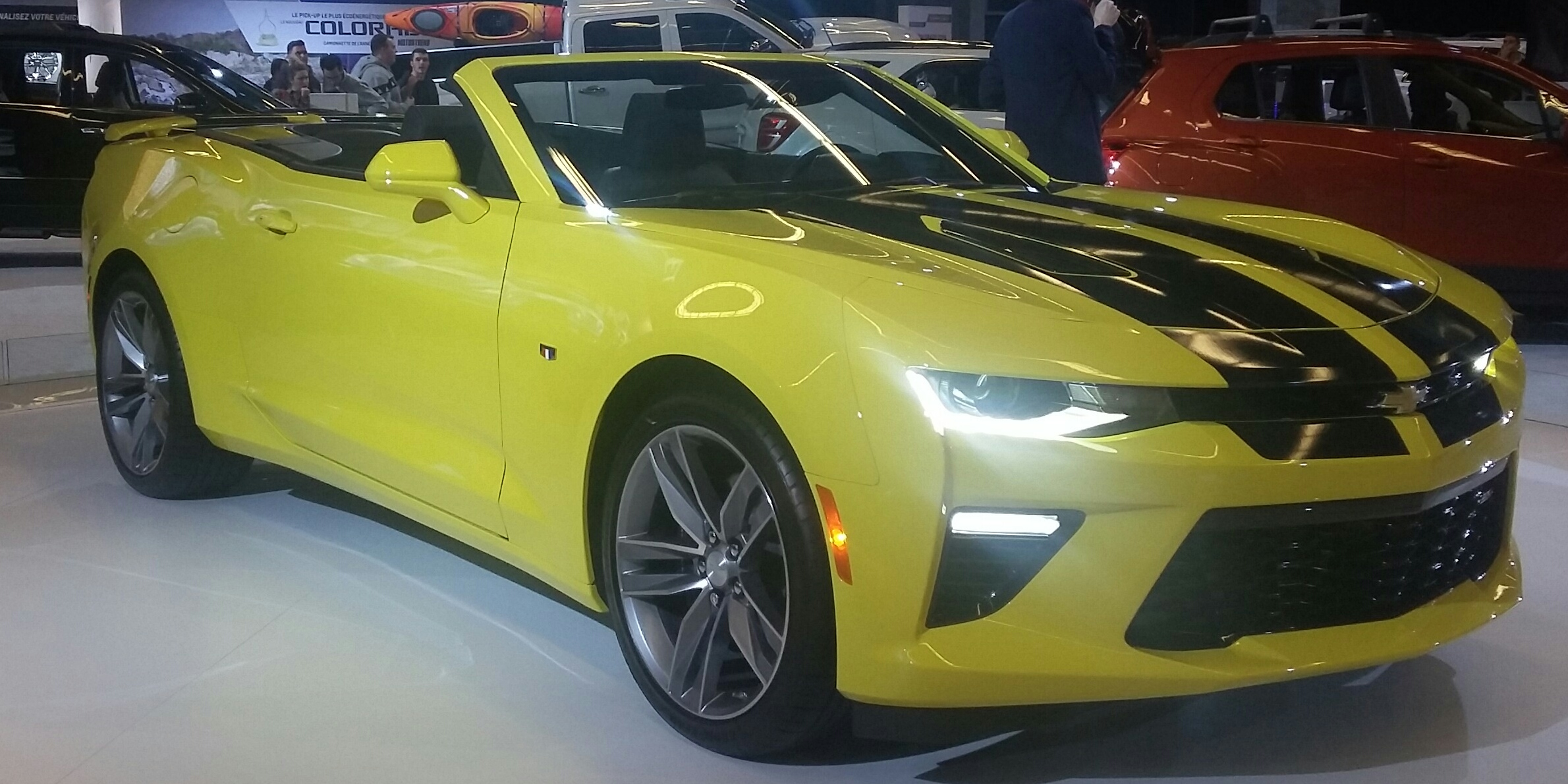
The Camaro is a sporty car made by Chevrolet. It’s designed to feel quick and fun to drive, and it’s usually offered as a coupe or convertible. People talk about it when they’re discussing which models to keep in a lineup.
Crossovers are cars that sit higher like an SUV but usually drive more like a regular car. The host is saying GM has made a lot of money from this type of vehicle.
“EV plans” means the company’s plans for making and selling electric cars. The discussion is about how those plans can shift and change what the factories end up building.
“Extra capacity” means a factory has more ability to build cars than it’s currently using. If electric-car production gets delayed, that unused capacity can be used for other models like sedans.
“Sub-30,000” means cars priced under about $30,000. The host is saying GM wants to offer more options in that lower price range because many shoppers are worried about affordability.
A hybrid lineup means the automaker is selling cars that use both a gas engine and an electric motor. The host is saying GM is leaning more into hybrids because EV demand isn’t matching expectations.
EV incentives are government discounts or tax breaks for buying electric cars. The host is saying that when those incentives ended, fewer people were buying EVs than expected.
The EV market is just the overall buying of electric cars—how many people want them and how many are sold. The host says it’s weaker than expected, especially after incentives ended.
The Bolt EV is a GM electric car model. The host is saying GM will discontinue it soon, but will still sell other electric vehicles.
Term
second quarter
The “second quarter” is a company’s reporting period covering roughly April through June. The host uses it to point to recent sales results showing hybrids doing well.
The Corvette is Chevrolet’s high-performance sports car. It’s designed for fast driving and sharp handling. In the podcast, it’s mentioned because at least one Corvette version uses hybrid technology.
A hybrid power chain is the whole hybrid system inside the car—gas engine plus electric parts working together. The point here is that GM might offer more than just plug-in hybrids.
Car
Infiniti QX-65
The Infiniti QX-65 is a luxury SUV from Infiniti. The big point here is that it was just launched and early sales are doing better than Infiniti expected.
The Infiniti QX-60 is another Infiniti luxury SUV already on sale. The episode is saying Infiniti wants the QX-60 and QX-65 together to appeal to more shoppers.
All-wheel drive means the car can send power to all four wheels. If it’s standard, it’s included on every version they sell, which helps the car grip better on slippery roads.
“Google automotive services” means Google features built into the car’s screen and software. It’s usually things like navigation and voice help that work through the car’s infotainment system.
A panoramic roof is a big glass roof over the cabin. It usually makes the interior feel brighter and more open, and here they’re saying it comes standard.
“Gradually ramping up” means they don’t start by selling the maximum number right away. Instead, they increase production and sales step-by-step until they reach their target volume.
Place
Smyrna's capacity
Smyrna is where the cars are built. “Capacity” just means how many cars the factory can make, and they’re saying they can adjust output depending on how many customers want.
A “conquest vehicle” is a car they’re trying to use to steal buyers from other brands. They’re checking whether early sales are coming more from new-to-Infiniti customers (conquest) or from people already loyal to the brand.
Car
Lexus
Lexus is Toyota’s luxury brand. They’re saying Lexus is a big seller, so it shows up a lot in early sales and shopping data.
Car
BMW
BMW is a well-known luxury car brand. The host is using it as an example of a brand that sells a lot, so it shows up in early sales data.
The Ford F-150 is a very popular pickup truck. The discussion is about whether people who already buy F-150s are switching to the Infiniti QX-65, or if they’re just buying the QX-65 on top of what they already have.
“Launch marketing” is the coordinated advertising and promotional push used when a new model goes on sale. Here, it’s described as a multi-month effort that continues to build demand and shopping activity for the Infiniti QX-65.
“Key buying actions” are measurable customer behaviors used in marketing analytics to estimate purchase intent. Examples typically include things like visiting the model page, building a payment estimate, or requesting information—signals that the customer is moving closer to buying.
A “rolling billboard” is a marketing metaphor meaning the car itself advertises the brand as it’s driven around. The host is arguing that every sold vehicle helps create visibility and awareness for the model.
The Infiniti QX50 is mentioned as an older Infiniti SUV option with a different size/positioning. They’re using it to explain how the QX65 targets a different set of buyers than the QX50.
The Infiniti Q50 is a luxury sedan, meaning it’s a car with a trunk and four doors. It’s aimed at people who prefer driving a car instead of an SUV. The podcast is discussing whether those buyers would want to move to an SUV instead.
The Infiniti QX55 is a compact luxury SUV. The podcast notes that it’s not just a minor variation of another model—it’s set up differently in size and how it’s priced. That helps match it to different kinds of buyers.
This phrase means a specific type of SUV market: not too big, not too small, and priced/positioned as luxury. They’re saying a large share of buyers are shopping in that exact category, which affects how Infiniti targets the QX65.
A “third row” is extra seats in the back of an SUV. They’re saying the QX60 is more likely to fit buyers who need those extra seats for family or passengers.
Cannibalization means one car model starts stealing buyers from another model in the same lineup. They’re checking whether QX65 is hurting QX60 sales—or if the overall showroom demand will still grow.
Flexing production means changing how many cars a factory makes based on demand. They’re saying it’s easier for Infiniti to adjust because much of their production is already in the U.S.
Lead times are how long it takes to get something ready after planning or ordering. They’re saying some models take longer to plan for because of shipping, while others can be planned sooner.
Powertrains are the car’s driving setup—what makes it move. They’re talking about how they have to plan which versions (like different engine/motor setups) to build.
The Infiniti QX80 is a large luxury SUV. It’s built for people who want lots of room and a comfortable ride. The podcast notes that it can take longer to get after you order it.
LIVE
Welcome to Daily Drive for Wednesday, July 15, 2026, I'm Kellan Walker in Las Vegas.
Today on the show, United States and Mexican officials will meet the week of July 20 in
Mexico City as automakers and suppliers push for a quick end to USMCA negotiations.
GM is betting on a diverse lineup to shield any sharp changes in consumer preferences.
Volvo weighs a return to midsize vehicles with a pair of EVs. Plus,
Infiniti's Eric Ladoo offered insight into the launch of the QX-65.
The retailers really appreciate the simplicity of the lineup. Easy to order, easy to stock,
easy to promote. Let's run through all the news you need to know to keep up in the auto industry.
Top US and Mexican officials will meet next week to discuss the future of North American trade.
The focus will likely be on automotive rules of origin and tariff rates and could have a
major impact on the future of manufacturing in the region. The meeting comes three weeks
after the Trump administration said it would not renew the United States-Mexico-Canada agreement.
Therefore, there will be annual reviews of the agreement until 2036 when the deal will expire,
unless it is extended in the meantime. Automakers and suppliers are pushing for a quick end to
negotiations in order to reduce uncertainty and uphold North America's regional competitiveness.
General Motors is betting on a diverse lineup to carry it through the next five years and insulate
it from consumer preference changes. The automaker is planning new Buick and Chevrolet sedans as it
seeks a share in a truck-saturated market. To cope with affordability concerns, executives have
touted six Chevrolet and Buick nameplates starting at less than $30,000. A commercial van co-developed
with Hyundai is the only new EV GM plants to release through 2030, although it remains the
number two EV seller in the US. GM is expected to release hybrid or plug-in hybrid variants
of many full-size pickups and SUVs in the coming years.
Volvo Cars has reshaped its US portfolio into an all-crossover lineup over the last year
and is now weighing a return to mid-size cars with a pair of electric models.
A person briefed on the discussions told Automotive News that Volvo is studying
a sedan and station wagon that could arrive in US showrooms in 2028.
The two electric vehicles would carry the familiar 60 or 70 series badging and a rugged
cross-country variant of the wagon is also possible. The pair are likely to start in the low 50,000s
and would potentially generate incremental volume of only about 10,000 sales combined annually.
Volvo is considering the idea while also planning to expand at the higher volume end
of its US lineup. And those are today's headlines. You can find more details on all those stories
at AutoNews.com. Joining me now to talk more about GM betting on a diverse lineup is our
own John Irwin. John, welcome back to daily drive. Thanks for having me on. Alright John,
so GM has leaned heavily into trucks and SUVs for years, but now it's planning new Chevrolet and
Buick sedans. What's driving the shift and how does it fit into the company's strategy for the
rest of the decade? Yeah, it's an interesting move. Like you said, GM in recent years, over the
past couple of years, I have to get rid of the Malibu and the Camaro, sort of like it's Ford
and Stellantis. It's really leaned heavily into where the market's been, which has been in pickups,
SUVs, crossovers, which also happen to be GM's most profitable models. But because of a couple
shifts going on in the marketplace, GM is looking to introduce a couple new sedans in the coming
years. It's got two things happening at once. First, sort of the drawback in EV plans and EV
production, which is left. Some of its plants with different plans and maybe GM was expecting
a few years ago. Whereas maybe some of their plants are expecting to build EV models. If
those plants got pushed back or moved around, all of a sudden, there's extra capacity. And then on
top of that, I think there has been a little bit, not just GM, but some automakers have seen maybe
slight movement a little bit back towards sedans. It's not a huge movement. It's not a huge market
swing back towards sedans by any stretch. But it does appear that there is a sizable market
for sedans right now, even as the market is still very heavily tilted toward trucks and
crossovers and SUVs. I think GM is sort of spotting that, hey, we can maybe capture a slice of the
market that we're just not in right now and we can compete. At least new Buick and Chevy sedans.
I don't think we're expecting anything huge in terms of annual sales volumes or anything like that.
But if you can sell a good amount yearly, keep those plants running and capture a slice of the
market that you haven't been in the past couple of years, I think GM is thinking, okay, we can do
that. That'll help us to maintain our sales momentum, especially as affordability concerns
continue to rise. Obviously, a lot of these trucks and SUVs tend to be on the more
expensive end of the market. If those concerns persist, this will give GM another offering
on top of the ones that they already have that are sub-30,000, these might be maybe a more affordable
option for someone, even the Buick sedan, obviously that wouldn't be a quote unquote,
affordable vehicle per se, but it might be less expensive than maybe a crossover that someone
might be looking at. I think GM is sort of seeing a couple of trends in the marketplace and they're
seeing a little bit of an opening here. It's not, I think, a full-scale reinvention of their strategy
per se, but it is a tweak to it for sure that it'll be interesting to see how that pays off
later this decade. Now, at the same time, GM is slowing the pace of new EV launches while expanding
its hybrid lineup. What does that tell us about how the automaker sees consumer demand evolving
over the next several years? Yeah, obviously, we've seen GM kind of pushing back a lot of its
EV targets. Obviously, just considering over the past couple of years, the EV sales not giving
me the point where GM and other automakers were expecting by this point and obviously with the
end of the federal EV incentives, the marketplace for EVs just isn't going to be where it was.
So we've seen GM sort of, they're not backing out of the EV market by any stretch. They're still
the number two seller of EVs in the US. They want to maintain that other than the Bolt EV,
which will go away next year. GM is going to keep its EV lineup and continue to sell EVs
throughout its brands, but obviously the sales won't be where they expected them to be.
So as part of that, GM is kind of seeing where the market is going and we saw this with sales
numbers in the second quarter. Hybrids did really well and brands that sold hybrid models had
pretty good quarters. GM, its sales were down a little bit a year over year. It was coming off
of a strong quarter a year earlier. It wasn't necessarily a bad quarter by GM for any stretch
of the imagination, but it did sort of stand out, especially considering GM right now only has
one hybrid model and that's the Corvette other than that, no hybrids. GM though has said that
they're working on them, especially plug-in hybrids, Mary Barra earlier this year,
reaffirming that these are going to be on the way starting next year.
This is an area where it's still a little bit murky exactly which models are going to get hybrids.
A lot of people expect the new Silverado and Sierra redesign to come out later this year.
A lot of people are expecting those to have hybrid options. They don't, at least they won't,
off the bat. We'll see if we're later down the line that they do, but GM is especially in the
plug-in hybrid front, but even some other hybrid power chains. We could potentially see that
moving forward. Again, it seems like that's where a lot of consumer demand,
it's growing there right now. I think that's kind of being reflected in sales numbers.
Yeah, again, GM wants to be there. It's not, again, a full-scale reimagining of its strategy,
but they're kind of tweaking it as things change in the market.
Perfect, John Irwin. Always insightful. Thank you so much for joining me.
Thanks so much.
Infinity just launched the QX-65 and is seeing it take off past initial internal estimates.
It joins the QX-60 on the showroom floor. Infinity hopes a balance between the two products will
meet consumer demands. Eric Ladoo is vice president of Infinity Americas. He sat down with our own
Ervash Kakaria. Here's a piece of that conversation.
All systems go and we started shipping on the morning of the 12th.
Right, really afternoon on the 12th.
What's the early customer and dealer reaction?
Very, very positive. We have seen, as a matter of fact, even the first full month of sales,
which is the month of June, exceeded our own internal expectations. The car is turning extremely
quickly, very favorable. The retailers really appreciated the simplicity of the lineup.
Easy to order, easy to stock, easy to promote. As you know, when we took everyone through the
strategy, we start with this well-equipped lux. We move you up to sport and then if you
want everything, you got autograph. In the meantime, standard all-wheel drive, standard
panoramic roof, standard Google automotive services. All those things that you would want
in a vehicle are there and then it's just a matter of budget and desires in terms of equipment.
I remember that when we did the QX-65 pre-launch story, I guess the goal was going to be 1500 to
1800 units a month, but that was longer term, right? Not in the first month.
The strategy for this vehicle, probably unlike some of our past launches, is we haven't gone to
say, turn the light switch on and boom, here they all are and we want to sell, whether it's 1500
or 2000, whatever the number is, we are gradually ramping up to that number over six months.
That's kind of our strategy. Then the other thing is really this marriage between 60 and 65
and understanding how those two are going to live together in the showroom, the beautiful part is
that they're literally built in the same line. If all of a sudden we say we want to be 6041 way
and it ends up being 4060, so be it. Then we flex in and out and we're able to use
Smyrna's capacity to be able to meet the consumer's demands.
So that's a good segue in terms of, so now that you're starting to see QX-65 sales,
it's supposed to be a conquest vehicle. Is that proving to be the case?
It's way too early to say whether it's proving anything. We've seen a fairly good balance between
conquest and loyalty early on. What's that? Right now it's 5050. I think long term,
it ends up being more conquest and loyalty. Right now it's 5050 in the very early stages,
which makes sense, early adoption from some of our very best customers.
And the ones who are coming back to us within the brand are coming from 50, 55, 60, so all the
models into 65, so which is great, especially for our QX-59 or QX-65 customers for them to
have something to go to. So that's super encouraging. And then from the competition,
we really see a little bit of everything. Okay, what are the most popular brands?
Well, the most popular brands would be your volume vehicle. So we see Lexus, we see BMW,
some of the volume leaders in luxury, especially this early on in the selling days,
because they do quite a bit of volume. There's obviously quite a bit of them out there.
Any surprising brands? Any surprises? The one from the mainstream?
Yeah, the one that, this is just data, right? But the one that always pops is F-150. It's like,
okay, well, is it really a, is it an F-150 buyer that's moving the QX-65 or are they
actually just adding this to their driveway, right? It's likely the second one, but
because F-Series sells so many vehicles in the country, they tend to pop always,
especially in early data. But I think over time, we'll see most of it being a mix between
some move-ups, some moveovers from competition, then of course our own loyal business.
So you're saying that the conquest to infinity loyalists is about 50-50. I talked to a few
dealers, it's slightly more skewed towards repeat customers. How do you increase the
ratio towards more conquest? What are you planning to do?
Yeah, so if you think about it, we started shipping on May 12th. We also started advertising on May
12th, right? So we have a very consistent approach to our marketing and QX-65 launch
advertising. Really, we're 45 days, 48 days into it. We did a lot of upstream things,
you know, between PR or media, you know, digital and all that, but a full-blown launch,
which for us is going to be every bit of six months, that continues to build. So we see our
demand activities increasing online, what we call key buying actions, all the investment we make in
the launch marketing just builds on itself. So we're still building that, leads are growing,
demand is growing, shopping activity is growing on the vehicle. So that's how you continue to
create awareness. And in the meantime, every car you sell is also a, I always say,
cars sometimes are a rolling billboard on four wheels, right? Exactly, exactly.
Every time you sell it. What is that?
Go ratio you're aiming for, let's say by the end of the year, or let's just say a year from
May 12th, or let's just say, let's just say next May, end of next May. Where would you like that
ratio to be? You mean conquest versus? Yes, I see this vehicle being probably 60% conquest. Got it.
Okay. Yeah. Okay, so not much more to go. No, not much more to go. And part of that,
Ervash, is really driven by the fact of where the vehicle sits. Not only does it sit in terms of its
packaging, its size, what it does, where it meets the consumer's needs, but also the segments that
our consumers are coming out of. Right. So if you think about what we've sold over the last,
let's just say five years, a Q50 sedan, does that customer necessarily want an SUV? Maybe,
maybe not. We'll try and obviously make that available. So because of where we were in segments,
and even Q50 and Q55, sorry, QX50 and QX55, very different packaging, pricing strategy, size.
So we know we have lots to work to do on conquest because of where this vehicle sits versus our
previous lineup, in that sense. So it's meeting people that would have previously bought a QX55
or a QX50 or more likely a QX60? I think all the above. Okay. All the above, I think there are
what is the niche that it's meeting that? Well, there's no niche here. Right. Right. There's no
niche here because of the size of the market. Right. Right. You know, 43% of the buyers are in
this midsize premium luxury SUV segment. Right. So there, yeah, but you also got the QX60 there.
Yeah, you do. But that's, we see that as a very different buyer. Right. You know, I would say
QX65 meets an early or late empty nester. Okay. Right. Someone who wants to reward themselves
with everything that the QX65 offers. And then I would say that the QX60 meets those stages of
life in between. Okay. Where you have the need for third row, you have family, you have an
more active lifestyle in terms of the, you know, putting more passengers in the vehicle. So we see
QX65 really meeting you either when you've graduated from that phase of life or before
you've entered that phase of life. So in terms of volume, you see overall, you see QX60 still
being the number one volume and then QX65? We do. Is the second? We do. We do. And as I mentioned,
the good thing is that's what we see today. And if we wake up someday and realize it's 5050 or
it skews a little bit the other way, then we're ready. You can easily scale the production. We
absolutely can. Are you seeing cannibalization right now of QX, QX60 customers or nothing at all?
No. So there are nobodies trading in the QX60s for QX65? Well, they would be
a source of sales. Or considering shopping. I shouldn't say we're not seeing any. There's no
way you can't have any cannibalization in any showroom. Yeah, yeah, yeah. Right. It doesn't
matter whether you have three vehicles or you have 30 vehicles, you're going to have some
interplay with some of your vehicles. I shouldn't say there's none. But we don't see that as being
a long-term issue if that's what you're asking. Got it. And you're not planning for it or anything?
No. Yeah, okay. No. And in terms of flexing production, can you talk a little about that?
How easy is it for you to flex production? Yeah, especially, well, it's even easier because
if you think about this year for us, Infiniti's, at least planned volumes,
roughly 75% of our business is going to be built in the United States.
Okay, for Infiniti? Good. I didn't know that. Right. Yeah. So if you think about that,
then for us, it also improves our lead times on what we need to tell manufacturing in terms of
commodities, in terms of mix, powertrains, everything. And so what that does,
when we order a QX80, for example, it takes us a little bit more time because we have to,
the lead times crossing the ocean. So when we're making that decision, we might be making that
decision four or five months out. Whereas it comes to QX65 and QX60, we might be shortening that time
by two months because we're able to tell the plan. So this month, right now, we're making
decisions around probably September, October production. Okay. Moving on, overall retail
sales down 3.7%, first half of the year. How do you recover in the second half?
So what's the plan? Well, so the plan is what we just talked about. QX65.
So what we want to do is maintain our momentum on QX60 and QX80. Okay. And then
layer on top of that, the extra volume that comes from QX60. And you're confident that'll be enough
to get you to that 17%, oh no, 20% dogged of growth that you have. Yeah. Actually, our growth
target for the entire fiscal year is 24%. Oh, it is now 24%. 24%. I think that's what we shared
even at the QX65 event, right? So call it, you know, like 20 to 25%, somewhere in that range.
So that's your numbers absolutely accurate. And we see that very much being possible with
the plans that we have. So QX80, a matter of fact, QX80 just had our record quarter,
this past our Q1 calendar year Q2. And so we need to continue to ride that momentum and continue
to have that vehicle deliver the results that it's delivering. Consumers are clearly responding
well to it. So that's the base. We continue the QX60 volume. And then you layer on top of that,
the QX65. So all the incremental volume will come from QX65. I would say 80 to 90% of the
incremental volume will come from QX65. That's Daily Drive for today. Thanks to Francis Clem,
as well as our own John Irwin and Irvash Kakaria for their reporting for today's podcast.
You can get the latest news on USMCA, General Motors and Volvo and everything happening in
the auto industry at AutoNews.com. We'd love to hear from you. Let us know what you think of the
show when the topics we covered today. Send us an email at dailydrive at autonews.com or leave
us a voicemail at 313-444-2774. And if you enjoy the podcast, remember to like, leave a review
and subscribe so you never miss an episode.
About this episode
Trade talks and product strategy take center stage as the hosts look ahead to USMCA discussions focused on “automotive rules of origin and tariff rates.” GM’s plans are also shifting: it’s “slowing the pace of new EV launches while expanding its hybrid lineup,” with EV demand tempered after incentives end. Infiniti’s Eric Ladoo then breaks down the QX-65 launch—early sales are beating internal estimates, with a conquest-heavy mix and production ramping over months.
Infiniti’s Eric Ledieu talks about the launch of the QX65. Top officials from the U.S. and Mexico will meet in Mexico City next week to likely discuss automotive rules of origin and tariff rates. General Motors is betting on a diverse lineup for the next five years. Plus, Volvo weighs a return to midsize vehicles with a pair of electric vehicles.