
July 15th, 2026 | Infiniti’s Eric Ledieu on the QX65; USMCA talks resume week of July 20
About this episode
Trade talks and product strategy take center stage as the hosts look ahead to USMCA discussions focused on “automotive rules of origin and tariff rates.” GM’s plans are also shifting: it’s “slowing the pace of new EV launches while expanding its hybrid lineup,” with EV demand tempered after incentives end. Infiniti’s Eric Ladoo then breaks down the QX-65 launch—early sales are beating internal estimates, with a conquest-heavy mix and production ramping over months.
Infiniti’s Eric Ledieu talks about the launch of the QX65. Top officials from the U.S. and Mexico will meet in Mexico City next week to likely discuss automotive rules of origin and tariff rates. General Motors is betting on a diverse lineup for the next five years. Plus, Volvo weighs a return to midsize vehicles with a pair of electric vehicles.
USMCA negotiations
"United States and Mexican officials will meet the week of July 20 in [13.5s] Mexico City as automakers and suppliers push for a quick end to USMCA negotiations. ... [85.4s] negotiations in order to reduce uncertainty and uphold North America's regional competitiveness."
USMCA negotiations are talks about the trade agreement between the U.S., Mexico, and Canada. For car companies, it can affect what parts qualify for cheaper trade and how expensive it is to build vehicles in the region.
USMCA negotiations refer to the ongoing talks around the United States–Mexico–Canada Agreement, which governs regional trade terms. For the auto industry, the outcome influences costs and manufacturing decisions through rules, tariffs, and compliance requirements.
rules of origin
"The focus will likely be on automotive rules of origin and tariff rates and could have a [60.4s] major impact on the future of manufacturing in the region."
Rules of origin are the legal tests that decide where a car or part is considered to be made. For automakers, that can change whether tariffs get charged or not.
Rules of origin are the trade-law requirements that determine where a product must be made to qualify for preferential treatment under a trade agreement. In automotive supply chains, they affect whether parts and vehicles count as “North American” and therefore whether tariffs apply.
tariff rates
"The focus will likely be on automotive rules of origin and tariff rates and could have a [60.4s] major impact on the future of manufacturing in the region."
Tariff rates are taxes on imported products. If they go up or down, it can change how much it costs to build and sell cars in the region.
Tariff rates are the taxes applied to imported goods. For automakers, changes in tariff rates can materially shift vehicle pricing, sourcing decisions, and where production is economically viable.
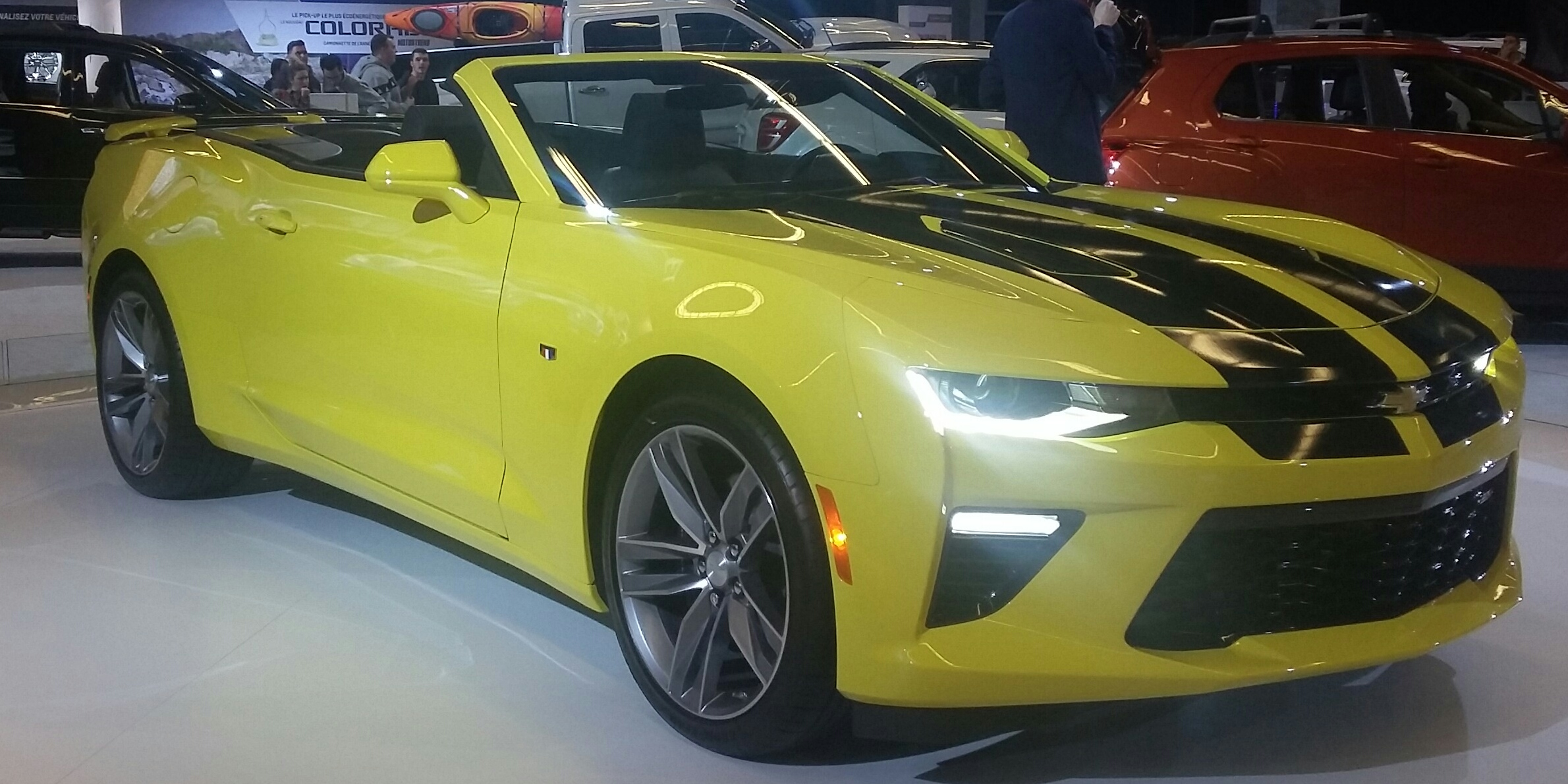
Chevrolet Camaro
"...of years, I have to get rid of the Malibu and the Camaro, sort of like it's Ford and Stellantis. It's real..."
The Camaro is a sporty car made by Chevrolet. It’s designed to feel quick and fun to drive, and it’s usually offered as a coupe or convertible. People talk about it when they’re discussing which models to keep in a lineup.
The Chevrolet Camaro is a performance-focused American sports coupe/convertible known for its strong engine lineup and sporty driving feel. It often comes up in discussions about brand lineup strategy—like when someone is deciding which models to keep or replace. In a podcast context, it’s a shorthand for the “sports car” side of a manufacturer’s lineup.
crossovers
"It's really leaned heavily into where the market's been, which has been in pickups, SUVs, crossovers, which also happen to be GM's most profitable models."
Crossovers are cars that sit higher like an SUV but usually drive more like a regular car. The host is saying GM has made a lot of money from this type of vehicle.
“Crossovers” are vehicles that combine elements of passenger cars and SUVs, typically built on car-like platforms. The host says GM’s most profitable models have been in this category, which helps explain why sedans are being reconsidered.
EV plans
"First, sort of the drawback in EV plans and EV production, which is left."
“EV plans” means the company’s plans for making and selling electric cars. The discussion is about how those plans can shift and change what the factories end up building.
“EV plans” refers to a company’s roadmap for building and selling electric vehicles. Here, the host says some of GM’s manufacturing plans for EVs have changed, affecting what models can be produced.
EV production
"First, sort of the drawback in EV plans and EV production, which is left."
“EV production” is how a company makes electric cars. If the timing changes, factories might have extra ability to build other types of cars instead.
“EV production” means manufacturing electric vehicles (and related components) at specific plants. The host links production changes to “extra capacity,” implying factories may have more room to build non-EV models if EV schedules slip.
extra capacity
"If those plants got pushed back or moved around, all of a sudden, there's extra capacity."
“Extra capacity” means a factory has more ability to build cars than it’s currently using. If electric-car production gets delayed, that unused capacity can be used for other models like sedans.
“Extra capacity” is unused manufacturing capability—when factories have more production room than they currently need. In this episode, it’s presented as a reason GM could add sedan models if EV production plans are delayed or redirected.
sub-30,000
"If those concerns persist, this will give GM another offering on top of the ones that they already have that are sub-30,000, these might be maybe a more affordable option for someone, even the Buick sedan, obviously that wouldn't be a quote unquote, affordable vehicle per se, but it might be less expensive than maybe a crossover that someone might be looking at."
“Sub-30,000” means cars priced under about $30,000. The host is saying GM wants to offer more options in that lower price range because many shoppers are worried about affordability.
“Sub-30,000” refers to vehicles priced under $30,000, a common shorthand in US auto pricing discussions. Here it’s used to describe GM’s strategy to offer more affordable trucks and SUVs to address rising affordability concerns.
hybrid line up
"Now, at the same time, GM is slowing the pace of new EV launches while expanding its hybrid lineup. What does that tell us about how the automaker sees consumer demand evolving over the next several years?"
A hybrid lineup means the automaker is selling cars that use both a gas engine and an electric motor. The host is saying GM is leaning more into hybrids because EV demand isn’t matching expectations.
A hybrid lineup is a set of vehicles that use both an internal-combustion engine and an electric motor/battery. In the segment, GM is “expanding its hybrid lineup” while slowing new EV launches, implying the company expects stronger demand for hybrids than for pure EVs in the near term.
EV incentives
"Obviously, just considering over the past couple of years, the EV sales not giving me the point where GM and other automakers were expecting by this point and obviously with the end of the federal EV incentives, the marketplace for EVs just isn't going to be where it was."
EV incentives are government discounts or tax breaks for buying electric cars. The host is saying that when those incentives ended, fewer people were buying EVs than expected.
EV incentives are government programs that reduce the cost of buying an electric vehicle, often through tax credits or rebates. The host links the “end of the federal EV incentives” to weaker EV demand than automakers expected.
EV markets
"Obviously, just considering over the past couple of years, the EV sales not giving me the point where GM and other automakers were expecting by this point and obviously with the end of the federal EV incentives, the marketplace for EVs just isn't going to be where it was."
The EV market is just the overall buying of electric cars—how many people want them and how many are sold. The host says it’s weaker than expected, especially after incentives ended.
The EV market refers to the overall consumer demand and sales environment for battery-electric vehicles. The host argues that the EV market won’t be where it was after federal incentives ended, which helps explain GM’s shift toward hybrids and a slower EV launch pace.
Bolt EV
"So we've seen GM sort of, they're not backing out of the EV market by any stretch. They're still the number two seller of EVs in the US. They want to maintain that other than the Bolt EV, which will go away next year."
The Bolt EV is a GM electric car model. The host is saying GM will discontinue it soon, but will still sell other electric vehicles.
The Chevrolet Bolt EV is General Motors’ long-running mass-market battery-electric car. The host notes that it will go away next year, while GM keeps the rest of its EV lineup across its brands.
second quarter
"So as part of that, GM is kind of seeing where the market is going and we saw this with sales numbers in the second quarter. Hybrids did really well and brands that sold hybrid models had pretty good quarters."
The “second quarter” is a company’s reporting period covering roughly April through June. The host uses it to point to recent sales results showing hybrids doing well.
The “second quarter” is the April–June period used in corporate reporting. The host cites GM’s second-quarter sales results to support the point that hybrids performed well and that hybrid-selling brands had strong quarters.

Chevrolet Corvette
"...ight now only has one hybrid model and that's the Corvette other than that, no hybrids. GM though has said t..."
The Corvette is Chevrolet’s high-performance sports car. It’s designed for fast driving and sharp handling. In the podcast, it’s mentioned because at least one Corvette version uses hybrid technology.
The Chevrolet Corvette is Chevrolet’s flagship sports car, built for high performance and a driver-focused experience. The podcast context highlights that the Corvette lineup includes a hybrid model, while other models in the brand may not be hybrid-focused. That makes it a key example when discussing how electrification is being rolled out within a performance lineup.
plug-in hybrid
"GM though has said that they're working on them, especially plug-in hybrids, Mary Barra earlier this year, reaffirming that these are going to be on the way starting next year."
A plug-in hybrid is a car that uses both electricity and gas. You can charge it like a regular electric car, and then it switches to gas when needed.
Plug-in hybrids are hybrid vehicles that can be charged from an external power source, letting them run on electricity for part of their driving. The segment uses them as the specific electrification path General Motors is prioritizing, with timing described as starting next year.
hybrid power chains
"GM is especially in the plug-in hybrid front, but even some other hybrid power chains. We could potentially see that moving forward."
A hybrid power chain is the whole hybrid system inside the car—gas engine plus electric parts working together. The point here is that GM might offer more than just plug-in hybrids.
Hybrid power chains are the combined set of components that make a hybrid system work—typically the engine plus electric motor(s), battery, and the control hardware/software that coordinates them. The host is saying GM may expand beyond plug-in hybrids into other hybrid setups.
Infiniti QX-65
"Infinity just launched the QX-65 and is seeing it take off past initial internal estimates."
The Infiniti QX-65 is a luxury SUV from Infiniti. The big point here is that it was just launched and early sales are doing better than Infiniti expected.
The Infiniti QX-65 is Infiniti’s midsize luxury SUV, positioned as a newer flagship-style family hauler. In this segment, it’s notable because the host says Infiniti just launched it and it’s already exceeding internal sales expectations.

Infiniti QX-60
"It joins the QX-60 on the showroom floor. Infinity hopes a balance between the two products will meet consumer demands."
The Infiniti QX-60 is another Infiniti luxury SUV already on sale. The episode is saying Infiniti wants the QX-60 and QX-65 together to appeal to more shoppers.
The Infiniti QX-60 is Infiniti’s existing midsize luxury SUV that sits alongside the newer QX-65. Here, the host frames them as a product pair on the showroom floor to cover different customer needs.
standard all-wheel drive
"In the meantime, standard all-wheel drive, standard panoramic roof, standard Google automotive services. All those things that you would want in a vehicle are there..."
All-wheel drive means the car can send power to all four wheels. If it’s standard, it’s included on every version they sell, which helps the car grip better on slippery roads.
All-wheel drive (AWD) means power can be sent to all four wheels instead of just the front or rear. Saying it’s “standard” here implies every trim of the Infiniti QX-65 gets AWD, which can improve traction in rain, snow, and low-grip conditions.
Google Automotive Services
"In the meantime, standard all-wheel drive, standard panoramic roof, standard Google automotive services. All those things that you would want in a vehicle are there..."
“Google automotive services” means Google features built into the car’s screen and software. It’s usually things like navigation and voice help that work through the car’s infotainment system.
“Google automotive services” refers to Google’s in-car software and connectivity features delivered through the vehicle’s infotainment system. In practice, it typically covers things like navigation, voice/assistant functions, and app-based services integrated into the dashboard.
panoramic roof
"In the meantime, standard all-wheel drive, standard panoramic roof, standard Google automotive services. All those things that you would want in a vehicle are there..."
A panoramic roof is a big glass roof over the cabin. It usually makes the interior feel brighter and more open, and here they’re saying it comes standard.
A panoramic roof is a large glass roof panel (often spanning much of the cabin) that lets in more light and can make the interior feel more open. In this segment it’s listed as standard equipment on the QX-65.
gradually ramping up
"we haven't gone to say, turn the light switch on and boom, here they all are and we want to sell, whether it's 1500 or 2000... we are gradually ramping up to that number over six months."
“Gradually ramping up” means they don’t start by selling the maximum number right away. Instead, they increase production and sales step-by-step until they reach their target volume.
“Gradually ramping up” describes a production and sales rollout where volume increases over time rather than launching at full capacity immediately. Here, they’re saying the QX-65 launch ramps toward a target monthly unit count over about six months.
Smyrna's capacity
"If all of a sudden we say we want to be 6041 way and it ends up being 4060, so be it. Then we flex in and out and we're able to use Smyrna's capacity to be able to meet the consumer's demands."
Smyrna is where the cars are built. “Capacity” just means how many cars the factory can make, and they’re saying they can adjust output depending on how many customers want.
Smyrna refers to a manufacturing site used to build vehicles, and “capacity” means how many units the plant can produce. The speaker is saying they can adjust production levels (flex) using Smyrna’s manufacturing capability to match demand for the QX-60/65 family.
conquest vehicle
"So now that you're starting to see QX-65 sales, it's supposed to be a conquest vehicle. Is that proving to be the case?"
A “conquest vehicle” is a car they’re trying to use to steal buyers from other brands. They’re checking whether early sales are coming more from new-to-Infiniti customers (conquest) or from people already loyal to the brand.
A “conquest vehicle” is a model marketed to win customers away from competing brands. The segment discusses whether the QX-65 is achieving that goal by comparing early sales split between conquest buyers and loyal Infiniti customers.

Lexus
"Well, the most popular brands would be your volume vehicle. So we see Lexus, we see BMW, some of the volume leaders in luxury..."
Lexus is Toyota’s luxury brand. They’re saying Lexus is a big seller, so it shows up a lot in early sales and shopping data.
Lexus is Toyota’s luxury brand, and it’s mentioned here as one of the “volume” luxury brands with lots of existing inventory and shoppers early in the sales cycle. The point is that brands with high baseline sales tend to dominate early cross-shopping data.
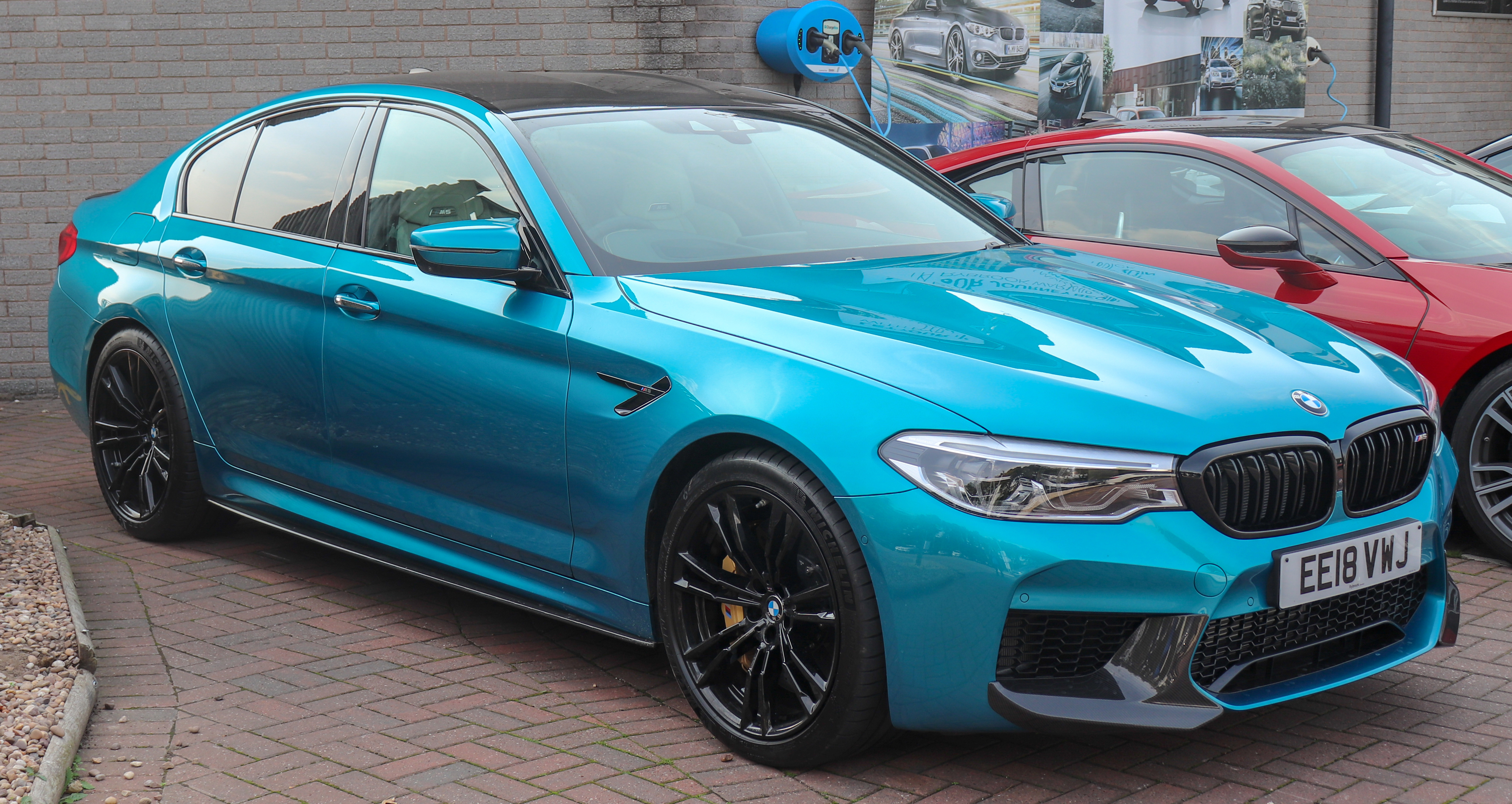
BMW
"So we see Lexus, we see BMW, some of the volume leaders in luxury, especially this early on in the selling days..."
BMW is a well-known luxury car brand. The host is using it as an example of a brand that sells a lot, so it shows up in early sales data.
BMW is a major German luxury brand, referenced here as a “volume” luxury player that has a large installed base of vehicles and shoppers. That makes it more likely to appear in early-stage sales comparisons and cross-shopping behavior.

Ford F150
"Yeah, the one that, this is just data, right? But the one that always pops is F-150. It's like, okay, well, is it really a, is it an F-150 buyer that's moving the QX-65..."
The Ford F-150 is a very popular pickup truck. The discussion is about whether people who already buy F-150s are switching to the Infiniti QX-65, or if they’re just buying the QX-65 on top of what they already have.
The Ford F-150 is a best-selling full-size pickup truck in the U.S., so it often shows up in cross-shopping and early sales “who’s looking at what” data. Here, it’s used as a benchmark to see whether F-150 buyers are actually switching to the Infiniti QX-65 or simply adding another vehicle.
launch marketing
"but a full-blown launch, which for us is going to be every bit of six months, that continues to build. So we see our demand activities increasing online..."
“Launch marketing” is the coordinated advertising and promotional push used when a new model goes on sale. Here, it’s described as a multi-month effort that continues to build demand and shopping activity for the Infiniti QX-65.
key buying actions
"So we see our demand activities increasing online, what we call key buying actions, all the investment we make in the launch marketing just builds on itself."
“Key buying actions” are measurable customer behaviors used in marketing analytics to estimate purchase intent. Examples typically include things like visiting the model page, building a payment estimate, or requesting information—signals that the customer is moving closer to buying.
rolling billboard
"And in the meantime, every car you sell is also a, I always say, cars sometimes are a rolling billboard on four wheels, right?"
A “rolling billboard” is a marketing metaphor meaning the car itself advertises the brand as it’s driven around. The host is arguing that every sold vehicle helps create visibility and awareness for the model.

QX50
"“...a Q50 sedan, does that customer necessarily want an SUV? ... We'll try... So because of where we were in segments, and even Q50 and Q55, sorry, QX50 and QX55, very different packaging, pricing strategy, size.”"
The Infiniti QX50 is mentioned as an older Infiniti SUV option with a different size/positioning. They’re using it to explain how the QX65 targets a different set of buyers than the QX50.
The Infiniti QX50 is brought up as an earlier model in Infiniti’s lineup with different packaging and pricing strategy. The speaker uses QX50 versus QX65 to illustrate how Infiniti’s new SUV positioning changes which customers it can win.

Infiniti Q50
"... sold over the last, let's just say five years, a Q50 sedan, does that customer necessarily want an SUV..."
The Infiniti Q50 is a luxury sedan, meaning it’s a car with a trunk and four doors. It’s aimed at people who prefer driving a car instead of an SUV. The podcast is discussing whether those buyers would want to move to an SUV instead.
The Infiniti Q50 is a mid-size luxury sedan, typically positioned for customers who want a car rather than an SUV. The podcast question—whether a Q50 customer would switch to an SUV—reflects how manufacturers think about customer overlap between different body styles. It’s discussed because sales and marketing strategies depend on how likely buyers are to change categories.

Infiniti QX55
"...n segments, and even Q50 and Q55, sorry, QX50 and QX55, very different packaging, pricing strategy, size..."
The Infiniti QX55 is a compact luxury SUV. The podcast notes that it’s not just a minor variation of another model—it’s set up differently in size and how it’s priced. That helps match it to different kinds of buyers.
The Infiniti QX55 is a compact luxury SUV with a distinct design and a different positioning than the QX50, as referenced in the podcast. The mention of “very different packaging” and pricing strategy indicates Infiniti is targeting different buyer preferences within the same general SUV segment. That’s why it comes up when discussing how a brand structures its lineup.
midsize premium luxury SUV segment
"“...there's no niche here because of the size of the market... You know, 43% of the buyers are in this midsize premium luxury SUV segment.”"
This phrase means a specific type of SUV market: not too big, not too small, and priced/positioned as luxury. They’re saying a large share of buyers are shopping in that exact category, which affects how Infiniti targets the QX65.
A “midsize premium luxury SUV segment” is a market category defined by vehicle size (midsize) and positioning (premium luxury). The speaker uses it to quantify where demand is concentrated—stating that 43% of buyers are in this segment—so Infiniti can align the QX65’s positioning accordingly.
third row
"“...Where you have the need for third row, you have family, you have an more active lifestyle in terms of the, you know, putting more passengers in the vehicle.”"
A “third row” is extra seats in the back of an SUV. They’re saying the QX60 is more likely to fit buyers who need those extra seats for family or passengers.
A “third row” is the extra seating row behind the second row, typically found in larger SUVs or crossovers. The speaker uses it as a key differentiator for why the QX60 fits family needs and an active lifestyle compared with the QX65.
cannibalization
"Are you seeing cannibalization right now of QX, QX60 customers or nothing at all? [1017.7s] No. So there are nobodies trading in the QX60s for QX65? Well, they would be ... [1034.5s] interplay with some of your vehicles."
Cannibalization means one car model starts stealing buyers from another model in the same lineup. They’re checking whether QX65 is hurting QX60 sales—or if the overall showroom demand will still grow.
Cannibalization is when sales of one model reduce sales of another model within the same brand. The speaker is asking whether QX65 demand is taking customers away from the QX60 (or other QX models) and whether that will be a long-term problem.
flexing production
"And in terms of flexing production, can you talk a little about that? [1047.2s] How easy is it for you to flex production? Yeah, especially, well, it's even easier because [1052.4s] if you think about this year for us, Infiniti's, at least planned volumes,"
Flexing production means changing how many cars a factory makes based on demand. They’re saying it’s easier for Infiniti to adjust because much of their production is already in the U.S.
Flexing production means adjusting manufacturing output up or down to match demand. The speaker explains that Infiniti can scale production more easily because a large share of its business is built in the United States, which helps responsiveness.
lead times
"then for us, it also improves our lead times on what we need to tell manufacturing in terms of [1071.0s] commodities, in terms of mix, powertrains, everything. ... [1082.1s] the lead times crossing the ocean."
Lead times are how long it takes to get something ready after planning or ordering. They’re saying some models take longer to plan for because of shipping, while others can be planned sooner.
Lead times are the time it takes from placing an order or starting planning to when parts or vehicles are available. The speaker contrasts longer lead times for QX80 due to ocean crossing with shorter lead times for QX65 and QX60, which improves how quickly they can react to production needs.
powertrains
"it also improves our lead times on what we need to tell manufacturing in terms of [1071.0s] commodities, in terms of mix, powertrains, everything."
Powertrains are the car’s driving setup—what makes it move. They’re talking about how they have to plan which versions (like different engine/motor setups) to build.
Powertrains are the vehicle’s propulsion systems—typically the engine and transmission (and, in electrified vehicles, the motor and related components). Here, Infiniti is discussing how lead times affect what it tells manufacturing about powertrain mix for different QX models.

Infiniti QX80
"...verything. And so what that does, when we order a QX80, for example, it takes us a little bit more time ..."
The Infiniti QX80 is a large luxury SUV. It’s built for people who want lots of room and a comfortable ride. The podcast notes that it can take longer to get after you order it.
The Infiniti QX80 is a full-size luxury SUV aimed at buyers who want space, comfort, and a more upscale feel. The podcast mentions ordering it takes a bit more time, which points to supply and production lead-time considerations for this model. That’s why it can come up in dealer or inventory discussions.
Request an Explanation
Heard something you'd like explained? We'll add it to this episode.
Sign in to request explanations for terms you heard.
Want to learn more?
Browse our glossary for plain-English explanations of automotive terms, jargon, and concepts.
Help improve this episode
See something that's not quite right? Our annotations are AI-generated and can sometimes miss the mark. Click the flag icon on any annotation to suggest a correction.