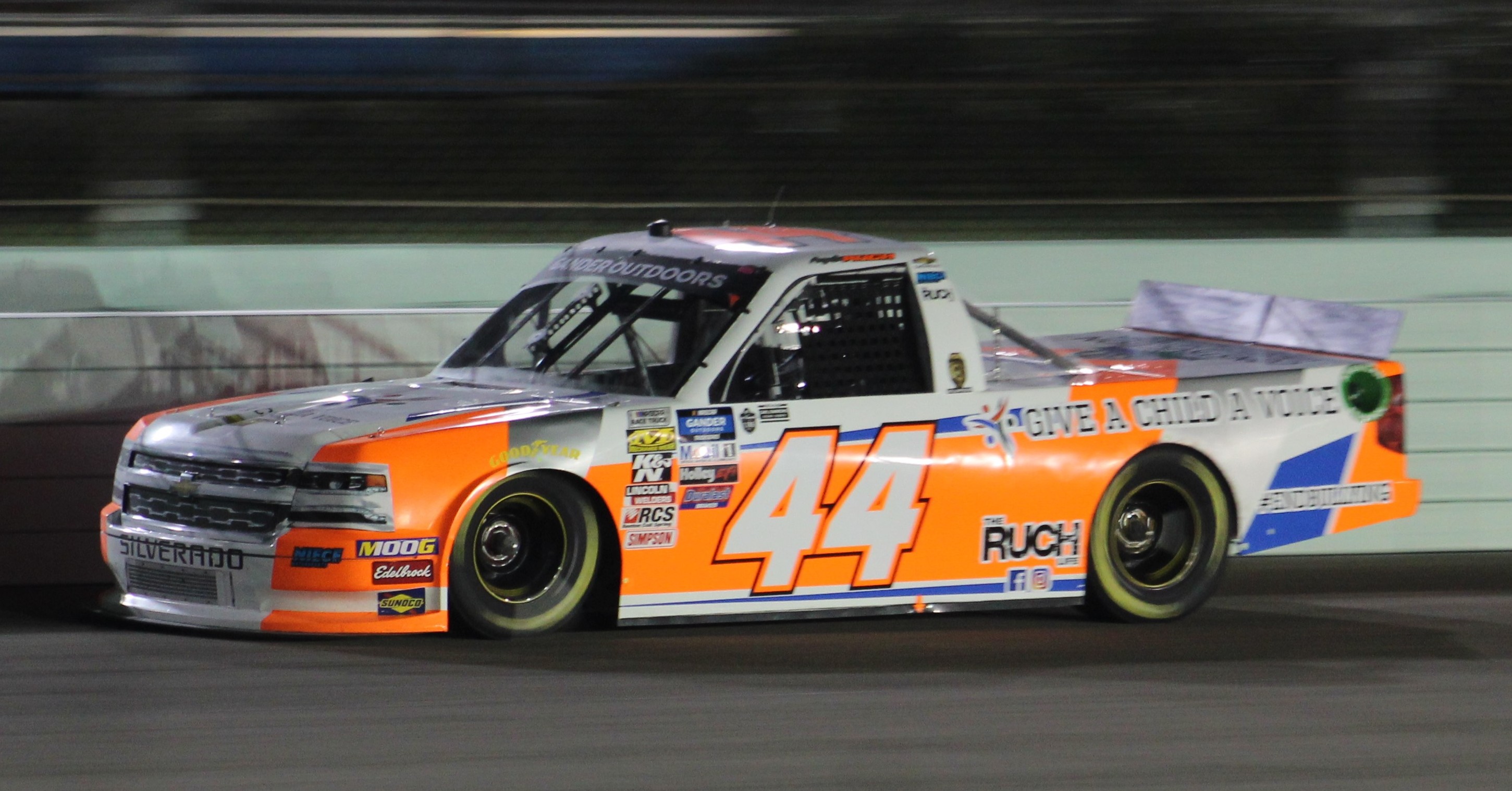
An axle is a key part that helps the wheels turn and supports the truck. If there aren’t enough axles available, factories can’t finish building the trucks, so sales and inventory get affected.
The GMC Sierra is another big full-size pickup from GM. The point is that if a critical part like axles can’t be sourced, it can affect building both Sierra and Silverado trucks.
The Chevrolet Silverado is a big, full-size pickup truck from GM. The host is saying that if key parts can’t be delivered because of a labor dispute, it can slow down building trucks like the Silverado.
The Ford F-150 is Ford’s popular full-size truck. The host is saying that when a key production site (like an aluminum plant) has problems, it can reduce how many F-150s get built, leading to low supply.
To “diversify” means not depending on just one supplier for parts. It can help prevent shutdowns if one supplier has trouble, but it can also cost more because you have to set up production with more than one company.
Tooling is the specialized equipment a factory uses to make parts. If automakers switch or add suppliers, they often need new tooling for those suppliers, which can cost more money.
“Full-size trucks” are the biggest common pickup trucks you see in the U.S. The host is saying this category has different inventory behavior than smaller truck or car segments.
“Day supply” is a way to measure how long the current inventory will last. If day supply is steady, it suggests dealers and factories aren’t running out quickly even when there are supply problems.
Tariffs are taxes the government adds to imported products. If cars are imported into the U.S., tariffs can raise their price, so companies may need to change where they make cars or how they sell them.
The Subaru Ascent is a bigger Subaru SUV with three rows of seats. The discussion suggests it hasn’t been a strong seller in the U.S., so Subaru may need to rethink how it brings or builds cars here.
The host is saying companies may need to change their plan for the U.S. market. If tariffs make imported cars more expensive, automakers might adjust where they build cars or who they partner with so they can still sell competitively.
Stellantis is a big car company that owns multiple brands. Here, it’s mentioned as an example of how automakers can use U.S. factory capacity or partnerships to deal with tariff-related price pressure.
JLR stands for Jaguar Land Rover, a car company that makes Jaguar and Land Rover vehicles. The point is that partnerships can help companies manage extra costs from tariffs.
The Highlander EV is Toyota’s upcoming electric version of the Highlander concept. The hosts say Toyota and Subaru are collaborating on it, and it’s planned to be a three-row EV.
“Private discounts” are targeted incentives offered to specific buyers (often through dealer or manufacturer channels) rather than a single public promotion. In this segment, Ford uses them—up to $10,000—to keep Escape/Edge customers from switching away.
The Ford Edge is another Ford SUV the hosts say is being phased out. The episode is about how Ford is trying to keep those buyers from leaving the brand.
The Ford Maverick is described as another option people might switch to from the Escape. But the hosts say Maverick sales have fallen compared with last year.
The Bronco Sport is mentioned as a likely alternative for people who were shopping Escape. But the hosts say its sales are actually down, so it hasn’t been the perfect substitute.
Private offers are special deals offered to certain customers. Instead of advertising one big discount to everyone, Ford/dealers can target incentives to the people most likely to buy.
Targeted incentives are discounts that are aimed at particular people or particular buying situations. The idea is to give the right deal to the right customers instead of discounting everything across the board.
The Ford Explorer is a popular Ford SUV that’s been around for a long time. Over the years, Ford changed how it’s built and how it drives, so it can fit different eras and customer needs.
Body-on-frame means the car has a separate “skeleton” (frame) and the body bolts to it. It’s a more traditional build style, often chosen for strength and towing.
Rear-wheel drive means the back wheels are the ones that get the power to move the car. It can change how the SUV feels and handles compared with front-wheel drive.
Explorer Sport is a version of the Ford Explorer that was marketed as a sportier option. The host is using it as an example of how Explorer has had different styles over time.
This was a one-off style collaboration: Cadillac made a special version of the Seville, and Gucci helped design it. It’s famous because it was extremely limited, so it’s rare today.
An upsell is when a dealership or brand tries to get you to buy a more expensive option than the one you first wanted. In this case, it’s moving someone from a cheaper SUV to a pricier one.
A three-row SUV has three rows of seats, so it can carry more people. The downside is it’s usually bigger, so it can be tougher to park than a smaller two-row SUV.
LIVE
Welcome to this Weekend Drive edition of Daily Drive for the second week of June 2026.
I'm Kellan Walker.
This week, the UAW reached a deal with the Dauke Corporation to keep axles flowing to
General Motors' most profitable pickups.
We tallied up the Trump-era costs for Japanese automakers and the numbers are pretty staggering.
Ford wants to move orphaned edge and escape buyers up to the pricier Explorer.
Will it work?
Joining me now to talk about it are the usual suspects.
Michael Martinez, who covers Ford in the UAW Forest at Automotive News.
Mike, how you doing?
Good, Kell.
How are you?
Doing all right.
And Larry Veliquette covers Toyota, Subaru, and Mazda for us here at Automotive News,
Larry Legend.
After a two-week vacation, it is nice to have you back, sir.
That's good to be back.
And since you're referencing the usual suspects, you can call me Kaiser Soze.
Oh, Jesus.
I haven't seen that movie in so long.
Anywho, let's get started because we're going to go off on a tangent if we start talking
about that movie.
Mike, let's start with you.
The UAW and Dauke Corporation, which owns American Axle, struck a tentative deal this
week after 10 days on the picket line at the Three Rivers, Michigan, Axle plant.
Walk us through what happened and what's in the deal.
Yeah, workers have a pretty good tentative agreement to vote on, in my opinion at least.
They're going to get that $30 per hour demand for wages that they had been holding out for.
They were able to hold the line on health care premiums or getting a $2,000
ratification bonus.
The Detroit News is reporting that workers hired prior to the Great Recession will
automatically get posted to 30 while the rest of them have a growing period.
It's a four-year deal.
Basically, what happened is the Dauke American Axle really didn't have any leverage in these
talks.
That's why they only lasted 10 days.
We know from past experience, the UAW was willing to hold out as long as it took.
They were willing to strike and hit the company where it hurts, not just them, but their
biggest customer, General Motors.
It was hurting them.
Larry can talk about that in a little bit.
There's a pretty classic tactic by corporations and strikes like these, which is to dangle
the threat of moving production to places like Mexico where wages are a lot lower.
They couldn't really do that this time around because of tariffs that are in place.
Their costs would not be as low as they otherwise would be.
American Axle also, they didn't have the moral high ground here.
They have been paying their workers less than what they were 18 years ago in spite of record
auto sales about a decade ago, in spite of tremendous resiliency throughout the industry,
in spite of COVID, the chip shortage, things like that.
The industry is doing well.
The workers deserve more money, and it looks like they got it.
Can I jump in here on the actual terms of this deal?
I know Mike said it's a good deal, and relative to where they are today, it probably looks
like a pretty good deal.
But relative to where they were in 2007, it's a crappy deal.
It's a dollar more an hour than what they were making in 2007.
That's almost 20 years ago, when if you go back to everywhere else in the economy, wages
are nowhere near what they were 20 years ago.
So yes, relative to where they are today, when they were severely underpaid relative
to their Detroit three counterparts, and relative to other workers in the economy, it's a better
deal.
But long term, this is really, it's kind of disheartening.
I mean, I worked at an employer where those of us that come from newspapers, where raises
disappeared, and we actually gave back some pay cuts, we took some pay cuts, try and keep
the paper alive.
It's no fun.
It's kind of reprehensible to me that this supplier who made a bunch of money never shared
it.
You know, Larry makes a really good point.
And I don't think anybody's saying a $1 an hour raise, and you have to adjust for inflation
too.
So it may even not be that, but a $1 raise over 2008 levels is tremendous.
But again, it's all relative.
And in contract disputes and strike, you're never going to make it all back at once.
So they did the necessary step of stopping the bleeding.
They're turning around the Titanic from continual losses or continual status quo that's not
keeping up with inflation to finally at least getting back to where they were, if not slightly
ahead of where they were 18 years ago.
So of course, it's not perfect, and they deserve to make way more.
Because when you compare the work they're doing and the money they're making at the
end of this deal with what the Detroit three or other unionized auto workers are making,
they're still making a lot less than folks at Dearborn Truck or even Volkswagen and
Chattanooga.
Right?
So it's not perfect, but it's just the nature of how these things work.
You're not going to get it all back at once, just like the Detroit three in 2023, right?
Sean Fain wanted way more than what he ended up getting.
He's going to take another bite at the apple here in 2028 to try to get even more.
And that's, I assume, is what will happen the next time this contract's up too.
Yeah.
And you know, let's be real, in this economy, when a company makes a dollar, it either goes
to shareholders, it goes to management, or it goes to workers.
And that's a descending order of those three, right?
It usually goes to shareholders, then it goes to management, and then if there's any left
over, then, you know, then traditionally what happens is we'll pass along some raises.
The demographics of the American workforce are such that I don't know that this is sustainable.
That setup is sustainable for much longer because worker power, I guess, worker collective
bargaining power is going to start to increase because demographically, we are growing older
as a nation.
And now we've shut off the influx of immigrants, largely, that supplemented that, which means
there are going to be fewer workers to do those jobs, and not everything is going to
be AI.
I mean, it's a problem that's 15 or 20 years down the road still, but it's coming.
Now this strike threatened axle supply for the Silverado and Sierra, GM's most profitable
pickups.
Now, Larry, there's been all kinds of supply threats in that segment.
Think about Ford's F-150s in low supply because of the novellas aluminum plant fires.
How do automakers balance costs and supplier relations with this really fragile supply?
Can they diversify?
Well, the funny thing, they can diversify somewhat, but you still, every time you open
up another supplier, you open up more tooling that that supplier has to buy, you increase
your costs.
Right?
Yes, you're buying an insurance policy, really, when you do that diversification because the
more you can consolidate your supply, the lower your per unit cost is.
So that's why they go all in with one maker like this because it gives them the cheapest
cost to produce.
There's some of that, but the thing about full-size trucks especially, which is what
we're talking about here, you have to remember that the inventory of full-size trucks has
kind of stayed relatively flat even with the problems that Ford has had with novellas.
And the reason is that other automakers have increased production a little bit.
The overall industry levels are pretty stable in terms of day supply.
And it's funny with full-size trucks because unlike all these other segments, full-size
trucks are the most diverse product mix that you have.
So if you're a dealer, you have to decide what full-size trucks I'm going to stock, what
ones are going to get offered.
And there are, you know, look at all the different configurations.
There are pickups, right?
There's crew cab, standard cab, extended cab, short bed, medium bed, long bed.
Then you got all the engine configurations.
It's a nightmare to try and order, right?
If you're ordering and you have to guess what your customers are going to want and you have
to keep that in stock, it can be really difficult for a dealer, which is why you see all these
dealers with all these trucks on the lot because they have a very diverse offering, a very
diverse use cases.
It's not all just good, better, best, right?
It's all these different configurations.
So pickup trucks always have really high day supply because of all the different configurations
there.
All right, coming up, Ford got rid of the escape and the edge.
And now those customers need a new home.
Mike has a story on where they're ending up.
That's next on Weekend Drive.
Solid-state batteries are going from hype to reality.
And this week on shift, we're digging into what new battery chemistries could be for
cost and EV adoption.
Factorial Energy CEO, C.U. Huang, talks about developing a new solid-state liquid-metal
battery with Mercedes, an innovation that could change the weight and the cost of new vehicles.
With the same energy, we could deliver a lighter pack, which eventually will be able to drive
down the cost of the vehicle.
Huang also explains how competition with China is affecting the solid-state market and the
geopolitical tensions impacting the arrival of solid-state batteries.
Join us for a shift available this Sunday wherever you get your podcasts.
Welcome back to Weekend Drive.
I'm Kellan Walker with Michael Martinez and Larry Velikwet.
All right, Larry, so Japanese automakers have absorbed $28 billion in combined costs from
U.S. tariffs, EV write downs and emissions policy reversals.
And that number could top $40 billion by March, 2027.
Toyota's hit alone is more than $17 billion.
Put that in perspective for us.
It is a tough order to put in perspective, right?
These are giant numbers that don't really have relevance for the average consumer, right?
You're talking about the whole government programs that run on that kind of money, you
know, defense purchasing programs that run on that kind of money.
It's a crazy, crazy amount of money that Japan has paid in tariffs.
Remember, that number was not there two years ago, right?
It's just, oh, here we're going to add $40 billion to your business planning.
We're in an industry that moves, you know, that turns like an old World War I battleship.
It does not move quickly.
And so trying to get it to adjust to paying these kind of numbers.
And, you know, if you look on our price tracker on the autonews.com website,
you're seeing the direct result of those numbers on that price tracker, right?
We're up almost $1,900 per vehicle.
That's the average across, it's actually over $1,900 over last year.
The prices have gone up in just one year, the average prices.
And that's not all mixed.
That's not all just the explorer and stuff like that.
We're talking about big, big moves, price moves that are happening all over the place.
Now, Honda saw its first annual loss in nearly 70 years as a public company.
And we just talked last week about Toyota cancelling the Lexus LFZC.
Is this the moment where Japanese automakers are being forced to fundamentally rethink their U.S.
strategy?
Yeah, I think so.
And, you know, you can look up and down the list.
Larry, you've written a lot about Subaru, which was just on a hot streak for forever
until the tariffs hit, right?
I think there were some news recently they're going to start
bringing some cars from the U.S. back to Japan.
Acar.
The Ascent, which doesn't sell very well here.
So I think they do need to reassess the strategy.
I don't know what the answer is.
I don't know how viable it is for many of them to build new plants here,
because that's sort of what it would take in this moment to get around the tariffs.
I don't know if there's a wait-and-see game until after a lot of these trade deals get settled,
if maybe things get a little bit better, or if maybe they wait it out for a next administration.
Or if maybe the answer is you sort of start to boost partnerships,
similar to what we saw with Stellantis and JLR.
Basically, Stellantis is going to give them some U.S. factory capacity to get around the tariffs.
Maybe you'll see that with some of the Japanese imports as well.
Yeah, you know, it's worth noting here that for those that don't know, Toyota owns stakes
in both Subaru and Mazda.
They're minority stakes, and those two automakers own minority stakes in Toyota as well.
So they are corporate partners.
Subaru and Toyota have jointly developed their EV offerings.
To the point, we have the Subaru Getaway and the Highlander EV,
which are sister vehicles that are going to debut later this year in three-row EVs.
So they've done that to try and cut costs already, and those plans are several years old.
But I think what you're seeing is you may see some more partnerships.
We have that new plant coming for Toyota that's going to free up some capacity in Mexico.
You may see some more, at least, North American production coming.
All right, so let's shift over here to Ford.
Now, Mike, your story this week on Ford moving escape and edge buyers to the Explorer is a
fascinating one. Sales were up 18% year-over-year through May. Ford's offering private discounts
of up to $10,000 to keep those customers in the fold, and dealers are saying it's actually working.
What's driving this?
Yeah, Kel, let's take a step back here. I think this is really surprising because when you take
a look at Ford getting rid of the edge in 2024 and the escape last December, there was a big
question, big concern amongst the dealers. Where are those entry-level customers going to go?
And the logical answer was, well, there's other vehicles in terms of the escape
on that same platform at relatively the same price, the Bronco Sport Crossover and the Maverick
Compact Pickup. So you assume they just moved there, right? Well, that's not really the case.
We're almost at the halfway mark of the year. Maverick and Bronco Sport sales are both down
year-over-year. Explorer sales are up, as you mentioned. Explorer is bigger and it costs more
money. I think the cheapest Explorer is about $10,000 more than the cheapest escape. So we talk
week in and week out about this affordability crisis, but yet Ford is having success moving
these customers up. How is it doing it? Well, you mentioned the private offers. Had a dealer tell
me customers can get up to $10,000. Coincidentally, the price difference between the cheapest escape
and Explorer. So score one for targeted incentives. Before Ford would just throw money everywhere,
lately it's been doing these targeted precision strikes where it thinks it can make up
for some sales, for some lost sales. And it's apparently working. I've had executives tell
me they're retaining edge and escape customers at the same rate as they were before those vehicles
were discontinued. But another thing I think it's worth talking about is just the brand
cachet Explorer has. This was the SUV in the 90s. It landed that starring role in Jurassic Park,
right? It was in the zeitgeist. It was in everybody's minds. And Ford racked up millions
of Explorer sales in those early days. It sort of evolved to fit the times. They went from that
body on frame, boxy styling to unibody front wheel drive. Then they went back to rear wheel drive
with the last generation. So it's evolved as the times have evolved. And it seems to be evolving
again by being versatile enough to get these escape and edge customers. So Explorer, it's
an important part of Ford's lineup that importance is just growing. And I didn't expect this one,
honestly. You know, it's funny, if you go back, you remember when Explorer used to have a two-row
version, right? Yeah. It competed directly when it was first introduced with the Jeep Cherokee.
And they had a pickup version. And they had a pickup version. Yeah, yeah, the Explorer Sport.
And the Eddie Bauer's collaboration. That was the one. The Eddie Bauer. I remember being like
in like middle school when I was like, that's going to be my first car is the Eddie Bauer Explorer.
I remember everyone thinking that was like the coolest collaboration. Was that like the first?
First collaboration. Between like a clothing brand and an automaker at that time,
because that was like 99, 98. Because I don't think anyone was something maybe in the luxury
space. I don't know. But we had just come out of, you know, having electricity in 99 and 98.
You know what? I do, I do remember this, though. I saw a video about this in the,
and correct me if I'm wrong. I'm going to have to look this up and listeners look this up,
because I'm probably going to butcher this. But in the 70s or the 80s, there was a collaboration
between Cadillac and Gucci. And I remember seeing pictures of this car. I almost want to
Google it right now while we are doing this show, because I don't want to misspeak.
But we're live, Kel. We're live. I know, right? Yes. Here we go. The Cadillac Seville by Gucci
is a rare custom design, luxury sedan released in 1979, an iconic collaboration between the
automaker, the American automaker in the Italian fashion house. Only about 300 of the Disco era
time capsules were ever built. I remember 79 Seville was a piece of work, too, by the way.
Did you hate the Ford or Seville, Larry? No, it was just not good. It had a horrible engine.
Yeah, you don't want to go back to this. We don't want to go back to 70s era GM design. That's
just a dark time. Okay. Before we wrap up, now, Larry, from the outside looking in,
what does it tell you about the state of the market that Ford can successfully upsell a customer
from a $31,000 escape to a $41,000 explore? Does that work at any other brand right now?
People get upsold all the time, Kel. They have to have a compelling offer and they have to be able
to convince people to shell out the extra money. I mean, if you're going to give me $10 grand for
free, then it's a pretty easy walk to get a $41,000 Ford for $31,000. That's a pretty compelling
notion, but I'm just curious whether it's sustainable. Whether they're going to keep that
long term and how do you say to one customer, hey, yeah, I had a private offer because I was coming
out of my escope to go into an explorer because they wanted to keep me on the brand. The real
money in this industry is being able to keep customers coming back without the added incentives.
That's how you make the money. Yeah, you can do this. You can buy, share all day long with people.
The Explorer, I'm not knocking the Explorer. It's a good vehicle. It certainly earned its place
as an iconic nameplate. It's been around a very long time and it's very successful.
I just don't know how you convince people to take a three-row when they've had a two-row,
and especially two rows that are easier to park than what an explorer is.
I would say really quickly for both escape and edge, when you compare it to the edge,
it's only about nine or 10 inches larger. That's true.
It's not that much difference. Then when you look at escape customers, it's obviously a much
smaller product, but Explorer still has that unibody design. The driving dynamics aren't,
it's not as much of a shock going from an escape to an explorer as it would have been
in that first or second gen model. It appeals to both. What I learned from Ford's utility
marketing manager was escape buyers are actually pretty old. The average is in their mid-60s.
They actually want a little more refinement. They want a little more ease getting in and out of
the vehicle. They do want to be able to take it, go see the kids, grandkids.
It's not as difficult of a sell as I certainly thought and as maybe I think anybody might have
thought here. Mike, Larry, it's always great hanging out with you guys. Thank you so much for
joining me. Thanks, guys. You have a good weekend, Cal. Go Spurs. All right. That's all for this
weekend drive edition of Daily Drive for the second week of June, 2026. Thanks to Automotive
News executive producer Jake Nier for his help on today's podcast. You can get the latest news on
the UAW, Ford's product strategy, Japanese automaker earnings, and everything happening
in the auto industry at AutoNews.com. Come back on Monday for a conversation with C.U. Huang,
CEO of Factorial Energy, the solid-state battery company that says it's close to bringing the
technology to mass market. We'd love to hear from you. Let us know what you think of the show and
the topics we covered today. Send us an email at dailydrive at autonews.com or leave us a voicemail
at 313-444-2774. And if you enjoy the podcast, remember to like, leave a review, and subscribe
so you never miss an episode.
About this episode
UAW negotiators reached a tentative deal with the Dauke Corporation (American Axle) after 10 days on the picket line in Three Rivers, Michigan, aiming to keep axle supply flowing for GM’s most profitable pickups. Hosts weigh the contract’s $30-per-hour wage outcome and four-year length against inflation and earlier pay levels, noting tariffs limited leverage. The show then pivots to Ford’s strategy: using private discounts up to $10,000 to move orphaned Escape and Edge buyers into the Explorer, with executives claiming retention rates remain steady.