
June 13, 2026 | Weekend Drive: UAW strikes Dauch; Ford moves Escape buyers to Explorer
About this episode
UAW negotiators reached a tentative deal with the Dauke Corporation (American Axle) after 10 days on the picket line in Three Rivers, Michigan, aiming to keep axle supply flowing for GM’s most profitable pickups. Hosts weigh the contract’s $30-per-hour wage outcome and four-year length against inflation and earlier pay levels, noting tariffs limited leverage. The show then pivots to Ford’s strategy: using private discounts up to $10,000 to move orphaned Escape and Edge buyers into the Explorer, with executives claiming retention rates remain steady.
The UAW and Dauch Corp. reach a tentative deal after a 10-day strike that threatened General Motors’ most profitable trucks, and our panel breaks down what’s in it. Japan’s automakers are absorbing a historic tariff hit. Plus, Ford hopes orphaned Escape and Edge buyers are willing to step up to the Explorer.
axle supply
"Now this strike threatened axle supply for the Silverado and Sierra, GM's most profitable pickups."
An axle is a key part that helps the wheels turn and supports the truck. If there aren’t enough axles available, factories can’t finish building the trucks, so sales and inventory get affected.
“Axle supply” refers to the availability of axles—major drivetrain components that connect the wheels and help transmit power and support vehicle load. When axle supply is threatened, it can stall production of pickups that rely on those parts, even if other parts are available.

GMC Sierra
"Now this strike threatened axle supply for the Silverado and Sierra, GM's most profitable pickups."
The GMC Sierra is another big full-size pickup from GM. The point is that if a critical part like axles can’t be sourced, it can affect building both Sierra and Silverado trucks.
The GMC Sierra is GM’s full-size pickup line, closely related to the Chevrolet Silverado in platform and supply chains. Here, the host mentions it alongside the Silverado to show that axle-supply disruptions can hit multiple GM truck models at once.
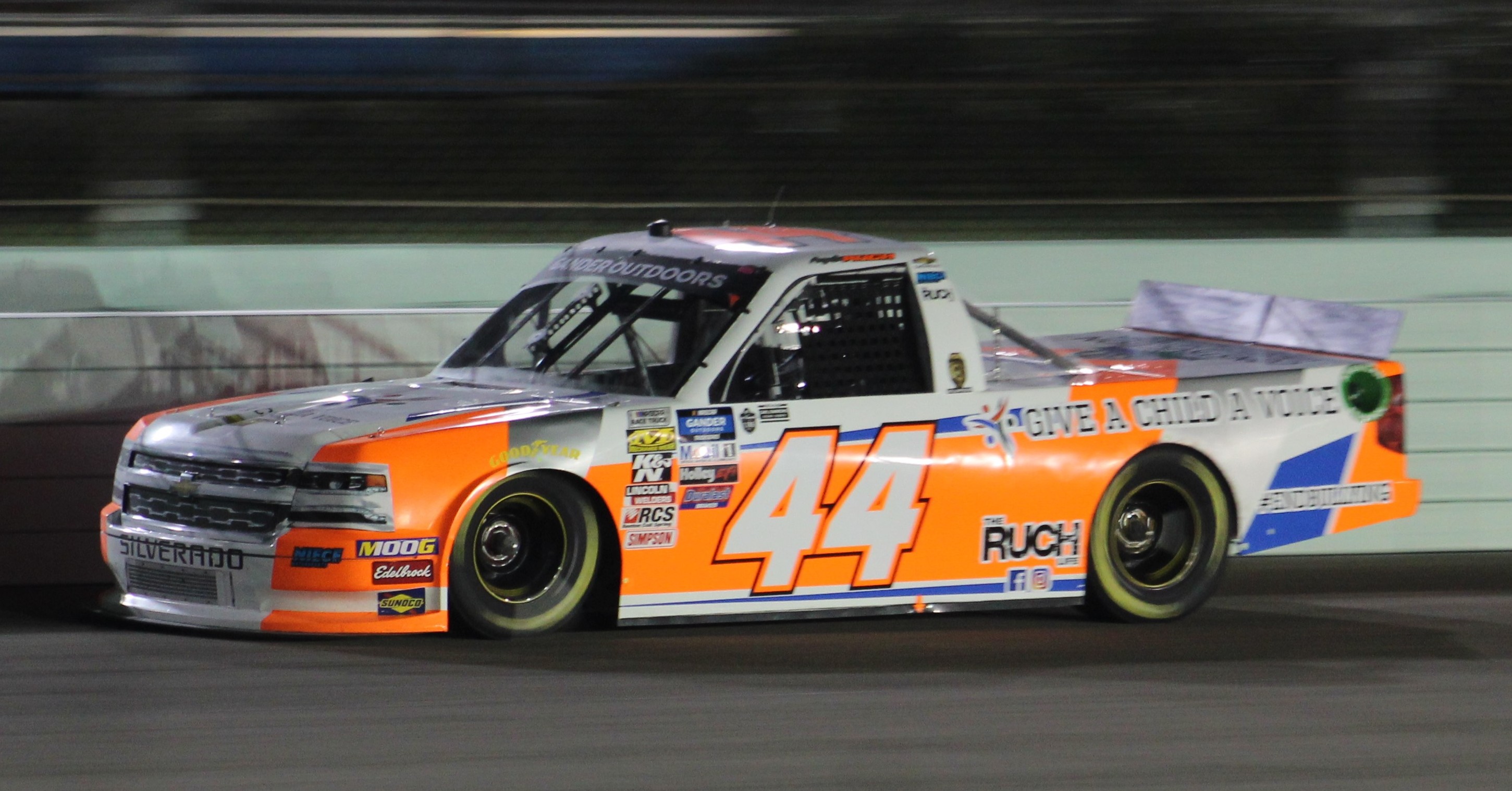
Chevrolet Silverado
"Now this strike threatened axle supply for the Silverado and Sierra, GM's most profitable pickups."
The Chevrolet Silverado is a big, full-size pickup truck from GM. The host is saying that if key parts can’t be delivered because of a labor dispute, it can slow down building trucks like the Silverado.
The Chevrolet Silverado is GM’s full-size pickup line, and it’s a major volume and profit driver for the brand. In this segment, the host ties a strike-related axle-supply risk to Silverado production, highlighting how component shortages can directly affect truck availability.

Ford F150S
"Think about Ford's F-150s in low supply because of the novellas aluminum plant fires."
The Ford F-150 is Ford’s popular full-size truck. The host is saying that when a key production site (like an aluminum plant) has problems, it can reduce how many F-150s get built, leading to low supply.
The Ford F-150 is the best-known full-size pickup in the U.S., and it’s often used as an example of how production can be disrupted by supplier or factory issues. The host references low supply tied to aluminum plant fires, illustrating how upstream events can ripple into vehicle availability.
diversify
"How do automakers balance costs and supplier relations with this really fragile supply? Can they diversify?"
To “diversify” means not depending on just one supplier for parts. It can help prevent shutdowns if one supplier has trouble, but it can also cost more because you have to set up production with more than one company.
“Diversify” here means reducing reliance on a single supplier by using multiple sources for the same parts. The host explains the tradeoff: diversification can lower risk of shortages, but it can also increase costs because each supplier needs its own tooling and setup.
tooling
"you still, every time you open up another supplier, you open up more tooling that that supplier has to buy, you increase your costs."
Tooling is the specialized equipment a factory uses to make parts. If automakers switch or add suppliers, they often need new tooling for those suppliers, which can cost more money.
In manufacturing, “tooling” is the specialized equipment and production fixtures used to make parts at scale. The host’s point is that adding new suppliers means buying or adapting more tooling, which raises costs even if it improves supply resilience.
full-size trucks
"There's some of that, but the thing about full-size trucks especially, which is what we're talking about here, you have to remember that the inventory of full-size trucks has kind of stayed relatively flat..."
“Full-size trucks” are the biggest common pickup trucks you see in the U.S. The host is saying this category has different inventory behavior than smaller truck or car segments.
“Full-size trucks” is a specific U.S. market category for large pickups (bigger than midsize), typically used for towing, hauling, and family utility. The host emphasizes that this segment behaves differently than others in inventory and production flexibility.
day supply
"The overall industry levels are pretty stable in terms of day supply."
“Day supply” is a way to measure how long the current inventory will last. If day supply is steady, it suggests dealers and factories aren’t running out quickly even when there are supply problems.
“Day supply” is an inventory metric that estimates how many days of sales the current stock can cover, assuming sales continue at the recent rate. The host uses it to argue that, despite disruptions, the overall industry inventory levels for full-size trucks have stayed relatively stable.
tariffs
"Larry, you've written a lot about Subaru, which was just on a hot streak for forever until the tariffs hit, right?"
Tariffs are taxes the government adds to imported products. If cars are imported into the U.S., tariffs can raise their price, so companies may need to change where they make cars or how they sell them.
Tariffs are taxes a government places on imported goods. In the auto world, tariffs can make imported vehicles more expensive in the U.S., which pressures automakers to change sourcing, pricing, or where they build cars.

Subaru Ascent
"The Ascent, which doesn't sell very well here."
The Subaru Ascent is a bigger Subaru SUV with three rows of seats. The discussion suggests it hasn’t been a strong seller in the U.S., so Subaru may need to rethink how it brings or builds cars here.
The Subaru Ascent is a three-row midsize SUV built for families, and it’s one of Subaru’s larger vehicles. The host notes it “doesn't sell very well here,” implying it may be a weak fit for the U.S. market compared with other models—especially when tariffs disrupt pricing.
reassess the strategy
"So I think they do need to reassess the strategy."
The host is saying companies may need to change their plan for the U.S. market. If tariffs make imported cars more expensive, automakers might adjust where they build cars or who they partner with so they can still sell competitively.
“Reassess the strategy” here refers to automakers changing how they sell and where they build vehicles in response to trade barriers like tariffs. That can mean shifting production locations, altering import/export plans, or using partnerships to maintain U.S. supply without absorbing all the tariff cost.
Stellantis
"Or if maybe the answer is you sort of start to boost partnerships, similar to what we saw with Stellantis and JLR."
Stellantis is a big car company that owns multiple brands. Here, it’s mentioned as an example of how automakers can use U.S. factory capacity or partnerships to deal with tariff-related price pressure.
Stellantis is a major automaker group formed from the merger of Fiat Chrysler Automobiles and PSA. In this segment, the host mentions Stellantis as an example of using U.S. manufacturing capacity or partnerships to reduce the impact of tariffs.
JLR
"Or if maybe the answer is you sort of start to boost partnerships, similar to what we saw with Stellantis and JLR."
JLR stands for Jaguar Land Rover, a car company that makes Jaguar and Land Rover vehicles. The point is that partnerships can help companies manage extra costs from tariffs.
JLR is shorthand for Jaguar Land Rover, the British automaker group. The host groups it with Stellantis as an example of partnerships or capacity arrangements that could help automakers navigate tariff costs.
Toyota
"Yeah, you know, it's worth noting here that for those that don't know, Toyota owns stakes in both Subaru and Mazda. They're minority stakes, and those two automakers own minority stakes in Toyota as well."
Toyota is partnering with other car companies through small ownership stakes. It’s a way to make collaboration more official and long-lasting.
Toyota is described here as holding minority stakes in both Subaru and Mazda, and vice versa. That kind of cross-ownership is meant to formalize long-term cooperation between automakers.

Highlander EV
"To the point, we have the Subaru Getaway and the Highlander EV, which are sister vehicles that are going to debut later this year in three-row EVs."
The Highlander EV is Toyota’s upcoming electric version of the Highlander concept. The hosts say Toyota and Subaru are collaborating on it, and it’s planned to be a three-row EV.
The Highlander EV is presented as a Toyota electric vehicle developed jointly with Subaru. The key point is that it’s described as a “sister vehicle” to the Subaru Getaway and targeted at the three-row EV market.

Ford Escape
"I think this is really surprising because when you take a look at Ford getting rid of the edge in 2024 and the escape last December, there was a big question, big concern amongst the dealers."
The Ford Escape is the smaller Ford SUV the hosts say Ford has stopped selling. The point is that Ford has to find a new home for those customers.
The Ford Escape is discussed as one of the “entry-level” models Ford is no longer selling (the host says it was last December). The episode frames it as a customer base Ford now needs to redirect to higher-volume alternatives like the Explorer.
private discounts
"Sales were up 18% year-over-year through May. Ford's offering private discounts of up to $10,000 to keep those customers in the fold, and dealers are saying it's actually working."
“Private discounts” are targeted incentives offered to specific buyers (often through dealer or manufacturer channels) rather than a single public promotion. In this segment, Ford uses them—up to $10,000—to keep Escape/Edge customers from switching away.

Ford Edge
"I think this is really surprising because when you take a look at Ford getting rid of the edge in 2024 and the escape last December, there was a big question, big concern amongst the dealers."
The Ford Edge is another Ford SUV the hosts say is being phased out. The episode is about how Ford is trying to keep those buyers from leaving the brand.
The Ford Edge is mentioned as another model Ford is discontinuing (the host says “getting rid of the edge in 2024”). It’s part of the same customer-retention problem: where do Edge shoppers go next?

Ford Maverick
"on that same platform at relatively the same price, the Bronco Sport Crossover and the Maverick Compact Pickup. So you assume they just moved there, right? Well, that's not really the case."
The Ford Maverick is described as another option people might switch to from the Escape. But the hosts say Maverick sales have fallen compared with last year.
The Ford Maverick is mentioned as another “logical” destination for Escape/Edge buyers because it’s positioned near the same price tier. The host then notes Maverick sales are down year-over-year, implying the customer migration isn’t going where dealers expected.

Ford Bronco Sport
"And the logical answer was, well, there's other vehicles in terms of the escape on that same platform at relatively the same price, the Bronco Sport Crossover and the Maverick Compact Pickup."
The Bronco Sport is mentioned as a likely alternative for people who were shopping Escape. But the hosts say its sales are actually down, so it hasn’t been the perfect substitute.
The Bronco Sport is brought up as a potential replacement for Escape/Edge shoppers because it shares Ford’s broader platform strategy and sits in a similar price neighborhood. However, the host later says Bronco Sport sales are down year-over-year, so it hasn’t fully absorbed those customers.
private offers
"How is it doing it? Well, you mentioned the private offers. Had a dealer tell me customers can get up to $10,000."
Private offers are special deals offered to certain customers. Instead of advertising one big discount to everyone, Ford/dealers can target incentives to the people most likely to buy.
“Private offers” are personalized incentive deals a dealer or manufacturer can provide to specific customers, rather than a single public promotion everyone sees. In this segment, the host uses them to explain how Ford can move shoppers from one model to another with less blanket discounting.
targeted incentives
"Before Ford would just throw money everywhere, lately it's been doing these targeted precision strikes where it thinks it can make up for some sales, for some lost sales."
Targeted incentives are discounts that are aimed at particular people or particular buying situations. The idea is to give the right deal to the right customers instead of discounting everything across the board.
Targeted incentives are discounts or rebates aimed at specific buyers or situations, rather than broad “throw money everywhere” promotions. Here, the host contrasts Ford’s newer approach with earlier blanket discounting, arguing it helps preserve customer retention when models are discontinued.

Ford Explorer
"But another thing I think it's worth talking about is just the brand cachet Explorer has. This was the SUV in the 90s... They went from that body on frame, boxy styling to unibody front wheel drive. Then they went back to rear wheel drive with the last generation."
The Ford Explorer is a popular Ford SUV that’s been around for a long time. Over the years, Ford changed how it’s built and how it drives, so it can fit different eras and customer needs.
The Ford Explorer is a long-running Ford SUV best known for evolving with changing tastes over the decades. In this segment, the host highlights its shift from earlier body-on-frame, boxy styling to later unibody front-wheel-drive layouts, then back to rear-wheel drive in the last generation.
body on frame
"They went from that body on frame, boxy styling to unibody front wheel drive."
Body-on-frame means the car has a separate “skeleton” (frame) and the body bolts to it. It’s a more traditional build style, often chosen for strength and towing.
Body-on-frame is a vehicle construction method where the body mounts to a separate ladder-like frame. The host uses it to describe earlier Explorer generations as more traditional and typically better suited to towing and durability, before later switching to unibody designs.
unibody front wheel drive
"They went from that body on frame, boxy styling to unibody front wheel drive."
Unibody means the body and structure are built as one piece. Front-wheel drive means the front wheels do the work of moving the car.
Unibody front-wheel drive refers to a construction and drivetrain combo where the body structure is integrated (unibody) and the front wheels provide propulsion. The host points to this as part of Explorer’s evolution, reflecting a shift toward packaging efficiency and typical everyday driving characteristics.
rear wheel drive
"Then they went back to rear wheel drive with the last generation."
Rear-wheel drive means the back wheels are the ones that get the power to move the car. It can change how the SUV feels and handles compared with front-wheel drive.
Rear-wheel drive (RWD) means the engine’s power is sent to the rear wheels. The host notes Explorer “went back to rear wheel drive,” framing it as another major engineering direction change during the model’s evolution.

Jeep Cherokee
"It competed directly when it was first introduced with the Jeep Cherokee."
The Jeep Cherokee is another SUV model from Jeep. The host is saying that when the Explorer first came out, it competed directly with the Cherokee.
The Jeep Cherokee is a competing compact SUV that the host says the Ford Explorer went up against when it was first introduced. This is used to frame Explorer’s early market role and how its positioning has shifted over time.
Explorer Sport
"And they had a pickup version. Yeah, yeah, the Explorer Sport."
Explorer Sport is a version of the Ford Explorer that was marketed as a sportier option. The host is using it as an example of how Explorer has had different styles over time.
Explorer Sport is a performance/trim variant name used on the Ford Explorer line, historically associated with a more sporty positioning than the base model. In this segment, it’s mentioned alongside other Explorer variants to illustrate how the model expanded into different niches.
Eddie Bauer
"And the Eddie Bauer's collaboration. That was the one. The Eddie Bauer."
Eddie Bauer is a clothing company. The “Eddie Bauer” Explorer was a special version of the Ford Explorer that used that brand name as a collaboration.
Eddie Bauer is a clothing brand, and the “Eddie Bauer” Explorer refers to a branded collaboration/trim package. The host treats it as a notable early example of an automaker partnering with a fashion/lifestyle label.

Cadillac Seville by Gucci
"The Cadillac Seville by Gucci is a rare custom design, luxury sedan released in 1979, an iconic collaboration between the automaker, the American automaker in the Italian fashion house. Only about 300 of the Disco era time capsules were ever built."
This was a one-off style collaboration: Cadillac made a special version of the Seville, and Gucci helped design it. It’s famous because it was extremely limited, so it’s rare today.
The Cadillac Seville by Gucci is a rare, luxury-sedan collaboration where Cadillac partnered with the Italian fashion house Gucci for a special 1979 custom design. It’s notable because it’s a fashion-brand crossover built in very limited numbers (the hosts mention only about 300), making it a true collector oddball from the late-1970s “Disco era.”
upsell
"what does it tell you about the state of the market that Ford can successfully upsell a customer from a $31,000 escape to a $41,000 explore?"
An upsell is when a dealership or brand tries to get you to buy a more expensive option than the one you first wanted. In this case, it’s moving someone from a cheaper SUV to a pricier one.
In car retail, an upsell means persuading a shopper to move to a higher-priced model or trim than the one they originally intended to buy. Automakers often use targeted offers or incentives to make the upgrade feel like a better deal.
three-row
"I just don't know how you convince people to take a three-row when they've had a two-row, and especially two rows that are easier to park than what an explorer is."
A three-row SUV has three rows of seats, so it can carry more people. The downside is it’s usually bigger, so it can be tougher to park than a smaller two-row SUV.
A “three-row” SUV has seating in three rows (front, second, and a third row for extra passengers). The hosts connect it to a practical tradeoff: more seats and flexibility, but usually a larger footprint that can be harder to park.
Request an Explanation
Heard something you'd like explained? We'll add it to this episode.
Sign in to request explanations for terms you heard.
Want to learn more?
Browse our glossary for plain-English explanations of automotive terms, jargon, and concepts.
Help improve this episode
See something that's not quite right? Our annotations are AI-generated and can sometimes miss the mark. Click the flag icon on any annotation to suggest a correction.