
June 10th, 2026 | Magna CEO on tariffs and uncertainty; GM bets on grid batteries
About this episode
Tariffs, geopolitics, and raw-material shortages are reshaping auto manufacturing decisions, from Ford’s aluminum disruption to Magna’s tariff recovery timing and USMCA compliance planning. Magna’s CEO also frames uncertainty as the key constraint on capital deployment, while describing a propulsion-agnostic business model and China exposure. On the technology side, GM is pivoting battery strategy toward grid-focused sodium-ion systems as AI-driven electricity demand grows. Suppliers discuss simultaneous engineering and “banding” to manage EV demand volatility.
Swamy Kotagiri, CEO of Magna International, says uncertainty is the single biggest challenge complicating manufacturing decisions right now. There’s a light at the end of the tunnel for Ford’s aluminum supply problem. Plus, General Motors is pivoting its battery business toward the electrical grid as artificial intelligence data centers strain power supply.

F-Series
"Aluminum supplier Novellis has restarted its plan in Oswego, New York. That's the facility that makes the aluminum sheet that goes into the F-Series truck bodies. Two fires knocked it offline last fall."
Ford’s F-Series is a line of big pickup trucks. The episode says problems getting aluminum sheet can slow down building F-Series trucks, which then affects sales and dealer inventory.
Ford’s F-Series is the brand’s full-size pickup truck lineup, and it’s a major volume seller in the U.S. In this segment, the discussion ties Ford’s aluminum-sheet supply disruption directly to F-Series truck body production and sales impacts.
Novellis
"Good news for Ford. Aluminum supplier Novellis has restarted its plan in Oswego, New York. That's the facility that makes the aluminum sheet that goes into the F-Series truck bodies."
Novelis makes aluminum products. Here, the host says Novelis restarted a plant that produces aluminum sheet used in Ford truck bodies, which helps get truck production back on track.
Novelis is a major aluminum producer, and in this segment it’s the supplier restarting production of aluminum sheet used in Ford truck bodies. The key point is that upstream material supply (aluminum sheet) can directly constrain vehicle assembly.
Oswego, New York
"Aluminum supplier Novellis has restarted its plan in Oswego, New York. That's the facility that makes the aluminum sheet that goes into the F-Series truck bodies. Two fires knocked it offline last fall."
Oswego, New York is where the aluminum plant is located. The episode connects that plant’s output to aluminum sheet used on Ford trucks, so if the plant is down, truck production can suffer.
Oswego, New York is the location of the aluminum-sheet facility mentioned in the segment. Because that plant supplies aluminum sheet for Ford’s F-Series truck bodies, disruptions there can ripple into vehicle production schedules.
lot inventory
"Ford took up to a $2 billion charge. F-Series sales are down 15% year to date and lot inventory is still 16% below where it was a year ago. Ford says supplies won't be back to normal until later this year."
Lot inventory means how many cars are sitting on dealer lots. If it’s lower than last year, dealers may have fewer cars available to sell right now.
Lot inventory refers to the number of vehicles sitting at dealer lots (or dealer-managed inventory) rather than being sold to customers. When lot inventory is down, it often signals tighter supply or stronger sell-through, which can affect pricing and sales momentum.
BASF
"Think about everything that goes into building a car. The coatings, the plastics, the battery materials, the catalysts. A lot of that comes from one company, BASF, and its CEO is worried."
BASF is a big chemical supplier. The episode says BASF provides materials that go into cars—like coatings and plastics—and that shortages of those inputs can slow down car production.
BASF is a large chemical company that supplies materials used across vehicle manufacturing, including coatings, plastics, and battery-related inputs. In this segment, BASF’s CEO is described as worried because shortages of key inputs can disrupt production.
catalysts
"Think about everything that goes into building a car. The coatings, the plastics, the battery materials, the catalysts. A lot of that comes from one company, BASF, and its CEO is worried."
Catalysts are substances that help chemical reactions happen more effectively. The episode mentions them because shortages of certain industrial inputs can make it harder to produce car parts and materials.
In automotive manufacturing, catalysts are chemical components that help drive reactions efficiently, often used in emissions-control systems and in industrial chemical processes that produce automotive materials. The segment groups catalysts with coatings, plastics, and battery materials to emphasize how supply-chain shortages can affect multiple parts of building a car.
sulfur
"Marcus Kameet told journalists in Frankfurt that the U.S.-Israeli conflict with Iran is already causing shortages of basic inputs like sulfur and helium. He warns that tightly run production lines like car assembly"
Sulfur is a basic chemical input used to make other materials. The episode says the conflict is already causing shortages of sulfur, which can ripple into what factories can produce for cars.
Sulfur is an industrial input used to make various chemicals and refining products that can feed into automotive supply chains. The segment claims shortages of sulfur are already occurring due to the U.S.-Israeli conflict with Iran, which can constrain production of materials used in cars.
helium
"Marcus Kameet told journalists in Frankfurt that the U.S.-Israeli conflict with Iran is already causing shortages of basic inputs like sulfur and helium. He warns that tightly run production lines like car assembly"
Helium is a gas that some factories use for industrial processes. The episode says shortages of helium are part of the broader problem—when basic supplies run short, manufacturing can slow down.
Helium is a non-metal gas used in industrial processes and specialized equipment, and it can be a constrained supply item. The segment cites helium shortages as an example of how geopolitical conflict can disrupt “basic inputs” needed for manufacturing, including car assembly.
Marcus Kameet
"Marcus Kameet told journalists in Frankfurt that the U.S.-Israeli conflict with Iran is already causing shortages of basic inputs like sulfur and helium. He warns that tightly run production lines like car assembly"
Marcus Kameet is identified in the segment as the BASF CEO (or BASF executive) speaking to journalists in Frankfurt. His warning is that geopolitical conflict is already causing shortages of industrial inputs, which can affect how smoothly car assembly lines run.
General Motors
"And General Motors is pivoting its battery business toward the electrical grid, developing sodium ion batteries with California-based peak energy for industrial-scale energy storage."
General Motors is working on batteries not only for cars, but also for storing electricity on the power grid. The idea is to help the grid handle more electricity demand as it grows.
General Motors (GM) is shifting part of its battery strategy away from just powering vehicles and toward batteries for the electrical grid. In this segment, GM is described as developing sodium ion batteries aimed at large-scale energy storage to support rising electricity demand.
sodium ion batteries
"And General Motors is pivoting its battery business toward the electrical grid, developing sodium ion batteries with California-based peak energy for industrial-scale energy storage."
Sodium ion batteries are a type of rechargeable battery that uses sodium instead of lithium. In this context, they’re being considered for storing large amounts of electricity for the power grid.
Sodium ion batteries are an alternative to the more common lithium-ion chemistry. They use sodium instead of lithium, which can matter for cost and supply-chain flexibility, and they’re being targeted here for industrial-scale energy storage on the electrical grid.
peak energy
"And General Motors is pivoting its battery business toward the electrical grid, developing sodium ion batteries with California-based peak energy for industrial-scale energy storage."
Peak Energy is the company GM mentions as a partner in developing these battery systems. In this segment, they’re tied to building large-scale electricity storage.
Peak Energy is referenced as the California-based partner involved in developing sodium ion batteries for industrial-scale energy storage. The mention is about who GM is working with to build grid-storage battery solutions.
Magna International
"Magna International operates in 27 countries, generates roughly $5.5 billion in revenue from China alone, and makes components that go into vehicles regardless of what's under the hood."
Magna International is a company that supplies parts to carmakers. The CEO’s perspective matters because part of their business is tied to how many cars get built and how factories are planned worldwide.
Magna International is an automotive supplier that makes vehicle components and operates globally, including in China. In this segment, the CEO’s comments are framed as important because Magna’s business depends on vehicle production volumes and supply-chain decisions across multiple regions.
USMCA renegotiation
"Swami Kodagiri sat down with Kurt Nagel of our sibling publication, Cranes Detroit Business, to talk about what's really driving hesitation in capital deployment... and how it's preparing for whatever comes out of the USMCA renegotiation."
USMCA is a trade agreement between the U.S., Mexico, and Canada. If it gets renegotiated, the rules for sourcing and building cars and parts can change, which can force companies to rethink factory locations.
USMCA refers to the United States–Mexico–Canada Agreement, a trade deal that affects how companies source parts and where they manufacture to qualify for preferential treatment. Renegotiation can change the rules that suppliers and automakers plan around, influencing manufacturing footprint decisions.

Ford Edge
"...advantage that we have and get that little bit of edge. On the topic of EVs again, Magna is no different..."
The Ford Edge is a midsize SUV that’s designed for everyday driving, with room for passengers and cargo. It’s not a specialized off-road vehicle, but it’s meant to be practical and comfortable. It may be mentioned in EV news because the company’s plans and parts used across vehicles are changing as electrified cars become more common.
The Ford Edge is a midsize crossover SUV built for mainstream buyers who want a comfortable, practical vehicle with available technology and powertrain options. It can appear in EV-related discussions because the industry is increasingly focused on components and supply chains that support electrified vehicles. In that kind of podcast context, it’s usually referenced as part of the broader lineup and how manufacturers are adapting to changing powertrain trends.
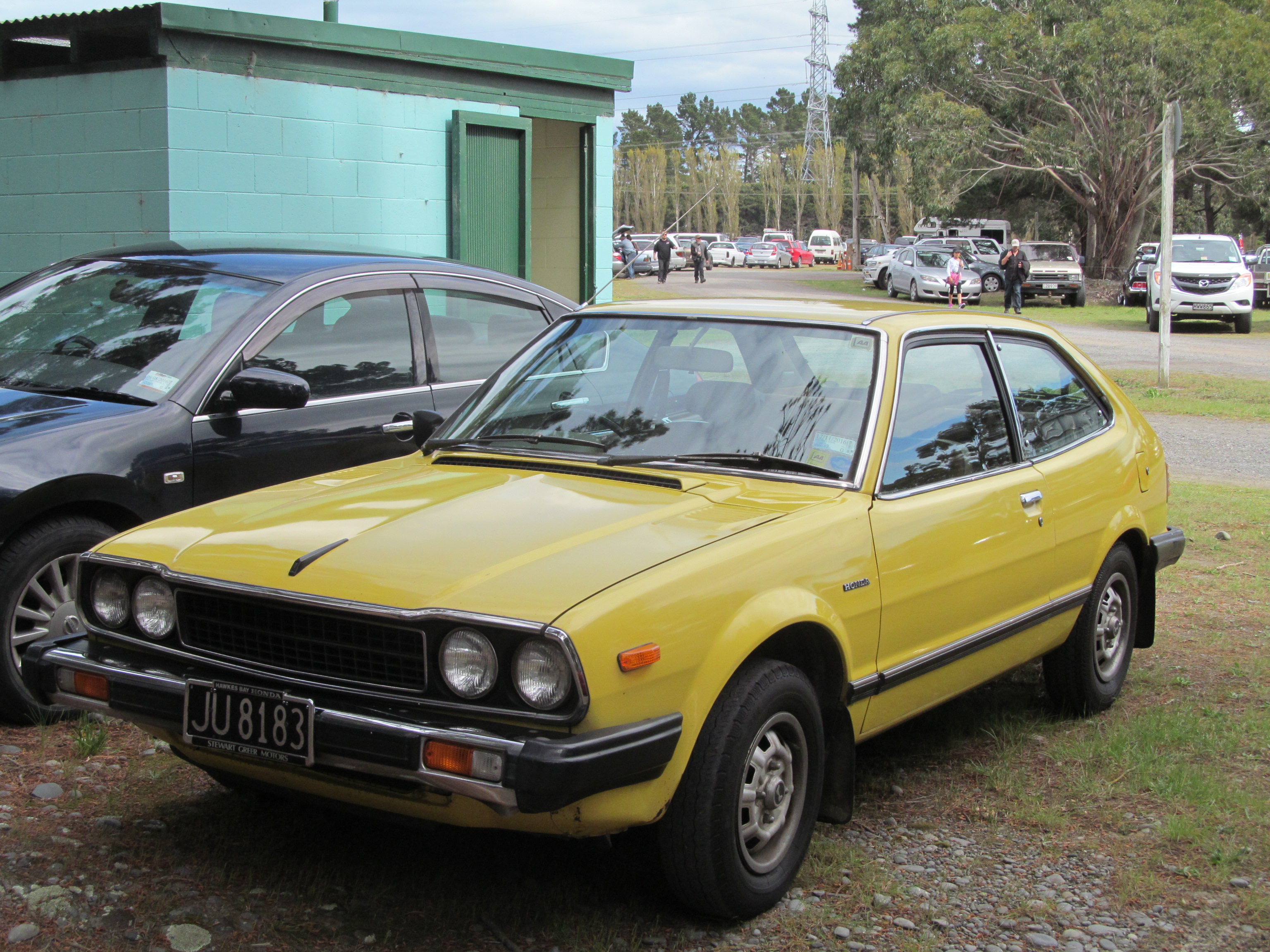
Honda Accord
"...ria about Honda targeting Toyota with a refreshed Accord and a more rugged Passport. With current fuel pri..."
The Honda Accord is a regular passenger car (a sedan) meant for daily driving and family use. It’s designed to be comfortable and efficient, and Honda periodically updates it with changes to keep it competitive. It may be mentioned in the news when Honda talks about improving the car for current market conditions.
The Honda Accord is a mainstream midsize sedan known for balancing comfort, efficiency, and everyday practicality. In a news context, it’s often discussed because Honda refreshes it to stay competitive in the family-sedan segment, including updates that can improve fuel economy and overall usability. It may come up alongside other Honda models when the conversation is about how automakers respond to shifting demand and pricing.

Honda Passport
"... Toyota with a refreshed Accord and a more rugged Passport. With current fuel prices being high, affordabili..."
The Honda Passport is a midsize SUV, which is a taller vehicle than a sedan and usually offers more space. It’s made for people who want a bit more ruggedness and versatility for everyday trips. It’s often discussed when Honda updates it to better match what drivers want right now.
The Honda Passport is a midsize SUV positioned for buyers who want more rugged capability than a typical crossover. It’s significant in coverage because Honda may refresh it to broaden its appeal, especially when fuel prices and affordability are driving shoppers toward practical, versatile vehicles. The “more rugged” angle is typically about styling, packaging, and available capability features rather than turning it into a dedicated off-road machine.
Request an Explanation
Heard something you'd like explained? We'll add it to this episode.
Sign in to request explanations for terms you heard.
Want to learn more?
Browse our glossary for plain-English explanations of automotive terms, jargon, and concepts.
Help improve this episode
See something that's not quite right? Our annotations are AI-generated and can sometimes miss the mark. Click the flag icon on any annotation to suggest a correction.