The Dodge Challenger is a sporty, two-door car built for strong acceleration. People talk about it because it’s known for performance versions. In this podcast, the word “challenger” may be used in a different context too, so it’s worth checking what they mean.
This is Toyota’s factory in Georgetown, Kentucky. The hosts say it’s where Toyota is starting to build the redesigned 2026 RAV4, which affects how quickly cars can reach dealers.
“Hybrid only” means you can’t buy this version with a regular gas engine. It’s only available with a hybrid system, and you choose between a regular hybrid and a plug-in hybrid.
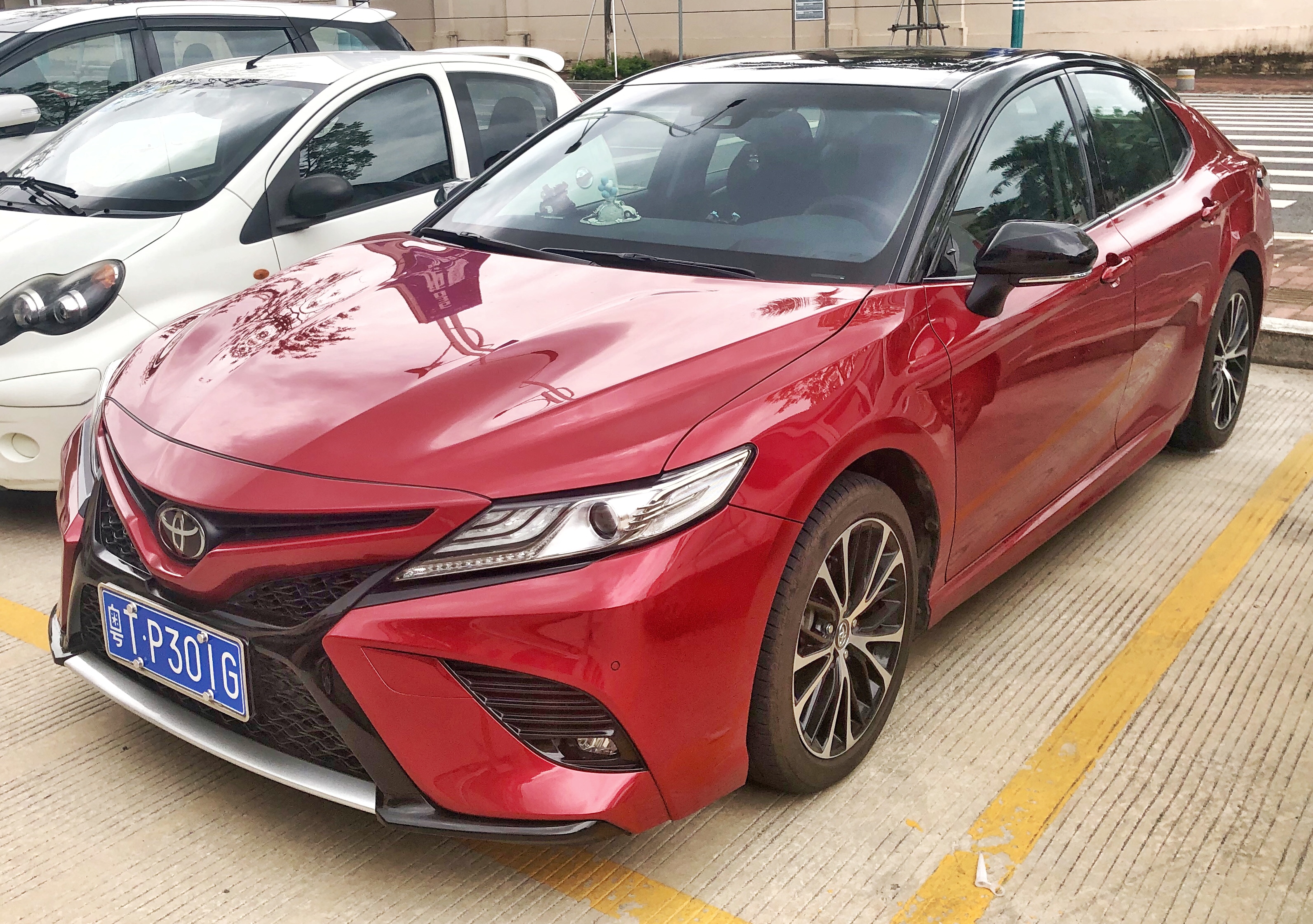
The Toyota Camry is a common Toyota sedan. They’re using it as an example because Toyota is offering the RAV4 in a similar way—hybrid-only in this redesign.
A plug-in hybrid is a hybrid car you can charge by plugging it in. It’s different from a regular hybrid because you can add more electricity from a charger.
The Toyota RAV4 is a popular compact SUV. In this segment, they’re talking about how many are sitting unsold at dealers and how fast they sell, plus how the hybrid version is driving demand.
In auto retail, the pipeline refers to the flow of vehicles coming from the manufacturer to dealers over time. The hosts say dealers are selling RAV4s “months back into their pipeline,” meaning sold units are quickly replaced by incoming production rather than sitting unsold.
El Monte is a city in California. The hosts mention it because they’re talking about a specific Toyota dealer there and the long customer waiting list they’re seeing.
Allocation is how many cars the manufacturer assigns to each dealer. If dealers are waiting for more allocation, it means Toyota is limiting how many RAV4s they can get right now.
“All hybrid” means the car is designed to run as a hybrid, using both a gas engine and an electric motor. The hosts are saying Toyota’s hybrid approach is helping drive RAV4 demand.
A hybrid is a car that uses two kinds of power, usually a gas engine and an electric motor. That lets it save fuel and sometimes drive on electricity for short stretches.
The Ford F-150 hybrid is a hybrid version of Ford’s popular full-size pickup. The point here is that a lot of buyers are choosing the hybrid, not just the gas model.
A chip shortage means the factories couldn’t get enough computer chips used in cars. When that happens, automakers can’t build as many cars as they want, so customers may wait longer.
A wait list is when you want a specific car, but the dealer can’t deliver it right away. So you get put in line and wait for the right version to be available.
“Trim color combo” refers to the exact package a buyer chooses—trim level plus exterior color (and often interior choices). When automakers reduce the number of different configurations sitting on lots, customers may need to order the exact combination instead of finding it immediately.
The Chrysler Pacifica is a minivan, which is a family-focused vehicle with room for multiple passengers. It’s built for practical trips like school runs and longer drives. The podcast references it in a scenario to show how it can be used in everyday situations.
Gamification means making the car-buying process more interactive and fun, like using games or simulations. The host thinks Carvana could do more than just apps and websites by adding experiences in the showroom.
“Challenger” here is talking about the Dodge Challenger, a sporty two-door car. The episode mentions making it feel like a very high-performance version, which is about how it drives and accelerates. It’s included because they’re describing the driving experience.
The Hellcat Charger is a Dodge Charger with a very powerful Hellcat engine. The host is joking that if you drive it hard enough, you’d burn through a full tank extremely fast.
A supercharger is a device that forces more air into the engine to make it produce more power. The host is saying that when you’re using that maximum boost, the car burns fuel quickly.
Digital retailing means buying a car online instead of doing everything in person. The host is saying you can shop and even handle financing from your phone without having to talk to a salesperson.
LIVE
Welcome to this Weekend Drive edition of Daily Drive for the third week of June,
2026. I'm Kellan Walker in Las Vegas. Today on the show, Sean Fane wrapped up the UAW's
Constitutional Convention this week and with five challengers and a federal monitor on his case.
Toyota's all hybrid RAV4 is so hot right now that dealers are counting inventory in hours,
and NADA CEO Mike Stanton called Carvana part of the family this week, a remarkable turn from just a
few years ago. Joining me this week, as always, to break it all down is Michael Martinez, who covers
Ford in a UAW for us at Automotive News. Mike, welcome to Weekend Drive. Thanks,
Co. And Larry Velikwet, who covers Toyota, Subaru and Mazda for us. Larry Legend, how are you today?
I'm doing great, Kell. Great to be here. All right, guys, so let's get into it. We had the UAW's
Constitutional Convention this week in Detroit, and Mike, you were reporting all over it. Sean Fane
entered the union four years ago as a reformer, a virtual unknown, and now he's the incumbent,
heading into this fall's election with five challengers. Now, Mike, how much has actually
changed under Fane, and how real is the threat to a second term? Yeah, Kell, you know, this is my
fourth UAW Constitutional Convention that I've covered, and it's the insidiest of inside baseball.
Four days worth of debate and resolutions. I don't know if we're going to do a video of this,
but you can see some of the resolutions I have. I can't hear it. Oh, there's dozens of these things.
Very colorful, by the way. Very colorful. It ranges from the mundane to actually impactful
stuff, like salaries and strike pay and things like that. But what I was struck by having the
background of pre-direct election UAW, and now Sean Fane coming into power, and supposedly
is this great reformer, I couldn't help shake the feeling that the more things change, the more
they stay the same. Because it really gave the feeling that Sean and his caucus, his slate of
leaders, in some ways are no different than the past. Now, don't take that the wrong way. He's
not going to prison anytime soon. He did not commit the type of fraud and corruption that
some of his predecessors have. But what I mean by that is that you saw the same type of infighting,
you saw the same type of power grabs from his leadership to try to control the narrative,
to try to control the agenda, and some of the reform groups sort of got quieted, what they
wanted to do this week. And you see a lot of the other people running for president are running on
the same platform Fane did four years ago, that the union needs real change, that the leadership
needs to be reformed. So it's been a meteoric rise for him. There's a great anecdote. I didn't
get a chance to tell it in my story. But four years ago, Sean Fane was actually a sergeant at
arms at the Constitutional Convention, assigned to the bowels of the convention center basement.
And four years later, he's literally at the top on the stage presiding over the convention. So
great rise. It's just, I think for some people, they wanted a little more reform out of that
reform candidate. In that metaphor, there's three feet of rise, right? Roughly.
I think here's what I think. Yeah, Fane came in with a lot of promise. He delivered on some.
He certainly changed the outcome of negotiations in 23. But whenever somebody gets in power,
they get a target on their back in a, you know, messy democratic organization.
That's, that's what happens. Messy conventions are, you know, for reporters are wonderful,
right? That's, that's where all the fun happens. Union, Union conventions are not like, you know,
the Democratic and Republican national conventions that happen. Those are very scripted. Union
conventions are not. They're not televised. Number one, they're not made for TV.
This is exactly what's supposed to happen. And it's going to take a long time. Now,
the one thing I will say is that the last time that there was a vote,
the UAW, you know, participation in the, in its first direct elections was abysmal, right? What was
it like? Like 17%, right? Maybe lower than that, I think. Yeah, it was horrible. The percentage
of the electorate that actually cast a ballot. I hope, I hope that in, in this instance, that,
at least the participation rate will go up. I think that'll be a great outcome. And how do you
do that? You do that with contested elections, where people that get people excited about,
you know, voting for the future and what they want. Now, Mike, you wrote about the infighting at the
convention itself. Fane ditching some of the reform candidates he rose to power with, including
Secretary-Treasurer Margaret Mock. And then there's the federal monitor, Neil Borowski,
who's been issuing some pretty scathing reports. How much does that baggage weigh on Fane,
heading into the fall? It weighs pretty heavily. I talked with one person in the convention,
Warren Holloway Sr. He's a millwright, interestingly, from Sean Fane's region.
He's from Kokomo. Sean Fane was an electrician out of Kokomo. And Warren works at the Kokomo
Transmission Plant. And he said he supports Sean Fane, and he cited all the gains in the
Detroit 3 contracts in 2023. He said, you know, that's sort of the long and short of it, right?
You get cola back, you eliminate wage tears, you get a big raise, you know, what's not to like.
But he seemed very clear-eyed. He said, I don't really love everything that's happened
with Sean Fane based off the monitor reports. He said, a lot of this to me sounds like the same
sort of good old boy network stuff that was going on in the past. And I thought that was a great
encapsulation of things. So I think Fane's going to have to prove that he can move beyond
some of the allegations that the monitors made about creating this toxic workplace.
But I'll tell you, Kel, there were a few things that made the convention sort of end on a sour
note. First of all, about halfway through, one of the major resolutions was to raise strike pay,
because Sean really wants to go at the company's heart in 2028, if he's reelected.
So he wanted to raise strike pay. And he wanted to raise the threshold for the union strike fund
at which dues rates drop. So union members have to pay two and a half hours worth of dues money
into this strike fund. And in the past, once it reached a certain level, the $150 million,
that requirement would drop. They'd go from two and a half hours to two. And for some people,
it's, I don't know, maybe a couple hundred bucks a week. So not that much, but still meaningful
in an age of inflation. Well, Sean Fane decided, I want a bigger strike fund. Let's raise that cap
to $1.3 billion. So you're going to have to keep paying more dues money into the strike fund. That
upset a lot of people. And then quickly, I don't want to get too inside baseball. But at the very
last day, this was the taste that everybody left the convention with. There was a resolution brought
to the floor to enshrine one member, one vote, enshrine direct elections. Because the way it
is written in the Constitution now, when the federal monitor leaves, delegates at a future
convention could just vote on their own to go back to the way things were. And some reformers
wanted to put some stronger language in the Constitution to prevent that. Well, they brought
it for a vote and they were ruled out of order. So on a technicality, it died on the floor. And in
theory, we could go back to the old way of doing things four years from now. It's disappointing,
isn't it? It's just disappointing. Credit to Mike. He did a hell of a job, you know, waiting
through this. It's not easy to do this, you know, to cover that kind of convention on your own.
So you get all the props, buddy, for doing this. And you're right. That is a sour taste to leave
in people's mouths. You know, I have this really, really important reform ruled out of order like
that. This is bad. Just bad look. But I will say, going back to that strike pay thing, it does set
the union up for a big fight in 2028. Whether or not Sean Faines reelected, whoever comes next,
prepare for another strike, prepare for something that could be even worse, because one thing Sean's
promising is sort of his vision for the future. He's promising the restoration of pensions,
which we know the Detroit three are not going to want to do. He's promising checks and curbs on AI,
which could be hard as GM is bringing co-bots into its plant, all the Detroit three are bringing
co-bots and robots. So expect a big fight and the union is going to have a little more ammunition
this time around. This sounds so messy. It sounds like a soap opera. Like someone needs to make a
document. I said this when Sean Faine was running four years ago, that they need to do some kind
of documentary where someone just follows him with a camera, because this is, it's so messy,
yet it's so entertaining. You got to invite me, Mike, next time to one of these conventions.
I'll fly into town. I got to go to that. It's good stuff.
Oh, you're going to regret that.
And Kelly, in the meantime, we're going to get your book on Walter Ruther
and the union back in the 30s and 40s, and you can figure out what messy looks really.
Yeah, I've done my, actually, I've done my research on Walter Ruther, the guy that pretty
much was the first UAW president. Yeah, it's some interesting stuff. You guys got some interesting
history in Detroit. All right, well, coming up, Toyota's RAV4 is so popular right now,
dealers are counting inventory in hours. That's next on Weekend Drive.
Navigation can go beyond just marks on the road. And this week on shift, we're looking at the
future of automotive navigation with AI. Tom Tom, Senior Vice President of Product Engineering,
Manuel Lekarno Agai talks about developing a map with real-time information at the lane level.
It's not just knowing the traffic on the road, but you know, the traffic per lane, for example.
Or if you know there is a hazard on the road, you know, which lane the hazard is.
Lekarno Agai also explains how AI can lead to better interactions with voice for navigation,
how Tom Tom is building trust with AI, and how automakers are reacting to the new technology.
Join us for shift, available this Sunday wherever you get your podcasts.
Welcome back to Weekend Drive. I'm Kellan Walker with Michael Martinez and Larry Velaquette.
All right, Larry, let's talk RAV4. So Toyota will mark the start of US production of the
redesigned hybrid only 2026 model at its Georgetown, Kentucky plant next week. And I know you've
been deep in the weeds on this story. How bad is the supply crunch right now?
Yeah, so Toyota redesigned the RAV4, which is, which competes with the F-150, the Ford F-150,
as the most popular nameplate in the United States. It is certainly, but is by far and away,
the top selling compact crossover. But the RAV4 was redesigned. It is now offered hybrid only,
like the Toyota Camry. So you don't, you either get, you either get a hybrid or you can get a
plug-in hybrid, one of the two. Right now, they are building, they started building these in Japan
in December of 2025. They started in January in Canada at the Cambridge plant, where about
80% what was coming into the US flows from. And now they are adding Georgetown, Kentucky,
which is a huge complex down near Lexington, that for the third plant to build RAV4s,
right now the inventory for RAV4, because of the bringing these plants up slowly and the continued
demand for this vehicle. The inventory, as you said, isn't being counted in hours. This week,
as we're recording this, there was a day where, I mean, there, there are about 1,240 Toyota dealers
across the US. Between them, they had 970 unsold RAV4s at the start of Tuesday, right?
Across 1,200 dealers, they had 900 unsold ones that weren't accounted for at the start of the day.
The turn rate for RAV4 right now is 97.6%. So they make X number per month, 97.6% of those
are sold by the end of the month. That's crazy. That's a crazy percentage. No carrying costs,
no anything, just there's, dealers are selling them months back into their pipeline. I talked to
the head of a dealer, it's the largest Toyota dealer in the US, Longo Toyota in El Monte,
California, near Los Angeles. Their waiting list was 800 people deep. And last weekend,
they sold another 51, right? 50, and another 51 people sign up, say, hey, we'll wait for ours.
It's really, I mean, it's a great problem for a Toyota to have, right? They've got a vehicle that's
so popular that they're, you know, they're waiting lists all over the place. Every Toyota dealer that
I spoke to, the story was the same. Yeah, we're sold out. I'm waiting for more allocation. Kentucky
is going to come online. The official ceremony starts Monday. They've built a couple of pilot
models already. They think they can get about 40,000 more this year out of Georgetown, and they'll
get between 60 and maybe 80,000 next year out of Georgetown. And at Georgetown, it's being built on
the same line with Camry, one of the three lines at that plant. So every rev they built is one less
Camry that they have. So it, I mean, it's a great problem to have. And you certainly don't have to
worry about discounting or floor planning or anything like that for Toyota dealers to have to,
you know, work their way through this. Larry, you cover Toyota real close, very close. So let me
ask you a cross beat question. When you look at what Toyota is doing with an all hybrid RAF4 and
the demand it's generating, does that strategy look smarter right now compared to some of the
companies on Mike's beat, like Ford and others, who've had a rockier ride with their EV and hybrid
pushes? You know what the difference is? They never changed. They're doing exactly what they said
they were going to, this is Toyota, they're doing exactly what they have said they were going to do
for the last decade, right? We're going to offer hybrids in every, you know, with every name plate
that we offer, you're going to have a hybrid option. We're going to slowly transition to EVs,
which they've done. We're not going to go all in. And remember that the absolute crap they got
for not jumping on the bandwagon, you know, three years ago and saying, you know, saying we're
going to go, we're going to move all EV by 2030 to see their stock go up. And then having to cover
all these, all their losses, they're not, they're not doing any of that because they're sticking
to their plan and they're just, they're just working their plan. I mean, it's the tortoise
and hare strategy played out in, you know, billions and billions of dollars. Mike, what are your
thoughts? Well, I just challenge you on that one point about the likes of Ford's struggle and at
least on the hybrid side, because to be fair, Ford has had hybrids, maybe under the radar,
not as pronounced in terms of the marketing and advertising, but they've had them.
Like the pickup that shall not be named.
Well, I mean, before that, right? Even before the Maverick hybrid, they've had other
successful ones and a new wave. Even the F-150 hybrid, that's about 20% of F-150 sales right
now, which is a good chunk of trucks. But what I would say just on Rev4 in general,
you know, I think the pandemic really conditioned a lot of us to be okay with stuff like this.
And I would imagine the dealers that Larry's talking to are finding that even though these
wait lists are growing, customers probably aren't complaining too much for now because we've sort
of learned since the pandemic and chip shortage that this stuff happens sometimes. Even when
things aren't constrained by outside forces, automakers are spending less and less different
styles to dealer lots. So maybe the exact trim color combo you want isn't there,
so you have to order it in wait a minute. So maybe not the worst thing in the world.
And I would imagine at least for now, the discontent isn't really that high.
No, from a consumer standpoint, you know, if you get what you want and you pay what they're,
you know, what they're offering, I haven't, the one thing that I haven't heard of and maybe it
is out there, but I haven't heard of dealers doing the, you know, the pandemic you're over,
you know, slapping on dealer, dealer markups on Rev4. They're just, you know, they're selling
what I haven't heard about that might be happening, not saying it isn't, but it's certainly not
happening to the level that it was during the pandemic. So if they're delivering what they
promise, when they promise, you know, for consumers, I think Mike's right. We're conditioned to that
now. We know that we can wait. And if you order it, you get what you want. Yeah, I waited a little
bit. I waited for my Maverick over, you know, almost two years. All right, guys. So let's
close this week with a story that really raised eyebrows. So NADA CEO, Mike Stanton, was on the
show this week, and he had some almost warm things to say about Carvana. Our only handle,
let's talk with him on the sidelines of cars management briefing seminars in Ypsilanti.
Here's a bit of what he said. As long as they're doing everything
in compliance with the law, we'll figure out a way to work with them. As I mentioned,
they're members of NADA now. Yeah. Part of the family. Larry,
that's a pretty significant shift. Not long ago, Carvana was seen as an existential threat
to the franchise model. What's your reaction to that?
Yeah, not long ago, Carvana was almost bankrupt, too. And now look at it.
Right? I gotta tell you, Carvana is absolutely fascinating to people who watch this industry.
Credit to our colleague Melissa Burden. She did a fantastic job of laying out what they're doing
and what their Stellantis play looks like. I had been thinking about this, about what Carvana
is up to, as I'm sure a lot of people have. I thought maybe they're trying to reverse,
vertically integrate from the bottom up, vertically integrate the US auto industry
from the bottom up, which would be really fascinating. But it turns out they're just
trying to do for new vehicle sales what they did for used vehicle sales, which is take,
run a very efficient model where you're not paying a lot of people to sell. You're giving people
the opportunity to guide themselves through the sales process. You have fixed prices
where you don't have to go through negotiation. Really, all the things that I love about Carvana,
they're eliminating. I love the negotiation. give and take. All the things that,
those are the reasons I came to Automotive News in the first place. They're making it
easier, making the entire process easier as Melissa lays out in her story. It is a really
fascinating, it's a fascinating experiment. Stanton calling them part of the family,
that was the PS2 resistance. They're just another retailer now. I bet Scout Motors is listening.
Yeah, right. We just got to join. Okay. Yeah.
So, Carvana has now bought seven Stellantis stores. As Larry mentioned,
our own Melissa Burton was actually inside Carvana's new test drive center in Dallas this week.
No salespeople, no FNI staff, just a giant LED cube and what they're calling a vehicle
playground. Mike, what do you make of all this? Yeah, I mean, I wasn't there, but based off the
coverage that I've read, I wasn't that impressed. I mean, I like the idea of taking some of the
pain points out of that new car buying process. A lot of people would agree that it's not the easiest
process and they don't need to be sold and wooed the second they walk into a showroom. Sometimes
you do just want to kick tires. That's why a lot of people still really like auto shows.
So, I get this idea of a playground, although from what I could tell, it was literally just static
vehicle displays, right? Like a soccer net in front of a Chrysler Pacifica or off-road,
some dirt with a Jeep on top of it. I don't know that that excites me. Maybe make it more
interactive, maybe make it, you know, have more test track type experiences. I know they allow
customers to drive them off the showroom floor and test it out that way, but I don't know. Although,
I will say the idea of turning that dealership into more of a genius bar, right? To have people
there if you need them, to ask questions, to help with the sales process, not initiate the sales
process, to help with any service questions that you might have when you do buy a vehicle.
I got a little cold here, allergies here in the desert, man. I mean, we'll see, but they might
be on to something, but I think only time will tell. I will say this, you know where they're
messing out and I hear you what you said about Tesla, right? That was funny, but here's where
they're missing out. They took, Carvana took one step toward the gamification of buying a vehicle,
right? They need to embrace it more. If I were them, I would make those showrooms instead of
the static displays that Mike had. I put off-road simulators in there. This is what it's like to
drive a Jeep off-road. I put Hellcat simulators in there. This is what it's like to drive a Hellcat
on a race course. I maybe wouldn't put, this is the gas station simulator for the Hellcat.
Because I don't know if you know this, I remember this from covering the Chrysler, but the Hellcat
charger will run at full power, will drain a full gas tank in 22 minutes, right? Running at full
supercharger power. So maybe skip that part, but the gamification of the buying process
can go further. It doesn't have to just evolve your phone. There's room there to grow.
What's really interesting is other dealers should be watching this, not just for how they perform,
and the performance numbers that they've gotten, that Carvana's gotten out of these
Atlanta stores is nothing short of amazing. The one store is now doing, what, 700 units a month?
That's crazy. Single month. Those are big numbers.
Well, Larry, here's the thing. Larry, it made it the number one Stellantis store in the country.
Yeah, I understand. I live in now Stellantis Central, right? There are four Stellantis plants
within 25 miles of me. And so nobody in my town pays retail for a Stellantis product. They all pay
employee pricing almost all the time because you either know somebody or you're an employee yourself.
So to have that number one store not here, but there, that's crazy. That really is a testament
to what they've done and why other dealers need to pay attention to this. Because if it works,
to me, what this is, Mike, you remember this covering the rollout of digital retailing
across auto dealers because of the pandemic, right? And some automakers and some dealers
went forward with it and some of them retreated after the pandemic eased. But this is what this
is writ large, right? This is the digital model. I don't have to interact with anybody. I can buy
it from my couch. I can do the financing from my phone. I don't have to talk to anybody. It's hell
for me. Somebody likes to enjoys the car buying process. I would never want to do it. But as Mike
said, for many people, this is what it ought to be like. Yeah, I mean, there is already speculation
that other automakers, maybe Nissan or maybe even Ford could eventually follow suit and let
Carvana into their franchise network. Mike, what do you think about that? Well, I'll be honest
with you. This sounds a lot like portions of what Jim Farley wanted to do when he was recreating
that buying experience for EVs. Now, he was rightly criticized by dealers for the large portions of
that that involved the investment. That's what got the headlines. But when you look past that,
some elements of that plan involved a lot of what Carvana is trying to implement, turning the store
not into just a place where salespeople tried to hook you. But again, more of that Apple genius
bar kind of feel. Show up if you want, talk to somebody if you want, but you can do it online.
We'll be there to help. We'll have drive opportunities, et cetera. So yeah, again,
I don't know that all of this is that bad. All right, Mike, Larry, good show today, guys. Thank
you so much for joining me. Thanks, Joe. That's all for this weekend Drive edition of Daily Drive.
Thanks to Automotive News executive producer Jake Nier for his help on today's podcast.
You can get the latest news on Carvana's dealership push, the UAW election,
the Toyota RAV4 supply story, and everything happening in the auto industry at AutoNews.com.
Come back on Monday for a conversation with Tom Tom's Manuela Locarno Ajai.
Advancements in AI are allowing us to have a much faster update cycle and the ability to
bring fresh information to the vehicle faster. We'd love to hear from you. Let us know what
you think of the show and topics we cover today. Send us an email at dailydrive at autonews.com
or leave us a voicemail at 313-444-2774. And if you enjoy the podcast, remember to like,
leave a review, and subscribe so you never miss an episode.
Thank you.
About this episode
Union politics and labor strategy set the tone as the hosts dig into UAW convention decisions, strike-pay changes, and what comes next for negotiations. The Weekend Drive pivot lands on Toyota’s redesigned 2026 RAV4 hybrid-only rollout, where dealers are counting inventory in hours and turn rates are extremely high. From there, the discussion turns to whether dealer markups are easing and how NADA’s Mike Stanton now describes Carvana as “part of the family,” highlighting Carvana’s tech-forward, low-staff retail model.
UAW President Shawn Fain heads into a fall election facing five challengers and a federal monitor’s scrutiny. Toyota’s all-hybrid RAV4 is flying off lots faster than dealers can stock them. And Mike Stanton, CEO of the National Automobile Dealers Association, calls Carvana “part of the family.” Michael Martinez and Larry Vellequette break it all down on this edition of Weekend Drive.