
June 20th, 2026 | Weekend Drive: Shawn Fain's 2nd term bid; are dealers softening on Carvana?
About this episode
Union politics and labor strategy set the tone as the hosts dig into UAW convention decisions, strike-pay changes, and what comes next for negotiations. The Weekend Drive pivot lands on Toyota’s redesigned 2026 RAV4 hybrid-only rollout, where dealers are counting inventory in hours and turn rates are extremely high. From there, the discussion turns to whether dealer markups are easing and how NADA’s Mike Stanton now describes Carvana as “part of the family,” highlighting Carvana’s tech-forward, low-staff retail model.
UAW President Shawn Fain heads into a fall election facing five challengers and a federal monitor’s scrutiny. Toyota’s all-hybrid RAV4 is flying off lots faster than dealers can stock them. And Mike Stanton, CEO of the National Automobile Dealers Association, calls Carvana “part of the family.” Michael Martinez and Larry Vellequette break it all down on this edition of Weekend Drive.

Dodge Challenger
"...Constitutional Convention this week and with five challengers and a federal monitor on his case. Toyota's all h..."
The Dodge Challenger is a sporty, two-door car built for strong acceleration. People talk about it because it’s known for performance versions. In this podcast, the word “challenger” may be used in a different context too, so it’s worth checking what they mean.
The Dodge Challenger is a two-door American muscle car known for powerful V8 options and a long-running performance heritage. It often comes up in news and podcast discussions because it’s a recognizable nameplate and a frequent choice for performance-focused trims. In this episode context, it’s mentioned alongside other “challengers,” which is why it may be brought up even when the topic isn’t strictly about the car itself.
Georgetown, Kentucky plant
"All right, Larry, let's talk RAV4. So Toyota will mark the start of US production of the redesigned hybrid only 2026 model at its Georgetown, Kentucky plant next week."
This is Toyota’s factory in Georgetown, Kentucky. The hosts say it’s where Toyota is starting to build the redesigned 2026 RAV4, which affects how quickly cars can reach dealers.
The Georgetown, Kentucky plant is Toyota’s manufacturing site where the redesigned 2026 RAV4 hybrid-only model is starting U.S. production. The segment connects the production ramp at this plant to the supply crunch and how quickly inventory is being depleted.
hybrid only
"But the RAV4 was redesigned. It is now offered hybrid only, like the Toyota Camry. So you don't, you either get, you either get a hybrid or you can get a plug-in hybrid, one of the two."
“Hybrid only” means you can’t buy this version with a regular gas engine. It’s only available with a hybrid system, and you choose between a regular hybrid and a plug-in hybrid.
“Hybrid only” means the model is offered exclusively with a hybrid powertrain rather than a traditional gas-only engine. In this segment, the redesigned Toyota RAV4 is described as hybrid-only for the 2026 model, with customers choosing between a standard hybrid or a plug-in hybrid.
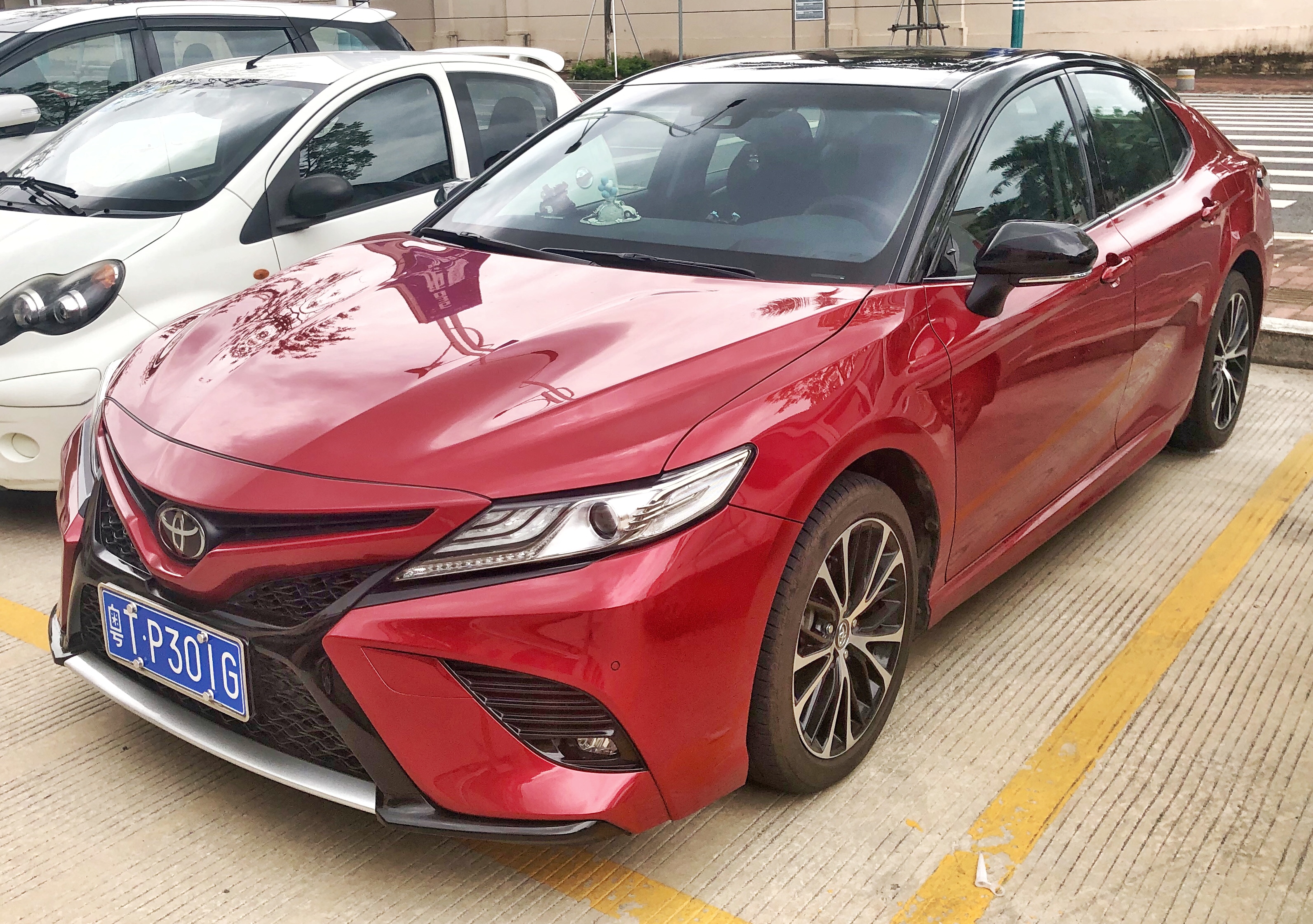
Toyota Camry
"It is now offered hybrid only, like the Toyota Camry. So you don't, you either get, you either get a hybrid or you can get a plug-in hybrid, one of the two."
The Toyota Camry is a common Toyota sedan. They’re using it as an example because Toyota is offering the RAV4 in a similar way—hybrid-only in this redesign.
The Toyota Camry is a midsize sedan that’s used here as a comparison point for Toyota’s hybrid strategy. The host says the redesigned RAV4 is offered hybrid-only, “like the Toyota Camry,” meaning the lineup is organized around electrified powertrains rather than gas-only versions.
plug-in hybrid
"So you don't, you either get, you either get a hybrid or you can get a plug-in hybrid, one of the two. Right now, they are building, they started building these in Japan in December of 2025."
A plug-in hybrid is a hybrid car you can charge by plugging it in. It’s different from a regular hybrid because you can add more electricity from a charger.
A plug-in hybrid (PHEV) is a hybrid vehicle that can be charged from an external power source, typically using a charging cable. The host frames the RAV4’s electrified lineup as two options: either a standard hybrid or a plug-in hybrid.

Toyota RAV4
"Between them, they had 970 unsold RAV4s at the start of Tuesday, right? ... The turn rate for RAV4 right now is 97.6%."
The Toyota RAV4 is a popular compact SUV. In this segment, they’re talking about how many are sitting unsold at dealers and how fast they sell, plus how the hybrid version is driving demand.
The Toyota RAV4 is a compact SUV that’s been especially popular in the U.S., and this segment focuses on how dealer inventory and sales velocity are behaving for it. The hosts also mention an “all hybrid” RAV4, tying the model’s demand to Toyota’s hybrid strategy.
turn rate
"The turn rate for RAV4 right now is 97.6%. So they make X number per month, 97.6% of those are sold by the end of the month."
Turn rate is basically how fast dealers sell the cars they have. A 97.6% turn rate means almost all the RAV4s dealers had are sold within the month.
Turn rate is a sales-efficiency metric that describes how quickly a dealer sells through its inventory over a set period. In this segment, a 97.6% turn rate for the Toyota RAV4 implies nearly all available units are sold by month-end.
pipeline
"No carrying costs, no anything, just there's, dealers are selling them months back into their pipeline."
In auto retail, the pipeline refers to the flow of vehicles coming from the manufacturer to dealers over time. The hosts say dealers are selling RAV4s “months back into their pipeline,” meaning sold units are quickly replaced by incoming production rather than sitting unsold.
El Monte, California
"I talked to the head of a dealer, it's the largest Toyota dealer in the US, Longo Toyota in El Monte, California, near Los Angeles."
El Monte is a city in California. The hosts mention it because they’re talking about a specific Toyota dealer there and the long customer waiting list they’re seeing.
El Monte is a city in California, and the segment uses it to locate Longo Toyota, described as the largest Toyota dealer in the U.S. The point is to ground the dealer-level anecdote about waiting lists and sales.
Longo Toyota
"I talked to the head of a dealer, it's the largest Toyota dealer in the US, Longo Toyota in El Monte, California, near Los Angeles."
Longo Toyota is a car dealership. The host uses it as an example of how many people are waiting to buy a Toyota RAV4.
Longo Toyota is a Toyota dealership brand used here as the source for a real-world example of RAV4 demand. The hosts cite its sales and waiting-list size to illustrate how constrained supply is.
allocation
"Every Toyota dealer that I spoke to, the story was the same. Yeah, we're sold out. I'm waiting for more allocation."
Allocation is how many cars the manufacturer assigns to each dealer. If dealers are waiting for more allocation, it means Toyota is limiting how many RAV4s they can get right now.
Dealer allocation is the manufacturer’s planned distribution of limited production to specific dealers. When the hosts say dealers are waiting for “more allocation,” they mean Toyota is rationing supply, so dealers can’t simply order unlimited inventory.
discounting
"And you certainly don't have to worry about discounting or floor planning or anything like that for Toyota dealers to have to, you know, work their way through this."
Discounting means lowering the price to get people to buy. They’re saying Toyota dealers may not need to do that because the RAV4 is selling out.
Discounting is when dealers reduce the price of a vehicle below its typical selling price to attract buyers. The segment suggests Toyota dealers can avoid discounting because demand for the RAV4 is so strong that inventory moves quickly.
floor planning
"And you certainly don't have to worry about discounting or floor planning or anything like that for Toyota dealers to have to, you know, work their way through this."
Floor planning is the money dealers borrow to keep cars on the lot. If cars sell fast, dealers don’t have to pay that cost for as long.
Floor planning is the financing dealers use to pay for vehicles while they sit on the lot before being sold. The hosts argue Toyota dealers don’t have to worry about it much because the RAV4 sells so quickly, reducing time spent carrying inventory.
all hybrid
"let me ask you a cross beat question. When you look at what Toyota is doing with an all hybrid RAF4 and the demand it's generating..."
“All hybrid” means the car is designed to run as a hybrid, using both a gas engine and an electric motor. The hosts are saying Toyota’s hybrid approach is helping drive RAV4 demand.
An “all hybrid” vehicle uses hybrid powertrains as its primary propulsion, typically combining an internal-combustion engine with an electric motor and battery. In this segment, it’s used to connect Toyota’s RAV4 strategy to the unusually strong demand they’re seeing.
EV
"compared to some of the companies on Mike's beat, like Ford and others, who've had a rockier ride with their EV and hybrid pushes?"
EV means electric vehicle. It’s a car that mainly runs on electricity from a battery, and the host is comparing EV strategies to hybrid strategies.
EV stands for electric vehicle, meaning the car’s primary propulsion comes from one or more electric motors powered by a battery. The hosts contrast Toyota’s hybrid-focused approach with other companies’ “EV and hybrid pushes.”
hybrid option
"for the last decade, right? We're going to offer hybrids in every, you know, with every name plate [935.0s] that we offer, you're going to have a hybrid option."
A hybrid is a car that uses two kinds of power, usually a gas engine and an electric motor. That lets it save fuel and sometimes drive on electricity for short stretches.
A hybrid option means the vehicle uses two power sources—typically a gasoline engine plus an electric motor/battery—to improve efficiency and reduce fuel use. In practice, hybrids can vary by design, but the key idea is that the car can use electric power alone at times and/or assist the engine.
EVs
"We're going to slowly transition to EVs, [940.3s] which they've done."
EVs are electric cars that run on a battery instead of using gas as the main fuel. You usually charge them at home or at public chargers.
EVs (electric vehicles) are cars powered primarily by an electric motor drawing energy from a battery. Compared with hybrids, EVs generally rely much more on charging infrastructure and battery capacity for everyday range.

Ford Maverick hybrid
"Like the pickup that shall not be named. [995.3s] Well, I mean, before that, right? Even before the Maverick hybrid, they've had other [1000.4s] successful ones"
The Ford Maverick is a small pickup truck. The hybrid version uses both gas and electricity, and it helped prove hybrids could work in trucks too.
The Ford Maverick is a compact pickup, and the hybrid version helped make electrified powertrains mainstream in the truck segment. The host is pointing out that Ford had hybrid success before the later F-150 hybrid push.

F-150 hybrid
"Even the Maverick hybrid, they've had other [1000.4s] successful ones and a new wave. Even the F-150 hybrid, that's about 20% of F-150 sales right [1005.9s] now, which is a good chunk of trucks."
The Ford F-150 hybrid is a hybrid version of Ford’s popular full-size pickup. The point here is that a lot of buyers are choosing the hybrid, not just the gas model.
The Ford F-150 hybrid is Ford’s electrified version of its best-selling full-size pickup. The host claims it’s now about 20% of F-150 sales, illustrating how hybrids can become a meaningful share of mainstream truck demand.
chip shortage
"And I would imagine the dealers that Larry's talking to are finding that even though these [1022.2s] wait lists are growing, customers probably aren't complaining too much for now because we've sort [1027.1s] of learned since the pandemic and chip shortage that this stuff happens sometimes."
A chip shortage means the factories couldn’t get enough computer chips used in cars. When that happens, automakers can’t build as many cars as they want, so customers may wait longer.
The chip shortage refers to a period when semiconductor components were in short supply, limiting vehicle production. Even when demand is strong, shortages can affect which cars can be built and when, contributing to wait times and inventory gaps.
wait lists
"And I would imagine the dealers that Larry's talking to are finding that even though these [1022.2s] wait lists are growing, customers probably aren't complaining too much for now"
A wait list is when you want a specific car, but the dealer can’t deliver it right away. So you get put in line and wait for the right version to be available.
Wait lists are customer queues used when a specific vehicle configuration can’t be delivered immediately due to production or inventory constraints. In the current market context, they’re often driven by limited availability of certain trims/colors and longer build timelines.
trim color combo
"So maybe the exact trim color combo you want isn't there, [1044.1s] so you have to order it in wait a minute."
“Trim color combo” refers to the exact package a buyer chooses—trim level plus exterior color (and often interior choices). When automakers reduce the number of different configurations sitting on lots, customers may need to order the exact combination instead of finding it immediately.

Chrysler Pacifica
"..., right? Like a soccer net in front of a Chrysler Pacifica or off-road, some dirt with a Jeep on top of it. ..."
The Chrysler Pacifica is a minivan, which is a family-focused vehicle with room for multiple passengers. It’s built for practical trips like school runs and longer drives. The podcast references it in a scenario to show how it can be used in everyday situations.
The Chrysler Pacifica is a minivan designed to carry families and passengers comfortably, with features aimed at everyday practicality. It’s mentioned in the episode in a playful, scenario-based way—like using it as a “platform” for activities—highlighting its role as a people-moving vehicle rather than a performance car. That kind of mention usually points to how versatile the cabin and layout can be.
gamification of buying a vehicle
"Carvana took one step toward the gamification of buying a vehicle, right? They need to embrace it more. If I were them, I would make those showrooms instead of the static displays..."
Gamification means making the car-buying process more interactive and fun, like using games or simulations. The host thinks Carvana could do more than just apps and websites by adding experiences in the showroom.
Gamification of buying a vehicle means turning parts of the shopping process into game-like experiences (interactive features, challenges, simulations) rather than a purely transactional flow. Here, the host argues Carvana should expand beyond phone-based steps and use in-store simulators to make the experience more engaging.
Challenger Hellcat
"...is what it's like to drive a Jeep off-road. I put Hellcat simulators in there. This is what it's like to dr..."
“Challenger” here is talking about the Dodge Challenger, a sporty two-door car. The episode mentions making it feel like a very high-performance version, which is about how it drives and accelerates. It’s included because they’re describing the driving experience.
In the podcast context, “Challenger” appears to refer to a Dodge Challenger being discussed in terms of driving feel and performance. The mention of “Hellcat simulators” suggests they’re talking about how the car can be made to behave like a high-performance variant, which is relevant to why the Challenger name comes up in enthusiast conversations. This kind of segment is usually about what it’s like to drive and how performance features translate to real-world driving.

Hellcat charger
"Because I don't know if you know this, I remember this from covering the Chrysler, but the Hellcat charger will run at full power, will drain a full gas tank in 22 minutes, right?"
The Hellcat Charger is a Dodge Charger with a very powerful Hellcat engine. The host is joking that if you drive it hard enough, you’d burn through a full tank extremely fast.
The “Hellcat Charger” refers to a Dodge Charger equipped with the Hellcat performance package. The host claims it can run at “full power” and drain a full tank in about 22 minutes, using that as an example of why a “gas station simulator” might be a bad idea.
supercharger power
"will drain a full gas tank in 22 minutes, right? Running at full supercharger power."
A supercharger is a device that forces more air into the engine to make it produce more power. The host is saying that when you’re using that maximum boost, the car burns fuel quickly.
Supercharger power refers to the output from a supercharger, a forced-induction device that increases engine airflow. The host ties “full supercharger power” to rapid fuel consumption, implying that sustained boost is thirsty.
digital retailing
"Mike, you remember this covering the rollout of digital retailing across auto dealers because of the pandemic, right? And some automakers and some dealers went forward with it..."
Digital retailing means buying a car online instead of doing everything in person. The host is saying you can shop and even handle financing from your phone without having to talk to a salesperson.
Digital retailing is the shift to buying a car through online tools—browsing inventory, negotiating, and completing paperwork electronically. The host contrasts it with traditional dealer interaction and says the “digital model” lets you buy from your couch, handle financing on your phone, and avoid talking to anyone.
Request an Explanation
Heard something you'd like explained? We'll add it to this episode.
Sign in to request explanations for terms you heard.
Want to learn more?
Browse our glossary for plain-English explanations of automotive terms, jargon, and concepts.
Help improve this episode
See something that's not quite right? Our annotations are AI-generated and can sometimes miss the mark. Click the flag icon on any annotation to suggest a correction.