SRT is a special group within the car company that makes fast and powerful cars. They take regular Dodge and Chrysler cars and make them even better for racing and performance.
Stellantis is a big car company that makes many different brands of cars, like Dodge and Jeep. They were created when two smaller car companies joined together.
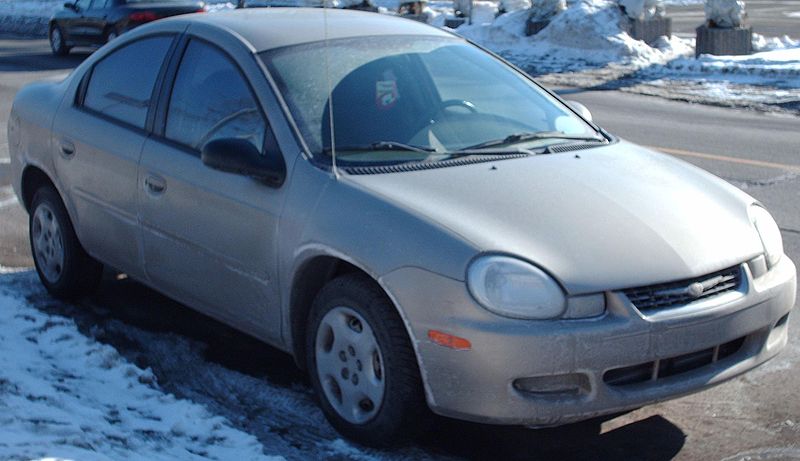
The Dodge Neon SRT4 is a sportier version of the regular Dodge Neon. It has a turbocharged engine that makes it faster and more fun to drive, making it popular among car fans.
SEMA is a big car show in Las Vegas where companies show off custom cars and parts. It's a place for car fans to see new products and cool modifications.
The LA Auto Show is a big event in Los Angeles where car makers display their latest cars and technology. It's a great place for people to see new models and innovations in the car industry.
A supercharged engine is one that has a device called a supercharger, which helps it produce more power by pushing extra air into the engine. This makes the car faster and more powerful.
The Dodge Stratus is a car made by Dodge that was sold from the mid-1990s to the mid-2000s. It was a popular choice for people looking for an affordable and practical vehicle.
A turbocharged engine is one that has a turbocharger, which is a device that helps the engine get more air. This extra air allows the engine to burn more fuel and produce more power, making the car faster.
The Honda Prelude SI is a sporty car that many enthusiasts enjoy for its fun driving experience. It was made for a long time and is known for being stylish and fast.
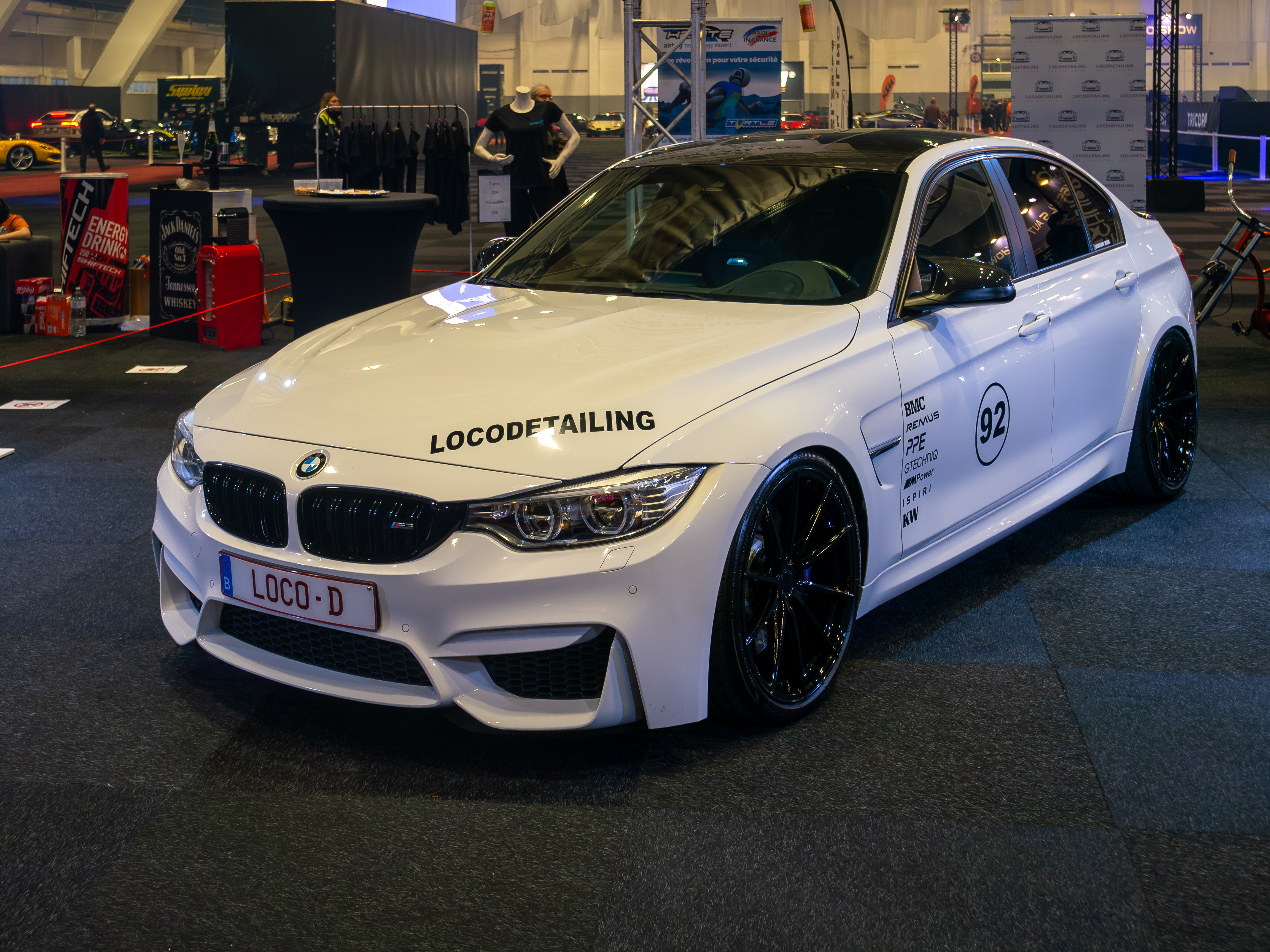
The BMW M3 is a faster, sportier version of the regular BMW 3 Series. The E30 is one of the earlier models and is loved for its great handling and performance.
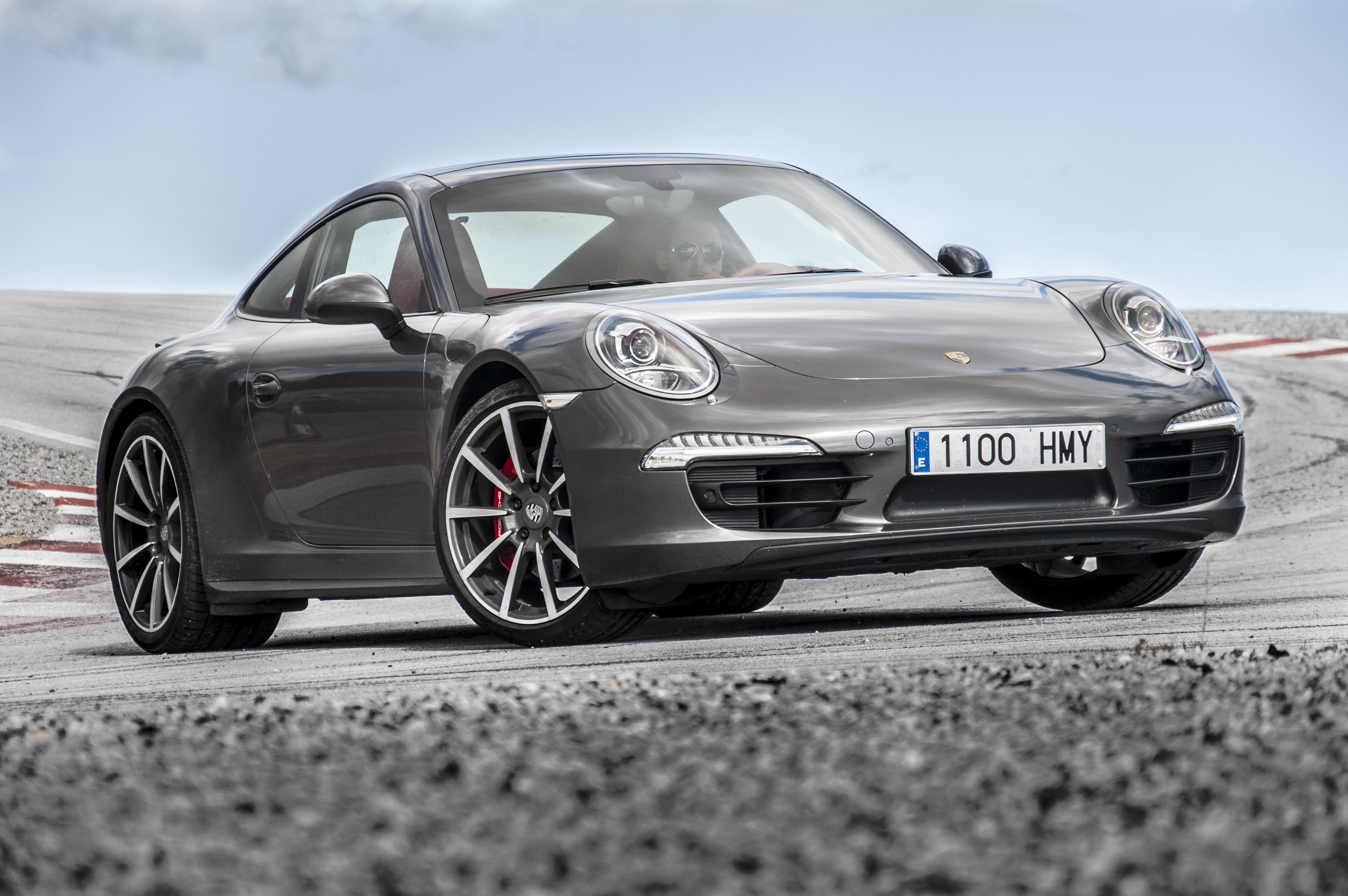
The Porsche 911 (996) is a version of the famous Porsche 911 sports car that was made from 1999 to 2004. It has a more modern look and is known for its performance and handling.
Car
Dodge SRT4
The Dodge SRT4 is a fast car based on the Dodge Neon, made for people who like to drive quickly. It has a turbocharged engine, which helps it go faster than regular cars.
Vehicle dynamics is about how a car moves and handles when you drive it. It looks at how the car behaves when you speed up, slow down, or turn, and how different parts of the car work together to make it stable and safe.
The Dodge Viper is a super fast sports car that is famous for its big engine and unique look. It was made for a long time and is known for being very powerful and fun to drive. People often talk about it because it represents the excitement of American sports cars.
The Jeep Grand Cherokee is a type of SUV, which is a big vehicle that can handle rough roads and off-road adventures. It's popular because it offers a lot of space for passengers and cargo, and it can be used for both everyday driving and outdoor activities. Many people like it for its combination of comfort and toughness.
OEM means Original Equipment Manufacturer. It's a term used for companies that make parts or cars that are sold under another brand's name, like how Ford makes parts for Ford cars.
The Chrysler PT Cruiser is a small car that looks a bit like older cars from the 1930s. It was made from 2000 to 2010 and is known for being spacious inside, making it a good choice for families.
K cars were a type of small car made by Chrysler in the 1980s. They were important for the company because they helped it recover from financial problems and became popular for being affordable and practical.
The 24 Hours of LeMons is a fun car race where teams use very cheap cars, usually costing $500 or less. It's all about having a good time rather than winning.
The Ford Mustang is a famous sports car known for being fast and stylish. It has been around for a long time and is loved by many people because it represents fun driving and American culture. It's often talked about because of its powerful engines and cool design.
The Ford GT is a really cool and fast sports car that looks amazing and is made for racing. It has a special history because it was inspired by a famous race car from the 1960s. People love to talk about it because it's not only fast but also very rare.
The McLaren Artura is a super fast car that uses both a regular engine and electric power to go really fast while being more efficient. It's a new model that shows how car companies are trying to make better cars for the future. People are excited about it because it combines speed with new technology.
The Cadillac CTS-V is a fast and fancy version of a regular Cadillac car. It's known for being powerful and fun to drive while still being comfortable inside. People often discuss it because it shows how Cadillac can make exciting cars that are also luxurious.
The Fisker Karma is a stylish car that uses both electricity and gas to drive. It was one of the first fancy cars that tried to be more environmentally friendly while still looking good. People talk about it because it's different from regular cars and has a unique design.
The Acura NSX is a really fast and fancy sports car that was first made in the 1990s. It's special because it was designed to be both super quick and easy to drive every day. People talk about it because it helped Acura become known for making high-quality, exciting cars.
The Tesla Model S is a fancy electric car that doesn't use gas. It's known for being very fast and having a long battery life, which means you can drive it far without needing to charge it often. People talk about it because it's changing how we think about cars and the environment.
The Tesla Model X is a big electric SUV that stands out because of its unique doors that open upwards. It's designed to be family-friendly while also being fast and high-tech. People talk about it because it's a great example of how electric cars can be practical and fun.
LIVE
So if I always tell people if there's, you know, Aston
McLaren, Ferrari, those are the ultra luxury cars, they all
come from effectively two places.
If there was a American counterpart to that, that is
what karma is.
Right.
Okay.
And so it's a different value proposition.
So someone says, well, how's it compared to a Tesla?
It doesn't.
It's not even the same thing.
I mean, like we spend, we spend more money and there's no
offense to that car, but we spend more money on our leather
than they do on like the whole weird chassis, right?
So so it's a it's a it's a different value.
Welcome to the inevitable, a podcast by Motor Trend.
Hi there, welcome to the inevitable.
This is Motor Trends podcast, our podcast about the future of
the car, the future of the automobile, the future of
mobility, the future of luxury.
Where are we going?
How are we going to get there?
And what type of leather are we going to be sitting on?
I'm Johnny Lieberman.
As always, I'm joined by my co-host, Ed Lowe, who has a
special message just for you.
The inevitable, the inevitable podcast is brought to you by
nobody currently.
So if you want to sponsor us, shoot me a note, edward.loh at
Hearst.com, looking for a sponsor.
One episode, three episodes, all of them.
Let us know.
Today, we have the president of Karma, Karma vehicles, Marcus
McCammon, great guy, fun conversation, goes all the way
back to the origins of this.
You will not believe where I'm going with this.
The first domestic car ever on the cover of Sport Compact
Car Magazine.
That's not the first car.
No, first domestic.
It is, it is, yeah.
So it goes back to the origins of SRT, which is currently
Stellantis's or Dodge's, whatever, high performance
division who knows.
But we talk about that.
We talk about his incredible career through everything from
the American Sunroof Corporation, ASC, to Celine, to
Abterra, to Wind River, to Ricardo, among many other stops.
And now he's running a new luxury Southern California
designed and built car company.
Car company known as Karma, not to be confused with the name
we won't say, but you'll hear a little bit about on the
podcast.
So without further ado, let's get Marcus McCammon, President
of Karma, onto the show.
Marcus McCammon, President of Karma.
Yep.
Thank you for coming on.
Thanks for having me.
All right.
Long time coming.
Yeah, we've been trying to do this for a while last year at
the LA Auto Show.
Yes, that's right.
And at Quail for two years in a row.
Yeah.
So.
All right, I'm just going to jump right in and just go way
back to your past because it's fascinating to me.
You were somehow involved with the Dodge Neon SRT4.
I actually created it.
All right, let's hear it.
Hero to the people.
I don't know about hero, but so I was working in Chrysler in a
group called Advanced Product Creation.
It had just been created.
It was under Tom Gale.
And I love that guy by the way.
I was Tom Gale, man myth legend.
I was just talking to Tom, former head of design three days ago.
Yeah, former head of design, chief operating officer of Chrysler
at the time.
And so his big thing was we were relaunching the Neon and this
whole sport compact crowd was going and he says, why is no one in
that crowd interested in neon?
And I just happened to be a young engineer who drove Honda to work every day.
And so my boss, Larry Akram says, you know, why don't you ask Marcus?
So they said, here's the assignment.
You get a team.
They gave me a powertrain engineer, a technician out of the out of the garage
and a designer out of the studio, a guy by the name of Eric Stoddard, who
actually went on to have a great design design career.
And you guys give me a car that you would buy.
And so we ran around for better part of nine and a half months.
And we came up with a prototype we called the neon SRT.
So it was a supercharged RT neon.
And then we took it to Tom sponsored us to go to SEMA in, I want to say it was
ninety nine and we took it to the SEMA show in nineteen ninety nine.
The response was absolutely fantastic.
So then he said, all right, take it to Los Angeles.
We're going to go to the LA auto show.
We'll see if we get the same response.
And then we did.
We took it out to Pomona Raceway.
We brought in a bunch of journalists.
And next thing you know, SRT four was, you know, in the neon SRT had a life.
So when we're at the show, Tom says to me, you know, Marcus,
it's a pity that we actually don't have a supercharged engine in the in the in
the roadmap. It would be great if we could actually build this car.
So I called back to the headquarters from the from the floor of the auto show.
And my my friend was working in Powertrain, a guy named Mark Musial.
Unfortunately, he passed away last year.
Mark said, well, you know, we have a two point four liter turbocharged
engine that we build for the Stratus in Mexico.
So I said, find another body, get an engine and shove it in.
And then we started building a second car.
And so I would go to work during the day.
You know, I was doing different jobs in program management, powertrain
engineering, and then at night, after everyone left, we would go back
and with the second shift through the through the at this crisis tech center,
we built up a second prototype and a third and a fourth.
So wait a second, let me back up.
So you say one hundred.
What hundred were you driving at the time?
I was driving a Honda, I think at the time we started the program,
I was driving a five speed Accord by the time we finished the program.
I was in a prelude SI.
These these vehicles might have been for this vehicle.
This SRT four.
So wait, hang on, the neon handled way better than those.
Yeah, that was the story I was telling.
I always tell it was two decades ago when I was a young younger man
starting off my career, I weaseled my way into a Skip Barber class.
And they put us, we started out in like, I think M threes.
And then they stuck us in nine, nine, sixes.
And I was like, hot damn, I'm going to be hell on a racetrack.
Well, the instructors get in front of us.
They're at S or T fours.
They got one hand on the wheel, they're holding a walkie and yelling at us
in the other hand and couldn't get near them.
And I was like, I knew how good the SRT four was.
But also I was like, very humble, like, oh, I have a lot to learn about driving.
But yeah, that's what they use.
So the interesting story, that program got canceled.
It took us three years to get it to production.
OK, and we went through a whole change of management, merger of equals.
You know, ultimately, the people who approved it
was Wolfgang Bernhardt and Dr. Dieter Zetcher.
But the in order for me to get the program sold, there was one guy
who kept saying no, and it was a guy named Pete Gladys.
Pete Gladys was the head of vehicle dynamics for small car,
but he was also a rally driver.
Right. He was a big time racer.
And so so when Pete finally said yes,
he really dove into the chassis in the car.
And then the next thing was the Viper team was having a bunch of financial troubles.
So John Fernandez at the time was running Team Viper.
And so John said, Marcus, I want to take SRT four into Viper.
We're going to rebrand his SRT.
He said, you know, so because I needed it, I need an executive sponsor
to get the program over the over the home.
So John said, he'll step in as the executive sponsor.
We moved it into and then we then they rebranded everything into SRT.
So SRT four was the first SRT, even though first production was the Viper.
Right. Yeah, that's crazy.
So the SRT name, which they claim now, it stands for Street Street Racing Technology.
Actually was Supercharged.
It was Supercharged RT.
Then it was Street and Race Technology.
And we said Street Race Technology.
Dr. Zetcher said we can't say Street Racing in the name of a car.
And that's how that's how it was.
I literally have the first presentation that we did on on slides.
You remember transparency?
I still have it in the garage at my house.
Oh, that's amazing.
And so did you work with?
He passed away, too.
But he was the one of the original O.G.
Dan, is it?
Who was the original guy over a lot of those?
Over the SRT programs. Yeah. Oh, Dan.
So to the. Yes, I can see the face.
Oh, yeah, yeah, yeah. Oh, goodness gracious.
That's OK. But yes, yes, I did.
OK. So what a cool story.
Yeah. I nailed the opening story.
Yeah. So tell me, was that wasn't your.
I'm going to try to look back at your notes I have on you.
That was not your first.
Job, right? Coming up, you you went to
you, you're a mechanical engineer from North Carolina.
A.N.T. A.N.T.
And then you got your master's at University of Michigan
in mechanical engineering.
Yeah, I went to Michigan-Dearborn to get to for my grad school work.
And then were you did you work in between?
Yes. So when I hired in the Chrysler,
one of the reasons why I went to Chrysler was because they allowed
they paid for me to go to school.
So I would go to school at night while I was while I was working during the day.
So my first job at Chrysler was I was actually working at the
at the assembly plant in in Jefferson, Jefferson North Assembly Plant
on the launch of the W.J. Grand Cherokee.
And so that was my baptism by fire.
My dad had one of those. Yeah.
So it was great.
I mean, you know, it was great education, right?
Because we were doing something.
There was a new car running off the lot like every thirty three and a half
minutes and the median wholesale price was like thirty four thousand dollars.
So if you stop that line, like all of heaven descended upon your head.
And for you kids out there, thirty four thousand used to be a lot of money.
I used to be a lot of money.
It was a lot of money.
That's was was that line was was it was it using Toyota TPS at that time?
Could you do you pull an and on?
We didn't have a stop the line.
We didn't have an and on court.
You could stop the line though, right?
So so in launch, if if something if the operator couldn't get the line,
the the park in in time, he could hit a red button and then he would stop the line.
And if the line got stopped, the first of all, the all the plant shows up.
And then the next day we have an audit review meeting every morning at five
thirty in the morning and they would end the the the plant operations
manager would stand up and he would just rip you one.
If you didn't have a plan to get your little stuff clean, you were dead.
So that happened to me one time, one time.
And I remember there was like there were fourteen items in the top ten.
And and my department had six of them.
And he was like, who put this not knows kid in the dot, dot, dot, dot, dot.
He was about this tall, but he put the fear of God in me.
So but I learned, you know, quick response, very entrepreneurial thinking,
you know, how to how to navigate the plant.
It was it was a great it was a great learning experience.
So you got. So you worked at Chrysler, the Daimler Chrysler.
You got your MBA and it looks like you're back.
No, MBA. Oh, I'm sorry.
Yeah, no, no, yeah.
Master's in Mechanical Engineering.
Yeah. So after after the SRT program, so it was a real interesting story.
I almost got fired, or at least I thought I was getting fired.
So I couldn't get a promotion and it was like because you're violating
the rules of our graduate program, you're not doing the rotations in order.
And you keep coming back to the tech center and you're supposed to be down
at this place. And I said, well, I'm working on the SRT for program.
And they were like, that doesn't matter.
You're supposed to follow the rules.
And then the next like the month later, I get this note from Corporate PR.
And they said, Dr. Zetsha has named you our first everyday hero.
And it was the I was like, wow.
So they do this whole piece, prints up in a Daimler Chrysler Times.
But I was so scared that I was going to lose my job.
Another guy left Chrysler, called me and offered me a job as his number two guy.
And so he went to work for ASC, his old Heinz prectors, old company.
And he said, come run strategy and R&D, you can work for me.
So I said, yes.
And then the day that that article got posted, they gave me a copy of it.
And I said, guys, I'm sorry, I just tendered my resignation.
So they had to do a reprint for the whole thing.
And and then Dr. Zetsha, I love the guy.
He's one of my favorite executives in the auto industry.
He was a really nice man.
Yeah, he really was.
He had the COO at the time, guy named Eric right now, a call and say,
if you ever try and pill for him, people from my company, again, we will shut you down.
It was a real fun story.
Was it was ASC?
Does it rename at that point?
It was used to be American Sunroof.
It was American Sunroof.
We renamed it to American Specialty Cars.
We were building the Chevy SSR for GM and the Toyota Salara convertible for Toyota.
And then my job was I ran the R&D group.
So I had we called it advanced product creation.
So I had all of strategy and had R&D.
So the Jeep Sky Slider roof that came out of my team and the the the coupe roof,
the carbon fiber coupe roof that ultimately gave us a Viper coupe.
We did that too. Right.
So we did a lot of the little specialty things across the industry that helped,
you know, kind of scales, special scale pressure programs.
If you don't know ASC, some of the wildest cars came out of there
because they were cars that the OEMs didn't have time.
Yes, I feel like a lot of SUV convertibles back in the day.
Just the Salara convertible.
Just just the SSR.
Like what a goofball.
Yes. Well, but it was someone.
But remember, that was like a thing that was sent through Detroit, SSR.
And then the the when everybody was ready for that, that's right.
And, you know, it's just just this weird thing.
Yeah, that was Tom Gale, too, the PT cruiser.
Yeah, we did a lot of the it was a lot of the stuff that, you know,
that the passion in the industry in Detroit wanted,
but didn't couldn't make it pencil or couldn't couldn't make it work.
And and, you know, ASC was great.
I mean, they have stories that go way, way back to to Iacocca.
Right. When Iacocca was making the K cars
and he put the the Corinthian leather and the Landau roof,
those were all made in ASC.
One last neon thing before we move on.
Was it true that there was a
SRT for PT cruiser that was like almost got green lit?
There was an attempt to make an SRT for PT cruiser.
I'll tell you, inside the inside the core group,
the the the nucleus of us that were driving the program, we did not like it at all.
But but yeah, there was a push because when when we first sold
sold the SRT for program, we were only supposed to be like three thousand.
But we ended up going to ten thousand per year
and it had a huge lift on the neon platform.
And so after that, everyone was like, do it again, do it again.
Right. And so but yeah, the PT we just didn't because the engine made it in.
Yes. The engine made it.
I never had that. But I always, you know, again, we back when I said
I was very involved with the 24 Hours of Lemon, which we'd rent cars a lot.
So we became rental car experts and we would look for PT cruisers
because they handled better. Yes.
And we'd get to the tracks on Thursdays.
And so we would just do our own private rental car racing.
Yeah. Well, you had the same chassis team working on that car.
OK. But from from the standpoint of the the enthusiast group,
I mean, because ultimately when SRT, when the rebranding the Viper team
and SRT really turned into a business model, then they built a proper team around it.
I mean, and and those, you know, the guys were everyone's car passionate.
Right. Yeah.
We were there was a resistance to anything that didn't fit the mold.
Got it. It was Dan, not Dan.
Yes, yes, yes.
Dan took over after John Fernandez.
Yes. Yeah.
And Dan was a great guy. OK. Cool.
So let's let's go back.
Because I see I had your I pulled your resume last night off of LinkedIn.
You also worked at Saline.
Was that after ASC or before? Yes, after after after.
So I when I was in ASC, I got an assignment out here in California.
So I was running an office in Huntington Beach.
And their Saline at the time had been bought by a private equity company.
Right. And they had held it for a long time.
And they were not happy with kind of where things were going.
But Steve still involved.
Was this a time when Steve was not involved?
He was literally exited the week that I joined. OK.
OK. Good. Yeah.
And so I remember that.
Yeah. So I came into the company and, you know, my whole thing was,
I wanted to see what it was like to run a car company.
And the the owner said, well, you know, we're not sure if you've got the chops for it.
So I negotiated with them to, you know, like take it out of my paycheck.
And if I don't get it done, then you fire me.
If I do get it done, you keep me.
And so the assignment was we want to get the business turned and ready to sell in 12 months.
Oh, wow. And so so I came in as the general.
No pressure.
I came in as the general manager of the vehicle business.
So what we did was they they they ended up buying ASC.
And then but that was after.
So they they hired me.
Then they went back and they bought ASC and then combined the two companies.
And I ran the the specialty vehicle business.
And then then they ultimate this, the S seven business was sundown.
And then the we had an aftermarket and parts business
because we were painting panels for Viper and and for GT.
And so but the cars, all the Celine Mustangs and F one fifties and all that.
That was me. Wait, wait.
So this was you said S seven was we were sent.
So sometimes it was in the end of it was end of S seven.
It was the last production year.
This is early 2000s.
This was 2000. This was 2006, I think.
Oh, OK. Yeah, if I remember right.
So you never worked directly with Steve Salin.
No. OK. So is he an SMS going?
Yes. Yeah. Yeah.
And then.
I mean, we had such a troubled history with Salin.
Like we could never get their car.
Steve would never give us a car unless it was.
I think if we had to be testing at El Toro.
Yeah.
Only wanted it on the rough ass pavement there
because they had the maximum traction we don't test down there.
You're just a giant.
You just a lot of trouble.
Do you have any fun?
Any great, terrible stories with Steve of the vehicles
or your time there?
I got lots of stories.
So like, I mean, when we first joined, the team was great.
It was one of those entrepreneurial, passionate teams
I've ever worked with.
But when we first got there, there was a lot of there
was a lot of quality issues.
Right. And so without I don't want to besmirch
anyone's name or reputation.
But when we got there, the first thing was focusing
on the quality issues.
Like we were having vehicles that we were shipping where we,
you know, there was a model that we did named for a famous racer
and we put a Watts link suspension in the in the in the rear.
But the Watts link suspension wasn't properly anchored.
So it was actually ripping out of the sheet metal.
So we had to go back and redesign some things.
And, you know, so so I had.
I remember I had a laundry list of issues.
I'm going to call them issues.
Oh, you were taking mustangs and making them.
You this you were you were you were turning
solid axle mustangs into independent rear.
That's right. OK. Yes.
So before Ford did it.
Yeah. So so we had let's just I'm going to say I had a list
of issues that was about 16 to 18 items long.
And so my number one thing was I had to resolve those issues.
When I joined, they told me I had 300 dealers.
Well, they were actually only 80 or so that would actually talk to us.
Right. So I had to go on to a road show and kind of re-engaged dealers.
We had inventory in the field that had been sitting for forever.
And so we had to work through that and then kind of reposition
and create a whole new portfolio.
So yeah, I got lots of stories,
but I try to always keep the stories as positive as possible.
Sure. Sure.
And then so from from their app, Tara, from their app, Tara.
Yeah. So we had we had Steve Fambra.
Yeah. No, we had the designer, the guy, Jason.
Yes, we had Jason Hill from AppTara on one of our early episodes.
Great guy. Yeah, really nice guy.
Cars cool, still kind of not off the ground,
but you were there as a marketing guy for a long.
Yeah. So I joined in 2008.
And I was there until 2011 when we when we closed it down the first time.
I think that's where we met.
That's where we first met an airport.
That's exactly right.
That's exactly right.
That's exactly right.
That's right. The Carlsbad Airport.
Yeah. Yes. I remember we drove a long time.
That's right. Yeah.
So so I joined. It was interesting.
I got I got offered a job at another very famous electric vehicle company,
you know, whose CEO's just got a very nice pay package.
I didn't really care for him.
Philosophically, we weren't we weren't very well aligned.
So Aptara came along and it was an opportunity to be an earlier stage.
And the board, the initial board and the funding of Aptara at that time
was actually very impressive.
So they Google Ventures.
They had some guys from from early Yahoo days.
The chairman of Pandora, the chairman of Rockwell International.
I mean, it was a really great board.
Also like some Ford people.
There was like some some.
Yeah. Yeah. So the the the engineering manager for the Ford GT was there.
And so so it was a great team.
So I came in. I was chief product chief chief marketing and product officer.
And I was there.
I was a guy who turned the lights out when we when we ended up selling the assets
in 2011. So it was it was a it was a hard run.
The big thing for us was at that time after
after Tesla and Fisker got
loans from the federal government, no one in none of the venture capital
companies would touch you unless you had a federal loan. Right.
So we got a federal loan.
We got a federal loan guarantee for like one hundred and fifty million dollars.
But then right after we got the loan guarantee,
the first company to get one, Cylindra went bankrupt.
Right. That was a big deal.
And then once that happened, everything became political and no V.C.
wanted to touch it.
Do we didn't want to touch it?
So we said, guys, either we're going to have to go out and all the insiders
are going to put in a lot more money or we just need to shut it down.
So we opted to to shut it down and try and give everyone a soft landing.
And that, as they say, was that what kind of a decision is that to make?
Like I'm shutting a company down. It's hard. Yeah. It's hard.
I mean, so the good news is the way that we did it, it wasn't a bankruptcy.
So we were able to cure our debts with all of our suppliers and our employees.
So we were thoughtful enough to do it early.
But, you know, you're because you're you're always looking for there's this.
There's got to be one angle, right?
If this one thing happens, we can make it fly.
And so and we would get a lot of brains around it.
I even I even at work to deal with one of the motorcycle manufacturers
to see if we could buy their engines, put them in the car and sell the car
as an ice car so we could get to market faster.
I mean, so you go through every permeation of how do you make this thing work?
And then ultimately you say, what's best for everybody?
It was really hard.
Yeah.
I'm just we're just going to rip through the rest of your resume here.
And from up there to Wind River to Wind River.
Yeah. So I got what the hell is Wind River?
So Wind River Systems was a commercial software arm that was owned by Intel.
Intel bought them in 2009.
They they are interesting enough avionics and every commercial aircraft
in the world runs Wind River software.
OK. And so it was an interesting thing because Intel bought them.
Intel usually gives software away to sell chips.
Right. Wind River was the only thing inside of their business
that actually sold software.
And so but only critical if it's a system that can't fail.
Safety. Safety critical of a system that can't fail.
Wind River was there.
A soldy or whatever.
Yeah, absolutely.
All right. And so I came in as the as the first product chief for for automotive.
And then ultimately I became the vice president for all of automotive globally.
But we were doing we did all infotainment for Honda for years.
We were doing the eight ass system from Audi.
When they when they launched their first eight ass system,
we had Wind River software was there.
We were in Hyundai Mobus and Telematics, Hyundai Kia rather.
And Telematics, we were in BMW.
We literally touched every major automaker.
OK. I was just kidding.
I did kind of know when River is.
Are they a competitor with QNICS?
Yes. OK. Yes.
QNICS is our sponsor of our software for my vehicle awards.
So I've been learning about I've been learning about these ISO safety standards.
There's another competitor in is it Green Hills?
Green Hill software.
Yeah, they're much smaller.
OK. And these are all in River Green Hills.
These are all stuff that nobody who listens to this podcast or reads
Motor Trend cares about.
But it's in every car.
But if it wasn't there, you would you would care a lot.
And so when River now is owned by Aptiv.
So Aptiv bought Wind River in 2020.
And for big money, right?
I think it was like three point six billion dollars.
That's big money. So yeah.
So now they're so now they're a part of, you know, the number 15 tier one on the planet.
How what what made you qualified with your fancy mechanical
engineering degrees to work at a software company?
So what they wanted was someone who knew the automotive business.
OK. And their thing was at the time.
So if you remember in 2014, right, you had the Silicon Valley guy
saying everyone in Detroit was stupid or everyone in Detroit was saying
everyone in Silicon Valley was stupid. Yes.
And what they wanted was someone who could translate between the two.
And so my thing was I was the decoder ring.
So I would try to help the software guys understand how to talk in production.
OEM speak and and to be honest, when River,
we had hired Wind River when I was at Aptirah to help us with our software architecture.
So that's how I that's how I got my education.
Also, 2014, like we were talking about before we started recording,
like that's when autonomy autonomy was the big buzz.
Anything that Wall Street wanted.
Yeah, not that it was there, but Wall Street really wanted cars
that could drive themselves.
So that seems like that was how you'd grow the automotive sector.
That was the word was the future of automotive is not gasoline.
It's data, data is the new oil is the new gasoline.
So you got to be in data.
That's why Intel ended up buying mobile.
It was around in that same time.
So then you exit Wind River and you go to Ricardo.
Yes. How does that?
So Ricardo hardware, right?
We have Ricardo's.
I mean, they are literally the oldest engineering services firm in the auto industry.
Seeds, gearboxes, gearboxes in motors.
So diesel engines, gas engines, gearboxes.
That's what Ricardo is known for anything power train.
And so I was when River got sold to a private equity company,
TPG Group, I was running the automotive business and, you know, private equity.
There's some guys at TPG.
I love them. They're great, but private equity has a way of doing things.
Yeah. Ricardo called me and they said, our auto business has has been falling.
We want to turn it around.
We want to move it in a new direction.
We think that you could be the guy.
And so I interviewed for the president of the North American business.
I was there.
We got that business turned and then then they gave me the global auto.
It was first time they ever put all of the regions of Ricardo's
in automotive business together at one time.
So I had the I had the Americas.
I had Asia, Asia pack and I had Europe.
It was before that they were always separate businesses.
But Ricardo's auto business had lost like 10.6
side million dollars when I the year that I joined.
And then we got it to about 10 million a profit.
And so that, you know, that was my thing was getting the business turned.
This was let's say I started there in August of 2018.
And and all that went through COVID.
So I left there in in April of March of 2023.
Ricardo famously, I think makes the engines for the McLaren Artura.
That's right. But there's also they make a gearbox gearbox.
That was the gearbox for the Porsche GT three.
They make the gearbox for the for the first and second generations of Formula
E. I mean, like they they did the high feature V six for for Jim.
When they introduced Cadillac and the CT the CTS and the CTSV.
I mean, they they've been around.
They did the gearbox for the Ford GT. Yes.
Yes. So that's the one was like that's a race car.
Yeah, it's got big, big chops.
OK, all right. And that led you to so then you so then you land at karma.
Yeah. So we're going to spend the rest of this time talking about karma.
But I just want to ask before we dive deep into karma.
What on earth is the through line from all of these companies
from from Chrysler to great question to Saline,
to ASC, to up there, to Wind River, to Ricardo.
Like, again, mechanical engineer.
Like, what's your what's what's exciting for you about all these?
So so I'll give you a little story.
When I got recruited into Chrysler, this is the engineer.
The recruiters asked me this question.
What's your five year plan? Right. You remember that?
And I said, I want to come to Chrysler.
I want to design a car.
I want to get my name in the press and build a reputation.
And then I want to go start my own car company.
And the guy laughed. He's like, oh, man, that's great.
You know, I think I love your ambition, but that's not how it works.
Well, you know, I got to Chrysler.
I designed a car.
I got my name in the press around the SRT for and then I ended up going off
and helping with all these other specialty programs.
So I was in search of learning.
My big thing was I.
So I used to go when I was at Chrysler,
I went to every senior executive in the company and I asked the same question.
I said, I'm young, inexperienced and overly opinionated,
but I want to know what gets you out of the bed in the morning.
Why do you do this job?
Like literally every senior executive.
And so my thing was I wanted to learn how to be an auto CEO.
What did Tom Gale say?
Tom said, Marcus, I'm the same as you.
I put my pants on one leg at a time.
He said, I do this because I love cars.
I was about to say what we see this cool thing is called a back in the napkin
where we get car designers to do a sketch, put in the last page of Motor Trend
and then get a little, you know, they'd give a paragraph about it or whatever.
And Tom drew a 32 Ford hot rod and he I'm like, give me the text.
He said, I just like hot rods.
Yeah, that's exactly right.
It's like, yeah, yeah.
He just he told me, he said, if I wasn't getting paid,
this is what I would do every day.
Right.
He, him, he, Dr. Zetcha were two.
And then later, Alan Mulally, three of the most influential people.
I mean, they're pretty good guys.
My and my idol, my idol in my career was was Carol Shelby,
because I never thought I could run a real auto company.
So I figured it would be something like Celine or Shelby ish.
And so and, you know, when I remember when I sat down with Carol,
he says, you know, you know, Mark's, I've done a lot of bad stuff in my life.
As well as I've done good stuff.
He said, but I try to do the things that I love.
So that's been it.
Real quick before we move on, and I'll tell you that one
we're off the air, but I was once asked about my five year plan
and I was also laughed at by, you know, I was interviewing for a job.
And I didn't laugh that hard.
And it wasn't Motor Trend, but these two dudes laughed at me
and that just became fuel.
Yeah, that's all it was.
OK. Yeah.
So how'd you get to karma?
You recruited? I was recruited. OK. Yeah.
And so interesting story.
I actually pitched Kleiner Perkins to start my own car company
and I pitched them in the same week that they funded Heinrich Fisker.
And so so that was my introduction to kind of the whole startup auto business.
So when I came when they when the recruiter came and said, hey,
we got a startup auto company.
It was started by by this guy in 2014 who had a vision
of making a great car company that would have impact.
What do you think about working for a startup car company?
I said, that's what I've been trying to do for the past decade.
And so it was just a natural place. OK.
Did you know had you worked with or crossed paths with Heinrich?
Yes. Yes. Yeah.
When he launched Fisker Coach Build, he invited me out to the
to the first to the first launch event.
And Fisker Coach Build was the Orange County with they did like SLs
and W6 series and they were rebodying the development.
Prior to Fisker. Prior to the first Fisker.
Yeah, that would have been like 2006, seven. Yeah, that's right.
So I drove one.
This recruiter comes to you and says, pitching a start.
They didn't tell you the name of the startup until you got a little deeper.
Yeah, exactly. Once you found out it was karma.
What were your thoughts?
When I found out it was karma, I was like, I want I need to dig deeper.
So I thought that there was a lot of potential because I always thought
that there was potential in the product, but there was a number of things
that I thought were executed poorly.
So I said, one, I want to know who owns them.
And I want to understand what why, right?
What's their why and their level of commitment?
And then after that, then I want to dig into the product.
Like, what's the opportunity?
What's the infrastructure?
What do we have to build?
Because there's more stories of new auto companies that fail
than there are ones that succeed. Totally.
And so and I've and I've worked with a lot of them.
And so so my big thing was, let me see what the bones of this thing are.
And what the values of the people who are driving it are.
And if those two things line up, then yeah, I'll do it.
So so who does own who owns karma?
Karma is owned by a single investor out of China.
This group called the Wansheng Group.
The the founder of that group was one of the early automotive industrialists.
So in the eighties and nineties, when the Detroit automakers were
globalizing to reduce cost, he was a key partner.
Like one in every two cars coming out of Detroit has parts from his company.
And so he was, as a matter of fact, the first and I believe
the only Chinese national ever to be inducted into US automotive hall of fame.
So he was a real pioneer.
And because I've felt like China, I felt really uncomfortable.
But but I but then when I came to understand
that they've been operating in the US since the eighties,
they have twenty three different companies here, thirteen thousand employees.
Right. And it's a his focus was to build a American car company.
And because his his philosophy was that they're the you know, at its core,
there's a commonality between all countries.
And if he could be an example of what the bridge between cultures could be,
then it would make everyone's lives better.
That like literally this was his philosophy.
I said, well, this is deep.
So when you say one out of every two cars has parts from this guy's company,
what what are you talking about?
Like a door, universal joints.
So that's what the company was built on originally was universal joints.
But they do half shafts.
They do axles, they do gears.
So it's usually it's hard mechanical parts, you know,
but high precision, high quality, high reputability, high margin.
Yes, exactly.
Exactly. How did how did Carmen Settle
on Orange County as a place to build cars?
Yeah. And I'm asking this because the last couple of weeks,
we interviewed Zinger and Singer. Yeah.
And, you know, well, another podcast and Zinger, but we've been previously.
But they're all telling the same story in that, like,
it's not a lot of automotive, like really high end automotive talent
in Southern California. That's right.
There's really good people that can like take six months to paint a car.
Yes. But they don't do stuff the OEM way.
That's right. And so I just.
Yeah. So the interesting story was when he bought the assets
and he made a promise because he had to cure the
he had to cure debts with the federal government.
So he said, you know, the the prior narrative was that it was a U.S.
company, but it wasn't all the parts.
Everything was being built in Europe.
I'll buy everything and I will relocate it in the United States.
Right. Because it was manufactured in Norway and Finland.
Finland. Sorry.
And so the so the the thesis was if we're going to build a luxury
car company in the U.S.
And it's going to be reflective of U.S. culture and technology.
Where's what's the best place? Well, it's California.
Right. And then so then our so we our headquarters is in is in Orange County.
But our our manufacturing facilities in Moreno Valley.
So it's about an hour and a half inland. Right.
But the but the idea was you have a cultural hub.
It's easy to get in and out of geographically,
regardless of where you're going in the world.
It's a it's a a access point for technology.
Right. And and the design aesthetic, you say Irvine, Newport,
Beach, Orange County, I mean, like everyone associates that with luxury.
So it was a it was a very strategic, very well thought out.
And again, this is another one of the things that I said,
I can come and work at this place.
And that so he bought these assets. When?
Twenty. Well, I bought the I think the
he bought the purchase in like twenty twelve ish.
The the company was founded in twenty fourteen. OK.
Yeah, I'm trying to because we had we had the Karma Fisker Karma
the car of the year in 2011.
And one is or twelve. No, it's for the it's for the twelve.
We had an eleven for for twelve. Yep.
Yeah, I believe so. That makes sense.
So it wasn't around much longer after that.
So it's appealing. Obviously, you took the job.
Yeah, you arrive at Karma and you are
shocked, amazed, horrified, the state of everything,
everything all the above. OK, so when I first get there,
the first of all, what was amazing, the infrastructure.
So the infrastructure of an auto manufacturer is
that's where most companies go south, right?
And inside of Karma, it was well built out.
So they actually they had built basically benchmarked
the Marinello and rebuilt it in Southern California.
And so I go into this half a million square foot assembly plant
and it's modern and it's flexible and it's clean.
And it's like, oh, my God, all the Marinello is the
fraud, right? But it's it's like they got trees grown in there.
It's a beautiful factory. Do you have trees growing in there?
Guys, is pizza making outfits?
No, not that. Not that. Not quite.
You have giant posters of Michelangelo.
But the but I think from the from what I could execute
in the space, I saw a blank canvas.
And again, it the investment had already been made.
Right. I mean, it's funny because they we bought
assets from other companies, but honestly, we don't use any of them.
We we repurchased and reconfigured everything.
So that was the first thing.
The second was when I get to the headquarters.
I mean, I had complete engineering facilities, complete labs.
I had a dinos in the back.
I had a design studio with with, you know, three surface plates.
I mean, it's like I've seen this is a legitimate auto company.
Whereas I and I, again, I've worked with a lot of the other startups
and you see, it's kind of a makeshift
kind of version of what an auto company looks like.
So those two things really inspiring.
Now, what I didn't like was that the company didn't know who it was.
Right. I mean, and so there were some things that it did really well
and things that not so great.
But at the end of the day, you have to start with your identity
and you got to hold true to it.
And and while karma's never had financial problems ever, ever.
That's nice.
It it it it struggled to find its identity.
And so that that was a big one.
And then I think the next thing was just how we thought about quality in our space.
OK, so I heard I went and read all the articles and, you know,
test drove every vehicle that we had in the building.
And I said, there were some places where we could have done better.
So when I got there and this was it was a complicated business
decision, but I shut everything off.
Yeah. So I stopped the plant.
I remember that you had no communication.
We would not allow sales any cars that we sold.
I bought them back and we basically just started over.
And that's kind of a no-no in the auto industry, right?
Like the the the the JD powers of the world starts
messing with your residual values and dealers start getting upset with you
and suppliers get upset with you.
But I think it was it was it was the right thing for us to do.
Yeah, I agree with that decision, actually, because thank you.
I drove a pre-U karma and it was just like,
you know, just wasn't ready for prime time.
Thank you. So so you join in spring.
Twenty twenty twenty three. OK.
And then you at that time, what is karma selling?
What the only car the there's one car.
Rivera, yeah, the Rivera Rivera.
Actually, when I got there, they were selling what they called the G6.
G6. Yeah. Yeah.
Which is essentially that's what I drove.
It's a it was a vastly decontented version of the of the Rivera.
And and like I said, I wasn't satisfied.
So what we what we did was we went through the car
and we simplified the there was a lot of complexity.
And so we tried to simplify the complexity
so we could focus on what mattered to a customer.
And we said, look, Rivera was the nameplate that the company was launched on.
So we are going to get we're going to take this this nameplate.
We're going to send it out with a bang.
So we're going to do a third generation.
We're going to focus on any and everything that that that had an issue.
We're going to make it great.
We're going to add some some tweaks, right?
We're going to make it a little bit faster.
We're going to make a little bit more refined.
We're going to make the software move move more quickly.
We're going to, you know, get rid of we had wood grain materials
that I wasn't sure whether or not they were wood.
You know, get that stuff out of here to go carbon fiber.
And then this will be the last other vero ever.
We'll we'll build a hundred to a hundred and fifty of them.
And then when they're done, they're done.
And that way we put a pin at the end of that story
and we and we give it as much love and celebration as possible.
So at this point, we should clarify, right?
When Heinrich Fisker started.
The company that became karma, right?
It was it was called Fisker. Fisker Motivation.
And the model and the model was the karma was called the karma.
Which was an E rev, it was an extended range electric vehicle
with a GM powertrain. Yeah.
GM powertrain, which was a two liter, two volts.
It was essentially a volt powertrain run backwards.
Yes. So power and set up power, the front wheels. Right.
Part of the rear part of the rear wheels.
Small battery, similar range.
And it was the motor out of the Chevy cobalt SS. Right.
The Fisker karma was twenty. It was twenty eleven.
Twenty eleven. Yeah.
We had it in November of eleven or summer of eleven
for our 2012 award of memory.
Right. Yeah.
Fast forward to current days that the car is now the company.
So karma is now the company name.
And the vero is still is the model that bears.
If you give me a percentage, how much of the vero
is similar to that original great question car.
So about sixteen percent. Wow.
So the wheelbase is about the same.
The wheelbase is about the same.
What a lot of people. So in our company,
I don't allow anybody to use the F word.
OK. And I say that because everyone,
they get the two things confused.
And I always tell people for a business person to see a company
that has good assets and buy those assets out of bankruptcy
to start his company is just smart business. Right.
And it's so it's so that doesn't mean
that those two companies are the same thing. Sure.
Now, what happened in twenty nineteen,
they basically redesigned the car from Stim to Stern.
So the powertrain now has got a BMW three cylinder,
a twenty kilowatt hour battery.
The it's a rear drive five hundred thirty three horsepower.
The we've done some more.
And it's a four week.
We advertise it a four point five zero to sixty car.
It's a bit quicker than that. OK.
And then basically went through the entire inside of the car
and and changed everything. OK.
I mean, so now what what people get stuck on is the
the proportions of the vehicle are similar.
And but why?
Well, because the whole thesis of our company
is we want to build a classic car.
And if you look at if you look at the proportions
of truly classic, truly collectible cars, right,
I like Auburn's, for example, right, Duesenberg, right.
I like Della Hay.
These they have these long swooping proportions,
long dash to axle, short real clip, big wheelbase.
So so what we said is if we're going to make a car that is timeless
because we're not trying to make a car for the masses,
just to be very clear, right, your premium premium price behind it.
Very premium price.
So if I always tell people if there's, you know,
Aston McLaren, Ferrari, those are the the ultra luxury cars.
They all come from effectively two places.
If there was a American counterpart to that, that is what karma is.
Right. OK.
And so it's a different value proposition.
So someone says, well, how does it compare to a Tesla? It doesn't.
It's not even the same thing.
I mean, like we spend we spend more money
and there's no offense to that car, but we spend more money on our leather
than they do on like the whole rear chassis. Right.
So so it's a it's a it's a different value problem.
It you should also just say that the the original karma
and the current karma, gorgeous vehicles, they're beautiful.
They're super long proportions. Yeah.
They're they don't they they. Yes.
If you look at them side by side, yeah, I can see where one there's some sharing.
Yeah, you talk about, you know, Henry Fischer, Henry Fischer, you know,
designer, you know, they don't know how to work company.
So if you say the F word, I mean, you look at the the the the oh, God,
the Z eight, you look at the the original karma and you look at the ocean.
Is I still see oceans? Yeah.
It's a gorgeous compact issue.
I will never take anything away from his capabilities as a car designer.
Yeah, ever. Incredible.
Always been a fan of his work.
You know, you've arrived when a rapper
wraps about your car and childish Campino wrapped about the karma.
Yes. So, yeah, there you go.
There you go. So, OK.
So 16 percent.
What is that something like deep in the chassis?
Like the transmission tunnel or something?
Yeah, so there's there are.
Elements of the space frame that are that are that are going.
Got it.
So what is the world of karma beyond Rivera?
Beyond I was going to get a great question.
So this is the cohost.
Yeah, so this is the last year of Rivera.
So after this year, we will not build another one.
I think the the final number will be about one hundred and forty six, right?
And so and every last one of the cars is serialized.
We know where they know the color where they get located.
There's nameplated for whomever the buyer is.
OK. And so that is the swan song of that nameplate.
Next year, we launched the Geo Sarah, which is the replacement for the Rivera.
Now, what we do with the Geo Sarah is I always start with first principles.
So the car, you know, there were places where we had
fiberglass, you know, FRP in the car.
We don't do that anymore.
Everything is carbon fiber, right?
And so two tool carbon fiber in the hood, the roof, the rear deck lid,
the front fenders, new fascia rockers.
We've got all of the wheels.
Now we don't use cast wheels and karma at all anywhere.
They're all forged.
All sorts of women, OK, or or or better.
OK, so then better than Ford's carbon.
Carbon. We have a whole new
compute architecture that we brought into the car.
Completely new approach to interior and interior design philosophy.
So the cars now we're five hundred sixty six horsepower.
So the so the car is faster, it's it's more exotic in its delivery.
We're, you know, more custom.
So now if you show up and say, you know, you got this great blue shirt on,
I want my car to be that color will master that color for you.
And inside of three or four months, you'll have a car in that color.
So we're really moving.
We say karma is not a car company.
Karma is an experienced company.
So what we want to do is understand what drives the experience,
car passion experience, right?
You'll never see gigantic screens that wrap around our IP.
You know, there'll be people who do fully active
suspensions to be times where I just won't do it because it weighs too much.
Right. So we're going to go back to car.
My question is if I as a person who loves cars and loves driving,
but I lean into modern technology and into the future, what is that?
Right. Where does that intersection happen?
That is what we want to be the company that defines.
So Geosara, I looked it up, electrified four seater.
Is it the same? Is it it's a completely new chassis?
It's a it's an updated chassis.
So so we have our approach to chassis is an is an aluminum space frame.
So the philosophy is is kind of borrowed from Lotus.
OK, so it's extrusions, you know, simple bendings,
but it gives us a lot of flexibility and a lot of rigidity.
So so we've modified the space frame for our new performance.
We are going with a semi active suspension on this car
because we could get the performance and the weight balance.
So there's is that.
So it's not all new, but there's a lot new.
So I'd say we've changed about 30 to 40 percent of this car
versus the prior generation. OK.
And it's the powertrain is.
So when we so the launch when we launch,
it'll have a carry over powertrain and I'm going to leave it at that. OK.
And then you got you got a bunch of cars on your on your website.
Yes, Cavaia, Cavaia is our supercar.
That's what we used to relaunch the company.
So that's a four motor all wheel drive supercar electric.
That one's the only one in our portfolio.
It's all electric. Everything else is range extended. OK.
And then you got where you can these names?
You got Cavaia, you got Ivar, you got Amaras.
Yeah, it's a great question.
So it's like Wakanda superhero. Yeah, exactly.
So the reality is, so if we're America's ultra luxury car company, right,
we have to reflect American culture.
What is American culture? It's a hybrid of everything. Right.
So what we do when we name a car is we do like you would if you were naming your child.
And so we go from culture to culture.
So when we said, Gea, Sarah, the roots are all Latin and Hispanic.
So Gea is Earth, Sarah is Princess.
When we went to Cavaia, Cavaia is from Hindi.
We have a lot of Indian employees in our company.
And so when we went to Ivar, Ivar is Nordic, basically.
So it's European.
And so each time we go through, all right, what culture are we going to look at?
What is the what is the persona of the car?
What does it represent to us?
And then like Cavaia is poetry in motion.
That's that's effectively what it translates to or poetic, right?
And we thought that the design of the car and the way that we wanted it to drive
around a track would need it to be poetic, right?
Very balanced, very, very natural and very beautiful.
Right. When we looked at Amaris, Amaris, the name Amara or Amari,
it's of Hebrew origination.
And so that that car, it means timeless or immortal.
So we wanted to have a car that sat at the anchor of our brand that you look at it 50
years from now, you say that's still the most beautiful thing on the road.
So Marcus isn't telling you.
This is also a really clever way to secure trademarks.
Speak for any time a car company tries to name something,
they got to like all these lawyers kind of look stuff out and the name exists.
And then it's like a huge problem.
You know what, though?
It's I know that's that's that's from that MBA class that we got it.
We got to get rid of legend.
That's what's holding Acura back.
Is that we have a legend names?
You know, we need RLX.
That's that's our salute.
You know, like I have an Ineos Grenadier quartermaster.
There was no problem trading any of those.
The whole thing was easy.
There was never a Grenadier.
There was never a quartermaster.
Yeah, yeah, because no one's naming their I know.
I'm saying this was this excuse that dropped names.
No, we wanted we wanted names that sounded romantic
and we wanted names that had a meaning and we wanted names that were as diverse
as the culture of the country.
So that's very, very especially Southern California.
Yes, I mean, you know, odds are, I think I think LA Los Angeles County
has the most languages spoken of anywhere in the world
and like London's two or something like that. Exactly.
They all look if you go to the site, you go to the website.
Carm automotive.com, automotive.com, they look great.
And these are all or all of these, all the ones named
Kaveya, Invictus, Gissara, Evara, Amar.
Are they all Michelle's designs?
No, so so Michelle was leading our studio on Michelle Christensen.
Yes, she was the the lead designer for the Acura NSX.
She was she was leading our studio when we did Invictus and when we did Kaveya.
OK, OK, so then I moved Michelle to to run our brand and our experience.
So so and then Nick David, who was her number two, then took over design.
OK, so the now the Amaris and Evara, those are those are under Nick now.
But Michelle, she has a really unique talent of
tying car design into culture and feeling.
And I said, I said, Michelle, if we're going to create Karma as an experience
company, we need someone who makes the the experience of what we're doing
in design, you know, it's got to expand past just the the the walls of the
middle of the car. And so that's what she does.
And I remember when we spoke at the quail, the on the hood, there's
like the ellipse, planetary line, comment line.
And is that was Michelle's design language?
It was both of them.
I mean, it was I think they it was a concept that they came up with together
because the Michelle's theme was that, you know, we wanted to be otherworldly.
Right. So he said, what is karma going to represent for?
We're going to represent supernatural innovation.
That's why he said superheroes.
So we we literally had superheroes up on the wall.
And and so they said, well, the car should represent this
this celestial notion of speed and movement.
So the idea is if you look at the the car in plan view, you will always see
that comment line. But when you get inside the car, you'll also see it.
And it makes the car very, very airy and OK.
So I'm just go back to this last this last batch of reveros.
They said 146 roughly how much
what's the average transaction price on those?
What were they selling it?
Oh, so the lowest is 127.
The highest is 168. OK.
One of the parking lots, 168.
Yes, fully loaded.
It's pretty well loaded.
Yeah. And so the usually they're going out the door between 147
and 150 ish. OK.
Right. And, you know, so and then, you know, it all depends on,
you know, the the customer and what they want, what options they want.
And then some of those options they can they can buy after the fact.
They're all essentially custom order.
No, they're not all custom order.
So we we did a blend this this year because I needed to rebuild the plants.
I don't say manufacturing muscles.
So we started with the base production and we built the cars
in kind of a base configuration so we could establish a cadence.
And then as we got orders in from the dealer, then we configured them
to match to match the dealer's orders.
And then so GeoSero is going to be the next generation.
Will that be same price point?
It's a little bit higher.
So because because that car is going to get a significant amount
of exotic materials.
So I mean, the amount of carbon that we're introducing into that car,
the more high strength aluminum, the out of the active suspension.
So GeoSero is going to have a start point about 165.
OK. So they all look like awesome concept cars on the site.
But I'm here's my hard question.
Yeah, where's the where's the volume seller?
Is that going to be the Avara, the grand tour?
Like this country loves SUVs.
Every every every start up.
Yeah, they, you know, Tesla famously did the Model S and that's great.
But it wasn't really until, honestly, Model X and then the cheaper versions.
Why goes crazy.
So where's Karma's?
So you don't care because you're it's a different is again,
it's a different business model, right?
So if you think about the the stalwart brands in the ultra luxury space,
they do anywhere between, you know, on the low end,
one of the guys, one of the British guys is about 3,000 units a year.
On the high end, the king of the Italians is like 12,000 units a year.
So I'm not shopping for 50, 60, 100,000 unit volumes.
But we see Amaris Amaris and Avara are probably going to be
the highest volume runners in our in our portfolio.
Because we're saying names without showing pictures.
So yeah, what is the Amaris?
What is Amaris is a two door GT.
OK, and so it is the first time that we've done that anyone has done
a range extended electric two door two door GT is it hasn't been done.
And so so as a hybrid, so as a hybrid car,
because I don't like to say electric vehicles, people here, they're like,
ah, it's no, no, no, it's so I explain it this way as an engineer.
If you're an engineer, you want to get the power to the ground
as fast as possible and as efficiently as possible.
If I drive the rear wheels by electric drive, that means I have a 90 plus
percent efficiency. OK, now I've got a generator on board
that can refill my battery when I need it.
So I don't ever have to worry about range anxiety.
So if I want to drive as EV, I drive as EV.
If I want to drive across the country, I put it in the gas tank.
If I don't want to ever touch public charging, I don't have to.
But now I've got this 180 mile an hour car,
185 mile an hour car, zero to sixty and three and some change.
And that looks like nothing else on the road.
And it's can still do 70 plus miles to the gallon.
How does that happen?
So it's like, I don't want to give up anything. I want everything.
Are you amused that E rev is kind of back in the industry?
Yes, it's I noted this about.
But last year, really, I saw months ago, Ram announced it and then scout said,
hey, not just EVs, we're going to put E rev and then Hyundai,
literally, I think, slapped a slide in their presentation at the Alianzo show
that mentioned range. And then I just heard.
This is the other question I was going to ask you.
Is it E rev or Reeve?
Because the Stalantis guys told me we're Reeve.
It's range extended electric vehicle.
Yeah. So I think is everyone just trying to find a way to brand it.
The reality is it's a hybrid, right?
And and it's a but it's a version of hybrid that most people are not used to.
So everyone's trying to figure out how to explain it.
What I say is you choose to from my standpoint, it's about freedom.
Right. So if I talk about American culture,
that there are people who love automobiles,
who want to have a lesser impact on the world.
OK, there's nothing wrong with that. Yeah. OK, but I still want performance.
I still want visceral connection.
I still want to hit the throttle and I want to hear rumbles.
OK, guess what? I can give you that.
And I can let you choose how you do it from the from the pull of a switch.
So to me, that's the most important.
And then now for my techno nerds and the guy
guys who really love automotive technology.
Now let me explain to you.
It's an extended range electric driven vehicle.
So and and what that means is that it's always the motors are always driving.
The electric motors are always driving the wheels. Right.
Yeah. Yeah.
Chevy Volts is how I always go back to.
Yeah. Although the Chevy Volts, the electric motor,
weirdly could hook up to the planter here.
That's right. Probably shouldn't have done that.
But the original I3 with I3 and I8.
Yeah. Yeah.
But they only give you about 30 miles of of EV range.
Whereas they're over a decade old. That's right.
That's how time is flying.
I mean, I remember the I8 when I was I was on the launch.
Yeah. But like our Rivera right now,
I can drive up to 80 miles in EV. Right.
And if I if I'm driving it and, you know, doing all the range things,
I can or or I can not. Right.
So it's really up to you.
And that's the part that I like about it the most.
Do you do you see E-Rex, which is a fine word.
Do you see this really growing or is it like I do you do. I do.
So look, at the end of the day,
whether it's because of cost or environment or both,
I think the need for us, the need for us to have a different mode
of transportation is inevitable. Right.
And so this morning.
And I think that the the the push that we had where we said
everything has to be fully electric.
Honestly, I agreed on Kyoto.
I thought that that was a mistake.
But when you look at E-Ref,
look, take the largest auto market in the world, China,
when everyone says Chinese EVs are dominating in that market,
they're not EVs.
E-Refs are the are the dominant thing coming out of BYD
because you don't have to choose.
So our big thing is if you if we embrace that technology,
I can still have car passion.
I can still have the the freedom to go where I want when I want.
I don't necessarily have to incur the this this worry about about battery
and battery technology and battery life and so on and so forth.
It's the to me, it's a it's a non-compromise model.
And so for that reason, I feel very strongly it's going to grow. OK. OK.
We're almost out of time.
Is there we don't I don't feel like I haven't talked enough
about the karma being an experienced company.
Can you, you know, sell us?
What is the most singular experience?
Why am I not buying an S Martin?
Yeah, you mentioned you mentioned you mentioned some Italians,
you mentioned some Brits. Yeah, like what is the experience?
What what what are they really getting when they
evaluate or shop a karma?
Yes, Sarah or Amaris or like what what is it?
What do you hope that comes across?
Yeah, so so let's start from the driving experience.
OK, so one, the if you've driven an electric vehicle,
the spirit of instantaneous torque, it is something that once you feel it,
you like you're addicted to it. Yeah, there's no going back.
There's no going back. OK. Now, but if but if I can do.
But when I do that right now, the notion is I do it once.
And then my battery goes like this.
And then, you know, my drive will be prematurely over.
So so first is I want to have a non non-compromise.
I want that.
But I also want to to have the connection to
I when I choose to dip into it and I hear the throttle,
give me feedback and I feel the road and I hear the visceral connection
from the exhaust. I want that. I do.
I mean, I did SRT's and hot rock Mustangs, right?
This is what I want.
So so there's no one else who's telling you that you can have both, right?
So if I go and buy one of the other exotics and they're they're brilliant,
it's it's a it's a either or OK.
And and frankly, most of them are, you know,
there's some who are just making their greatest engine that they know how to make.
And it's like an F1 car with a body around it, right?
We know who those guys are.
But then when I get in some of the comfort accoutrement, right,
I don't like big, like I said, I don't like big wraparound screens,
but there's some tech in modern days that actually works for me, right?
It makes my life easier and it makes driving those exotic cars comfortable.
I don't have a choice today where I can have both.
OK, and so so our model is is you can you can.
OK, then the next part is the fact that
because they we focus on you and the experience, we can keep changing that.
So karma is at the at the core, we're a technology and software company.
OK, and because our cars are elevated in the market,
I can explore that technology more readily and I don't have to worry about it
turning into losses that I have to report every quarter.
OK, so we can still be a profitable business.
So that means now if if as a driver, you want to have your watch
synced to with your heart monitor, synced to your driving dynamics in the car.
And so that you can see or you maybe you want to see how that how your body
responds when you're going around a hot lap at Laguna Seca.
Guess what? I can enable that for you.
OK, and that's a great connection that I can give you
that brings the modern together with the with the traditional.
So you have that ability now, you can do that. OK.
Is that a is there a mobile?
Is this karma have a cool mobile app?
We do have a mobile app. OK.
We do have a mobile app like phone is key, the whole thing.
It's constantly evolving, but it has it can do a lot today.
It'll be doing a lot more tomorrow.
I'll leave it that way. OK.
Oh, yeah.
All right, I don't want this to be the last question.
So you got to think of a last question.
But I really have to ask in the time, I think, right, twenty twenty three
that you joined and it's the F word.
Sorry, the Fiskars new company went under.
Do you have any any thoughts on that?
Did you watch this thing unfold?
Like like like the Titanic sink you're watching from the beach from the beach
or something like what anything you want to say?
I have so many things to say.
You know, I think that I will just talk about the part that applies to us.
I mean, the biggest thing is is the confusion of people
thinking that that was us by association, right?
And and again, I've had to say more times and I can count, you know,
there I don't want to again, I don't like to say negative things.
There's one party that's had multiple auto companies,
has had multiple auto companies.
There's another party that's had one auto company
and that one auto company has been here and there have been billions of dollars
invested into that auto company and still here.
So they're they're very few in our space right now that have the longevity
that karma has had.
The problem is that karma just didn't.
We didn't make ourselves publicly known.
We didn't the world didn't know our story.
And so that's my job to fix it.
But yeah, I watched it unfold and I and I, you know, I told you so.
Might have run through my head once or twice.
I wish him the best, ran through my head.
I'm sorry for what's going to happen.
All these people ran through my head.
Oh, and then, oh, by the way, we just tanked the market for residual values
for EVs, which hurt everybody.
Sure. OK. So so there was a lot, a lot of things
that where that had an impact.
But for me, mine is just to make sure that people know
we are something very, very different than what exists out there.
And I want people to, you know, to explore it and have fun with it.
So the final question is then, aside from obviously coming on the inevitable,
yeah, what how are you going to how are you going to get the word out about
karma? What's what's the big is there a big push?
Is there like, you know, yeah, what's what's that going to look like?
Well, I'm here. Obviously, I'm with you.
Yes, it's already sold 50 cars now.
Now that yeah, now that we're here, our success is inevitable.
I'm sorry about that.
No, so so we we are we are making sure that karma is in all the places
where people expect to see cars of of of our stature and our price point.
But then there will be some other things that we do so that people can understand,
kind of, you know, people are attracted to beautiful vehicles.
They're attracted to performant vehicles.
So we are going to help people to see exactly what a karma can do.
So the funny thing is you say all these these beautiful show cars,
every last one of those cars that we've built, everyone else on the website,
whether it was the first prototype, second, third or fourth,
I've taken and driven back and forth to my home to San Diego.
So one of the things that I I'm not a
built believer in concept cars and show cars, right?
So mine was the reason why you see so much on our website was
I wanted to exercise the capabilities of the company.
And I wanted to exercise those capabilities as aggressively as possible.
So they're real.
And then what we do every every month is we iterate that the reality.
We make them stronger, faster, more, more performant.
So, yeah, I think that the world paying attention to karma
is going to be very excited and they're going to see some things
that that they feel good getting behind.
We say the company exists on three axes.
Experiences and the vehicle is the fulcrum technology.
Software is where we think that we can really add some unique values
to the driving experience and the community.
So we use karma to inspire the next generation of young drivers.
You guys did something with the guys from fat cart racing.
Yeah. So we're looking at them and saying,
how can we connect that group of people into the next generation
of race cars will be stick a bunch of carmers in Montana in February?
There you go.
That's how you do it. Awesome.
Well, we wish you the best of luck.
Absolutely. And thank you so much for coming on.
Marcus McCammon. Thank you.
That's been a blast.
About this episode
Marcus McCammon, President of Karma Automotive, shares insights into the future of American ultra-luxury EVs, discussing the brand's unique position in the market compared to competitors like Tesla. He reflects on his extensive automotive career, including his role in developing the Dodge Neon SRT4, and the evolution of Karma from its origins to its current offerings. The conversation highlights the upcoming GeoSera and Amaris models, emphasizing their luxurious features, performance, and the company's commitment to quality and customer experience.
In this episode of The InEVitable by MotorTrend, hosts Jonny Lieberman and Ed Loh sit down with Marques McCammon, President of Karma Automotive, to talk about the company’s reboot, its American-made ultra-luxury vision, and why the future isn’t fully electric—it’s EREV.
Marques traces his incredible career from creating the Dodge Neon SRT-4 to pivotal roles at ASC, Saleen, Aptera, Wind River, Ricardo, and ultimately Karma.
He reveals what he found when he arrived at Karma, why he shut everything down to rebuild quality and identity, and how Karma’s new vehicles—including the upcoming Sera, Amaris, Isvara, and the four-motor Kaveya supercar—aim to blend emotional design, handcrafted luxury, and range-extended electric performance. Karma’s goal? To become America’s counterpart to Aston, McLaren, and Ferrari, built in Southern California with an experience-centered philosophy.
Featuring deep cut industry stories—from SRT beginnings to Aptera’s shutdown to why EREV is primed for a comeback—this is one of the most wide-ranging and insightful conversations we’ve had.