The “lease return cliff” idea is that lots of EV leases end around the same time. When many cars suddenly come back, used prices can drop, which can make leasing EVs harder or more expensive later.
When you lease a car, you can usually buy it at the end for a set price. A “lease buyout” is that purchase option, and the point of these programs is to encourage people to buy instead of turning the car in.
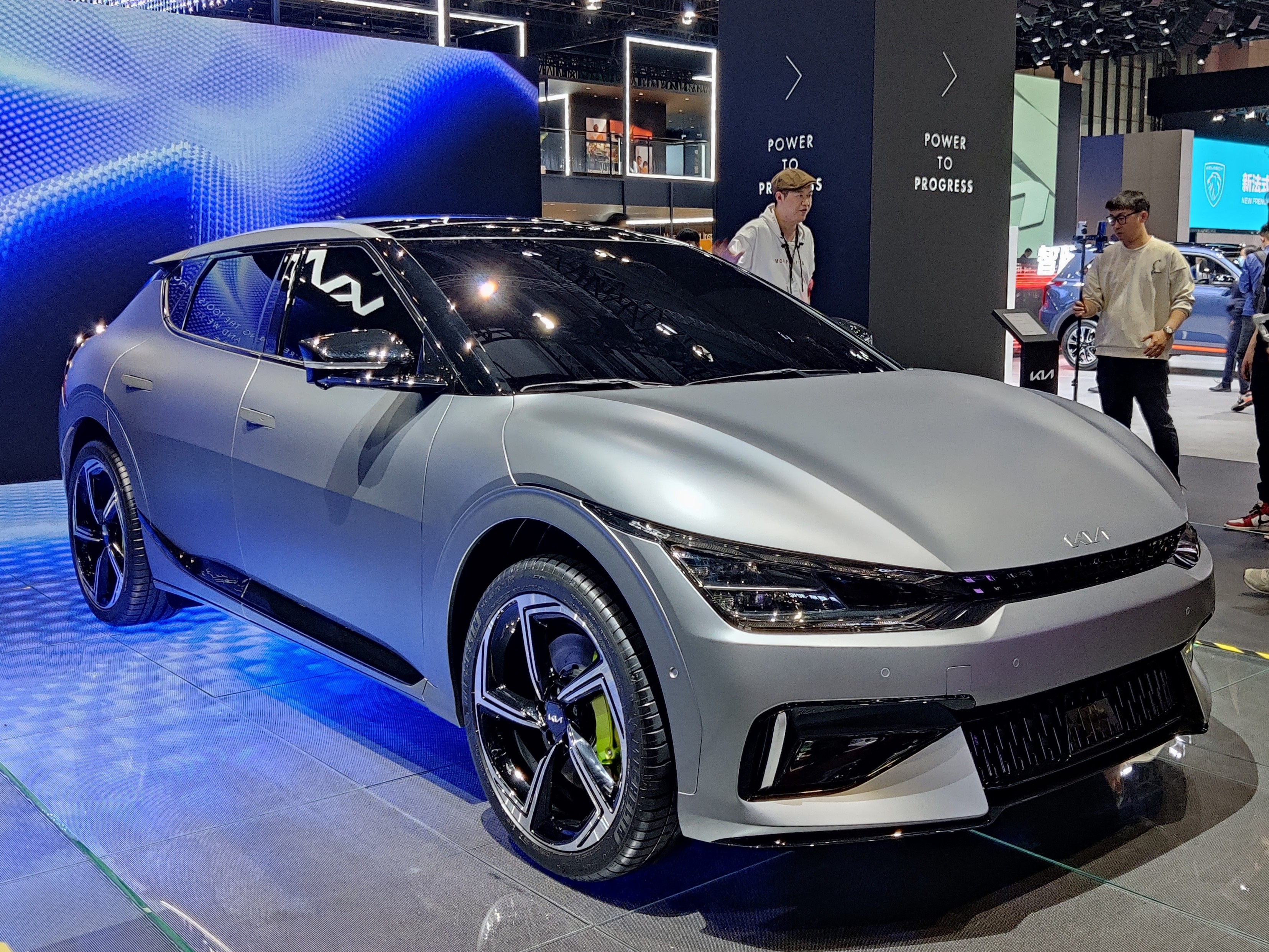
The Kia EV6 is Kia’s electric crossover. Here, Kia is saying certain EV6 lease customers may get money off if they buy the car instead of returning it.
Term
Kia Finance Dealer Direct
“Kia Finance Dealer Direct” sounds like Kia’s system/process that helps dealers handle the financing paperwork. Here, it’s used to process lease buyouts and get paid for completing them.
Term
leasy payoff option
This phrase refers to the way the lease gets “paid off” when the customer decides to buy the car. The exact wording in the transcript may be off, but it’s about completing the buyout paperwork and settlement.
Residual value is basically the expected value of the car at the end of a lease. If residual values are low, it means the car may be worth less than expected when people return it, which can change how lease deals are priced.
An auction is where dealers sell cars to other buyers. The idea here is that if lease returns go to auction, the prices they fetch can show how strong (or weak) the used-car market is.
This is about Ford’s F-150 pickup trucks from 2018 to 2020. Ford says some of them have a daytime running light problem that happened after a previous repair wasn’t done correctly.
The instrument cluster is the dashboard screen that shows things like what gear the truck is in. Ford says that display can fail, and the truck might shift into the wrong gear.
The Ford Fusion is a regular family car (a mid-size sedan) made by Ford. The podcast is pointing out that some model years can have a problem with a specific part or parts, and that issue could cause damage if it isn’t addressed. That’s why it comes up in dealership discussions.
Term
faulty culture pair
The transcript says “culture pair,” but it likely means a specific pair of parts that can fail. The important takeaway is that the failure could damage the transmission and create a fire risk.
A software update is a change to the car’s computer programming. In this case, Ford says some recall problems can be fixed by updating the software instead of doing a bigger repair.
Mobile service means the repair can come to you, rather than you driving the car to the shop. It helps reduce how busy the dealership service area gets.
This is when the dealership picks up your car and brings it back after service. It’s meant to make recall repairs easier when you don’t want to wait at the shop.
Service lanes are the dealership’s work bays where cars line up for service. If they’re busy, it can slow down recall repairs, so alternatives like pickup/delivery help.
They’re talking about Ford recall announcements and what dealers do next. The idea is that recalls can be a chance for dealers to help customers and build trust.
They’re saying the deal is completed through the dealership. Even if there’s a special offer, the actual purchase paperwork and steps happen at the dealer.
Carvana is a car seller that tries to make buying a car mostly online. The host brings it up to compare it with traditional dealership franchises and how each handles the buying process.
A dealer franchise model is the traditional way car brands work with local dealerships. The dealership has to follow the brand’s rules, which can make it harder to change how the buying process works.
A franchise manual is basically the rulebook a dealership has to follow to do things the brand’s way. The host is saying Carvana doesn’t have that kind of strict playbook.
Protocols are the standard steps and rules employees follow at work. Here, the host is saying Carvana doesn’t have as many required steps as a traditional dealership.
The host is listing the things that make car buying feel stressful: long delays, not understanding what’s happening, feeling pushed, and when different people in the dealership don’t coordinate well. “Bad handoffs” means the next person doesn’t get the full story.
Concept
build bulletproof relationships
This phrase means dealers should earn customer trust and make the process feel dependable. The host is arguing that traditional dealers are good at building that kind of confidence.
Trade values are what a dealer offers for your current vehicle when you use it as part of the purchase. The host references trade values to highlight that franchise dealers have experience handling pricing complexity and customer expectations around trade-ins.
A franchise dealer is a car dealership that’s officially authorized by a car brand. They have to follow the brand’s rules, including things like training and how they handle customers.
In franchise dealer networks, automakers often require dealers and staff to complete training and certification. This can affect how salespeople present products, handle compliance steps, and follow the brand’s required customer-transaction workflow.
In this context, “franchise space” means the traditional world of authorized car dealerships. The speaker is saying Carvana is trying to do it differently than most dealers.
Concept
mindset deal
“Mindset deal” means the big difference is how the company thinks and runs the process. The host is saying Carvana has a specific plan for how to handle the customer experience.
Rev Ops is a way of organizing a business so sales and marketing work together to make more revenue. In car retail, it usually means improving how leads and online shoppers move through the buying process.
Digital Retail is how a dealership sells cars online. It can include steps like viewing cars, seeing prices, and starting the buying process without needing to be in the showroom first.
CDK Global is a software company that helps car dealerships run their business and sell cars online. Here, the guest is talking about digital retail tools they help dealers use.
Term
DR
Here, DR is short for Digital Retail—basically the dealership’s online selling process. The point is that using those digital tools can help the dealership make more money.
Carvonda sounds like a software tool that helps people buy a car online. The idea here is that you can do most of the process in a showroom, without needing a salesperson for every step.
Company
Stalanta
This likely refers to Stellantis, a big group that owns many car brands. The point is that even in a dealership store, customers could do the buying steps digitally.
They’re referring to the COVID period, when many people couldn’t easily do in-person shopping. That pushed more car-buying steps to happen online instead.
The FTC is a U.S. government agency that helps protect consumers. When it sends letters to industries like car dealerships, it’s often because it wants companies to be clearer and fairer about how they present deals.
Pricing transparency is when a dealer clearly shows what you’re paying for, including fees and add-ons, instead of surprising you later. The goal is to make it easier to compare deals and avoid hidden costs.
“Compliance” here means following the rules. The speaker is saying digital tools can help dealers follow the rules consistently and keep records showing they did.
An audit trail is like a detailed paper trail showing the steps of a process. In this context, it means the dealer can show what they sent to customers and when, if they ever need to explain it.
Lead conversion is when someone who shows interest online becomes a real sales contact. For example, a person fills out a form and the dealer then tries to turn that into a test drive or purchase.
A sales funnel is the idea that shoppers move through steps before they buy. First they show interest, then they talk to the dealer, and finally they purchase.
Term
AI
Here, AI means computer software that helps figure out what a customer might want and can help dealers send useful next steps. It’s used to make the shopping process more personalized.
Term
pool payment
A “pool payment” sounds like the estimated monthly payment the customer sees during the online shopping process. It’s meant to give you a sense of what the car could cost to finance.
Tesla is an electric car brand. In this discussion, it’s mentioned as another company that tries to make buying feel more direct and less dealership-like.
Service advisors are the people at a dealership you talk to when you bring your car in for service. They help explain what needs to be done and keep the repair process moving.
Ford of Cookville is a local Ford dealership. They’re talking about how that dealership uses marketing—especially social media—to make customers feel comfortable.
The Eagle Talon is a small, sporty car that was made to feel quick and fun to drive. People talk about it because it’s a performance model, and owners often share tips about keeping them running well. It may come up in the podcast because of fan/owner mentions.
“Friction” here means the stuff that makes buying harder or more awkward. The host says social media helps customers feel comfortable sooner, so the dealership visit feels easier.
This refers to customers researching vehicles online before contacting a dealer, so they arrive with questions and context. The host frames this as a benefit of social media and content: it lets shoppers learn privately and then engage with the dealership with less pressure.
The “three C’s” is a simple way to hire sales staff: good character, the skills to do the job, and the ability to get along with people. The host says that with the right people, it’s safer to let them market and build relationships.
The Ford F-150 Lightning is a pickup truck that runs on electricity instead of gasoline. It’s designed to do the same kind of truck tasks people expect from an F-150, but with an electric motor. The podcast mentions it because it’s a major EV option in the truck market.
LIVE
We're doing better as a result of social media presence.
It doesn't do those three things, then it's on the chopping block.
It's in return on investment discussion.
Hey everybody, welcome back to another episode of the Daily Dealer Live.
I'm your host, Sam Dark, and thanks for choosing to be with us here this Monday, June the 22nd.
And today, I'm broadcasting live from the Virginia Auto Dealer Association Convention,
where my friend and longtime Daily Dealer Live guest, you remember him, we all love him, Don Hall,
invited me to his 70th birthday party.
You know, yeah, they're also throwing a little gig for someone turning 250.
Yeah, they're a little America party tonight.
Excited to be here for both and just happy to be live here on the show.
We had a fire alarm go off here moments before we started up today.
All right, today we're going right at the tension.
Every dealer is feeling right now.
How do you build a dealership that's more professional, more transparent, more scalable,
without losing the people and relationships that make this business work?
First, Vic Keller joins us to talk about the enterprise value hiding inside most dealerships,
why SOPs are just the price of admission, why fixed ops may be the best place to start,
and why dealers can't keep waiting on vendors to bring AI into the store.
Then we'll talk with Namu Keys from CDK Global about digital retailing, pricing, transparency,
FTC pressure, and why the DR conversation may be more relevant now than it was during the original
hype cycle.
Later, Sam Vesely from Ford of Cookville joins with a completely different but equally important
angle, treating people as the product, moving to a four-day sales work week, building culture
through video, and defending the franchise model through real relationships.
As a reminder, we're streaming live across all CDG social media platforms.
Post your comments into the chat.
We got a lot of great comments already coming in here.
We've got Dakota Baker, thanks, saying Sam is the go to the SWAT team.
LFG SWAT team also asking who's at the NA and IADA convention this week.
I know our own J law and many of the team from the car dealership guy is at NA IDA.
The automotive retired guy comes in says happy Monday from hot Fort Lauderdale, Florida hot
and humid and love that.
Let's go Rev Ops says that's how fire your guest lineup is referring to the fire alarm
being pulled here.
So heck of a lot of fun.
All right, let's dive into today's this Monday's automotive auto industry headlines.
All right, up first this Monday morning, the Federal Reserve held its benchmark interest rate
steady at three and a half to 3.75% on Wednesday, making that the fourth consecutive meeting
without a change.
The decision came at the first meeting chaired by newly confirmed Federal Reserve Chairman,
Kevin Warsh, who replaced Jerome Powell.
Warsh's Warsh reaffirmed the Fed's commitment to bringing inflation down to 2%.
A majority of the Federal Open Market Committee members do not expect rates to drop before year
end.
Much of automotive had hoped for that as an aside.
I know I did as well.
And for dealers, elevated borrowing costs aren't going anywhere fast.
Cox Automotive Chief Economist Jeremy Rob noted the unanimous vote signals the committee is
more concerned about inflation than markets may have expected and flagged a real possibility
of a rate hike if inflation trends worsen.
New vehicle loan interest rates sat at 9.85% in May and used there at 12.33.
Rob said a reversal in gas prices could prompt lenders to tighten their spread from buy rates
to consumer rates, but called meaningful benchmark movement unlikely through 2027.
His read is that low and slow growth may be the best case scenario for the near term.
Up next, we have a Kia Finance America launching a short window program called Keep Your Kia.
They're offering eligible leasees up to $9,900 off the purchase price of their least EV.
And as an aside, this is an interesting announcement by Kia because we've talked a lot
about what many pundits in automotive are projecting will be an EV lease return cliff.
Some of us think that will never fully materialize.
Kia looks like they're trying to keep customers in those lease vehicles,
getting them to buy out early.
CDG News obtained an internal dealer memo outlining the program, which ones through June 15
through June 30 and applies to EV6, EV9, and Nero EV models with leases maturing this month.
Discounts range from $2,800 to $9,000, depending on model trim and lease term.
Dealers facilitate the transaction through Kia Finance Dealer Direct
using the leasy payoff option and earn a flat $300 per completed buyout.
One dealer who received the memo told CDG News,
the program reads less like a customer perk and more like an OEM cleanup job.
This is evidence of a failed easy game plan on a political level, the dealer said.
The dealer argued that buyout programs like this cost dealers the chance to convert
a maturing lease into a new vehicle sale and raise the possibility
that keeping these vehicles out of auction also keeps depressed residual values
from becoming public.
That's more my take on the play.
Kia representatives had not responded to requests for comment at time of publication.
We've got some great comments coming in from the chat.
So keep them coming.
I'll bring them in at the end of today's news.
Up next, we also have a story from Finance Technology, company Doxo that finds that
financing and insurance not fuel are now the primary cost pressure for vehicle owners.
The average U.S. household with automotive obligations pays a combined median of $595
per month or $7,140 annually for auto loans and insurance.
Together, these two categories account for $754 billion of the $5 trillion Americans spend
on household bills each year.
62% of U.S. households carry auto loans with a median monthly payment of $485,
while 82% for auto insurance averaging $110 a month.
For dealers, the practical takeaway is that customers are increasingly walking in with
their monthly payment ceiling already in mind and that ceiling is being set by obligations
they already have.
New Hampshire ranked as the most expensive state for combined auto loan and insurance costs
at a median $713 per month with San Jose, California, topping cities at $918 bucks.
Doxo CEO Steve Shivers said a car loan and an insurance bill are often budgeted separately,
but together they make up the true cost of ownership.
Flexible financing options, payment forward conversations and vehicle choices that reflect
the full cost of ownership, well, they're becoming less optional.
And rounding out today with recall news, Ford is dealing with a wave of recall follow-up
campaigns affecting more than 125,000 vehicles across five separate NHTSA actions.
They're all tied to prior repairs that may not have been completed correctly.
Uh-oh.
The largest campaign covers 91,198 model year 2018 to 2020 F-150 trucks for a daytime
running lamp issue following an incorrect repair under a previous recall.
Wait, that's a recall on a recall.
A second campaign affects 10,742 model year 2018 Ford F-150 trucks whose instrument clusters
may lose gear indication and unintentionally shift into reverse or neutral.
A third campaign covers 18,124 model year 2017 escape SUVs with power windows that may exert
excessive force before reversing when detecting an object.
The fourth campaign affects 5,252 model year 2015 to 2018 focus and 2013 to 2016 fusion vehicles
where a faulty culture pair could damage the transmission and potentially cause a fire.
Separately, Ford is also recalling nearly 45,000 model year 2014 F-150 trucks after determining
that a software update required an earlier recall was incorrectly recorded as completed
without the update effective vehicles would unexpectedly downshift into first year
increasing crash risk.
Ford told CDG News that approximately 80% of its recalls so far this year can be resolved
through software updates and that mobile service and dealer pickup and delivery options are
being used to reduce pressure on service lanes where physical repairs are required.
And that's a wrap on today's automotive industry headlines.
So on the Ford recall news, we talked a lot about that last week as part of our fix-ups Friday.
While the recalls may not be done, the recalls do give dealers an opportunity to service,
to connect, to reach out, and to provide value back to their consumers.
So the best dealers, no matter the OEM, that get those recall notices are aggressive running out
in taking care of their customers through it.
A lot of great comments coming in from the chat, Dale in progress.
Paul Salisman says Volkswagen is also offering up to $3,500 on current leases to buy their EV.
And transaction happens via the dealer, which by the way, that's a great idea.
It helps reinforce the retention piece we've often talked on this show.
In automotive, we've got to figure out how to make vehicles more affordable,
and we've got to figure out how to reduce the trade cycle.
Brian Benstock was on and many others talking about that as well.
Paul Salisman says all those Tesla drivers with 2 to 4x higher insurance rates averages for sure.
Eager cases, Kia doesn't want to be stuck with high residual lease end values.
They set themselves on new Kia EV leases.
That's why they want customers to buy out their EV leases.
Dan C pipes in.
Need to include maintenance, repairs, and gas in addition to the vehicle payment and insurance.
Whatever the case, the cost of ownership is as high as it's been in 2026.
All right, let's dive into our first guest today.
There is actually, let's do this first.
SWAT team says who's an NIADA.
I actually think I already did that.
I think Jay and Hannah and many others from the team are there.
So if you happen to be at NIADA, say hi to the CDG team out there.
For today, let's jump to our first guest, Vic Keller,
founder and CEO at Experience Ventures.
But Vic, you're a former Berkshire Hathaway guy
with a ton of experience in automotive retail.
And you worked on the corporate team at Berkshire Hathaway
and have a lot of experiences.
You went through the van tile to Hathaway transition.
Vic, tell us anything else you'd like our daily dealer audience to know about you.
No, I think you covered it.
I've been in the retail automotive industry for 20 years.
Took a bit of a break from it after the transaction and operate a few companies in the space today.
We have a fixed operations training business
and then a few other ancillary business that serve car dealers.
But I love the franchise car dealer world.
I believe it's one of the most progressive and innovative economies
within the United States right now.
And I just think it's a great place.
So fun place to be an entrepreneur.
There's, listen, there's a lot of places in America to make money
and to build a great career and to build successful businesses.
But I've never seen any that compare to the retail automotive industry.
Well, you got that right.
But retail automotive is quickly changing.
So I would point back our audience to the CDG podcast that dropped earlier this month.
You were on it.
It's a great listen.
Encourage everybody to go back and listen.
I wanted to start out today with you, Vic, talking about the Carvana Cube.
So last week, CDG News was invited to the unveiling of this cube
and this kind of updated newer process at a slant store in Dallas, Texas.
Do you know about this and what's your take as you think about the way
automotive is evolving in 2026, Vic?
Well, I do know about it and automotive is evolving.
I think that one of the big things that we have to pay attention to is Carvana
is not limited in their thinking or innovation by the dealer franchise model
in the sense that they don't have a franchise manual.
They don't have protocols that they have to go by that are as intense
as what franchisees in the dealer space are limited by.
But I think the big message here, Sam, is that customers are not against dealerships.
I think is what Carvana has really figured out is that customers are challenged
by waiting, confusion, pressure, and bad handoffs.
And is what they're really doing with the cube, I think, is trying to capitalize
on driving efficiency and optimization into the transaction.
And really respecting what the customer is asking for the most,
which is simplicity and transparency.
But look, in my opinion, Carvana or anyone is going to have a hard time
beating a franchise car dealer at selling a new car deal.
We obviously need to be mindful of it and pay attention to what's going on.
If a retail car store is doing exactly what they're supposed to do,
which is build bulletproof relationships.
And the nice thing about a franchise car dealer is they are trained
on dealing with complex situations.
We see where trade values are right now and a lot of the challenges.
And I would just say that I think franchise car dealerships and the talent,
if they're trained, if they're coached, if they're professional,
they're going to be able to respond to this.
But the voice of the customer is heard, right?
We know they don't like the waiting.
They don't like the confusion.
They don't want the pressure.
They don't like the mystery of the transaction.
It's a mystery.
And so I think the Cube is addressing that.
So you say a franchise dealer is ultimately when Carvana is a franchise dealer.
So it's interesting to me, are they getting special latitude by Stolanus
and having a Cube and having this very different approach to the consumer?
Would a franchise dealer with all the different requirements on
to your point training and certification process,
would a regular non-Carvana franchise dealer be allowed to execute this type of a process?
And do you think this is going to show a weakness in current franchise dealer,
go to business, go to market strategy, Vic?
Yeah.
So listen, the point there is it's a mindset deal, right?
Carvana is entering in.
I mean, obviously, these are very experienced, very successful car operators
that have been in the business for a long time and are doing an excellent job at what they're doing.
But they're entering into the franchise space with a mindset, a blueprint, and a playbook
that is different than what a typical, I think, franchise or of a franchise car dealership is
today. So at the end of the day, listen, I've been in the business for a long time.
I've never seen an OEM tell a dealer that they can't provide a more efficient, a more transparent,
a more systematic, and a faster process to a customer.
I don't think there's limitations there that the OEM's giving to the dealer.
I think that's just choosing to do business a different way.
And that's going to start, I don't think it's going to start with a cube.
I don't think it's going to start with technology.
I think in the traditional franchise dealer world, it's going to start with people.
It's going to start with training.
It's going to start with processes.
And I think is what we're seeing is no different than when the advent of the internet came along.
Things are actually changing and they're real.
And so I think, look, I think this is going to motivate world-class dealer operators to
just continue to evolve and get better.
And I don't think a cube is going to ever replace an extraordinary human being,
no matter how much technology is behind it.
So I agree with you that it won't replace, but it is interesting for your traditional
franchise dealer model.
What can we learn from it?
And what should we challenge about what we think customers want that maybe they don't truly want?
The idea as I read the story is some customers want to go up, look at a cube,
have a totally digital experience, not ever talk to anybody,
take a test drive, and then potentially execute a transaction, start to finish.
Many of us in automotive would say, ah, the customer's not quite ready for that.
COVID was a good example, but others may argue with that.
Hey, customers do want to come in and talk to not a soul because they've had bad experiences.
What is the lesson of some of these kind of out-of-box strategies that automotive should
be learning from as we think about how to change and evolve over the next few years, Vic?
Yeah, so I mean, look, you walk up to, if you go to a fast food restaurant today,
if you walk into a McDonald's, if you go to an airport location, whatever it may be,
you're going to see the standalone kiosk that you can order and you don't have to go wait in line.
And it's amazing.
Same thing at the airport.
There's still really long lines.
Humans like humans.
We want to interact with human.
However, I think when humans fail and the process is inefficient and it doesn't work,
and we don't feel like you can create trust and authenticity in a transaction,
you're going to revert to a kiosk.
So my suggestion would be that people are going to evolve,
and you're always going to have different people and different avatars that want to
handle a transaction a different way.
But at the end of the day, and again, I may be old school,
but I just believe that if a customer has the chance to do business with a well-trained,
well-spoken, efficient, honest, professional individual that's going to help them acquire
one of the biggest purchases of their life, that they're probably not going to go.
So I think there's a place for it.
And I think there's-
So Vic, based on your experience in the industry, give the industry a grade on the training,
the professional, all the metrics you just listed.
Because one of the other theories I have is during COVID, we lost a lot of that,
the training, the professionalism.
We didn't have to have it.
And connect.
No, we didn't.
And how would you rate the industry today as it relates to its ability to be well-trained,
educated, and professionally knowing how to connect with customers transparently?
Well, let me just start with saying this, Sam.
A retail automotive may be one of the most under-marketed career opportunities in America.
I agree.
It's an amazing, amazing place for people to work, to learn, develop.
There's a known journey.
I mean, it's an absolutely fantastic industry.
And by the way, you can make 30% more.
And I'm looking at national data.
You can make 30% more working in a retail franchise car dealership than you can
in the outside open other sectors that exist.
So first and foremost is the opportunity is real.
It's an environment where people can get paid well.
They have a career opportunity.
They have great trajectory.
So when it comes to how dealers operate from a training perspective,
I think we have to take a step back.
And one of my mentors in the retail automotive industry always talked about,
there is nothing more important than onboarding.
And to be transparent, I think we get like a C minus in the area of onboarding.
And once you mess onboarding up, you've already set the standard and set the trend,
and you've missed a really important step.
So I don't think that we do a good job.
I know in the businesses I operate today, what I'm most focused on is going into franchise
car dealerships and helping them professionalize their business in every way.
And if you look at the opportunity to bring in world-class people and train and develop them,
franchise dealers have a great opportunity.
But I don't think we're doing a good job.
I think we're missing the mark.
And here's the deal.
A lot of people in the car business, they ask this question, why can't I get better people?
Why can't we get better people?
Why won't they do what we want them to do?
If we could start modeling our businesses in a way that people would run to us
and we're not begging them to come work for us, everything changes.
So the question's really not, why can't you get better people?
The question really is, why aren't people lined up at your door to come work for you?
And I think that's a tough look in the mirror.
All right.
So give us three tips or strategies.
Give us a few tips or strategies, part of the show today,
that dealers could implement or begin to walk towards that would help create that line out
the door of people coming to work for you.
So I say first and foremost, spend as much time and energy and effort
marketing for world-class talent to come work at your dealership
as you do marketing to get people to come by vehicles for you.
I think that is absolutely number one for sure.
I also believe that there is a tremendous opportunity
that when people show up at the dealership and they're ready to talk to you about an opportunity,
it needs to be thoughtful, right?
I mean, they don't need to feel like they're going to the DMV office.
They don't need to feel like they're going through an impersonal process
because you're interviewing the next salesperson.
They need to feel like that you're a concierge at the finest five-star hotel in the world
and you're bringing them into your business and you're going to show them what the opportunity is.
And then I think the next thing is that departmental managers and car dealerships,
we have all these great KPIs and quartiles and the way we manage
people's productivity and efficiency every day from a revenue perspective,
we should do the exact same thing when it comes to managing our talent
because there is no place that you can create as much enterprise value
and make as much money in a retail car dealership as you can
in retaining and developing people.
So I think, Sam, if you could just tackle those three basics,
make sure you've got a place people want to come work.
You have the ability to pay them.
I mean, you literally have the ability to pay them more than anybody else
and it's a beautiful flywheel.
The minute you get the great people in the business,
the business makes more money.
You can pay more, you can have more fun.
It's a hell of a deal.
You make an interesting point.
Spending as much intention and money on the recruitment as you do the sale.
But the recruitment is the gift it keeps on giving.
Last week we had a dealer, Matt Bowers, on.
He talked about how he has other dealers continually trying to take his employees away,
which I think that's props to him because his employees are well trained.
He has a high standard.
He's very honest with them about the amount of work it will take to be successful.
But then he provides that place for them to be successful.
Why is it that people have such a hard time and automotive
are developing their own talent and just try to steal other people's talent?
They see the shiny toy that's producing at a high level in another organization.
They try to hire it away rather than build it, Vic.
Yeah, I think that it's an unpopular response here.
But the managers that are in charge of recruiting talent and developing talent,
that's the differentiator in the entire model.
And so when someone can't do that job, they might be able to put up the numbers, right?
They can put up big growths.
They can put up the great numbers, but they're not able to recruit talent.
Listen, people are smart.
And if you want high quality players, you want A players,
you've got to be authentic.
You've got to be professional.
You've got to treat them with dignity.
You've got to do all the right things.
And so listen, some dealerships have the ability to have
tremendous level of transactions.
They can pay people good money, but they don't know how to recruit talent.
So all they do is steal them.
But here's the deal.
It's no different than anything else in life.
If you want to create loyalty with someone and you want someone to stick with you,
you're going to have to develop them.
They're not going to walk in the door knowing everything.
And if you're able to steal somebody from someone else,
just because you're going to pay them a little bit more,
just know that you just hired a mercenary.
That's all you did is you hired a mercenary.
You said on the pod, you said, hey, dealers are spending $30K a month
on vendors waiting for AI features that should have existed two years ago.
When we talk about this employment retaining, attracting the best talent,
AI is a factor in that.
When you saw the reaction, what did it tell you about where the industry is right now?
$30K a month on vendors waiting for AI features that should have existed two years ago, Vic?
Yeah, I mean, I think it's a little bit back to the Carvana story.
It's that you need to be innovative.
You need to be progressive.
You don't need to wait on the industry.
When I talk to people in the retail automotive industry sometime,
which I think are the most fantastic business operators on earth,
one of the things that I do here is we're just waiting on the industry to get there.
We're waiting on this vendor to get there.
We're waiting on our OEM to do something different.
Let me just tell you right now, if you want to leapfrog your competition and you want to win,
you don't need to wait on anybody.
You need to take the bull by the horns and go run with it.
AI is no different.
The beautiful thing about AI is it actually should deleverage a dealer.
It should deleverage a dealer from a lot of vendors.
And that doesn't mean the vendors go away.
Vendors are a huge part of this business.
And I'm certainly not naive enough to think that they're going to go away.
But the reality is, is dealers should be able to reclaim the control
and they should be able to do progressive things in their business where they don't have to wait.
So if you have a vendor right now that keeps telling you
that AI is coming,
I'm going to tell you that is a massive red flag because AI has already come.
It's already here.
And it's not on it.
It's too late.
It's too late.
Yeah.
You've talked about how AI compresses time.
You talked about it on the show.
Where in the dealership is that compression most valuable right now?
Where's the biggest gap between how fast things could move and how fast they actually do, Vic?
Well, one of the things I think about are decline service follow-ups.
I mean, just areas that you can work your CRM.
I mean, your speed to lead, your equity mining, your desking disciplines,
compliance is a huge one.
Just menu consistency overall.
I think about technicians.
There's a lot of communication that happens between a service advisor and a technician and a customer.
And I think we have the ability to humanize a lot of that
and take the data and the information that we currently have and leverage it.
So there's a lot of areas that I mean, I think about onboarding.
I think about job descriptions.
I think about like, there's so many different areas that we can use it,
but is where I would lean in.
Listen, AI is not coming after the dealer.
They're not coming after the general manager, right?
It's coming after areas where we have consistent, redundant processes that aren't inefficient.
And they should be able to keep us from having to start every month over
as if it's a new year or a new decade, right?
And so there's just speed is the game that AI solves for.
But here's something else, Sam, that a lot of people don't want to think about.
And when you think about decline services and fixed operations in those areas,
the fact of the matter is when you get into a gentek AI,
it is absolutely more efficient, more effective, and more consistent than a human.
So why not have humans using those tools so you can drive?
I mean, gosh, think about all the parts, fill rate issues we have.
And we're really slow on parts, fill rate.
And now you incorporate AI to make sure we're on it, right?
If you have, you know, parts that are coming in,
then you're not getting back to your customer fast enough.
That should be an agent that's doing it for you right now.
And, you know, it's available.
Like maybe if you're, sometimes when you talk about this,
people are like lost.
They're like, what are you talking about?
This isn't one of those deals where like we're going to get to Mars.
We're there.
Like it is right now.
So you should be implementing it into your business.
Yeah.
We actually had a vendor on, let's see, I think it was in Pell.
She actually said every good dealer group today needs an AI quarterback.
Somebody that understands it, learns it, understands how to implement it,
advocate for it, get teams to not compete against it.
Thought about that, AI quarterback.
Is that a good role within a dealership in 2026, Vic?
I think you should have AI quarterbacks.
I mean, I think you should be hiring people and deputizing people.
And why not put together an advisory team, an advisory group,
take five or six people from different departments in a dealership
and assign them different areas to look at and think about efficiency
and optimization they can drive into the business
that's ultimately going to drive profitability
because you're going to have great margin expansion
if you're able to compress what your cost of doing business is.
Why not have a team of those people that are coming together?
I think the message here is, and Sam, you're hinting on it,
the message is don't wait for your vendors.
Don't wait for the industry.
Don't wait for the OEM.
Go get it right now because it's sitting in front of you.
But yeah, I mean, you need to have a team of quarterbacks.
Yeah.
Well, and that's good advice for any dealer watching
and trying to figure out, hey, how do I move forward in this?
At the end of your podcast, again,
which I'd recommend everybody go listen to,
you talked about speed of play.
In automotive, we run towards execution, I think, in so many areas.
And AI is one of those where I think there's a little bit of hesitancy
in some quarters just trying to figure out,
hey, which parts of it work, which parts of it don't.
So we'll have you back for our roundtable
at the very end.
Vic Keller, founder and CEO of Experience Ventures,
but also experienced guy from Berkshire Hathaway
and many of your other organizations.
So Vic Keller, thanks for being on Daily Deal Alive today.
Thank you so much, Sam.
All right.
We'll have you back at the bottom.
All right.
Let's talk Zurich.
Today's episode is brought to you by Zurich Advisor IQ Dealers.
What if you could see what's really driving FNI Performance?
Zurich Advisor IQ uses actual deal activity and AI-powered coaching
to help teams uncover performance gaps,
coach with more precision,
and build more consistent results across every rooftop.
Request a demo at ZurichNA.com, Zurich Advisor IQ,
or click the link in the show notes below.
Again, you can go to ZurichNA.com, Zurich Advisor IQ,
or click, it's this way, click the QR code in the comments,
but props to Zurich for supporting today's contact tent,
including that great conversation with Vic Keller
on all things hiring and recruiting, AI and automotive,
and everything else.
We'll have him back again at the very end of the show
for the roundtable.
There are too many comments in the text for us to go bring them all in.
So please go read them all.
Thanks to Eager Cave, Dale and Progress.
Lauren Klein is in there.
Let's grow Rev Ops, build it, or buy it, that's the question,
and so many other, Paul Salisman and so many others.
Let's keep it going today.
CDK, let's go.
Namu Keys, Senior Product Marketer,
Digital Retail at CDK Global.
Namu, welcome to the show.
Hello, everybody.
Thank you for having me on.
It's great to have you here.
So give us a sense of who are you, what do you do,
and how long have you been in the industry,
and what do you do there at CDK, Namu?
So, hey, I'm nearing on a decade now
of experience in the automotive industry.
I got my start at a dealership where I was handling
the reconditioning and inventory at a dealership,
and then worked my way over to the OEM side,
where I was specifically with digital retail
as a performance manager, helping dealers kind of leverage
and utilize DR to, of course, have more profitability
in their dealership.
And now that takes me to where I'm at CDK now,
where I'm helping kind of plan and strategize for the future,
specific to digital retail, but helping CDK,
how we can get and help dealers move forward
in leveraging digital retail solution on a day-to-day use.
Yeah.
So that Carvonda Cube we were just talking with Vic
about an ounce last week.
It seems like it's something customers can walk up to
in a franchise Stalanta store and just start to finish,
do digital retailing.
Is there a demand for that, in your opinion, Namu,
and in automotive from consumers,
to have that start to finish without much,
if any, human interaction, Namu?
Or is that a little ahead of the curve today?
So I think what we're seeing with Carvonda
is something that we got a little taste of in COVID,
when digital retail really was first brought to the scene
of like, all right, we're at home.
We need an avenue to be able to sell cars
looking from a dealership perspective.
So I think what Carvonda is doing now is,
it's basically kind of fast-forwarding that process
and putting it not only online,
but putting it in a showroom platform
in a showroom setting of what that kind of looks like.
Yeah.
All right, let's talk the FTC letter
that kind of rocked automotive several months ago.
There were 97 dealer groups that got one,
but the entire industry was sort of put on notice.
And it sparked a focus, a big focus,
on pricing transparency in its most basic terms, Namu.
What role does digital retailing and that tool have
in helping address some of the concerns raised
by this FTC letter that went out?
Yeah, absolutely.
I think two main things to consider with digital retail
and its role in this is consistency and history.
And are you able to audit what you're doing on a day-to-day
and what you're sending out to your customers
because that's really important when you look at digital retail,
when you look at the compliance nature of this
and the pressures of this that is not going away of anything,
day by day, we're seeing it ramp up on dealers more and more.
So I think really the start there is like,
all right, consistently, what does your process look like
and how you're leveraging digital retail
to help you stay compliant?
And then from there, is it suffice enough
to give you that audit trail to be able to speak to
if anything was to come up like,
hey, no, this is where we documented
where we sent out this deal to the customer
and maintain this price throughout this process
and having that documentation there.
Yeah, so digital retailing in many ways,
it felt like NADA this past year was all AI.
We talked to Vick a lot about AI.
If you go back five or six years,
even pre-COVA, digital retailing was kind of all the rage.
And I think there are circles within Automotive
that say, hey, it never really fully panned out, right?
There wasn't the full demand there
and it didn't really live up to its hype.
But with all the recent movement around this FTC letter,
does that change the way dealers look at digital retailing?
Yeah, I think it should change a little bit
because you got to think of it this way
where essentially when digital retail first came out,
I mean, in my opinion, most dealers looked at it
as a lead conversion.
Like, all right, can you convert the activity
that's going on my website so that I have an opportunity
to contact and try to move them down the funnel
to sell them a vehicle?
That was the perception and honestly,
sometimes now you'll still see that.
What we're seeing now in this day and age
with FTC compliance and having that pricing transparency,
having those fees, digital retail actually has that opportunity
to kind of show all of those many different things up front.
For that customer, especially as you guys mentioned,
AI where customers are getting smarter,
they're leveraging and utilizing AI
to start researching vehicles up front
where now, hey, there's a position where
that AI can pull that information and DR puts you
in a prime position to be able to send out, again,
actionable steps for a customer to do away from your dealership
and then also be able to pick that up when they come in store
but then also get all that information
and have a good history track of it
so that you and the customer are both on the same page of,
all right, here's our pricing from start
with including all the different fees
and any conditional rates that you may be eligible for
and then just all their many different options.
DR opens up that space earlier in the funnel
for customers to see what that pool payment may look like
or the full price of that car may look like.
So, Namu, CDK, huge company within automotive,
we use it at Ziggler.
DR, are you seeing more people adopting DR today
than in the past?
And what does that adoption curve look like
in this AI-infused world currently?
Yeah, so funny enough, in our latest friction point study
that was done last year, we saw an adoption rate
of dealers saying, hey, we're using DR roughly around 84%,
which was nearing somewhat of the COVID numbers
where they were 83, 84 as far as that adoption rate early on,
where we're kind of seeing that now.
And then honestly, it even goes up, even past that,
where you're nearing like 92%,
where you're looking at bigger automotive groups,
six or plus rooftops.
So seeing a trend up as of late last year,
did kind of dip off a little bit.
But again, I think we're in that state now
with FTC compliance and things of that nature,
think dealers are trying to understand
how to fully use it and leverage it
to make it make sense for their daily workflows.
And what do you see thinking about the future
of digital retailing?
What do you see the future looking like?
Yeah, so for the future of DR, I think in the markets,
kind of showing these indicators a little bit right now
where DR is getting past that line of looking at,
oh, this is a lead converter tool,
where more so a trend,
like looking at it as a transactional tool,
kind of going forward, where when you look at DR
and implementing it in your workflow at your dealership,
now we're able to kind of connect the actions
of what's going on in the CRM down to F9
and things of that nature,
where from that first digital point
or that digital contact from the customer,
now you know, just looking at ways to desk that deal
and get real numbers done upfront faster
so that we can better that customer experience
and DR is playing a big role in that.
And I think that will be the future for digital retail
where it's not looked at as potentially that one solution
to help you do one thing,
where it's kind of that connector,
that foundational piece behind the scenes
to help move that customer down the funnel
and kind of help the dealer nurture that relationship
a lot better and get numbers in front of them a lot quicker.
Yeah, I don't want to put you in a bad spot,
but I have a question on something.
So there's OEM relationships with different DR tools,
and some OEMs, in order to get full co-op,
all the money that's available,
they require you to use one or two different tools.
How should a dealer group be thinking about that?
You know, the larger groups, you've got 100,
you've got 200 rooftops,
like there's a real logic behind picking one DR tool
and just using it all the way across the group.
But the OEMs make that a little bit of a challenge
because they require specific tools.
So as a large group,
you don't get the full benefit of economy of scale
by having different tools.
Is there a better path with OEMs saying,
hey, pick your own tool,
or groups saying, hey, this is the tool we want,
and we're going to use this across our stores,
regardless of the OEM's preference?
Yeah, so I think with that questionnaire in particular,
I would say a very good one, very valid one,
where when I look at this scenario,
I think less of what an OEM can do,
more so from our side as the vendor, like, all right,
hey, how can we go out and nurture those relationships
with all the different OEMs
to ensure that our digital retail solution
is basically up to par with what they're looking for
for that customer experience for their particular brand?
Because once you get to that state and you're,
hey, I'm certified in all these different programs,
that becomes a non-issue really kind of going forward.
So I think it's less of what the OEM can do
and more so for us on the vendor side to be able to make sure
that our product is up par and up to standard of what,
again, a dealer needs to, for a dealer
and how they use it on a daily basis,
and then also to on the flip side ease,
ease of use and simplicity for the customer
to utilize it as well to make everybody's experience
a lot easier.
Namu, part of the ease and simplicity
when we think about a DR tool that is frictionless
has got to be, you know,
we talk about large groups adopting one tool,
it's got to be a consistent process
from start to finish, right?
And I think one of the challenges
we run into in automotive as it relates to DR, AI,
or any others with so many disparate systems,
like a customer could start it online
and then it's not good if they have to start completely over
when they hit the sharing floor
or they have to start completely over
when they hit the finance office.
How are you thinking about making that a consistent process
all the way through, right?
So that a customer, if they say, hey, you know,
I want to do this without ever talking to somebody,
that's an option or, hey,
I want to talk to somebody right up to the desk
when I do the test drive,
but they don't have to recreate that everything
that they've done sitting at the desk, Namu.
Right, absolutely.
So where I think that's a big opportunity
for just vendors across the spectrum
is where when you look at payments
and things like that, you think through desking.
I mean, that is an avenue
where you're able to get those numbers
as far as from a sales perspective,
having that be when the customer's information comes in
from the jump, you know,
you have those numbers plugged right into your desking solution
and then now as you're working down the funnel,
that you have that one singular calc engine
that nothing needs to change, no mapping happens,
there's no, like, nothing different
as you're going down that funnel and pushing that deal
from sales measures back to down to F9
to kind of get them in the hole
and to get them out and signing for that deal.
So I really think that's more so
the bigger path kind of going forward
where, you know, desking kind of being more involved
earlier in the process
opposed to when the customer comes into the showroom
or later down that process.
Yeah, yeah, and it does occur to me
because of that being such an important piece
that DR frictionals start to finish to your point.
Everybody's got to be well-trained on it,
but you've also got to partner up with teams
that understand automotive, understand their tools,
they can train on it as a tool provider
because if the team doesn't understand
as Vic said earlier, if they're not well-trained,
they don't understand how to execute on it,
it could all be for not, fair?
Yeah, absolutely, great point
because at the end of the day, if, again,
like your sales team, if they're not versatile
and comfortable with the tool,
it doesn't really set you up for success.
So along with, you know, having this digital retail solution,
you know, as far as ease of view from the dealer side
is very important.
Like, are we able to do our day-to-day workflows
and actions that we do in the showroom digitally and easy
and not be too complicated
or where we have to jump over to many different systems
is very key.
So in this, honestly, a good foundational start point
of when you are installing a digital retail solution
at your dealership or if you have one now,
training and ongoing training is definitely a big piece of that.
Yeah.
All right, Namu.
Last question up as we wrap.
Thanks for being on to share your perspectives.
What are you working on next?
Once you get this whole DR thing conquered,
start to finish fully integrated, fully trained,
trained, changed the way everybody bought cars,
what's next for you, Namu, there at CDK?
So a little limited on what I can share fully, but...
Oh, come on.
Dave Thomas wants you to give us all the secrets.
We want all the secrets.
So, but, you know, outside of DR, really,
I would say the next best thing is, of course,
with AI and everybody leveraging AI
is with digital retail in particular, you know,
is that consistent
through every part of your workflow and your process?
And that includes digital retail.
So looking at avenues to, of course, incorporate AI
from the consumer standpoint and the dealer side of things
to make that process a little bit easier.
But at the same time, you know,
we want to make sure it's done with care
and not just sticking something on our DR solution
or any product at CDK and just saying,
oh, we have AI available.
So diving down that path to make that available
to dealers and to consumers to make that process,
the buying process easier for both sides,
that is kind of next up in my space.
All right, Namu.
Key Senior Marketing Director, digital retail at CDK Global.
Thanks for so much for being on the show,
sharing your perspectives, Namu.
Thank you for having me on.
You know what?
DR fascinates me from the whole consistent buying process.
You know, I said this at ASODU.
I continue to say it elsewhere.
Like one of the things I value about this show
and being with you as an audience
and the different people we interview
is the better the conversation,
the better we push each other about how today is
and then how tomorrow needs to be for us to win,
the better this entire auto industry is.
And challenging us on how to make that DR experience better
from the first time a customer sees an ad
all the way through to the time they buy.
Props to CDK for working on it.
I think that's been the thing that's held that back
as a solution across automotive.
Props to everybody in the comments.
You know, Igor, thanks for coming in.
Igor says, Zurich is a great dealer administrator company.
I hold a place for them in my heart,
even though they do compete with my friends over at JM&A.
Look, Igor, you can have two friends
and then everybody unleashed in a great conversation
about different product providers,
including the automotive retired guy says,
Zurich does have a great tire and wheel policy, excellent,
which also warms my heart with giving my Zurich roots.
And then this entire audience is just off and running.
So we appreciate you in the chats.
Let's go to our next guest and our final guest for today
before we hit the roundtable.
Director of Marketing and Public Relations at Ford Cookville,
Sam Vassili.
Sam, welcome to the show.
Thanks for having me.
Sam, did I get the name?
Did I get it? Vassili Vassili?
Sam Vassili.
Vassili, Vassili.
Listen, I speak a little bit of Russian.
When I see that, I want to give it the Russian of a twist.
So apologies for that.
All right, Sam, tell us who you are, what you do,
and then tell us you've blown up on social media.
You're a smaller Ford store.
Tell us who you are, what you do, and what happened
when you blew up on social media, Sam.
Yeah, I'm the Director of Marketing at Ford Cookville.
We're an hour and a half between Nashville
and an hour and a half between Knoxville.
So we're right there in the middle of Tennessee's biggest cities.
And yeah, our social media has blown up
in the last six months this year.
And it's because of a shift in philosophy.
We stopped trying to sell cars, and we started trying to sell our people.
And our audience has responded to that.
We went from 5000000 organic views across all social media platforms last year.
And we just surpassed 30 million this year alone.
So we're on track to 6x our performance from last year.
So Sam, so what?
To the dealer that didn't grow up on social media,
what does that mean?
Why is that important?
Show me the money.
And that's going to be the pushback.
And I'm extremely glad I'm at this store.
The leadership here has empowered me and my colleague Katie to be creative.
But yeah, that's what's going to hold people back is you can't track how many cars you're selling from it.
But I would say that's not the goal.
Because you think about when you get into the phone.
What is the goal, Sam?
The goal is to get yourself in front of as many people as possible.
And it's not to get in front of other dealers,
because a lot of other dealers like to make content that resonates with a salesperson or a service advisor.
But those are not your target audience.
Your target audience is anybody who wants to buy a car.
And that's everybody.
So when you can make content that resonates with a 40-year-old woman or a 60-year-old man
or a 20-year-old college student, you're going to hit as many people as possible.
They're going to remember your name and they're going to find you when they're looking to buy a car.
So are there members of your team that have become, you know, semi-public personalities,
semi-famous as a result of all those millions of views?
And then can you point to that quantifying back to a sale?
Because people feel like they know your team better.
They know you better.
They know your product better, Sam.
Yeah. We've had multiple staff members be recognized in public.
Like, oh, you were in this video.
We had a former salesperson.
We had a video that really blew up.
It got like 2000000 views.
But he was in the drive-through at Dutch Bros.
And the person working there is like, I know you from somewhere.
And they're like, yeah, maybe.
And they're like, no, you were in that video.
And, you know, it's creating personas for our staff that, you know, our community is recognizing them
and they're looking for them when they come into the store.
You know, the other piece that you mentioned is can you attribute it to sales?
You can't attribute, you know, a video to a single sale.
There are anecdotal evidence.
You know, some customers have come in and be like, oh, I came in because I saw this video.
But, you know, the goal is not to attribute a sale to one of these videos.
The goal is to make sure people remember us when they're buying a car.
That's what sets us apart from the other, you know, 10 dealers in the area is the social media
content. We're just entertaining people and they're remembering us.
It's like a digital billboard, you know, because people aren't going on social media to buy a car.
That's just, that's not how it works.
Social media helps remove the barrier where people wonder what on earth goes in
behind the closed doors of a dealership or behind the desk or in the service department.
A dealership is a microcosm of America and most people don't realize it because it seems
closed off. It seems tough to access and social media makes that transparent, humanizes.
But Sam, here's the reality. Putting your staff and your personalities on camera is a commitment
and not everybody wants to be on video. Not every personality translates.
How do you manage that? How do you get buy-in to come come beyond on these social media videos
you're creating? It was difficult at the beginning because, you know, the the value of it wasn't seen
by the staff. So, you know, you had a couple of the salespeople. A lot of salespeople are extroverts.
So they're just excited to, you know, do something fun, talk to people.
But, you know, you identify those couple people that are actually interested in being in the
videos. And as they see the fruit of it, they see, you know, their colleagues getting recognized.
They're like, well, you know, I want to start being in the video. I want to get recognized.
And I think it also reflects on the culture that our store is built.
You know, we hire for culture first and skills second. And it reflects in the performance
of the story. And it reflects in our social media because we have personalities that are
entertaining and people want to come back and watch. Yeah. So, Lauren Klein comes into the
chat. She says, so much of the social media content can be super localized or quantified.
Can you see how much of your market or your customer base you're hitting? Is there a way
you're able to think about that, Sam? Yeah. I mean, there's, you know, there's ways you can look at
in the back end of any of these these platforms, Instagram, Facebook, TikTok, YouTube, you can
see the cities that they're coming from. A majority of our audience, I would say, is in
Cookville, Tennessee area, but we have gotten numerous comments from people in California,
Oregon, Canada. We've gotten people from Europe, like, yeah, all over the country in the world.
It obviously, especially for a store like us, Cookville is like 35, 40,000 people.
To have an audience that big, that's reaching globally, has an even bigger impact locally.
Because, you know, people are seeing, oh my gosh, this is my city. And it's being seen around the
world and around the country. It improves the buy-in, I would say. So, yeah, there's ways to
see in the back end where the audience is coming from, but most of it is right in our backyard.
Well, Sam, we appreciate being on Daily Deal Alive today. I'm going to actually, we're going to
bring you back. We're going to go a little long on today's show because I want to do a roundtable
with you and Vic Keller. And one of the very first questions I'll get, let me ask you this
before we go, and then we'll get Vic's take on this as well. You know, we talked about the Carvana
experiment. We talked about how they're trying to remove some of the people in there because,
maybe presumably because some customers have had a bad taste in their mouth for automotive in the
past. How does your social media bridge that gap between where we sit today and where companies
like Carvana and some of these others are headed, Sam, with social media? Yeah. You know,
I think about Carvana. You think about Carvana, Amazon, Tesla. The way that they're trying to do
stuff is remove the people aspect of it. You just get to buy a car and be done with it. And the
franchise dealership model doesn't have any value in a world like that. But if you can
show value in the people that you have at the store, you know, they walk in and they already
know somebody that they're going to buy a car from. They already know the service advisors that
they're going to when they get their oil changed. They feel comfortable. They feel like they're in a
new place. They don't feel like they're walking into, you know, this scary place where they don't
understand anything. When the people are friendly to you, when they care about you,
when they're trying to solve problems and not sell you something, that's where the franchise
model has value and where we can compete with Carvana because we can't beat them on convenience,
but we can beat them on taking care of somebody and using social media as a way to advertise your
team so people are comfortable when they come in. That's the best way to use it. Yeah. Well, Sam,
director of marketing and public relations at Ford of Cookville. Thanks to you so much for being on
the show. We'll have you back just a moment on the roundtable. All right. And to our audience,
and to our audience, just a ton of comments on the line. Thanks to Michael Valvik for saying
hi. Talon Meadow 515 for saying hi. Paul Salisman, it's a relationship business. I believe Carvana
over corrected with their temp that said they won't rest on their laurels. They keep fighting.
And Dakota Baker 582, focusing on the local community is huge. People want to buy for real
people at the end of the day. You can make car salesmen more quote real on social media. So let's
dive into our overtime roundtable coming back. Vic Keller, founder and CEO Experience Ventures
and Sam Vassili, director of marketing and public relations at Ford Cookville, Sam. And Vic, welcome
back to the show. Thank you. So, Vic, let's start with you. Sam has said, hey, I don't want to hire
on skill. I want to hire on culture. And we're going to share that culture with all of social
media. And he's gotten millions of views as a result for a smaller store. In fact, we even
got Dan C saying, hey, it's remarkable that a small store in Tennessee can get so much attention from
using social media. Vic, what's Sam doing right at his store by focusing on culture and then sharing
that across the social media world? Well, the social media world's creating culture. So Sam,
one thing I would share with Sam is that I absolutely believe that a traditional franchise
car dealer can compete with the efficiency of Carvana, not Carvana as a franchise car dealer,
but as a used car operation. I believe they can. But I think the key thing, Sam, that is really
happening. And again, we have two Sam's here, but both of you guys. The key thing that's happening
is that it's scientific. It's psychological. People buy from people they recognize,
and social media makes the invisible visible. It totally changes the perspective of friction.
It makes the friction lower. It humanizes the dealership. And people like local people. And
people love that they can get self-educated at home in a foreign and private and quietly,
and they don't have to patiently listen to you explain things. So there's just a lot of breadcrumbs
that come, that set you up perfectly when they get to the dealership. And look, the best analogy I
could give everyone right now is, I haven't met either one of you gentlemen in person, but if I
met you in person, I would feel like we already met. And I've seen you. I've seen your mannerisms.
I've seen how you've act. I've sized up your authenticity. If your trustability score, your
likability score. And because of that, when we meet, I'm going to be like, man, the Sam's are good
guys. And so, you know, we're going to be friends. Who's more authentic though, Sam or Sam? No, I'm
dealers. You know, here's the challenge. The challenge is you give a rogue sales guy
the ability to get on his phone and market for the dealership. And you have some concerns. So I'm
going to go back to what we talked about, right? Is you need to hire for the three C's. You need to
hire for character, competency and chemistry. If you hire people that have good character,
and you hire people that have the ability and the interest to learn, and you hire people that are
able to get along with other people, then they're probably okay to turn loose on the phone to build
relationships with people in public. And the reality is people like, no, you don't understand.
We just got to get people in here that could run big growth or could ride a bunch of CPROs. And man,
you are absolutely listening that if you're not hiring for the three C's. So it lowers friction.
So Sam, you recently changed your strategy and hired for culture. Was it a tough shift?
And were there people that you really wanted to hire based on their pedigree but just didn't
culturally fit? What was the biggest challenge in hiring for culture when you made that shift?
Yeah, I think it's definitely, you always look at somebody on paper. And when you're hiring for
culture, the paper resume, the paper fit is not going to be there. So that was a difficult thing
is like, you're grabbing somebody who doesn't look good in a vacuum. But if they match the
source culture and they're moldable and they're willing to learn, they're way more valuable
than somebody who has 10 years of experience in the industry and is top salesperson because
they might have some terrible habits that are not going to work in your store's culture. So
building that culture and making sure that the training you have set up can help those people
develop is extremely important. And that was one of the challenges for us.
So let's go RevOps comes into the chat and says, yes, the three C's, they're everything. The culture
fit is the only fit, but it can be tough to find good cultural matches. And Vic,
you've talked about how the unicorn rep can quietly poison a store. What's the first sign
that someone you hired for culture became a unicorn rep and that they're actually hurting the team,
Vic? You know, it's a, this is, this is something that is old as the ages in the
franchise car dealership world, right? We hire that guy or that lady that are just unbelievable.
There's a lot of carnage in the wake. We protect them. They can break the law. They can break
the rules. They can break everything. But if they're selling 20, 30, 40 units, whatever it may be,
but the reality of it is, is it's an unspoken and sometimes not completely easy to see toxic
situations. So, you know, when you think about hiring, when you think about hiring for character,
you're hiring somebody that has character. You're not hiring a character. And, and, and I, you know,
I think, I, I think like Sam, not to, not to get off the pack here, but I think about standing
in car stores, you know, 10, 15 years ago and, you know, they're like, yeah, so-and-so is a
ex-con and he did this that. But he sells a lot of cars. He sells a lot of cars. And,
you know, I mean, just leave him alone. He sells cars. And I will tell you, I, I think I might be
wrong. By the way, we can forgive those people and bring them on. But my point is, those, we're
going to have to hire people that are trustworthy. That's the key. So, I get that, Vic, but I'm going
to bring you back to the question. What, what do you do with that high performer that potentially
could ruin your culture? So you've got a sales floor. You got a guy who's selling, or a gal who's
selling half the units on the floor and they're a cultural disaster, but they are selling a ton
of cars. What's your advice? So, refocus that unicorn rep so it doesn't ruin culture in 2026.
Yeah. So this is going to sound a little bit contradictory, but here's the deal. I would turn
him, I would turn him into a trainer. I'd turn him into a trainer. They're not going to take the
job. They're making too much money. I'd turn him into a trainer. No, no, no, no, no. No, no. They
can still, like, think old school baseball, right? They can coach the team, they can coach the team
and still get up to bat and run the bases. I'm just saying, I'm not saying that they need to,
they need to scale their bad habits. That's not what I'm suggesting. I'm suggesting. Those who
can't do teach, Vic. Yeah, right, right. No, no, no. That's, but that's wrong. That's wrong. It is
wrong. It is wrong. But that's been something we've done. Yeah, you've got to pull the good
stuff that they do out. You've got to refine it. And look, you don't want to, here's what you don't
want to do. You don't want to reward bad behavior, right? That's what you don't want to do. But the
reality of it is, is, you know, if someone sells half as many cars as an example, and they're doing
things the right way, I'm going to tell you that the multiplier of that is going to be far beyond
what they would have done doing things the wrong way, especially in this business.
We're in community-based businesses, right? I mean, that's why we want to sell in our PMA.
That's why we want to put units and operations is we want the reoccurring revenue, which is some of
the best in any business in the world where the people keep coming back. You can't have trained
assassins handling customer transactions if you want to retain your customers. People only get
killed once. Yeah. And by the way, that is the part where it exists. You know, Senator Moreno
talked about how this FTC letter is a cleanup on aisle five. It's going to remove the industry
from the industry, the worst of the bad actors. And I'm not totally sure because I think some
have run towards it. But I still think there's an element that, you know, Don Hall, who do a
birthday party for tonight, he talks about how one of the biggest challenges in automotive is
we're on a 30-day cycle and people are highly incentivized and well-paid to turn gross on
that 30-day cycle. And Vic, we need to think longer-term in automotive today. We need to be
more professional, Vic. Is starting with pay plans and incentive packages, is that kind of the start
of this to get the most professional, well-developed people committed to training, developing and
doing it the right way, long-term, not 30-day? Vic? I mean, I would pay people more for running
a marathon than for running a sprint. Yeah. I mean, that's what I would do. I mean, if you look at
the great operators that are in this business and the organization I came from have some of the best
operators in the business, the guys that are leading the charge at those stores, they are
handsomely rewarded significantly for sticking with the game long-term. Why wouldn't you want
the same thing for everybody else that's in the game? Yeah. Yeah. All right. Final,
final lightning answer from both of you. A dealer's watching right now and knows that they need to
hire for culture, hire better, train better. Sam, get on social media. From each one of you,
five seconds, what's one thing you would encourage a dealer to do first? Sam, let's start with you
and then we'll wrap with Vic. Stop selling your cars on social media and start selling your people.
And I would say for us, implement a four-day work week. It has been an incredible game changer.
Oh, Vic. I would not implement a four-day work week.
I would not do that, but Sam, I'm glad that's working for you guys. But you know what? I would
own the market when it came to educating people on what all the components are that are traditionally
a mystery behind a car deal. I would take that leap of faith and I would get out there and I would
educate everyone and help them understand all the dynamics of a car transaction, full disclosure,
walk them through it. I know that sounds crazy, but I think when they show up, if they're educated
and they understand how things are going to work, that you have a better chance of winning.
Why no do a four-day work week, Vic? Everyone wants it. Like, Matt Bowers came on the show and said
he's tired of people advertising that sort of thing, but this current generation doesn't want to
work that hard, Vic. Because a sales cycle of a retail, retail automotive sales cycle of a customer,
what if it goes into the fifth and sixth day you're on vacation? So are you answering your
phone intermittently? Listen, I have a different mindset. I work seven days a week, but I also,
if I need to do something during the week, I do. I'm an entrepreneur, but I think, listen,
I think that entrepreneurs need to be available and accessible 24, 7, 365. I am not saying they
miss their kids' sporting events. I'm not saying that they don't have great marriages. I'm not
saying any of that. I've been married for 30 years, right? I'm present, but what I am saying
is that you need to be engaged. And when you work at a car store, one of the beautiful things is,
is you can decide if you're an employee or if you're an entrepreneur. And the way that we,
the last thing I'll say is that if somebody's going to show up to work at a car store,
listen, the rents paid, the lights are paid, the real estate's paid, the taxes are paid,
they get all the benefits of being an entrepreneur without the pain in the ass of being an
entrepreneur. And if you're going to be an entrepreneur, you can't work four days a week.
But in the chat, more efficient and smarter has nothing to do with working harder. And Sam,
you believe you found that solution by giving people that opportunity, which by the way,
if Matt Bowers were watching, he'd be losing his mind because Matt would say, Sam, you're giving
the employee base an unreasonable expectation for what is a difficult environment, which is
automotive. But I, you know, I don't know, does Carvana, does CarMax, do they have four-day work
weeks? I don't know, Vic, I think you both make great points. And with that, because we are well
into overtime, we're going to allow our listening audience to have the final word in the chat,
which has gone nuts since you both gave your, your viewpoints. So thank you both for being on
Vic Keller, founder and CEO at Experience Ventures, Sam Vassili, director of marketing and public
relations at Ford, Ford Cookville. Congrats on all of your success, Sam, on the millions of views.
And Vic, we'll see you both out there. Thanks for being part of the roundtable today.
Thank you, sir. Thank you.
Thank you.
And to you, our Daily Deal Live listening audience here from Virginia. Thanks for watching Daily
Deal Live. We break down the biggest moves in the car business as they happen. Don't forget,
we're here live every Monday, Wednesday, Friday, one PM Eastern, which means we'll be back this
Wednesday. So if this is your world, hit like, hit subscribe, turn on those notifications. You
never, ever miss a beat. And we'll see you next episode. Thanks for being here, everybody.
About this episode
Broadcast live from the Virginia Auto Dealer Association Convention, the Car Dealership Guy Podcast tackles dealership value, pricing transparency, digital retailing, and AI adoption. Vic Keller frames where enterprise value hides inside stores and why dealers shouldn’t wait on vendors. Namu Keys explains how DR supports FTC-driven pricing transparency with consistency and an audit trail. Sam Vesely weighs people-first culture, including a four-day work week debate. The show also covers Kia EV lease buyouts, dealer cost pressures, and multiple Ford recall follow-ups.
Today's show features:
- Vic Keller, Founder and CEO at Experience Ventures
- Namu Keys, Senior Product Marketer, Digital Retail at CDK Global
- Sam Vesely, Director of Marketing & Public Relations at Ford of Cookeville
This episode is brought to you by:
Zurich – Zurich Advisor IQ is Zurich’s AI-driven training and coaching platform built to help F&I teams perform more consistently and sell more effectively — using real transaction data, not theory. By analyzing actual F&I transactions, Zurich Advisor IQ helps identify behaviors and trends influencing results, delivers actionable insights and roleplay scenarios, and gives dealership leaders visibility into performance across managers, stores and rooftops. Connect with your Zurich representative to request a demo and see how Zurich Advisor IQ can help turn F&I insight into stronger dealership performance here: https://carguymedia.com/4xF6DM6
CDK Global – CDK Global empowers dealers with the tools and technology they need to build deeper relationships with customers and sell and service more cars. Visit https://www.cdkglobal.com/
Check out Car Dealership Guy’s stuff:
CDG Circles ➤ https://cdgcircles.com/
CDG News ➤ https://news.dealershipguy.com/
CDG Jobs ➤ https://jobs.dealershipguy.com/
CDG Recruiting ➤ https://www.cdgrecruiting.com/
My Socials:
X ➤ https://www.twitter.com/GuyDealership
Instagram ➤ https://www.instagram.com/cardealershipguy/
TikTok ➤ https://www.tiktok.com/@guydealership
LinkedIn ➤ https://www.linkedin.com/company/cardealershipguy/
Threads ➤ https://www.threads.net/@cardealershipguy
Facebook ➤ https://www.facebook.com/profile.php?id=100077402857683
Everything else ➤ dealershipguy.com