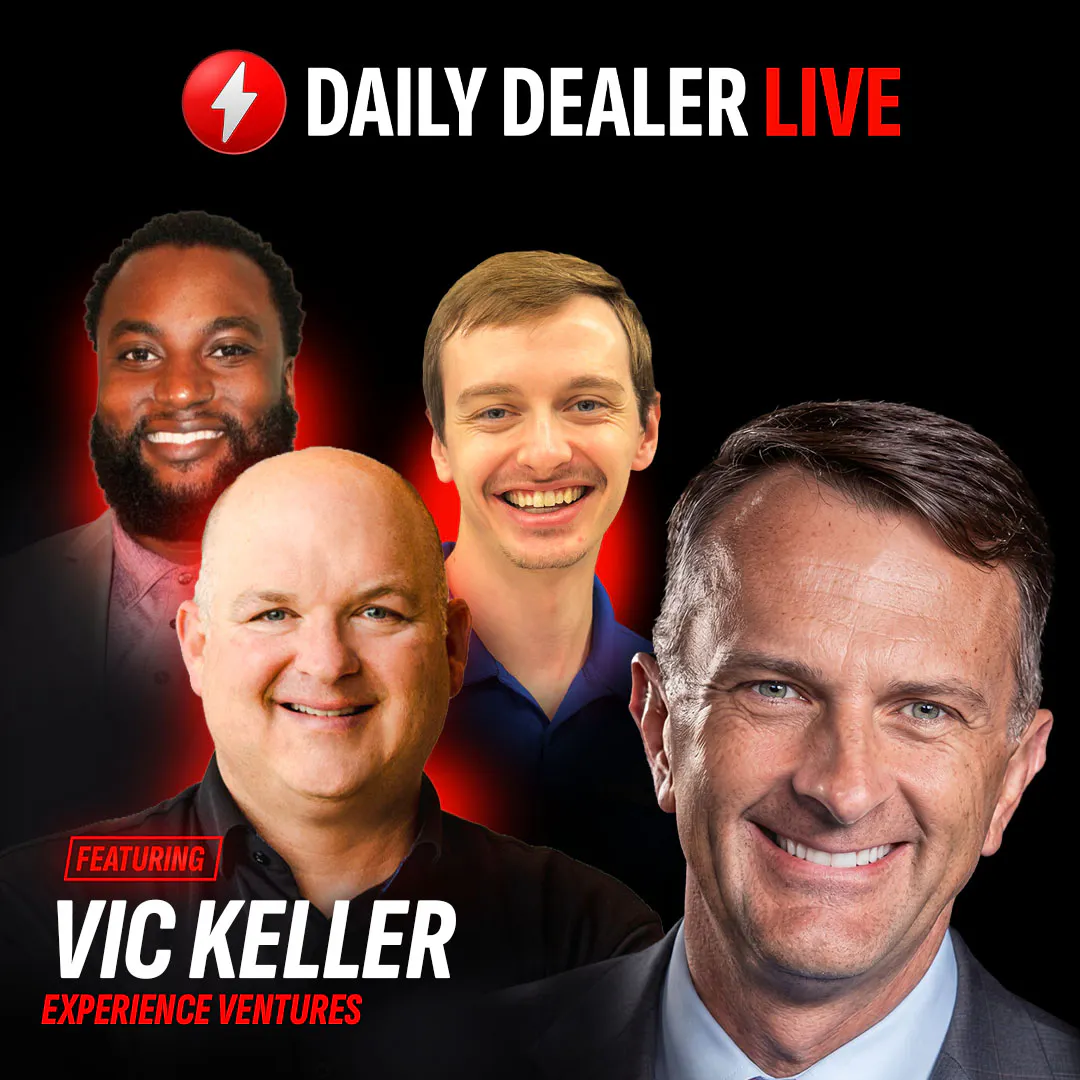
Keller on Automotive Opportunity, Keys on Pricing, Vesely on 4-Day Work Week | Daily Dealer Live
About this episode
Broadcast live from the Virginia Auto Dealer Association Convention, the Car Dealership Guy Podcast tackles dealership value, pricing transparency, digital retailing, and AI adoption. Vic Keller frames where enterprise value hides inside stores and why dealers shouldn’t wait on vendors. Namu Keys explains how DR supports FTC-driven pricing transparency with consistency and an audit trail. Sam Vesely weighs people-first culture, including a four-day work week debate. The show also covers Kia EV lease buyouts, dealer cost pressures, and multiple Ford recall follow-ups.
EV lease return cliff
"we've talked a lot about what many pundits in automotive are projecting will be an EV lease return cliff."
The “lease return cliff” idea is that lots of EV leases end around the same time. When many cars suddenly come back, used prices can drop, which can make leasing EVs harder or more expensive later.
An EV lease return cliff is a scenario where many EV leases reach their end around the same time, leading to a surge of returned EVs hitting the market. That could pressure used-EV prices and residual values, making future leases less favorable.
lease buyout
"Kia looks like they're trying to keep customers in those lease vehicles, getting them to buy out early."
When you lease a car, you can usually buy it at the end for a set price. A “lease buyout” is that purchase option, and the point of these programs is to encourage people to buy instead of turning the car in.
A lease buyout is when a lessee pays the pre-set amount (often called the residual value) to purchase the leased vehicle at the end of the lease term. Programs like the one discussed are designed to make that buyout cheaper or easier so customers keep the car instead of returning it.

Kia EV9
"the program ... applies to EV6, EV9, and Nero EV models with leases maturing this month."
The Kia EV9 is Kia’s bigger electric SUV with three rows. The segment says EV9 lease customers may qualify for a discount if they buy out their lease.
The Kia EV9 is Kia’s larger, three-row electric SUV. This episode segment lists the EV9 as eligible for Kia’s “Keep Your Kia” program, which targets customers whose leases are maturing.
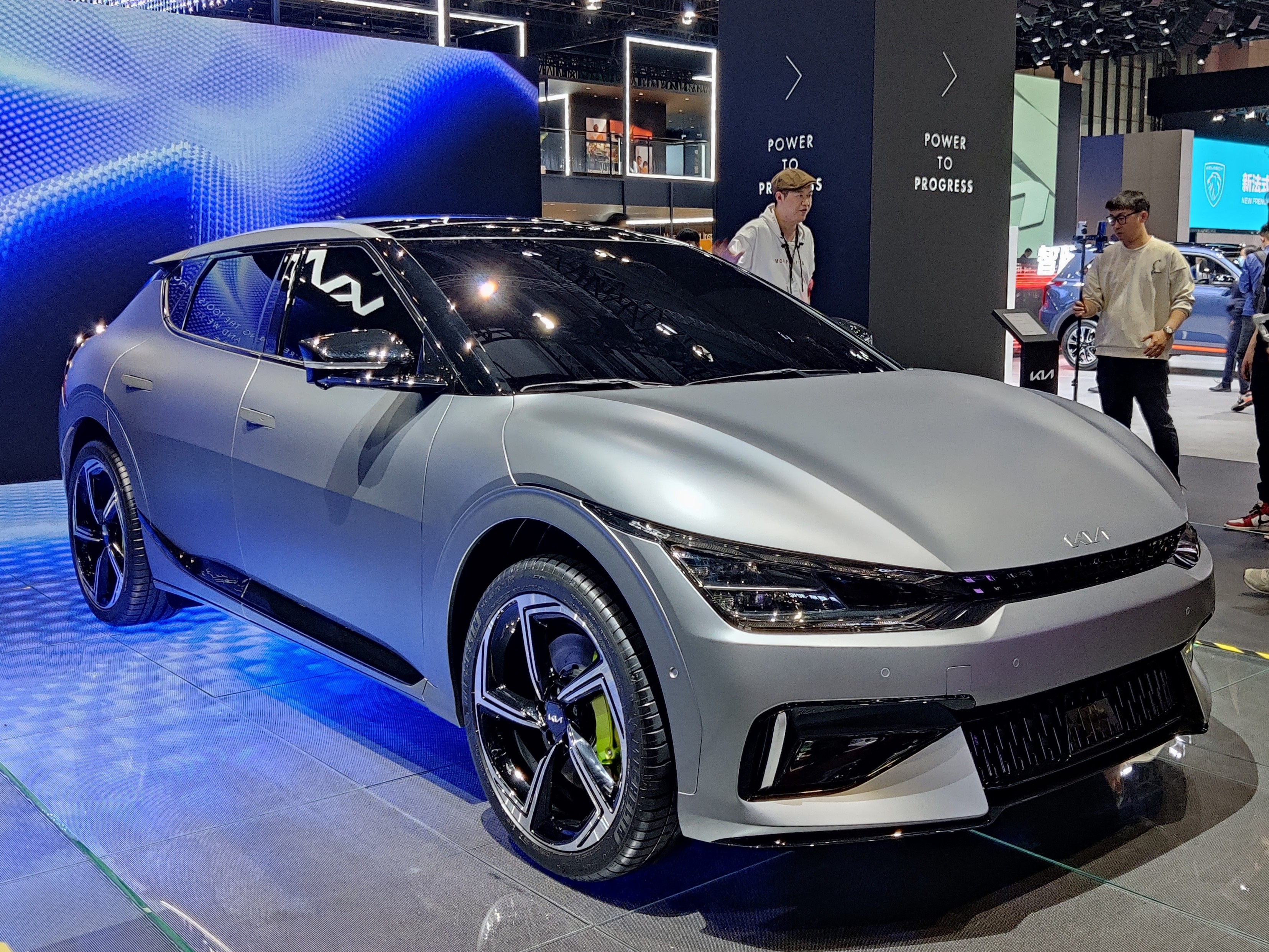
Kia EV6
"the program ... applies to EV6, EV9, and Nero EV models with leases maturing this month."
The Kia EV6 is Kia’s electric crossover. Here, Kia is saying certain EV6 lease customers may get money off if they buy the car instead of returning it.
The Kia EV6 is Kia’s electric crossover that’s been one of the brand’s key EV volume models. In this segment, it’s specifically named as eligible for Kia’s “Keep Your Kia” short-window program that offers discounts tied to lease buyouts.
Kia Finance Dealer Direct
"Dealers facilitate the transaction through Kia Finance Dealer Direct using the leasy payoff option and earn a flat $300 per completed buyout."
“Kia Finance Dealer Direct” sounds like Kia’s system/process that helps dealers handle the financing paperwork. Here, it’s used to process lease buyouts and get paid for completing them.
Kia Finance Dealer Direct appears to be Kia’s dealer-facing financing workflow for processing lease buyouts and related transactions. In this segment, dealers use it to facilitate the buyout and earn a fixed per-transaction fee.
leasy payoff option
"Dealers facilitate the transaction through Kia Finance Dealer Direct using the leasy payoff option and earn a flat $300 per completed buyout."
This phrase refers to the way the lease gets “paid off” when the customer decides to buy the car. The exact wording in the transcript may be off, but it’s about completing the buyout paperwork and settlement.
The transcript says “leasy payoff option,” which likely refers to a lease payoff mechanism that lets a dealer/financing partner settle the remaining lease obligation when the customer buys the vehicle. The exact term is unclear due to possible transcription error, but the meaning is a buyout settlement process.
residual values
"and raise the possibility that keeping these vehicles out of auction also keeps depressed residual values from becoming public."
Residual value is basically the expected value of the car at the end of a lease. If residual values are low, it means the car may be worth less than expected when people return it, which can change how lease deals are priced.
Residual value is the estimated worth of a leased vehicle at the end of the lease term. If residual values are “depressed,” it can signal that the market value of returned vehicles is lower than expected, which can affect lease pricing and how attractive lease deals are.
auction
"keeping these vehicles out of auction also keeps depressed residual values from becoming public."
An auction is where dealers sell cars to other buyers. The idea here is that if lease returns go to auction, the prices they fetch can show how strong (or weak) the used-car market is.
In dealer/remarketing context, an auction is a marketplace where dealers sell off lease returns or trade-ins to other buyers. The segment suggests that auction exposure can reveal market-clearing prices, which can influence perceptions of residual value health.

Ford F150
"The largest campaign covers 91,198 model year 2018 to 2020 F-150 trucks for a daytime running lamp issue following an incorrect repair under a previous recall."
This is about Ford’s F-150 pickup trucks from 2018 to 2020. Ford says some of them have a daytime running light problem that happened after a previous repair wasn’t done correctly.
Ford F-150 is the full-size pickup that’s being targeted by a large recall campaign covering 2018–2020 trucks. The issue described is a daytime running lamp problem tied to an incorrect repair performed under a previous recall.
instrument clusters
"A second campaign affects 10,742 model year 2018 Ford F-150 trucks whose instrument clusters may lose gear indication and unintentionally shift into reverse or neutral."
The instrument cluster is the dashboard screen that shows things like what gear the truck is in. Ford says that display can fail, and the truck might shift into the wrong gear.
An instrument cluster is the dashboard module that displays key driving information like speed and gear position. In this recall, the cluster may lose gear indication, which can lead to unintended shifting into reverse or neutral.

Ford Escape
"A third campaign covers 18,124 model year 2017 escape SUVs with power windows that may exert excessive force before reversing when detecting an object."
This recall affects the 2017 Ford Escape. Ford says the power windows might squeeze too hard before they reverse when something is in the way.
The Ford Escape (2017) is included in a recall involving power windows. The windows may apply excessive force before reversing when they detect an object, which can increase the chance of injury or damage.

Ford Fusion
"...52 model year 2015 to 2018 focus and 2013 to 2016 fusion vehicles where a faulty culture pair could damage..."
The Ford Fusion is a regular family car (a mid-size sedan) made by Ford. The podcast is pointing out that some model years can have a problem with a specific part or parts, and that issue could cause damage if it isn’t addressed. That’s why it comes up in dealership discussions.
The Ford Fusion is a mid-size sedan that was produced in multiple generations, including the 2013–2016 and 2015–2018 model-year ranges mentioned in the podcast context. It’s often discussed in dealership and ownership conversations because certain model years can be tied to specific safety or component issues, such as problems that could affect how parts function together. That’s why you’ll hear it referenced when talking about “faulty” components and the potential for damage.
faulty culture pair
"where a faulty culture pair could damage the transmission and potentially cause a fire."
The transcript says “culture pair,” but it likely means a specific pair of parts that can fail. The important takeaway is that the failure could damage the transmission and create a fire risk.
“Culture pair” appears to be a transcription error for the specific recalled part pair. Because the transcript doesn’t clearly name the component, listeners should treat this as “a specific faulty part pair” that can damage the transmission and create a fire risk.
software update
"Ford is also recalling nearly 45,000 model year 2014 F-150 trucks after determining that a software update required an earlier recall was incorrectly recorded as completed without the update effective vehicles would unexpectedly downshift into first year increasing crash risk."
A software update is a change to the car’s computer programming. In this case, Ford says some recall problems can be fixed by updating the software instead of doing a bigger repair.
A software update in modern vehicles can change how electronic systems behave—often including transmission control logic. Here, Ford says some recalls can be resolved via software updates, meaning the fix may be applied without replacing major hardware.
mobile service
"Ford told CDG News that approximately 80% of its recalls so far this year can be resolved through software updates and that mobile service and dealer pickup and delivery options are being used to reduce pressure on service lanes where physical repairs are required."
Mobile service means the repair can come to you, rather than you driving the car to the shop. It helps reduce how busy the dealership service area gets.
Mobile service is when a dealer or service provider performs certain repairs at the customer’s location instead of requiring the vehicle to be brought in. In the transcript, it’s mentioned as a way to reduce pressure on service lanes when physical repairs are needed.
dealer pickup and delivery options
"Ford told CDG News that approximately 80% of its recalls so far this year can be resolved through software updates and that mobile service and dealer pickup and delivery options are being used to reduce pressure on service lanes where physical repairs are required."
This is when the dealership picks up your car and brings it back after service. It’s meant to make recall repairs easier when you don’t want to wait at the shop.
Dealer pickup and delivery is a service where the dealership transports the customer’s vehicle to and from the service department. It’s used to minimize inconvenience during recall work, especially when the dealership’s service lanes are busy.
service lanes
"mobile service and dealer pickup and delivery options are being used to reduce pressure on service lanes where physical repairs are required."
Service lanes are the dealership’s work bays where cars line up for service. If they’re busy, it can slow down recall repairs, so alternatives like pickup/delivery help.
Service lanes are the physical bays/lanes inside a dealership’s service area where vehicles are processed for inspection and repair. The transcript frames them as a bottleneck that mobile service and pickup/delivery can help relieve.
Ford recall news
"So on the Ford recall news, we talked a lot about that last week as part of our fix-ups Friday. While the recalls may not be done, the recalls do give dealers an opportunity to service, to connect, to reach out, and to provide value back to their consumers."
They’re talking about Ford recall announcements and what dealers do next. The idea is that recalls can be a chance for dealers to help customers and build trust.
This segment focuses on Ford’s recall campaigns and how dealers handle them. It emphasizes that recalls can be an opportunity for dealers to contact customers and provide value during the repair process.
transaction happens via the dealer
"Paul Salisman says Volkswagen is also offering up to $3,500 on current leases to buy their EV. And transaction happens via the dealer, which by the way, that's a great idea."
They’re saying the deal is completed through the dealership. Even if there’s a special offer, the actual purchase paperwork and steps happen at the dealer.
The discussion highlights that the purchase transaction is handled through the dealership, even when incentives are tied to leases or specific vehicle programs. This is a sales-process topic rather than a vehicle-technical one.
Volkswagen
"Paul Salisman says Volkswagen is also offering up to $3,500 on current leases to buy their EV."
Volkswagen is mentioned because they’re offering money off—up to $3,500—for people who have a lease and want to buy an EV.
Volkswagen is mentioned as offering an incentive—up to $3,500 on current leases to buy their EV. This is a brand-level marketing/offer reference rather than a technical automotive topic.
Carvana
"I think that one of the big things that we have to pay attention to is Carvana ... is not limited in their thinking or innovation by the dealer franchise model"
Carvana is a car seller that tries to make buying a car mostly online. The host brings it up to compare it with traditional dealership franchises and how each handles the buying process.
Carvana is an online-first used-car retailer known for selling cars with a digital shopping process and home-delivery style logistics. In this segment, it’s used as an example of a dealership model that doesn’t operate under the traditional dealer franchise structure.
dealer franchise model
"is not limited in their thinking or innovation by the dealer franchise model ... They don't have a franchise manual."
A dealer franchise model is the traditional way car brands work with local dealerships. The dealership has to follow the brand’s rules, which can make it harder to change how the buying process works.
The dealer franchise model is the traditional setup where a manufacturer authorizes independent dealers to sell its cars under specific rules. Those rules typically include standardized processes and compliance requirements that can limit how dealers redesign the customer experience.
franchise manual
"in the sense that they don't have a franchise manual. They don't have protocols that they have to go by"
A franchise manual is basically the rulebook a dealership has to follow to do things the brand’s way. The host is saying Carvana doesn’t have that kind of strict playbook.
A franchise manual is the documented set of procedures and standards a franchised dealer must follow to represent the brand consistently. The host contrasts this with Carvana’s approach, implying fewer mandated steps in the sales process.
protocols
"They don't have protocols that they have to go by that are as intense as what franchisees in the dealer space are limited by."
Protocols are the standard steps and rules employees follow at work. Here, the host is saying Carvana doesn’t have as many required steps as a traditional dealership.
In dealership operations, protocols are standardized procedures that guide how staff handle sales steps and customer interactions. The host frames Carvana as having fewer mandated protocols than traditional franchise dealers.
waiting, confusion, pressure, and bad handoffs
"customers are challenged by waiting, confusion, pressure, and bad handoffs."
The host is listing the things that make car buying feel stressful: long delays, not understanding what’s happening, feeling pushed, and when different people in the dealership don’t coordinate well. “Bad handoffs” means the next person doesn’t get the full story.
These are customer-experience failure points in the dealership sales journey. “Bad handoffs” refers to when responsibility shifts between departments or staff (sales to finance, or sales to service) without clear communication, causing delays or repeated questions.
build bulletproof relationships
"If a retail car store is doing exactly what they're supposed to do, which is build bulletproof relationships."
This phrase means dealers should earn customer trust and make the process feel dependable. The host is arguing that traditional dealers are good at building that kind of confidence.
“Build bulletproof relationships” is a sales-operations concept meaning creating trust and repeatable processes that reduce friction and improve outcomes with customers. In dealership terms, it implies consistent communication and follow-through that helps customers feel confident during a complex purchase.
trade values
"We see where trade values are right now and a lot of the challenges."
Trade values are what a dealer offers for your current vehicle when you use it as part of the purchase. The host references trade values to highlight that franchise dealers have experience handling pricing complexity and customer expectations around trade-ins.
franchise dealer
"So you say a franchise dealer is ultimately when Carvana is a franchise dealer. So it's interesting to me, are they getting special latitude by Stolanus"
A franchise dealer is a car dealership that’s officially authorized by a car brand. They have to follow the brand’s rules, including things like training and how they handle customers.
A franchise dealer is an authorized dealership that sells vehicles under an automaker’s brand and must follow that automaker’s requirements. Those requirements can include training, certification, and specific sales/customer-process rules that independent sellers don’t have to meet.
training and certification process
"Would a franchise dealer with all the different requirements on to your point training and certification process, would a regular non-Carvana franchise dealer be allowed to execute this type of a process?"
In franchise dealer networks, automakers often require dealers and staff to complete training and certification. This can affect how salespeople present products, handle compliance steps, and follow the brand’s required customer-transaction workflow.
franchise space
"So listen, the point there is it's a mindset deal, right? Carvana is entering in. I mean, obviously, these are very experienced, very successful car operators"
In this context, “franchise space” means the traditional world of authorized car dealerships. The speaker is saying Carvana is trying to do it differently than most dealers.
“Franchise space” here refers to the traditional, automaker-controlled dealer ecosystem where brands set rules for how dealers operate. The host argues Carvana is entering that environment with a different “mindset” and process than what’s typical today.
mindset deal
"So listen, the point there is it's a mindset deal, right? Carvana is entering in. I mean, obviously, these are very experienced, very successful car operators"
“Mindset deal” means the big difference is how the company thinks and runs the process. The host is saying Carvana has a specific plan for how to handle the customer experience.
The host uses “mindset deal” to emphasize that the difference between approaches is cultural and procedural, not just product or pricing. They describe Carvana’s “blueprint” and “playbook” as a repeatable customer-transaction process designed to be more transparent and efficient.
Rev Ops
"Let's grow Rev Ops, build it, or buy it, that's the question, and so many other, Paul Salisman and so many others."
Rev Ops is a way of organizing a business so sales and marketing work together to make more revenue. In car retail, it usually means improving how leads and online shoppers move through the buying process.
Rev Ops (revenue operations) is an operating model that coordinates sales, marketing, and customer-facing processes to improve how a company generates revenue. In dealerships and automotive retail, it often means aligning lead handling, digital retail workflows, and pricing/sales execution so revenue performance improves consistently.
Digital Retail
"Namu Keys, Senior Product Marketer, Digital Retail at CDK Global. ...worked my way over to the OEM side, where I was specifically with digital retail as a performance manager..."
Digital Retail is how a dealership sells cars online. It can include steps like viewing cars, seeing prices, and starting the buying process without needing to be in the showroom first.
Digital Retail refers to the online shopping and purchasing workflow for cars—things like browsing inventory, getting pricing, arranging financing, and completing parts of the sale digitally. In dealership terms, it’s often used to improve conversion and profitability by letting customers shop more seamlessly before they ever visit.
CDK Global
"Namu Keys, Senior Product Marketer, Digital Retail at CDK Global. Namu, welcome to the show."
CDK Global is a software company that helps car dealerships run their business and sell cars online. Here, the guest is talking about digital retail tools they help dealers use.
CDK Global is a company that provides dealership software and digital tools used by car dealers. In this segment, the guest is working on digital retail products for dealers through CDK Global.
DR
"...helping dealers kind of leverage and utilize DR to, of course, have more profitability in their dealership."
Here, DR is short for Digital Retail—basically the dealership’s online selling process. The point is that using those digital tools can help the dealership make more money.
In this context, DR is shorthand for Digital Retail. The speaker says they help dealers leverage DR to improve profitability, meaning the online retail process and tools.
Carvonda
"So I think what we're seeing with Carvonda is something that we got a little taste of in COVID... So I think what Carvonda is doing now is, it's basically kind of fast-forwarding that process"
Carvonda sounds like a software tool that helps people buy a car online. The idea here is that you can do most of the process in a showroom, without needing a salesperson for every step.
Carvonda is described here as a digital retail solution that lets customers complete the car-buying flow with minimal or no human interaction. In this segment, it’s positioned as moving the online buying experience into a physical showroom setting.
Stalanta
"in a franchise Stalanta store and just start to finish, do digital retailing."
This likely refers to Stellantis, a big group that owns many car brands. The point is that even in a dealership store, customers could do the buying steps digitally.
“Stalanta” appears to be a misspoken or miss-transcribed reference to Stellantis, the automaker group that owns multiple car brands. The segment uses it as an example of a franchise store where customers could complete digital retailing.
COVID
"So I think what we're seeing with Carvonda is something that we got a little taste of in COVID, when digital retail really was first brought to the scene"
They’re referring to the COVID period, when many people couldn’t easily do in-person shopping. That pushed more car-buying steps to happen online instead.
In this context, “COVID” is used as shorthand for the period when social distancing pushed more car shopping and buying steps online. The host frames it as the first time many people “tasted” digital retailing because they were at home and needed an alternative way to buy cars.
FTC
"All right, let's talk the FTC letter [2049.6s] that kind of rocked automotive several months ago."
The FTC is a U.S. government agency that helps protect consumers. When it sends letters to industries like car dealerships, it’s often because it wants companies to be clearer and fairer about how they present deals.
The FTC (Federal Trade Commission) is a U.S. government agency that enforces consumer protection and antitrust laws. In automotive retail, FTC actions or letters can push dealers to improve how they present pricing and disclosures, especially in ways that affect how customers understand the deal.
pricing transparency
"And it sparked a focus, a big focus, [2059.7s] on pricing transparency in its most basic terms, Namu."
Pricing transparency is when a dealer clearly shows what you’re paying for, including fees and add-ons, instead of surprising you later. The goal is to make it easier to compare deals and avoid hidden costs.
Pricing transparency means showing customers the full, understandable breakdown of what they’re paying for, rather than hiding parts of the deal in vague fees. In dealership terms, it’s often about being clear on the out-the-door total and any add-ons so shoppers can compare offers fairly.
compliance nature
"because that's really important when you look at digital retail, [2087.8s] when you look at the compliance nature of this [2089.7s] and the pressures of this that is not going away of anything,"
“Compliance” here means following the rules. The speaker is saying digital tools can help dealers follow the rules consistently and keep records showing they did.
In this context, “compliance nature” refers to the need to follow rules and regulations governing how dealers advertise, quote, and communicate with customers. The speaker frames digital retailing as a tool to help dealers meet those requirements consistently and document their process.
audit trail
"And then from there, is it suffice enough [2106.3s] to give you that audit trail to be able to speak to [2109.5s] if anything was to come up like,"
An audit trail is like a detailed paper trail showing the steps of a process. In this context, it means the dealer can show what they sent to customers and when, if they ever need to explain it.
An audit trail is a record of what happened in a process—who did what, when, and what information was sent—so it can be reviewed later. Here, the host is saying digital retailing should generate enough documentation to demonstrate compliance if questions arise.
lead conversion
"I mean, in my opinion, most dealers looked at it as a lead conversion. Like, all right, can you convert the activity that's going on my website..."
Lead conversion is when someone who shows interest online becomes a real sales contact. For example, a person fills out a form and the dealer then tries to turn that into a test drive or purchase.
Lead conversion is the marketing process of turning a potential customer (a “lead,” often from a website form or inquiry) into a real sales opportunity. The host is describing how dealers initially viewed digital retailing mainly as a way to convert website activity into contactable prospects.
funnel
"so that I have an opportunity to contact and try to move them down the funnel to sell them a vehicle?"
A sales funnel is the idea that shoppers move through steps before they buy. First they show interest, then they talk to the dealer, and finally they purchase.
In automotive sales and marketing, the sales funnel is the staged path from initial interest to purchase. The host’s point is that dealers wanted digital retailing to move shoppers “down the funnel” from browsing to contacting the dealership and ultimately buying.
AI
"[2190.7s] AI where customers are getting smarter, [2194.0s] they're leveraging and utilizing AI [2195.8s] to start researching vehicles up front"
Here, AI means computer software that helps figure out what a customer might want and can help dealers send useful next steps. It’s used to make the shopping process more personalized.
In this context, AI refers to software that can analyze customer and inventory information to personalize shopping experiences—like pulling relevant details and generating recommended next steps. The host is describing AI-assisted research and outreach that helps dealers engage customers earlier.
pool payment
"[2234.5s] DR opens up that space earlier in the funnel [2237.2s] for customers to see what that pool payment may look like [2240.3s] or the full price of that car may look like."
A “pool payment” sounds like the estimated monthly payment the customer sees during the online shopping process. It’s meant to give you a sense of what the car could cost to finance.
“Pool payment” here appears to mean an estimated payment amount shown to the customer during the digital retail process. It’s likely referring to a payment estimate based on available financing terms, but the exact definition isn’t fully spelled out in the segment.
Tesla
"You think about Carvana, Amazon, Tesla. The way that they're trying to do stuff is remove the people aspect of it."
Tesla is an electric car brand. In this discussion, it’s mentioned as another company that tries to make buying feel more direct and less dealership-like.
Tesla is an electric-vehicle brand that has helped popularize a more direct-to-consumer approach. Here, it’s grouped with Carvana as an example of companies trying to reduce the traditional dealership role.
service advisors
"They already know somebody that they're going to buy a car from. They already know the service advisors that they're going to when they get their oil changed."
Service advisors are the people at a dealership you talk to when you bring your car in for service. They help explain what needs to be done and keep the repair process moving.
Service advisors are the dealership staff who act as the customer-facing link to the service department. They typically gather vehicle symptoms, explain recommended work, and coordinate repairs—so customers experience the “people” side of dealership service.
Ford of Cookville
"Well, Sam, director of marketing and public relations at Ford of Cookville. Thanks to you so much for being on the show."
Ford of Cookville is a local Ford dealership. They’re talking about how that dealership uses marketing—especially social media—to make customers feel comfortable.
Ford of Cookville is a Ford dealership location referenced as the speaker’s employer. The segment uses it to discuss how a dealership can use social media to build trust in its team and improve the customer experience.

Eagle Talon
"...the line. Thanks to Michael Valvik for saying hi. Talon Meadow 515 for saying hi. Paul Salisman, it's a r..."
The Eagle Talon is a small, sporty car that was made to feel quick and fun to drive. People talk about it because it’s a performance model, and owners often share tips about keeping them running well. It may come up in the podcast because of fan/owner mentions.
The Eagle Talon is a performance-oriented compact car that’s known for its sporty styling and enthusiast following. It’s mentioned in podcasts because it represents a specific era of turbocharged, driver-focused vehicles and often comes up in conversations about parts, maintenance, and what to look for when buying one. The name “Talon” is also commonly used by owners and fans, which can make it a frequent topic in community shout-outs.
overtime roundtable
"So let's dive into our overtime roundtable coming back. Vic Keller, founder and CEO Experience Ventures and Sam Vassili, director of marketing and public relations at Ford Cookville, Sam."
This is the name of a recurring discussion segment on the podcast. It’s more about the show format than car technology.
This refers to a recurring podcast segment format where guests discuss a specific theme in a roundtable style. It’s a structural marker for the show rather than a technical automotive concept.
friction
"People buy from people they recognize, and social media makes the invisible visible. It totally changes the perspective of friction. It makes the friction lower. It humanizes the dealership."
“Friction” here means the stuff that makes buying harder or more awkward. The host says social media helps customers feel comfortable sooner, so the dealership visit feels easier.
In retail/automotive sales, “friction” means anything that slows down or complicates the customer’s path to buying—like uncertainty, lack of trust, or having to wait through explanations. The host argues social media reduces that friction by making the dealership feel more human and familiar before the customer arrives.
self-educated at home
"people love that they can get self-educated at home in a foreign and private and quietly, and they don't have to patiently listen to you explain things."
This refers to customers researching vehicles online before contacting a dealer, so they arrive with questions and context. The host frames this as a benefit of social media and content: it lets shoppers learn privately and then engage with the dealership with less pressure.
three C's
"So I'm going to go back to what we talked about, right? Is you need to hire for the three C's. You need to hire for character, competency and chemistry."
The “three C’s” is a simple way to hire sales staff: good character, the skills to do the job, and the ability to get along with people. The host says that with the right people, it’s safer to let them market and build relationships.
The “three C’s” is a hiring framework for salespeople: character, competency, and chemistry. In this context, it’s used to argue that if dealers staff the right people, they can safely allow more phone-based outreach and relationship-building without damaging customer trust.

Ford F-150 Lightning
"... in the game? Yeah. Yeah. All right. Final, final lightning answer from both of you. A dealer's watching righ..."
The Ford F-150 Lightning is a pickup truck that runs on electricity instead of gasoline. It’s designed to do the same kind of truck tasks people expect from an F-150, but with an electric motor. The podcast mentions it because it’s a major EV option in the truck market.
The Ford F-150 Lightning is an electric version of the F-150 pickup, combining the familiar truck body style with an all-electric powertrain. It’s significant because it brings EV technology into a segment many people associate with towing, hauling, and everyday truck use. That’s why it shows up in dealership-focused discussions and “final answer” style segments—buyers want to know how it fits real-world truck needs.
Request an Explanation
Heard something you'd like explained? We'll add it to this episode.
Sign in to request explanations for terms you heard.
Want to learn more?
Browse our glossary for plain-English explanations of automotive terms, jargon, and concepts.
Help improve this episode
See something that's not quite right? Our annotations are AI-generated and can sometimes miss the mark. Click the flag icon on any annotation to suggest a correction.