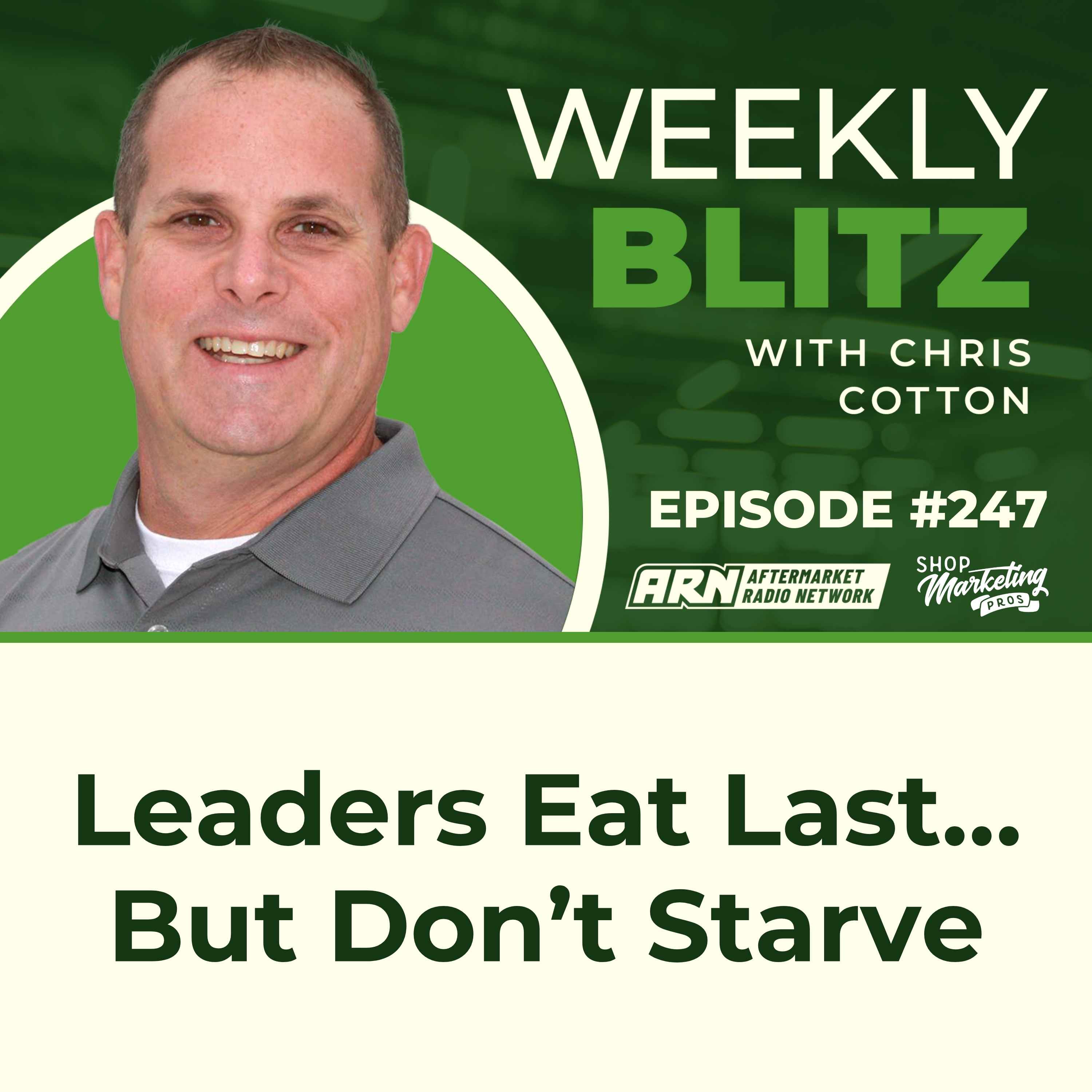
Leaders Eat Last… But Don’t Starve [E247]
About this episode
Exploring Simon Sinek's 'Leaders Eat Last' concept, this episode applies military leadership lessons to auto repair shop owners and managers. It highlights the balance between self-sacrifice and self-care, emphasizing that true leadership means protecting your team without burning out. The host shares personal insights on the dangers of neglecting one's own needs while supporting others and stresses the importance of psychological safety, delegation, and maintaining energy. Practical advice includes stepping in when needed but also scheduling breaks to sustain long-term leadership effectiveness.
The Weekly Blitz is brought to you by our friends over at Shop Marketing Pros. If you want to take your shop to the next level, you need great marketing. Shop Marketing Pros does top-tier marketing for top-tier shops.
Click here to learn more about Top Tier Marketing by Shop Marketing Pros and schedule a demo: https://shopmarketingpros.com/chris/
Check out their podcast here: https://autorepairmarketing.captivate.fm/
If you would like to join their private facebook group go here: https://www.facebook.com/groups/autorepairmarketingmastermind
Host: Coach Chris Cotton
Network: Aftermarket Radio Network
Episode 247 – Leaders Eat Last… But Don’t Starve
In this episode, Coach Chris Cotton dives into Simon Sinek’s concept from Leaders Eat Last and applies it directly to the auto repair industry.
Topics Covered:
What “leaders eat last” really means
The difference between sacrifice and self-neglect
How leadership creates psychological safety in your shop
Why burned-out owners hurt culture
Tactical ways to protect your energy while still serving your team
📄 Episode Description (For Apple / Spotify)
What happens when you walk out of your shop and realize you never ate lunch?
In Episode 247 of The Weekly Blitz, Coach Chris Cotton explores Simon Sinek’s powerful leadership concept from Leaders Eat Last — and how it applies to auto repair shop owners.
Leadership means sacrifice. But does it mean burnout?
This episode challenges shop owners to protect their people without starving themselves in the process.
If you’ve ever carried the weight of your shop on your shoulders… this one’s for you.
🤝 Featured Collaboration
This episode highlights the launch and growth of Shop Talk Her Way, a podcast dedicated to honest conversations, leadership development, and real experiences — especially for women in automotive, but valuable for anyone leading a team or business.
🎧 Sponsor Message
This episode of The Weekly Blitz is brought to you by Shop Marketing Pros.
Shop Marketing Pros specializes in marketing for auto repair shops — not generic marketing fluff. From websites and SEO to paid ads and branding, they focus on strategies that actually drive car count, improve ARO, and support profitable growth.
If you’re ready for marketing with accountability and industry understanding, check them out and let them know The Weekly Blitz sent you.
🎙️ Podcast Network
The Weekly Blitz is proud to be part of the Aftermarket Radio Network, home to some of the most trusted voices and podcasts in the automotive aftermarket.
Be sure to explore the network for more shows focused on leadership, operations, technology, and the future of automotive.
📌 Listen, Subscribe & Share
If this episode resonated with you:
Subscribe to The Weekly Blitz
Check out Shop Talk Her Way
Share this episode with someone who cares about leadership done right
Strong leaders build strong teams — and strong teams build strong shops.
🤝 Episode Sponsor
This episode is brought to you by Shop Marketing Pros.
Shop Marketing Pros helps auto repair shop owners build consistent, long-term growth strategies that actually work—especially during slower or unpredictable seasons like January. If you’re looking for marketing that supports your business instead of stressing you out, visit ShopMarketingPros.com.
🎧 About The Weekly Blitz
The Weekly Blitz is a short-form, tactical mindset podcast for auto repair shop owners who want clarity, confidence, and consistent execution in their business. Hosted by Coach Chris Cotton, each episode delivers real-world insight you can apply immediately in your shop.
To listen to more episodes, make sure and go over to iTunes and or Spotify.
Don't forget to rate and review us!
Connect with Chris:
AutoFix-Auto Shop Coaching
www.aftermarketradionetwork.com
940-400-1008
Facebook: https://www.facebook.com/AutoFixAutoShopCoaching
YouTube: https://bit.ly/3ClX0ae
Email Chris: [email protected]
The Automotive Repair Podcast Network: https://automotiverepairpodcastnetwork.com/
Remarkable Results Radio Podcast with Carm Capriotto: Advancing the Aftermarket by Facilitating Wisdom Through Story Telling and Open Discussion
Diagnosing the Aftermarket A to Z with Matt Fanslow: From Diagnostics to Metallica and Mental Health, Matt Fanslow is Lifting the Hood on Life.
The Auto Repair Marketing Podcast with Kim and Brian Walker: Marketing Experts Brian & Kim Walker Work with Shop Owners to Take it to the Next Level.
The Weekly Blitz with Chris Cotton: Weekly Inspiration with Business Coach Chris Cotton from AutoFix - Auto Shop Coaching.
Business by the Numbers with Hunt Demarest: Understand the Numbers of Your Business with CPA Hunt Demarest.
Speak Up! Effective Communication with Craig O'Neill: Develop Interpersonal and Professional Communication Skills when Speaking to Audiences of Any Size.
Request an Explanation
Heard something you'd like explained? We'll add it to this episode.
Sign in to request explanations for terms you heard.
Want to learn more?
Browse our glossary for plain-English explanations of automotive terms, jargon, and concepts.