Life's A Drag - PSM Allstar Callout Preview with Matt Smith and Chase Van Sant
About this episode
NHRA’s 2027 schedule drop sparks a lively debate on going “old school” with an earlier season start: Pomona and Phoenix in February, Gator Nationals in March, and a traditional flow that brings West Coast fans in first before marching East. Guests Matt Smith and Chase Van Sant preview the Getrex Pro-Stock Motorcycle All-Star Callout at Sonoma, highlighting its big single-event payout. The discussion also weighs how the new calendar affects Project Pontiac racing, travel, and the balance between more events vs keeping standards high.
NHRA
"But more importantly, moments ago, the NHRA dropped the 2027 first four."
NHRA is the big organization that runs and organizes drag racing in the U.S. When they announce the schedule, it’s basically the official list of races for the year.
NHRA stands for the National Hot Rod Association, the major U.S. organization that sanctions and promotes drag racing events. When they “drop” a schedule, it means they’ve released the official lineup of races and dates for the upcoming season.
Joe Costello
"And we're now joined by the great Joe Costello, the voice of the Stampede Speed wearing the motorplex colors come out of the gate to discuss going back old school for the year of force 2027"
Joe Costello is the guest in this segment. He’s a motorsports voice/announcer and he’s sharing his thoughts on the upcoming NHRA season schedule.
Joe Costello is the announcer/voice referenced in the segment, described as the voice of the “Stampede Speed” and connected to NHRA coverage. His role here is to share commentary on the 2027 schedule and the “old school” direction.
Stampede Speed
"And we're now joined by the great Joe Costello, the voice of the Stampede Speed wearing the motorplex colors"
Stampede Speed is the name of the team or group identity Joe Costello is associated with. It’s mentioned like a brand name in the drag racing world.
Stampede Speed is referenced as a team/identity associated with Joe Costello’s role as a “voice.” In drag racing coverage, such names typically represent a specific team, stable, or media brand tied to a driver or car group.
motorplex colors
"the voice of the Stampede Speed wearing the motorplex colors come out of the gate to discuss going back old school"
“Motorplex colors” refers to the livery/color scheme associated with Motorplex—used here as shorthand for the visual identity on a car or team. In motorsports, colors and branding help fans recognize who’s competing.
year of force 2027
"come out of the gate to discuss going back old school for the year of force 2027 starting in his home track."
“Year of Force 2027” sounds like a special theme or campaign name for the 2027 NHRA season. It’s how the organizers are branding that year’s events.
“Year of Force 2027” appears to be a branded NHRA campaign or theme for the season, likely tied to the sport’s marketing and event identity. The phrase signals that the 2027 schedule is being framed as a special “era” rather than just a normal calendar.
Pomona
"We're going to go Pomona in February, Phoenix in February,"
Pomona is a recurring drag-racing stop in California where NHRA events are held. It’s mentioned because it’s part of the early-season schedule.
Pomona refers to the NHRA drag racing event held at the Auto Club Raceway in Pomona, California. It’s a recurring early-season stop, so mentioning Pomona signals the start of the schedule’s key rounds.
Phoenix
"We're going to go Pomona in February, Phoenix in February, Gator Nationals on a traditional weekend in March"
Phoenix is another location NHRA uses for drag races early in the year. It’s part of the announced 2027 schedule.
Phoenix here refers to the NHRA drag racing event at the track in the Phoenix area (commonly associated with Wild Horse Pass Motorsports Park). It’s another early-season race on the 2027 slate.
Gator Nationals
"We're going to go Pomona in February, Phoenix in February, Gator Nationals on a traditional weekend in March"
The Gator Nationals is a specific NHRA drag-racing event, usually held in Florida. It’s being listed as one of the 2027 race weekends.
The Gator Nationals is a named NHRA drag racing event, typically held in Florida. Calling it out by name signals a specific race weekend rather than a generic “Florida date.”
four wide
"and then four wide."
“Four wide” means four cars race at the same time in parallel lanes. It’s a special event format that’s more chaotic and exciting than the usual two-car races.
“Four wide” describes a drag racing format where four cars run side-by-side in the same elimination round. It’s a spectacle-focused setup that changes the feel of the event compared with the more common two-car lanes.
funny cars
"[607.9s] I know that I believe we're going to see some vintage force funny cars. [612.5s] You know, which makes it easy for them to get them from the Yorba Linda shop ... [640.8s] You know, the brute force car is awesome."
“Funny Cars” are a type of drag race car. They look like regular cars from the outside, but they’re built specifically to launch hard and run extremely fast in a straight line.
“Funny cars” are a top-tier drag racing class where the car has a short wheelbase and a lightweight body that resembles a production car, but is engineered for drag racing. They’re known for very high power and dramatic acceleration, with the body designed to survive and control the forces of repeated quarter-mile runs.
Yorba Linda shop
"[612.5s] You know, which makes it easy for them to get them from the Yorba Linda shop [616.6s] to the winter nationals. [618.7s] Same deal for winter nationals and world finals."
This is the team’s workshop in Yorba Linda, California. They use it to get the cars ready and then move them to races.
The “Yorba Linda shop” is the team’s workshop location in Yorba Linda, California, used as a staging point for preparing and transporting cars. In drag racing, teams often move cars between events quickly, so the shop location matters for logistics and turnaround time.
winter nationals
"[616.6s] to the winter nationals. [618.7s] Same deal for winter nationals and world finals. [621.1s] And then obviously they have a museum in Brownsburg."
“Winter Nationals” is a drag-racing event that happens early in the year. They’re talking about how the team can move their cars between big races efficiently.
“Winter Nationals” is a named drag-racing event that fits into the early-season schedule. The hosts are discussing how the team’s cars can be transported between major events without long gaps.
world finals
"[618.7s] Same deal for winter nationals and world finals. [621.1s] And then obviously they have a museum in Brownsburg. [624.5s] So there'll be a presence at Indy."
“World Finals” is a named championship-style drag-racing event that serves as a season-ending culmination. The hosts are placing the Force team’s car logistics and appearances in the context of the full season arc.
Indy
"[621.1s] And then obviously they have a museum in Brownsburg. [624.5s] So there'll be a presence at Indy. [627.6s] And honestly, if for me, the year of force will be made."
“Indy” means Indianapolis. It’s a big racing city, and they’re saying the team will show up there as part of their event plans.
“Indy” here refers to Indianapolis, which is a major motorsports hub and a common stop for drag-racing events and exhibitions. The hosts are connecting the Force team’s museum presence to a broader racing schedule that includes Indianapolis.
Superman funny car
"[627.6s] And honestly, if for me, the year of force will be made. [632.1s] If I can see the Superman funny car in person one more time."
The “Superman Funny Car” is a themed Funny Car entry—i.e., a drag-racing Funny Car with branding and livery inspired by Superman. In drag racing, these themed cars are often tied to a specific driver/team and become recognizable to fans beyond just the car’s performance.
brute force car
"[638.6s] That's again, bringing it all like to me. [640.8s] You know, the brute force car is awesome."
“Brute Force” is the name/theme of a particular drag-racing Funny Car. It’s a recognizable entry, not just a generic description.
“Brute Force” is a specific themed Funny Car entry/branding associated with the Force racing team. The host’s comment treats it like a recognizable car identity—something fans would want to see in person.
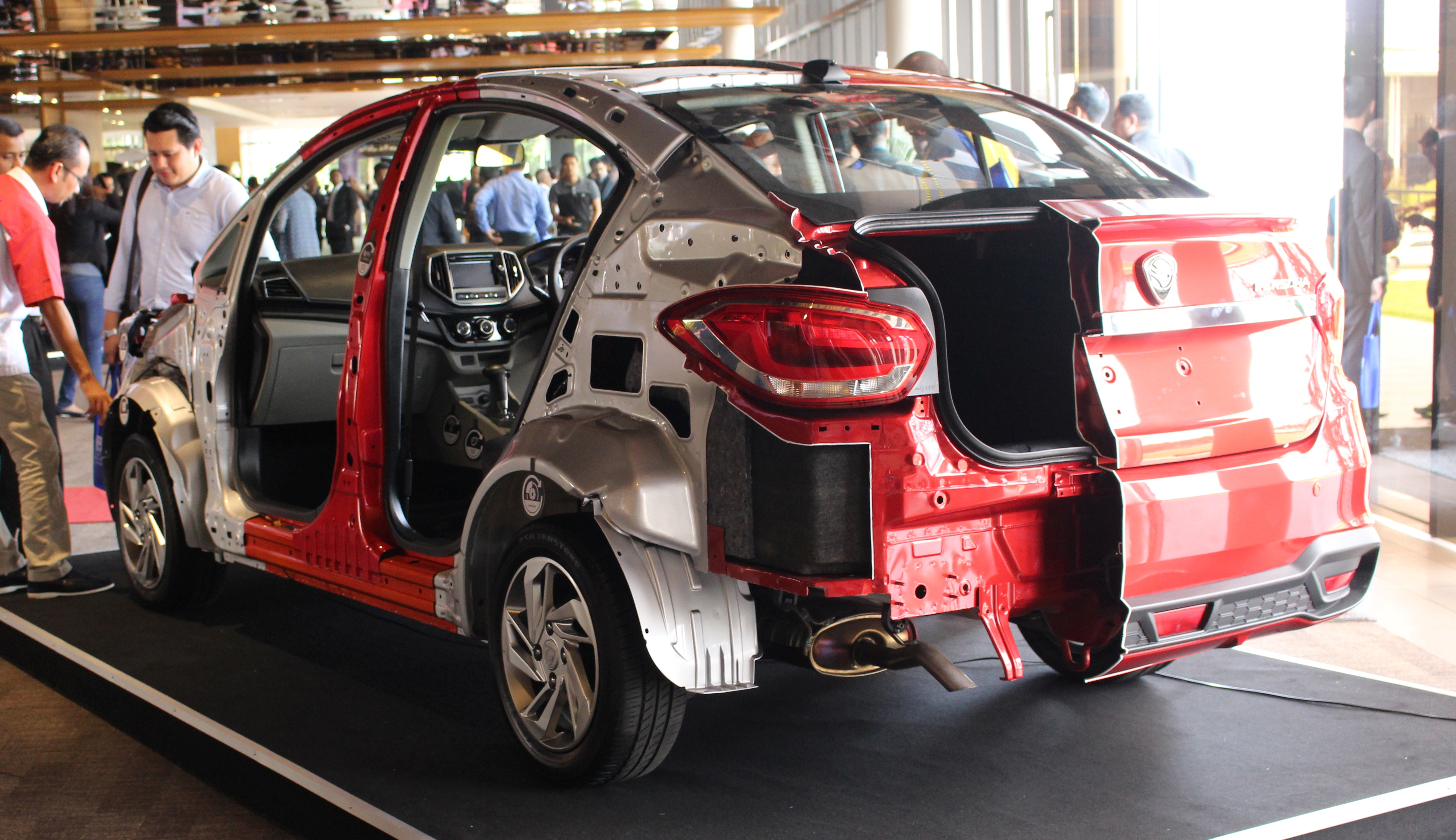
Proton Persona
"...ated Bob van der Graf Jr. It just that became his persona. Yeah."
The Proton Persona is a small family car (a sedan) made by Proton. It’s meant for normal daily use like commuting and errands. People might mention it in a podcast when talking about Proton’s regular, everyday cars.
The Proton Persona is a compact sedan made by Proton, designed for everyday driving with a focus on practicality and affordability. It’s often discussed in automotive conversations because it represents Proton’s approach to building a mainstream family car rather than a niche or performance model. In a podcast, it may come up as an example of a specific model line and how it fits into the brand’s overall lineup.
qualifying
"Versus qualifying and then also rating like this is this is your race. [1232.4s] Yeah, you're going to get some test runs on Friday and then you go right into it on Saturday."
Qualifying is the session where racers run to set starting positions or determine who advances. The host contrasts it with the event format where Saturday is treated as “your race,” implying a more direct path to competition.
rating
"Versus qualifying and then also rating like this is this is your race. [1232.4s] Yeah, you're going to get some test runs on Friday and then you go right into it on Saturday."
“Rating” here likely refers to how racers are ranked or seeded based on qualifying results. In drag racing, that ranking can affect matchups and who gets the best lanes or positions.
test runs on Friday
"Yeah, you're going to get some test runs on Friday and then you go right into it on Saturday. [1236.6s] You like that?"
“Test runs” are practice passes where teams dial in the car or bike setup before the official competition. In drag racing, these sessions help with traction, gearing, tire choice, and overall tune so the Saturday race goes smoothly.
shootouts
"I, you know, I think you commented on the, on the little post that was out there, people going, why is the bike's not out here? Why are they calling all across there for, you know, just to shoot out? [1248.8s] Well, this is where our shootouts always been since it left Indy."
Here, “shootouts” are big drag-racing matchups where the best bikes race against each other. It’s meant to be a highlight event for fans.
In this context, “shootouts” are special drag-racing events or qualifying-style competitions where top competitors race head-to-head. The host ties it to where the series has been held and why fans get a better chance to see the best bikes.
car counts, bike counts
"And, you know, ultimately, I think, you know, not saying anything bad, but ultimately I think in HRA, they need to get the purses up to get people to be able to afford this. Because if you don't have the big sponsors, you just can't do it. And you don't see NASCAR having short fields. [1320.2s] You know, it just doesn't happen. [1322.5s] They pay their guys good. [1324.2s] And ultimately we are the top of the line drag racers."
It’s basically the number of cars and bikes that actually enter the races. If there aren’t many entries, it can make the whole series harder to sustain financially.
This refers to how many vehicles (cars and bikes) show up for a given event or series. In motorsports, low car/bike counts usually mean fewer entries, less competition, and harder economics for teams and organizers.
short fields
"Because if you don't have the big sponsors, you just can't do it. And you don't see NASCAR having short fields. [1320.2s] You know, it just doesn't happen."
A “short field” means fewer racers show up than normal. When that happens, it’s usually because it’s too expensive or too hard for teams to make the event.
A “short field” means fewer competitors than expected for a race. It’s often a sign of high costs, weak sponsorship, or logistical barriers that keep teams from entering.
Pro-mod
"We need to work on vintage stuff back into our sport, just like pro-mod. Pro-mod has a weight break for older bodies to let the older cars come back in."
Pro-mod is a drag racing class for heavily modified cars. It has rules that keep the competition fair even though the cars are very different.
Pro-mod (short for “professional modification”) is a drag racing class focused on highly modified, purpose-built cars. It typically uses rules that control things like weight, engine configuration, and bodywork so different builds can race together.
weight break
"Pro-mod has a weight break for older bodies to let the older cars come back in."
A weight break is a rule that lets older cars or bikes be a little lighter than the newest ones. The goal is to make racing fairer so older machines can still compete.
A weight break is a rule that reduces the required weight (or adds allowance) for certain cars or bikes, usually to level the playing field. In this context, it’s meant to help older “vintage” entries compete by compensating for disadvantages like outdated design or limited development.
aerodynamic
"There's a lot of older Suzuki's that's not aerodynamic is what we are."
Aerodynamic means the bike’s shape is designed to cut through the air more efficiently. Less air resistance can help it go faster.
Aerodynamic refers to how well a vehicle’s shape reduces air resistance (drag). In drag racing, better aerodynamics can improve speed and consistency, especially at higher speeds.
Suzuki's
"There's a lot of older Buells out there. There's a lot of older Suzuki's that's not aerodynamic is what we are."
Suzuki makes motorcycles. The speaker is saying older Suzuki bikes may not be as aerodynamic, so they’d need help from the rules to compete.
Suzuki is a motorcycle brand, and the speaker is referencing older Suzuki bikes. They’re pointing out that these older bikes aren’t as aerodynamic, which can hurt performance in drag racing.
bodywork kits
"Everybody can't afford the top of the line v-twin bodywork, you know, the top of the line and how boosts the bodywork, you know, those are 25 grand bodywork kits."
Bodywork kits are aftermarket parts that cover the bike—like panels and fairings. They can make the bike look right for racing and sometimes help it cut through air better.
Bodywork kits are aftermarket panels and fairings that replace or supplement the stock motorcycle body. They’re often used to improve aerodynamics, fitment, and class-legal appearance, but they can be expensive—especially for top-level builds.
v-twin
"Everybody can't afford the top of the line v-twin bodywork, you know, the top of the line and how boosts the bodywork, you know, those are 25 grand bodywork kits."
A v-twin is an engine with two cylinders arranged like a V. It’s a common motorcycle engine style and affects how the bike delivers power.
A v-twin is an engine configuration with two cylinders arranged in a “V” shape. It’s common in many performance motorcycles, and it can influence how the bike makes power and how it sounds and vibrates.
bump
"And most time we don't have enough bikes, you know, to have a bump. But I think if we get, if the tech department does their job..."
A “bump” is when someone runs fast enough to take a spot from another racer. The host is saying there aren’t usually enough bikes for that to happen.
In drag racing qualifying, a “bump” is when a later qualifier posts a better time and pushes someone else out of the cutoff positions. The speaker says they often don’t have enough bikes to create that kind of reshuffling.
Gainesville
"I mean, I remember, I remember there used to be 30 bikes, 36 bikes showing up at Gainesville. I mean, we used to have full fields all the time."
Gainesville is a well-known drag racing location in Florida. The host is talking about how many bikes used to race there compared to today.
Gainesville refers to the drag racing venue in Gainesville, Florida, which is known for hosting major drag racing events. The speaker uses it as a reference point for how many bikes used to show up (“full fields”).
full fields
"I mean, I remember, I remember there used to be 30 bikes, 36 bikes showing up at Gainesville. I mean, we used to have full fields all the time."
A full field means the race had enough riders to fill all the spots. It usually indicates the class is popular and well-attended.
A full field means the event has enough entries to fill the available starting slots. In racing, that’s a sign of strong participation and healthy class interest.
pro stock motorcycle
"A pro stock motorcycle bike is the hardest bike or the hardest thing to drive out there."
“Pro stock motorcycle” means a top-level drag-racing motorcycle class. These bikes are built and tuned to go as fast as possible, so the rider has to be very precise to control them.
A pro stock motorcycle is a purpose-built drag-racing class where riders compete with highly optimized, rule-limited bikes. It’s known for being extremely difficult to ride because the bike is tuned for maximum acceleration and requires precise control at very high speeds.
Top Fuel
"I don't care what anybody says from Top Fuel, the funny car, the pro stock mod."
Top Fuel is a drag-racing class for extremely powerful cars. They’re famous for huge acceleration and are considered very hard to drive at the limit.
Top Fuel is a drag-racing category for purpose-built, high-powered cars that use nitromethane fuel. It’s commonly compared against other drag classes because it’s one of the fastest and most demanding forms of motorsport to drive.
tucked
"what that rider does from getting tucked, being more aerodynamic, to having to hit the shift points five times..."
To be tucked means the rider pulls their body in close to the bike to reduce frontal area. In racing, a tuck is used to lower aerodynamic drag, helping the bike maintain higher speed.
shift points
"to having to hit the shift points five times going on a racetrack, to keeping the bike straight."
Shift points are the moments you decide to change gears. In fast racing, you have to shift at the right time so the engine stays in its strongest power range.
Shift points are the exact engine RPM/speed targets where a rider or driver changes gears during acceleration. In pro-level racing, hitting the right shift points repeatedly is crucial for keeping the engine in its power band and maximizing elapsed time.
rider position
"So it doesn't never change, but your rider position and riding just change the aerodynamics."
Rider position is where the rider places their body on the bike—like tucking in or sitting more upright. That changes how air flows around the bike, which can affect speed and control.
Rider position is how the rider sits, tucks, and aligns their body relative to the bike. In high-speed racing, rider position can significantly change the aerodynamic drag and stability characteristics, affecting overall performance.
piston rings
"Piston rings rubbing against the cylinder walls generate more friction than any other part of the engine."
Piston rings are small metal bands on the piston inside the engine. They help seal the combustion gases and manage oil. If they rub too much on the cylinder wall, they create extra friction and wear.
Piston rings are the thin metal rings on a piston that seal the combustion gases and help control oil consumption. When piston rings rub against the cylinder walls, they create friction that can increase wear and reduce engine efficiency.
cylinder walls
"Piston rings rubbing against the cylinder walls generate more friction than any other part of the engine."
Cylinder walls are the inner surfaces of the engine block where the pistons move up and down. Friction between piston rings and cylinder walls can accelerate wear and contribute to power loss over time.
Total Seal
"Fortunately, the team at Total Seal knows how to reduce friction and wear through innovative piston ring design."
Total Seal is a company that makes piston rings for engines. They claim their ring designs reduce friction and wear so the engine lasts longer and can make better power.
Total Seal is an aftermarket performance brand known for piston ring designs aimed at reducing friction and wear. In this segment, they’re positioned as a solution for improving ring-to-cylinder behavior to protect engine durability.
OEM diesel particulate filter
"Looking to replace your OEM diesel particulate filter or diesel oxidation catalyst?"
A diesel particulate filter is an emissions part that traps soot from a diesel engine’s exhaust. “OEM” means it’s the original factory-style part, and the replacement needs to match the vehicle’s setup.
An OEM diesel particulate filter (DPF) is the factory-installed emissions device that traps soot (particulate matter) from diesel exhaust. Replacing it with the correct type matters because it’s designed to fit and function with the vehicle’s exhaust system.
diesel oxidation catalyst
"Looking to replace your OEM diesel particulate filter or diesel oxidation catalyst?"
A diesel oxidation catalyst is an emissions device that helps clean up exhaust gases. It works by using chemical reactions to reduce certain pollutants before they leave the tailpipe.
A diesel oxidation catalyst (DOC) is an emissions component that helps convert harmful exhaust gases into less harmful substances using chemical reactions. It’s commonly paired with other aftertreatment parts like a DPF to meet emissions requirements.
DPFX fit
"Look no further than DPFX fit, a complete line of aftermarket diesel particulate filters and diesel oxidation catalyst designed as an exact fit OEM replacement"
DPFX fit is a brand that sells replacement emissions parts for diesel trucks. They’re advertising filters and catalysts that are meant to fit like the original equipment.
DPFX fit is an aftermarket parts brand offering diesel particulate filters and diesel oxidation catalysts. The segment emphasizes exact-fit OEM replacement design and broad coverage for different truck classes.
OEM replacement
"DPFX fit, a complete line of aftermarket diesel particulate filters and diesel oxidation catalyst designed as an exact fit OEM replacement"
An “OEM replacement” is an aftermarket part meant to work like the original factory part. With emissions parts, the fit has to be right so the car can run and pass emissions properly.
“OEM replacement” means the aftermarket part is intended to match the factory part’s fitment and function. In emissions systems, correct fit and compatibility are especially important to avoid check-engine lights or poor exhaust aftertreatment performance.
reverse OEM look up tool
"With thousands of units in stock, we ship the same or next day and be sure to check out our comprehensive reverse OEM look up tool."
This is a website tool that helps you find the correct replacement part for your specific vehicle. It’s meant to prevent you from buying the wrong filter or catalyst.
A reverse OEM look up tool helps identify the correct replacement part by using the vehicle’s OEM information (often make/model/engine or part numbers) rather than guessing. This reduces the risk of ordering the wrong emissions component.
remanufactured
"Always new, never remanufactured."
Remanufactured parts are rebuilt using old parts (cores) and brought back to working condition. The ad is saying their product is new, not rebuilt from a used core.
Remanufactured parts are rebuilt from used cores to restore them to a like-new or specified condition. The speaker contrasts this with “new” parts, implying different sourcing and potentially different wear characteristics.
Drag Race Bracket Bonanza
"Drag racing fans, check out Drag Race Bracket Bonanza. It's the free, family-friendly fantasy bracket gauge."
They’re promoting a free drag-racing bracket game. After qualifying, you choose winners for different pro classes to stay engaged.
This segment promotes “Drag Race Bracket Bonanza,” a bracket-style game for drag racing fans. It’s positioned as free and interactive, letting listeners pick winners after qualifying at national events.
Redline Oil
"Redline Oil, formulated to win, proven by me."
Redline Oil is a brand of engine oil. The ad is saying it’s made for performance driving and that it works well based on the speaker’s experience.
Redline Oil is a lubricant brand marketed toward performance use. In this segment, the host claims it’s “formulated to win,” implying the oil’s properties are intended to support high-performance operation.
HRA drag racing pro cycle motorcycle
"But, um, if you want to get into an HRA drag racing pro cycle motorcycle is a great entry point because of the personality, how the class interacts with each other."
They’re talking about a motorcycle drag-racing category that’s a stepping stone toward the pro level. It matters because it shapes who you race and how the competition is organized.
This refers to a specific class/ladder within drag racing for motorcycles, framed here as an entry point into the pro ranks. The speaker is using it to explain how the class structure and social dynamics work as riders move up.
water box
"So they've pretty much all worked with each other in some capacity at some level until they hit the water box."
In drag racing, the water box is where they spray water on the track before the run. The goal is to make the surface grip better so the bike can launch more effectively.
In drag racing, the water box is the staging area where the track crew applies water to the surface to help with traction. It’s a key pre-run step because grip affects how well a motorcycle can launch and hook up under power.
Sonoma
"I think it's cool that you guys are going to Sonoma solely focused on the big money race."
Sonoma is a famous race track in California. In this episode, they’re talking about going there to race for big money.
Sonoma refers to Sonoma Raceway in California, a well-known road-course venue that also hosts major motorsport events. Here, it’s important because the hosts are discussing racing there specifically for a high-stakes drag-racing callout format.
call out format
"But, you know, it is cool that it feels like we get a little bit more focus on on just the the call out show where as sometimes not that it gets drowned out in the, you know, the weekend"
A call out format is a race setup where one rider can challenge another instead of everyone just being paired randomly. It affects how you think about who you want to race and when.
A call out format in drag racing is a structured matchup where a rider (often based on results or timing) gets to choose or challenge an opponent. The speaker discusses being ready for someone to call him out and how that changes strategy.
testing on Friday
"Or, you know, do you go into it with the mindset of, Hey, I want to really kick butt and testing on Friday to give these guys a moment of pause."
Friday testing refers to the practice/track time before the main event where teams evaluate changes to the motorcycle’s setup. The goal is to improve performance and sometimes to send a message to potential callout opponents by showing strong early results.
Request an Explanation
Heard something you'd like explained? We'll add it to this episode.
Sign in to request explanations for terms you heard.
Want to learn more?
Browse our glossary for plain-English explanations of automotive terms, jargon, and concepts.
Help improve this episode
See something that's not quite right? Our annotations are AI-generated and can sometimes miss the mark. Click the flag icon on any annotation to suggest a correction.