Broadcasting live from NADA 2026, the episode captures the vibrant energy of the convention floor, featuring key discussions on the automotive industry's current challenges and innovations. Host Sam Dark engages with industry leaders like Dennis Gingrich and others, focusing on the impact of social media, AI, and the evolving dealership landscape. Topics include profitability strategies, the shift in consumer demand for electric vehicles, and the importance of adapting to new technologies. The episode also highlights significant industry news, including dealer acquisitions and regulatory discussions.
Today's show features:
- Dennis Gingrich, Sales and Finance Director of The Niello Company
- Marion Cain, Managing Partner of Bell Auto Group
- Russell Richardson, Russ Flips Whips
This episode is brought to you by:
Lotlinx – ChatGPT can write emails, plan trips, even tell jokes… but it can’t tell you which VINs are at risk of sitting too long, how your dealer performs against your competition, or how to improve your VDPs. That’s where LotGPT comes in. It's the only chatbot built exclusively for car dealers. It knows your market, dealership and inventory. LotGPT is free for dealers, but invite-only. Join the waitlist now at https://lotlinx.com/LotGPT/
Reynolds & Reynolds – Have you seen Reynolds’ AI assistant Rey yet? With one prompt Rey can answer questions, analyze sales trends, generate reports, or even tell you which cars to buy next. Learn more at http://reyrey.com/reyai.
—
Check out Car Dealership Guy’s stuff:
CDG Circles ➤ https://cdgcircles.com/
CDG News ➤ https://news.dealershipguy.com/
CDG Jobs ➤ https://jobs.dealershipguy.com/
CDG Recruiting ➤ https://www.cdgrecruiting.com/
My Socials:
X ➤ https://www.twitter.com/GuyDealership
Instagram ➤ https://www.instagram.com/cardealershipguy/
TikTok ➤ https://www.tiktok.com/@guydealership
LinkedIn ➤ https://www.linkedin.com/company/cardealershipguy/
Threads ➤ https://www.threads.net/@cardealershipguy
Facebook ➤ https://www.facebook.com/profile.php?id=100077402857683
Everything else ➤ dealershipguy.com
"Next up today, Stellanus American Brands Chief Tim Kuniskes says the company's moved to kill its plug-in hybrid electric vehicles in the US came down to two main factors. Lack of demand and cost."
Plug-in hybrid electric vehicles are cars that use both a gas engine and an electric motor. You can charge them by plugging them in, and they can drive on electricity for a while before needing gas.
Plug-in hybrid electric vehicles (PHEVs) combine a traditional internal combustion engine with an electric motor and a rechargeable battery. They can be charged from an external power source and can run on electric power alone for a limited range before switching to gasoline.
"Automakers, he said, built battery capacity for demand that was quote artificially inflated on the backs of government rebates, not real customer demand, and now the write downs they are catching up."
Battery capacity is how much energy a battery can hold. For electric cars, a bigger battery means you can drive farther before needing to charge it again.
Battery capacity refers to the amount of energy a battery can store, typically measured in kilowatt-hours (kWh). In electric vehicles, higher battery capacity allows for longer driving ranges before needing to recharge.
"... Bowers purchased Bill Estes' Chrysler Dodge Jeep Ram from the Asbury Automotive Group."
The Dodge Ram is a big truck that can carry heavy loads and is great for work or outdoor activities. People talk about it because it's strong and has a nice inside, making it good for both work and family use.
The Dodge Ram, now known as the Ram Truck, is a full-size pickup truck that has gained a reputation for its ruggedness and capability. It is often discussed for its performance in towing and hauling, as well as its comfortable interior and advanced technology features.
"We represent a variety of brands, Porsche, JLR, Volvo, Acura, BMW, Mini, Audi."
Audi is a luxury car brand from Germany that is known for its high-tech features and stylish designs. They make a range of vehicles, including sedans and SUVs.
Audi is a German automobile manufacturer known for its luxury vehicles and advanced technology. The brand is recognized for its Quattro all-wheel-drive system and performance-oriented models.
"We represent a variety of brands, Porsche, JLR, Volvo, Acura, BMW, Mini, Audi."
JLR is a company that makes luxury cars, including Jaguar and Land Rover. They are known for stylish and high-end vehicles.
JLR stands for Jaguar Land Rover, a British automotive company that produces luxury vehicles under the Jaguar and Land Rover brands. They are known for their performance and off-road capabilities.
"We represent a variety of brands, Porsche, JLR, Volvo, Acura, BMW, Mini, Audi."
Volvo is a car brand from Sweden that is famous for making safe and reliable cars. They have a variety of models, including SUVs and sedans.
Volvo is a Swedish automotive manufacturer known for its focus on safety and quality. They produce a range of vehicles, including sedans, SUVs, and wagons.
"We represent a variety of brands, Porsche, JLR, Volvo, Acura, BMW, Mini, Audi."
Acura is a luxury car brand that comes from Honda, a well-known Japanese car maker. They focus on making high-end cars with good performance.
Acura is the luxury vehicle division of the Japanese automaker Honda. It is known for producing performance-oriented vehicles with advanced technology and luxury features.
Volkswagen is a popular car brand from Germany that makes many different types of cars, including the famous Beetle. They are known for being reliable and affordable.
Volkswagen is a German automotive manufacturer known for producing a wide range of vehicles, including the iconic Beetle and the Golf. The brand focuses on quality and affordability.
"...Scout is attempting to go direct to consumer. Now, it's different than Tesla Rivian."
Direct to consumer means that a company sells its products straight to the people who will use them, instead of going through stores or other sellers. This is happening more with car companies now.
Direct to consumer (DTC) sales refer to a business model where companies sell their products directly to customers without intermediaries like retailers or dealerships. This model is becoming more popular in the automotive industry, allowing manufacturers to have more control over pricing and customer experience.
"...Scout is attempting to go direct to consumer. Now, it's different than Tesla Rivian."
Scout is a car brand that wants to sell cars directly to people instead of through regular car dealerships. This is becoming more common with some new car companies.
Scout is an automotive brand that is attempting to sell vehicles directly to consumers, bypassing traditional dealership networks. This approach is part of a growing trend among some manufacturers to offer direct sales models.
"...different than Tesla Rivian. Tesla Rivian didn't exist."
Tesla is a car company from the United States that makes electric cars. They are known for their advanced technology and selling cars directly to customers.
Tesla is an American electric vehicle manufacturer known for its innovative technology and direct sales model. The company has popularized electric cars and has a strong focus on sustainability and renewable energy.
"...different than Tesla Rivian. Tesla Rivian didn't exist."
Rivian is a new car company in the U.S. that makes electric trucks and SUVs. They are known for their unique designs and features for outdoor adventures.
Rivian is an American electric vehicle manufacturer focused on producing electric trucks and SUVs. The company aims to offer adventure-oriented vehicles and has gained attention for its innovative designs and technology.
"...I don't think the OEMs really want to, you know, working with a customer that's when things aren't going good..."
OEM means the original company that made the car or its parts. It's like the brand name of the car, such as Ford or Toyota.
OEM stands for Original Equipment Manufacturer, referring to the company that originally manufactured the vehicle or its parts. In the automotive context, OEMs are the automakers responsible for producing the cars sold under their brand names.
"...the state of EVs in the state of California, EV rebates ended this year."
EV rebates are discounts or money back from the government when you buy an electric car. They help make electric cars cheaper to buy.
EV rebates are financial incentives provided by governments to encourage the purchase of electric vehicles (EVs). These rebates can significantly reduce the overall cost of an EV, making them more affordable for consumers.
"...we do a social media play with a company called Moto Acquire. It's a trade-in tool that funnels people from your social media and your website."
Moto Acquire is a business that helps car dealerships get more customers by making it easier for people to trade in their cars through social media.
Moto Acquire is a company that provides a trade-in tool designed to help dealerships increase their leads by connecting social media traffic to their customer relationship management (CRM) systems.
"All right, why flips, whips, by the way? I'm just curious about that. Yeah, so it's a little bit of a slang term. So Russ, obviously, I am Russ."
'Flip' means to buy a car and then sell it again quickly, usually to make money. It's like buying something and then selling it for a higher price soon after.
In automotive slang, 'flip' refers to the practice of buying a vehicle with the intention of quickly reselling it for a profit. This can involve restoring or improving the car to increase its value before selling.
"...helping to solve that payment affordability issue for consumers? Number one thing, listen to the customer."
Payment affordability means how much money people can spend on their car payments without it being too much for them.
Payment affordability refers to the ability of consumers to comfortably pay for their vehicle purchases, including monthly payments, insurance, and maintenance costs.
"...but now these vehicles are coming with 20-inch rims, right?"
20-inch rims are the size of the wheels on a car. Bigger wheels can make a car look nicer, but they might also make the ride bumpier and use more gas.
20-inch rims refer to the diameter of the wheel, which can significantly affect a vehicle's performance, handling, and aesthetics. Larger rims can enhance the car's appearance but may also impact ride comfort and fuel efficiency.
"So it's interesting, a lot of conversation here about Chinese vehicles, right?"
Chinese vehicles are cars made by companies in China. These cars are becoming more popular and might be sold in other countries, including the U.S.
Chinese vehicles refer to automobiles manufactured by companies based in China. The Chinese automotive market has been growing rapidly, and several manufacturers are looking to expand their presence in international markets, including the United States.
"Some of the Chinese. The BYD, yeah, our family were electric."
BYD is a car company from China that makes electric cars. They are known for creating vehicles that are environmentally friendly and use battery technology.
BYD is a Chinese automotive manufacturer known for its electric vehicles and batteries. The company has gained prominence in the global market for its innovative electric cars and sustainable energy solutions.
Lexus is the luxury brand of Toyota. They make fancier cars that have more features and are designed to be more comfortable and stylish.
Lexus is the luxury vehicle division of Toyota, known for its high-quality interiors, advanced technology, and smooth performance. It competes with other luxury brands like BMW and Mercedes-Benz.
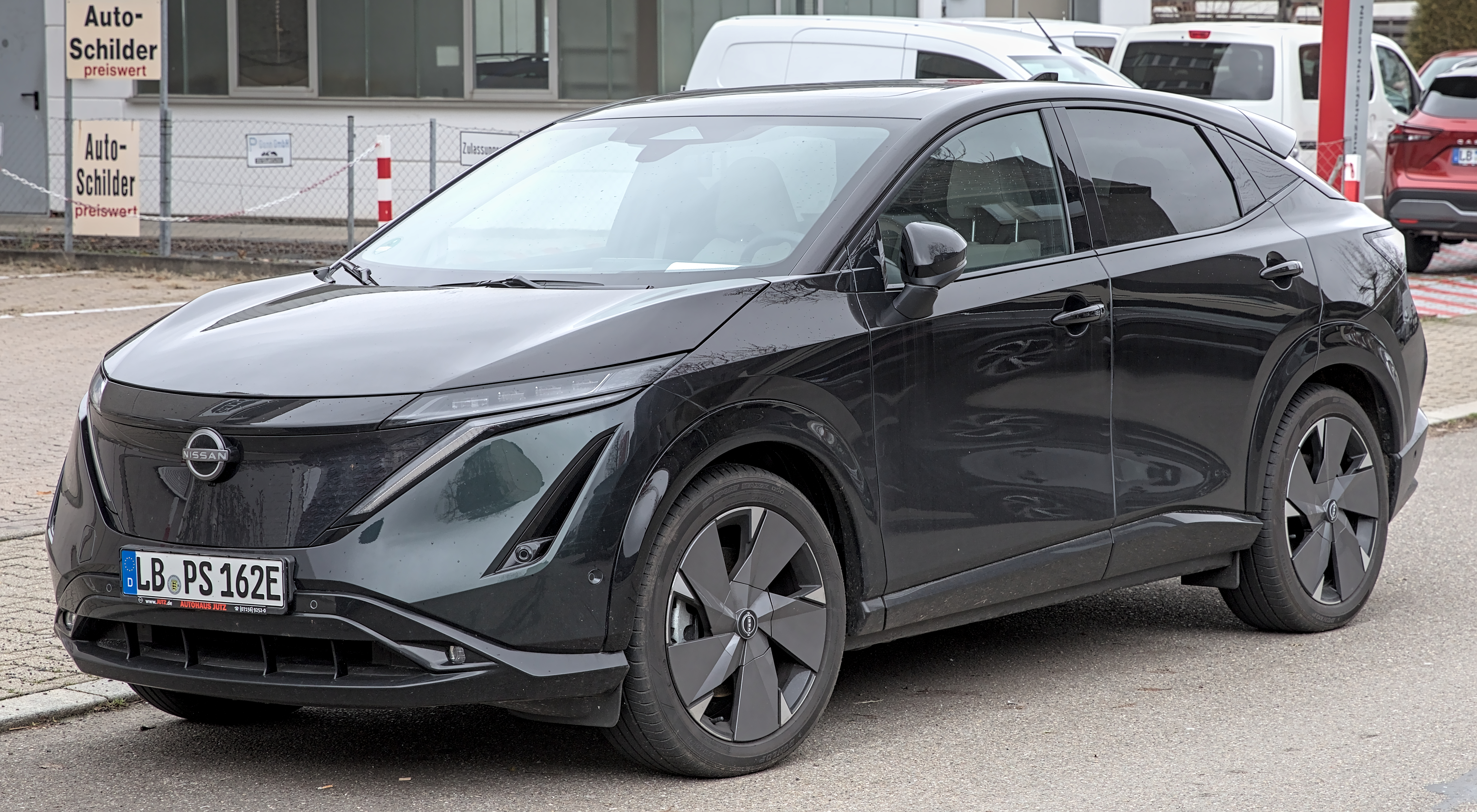
"The Aria is gorgeous. I'm talking about it's a game changer."
The Nissan Ariya is a new electric SUV from Nissan. It's designed to be stylish and packed with technology, making it a strong competitor in the electric vehicle market.
The Nissan Ariya is an all-electric crossover SUV that represents Nissan's commitment to electric mobility. It features modern design and advanced technology, aiming to compete in the growing electric vehicle market.
"Do they need to be doing more? The Aria is gorgeous. I'm talking about it's a game chang..."
The Tata Motors Aria is a spacious SUV that can fit a lot of people and stuff. It's important because it shows that Tata is trying to make nice cars that can compete with bigger brands.
The Tata Motors Aria is a crossover SUV that was designed to offer a blend of comfort, space, and versatility. It is significant as it represents Tata's efforts to compete in the growing SUV market, particularly in India.
"...20 miles, two and four from work, I have a seven series BMW. I have that thing charged at my house."
The BMW 7 Series is a really fancy car that has lots of cool gadgets and is super comfortable to drive. It's talked about because it's one of the best luxury cars you can buy, perfect for those who want to travel in style.
The BMW 7 Series is a luxury sedan known for its advanced technology, comfort, and performance. It often serves as a flagship model for BMW, showcasing the brand's latest innovations and luxurious features.
"...spend quality time with. I spent three days in a Taycan Porsche, right? And it changed my entire perspec..."
The Porsche Taycan is a fancy electric car that looks great and drives really fast. It's important because it shows that you can have a stylish car that doesn't use gas and is good for the environment.
The Porsche Taycan is an all-electric luxury sedan that represents Porsche's commitment to sustainable performance. It combines the brand's iconic driving dynamics with cutting-edge electric technology, making it a significant player in the high-performance EV market.
"And it changed my entire perspective on EVs. Do EVs end up being the solution to payment affordability in the future?"
EVs stands for electric vehicles, which are cars that run on electricity instead of gas. They are often seen as better for the environment because they don't produce exhaust fumes.
EVs, or electric vehicles, are cars that are powered entirely by electricity rather than gasoline or diesel. They are considered more environmentally friendly and can offer lower operating costs compared to traditional vehicles.
Select text to request an explanation
We're doing better as a result of social media presence.
It doesn't do those three things then it's on the chopping block.
It's in return on investment discussion.
Hey everybody welcome back to the Daily Dealer Live.
I'm your host Sam Dark and today we are live here at NADA 2026 on the Expo floor on this
last day of the convention broadcasting live to you from the Reynolds and Reynolds booth.
Huge props to Reynolds.
If you watched Wednesday's show they pulled a huge rabbit out of the hat for us by hosting
us here on their set.
It's an elite operation, an elite setup.
We have for the first time ever a CDG first.
We've got Ray Ray or we've got the Reynolds cam, the Ray cam we'll call it today.
You'll see a little bit of movement in today's show and because we're live on the floor you're
going to hear commotion, you're going to hear activity and you're going to hear the excitement
that was NADA 2026.
Probably we'll hear it with our guest today one of the most if not the most highly attended
show to date.
So props to the Reynolds team.
Coming up today's part of today's episode we've got operators, we've got disruptors,
we've got straight up automotive energy in the house and on this stage Dennis Gingrich,
Russ Flip-Lips who you've seen on social media, Marion Kane and more and we're today cutting
through the noise, no buzzwords, no vendor fluff, just what's actually working on the
showroom floors right now.
As we know affordability pressures are real, AI is everywhere in this room and the other
hall during this convention.
Used cars are back in the spotlight and the big question every dealer principle in GM
is asking this week is simple.
What actually moves the profitability needle?
What actually moves the metal in February of 2026?
So whether you're watching from your store, your office or walking the NADA floor with
us buckle up.
We're talking leadership, sales velocity, culture, technology and the plays dealers
are making right now to win.
And to our loyal listening audience we are streaming live across all CDG social media
platforms.
Post your comments into the show it'll change the trajectory of today's show, we'll bring
your comments in.
Whether you're here in another part of the convention or you're joining us at the Reynolds
booth today, post your comments, we'll bring them in.
But first let's cover today's industry headlines.
First up today in the news NADA's incoming chairman dealer principle Rob Cochran isn't
trying to reinvent the wheel, instead he wants to tighten the screws on the policy that
fight that directly shapes dealer economics.
Speaking on the NADA 2026 live stage in Las Vegas, Cochran outlined three priorities.
First, pushing back on California's emissions rules in favor of one national standard.
Second, staying deeply involved in tariff discussions as levies create pricing volatility.
And third, continuing to work the EPA on fuel economy compliance costs that hit inventory
mix and margins.
But most importantly Cochran made it clear that defending the dealer franchise model
remains non-negotiable.
Cochran said frontline dealer engagement is quote essential as automakers test direct
to consumer sales, adding that NADA and state associations are aligned and prepared to quote
vigorously defend the traditional retail model.
We'll talk a little bit about that on today's show.
Under the comment here from Cochran is a discussion on the scout venture and Volkswagen's attempt
to go direct to consumer in multiple states including Colorado where they've already received
a one-year approval to do so.
Next up today, Stellanus American Brands Chief Tim Kuniskes says the company's moved to kill
its plug-in hybrid electric vehicles in the US came down to two main factors.
Lack of demand and cost.
Recently in a one-on-one with Kelly Bluebook, Kuniskes said the gap between what electric
applied vehicles cost to build and what customers are willing to pay forced tough trade-offs.
Automakers, he said, built battery capacity for demand that was quote artificially inflated
on the backs of government rebates, not real customer demand, and now the write downs they
are catching up.
Translation, PHEVs still carry a cost problem in 2026, but traditional hybrids are closer
to a more sustainable reality.
What's the bottom line here?
Well, according to Kuniskes quote, the customer, the customer is willing to pay what the customer
is willing to pay, and it's either going to come out of our margin or it'll come out
of lower sales.
Finally up today, we've got another busy stretch on the dealership M&A Front with multiple
deals across Texas, Illinois, Minnesota, and Indiana.
By the way, we love our CDG Bicell Tracker today brought to you by the entire teams here
at Reynolds.
First up in M&A Activity this week, Julie Herrera, the longtime auto retail veteran turned
dealer and founder of Idea Auto Group, has sold her three Texas dealerships this month
to make way for a new Honda store in Prosper, Texas.
According to sources familiar with the transaction.
Next up, Kunis Auto Group, coming closer to my geography in the Chicago land, closed on
three acquisitions in January, including two dealerships in Minnesota's Twin Cities and
one on Chicago's North Shore, props to Kunis for acquiring that.
Kunis now operates 45 locations across the Midwest by rapidly growing its footprint
by 39 stores in the last 12 years.
We'd love to have someone from Kunis on the show to talk about how you expand culture that quickly
and expand your footprint that quickly and maintain your culture.
And in Indiana, dealer Matt Bowers purchased Bill Estes' Chrysler Dodge Jeep Ram from the
Asbury Automotive Group.
While Matt Bowers Automotive primarily owns stores in the Gulf Coast region,
lately the group has been eyeing brand new markets and this acquisition in Metro Indianapolis
is no different.
What's the big picture here?
Well, profitability and liquidity are historically high for public and larger private groups.
Meanwhile, buyer demand is outpacing supply.
You can see this deal announcement and many more throughout the entire year
by visiting the CDG Bicell Tracker at cdgbicell.com powered by the Presidio Auto Group.
And that is a wrap on today's industry headlines.
Thank you all for your comments that you're putting into the comments section.
Dan, see how was the AFSA conference go?
Any significant takeaways?
Dan, in response, AFSA was awesome.
It was a great event on Monday.
I spoke about the affordability pressures that are challenging the consumer today
and a solution will thread that in to today's conversation.
Eager case as PHEVs are the most unreliable electrified segment of vehicles
and they visit the service department more than any other segment regularly.
We'll talk a little bit about that with a dealer focused in Northern California
who knows a thing or two about EVs and about hybrids.
Eager case as NADA convention is awesome.
Drink responsibly, fellas.
Paul Salisman excited for today's episode.
So thanks to our entire daily dealer listening audience for being there,
providing your commentary.
Let's dive into today's show.
First up today, Dennis Gingrich, sales and finance director,
Neil O'Company.
Dennis, welcome to the show.
Good to be here, Sam.
All right.
I'm repositioning my mic.
Here we are.
It's the last day of NADA, Dennis.
You've been here, actually, you've been here since Tuesday.
You and I...
Monday.
Yeah, you and I were together at a JD Powers panel speaking with Jeff Stafford,
which was awesome.
So as we come to the conclusion of this NADA convention, Dennis,
you have a significant role within the Neil O'odder Group.
Tell us a little bit about yourself, your role, and Neil.
Where are you located?
How many stores do you have?
And what are you doing in this automotive industry?
Well, I appreciate being here,
but it's always fun to talk about the Neil O'Company.
We've been in business now for 104 years.
We're located across 10 rooftops in Sacramento.
We represent a variety of brands, Porsche, JLR, Volvo, Acura, BMW,
Mini, Audi.
I always forget one.
Did you say Volkswagen in there?
All right, we're coming to that topic.
We're coming to that topic.
That was a hot topic on Monday, so it'll be a fun one to unpack.
But family-owned, we got three brothers that run it.
Rick Roger and David Nealow.
We work for Great Kings, and we're very appreciative for all they do for every one of our teammates.
But myself, I've been around this industry since I was a kid.
That's how my dad raised me, being in the car business,
and started selling cars at 18.
And what's that make me?
I think 46.
I grew in the math, so here we are, love our business.
And you say it all the time, man.
Such a great, it's one of the best kept secrets out there to do it all and have a good life.
So our daily dealer audience is used to seeing.
You've been on the show a couple of times.
You're usually here with your sidekick, Tolia, Jason, somewhere.
You agreed to come on today's show.
Tolia, I think, is in route back.
So now you're able to comment without any of his fun from the air.
And actually, I just checked our social comment screen.
David Rogers says hello from 33,000 feet.
So maybe Tolia will pop up in the comments at some point.
Well, I would love that.
That would be good.
All right, so as a dealer group, you came here intending to accomplish some things.
Two questions.
There are a lot of people here this year.
What do you think plays into that?
And then second is, what was your goal coming into this year's NADA?
There were a lot of people here.
I think what really plays into that, the last quarter,
we've had some market headwinds.
I think dealers are looking to get more efficient.
And everything they do.
And last year, with the way New Orleans played out with the weather and so forth,
and the combination of the headwinds we're all facing, dealers are coming here to hone
in their operations so we can win in 2026 and beyond.
And I think what was really great is walking around the floor over the past few days.
A, it's busy.
But I think what gives me a lot of hope and I'm excited about the future is when talking
to our dealer partners, they're signing business.
So I think the dealer community is optimistic about the future.
And that's good.
That's good news for us.
So I have a theory about some of the attendance.
Tell me if you think this is right or not.
I think a general manager, a new role of a GM in 2026,
is to understand this buzzword that we've heard.
You and I remember five years ago, the buzzword was digital retailing.
Today, that buzzword is AI.
And AI is everywhere on this floor.
I think the GM of 2026, your typical GM, doesn't understand what AI is, how it works,
and how to best bolt it into the business.
I theorize that a big reason for the explosive attendance here today,
not only has to do with New Orleans, but it's a desire to understand it, to learn it,
and to figure out how to effectively put it into business.
What do you think about that?
Like, what percent of dealers truly understand AI
and how to implement it into their business in 2026, Dennis?
Well, I mean, the industry is lagged behind all other industries for a long time.
So your comment about a GM needing to understand AI,
you couldn't really find a better place to come and do it.
You know, I come here obviously with a goal,
but I like to leave time open on my calendar.
And the reason I want to do that is so I can have conversations with some of the bright minds,
you know, so I can learn and so I can effectively plug that into our operation
to not only just gain some efficiencies, but really, Sam,
really to help our people that are dealing with the customer.
There is just so many disparate systems pushing so much information in front of our employees,
but also pushing it out to our customers.
And none of it is coherent.
And I think with AI, I think that's,
that is the thing that is going to help us deliver on a great experience.
And so by coming here and having conversations with the great people at Reynolds and Reynolds,
or insert any other company that's here, you know,
you're starting to connect the dots so you can go back with a plan and make a difference.
Okay, one of the things I heard a lot this week is there is AI technology that's garbage.
And we've seen some of that.
There's stuff that actually works.
Is there one tool and you don't need to say the company name,
but is there a task or is there something that you're working in?
You can say the company name if you want, it's free advertisement, I guess.
Is there something that you're seeing that's like, Hey, this actually works.
This helps deliver better for our customer, for our employees in this automotive industry.
Yeah, I mean, I, you know, I came on last year about our, you know, our switch,
our CRM switch we did last summer with our friends drive centric.
I think they're, they're leading the way on that with the adoption of AI
and really giving a connected platform.
You know, that's really good.
But, you know, I'm just excited some of the, you know, the heavy lifts.
And I think we talked a little bit about it on Tuesday.
You know, we're in a highly regulated state in California.
You know, we, we pay a great company to come in and really audit our car deals,
make sure we're doing things right.
And you know, the CNCDA does an amazing job of giving us the resources
to navigate that environment, but really just putting that into a,
you know, an enterprise level chat GPT instance where our data is secure.
So we can quickly make the adjustments we need to stay compliant.
So what's the tool you're using to do that?
I'm just using the enterprise level chat.
Now, the danger and you don't want to do it.
You don't want to put it into the free chat.
No, no, do not do that.
You're just thinking about that.
That puts MPI out there.
If you get the enterprise version, you're saying you've got some feedback
that that helps protect that data, but also delivers a benefit to you and the group.
Yeah, absolutely.
And then, you know, it's just quickly to, you know, I can make a job aid
for my finance managers, you know, and it helps me quickly put them in a position,
Sam, where they don't have to make decisions, you know,
and because when you make a decision, obviously you can make two types,
good and bad.
So, you know, we're just trying to make it simple.
So Paul Salisman asked a great question.
He says, what's the average number of tools in a typical franchise digital stack these days?
I don't know the answer to that, Paul.
If one of our listeners does, feel free to put it into the text chat.
One thing I would tell you that's absolutely fun.
We've seen some tools.
So I think chat GPT, when we all first got to the scene with it, you put a request in,
you saw what it would do and how to respond data and you are surprised and kind of delighted
by what it would be able to do, right?
And then you're like, what's the practical benefit?
Like, how does it help us deliver better?
To your point, compliance, big win.
We're here at the Reynolds booth.
Again, props to the entire Reynolds team for helping us out with today's show.
They've got a robot and on Daily Dealer Live, we've featured dealerships that have used robots
and their operations to deliver from parts to technicians.
If you think about it, that delivery is kind of a labor intensive job that, you know what,
if the person was reallocated to something else, they're probably going to have more fun
doing the something else, right?
And I'm looking right now at their robot.
It's called RELO and actually maybe if we've got the clip, I think they may have one.
This robot is integrated into their DMS and I'm not even sure exactly how it works.
Maybe we'll have somebody on from Reynolds at some point,
but it will deliver from the parts department to the technician, the part,
and then it will go back for more parts and it just keeps making those return visits.
And you and I are watching it, like it's got a rack, it's got parts on top,
and it's just kind of cruising around the show floor here.
Which is, that's a great example of a tech tool that reduces something that's labor intensive
and really benefits the customer, right?
You're absolutely right.
Now that Tully's not here, I can set the record straight on fix for him,
but to your point with what Reynolds and Reynolds doing, there's other people that,
you know, as appointments are coming in, you have AI check-in-the-part shelf,
getting orders and just really automating some of these processes that can really,
if they're not done properly, we ruin the customer's experience.
So to your point, we're going to have people that may be concerned about,
hey, you know, I'm not going to have a job, but, you know, people have jobs after we switch to cars.
Yeah, and that's my other theory too, Dennis, is I think some of these technologies are creating
such a high expectation of consumers that it will be impossible in years to come
for people to deliver that high.
And so we're going to need these tools that are coming out to even come close to reaching that.
A great example that came up in a session yesterday at Impel, where you're speaking,
is answering a phone call at 3 AM, right?
You don't have a human being that's going to be able to answer that phone call at 3 AM.
And there is really interesting voice technology that can not only answer it,
not only respond to it, but can elicit empathy in the way that it responses.
The voice quality is so good.
Igor Kay says, more you use AI, more it learns and improves.
It's all about repetition.
AI is a self-learning tool and does it fast, which I think is very cool.
By the way, Eric Nilo, who I think is one of your bosses,
he says, I'm staring at Toley right now.
So Toley's about to jump in the chat and probably have a little bit of say.
So you and Toley famously on the show, you battle tongue in cheek.
We need to have you both on the show at some point.
Your variable, he's fixed.
He always says his metric for success in fixed ops is retention.
He doesn't want to sell anybody outside the footprint.
As you went around with him this week, was there any tool that helped him?
Because today is fixed ops Friday as well, live from an ADA convention.
Was there a tool or something that he saw that helped increase that retention
in his fixed ops world?
That's such a great question.
Really our purpose to come out here.
We've been really deep in the CDP journey lately.
When Toley and I came out here.
Are you doing the CDP then?
So you're cleansing your data?
Yeah, we're there.
And Toley's done a great job positioning us to be more ready to implement that.
We spent a lot of time this weekend talking to some different folks that play in that space.
And what we're really excited about.
I love Toley.
I love fixed ops.
But this CDP, quite frankly, I think the big beneficiary in our dealer group
and probably any dealer group is really going to be fixed ops.
There are just so many use cases that can trigger these marketing moments, if you will.
And the more important thing to me is when we build these audiences or whatever it is
and however we're connecting with the customer, it's going to give us that opportunity
when the customer engage to give them that personalized experience.
Which again, it just goes back to efficiency.
And the CDP and everything that goes into that, that is not my native language.
So being here and then obviously leading up just to have these discussions and learn,
you know, it's amazing.
It's a good experience.
So Dennis, every conversation this week that I've been in, many of you've been in as well,
centers and is focused around affordability.
In 2026, affordability for the consumer is a big deal.
We've got payments driven by interest rates, insurance costs are skyrocketing.
They're through the roof.
What is the solution in your role at the Neal Auto Group
to deliver a more affordable payment to the consumer?
Or is it much to do about nothing?
Do you think that the consumer is unaffected by current costs?
No, I think the consumer is really squeezed.
You know, we look, you know, just at our group, you know, our new volumes down, our used volume is,
you know, been flat a little up here.
You know, so and I think that people are starting to look at pre-owned vehicles
is a solution to, you know, fight the affordability crisis.
And you know, and I went to one of the make meetings, you know, talking about affordability
and the dealer body, you know, talking about, you know, well, it's Volkswagen, right?
We go to this meeting.
By the way, so Volkswagen, let's set this up.
Scout, Scout is attempting to go direct to consumer.
Now, it's different than Tesla Rivian.
Tesla Rivian didn't exist.
Volkswagen is the parent company of Scout and they have received legal authority
in different states, Colorado, I think Utah as well, to sell direct to the consumer.
Dealers say, wait, I don't think that's a great idea.
You were at the factory meeting.
Tell us what happened there.
Yeah, you know, I, you know, just broadly when you, when you think about the affordability
concern, and I'll, you know, I'll land the plane back with the Scout conversation,
because I really think it is all tight in, you know, Volkswagen, you know, that, you know,
even just being considered as an option for consumer, that's an area that they're,
they're struggling in right now.
You know, and when I look at it, Volkswagen is the people's car.
So if we're, if we're not being considered and we're struggling on our quality metrics,
the only really lever you have left to pull, in my opinion, is an OEM, is affordable
lease payments.
You know, so if, you know, we're, it's going to be difficult to compete against,
you know, a Honda or a Toyota when you're struggling in those other areas, you don't
have, you got to compete on money.
Yeah.
You know, and, you know, also just, you know, coming back in that meeting, you know,
the dealer body is very upset and I've rightfully so about the Scout situation because
they have these problems, but you drop, I think the numbers 15 billion, you know,
on this company and it's going to be, and you're really telling, and I love the way
I read a case, laid it out, you know, at the meeting, it's, we're telling the, you know,
our customers that it's not a good idea to go into a dealership and buy a car that you
should just buy it directly from the manufacturer.
And you just, I think it's just everything we read about, affordability, lack of dealer
trust, and it just doesn't, you know, it doesn't add up, you know.
So I understand the dealer body's concerned.
I think they're absolutely right.
And, you know, and again, I don't think the OEMs really want to, you know,
working with a customer that's when things aren't going good.
It's, we do that, you know, we do that for a living.
State of EVs in the state of California, EV rebates ended this year.
Many expected it to fall off cliff.
It sort of has, right?
But there will be some return to some sort of normal in California, a state with
historically strong EV demand.
What have you seen since the rebates went away and what's your game plan for 26 and rebates?
EVs?
Well, I mean, we're going to get, I mean, we work in California, you know,
our adoption of EV is, you know, is much greater than where you're at in Chicago,
I guess, you know, and, you know, a comment was made at the meeting of the perception of
dealers is that we don't want to sell EVs, you know, and that's, that couldn't be further
from the truth.
We want to sell whatever we can sell.
We just want to sell a good product, you know, make a few bucks and, you know,
earn a customer.
When it comes to EVs, you know, we're still stocking our pre-owned inventory,
you know, into EVs.
That's an affordable car.
It's another way to get a customer into the, into the NELO web, so to speak.
So because I believe we represent some aspirational brands and we're just going to
make sure we've got the tools and the information, you know, we've got to,
you know, we have to be able to educate our customers on EV when it's time for them to
make a decision so they can make a good decision.
And, you know, if they want to buy one, we want to sell them one and give them the opportunity
to protect it and have a good experience.
All right. Last couple of questions here.
Many here at NADA this year have forecasted modest declines in the SAR and new sales
versus 2025.
Do you believe that?
Do you think that's true?
And if so, what are you doing the NELO group to win?
That's one question.
Then the second would be what's one takeaway item that you're going to implement in your
operation from this week that you think will executionally help you in 2026?
I only ask it because those two might be tied together.
Yeah, you know, the flat, I would subscribe to that.
You know, some of our meetings coming into the new year, you know, some big manufacturers,
that's, you know, that's what they're anticipating going into the year.
You know, we're going to, you know, we're fortunate in our markets.
We're, you know, we're on the podium in all the markets.
And I think that we're going to focus to keep doing what we're doing, executing,
making sure our teams train, making sure they have the tools to be efficient.
And we're going to be looking at our, you know, our expenses and, you know,
bringing in tools that are going to allow us to really cut our dependency on maybe
some third-party advertising sources.
And we're going to, at any point-
What's an example of a tool that will help you cut your dependency on third-party advertising?
That's why we're here.
We're here for the CDP, you know?
And, you know, because-
So you cleanse your data, that makes it more effective.
Yeah.
Is there a particular provider you're thinking about for the CDP?
We've had some great meetings with 4I's, TeleM.
We even spoke with Salesforce at length about it, you know, and you learn a lot.
But at any given time, Sam, 3% of our book of business is looking to buy a car, you know?
And it's just important that with AI and everything is going-
We can, we'll know when that's happening and we'll be able to get in front of them
and earn another opportunity to earn their business.
Yeah.
Dennis Gingrich, Neal Auto Group.
We appreciate you being on the show today sharing your perspectives.
Again, here live from NADA 2026.
It's been an exciting week, an eventful week.
I think a lot has been accomplished this week.
We appreciate you being on the show.
Love being here, Sam.
Thanks, Dennis.
And by the way, any final comments for Toley watching from 35,000 feet?
You know, you could sell a car into Texas now and he's got no say.
He doesn't have any say.
And he's got Eric by his side.
So I think Eric would probably back you.
Actually, that's an interesting question.
You're in a room.
Dennis is vying for more car sales up front.
Toley is vying for better retention.
Nealos are making a judgment call.
Who do they back?
Switzerland.
Ah, yeah, that's a good answer.
But I want to give Toley something.
Go fix, bro.
Appreciate it.
There you go.
Dennis Gingrich, thanks for being on the show.
We'll get Toley on at some point.
Thanks, Sam.
Thank you.
Bye-bye.
All right, everybody.
That's Dennis Gingrich.
Next up, we've got our next guest.
And I actually think this is a guest that you've seen out there in social media,
if you've been watching, with a very unique take on multiple things,
including training, development, and all things automotive.
Welcome to the show, Russell Richards, and also known as Russ Flips.
Whips, Russ, welcome.
Thanks for having me, Sam.
I got to tell you, man, this is a unique experience because I'm not used to be able
to sit face-to-face with somebody.
So again, props to Reynolds for allowing it.
We've got the Reynolds cam, which is the cool sliding shot there.
That's cool.
Yep.
So Russ, for those who don't know you, tell us a little bit about yourself.
Who are you?
What do you do?
And how do you fit into this automotive world?
Yeah, so a quick 10,000-foot overview on what I do and what I did.
I worked at a small family-owned Lincoln store, selling primarily new Lincolns
in a crowded market with four other Lincoln dealers and a 30-mile radius.
There's not that many Lincolns to be sold in Pittsburgh, trust me.
And I wanted more out of my life.
And I used the phone in my pocket to make social media content to attract buyers,
to get people to know me, like me, and trust me.
Long story short, ended up breaking every record of dealership, selling well over 30
Lincolns consistently at this dealership.
That was just more than some of the other Lincoln dealers were doing in a month.
Some of them combined.
Some big dealer groups recognized what I was doing, and this was all attributed to my
social media success.
Never in a million years did I ever dream of what I do now, which is traveling across the world,
teaching car salespeople how to become a business legitimately within the business
in this new way.
You've probably heard that a million times.
You know, go hand out business cards, go get a flyer, yard signs.
And that's all great.
I don't say don't do any of that.
But you want to start to reach thousands of people on a daily basis.
You deal with social media.
And what I do now is I teach salespeople how to replicate what I did and I'm currently
doing now for my new business, which is I'm still just using social media to promote what
I do now.
So it's interesting.
We've had Doug Horner on the show, Ben's in bow ties.
He has taken a similar approach of saying, look, I'm going to be out there on social media.
I'm going to let people see what I do.
I'm going to use video and social as a way of connecting with consumers.
You're totally different.
He on the show said, look, 20% of our sales I can attribute at his Mercedes Benz store
to his social media activity.
You're showing, hey, I had a lot of success connecting with the consumer using video and social.
Given your success, if you can do it, if he can do it, why doesn't everyone do it?
What's the biggest barrier in 2026 to saying I'm going to engage on social media using video
and win by connecting with consumers?
There's a few reasons people wouldn't do it.
One, it's just not part of the culture.
Did Ben's in bow ties explain to you why he started?
He wanted his sales team to do it and they wouldn't do it because no one was
showing them how to do it.
By the way, great leadership is doing it.
So if you're a manager watching this and you're telling your team to do something,
ask yourself this, have you ever done it?
It's most likely the answer is no.
And ask somebody to do something you haven't done and aren't willing to do
is a great way to get people to not buy it.
As a salesperson, you can sniff out when your sales manager wants you to do something that
he has never done and certainly isn't willing to do.
So I think leadership not participating and asking them to do it is one reason.
I think people's being scared of failing is another.
If you're watching this, go watch my very first YouTube video.
I posted it in April of 2019.
It was a seven minute long video.
I said 50 times.
Didn't know how to edit.
Just posted it and I wasn't scared to fail.
I think a lot of people are scared to fail and some people just truly don't know where to start.
So general manager 2026, either here at NADA or watching what you're saying,
if I need to develop the skill set to be able to create videos,
to engage with consumers, to set the standard and an example for my sales teams,
what are three steps I could do to learn how to do it and then to actually begin doing it?
Yeah.
I mean, I think the first part is actually pulling out your camera and fumbling through some videos,
just like, you know, I love to use car sales analogies.
The first customer a salesperson ever takes, you know, it's going to be terrible.
And they might get lucky and sell the car.
Well, you might get lucky and make a good video and go borrow.
You need to get comfortable on camera.
I think that's the first thing before you would ever do any training like mine or
there's other people out there that do it or spend time on YouTube learning exactly how to do it.
You do want to start.
And then the second thing that you need to do,
I can give you a million examples of people that I've changed their lives because they listen to this,
post the exact same video at a minimum, you can do more,
but at a minimum to Facebook, Instagram, YouTube and TikTok.
Those are four different platforms that people use and consume differently on.
Nobody, I don't know one person that spends all day on all four.
Most people like, Oh, I use TikTok.
Oh, I use Instagram.
I'm a YouTube guy.
So why would you not forex your chances?
You run dealerships.
If you could post on CarGurus, AutoTraderCars.com completely for free,
every car in your inventory, would you?
Absolutely, of course.
So why wouldn't you post the same video?
It's all four platforms because it's completely for free.
All right.
So what do you say to the car dealer who's a little bit older school,
who is of the older mindset of, look, being out there on all those platforms,
my salespeople, that's terrifying.
Yeah.
What if they say something wrong?
What if they trigger somebody?
Yeah.
What if they get canceled in 2026?
What do you say to that?
The risk is the risk of saying the wrong thing and showing up wrong outweighs the benefit.
Yeah.
Totally agree.
And that is 100% a possibility.
Let me give you a lengthy explanation for this.
First and foremost, you're probably hiring the wrong people
if you feel that way about your team.
All right.
So how do you, okay, how do you qualify and hire the right people
so that you make sure that the wrong content doesn't trend?
Because we've all seen, listen, TikTok, Instagram is right
with people that have said stupid things and they've gotten themselves into trouble for it.
Stupid people tend to say stupid things.
Don't you agree?
Yes.
I mean, first and foremost, most dealerships will hire anybody with a heartbeat.
Dealerships need to be running some system similar to traction EOS.
So you understand the type of people you want to hire and have on your team.
A lot of dealerships just want to hire people, get them on the floor,
take and then they tell, hey, do social media.
Another thing is we're not giving people direction.
How many managers watching this right now are telling your sales team,
make video, go do video, go do video.
Are you telling them what to do?
Are you giving them direction?
Are you giving them the do's and don'ts?
If you don't give people proper training, they're going to say stupid things.
Just like they might say stupid things to customers because they didn't receive proper training.
Social media, unfortunately, a downside amplifies stupidness.
So you need to have your team.
There's a group I work with.
They have 80 salespeople posting on social media every day, no problem,
because they have been given the do's and the don'ts, the proper training.
And they understand we don't need to say stupid things to grow and follow.
We can talk about our OEM incentives.
We can talk about the cars we sell.
We can talk about what makes us special.
When people are going to watch us because of that.
And by the way, a small mistake is OK, right?
Of course.
It's human nature.
And actually, it probably endures you just a little bit to the consumer.
Yeah.
And as an example, I would say, you know, Doug Horner talked about
how he was early to an incentive with Ben's.
If I remember this, Doug, I apologize if I'm quoting you wrong.
He put it out there and it caused a stir.
The OEM had him take it back and everybody walked away from the problem.
But they saw the value of that connection as being valuable enough to take that risk, right?
But if I'm a GM, you say, hey, you've got a train on it.
If I'm a GM that is not proficient, doesn't understand social media well,
where's the place?
And obviously, they can come to you.
Where are some publicly available spots that I could go to learn more about how to show up?
Well, as a GM, how to train my sales staff?
What are the standards?
What are the guidelines to set for?
Yeah.
I mean, I put out a ton of free information on my YouTube,
completely free and go watch it, direct how to get started steps.
I actually put most of the beginner friendly stuff out there because I truly believe,
I say this to every manager that I've ever pitched on my training.
I'll say this at the end of every call.
Sam, if we don't do any business together, I truly want you to get started.
That's how much I believe in social media and how it can change your dealership.
Whether you work with me or not, I love to work with you.
It is so important to get started because I've seen it transform dealerships and salespeople.
33 additional cars, additional from one guy one month later.
He was so well known in his community.
But how do you remind people constantly?
Oh, I should call that guy.
How do we offboard them from the third party platforms and get them into our ecosystem?
So when they think car, they think Sam.
They don't think car crews.
They don't think Google.
They literally think I'm going to reach out to the guy who I've been watching for months.
So you can check out my YouTube.
There's a ton of free content.
And if you're a general manager, you're probably a pretty smart guy.
You could probably watch my stuff.
You can probably watch Doug stuff and think I could probably do version 1.0 of what they're doing,
just off copying.
And there's nothing wrong with copying.
Think of Steph Curry, great NBA player.
What do you do?
Start shooting from half court.
Three years later, what's every team doing?
We need guys that could shoot from half court.
They copied.
And that's okay.
All right.
Igor K comes into the comment.
He says, well, Russ is a salesman for sure.
He's a quick talker.
You can spot a salesperson tomorrow, especially when they start talking.
So what do you say to a critic that says, hey, you know what?
You're a quick talker.
I actually think you're high energy.
And I think that the cadence with which you talk,
I think it connects probably well with the consumer.
But that's a danger also of social media and putting yourself out there.
You also put yourself in front of haters, right?
And you open yourself up to criticism that way.
What do you say to somebody that says, hey, you know,
I'm a little bit nervous to get that criticism?
Yeah.
First of all, I was not a salesperson.
I have zero desire to sell any one of my stuff who doesn't want to do it.
But I'm enthusiastic.
And I truly believe sales is just the right sort of emotion.
And if you feel the emotion I have about this,
we can work together.
And if you don't, that's totally okay.
Then to find the right person for you.
Yeah.
Right?
So we did a contest here as part of the Cardiola ship guy.
We launched it and we announced the winner last week.
Yeah.
It was the 2026 dealer video contest.
We crowned the winner.
First place was Cavender Auto Group.
It was an awesome video introducing a customer to a vehicle
and connecting with a call to action of come in to buy the vehicle.
Sponsored by CoVideo.
It was awesome.
One of the things I saw from all the video entries we got, hundreds,
was there are some salespeople when they go out and they want to create a video.
They're talking very quietly.
They're speaking very timidly.
And I have a theory.
I think that timidity comes from their nervous about what all the other salespeople on the floor
are thinking when they're out making a video.
So as you're thinking about creating a video as a salesperson,
what tips would you give as far as equipment, as far as where to create that?
And then how do I respond to, you know, because you can't be quiet in the video.
You've got to project.
You've got to have energy like you have.
How do you respond to that fear of criticism from other people you work with?
Yeah. So this, this is an absolutely amazing question.
Keep this in mind.
I got over a million followers with just my iPhone, no microphone, no lighting, just my phone.
You do not need equipment.
I actually encourage you not to buy equipment until you feel you're, you know,
out of step where it would elevate you.
Here is a mindset that really helped me.
I used to go to the back right corner of my lot to make content because I was embarrassed of,
you know, what are they going to judge me?
And I call this the FaceTime method.
I would have no problem walking around the showroom FaceTiming a customer.
My mom, and I'd be loud and obnoxious.
But the second I'm recording myself, I get all quiet.
It's just human nature.
Human nature.
Talk to your camera, like you're FaceTiming somebody.
And if you can get yourself into that mindset that I'm not making a video,
I'm doing a FaceTime.
Imagine Mrs. Jones wants to do a virtual appointment with you.
Are you going to be walking around the showroom?
Hey, Mrs. Jones, looking over.
Is someone watching me?
No, you're going to sell the car.
Yeah. Yeah.
Igor says, by the way, I'm not a hater.
I appreciate Russ, right?
But I actually appreciate the comment, Igor, because it brings in a different perspective.
PSA card 7778 says Andy Elliott versus Russ flips 1v1.
So the first step is just doing it, right?
The first step is just taking the risk.
It's just engaging.
And it's saying, hey, I'm going to go out and do it.
There's a lot of platforms, a lot of tools.
Is there a particular software tool that you like for creating the videos you do
before you post them across all social media platforms?
Yeah. So everything I do needs to be free.
Because I don't want to ever, anything I do, I'm very frugal.
I grew up very humble.
So we're penny pinchers.
Everything I use is free.
Record on your phone, edit in CapCut.
I still have the free version of CapCut.
You can pay $10 a month.
Don't pay for it.
Don't pay for the expensive one then, huh?
I don't need it.
Okay.
It gives you captions, a little bit of editing.
My camera guy over there, he pays for it.
Okay.
You know, we're at the point.
I've been doing content for seven years.
For five and a half years, I did it all on my own.
Selling 30 plus cars, posting 30 plus times a month.
And then I'm on all four platforms editing myself.
It can be done.
If it's not easy, if it was, everyone would do it.
Things that are hard and are going to give you exponential results
are going to require exponential effort.
So don't watch us and think, oh, it's easy.
It's not easy.
And it never will be.
Okay.
A couple final questions here.
As you walk around the floor here at NADA 2026, there is a lot of technology.
There's a lot of AI.
There's a lot of vendors that are providing tools.
As you think about what you're doing on social media,
how you're helping salespeople to sell more cars,
dealerships to sell more cars.
Is there a tech?
Is there an AI?
Is there a tool that you think would help deliver a better experience
to consumers through salespeople or teams?
Yeah.
And there's a strong social media play here.
We do a Benzenbo ties.
His dealership was using a trade-in tool.
I don't know whenever.
Why did you train Benzenbo?
Are you going to claim?
No, no, no, no.
But they were getting so much website traffic and they weren't converting.
And he has his link in bio.
And we do a social media play with a company called Moto Acquire.
It's a trade-in tool that funnels people from your social media and your website.
They went from 300 leads year to date to 3,000 in a month.
They were getting all this website traffic,
but they had a tool on there that was restricting people from getting to the CRM.
I think that's great.
Now, we have some people we work with.
This guy, Zach, has your back.
I can show you the text message this morning.
850 leads in one day from one video.
How do you do that as a salesperson?
You don't.
And if you're watching this and your sales team is starting to get leads,
wrap your arms around them.
Help them.
I think podium is a great way to start to filter through those leads.
I did work with podium.
They helped me out with a lot of things.
I'm sure there's plenty of other AI I'm not super familiar with,
but it's going to get to the point where you're starting to buy technology and add-ons
for your salesperson.
If you had a salesperson getting 850 leads in one day, you bring it.
We need you.
Give them assistant.
Give them all the help they need.
Yeah, and he's texted me.
I don't know how to deal with this, and I'm like, dude, it's tough.
So I think that's great.
And then an assistant, I think I know a dealer group that has statistically proven
that a 20-car guy with an assistant gets the 30 cars.
You're like, Russ, 20-car guy doesn't need an assistant.
Doesn't.
But a 20-car guy, every month, because if you average 20 over 90 days,
they pay for you to get an assistant.
Russ, here's what's interesting, though, is the auto industry has proved
we've seen this stat all week.
30 years ago, the average salesperson was selling 10 cars a month.
The average salesperson today in 2026 is selling 10 cars a month.
So this is a difference maker, a social media strategy,
the ability to create post-videos and engage with consumers
both online and direct to video, right?
Yeah, yeah, absolutely.
The reason is because the training culture really hasn't shifted,
and I really think it starts from when you hire somebody.
Everyone says it briefly, but we need to vet salespeople to make sure they
understand how many lazy people are hired on a daily basis.
If you hire somebody under the pretense,
I will never give you a lead from this dealership,
and you'll have to generate your own traffic.
You're going to sit out there on that showroom floor,
and you're only going to eat what you kill.
Totally different approach, by the way, not sitting right for the CRM to give you a lead.
Yeah, and if you hired only people, and then, hey, we were being a little
fictitious, you are going to get some leads,
but if you hired people that come in, like, no, I'll generate,
I'll do social media, I'll go run up and down that line,
I'll figure it out, then how much better would your team be?
But you're hiring people, and then you give all the new guys,
you know, hey, take this internet lead, and then they get used to that.
The second you have a down month, the second car gurus stops sending you 40 leads,
because they're having whatever it is, the whole store's down,
oh, we had a bad month.
Own your business, own your business.
Couple comments online.
Dave says, love the enthusiasm, nice work, eager chaos.
Couple comments about being at NADA attending there.
As we wrap up today, what's one thing most people don't know about you?
They might be surprised to learn.
Yeah, I mean, one thing people don't know about me is I grew up extremely poor,
our house was foreclosed on as a kid.
I lived with my grandmother, then I lived in a third story apartment with my mother,
with six different people, it was a two bedroom house.
The car business can absolutely change your life,
but you have to commit to it.
It is the ultimate opportunity to step into a building,
a $10 million building, a $100 million facility.
I've been in some of the nicest facilities,
and then have $100 million worth of inventory at your leisure,
and to the extent of you can sell as much of it as you want.
How awesome is that?
It is the greatest opportunity.
I get to meet guys like you that have come up through the car business.
There's so much opportunity in the car industry,
and there are so many guys my age that aren't hungry.
If you're under 30 and you want to go make $200 million, $300 million,
a million dollars a year, you can do this,
and you can fast track it, because the guys that are really,
really good are getting out of this industry,
and it is not hard, it just requires effort and determination.
All right, why flips, whips, by the way?
I'm just curious about that.
Yeah, so it's a little bit of a slang term.
So Russ, obviously, I am Russ.
Yes, you are.
Flip is a term for reselling something.
You ever like, I'm going to flip a house, flip a car,
and then whip is kind of slang for car.
So at first it was going to be Russ sells cars.
That's not that cool.
Russ flips whips.
That's pretty cool.
Yeah, well, hey, congratulations on your success.
Thanks for bringing the energy to the show today.
Thanks for sharing with our audience
the importance of social media video.
Wish you the best of luck, and thanks for being on the show.
Enjoy the rest of NADA, Russ.
Thank you so much.
Appreciate it.
Thank you.
See you guys.
Thank you.
By the way, again, this is a different show for me.
I'm not used to the live format.
We usually go from a one box to a many box,
but again, thanks to Reynolds and the entire team here
for hosting us at this amazing booth.
They've got an incredible production.
And we've got the Reynolds Cam, which
is our special addition to Daily Dealer Live,
a first ever for the car dealership guy show.
And let's continue on.
The conversations are not over.
Next up today, we've got Marion Kane,
managing partner, Bell Auto Group.
Marion, welcome to the show.
Great to see you.
I usually want my friend.
I'm going to grasp the opportunity
to actually shake a person's hand,
because usually this is all remote.
OK.
I can't do my day job and travel to everybody.
This is, NADA is a great opportunity
to be sitting in front of other operators,
sitting in front of other industry experts,
and learning from each other.
So for our audience that may not know,
tell us a little bit about who you are,
what you do, where you're located, what franchise.
Appreciate it.
Well, the audience needs to know that you are
as handsome in person.
Oh my gosh, you are on the television screen.
There's no AI, no filters, none of that stuff.
I have a face for podcasting.
I will tell you something funny though.
All week, because I've walked through the floor and whatnot
here, done different speeches and whatnot.
People are like, you're a lot taller.
You are tall.
Yes.
People are like, you're six foot four.
We thought you were exact same height as everybody else.
No, I clean six foot four.
A real six foot.
So I like it because I have to sit up and say no shake
when I'm around you.
I always say no.
But it's rare when you meet somebody
and the energy from the camera comes in in real life.
Thank you.
I appreciate you on that.
I appreciate it.
Yes, sir.
You have a beautiful family as well.
Thank you.
So Marion Kane, I'm just a regular guy
that's come up in the car business.
But at the same time, I always just looked at clues.
And I come from a background that I love people.
I love connecting with people.
And when I look at somebody selling a car,
it's always secondary.
It's about creating that relationship.
And that served me when I was in sales to FNI,
to FNI director, to GSM, to GM.
And now we're at the part where I'm at today.
So it sounds corny where a lot of people talk about,
serving people as well.
But truthfully, that's really where
the crux of my success has been.
So you're talking to us about that.
Yes, sir.
But you're a dealer operator today.
You haven't always been.
So tell us about where you're a dealer operator
and what franchises you represent,
how you came into being a dealer operator.
I represent the Bella Auto Group.
It's a fantastic, progressive group out of Atlanta.
We have an amazing, brilliant leader.
Andre Smith hands on.
And one thing I love about Andre
is that he's the type of person
that is going to wash the cars, clean the cars.
But he's running the whole show.
But most importantly, he's been able to prove to people
that they can not only create growth,
but also units at the same time.
And that's my ethos as well.
So it's one of those situations where you come in
and you can easily, hey, post a lot of stuff about,
I sold, I did this.
But when you have a team of people around you
that will follow you anywhere,
that's the part of team I want to be part of.
I'm in with Nissan.
You're Nissan.
All right, very good.
So we're going to talk a little bit about that.
But first, we're going to do one thing.
Again, it's a live show.
We're all here in person.
I've got to actually thank those
that are supporting today's content.
So let's do a brief little ad read on this.
Today's episode is brought to you by Lotlinks.
ChatTTV can write emails.
They can plan trips.
They can even tell jokes.
But it can't tell you which are the vins,
which vins are at risk of sitting too long,
how your dealers perform against your competition.
Or how to improve your VDPs.
That's where LotGPT comes in.
It's the only chatbot built exclusively for car dealers.
It knows your market, dealership, and inventory.
LotGPT is free for dealers.
But it's invite only.
Join the waitlist now at lotlinks.com.
Again, that is lotlinks.com.
You can also go there to join the waitlist.
So we appreciate LotLinks for supporting today's content,
including the conversation we had with Dennis Gingrich
at the very beginning and the top of the show.
The conversation with Russ about all things social media
creating videos.
And that challenged our audience to go out
and engage as a way of increasing sales for salespeople
as we go into 2026.
All right, Marion, back at it.
So you're a Nissan dealer.
How many months have you been in the Nissan world?
I've been in the Nissan world for a while in the past.
With this particular dealership, we're going on weeks and months.
So I'm new into that market and that area.
But the whole key thing about it is I have more of a luxury background.
That's why I've made my bones.
That's why I've set my records.
And it really doesn't even matter what brand I'm in.
That's the ethos that we're the paradigm that we bring in.
And that's the difference with our car.
All right.
So when you say Nissan, though, on a lot of people's minds,
we had Tiago Castro on the show on Wednesday.
He talked about his vision moving forward with the OEM,
both Infinity and Nissan.
They've had a lot of leadership change over the past year.
Three, what's your take on them as an OEM?
How is Nissan winning in 2026?
Amazing.
Amazing.
What people haven't done is sit and the actual vehicle.
You sit in the new central.
They do make a very nice vehicle.
Yes.
I'm talking about the style, the seating, the technology,
the safety is next level.
So the key thing about it is when a person comes in,
the feel of the wheel seals the deal.
And so all that stuff is what folks want.
Of course, you're going to have the folks that love the roads.
You know what I mean?
They love the roads.
By the way, they canceled their entry level
almost as an expensive vehicle.
What's your take on that in a world where affordability is a problem?
Are they helping you or are they hurting?
Oh, no, it's helping because they create a quality product.
Price point and difference of like that, that's all a mirage.
What people want is they actually want the best vehicle
that they can afford, feel great in,
that elevates them to where they want to go.
So when you get the person in, rarely are they
going to choose, they're going to get the best car for the best payment.
And the only way you can get that done is if they trust you.
You know?
So I think the most important thing is a quality vehicle.
So let's talk quality vehicle.
They're making strides that direction.
They're helping dealers win in the market.
It's interesting.
Affordability has been a big topic this year at NADA.
As I mentioned with Dennis, you've got interest rates.
You've got increasingly more expensive vehicles.
Higher insurance costs.
How are you in your role as managing partner, as a Nissan dealer,
helping to solve that payment affordability issue for consumers?
Number one thing, listen to the customer.
It's that simple.
Because what happens is that they come in with a budget.
They come in with the whole setup.
And when you find out exactly what their budget is,
where they want to go, what they're going to be using the vehicle for,
a lot of times they recognize, okay, I thought I wanted this,
but I really didn't know I had this available to anything.
And that requires trust.
So what happens is that if you have a car that the people are proud of,
they paid the right price point for it, not only are they coming back,
they're calling all their friends and stuff too.
So you want to make sure that you also set stuff up with the vehicle
that they understand that you're taking care of all their needs.
So you not only buy the vehicle,
but now these vehicles are coming with 20-inch rims, right?
Those are the things that slow you down from work.
We're not only going to make sure that if you have an accident,
they're going to look good too.
People are worried about the maintenance.
No, we're going to take care of all that,
but also add in the brakes, add in this.
So when you're making that one payment, that's the real way you budget.
But at what point is it too much in this K-shaped economy?
Everybody is talking about how there's kind of two tails.
Nissan addresses that lower side of the K-shape, certainly.
BMW, Mercedes-Benz at the top.
What are you seeing?
Are your consumers, and I get like you got to create the relationship.
You got to develop the trust.
All those are important steps, but in 2026,
are you meeting your consumer where they need to be in terms of payment affordability?
In what sense?
Do you're saying the $350 payment everybody comes in on?
Well, but yeah, so coming in on the 350,
the reality is average payments are in the 700s, and 20% or 1,000 or more.
How do we look at that as an industry,
and how do we help solve for that payment affordability?
Or do we just continue to push forward?
No, it's something that you need to be concerned about,
and it's something that we need to really address.
One thing I really teach and I preach to all of our staff is to have empathy,
and empathy is feeling their pain in your heart.
That is important.
So it's like when you really think about that,
you think about where they're at, you see the kids, you see their commute,
you see what they want to do, you understand that it's not necessary to knock them over
and kill them on one payment.
If you sit there, you take care of them, you make it comfortable for them,
they're coming back to you every single time.
So I think what's really happened is that there's a segment of those in the dealer group
that are killing folks, and that's what's leaving the taste, the bad taste in people's mouth.
And that's also the same thing that creates that trepidation when you walked away,
you're like, man, I got a bad deal.
But say you walked away, you got a great car, and at the same time,
you got your payment, and you got a great deal.
What are you doing at that point?
No, then you're happy as long as you can.
Right.
If I came in at $350 and I left at $700, $800, can I continue to afford that?
And at what point does that become a challenge in the marketplace?
So it's interesting, a lot of conversation here about Chinese vehicles, right?
We've had Senator Moreno on the show in the past, hey, he said not a chance
will ever allow Chinese vehicles to come in.
Trump a couple of weeks ago in Detroit said, you know what, I'm kind of open to it.
Affordability may push Americans in the direction of Chinese vehicles,
good or bad, based on what you've seen here at NADA this year.
And how do we protect kind of the American auto industry from other countries dumping
cheap automobiles in our marketplace?
One thing I do have to do a little bit of side of point on what you were saying is
these cars aren't cheap.
They're not cheap looking, you know what I mean?
Like I was just over in Europe and my family were electric.
Which cars, wouldn't you say?
Some of the Chinese.
The BYD, yeah, our family were electric.
We've had every single type of electric vehicle.
Really?
Yes, I've had, I'm from Boston.
There's a different level of having an electric in New York.
So you're pro electric.
Oh yeah, I have a seven series electric.
My mom has a five series electric.
My dad before he passed, we've had Teslas, I've had them all.
I can sit there, I can sell them too.
And it's all about actually driving one.
You go over Europe, you see some of these Chinese electrics.
Not only are they cheaper, but they have the technology.
They have the safety.
They have the luxury.
So is that a threat to our auto industry when we're not competing against it?
Brian Benstock said on the last show, he's asked him candidly.
I'm like, would you sign up for a BYD franchise if it came available?
He's like, I'm a free industry guy.
He's like, if it came available, I'd do it.
Would you do the same?
Whatever to serve the masses, whatever to serve the people.
And the key thing about it is everybody's thinking about that pie.
Like it's a small pie.
There's a limited amount of shapes, pieces for everyone.
All you have to do is make a bigger pie for everybody.
And what happens is there's room for everyone.
And what happens is it's the same thing that happened in the past with Toyota.
When they had certain tariffs, everybody thought they were going to take over.
They limited the amount of cars that could come into the United States,
but they made the Lexus.
And then with that Lexus, they were able to give the people the next level of luxury.
And then what happened to everyone else?
They raised up too.
So I see this as something positive that's going to benefit the consumer,
but also benefit our industry and stuff as well.
Yeah.
Yeah.
It's interesting.
Igor Kay says Nissan dealers do well if you're selling in subprime credit areas.
Atlanta area, Nissan dealers do really well.
I know a few Nissan dealer principles in Atlanta are all successful as long as they have strong F and I.
And then Paul Salzman says in the comments, slamming people into two expensive cars,
the sort of behavior that caused the public to feel negative about dealers,
ultimately ending up with the franchise laws being changed.
Behavior equals our future.
When I think about Chinese vehicles, when we think about EVs,
I think your perspective on EVs as an EV consumer,
not every auto dealer embraces as much as you do.
The government heavily subsidized it.
We saw a drop.
There's a ton of lease EVs that are going to be coming off lease.
Do you see an opportunity in the used market this next year or two?
And how will you capitalize on that?
Sam, the number one thing I would talk to any of my other dealer partners
and the folks that were struggling, do you drive an EV?
I'm not talking about you.
By the way, the last time, so I'll give you an actual story.
I was at a dealer, I was at a group event.
We take our GMs to a retreat.
I was in an electric golf cart and the thing ran out of electricity.
I had to push it off the road.
So I do have a little bit of range anxiety, but to your point, to be fair,
I've not really driven that many.
And that's the key thing.
If you haven't driven it, you can't sell it.
So my thing is I've driven them.
I've been driving them since I was a kid.
I can sell anybody underneath the bus on it.
And so what happens is that when you look at it from a whole setup standpoint,
when you're a business, section 45W, you can sit there.
You can have that.
You can write it off because they took it away from the 7,500 from individuals,
but they kept it with businesses, right?
A lot of the electric power companies, they're giving subsidized rates
for people that have chargers at their house.
They're paying them $500 extra to get the charger installed.
So what happens is when you do a full cost benefit analysis,
it is the perfect commuter car for anyone.
So if you know you have a set driving back and forth here,
you charge at your house, it's a no-brainer.
So in your world, Nissan, is Nissan doing enough fully electric
to meet your needs and your demand?
Do they need to be doing more?
The Aria is gorgeous.
I'm talking about it's a game changer.
So you don't think the full EVs are distraction in 2026?
No, because what's happened is that people, range anxiety has two words,
range and anxiety.
Everyone's focused on the range aspect, right?
But they're not focused on the anxiety aspect.
And so what happens is that if you're starting off your day
and you know you take 20 miles, two and four from work,
I have a seven series BMW.
I have that thing charged at my house.
I have 350 miles when I wake up every morning, right?
I get to wear there and work every single day, come back.
It's good.
Now if I'm taking a longer trip and I want to enjoy it with my family,
rent a car.
That's when you need my wife.
So it's not a good primary car?
No.
Yeah.
So Travis Hafer comes in, looks amazing.
Thank you.
You've got a ton of compliments on the way you're dressed today,
the white suit, sharp, eager case.
It's not an EV guy, but I sell the heck out of them,
especially in used models.
And then Paul Salzman says OEM should offer salespeople extended
demos to spend quality time with.
I spent three days in a Taycan Porsche, right?
And it changed my entire perspective on EVs.
Do EVs end up being the solution to payment affordability in the future?
And then if we do see Chinese vehicles coming in at some point,
and I personally, just my own aside,
I think the industry needs to fight against that,
or we need a margin of time to go compete against it.
Because if they come in all of a sudden,
I've seen enough that I think,
and we'll actually have a dealer on that visited BUID in China here
in the next couple of weeks.
Michael Spiegel actually went there.
He's like, I want to, he had a Brian Benstock approach.
He's like, look, I want to go see what they're doing.
I want to understand it and understand how much at risk.
He came back and I talked to him at our event last night,
and he's like, look, it's a concern.
I mean, it's us being able to compete with them in that marketplace is a concern.
So I think we've got to prepare for it.
But do you think EVs could eventually
be the solution to the pricing affordability that exists in automotive today?
In terms of pricing affordability, yes.
But it's one of those situations where the people have to,
you have to look and see how it's benefiting everything.
You know what I mean?
You have to see the whole approach on how it's saving you in gas,
how it's saving you in maintenance.
By the end of the day, sometimes there's individuals.
That's why I said it really comes down to listening to the person.
It's like, you don't try to hard sell them.
You've got to love them.
You've got to love them up.
And if they can't get into the brain of being an EV, don't do it.
Don't force anybody.
Yeah, just don't force it.
So as we wrap up, we're coming to a close here in our time.
What's one thing as a takeaway that you got from NADA 2026
that you're going to implement back into your business
to help your business improve?
People, people, people.
You've got to make connections.
AI is fantastic.
But the one thing that AI can't replace is an extemporaneous,
engaging, empathetic salesperson.
So AI is not here to take jobs.
AI is here to amplify jobs.
So it's a standard that is going to be so high,
eventually, people won't be able to do it.
So what happens is you can't fear the salesperson that's going to,
AI is going to take your job.
But I'm afraid of the salesperson that has all the AI tools with them.
So what happens is that you create a faster,
a more engaging experience.
You have more time to connect with the individual.
A lot of folks are worried about the frictionless experience.
But if you create an environment where people want to be, stay,
tell their friends, that's the next level.
All right, briefly, I believe that the role of a GM in 2026
is to learn AI, understand it, figure out how to bolt it in,
thoughts on that, or dealer principle as well.
We can't buy this stuff because so much of it is a promise without a delivery.
You've got to understand it well enough.
Right, so you have to work it yourself.
You have to see how it works into your system.
You have to be functional with it.
But most importantly, you have to do the research.
And so the main thing I'm here talking to a lot of these OEMs
that are putting AI into effect,
AI is only as good as the information that's put inside in front of you.
So a lot of some of these companies, they'll tell you flat out,
they're new.
They're waiting for all the information to come in
because they're still learning the auto industry, right?
The next level is that person that knows the auto industry in and out
and has AI together.
That's the vendor I want to work with.
I love it.
And on that note, Marion Kane, Managing Partner, Bell Auto Group.
Thank you so much for being on the show.
And by the way, I love the suit.
I mean, I gotta up my game a little bit.
Well, I knew I was going to be in the presence of a media royalty.
All right.
So I just wasn't going to win.
I am taller for our listening audience.
I'm taller than what you might think.
So you'll have to say that.
I appreciate it.
You guys are doing a great thing.
Thanks again for the blessing.
Appreciate it.
And I'm about to come in here.
All right.
Thank you.
Good to see you.
All right.
Daily Dealer Live audience.
What a show we've had today here live at NADA at the Reynolds Reynolds booth.
I just want to tell you, today's episode truly has been brought to you
by the team here at Reynolds Reynolds.
They bailed this out and we had a little bit of a tech glitch on Wednesday.
Have you seen Reynolds AI Assistant Ray yet?
With one prompt, Ray can answer questions, analyze sales trends,
generate reports, or even tell you which cars to buy next.
Learn more at rayray.com forward slash ray AI.
Check it out.
It's been pretty cool being here on set.
I'm going to point.
It's different when I'm not like, yeah, you scan the QR code.
If you're live, you can go into the show notes and click on the link.
If you're still here at NADA and so many of you are, feel free to come by.
I'm going to be here at Reynolds for a few more minutes.
I'm going to be over at an adjacent booth at Dealer DMV doing some content there as well.
We'd love to say hi to as many of you as I possibly can.
Eager case says into the comments, I sell Chinese brands in Eastern Europe,
but I'm telling you, Chinese EV cars are better quality, cheaper, and got higher range.
He also said GM's role is to improve his dealership in every way possible,
including implementing AI.
And by the way, again, thanks to Reynolds for supporting today's content.
GM's role is to improve his dealership or her dealership, by the way.
We need more on both sides in every way possible, including implementing AI technology.
And then Travis Hafer, thanks for saying it.
You guys crushed it on the live show with an added layer of complexity being here on the live stage.
We appreciate everybody who tuned in today for today's comment.
Thank you so much for being here as part of Daily Dealer Live.
So again, if you're here, come see us.
Come say hi.
Dancy says thanks, Sam, for another solid show.
And to you, our Daily Dealer listening audience, thanks for watching Daily Dealer Live.
We break down the biggest moves in the car business as they happen.
Don't forget, we are here today, live every Monday, Wednesday, Friday.
We'll be back this Monday, 1 p.m. Eastern.
So if this is your world, hit like, hit subscribe.
Turn on those notifications so you never ever miss a beat.
And we'll see you next episode, everybody.
Thanks for being here at NADA Las Vegas.
Request an explanation for:
5 cars
5 cars featured
Request an Explanation
Heard something you'd like explained? We'll add it to this episode.
Sign in to request explanations for terms you heard.
Want to learn more?
Browse our glossary for plain-English explanations of automotive terms, jargon, and concepts.
See something that's not quite right? Our annotations are AI-generated and can sometimes miss the mark.
Click the flag icon on any annotation to suggest a correction.