The used EV market is the market for pre-owned electric cars. Prices and deals can change quickly depending on things like gas prices and EV incentives.
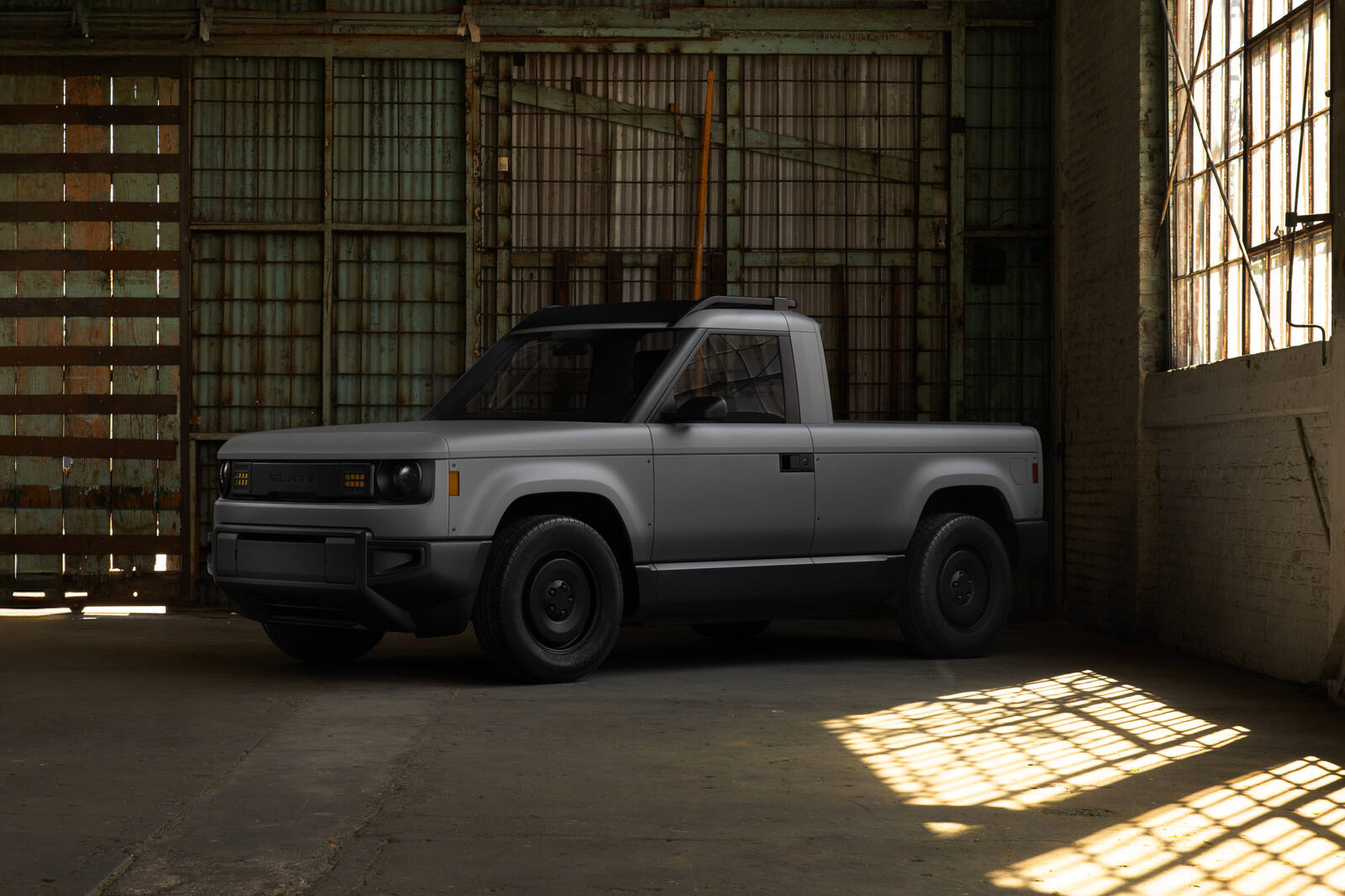
A “truck” is a vehicle used for hauling and carrying things, and it can also be used for everyday driving. The podcast is talking about a specific new truck called the Slate truck and whether cheaper vehicles can still be good to own. The main question is usually about value and how well it works over time.
Battery factories are places where EV batteries are made. If too many are built before people buy enough EVs, the business plans can fall apart.
Term
$7,500 tax credit
A tax credit is money the government gives you back (through your taxes) for buying something. Here, it’s described as a credit that made EVs cheaper to buy.
Rivian is a company that makes electric trucks and SUVs. The speaker is saying Rivian is already selling enough cars in New England that people are now watching what it will launch next.
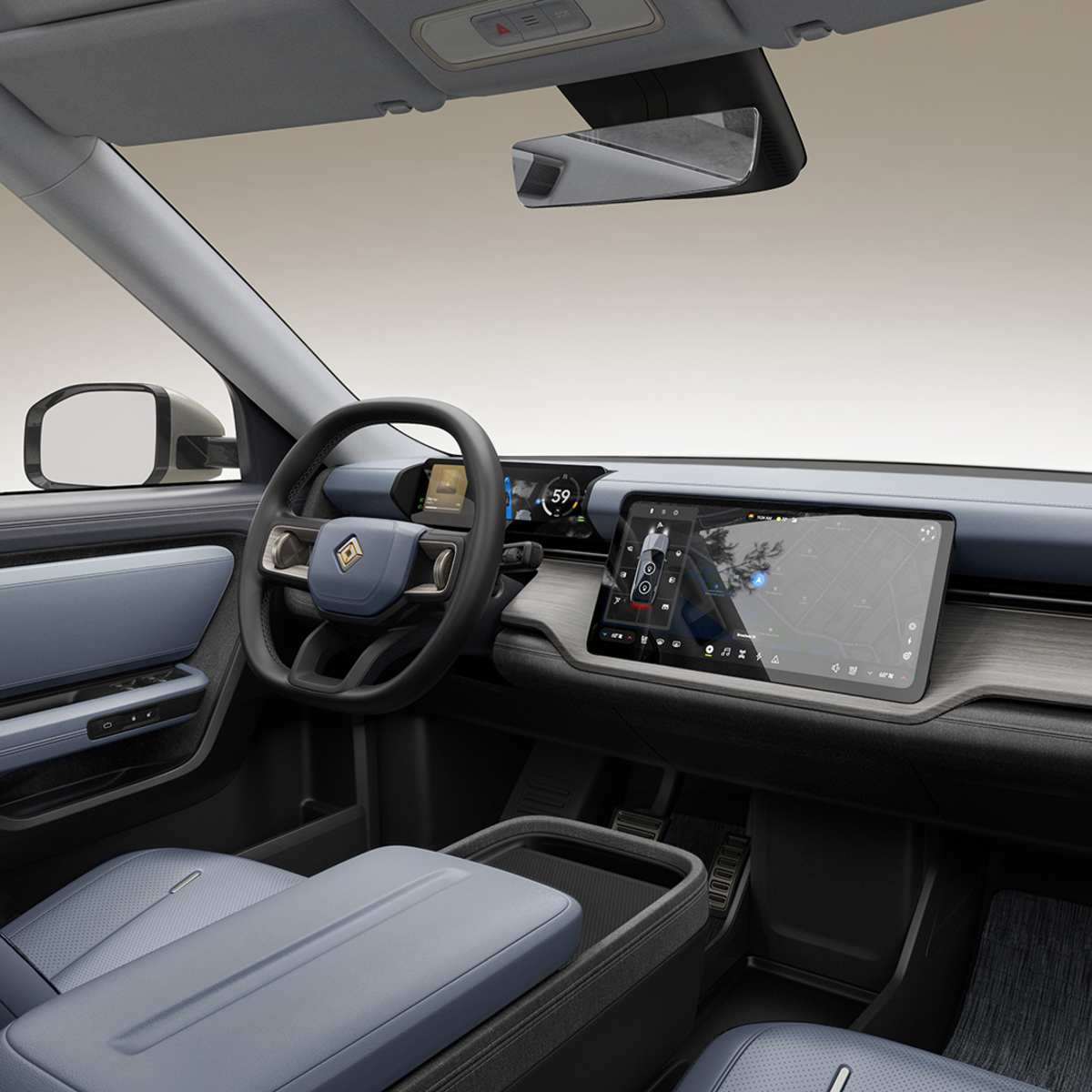
The Rivian R2 is a smaller, cheaper electric vehicle that’s meant to be easier to buy than Rivian’s bigger models. The host is basically saying it could attract a lot more people because it’s not as large or expensive.
Car
R3X
The Rivian R3X is another upcoming electric vehicle from Rivian. The point here is that Rivian is planning more than one new model, likely aimed at making EVs more attainable for more people.
The “EV market” means the overall world of electric cars—what kinds people are buying and what prices automakers are targeting. The speaker is saying the focus is moving from pricey EVs to cheaper ones.
A deposit is a partial payment you put down to reserve something. In this case, it’s used to hold a spot for a vehicle and show the company there’s real interest.
A test drive is when you actually drive a car yourself to see if you like it. Here, the discussion is about how that experience compares to deciding what to buy.
The Hyundai Tucson is a common compact SUV. Here, the person bought a Tucson with all-wheel drive because they wanted an SUV but couldn’t spend more than about $30,000.
Lane departure warning is a safety feature that watches the road lines and alerts you if you start to drift out of your lane. It’s designed to help if you’re distracted or getting tired.
A hybrid is a car that uses a gas engine plus an electric system to get better fuel economy. In this story, the person weighed the savings against the extra cost and decided it wasn’t worth it for them.
A spare tire is the backup tire you can use if one of your tires goes flat. The person preferred having one because they’re worried about getting stuck without a way to keep going.
A tire plug kit is a small kit you carry to fix a punctured tire by sealing the hole. The goal is to get air back in the tire so you can drive to a safer place or a repair shop.
The Toyota RAV4 is a popular compact SUV. In this conversation, it’s brought up because it’s a top-selling vehicle and many people like it enough to buy one (or move up to a bigger Toyota).
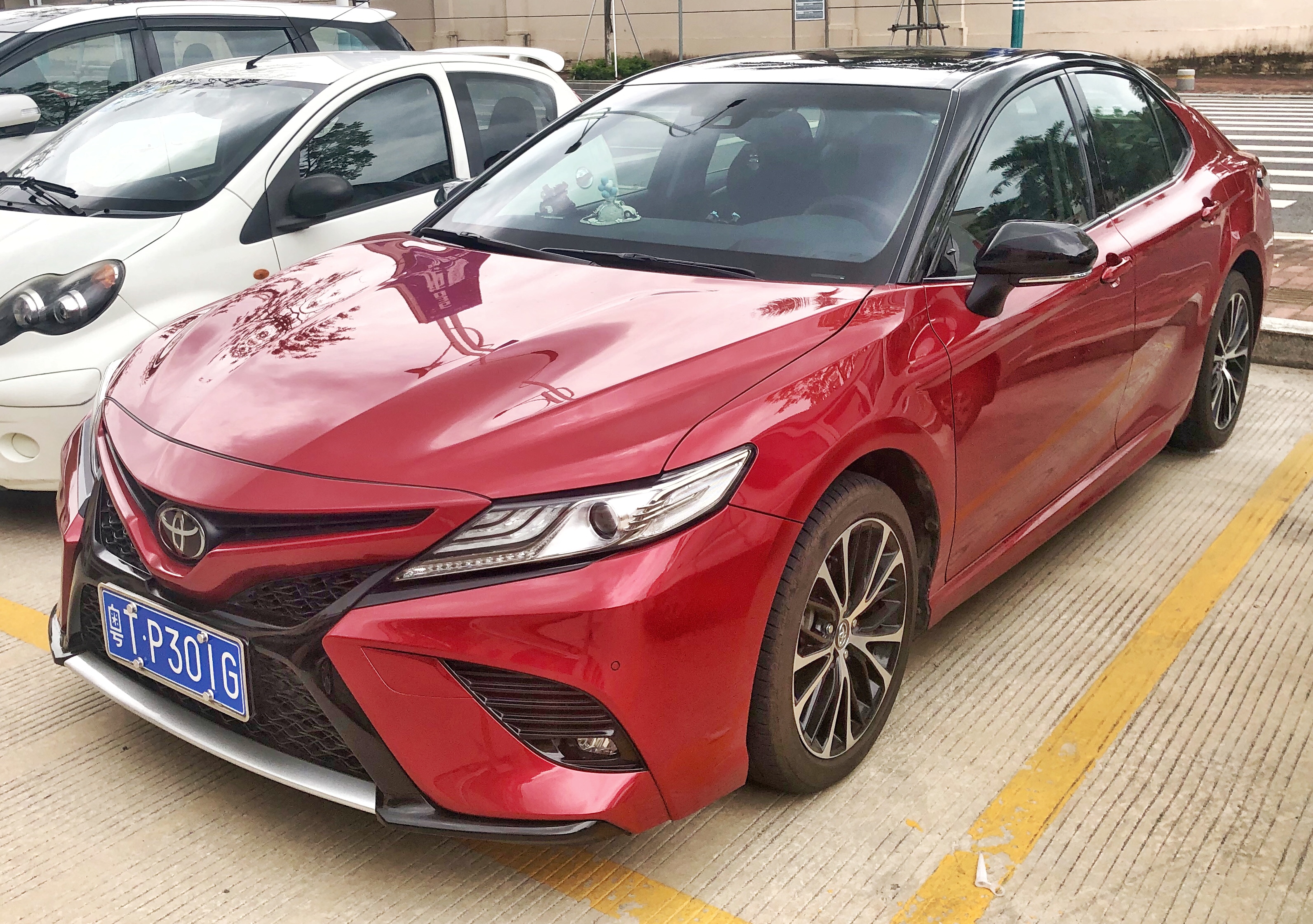
The Toyota Camry is a very common family sedan. Here it’s mentioned because Toyota has been pushing hybrid versions, which helps explain why hybrids are selling more.
The Ford F-Series is a very popular line of big pickup trucks. The hosts mention it to explain which vehicles sell the most, and where the RAV4 fits in that ranking.
The Ford F-100 is a pickup truck model from the Ford F-Series. Pickup trucks are typically used for hauling, towing, and general utility. It may be mentioned because the F-Series has been one of the best-selling truck lines.
Rental cars are cars that people borrow for trips through companies like Hertz or Avis. The speaker is saying many of the low-mileage used cars they looked at had been rentals, and that raised concerns for them.
“Hit from behind” means the car was struck in the rear. Even if it’s repaired, it can still mean hidden damage, so the speaker treats it as a red flag.
A bumper-to-bumper warranty is a warranty that covers a lot of the car’s parts for a certain number of years or miles. The speaker liked it because it reduces the risk of expensive repairs.
A drivetrain warranty covers the main components that move the car—things like the transmission and related parts. The speaker is pointing out that Hyundai offered long coverage, which made the new-car choice easier.
A trade agreement is a deal between countries that affects how products can be brought into another country. In this case, it’s the reason Canada can import a certain number of Chinese-made electric cars.
Instead of buying the car’s battery, you pay to use it. That can make the car cheaper at first, and you can sometimes pick a battery setup based on how you drive.
Term
swap in a new battery
Instead of waiting for an EV to charge, you replace the battery with a fully charged one. It can be faster for road trips, but it depends on having the right swap stations and compatible batteries.
Term
captive import situation
This means an automaker arranges for an imported vehicle to be sold under its own brand. Instead of you buying a random import, it’s handled through the normal brand channels.
DOT testing means the vehicle has been checked against U.S. safety rules. If it passes, it’s more likely to be legal and safe enough to be used on public roads.
A low speed vehicle (LSV) category is a regulatory classification for small, limited-speed electric vehicles. Because they’re designed for limited speeds (often around 25 mph), they can avoid some of the stricter requirements that full-speed cars face, which can make them easier to import and sell.
Term
trade issues
Trade issues are the rules and taxes that can make imported vehicles harder or more expensive to bring into the country. The speaker is saying this vehicle avoids some of that because of how it’s classified.
An extended warranty is extra coverage after the original warranty ends. It can help pay for certain repairs, but you should check what’s actually covered and what it costs.
An extended warranty is extra insurance for repairs after the original warranty ends. The key is that not everything is covered, and some companies make it harder to get repairs approved.
A recall is when the car maker says there’s a problem on certain cars and fixes it. It’s important to check because it can be safety-related and usually doesn’t cost you.
A manufacturer warranty is the warranty the car company itself provides. Repairs are usually straightforward because the shop is working with the brand’s approved parts and process.
A federal warranty is warranty coverage that’s backed by U.S. rules, not just the dealer’s promise. Here, it means the expensive hybrid parts are covered for a set time and mileage, so you’re less likely to get hit with a huge repair bill.
A CVT is a type of transmission that can adjust the “gears” smoothly rather than shifting in steps. The key point here is that this one uses gears instead of the usual belt setup.
Term
Toyota technology
Saying the CVT is “derived from Toyota technology” means the design traces back to Toyota’s engineering and manufacturing approach for that type of transmission. Enthusiasts often treat this as a reliability and refinement signal because Toyota has used similar CVT concepts across multiple models.
Fleet sales are when companies buy lots of cars in one go, like rental or service fleets. They usually pick a few safe, common colors to keep costs and logistics simpler.
Paint shops are manufacturing areas where cars are coated, typically involving multiple steps like surface prep, primer, basecoat, and clearcoat. The speaker notes that changing colors requires process adjustments (like nozzle changes), which adds cost and time.
A wrap is a sticker-like film that covers parts of a car to change its color or look. It can usually be taken off later if you want to change the style again.
Term
starlight
“Starlight” is a car option that typically makes the roof area look more like a sky, sometimes with lights. They’re saying the extra cost for it is similar to another add-on they’re discussing.
A 3D printer is a device that builds objects layer-by-layer from digital designs. Here, it’s being discussed as a way to create interior accessories for a car, implying a more customizable, DIY approach to parts and add-ons.
ABS helps keep your wheels from locking up when you brake hard. That matters because locked wheels can lose traction, and brake problems from moisture can make ABS less effective.
A power steering flush is when a shop replaces the fluid that helps your steering feel smooth. The host thinks it’s only worth doing if the fluid looks really bad.
Transmission fluid is the fluid that keeps the transmission working smoothly. It can wear out over time, especially if you drive in conditions that make the car work harder.
A drain and refill means you remove some of the old transmission fluid and add new fluid back in. The host prefers it because a full flush can stir up gunk and cause shifting issues.
The Toyota Prius is a hybrid car that’s famous for getting great gas mileage. Here, the host is using it to show that you can buy a new one for about $30,000 and still get safety features.
The Hyundai Tucson is a compact SUV, which is a car type made for carrying people and cargo. The podcast is comparing a regular Tucson to a Tucson hybrid, which uses both a gas engine and an electric system. People often compare them to see which one has the storage and everyday usefulness they want.
An internal combustion engine is the regular gas engine that burns fuel to make power. Hybrids still have one, so you still have some of the same maintenance as non-hybrids.
Battery life means how many years (or miles) a hybrid’s battery can keep working well before it starts to wear out. The hosts say that concern was common at first, but real-world experience helped answer it.
An inflection point is when things start to change in a big way. In this case, the speaker is saying car prices and the economy may be pushing more people out of buying new cars.
SUVs are a popular type of car that’s built for space and a higher driving position. The speaker is saying that more people buying SUVs (and pickups) has helped push vehicle prices up.
Pickup trucks are vehicles with a cargo bed in the back. The speaker is using them as an example of what people are buying more of, which can affect overall car prices.
The used car market is where people buy and sell cars that have already been owned. If new cars get too expensive, more buyers rely on used cars instead.
A Chevrolet Corvette is a sports car designed to be fast and fun to drive. It’s made for people who want a performance-focused car rather than a family or commuter vehicle. When someone says they’d like to try one, they usually mean experiencing that sporty driving feel.
It means using electricity for more of everyday life, especially transportation. The point is that EVs aren’t just cars—they connect to the electric grid and home power.
Autonomous vehicles are self-driving cars that can handle driving tasks without you constantly steering. The idea here is that they could be used on-demand, like a car that arrives when you need it.
“Self-driving cars” is just another way people say “autonomous cars.” The discussion is about how they’re already appearing in some places, but not everywhere yet.
Boston is mentioned as the place where the speaker thinks self-driving cars may still struggle. It’s part of the prediction about when and where they’ll spread.
LIVE
Today on Maine Calling, automotive news and advice.
If you're in the market for a new vehicle, there is a lot to consider right now.
Gas prices are surging again, so you may be considering an EV, but the federal credits expired in October.
The used EV market is super hot, and there are deals out there, but there are also models you'll want to avoid.
I'm Jennifer Rooks. Today on Maine Calling, we check in with a panel of automotive experts to talk EVs and much more.
What do they think of the new Slate truck? Are inexpensive Chinese autos ever going to be sold here in the US?
Do they have simple tips for saving gas? Maine Calling is just ahead.
Music
I'm Jennifer Rooks, and this is Maine Calling. Gas prices are again averaging more than $4 a gallon.
The price of a new car is averaging $50,000, and there are no longer federal rebates for electric vehicles.
So what to do if you need a new car? What's on the horizon?
Today, we're going to check in with our favorite automotive experts for advice.
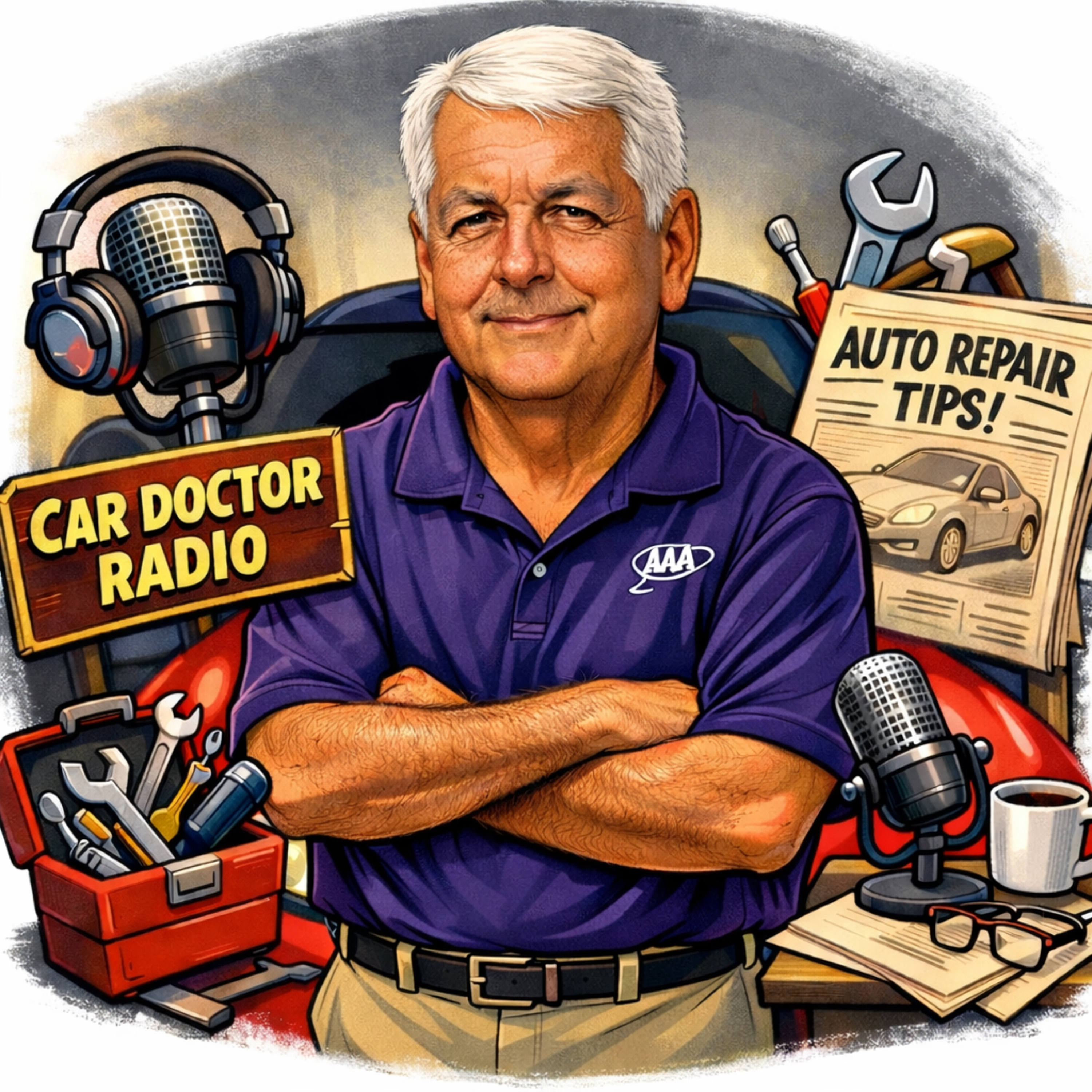
With us for the hour, John Paul, Senior Manager of Public Affairs and Traffic Safety at AAA Northeast.
He is also known as the Car Doctor. Maybe you've heard his podcast.
Michelin Mickey Maynard is a Boston Globe contributing columnist and author of The End of Detroit.
She also publishes Intersection, Everything That Moves on Substack.
And Craig Fitzgerald is Automotive Editor for DCI Marketing and is former President of the New England Motor Press Association.
Mickey and John, welcome back to Maine Calling. And Craig, welcome to Maine Calling.
As always, we invite you to join the conversation. Are you considering an EV?
Do you have questions about car repairs? Financing? Send an email to talkatmainpublic.org.
Post a comment on Facebook or Instagram, or give us a call, 1-800-399-3566-1800-399-3566.
Now we're going to turn to today's topic, cars. Welcome to all of you.
And Mickey, I'm going to start with you because you wrote a column in the Boston Globe recently that was really interesting.
It was talking about, and this is something we've talked about on Maine Calling before, how despite the fact that a few years ago,
American automakers were really focusing on EVs, electrical vehicles.
It didn't seem as though the public was ready to buy them, so one by one, they were falling off.
But now gas is $4 a gallon, and I'm going to just sort of hand it to you now.
Where does that leave American automakers?
So thank you so much for having me. The dichotomy of what's going on is that the Detroit car makers over the last five years or so
really dove into EVs and gave the impression that EVs were the future.
And not only did they announce plans to build EVs, but they also invested heavily in battery factories.
So at this point, a couple of those battery ventures have been abandoned.
Some of the EVs that they're planning to build have been abandoned. Ford took a massive charge against its earnings because it guessed wrong,
or at least it couldn't get its consumers to buy EVs in the large quantities that it was hoping for.
So right now, President Trump essentially wiped out all of the incentives for EV purchases,
including the $7,500 tax credit that actually prompted some people to go into EVs.
So you would think that the car makers would have been in a great position until gas prices went up.
And so now all the Detroit companies are kind of scrambling. They're trying to focus on people on, hey, we will have EVs coming.
But in the meantime, we've had some small companies that are very interesting to a lot of us that are emerging into the market.
And one of them is Slate, which is not owned by a small company.
It's an Amazon Jeff Bezos venture, and they're about to introduce their first EV truck at the end of the year.
And then Rivian, which is kind of a darling among people that follow the EV market.
They have introduced the R2 SUVs, and it's gotten rave reviews from the people that follow EVs.
I have not yet driven one, but I know that those folks are very enthusiastic about it.
Well, Craig, you've been nodding all along. Are you one of those very enthusiastic about the Rivian and the Slate truck?
I'm hugely enthusiastic about the Slate because it fills a huge hole in the marketplace right now for a relatively inexpensive vehicle.
You know, the starting price was originally kind of pegged at $19,995.
That's gone up now that the tax credit has gone away to about $27,000.
But that's still significantly cheaper than even something like the Ford Maverick, which when you actually get down to it, ends up being about $29,000.
It's a really interesting vehicle because there's no options on it, or I shouldn't say that there's no standard content on it.
If you want a radio in it, they give you a Bluetooth speaker.
If you want stripes on it, you can order stripes for it.
It's a really kind of an interesting way to sell a vehicle, and I'm very excited about it.
And then Rivian, you know, they're kind of proven at this point. They sell quite a number of vehicles in New England.
And we've been waiting for what the next iteration of that is, and the R2 and the R3X.
Like those are interesting vehicles to me. One of them is significantly smaller, almost the size of a Subaru Crosstrek.
So those are going to be interesting for a lot of people because I think what happened was initially with the EV market, it was like we were, we were all looking at Tesla, and they were selling $100,000 vehicles or $80,000 vehicles.
So the entire industry thought, let's just do that.
And now what they're focused on is a much more affordable vehicle, which is very interesting to me.
Yeah, so to jump in on the slate, for people who don't know, this is a pickup truck, and it is bare bones, and you add to it what you want.
If you want to make it into an SUV, you can do that. If you want a truck with a cab or, you know, four people could sit, you can do that.
And they ask people to put down $50 deposits, which I did just out of curiosity.
I'm not ready to get one yet, but they got 180,000 people to put down these $50 deposits, and now we can move on and put down a $500 deposit.
And even if they got half of those people, or even if they got 50,000 people to put down the deposit, that's going to be a significant vehicle in the EV market as the potential to be.
Every time we do this program, there are so many people who are in the market, kind of, for a car.
Maybe they're at that place where their car is needing repairs, and they are trying to figure out when they need a new car.
And one thing that's interesting to me, and I'm going to turn to you, John, is all of you get to test drive cars.
John, you are always telling me about what you've test driven, but you're often not in the market for a personal car.
But John, you have bought a car recently.
Tell me how you thought that through with all the knowledge that you have about what's out there, what's coming, what your needs are in New England, etc.
Like everyone else, I didn't take my own advice.
It was sort of interesting.
For people who have listened to the program before, I spent half my time in New England and half my time in Florida, and we had a car up here in New England that was old and rusty, and it was time to replace it.
We had a car in Florida that was 11 years old, but had pretty low mileage.
So I drove that car back up to New England and left my little SUV in Florida.
So I wanted something kind of in an SUV category, but I had a very specific budget in mind.
I wanted to stay.
I didn't want to go over $30,000.
And like Mickey said, looking at some of the pricing of new cars, and like you said, Jennifer, the new car prices are in the $50,000 range, and I'm just not prepared to spend that for a car.
So I ended up buying a Hyundai Tucson, sort of the base model, all wheel drive.
It has every advanced safety feature that can drive you crazy, you know, as lane departure warning and tells you when to take a break if you don't have your eyes on the road.
But it also gets reasonably good gas mileage.
The difference between the hybrid and that, and I encourage people to buy hybrids if they're trying to, you know, maximize fuel economy, but I looked at the price that I wanted to spend versus the price of the hybrid.
And in the kind of driving that I do today, it's going to take me 12 years to pay back that difference in cost and fuel savings.
So I'm like, you know, I'm going to spend $30,000 and I'll get the car. It does everything I need it to do.
My first trip in it, it averaged 36 miles to the gallon. So pretty fuel efficient. It does everything I need to do. It works just fine.
And again, you know, is that the car recommend for a lot of people?
It works out fine. And somebody said to me, why didn't you buy the hybrid? You could have bought the hybrid. And one key reason the hybrid doesn't come with a spare tire.
And I like having a spare tire as crazy as it is. I like having a spare tire.
How many times have you lost a tire?
How many times have you lost a tire?
It's happened enough where I wouldn't want to be stranded where I've been stranded.
And I carry an air compressor with me, a tire plug kit. So if I can actually, if it's a nail and the tire is in damage, I can at least put a plug in it, air it up and get on the road again.
But I have this fear of hitting something and blowing out a sidewall and being stuck. And I hate that.
I really appreciate your honesty, John, because I think that we all have a different thing that's important to us when we're shopping for a car.
You know, for some people, maybe they don't want to admit that they want something that's cute.
Other people may not really admit that they want people to think they're cool.
Or some people, like you said, want to have a spare tire.
I know somebody who wants to have a stick shift, which is harder and harder to come by.
But you all all give us terrific advice, but it is important to acknowledge that we are all different and we don't all want the same thing.
And Craig knows I'm just cheap.
I was, I was going to say that, you know, that is Yankee advice.
If I've ever heard it is you want to listen to John Paul because like he's he's the thriftiest man I know.
So as the daughter and granddaughter of New England, I have to try to say that the car I own before this one I had for I think 11 years and this one is now 10 years old and I'm a hybrid driver.
And this has been a year when hybrids have really taken off.
It's something like one out of five vehicles sold so far this year as a hybrid.
And part of it is because Toyota has gone all hybrid with a couple of its vehicles with the Camry sedan, which people might own and with the RAV4 small sport utility,
which is actually the number one selling vehicle behind the Ford F series and the Chevrolet Silverado and those are big pickup trucks.
And I believe it's number one in Maine.
Oh, really? Well, I'm not surprised.
My brother had a RAV and loved it and now has the one step up the Highlander.
Yeah, we do have to go to a break pretty soon, but I've got to ask you, John, you bought a new car, right? Not a used car.
Yes, yes, I bought a new car.
And what was your thinking behind that?
All the all the used cars I looked at.
And I wanted something with lower mileage and most of them were previously, you know, Hertz Avis rental cars.
And the ones with low mileage all had been involved in some kind of crash.
When you do the when car facts and one of those things, it's like, oh, this one only has 3000 miles on it.
Yeah, because it was hit from behind and, you know, has some history.
The ones that rental car companies generally if the cars are in decent shape, they're keeping them for 30, 40, 50,000 miles.
One of the reasons I bought a Hyundai is five years, 60,000 mile bumper to bumper warranty, 10 year, 100,000 mile drive train warranty.
I wanted to maximize as much warranty.
There wasn't a lot of difference in price between a late model used and new.
So I went with new.
All right, well, we do need to take a quick break.
Your questions.
This is main calling when we come back.
Welcome back.
This is main calling.
I'm Jennifer Rooks.
Our topic today, the latest news from the world of cars, trucks and SUVs.
My guest, Mickey Maynard, who's Boston Globe contributing columnist, author of the book, The End of Detroit, and she publishes intersection.
Everything that moves on substack.
John Paul is a senior manager of public affairs and traffic safety at AAA Northeast.
He's also the host of the car doctor radio podcast and Craig Fitzgerald is the automotive editor for DCI marketing.
You can share your comments and questions.
Send a brief email to talk at mainpublic.org.
Comment on our Facebook page or Instagram or give us a call at 1-800-399-3566.
Again, 1-800-399-3566 calls already coming in.
But before we go to this, I want to circle back to talking about EVs and talking about saving money.
And Mickey, I want to ask you so much has been made about this new generation of EVs that are from Asia, specifically China.
How inexpensive they are, how great they are. Will Americans be able to buy those anytime soon?
Well, we won't be able to buy them anytime soon in the United States, but they are going to be available in Canada.
And I think the first ones might already be arriving.
Canada reached a trade agreement with China to allow 48,000 Chinese built EVs into the country and then that will max out at about 78,000.
And I think all of us are tempted to just cross the border and go find a dealership where they'll be sold to take a look at them.
There's been pushback, obviously, from the union that represents the Canadian auto workers because they're very afraid that these vehicles will take sales away from the other companies and then eventually jobs away.
But I'm very curious to see them. I've only seen them at auto shows. I haven't had a chance to actually drive one.
The thing to remember about the Chinese market is that it's vast and it's very diverse and you have a situation there where you can actually kind of rent a battery.
So if you only use your car for a few months for city driving and you don't need that much of a charge, you can just get one size of a battery.
And then if you start to do more long distance driving, you can take it in and swap in a new battery. And it's the kind of thing that we can't really fathom yet, but which could become more familiar if things like that go that way up in Canada.
Here's the interesting thing for Maine, too, is we see a lot of Canadian tourists. And I'll take you back to about 1984, the very first Hyundai I ever saw.
Maybe it was earlier than that. 83 was a Canadian tourist who would come down for the summer and I was in Ogunquit and happened to see this car.
I thought it said Honda on it when I looked at it at first and I was like, no, that's Hyundai. I don't even know what that is. So we're going to start to see these things, maybe not faster than anybody else, but we will definitely see them in the next few years.
And that I think is going to spur some interest, you know, the idea that you're going to be able to buy one from somebody is probably not going to happen, at least for the next several years.
But I don't think there's any way to kind of hold that off forever, one way or another, we're going to get these things.
So, you know, whether it's a captive import situation where a Ford motor company or somebody, you know, labels a Chinese vehicle as their own, you know, that may happen at first just the way they did with Japanese pickup trucks, you know, early on.
That's the way you're going to start to see these things.
John.
This is a real vehicle and it passes all the DOT testing. This to me is like that small step for some of these Asian imported EVs.
And this one is kind of unique because it falls into the small vehicle or low speed vehicle category, it bypasses a lot of these trade issues.
And it's $17,995 delivered to your doorstep. They're setting up servicing and things like that. Really, really sort of an interesting idea.
This guy's claim to fame was he's imported literally a billion vehicles, but they're all Happy Meals toys.
He was a guy who literally imported all of the Happy Meals cars and he said it was just very similar to this. He actually had to have special kinds of tires, axles and things.
So they met all the safety standards for toys in the United States and he's basically taking that knowledge and doing that with this little small vehicle.
And it looks like it's going to work. It's got like an 80 mile range. You'll do 25 miles an hour. You can put four people in it. It's got room for stuff in the back. It's kind of a neat little vehicle.
There are Chinese motorcycle manufacturers that are doing gangbusters here in the United States right now. CF Moto is doing incredible work. They're selling motorcycles, ATVs, side by sides.
I think they have watercraft. They're selling everything. And it's kind of like, if you look back at the way Toyota and Honda and Nissan started selling cars in this country,
their original dealers were like a guy who had a gas station and he was able to pick up the franchise.
And that's exactly the way CF Moto is really making a foothold here in the United States. And you can see how they're offering a product that's significantly cheaper than the vehicles that we're able to purchase now,
but they're great quality vehicles and it's just providing an avenue for people who would normally be priced out of the market for something new.
We're going to go to Mark, who's calling from York. Hi, Mark. Go ahead.
Hi. Hi, how are you? Yeah, I have a quick question about extended warranties while I purchased in 23 a new Ford Maverick hybrid.
And of course, this will be my year by December. I'm going to be at my three year limit.
And I'm wondering, should I get extended warranty? Is that a good way to go and or should I just try to save a little money every month and keep that in case I need repairs?
That's a great question, Mark. Which of you wants to join in, John?
Yeah, extended warranties are kind of interesting. If I had to go with an extended warranty and AAA sells extended warranties in a lot of locations,
I would definitely go with either the manufacturer and I hate to be self promoting or AAA only because there's so many of these extended warranty companies that promise a lot and don't deliver that much.
They become very difficult to deal with from a repair shop standpoint. Sometimes they'll require the parts to be purchased.
The lowest price part available, which if anyone's bought any parts on the internet lately, a lot of them are just terrible.
Where at least when you go with the vehicle manufacturer, you know, you're getting Ford Motor Company parts, which really helps a lot.
For me, I'm not a big believer in extended warranties. I know probably my bosses would work hate me saying that.
But for me, I would rather talk a little bit of money away and your is your Maverick a hybrid?
Yes.
Yeah, I mean, so you have a really good warranty on the hybrid drive system.
So for me, you know, talk a little bit of money away every month.
If you think that's a good idea to keep a little emergency fund for repairs.
Other than that, it's it's, you know, keep an eye on on recalls because that car has had a fair amount of recalls.
But yes, other than that, I've been.
Yeah.
Yeah. Other than that, just maintain it and deal with the factory warranty.
That's what I thought, because my last vehicle was a Ford pickup.
And what I did when I stopped, when I was done making my payments, I'd make the payments to myself and do a savings account.
And then I did money to do any repairs.
And then the money left, I used as a down payment when I bought a new vehicle.
So I may go.
You're one of the smartest people I know.
Yeah.
All of the, all of the hybrid.
A car guy from Canada, he said, he said, that's the way to do it.
He said, you're already making the payment.
Even if, even if you want to cut it by, you know, 20%, keep making yourself, keep making that payment that's already budgeted in.
And then you're going to, you know, you're going to have some money to do your repairs and maybe some left over to be able to buy another car.
Mark, that may be the best advice of the hour.
Craig, what were you going to say?
The, the, the, to John's point, the hybrid technology in that vehicle is protected by a federal warranty.
So, and that's John, was it eight years, 100,000 miles, is that correct?
And that, and that, that's the complicated, expensive part of that vehicle.
So, you know, you're already covered there and that's a unique hybrid system.
It's, it's a really interesting CVT in that it's, it's gear driven, which is different than a lot of belt driven CVTs.
It's derived from Toyota technology.
So it's solid to begin with, but you're protected on the expensive stuff.
I would keep saving the money and, and, and I think you had the right thought.
Mark, thanks for your call.
What's the deal? It can't be customer choice. There is little choice.
Mickey, I'm going to turn to you because Craig is, I confess, I drive a red, red car and I am with him.
What the heck is wrong with some colors?
So I agree totally. I had a red Prius before I have my gray Prius and I hate the color of my car, but, you know, it was good, it was good price.
One of the things that happened, two things happened. One is fleet sales.
So if you think about sales to Hertz, if you think about sales to companies that will buy 100 cars a year, that sort of thing.
The grays and the whites and the blacks are because of fleet sales.
Fleets just want, give me 75 and gray.
They don't want five blue ones and 10 yellow ones and that kind of thing.
It's actually expensive to paint a car and I've been in the paint shops and many, many factories and the process is an expensive process.
And they would just as soon have you buy, you know, sell you the 10 gray rather than change the nozzle every single time to paint the car.
And I think what's happened is as we've moved into bigger vehicles, as we've moved into pickup trucks and SUVs, which are now 80% of the market that know, I wouldn't say nobody's buying them for appearance.
Maybe they're buying them for intimidating appearance, but color has been less important as the market has shifted into SUVs and pickups.
Now, John, you just drove a Subaru that was not black, white or gray though, right?
No, I've driven a couple of cars lately that have not been black, white or gray.
And the color to me really does stand out.
But then again, the new car I just purchased is, I think it's called Hampton Gray.
And I live in a very touristy neighborhood and I was staring out the window the other day and I'm looking and I'm like, well, I have a gray car.
They have three gray cars across the street visiting the people next door to me have a gray car.
The woman down the street has a gray car and like gray is, I think gray is the second or third most popular color right now in 2026.
The car we just got rid of was yellow and it really stood out.
It stood out because it was a fun little color car.
When you came out of the grocery store, you knew which car was yours.
Exactly, exactly.
It also left a pile of rust wherever it went.
But, you know, the downside of that, but you're right.
Color has become, you know, some of the Stalantis cars have some pretty interesting colors.
Kia has some pretty interesting colors.
The color car that I was sort of interested in was a green, but I couldn't find one.
So I want gray and, you know, my other Hyundai is also gray.
So, you know, I guess I'm just a boring person.
Here's another pitch for Slate too.
Like their approach to color is you can pick any color you want.
It's a wrap.
So the vehicle has a lot of plastic panels on it and it's just wrapped in any color you want.
And it's pretty amazing.
Like you can do any, like it's outlandish, the kinds of things that you can choose.
And it's a little bit of an upcharge, but it's not, like it's the same upcharge that you might get charged for, you know, a starlight.
Micah paint from Toyota or from Mazda or something.
That's a $500 upcharge in a lot of cases.
So that's the upcharge for the wrap and you can get it in any color you want.
And Craig, I think, don't they have that wrap as a DIY wrap too?
Can you do it yourself?
Yeah, correct.
And what's neat about Slate is, you know, you get a slate and then you have to, you pretty much want to go on by a 3D printer afterwards,
because you could 3D print all the accessories on the inside of the car.
So it's an interesting idea.
So many ways that everything is about to really change, but we do need to take another quick break.
This is Maine Calling.
We'll be right back.
Welcome back.
I'm Jennifer Rooks.
You're listening to Maine Calling today on the show.
Car Advice.
My guest, AAA's John Paul, Boston Globe, contributing columnist, Mickey Maynard and Craig Fitzgerald, automotive editor for DCI Marketing.
There's time to get your question in.
You can send a brief email to talkatmainpublic.org or post to our Facebook page or to Instagram.
So many questions coming in by email.
I'll try to get to a couple of them.
Here's one from Frederick.
I have a 2020 Camry with about 80,000 miles.
I drive at a mix of highway and local roads.
My Toyota dealer says I need a break and transmission and power steering flush.
True?
How can I be sure?
John, I'm sending it back to you.
Brake fluid definitely is a good idea.
Brake fluid tends to attract moisture.
Moisture is the enemy of any brake system, especially anti-lock brake systems.
Power steering flush is an add-on thing that, unless the fluid looks like maple syrup, I wouldn't bother with it.
Transmission fluids in that model Toyota, Toyota says it's good for life.
It is not.
It tends to break down over time, especially if you get stuck in the snow and you spin the tires up a lot, you can overheat the fluid.
I'm not a big believer in totally flushing fluids because what happens is there's a certain amount, especially with Toyota products,
there's a certain amount of clutch material that actually, as it starts to break down, helps actually improve the shifting of the vehicle.
So I would do a drain and refill, not a flush of the transmission fluid, where the car is six-year-old and has 80,000 miles on it.
It's not too far along to worry about anything bad happening.
It's a good mileage to do it, but I would just do a drain and refill.
I wouldn't do a flush.
Sometimes doing a flush moves stuff around too much and can cause some problems.
Okay, an email from Ann.
I just heard your guest explain that the vehicle he was able to buy for $30,000.
He implied that a hybrid at that price wasn't possible.
I just brought a brand new Prius last month for $32,000.
It is the basic model, but it has all the bells and whistles for safety.
I'm getting between 60 and 70 miles per gallon.
I did have to order it and wait for it to be shipped from Japan, which took about six weeks.
But it is possible to get a hybrid vehicle for about $30,000 if you're patient.
So to be clear, John, you were looking for an SUV.
Yeah, I was looking for the difference between a Tucson and a Tucson hybrid.
My lifestyle is I sort of need the storage capacity of an SUV.
So that fits my needs as great as a Prius is.
You can put a ton of stuff in a Prius.
My wife just doesn't like driving the Prius.
So I think I've driven every generation of Prius, including the first one that came out that was right hand drive that came directly from Japan.
So I'm a big fan of Priuses.
Just in this particular case, that Tucson hybrid was going to be about $5,000 more.
All right, let's see an email here from Rob.
I own EVs and well, I get why many people want to own a hybrids.
I never did because you still have oil changes and mechanical maintenance for the fuel part of the engine, right?
Greg, is that right?
Correct.
Correct.
Yeah, so you still have to maintain that engine just as you would any other engine.
So things like timing belts and coolant hoses and all of the kind of things that are ancillary to or that make an internal combustion engine work.
That's all true with a hybrid too.
But it's a bridge, you know, I think there was some confusion about like how many hybrids were actually out there and how many, you know, like it took us a while to figure out how long those batteries were going to last.
It took us a long, long time to understand how reliable these vehicles were going to be.
They've proven themselves to be incredibly reliable.
They're used as taxi cabs in New York City with, you know, hundreds and hundreds of thousands of miles, abusive miles on them.
And they've done completely well.
So, you know, yes, you're absolutely right. There is maintenance that is required in a hybrid, but I think the payoff is that they're not that much more expensive than a traditional internal combustion engine.
And it's not quite the sort of educational leap as an EV is and I understand that like I love EVs, but the understanding where you're supposed to charge them and how they work and all that kind of stuff.
It's a leap that a lot of people don't want to take.
So we need to kind of educate people better and show them that it's an easy process and that will start to start to pick up as well.
We have a few minutes left and I want to spend that time talking about the future.
We've already heard about ways that cars, the automotive industry are changing.
We've already heard on the show about in China, you can swap out a battery like a piece of Lego for one that's stronger or designed for longer distances.
We've heard about cars that have DIY elements with 3D printers.
We've been talking about different vehicle that only goes 35 miles an hour, but is a real car.
There are bigger changes afoot though, aren't there, Mickey?
There are changes in the way we are going to finance and I'm going to use the word buy, loosely buy cars in the future.
It's going to be entirely different in the pretty near future, isn't it?
I think we're headed to an inflection point because the price of a car, as you were saying earlier, is now close to 50.
And I should say the reason for that is because the SUVs and the pickup trucks have boosted the price of buying a vehicle.
You have people who are paying more than $1,000 a month in car payments and if you match that against this economy,
what's happening is that people in sort of middle income ranges and below are really being priced out of buying a new vehicle.
Obviously, two out of three vehicles sold in America are used, so used car market is there, but you've got a couple things going on.
You've got prices going up, you've got people's incomes being stretched, and then you've got younger people who I live in Ann Arbor,
which is a college community and so we see a lot of this year, people who want bike lanes, people who ride their skateboards,
people who want walkability, public transportation, obviously that's true in many parts of New England.
And so you've got this younger generation from 18 to 30-ish that doesn't own cars and isn't really interested in owning cars
because their lifestyles are different and you've got this push for more density in housing where you won't have as many parking spaces in an apartment building or a condo building.
And so there's a bunch of generational things going on, income things, lifestyle things, and attitudes towards vehicles.
And while we still have lots of people who love cars and SUVs and pickups, that general enthusiasm that we saw for them among American societies
two generations ago has kind of evaporated and so now the car makers are trying to not only predict what kind of vehicles we will want,
but whether we will want to own vehicles at all.
And if we don't own vehicles, aren't there going to be models like car clubs where you are a member and you get a certain number of hours or days a month
and the car will come but you're not in Craig. The car will come to you when you need it.
So several of the manufacturers have kind of embarked on this thing. GM did for a little while where you leased a trailblazer and oh, you know what, over the weekend I'd love to have a Corvette
or I'd like to try the Cadillac and there was a kind of swap model and it didn't work out.
They just never got it off the ground and Hyundai tried it too with, it was like, it was a ladder kind of a step where you went from the internal combustion,
you could try the hybrid, you could try the EV version of the same vehicle and none of these things have really gotten off the ground and I think it's because when people actually get a hold of a car they don't want to give it up.
They sort of, it's almost like your attorney, you hate all attorneys but you love the attorney that you have that's gotten you through your legal issues.
It's a personal vehicle and once you've given it up, it's no longer yours, it's like a rental model and it sort of hasn't worked up to this point but I'm very interested to see how it works in the future if it's almost like a subscription model to a specific car.
That may be something that has a lot more legs.
I'm going to talk about Tesla Motors website which I did when I wrote my column for the globe and you read what they're saying about electrification.
They're not talking about cars and trucks anymore, they're talking about going across society and I think that has something to do with the grid as well and we know Tesla sells home batteries as well as vehicles.
What they're trying to do is say we're going to participate in this but don't just think of it as vehicles, we're going to be participating in this electrification of society.
I think that's a very interesting approach and it kind of harkens back to the very early days of the automobile when nobody knew what role automobiles were going to play in their lives.
Yeah, I mean think about people are using horses and buckies back then. John we have about a minute left, go ahead.
To take that one step further that's where autonomous vehicles could really fit in and especially electric autonomous vehicles where the car goes away when you don't use it.
And then when you require it, it just suddenly shows up at your house. Now to take Craig's step a little bit further, people like cars who have a car, they name their car because it becomes a part of the family.
So it's kind of interesting to see where it will all go in the future, especially if car prices continue to jump up the way they have been.
And you mentioned autonomous cars, a lot of people call them self-driving cars. John, a few years ago we had lots of conversations about them but we don't see that much going on anymore.
I know that in places like Los Angeles and Phoenix and San Francisco, they are everywhere. In 15 seconds, what's your prediction of when they will be everywhere on the East Coast?
It's quietly happening and all the technology is getting people used to taking their hands off the wheel.
They're coming to Boston, so although I bet they'll be lost in Boston just like the rest of us.
I give it a decade before it actually, we see, you know, real traction.
Alrighty, great predictions to end the program. The voices you just heard.
Craig Fitzgerald, automotive editor for DCI Marketing and former president of the New England Motor Press Association.
John Paul, senior manager of public affairs and traffic safety at AAA Northeast.
He is also a host of the Car Doctor radio podcast and Mickey Maynard, an author, a columnist for the Boston Globe, and she publishes Intersection, Everything That Moves on Substack.
Today's sound engineer was Sandra Harris.
Main Calling is produced by Cindy Hahn and Jonathan Smith.
You can go to maincalling.org for our audio archives and to subscribe to our weekly newsletter.
Tomorrow on the program, what to know about squid and what researchers are learning about this fascinating marine creature.
I'm Jennifer Rooks. You have been listening to Main Calling on Maine Public Radio.
About this episode
Gas prices are climbing and federal EV credits expired in October, reshaping how people shop for electric and hybrid vehicles. Guests compare automaker EV bets, battery investment risk, and emerging players like Rivian and Slate, while hosts dig into why smaller, more affordable EVs are the new focus and how deposits gauge demand. The show also covers practical buying decisions—new vs rental used cars, warranty strategy, and maintenance tips—plus a forward-looking debate on electrification and autonomous, on-demand mobility.