The Toyota Corolla is a small car that is very popular because it's easy to drive and doesn't use much gas. Many people like it because it's dependable and doesn't cost a lot to keep running.
Chevrolet is another car company that makes many different types of vehicles, like trucks and cars. They are well-known in the United States and have a loyal customer base.
Jeep is a car brand famous for making vehicles that are great for off-roading and adventures. Their cars, like the Wrangler, are built to handle tough terrains.
Dealer markup is when a car dealership adds extra money on top of the suggested price from the manufacturer. They do this to make more profit, especially if a car is very popular.
MSRP is the price that the car maker suggests dealers sell the car for. It's like a starting point for how much you should expect to pay, but sometimes dealers charge more or less than that.
Mazda is a car company that makes cars known for being fun to drive. One of their most famous cars is the Mazda Miata, which is a small, two-seater convertible that many people love because it's sporty and enjoyable.
The Chrysler PT Cruiser is a small car that looks a bit old-fashioned and has a lot of space inside. It was very popular when it first came out, but now not many people want to buy it.
Southeast Toyota is a company that helps deliver Toyota cars to dealerships in the southeastern U.S. They also add extra features to the cars before sending them out.
Gulf States is a company that helps deliver Toyota cars to dealerships in Texas and nearby areas. They also add features to the cars before sending them out.
Factory installed packages are extra features that are added to a car while it is being built at the factory. This can include things like better sound systems or safety upgrades.
Dealer installed accessories are extras that a car dealership adds to a car after it’s made. This can be things like tinted windows or better sound systems that you can buy when you get the car.
Distributor installed packages are extras that are added to a car by the company that sells it to the dealership. These can be features that make the car more attractive to buyers but are not made by the car manufacturer.
The Toyota RAV4 is a small SUV that many people like because it's easy to drive and has a lot of space inside. It's a good choice for families or anyone who needs a reliable vehicle.
The Toyota Crown is a large, luxury car made by Toyota. It's designed to be comfortable and has many high-tech features, making it a popular choice for those looking for a premium vehicle.
The chip shortage is a problem where there aren't enough computer chips available for car makers to use in their vehicles. This means fewer cars can be made, leading to less choice and higher prices for buyers.
MSRP is the price that car makers suggest dealers sell their cars for. It's like a starting point, but dealers can charge more or less depending on demand.
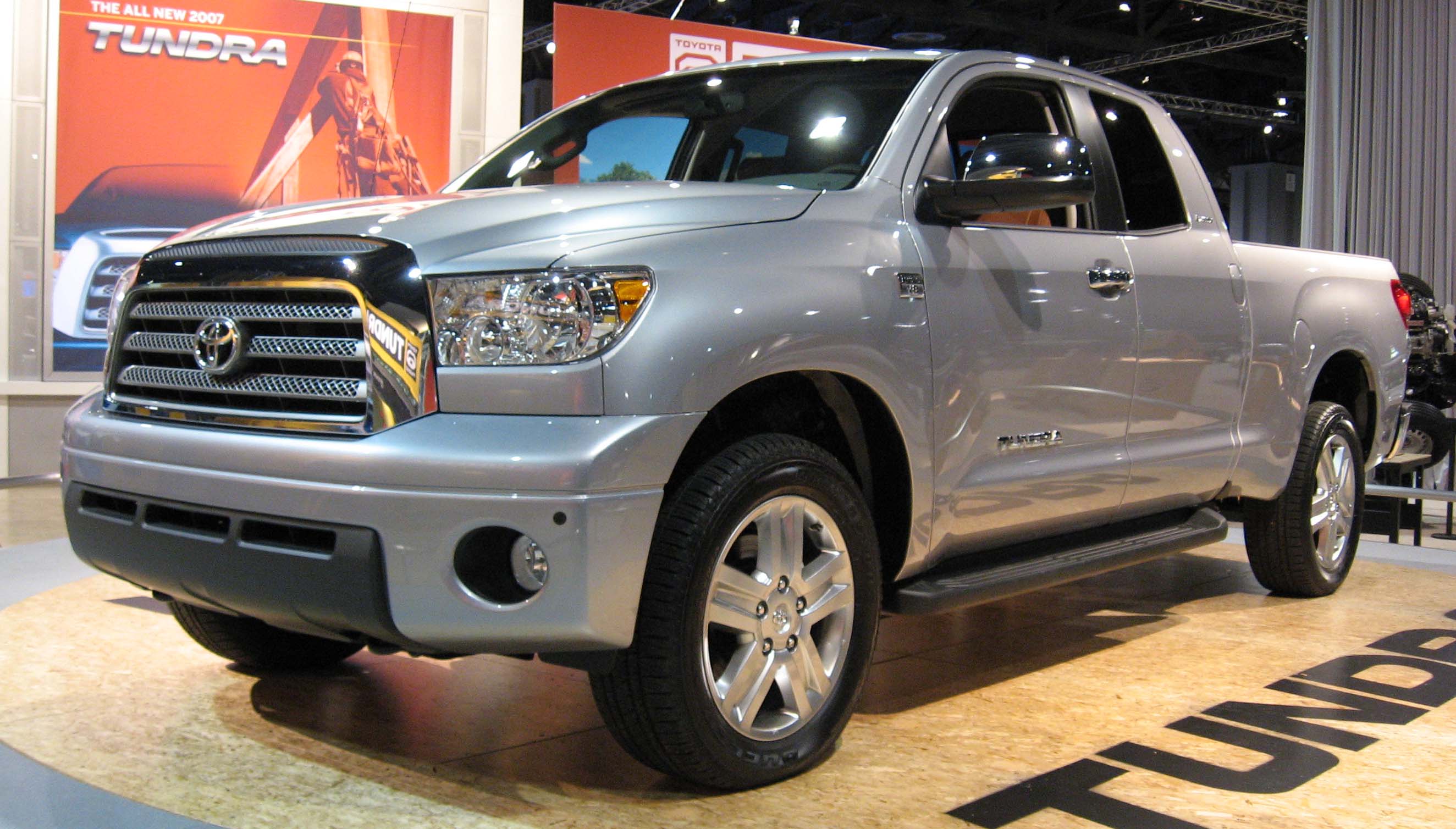
The Toyota Tundra is a big truck that can carry heavy loads and is great for work or outdoor activities. It's known for being tough and lasting a long time, but it can be quite expensive to buy.
The Ford Maverick is a smaller, less expensive truck that is good for people who need a truck but don't want to spend a lot of money. It's designed to be practical and efficient.
Diesel engines are engines that run on a special type of fuel called diesel. They are often used in big trucks because they can go a long way on a small amount of fuel.
A four cylinder turbo engine is a smaller engine with four cylinders that uses a turbo to make it more powerful. It's often used in cars to help them go faster while still saving gas.
A V8 is a type of car engine that has eight cylinders arranged in a V shape. It's known for being powerful and is often found in sports cars and trucks.
A six cylinder engine is a type of car engine that has six cylinders. It's known for providing a good mix of power and fuel efficiency, and is commonly found in many cars.
The Toyota Tacoma is a smaller truck that can be used for work and play, especially if you like going off-road. It's known for being tough and reliable, making it a favorite among truck lovers.
LIVE
Dear Savvy, Toyota says you can have it all, with the Camry, the Corolla, and the Corolla
Cross.
You've got the tech, you've got the drive, and you've got Toyota value that spells affordable.
You ready?
Find yours at Toyota.com.
Toyota, let's go places.
It's noon here in Ventner City, New Jersey, where it's ice cold, and Washington, D.C.,
and this is Carage Live for Wednesday, January 28th, with your hosts, me, Ray here in Ventner
City and Zach, well, live in his apartment in Washington, D.C., how are you today, handsome?
I'm doing fantastic.
Happy Wednesday, January 28th, everyone.
Today's show is brought to you by CarEdge.com.
For those of you that are new to the channel, CarEdge Live, we go live Monday through Friday.
We talk about all things auto industry, car buying, things like that.
My dad and I, over the past six years with our incredible team, have built CarEdge.com.
For those of you that are unfamiliar, CarEdge provides a car buying service that takes care
of research, dealer outreach, and even negotiation.
We learn what matters to you.
We contact dealers, compare real offers, and help you get the best deal without the stress.
I encourage everyone to take a peek back at CarEdge.com and learn more about how we are
helping thousands of people every single month.
Dad, today on the show, we're going to talk about Toyota and the major problem that they
have.
Now, this is, to be very clear, a privileged problem.
We're going to start here.
Kelly Bluebook just yesterday came out with their brand watch, their annual, or twice
year, excuse me, come out with a list of the brands that are getting the most consideration
from consumers.
Do you have a guess, Dad?
Which brands?
Don't read this.
Don't read it.
Close your eyes.
Which brands topped the leaderboard with the most consumer consideration?
Keep those eyes closed.
Eyes are closed.
I'm trying to use Braille on my computer screen, but if I had the guess, it would be the two
brands with the lowest market day supply, and that would be Toyota and the Lexus.
All right.
So this is the KVB brand watch.
Let's scroll down here, non-luxury vehicle brands that are getting the most consideration.
It's not even close.
It's Toyota.
They're at 35% of consumers are considering a Toyota, Chevy's at 30%, Ford's at 29%.
You can see the list so on and so forth.
No wonder things are so bad at Chrysler, Dodge, Jeep, and Ram.
They are way down on the list.
You can see here, Dad, by and away, Toyota has the highest level of brand consideration.
You're now probably thinking, Zach, why is that major trouble at Toyota?
What can you be possibly saying?
Well, first, let's look here at luxury as well, which Lexus leads by not as much of
a landslide, but by three points over BMW and Cadillac, Mercedes-Benz.
Lexus is the most highly considered luxury brand.
The trouble is, Dad, in what you just prescribed, which is when we go over to the day's supply
of inventory, this is what we're looking at for Toyota and for Lexus.
They're right above my dad's head on the screen.
Lexus has a 28 days supply of inventory.
Toyota has a 33 days supply of inventory.
No one else is even close to that.
The industry averages a 76 days supply of inventory.
Dad, Toyota has a major problem in that they are too successful right now and that their
dealers actually don't have enough vehicles, both Toyota and Lexus, to sell to customers.
They have a huge problem in that regard.
Well, you know, I do like the way you frame this.
And for those of you who are suggesting that the today's title might have been a little
clickbaity, you know, I would say it's Ned Beatty's cousin, clickbaity.
Yeah, they've got a problem in that they are producing about as many cars as they
possibly can for North American consumption.
And they they still can't satiate the appetite of their customers out there.
And if you want to say there's trouble, you know, Toyota did drop two points
in 2025 compared to 2024.
But yeah, I mean, they have long had a great reputation for quality products,
reasonably priced.
And now they're in a position where the demand for their products or the consideration
for their products far outstrips the availability of their products.
You know, if you if you are a Toyota or Lexus dealer, you have basically been given
the keys to the printing press and you can print all the money you want because you're
making a fortune at those stores.
Yeah, that's exactly what's happening.
That is these dealerships are able to do all sorts of crazy things because it is a
problem that they are the only ones facing right now.
You look at these reports, you look at these charts and either the supply is out of
whack or the demand is out of whack Toyota and Lexus have really hit the nail on the
head to the point where, you know, as you're saying that it is a printing press
over at these dealerships.
Let's talk for a moment.
You ran dealerships your whole career, but you've never that's on the stick and you've
never run a Toyota or Lexus dealership, correct?
That would be a correct state.
Hey, the closest you got is you ran an Acura dealership, which is Honda's luxury
division. If you only had a 28 day supply or a 33 day supply of inventory, what would
you be doing, dad, running that dealership?
And as you're pulling or as you're showing that I'm pulling up on my end, we get, we
talk to Toyota dealers every single day.
I want to see if they're adding add-ons and markups and things like that because the
problem that they face is they don't have enough supply to match the demand.
The problem for the consumer is you're not going to be able to get a deal because they
have too many people lined up to buy their vehicles.
You know, when I was the new car manager, Acura, Scottsdale Acura and the new TL came
out and there was a short supply of the new TL for a year and a half.
You know, a lot of dealerships would have added additional dealer markup and things
like that. What we did is we charged MSRP, not a penny more, not a penny less.
So, you know, if I was at a Toyota dealership and basically pretty much everything is
pre-sold before it hits the lot, my philosophy would be to sell at MSRP.
There are many Toyota dealerships out there that will add additional dealer markup, add
a ton of dealer install accessories in order to figure out ways to make additional profits.
You know, I think MSRP is more than fair for most dealerships when you consider that for
the vast majority of automotive retail history, nobody ever paid MSRP.
It was a suggestion and it was a suggestion that, well, nobody paid it unless it was like
when the Mazda Miata first came out and everybody had to have one and they were overpaying for
those or when the PT Cruiser came out.
You know, when there were certain vehicles, they came out and people were willing to pay a premium for them.
So, I think MSRP is more than fair for a dealership to be able to make a sizable profit.
And when I say sizable, you know, Toyota is a mass market brand and most mass market brands,
at least prior to the pandemic, the average new car front-end gross profit was between 250 and 350 bucks.
Now, maybe in a Toyota store, it was closer to $500 or $600.
But today, those numbers are probably closer to $1,800 to $2,200.
Before, you take into consideration any money they make in the back end in the finance department.
I don't know.
I think if I were making $2,000 front-end profit per car and I was selling every car I could get my hands on,
I would be okay with that.
For sure, for sure.
Now, it is interesting that I've got a couple of examples that I was able to pull up as you're going on there.
I will say, Terminal Diesel's got a great point here.
Toyota has also gotten way too high on price just like every other OEM.
However, the Toyota distributors have lost their mind in terms of bad-ons.
This is an area where Toyota is unique and I would say does have a major problem on their hands,
which is the way that Toyota distributes their vehicles in the United States allows for these middlemen,
not even the dealers, but these middlemen to add products, add accessories, add add-ons to the MSRP of vehicles,
which ultimately has increased the price of Toyotas in the United States significantly.
Can you talk a little bit about distributors and what that means specifically for Toyota?
Because that is a unique dynamic for Toyota here in the United States.
It is. There's two major distributors for Toyota.
There's Southeast Toyota, which covers, I believe, Florida, Alabama, Georgia, North Carolina, South Carolina.
And then there's another one, Gulf States, which is like Texas and some other states.
Not all states are serviced by those two distributors, but those two distributors are indeed middlemen.
And they have the opportunity to add additional equipment to the vehicles as port-installed items
that they can install at their facilities before they ship them off to the dealers
who must buy their inventory from those distributors.
It is a huge profit center for Gulf States and Southeast Toyota distributors.
I would think to a certain degree it's a little bit of a thorn in the side of Toyota corporate,
because I am certain they field a lot of complaints from a lot of customers
who want to buy Toyotas that live in those states that are serviced by those distributors.
And it is a pretty unique way of distributing their vehicles.
And the reason they did it is they didn't have the complete infrastructure for the country
when they first came over here. And they didn't necessarily have the funds to develop that
infrastructure, so it became easier for them to sign up a couple of distributors to help
with getting the vehicles from port to dealers. Absolutely. And now here's what that actually
looks like in practice. I'll share it on the screen, because this is a major problem
over at Toyota. You don't have enough supply, you have too much demand, and then you have middlemen
in between that can do this. So this is a TSRP printout from Toyota, and this is what you see
happen time and time again. So the vehicle had a base MSRP from Toyota, then it went to a middleman,
a distributor, and then it got the factory installed packages and accessories. Okay,
actually excuse me, that comes from the factory. Then it has the distributor installed packages
and accessories for an additional $1,167. So you have a vehicle here that the base MSRP was
moderately affordable, and then both the corporate greed at the Toyota level and at the distributor
level adding, what is that? That's $6,400 in cost here. That's adding, what would that be? Like a
20% increase? Almost a 20% increase in the price of this vehicle. And again, this is a uniquely
Toyota experience, what you're seeing right here on a camera. And then, and then, Zach, if I may,
you haven't gotten to the point where now the vehicle is at the dealership, and then there's
dealer installed accessories that they're going to insist upon above and beyond the
factory installed packages and the distributor installed packages and accessories. And here's
what that looks like. Here's an example of a new 2025 Toyota Tundra Platinum. Crazy to think
the Toyota makes a $71,000 pickup truck, but there you go. There's your $600 window tint. Or
another example here on a RAV4 with your gap costing $1,000 and your silent security costing
$400. So you're right, that there's, for Toyota in particular, there are more hands involved. And
we saw this during the pandemic for all automakers in the sense that when supply was out of whack
with demand, a.k.a. there were not enough cars to go around, there were some really bad offenders,
like Kia dealers, for example, became notorious for doing all sorts of crazy add-ons and things
like that. Toyota and Lexus are the only two brands that now that we're in a post-pandemic world
still maintain so much pricing power. And they have this added aspect, which is they have the
distributor layer too. Here's another example of that, if I may. Here's a, what was this, a Toyota
Crown. And why is there $2,204 in distributor installed packages and accessories? Because
the distributor makes money when that happens. Yes, yes. I mean, it is all about maximizing
profits, whether you are the manufacturer, whether you are the distributor on behalf of that manufacturer,
or whether you are the dealership who is ultimately selling at a retail level those
products from that manufacturer and distributor. So every, every one of these entities looks at
ways to maximize their profits. Now, who does that impact? It impacts us, the customers. We end up
paying more than what we might have necessarily wanted to pay. We end up with more accessories
and add-ons that we might have necessarily wanted. And so we end up with bigger monthly payments
that become less and less affordable because everyone is trying to maximize their profits. And
don't get me wrong, I understand when you go into business, the idea of going into business
is to make money, is to figure out ways to maximize your profits. But in doing that, it shouldn't
also mean that people can no longer afford to buy your product.
Yeah, I completely agree. I actually did. I have some empathy right now for Toyota and
Lexus dealers because many customers who want to buy their vehicles simply can't and they end up
running into dealers who are playing these types of games, adding all sorts of accessories. We have
people constantly come to CarEdge and to be clear here, we can help folks get an at MSRP Lexus GX
Steel. But the amount of people that come to us, it's like, no, the other option they saw was we
had to spend $5,000 over. Toyota and Lexus dealers, again, are unique in this dynamic right now.
This was kind of normal three, four, five years ago when no dealers had inventory. We saw crazy
markups and adjustments and addendums and things like that. But now it's uniquely Toyota and Lexus
thing. And I feel kind of bad for the dealers because ideally they should have more inventory.
They don't want a 28 days supply of inventory. It's hard to run your business when you don't have
nothing. You do and you don't. And the you do and you don't is this. If 90% of your inventory is
pre-sold before it ever hits the dealership, that is a wonderful position to be in because
suddenly your floor plan assistance from the manufacturer becomes a profit center.
Yeah, we sat on it as an expense. So the other issue for me is that many of the manufacturers
during the time when there was a chip shortage and there was a shortage of automobiles and
people just for whatever reason couldn't help themselves and had to have a new vehicle and
were willing to pay well beyond the manufacturer's suggested retail price, that kind of opened the
floodgates. For the manufacturers to say, well, if the dealers can get an extra five, eight,
$10,000 over MSRP for our vehicles, then why aren't we producing more expensive vehicles
that are a higher profit margin vehicle for us? And as opposed to just allowing the dealer to
make all that extra money, we can improve our bottom line. It is interesting how hard the
problem is. It is interesting however, Dad, because Toyota did just tease a new vehicle
release. I don't know if you saw this. It's this image that's got the internet kind of going in
a tizzy. So it's obviously a lot of shadows, some pale lights. I know, I know, but the speculation
here, Dad, is that this is going to be a four nab for a competitor, which is interesting,
because that would go against your rationale that you were just describing, which is because they
have such low supply and high demand, they're going to make more expensive vehicles, higher
profit margin vehicles, which is what we've traditionally seen. I showed you an example
of a Tundra there that was $71,000. That's crazy, but it does seem like the automotive industry,
including Toyota here, are listening to customers who want more affordable options,
and they are teasing at least, they are teasing. So that tease, what do you think the more
affordable option would be in a pickup truck if it is going to fight the maverick? What's it going
to be? $45,000? It'll be between $30,000 and $40,000. $35,000 to $45,000 to $50,000. And the point is
that even if they build this vehicle, they will not build it in enough quantity to where the dealers
who have them and the people who want to buy them would not be willing to pay more
with an additional dealer markup. So yeah, I get it. Yeah, they're willing to step in
and produce perhaps a new vehicle, but they're in a position where they can't produce enough
vehicles as it is. So if they produce this new vehicle and it's a winner and people want it,
and it's in short supply, what is the one thing we know American buyers will do? They will pay more
for the privilege of saying, I bought one. It's great. You're just adding more paper to that
money printing press at the Toyota dealership. We're a cynic on this one, man. I think it's
actually a great sign that there will be more affordable options because, again, that's where
the demand is migrating you and I have obviously slightly different takes on this. Now, one other
thing on Toyota, and then we're going to switch gears a little bit. Toyota does actually have a
legitimate problem. They actually just had a recall for 160,000 vehicles. So I don't know if you saw
this, Dad, but there continue to be challenges. If I'm not mistaken, this has to do with their
pickup trucks. Yeah, you've got it right here. Toyota Tundra and Tundra Hybrids, 160,000 pickup
trucks from 2425. Now, this is rear view camera displays are the issue. So it's not a mechanical
issue like we've seen in the past, but that is one other Toyota news story I wanted to bring
up this morning, which is some of their more recently produced vehicles. And we saw this happen
at Toyota a lot over the past two years, whether it be internal scandals, whether it be quality
control issues, or obviously they had some pretty major and material manufacturing recalls.
They had some troubles when it comes to their newer produced pickup trucks.
I think when you produce the number of vehicles that you produce, when you are running
factories at 80, 85, 90 percent of capacity, that I think the opportunity is there because
you are building so many more cars so swiftly that the opportunity exists that there could
end up being more issues. One of the reasons that you would have more recalls in some cases than
others is the fact that you're producing so many more vehicles than everybody else.
The percentage of Toyota vehicles that are recalled in comparison to the amount that are built
is say minuscule in comparison to a company like Ford that had 148 recalls last year that
impacted millions upon millions upon millions of vehicles. Ford at this point doesn't produce
at the same volume levels as Toyota does, but you're going to have some issues.
Their issues, they have had some major ones with its major engine problems,
but they seem to have addressed it at least to the point where customers are still feeling
comfortable enough to rush into their local Toyota and Lexus dealerships and buy up every
vehicle that they build. Yeah, they're spot on. Again, friendly reminder folks, today's
show is brought to you by CarEdge.com. A few of the things that we reviewed earlier today,
we were looking at some of these out the door price quotes where you can obviously
again see what dealers are adding on, distributors are adding on. That's an example of the
distributor. We had this one here where the dealer was adding on information. These are
examples from folks that have used CarEdge.com. They've used CarEdge Pro, just click on CarEdge
Pro right there, and we will get out the door pricing for you anonymously or you can use our
car buying service. Please take a peek, excuse me, back at CarEdge.com, especially those of you
who are used car shoppers. We're about to get in full swing here for used car shopping in the
spring selling season. Please use CarEdge.com and obviously, if you want to hear your feedback,
make sure you had a good experience. Now, the other story I wanted to bring up, I actually
wanted to bring this up yesterday, but we've got time today. Car dealership guide published this.
V8 engines are making a comeback amid changes to federal policy, and the interesting byline here,
the Detroit big three are fueling the resurgence of V8s alongside some of the automakers,
best profit makers. We are seeing auto manufacturers swing on this pendulum. They went all the way
in one direction, which was electric vehicles, which were expensive for them, brand new, hard to
produce, didn't make them a lot of money. Now, we're swinging all the way back, and we're seeing
V8s come back. I bet you we've seen the diesel engines, things like that. This is a big oscillation
back in the other direction, which many consumers are really, I mean, you can see it right here,
bring back the V8s, baby. I wish I had a V8. There is a lot of consumer interest here,
and it makes them a lot of money. Oh, absolutely. And I think this is also reflective to a certain
degree of the Trump administration policy of cutting back CAFE standards and suggesting to
manufacturers that you can start utilizing older technologies, which would allow them to get off
of these four cylinder turbos or six cylinders and go back to producing V8s. Now, I will say this,
yes, people want V8s. I don't believe in my heart of hearts that V8s are the ultimate future
for the automobile industry. I think we can all agree that there it will continue to be
movement to alternative fuel type vehicles, whether they be battery electric or whatever.
But I don't think the long term projection would be for V8s moving into 2040. I just think at a
certain point, reality is going to set in, and people will grow accustomed to six cylinders
again, maybe not four cylinder turbos. I don't know, Dad. I think as each administration comes
through the White House, things can change materially. And I think a lot of these companies
are going to lean into what makes them the most money. And obviously, these more tried and tested
components that there is demand for, I don't see why they would back away from that. So we'll see
what happens. But I do think every four years, there's the possibility for this thing to go on
the pendulum back and forth and back and forth. I do want to remind everyone, we do have a car
search back on CarEdge.com, so I clicked on shop new. And if you scroll down over here on the left
under engine and drivetrain, not only can you look at EVs, gas and hybrid vehicles, you can also
scroll all the way down to all the different engine types. So if you're doing your car search
and you want to look at currently, I have new filters selected, so that's why I have so many
different engine types. So you can see all the various different types of V8s. You want a 5.7
liter V8? Drum roll, please, here are your options. So please, if you're not using these filters
back on the CarEdge car search, there's so much good information there,
and obviously can help you narrow down your car search to find the vehicle, whether it's a V8,
V12, V10, doesn't really matter, V6, it'll have that information right there for you. But I found
it interesting, Dad, I think this is a sign of the times that every four years, we're going to see
this swing back and forth. And for now, actually, I do think this should ultimately drive down
prices for people. These are going to be more affordable options than EV powertrain vehicles
that they were losing money on. One would hope. And that is one of the drawbacks of
our system in this country is that every four years, things could change. And so it is hard for
manufacturers to do long-term planning when, at best, you might get eight years of one administration
in a row. That's at best. And at worst, you could be changing administrations every four years,
so rules and regulations governing what it is that you produce can be impacted either negatively
or positively every four years. So how do you do long-term planning based on that? I'm not sure,
but that's just me. Yeah. All right. We're going to do one final thing on today's show,
which will be folks are recalled check-in. Last time we looked, Ford was leading so far in...
Didn't they only have three? They only have three. So here's the big...
They're up to five. Okay. Wow. Bluebird, a body company, Forest River,
Forest River, Keystone, Rivian with two, Volkswagen with two, some RV companies. So really,
Ford off to a strong start here with their five recalls so far in 2026.
And the other thing that I would say looking at this is, well, just stay away from them.
Damn RVs. Yeah. Lots of recalls on the RVs. That is nuts to see. Recalls everywhere on the RVs.
I want to remind everyone, space is reminding you as well, community.caredge.com. We have a
community forum. Ask your questions over there. Friday is going to be Q&A day here on the show.
But yeah, that's all I had for today. I'm going to be doing this show live tomorrow from New York.
So I got to take the train up this afternoon to go there. Obviously, I'm going to try and
got like my heavy winter coat over here. I'm going to try and stay warm as best I can.
And you do the same, Pops. I think you're going to get more snow this upcoming weekend is what I
just read. There is the distinct possibility that we could have a major impact snowstorm
Sunday, which obviously I'm not looking forward to. But yes, please take your good heavy winter
coat. It is certainly not going to be a spring like weather when you're in New York. So dress
accordingly. Ray needs to hit the slopes. I don't know. I don't think that would end well.
It depends. If you want me around, Ray does not need to hit the slopes. If you want me gone,
then Ray needs to hit the slopes because that would be just the killer concept.
We want you around. All right, folks. We're back tomorrow for more car edge live.
See you at 12 p.m. Eastern, 9 a.m. Pacific. Pops, enjoy the afternoon.
You have safe travels to New York. And please say hello to all my friends in the big city for me.
Dear Unstoppable, the Toyota Tacoma is rare and ago. With more muscle and more metal,
this legendary beast is styled for the wild and built for the bold and available.
I force max hybrid powertrain belts out up to 326 horsepower. Add a truckload of attitude
and you'll leave less arrivals in the dust. Some call this a whole new breed of tough.
We call it the Toyota Tacoma. Find yours at Toyota dot com Toyota. Let's go places.
Help the show to grow. Thank you for listening.
About this episode
Toyota is facing a unique challenge of high consumer demand coupled with low inventory levels, leading to a situation where dealerships are unable to meet customer needs. The hosts discuss the implications of this 'privileged problem,' including the impact on pricing and dealer markups. They also touch on Toyota's recent recall of 160,000 vehicles due to rearview camera issues, highlighting ongoing quality control challenges. Additionally, the episode explores the resurgence of V8 engines in the automotive market as manufacturers respond to consumer preferences.
Today on CarEdge Live, Ray and Zach discuss the latest information from Toyota. Tune in to learn more! Hosted by Simplecast, an AdsWizz company. See https://pcm.adswizz.com
for information about our collection and use of personal data for
advertising.