
Mark Kidd; NorthWest Hall of Famer
About this episode
Travel and track history set the stage before the show dives into IHRA-supported bracket racing, 660-foot formats, and multi-day finals where racers win repeatedly. West Coast results from Top Gun Dragstrip in Fallon, Nevada, roll into class-by-class recaps and engine details like 426 max wedges. The conversation then spotlights Mark Kidd—his throwback helmet, Firebird’s evolution and historic status, and how bracket racing fits his family life. The episode closes with racing logistics, mentorship, and weather/purse planning for upcoming events.
The Bracket Breakdown Welcomes Special Guest Mark Kidd! As an accomplished racecar driver, engine builder and proud grandfather, we are excited to hear Mark's thoughts this evening.
IHRA
"been at that track, the first time TB had worked with IHRA on an event. And then that event itself,"
IHRA is a group that runs and standardizes drag racing events. They set the rules so racers compete under the same guidelines.
IHRA stands for International Hot Rod Association. It’s a drag racing sanctioning body that organizes and governs events, rules, and competition formats for drag racers.
tiebreaker
"So as they come into the final, you know, it's for the tiebreaker and Mikey Sturge will pushing through the finish line"
A tiebreaker is how they decide the winner when two racers end up equal. It’s the “one more way” to figure out who goes through or wins.
In drag racing, a tiebreaker is an extra determination run (or rule-based method) used when competitors are otherwise tied in results. It’s used to decide who advances or wins when standard runs don’t separate them.
Dragster
"for 25,000. Zach Smith won his third TB Promotions Dragster. Zach Folcher brought his brand new Hot Rod out there, which he had just fired up for the first time like on Monday. Brand new Dragster."
A dragster is a purpose-built drag racing car with a long, low, lightweight design optimized for straight-line acceleration. Compared with many other drag cars, dragsters are typically more minimal and focused on speed and traction.
Hot Rod
"Zach Folcher brought his brand new Hot Rod out there, which he had just fired up for the first time like on Monday. Brand new Dragster."
A hot rod is a car that’s been modified to be faster and more exciting than stock. In drag racing, it usually means it’s been changed specifically to race.
Hot rod is a broad term for a modified street or race car, often built from an older platform and upgraded for speed and handling. In drag contexts, it usually implies a car that’s been heavily modified to compete.
pits
"He had to rebuild that thing two or three times in the pits and was able to get it done on Saturday night."
The pits are where the crew goes to work on the car between races. If something breaks or needs tuning, that’s where they fix it.
The pits are the service area at a race event where teams work on cars between runs. It’s where mechanics make adjustments, repairs, and tuning changes to keep the car running.
660 feet
"It's just another race at another race track. They're all 660 feet long. And if you had any doubt in those guys, it was quickly"
660 feet is the length of the drag strip they race on. It’s the distance racers sprint down to decide who wins.
660 feet refers to the length of the drag strip used in many IHRA-style drag racing events. It’s the distance racers run to determine winners, and it strongly influences how teams tune launches and acceleration.
Firebird Raceway
"of Firebird Raceway in the Payette River Valley there. And I remember growing up as a kid, [870.8s] we were off the track almost every weekend."
Firebird Raceway is a local drag strip. The host is saying they grew up going there a lot, so it feels special to them.
Firebird Raceway is a drag racing venue in the Payette River Valley that the speaker describes as a big part of their childhood. In drag racing culture, local tracks like this are where fans hear and watch “big cars” run and build lifelong connections to the sport.

Pontiac Firebird
"...mmett, which is about eight miles to the north of Firebird Raceway in the Payette River Valley there. And I ..."
The Pontiac Firebird is a muscle car made by Pontiac, designed for strong acceleration and track-style driving. The podcast mentions “Firebird Raceway,” which connects the car to a place where people raced.
The Pontiac Firebird is a performance-focused muscle car from Pontiac, closely associated with the same era of American drag racing and track culture as other popular models of its time. The podcast’s reference to “Firebird Raceway” suggests the conversation is tying the car to a specific local racing setting. That kind of connection often comes up because the Firebird name is part of the history of how people raced and built cars for competition.
Lyons Dragstrip
"My dad took me to Lyons Dragstrip [915.5s] in, like, 1969, I think."
Lyons Dragstrip is a place where cars race in a straight line. The speaker says it was one of their first big experiences with drag racing.
Lyons Dragstrip is referenced as the drag strip the speaker visited around 1969 with their dad. Dragstrips are purpose-built for straight-line acceleration runs, and early exposure to them is often how racers and fans get “hooked.”
NHRA division race
"So he took me to Firebird to the points meet and like, [938.5s] like that an NHRA division race in 73, I want to say, or 74."
NHRA division races are official drag races run under the NHRA. They’re the kind of events racers use to compete and move up in the sport.
NHRA division races are regional events run under the National Hot Rod Association (NHRA) umbrella. They’re a stepping stone for racers to build results and reputations before moving up to higher-level national competition.
stock eliminator
"And now, you know, stock eliminator is not an entry level class, you know, and nowadays, if you want to, and neither is super comp for that matter, you know, none of these things are."
“Stock eliminator” is a drag-racing category where the cars have to be more like the factory version than in the wild, fully modified classes. The host is saying it’s become harder to get into than people might assume.
“Stock eliminator” is a drag-racing class where cars are expected to stay closer to factory specifications than in more heavily modified categories. The speaker is emphasizing that, despite the name, it’s not necessarily an “entry-level” class anymore.
Super Pro
"And the fact that they let pro and Super Pro run at the divisional type events out here on the west coast, I think is, I think they should do that everywhere."
“Super Pro” is a higher-level drag-racing class. It usually means faster, more competitive cars than the lower classes, and the speaker likes the idea of letting those cars run at more events so more people can experience it.
“Super Pro” is a drag-racing class level typically above “Pro” and often associated with more powerful, more competitive cars than lower brackets. The speaker discusses how allowing “Pro and Super Pro” to run together at divisional events helps broaden access and exposure.
divisional type events
"And the fact that they let pro and Super Pro run at the divisional type events out here on the west coast, I think is, I think they should do that everywhere."
“Divisional type events” are races organized by region or division. The speaker’s point is that if top classes are allowed to compete there, more people get to see it and more racers get chances.
“Divisional type events” refers to regional or division-based drag-racing events where competitors from a specific area race under that organization’s structure. The speaker argues that letting higher classes like Pro and Super Pro run there increases opportunity and exposure.
Super Street
"So. Yeah, you talk about that first Super Street. Was that in the old shoebox car? What were you driving when you got that win in Super Street?"
“Super Street” is a named drag-racing class. It’s a separate category with its own rules, and the conversation treats it as different from Super Gas.
“Super Street” is another drag-racing class designation, typically used to describe a specific ruleset for street-leaning cars that are still competitive. The speaker is asking about which car they drove to win in that class, showing it’s a distinct category from Super Gas.
Super Gas
"That was in, and actually that type, I misspoke there. That 1990 was in Super Gas when I just first, me and a pile of friends put, you know, built that over the winter."
“Super Gas” is the name of a drag-racing class. It’s basically a rulebook category—cars have to fit within certain limits—so everyone is competing on a more even footing.
“Super Gas” is a drag-racing class name used in bracket-style competition. It’s a category with specific rules that determine what kinds of cars and modifications are allowed, and the speaker says their 1990 car competed in it.
Igniter
"And the first race we ever went to was the Igniter. And after figuring out a couple steering problems, here I'm holding the trophy on Sunday afternoon."
“Igniter” sounds like the name of a specific race event they went to first. In drag racing, the event name matters because it identifies which meet or series stop it was.
“Igniter” appears to be the name of a specific drag-racing event the speaker attended as their first race. Event names like this are important in drag racing because they mark particular rounds, venues, or series stops.
Indie
"Is this the same car that you drove in the Indie? I don't know if it's the All Star Final or the National Event Final itself."
“Indie” is probably shorthand for a particular big race location or event. The speaker is talking about whether the same car was used in a major final, but the exact event name isn’t fully clear here.
“Indie” is likely a shortened reference to a specific racing venue or event (possibly “Indy”), but the transcript doesn’t provide enough context to confirm. It’s mentioned alongside finals and Super Street/Super Gas footage, suggesting it’s tied to a major competition.
National Event Final
"I don't know if it's the All Star Final or the National Event Final itself. I seen a video of you in a final round in a Super Street or Super Gas car and super nostalgic, pretty cool video."
“National Event Final” is likely the biggest final race for a national event or series. The speaker is comparing it to another final format (“All Star Final”) to figure out which one the video shows.
“National Event Final” indicates a final round tied to a national-level event or series. The speaker contrasts it with the “All Star Final,” implying multiple end-of-season or end-of-event formats exist.
All Star Final
"I don't know if it's the All Star Final or the National Event Final itself. I seen a video of you in a final round in a Super Street or Super Gas car and super nostalgic, pretty cool video."
“All Star Final” sounds like the last, most important race round in a special series. They’re trying to remember whether the video was from that top final or from another big final event.
“All Star Final” refers to a championship-style final round within a drag-racing series or event format. The speaker is unsure whether the video they saw was from the All Star Final or a different National Event Final.
bracket racing
"You've done your fair share of bracket racing lately... Is there a reason that you currently just do mostly bracket racing stuff... Yeah, I mean, the bracket racing is just attractive because you get to race more."
Bracket racing is drag racing where you’re trying to hit a specific time you picked ahead of the run. Instead of only racing the other car, you’re also trying to be consistent and “dial in” your timing.
Bracket racing is a drag-racing format where competitors try to hit a pre-set target elapsed time (ET). Because everyone is racing the clock, not just each other, small differences in reaction time and consistency matter a lot.
NHRA circuit
"You've done your fair share of NHRA stuff in the past. Is there a reason that you currently just do mostly bracket racing stuff or would you ever consider getting back into the NHRA circuit?"
NHRA is a major organization that runs drag-racing events. The “circuit” is basically the schedule of races where drivers compete under the same rules.
The NHRA circuit refers to the National Hot Rod Association’s organized drag-racing series and events. It’s where classes, rules, and points are standardized across multiple tracks.
Super stock
"But that being said, at some point in the future, you know, a fast super stock car that did wheelies..."
Super Stock is a drag-racing class where the rules keep the cars closer to what you could buy, even if they’re race-prepped. It’s meant to be competitive without going fully unrestricted.
Super Stock is a drag-racing class that typically emphasizes production-based components and rules that limit how much the car can be modified. The goal is to keep competition closer to “real cars,” even though they’re still heavily prepared for racing.
wheelies
"a fast super stock car that did wheelies, and, you know, I could maybe monkey around with the engine and try to be fast."
Wheelies are when the front wheels lift up during acceleration. It happens when the car hooks up hard and the power is strong enough to raise the nose.
Wheelies are when a drag car’s front wheels lift off the ground during hard acceleration. They’re usually a sign of strong traction management and power delivery, but they can also be risky for control and consistency.
evolution and the story and the history
"you know, most of the evolution and the story and the history of what is now just an iconic racetrack."
They’re talking about how the race track changed over time. The idea is that the track became famous because it kept improving and hosting better events.
This segment frames the track’s “evolution” as a long-running development story—how facilities, surfaces, and event infrastructure change over decades. It’s used to highlight how Firebird’s identity became “iconic” through those upgrades.
staging lanes
"I'm pretty sure the staging lanes look like a dirt road to me. Oh yeah. Yeah, there's no asphalt on them."
Staging lanes are the lanes where race cars line up before the start. They’re basically the “waiting/ready” area right before launching.
Staging lanes are the pre-start areas at a drag strip where cars line up and prepare to launch. The speaker notes that, historically, Firebird’s staging lanes looked like a dirt road before the track was modernized.
National Historic Registry
"I don't know if you know or not, but it's on the National Historic Registry. Yep. I was just going to say, like, I'm so glad that they had the foresight"
This means the track is officially recognized as historically important. Once a place gets that kind of status, there are usually extra rules about changes so it can be preserved.
Being on the National Historic Registry (i.e., a national historic listing) means the site is recognized for historical significance and typically faces restrictions on alterations. The speaker discusses how that designation adds rules about what can and can’t be changed while preserving the facility’s longevity.
Indy
"Oh, undoubtedly. Yeah. It's, it's, it's, it's been such a blessing. I mean, we didn't, we didn't like push, you know, I love that picture there. That's awesome. That was in Indy in 97 as a matter of fact."
“Indy” is a famous racing place in the U.S. When they say “Indy in 97,” they mean they went to a big race event there back in 1997.
“Indy” is shorthand for the Indianapolis Motor Speedway area, a major venue for motorsport in the U.S. Mentioning “Indy in 97” signals a high-profile racing trip rather than a local track day.

Chevy 2
"I mean, we literally, one thing I've never liked about the Chevy 2 is when you get them sitting right, the rocker panel is so low, you know, you literally have to have a scrape in the ground."
The Chevy II is an older Chevrolet model that people often modify for racing. Here they’re pointing out that the lower side panel sits so close to the ground that it can scrape, so they had to change it.
The Chevrolet Chevy II is a classic early-1960s compact that’s popular in hot-rod and drag-racing circles. In this segment, the host is talking about a specific body detail—the rocker panel being very low—so the car needs ground clearance work to avoid scraping.
rocker panel
"one thing I've never liked about the Chevy 2 is when you get them sitting right, the rocker panel is so low, you know, you literally have to have a scrape in the ground."
The rocker panel is the lower metal strip along the side of the car, near the bottom of the doors. If it’s too low, it can hit the ground and scrape.
A rocker panel is the body’s lower side structure that runs along the bottom edge of the doors. On a lowered or modified car, its height relative to the ground determines whether you’ll scrape on ramps, driveways, or during aggressive launches.
door cars
"with people who race both dragsters and door cars. Which do you prefer and which do you think is a better tool?"
“Door cars” are drag-racing cars that look more like normal cars with doors. Some racers like them more for the style, but they can be more work to maintain than a dragster.
In drag racing, “door cars” are cars with conventional bodywork and doors (as opposed to open-wheel dragsters). They’re often preferred by enthusiasts for their look and familiarity, but they can be harder to access and tune compared with a dragster’s layout.
carbureted LS
"You got a carbureted LS in the orange car, correct? Yes, sir. Yep."
An LS is a GM V8 engine family. “Carbureted” means it uses a carburetor to mix fuel and air, instead of modern fuel injection—so tuning and behavior can be different.
An LS refers to GM’s LS-series V8 engine family, known for making strong power with relatively compact packaging. “Carbureted” means it uses a carburetor instead of fuel injection, which changes how fuel is metered and tuned for performance.
valve covers
"Did I hear you correctly say one time you went like 500 runs before you pulled the valve covers on that thing?"
Valve covers are the top covers on the engine that protect the valve area. Taking them off lets you look inside to check how things are wearing or if anything is wrong.
Valve covers are the housings that sit on top of the cylinder head and protect the valvetrain components. In performance engines, removing valve covers is a way to inspect internal parts and verify clearances, wear, or whether anything is failing under repeated runs.
compression
"Now, I did take the cylinder heads off in about 500, 600 runs because I wanted to put some more compression in it."
Compression is how tightly the engine squeezes the air-fuel mixture before ignition. Higher compression can make more power, and in this story they changed it by modifying the cylinder heads and gasket thickness.
In engine tuning, “compression” refers to increasing the engine’s compression ratio, which generally improves thermal efficiency and can increase power. Here, they remove the cylinder heads and “shave” them and use a thinner gasket to raise compression for more output.
cylinder heads
"Now, I did take the cylinder heads off in about 500, 600 runs because I wanted to put some more compression in it."
Cylinder heads are the top parts of the engine where the valves and combustion chambers are. Taking them off is a big job because it changes how the engine breathes and how it compresses the fuel-air mixture.
Cylinder heads are the castings that sit on top of the engine block and contain the combustion chambers, valves, and ports. Removing them is a major step in performance work because it directly affects compression, airflow, and combustion characteristics.
thinner gasket
"We just basically shaved it, has a little bit, put a thinner gasket in and throw it back together."
A gasket is a seal that helps keep fluids and gases from leaking. A thinner head gasket can increase compression, but it has to be set up correctly so the engine still seals and runs safely.
A gasket is a sealing layer between engine components; in this context, a head gasket seals the cylinder head to the engine block. Using a thinner gasket can increase compression by reducing the distance between the head and block, but it must be done carefully to avoid overheating or sealing issues.
shaved
"We just basically shaved it, has a little bit, put a thinner gasket in and throw it back together."
“Shaving” means removing a small amount of material from an engine part. People do it to change compression or fitment, but it has to be measured carefully so the engine doesn’t get damaged.
“Shaving” in engine building usually means machining material off a component surface (often the cylinder head) to change clearances and compression. It’s a common performance technique, but it can affect valve-to-piston clearance and overall engine durability if not engineered correctly.
LS
"Like when we get to talking about big block or small block or LS and I'm like, man, I talked to Mark Kidd one time."
“LS” is shorthand for a GM V8 engine family. People like it because it’s a popular engine to modify and build for racing.
“LS” refers to GM’s LS-series small-block V8 engine family. It’s a modern, widely supported platform in hot-rodding and racing because it’s compact, makes good power, and has lots of aftermarket parts.
hydraulic roller
"That's pretty impressive. Yeah, it's hydraulic roller because obviously, you know, in the business I'm in, I, you know, it's be wildly, whatever the word is, they're dangerous to not look at a solid lifter one."
A “hydraulic roller” is a type of engine cam/lifter setup that automatically takes up small clearances. That usually means less maintenance than older “solid lifter” setups.
A “hydraulic roller” camshaft uses roller lifters with hydraulic lash adjustment. That design reduces the need for frequent valve-lash adjustments compared with solid lifters, while still supporting aggressive cam profiles.
solid lifter
"Yeah, it's hydraulic roller because obviously, you know, in the business I'm in, I, you know, it's be wildly, whatever the word is, they're dangerous to not look at a solid lifter one."
A “solid lifter” is a cam follower that doesn’t self-adjust. It generally needs regular checking/adjusting so the valves stay in the right clearance range.
A “solid lifter” is a valve lifter that does not use hydraulic lash adjustment. Because of that, solid-lifter setups typically require periodic valve-lash checks/adjustments to keep valve timing and clearances correct.
cam grind
"Dustin Lee actually come up with the cam grind for me. And it was kind of a collaboration between myself and him."
A “cam grind” is the exact shape of the camshaft. It determines how the engine breathes, which changes where the power shows up and how it feels to drive.
A “cam grind” is a specific camshaft profile (lift, duration, and timing) that’s ground to match a target engine behavior. Changing the cam grind can strongly affect idle quality, powerband, and how the engine responds under load.
427s
"That being said, Andy Schmoll, you know, he doesn't go real fast with his stuff, but the 427s, and then like the last engine, I finally convinced him to put a little bit more bore size in it."
“427” is shorthand for an engine displacement around 427 cubic inches. Bigger displacement like that is often used in racing because it can make strong torque.
“427” refers to a 427 cubic-inch V8 displacement class (commonly associated with Ford’s 427 big-block era). In racing builds, the 427 size is often chosen for its strong displacement and torque potential.
bore size
"And then like the last engine, I finally convinced him to put a little bit more bore size in it. He puts a thousand runs on those."
“Bore size” means how wide each cylinder is. A larger bore can make the engine bigger, which can help it make more power if everything else is set up correctly.
“Bore size” is the cylinder diameter inside the engine block. Increasing bore size can raise displacement (more swept volume), which often increases potential power—assuming the rest of the build (pistons, clearances, cooling) supports it.
pistons
"And the last one, he, this 427 had a thousand or maybe a tick over. And we took it apart and owned the cylinders and zygled the pistons and put lifters in it"
Pistons are the parts that move up and down inside the engine cylinders. When an engine is rebuilt, pistons are often inspected or replaced if they’re worn or damaged.
Pistons are the moving parts inside each cylinder that transfer combustion pressure into mechanical motion through the connecting rods. In rebuild stories like this, replacing or inspecting pistons is a key step to restore compression and prevent damage from wear or detonation.
lifters
"And we took it apart and owned the cylinders and zygled the pistons and put lifters in it and put it back together. Wow, impressive."
Lifters are parts that help the cam open and close the engine’s valves. If they’re worn out, the engine can run poorly, so rebuilds often replace them.
Valve lifters (cam followers) sit between the camshaft and the rest of the valvetrain. In an engine rebuild, replacing lifters can restore correct valve operation—especially if lifter wear or failure contributed to the problem.

Chevrolet Chevelle
"Well, he says, hey, if we're going to go back there, you need to race two cars. So I'm going to run this, this my car in super gas, and then run this 64 Chevelle he had in Super Street, because he'd done fairly well with that."
A “64 Chevelle” is a 1964 Chevrolet muscle car. People race these in drag racing because they’re popular platforms for building fast engines and setting up the car for straight-line speed.
The Chevrolet Chevelle is a classic American muscle car, and the “64 Chevelle” refers to the 1964 model year. In drag racing, cars like this are often built for specific classes and can be run with purpose-built engines and tuning to chase quarter-mile results.
Union Grove, Wisconsin
"So we load everything up and my wife and myself and then her little brother, Mark, who went, there were a lot of races with us back in the day, we had back there and we go to Union Grove, Wisconsin, to kind of get a tune up because it's on the way and it was going to be humid and figure out how to do it."
They stopped in Union Grove, Wisconsin to do last-minute prep before racing. Drag racers often do this because weather and track conditions can change how the car runs.
Union Grove, Wisconsin is referenced as the stop where the team went to get the car “tune up” before continuing to the races. In drag racing, these kinds of track-adjacent prep stops are common because teams need to dial in the car for conditions like humidity and track grip.
oil pressure
"We ended up getting to the quarter finals, I think, and the thing that didn't have any oil pressure, because at Fox out, we blew it up."
Oil pressure tells you whether the engine is getting enough oil to lubricate its moving parts. If it’s too low, the engine can overheat and get damaged fast.
Oil pressure is the measured pressure of engine oil circulating through the engine’s lubrication system. If oil pressure drops too low, bearings and other internal parts can be starved of lubrication, which can quickly lead to catastrophic engine failure—exactly what the speaker describes.
quarter finals
"We ended up getting to the quarter finals, I think, and the thing that didn't have any oil pressure, because at Fox out, we blew it up."
“Quarter finals” is an elimination round in a bracket tournament. If you lose, you’re out—so it matters a lot for advancing.
“Quarter finals” is a tournament round in bracket-style drag racing where the field is narrowed to the last eight cars/entries. It’s part of the elimination ladder, so each round is do-or-die for advancing and earning money.
Fox
"We ended up getting to the quarter finals, I think, and the thing that didn't have any oil pressure, because at Fox out, we blew it up."
“Fox” sounds like the name of a race track or event. The speaker is saying the engine failed there and had to be replaced later.
“Fox” appears to be a track or event name in the speaker’s drag-racing story. It’s mentioned as the place where the engine “blew it up,” so it functions as a contextual reference for when the failure occurred.
staged
"And so I thought, well, heck, we needed the money. You know, it was just everything we could do to keep going back in them days. And so I staged at eight cars and the guy goes red. I staged at four cars and the guy went red."
In drag racing, “staged” means you roll up to the start line and set the car so the timing lights can start correctly. If you’re not staged right, you can get a red light and lose.
In drag racing, “staged” means positioning the car at the start line so the timing system can detect when the car is ready to launch. Staging timing matters because it affects reaction time and the chance of a false start or red-light.
red
"And so I staged at eight cars and the guy goes red. I staged at four cars and the guy went red. I kid you not."
A “red” means the driver left the line too early. In drag racing, that usually costs you the race even if you’d have been fast enough.
A “red” refers to a red-light start, meaning the driver triggered the start system too early. In bracket racing, red lights can decide races even if the car is otherwise fast, because the rules penalize early launches.
contingency
"So we ended up getting runner up money with contingency back then was pretty significant."
“Contingency” in racing is sponsor money paid based on results, such as finishing positions or using specific approved parts. It can be significant in bracket racing because it helps teams offset costs and keep entering events.
machine shop
"And they came over and said, Hey, you can come behind our building. There's a machine shop there down the street. We'll hook you up with everything you need."
A “machine shop” is a specialized repair shop that can machine and measure engine parts. They help fix worn components so the engine can be rebuilt correctly.
A “machine shop” is a workshop that performs precision metalworking and engine component services. In this story, they use it to repair and measure parts like heads, bearings, and the crankshaft so the engine can be rebuilt to spec.
micrometers
"And they did. They got me a ring filer and some micrometers. And we took that thing apart and got the heads fixed up and got bearings and had a guy grind the crank"
Micrometers are very precise measuring tools. They’re used during engine rebuilding to make sure parts are the right size and fit with the correct clearances.
Micrometers are precision measuring tools used to check component dimensions in thousandths of an inch (or similar metric equivalents). In an engine rebuild, they’re used to verify clearances and tolerances so parts like bearings and pistons fit correctly.
ring filer
"And they did. They got me a ring filer and some micrometers. And we took that thing apart and got the heads fixed up and got bearings and had a guy grind the crank"
A “ring filer” is used to set the small gap at the ends of piston rings. Getting that gap right helps the engine seal properly and run reliably.
A “ring filer” is a tool used to adjust piston ring end gaps by filing the rings to the correct size. Correct ring gap helps control compression and oil consumption, and it’s especially important when engines are rebuilt for racing use.
grind the crank
"And we took that thing apart and got the heads fixed up and got bearings and had a guy grind the crank and threw everything in the trailer"
“Grind the crank” means reshaping the crankshaft’s contact surfaces. It helps the bearings fit correctly so the engine can run without excessive friction or damage.
“Grind the crank” means machining the crankshaft journals to restore correct surface finish and dimensions. This is often done after wear or damage so the bearings can seat properly and maintain the oil clearances needed for reliable operation.
bearings
"And we took that thing apart and got the heads fixed up and got bearings and had a guy grind the crank and threw everything in the trailer"
Bearings are the parts that let moving metal parts rotate smoothly. If they’re worn or not fitted right, the engine can fail quickly.
Bearings are the precision surfaces that allow rotating parts (like the crankshaft) to spin with controlled clearances. In a racing rebuild, bearing condition and fit are critical because improper clearances can cause oil starvation or rapid wear.
Columbus
"And that's the same year you went to the final or no? No, no, that was it. That was at Columbus. You guys were talking about Derana Speedway. That was when it was at Columbus."
“Columbus” is the place where that race happened. Different tracks can make a big difference in how the car launches and runs.
“Columbus” is referenced as the location where the racing run happened (“That was at Columbus”). In bracket racing, the venue matters because track prep and conditions can change traction and how a tuned engine performs.
Derana Speedway
"You guys were talking about Derana Speedway. That was when it was at Columbus."
“Derana Speedway” is the name of the track they’re talking about. Track conditions can change how well a drag car hooks up and runs.
“Derana Speedway” is mentioned as the speedway associated with the Columbus event. Speedway venues are important in drag racing because track surface and preparation affect traction and can influence tuning decisions.
Phoenix
"Yeah, I mean, probably when I won Super Gas in 1996, I guess, [2419.0s] I won the national advantage at Phoenix and we had nothing but problems."
Phoenix is where a race took place. He’s saying he had a tough weekend there but still managed to win.
Phoenix refers to a drag racing event held in the Phoenix area. In this context, it’s where he says he won a national event (“national advantage”) despite major issues.
starting line
"I either got the back half of the run right and it wouldn't leave the starting line. It was having a fuel system problem or it would go to eighth mile and then quit."
The starting line is where the race begins on a drag strip. If the car won’t leave it, it can’t get up to speed and the run is basically over.
The starting line is the launch point on a drag strip where the car must stage and then accelerate when the tree signals. In bracket racing, failing to “leave the starting line” usually means the car didn’t launch cleanly or the timing/fueling wasn’t right.
fuel system problem
"I either got the back half of the run right and it wouldn't leave the starting line. It was having a fuel system problem or it would go to eighth mile and then quit."
A fuel system problem means the engine isn’t getting the fuel it needs. On a drag strip, that can make the car run for a bit and then die.
A fuel system problem means something in the car’s fuel delivery—like the pump, lines, filter, or carb/injection supply—was preventing consistent operation. In drag racing, even a small fuel issue can cause the car to stall early or shut off after a short distance.
eighth mile
"It was having a fuel system problem or it would go to eighth mile and then quit. And so I spent several hours once we found the problem, we got it fixed, kind of morphine runs together,"
The eighth mile is a shorter drag-racing distance. He’s saying the car would make it partway down the track, then stop.
The eighth mile is a drag racing distance (half of a quarter-mile) commonly used in shorter-track formats. Saying the car “went to eighth mile and then quit” pinpoints where the failure occurred during the run.
990
"I literally, I got a 990 with a zero belt buckle in the semis or in the quarters."
“990” is a timing number from the drag strip that reflects how quickly the car reacted when the lights signaled. He’s saying his reaction time was extremely good.
In drag racing, “990” is shorthand for a reaction-time number shown by the timing system (often in thousandths of a second). He’s describing how perfectly timed his launch was in the elimination rounds.
belt buckle
"I literally, I got a 990 with a zero belt buckle in the semis or in the quarters."
“Belt buckle” is slang racers use to describe how well you staged and launched. He’s saying his launch was dialed in and didn’t cause a foul.
“Belt buckle” is drag-racing slang for a specific staging/launch timing reference point—essentially how far the car is from the starting line when the driver reacts. In bracket racing talk, pairing it with a reaction-time number suggests he launched cleanly without fouling.
double O on the tree
"I literally felt like I was dialing it to the thousands and I could be nothing but double O on the tree."
“Double O” is slang for a very fast reaction time when the starting lights come on. He’s saying he was able to time his launch perfectly.
“Double O” on the tree refers to an extremely fast, near-perfect reaction-time result shown by the drag strip’s timing system. He’s emphasizing that he could “dial it in” so his launch timing matched what he wanted.
windlight
"I mean, it, you know, 98% of the time you probably needed to be 18 total or better to turn on the windlight in Columbus this last weekend, but crazy stuff."
In drag racing, the “tree” is the set of start lights. This host is saying you usually need to meet a certain requirement before the lights will activate for your run.
“Windlight” here refers to the starting-light system used in drag racing, commonly called the “Christmas tree” or “tree.” The host is talking about needing a certain “18 total or better” to be able to activate it, which implies a rules-based eligibility or class requirement.
pulled into the lanes
"I saw the old 96 pack got it done multiple times though, you know, and it's just like pulled into the lanes just right, you know, let go 40, you know, and put a five above for the W."
“Pulled into the lanes” describes moving the car into its assigned drag-strip lane for the run. It’s part of the pre-launch routine where the car is positioned for staging and timing.
let go 40
"I saw the old 96 pack got it done multiple times though, you know, and it's just like pulled into the lanes just right, you know, let go 40, you know, and put a five above for the W."
This sounds like racing slang for how the driver launches and times the run. The exact number could be RPM or another target, but the host doesn’t spell it out here.
“Let go 40” sounds like shorthand for a launch or shift point—how the driver “lets go” (releases the car from the line) around a target number. In drag racing talk, these numbers often refer to engine RPM, vehicle speed, or a dial-in/ET-related strategy, but the exact meaning isn’t fully specified in the transcript.
put a five above for the W
"I saw the old 96 pack got it done multiple times though, you know, and it's just like pulled into the lanes just right, you know, let go 40, you know, and put a five above for the W."
Bracket racing often uses target times for each car. This phrase likely means they picked a time that was “five” higher to help them win, but the host doesn’t explain the exact rule in this snippet.
“Put a five above” is likely shorthand for choosing a dial-in or target elapsed time (ET) that’s “five” higher than something—common in bracket racing where cars are assigned target times and the winner is the one closest without going under. The transcript doesn’t provide the full rule context, so the exact reference point is ambiguous.
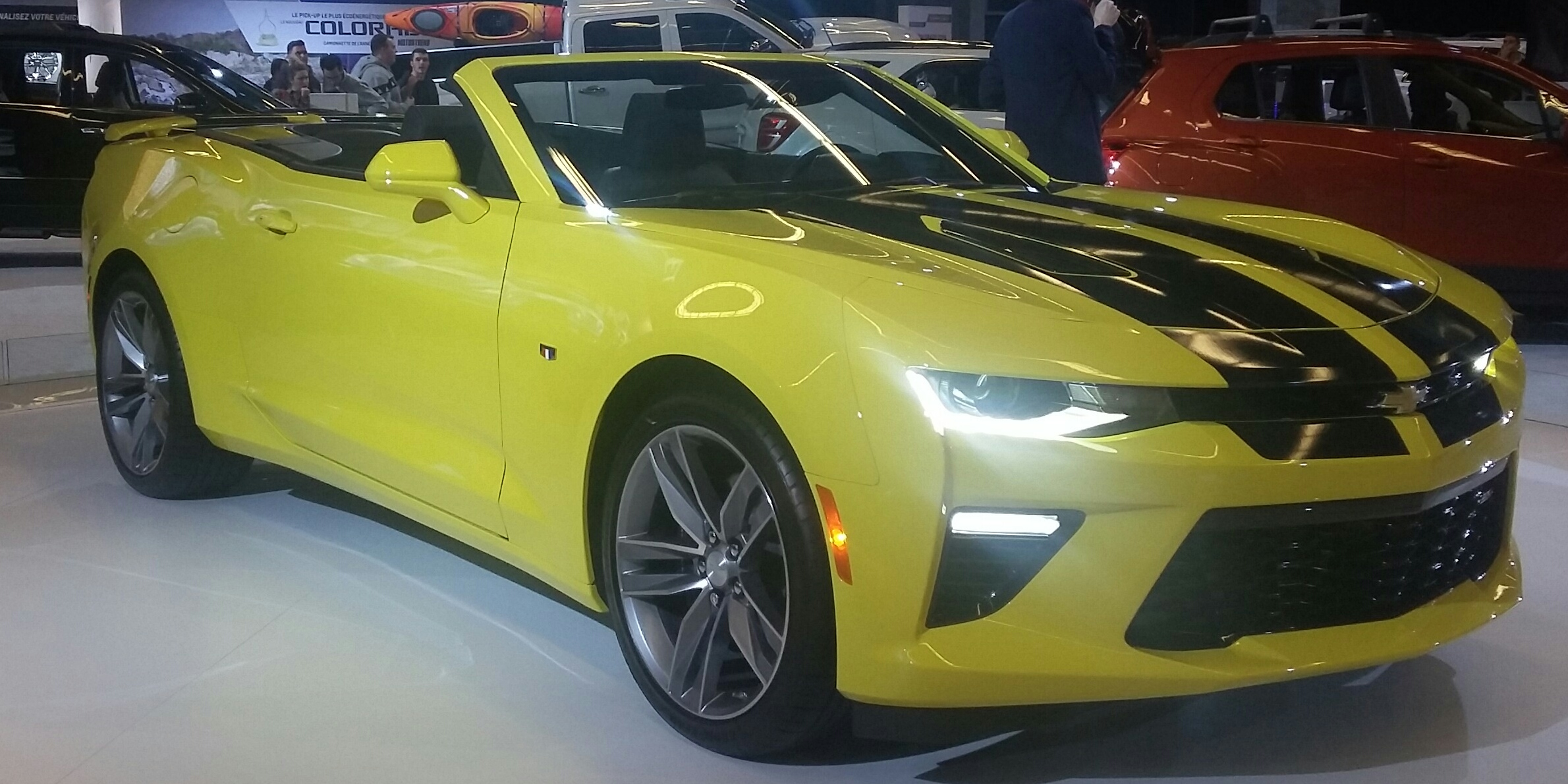
white Camaro
"Either way, it was the first time he wanted, I believe in that white Camaro, the early one."
A Camaro is a popular American muscle car made by Chevrolet. Here, they’re talking about a white one that was part of their racing situation, but they don’t say exactly which Camaro it was.
The Chevrolet Camaro is a long-running American muscle car known for its V8 options and drag-racing-friendly straight-line performance. In this segment, the host mentions a “white Camaro” as a specific car involved in the story, but without a year or trim it’s not possible to pin down the exact generation.
split come up on the computer
"it's funny how some of those folks can, you know, you see, you see the split come up on the computer and nine times out of the time you look at it and you're like, that's not going to work."
In bracket racing, racers use target times and timing math to figure out who should win. The “split” is the key matchup timing difference shown on the track’s computer.
In bracket racing, a “split” refers to the time difference strategy between two cars—how the dial-in targets translate into who should win based on reaction and elapsed time. The host says they can often predict from the computer display whether the split will work, which is typical of how racers use track software to plan.
Woodburn
"I showed up to Woodburn for this is bracket racing elite, elite fest."
Woodburn is the track location where this drag-racing event happened. It’s where the cars get prepped and then make their runs.
Woodburn is a drag-racing venue the host references as the location where the bracket-racing event took place. For listeners, it anchors the story in a real track environment where cars are staged, warmed up, and run.
transmission
"It's not wired. The, the transmission is not in it. And that next day, don't car deal."
The transmission is what sends power from the engine to the wheels. If it’s not installed, the car can’t properly drive or race.
In a drag car build, the transmission is the drivetrain component that selects gear ratios and transfers engine power to the wheels. The host notes it wasn’t installed yet, which would prevent the car from being able to make passes at the track.
track
"And that next day we're on track. And so I tell Luke, I'm like, sorry, but I got to skip out..."
“The track” is the racing area where cars line up and run. The host is saying they finally got the car ready in time to go make runs.
In drag racing, “the track” refers to the prepared racing surface and staging/run area where cars line up and make timed passes. The host’s mention emphasizes that the car wasn’t ready until it was brought to the track and made it through the early prep steps.
burnout
"We got her put together, did a burnout out in the parking lot of the shop... I go to do my first burnout and Justin comes over and goes, buddy, you got to do a burnout, like a real one."
A burnout is when you spin the tires on purpose before the race. It warms the tires so they grip better when you launch.
A burnout is when the driver spins the tires briefly before a drag run to heat them up and improve traction. In drag racing, doing a “proper” burnout helps the car hook better off the line, which can be critical for consistent bracket-racing performance.
line lock
"door car without a line lock. And I mean, not, you know, I've done street burnouts, power breaks..."
A line lock is a brake control that lets you lock the brakes for a burnout or staging. It helps you keep the car from rolling while you rev the engine.
A line lock is a device that temporarily locks the front or rear brake circuit so the driver can hold the car stationary while revving. Drag racers use it to stage and perform controlled burnouts without needing to keep the brake pedal held.
power breaks
"I've done street burnouts, power breaks, but like I had to do me a real burnout..."
“Power breaks” means you hold the car with the brakes and rev the engine to heat up the tires. It helps the tires grip better for the launch.
Power breaks are a drag-racing technique where the driver holds the car with the brakes while applying throttle to heat the tires before a run. It’s closely related to burnouts, but the emphasis is on using the brakes to control wheel slip and tire temperature.
stall converter
"I had a, what I thought should have been about a 6000 stall converter. Turns out maybe it wasn't quite there..."
A torque converter is what helps an automatic car launch. A “stall converter” is tuned to let the engine rev to a certain RPM before the car really grabs, which can make launches faster.
A “stall converter” refers to a torque converter with a specific stall speed. Stall speed is the RPM where the converter multiplies torque most effectively, so it strongly affects launch feel and how well the car stays in its power band.
power combination
"Turns out maybe it wasn't quite there with my power combination, but I remember I'm, I'm making laps."
“Power combination” means the whole recipe of parts that make the car go fast. If those parts aren’t matched well, the car can feel off even if each part is good.
“Power combination” is shorthand for the overall engine/drivetrain setup working together—things like cam, heads, intake/exhaust, converter, and gearing. If the converter stall or gearing doesn’t match the engine’s power characteristics, the car may not shift/launch the way the driver expects.
RPM
"because I wasn't taking the RPMs up high enough. And I make another pass..."
RPM is how fast the engine is spinning. Higher RPM usually means the engine is working harder, and shifting at the right RPM helps the car accelerate better.
RPM (revolutions per minute) is how fast the engine crankshaft spins. In racing, RPM matters because torque and horsepower vary with RPM, so shifting too early or too late can cost ET and trap speed.
GoPro
"we had to put a GoPro in the car. Koop Chun goes, has to go grab the GoPro and him and Jordan Pratt had to wire up a GoPro in there..."
A GoPro is an action camera used here as a data-check tool to confirm the driver’s shift timing. In racing, verifying that you’re actually hitting the shifter (and at the intended RPM/speed) can explain why a pass isn’t performing as expected.
shifting at 7,200
"he goes, wait till you get to 72. And I've been shifting at 7,200 ever since."
Shifting at 7,200 RPM means changing gears when the engine reaches that rev level. Racers pick a number like this so the engine stays in its strongest power range.
Shifting at a specific RPM (here, 7,200) is a tuning choice that aims to keep the engine in its power band. The “right” shift RPM depends on the engine’s torque curve, the transmission ratios, and how the torque converter couples the engine to the drivetrain.
big block
"growing up, my dad, he's a big block guy... So we had big block stuff and all of our stuff, but it was all stock."
“Big block” means a larger, higher-displacement V8 engine. People bring it up because it tends to make lots of torque and feels different than smaller engines.
“Big block” is a performance engine category typically referring to large-displacement V8s (commonly associated with Chevrolet’s big-block era). In drag racing talk, it usually implies strong low-to-midrange torque and a different power/shift strategy than smaller engines.
Hoosier
"But I got a picture of him looking through a Hoosier tire. He never missed an opportunity to say Hoosier daddy."
Hoosier makes racing tires. If someone mentions “Hoosier tires,” they usually mean tires built for grip and performance in motorsport.
Hoosier is a tire brand strongly associated with drag racing and track use, especially for performance and racing tires. Mentioning a “Hoosier tire” signals the car is using purpose-built racing rubber rather than typical street tires.
shift light
"And still every time I make a pass, when that shift light comes on and that she's tickling 7,200..."
A shift light is a dashboard light that comes on at a set RPM. It’s basically a reminder to shift so the engine stays in the right rev range.
A shift light is an RPM indicator that tells the driver when to change gears. Drag racers often use it to keep the engine near the optimal RPM range for power and to avoid over-revving.
ABS
"But, but one of the reasons I mentioned Stephen is that we've been riding around and I couldn't make it lock the brakes up. And he says, Oh, you got to pull the fuse for the ABS."
ABS is a safety system that stops your wheels from locking up when you brake hard. If the wheels lock, you can’t steer as well. The story is about turning ABS off so the brakes would behave differently.
ABS stands for anti-lock braking system. It prevents the wheels from locking up during hard braking by modulating brake pressure, which helps you keep steering control. The host is describing a situation where the brakes wouldn’t lock up, so someone suggested disabling ABS to test or force lockup behavior.
air conditioning
"those guys had abused cars too. So that that that ran the ABS also ran the air conditioning."
They’re talking about how the car’s electrical systems were set up so that running one system (ABS) also made the air conditioning run. It’s not a normal relationship you’d expect on most cars.
In this context, the speaker is describing how the car’s systems were wired/controlled so that the ABS operation was tied to the air conditioning running. That’s a reminder that older or modified cars sometimes have non-obvious electrical dependencies.
rear wheel emergency brake
"he says, Hey, he says, this is why you don't put a rear wheel emergency brake in a front wheel drive car. This is like a near new Pontiac, something or other late nineties in the Brainerd, Minnesota."
The parking brake usually works on the rear wheels. If you pull it while driving—especially on a front-wheel-drive car—it can make the back wheels lose grip and slide, which can ruin the tires.
A rear wheel emergency brake (parking brake) is meant to hold the car stationary, typically by applying braking force to the rear wheels. Using it on a front-wheel-drive car in motion can create an imbalance—rear traction breaks loose while the front wheels are still driving—leading to dramatic sliding and tire damage.
front wheel drive
"he says, Hey, he says, this is why you don't put a rear wheel emergency brake in a front wheel drive car."
Front-wheel drive means the front wheels are the ones doing the work of moving the car. If the rear wheels suddenly lock up, the car can lose balance and start sliding.
Front-wheel drive (FWD) means the engine sends power to the front wheels. In a stunt or emergency-brake scenario, locking or dragging the rear wheels while the front wheels are driving can upset balance and traction, making the car rotate or slide.
Brainerd, Minnesota
"Pontiac, something or other late nineties in the Brainerd, Minnesota. And he floors it and pulls the emergency brake."
They’re saying this happened in Brainerd, Minnesota. It’s just the place where the story took place.
Brainerd, Minnesota is the location where the speaker’s late-1990s Pontiac emergency-brake story took place. It provides real-world context for the kind of trackside or event driving where these “what you can get away with” stories happen.
flat spotted
"And so when he lets off, of course, they're flat spotted to the cords. And it's just then you turn the corner and they're out of say again."
Flat spotting means the tire got dragged while it was locked, so part of it got worn into a flat patch. That can make the car shake and feel unstable when you drive again.
Flat spotting is tire damage where the tread develops a flat area after being dragged or locked in one position. When the tire rotates again, that flat section can cause vibration and poor grip until the tire is replaced or the damage is otherwise addressed.
world championships
"Anyway, we get all done. And that's when Jim Yates and Dick Masken had their big fallen out..."
“World championships” means a big multi-race competition where you earn points over the season. The host is saying they were thinking about the bigger season outcome.
“World championships” here refers to a season-long motorsport points competition where drivers/teams accumulate results across multiple races. The host is using it to frame why the team cared about what happened after each event.

55 Chevy
"So he, I was driving his 55 Chevy at Seattle in 1995 at the National Event Super Street. And Chris Martin was making all the calls on the throttle stop..."
“55 Chevy” means a 1955 Chevrolet. It’s a classic car people often modify for racing, and in this episode the host says he drove one in a competition.
A “55 Chevy” refers to the 1955 Chevrolet, a classic American car that became a popular platform for drag racing and street/strip builds. In this story, the host is describing driving that car at a National Event Super Street, highlighting how the car’s setup and handling mattered for competition.
Seattle
"So he, I was driving his 55 Chevy at Seattle in 1995 at the National Event Super Street."
Seattle is mentioned as the location where the host drove the 1955 Chevrolet at a 1995 National Event Super Street. The place matters because track conditions and local event venues can influence how a car performs and how teams tune for traction.
throttle stop
"And Chris Martin was making all the calls on the throttle stop because I had some experience, you know, and we'd done it, but that car was just a little bit different."
A “throttle stop” is a way to limit how much the gas pedal/throttle can open. Racers use it to keep the car from getting too much power too suddenly.
A “throttle stop” is a physical or adjustable limiter that restricts how far the throttle can open. In racing, it’s used to control engine response and traction by limiting peak airflow/engine load, especially during launch or specific runs.

Chevrolet Malibu
"Cooper called me today with some unfortunate news that I ride that had an unfortunate issue with the engine. Um, and then Ashley Thompson was kind enough to, to lend me her, her Malibu"
The Chevrolet Malibu is a regular passenger car (a midsize sedan). Here, it’s being used as a backup car because the race car has an issue.
The Chevrolet Malibu is a mainstream midsize sedan from Chevrolet, but in this context it’s being used as a temporary ride while the speaker’s dragster is out of action. It highlights how racers may borrow a street car to get to events when their race car is down.
G body shuffle
"I'm going to be running the boo thing doing the G body shuffle, baby."
“G body shuffle” basically means switching to a different GM G-body car for racing. It’s like using another similar platform when your main car isn’t ready.
“G body shuffle” refers to swapping between cars in the GM G-body family (a common drag-racing platform) rather than staying in one dedicated race car. In drag racing, that often means using a different chassis/vehicle while the primary car is being repaired.
six 80 cap
"I don't know if I could put my six 80 cap on, uh, but I might be able to put my like seven 60 cap on."
In bracket drag racing, a “cap” is the target time you’re trying to run. “Six 80 cap” means aiming for roughly a 6.80-second pass.
“Six 80 cap” refers to a bracket-racing dial-in “cap” around 6.80 seconds, meaning the racer targets (or limits) their elapsed time. In bracket racing, the goal is often to be close to the dial-in rather than just win outright with raw speed.
seven 60s
"I don't know if I could put my six 80 cap on, uh, but I might be able to put my like seven 60 cap on. Is that what it runs? Seven 60s?"
“Seven 60s” means the car is expected to run around 7.60 seconds in the quarter-mile. It’s a way racers talk about how fast they’re going based on their timing.
“Seven 60s” is shorthand for running in the 7.60-second range in the quarter-mile (a common drag-racing benchmark). Drag racers often talk in elapsed time (ET) numbers because it directly reflects how quickly the car accelerates over the measured distance.
Request an Explanation
Heard something you'd like explained? We'll add it to this episode.
Sign in to request explanations for terms you heard.
Want to learn more?
Browse our glossary for plain-English explanations of automotive terms, jargon, and concepts.
Help improve this episode
See something that's not quite right? Our annotations are AI-generated and can sometimes miss the mark. Click the flag icon on any annotation to suggest a correction.