
MISSION ACCOMPLISHED Feat. JD Collecci
About this episode
Sleep-deprived near-miss stories and Mission Raceway Park tech highlights kick things off, including an integrated live-feed that auto-changes camera angles and runs “1080 60 frames per second all weekend long.” The hosts then recap the first-ever national event at Mission Raceway Park, from a transmission explosion to standout wins like Jeff Lane’s index destruction and the Jewel family’s double-up. JD Collecci joins to talk breakout results, favorite tracks, and a ketchup-in-the-fridge debate as the show closes with upcoming race plans.
MISSION: ACCOMPLISHED! Bracket Breakdown will be putting a bow on the Sportsnationals and Divisional that took place at Mission. We will also have a guest appearance by one of the hottest drivers on the west Jiovanni Collecchi!

Toyota RAV4
"...ot on him, but I about parked it in the back of a RAV4 and That was kind of the final straw"
The Toyota RAV4 is a compact SUV, meaning it’s a taller, more practical vehicle than a regular car. It has a rear cargo area for carrying things. The podcast uses it as an example of how much space you can fit in the back.
The Toyota RAV4 is a compact SUV designed for everyday driving with practical space and easy maneuvering. In the podcast context, it’s mentioned as a reference point for fitting or parking something in the back, highlighting its cargo practicality. That kind of detail is often used to explain how much room a vehicle provides.
timing system
"They have this system hooked in throughout the track and it's hooked into the timing system... It's all integrated within their timing system"
A timing system is the track’s electronics that measure race timing. It uses sensors to figure out when a car launches and when it reaches key points on the track.
A timing system is the track’s electronic setup that measures when cars pass specific points. It’s what turns sensor triggers (like beams or speed traps) into race data such as reaction time and elapsed time.
mile an hour beam
"And when they trip the mile an hour beam the camera view changes for the finish line, right? ... It's all integrated within their timing system"
That “beam” is a sensor placed along the track to measure speed. When the car passes it, the system records the speed and can trigger what the cameras show.
In drag racing, a “mile an hour beam” refers to a speed trap sensor that measures how fast the car is at a specific point. When the car breaks that beam, the broadcast can switch camera views for the finish/speed-related moment.
1080 60 frames per second
"It was 1080 60 frames per second all weekend long. So it was awesome"
That phrase means the video was high-definition (1080p) and very smooth (60 pictures per second). It makes it easier to see what’s happening during fast runs.
“1080 60 frames per second” describes video quality and motion smoothness: 1080p resolution and 60 frames each second. For live motorsport feeds, higher frame rate helps make fast-moving cars and trackside action easier to follow.
reaction times
"So you knew who was driving even if I mean you were doing a great job announcing but heck you could see Everything you got the name reaction times you got, you know"
Reaction time is how fast the driver reacts at the start. Lower reaction time usually means the car got moving sooner after the signal.
Reaction time is how quickly the driver responds after the start signal. In drag racing broadcasts, it’s shown alongside other timing data so viewers can see who launched quickest.
ET
"They would give you incrementals on some of them get ET in mile an hour when lights on the screen"
ET means “elapsed time,” basically how long the car took to go down the track. It’s one of the main numbers people look at to judge a run.
ET (elapsed time) is the total time it takes a car to run the drag strip distance, typically the quarter-mile in many series. It’s one of the primary performance numbers used to compare runs.
incrementals
"They would give you incrementals on some of them get ET in mile an hour when lights on the screen"
Incrementals are timing checkpoints before the finish line. They show how the car is doing partway down the track, not just at the end.
Incrementals are intermediate timing checkpoints along the drag strip (for example, at specific distances). They help show how the car is performing before the final ET and speed results.
transmission blow up
"Did you see the transmission blow up in Kevin Carter's calm car?"
A “transmission blow up” means the car’s gearbox failed badly. In drag racing, the drivetrain takes huge stress, so if something breaks inside, it can fail instantly.
A “transmission blow up” means the gearbox fails catastrophically, often due to internal damage from overload, lubrication issues, or component failure. In drag racing, it’s a dramatic failure that can happen under high torque and hard launches.

Pontiac Catalina
"...an't get an Akkadian in the United States I saw a Catalina Pontiac Catalina wagon That like I'd catch feloni..."
The Pontiac Catalina is a car model made by Pontiac, and it was offered in different body styles, including a wagon. A wagon is basically a car with extra space behind the seats for cargo. The podcast mentions it as a specific wagon you might see or talk about.
The Pontiac Catalina is a mid-to-full-size car model from Pontiac, and the wagon version is especially notable as a roomy, family-oriented body style. In the podcast, it’s brought up as a specific example of a Pontiac wagon, likely tied to a story about spotting or dealing with that kind of vehicle. That makes it relevant when the conversation is about particular cars, appearances, or what’s available in the U.S.
finish line look
"really similar You know top speeds so the finish line look was one that like He had to know that he was just dead to rights, you know, he crosses at 165"
A “finish line look” is what a driver does near the end of the run to judge how the race is going. It helps them confirm whether they’re ahead or if the other car is about to beat them.
A “finish line look” is a driver’s quick check at the end of the track—often used to confirm timing, speed, and whether the opponent is ahead or behind. In bracket racing, it’s tied to understanding who has the advantage as the car approaches the stripe.
crosses at 165
"He had to know that he was just dead to rights, you know, he crosses at 165 I think justin's somewhere right around, you know 168 169"
“Crosses at 165” means the car goes through the finish line at about 165 mph. That speed is important because it helps determine who won the run.
“Crosses at 165” refers to the car’s speed as it passes the finish line (typically in mph). In drag racing, finish-line speed is a key indicator of how strong the run was and whether the car can beat the opponent’s dial-in/bracket advantage.
top dragster
"I don't know if we're going right into we're not going in we're gonna we're going to go into top dragster instead of top sportsman"
“Top Dragster” is a drag racing category for dragsters—special race cars built for straight-line speed. The class rules determine what kind of cars can compete there.
“Top Dragster” is a drag racing class specifically for dragsters (open-wheel, front-engine drag cars) with rules that determine what modifications are allowed. It’s typically positioned as a higher-performance category than many other bracket classes, which is why the hosts contrast it with “top sportsman.”
top sportsman
"I don't know if we're going right into we're not going in we're gonna we're going to go into top dragster instead of top sportsman"
“Top Sportsman” is a drag racing class. It’s a way to group cars so drivers race against others in a similar category, and the hosts are saying they’ll talk about a different class instead.
“Top Sportsman” is another drag racing class name used in bracket racing events. It generally refers to a category of sportsman-level cars, and the hosts mention it to clarify they’re switching discussion to “Top Dragster” instead.
mission raceway park
"Is the jewel family? The first national event at mission raceway park Justin gets it done"
Mission Raceway Park is a race track where drag races happen. The hosts are talking about a big event that took place there.
Mission Raceway Park is a drag racing venue where national events and finals are held. The hosts reference it as the site of the first national event in the “jewel family” story.
winner circle
"And like the the excitement that they had when they pulled both cars into the winner circle"
The “winner circle” is where the winners go after a race to celebrate. It’s the official spot at the track for winners to be recognized.
The “winner circle” is the ceremonial area at a drag strip where race winners are announced and photographed. It’s a standard part of drag racing events, especially after finals when multiple class winners are recognized.
top sportsmen
"Uh, we did super comp [1952.5s] Top sportsman. Yep [1953.9s] Let me tell you a little something. Let me before we get to the race. Let me tell you a little something about top sportsmen"
“Top Sportsman” is a specific category in drag racing. Racers compete under a class rule set with a target time, and the goal is to run close to that target to win head-to-head.
“Top Sportsman” is a drag racing class for cars that run in bracket-style eliminations, typically with a handicap system based on an index time. Drivers aim to get as close to (or under) their class’s target while still winning rounds.
qualifying
"My guy erin steinke comes up first round of qualifying [1976.9s] And goat like obliterates the minimum in top sportsmen and top dragster like just sends them"
Qualifying is when racers run timed laps (or runs) to see who’s fastest. Your qualifying result helps decide where you start in the bracket for the head-to-head races.
In drag racing, qualifying is the session where each driver makes timed runs to set the starting order for the elimination rounds. Faster qualifying times earn better positions in the bracket, which can matter when the field is tight.
minimum
"And goat like obliterates the minimum in top sportsmen and top dragster like just sends them [1984.3s] And it was so badass, uh, just you know, he didn't have to"
In these races, there’s a target time or cutoff for each class. If a driver runs faster than that cutoff, they’re basically beating the rules’ baseline and can take control of the competition.
The “minimum” refers to the lowest (best) elapsed time threshold required to be competitive in that class’s rules/handicap system. When someone is “under the minimum,” they’re running faster than the cutoff, which can dominate the field.
elapsed time
"Pass of the day on thursday for qualifying steinke sitting there [2013.4s] at a 6 11 [2015.4s] number one"
Those numbers like “6.10” and “6.11” are how many seconds it took the car to run the track. Lower time usually means the car ran faster.
The “6 11” and “6 10” style numbers are elapsed time (ET): how long the car takes to cover the race distance. In drag racing, ET is the key performance metric used for qualifying and for comparing runs.
bracket
"And I'm looking at the sheet and I'm like man, there's a chance but the window is really really small [2031.8s] I get a text message on my phone [2034.6s] Says we're taking it. We're going number one. We're putting a a to number two"
A bracket is the tournament-style setup for eliminations. After qualifying, racers are matched up head-to-head, and winners move on to the next round.
A “bracket” in drag racing is the elimination ladder where cars race head-to-head based on qualifying positions. The goal is to advance round by round, with the bracket structure determining who you face next.
called shot
"With a called shot to be the number one qualifier is one of the coolest things I've ever seen and with the narrative going out there right now like"
A “called shot” is when a driver commits to a specific target time before the run. It’s basically a prediction that they can hit that number.
A “called shot” in bracket drag racing is when a driver publicly commits to a specific performance target (often a dial-in time) before runs. It’s a confidence/strategy move because the driver is essentially promising they can hit that number under race conditions.
qualifier
"With a called shot to be the number one qualifier is one of the coolest things I've ever seen ... anytime it was qualifying steinke just put a number on the dial board"
In drag racing, qualifying runs are timed laps that decide who starts where in the bracket. The “number one qualifier” is the top-ranked driver from those timed runs.
In drag racing, a qualifier is a driver’s timed run used to set the starting order for eliminations. The “number one qualifier” means the fastest (or highest-ranked) run in the qualifying session, which often comes with a favorable lane/draw position.
dial board
"They wanted anytime it was qualifying steinke just put a number on the dial board And run it every single time"
The dial board shows the time a driver is aiming for on their run. In bracket racing, that target time helps everyone race more consistently.
The dial-in (often shown on the “dial board”) is the target elapsed time a drag racer chooses for their run. It’s used to predict performance and is central to how racers manage consistency and strategy in bracket racing.
pro mod
"That's an x pro mod car that they've turned into a top sportsman car It's a beautiful beautiful machine."
Pro Mod is a drag racing class for heavily modified cars built to go extremely fast. It’s known for serious performance upgrades and specialized race setups.
Pro Mod is a drag racing class for highly modified cars that run in a bracket-style format at many events. Cars in Pro Mod are typically purpose-built for straight-line speed with extensive engine and chassis development, often using lightweight, aerodynamic bodies and purpose-tuned setups.
final round
"Well, we got our number one qualifier, but how about our winner? Sean herbst taken down mike lucas and what was kind of an uneventful final round"
The final round is the last head-to-head race of the bracket. Whoever wins that race wins the whole event.
The final round is the last elimination matchup in a drag racing bracket, where the winner takes the event. The hosts describe it as “uneventful” because both cars ran consistent laps rather than a dramatic swing in performance.
on the tree
"And just driving lights out man and just round by round being consistent doing what he had to do Well, yeah, and he was stellar on the tree most of the two"
The “tree” is the set of starting lights in drag racing. “On the tree” means how well the driver timed their launch when the lights started.
“On the tree” refers to the starting light system (“Christmas tree”) used in drag racing to time the launch. Being “stellar on the tree” means the driver reacted and staged timing very well for consistent, fast starts.

Chevrolet Nova
"My guy david koalski. I don't know if you saw this thing. It's like a 70 nova green deal [2165.0s] Monster monster blower sticking out of the hood."
That “70 Nova” is a 1970 Chevrolet Nova. It’s being talked about as a street-legal drag car, and the supercharger sticking out of the hood is the standout feature.
A “70 Nova” refers to the 1970 Chevrolet Nova, a classic American muscle car platform. In this segment it’s described as a street-legal drag car with a huge supercharger sticking out of the hood, which is a big part of why it’s visually and mechanically notable.
blower
"Monster monster blower sticking out of the hood. It's a dual funding car cage street legal dragon drive car [2172.0s] That runs 690s"
A “blower” is basically a supercharger. It forces extra air into the engine so it can make more power, which is why these cars can run very fast.
In drag-racing slang, a “blower” is a supercharger—an engine-driven forced-induction device that compresses air to make more power. When it’s described as “sticking out of the hood,” it usually means a large, high-output setup typical of high-boost, high-horsepower classes.
street legal
"Monster monster blower sticking out of the hood. It's a dual funding car cage street legal dragon drive car [2172.0s] That runs 690s"
“Street legal” means the car is allowed to be driven on public roads. It’s not just a track-only race car.
“Street legal” means the car is configured to be driven on public roads and meets local legal requirements (like lighting, emissions equipment where applicable, and safety rules). In drag contexts, it highlights that the car isn’t just a trailer-only race build.
power windows
"It's got power windows. It's got remote start all on this guy's phone [2179.8s] He can roll the windows down on his phone."
Power windows are windows you move with a button or switch instead of turning a handle.
“Power windows” are windows operated by electric motors rather than manual cranks. In a drag-car context, mentioning them is often about comfort/convenience features surviving alongside serious performance hardware.
remote start
"It's got power windows. It's got remote start all on this guy's phone [2179.8s] He can roll the windows down on his phone."
Remote start means you can start the car without being in it—like using a phone app.
“Remote start” lets you start the engine from a distance (here, from a phone). On high-performance cars, it’s notable because it implies the car has modern convenience electronics integrated with the rest of the build.
index class
"Again, right on an index class when you're both leaving at the same time if you're 52 up front [2256.8s] You're putting yourself in a deep deep hole"
An “index class” is when racers try to hit a target time. Instead of just going as fast as possible, you’re trying to match that target.
An “index class” is a drag-racing format where competitors aim to hit a predetermined elapsed time (an “index”) rather than simply running the fastest possible pass. The winner is typically the car that stays closest to the index without going too fast (depending on the rules).
windlight
"Got down there turned on the windlight. I think he got there 43 "
“Windlight” refers to the starting lights/timing sequence at the drag strip that determines when you launch and how your reaction time is judged.
“Windlight” is drag-racing timing/starting-line terminology for the track’s lights and the timing sequence used to judge reaction time and when the car launches. It’s referenced here in the context of getting down the track after the start.
stock eliminator
"You want to start in stock eliminator? Yes, sir Stock eliminator brian thompson in the p stock automatic"
“Stock Eliminator” is a drag-racing category where the cars have to be mostly like they came from the factory. Teams can usually make only limited changes, so the race is more about driver skill and setup than extreme modifications.
“Stock Eliminator” is a drag-racing class where cars are expected to stay close to factory configuration, with limited modifications allowed. The goal is to compare performance more fairly by restricting how much the cars can be altered for speed.
p stock automatic
"Stock eliminator brian thompson in the p stock automatic taken on the o-stock automatic of rick green so, uh Only I have a second split"
“P Stock Automatic” sounds like a race class name that groups cars by how close they are to stock and whether they use an automatic transmission. The “P” is a class label that helps organize cars with similar expected performance.
“P Stock Automatic” appears to be a specific drag-racing class designation combining a stock category (“Stock”) with an automatic-transmission category (“Automatic”) and a lettered index (“P”). These lettered classes typically group cars by expected performance so matchups are more even.
dialed
"Only I have a second split, but the faster of the two cars was dialed 1249 Yeah, buddy like chate dialed 1249 and chasing in the final"
In drag racing, “dialed” means the time the driver expects their car to run. The race is then judged relative to that target time, so being consistent and accurate matters.
In drag racing, “dialed” refers to the time a driver predicts their car will run for that pass, which is entered into the race system. The car that gets closer to (or beats) its dial-in time typically has the advantage when the race is decided by reaction and elapsed time.
second split
"Only I have a second split, but the faster of the two cars was dialed 1249 Yeah, buddy like chate dialed 1249 and chasing in the final"
A “split” is a timing check during the run, not just the final time. The “second split” is the later checkpoint, and it helps the driver see if they’re on track before the finish line.
A “split” is an intermediate timing point during a drag strip run (commonly measured at a specific distance). A “second split” means the later of those intermediate checkpoints, used to judge whether the car is on pace before the finish.

Mustang Fox Body
"Uh, my guy brian thompson the drop top fox body It was hot yesterday and he pulled the lanes with the top down and his 5.0 Like a boss and it was the coolest thing"
“Fox body” is a nickname for a generation of Ford Mustang (late 1970s through early 1990s). “Drop top” means it’s a convertible, and these cars are popular in drag racing because they’re easy to modify and tune.
A “Fox body” refers to the 1979–1993 Ford Mustang platform, and “drop top” indicates a convertible. The Fox-body Mustang is a drag-racing staple because it’s lightweight, has strong aftermarket support, and responds well to tuning.
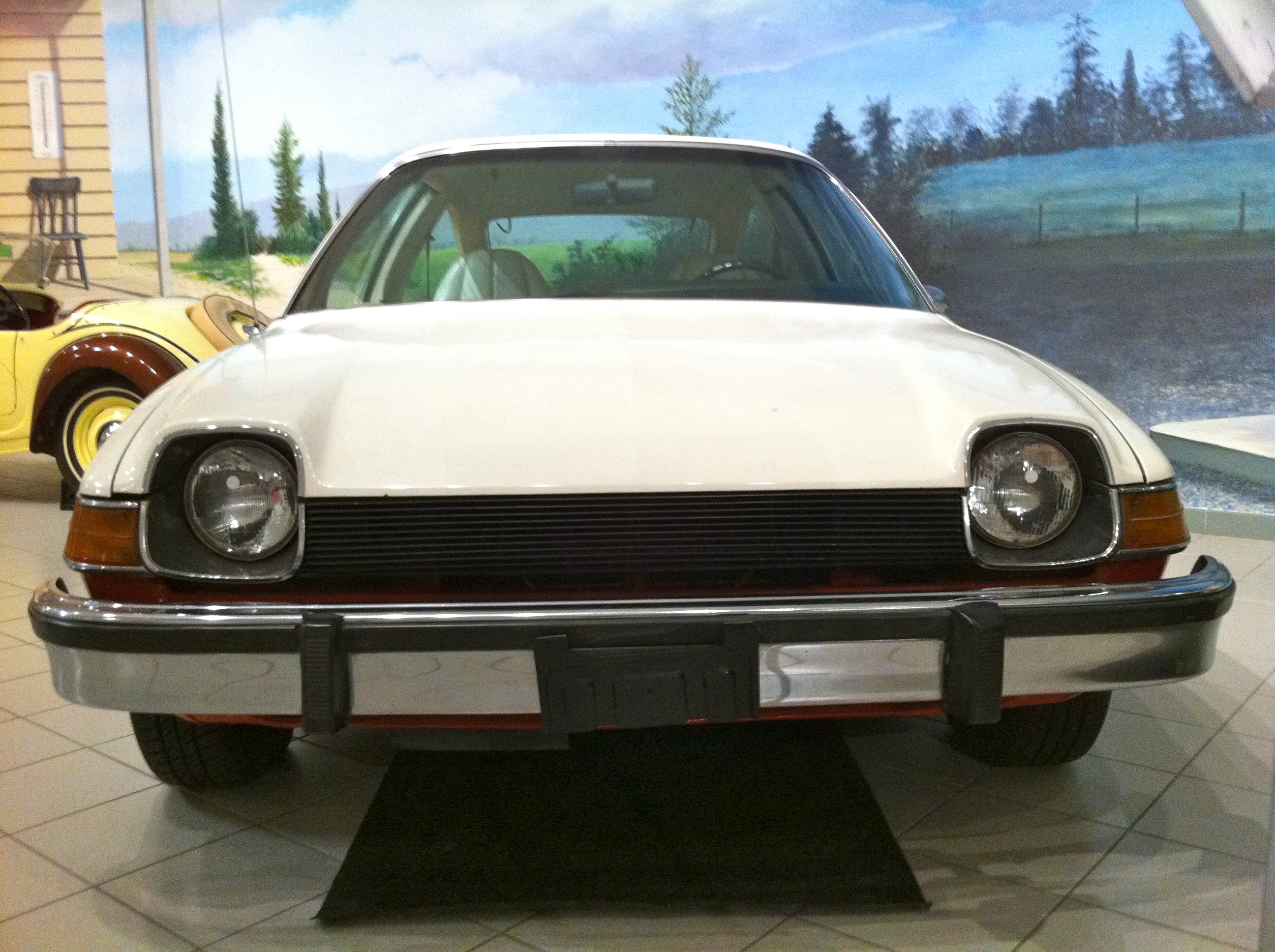
AMC Pacer
"Shout out to james mantel in the pacer um The 77 pacer dialed in 14s All the way to the semifinals."
“77 pacer” likely means a 1977 AMC Pacer. It’s a quirky, boxy-looking car, and it’s cool to see something that unusual show up in drag racing.
“Pacer” most commonly refers to the AMC Pacer, and “77 pacer” strongly suggests a 1977 AMC Pacer. The AMC Pacer is notable for its distinctive styling and boxy proportions, and it’s an unusual but memorable choice in drag-bracket competition.
super gas
"Cooper chun lights it up for his first super gas when He gets there five thousands of a second over"
Super Gas is a category in drag racing with rules about what kinds of cars and modifications are allowed. Racers compete by running timed passes and trying to be consistent.
Super Gas is a drag racing class that uses production-based cars with specific rules for engine and modifications. It’s typically bracket-style racing where consistency and reaction/elapsed time matter as much as peak power.
five thousands of a second
"He gets there five thousands of a second over um hot"
Drag races are timed extremely precisely. Winning by “five thousandths of a second” means it was basically a photo-finish.
In drag racing, “thousandths” of a second are the smallest time differences that can decide a winner. When someone wins by “five thousandths,” it means the elapsed time was extremely close—often within measurement and reaction-time variability.
super comp
"So he's a three category Wally winner now super comp top dragster And now super gas"
Super Comp is another drag racing category with specific rules for what the car can be. It’s used to group cars so competitors are closer in capability.
Super Comp is a drag racing class in the Comp Eliminator family, typically for cars with more modifications than street classes but still constrained by rulebooks. It’s often run in bracket/heads-up formats depending on the event.
pro street
"this nova that pro street looking Nova and it has borders on it."
Pro street is a style of drag racing where the car looks more like a street car, but it’s still built to run hard. Think: street appearance plus drag-race parts and tuning.
Pro street is a drag-racing style that blends street-car styling with drag-focused performance. Cars in this category often run aggressive suspension and powertrain setups, but aim to look and behave more like a street car than a full-on race-only machine.
borders
"Nova and it has borders on it. So What do you got to say to that?"
They’re talking about the car’s graphics/paint design. It’s part of the look that makes the build feel like an older pro street car.
In this context, “borders” likely refers to decorative striping/graphics on the car’s body. It’s mentioned as part of the visual theme that makes the Nova look like an old-school pro street build.

Ford Falcon
"...nday in the specialty race and hops in the little falcon uh little falcon camino thing"
The Ford Falcon is a smaller Ford car that was made for everyday driving and also gets used for racing. People can modify it for track events because there are parts and know-how available. In the podcast, it sounds like someone is using a Falcon-style car for a particular race or stunt.
The Ford Falcon is a compact car line from Ford that’s known for being used in a wide range of roles, including motorsport and specialty builds. In a racing or bracket-style discussion, it often comes up because certain Falcons have strong aftermarket support and can be adapted for track use. The “Falcon” reference in the podcast sounds like a small, lightweight platform being used for a specific event or challenge.
Request an Explanation
Heard something you'd like explained? We'll add it to this episode.
Sign in to request explanations for terms you heard.
Want to learn more?
Browse our glossary for plain-English explanations of automotive terms, jargon, and concepts.
Help improve this episode
See something that's not quite right? Our annotations are AI-generated and can sometimes miss the mark. Click the flag icon on any annotation to suggest a correction.