Motability is a UK program that helps some people get access to a car. Here, they’re pausing a driving-monitoring scheme called “Drive Smart” that used equipment in the car to judge how someone drives.
“Drive Smart” is a program that tracks how you drive using a device in the car and sometimes a phone app. The idea is to score your driving, but the hosts say people felt the system could be wrong and they had little say or appeal.
A “black box” here means a device installed in the car that records driving information. The hosts are discussing it because it was used to judge driving, and people were worried about whether it was accurate and whether it respected privacy.
“Loss of privacy” means people felt the system was collecting more information than they were comfortable with. If your driving is monitored and used to judge you, it can feel like you don’t have control over your personal data.
This means people felt they didn’t really have a real option to say yes or no. If the monitoring is required to participate, it can feel like you’re being forced into it rather than choosing it.
They’re saying they’ll keep improving the system based on feedback from customers. The goal is to make the monitoring less unfair and more accurate for the people using it.
They’re talking about charging an electric car at public charging stations. The point here is that the government tax rules can change how expensive that public charging is.
VAT is a tax added to goods and services that you pay when you buy something. Here, they’re debating whether VAT on public EV charging should be lower so charging costs less.
These are the businesses that operate the public charging stations you use for your electric car. They’re the ones who would likely adjust the price if taxes on charging changed.
The grid is the national electricity system that powers homes and public chargers. If electricity prices from the grid go up, it can make running public EV charging more expensive.
This means getting more people to switch to cars that don’t produce exhaust fumes. They’re saying charging costs and taxes matter because they affect whether people can make the switch.
It’s the network of EV charging stations you can use in public, like at service stations or shopping areas. If you don’t have a charger at home, you rely on these a lot, so their price and reliability really affect your daily life.
They’re talking about the biggest reason EVs aren’t becoming common fast enough. Here, the issue is that many people can’t charge at home, so they depend on public chargers instead.
A fuel duty cut means the government reduces a tax on petrol and diesel. That can lower the price at the pump, so it changes what it costs people to drive.
Term
home energy
They mean the cost of energy bills at home, like electricity. If electricity is expensive, charging an EV at home costs more too.
Term
5P
“5P” means a small amount of money off fuel per litre (five pence). The host is saying you only benefit if the price cut actually shows up at the pump.
They’re saying when driving gets too expensive, some people just drive less or stop using their car. It’s a real-world effect of fuel and energy prices.
Stellantis is a big car company that makes lots of different brands. Here, they’re talking about Stellantis making many announcements and teaming up with other companies to build cars in new places.
A joint venture is when two companies team up to build and run something together. In this case, they’re saying Stellantis and Dongfeng will share control of the France project.
JLR stands for Jaguar Land Rover, a car company. If they’re co-developing a Jeep, it means the companies are working together to design or build the vehicle.
They’re saying that in the US, EVs weren’t taking off as quickly because of government policy. That kind of policy can change how soon car companies push electric models.
The Citroën 2CV is an older, simple car model that became famous for being practical and easy to live with. The podcast mentions it because there may be a new concept version planned, connected to electric-car ideas. It’s essentially a modern take on a classic name.
Retro design means a new car looks like it’s inspired by older cars. The host is saying it’s fine if it’s done tastefully, but not if it’s just copying the past without doing it properly.
In this context, “pastiche” means the design is basically a collage of old styling cues. The host is saying they don’t like when that nostalgia comes off as lazy or poorly executed.
An API is the “messaging system” between the car app and the company’s servers. If someone can trick the server about who they are, they may get access they shouldn’t.
Enterprise technology is the company’s internal computer systems and networks. The point here is that those systems usually follow stricter security rules than the teams building the product.
NIST is a government group that publishes cybersecurity “rules of thumb” and standards. Saying “look at NIST” means using established, proven security checklists.
The internet of things is when everyday devices (including car electronics) are connected to networks. If they’re connected to the wrong network, they can create new security risks.
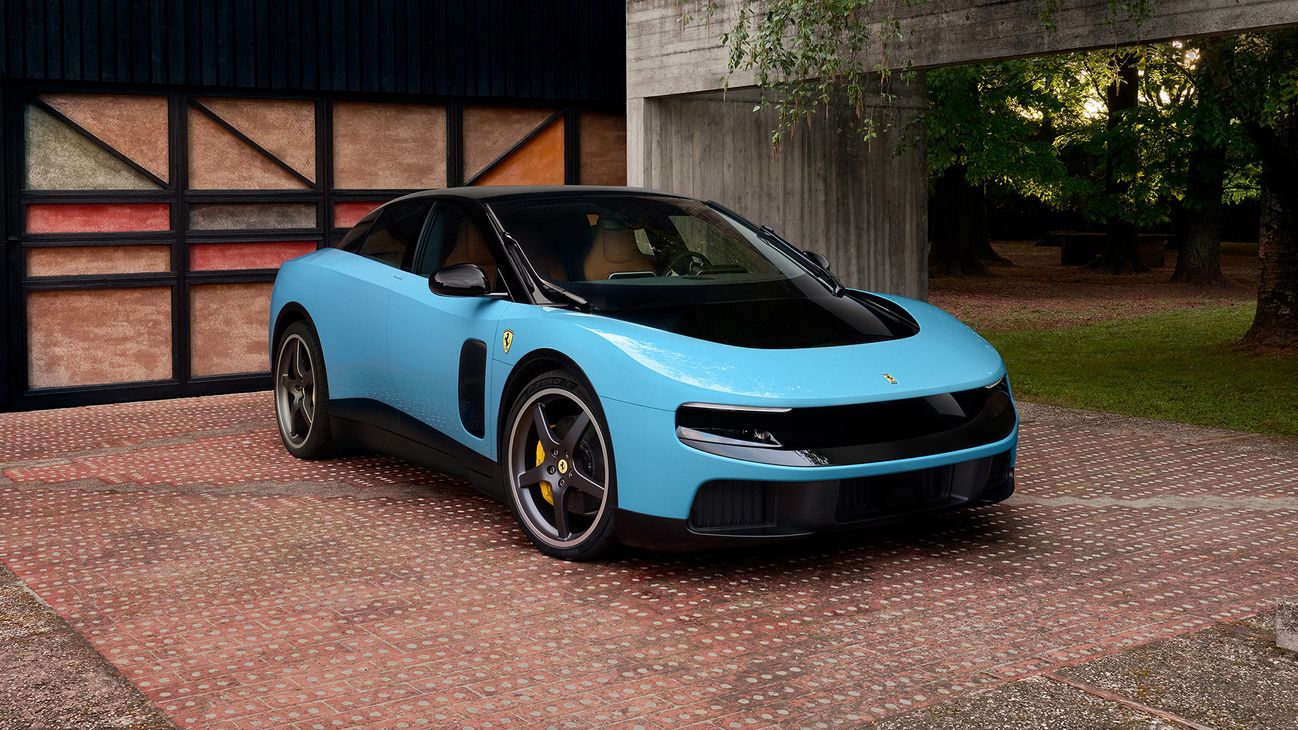
Ferrari Luce is a new Ferrari model that people are reacting to a lot online. The hosts say it looks a bit unusual—almost like it could be something Apple designed—rather than looking instantly like a classic Ferrari. That’s why it’s getting so much attention.
Love From Studio is the design team said to have worked on the Ferrari Luce. The hosts bring it up because they think the car’s styling feels similar to the kind of design you’d associate with Apple. That’s part of why people are debating how it looks.
Johnny Ive is mentioned as one of the founders of the design studio behind the Ferrari Luce. The hosts connect him to Apple-style design, which is why they say the car could look like what an “Apple car” might be. It’s basically a clue about who influenced the styling.
Mark Newsom is mentioned as one of the founders of the design studio behind the Ferrari Luce. The hosts bring him up because the studio is linked to the same kind of design thinking people associate with Apple. That’s part of why the car’s look is getting so much debate.
Apple is used here as a comparison point for style. The hosts are basically saying the Ferrari Luce looks so different that it could be mistaken for something designed in an Apple-like aesthetic. That’s why people are talking about it so much.
Term
over-fettled
“Over-fettled” is basically the idea that something looks too overdone. They’re saying the real car looks better than the heavily edited picture.
The Audi RS5 is a sporty Audi that’s designed to be faster and more performance-focused than a regular A5. People often talk about it when discussing upgrades like wheels and fitment. The podcast is referencing a particular wheel choice for an RS5.
A configurator is an online tool (usually from a brand or dealer) that lets you choose options—like exterior color, wheels, and interior trim—to preview what a specific car would look like. The host says they “played with the configurator,” meaning they were exploring different builds and looks.
“Dynamism” here means the car looks like it’s moving or full of energy, even while it’s sitting still. The host thinks automotive designers are better at creating that “speed” feeling.
“Concentric” means things are centered and lined up around the same middle point. They’re talking about careful alignment in design, like how rings or details match up.
The host is talking about a tablet screen in the dashboard that can move around. They’re comparing it to an iPad and saying it changes the car’s look in a way that doesn’t feel right for a classic performance brand.
Toggle switches are the physical buttons you flip or press in the car. The host likes them because they feel nice to use, instead of having to rely only on touchscreens.
Horsepower is how strongly a car’s engine can push. The host is saying that if you just chase huge numbers like 1,000 horsepower, lots of companies can do that now—so it doesn’t automatically make a Ferrari special.
“Hypercar” means an even more extreme, top-tier supercar—usually very expensive and built in tiny numbers. The host is saying the company doesn’t need to sell many to make the business work because the buyers are very wealthy.
R&D costs are the money companies spend to design and develop new technology and cars. The host is saying the company can cover those costs by selling a small number of very expensive models to wealthy customers.
Term
freedom doors
“Freedom doors” is a name for a special door design that opens differently than normal doors. The host is saying it looks cool and unusual, like the car is trying to stand out.
This means the electric motor is built into the wheel instead of being in the usual drivetrain area. It can help the car control grip, but the host says it doesn’t automatically make the car look good.
Mercedes is a major car brand known for luxury cars. The host is complaining that their recent interiors look low-quality and that the logo placement makes it worse.
Term
pin three-pointed stars
Mercedes has a logo with a three-pointed star. The host thinks the way it’s used on the front design looks overdone and cheap.
The “6E” (or “E6”) is an electric car model mentioned in the podcast. The hosts are saying it hasn’t been very strong compared with expectations. The main takeaway is that it’s an EV and the discussion is about its overall quality.
A “platform” is the underlying design the car is built on. For EVs, it affects where the battery goes and how the car is put together, which can limit or enable features and performance.
Car
Skoda Epic
The Skoda Epic is a new Skoda electric SUV. It’s meant to be a smaller, cheaper EV, and it will come with different battery and power options. The episode also talks about how fast it charges and what tech/features you’ll get.
The Skoda Kamiq is a current Skoda model that the hosts use as a comparison point. They’re saying the Skoda Epic is the electric version of that kind of vehicle—so it’s aimed at the same general buyer and size category.
The ID.Cross is an upcoming electric Volkswagen crossover. “High-riding” means it’s designed to sit taller like an SUV, which can help with visibility and getting in and out. The podcast says it will use the same basic electric design as the ID. Buzz.
The ID. Buzz is a van that runs on electricity instead of gasoline. It’s designed for carrying people and everyday use, but with an EV powertrain. The podcast mentions it because it uses the same underlying design as other upcoming electric Volkswagen models.
The Renault 4 CV is a new electric car concept that brings back the name of an older Renault model. It’s meant to be a small, simple EV, not a large vehicle. The podcast mentions it because it’s expected to compete with other new electric small cars.
For an EV, the battery is what stores the electricity. A bigger battery usually means more driving range, and the episode compares two battery sizes for the Skoda Epic.
The e-Niro is an electric version of the Kia Niro. It’s a compact crossover, so it’s built for everyday driving and carrying people or cargo. The podcast mentions it alongside other new electric cars coming to the market.
The Kia Niro EV is an existing electric model the hosts compare against. They’re using it to show that the Skoda Epic will be going up against cars people can already buy.
kWh is a way to measure how big the EV battery is. More kWh generally means the car can store more energy, which usually translates to more miles of range.
“10 to 80%” is a typical way EV makers quote charging speed. It’s used because charging is usually faster in the middle of the battery’s state of charge, not right at empty or full.
A DC charger is the fast charger you use for quicker EV charging. It can refill the battery much faster than home-style charging, and the episode mentions how long the Skoda Epic takes on one.
Kilowatts (kW) tell you how powerful a charger is. More kW usually means faster charging, but the car still has limits on how quickly it can take charge.
A digital instrument panel is the screen behind the steering wheel that shows your speed and other driving info. Instead of classic dials, it uses a display.
A rear view camera shows a live video feed of what’s behind the car. It makes reversing and parking easier because you can see obstacles you can’t easily check with mirrors.
This is a built-in charging spot where you can place your phone to charge it without plugging in a cable. It’s meant to be convenient while you’re driving.
Skoda Epiq is a new electric Skoda that the hosts are talking about in detail. They mention comfort features like heated seats and a heated steering wheel, and they also talk about the battery and how far it can drive on a charge.
Two-tone paint means the car uses two different colors—often a contrasting roof and body. In this case, the hosts describe Navajo orange accents with a black roof, which is a styling technique used to make the car look more “cabin-like” and visually distinctive.
These are bigger wheels—20 inches across—and they’re made from an alloy (usually aluminum). Bigger wheels can make the car look sportier, though they can affect ride comfort.
Car
MG GT
They bring up the MG GT to compare looks. The hosts are basically saying the Skoda Epiq’s design comes across better than the MG GT.
They’re talking about the idea that making cars lighter can help them use energy more efficiently. The bigger point is that you shouldn’t get stuck thinking only one approach is always the answer.
A “walk around” is an in-person review where someone circles the car and points out details like bodywork, trim, and notable features. In enthusiast contexts, it’s often used to explain what’s original, what’s been modified, and what to look for.
The Rover P6 is a classic British car from the 1960s. The hosts are saying that, even though they’ve disliked other Rovers, this particular one (a 1963) looks great and sounds like a really interesting choice.
Car
British Citroen DS
The Citroën DS is a well-known French classic car that people remember for being stylish and technologically impressive for its time. When the host says the Rover P6 is the “British Citroën DS,” they mean it feels like a similar kind of special, standout classic.
Body panels are the outer parts you see on the outside of the car. The host is saying the car’s exterior parts aren’t damaged, and the important safety structure is still there.
The crash structure is the part of the car built to protect you in a crash. It’s the strong framework that helps control what happens to the car during impact.
Person
Mansel
The host is talking about a famous racing driver named Mansel. The artwork is showing an iconic moment from their time in an F1 car.
Senna is Ayrton Senna, one of the most famous Formula 1 drivers ever. The host is saying the picture might be showing Senna in an iconic racing moment.
LIVE
Welcome to the Motoring Podcast, a week discussion of Motoring News. This is episode 687 on Tuesday,
the 26th of May, 2026. Hello, I'm Alan.
Hello, I'm Andrew. And this week, you'll hear how some organisations still can't do
the right thing. In new car news, one vehicle becomes an emoji with wheels. And in points
of interest, you'll see how taking something out of context can be good. And first, we
have a couple of bits of follow up. And I'm going to start off with the news that Motability
has decided to pause the Drive Smart scheme, which included a fitting and a device to the
windscreen of cars, and either a black box or an app on your phone, if you are under
the age of 30, to judge your driving and decide whether you will, well, I will get onto that
one in a moment, but decide whether your driving was of a suitable standard, even though
you didn't know what the standard was and you didn't have any say in how accurate the
machine was. And there was pretty much no recourse if any of it was wrong. There is apparently,
according to this disability news article, news service article, a wave of complaint
from disabled customers about the scheme, where they were criticising and I'm quoting
from the article here, unreliable technology, loss of privacy and lack of choice over signing
up. Quite right. Anyone that remembers this, we talked about it a couple of months ago,
I seem to think it was. And we said how awful it was and how discriminatory it was.
The pause, oh yeah, pause, but Motability operations are making it clear they're not
just gaffing the programme. Instead, it says it will continue to review it and setting
up a panel of customers to help shape how Drive Smart develops. Let's see how that goes.
You can't fix flawed technology like that. You can't fix something that's inherently broken
in its pure concept. Yeah, the problem is much wider than a Genki app or a crappy box to be
perfectly honest. Yeah. And remember, this is all on the back of right wing think tanks deciding to
pick on disabled organisations and groups and people for whatever reason they've got it in
their minds that they think they're taking something from society when, in fact, this helps
people who are not as mobile as others or to live a more active life than they would otherwise.
And just disgusting, really. Yeah. Nice one, UK government. Thanks for going along with the
nasties. That really makes you look good. The next particular piece of government nastiness.
Well, no, it's not really government. Is it government nastiness? Yeah, it is really, isn't
it? I was just trying to work out where on the scale it was to be honest. It's missing an open
goal. It really is. So we talked recently that there was a consultation on public V charging,
and that many parts of the UK government were keen to see it be reduced to 5% value added tax or
sales tax in alignment with what you pay the amount of VAT that you pay on your home electricity.
And therefore, if you're charging at home, the treasury, however, despite everyone else including
the Department of Transport, etc., etc., etc., the treasury, however, like to sit on their piles of
gold and they don't really like helping other departments in any government, not just the
current one. And so they're going, no, we're going to keep it at 20% because what they really
want to do is they really want to raise the domestic charging of course prices to 20% because
then they could get more money. And let's be fair, they need it. Yeah. Basically,
everyone apart from the treasury supports cutting the VAT to make this more equal to make it
to help everyone who doesn't have a home charger. And this includes the charging companies.
Yeah. Yeah. The Department of Transport encouraged electric charge point operators to write to the
treasury explaining and promising what they would do if there was a VAT cut. And in every case,
that was we will pass it on to the customer. Yeah. Because it makes a big difference to them.
And bearing in mind the pressure they're under, we've talked about this, the pressure they're
under thanks to the grid and the changes in charging costs from the grid to these public
charging companies, which has been horrific and has really nuked their ability to be profitable.
Yeah. They're still saying, no, we will pass this on because they understand that if we are to help
keep the pace or increase the pace of zero emission vehicle adoption, particularly electric
vehicles, then there has to be a level playing field. One of the big barriers that even the most
fundamentalist evangelists are now admitting is that there is issues with the public charging
network. And they realize because enough people have said it enough times that that is the stumble
block form for mass adoption because so many people do not have a home charger, do not have
the ability for home charging. One of the key points of that isn't so much reliability or access
as a bit of that, but also cost. It is significantly like many multiples of times more expensive
to charge at a public charger than it is to charge on your driveway at home.
Well, I will repeat for anyone who hasn't heard the story, but the last time I had an electric
vehicle, I put 111 miles in and it cost me 40 quid. Yeah. That's ridiculous.
That's more expensive than running my Lexus. Anyway, should we move on from that and go
to new news finally? And last week, the chancellor announced that in a raft of actions to help people
thanks to what has happened in the Middle East and the increase in petrol and diesel prices,
that the fuel duty cut will no longer happen in September as was expected. Shock horror,
although we didn't have it in our bingo card. This was the reason to be fair. But we did say
that it wasn't going to come into be in September, but this is now going to be extended to the end
of the year as it stands. Now, there is a couple of elements to this story that I haven't really
seen mentioned, but the first one is when it comes to private car usage, this does not help the people
that it seems like it should or that people and all the politicians from all the parties
seem to think it will. As in those who are less well off, this is not going to help them because
there was a really good thread on blue sky that had a load of research that showed
that people on lower incomes are disproportionately hit when there is price rises like this,
whether it's home energy or whether it's fuel prices, because such a large proportion of their
income goes on these elements and like shopping, food shopping and stuff like that. They don't
get the benefit of this 5P, that's if the petrol stations and the four courts pass it on, which
is another problem we've got at the moment. Actually, let's not forget that. Although that's
not as bad as it was, what these people do is they end up just stopping using their car.
They stop using their car, so this really only benefits the wealthy who are prepared to drive
around more anyway. There is a second element to this, which I've not seen discussed before,
but then there is the transportation side of things that this will help because of the knock-on
effects that has through costs of everything in shops, whatever. Alan was explaining to me earlier
about a rule of thumb basically, weren't you? Yes, I was. It was just pointing out that transport
costs get added on throughout the whole journey of going from raw material to something that you
can buy in the shops. Obviously, it gets multiplied and as it goes along.
I was saying that the cost of raw materials is one, and by the time you've done the processing
and building them, then it's three times the cost of the raw materials, and by the time you've actually
got a full finished package product and everything, you're at six times the cost of the raw materials,
and then by the time it ends up in the shop, it's nine times the cost of raw materials,
as a rough rule of thumb for consumer goods generally. Each point in there, then you have
to add on transport. That one P of increase in transport for a thing gets multiplied and
multiplied and multiplied many times over, so it's never just the extra two or three P that
that's added on is. I've chosen awkward numbers. It's six P, it's 18 P, it's whatever added on to
product, and that all adds up and then you've got a V18 and then all these kind of things.
It all adds up in a very small amount, kind of cumulative, isn't it? It's cumulative throughout
the thing, but I thought that's an element that nobody's discussed, and I thought was important
for us to bring it up that we have to remember. Whilst, yes, it is ridiculous that wealthy
people are made wealthier by this, you can't separate this out. It's all one interlinked thing,
you know, the fuel price is the fuel price. It's unfortunate, but in the giant scheme of things,
it is going to keep costs down further than if this came in in September, because, you know,
we're still going to be affected by this in September.
Oh, yeah, totally. Everybody's saying how long it'll be after the streets of Homusa are actually
reopened, how many months it'll be before things return to normal, and of course,
dollar prices are very good at going up. Consumer oil prices are very good at going up,
they are not good at going down. In my mind, we're stuck with it, I'm afraid.
Yep, I think so.
Stellantis news next. Yay, they seem to have lots of news at the minute. I noticed that
Ford and Volkswagen and everyone are quite quiet. Stellantis is generating news at a
ridiculous rate. Well, new boss, isn't it? And I think this is all part of the we are dynamic,
we are turning things around, which he needs to do to be fair to him. He must be under so much
pressure when those earning calls come in and from the shareholders.
Especially North America, because North America is a mess, and special. It's a mess.
This is a whole load of parts of this, and I was trying to decide which bit to cover first.
Chinese company Dongfeng, we talked about it last week, pairing up with Stellantis to build cars
in China. Now, they have expanded that idea or done the flip of that, which is to build cars
in France, and that's a surprising bit, because I would have expected them to farm out to Spain
or somewhere, which is less politically charged, potentially. So that Dongfeng building cars in
France as part of an expanded partnership with Stellantis, this is in addition to the
leap motor agreement, which means medium sized blobby cars and little tiny scary looking cars
being sold by Volkswagen Opel already here. The joint venture in France will be 51% controlled
by Stellantis, 49% by Dongfeng, and will focus on the voyeur brand, which I think is cars that
sort of stand there and look at you in a funny way. It's about VOYAH. It is voy according to Google
Translate. Is it? Okay, you've actually done that. It's expected that Stellantis' site in Ren
is going to be the one that they're going to use to build across a number of platforms.
Other news, they're also, and we're not going to dwell on this one,
decide to partner with JLR on new car development for the US market, because clearly their US
brands are too reliable as it is. Yeah, that's the reputation they've got.
Just even... Can you imagine going to an American and going,
this Jeep is co-developed by JLR and then going, what are you doing?
So, it's a Jeep or one of the epoxy Land Rover things. Yeah.
Because naturally, Jeep folk and Land Rover folk are well known for getting on together.
Live life, something. Yes.
One life, spend it at the side of the road. Yes.
There's a Top Gear article that also talks about the Stellantis' new in quotation mark there,
$52 billion plan to build 25 cars by 2030. And really trying to find out, is this actually new,
or is this the previous one that they said they were going to do? How much has changed?
How much has not changed, etc., etc.? I think they've added some stuff.
Yeah, I think the core idea is the same, but they've now finessed some elements now that
electric cars are not a thing in America, thanks to certain changes in policy by government.
Yes. There was an interesting one, which was a mid-size SUV, the Lancia branded version of it.
I saw people comment that that may well end up as the Chrysler Airflow that was kind of
sneaked out on the Chrysler potential new brand ones. Okay.
There's also the Fiat Grizzly, which is... Because that screams Italy?
Grizzly.
At least it's not a 500 Grizzly. I think it's a bigger Panda, you see,
but nobody ever considers Pandas to be Grizzly.
It's a Grandi Grizzly.
It's a Grandi. Yes, it's a Maxi Panda.
Yes. Oh, bears, of course, that's the link. I didn't think of that.
Oh, wow. He's really been slowed by the heat this week, folks.
No, they've just been busy.
But the thing that we're expecting to see first as a concept when it comes to the
year is going to be some form of new 2CV concept, which is one of the themes of e-car,
small electric cars, which we're expecting to see from them.
And there will, of course, be a selection of those.
Now, for me, that's interesting because we talked before about a new design chief coming in.
I reckon that those will be the first ones that we'll see that will give an idea of his
new design direction and attempts to differentiate a little bit more.
I think the concept will come through.
I disagree that the 2CV, from the silhouette they've done, they've shown us, I think that's too soon.
Maybe, but for that kind of thing for concept, they can rattle that out quite quickly.
So I don't see, and they're starting from a fresh platform and,
so I think there's a chance that that's the most likely has about that.
Okay. I'm hoping he is allowed to wheel these crayons because this silhouette does not
fill me full of confidence in the bits we can see.
It looks like a 2CV, everyone, the same way that everyone, the cry, ironically, the Chrysler,
is it Chrysler or Plymouth?
CCV concept from the 1990s was, it looks like it may well be related to that,
that kind of idea of shape, which is almost 2CV-ish, hence it being called the CCV.
And just to be clear, in case anyone's in doubt, I'm not against retro design at all in any shape
or form, not, not at all. I don't like it when it's a pastiche and it's not done well.
Anyway, fingers crossed with Stellantis, like we keep saying every week for the last month,
fingers crossed, they can get this right or right enough to keep them going.
Yes.
Okay. And this week in Andrew gets depressed about the car industry.
I've decided or stumbled across another cybersecurity story.
And last week, I thought whilst depressing though it was and whilst I was cross at the attitude
that it demonstrated for the car industry, I didn't in my heart of hearts think
other car brands were as stupid as the Audi My App story.
I was wrong. I was very wrong.
Of course you were.
There was a security researcher called Nico Rivera and he has a YouTube video that's
linked in the show notes with the talk he gave explaining how he first found vulnerabilities
in Kia and Nissan in America with their apps and the vulnerability was again down to authentication
and was for some of them, the VIN number, which is depressing.
But that wasn't all. No, no, no, it can get worse.
The license plates, the license plates of those renowned hidden objects and bits of
information on a car. And the chap in the video, if you do watch through it, it's about 18 minutes.
It is actually worth watching because he does explain it in plain English
and he does show you what he's talking about. Some of the terms do get a bit techy now and again,
but he does show you how he accesses these vehicles. He shows you what he does.
He does simple things like in the API, when it says who is the user, he just changes it
to dealer and then he gets access. He just puts dealer in and then he has access and it's like
for goodness sake.
As I was saying to Andrew earlier on, he shows whenever this stuff was written.
And is this just remind me, is this just the US?
He's only talking about the US stuff.
Yeah, I think that it's got a different system.
If a global company does not have some sort of policy at a global level that says things like,
by the way, ladies and gentlemen, don't use something that anyone can walk up to the car
and spot as the unique identifier, please, then my hopes for the rest of the world is not exactly
high.
Once you've done it, it's very difficult to change it. And also, if you only support this
stuff in five or six years, then the problem goes away relatively quickly.
Yes. I think I'm being sarcastic or whatever.
Many of these types of systems relied for a long, long time on security through obscurity,
and all of a sudden, they weren't obscure anymore. And as a result, they really weren't
aren't secure either. Good luck to you.
In theory, the Lexus has the end form system. I have never, even when I was in the US, ever
managed to get it to work with either US or UK apps or anything else. I'm working on the
basis relatively secure.
He makes it clear during his video, he's only tried this on Nissan and Kia. And he said,
he said to people in the audience, feel free to have a go at the others. He used to work for
Rivian and found horrific vulnerabilities in there, which he said at the time I thought was crazy.
And so I've tried it elsewhere. And oh, lo and behold, it is a prevalent attitude throughout
the industry, which just has to change, has to change. Or we change rules where we start
jailing and finding directors and executives personally for them to start taking this seriously,
because they're not.
If I can put my enterprise nerd hat on, the thing is that like normal, proper enterprise technology,
the stuff used in these companies will all be governed by, will be written in accordance with
frameworks and all that. People will be looking at NIST and security framework, you know,
other security frameworks and all this kind of stuff. However, when it comes to the actual
product, it's a completely different team that do it, that have no relationship to any of the
others. And therefore, all this kind of stuff is skipped. It's not written like a proper
network. So even your internet of things stuff to an extent,
shouldn't be in your corporate network, it won't be visible. But as soon as it just becomes the
product, different people, and then it seems different rules apply, when really,
it's all just one ruddy great network. And I get in trouble for saying that kind of thing,
because it seems that that's dismissive or whatever. It's just how it looks to me.
Anyway, there's a link in the show notes to the YouTube video from St. Con 2025, where Niko Rivera
runs through it all. Just please stop it. Just please get a grip of this.
Yeah, it's pretty bad. That brings us to Gilman, it doesn't it? The quick break in the show,
where we asked for a tad of financial support to keep the lights on and the hosting running.
If you feel the motoring podcast worth a small consideration a month, then you can become a
patron. Different levels of patron, different levels of commitment from us to you, including
being able to watch the show recorded live. We're so small range of merchandise in our spring
store from stickers to mugs and t-shirts. If you don't have any spare cash, we do completely
understand that you can help us by following for free from a podcast player to receive every
show as I release them by liking, reading, showing whatever way your podcast supplier
lets you. If you've done all that and some of you do, so thank you very much,
then the last thing to do is to recommend this to your friends or colleagues.
I have an addendum this week on that, which is, we are finally qualified for YouTube ad revenue.
Woo! Woo! I have truly the best of my knowledge turned off in roll ads
for podcast stuff, or as many things as possible really, as opposed to just start and end ads.
Andrew is looking slightly shocked. And if it's really annoying, because I only discovered
because somebody told me, thanks Jim, commenting how video ads were quite distracting when you
were driving. Well done, YouTube. Oh, example 7,537,002 for why Google knows nothing about
safety critical software. I rest my case, my lord. Yes. If they are incredibly annoying,
let us know. Let me know if it's fine as it is. There you go. If you are on YouTube, you will
probably get started in roll ads. We have turned off gambling and I have turned off gambling and
something else. If you get any format or type of ad, which is offensive or feel all that you
feel is against the ethos of the motoring podcast, do please let me know and I will do my best to
make sure that you don't continue to get that kind of advert in the future. As ever, our darned morals
are getting in the way of us making money. Yes. Yay. Just an addendum on the addendum though.
People sending questions into you still. No, I know that was the other thing you had to say.
Well, yes, but send more. Remember, 4th of June, everyone, that's 10 days time. Q&A session,
two questions. I know some people are thinking about questions and putting a lot of time and
effort into thinking of what they can ask us. Yay. Don't forget, I can't write a long essay if you
don't give me time. That's all I'm just telling you. By the way, there's a certain amount of me
that agrees with that approach of leaving it to the last second so that somebody can't write war
in peace. If that's the problem, send them just to me and I won't tell them till just before the
show, okay, to avoid that happening again. I got told recently it was really interesting,
but I can imagine there was always the chance of people signing out. That was my worry too.
No, it's what people tune in for. They tune in for just hearing me wittering on for an hour,
hour and a half, repeating the same things over again. That's what we've done for 600
and something episodes, isn't it? Anyway, you're going to have to cut this. Shall we move on to
new car news? Yes, new car news, Alan. The one that has got the internet all hot under the collar
today as opposed to last week, which we will be covering next. Do you want to take us to Italy?
The Ferrari Luce. Today, the internet has been awash with opinions on the Ferrari Luce. It's
Ferrari, which has been designed by the Love From Studio, which is founded by Johnny Ive
and Mark Newsom. They've been working on this for seven years, believe it or not.
And it was just unveiled today. Seven years. Seven years. That's the outside.
I know. There's a lot of opinions online. There's plenty of opinions on the opinions.
And there are opinions on the opinions, yes. How do I describe what it looks like without
sounding like a complete prat or trying to put words into people's mouth? It's kind of odd,
but it's also generic. And it kind of looks like it's birthing a Ferrari out the back,
but then the rest of it doesn't really say Ferrari at all. And as many people have commented,
if it had Apple logos on it, it's probably what the Apple car would have looked like,
because it's that kind of level of aesthetic. And it says nothing about Ferrari to anyone,
anywhere. The best picture I can see is the second one down. If you click on the,
there's an Evo article linked in the show notes, everybody. If you click on the first
slide or gallery, so it's the top photo and it's 30 photos in the corner, you click on the gallery.
The second photo is the Evo journalist squatting down to the side of it. And that is a much better
representation of the vehicle because it's real and it's not an over-fettled with image
that has been produced. And it looks a lot better than the cover art of the yellow one.
Yes. The red one there, I think them fitting Lenzo RS5s as the wheels is quite a brave move
on a 400,000 euro Ferrari, given it in the day those could be purchased from Alfords.
I don't know. I've played with the configurator, I've looked at it, I've thought back and forth
about it. You can make it in some nice colors. And you know, maybe people like the looks of it,
that's entirely down to them. But I worked out that what I feel is a challenge for it. And
thank you for your design, folk, commenting that one of the challenges it seems to have amongst
amongst all of them is that it's been designed by products and industrial designers as opposed to
automotive designers. And therefore, it doesn't necessarily have the dynamism which automotive
designers give to things as part of the design process, it's instilled in them. Whereas maybe
those of us who are product and industrial design don't think about as much. And so things tend to
look a little bit more static, which is fine if you're designing a computer or a phone or a toaster
or people tell to spend so are any of the other fun things. And that's great. But with a car,
a car kind of needs to look like it's moving even when it's sitting still, you'll find almost all
of them do. And the ones that don't tend to be the ones that we look at these days and go,
it's a bit blobby, isn't it? And thinking that through, as I was doing proper work today,
it dawned on me that Newsome and I've made their names, not so much for products that were really
nice to hold and really nice to touch. Maybe they weren't sure the radio were all properly aligned
and concentric and consistent and all of these other things, which are nice. But they don't
add to dynamism. They don't give that's a little bit of tension in there. Everything has a symmetry,
everything has a, it's resolved. It's like Mies van der Rohe. Oh, goodness me. Braun designer,
name I can't remember. It's lovely. It's perfect. It's on the same, same thinking, but it's not
tonight. No, not stark, but well before start. Oh, sorry. That came up in something I was watching
recently. My thing is that, sure, I actually think that this is going to be a lovely car to touch.
And we talked about the interior before and all that kind of stuff. Now it looks a bit or not
these kind of things and it does. It looks even older even in situ with its weird movable iPad
with a big aluminium handle and sure, it's got nice touch to switch gear. I'm sure that those
toggle switches will feel wonderful, but everything else that's around it looks weird and it just
doesn't, it certainly doesn't look Ferrari. Now if it was an Apple car, as I said before,
if they had an Apple badges on it, everything you go, that's awesome. But it seems to be missing all
the things that make a Ferrari or make a traditional European performance car, a traditional European
performance car. You've either got to have dynamic, lovely sexy styling, or you've got to have heritage
or you've got to have amazing power and speed. You kind of need at least one, preferably two of
those angles. And the thing is that you can go out and buy 1000 horsepower. One can go out and buy
1000 horsepower 5 seat SUV from any number of providers. And that used to be the core differentiator
for Ferrari. It's got that in the motion and all these things. And it seems to be just missing
either of the other two. What's going to differentiate it? Now the thing is they are
still going to sell these. We all know exactly why they're still going to sell them because unless
you bought at least one of these things for 400,000 euros, then you ain't going to be allowed to buy
any of the weird stuff or any of the hyper stuff or any of the things of any of the really fun stuff.
They are going to sell them. Do they need to sell many of them? No, it's what Andrew was talking about
last week, when we were saying about, well, actually, you only need a vert to sell a very few
not a few of these, you need to sell them to the very rich people. And that will be enough to
to do what needs to do to make you the money to at least recoup some of your R&D costs so that you
can do a different one in a little while or the facelift, which probably has some chrome or something
or whatever. But it will get enough of that money back. It's a very strange vehicle. I'm kind of
want to see it in the flesh as usual with me. I don't trust press picks.
Well, that's why I pointed out that picture of the person squatting. It is so much better than
all the other images we've been provided or the media has been provided by Ferrari. So much better.
However, still, irrespective of that, remove the Ferrari badge. And I don't know what makes
that a Ferrari. Exactly. If you take the Ferrari badge away, you go and this is no disrespect to
the Chinese brands, but you go, what Chinese brand is that I haven't heard of?
It could quite easily say Lucid across the front and I would believe it and I wouldn't question it
and go, that's really kind of cool. It's just an car and the figures, frankly, I couldn't care.
I couldn't care less. Oh, wow, it's an electric car that has lots of horsepower.
Whoop-de-doo. Backdoor open suicide style of freedom doors. That's kind of cool. I like that.
There's some nice stuff that I like, but again, I'm kind of stumped on the Ferrari-ness of it.
Like you said, the interior is just a joke, really.
So there's also a little movie of Lucid in Montesimolo being asked, what do you think about it?
And he looks incredibly exasperated in the film. If I were to say what I think,
I would harm Ferrari. There is a risk of destroying a myth. I'm very sorry. I hope that they at least
take the the Cavaino logo off that car. This is certainly a car that not even the Chinese will
copy. They won't have any reason to. How? That's very how that was. Yes. This is someone's comment
to the Chinese swipe was unnecessary in that. Yeah, but still, I was thinking. Yeah, but no.
But also, I get what you're saying. Anyway, let's move on to last week's
rage-baiting vehicle, which is the Mercedes AMG GT that is all-electric and comes with
a mere 1,169 brake horsepower and a V8 rumble. It's a four-door coupe.
And this is the swan song, I feel, I think, of the head design of Mercedes who left.
Well, that's a relief, isn't it? Because it's a right bottom feeder.
My word, this is awful. If you think of the emoji where you just see the shape of the teeth
gritted together in a sort of manner, that is the front of this car. Absolutely spot on.
It's as though they used that emoji and went, right, we'll design the car backwards from this.
It's hideous. Absolutely hideous. And I saw a lot of particularly American journalists saying,
all these people slugging off the looks, they just don't understand the technology blow over.
The technology's fine. There's some clever stuff. Don't get me wrong,
how they've done the motors in the wheels, that's really interesting. But it's not enough.
It is not enough, even though this is significantly cheaper at 150,000 euros than the Ferrari,
it is not enough to make up for the fact that the rear end looks awful, the front end looks
awful. It looks hideous in profile. It's just a water dog's dinner. Apps. I am gobsmacked that
this got signed off, honestly. It's gobsmacked too. Yes. And the interior is just looks so cheap
and nasty, as all Mercedes interiors do at the minute. If you scroll right down towards the
bottom, then there is one in silver where the bit between the headlamps is in silver too,
and it doesn't look as bad. But goodness, I hope the new head of design gets rid of putting
the pin three-pointed stars on. Absolutely ruddy everything, because it's just so cheap and nasty.
I think we're seeing a real issue, I think, with designers who had a good idea and it worked,
and that's how they made their name. And they just think they can roll that out to absolutely
everything. I think this is a discussion we learned this morning. And they roll that out,
and it becomes so overdone, and these dead eyes over it's gulping more. It's not a great look.
Like the Ferrari, where is a hint of sophistication in these designs? Where? I can't see it. I can't
see any grown-upness in about this. And if that's the way it's going, that's fine. But obviously,
this isn't a car for me. I can't afford 150. 400,000. I'm not target market,
but it's like we're appealing to three-year-olds. And I'm honestly over this era of car design,
and I want something sophisticated, elegant, and we don't get it anymore.
Hardly ever Mazda's one of the few that kind of do it now and again, although their latest offerings
are not great. Primarily the 6E or the E6 is because of the fact that it's electric and the
platform it has to work off inhibits how much you can do with these things, and SUVs also inhibit,
et cetera, et cetera. But please, can we get back to some elegance? Can we go out to some
sophistication? Can we get back to some grown-upness? Why don't we go to the Skoda Epic, Andrew?
It's an electric SUV that's going to cost from £24,090, and it's the electric equivalent to the
Skoda Kamiq that you'll be able to order it from July 2026, and it is a handsome compact SUV.
It'll be the smallest EV that Skoda makes and sells sitting below the LROC and ENYAC.
I still can't pick them all out, but the Epic will be cheaper than the Kamiq, it seems,
whenever it's launched. It's based on the same platform as the forthcoming Volkswagen ID Cross,
which will be a high-riding version of the ID Polo. It will be a arrival to the Renault 4
E-TEC and the KIA Niro EV. There will be two different versions at launch, as the Epic 40,
which has a 37 kWh battery and 135 hp electric motor, and the Epic 55, which has a 52 kWh pack
and a more powerful 211 hp motor. The Epic 40 will give you 190 miles of range, the Epic 55,
over 270 miles of range. What did I say wrong? Over £20,000 and you're not doing over 200 miles,
not good enough. It's not good enough these days, not acceptable. Recharging the 55 from 10 to 80%
to take 25 minutes on a DC charger that supports speeds of up to 105 kilowatts. The inside, because
it is a newer Volkswagen Group product, has buttons on both the steering wheel and the dashboard,
as well as a screen in the center and a separate binnacle in front of the driver. Other than that,
it looks like a Volkswagen Group SUV inside. It's perfectly pleasant to feel a little bit on the gray
side, nicely textured seats. Can't really go too wrong. A couple of different trim levels,
the SEL and addition trim levels are available at launch along with a first edition. The SEL
is the basic one. Standard equipment includes 18-inch alloys, LED headlamps, 19-inch central
and 13-inch three and a five-inch. Digital instrument panel, keyless start and rear parking
sensors. In the addition trim, you get electric folded door mirrors, satellite navigation out
heated and folding door mirrors, and satellite navigation front parking sensors rear view camera,
wireless smartphone charger, heated front seats and a heated steering wheel. That one will start
from £27,700. There will be a first edition available, only with a larger battery pack,
and you get a Navajo orange exterior accents two-tone paint with a black roof.
20-inch alloy wheels and a black first edition badge.
Yeah, but that's a bit like the Fabia that they did. It's the first one with the red with the black
roof, so it's just going to be aping that. Yeah, exactly. You get sports seats, three sports
rear wheel, blacks, headlighting and orange seat belts for good measure. They had me orange seat
belts. So that's the two inches, so 31.5 grand for the 270 mile range. No, well 31.5 for the top spec
that also has the 270 mile range. Yeah, yeah, yeah, yeah. The addition, I think I'll be able to get
the addition with 270 mile range as well. Yeah, it looks quite nice. It looks good. Oh, it looks good.
Yeah, it doesn't look bad at all. It doesn't look bad at all. Considering it's very diminutive
in size. Yeah, definitely looks better than the MG GT.
Something I could say that I'm just not going to, there's no point.
No, don't. Leave it. Leave it now. Leave it. Now, I'm going to move us onto points of interest,
and we have a lunchtime read where I have to sort of apologise because I'm pointing you
towards LinkedIn and I know how awful that is for many people, but it's written by Nia Khan, so
you know, there is an upside to this. And he is talking about, now predominantly this article
that he's written or this piece that he's written is to do with defence vehicles. And I know that's
a slight step outside what we normally chat about. However, he does tie it back to road vehicles,
but the core point of his message is about that whole lightness of vehicles, how people get
trapped into thinking just one thing only, and you get fixated on that, and then that becomes the
thing when it's not necessarily the right answer for problems. And he explains it through the
medium of the defence industry and defence vehicles, but like I say, he also ties it back
to road one. Always a fascinating read from Nia, always so well written, thought
out. And we have a long time now echoed his thoughts on lighter vehicles, more efficient,
particularly for road vehicles. We're all for that. So anytime we get the chance to
blow his trumpet for him, we will do so. Yes, I'd also point out if you do ever happen to be at
a defence show with Nia, or and Nia is there. And he offers to do a walk around of some of the
stuff with you, take him up on it. It's so interesting. My former colleague of mine was just
in awe of Nia's knowledge on all of this stuff. And it was like,
Eugene was like a kid in a sweet shop. He was having a fantastic, I was having a great time,
but just watching Eugene, he wasn't expecting what we were getting. It was fantastic.
List of the week then, moving swiftly on. List of the week this week, again, classic in sports
cars because they provide the listicles that AI's killed him or else. You've got to understand
everyone that this is a major psychological barrier has been crossed with this list.
Because somebody once owned a Rover and claimed it was the worst car he's ever owned.
But the guilt has set in. And he's got the stage to go, well, we do these lists for all these other
manufacturers. Maybe I'll have to do Rover as well, because it's not really very fair.
Yeah, unfortunately, I've picked a list long enough where I can pick from as well, which is
even worse. If you can think of just visualise in Inspector Cluso, where Inspector Cluso's boss
has got to the point where his eye is twitching. And then he cuts his own finger off in the cigar
cutter. Yes. Because he's so distracted at whatever Cluso's done. This is how I am with Rovers,
okay? I am happy for anyone else who has had a nice time with one, enjoys their Rover and all
the rest of it. But they are not a brand for me anymore. I have had my fingers, toes and everything
else burnt by my experience. And I never want to go near it ever, ever again. Having said that,
there is one that I really like the look of and the idea of, and that is the 1963 Rover P6.
I think they look amazing. And have stolen. Is that when you picked? It was. Oh, hang on. Oh, no.
Yes, it was what I chose, but I've also clicked too quickly through the classic and sports car
slides. So the images and the text are an arrow to sync. But yes, I had chosen the P6 because
it is the British Citroen DS. It's slide 15 of 22 and is number 14 for those playing along at home.
I think it looks amazing. I think if you put it back in period, it looks even more amazing.
And your description of it there is absolutely spot on and brilliant. It's easy to forget
when someone has experienced a more modern Rover that Rover was a company that pushed boundaries
in good ways, not in terms of what can we get away with, which did happen. But in good ways.
And I think this is a great example of them pushing boundaries and showing what could be possible.
It's all sorts of cool stuff like none of the body panels are stressed. So they can all you
could drive it around without the body panels fitted the whole crash structure, everything
like that was one of the first kind of big commercially available cars with that kind of set
up. Certainly for British cars, it was available with the Buick B8 as well. You can tell those
because I've got an extra lump on the bonnet. Very cool car so far ahead of its time when
it was launched that it wasn't necessarily appreciated out far ahead of its time. It was.
I would love to try one of these and I absolutely think it's such a nice car.
Am I supposed to choose another one now? No, no, we can stick with that. I'm going to stick
with the same one because I think we've done that one to death. But okay, there was actually a whole
load of other, there were good choices, good other choices and there were some decent other choices
and there were some choices. Yes. And finally, Andrew.
And finally, we're going to stick with classic and sports car and it is motoring art. This is
becoming almost regular now that because classic and sports got to this brilliant thing where they
have artists to do with the motoring world and motor sport and they've got another cracker here
with James Stevens. And what James does is obviously he paints particular iconic moments.
But the really fascinating thing that he does is he takes out the background and he puts in a solid
color background. So for example, the very top image is not just a solid color. There's two
solid colors. Ironically, now I've just described that. But it's where Mansel is driving along
and he's got someone else on board his F1 car. I think you'll find it. Is it not a Senna?
Yeah, it will be Senna. And it's such an iconic moment. But by taking out the background,
the impact of that image is even stronger. And there's others that are down in this
example. I think there's a link to his website as well in this article. If not, I will go and find
one. There it is. It's jamesstevenartist.com, all one word. But there's others in here. I mean,
like the next one down is Jackie Stewart in 1965. That red background with the color of the car and
everything else is just so, for me, I find it so powerful. And the standard of his work is amazing
as well. The quality and the detail is absolutely astonishing. As you said before, the patience
to be able to execute that is phenomenal. And I just love it when we find an artist that is able to
to bring that impact of motorsport or the cars or whatever. And I think this is one more than
happy to share. It's just great stuff. I'm going to do my usual opinion here and say the great
thing is, you know, some of these are quite expensive artworks. But you can find artists
who are working on all sorts of stuff in the motoring realm at every price point as well.
Father's Day is coming up. I don't want to be, I don't want to lure anyone, but you know,
there's really good stuff, people who follow on Blue Sky, probably not so much Twitter anymore,
LinkedIn, any of these kind of things. There are many of our previous people we've talked about
in previous shows. I think if you just search the website for the word artist, it will probably bring
you up a whole list of shows, show notes, where we've talked about motorsport and motoring artists,
whether wonderful large scale works about like this or something that is maybe easier to produce
commercially as a side gig. Then do look them out and do remember that as I say,
Father's Day and stuff is coming up. So if you are looking for a present, then some form of
motoring art might be a really good choice. Yep, 100%. Plug, plug, plug.
This episode is sponsored by the Motorsport Artists Association.
If you do exist, MotorsportsArtists.com, do get in touch.
That's us for this week. I'm going to remind you about questions for the Q&A session by whatever
means that you can get in touch with us, social media, LinkedIn, Patreon or the contact page of
our website, www.motoringpodcast.com. Or even if it's YouTube and you're listening to this
on YouTube, put it in the comment section. Yeah. Oh, that's a really good way to do it. You do it
on YouTube because that counts as an interaction as well. And that's good for the videos.
All the things we're learning now that we didn't worry about. Don't forget to like,
subscribe, click the button, etc., etc. I'm so sorry. Something about bells.
I catch myself half way through. Yes, total bell. I catch myself half way through saying these
things and saying, oh, goodness me. Hey, you guys. Anyway, guys, don't forget that between now and
next week, you can give us any feedback, share, source of the show at motoringpodcast.com on
Blue Sky at Motoring Podcast on Instagram and Facebook and on the contact page of www.motoringpodcast.com,
the hub of all our activities. Remember, you can support us financially via Patreon and please
leave a review and rating on Apple Podcast, YouTube or whatever your podcast app lets you do such a
thing. Andrew, what's the best way to get in touch with you, assuming the power is still running?
Yeah, as long as my electricity hasn't gone out. Then the best way to get in touch with me is either
through Blue Sky, if you search for Crank Windscreen or LinkedIn, I'll probably be frothing at the
ears and either one of those platforms, but you can try and get in touch with me there.
And Alan, if people want to get in touch with you personally, what's the best way for them to do that?
Best is Blue Sky, where I'm at AGP Bradley. That's B-I-D-L-U-I dot B Sky dot
social. You can also get in touch with me via LinkedIn. I do seem to unfortunately spend quite a
lot of time there these days. Don't forget, please, about questions for the 4th of June,
but otherwise, I've been Alan Bradley. I've been Andrew Cleese. And Steve Motoring.
About this episode
Motoring Podcast - News Show covers a mix of policy, tech, and design. Motability pauses its Drive Smart driving-monitoring scheme after complaints about “unreliable technology, loss of privacy and lack of choice over signing up.” The hosts also debate UK VAT on public EV charging and how public charging costs can be “many multiples” higher than home charging, while fuel-duty changes ripple through prices. Later, they dig into connected-car app security, Stellantis partnerships, and a wave of Ferrari/Mercedes design takes.
Motability has announced that it will be pausing the ‘Drive Smart’ scheme that included fitting a black box to cars owned by those under the age of 30 leasing a car from them. Unfortunately they are not cancelling it but will amend it and try again. This discriminates against disabled drivers rather than helping them be more independent and live as active a life as possible. Click this article link here, from Disability News Service, for more.
FOLLOW UP: THE TREASURY REJECTED MINISTERIAL CALL TO DROP PUBLIC CHARGING VAT RATE
The Treasury Department stood firm in the face of calls, by ministers, to drop the VAT rate for public EV chargers to 5%. HMRC is appealing the tax tribunal that agreed it should be cut due to their own criterial making it clear it should not be charged at 20%. To read more, click this article link from Europe Says.
GOVERNMENT EXTENDS FUEL DUTY CUT
Last week the Government announced that it will be extending the fuel duty cut to the end of the year, thanks to the idiocy in the Middle East. Whilst this sounds like it should help people, there are lots of evidence that shows those who need such help the most are disproportionately affected in times like these meaning they stop driving. For personal car usage this helps only the wealthy, however in the wider transportation ecosystem this will help to keep some costs down and not add to the impact the crisis is already having. For more on the news item, click this article link from Transport News.
STELLANTIS AND DONGFENG SIGN EUROPEAN DEAL
Aston Martin had to seek more emergency funding, just two weeks ago, as it received £50 million from the consortium led by Lawrence Stroll. This is the eighth time they have had to do so, since the company launched it’s IPO in 2018. Click this Carscoops article link here for more.
HAS KIA AND NISSAN FIXED THEIR VULNERABILITIES IN 2 YEARS
Two years ago, security researcher Neiko Rivera, found some shocking API vulnerabilities in Kia and Nissan apps that allows easy access to vehicles he did not own. He has now followed that up, to see if improvements have been made, some have but mostly not and there’s new ones that are easily exploited and should wake the industry up (especially if combined with last week’s story about the MyAudi app). Click this YouTube link to his talk explaining what he has done and found.
On Thursday 4 June at 20:00 BST, we will be going live with a Q&A on our YouTube channel. We need your help though, send us your automotive and motoring related question you would like to hear us answer. To send one in use our Contact Page, linked to here, and put “Q&A” in the Subject Line so it does not get lost in all the spam, or any other way you can send a question to us.NEW NEW CAR NEWS -Ferrari Luce
The internet erupted this week following Ferrari revealing their first EV, the Luce. Designed by Jony Ive and Marc Newson, the finished product has caused quite the stir. The chaps discuss this and wonder what about it makes it a Ferrari. Click this EVO article link to read more.
Mercedes-AMG GT
Last week Mercedes-AMG revealed their electric four door car, which also garnered a lot of attention, most of it negative. There is some impressive sounding tech dotted around the car, but that does require one to want to see beyond the looks, which is a big ask. Click this Autocar article link here, to read more.
Friend of the show, Nir Kahn, has written an interesting piece on predominately defence vehicles but the trap many fall into with fixating on one aspect and ignoring others meaning opportunities go begging to make a better product. To read more, click this LinkedIn article link here.
James takes classic and iconic moments in motorsport and others, but removes the background giving that moment even more pop and power. Check out this Classic & Sports Car article link to see more, including a link to his website. Wonderful work.