Mitsubishi is getting into mid-sized pickups with help from Nissan, aiming to siphon sales from the Tacoma, Colorado, and Ranger, with Nissan building the truck in the US. The show then pivots to dealership tech and finances, including CDK’s debt value decline and how it could affect future investments. The main focus becomes a looming synthetic motor oil shortage: base-stock supply constraints, reduced OEM allocations, and why prices may rise and stay elevated—plus practical dealer guidance on planning inventory and pricing.
"Today on the show, Mitsubishi is getting into mid-sized pickups with help from Nissan."
Nissan is the other car company involved. They’re expected to build the pickup in the U.S. so Mitsubishi can sell it.
Nissan is the partner automaker in this plan, providing the midsize pickup that Mitsubishi will sell. The segment also says Nissan will build the pickup at a U.S. factory, which matters for supply and timing.
"Today on the show, Mitsubishi is getting into mid-sized pickups with help from Nissan."
Mitsubishi is a car brand from Japan. Here, they’re trying to sell a midsize pickup, and they’re planning to work with Nissan to get it built.
Mitsubishi is a Japanese automaker that’s expanding into the midsize pickup market. In this segment, the key detail is that Mitsubishi plans to source the pickup from Nissan rather than building it from scratch.
"More signs that Stalantis has a solution for its idled Brampton plant and CDK's declining debt value raises concerns about future dealership tech investments."
Stalantis here is talking about Stellantis, the big car company behind brands like Jeep and Chrysler. They’re dealing with factory downtime and how that affects the business.
Stalantis (spelled as in the transcript) refers to Stellantis, the automaker formed from Fiat Chrysler Automobiles and PSA. The segment connects Stellantis to dealership tech investment concerns and to an idled assembly plant in Brampton.
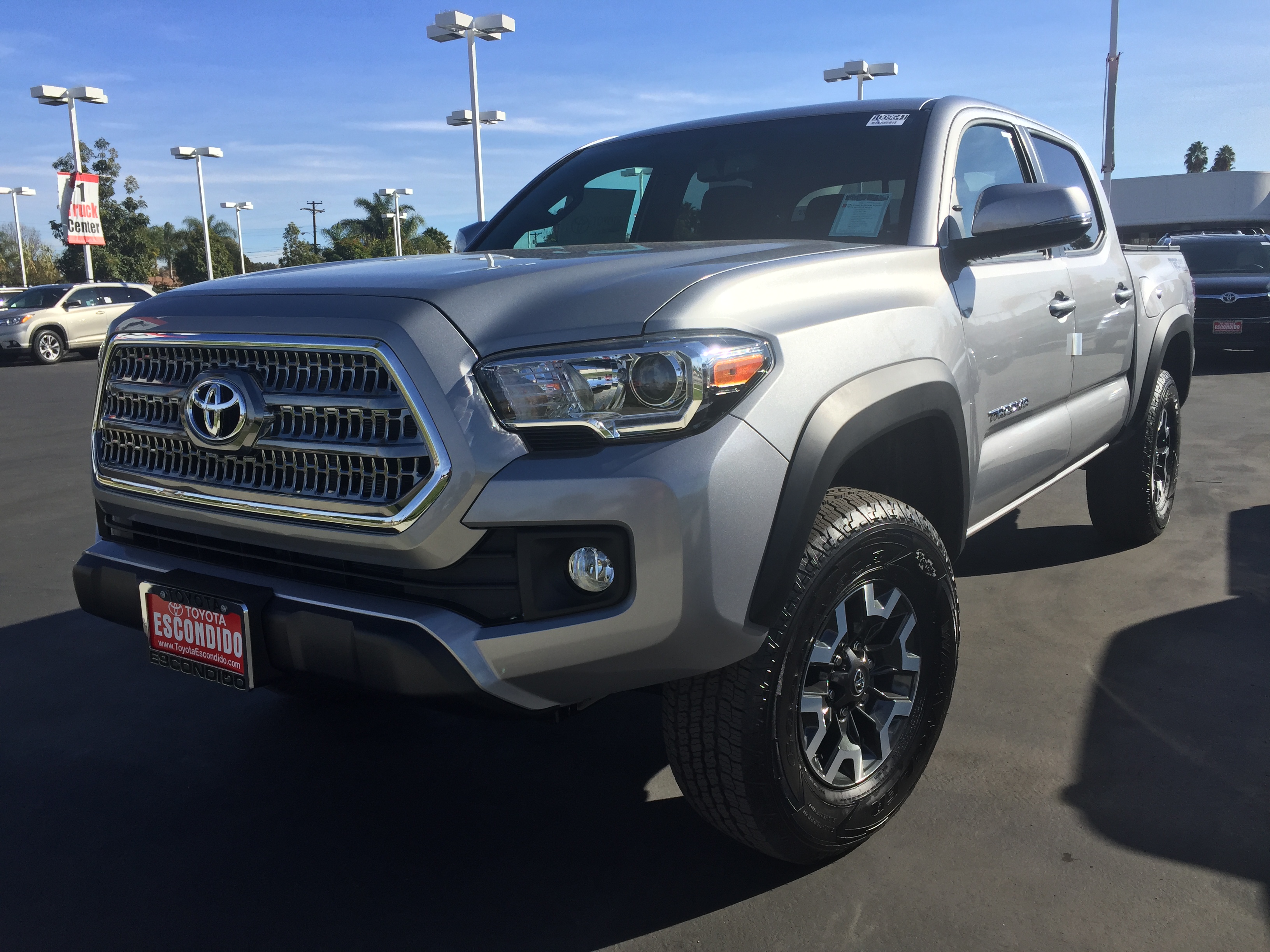
"Mitsubishi will source a new pickup from Nissan, hoping to siphon sales from the market-leading Toyota Tacoma, Chevy Colorado, and Ford Ranger."
The Toyota Tacoma is a popular midsize truck. The hosts mention it because it’s one of the top sellers that Mitsubishi is trying to compete against.
The Toyota Tacoma is a long-running midsize pickup known for strong off-road capability and a big enthusiast following. In this segment it’s named as the market-leading benchmark Mitsubishi hopes to siphon sales from.
"Mitsubishi will source a new pickup from Nissan, hoping to siphon sales from the market-leading Toyota Tacoma, Chevy Colorado, and Ford Ranger."
The Ford Ranger is a midsize truck that’s selling well. The episode mentions it because it’s one of the trucks Mitsubishi wants to compete against.
The Ford Ranger is a midsize pickup that’s been a major competitor in the U.S. market. In this segment, it’s named alongside the Tacoma and Colorado as a market-leading truck Mitsubishi hopes to siphon sales from.
"Mitsubishi will source a new pickup from Nissan, hoping to siphon sales from the market-leading Toyota Tacoma, Chevy Colorado, and Ford Ranger."
The Chevy Colorado is another midsize pickup. It’s mentioned as a top competitor in the truck market Mitsubishi is trying to enter.
The Chevrolet Colorado is a midsize pickup that competes directly in the same sales battleground as the Tacoma and Ford Ranger. Here it’s used as one of the current “market-leading” trucks Mitsubishi wants to take customers from.
"Stellantis Canada CEO Trevor Longley believes the automaker is moving closer to finding a long-term solution for its idled assembly plant in Brampton, Ontario."
Brampton, Ontario is a place in Canada where cars are built. The episode says Stellantis has had a plant there that was paused, and they’re trying to fix the situation long-term.
Brampton, Ontario is a Canadian manufacturing location where Stellantis has an assembly plant. The segment says the plant has been idled and that the company is working toward a long-term solution.
"Longley made the comments at the automaker's Windsor assembly plant, which was the site of celebrations marking the return of a third shift in the launch of the refreshed 2027 Chrysler Pacifica."
The Chrysler Pacifica is a minivan. The hosts mention the refreshed 2027 version because it’s part of why a factory shift is returning.
The Chrysler Pacifica is a minivan, and this segment references a refreshed 2027 model. The context is factory scheduling—celebrations for a third shift tied to launching the refreshed Pacifica.
"Longley made the comments at the automaker's Windsor assembly plant, which was the site of celebrations marking the return of a third shift in the launch of the refreshed 2027 Chrysler Pacifica."
The Windsor assembly plant is a car factory site in Canada. The episode says it’s where the company talked about restarting work and where a new minivan launch is happening.
The Windsor assembly plant is a Stellantis manufacturing site in Windsor, Ontario. In this segment, it’s where the CEO comments were made and where celebrations marked the return of a third shift for the refreshed 2027 Chrysler Pacifica.
"Last fall, Stellantis shifted plans to build the next-generation Jeep Compass in Brampton to a plant in Illinois."
The Jeep Compass is a compact SUV. The episode mentions it because Stellantis changed where the next version would be built, affecting the Brampton plant.
The Jeep Compass is a compact SUV in the Stellantis lineup. The segment says Stellantis shifted plans to build the next-generation Compass in Brampton to a plant in Illinois, showing how product plans drive factory utilization.
"Last fall, Stellantis shifted plans to build the next-generation Jeep Compass in Brampton to a plant in Illinois."
Illinois is a U.S. state. The episode says Stellantis planned to build the next Jeep Compass there instead of in Brampton.
Illinois is the U.S. state where Stellantis planned to move production for the next-generation Jeep Compass. In this segment, it’s part of the broader story about how automakers reallocate manufacturing across regions.
Select text to request an explanation
Welcome to Daily Drive.
For Friday, May 29, 2026, I'm Kellan Walker in Las Vegas.
Today on the show, Mitsubishi is getting into mid-sized pickups with help from Nissan.
More signs that Stalantis has a solution for its idled Brampton plant and CDK's declining
debt value raises concerns about future dealership tech investments.
Plus, Ducker Carlisle analyst Nate Cheneco breaks down the impending synthetic motor
oil shortage and what dealerships need to know.
If we can't get Group 3 base oils out of the Persian Gulf, anywhere close to as much
volume as we've been used to seeing, I don't see how this is going to resolve itself.
Let's run through all the news you need to know to keep up in the auto industry.
The already crowded mid-sized pickup segment is getting another new entry.
Mitsubishi will source a new pickup from Nissan, hoping to siphon sales from the market-leading
Toyota Tacoma, Chevy Colorado, and Ford Ranger.
A person familiar with the plan tells us at Automotive News that Nissan will build the
pickup at a factory in the US.
Mitsubishi did not give a timeline for the launch.
Stellantis Canada CEO Trevor Longley believes the automaker is moving closer to finding
a long-term solution for its idled assembly plant in Brampton, Ontario.
Longley said Thursday, quote, I think we've had meaningful discussions with the governmental
partners and Unifor.
Longley made the comments at the automaker's Windsor assembly plant, which was the site
of celebrations marking the return of a third shift in the launch of the refreshed 2027
Chrysler Pacifica.
Last fall, Stellantis shifted plans to build the next-generation Jeep Compass in Brampton
to a plant in Illinois.
And CDK Global saw a debt value decline in April.
And that's sparking some industry concern that the dealership management system provider
could struggle with future technology investments.
Something like that could affect more than 15,000 dealerships that CDK serves in North
America.
Joining me now to talk about it is Mark Homer, who covers retail and tech for us at Automotive
News.
Mark, welcome back to Daily Drive.
Thank you.
It's great to be here.
All right, Mark.
So this story is complex.
So first, explain what happened with the debt value could decline and why it's concerning
to analysts and investors.
Well, CDK was taken private a couple of years ago, and it being taken private, it took on
a fair amount of debt.
Something that kind of kicked into overdrive in April is some of CDK's debt, the value
of it plunged.
It wasn't as low as $0.61 on the dollar, and it had another bond just a couple of days
ago that went down to $0.51.
And that matters because it shows investors are worried about CDK being leveraged and
it's overleveraged.
They didn't have too much debt.
And if CDK has too much debt, there's a risk down the line that they may not be able to
invest as much in technology and innovation that needs to remain competitive.
S&P and Moody's seem to think this is a manageable situation for CDK.
What are they saying?
Basically, they see a lot of these things as potentially solvable.
CDK had some one-time expenses this year, including settling over $700 million regarding
two lawsuits over antitrust issues.
And it's had a healthy renewal cycle that it lost to major customers.
But it is keeping customers at that in new ones, and there's every chance that the company
can succeed.
But that is a point of concern.
So what do dealers who use CDK need to know going forward?
It's business as usual.
In the short term, it's business as usual.
They've invested hundreds of millions of dollars in modernizing their system.
So they've brought AI and other innovations to their customers.
And that should continue in the short term.
But if the debt value situation worsens, these bonds come due and they need to refinance.
And if there's trouble refinancing, then there could be some issues.
And so longer term, the company's stability is something to watch for.
Perfect.
Mark Holmer, thank you so much for joining me.
My pleasure.
And those are today's headlines.
You can find more details on all those stories at AutoNews.com.
Coming up, a closer look at the looming synthetic motor oil shortage and what dealership service
drives need to do to prepare.
That's next on Daily Drive.
Who owns your car's data?
You or the automaker?
On this week's episode of the Automotive News Shift Podcast, I'm joined by Richard Ward,
Executive Director of the American Vehicle Owners Alliance.
That's a coalition that's been backing legislation that would give vehicle owners
unrestricted access to raw vehicle data.
And Ward says the principle is simple.
If it's the car you own or purchased or leased, that data that the car is generating is yours.
And so we often say, my car, my data.
We talk about what's at stake for consumers, fleets, repair shops and insurers and why
this fight is only intensifying as vehicles generate more and more data.
I'm Molly Boygon.
Join me on Shift, available this Sunday wherever you get your podcasts.
Welcome back to Daily Drive.
I'm Kellen Walker.
As we said on Thursday's show, the US will probably run out of the main ingredient needed
to produce synthetic motor oil in June.
The Independent Lubricant Manufacturers Association says the motor oil shortage will probably last
until at least mid-2027.
Nate Chanako is principal at Ducker Carlyle.
He joins Automotive News Senior Retail Editor Dan Shine to talk about what's going on
and what dealerships need to do now to prepare.
Nate, thanks so much for joining me on Daily Drive.
Hi, Dan.
Good to be back.
Thanks for having me.
So we want to talk about this oil, motor oil, engine oil shortage that is happening here.
Definitely not maybe reached all dealership level yet, but you know, I talked to some
and they're not having problems yet.
Others are having problems.
When did this kind of come on to your radar at Ducker Carlyle?
I spoke through some of the strategy project work that we do.
I spoke to all four of the biggest motor oil producers about four and a half weeks ago now.
And they were varying degrees of concern at the time that we spoke.
So that's really when we started to dig into this and identify the major risks and the
few opportunities that this presents.
And since then, it has gotten worse, not better because the longer the Iran war continues
and the straight-up four moves remains closed, the longer this goes on.
Let's start with the risks.
What are the risks, the bad case scenarios?
If I guess as we sit here today and as we continue maybe down this path for a while.
Sure.
So the background, which I'll keep brief is that a substantial portion, a little less
than half, like mid 40% range of the motor oil base stock that we use to refine into
what makes up synthetic motor oil in the US comes from the Persian Gulf.
And when oil comes from the Persian Gulf, normally that's fine.
Right now, that's deeply not fine.
So there's not enough coming in.
And other oil reserves around the world are going down, not up.
So this particularly presents a problem for synthetic motor oil or like what marketing
people term as synthetic motor oil, which unfortunately happens to affect like pretty
much every car made in the last 10 years.
And for dealers, that is the vast majority of the cars that flew through their service
lanes are cars made within the last 10 years or really within the last seven years.
So the most challenging problem is going to be for dealers, can you get enough motor
oil to service all of the cars that are coming through the service lanes?
And we've heard from OEMs varying degrees of shorter allocations from their oil
companies than they were hoping for, ranging between we're going to get 20% less to
we're going to get 35% less, we're even going to get 40% less.
When you see a shortage in supply, naturally, that's a problem because you may that
particular day, you're out of luck, you don't have enough oil or you're worried
about where the next batch is going to come from, you're running a little low.
It will inevitably lead to price increases, which have already started to hit OEMs and
getting passed through the dealers.
And that's like the most clear and obvious concern right now.
And is it just a matter of if I am willing to pay whatever the rising cost is, I will
always have supply or at some point, again, if this continues on the way that it's
going, it won't matter how much money you have, there's just not any left.
This is an interesting supply and demand puzzle and forced me to crack open the college
textbook again, after many years of not needing to use it.
So I think there are a few things that could happen.
One is the industry is not really set up to create more synthetic motor oil than we
needed at steady state and steady state was quite steady, because it's fairly predictable
what the demand is going to be for a highly inelastic good, like where the price does
not really affect the demand, like something like synthetic motor oil or gasoline, which
are both very inelastic, like you need them.
This is a little different than in the COVID days, the toilet paper shortage, the infamous
toilet paper shortage, because toilet paper is like, okay, there are substitutes that
nobody really wants to admit are substitutes, but there are substitutes.
And also, it's just not that hard for a toilet paper factory to add a second shift, add a
third shift, overproduce.
And at a certain point, like you simply just don't need any more toilet paper in your
house than you already have.
So it was naturally always going to level out.
That was more of a hoarding thing.
And then it leveled out.
So it's like a really short term spike.
This is a long term by long term, I mean, like three plus months reduction in supply
coming into the market.
And so we can't just turn on more oil supply coming into the market.
And even if you could get the base stock, then like the refined capacity is different
and it's really not set up to do that.
So I just don't think that there's a lot of extra oil out there to make up the difference,
which means inevitably price increases.
But I also think that at a certain point, there just won't be enough and some people
will go short.
I was not alive in the seventies for the fuel crisis, but it strikes me as pretty
similar to that where there was a supply issue.
There was also a big difference is that back in the seventies, there was also price
controls that caused the gasoline shortages, but there's supply issues.
So then there's some rationing that has to happen.
Okay, you can go on Monday.
Dan, you can go on Tuesday.
I can go on Wednesday to get gasoline and I wouldn't be super surprised to see oil,
motor oil run somewhat similarly to that where today you're lucky you got filled
and you've got enough oil for three weeks and then you're going to be short for a little
while and then tomorrow Jiffy Loop gets filled and then the next day Walmart gets filled
and the day after that, Valveline gets filled.
But nobody's getting quite as much as they actually need.
So then customers are forced to shop around and that's bad news for dealers
because the more customers shop around, there's always an opportunity
that you may not get them back.
Could also be good.
If you're the one who has the oil, people have to come to you who might not otherwise
come to you and then you have an opportunity to retain them.
Right.
We talked about opportunities.
I think if I'm right here, Persian Gulf, like you said, manufacturers, a lot of this oil,
but I think the other kind of center I've heard is Korea.
Is that a place that can maybe up its supply at all to, you know, in the meantime,
you know, in the meantime, the wildest is going to go into Persian Gulf.
So Korea has already started some export controls on all oil, not just motor oil.
So I think they're more likely to keep it for domestic use than we are to be able
to get all of our motor oil from Korea.
The Asian supply is a little bit more interesting when we get to the tires topic,
which uses a lot of oil, but that's a separate daily drive for you.
So I don't think Korea is a great solution to the problem.
Different oil majors are feeling different levels of shortages.
Some are really hurt and some are less hurt.
And so it is probably a worthwhile time to ask this question and consider shopping around,
which is a little harder for OEMs and franchise dealers who are on the OEM oil program
because you have limited choices, whereas your aftermarket competition
is a lot less loyal to one brand.
So where do we go from here?
What's the light at the end of the tunnel if there is one?
So is it a train or is it a light?
So four and a half weeks ago, my advice would have been fill up your
bulk tanks and buy some packaged goods.
That is probably it's probably too late for that.
So in the present day, we are recommending a really detailed, like almost economic level
analysis of those supply and demand curves for your customer base in your specific area
to figure out how much should you buy?
How much should you pay and how much would you be able to sell it for?
And that goes true for installers and also for the wholesale business, by the way.
What is going to take to get it to resolve?
That's probably a question for people in much higher positions of power than I'm in.
But if we can't get group three base oils out of the Persian Gulf, anywhere close to
as much volume as we've been used to seeing, I don't see how this is going to resolve itself.
And even if I've heard that even if things were, you know, a piece of cord or whatever
was signed tomorrow, that this, you know, automatically is not going to fix itself in
the next week, that it's several months down the line before all the supply chain is filled
up again and we're back to normal.
Yeah, I'll try to lay this out for you linearly as I see it.
So like you said, everything's resolved tomorrow.
Everybody's happy.
Everybody shakes hands.
There's lasting peace and everybody knows that it's going to last, which that's a that's
concern number one is do people trust that it's going to last, but let's assume that
people will trust that it's going to last.
There are a bunch of sea mines in the Strait of Formus that are depending on your level
of military intelligence and mine is approximately zero will either slow shipping down a lot
or just a little.
So that's a hindrance to the whole issue.
Shell's Pearl GTL plant, which makes a large proportion of their group three base
oils in the Gulf.
This was in Qatar was bombed and half of it is offline for at least a year.
So that's like a natural supply limit that you could probably overcome, but you'll
definitely see different prices.
So that's a big risk.
So now you've I'm starting to lay out like some of the supply limitations and slowdowns
in the supply chain.
Then you have to get the oil into the ships, which means the ships have to get in like
a lot of ships in there already full of oil.
So you got to get new ships in and then to round trip like to come over to the U.S.
is five to seven weeks or so up to eight, depending on like the route that you take,
which is always a little bit up in the air.
Then you got to unload, then you got to process, then you got to get it through.
So it's like bare minimum a few months.
However, this is made ever more complicated by the fact that very pretty much every
country who has a strategic petroleum reserve, the U.S.
Europe, China has been gradually depleting their petroleum reserve.
So you might start to see motor oil come back in quantity, but you are not going to
see prices come down for an even longer time because until the oil reserves are
back up to a healthy level and honestly probably well above the level that we
previously thought was a healthy level because we did not anticipate something
like this would happen, then prices will remain elevated for a long time.
Those those reserves help buffer the issue on the oil price side, but they
won't help you get motor oil out because they don't hold motor oil.
They just hold oil.
That's daily drive for today.
I'm Kellen Walker.
Thanks to automotive news executive producer Jake Neer, as well as our own
Mark Homer, Hans Grimo and Natto Acomor for their reporting for today's podcast.
We also have reporting from Grace Macaluso of our sibling publication,
Automotive News Canada.
You can get the latest news on the motor oil shortage, new products and everything
happening in the auto industry at AutoNews.com.
Come back over the weekend for our weekend drive edition of the show.
Our own Lindsey Van Hully and Molly Boygon break down the week's biggest
news stories, including how global automakers are adapting to a US ban on
Chinese hardware and software.
It remains to be seen whether these companies are going to seek
authorizations from the Commerce Department to what extent they're
moving supply chains, moving around organizational structures to accommodate
this.
We'd love to hear from you.
Let us know what you think of the show and the topics we cover today.
Send us an email at daily drive at autonews.com or leave us a voicemail
at 313-444-2774.
And if you enjoy the podcast, remember to like, leave a review and subscribe
so you never miss an episode.
Request an explanation for:
5 cars
5 cars featured
Request an Explanation
Heard something you'd like explained? We'll add it to this episode.
Sign in to request explanations for terms you heard.
Want to learn more?
Browse our glossary for plain-English explanations of automotive terms, jargon, and concepts.
See something that's not quite right? Our annotations are AI-generated and can sometimes miss the mark.
Click the flag icon on any annotation to suggest a correction.