
May 9, 2026 | Weekend Drive: Toyota's billion-dollar paradox; Ford Skunk Works
About this episode
Ford’s “Skunk Works” is taking shape in Long Beach as a tightly focused effort to build a universal EV platform—starting with “a $30,000 midsize EV pickup.” The hosts compare it to Lockheed Martin’s model, including rapid development tactics like 3D printing to cut timelines. They also connect Ford’s EV struggles to COVID-era chip shortages and current inventory dynamics. Toyota, meanwhile, reports a $1.21 billion operating loss, blaming tariffs and forecasting weaker global profits amid tight U.S. inventory.
Ford Reporter Michael Martinez shares details from his rare visit inside the automaker’s secretive California skunk works. Larry P. Vellequette talks about Toyota’s big loss despite record U.S. sales. Plus, the panel discusses the pickup market as General Motors tries to capitalize on F-150 shortages.
Protective Asset Protection
"Protective Asset Protection works with dealers to unlock new revenue streams [7.1s] through reliable protection products across most vehicle types."
This is a company that helps car dealerships sell extra “protection” add-ons. The idea is that dealers can earn more money by offering these products to customers.
Protective Asset Protection is a company that works with car dealers to sell protection products that can add revenue beyond vehicle sales. In this segment, it’s positioned as a way to monetize dealer inventory through add-on coverage tied to vehicles.
universal EV platform
"And this is the home of the Skunkworks team, the team that is building the universal EV platform. And we're going to see the first product on that platform."
An EV platform is the main “building plan” for electric cars. If it’s “universal,” it means Ford wants to use the same core design for more than one EV to make them cheaper and easier to build.
An “EV platform” is the shared engineering foundation—like battery packaging, electronics architecture, and structural design—used across multiple electric models. Calling it “universal” implies Ford intends to spread that common design across different EV body styles to reduce cost and speed up development.
step change in terms of costs and efficiency
"Jim Frawley's called it their moonshot. He said it represents a step change in terms of costs and efficiency."
A “step change” means a big improvement, not a small tweak. In this context, Ford is saying it wants a major jump in how cheaply and efficiently it can build EVs.
A “step change” means a large, discontinuous improvement rather than incremental progress. Here it’s applied to EV development, specifically targeting lower costs and higher efficiency—two things that strongly affect whether a $30,000 EV pickup can be profitable.
skunkworks
"We're using phrases like skunkworks and the moonshot and on an individual company basis, maybe. It's certainly a cultural difference, but this is not the China answer."
A “skunkworks” is a special team inside a company that’s built to move quickly and try bold new ideas. The goal is to test innovations without the usual slow, big-company process.
“Skunkworks” refers to a company’s small, semi-independent team set up to move fast and develop new technology with fewer constraints. In automotive, it usually means experimenting with new platforms or manufacturing methods before rolling ideas into the main product lines.
moonshot
"We're using phrases like skunkworks and the moonshot and on an individual company basis, maybe."
A “moonshot” is a very big, high-risk goal—like trying to achieve something that’s way harder than normal upgrades. Companies use the term for projects that could change the industry if they work.
A “moonshot” is an extremely ambitious R&D goal—something far beyond incremental improvements. In the auto industry, it often describes long-horizon bets like new vehicle architectures, battery/charging breakthroughs, or manufacturing approaches.

Ford F-150
"So I asked Alan Clark when I was in California, can you do what you're doing here on F-150 on Bronco, on Mustang, on the existing core products for Ford?"
The Ford F-150 is Ford’s best-known truck and one of its biggest sellers. The hosts are saying Ford could use lessons from its experimental team to improve how it builds trucks like this.
The Ford F-150 is Ford’s flagship pickup, and it’s a major volume product that anchors the company’s manufacturing and supply chain. The segment discusses using “skunkworks” learnings on the F-150, implying new ways of building or platform-level concepts that could later spread across Ford’s lineup.

Ford Bronco
"So I asked Alan Clark when I was in California, can you do what you're doing here on F-150 on Bronco, on Mustang, on the existing core products for Ford?"
The Ford Bronco is Ford’s modern off-road SUV line, built to compete in the rugged, enthusiast-focused segment. In this discussion, it’s mentioned alongside the F-150 and Mustang as another “core product” that could benefit from experimental platform or manufacturing concepts.

Ford Mustang
"So I asked Alan Clark when I was in California, can you do what you're doing here on F-150 on Bronco, on Mustang, on the existing core products for Ford?"
The Ford Mustang is Ford’s famous performance car. The hosts are using it as an example of a major model line that could benefit from new ideas Ford is testing.
The Ford Mustang is Ford’s iconic performance coupe/convertible line, with a long history of enthusiast appeal. Here it’s used as an example of a “core product” that could potentially adopt improvements coming out of Ford’s skunkworks-style work.
UEV platform
"So once whether or not they get this UEV platform, right, it could still fail miserably. Who knows? But if they get it right, the real answer, the real trick for Ford will be incorporating it into the rest of the company..."
“UEV platform” sounds like a new car design foundation Ford is working on. The hosts are basically saying: even if the idea is good, it only works if Ford rolls it out across the whole company, not just a few experimental vehicles.
“UEV platform” appears to refer to a specific next-generation vehicle architecture Ford is discussing, likely tied to an electrification strategy. The key point in the segment is uncertainty: even if the platform is developed, it could still fail unless Ford integrates it across the broader company rather than keeping it as a small side project.

Ford Lightning
"Well, that's an interesting point, Larry, because if you remember, something that you could argue almost doomed their first wave of these new EVs, the Lightning and the Mach-E, is that it was just coming out of COVID, just coming out of the chip shortage."
The Ford Lightning is the electric F-150. The point here is that when it launched, supply problems and unusual timing made waiting lists look bigger than normal demand.
The Ford F-150 Lightning is Ford’s electric version of the F-150 pickup, and it became a high-profile EV launch. The hosts argue its early success was distorted by the post-COVID environment and chip shortages, leading to demand signals that didn’t reflect the broader market.

Ford Mach-E
"Well, that's an interesting point, Larry, because if you remember, something that you could argue almost doomed their first wave of these new EVs, the Lightning and the Mach-E, is that it was just coming out of COVID, just coming out of the chip shortage."
The Ford Mach-E is Ford’s electric crossover. The hosts are saying its launch period was affected by shortages, so the waiting lists didn’t necessarily mean the market would stay that hot.
The Ford Mustang Mach-E (often shortened to Mach-E) is Ford’s electric crossover built on EV-specific architecture. The segment groups it with the Lightning as an EV launch whose early “demand” was influenced by COVID-era supply constraints and semiconductor shortages.
chip shortage
"It's certainly a cultural difference, but this is not the China answer... Well, that's an interesting point, Larry, because if you remember... it was just coming out of COVID, just coming out of the chip shortage."
A chip shortage means there weren’t enough computer chips available for cars. If cars can’t be built because parts are missing, buyers end up waiting longer than they would in normal times.
A “chip shortage” refers to a shortage of semiconductor components used in vehicle electronics and control modules. When chips are scarce, automakers can’t build as many cars as they want, which can create long waiting lists and misleading demand signals.

Ford Maverick
"...n one volume product, presumably a better cheaper Maverick, an EV Maverick, it's an interesting thought beca..."
The Ford Maverick is a smaller pickup truck that’s meant to cost less than bigger trucks. The podcast is talking about the idea of making a new version that could be even more affordable, and possibly an electric version. That would still be a pickup, just with different power.
The Ford Maverick is Ford’s smaller, more affordable pickup, designed to bring truck capability to buyers who don’t want a full-size truck. The podcast’s mention of a “better cheaper Maverick” and an “EV Maverick” points to how Ford could expand the model’s lineup to include new powertrains while keeping the core idea of value. It’s a natural topic when discussing how pickup demand is evolving and where the next growth could come from.
tariff hit
"like a Ford or a GM, you're only talking $2 or $3 billion worth of tariff hit. So the impact's a little bit lower."
A tariff is a tax on imported products. “Tariff hit” means the extra money companies have to pay because they’re importing vehicles or parts.
A tariff is a tax the government charges on imported goods. When the host says “tariff hit,” they mean the extra cost automakers pay when parts or vehicles cross borders, which can raise prices or squeeze profit margins.
market strategy
"if you're one of the import brands, you really need to think about changing your market strategy in terms of where you build and where you sell."
Here, “market strategy” means deciding where to make cars and where to sell them. If taxes on imports change, companies may need to adjust those choices.
In this context, “market strategy” refers to how a company decides where to build vehicles and where to sell them to minimize trade costs. Tariffs can force automakers to rethink supply chains and sales locations.
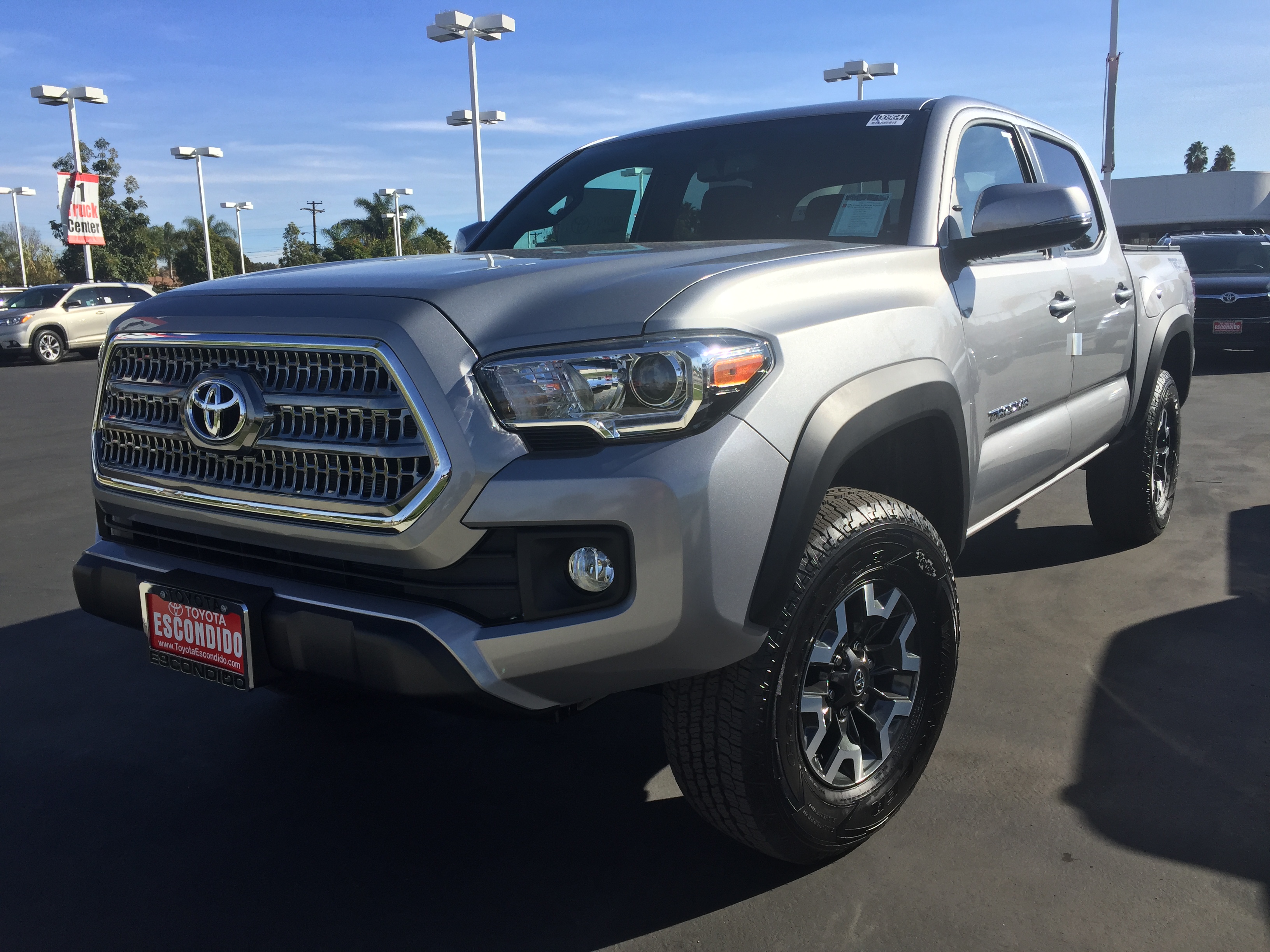
Toyota Tacoma
"Two of their biggest volume vehicles, RAV4 and the Tacoma come from Canada and largely come from Canada and Mexico exclusively."
The Toyota Tacoma is a popular pickup truck. Since it’s sold in large numbers, tariffs or import costs can affect what it costs Toyota to deliver it.
The Toyota Tacoma is a high-volume midsize pickup, so it’s a major lever for Toyota’s overall sales. The host points out it’s sourced from Canada/Mexico in this trade-tariff discussion, making it vulnerable to cross-border cost changes.

Toyota RAV4
"Two of their biggest volume vehicles, RAV4 and the Tacoma come from Canada and largely come from Canada and Mexico exclusively."
The Toyota RAV4 is a very popular compact SUV. Because it sells in huge numbers, changes in shipping costs or tariffs can hit Toyota’s costs.
The Toyota RAV4 is a high-volume compact SUV, which makes it especially sensitive to supply-chain disruptions and tariffs. In this segment, it’s used as an example of a major model that Toyota sources from Canada.
US MCA
"Like every automaker that has lived under the North American free trade agreement or US MCA, whatever you want to call it."
USMCA is a trade deal between the U.S., Canada, and Mexico. It affects how much extra tax companies pay when they move cars and parts across borders.
USMCA (often said as “US MCA”) is the trade agreement between the U.S., Canada, and Mexico that governs tariffs and rules for cross-border automotive trade. The host argues automakers are still getting hit because policy changes are forcing faster re-routing of vehicles and parts.
Novelis
"Thanks to that September fire at Novellis's aluminum plant in New York, right? Novellis's Ford's main aluminum supplier for its trucks, for its big SUVs."
Novelis makes aluminum. If a Novelis plant has a fire, it can reduce aluminum supply, which can then affect how many cars or trucks Ford can build.
Novelis is an aluminum producer/supplier, and the host links Ford’s truck supply issues to fires at Novelis facilities. When an aluminum supplier is disrupted, automakers can lose access to key materials and production can slow.
aluminum supplier
"Novellis's Ford's main aluminum supplier for its trucks, for its big SUVs. And there was a pretty devastating fire."
An aluminum supplier provides the aluminum parts used to build vehicles. If that supply gets interrupted, the automaker may not be able to build as many trucks.
An aluminum supplier provides the aluminum used in vehicle bodies, frames, and components. If the supplier has a disruption (like a fire), it can create a bottleneck that limits production of trucks and SUVs.
pickup truck loyalty
"Number one unit, I know we talked about this earlier, the Calvin test, right? Yes. Pick up pickup truck loyalty is the strongest of any segment when generally when somebody chooses what brand to pick up they are going to drive,"
Pickup buyers often stay loyal to the same truck brand. The hosts are saying that’s why it’s usually hard for competitors to steal customers—unless the preferred brand can’t deliver.
Pickup truck loyalty refers to how strongly many buyers stick with the same brand after choosing a pickup—making it hard for competitors to win them over. The hosts argue this loyalty is especially strong in the pickup segment, so shortages matter more when they disrupt availability.
conquest opportunities
"Automakers know that. So these conquest opportunities, they don't come up very often because people are so locked in and they just you know, they're on a schedule, etc."
A “conquest opportunity” is when one brand can steal sales from another brand. Here, it’s because Ford may not have enough trucks available, so shoppers look elsewhere.
Conquest opportunities are moments when one automaker can win customers who would have bought a competitor’s vehicle—often because the competitor can’t supply enough cars. In this segment, inventory shortages create a chance for other brands to take pickup buyers.
days supply
"full size pickups, the day supply right now, 63 days. That's under what midsize SUVs, full size SUVs. [1493.6s] That's one of the tightest inventories"
“Days supply” is a way to measure how many days of cars are sitting on lots. If it’s low, dealers don’t have many cars left; if it’s high, there are more cars than buyers are taking.
“Days supply” is an inventory metric that estimates how long current dealer stock would last if sales continue at the current pace. Lower days supply generally means tighter inventory and potentially stronger pricing power, while higher days supply suggests more sitting inventory.
inventory levels
"That's one of the tightest inventories, inventory levels that I have seen in the last decade for full size trucks"
“Inventory levels” just means how many cars are available for sale. When there are fewer cars than people want, it can affect pricing and how hard it is to find the exact configuration you want.
“Inventory levels” refers to how many vehicles are available relative to demand, often tracked by dealer stock and sales pace. In retail auto, inventory levels strongly influence incentives, pricing, and how quickly dealers can turn over specific configurations.
commercial side
"And their best bet is on the commercial side. Well, speaking of the commercial side, [1521.7s] we saw Ram this week talking about going after more small business buyers."
“Commercial side” means trucks bought for work by businesses, not just personal use. Those buyers care a lot about whether the truck can be set up for the job.
The “commercial side” refers to selling vehicles to businesses and fleets rather than individual retail buyers. Commercial demand often depends on work requirements and the availability of compatible equipment and upfitting, which can make purchasing cycles and inventory needs different from consumer sales.
Ram
"Well, speaking of the commercial side, [1521.7s] we saw Ram this week talking about going after more small business buyers."
Ram is a brand that makes trucks. Here, they’re talking about trying to sell more trucks to small businesses that use them for work.
Ram is the truck-focused brand within Stellantis, best known for pickups and commercial-oriented variants. In this segment, Ram is referenced in the context of targeting more small business buyers, which ties into how commercial truck demand is influenced by upfitting and fleet needs.
upfitters
"So it takes a long time. [1580.1s] It's an opportunity, yes, but it's not an easy opportunity. [1583.4s] But with that being said, on the commercial side, you do tend to strip out a lot of the emotion"
Upfitters are companies that customize a truck for a specific job. Since the equipment is built to fit a particular truck setup, switching trucks isn’t quick or simple.
Upfitters are specialized companies that modify a base pickup or commercial vehicle to add job-specific equipment—like custom beds, racks, or other hardware. Because these setups are tailored and require approved configurations, it can take a long time for a fleet or small business to switch to a different truck platform.
Request an Explanation
Heard something you'd like explained? We'll add it to this episode.
Sign in to request explanations for terms you heard.
Want to learn more?
Browse our glossary for plain-English explanations of automotive terms, jargon, and concepts.
Help improve this episode
See something that's not quite right? Our annotations are AI-generated and can sometimes miss the mark. Click the flag icon on any annotation to suggest a correction.