McLaren Racing CEO Zak Brown
About this episode
Zak Brown, McLaren Racing CEO, weighs in on Formula 1’s disruptive new rules and hybrid-era tech—arguing the racing has stayed close and will “smooth out” as teams adapt. The conversation also bounces through Corvette electrification, where the E-Ray’s hybrid layout brings AWD traction and instant front-motor torque, plus practical downsides like challenging visibility. They discuss Indy 500 intimidation for F1 drivers, historic racing plans at Monterey, and even weekend car time with a BMW M2 CS.
Hannah and Matt welcome Zak to talk about his quest to win the Indy 500, Le Mans, and the Monaco Grand Prix, and why F1 drivers want to race at Le Mans but not Indy. Plus, the Corvette ZR1X versus the Corvette eRay, and Hannah's going to Indianapolis.
See omnystudio.com/listener for privacy information.
wide body
" [117.0s] They're coming out with the Grand Sport, which is essentially the same thing, a wide body. It's the Z six [122.5s] body with just the big motor in it, and they're making an electric version or hybrid version of the Grand Sport as well, the Grand Sport X."
“Wide body” means the car’s body is made wider, usually to fit wider tires and look more aggressive. The hosts are saying the Grand Sport keeps that wider stance.
A wide-body setup refers to a car with widened fenders/stance compared with the standard body. The transcript uses it to describe the Grand Sport’s look and packaging, implying more tire clearance and a more aggressive stance.
hybrid version
" [122.5s] body with just the big motor in it, and they're making an electric version or hybrid version of the Grand Sport as well, the Grand Sport X. So that will [131.1s] take the place of the E Ray."
A hybrid uses two kinds of power, usually a gas engine and an electric motor. Here, they mean the Grand Sport will come in an electrified version too.
A hybrid version uses more than one source of power—typically a gasoline engine plus an electric motor/battery—to improve efficiency and/or performance. In this context, the hosts are saying the Grand Sport will also be offered with an electrified powertrain.

Corvette E-Ray
"So the Stingray is the bottom rung and the z R one X is obviously the top, but I like the middle ground. So especially the E Ray, I absolutely love it. It's the six point two liters V eight in the back. It's got the two hundred horsepower electric motor on the front axle..."
The Corvette E-Ray is a Corvette that uses both a gas engine and an electric motor. The electric part helps it launch quickly and provides extra grip, especially in bad weather, while still keeping the V8 feel.
The Chevrolet Corvette E-Ray is a hybrid Corvette that pairs a V8 with an electric motor for added traction and instant torque. In this segment, the host highlights the electric motor on the front axle, all-wheel drive for the first time in a Corvette “in their lifetime,” and the way it delivers both traditional V8 character and electric punch.
electric motor
"It's got the two hundred horsepower electric motor on the front axle, and so you still get the vibe, the sounds, the smells of you know, a big inch V eight naturally astirraated V eight behind you... But then you get the pole and the instant torque of the electric motor in front."
An electric motor is the electric power unit that helps move the car. Because it can deliver power immediately, it can make the car feel quicker off the line and help with grip.
An electric motor converts electrical energy into rotational force to drive the wheels. Here it’s described as producing instant torque at the front axle, which is why the host connects it to quick acceleration and better traction.
instant torque
"But then you get the pole and the instant torque of the electric motor in front. So zero sixty and two and a half seconds, right..."
Instant torque means the car’s electric power shows up immediately when you press the accelerator. That quick response is part of why the car can accelerate very fast.
Instant torque means the electric motor can deliver twisting force right away, without waiting for engine revs. That’s why the host links it to rapid acceleration—especially compared with a traditional gas-only setup.
all wheel drive
"And also for these north wet North Eastern you know roads, you get the safety of having all wheel drive for the first time in a corvette."
All-wheel drive means power goes to all four wheels. That usually helps the car grip better, especially on wet or slippery roads.
All-wheel drive (AWD) sends power to both the front and rear axles to improve traction. The host emphasizes AWD “for the first time” in a Corvette context and ties it to confidence on wet, northeastern roads.
carbon ceramic brakes
"because not only does it come with the wider body, the zero six body, but the Era comes with carbon ceramic breaks as standard, as well as the magnaride as standard."
Carbon ceramic brakes are high-end brakes made from special ceramic material. They’re designed to keep braking performance consistent, especially when you drive hard.
Carbon ceramic brakes use carbon-fiber ceramic material for the brake rotors, typically offering strong fade resistance under hard use. In this segment, the host says the E-Ray comes with carbon ceramic brakes as standard, framing it as a value advantage in the used market.
MagnaRide
"the Era comes with carbon ceramic breaks as standard, as well as the magnaride as standard."
MagnaRide is an adaptive suspension system. It helps the shocks change how firm or soft they feel depending on how you’re driving.
MagnaRide is a brand name for adaptive damping, where the suspension’s shock absorbers change their stiffness based on driving conditions. The host mentions it as standard on the E-Ray, implying the car can adjust ride/handling behavior rather than staying fixed.
used car market
"I cannot wait for the used car market to just drop prices on the Era, because not only does it come with the wider body..."
The used car market is where people buy and sell cars that aren’t brand new. The host expects the E-Ray to get cheaper once more of them enter that market.
The used car market is the resale market where previously owned vehicles trade hands, and pricing can drop after new models become more widely available. The host is specifically hoping prices fall for the E-Ray once it’s more common.
launch control
"It's you didn't put on launch control and try it out for yourself, you know what?"
Launch control is a setting that helps the car accelerate as hard as possible from a stop. It manages wheel slip so the car can get moving quickly.
Launch control is a driver-assist feature that manages engine output and traction systems to optimize acceleration from a standstill. The host mentions not using it, implying they didn’t attempt the car’s most aggressive, repeatable performance mode.
Corvette ZR1
"Like I the eight, the Plane C eight, and the E Ray is the plainest of them all... I'm looking at the z R one X on the website right now, and it doesn't have the arrow, and it doesn't have the spoiler..."
The Corvette ZR1 is the most extreme version of the Corvette. Here, they’re debating whether the big rear spoiler is something you really need, or mostly just for looks.
The Chevrolet Corvette ZR1 is the Corvette’s top-performance variant, known for being extremely fast and track-capable. In this segment, it’s referenced in the context of styling choices like a large rear spoiler and whether owners actually use that hardware on track.
spoiler
"That spoiler is on a track. That's the only way You would ever get it."
A spoiler is a piece on the back of the car that helps the car “stick” to the road at higher speeds. The point here is that it matters most when you’re driving hard on a track.
A spoiler is an aerodynamic device mounted on the rear of a car to change airflow and increase downforce. More downforce helps tires stay planted at speed, which is why the hosts argue it’s most justifiable when you’re actually driving on a track.
downforce
"That spoiler is on a track. That's the only way You would ever get it."
Downforce is what makes a car feel more planted to the road. The faster you go, the more it helps grip—so it’s most relevant on track driving.
Downforce is the aerodynamic force that pushes a car’s tires toward the road. It improves grip at speed, which is why rear aero like a spoiler is typically associated with track performance rather than slow street driving.
MSRP
"Yeah, it starts at two hundred and nine and the one I drove was up around two hundred and forty. [517.3s] Right, And you're not getting it off a dealer lot for less than three hundred three fifty because they're charging like one hundred grand or even one fifty in an additional dealer markup."
MSRP is the official price a carmaker lists on the window sticker. Dealers can charge more than that, which is what the hosts are talking about here.
MSRP (Manufacturer’s Suggested Retail Price) is the sticker price automakers publish as the starting point for what a car “should” cost. The segment contrasts MSRP with real-world dealer pricing and markups.
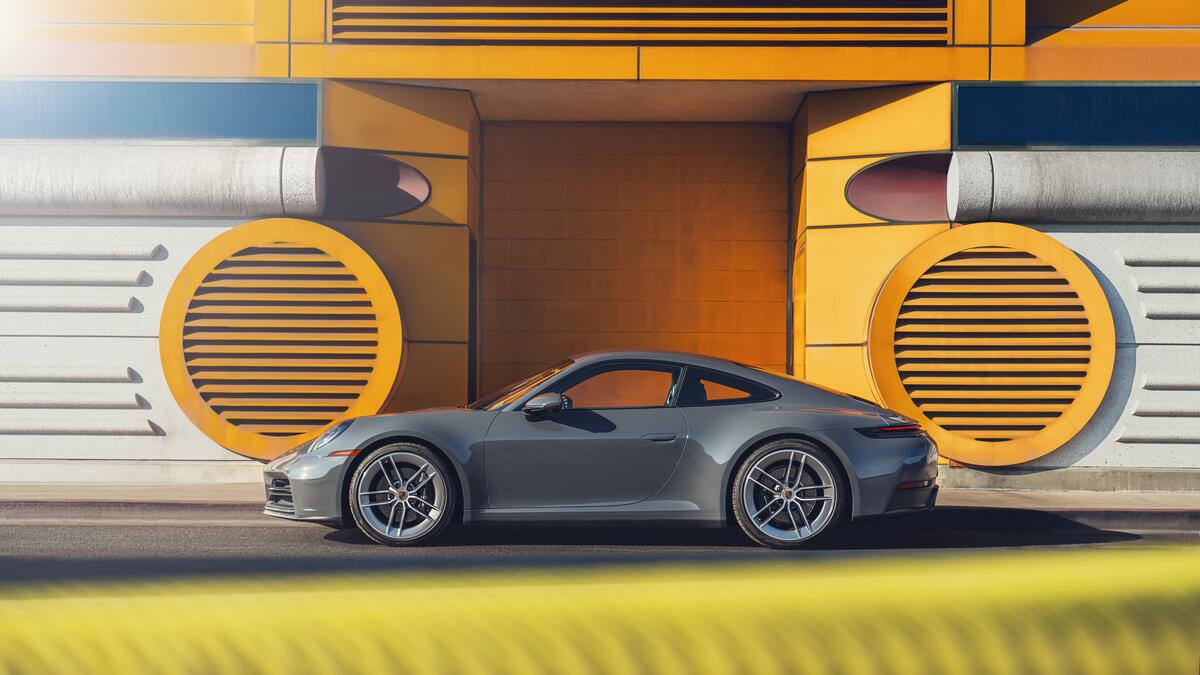
Porsche 911
"Look at the nine to eleven now, I [578.4s] would not say that the nine to eleven is a halo car for Portie. Even if you get into the [584.8s] GT three RS that's not Porsia's halo car."
The Porsche 911 is Porsche’s most famous sports car. In this conversation, it’s used as an example of a model that defines the brand, even when there are faster special versions.
The Porsche 911 is the brand’s iconic sports car, and it comes in many variants over the decades. Here, the speaker uses the 911 as an example of a “halo” model concept—something that represents Porsche’s top identity—even when specific trims like GT3 RS are discussed.
halo car
"Look at the nine to eleven now, I [578.4s] would not say that the nine to eleven is a halo car for Portie. Even if you get into the [584.8s] GT three RS that's not Porsia's halo car."
A “halo car” is a flagship model that’s meant to define a brand’s image—often the most aspirational, technologically advanced, or emotionally compelling car in the lineup. It’s not necessarily the fastest or the most track-focused; it’s the one that best represents what the brand wants to be.

Porsche 918 Spider
"A halo [588.5s] car for Porsche and a supercar for Portia would be something that follows the nine eighteen Spider, a completely different model."
The Porsche 918 Spider is one of Porsche’s most special, limited supercars. In this discussion, it’s described as the brand’s “halo” car—the one that most strongly represents Porsche at its peak.
The Porsche 918 Spider is a limited-production supercar known for being a hybrid, combining an internal-combustion engine with electric power. The speaker calls it Porsche’s “halo” car—meaning a flagship that best represents the brand’s ultimate performance image.
video camera instead of a mirror
"I didn't love changing lanes in this car because again, the visibility is challenging, even with the rear view mirror that is a video camera instead of a mirror."
They’re saying the car shows the rear view on a screen from a camera, rather than using a normal mirror. They think it makes lane changes harder because it’s not as straightforward as normal mirrors.
Instead of a traditional rearview mirror, the car uses a video camera feed for rear visibility. The hosts say this affects how easy it is to change lanes, because the camera view can be less intuitive than looking through a mirror.
split back window
"I know they're really proud of their split back window because that's similar to some of the older Corvettes the split windows, of course, but the visibility is really challenging..."
A split back window means the rear windshield is divided into two parts. The host mentions it because it looks like the rear window design on older Corvettes.
A split back window is a rear glass design divided into two sections, often used for styling and packaging. In this segment, it’s referenced as a design cue that’s similar to older Corvettes.
Formula 1 rules and regulations
"here's the question, and it is an F one related question... Everybody's talking about the new rules and regulations. The people who are doing well say they love them."
Formula 1 has a rulebook that tells teams what they’re allowed to build and how races are run. When the rules change, it can force teams to redesign their cars and change their racing strategy.
In Formula 1, the rules and regulations cover technical limits (like car design and powertrain constraints) and sporting rules (like race procedures and penalties). When Zak Brown talks about “new rules,” he’s referring to changes that can alter how teams build cars and how drivers race each other.
pitwall
"So the racing itself, when you watch it on television or I'm watching on pitwall, it's pretty awesome, right."
“Pitwall” is the team’s control area near the pit lane where engineers and strategists monitor the race and communicate with the drivers. It’s where decisions like strategy calls and adjustments are coordinated in real time.
lead changes
"it's pretty awesome, right. Three four lead changes at the front, five different leaders in Miami."
“Lead changes” are moments when the driver in first place swaps during a race. A high number of lead changes usually indicates close competition and frequent overtaking at the front.
starts are dramatic
"The starts are dramatic. You know, people aren't getting off the line, well some people are, so I think the racing, the spectacle is very good."
“Starts” in Formula 1 refer to the launch from the grid into the first corners, where positioning and traction matter a lot. When Zak says the starts are “dramatic,” he’s emphasizing how chaotic or eventful the opening phase can be.
flat out
"The drivers, of course, want to drive flat out all the time. That's what Formula one's about."
“Flat out” means driving at maximum effort—using the car’s available grip and power as much as possible. In racing context, it highlights that drivers want to run at the limit continuously, even as rules and technology change.
new technology
"That being said, the race car does things that we've never seen race cars do before because we've got new technology."
In Formula 1, “new technology” can mean changes to car systems (aerodynamics, energy recovery, electronics, etc.) that weren’t possible or allowed before. Zak’s point is that the cars can do behaviors “we’ve never seen” because the rule changes and tech updates reshape what teams can build and how the cars behave on track.
adjustments
"we're three four five races into it... In reality is we've already made the first round of adjustments."
“Adjustments” refers to the iterative process teams go through after rule changes—updating car setup, development direction, and strategy based on what they learn in early races. Zak frames it as normal evolution rather than a sign that the racing is fundamentally broken.
Indy 500
"Indy five hundred, uh scares the majority of the grid in Formula one, So it's it's it's on the more dangerous side when you look at you know, the type of racing. It's oval racing, so it's something that they're not accustomed to."
The Indy 500 is a major race in the U.S. held on a high-speed oval track. The hosts are saying it can be scary for F1 drivers because it’s a different kind of racing and accidents can be severe.
The Indy 500 (Indianapolis 500) is a premier American open-wheel race run on an oval track, and it’s known for being high-speed and incident-prone. The transcript frames it as intimidating for many Formula One drivers because the racing style and risk profile differ from F1.
oval racing
"So it's it's it's on the more dangerous side when you look at you know, the type of racing. It's oval racing, so it's something that they're not accustomed to."
Oval racing is racing on a track shaped like an oval. Because the turns and speeds are so different from road courses, drivers used to other types of tracks may need time to adjust.
Oval racing is a form of motorsport run primarily on oval-shaped tracks, where cars spend long periods turning in one direction at high speed. It changes how drivers manage speed, tire wear, and traffic compared with road courses, which is why F1 drivers may find it unfamiliar.
mechanical failure
"He only did he only dropped out because of mechanical failure, right. Yeah, we had an engine. We had an engine failure."
Mechanical failure means something on the car breaks or stops working. In a race, that can make the driver have to stop even if they’re going fast.
Mechanical failure is when a car’s components stop working as intended—often due to wear, damage, or a part breaking. In racing, it can force a driver to retire even if they’re otherwise performing well.
engine failure
"Yeah, we had an engine. We had an engine failure."
Engine failure means the engine isn’t working correctly anymore. In a race, that usually ends the car’s chances because the driver can’t keep going at full speed.
Engine failure is a specific type of mechanical failure where the engine can’t produce power reliably—due to issues like overheating, lubrication problems, or internal damage. In racing, it typically ends the run immediately or forces the car into a limp mode.
roll of the dice
"But you know, it's a bit of a roll of the dice. It's a long race."
A “roll of the dice” means the result can swing based on luck and unexpected events. In a race, things like crashes or timing can change everything.
In racing, a “roll of the dice” describes how outcomes can swing due to unpredictable events like crashes, timing of cautions, and strategy calls. Even a strong car and driver can be affected by factors outside their control.
safety car
"We had a Pato crash yesterday. Someone crashed in front of them. You know, you get the safety car or the pace car at the wrong time."
A safety car is used when the track is unsafe, like after a crash. It slows everyone down so officials can fix the problem, and it can completely change race strategy.
A safety car is deployed during a race when there’s danger on track, and it controls the pace while marshals handle incidents. Timing matters because it can bunch up the field and change pit-stop and strategy decisions.
pace car
"You know, you get the safety car or the pace car at the wrong time. So there's a lot of variables that need to fall your way."
A pace car is another way to slow the race down when something is happening on track. It keeps cars moving at a controlled speed until it’s safe to race again.
A pace car is used to regulate the race speed during caution periods, typically following a controlled pace until the track is clear. In many series, the pace car function is similar to a safety car, but the exact rules can vary by sanctioning body.

Buick Century
"...ur favorites? I mean, let's say, of the twentieth century, right, what's your favorite era in terms of you ..."
The Buick Century is a mid-size car made by Buick. It’s associated with older model years, and people may bring it up when talking about favorite car eras. In this podcast context, it sounds like it’s being used as an example of cars from the twentieth century.
The Buick Century is a mid-size car from Buick that’s often discussed as a symbol of a particular era of American comfort-focused styling. Because it’s tied to the “twentieth century” framing in your excerpt, the conversation is likely using the Century as an example of cars from that time period. It may come up in discussions about favorite eras, design trends, and what people associate with classic Buick models.
Laguna Seca
"I'm thinking of the physical strength required to drive those cars when you're racing in like in Monterey for instance, that's a laguna seka."
Laguna Seca is a famous race track in Monterey. Brown is using it as an example of how tough older race cars were to drive.
Laguna Seca is a well-known road course in Monterey, California, often discussed in motorsport because of its challenging layout and heavy braking/traction demands. Brown brings it up to explain how physically demanding older cars were to drive there.
gearboxes
"I've got more laps around that track than any I think the physicality of the old cars and the fragility of the cars, the gearboxes, the brakes."
A gearbox is what lets the engine spin at the right speed for acceleration and speed. In older race cars, it was easier to damage that system if you pushed too hard.
A gearbox is the transmission’s gear set that changes engine speed to match driving conditions. Brown highlights that older race cars were more fragile, so “breaking the gearboxes” was a real risk during hard driving.
miss shifts
"You know, now you hop in a car and you know all the cars finish the races. You can't really break the gearboxes, you can't miss shifts."
A miss shift is when you don’t get the gear you meant to. In older race cars, mistakes like that were more likely to cause problems and even damage parts.
A “miss shift” is when a driver selects the wrong gear or fails to engage the intended gear during a shift. Brown contrasts older cars—where that could happen and cause damage—with modern cars that are more forgiving and finish races more reliably.
overrev
"You can't miss shifts. You can't overrev the engines."
Overrev means the engine is revved too high. He’s saying older race cars were easier to overrev, which could lead to damage.
Overrev (over-revving) means the engine spins faster than it’s designed to safely handle. Brown says older cars were vulnerable to this kind of driver error, while modern systems and controls make it harder to exceed safe engine speeds.
t-boned
"I want it to be able to survive, like getting hit sideways in an intersection, Like I don't want to get t boned and die,"
A “T-bone” crash is when another car hits you from the side. It’s dangerous because side impacts can be very forceful.
“T-boned” describes a crash where one vehicle hits the other from the side, forming a “T” shape. It’s a serious impact scenario because side structures and occupants can be exposed to high forces.
naturally aspirated
"I mean, that's part of why I think people like the nineties Radwood era cars right now because you can get like kind of the maximum naturally aspirated power and and a good amount of safety."
Naturally aspirated means the engine makes power without a turbo or supercharger. It usually gives a more straightforward, immediate feel when you press the gas.
Naturally aspirated describes an engine that draws air in without a turbocharger or supercharger. Enthusiasts often prefer it because the throttle response and power delivery can feel more direct and predictable.

McLaren GT3
"So you know, I'm in two weeks time going to be racing a McLaren GT three and a Ferrari."
McLaren GT3 is a McLaren race car category used in amateur-to-pro racing. It’s built for track events where different brands can compete under the same rules.
McLaren GT3 refers to McLaren’s race cars built to the GT3 class, which is designed for customer racing. GT3 cars are known for being track-focused but still usable in series that support private teams.
carbon fiber
"But you know those are all carbon fiber, electronics, paddleshift gearboxes."
Carbon fiber is a strong, lightweight material often used in race cars. Using it can help the car feel quicker and more responsive on track.
Carbon fiber is a lightweight composite material used in race cars to reduce weight while maintaining stiffness. Lower weight can improve acceleration, braking, and handling, especially in motorsport applications.
Brands Hatch
"But reality as they are now, where is that race that's gonna be a brands Hatch which will be a lot of fun, which I'm going to be doing with my my son, first time I've ever raced with them."
Brands Hatch is a famous race track in the UK. The host is talking about it because they’re going to race there soon.
Brands Hatch is a well-known British race circuit. The speaker references it as the track they’ll be racing at and notes its history of hosting major events like the British Grand Prix.
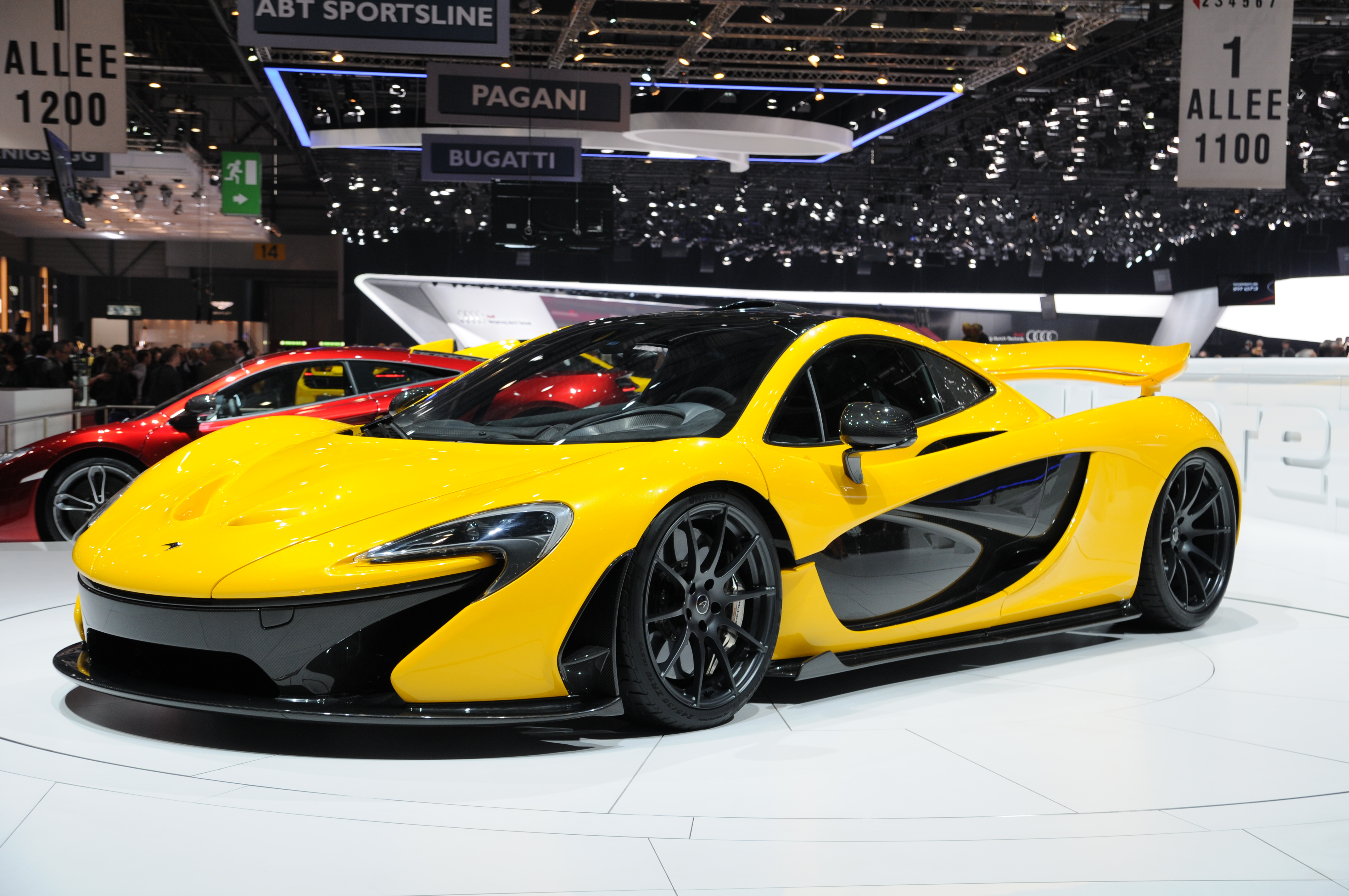
McLaren P1
"What do you like? I love the p Ones an amazing car. I think tremendously undervalued when you look at it."
The McLaren P1 is one of McLaren’s most famous supercars. It’s known for being high-tech and rare, and the speaker thinks older P1s are a better deal than some similar cars.
The McLaren P1 is a flagship, limited-production supercar built around advanced hybrid performance and high-tech aerodynamics. In this segment, Zak Brown is using it as an example of an older McLaren that’s still special—calling it a “mega supercar” and saying it’s undervalued compared with rivals.
supercar
"That was our first real supercar... But P one, to me is a mega supercar."
A “supercar” is a very special kind of car—usually expensive, fast, and built with advanced technology. Here, the speaker is saying the McLaren P1 is one of the biggest examples of that level.
“Supercar” is an enthusiast term for an extremely high-performance, high-cost car built for speed, advanced engineering, and often limited production. In this segment, the speaker uses it to frame the McLaren P1 as a top-tier, “mega” example of the category.

McLaren F1
"That was our first real supercar, of course, other than the McLaren F one from the mid nineties. That car is amazing."
The McLaren F1 is a famous supercar from the 1990s. It’s remembered for being very different from most supercars and for focusing on the driver.
The McLaren F1 is a legendary mid-1990s supercar known for its driver-focused design and its unusual three-seat layout. Here, the speaker calls it “amazing” and references it as a key predecessor to the later McLaren supercar lineup.
car storage unit
"I've got a car storage unit because I've got more cars than a garage space, so rotate them through."
A car storage unit is an off-site facility where owners keep vehicles when they don’t have enough space at home. The speaker uses it to explain how they manage a large collection—rotating cars and only driving them occasionally.
Monterey pre-selling McLaren race cars
"Last year at Monterey, you guys did something I've wudn't have even thought of, which was you pre sold McLaren race cars."
They talk about an unusual business move at Monterey: pre-selling McLaren race cars. It’s more about how the cars are sold than how the cars work.
This segment discusses a Monterey event where McLaren race cars were pre-sold, described as something the speaker “wouldn’t have even thought of.” It’s a business/marketing angle tied to motorsport rather than a technical car detail.
IndyCar
"I admit I know really nothing about IndyCar. You know Alexander Rossi, of course is we're friendly."
IndyCar is a major type of race series in the U.S. with open-wheel race cars. The host is saying they don’t know much about it yet and wants to learn.
IndyCar is the top open-wheel racing series in the United States, featuring purpose-built race cars that compete on ovals, road courses, and street circuits. The host mentions it because they don’t know much about it and want to learn what the racing is like.
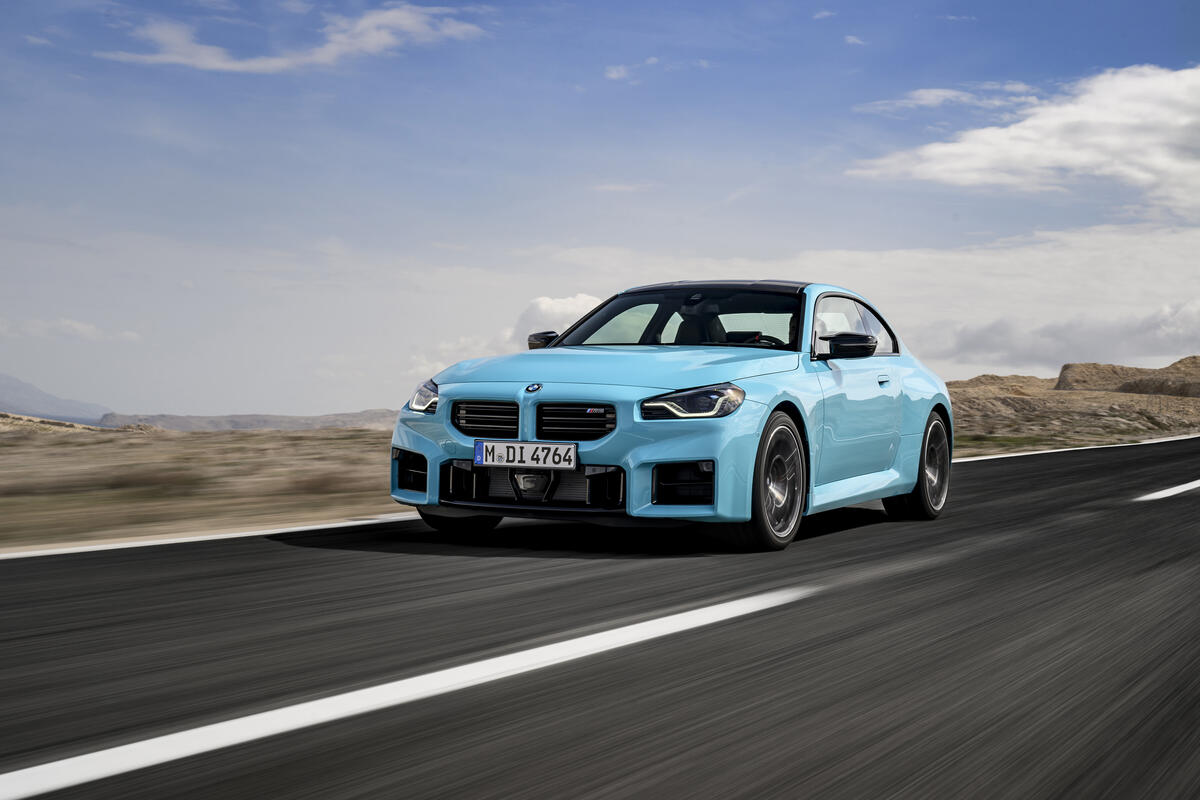
BMW M2 CS
"But my buddies at BMW are dropping off an M two CS at my house today, and I kind of want to just ask my wife if I can have a pass and just spend the weekend driving it, because have you seen the M two CS. It's got this little ductail that's additional that the base M two doesn't have, and it looks freaking awesome."
The BMW M2 CS is a sportier, more performance-oriented version of the BMW M2. The host is excited about it because it has a more aggressive look and he’s comparing its price and feel to other similar used cars.
The BMW M2 CS is a track-focused variant of the BMW M2, built around BMW’s compact, rear-wheel-drive “driver’s car” formula. In this segment, it’s notable because the host points out a distinctive aerodynamic add-on (a small duct/wing detail) and also compares it to other manual-transmission options in the used market.
manual transmission
"And although you can't get a manual transmission with the CS, I'm really I mean it's a little rocket ship. I can't wait to get into it."
A manual transmission means you shift gears yourself using a clutch and gear stick. Some drivers prefer it because it can feel more connected and more fun to drive.
A manual transmission uses a clutch pedal and gear lever so the driver selects gears directly. In performance-car shopping, it’s often discussed because it changes how the car accelerates and how engaging it feels compared with automatic gearboxes.
1993 Corvette ZR-1
"Speaking of Corvette corvettes, Michael Jordan's z R one is now at the National Corvette Museum. So anybody who's around there interested in corvettes, it's a nineteen ninety three Corvette ZR one owned by Michael Jordan, now at the National Corvette Museum."
This is a special, higher-performance version of the Corvette. The 1993 Corvette ZR-1 is the exact Corvette Michael Jordan owned, and it’s now on display at a Corvette museum.
The Chevrolet Corvette ZR-1 is a high-performance variant of the Corvette line, built to deliver more power and track-focused hardware than a standard Corvette. The 1993 Corvette ZR-1 is especially notable because it’s the specific model Michael Jordan owned that’s now displayed at the National Corvette Museum.
Request an Explanation
Heard something you'd like explained? We'll add it to this episode.
Sign in to request explanations for terms you heard.
Want to learn more?
Browse our glossary for plain-English explanations of automotive terms, jargon, and concepts.
Help improve this episode
See something that's not quite right? Our annotations are AI-generated and can sometimes miss the mark. Click the flag icon on any annotation to suggest a correction.
1 community members have helped improve this episode.