Mercedes, Aston Martin, Ford and Tesla
About this episode
Ford’s quality turnaround takes center stage, with hosts pointing to JD Power’s initial quality survey and arguing the change is cultural—not just automation. They then zoom into Ford Pro’s subscription-driven growth, fleet predictive maintenance, and long-mile durability testing. Racing threads weave through the episode via Verstappen contract talk and a viral NASCAR incident involving Kevin Magnussen and Noah Gregson. The car segment shifts to Mercedes and Aston Martin ownership details—hybrid power, touchscreen frustrations, and convertible driving—before ending with Tesla’s social identity in Los Angeles.
Hannah and Matt compare notes about the Mercedes-AMG SL 63 S E Performance and the Aston Martin DB12 Volante, and Jim Farley talks about Ford's quality ratings as it works with "gray beards" and AI. Plus, a pet peeve about Tesla owners.
See omnystudio.com/listener for privacy information.
JD Power's initial quality survey
"Ford actually moved to the top spot on JD Power's initial quality survey. So among the large manufacturers..."
This is a JD Power survey that looks at how many problems new cars have soon after people buy them. If a company ranks well, it usually means fewer early defects and headaches for owners.
JD Power’s initial quality survey measures how many problems show up on new vehicles shortly after purchase. It’s often used as a proxy for early reliability and manufacturing quality, because it reflects issues owners notice in the first ownership period.
culture change
"Jim is basically crediting what is he given credit to. He's saying it's a culture change up Ford."
Culture change means changing how a company thinks and works day to day. In this story, the idea is that better quality came from people and habits, not just new machines.
“Culture change” refers to shifting how an organization works—processes, priorities, and decision-making—rather than relying on a single technical fix. Here, Ford’s Jim Farley is described as crediting a culture change for quality gains, emphasizing human involvement over purely automated solutions.
automated factories
"I would have thought hearing so much about automated factories in China that build hugely successful cars with you know, perfect panel gaps..."
Automated factories are factories that use machines and computers to do most of the work. The hosts are saying the story here is that automation alone didn’t fix everything—people with experience still mattered a lot.
Automated factories use robotics and computer-controlled processes to build cars with consistent quality. The hosts discuss the expectation that automation and AI would solve quality issues, but the episode argues that Ford’s approach leaned more on experienced engineers and human oversight.
AI
"I would have thought that using AI or like technology to monitor suppliers or improve factory processes. ... to retrain the AI that had just not been doing it right."
AI here means computer software that can learn patterns and help make decisions. The hosts say they had to retrain it because it wasn’t getting things right.
AI (artificial intelligence) is discussed as software used to monitor suppliers and improve manufacturing processes. In this segment, the claim is that AI needed retraining because it wasn’t performing correctly, which is why experienced employees were brought back.
panel gaps
"automated factories in China that build hugely successful cars with you know, perfect panel gaps..."
Panel gaps are the small spaces between car body parts. When they’re even and consistent, it usually means the car was built with good precision.
Panel gaps are the visible spacing between body panels (like doors, fenders, and hoods). Tight, consistent panel gaps are a common indicator of good fit-and-finish and manufacturing precision.
truck department
"That is so interesting, and I'm seeing it really help them in the truck department especially."
The truck department is the team that makes the company’s trucks. The host is saying the changes they described seem to be working especially well for trucks.
The “truck department” refers to the part of an automaker focused on designing and building trucks. The host says the approach is helping most in that area, implying quality improvements are showing up in that specific vehicle line.

Ford Mustang
"...which I mean it's all they well. Don't forget the Mustang. It also help with the misting right. Oh, but the..."
The Ford Mustang is a sporty car made by Ford. People buy it for its performance and classic look, and it can also be used as a normal daily car. The podcast mentions it alongside other cars as part of a practical discussion.
The Ford Mustang is a long-running American sports coupe/convertible known for its performance-focused design and strong enthusiast following. It often comes up in discussions about popular “muscle” style cars and how they’re used in everyday driving. In the podcast context, it’s mentioned as part of a lineup and even tied to a practical point about visibility/misting.
Ford Pro
"they make an absolute ton of money from Ford Pro, which is their professional unit that has double digits."
Ford Pro is Ford’s commercial-vehicle and fleet-focused business unit. It focuses on selling trucks and vans plus services for businesses, like managing fleets and related recurring offerings.
subscription rate
"thirty to forty percent subscription rate subscription growth. So the business seems to be doing really well."
A “subscription rate” is how many people are paying every month or year for a service instead of just buying it once. It’s a way to measure how fast that service is growing.
In a vehicle-services context, “subscription rate” means the percentage of customers who pay for an ongoing service plan rather than buying it once. It’s commonly used to track how quickly a company is converting customers to recurring revenue.
margins
"It's still not on par in terms of margins with their crosstown rivals, General Motors, Like they both in the first quarter had forty three plus billion dollars in sales."
“Margins” here means profitability measured as a percentage of revenue. The speaker compares Ford’s margins to General Motors’ margins, which is a standard way to judge how much profit a business generates per dollar of sales.
Max for Stappin
"about racing because exactly so, like I was wondering if Max for Stappin is gonna drive their hypercar comeback."
“Max for Stappin” is almost certainly Max Verstappen, the Dutch Formula 1 driver. In this segment, the host is speculating whether Verstappen could be involved in an Aston Martin hypercar comeback.
twenty twenty six Mercedes AMG SL sixty three S Performance
"This is the twenty twenty six Mercedes AMG SL sixty three S Performance. I hate all of their naming things, but it's basically an SL sixty three in light moss green, which is a ten thousand dollars option."
This is a super high-end Mercedes-AMG roadster. It’s basically a powerful, luxury convertible version of the SL, tuned by AMG for a more exciting drive.
This is a 2026 Mercedes-AMG SL 63 S Performance, a high-performance version of the Mercedes SL roadster. The key enthusiast hook is that it’s an AMG-tuned, luxury convertible that pairs big power with a grand-touring feel.
carbon fiber trim
"It's a true light moss green with black NAPA interior, red contrast stitching carbon fiber trim. It's got the red badging for the AMG SL sixty three S E Performance line."
Carbon fiber trim is decorative material made from a strong, lightweight fiber. It usually looks sporty and can help reduce weight compared with some other materials.
Carbon fiber trim refers to interior or exterior pieces made from carbon-fiber composite. It’s used for a lightweight, high-strength feel and a distinctive weave look, often as a styling upgrade.
torque
"It's like so much power, I think it happens, yes, so much torque. It's like, I don't know, fifteen hundred newton meters or over one thousand pound feet of torque."
Torque is the engine’s twisting force. More torque usually means the car feels strong and fast when you press the gas, even without high revs.
Torque is the twisting force an engine produces, and it strongly affects how quickly a car accelerates—especially at lower speeds. The host is emphasizing that this Mercedes-AMG SL 63 S Performance makes very large torque figures, which is why it feels so punchy.
newton meters
"It's like, I don't know, fifteen hundred newton meters or over one thousand pound feet of torque."
Newton-meters are a way to measure how much twisting force the engine makes. It’s the same idea as pound-feet, just a different unit system.
Newton-meters (N·m) are a standard unit for measuring torque. The host is converting the car’s torque output into N·m, then also referencing the equivalent in pound-feet.
touch screen
"I also think like everything inside works perfectly. The touch screen, I mean there aren't buttons and knobs as much as I'd like. You have to go into touch screens, but it's."
A touch screen is the big display you tap to control the car’s features. The host is saying this car uses the screen a lot instead of lots of physical buttons.
A touch screen is the primary input method for controlling functions like media, navigation, and climate in many modern cars. Here, the host contrasts it with “buttons and knobs,” suggesting the car relies more on software UI than traditional physical controls.
infotainment
"Yeah, they do the best infotainment basically set up that there is. It's a giant screen, right, it's like a large iPad size."
Infotainment is the car’s main screen system for things like music, maps, and phone features. The host is saying this one is easy to use and responds quickly.
Infotainment is the car’s integrated system for entertainment and information—typically the touchscreen interface for media, navigation, phone, and vehicle settings. The host is praising how quickly and easily the system works compared with cars that rely on lots of physical buttons.
MSRP
"[1171.2s] MSRP on the model that you're driving?"
MSRP is the price the manufacturer puts on the car’s sticker. It’s not necessarily the final price you pay once you add things like destination, taxes, and dealer extras.
MSRP stands for "Manufacturer's Suggested Retail Price." It’s the sticker price a carmaker sets before taxes, registration, and often before dealer add-ons, and it can differ from what you actually pay at the dealership.
all in
"[1173.5s] The model I have this week, all in including the ten thousand dollars paint job... [1196.2s] That is, including destination and delivery. That's all in."
“All in” means the total price with the extra charges included, not just the starting price.
“All in” is shorthand for the total purchase price including items like destination/delivery and certain options. In car shopping, it’s used to compare the real out-the-door cost rather than just the base price.
AMG Performance seats
"[1173.5s] ...AMG Performance seats for twenty five hundred a night package, driver assistance..."
These are sport seats offered through Mercedes-AMG. They’re meant to hold you better during spirited driving and are usually an extra-cost option.
“AMG Performance seats” are sport-oriented seat options associated with Mercedes-AMG, typically designed for stronger lateral support and a more aggressive driving position. They’re often sold as an add-on package and can materially change the car’s option pricing.
driver assistance
"[1173.5s] ...AMG Performance seats for twenty five hundred a night package, driver assistance, all that stuff..."
Driver assistance is a set of safety features that help the car stay in its lane, slow down for hazards, or assist with driving tasks. It’s usually an optional package.
Driver assistance refers to semi-automated safety and convenience features such as adaptive cruise control, lane keeping, automatic emergency braking, and related systems. These are typically packaged as option bundles and can affect both price and how “complete” the car feels.
PTS paint
"[1214.4s] There was a funny thing I saw on Twitter this week and I double checked it to be true. Portia [1222.0s] offers a shark blue option as a PTS paint to sample."
PTS paint means you’re choosing a special custom paint color for a Porsche. It usually costs extra compared with regular factory paint options.
PTS refers to Porsche Paint to Sample, a program that lets buyers order highly customized exterior paint colors. Because it’s tailored to the buyer’s choice (often from a large palette or custom match), it can cost substantially more than standard colors.
mail pattern color blindness
"[1245.3s] Are you sure it's the same, exact same, exactly. Sure [1248.8s] you don't have mail mail pattern color blindness."
They’re joking about whether someone’s color perception could be off when comparing paint shades. The point is they’re trying to confirm the exact paint color.
This appears to be a mis-transcription of a phrase about color perception (likely “color blindness” or a similar idea) in the context of verifying paint color accuracy. The automotive-relevant part is the discussion about whether a custom paint option is truly the same shade.
GT three
"[1278.8s] ...so you're not buying the car to flip like if you're buying a GT three A it's less and B it doesn't matter because you're not gonna drive it..."
GT3 is Porsche’s track-focused 911 variant. People often treat GT3s like special cars, and that can make them more desirable to resell.
“GT3” refers to Porsche’s GT3 model line, which is built around track use with a more performance-focused setup than mainstream 911 variants. In enthusiast circles, GT3 cars are also known for strong resale/collector interest, which affects how people talk about “flipping.”
destination charge
"out with the price in quotes right because they're not including the destination charge. It's twenty five grand. And if you put the it's going to be one thousand dollars destination charge."
A destination charge is a fee automakers add to cover shipping the vehicle from the factory to the dealer. It’s often listed separately from the base price, so the “promised” price can look lower until you add this cost.

Ford Maverick
"And basically that's like you're already could buy a Ford Maverick. So it doesn't seem to be the great thing that we thought it would."
The Ford Maverick is a smaller, cheaper pickup truck. The hosts mention it to show that the alternative “cheap” truck isn’t as good of a deal once extra fees are included.
The Ford Maverick is a compact pickup truck from Ford, known for being relatively affordable compared with traditional pickups. In this segment, it’s used as a price/value benchmark against a new “bare bones” pickup that’s getting more expensive once destination charges are added.
miles per gallon equivalent
"They're basically saying you'll probably get around twenty nine to thirty miles per gallon equivalent combined."
Miles per gallon equivalent is a fuel-economy number that lets you compare an electric or hybrid car to a gas car. It turns the car’s energy use into a “gas-like” mpg figure.
Miles per gallon equivalent (MPGe) is a way to compare the energy efficiency of electric or hybrid vehicles to gasoline. It converts electricity (and sometimes other energy sources) into a “gasoline-equivalent” fuel economy number.
combined
"They're basically saying you'll probably get around twenty nine to thirty miles per gallon equivalent combined."
“Combined” means the mileage estimate averages different kinds of driving, like city and highway. It’s a single number meant to represent everyday mixed use.
In fuel-economy ratings, “combined” is the blended estimate that mixes city and highway driving into one number. It’s meant to represent typical mixed use rather than only one driving style.
93 octane
"it was like six dollars and sixty cents for ninety three octane at the shell station near me."
93 octane is a measure of how “knock-resistant” the gasoline is. Some cars need a certain octane level to run properly without pinging/knocking.
Octane rating (like 93 octane) indicates a fuel’s resistance to knocking under engine compression. Higher-octane fuel is sometimes required or recommended for certain engines, especially turbocharged or high-compression setups.
national average
"I know that the national average for gasoline has fallen now to below four dollars, but that's for regular fuel."
The national average is a general reference price for gas across the U.S. The point here is that the host’s local gas price is still much higher than that average.
The national average is a reported benchmark for gasoline prices across the country, often used to compare local pump prices. In this segment, it’s contrasted with the host’s local pricing, which is higher than the national figure.

AMG SL sixty three s E performance
"The hybrid, Yeah, they used that so that amg SL sixty three s E performance. The E performance is the giveaway that it's a hybrid and it uses like some fround inspired tech."
This is a Mercedes-AMG SL 63 S hybrid version. The “E Performance” part is the clue it uses an electric assist, and the host is saying it’s a hybrid done in a performance way.
This refers to the Mercedes-AMG SL 63 S E Performance, a performance-focused SL variant that uses a hybrid powertrain. The host highlights that the “E Performance” naming is the giveaway that it’s hybrid, and that it uses technology inspired by Formula 1-style ideas (i.e., performance-oriented hybrid systems).
hybrid
"The hybrid, Yeah, they used that so that amg SL sixty three s E performance. The E performance is the giveaway that it's a hybrid and it uses like some fround inspired tech. That's I This is to me is a case where a hybrid I'm fine with."
A hybrid uses both a gas engine and an electric motor. It can feel quicker and more efficient, but it’s also more complicated than a normal gas-only car, so repairs can be harder.
A hybrid vehicle combines a conventional engine with an electric motor and battery. The electric assist can improve responsiveness and efficiency, but it also adds complexity—more systems that can make repairs harder and more expensive.
right to repair
"We're talking about them. No, we're not going to talk to right about right to repair, not right now."
“Right to repair” is about whether regular mechanics and owners can get the information and parts needed to fix cars. The host is saying hybrids add extra systems, which can make repairs more complicated.
“Right to repair” is a policy and industry debate about whether independent shops and owners can access the diagnostic tools, parts, and repair information needed to fix modern vehicles. The host connects it to hybrids by noting that extra layers of technology can make DIY or independent repairs more difficult.

Aston Martin Dbs
"... and the and the Aston Martin. So I'm driving the Aston Martin DBS twelve Valante the convertible, the convertible v..."
The Aston Martin DBS is a luxury sports car. It’s designed to be both fast and comfortable for longer drives. The podcast mentions someone driving a DBS convertible, which is the open-top version.
The Aston Martin DBS is a high-performance grand tourer, built for fast, comfortable long-distance driving. It’s the kind of car that often appears in celebrity or luxury driving stories because of its prestige and performance character. In the podcast, the host mentions driving a DBS convertible, which is a specific detail about the car being discussed.
Apple CarPlay
"Come out with like they were one of the first, maybe still the only manufacturer to use car car Play plus like the extended version of Apple's Car Play, And yet every Aston Martin I get, I hook up the phone the first day, and then the next day or later that day, I get in the car and it doesn't work."
Apple CarPlay lets you connect your iPhone to the car so you can use certain apps on the car’s screen. The speaker is saying Aston Martin’s setup can be annoying because the connection sometimes stops working.
Apple CarPlay is a smartphone-integration system that mirrors compatible iPhone apps onto the car’s infotainment screen. In this segment, the host is talking about Aston Martin’s implementation and how it can fail to connect reliably.
wireless car play
"Right, or wireless car play right, Yeah. Yes, And to your point, Matt, it just feels like these cars, I don't I don't get."
Wireless CarPlay means you don’t have to plug your phone in to use CarPlay. The speaker is basically saying the tech feels behind and can be frustrating to get working.
Wireless CarPlay is the version of CarPlay that connects without plugging in a cable, typically using Wi‑Fi and Bluetooth. The host is contrasting it with earlier setups and implying Aston Martin’s connectivity experience can be inconsistent.
bluetooth
"I mean, you should never have to deal with recinking bluetooth. The truth is, it's such an expensive vehicle."
Bluetooth is the wireless connection your phone uses to talk to the car. The speaker is saying you shouldn’t have to keep re-connecting it all the time.
Bluetooth is the short-range wireless link used for connecting devices like phones to the car’s audio and infotainment systems. The host complains that the car can require re-pairing Bluetooth, which is a common annoyance with some infotainment setups.
carbon ceramic brakes
"Like it's the carbon ceramic brakes are standard. It's got you know, seven hundred horse power, it has six hundred pound feet of torque."
Carbon ceramic brakes are a high-performance brake type that can handle repeated hard stops without weakening as much. They’re common on expensive, track-focused versions of performance cars.
Carbon ceramic brakes use carbon-fiber ceramic material instead of conventional steel rotors. They can offer strong fade resistance and high stopping performance, which is why they’re often found on high-performance cars.
ZF eight speed
"It's got a great transmission. It's not a dual clutch, but it's this, it's the ZF eight speed. It's it's it's amazing."
“ZF eight speed” means the car uses an automatic transmission with eight gears made by ZF. The speaker is saying it shifts and drives in a way that feels really good.
“ZF eight speed” refers to an eight-gear automatic transmission built by ZF. More gears can help keep the engine in its best power/efficiency range, and the host is praising how well it works in the car.
dual clutch
"It's got a great transmission. It's not a dual clutch, but it's this, it's the ZF eight speed."
A dual-clutch transmission is an automatic gearbox that uses two clutches to change gears quickly. The speaker is pointing out this car doesn’t use that type of gearbox.
A dual-clutch transmission uses two separate clutches for odd and even gear sets, allowing faster, smoother shifts than a traditional torque-converter automatic. The host says the car’s transmission is not dual-clutch, implying it uses a different shift feel.
twin turbo V eight
"I think the dB twelve they should have gone straight to thirteen because it has a four leter twin turbo V eight. It's an amazing motor."
A “twin turbo” engine uses two turbochargers to help the engine make more power. “V eight” means it has eight cylinders arranged in a V shape, and together they describe a specific kind of engine.
“Twin turbo” means the engine uses two turbochargers to force more air into the cylinders, improving power and responsiveness. A “V eight” is an eight-cylinder engine arranged in a V shape, and combining the two describes a specific high-output configuration.
turbo charged gas motor
"Sure, [1817.9s] and it has electric motors, right, This doesn't. This is [1820.6s] just a turbo charged gas motor. So if they made"
This means a regular gasoline engine that’s boosted with a turbocharger. The turbo helps the engine make more power by forcing more air into the cylinders.
A “turbo charged gas motor” is a gasoline engine that uses a turbocharger to increase the amount of air entering the cylinders. More air generally allows more fuel to be burned efficiently, which can raise power compared with a non-turbo engine of similar size.
Bloomberg terminal
"And they probably have a Bloomberg terminal. It might be listening."
A Bloomberg terminal is a specialized computer system used by finance people. The host is joking that the kind of person who buys these expensive, rare cars probably uses one at work.
A “Bloomberg terminal” is Bloomberg’s subscription computer system used by finance professionals for real-time market data, news, and trading-related tools. In the episode, it’s used as shorthand for the kind of high-income, finance-connected buyer who might afford these rare cars.
depreciate so significantly
"And then also five years later they're shopping for it because they depreciate so significantly."
They’re saying the car loses value quickly after you buy it. That’s why, five years later, shoppers can often get the same car for much less money.
“Depreciate so significantly” means the car’s value drops a lot over time after purchase. The speaker is using it to explain why some buyers look at Aston Martin cars years later—because the price has fallen enough to make them more attainable.
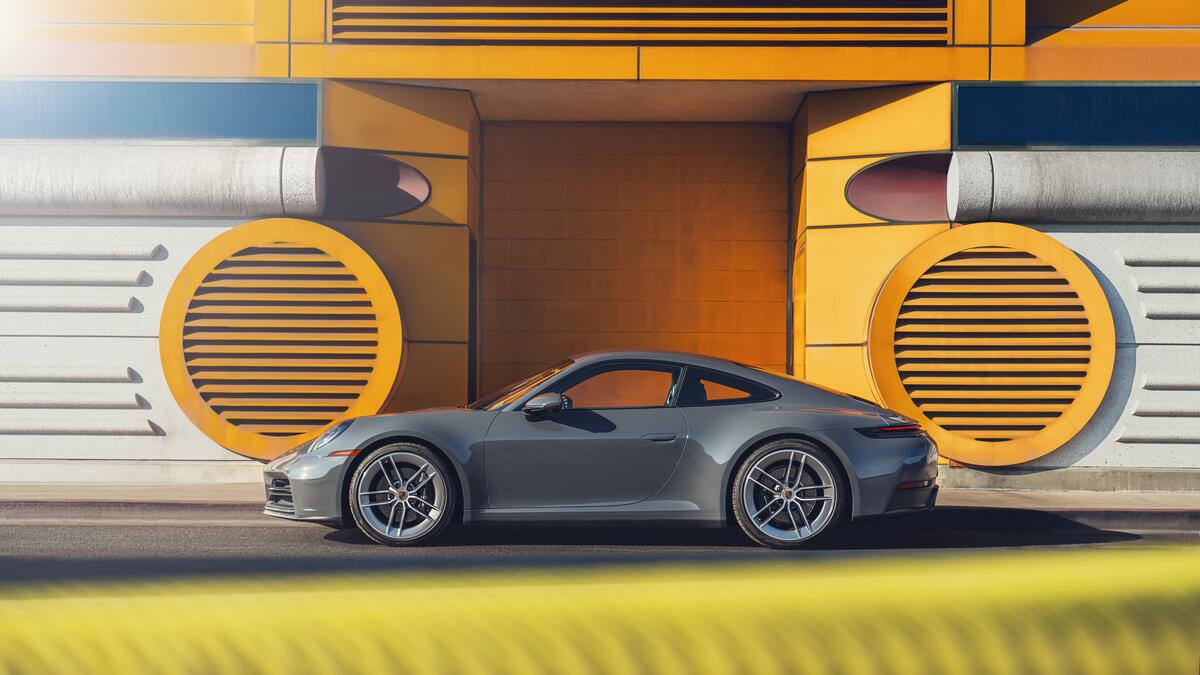
Porsche 911 Turbo S
"I still probably wouldn't pay three hundred and fifty thousand dollars for it, And I wouldn't pay for a new nine to eleven Turbo S"
The Porsche 911 Turbo S is a very fast, expensive version of the Porsche 911. It uses a turbocharged engine, and the point here is whether it’s smart to pay top dollar for a brand-new one.
The Porsche 911 Turbo S is a high-performance 911 variant built around a turbocharged flat-six engine and a focus on fast, confident acceleration. In this segment, the host is arguing about whether it’s worth paying a large amount of money for a new one versus buying something older.
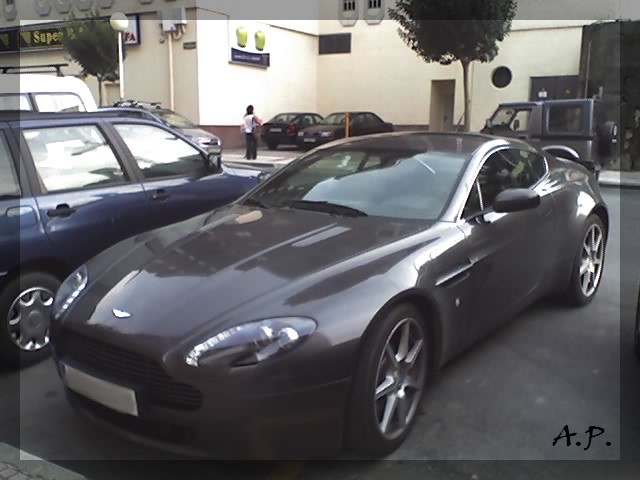
Aston Martin V8 Vantage
"I would rather go get a two thousand and sixteen Acid Martin V eight Vantage with three pedals."
The Aston Martin V8 Vantage is a sporty Aston Martin with a V8 engine. The speaker specifically likes the 2016 version with a manual gearbox because they think it’s more fun than buying something new and pricey.
The Aston Martin V8 Vantage is a sports car known for its V8 engine and driver-focused character. In this segment, the host prefers a 2016 V8 Vantage with “three pedals,” meaning a manual transmission, as a more satisfying alternative to buying brand-new expensive cars.
three pedals
"I would rather go get a two thousand and sixteen Acid Martin V eight Vantage with three pedals."
“Three pedals” usually means the car is a manual. You use a clutch pedal plus the brake and gas, which many enthusiasts find more fun to drive.
“Three pedals” is a common enthusiast way of saying the car has a manual transmission: typically clutch, brake, and accelerator. The speaker is using it to emphasize a more engaging, driver-controlled driving experience.
depreciation
"I still probably wouldn't pay three hundred and fifty thousand dollars for it, And I wouldn't pay for a new nine to eleven Turbo S And I wouldn't pay for that new Mercedes. I might not me because you know."
Depreciation means a car’s value drops as it gets older. The speaker’s point is that buying used can be cheaper because the car has already lost some of its value.
Depreciation is the loss of a car’s value over time. The speaker is arguing that buying a used car lets you benefit from depreciation—so you get a similar driving experience for less money than buying new.

Mercedes G Wagon
"I bought a new uh G five hundred. Oh was that wagon?"
The Mercedes G Wagon is a tough-looking SUV with a very distinctive, traditional feel. In this part, the speaker explains they bought one after a newer generation came out because they liked how it drove better.
The Mercedes G Wagon (often called the G-Class) is a boxy, body-on-frame SUV known for its rugged, old-school layout and distinctive driving feel. Here, the speaker talks about buying a new one after the “new generation” arrived and contrasts it with how the earlier G Wagon drove.
G-Class G Wagon
"...when they had come out with the new generation of G Wagon. And that was important."
The G-Class is a luxury SUV with a very recognizable, boxy shape. It’s built to handle rough roads better than many regular SUVs. The podcast mentions a new generation of it and why that update was important.
The Mercedes-Benz G-Class (often called the G-Wagon) is a rugged luxury SUV known for its distinctive boxy styling and off-road capability. It’s frequently discussed because it blends serious terrain ability with high-end comfort. The podcast references the importance of the “new generation” G-Class, indicating a focus on updates and why they mattered.

F-150 Raptor
"... I was going to say everything else I I bought my Raptor. I bought new kind of part of my reporting becaus..."
The Ford F-150 is a large pickup truck. People choose it for towing, hauling, and general truck tasks. The podcast mentions it while talking about trucks the speaker bought and compared.
The Ford F-150 is a full-size pickup truck and one of the most widely known trucks in its class. It’s commonly discussed because it’s a mainstream choice for work and towing, and it has a wide range of configurations. In the podcast, the F-150 is mentioned alongside other trucks in the context of what the speaker bought and how it relates to their reporting.
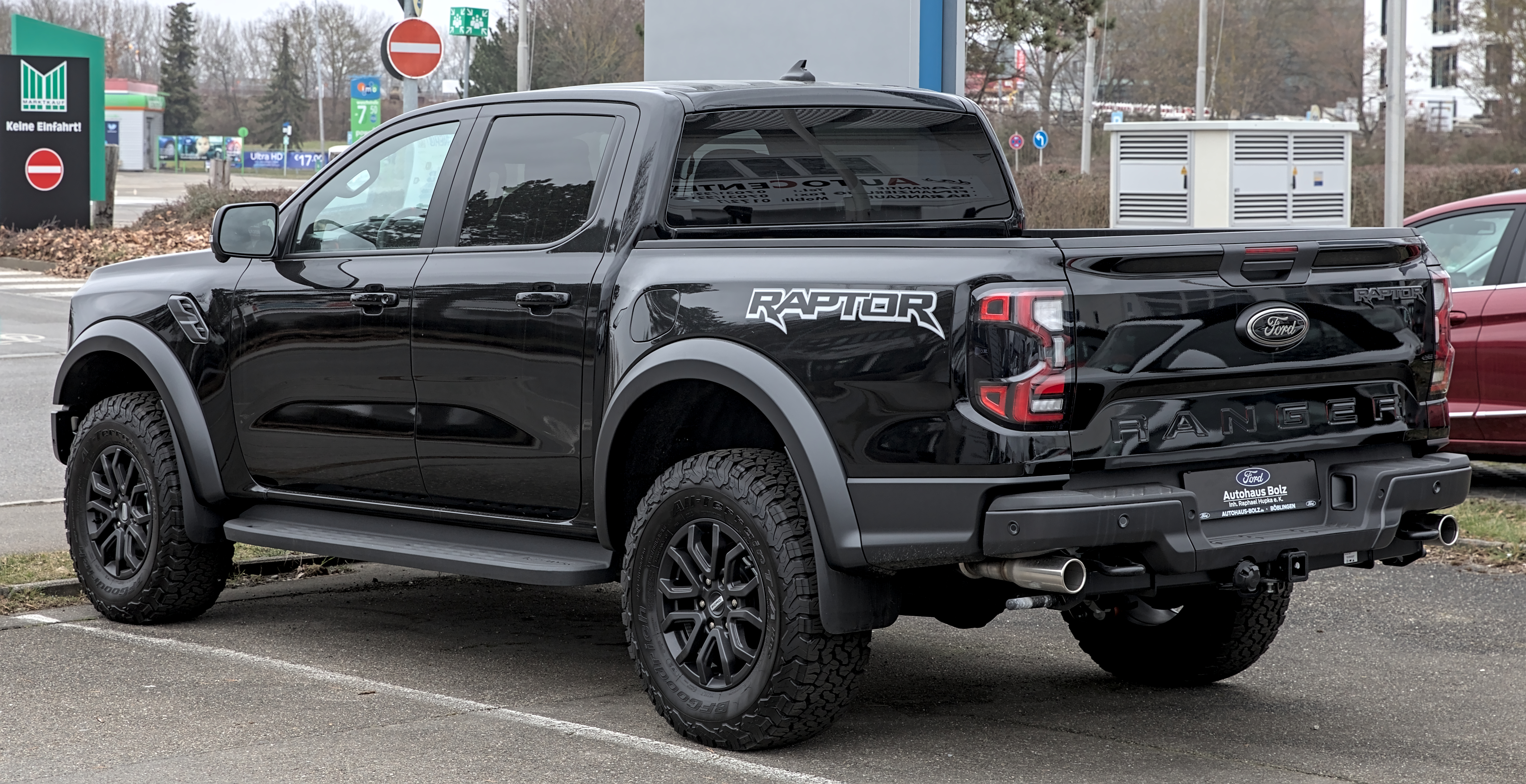
Ford Raptor
"Because I was going to say everything else I I bought my Raptor. I bought new kind of part of [2092.6s] my reporting because I was doing a story on building f fifties. Yeah, but that wasn't you know, a high [2100.2s] car that was affordable. At the time I bought my Raptor, [2102.7s] it was only fifty fifty eight thousand dollars sticker, and that was when it had the six point two liters V eight."
The Ford Raptor is a special version of the Ford pickup made for rough off-road driving. Here they’re talking about an older Raptor with a 6.2-liter V8 engine, which they think was the best version.
The Ford Raptor is a performance-focused pickup built for off-road use, known for its rugged suspension and durability. In this segment, the host specifically calls out the 6.2-liter V8 era as “the really good Raptor,” tying it to a particular powertrain generation.
six point two liters V eight
"At the time I bought my Raptor, [2102.7s] it was only fifty fifty eight thousand dollars sticker, and that was when it had the six point two liters V eight."
This is the engine they’re talking about: a V8 with 6.2 liters of total size. In plain terms, it’s a big engine that can make strong pulling power.
A “6.2-liter V8” describes an engine displacement of 6.2 liters with eight cylinders arranged in a V shape. Bigger displacement generally means more potential for torque, which is why large V8s are often popular in trucks like the Raptor.
depreciating asset
"Yeah, I mean a car is a depreciating asset, like in my world right in not maybe not in your world because you guys have so much experience I know, but when you buy a car, you know you you already have been doing this for a long time, so you probably could sell one of the cars you've bought for more than what you paid."
They’re saying a car usually goes down in value after you buy it. That’s why people talk about depreciation when buying and selling cars.
A “depreciating asset” is something that typically loses value over time. Cars often depreciate because of wear, changing market demand, and the fact that new models replace older ones.
Mercedes-Benz SL 63
"What would you get? [2178.9s] Probably, honestly, if I was getting a new car, I would probably either get one of the SL sixty three's, Honestly, I would seriously consider that, or a nine nine to two turbos probably really yeah, Yeah, the SL sixty three I get, But the turbos I do not get."
The Mercedes-Benz SL 63 is a high-performance version of the SL roadster, known for combining luxury with a powerful V8 and strong performance. The host mentions it as a serious consideration for a new-car purchase, contrasting it with other options.
Porsche 911 Turbo
"Probably, honestly, if I was getting a new car, I would probably either get one of the SL sixty three's, Honestly, I would seriously consider that, or a nine nine to two turbos probably really yeah, Yeah, the SL sixty three I get, But the turbos I do not get."
The Porsche 911 Turbo is a fast, turbocharged version of the 911 sports car. They mention a specific 911 Turbo generation (991.2) but say they wouldn’t choose it.
The Porsche 911 Turbo is the turbocharged performance variant of the 911, built around high power and all-weather drivability. The host says they’d consider a “991.2” Turbo, but they personally wouldn’t get it—suggesting they’ve evaluated the idea but prefer something else.
virtue signaling
"And it happens to be a Tesla with a no elon license plate, which to me is the height of stupidity and virtue signaling."
“Virtue signaling” means trying to look morally right in front of other people. The host thinks the license plate is meant to show a stance, not just be a normal plate.
“Virtue signaling” is a social term meaning showing off moral or political beliefs to impress others. In this segment, the host argues that the Tesla’s “no Elon” license plate is meant to broadcast an attitude rather than reflect genuine intent.
anti elon bumper sticker
"And then on top I don't in La, it's a very big deal to if you do have a Tusla, you got to have like an anti elon bumper sticker."
A bumper sticker is a sticker you put on the back of a car. Here it means someone is showing a negative opinion about Elon Musk with a visible sign on their car.
A bumper sticker is a small adhesive sign placed on a car’s exterior to broadcast an opinion or identity. In this segment, “anti elon bumper sticker” is used as a shorthand for political/celebrity branding around Elon Musk and Tesla.
Tesla
"And then on top I don't in La, it's a very big deal to if you do have a Tusla, you got to have like an anti elon bumper sticker... If you're driving a Tesla anyway you can afford it."
Tesla is a company that makes electric cars. Here, they’re talking about Tesla ownership and the “team” vibe people show with stickers and plates.
Tesla is an electric-vehicle brand known for software-driven features and high-performance variants. In this segment, the hosts use “Tesla” to talk about ownership identity and how people signal fandom (like bumper stickers and license plates).
license plate
"If you have to Tesla's, then the bumper sticker or the right. Dude, you can't just no longer disc. You can't have no Eli license plate."
A license plate is the official identification tag mounted on a vehicle for legal registration and identification. The host uses it as part of the “signaling” theme—suggesting you can’t have certain plate styles if you’re trying to avoid being associated with Tesla/Elon Musk.

Model S
"But the thing is like, if you're parking, I well, I'm of two minds because I think the Model S is a great a great vehicle and historically also. [2387.1s] Historically extremely significant."
The Tesla Model S is an all-electric car. The hosts are saying it mattered a lot when it first came out and helped make people take EVs seriously.
The Tesla Model S is a battery-electric sedan that became one of the early mainstream benchmarks for long-range EVs. In this discussion, it’s framed as “historically extremely significant,” meaning it helped establish Tesla’s reputation and EV credibility when it launched.

Model three
"But I think it's okay for normal A normal person who bought a Model three before Elon Musk took up the chainsaw, it's fair for that person to say, I bought this car before I knew it was crazy."
The Tesla Model 3 is an electric sedan. The point being made is that some people bought it before they knew much about Elon Musk’s later public controversies.
The Tesla Model 3 is Tesla’s more affordable, high-volume electric sedan compared with the Model S. Here it’s used as an example of a “normal person” buying before Tesla’s founder, Elon Musk, became a more widely controversial public figure.
Elon Musk
"But I think it's okay for normal A normal person who bought a Model three before Elon Musk took up the chainsaw, it's fair for that person to say, I bought this car before I knew it was crazy. ... [2494.0s] Yeah, but that's cool. That's the cool part of Elon Musk."
Elon Musk is the high-profile person behind Tesla. The hosts are debating whether buyers should consider who’s behind a car brand when they purchase it.
Elon Musk is the founder/CEO most associated with Tesla, and the hosts discuss how his public persona affects how people feel about buying a Tesla. In this segment, he’s referenced as a reason some buyers might feel they didn’t “know it was crazy” at the time of purchase.
chainsaw
"I mean, I hear what you're sorry. I think before [2473.2s] like about two years ago, it became clear that Musk was like gonna run around with the chainsaw, had like thirteen children."
They’re using “chainsaw” as a metaphor, meaning “things got wildly disruptive.” It’s describing how Musk’s life and attention became more intense, not anything about the car itself.
“Chainsaw” is used here as a metaphor for disruptive, chaotic behavior—specifically describing how Musk’s personal life and public attention became more extreme over time. It’s not a literal automotive term, but it’s a key rhetorical device driving the argument about buyer awareness.

Model X
"I think at the time the Model S came out, you could be proud to buy a Tesla. You know, [2515.6s] at the time the Model X came out, you could be proud to buy a Tesla that was still when you're sling, you."
The Tesla Model X is an electric SUV. They’re saying that at the time it came out, buying a Tesla felt like a positive, easy-to-justify decision.
The Tesla Model X is Tesla’s electric SUV, positioned above the Model 3 and Model S in size and price. The host uses it to describe a time when buying a Tesla could still feel like a straightforward, optimistic choice before the public debate around Musk intensified.
Jim Farley
"…so for fifteen Jim Farley. Yes, Jim Farley is a great guy. Is that who we're gonna say?"
Jim Farley is a car industry leader. The hosts are talking about his background and how he helped Ford achieve better results.
Jim Farley is an automotive executive associated with Ford leadership in this discussion. The segment frames him as authentic and highlights his career path through brands like Lexus before running Ford.
Lexus
"…he worked very successfully at Lexus for a long time, so for the competition before he came to run Ford."
Lexus is Toyota’s luxury car brand. They mention it because Jim Farley worked there for a long time.
Lexus is Toyota’s luxury brand, known for comfort-focused vehicles and a reputation for quality. The segment references Jim Farley’s time at Lexus before running Ford.
JD Power's number one spot
"…so for fifteen Jim Farley. Yes, Jim Farley is a great guy. …got them back to JD. Power's number one spot because it's not something you can buy."
J.D. Power is a company that ranks cars based on how customers experience them. The point here is that being #1 is supposed to mean the cars are genuinely better, not just advertised more.
J.D. Power is a well-known automotive research and consumer-satisfaction ratings organization. The speaker is emphasizing that getting “number one” there reflects measurable improvements in customer experience rather than marketing spend.
flat plane crank
"He he put the the [2778.4s] what do you call the flat plane crank in that car, knowing that it would be difficult, right because it shakes the engine so much and it's hard to keep it durable"
A flat plane crankshaft is a specific design inside an engine that affects how it revs and how smoothly it runs. It can make the engine feel more exciting, but it can also be tougher to keep durable over time.
A flat plane crankshaft is an engine crankshaft design where the crankpins are arranged so the engine fires in a way that typically produces a sharper, higher-revving character. The hosts note it can “shake the engine” and be harder to keep durable, which is a real tradeoff versus other crank layouts.
manual transmission
"but because he wanted that exotic experience, right, He's I'm sure been at least part of the driving force between keeping a manual transmission in the Mustang platform. When you [2802.3s] know the Camaro was canceled, the Challenger was canceled even before it was canceled."
A manual transmission is a gearbox where you choose the gears yourself, typically using a clutch. The hosts are saying Ford kept manuals for enthusiasts instead of going fully automatic.
A manual transmission is a driver-operated gearbox where you select gears yourself, usually using a clutch pedal. The hosts connect Ford’s enthusiast focus to keeping a manual transmission option in the Mustang platform, even as other models were being canceled.
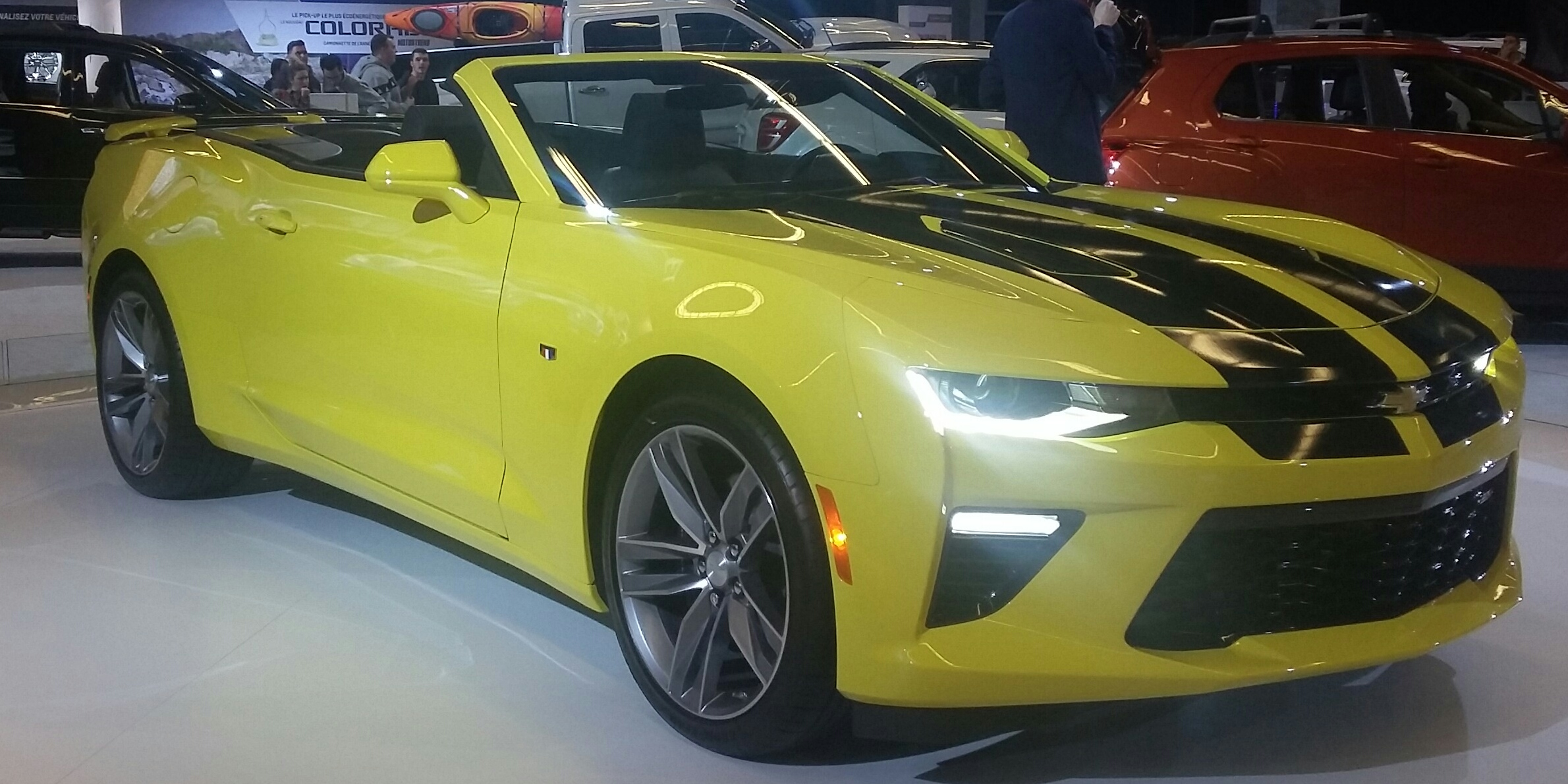
Chevrolet Camaro
"...ission in the Mustang platform. When you know the Camaro was canceled, the Challenger was canceled even be..."
The Chevrolet Camaro is a sporty two-door car made for performance driving. It’s the kind of car people compare to other similar muscle cars. The podcast mentions it while talking about which models were canceled and when.
The Chevrolet Camaro is a performance coupe that’s been a major part of the muscle-car conversation for decades. It’s often discussed alongside other pony/muscle cars because of how it competes for attention in the same market segment. The podcast mentions it in the context of production/cancellation timing relative to other models.

Challenger
"When you [2802.3s] know the Camaro was canceled, the Challenger was canceled even before it was canceled. Yes, they had a manual transmission,"
The Dodge Challenger is a muscle car. The hosts bring it up because it also got canceled, which helped reduce the number of cars offering manuals for enthusiasts.
The Dodge Challenger is another major American muscle car, and the hosts mention it being canceled in the same breath as the Camaro. The point is that manual-transmission options were becoming rare, even though enthusiasts still wanted them.
J.D. Power's initial quality standards
"Anyway, [2824.3s] listen to what he told me about winning jd Powers initial quality standards among all manufacturer, mainstream manufacturers. Let's take [2835.8s] it off, Jim."
J.D. Power is a company that surveys owners about how reliable and problem-free new cars are. Here, they’re using those early-quality results to talk about Ford improving.
J.D. Power’s initial quality metrics are industry surveys that score how many problems new vehicles have early in ownership. The hosts use it as a benchmark for Ford’s quality turnaround, saying Ford beat Toyota and Honda in that category.
F one fifty
"If you if you were to visit today the Rouge plant where we make the F one fifty matt what you would see is a whole control center around data and quality data."
The Ford F-150 is a very popular pickup truck. Here, the speaker is saying Ford builds it at a big factory and uses lots of quality checks to make sure every truck is built correctly.
The Ford F-150 is Ford’s best-selling full-size pickup, and it’s built at Ford’s Rouge complex in Dearborn, Michigan. In this segment, the host ties the F-150 to a manufacturing quality system that tracks production details in real time.
Rouge plant
"If you if you were to visit today the Rouge plant where we make the F one fifty matt what you would see is a whole control center around data and quality data."
The Rouge plant is Ford’s big factory complex near Detroit. The speaker uses it to explain how Ford checks quality while trucks are being built.
The Rouge plant refers to Ford’s Rouge manufacturing complex in the Detroit area, known for large-scale vehicle production. In this segment it’s used as the example location where Ford monitors quality with data-driven processes.
quality data
"what you would see is a whole control center around data and quality data."
Quality data is the factory’s way of tracking how good the work is. The team uses it to see what’s going wrong and fix it during production.
In manufacturing, quality data is the recorded information used to track how well vehicles and components are being built. Here, it’s used to monitor defects and repairs by shift, so teams can correct problems quickly.
fasteners
"So we measure the torque of every one of our fasteners."
Fasteners are the bolts and screws that hold parts together. Getting them tightened correctly helps the vehicle stay solid and last longer.
Fasteners are the hardware used to join parts—typically bolts, screws, and similar components. Tightening them to the correct torque is a key part of building a durable vehicle.
AI tools for vision systems
"We have AI tools for vision systems, but most of all, it's just old fashioned hard work of our team members all working together to pay attention to the very small details"
Vision systems use cameras and sensors to inspect parts and assembly quality. Adding AI helps the system recognize defects or misalignment more reliably than simple rule-based checks.
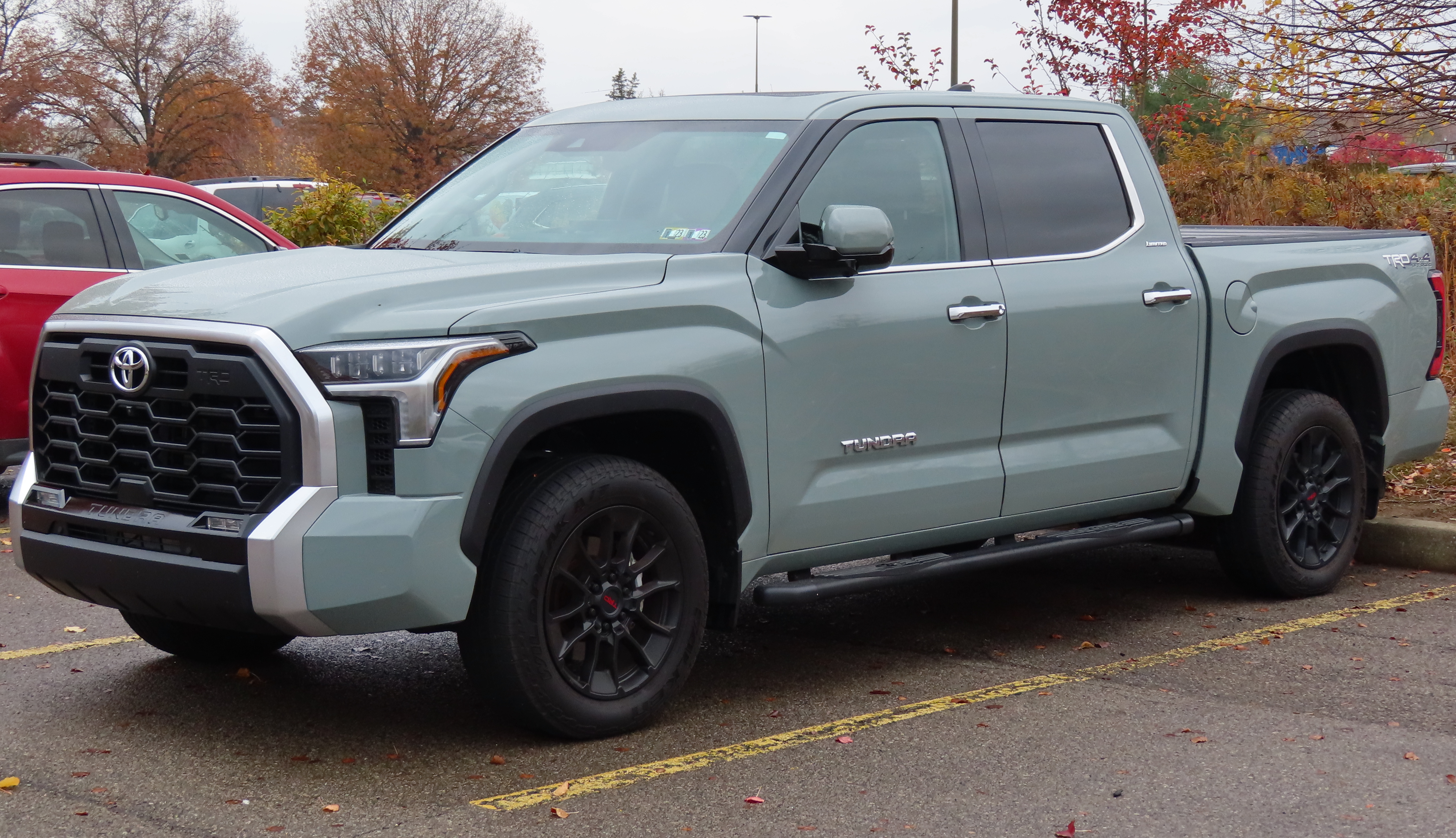
Toyota Tundra
"We know exactly where Toyota is, we know exactly how to you know where we need to get to beat Tundra and Super Duty better than any of the other domestic competitors."
The Toyota Tundra is a big pickup truck that competes with Ford’s trucks. The speaker is comparing Ford’s results to Toyota’s.
The Toyota Tundra is Toyota’s full-size pickup, and it’s one of Ford’s main competitors in the US truck market. The speaker uses it as a benchmark for how Ford’s quality and production performance compare.
warranty coverages
"We're seeing our warranty coverages come down, We're seeing our costs come down."
A warranty is the promise that if the car breaks in certain ways within a certain time, the company pays for the repair. “Warranty coverage” is basically how much of that promise they’re having to use—so if it goes down, it often means fewer problems are happening.
Warranty coverage is the portion of a vehicle’s ownership period where the manufacturer agrees to pay for certain repairs if something fails. When a company says warranty coverages are coming down, it usually means fewer failures are happening (or fewer warranty claims are being made), which can reduce warranty-related costs.
tailwind
"These are all contributing to literally hundreds and hundreds of millions of dollars of a tailwind for Ford on costs."
A “tailwind” is like a helpful push that makes things easier. Here, it means the company’s cost improvements are helping their finances.
A tailwind is a favorable external factor that helps results improve. In this context, the speaker is saying lower costs and reduced warranty claims are acting as a financial tailwind for Ford.
bill material
"We've looked at all of our bill material and even our manufacturing inventory and our plants and all our manufacturing logistics costs."
A bill of materials is basically a shopping list for building a product—every part and material needed. If they review it, they’re trying to find ways to lower the cost of those parts.
Bill of material (often shortened to BOM) is the detailed list of parts and materials required to build a product. When the speaker says they looked at “bill material,” they mean they reviewed what components go into the vehicles to reduce costs.
subscription growth
"You've got double digit margins, You've got thirty percent subscription growth."
Subscription growth refers to the rate at which customers sign up for recurring, paid services rather than buying once. Here it’s framed as a key part of Ford Pro’s business model, alongside vehicle sales and commercial fleet usage.
long term powertrained durability
"What we're really seeing there is an obsession with long term powertrained durability. We're testing every end two to three hundred thousand miles with transmissions, axles, everything."
Powertrain durability means the main mechanical parts that make the car move—like the engine and transmission—should keep working reliably for a long time. They’re saying they test for that kind of long-term reliability.
Powertrain durability refers to how reliably the engine/transmission/drivetrain components hold up over many years and high mileage. The speaker ties it to testing vehicles for hundreds of thousands of miles to ensure commercial customers get long service life.
transmissions
"We're testing every end two to three hundred thousand miles with transmissions, axles, everything."
The transmission is the part that helps the engine’s power reach the wheels in the right way. It’s important for reliability because it has to handle lots of shifting and stress over time.
A transmission is the gearbox that transfers power from the engine to the wheels, selecting the right gear ratios for acceleration, cruising, and efficiency. In durability testing, transmissions are a key stress point because they cycle through loads thousands of times over the vehicle’s life.
axles
"We're testing every end two to three hundred thousand miles with transmissions, axles, everything."
Axles are the parts that connect the drivetrain to the wheels and help deliver power. They take a lot of stress, so they’re a common target in long-mileage reliability testing.
Axles are the shafts that transmit torque from the drivetrain to the wheels. They’re heavily loaded in real-world driving—especially for commercial use—so durability testing often includes them to check for wear, fatigue, and failure risk.
uptime
"All these productivity software tools that [3185.8s] we offer customers allows them to reduce their cost and improve their uptime so their vehicles never off the road."
Uptime just means how often the vehicles are actually working. If uptime is high, fewer vehicles are broken or in the shop.
Uptime is the percentage of time vehicles are available and working, not out of service. In fleet operations, improving uptime directly reduces downtime-related costs and helps keep vehicles on the road for scheduled work.
predictive maintenance
"They can do that predictive maintenance before problem happens, [3205.0s] and they absolutely We're approaching a million subscriptions now for pro."
Predictive maintenance means the car (or fleet system) watches for warning signs that a part is about to fail. Instead of fixing it after it breaks, you plan the repair ahead of time so the vehicle can keep working.
Predictive maintenance is using data from a vehicle to estimate when a component is likely to fail, rather than waiting for a breakdown. The goal is to schedule service proactively so the vehicle stays available and avoids downtime.
prognostics
"We're now able to send them prognostics or predictive failure of vehicle components so that their vehicles are never off the road."
Prognostics is a fancy way of saying the system tries to figure out how much life a part has left. It helps predict when something will need attention before it causes trouble.
In fleet/vehicle monitoring, prognostics refers to estimating a component’s remaining health and predicting how it will degrade over time. It’s closely related to predictive failure, where the system forecasts when maintenance is needed.
energy storage batteries
"also what they want is storage batteries. We're now going [3248.2s] to be one of the biggest domestic makers of energy storage batteries."
Energy storage batteries are batteries that store electricity so it can be used later. They can help the power grid and big facilities like data centers stay supplied reliably.
Energy storage batteries are battery systems designed to store electrical energy for later use, such as stabilizing the grid or supporting data centers. This is different from batteries used to propel a vehicle, even if the underlying idea—storing electricity—is similar.
giga watt hours
"We'll have twenty giga want hours of energy storage and not only for sustainable grid and the grid reliance, but also Hyperscalers."
GWh is a measure of how much energy a battery system can hold. Bigger GWh usually means more total stored energy to use when needed.
Giga watt-hours (GWh) is a unit of energy capacity—how much total energy a battery system can store. It’s not a power rating (like watts); it’s about the amount of energy available over time.
battery electric storage
"They're going to use our battery electric storage [3267.6s] batteries to run to really run our country, help run our country."
Battery electric storage means batteries are used to save electricity for later use. Instead of relying only on the grid in real time, the facility can draw from stored power.
Battery electric storage refers to using battery systems to store electricity and then deliver it later, rather than generating power continuously. In this context, it’s positioned as support for data centers and grid reliability.
Microsoft
"Have you got. [3281.0s] Contracts with any of these big hyperscalers, Microsoft, Amazon, Google, Meta that you can tell us about."
Microsoft is a major tech company that runs huge data centers. In this segment, they’re mentioned as a possible customer for large battery storage systems.
Microsoft is named here as a hyperscaler—an operator of large-scale cloud and data center infrastructure. The discussion implies these companies are potential customers for energy storage capacity.
Amazon
"Contracts with any of these big hyperscalers, Microsoft, Amazon, Google, Meta that you can tell us about."
Amazon runs massive data centers for cloud services. The episode is suggesting big battery storage could help keep those facilities powered reliably.
Amazon is referenced as a hyperscaler, meaning it operates large data centers that need reliable power. The segment frames energy storage batteries as a way to support that power reliability.
"Contracts with any of these big hyperscalers, Microsoft, Amazon, Google, Meta that you can tell us about."
Google runs huge data centers. In this segment, they’re brought up as a possible buyer of large battery storage for power reliability.
Google is mentioned as part of the hyperscaler group—companies running large cloud/data-center operations. The implication is that these operators may buy energy storage to help manage power demand and reliability.
Meta
"Contracts with any of these big hyperscalers, Microsoft, Amazon, Google, Meta that you can tell us about."
Meta is a major tech company that runs large data centers. Here, it’s mentioned as a potential customer for battery storage systems.
Meta is named as a hyperscaler in the context of data centers and cloud infrastructure. The discussion connects hyperscaler power needs to demand for energy storage batteries.

Ford Escape
"...es, very strong results so far. We got out of the escape business, but still our sales are growing and act..."
The Ford Escape is a compact SUV, which is a small-to-medium family vehicle. It’s meant for daily driving and practical use. The podcast talks about it in terms of sales and business decisions.
The Ford Escape is a compact SUV that’s typically positioned for everyday commuting and practical family use. The podcast mentions “getting out of the escape business,” while also noting sales growth, which suggests a discussion about business decisions and market performance. It’s included as part of a broader sales/strategy conversation rather than a deep technical review.
Request an Explanation
Heard something you'd like explained? We'll add it to this episode.
Sign in to request explanations for terms you heard.
Want to learn more?
Browse our glossary for plain-English explanations of automotive terms, jargon, and concepts.
Help improve this episode
See something that's not quite right? Our annotations are AI-generated and can sometimes miss the mark. Click the flag icon on any annotation to suggest a correction.