Mercedes' Michael Schiebe on AMG, Future of EVs
About this episode
Michael Schiebe, head of Mercedes-AMG, talks about how AMG keeps its performance identity while expanding into EVs—balancing dealer requests, market research, and feedback from its “AMG Private Launch” community. He shares how limited-run projects start as “hidden project” ideas, then get greenlit and allocated to “Silver Arrow” customers. Schiebe also explains how AMG recreates V8 emotion in an electric car with “AMG Force,” recorded sound, and seat vibration—while debating what “V8 feel” should mean next.
Hannah and Matt talk about the future of EVs and combustion with Michael Schiebe, member of the Board of Management of Mercedes-Benz Group AG and the head of Mercedes-AMG.
See omnystudio.com/listener for privacy information.
AMG
"So let's get into our interview with Michael Siba, the CEO of AMG. When I was with you in LA a few weeks ago for the launch of the car, you guys spoke a lot about understanding that different markets have different desires and concerns..."
AMG is Mercedes-Benz’s performance brand. It makes the sportier, higher-performance versions of Mercedes cars, and here they’re talking about how AMG is moving into electric cars while still selling gas cars too.
AMG is Mercedes-Benz’s performance brand, known for tuning and building high-performance versions of Mercedes models. In this interview, AMG is discussed as it expands its lineup to include both electric vehicles and combustion-engine cars.
electric car
"And yes, you are launching this electric car, but that's only one part of your strategy. You certainly still. Have combustion engines..."
An electric car runs on electricity stored in a battery. This episode is about how AMG is planning electric cars, but also keeping gas cars available for some customers and regions.
An electric car uses an electric motor powered by a battery instead of a combustion engine. In the context of this interview, AMG is balancing electric-car launches with continued development of combustion-engine models for different markets.
combustion engines
"You certainly still. Have combustion engines, and in fact is a case with the Baby G Wagon..."
Combustion engines are the traditional gas or diesel engines that burn fuel to make power. Here, AMG is talking about still selling those cars even as it launches electric models.
Combustion engines generate power by burning fuel (like gasoline or diesel) inside the engine. The interview contrasts them with electric cars, explaining AMG’s strategy to keep offering both while transitioning.

G-Class G Wagon
"...tion engines, and in fact is a case with the Baby G Wagon, which I'm very excited about. You've decided, be..."
The G-Class is a luxury SUV built to handle rough roads while still feeling comfortable. It has a very recognizable, boxy design and a reputation for durability. The episode mentions it to talk about what makes this kind of vehicle feel unique.
The Mercedes-Benz G-Class (often called the “G-Wagon”) is a rugged, luxury off-road SUV known for its distinctive styling and long-running design. It’s a standout because it blends serious capability with premium comfort, which is why it frequently comes up when people talk about a car’s identity. In the podcast context, it’s referenced alongside the idea of a “baby” version, highlighting how the brand’s character carries across models.
market research
"And this is why we also do a little do a lot of market research. Of course, we have pre development activities..."
Market research means collecting information about what customers want and what competitors are doing. AMG says they use it to help decide what to build next.
Market research is the process of gathering information about customer needs and competitor activity to guide product decisions. Here, AMG describes using it alongside direct customer feedback to decide what technologies to develop next.
pre development activities
"And this is why we also do a little do a lot of market research. Of course, we have pre development activities where we already now look into the performance technology of the future..."
Pre development activities are the early planning steps before a new car is fully designed. AMG says they use this time to explore what future performance technology might look like.
Pre development activities are early-stage efforts before a product is fully designed and approved, often focused on exploring future technologies. In this interview, AMG says it uses these activities to look into the performance technology of the future.
Myths series
"[603.8s] continue our conversation with Mercedes AMG's Michael Sheiba. So this [609.0s] is a car, This is a Mythos series which is limited to thirty cars? [614.8s] Are these?"
They’re talking about a special limited program where only a small number of cars are made. The idea is that buyers get a more unique, customized build instead of a regular mass-produced car.
“Myths series” here refers to a limited run program where only a small number of customers receive the cars. The key enthusiast angle is that it’s tied to exclusivity and a bespoke build process rather than a normal production model.
one man, one engine
"[641.8s] When you know, one of the things that makes our cars so standalone is actually the way how we build our engines. Yeah, they are built according to the principal [655.7s] one man, one engine or U. And that means we [659.8s] have engine builders in a falter Bach, and any of the engine builders builds a completely engine from the first to the last piece."
It’s a production method where one trained person builds the whole engine by themselves. Instead of many workers each doing a small step, the same person finishes the entire engine.
“One man, one engine” is a build philosophy where a single engine builder assembles an entire engine end-to-end. That means the same person is responsible for every component from start to finish, which is meant to improve consistency and craftsmanship.
falter Bach
"[655.7s] one man, one engine or U. And that means we [659.8s] have engine builders in a falter Bach, and any of the engine builders builds a completely engine from the first to the last piece."
They’re saying the engine is built by specialist workers at a specific Mercedes-AMG site. The exact place name in the transcript sounds garbled, but it’s about where the engines are assembled.
“Falter Bach” appears to be a mis-transcription of a Mercedes-AMG engine-building location. The important point for listeners is that the engine builders work at a specific AMG facility, not on a generic assembly line.
V eight engine
"[659.8s] have engine builders in a falter Bach, and any of the engine builders builds a completely engine from the first to the last piece. So it takes them, for a [671.8s] V eight engine roughly three and a half hours. And"
A “V eight” means the engine has eight cylinders arranged in a V shape. In this context, they’re saying it takes a few hours to build one from start to finish.
A “V eight engine” is an eight-cylinder engine arranged in a V shape (two banks of four cylinders). The transcript ties it to build time, implying a complex, hand-assembled process for that engine family.
assemble their own engine
"what we then offer to those customers is they can come to a falter Bach, they will get to know their engine builder and then they assemble their own engine..."
This is a special experience where customers can go to the factory, meet the person who builds engines, and help assemble the engine that goes into their car. It’s meant to make the car feel more personal and special.
This describes a customer “build-your-own” experience where buyers visit AMG’s facility, meet the engine builder, and then assemble an engine that’s installed in their car. It’s a personalization concept tied to hand-finished, traceable craftsmanship rather than mass production.
Gross Aspach
"So AM and G stands for gross Aspach, which is a little town very close to af Aalterbach. So they founded the company..."
Grossaspach is a town in Germany. In this story, it’s part of where the AMG name comes from, linking the brand to a real place near where AMG started.
Grossaspach is a town in Germany near Affalterbach, and it’s referenced here as part of how the AMG name is explained. The point is that AMG’s origin is tied to a specific geographic location in the Stuttgart region.

SLS
"I think about the I think about the hammer. I think about the SLS. [1011.2s] I mean, you have had so many, you know, famous examples designed by AMG."
The AMG SLS is a well-known Mercedes-AMG supercar. The host brings it up as one of the cars people remember when they think about AMG’s identity.
The Mercedes-AMG SLS is a famous AMG supercar known for its dramatic styling and performance-focused engineering. In the conversation, it’s used as an example of an AMG “famous” design that people associate with the brand’s character.
G Wagon
"Because I've done [1024.4s] a lot of thinking about what makes the soul of a car, and with you know, the G Wagon, it's not so much the engine, it's the vault like exterior that you have with the S class."
“G Wagon” is the nickname for the Mercedes-Benz G-Class. It’s known for its distinctive shape and off-road character, and the speaker uses it to explain that a car’s personality isn’t only about the engine.
The “G Wagon” refers to the Mercedes-Benz G-Class, a boxy luxury off-road SUV. The speaker contrasts what gives it “soul” (not just the engine) with what AMG focuses on, setting up the later discussion about how EVs should create emotional appeal.
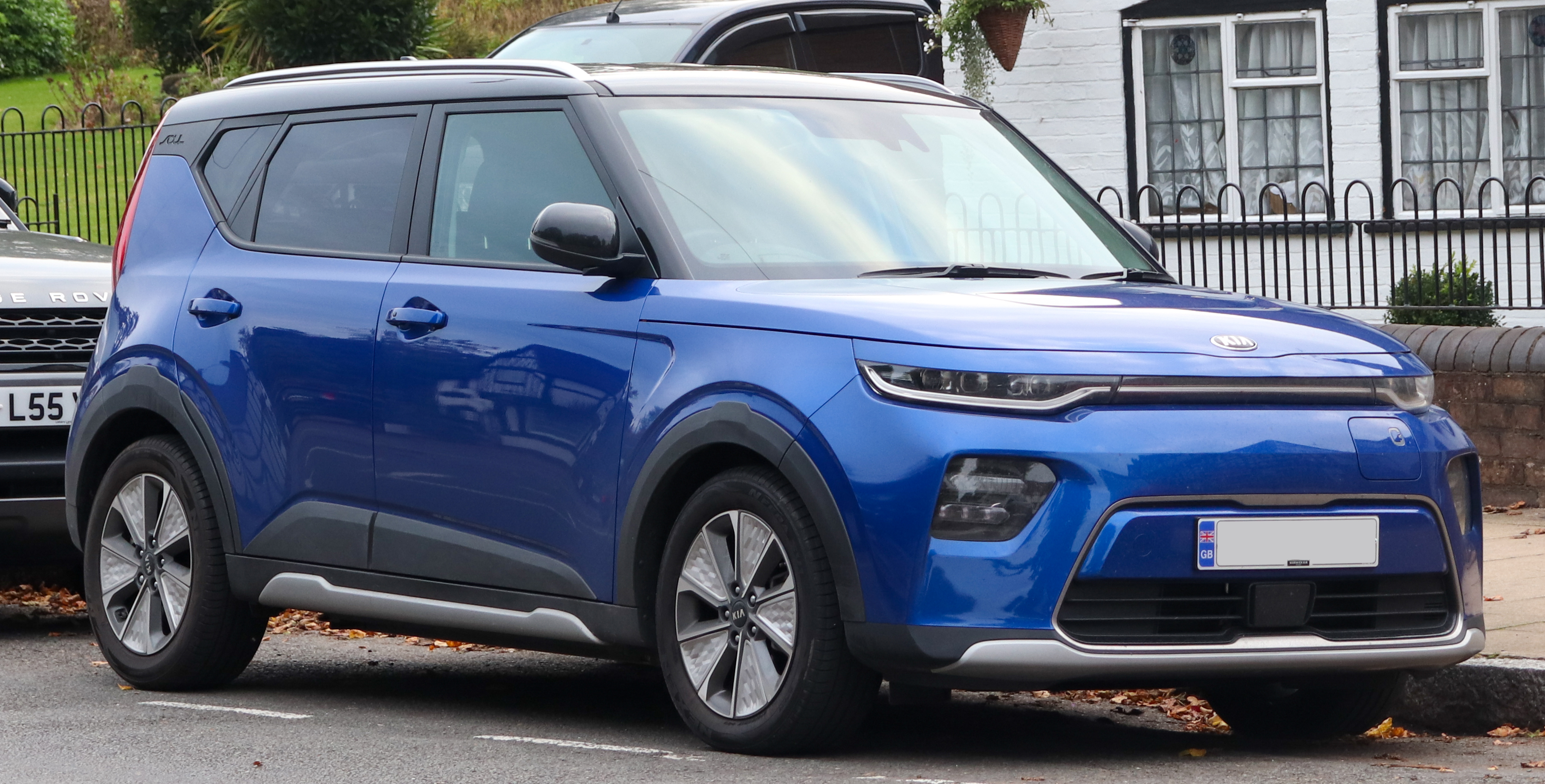
Kia Soul
"... I've done a lot of thinking about what makes the soul of a car, and with you know, the G Wagon, it's no..."
The Kia Soul is a small crossover that’s meant for daily driving. It’s known for its unusual, boxy shape and easy-to-live-with layout. The podcast brings it up as an example of a car with a distinct character.
The Kia Soul is a compact, boxy-shaped crossover designed for everyday practicality with a distinctive look. It’s often discussed in conversations about what makes a car feel “right” beyond just performance—comfort, usability, and personality. In this episode, it’s referenced as part of a broader discussion about the “soul” or character of a vehicle.
powertrain
"as you said, it's the powertrain that is the soul of the car. So what do you do to make [1052.4s] sure an electric car has that soul?"
Powertrain is what actually makes the car move. It includes the motor/engine and the parts that send that power to the wheels.
Powertrain is the set of components that generate and deliver motive force—typically the engine (or electric motors), transmission, driveshafts, and final drive. Here, the speaker argues that for AMG cars, the powertrain is central to the car’s “soul,” and EVs must replicate that emotional impact.
performance KPIs
"you cannot just put an amazing Electrica into the market with incredible performance KPIs. It also has"
KPIs are the measurable numbers people use to judge how good something is. The speaker says EVs can’t just be impressive on paper; they also need to feel exciting to drive.
KPIs (key performance indicators) are measurable targets used to judge performance, like acceleration, range, efficiency, or lap times. The speaker’s point is that EVs shouldn’t be evaluated only by numbers—AMG also wants emotional, driver-focused “feel.”
combustion engine cars
"to create the emotions that our combustion engine cars have given our customers out there. And this is why we then said, okay, which are the boxes that we need to tick?"
Combustion engine cars are the traditional gas/diesel cars that burn fuel to move. The speaker is saying AMG wants electric cars to feel emotionally similar, especially in sound and vibration.
“Combustion engine cars” are vehicles powered by internal combustion engines that burn fuel to create motion. The speaker contrasts the emotional experience of those cars—sound and vibration—with the challenge of recreating it in electric vehicles.
V eight sound
"So we said, your task is now to create a really really realistic V eight sound. And so what they did is actually they took an AMG gtr so of our predecessor GT to a sound studio, they recorded all the sounds"
“V8 sound” is the distinctive noise a V8 engine makes—how it sounds when you rev it and drive. Here, AMG is trying to recreate that same feeling in an electric car using recorded sounds and software.
“V eight sound” refers to the characteristic audio signature of a V8 engine—how it revs, how it loads, and how it sounds under acceleration and deceleration. The speaker explains AMG’s process of recording real V8/AMG sounds and then mapping them into an electric driving model to create a convincing “AMG sound” experience.

Nissan Gtr
"...And so what they did is actually they took an AMG gtr so of our predecessor GT to a sound studio, they ..."
The Nissan GT-R is a sports car designed to be very quick. People talk about it because it’s engineered to perform consistently. In the episode, it’s brought up in connection with how the car’s sound and feel are part of what makes it special.
The Nissan GT-R is a high-performance sports car built for fast acceleration and strong track-style capability. It’s frequently discussed for how it delivers performance in a repeatable, engineered way rather than relying only on raw power. In this podcast, it’s mentioned in the context of sound and how the car’s character can be shaped or studied—highlighting its performance identity.
RPM meter
"So when you get behind the steering wheel in that car, of all, what you see is you have an RPM meter in front of you in your instrument cluster usually or normally. Actually, this car doesn't have any gears"
An RPM meter is the gauge that normally tells you how fast the engine is spinning. In this electric AMG example, it’s used to mimic that feel for the driver.
An “RPM meter” shows engine speed in revolutions per minute, but in this electric-car setup it’s used as a simulated instrument. The speaker says the car shows an RPM meter even though the vehicle has no traditional gears, reinforcing the illusion of a combustion-style driving experience.
shakers, exciders
"And so you activate that drive program and then your seed starts shaking because we have shakers, exciders in your seats, you see the RPM meter in front of you, and then you have the V eight sound"
These are devices that shake or vibrate the seats/cabin. The goal is to make the car’s acceleration and sound feel more realistic, even though it’s electric.
“Shakers” and “exciters” are hardware that vibrate the cabin to create physical sensations that match what the car is doing. Here, they’re used to make the electric AMG sound and acceleration feel more like a combustion V8, including vibration when the drive program is active.
sport plus drive mode
"It used to be the s plus, so the sport plus drive mode in our cars. So you activate that drive program"
“Sport Plus” is a driving mode that makes the car respond more aggressively. Here, the speaker says AMG Force is the newer version of that mode for the electric car experience.
“Sport Plus” (described here as the prior naming) is a selectable driving mode that changes how the car responds to inputs. In this segment, the speaker says AMG Force is effectively the updated version of that mode for the electric car, tied to sound, vibration, and driving behavior.
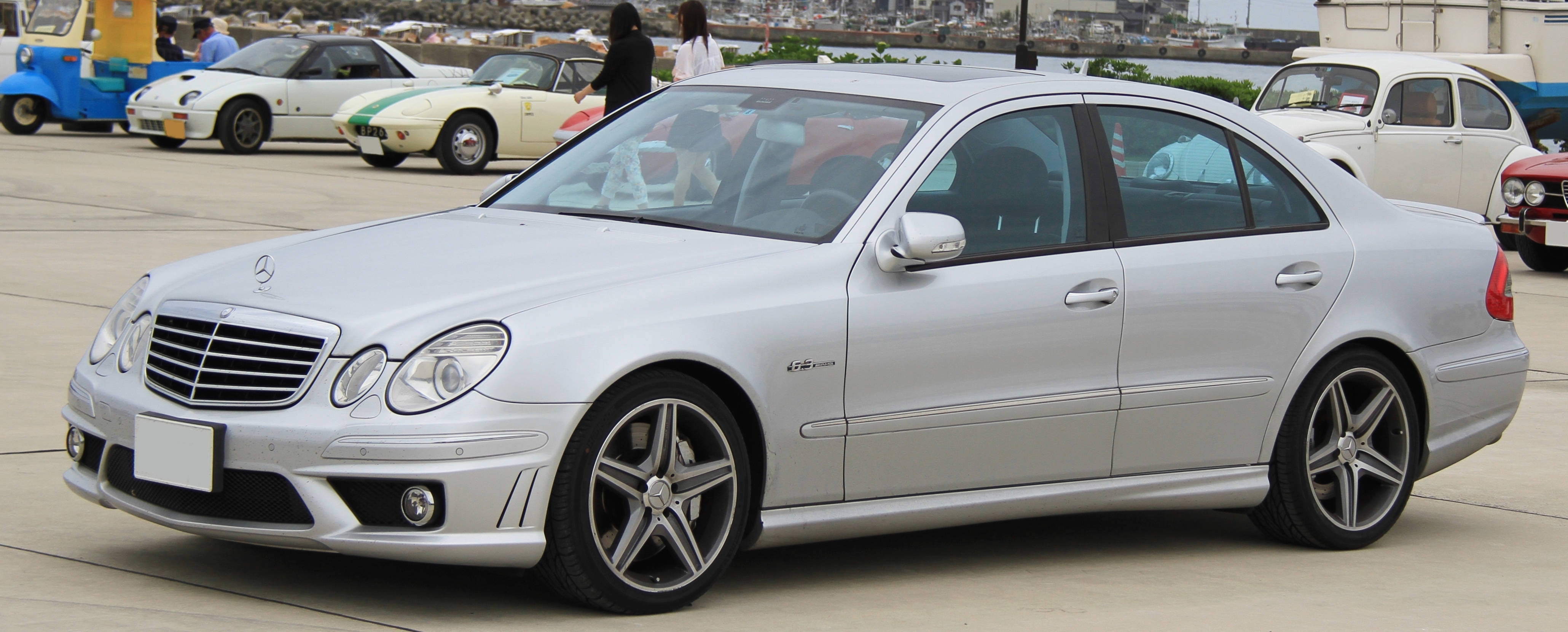
S sixty three
"at the moment, I'm driving two cars. I drive an [1383.9s] S sixty three, which is I think the best S class in the market if you are looking for a performance version of the S class."
The “S 63” is a high-performance version of Mercedes’ big luxury sedan, tuned by AMG. It’s meant to feel more powerful and sporty than a regular S-Class, while still being comfortable.
Mercedes-AMG’s “S 63” refers to the AMG-tuned S-Class variant, built for high-performance driving while keeping the S-Class luxury feel. In this segment, Michael Schiebe calls it the performance version of the S-Class and says it’s his current daily driver.
a MG GT
"And at the same time, [1383.9s] my fun car is an a MG GT so the two door coup and and this is my my my weekend car, so to say."
The AMG GT is a Mercedes-AMG sports car. It’s the kind of car you drive for fun on weekends, and in this chat he’s also talking about a new four-door version coming.
The “AMG GT” is Mercedes-AMG’s sports car line, known for its performance-focused design and driving feel. Here, Schiebe describes it as his “weekend car” and then teases an upcoming four-door “GT” variant.
flat plane crank
"You know, they're making [1427.4s] a flat plane crank VA the next one."
A “flat plane crank” is an engine crankshaft design. It changes how the engine fires and can make the engine feel more eager to rev and more lively.
A “flat plane crank” is a crankshaft design where the engine’s crank throws are arranged to support a flat-plane firing order. It’s commonly associated with engines that rev more freely and can feel more responsive, and Schiebe says AMG is moving to this for the next vehicle.
EV
"I don't ignore the benefits of an EV like, I'm still driving this... I was thinking as I was driving in, like there are incredible benefits to evs, like I just plug it in when I get to work, or I plug it in when I get home, and I never go to a gas station again."
An EV is an electric car that runs on electricity from a battery. Instead of stopping at gas stations, you charge it by plugging it in.
EV means electric vehicle, powered primarily by an electric motor and a battery rather than a gasoline engine. The host contrasts EV ownership with gasoline fueling, emphasizing the convenience of plugging in at home or work.
torque
"Remember last week I said I was driving one with like two hundred some horsepower and uh two hundred and some pound feet of torque. It's actually I'm driving the CLA three point fifty formattic. It has three one hundred and forty nine horse power three hundred and eighty pound feet of torque, so it's more substantial."
Torque is the engine’s “pulling power.” Higher torque usually means the car feels stronger when you start moving or accelerate from slower speeds.
Torque is the twisting force an engine produces, and it strongly affects how quickly a car accelerates from low speeds. The host quotes torque in “pound-feet,” which is a common unit used in the U.S. to describe that force.

CLA three point fifty formattic
"Remember last week I said I was driving one with like two hundred some horsepower and uh two hundred and some pound feet of torque. It's actually I'm driving the CLA three point fifty formattic. It has three one hundred and forty nine horse power three hundred and eighty pound feet of torque, so it's more substantial."
This is a Mercedes-Benz CLA 350 with all-wheel drive. “4MATIC” means power goes to more than just the front wheels, which can help the car grip the road better, especially in bad weather.
The Mercedes-Benz CLA is a compact luxury sedan/coupe-style car, and this specific one is the CLA 350 4MATIC. The “4MATIC” indicates Mercedes’ all-wheel-drive system, which helps traction and stability compared with front-wheel drive.
4MATIC
"It's actually I'm driving the CLA three point fifty formattic. It has three one hundred and forty nine horse power three hundred and eighty pound feet of torque, so it's more substantial."
4MATIC is Mercedes’ all-wheel-drive setup. It helps the car put power to the wheels that have the best grip, which can make driving safer and more confident.
4MATIC is Mercedes-Benz’s all-wheel-drive system. Instead of sending power only to the front wheels, it can distribute torque to improve traction and stability when conditions are slippery or when you’re accelerating hard.

Chevrolet Corvette
"Now that can be one experience if I'm in my C three Corvette, which I love, or it could be another experience if I'm in an EV."
A “C3 Corvette” is a specific older Corvette generation from Chevrolet. The point here is that the host feels the Corvette is more emotionally engaging to drive than an EV.
The “C3 Corvette” is the third generation of the Chevrolet Corvette, known for its classic late-’60s/’70s styling and V8 muscle-car feel. In this segment, the host contrasts the Corvette’s driving “soul” with the experience of an EV.
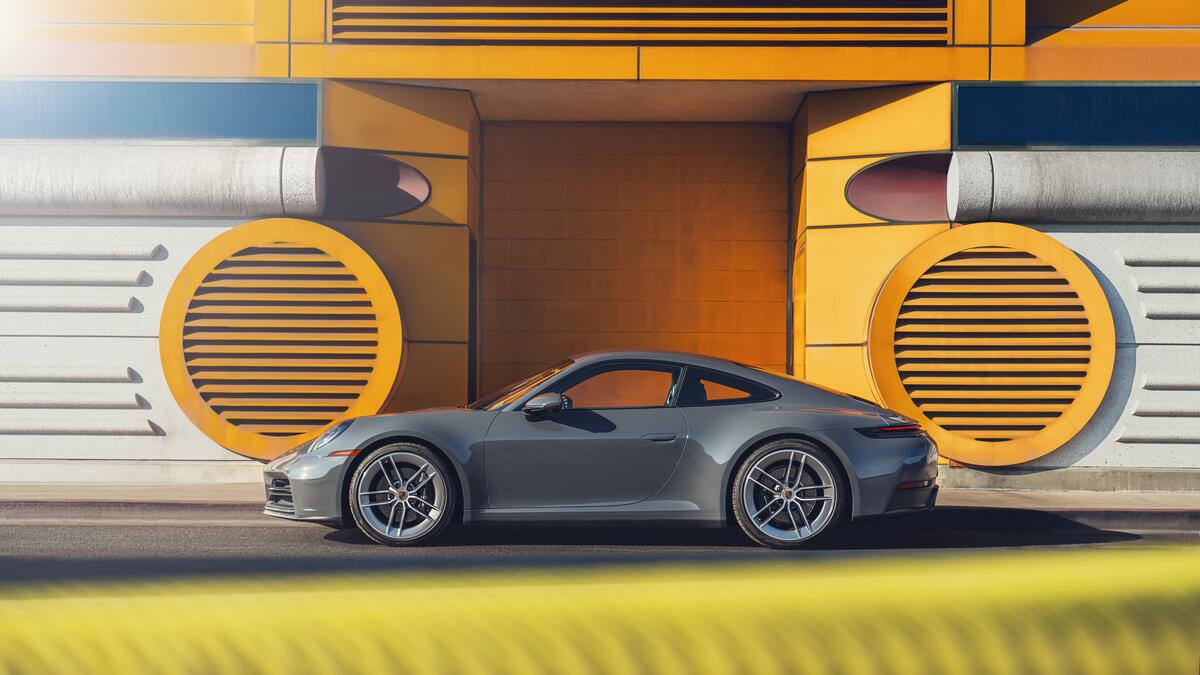
nine to eleven
"when you're driving your Corvette or your Rolls Royce or a nine to eleven."
“Nine to eleven” is how some people say the Porsche 911. The host is grouping it with other cars that feel fun or special to drive again and again.
“Nine to eleven” is a reference to the Porsche 911, a long-running sports car line famous for its rear-engine layout and identity. The host uses it alongside the Corvette and Rolls-Royce to argue that the best cars keep feeling engaging over repeated drives.
years into the ownership experience
"there's something about the driving experience that you like the first time, that you like the tenth time, that you like the one hundred times that years into the ownership experience."
The host is talking about whether a car stays fun after you’ve owned it for a long time. It’s not just about the first wow moment—it’s about whether you still look forward to driving it later.
This is the idea of “long-term engagement”: a car should keep making you feel something after repeated use, not just impress you once. The host argues that good cars remain emotionally rewarding over years, while some EV acceleration hype may fade quickly.
acceleration
"the thing about pushing evs on acceleration or on whatever the fake horse power numbers or I'm gonna leave your nine to eleven in the dust, right,"
Acceleration is how quickly a car speeds up. The host is saying EVs can feel exciting at first because they accelerate hard, but other details also matter for long-term enjoyment.
Acceleration is the rate at which a car’s speed increases, and it’s a major part of how drivers perceive performance. In this segment, the host contrasts EV acceleration excitement with the more lasting emotional cues from things like ride quality and interior/exterior feel.
fake horse power numbers
"the thing about pushing evs on acceleration or on whatever the fake horse power numbers or I'm gonna leave your nine to eleven in the dust, right,"
The host is complaining about how some EV specs are presented as if they’re the whole story. They’re saying the first burst of acceleration can be fun, but it may not stay exciting forever.
“Fake horsepower numbers” is the host’s critique of how EV performance can be marketed using headline power figures. The point is that while EV acceleration feels exciting at first, it can become less thrilling if it’s only a one-time “trick.”
one trick pony
"And I doubt that years later you're gonna be that pumped about just that one trick pony of it."
A “one trick pony” is something that’s only great at one thing. The host is saying some EV marketing focuses too much on one exciting moment (fast acceleration) and not enough on the whole experience.
“One trick pony” describes something that’s impressive mainly for a single standout feature, but doesn’t deliver ongoing excitement. Here it’s used to criticize EVs being sold primarily on acceleration hype rather than a broader set of emotional driving qualities.
suspension
"It's got to have, like the door's closing has to make you feel something, or the suspension, the way it rides has to make you feel something."
Suspension is what helps the car ride smoothly over bumps. The host is saying that how the suspension feels can make a car more enjoyable to live with over time.
Suspension is the system that connects the wheels to the car and controls ride quality and how the car responds to bumps and road texture. The host argues that suspension feel—how the car rides—can create emotional connection that lasts beyond initial acceleration thrills.
door's closing
"It's got to have, like the door's closing has to make you feel something, or the suspension, the way it rides has to make you feel something."
The host means how the car feels when you close the door—whether it sounds and feels solid. They’re saying those little details can make you love the car even after a long time.
“Door closing” is a shorthand for perceived build quality and tactile feedback—how solid, damped, and well-finished the car feels when you use it. The host treats these small sensory details as part of why some cars remain emotionally satisfying after years.
right tool for the job
"Like yeah, I'm again like the right tool for the job, I think is the proper approach."
The host is saying that sometimes you choose a car based on what you need, not just on feelings. If you need to get somewhere fast, that’s a valid reason even if the car isn’t super emotional.
This is the idea that different cars fit different needs, rather than one “best” car for everyone. The host frames it as pragmatism: sometimes you just need a vehicle to get you somewhere quickly, even if it doesn’t have the same emotional “soul.”
Request an Explanation
Heard something you'd like explained? We'll add it to this episode.
Sign in to request explanations for terms you heard.
Want to learn more?
Browse our glossary for plain-English explanations of automotive terms, jargon, and concepts.
Help improve this episode
See something that's not quite right? Our annotations are AI-generated and can sometimes miss the mark. Click the flag icon on any annotation to suggest a correction.