BMW's Profit Warning, Ferrari's Polarizing New Strategy & Porsche's Wagon Delete
About this episode
BMW’s profit troubles and guidance cuts set the tone, then the conversation turns to what enthusiasts actually want: a V12 BMW 7 Series with physical controls, plus the hunt for a scarce G12 facelift spec. Porsche’s E Shift and the broader EV “feel” debate follow, including whether to simulate gears or lean into silence. Ferrari’s strategy of entry-to-elite exclusivity sparks buyer backlash talk, while wagon and other “delete” trends show how options are shrinking.
Matt and Hannah discuss BMW’s painful profit warning, Ferrari’s polarizing sales strategy, and Porsche’s wagon delete.
See omnystudio.com/listener for privacy information.
take hand Wagon
"Coming up on today's podcast. We've got the news from Portia that they're no longer making the take hand Wagon."
They’re saying a wagon model is being discontinued. That matters because wagons are a niche style, so once production stops, it can get harder to find one to buy.
This appears to refer to a wagon model that the automaker is stopping production of (“no longer making”). The key enthusiast takeaway is that some automakers are reducing niche body styles like wagons, which affects availability for buyers who want that practical format.
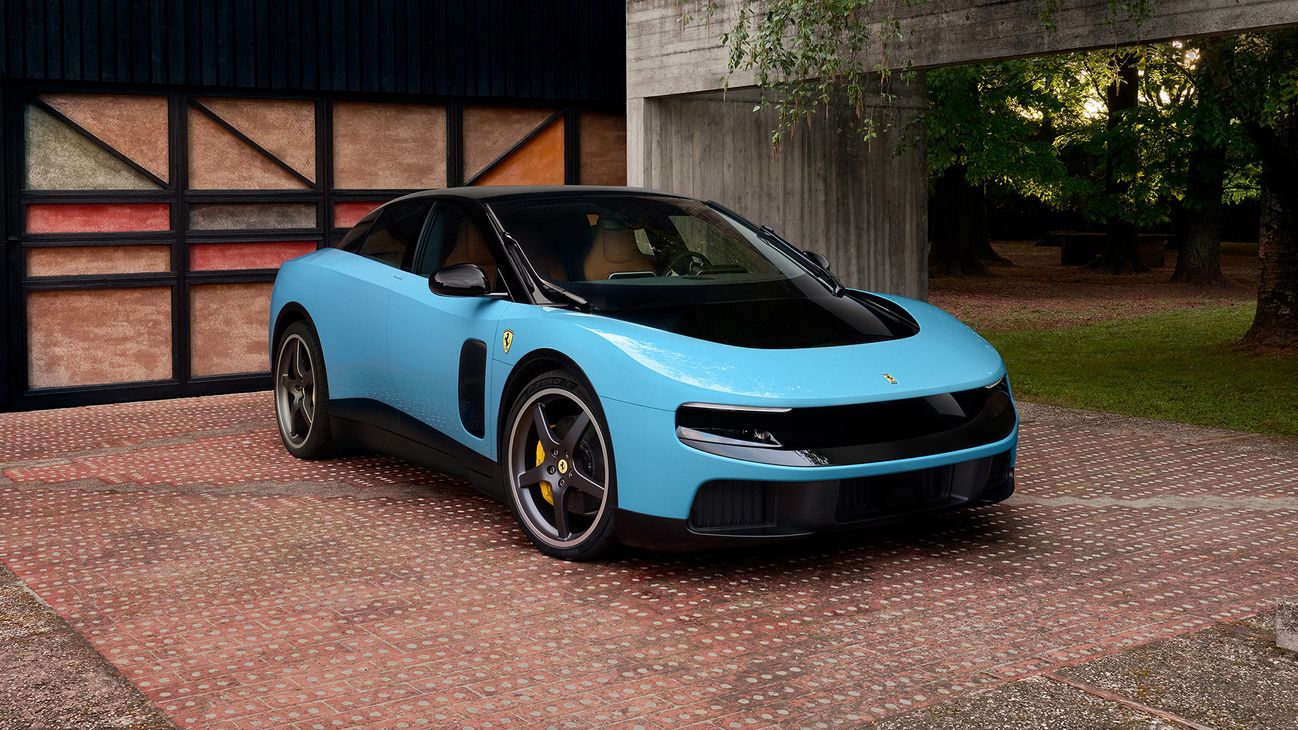
Ferrari Luce
"...t, essentially forcing wealthy clients to buy the Luce Yes. Now we kind of already know this, but this i..."
The Ferrari Luce is a Ferrari model, meaning it’s a very expensive, high-end sports car. The podcast talks about it in terms of how buyers are required or pressured to purchase it. That’s more about the buying process than how it drives day to day.
The Ferrari Luce is referenced in the podcast as a model tied to how wealthy clients are expected to buy it, suggesting it’s a high-demand, premium Ferrari product. It’s being discussed in the context of forcing or encouraging purchases through a specific sales approach. Because the name is mentioned as part of that buying dynamic, it’s likely the conversation is about exclusivity and customer requirements rather than everyday ownership.

BMW 760
"So I bought last week new to Me BMW. It's a used MB seven sixty and from twenty twenty good, and I had never test driven it. I'd never driven a BMW,"
The BMW 760 is a top-trim BMW 7 Series. It’s notable here because it comes with a big V12 engine, which is rare compared with most modern luxury cars.
The BMW 760 is part of the 7 Series lineup and is known for using a large-displacement V12 engine in certain model years. In this segment, the host specifically mentions buying a used BMW 760 and highlights that it has a 12-cylinder engine, which is the key enthusiast detail.
N seventy four
"and you know, they build this N seventy four to twelve cylinder engine for Rolls Royce as well, and now they're no longer using the twelve cylinder and any BMW product."
N74 is the name of a specific V12 engine BMW developed. The host is saying that this V12 has been used in luxury cars like Rolls-Royce, and that BMW has moved away from using a V12 in its own lineup.
“N74” refers to BMW’s N74 V12 engine family used in certain Rolls-Royce and BMW applications. The host is making a point about BMW’s V12 heritage and how BMW engines have been used across brands, then noting that BMW is no longer using the V12 in “any BMW product.”

Mercedes-Benz GLS
"... pooed the idea and ended up getting the Mercedes GLS. So I've I've kept thinking about it. I kept want..."
The Mercedes-Benz GLS is a large luxury SUV. It’s made to fit more people and luggage comfortably. The podcast mentions it as the car the person chose after thinking about other possibilities.
The Mercedes-Benz GLS is a full-size luxury SUV built for families and buyers who want lots of space. It’s typically chosen for its roomy interior, comfortable ride, and ability to carry more passengers and cargo than smaller SUVs. In the podcast, it’s mentioned as the vehicle someone ended up getting after considering other options.
Big Star Cadillac
"We found this in Texas. I found it Big Star Cadillac outside of Houston, Texas."
Big Star Cadillac is the dealership where the speaker found the car. They wanted to buy it through a BMW dealer, but the dealership wouldn’t sell it to other dealers.
Big Star Cadillac is a dealership the speaker found the car at. The speaker describes how the dealer’s parent group wouldn’t wholesale the specific car to a BMW dealer, which affected their ability to buy the exact configuration they wanted.
PPI
"let us buy this car for us, and then we'll like do a full PPI essentially, and then maybe we can even cepo it, you know, so that you can get a Quarrantine exactly"
PPI means a pre-purchase inspection. It’s basically a thorough inspection before you buy a used car, to help you find issues you might not notice during a quick look.
PPI stands for pre-purchase inspection. It’s a detailed check (often by an independent mechanic) to uncover hidden problems before you buy a used car, especially important for expensive, complex vehicles.
cepo it
"and then we'll like do a full PPI essentially, and then maybe we can even cepo it, you know, so that you can get a Quarrantine exactly"
“Cepo” here sounds like shorthand for the steps needed to make a car eligible to be sold/registered in the buyer’s market. The speaker is saying the dealer might handle the compliance paperwork so the buyer can get the car legally.
“Cepo” is shorthand in some car-buying circles for a dealer or importer process that involves making a vehicle compliant for sale in a specific market (often involving paperwork and/or modifications). In this context, the speaker is describing how a dealer might handle the car so it can be purchased and registered properly.
Quarrantine
"and then maybe we can even cepo it, you know, so that you can get a Quarrantine exactly, and you know, with a twelve cylinder car with air suspension"
This word looks like it may be a transcription error, but the idea is that the buyer wants protection/coverage after the car is inspected and processed for purchase. It’s about making sure you’re not taking on risk blindly.
“Quarrantine” appears to be a mishearing/transcription error for “warranty” or a similar buyer-protection term. The surrounding context is about getting the car in a safe, covered state after inspection and compliance handling.
twelve cylinder car
"with a twelve cylinder car with air suspension, like it's a little bit scary maybe"
A “twelve cylinder” engine usually means a V12. It’s a powerful, smooth engine, but it’s also more complicated and can cost more to maintain if something goes wrong.
A “twelve cylinder” engine means a V12 (or similar 12-cylinder configuration), which typically delivers smooth power but is more complex and expensive to maintain than smaller engines. The speaker is flagging it as part of why they want extra caution when buying used.
air suspension
"with a twelve cylinder car with air suspension, like it's a little bit scary maybe"
Air suspension uses air bags instead of metal springs. It can change the ride height and usually makes the ride smoother, but it’s more complex than a basic suspension setup.
Air suspension uses air-filled springs instead of traditional steel coil springs. It can adjust ride height and often smooths the ride, but it adds complexity—so it’s a common reason buyers want a careful inspection on used cars.
bowers In Wilkins stereo
"I wanted the bowers In Wilkins stereo, you know. I wanted the full driving assistance suite."
Bowers & Wilkins makes high-end car audio systems. The speaker is saying they wanted that specific premium sound option in the BMW.
Bowers & Wilkins is a premium audio brand known for high-end speaker systems. In this BMW context, the speaker is specifically looking for the Bowers & Wilkins stereo option because it’s a desirable factory upgrade.
full driving assistance suite
"I wanted the bowers In Wilkins stereo, you know. I wanted the full driving assistance suite. I wanted a rear bench instead of the executive lounge."
A “driving assistance suite” is a package of safety and convenience features that help the car drive. Think things like keeping you in your lane and helping with cruise control.
A “driving assistance suite” is a bundle of advanced driver-assistance features (ADAS) like adaptive cruise, lane guidance, and other semi-automated safety functions. The speaker is treating it as a must-have option when shopping for the exact car spec.
rear bench
"I wanted the full driving assistance suite. I wanted a rear bench instead of the executive lounge."
A rear bench is the standard kind of back seat that can fit more people side-by-side. They’re saying they wanted that instead of a more separated, lounge-style rear setup.
A rear bench is a multi-person seating layout in the back of the car, as opposed to separate rear captain’s chairs or an “executive lounge” configuration. Here, the speaker is specifying the interior layout they prefer.
executive lounge
"I wanted a rear bench instead of the executive lounge. And some interior lighting effects, didn't you."
“Executive lounge” refers to a luxury-style rear seat setup meant to feel more like a lounge than a normal back seat. The speaker prefers the rear bench instead of that setup.
“Executive lounge” is an interior trim/layout concept used by luxury automakers to describe a more premium rear-seat experience—often with individual seats, extra space, and a more “lounge-like” feel. The speaker is contrasting it with a simpler rear bench.
led gun roof
"And some interior lighting effects, didn't you. I wanted the led gun roof like and I wanted the laser lights"
This sounds like a transcription mistake, but the point is they wanted an illuminated roof/lighting feature. It’s one of those “pretty box checked” options that makes the car feel more special.
“LED gun roof” appears to be a transcription error for an LED roof feature (likely an illuminated panoramic roof or similar lighting). The speaker is describing a specific interior/exterior lighting option they wanted on the BMW.
laser lights
"I wanted the led gun roof like and I wanted the laser lights, which they only made in the twenty twenty year and they had to act because of the COVID remember the supply chain problems"
“Laser lights” means the car’s headlights use laser-based technology. They can reach farther down the road than normal headlights, but they’re usually a pricier option to have (and to fix if something fails).
“Laser lights” refers to laser-based headlight technology used in some premium cars. Compared with traditional LED systems, laser headlights can provide a longer effective range and a distinctive high-tech look, but they’re also typically more expensive.
supply chain problems
"which they only made in the twenty twenty year and they had to act because of the COVID remember the supply chain problems"
Supply chain problems mean shortages or delays in getting parts to carmakers. The speaker is saying that during COVID-era disruptions, some high-end options were harder to produce or ended up being limited.
Supply chain problems refer to disruptions in how parts and materials get sourced and delivered to manufacturers. In this episode, the speaker links those disruptions to why a specific option (laser lights) was limited to a particular model year and then became too expensive or unavailable.
night vision
"and then also they were just too expensive to make anymore. I wanted the night vision, as useless as it is, just because I wanted every pretty box checked."
Night vision is a system that helps you see better in the dark by detecting things ahead and showing them to you. It’s meant to improve safety at night, even if the speaker personally doesn’t think it’s that helpful.
Night vision is an advanced driver-assistance feature that uses sensors (often infrared) to detect people or animals in low light and display warnings to the driver. The speaker calls it “useless,” but still wanted it because they wanted the car to have every desirable option.
four wheel steering
"It's really and the [479.6s] four we steering is for the first time something that I can totally feel working. Yeah, because it's a long car. [485.4s] It's like as long as a Chevy suburban."
Four-wheel steering means the back wheels can turn too, not just the front wheels. It helps the car feel easier to maneuver, especially when you’re turning or parking.
Four-wheel steering is a system where the rear wheels can turn along with the front wheels. That can make the car feel shorter and more agile at low speeds, while improving stability at higher speeds.

Chevrolet Suburban
"It's like as long as a Chevy suburban. But yeah, [488.4s] with the four wheel steering, it just shortens the wheelbase, you know, and the way it feels so much and everything works perfectly on it."
The Chevrolet Suburban is a big, family SUV. The speaker is comparing the car’s length to it to explain why the steering feels more manageable than you’d expect.
The Chevrolet Suburban is a full-size SUV known for its long wheelbase and roomy, family-focused layout. In this segment, it’s used as a size reference to explain how four-wheel steering can make a long vehicle feel easier to turn.

Challenger
"Are you even thinking about the Challenger? [519.3s] Not even a little bit. And I thought I thought [521.8s] I would cry. I thought I would actually actually cry, [527.1s] and I don't even It's not a guy who cries very much."
The Dodge Challenger is a muscle car—an older-school style car that’s meant to feel exciting and powerful. The speaker is saying they’re not interested in switching away from it.
The Dodge Challenger is a modern muscle car that’s built around the classic formula of big power and a retro-inspired look. Here, the speaker contrasts it with another option and emphasizes how much they liked living with it for years.
muscle cars
"I like the [536.9s] whole kind of cosplay, like muscle cars, cruising, everyone walks lasting. Yeah, [545.3s] but it just it rolls so much."
Muscle cars are performance cars known for big power and a fun, loud, attention-getting style. The speaker means they enjoy that whole scene.
Muscle cars are performance-focused American cars that typically emphasize strong engines, aggressive styling, and straight-line speed. The speaker uses the term to describe the vibe and culture they enjoy—cruising and attention from other people.
margins
"Well, they're tie in, I mean, I mean so to me, the BMW story is a concern for the industry right because they're having real problems getting the margins they want."
“Margins” here means how much money a company makes after costs, compared to how much it sells for. The point is that BMW isn’t hitting the profit level it wants.
In corporate reporting, “margins” refers to how much profit a company keeps relative to revenue. The hosts use it to describe BMW’s difficulty achieving the profitability level it wants.
slash their guidance
"Yeah. Yeah, but they had to slash their guidance. They get in. They got a new new CEO or new chairman as Oliver Zipsa steps out of the lead role."
“Guidance” is what a company tells investors about what it expects to happen next. “Slash their guidance” means they lowered those expectations.
“Guidance” is a company’s forward-looking forecast that management provides to investors about expected results. “Slash their guidance” means BMW lowered those expectations, which the hosts connect to the leadership change and strategy reset.
Oliver Zipsa
"They get in. They got a new new CEO or new chairman as Oliver Zipsa steps out of the lead role. But he had done very well, we thought, and maybe this is the new guy, like throwing everything out with the kitchen sink."
The hosts mention Oliver Zipsa as a BMW leader who is stepping down from a top role. They connect that leadership change to BMW adjusting what it expects to achieve.
Oliver Zipsa is mentioned as stepping out of a lead role at BMW. In the context of the discussion, the leadership transition is tied to how the company is resetting forecasts and expectations.
BMW concept
"But look, I mean you've just pulled up BMW right, and you're looking at their new concept. Because yes, I want to talk about I want to hear."
The hosts pivot from corporate news to BMW’s “concept” vehicles, discussing what they think of the designs. Concept cars are often used to preview future styling, technology, or brand direction.
Alpina
"have seen Alpina concept now that I think about it, But I don't think it's a concept. ... the Alpina concept for the the new seven."
Alpina is a company that takes BMWs and turns them into more special, more refined versions. Here, they’re talking about an Alpina concept car that hints at what a future BMW 7 Series could look like.
Alpina is a German tuner that builds high-end versions of BMW models, typically with bespoke tuning and styling. In this segment, the hosts discuss an Alpina concept tied to the next BMW 7 Series, focusing on design direction rather than a production timeline.
electric sedan
"but [721.1s] to me, it reminds me a little bit of Mercedes four door AMG coop in that it's an electric sedan. [730.4s] At the end of the day, they can tart it up however they want, but at the end of the day, it's an electric sitan."
An electric sedan is a normal-looking four-door car, but it runs on electricity from a battery instead of gas. In this discussion, they’re mostly judging the look, not the technical details.
An electric sedan is a four-door car powered primarily by an electric motor and battery rather than a gasoline engine. The hosts mention it to separate design impressions from powertrain details, even though they still frame the car as an EV.
brutalist
"I love how brutalist [749.0s] they are. I like the attitude. I in general do [752.8s] like the BMW design."
“Brutalist” here means the design looks bold and a little rough-edged on purpose, not trying to be delicate or subtle. The host is saying BMW’s styling feels that way, especially around the grille.
“Brutalist” in car design usually refers to an intentionally harsh, bold, and minimal aesthetic—often with strong shapes, heavy-looking surfaces, and unapologetic styling. The host credits BMW’s design language with that “brutalist” attitude, especially in the grille and overall front-end look.
powertrain
"And uh, [787.7s] if they come out with that as an EV, I'm not interested in it because of the powertrain. I'm yeah, [794.2s] I mean, I just don't have much interest in an EV sports car."
A powertrain is the “stuff that makes the car move,” like the engine or electric motor and the parts that send power to the wheels. The host is saying they don’t want an EV sports car because they care about that moving system.
A powertrain is the set of components that generate and deliver motion—typically the engine/motor, transmission, driveshaft, and final drive. The host says they’re not interested in an EV sports car because the powertrain is the part that changes the driving character.
EV
"if they come out with that as an EV, I'm not interested in it because of the powertrain. [794.2s] I mean, I just don't have much interest in an EV sports car."
EV means electric vehicle. It’s a car that uses an electric motor and a battery instead of a gasoline engine.
EV stands for electric vehicle—cars that use one or more electric motors powered by a battery pack. Here, the host is discussing whether an EV setup can deliver the same “sports car” character as a traditional engine-driven M car.
BMW 7 Series
"I think probably the drive train works in the I seven and the seven series. [799.9s] It works because the soul [805.5s] of a seven series is as much the isolation and the suspension as it is the motive."
The BMW 7 Series is BMW’s top luxury sedan. The host is saying it’s built to feel smooth and quiet, unlike an M car where the engine feel matters more.
The BMW 7 Series is BMW’s flagship luxury sedan, focused on comfort, refinement, and isolation from road noise. The host contrasts its “rolling, smooth cocoon” vibe with the BMW M3’s more driver-and-engine-centered character.

BMW i7
"I think probably the drive train works in the I seven and the seven series. [799.9s] It works because the soul [805.5s] of a seven series is as much the isolation and the suspension as it is the motive."
The BMW i7 is the electric, luxury version of the 7 Series. The host is saying that EVs fit this kind of car because it’s more about a smooth, quiet ride than about the engine feel.
The BMW i7 is BMW’s electric version of the 7 Series, designed to deliver the same luxury experience with an EV powertrain. In this segment, the host argues that an EV drivetrain makes sense in the i7/7 Series context because the car’s “soul” is comfort and isolation rather than engine character.
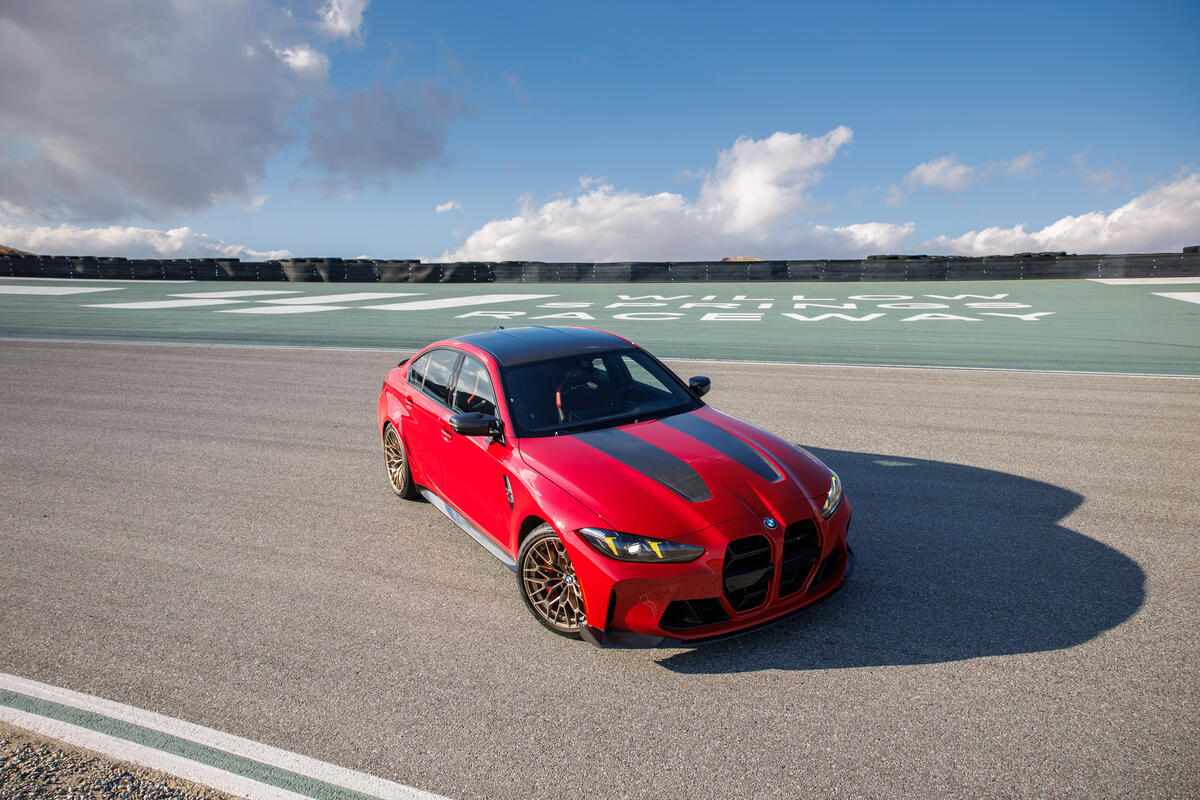
BMW M3
"But the soul of an M three is the motor. [819.5s] And yes, and to me, motor. Now we're looking at"
The BMW M3 is a high-performance BMW made by BMW’s M division. The host is saying the M3 is special because of how its engine drives the car, not because it’s quiet or comfortable like some luxury cars.
The BMW M3 is BMW’s performance “M” model, known for its high-revving engine character and driver-focused feel. In this segment, the host contrasts it with an EV sports-car idea by saying the M3’s “soul” is the motor, not the ride comfort or isolation.
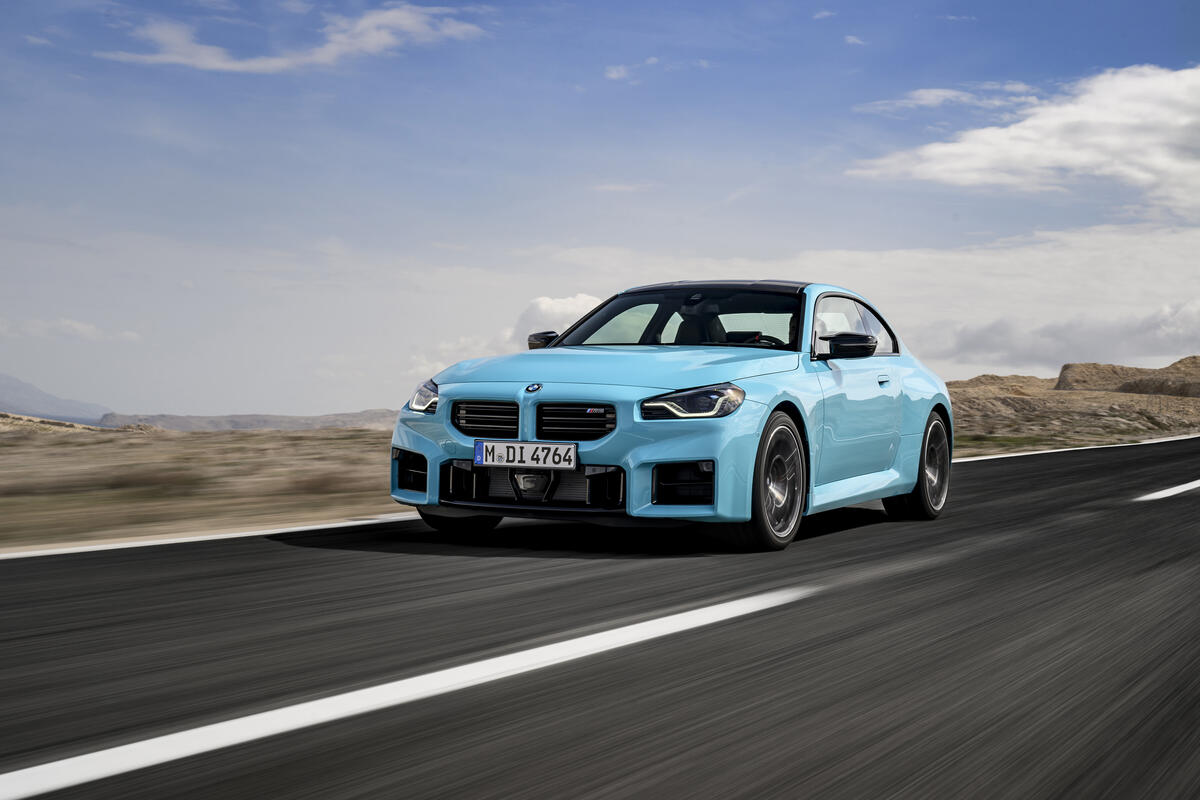
BMW M2
"I'm hopelessly smitten with the M two. [846.6s] So I know I'm getting one actually when I get back to LA to test drive, to test, yeah, not to not to buy only because really, you are so effusive about it."
The BMW M2 is a compact performance coupe from BMW’s M division, typically prized for its agile handling and driver engagement. Here, the host says they’re “hopelessly smitten” with the M2 and implies they plan to test drive it, framing it as the kind of car they actually want to buy.
EV adoption
"I'd love to fast forward five or ten years and just see how EV adoption has progressed. Because obviously everybody who wanted an EV already has one."
EV adoption just means how many people are starting to buy electric cars instead of gas cars. It’s basically the speed of the switch to EVs.
EV adoption means how many people switch from gasoline cars to electric vehicles over time. It’s often measured by sales share, total EVs on the road, and how quickly charging infrastructure grows alongside demand.
E Shift
"They've come out with a system on the Tychon. It's called E Shift, and you'll be able to choose as an option for the twenty twenty seven Tychon."
E Shift is a Porsche feature that tries to make an electric car feel more like a gas car. It does that by simulating shifting and engine sounds using the steering-wheel paddles.
E Shift is a Porsche system that uses steering-wheel paddles to mimic a multi-gear automatic experience in an EV. It adds artificial shift shocks, a virtual rev limiter, engine-braking effects, and synthesized powertrain sounds to make the car feel more like a gasoline vehicle.
artificial shift shocks
"It uses steering wheel paddles to simulate an eight speed transmission, complete with artificial shift shocks, a virtual rev limitter, engine breaking effects, and synthesized powertrain sounds."
Artificial shift shocks are fake “jolts” that try to imitate what you feel when a gas car changes gears. Electric cars don’t shift the same way, so the car simulates it.
Artificial shift shocks are simulated jolts that mimic the physical sensation of gear changes in a traditional transmission. In an EV, there’s no real gear shifting like a gasoline car, so the sensation is electronically created to improve “feel.”
virtual rev limitter
"It uses steering wheel paddles to simulate an eight speed transmission, complete with artificial shift shocks, a virtual rev limitter, engine breaking effects, and synthesized powertrain sounds."
A virtual rev limiter is a software limit that stops the simulated engine speed from going higher. It’s meant to recreate the way a gas engine would hit its redline.
A virtual rev limiter is software that caps the simulated engine RPM in a way that imitates how a gas engine would behave. It’s part of the “make it feel like a gasoline car” approach, even though an EV doesn’t rev in the same mechanical way.
engine breaking effects
"It uses steering wheel paddles to simulate an eight speed transmission, complete with artificial shift shocks, a virtual rev limitter, engine breaking effects, and synthesized powertrain sounds."
Engine braking effects are the “slowing down” feeling when you take your foot off the accelerator. EVs can simulate it so the car feels more like a gas car.
Engine braking effects are the deceleration sensation you get when you lift off the throttle and the drivetrain resists the car’s motion. In EVs, the car can generate similar deceleration via motor control, and E Shift can tune that feel to resemble a gasoline car.
instant torque hit
"So they're basically trying to handicap the EV to make it feel more like a gasoline engine. So then, like, why not just buy one of the gasoline engine cars that they sell."
Instant torque hit means the car’s pulling power shows up right away when you accelerate. Electric motors can feel very immediate compared with gas engines.
An instant torque hit refers to how EVs deliver strong twisting force immediately when you press the accelerator. Because there’s no engine lag and no traditional gear changes, the sensation can feel sharper than many gasoline cars.
one gear simplicity
"So they're basically trying to handicap the EV to make it feel more like a gasoline engine. So then, like, why not just buy one of the gasoline engine cars that they sell."
One-gear simplicity means the EV usually doesn’t have multiple gears like a gas car. It uses a simpler setup, which changes the driving feel.
One-gear simplicity describes how many EVs use a single-speed reduction gear rather than multiple transmission ratios. That reduces mechanical complexity, but it also changes how the car feels compared with a multi-gear gasoline drivetrain.
EVs
"long been a controversial in Germany that EV's don't make noise because you can they do make coming"
EVs are cars that run on electricity from a battery. Since they’re often quiet, some EVs add extra sound so people can hear them coming.
EVs are electric vehicles powered primarily by electric motors and a battery pack instead of an internal-combustion engine. Because they can be very quiet at low speeds, manufacturers sometimes add artificial sound to improve awareness.
fake sounds
"argument for faking a sound of a different powertrain that doesn't make any sense to me. Yeah, like remember when Mercedes started coming out with their fake sounds"
Some EVs play made-up noises through speakers. The goal is to make the car easier to notice, but it can also feel like the car is pretending to be something else.
“Fake sounds” refers to adding artificial audio to a vehicle—often an EV—to mimic the sound of another powertrain (like a V8). The idea is to help pedestrians and drivers judge vehicle presence and speed, but it can feel inauthentic to enthusiasts.
Hans Zimmer
"I think Hans Zimmer to make a sound for their EV. That's great."
Hans Zimmer is a well-known composer for movie soundtracks. The host is joking that he could help design an EV’s sound so it feels cool and intentional.
Hans Zimmer is a famous film composer, and the hosts mention him as an example of someone who could craft an EV “sound signature.” The underlying idea is that EV audio could be designed like music—distinctive and brandable—rather than a crude imitation.
amplifying the sound of the electric motor
"or what Ferrari's doing with the luch where they're actually amplifying the sound of the electric motor. I get that better."
Instead of playing a made-up engine noise, the car boosts the sound that the electric motor already makes. The host thinks that feels more honest and easier to accept.
This refers to using audio engineering to make the EV’s real motor sounds more audible—rather than generating a completely fake engine note. Enthusiasts often prefer this because it keeps the sound tied to what the car actually is.
Dodge
"I get that better. I get that. I can understand that more easily than trying to fake a V eight sound. I mean, ... like I'm all for making your own or what Dodge did with the Fratsnic chamber"
Dodge is mentioned as another car brand that experimented with EV sound. The host is using it as an example of making the noise feel more real or more interesting.
Dodge is referenced for “what Dodge did” with an audio-related approach (the transcript mentions a “Fratsnic chamber”). It’s used as an example of how some brands try to make EV sound more engaging rather than simply faking a different engine.
Tesla
"I think really you should just if you're going to do an EV, lean into it. I mean, Tesla leaned into being completely different and being an EV and they changed the world."
Tesla is mentioned as an example of a company that embraced EVs instead of trying to copy gas-car behavior. The host thinks that approach helped EVs become mainstream.
Tesla is cited as an example of an EV brand that “leaned into” being different, helping popularize the idea that EVs don’t need to imitate gasoline cars. The host credits Tesla with changing expectations for what an EV should be.
perception of status and scarcity
"it creates the perception of status and scarcity and complete elitism in the most in the most desirable way. You want to be in that club."
This is about making a brand feel exclusive. If people believe only a few can get the “good stuff,” it can make the brand seem higher-status and more desirable.
“Perception of status and scarcity” describes a marketing strategy where limited availability and high exclusivity make a brand feel more prestigious. The hosts connect it to Ferrari’s business model, where customers are encouraged to move up from entry-level offerings toward more exclusive models.

Tesla Model Ye
"...ot. That's not a Model three driver. That's not a Model ye driver. It's interesting that's."

Chevrolet Corvette
"...lumbia Gas. You know they're gonna want to have a Corvette. Well, no, I'm just saying one will say I only wa..."
The Chevrolet Corvette is a sports car designed to be very fast and exciting to drive. People talk about it a lot because it’s a well-known performance model. The podcast mentions it as a car someone might want.
The Chevrolet Corvette is a high-performance sports car built by Chevrolet, typically known for its fast acceleration and track-capable design. It’s frequently discussed because it’s a recognizable “halo” model and often appears in conversations about what wealthy buyers want. In the podcast, it’s referenced as a likely choice someone would want or expect.

Land Rover Range Rover
"...prise, and has been spotted behind the wheel of a range Rover Love also no surprise. But he's partnered with Lu..."
The Range Rover is a luxury SUV, meaning it’s designed to be comfortable and feature-rich. It can also handle rough roads better than many regular SUVs. The podcast mentions it because someone was seen driving one.
The Land Rover Range Rover is a luxury SUV known for comfort, upscale features, and off-road capability. It’s often mentioned when the topic is high-end vehicles because it blends everyday usability with rugged capability. In the podcast, it’s brought up in connection with someone being spotted driving one.

G-Class G Wagon
"...ever seen him driving it, but reportedly he has a g Wagon well Love, no surprise, and has been spotted behi..."
The G-Class is a luxury SUV from Mercedes-Benz with a very recognizable, boxy shape. It’s designed to handle rough roads while still feeling comfortable inside. The podcast mentions it because someone was reportedly seen driving one.
The Mercedes-Benz G-Class (often called the G-Wagon) is a rugged luxury SUV known for its distinctive boxy design and off-road heritage. It’s frequently discussed because it combines a premium interior with serious capability, making it a status-oriented choice. In the podcast, it’s mentioned as a vehicle someone has been spotted driving.

Lucid Air
"And also I really enjoyed for the few days that I drove a Lucid Air that hicle. You know, I wouldn't want to I don't think own one, but. Yeah, yeah, yeah you've driven, Yeah, I've driven it. The panel, the panel covering the A pillar fell off."
The Lucid Air is an electric luxury car. The speaker is talking about a problem they noticed with something on the outside/inside trim while driving it.
The Lucid Air is an electric luxury sedan known for its high-end EV technology and upscale, tech-forward interior. In this segment, the host discusses a specific quality issue they experienced while driving it.
A pillar
"The the panel covering the A pillar fell off. I mean it was like falling off. I don't think they're known for bad quality."
The A pillar is the front vertical support between the windshield and the side window area. Many cars use trim panels around it, and if that trim loosens or falls off, it can be a noticeable fit-and-finish problem.
twenty twenty BMW M seven sixty
"You know, it's very fast, is my twenty twenty BMWM seven sixty. I love it. It's so fast. I was driving in this morning..."
This is a very powerful BMW 7 Series variant with a V12 engine. The host is saying it feels like it keeps pulling hard, so it’s easy to get carried away with speed.
This is a 2020 BMW M760i, a high-performance version of the BMW 7 Series. The key point is its V12 engine, which the host describes as pulling strongly like a “locomotive,” making it feel extremely fast and addictive to drive.
speed warning or limiter
"I realized that for the first time I may have to set like a speed warning or limiter because that, yeah, you can do that."
These are safety features that help you avoid going too fast. A limiter actually caps the top speed, while a warning just tells you you’re over a chosen limit.
A speed limiter is a driver-assistance feature that caps the vehicle’s maximum speed. A speed warning alerts you when you’re exceeding a set limit, helping prevent accidental speeding.
V twelve
"It's, uh, the V twelve is just it's like a locomotive that keeps on pulling..."
A V12 is a type of engine with 12 cylinders arranged in a V shape. The host is saying it makes the car feel like it keeps pulling strongly all the time.
A V12 is an engine with 12 cylinders arranged in a “V” shape. Compared with smaller engines, it typically delivers smooth power and strong low-end torque, which is why the host describes it as constantly pulling.
haptic touch
"it has all of these physical buttons everywhere that you can touch, or dials that you can turn, and not like a haptic touch, but like. An actual an actual knob."
Haptic touch is when a screen pretends to be a button by giving you a physical-like feedback. The host prefers real buttons and knobs because they’re quicker to use while driving.
Haptic touch refers to touchscreens that provide “feel” feedback (vibration or resistance) instead of physical buttons. The host prefers physical knobs/buttons because they’re easier to use without digging through menus.
Taconic
"Because normally that would be buried under like five L. No, it's just a button to the left of the steering wheel, and I can see if there are any deer hiding off the side of the Taconic, so."
The Taconic is a road in the northeastern U.S. The host is saying they use night vision to check for deer along the roadside.
The Taconic refers to the Taconic State Parkway area in the northeastern U.S., a road where wildlife crossings (like deer) are a common concern. The host uses it to illustrate the practical value of night vision while driving.
Request an Explanation
Heard something you'd like explained? We'll add it to this episode.
Sign in to request explanations for terms you heard.
Want to learn more?
Browse our glossary for plain-English explanations of automotive terms, jargon, and concepts.
Help improve this episode
See something that's not quite right? Our annotations are AI-generated and can sometimes miss the mark. Click the flag icon on any annotation to suggest a correction.