Bugatti Rimarts is a famous car company that makes very fast and expensive cars. They are known for their unique designs and powerful engines.
Car
Bugatti Bolide
The Bugatti Bolide is a super-fast car made for racing. It has a very powerful engine and is designed to be as light as possible to go really fast on tracks.
The Cadillac V16 is a really old luxury car that had a huge engine with sixteen cylinders, making it very powerful. It’s talked about because it was one of the fanciest and most impressive cars of its time.
Rally GB is a famous car racing event in the UK where drivers compete on different types of roads. It's part of a larger series called the World Rally Championship.
The Subaru Impreza is a small car that is famous for its ability to drive well in tough conditions. It's often used in racing events, especially rallying.
Rallying is a type of car racing that happens on different kinds of roads, not just racetracks. Drivers race against the clock and often have someone helping them with directions.
The BMW 3 Series is a popular car that many people love because it drives really well and feels nice inside. It's been around for a long time and is often talked about because it’s a good mix of fun to drive and comfortable for everyday use.
The Porsche 918 is a high-performance sports car that uses both a gasoline engine and electric motors to deliver power. It's designed to be fast and fun to drive, while also being more environmentally friendly than traditional supercars.
The Nissan 350Z is a fast sports car made by Nissan, popular for its sporty design and powerful engine. It was made in the early 2000s and is known for being fun to drive.
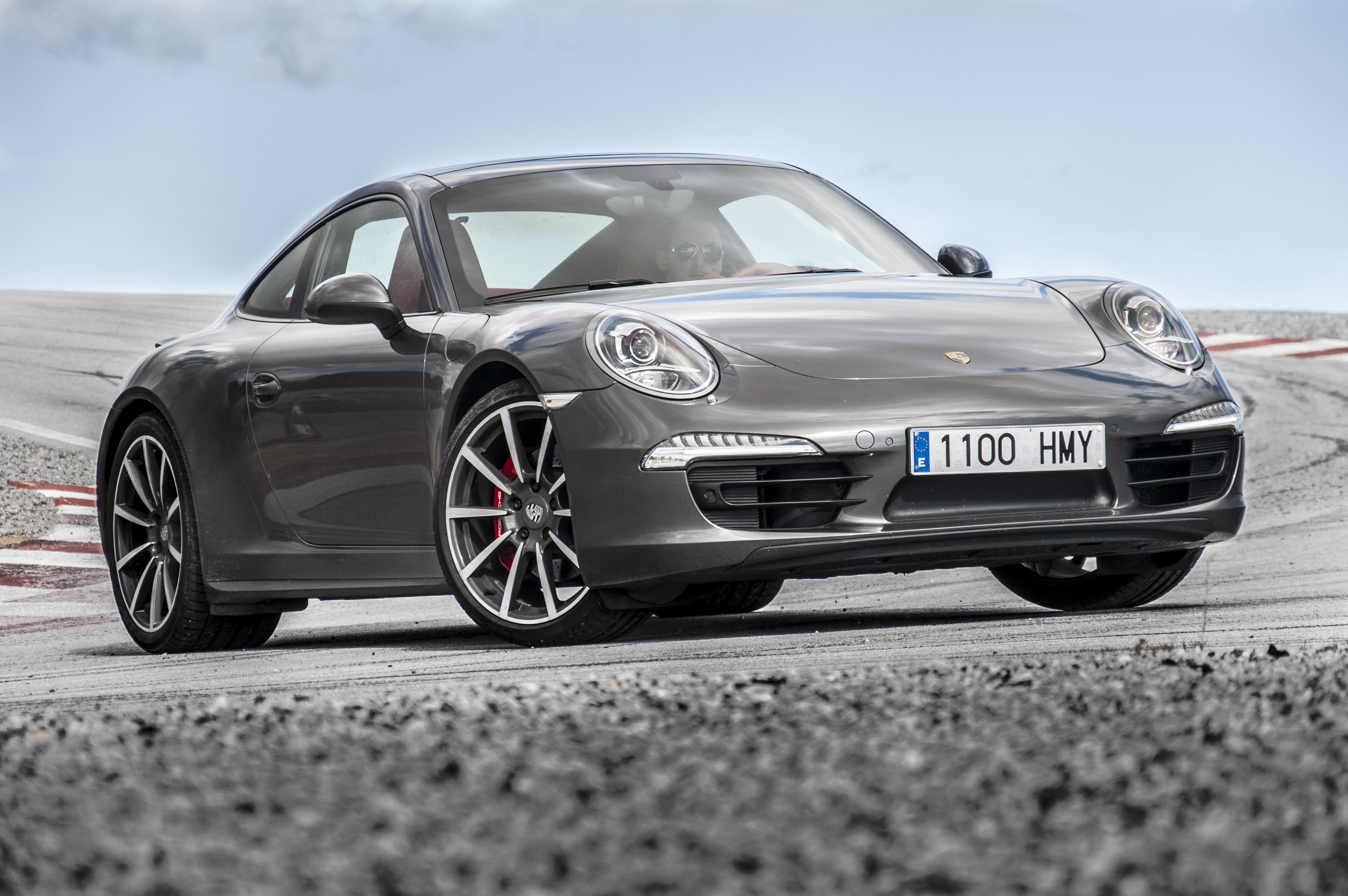
The Porsche 911 is a famous sports car that has been around for many years. It's known for its unique shape and powerful performance, making it a favorite among car enthusiasts.
The Nissan Skyline R34 GTT is a fast sports car with a strong engine that many car enthusiasts love. It's famous for its speed and has been featured in popular movies and video games.
Car control is how well a driver can handle a car, especially when things get tricky. It's important for driving fast and safely, helping drivers stay in control even when they face surprises on the road.
Mechanical sympathy is when you understand how a car works and can sense when something isn't right. It helps you drive better and take care of your car.
An anti-roll bar is a part of a car's suspension that helps keep the car stable when turning. It connects the left and right sides of the suspension to reduce leaning during turns.
Performance tuning is when you make changes to a car to make it go faster or handle better. This can include things like changing the engine settings or improving the suspension.
The Porsche 918 Spyder is a really fast sports car that also uses electricity to help it go. People talk about it because it’s one of the coolest cars that mixes speed with being eco-friendly.
G-force is a measure of how heavy something feels when a car accelerates or turns. It's like the feeling you get when a roller coaster speeds up or slows down.
Damping is how a car's suspension system smooths out bumps in the road. It helps keep the ride comfortable by controlling how quickly the car bounces after hitting a bump.
EVs stands for electric vehicles, which are cars that run on electricity instead of gas. They are better for the environment because they don't produce exhaust fumes.
Torque vectoring helps a car handle better by sending power to the wheels that need it most. This means if one wheel is slipping, more power can go to the other wheel to help the car stay stable and go around corners more easily.
A space-frame chassis is a strong and lightweight structure used in cars. It helps the car be safer and perform better because it can handle stress without adding too much weight.
The Ferrari 812 Superfast is a really fast and fancy sports car with a big engine that makes it super powerful. People talk about it because it’s one of the best cars for speed and style.
The Bugatti Veyron is an incredibly fast and expensive car that used to be the fastest in the world. It’s talked about because it’s super powerful and very rare, making it a dream car for many.
The Rimac Nevera is a super-fast electric car that can go really fast without using gas. People talk about it because it shows how cool and powerful electric cars can be.
The Toyota GR Yaris is a sporty version of a small car that’s made for fun driving, especially on twisty roads. People talk about it because it’s exciting to drive and has cool racing features.
The Ford Fiesta Active is a small car that looks a bit tougher and is good for everyday driving. People talk about it because it’s affordable and practical for city life.
The BMW M3 is a super sporty version of the 3 Series that goes really fast and handles great on the road. People talk about it because it’s one of the best cars for those who love to drive and want something exciting.
The Toyota Land Cruiser is a big SUV that can handle tough roads and off-road adventures really well. It's also great for families, which is why people often talk about it when discussing reliable and strong vehicles.
The Toyota Crown is a fancy car that feels really nice to drive and has a lot of cool features. People talk about it because it’s a luxury vehicle that’s comfortable and stylish.
The Toyota Grand Highlander is a big SUV that has lots of room for families and their stuff. It’s talked about because it’s safe and comfortable for long trips or daily driving.
LIVE
Mom? I saw Dylan's dad make dinner, like, actually cooked, and it was straight fire.
He said it was Blue Apron assemble and bake.
All the ingredients showed up pre-chopped, and he just laid it out on a baking sheet and no cap.
Dinner was on the table in, like, 25 minutes.
Apparently, it's chef-designed, and it has, like, over 40 grams of protein.
That's a lot, right?
So maybe we try it.
Just sayin'.
You can be the next Dylan's dad!
Blue Apron, get 50% off your first two orders, plus free shipping with code LISTEN50.
Terms and conditions apply. Visit blueaprin.com slash terms for more.
Hi. Welcome to the Car Chat podcast.
I'm Sam Morse, and with me today, I have Miro Zernchevich,
who is the chief test and development driver at Bugatti Rimarts.
That is a pretty cool title, isn't it?
He is probably the man with more seat time in a Navara than anyone else on the planet.
He started out getting into the drifting scene in Croatia.
He then got into automotive journalism.
He worked at Evo over there, test driving lots of cars,
writing articles, doing all that sort of stuff,
and then found his way into Rimarts when it was starting out.
I think he had less than 30 employees when he's joined,
and has been there ever since, and also through then,
the joining of Rimarts and Bugatti.
He has seen the evolution from a small startup to the big company that it is now,
and all of the changes.
We talk about what testing is like in the early days,
and then how that's involved.
He's been there for the development of concept one, Navara and Navara R,
and then now when he joined Bugatti, he's been working on the Turbjorn.
He's been driving the Belied,
so we have a chat about what it's like driving those cars.
We really dive into a bit of testing, what it's like,
the sort of engineering side.
He's really interested in rallying, drifting.
We talk a little bit about SIM, traction control,
what it's like driving at these super crazy fast speeds,
what it's like developing the Hybrid V16 in the Turbjorn.
Lots and lots and lots of just real cool stuff.
So enjoy.
Hi, everyone.
Welcome to the CarChat podcast.
I'm Sam Moors, and with me today, I have Myro.
Hello.
Hi, hello.
Welcome.
Can you tell the listeners a little sort of short summary
of who you are and what you do?
So my name is Myro Zanichurich, full name Myroslav.
I come from Croatia,
and currently I am Chief Testing Development Driver for Bugatti rematch.
Yeah, that's in short.
That is a pretty cool title.
Yeah, it is.
You're like Chief Test Driver for these two,
by now one entity of combustion and then also EV at the top.
How did this journey begin?
How did this sort of start?
How did you get into this?
Yeah, I'm still pinching myself every single day
because that's the pinnacle.
People often ask me, how did I get here?
It's a long story, but I'll try to keep it as short and concise as possible.
So I was born and raised, of course, in Croatia.
I didn't have a racing heritage.
My father was not racing, nobody in my family.
I was kind of hooked up with cars since very early age.
My dad did love cars, but he was not involved in any kind of motorsport or automotive industry.
And at, let's say, the age of 12, 13, 14 cars pretty much started to occupy my brain as
much as possible.
And then in 1995, I was watching at the footage from Wales, so the Rally GB,
where Colin and Craig won the championship.
He was doing donuts with the Imprezza at the end.
And at that point, I was like, OK, that's it.
That's what I want to do in my life.
But more to the point where as I grew older, I was reading magazines quite a lot.
I was pretty much hooked up on any kind of information that I could put my hands on.
And I am fairly old, so that was the age of not yet internet and no websites and stuff like that.
So I was consuming magazines quite a bit.
And that job of automotive journalists slash test drivers in the end.
So test drivers was the ultimate goal.
Automotive journalism was basically the second best thing that you can have.
So driving cars, talking, writing about them, and of course getting paid for that.
So it was making a living out of it.
That was like a dream.
But living in Croatia was basically impossible to do.
I mean, you could do automotive journalism, but getting into a car industry was,
you know, you had a chance like a snowballing hell.
So in other countries, people have the background.
They have the logistics.
They have people that are involved already in Croatia.
I didn't even know how to start and where to, who to talk to.
And as it turns out, in my early days of college, I met an editor of a car magazine.
At that point, the internet was starting to grow.
So you had these like chat groups and news groups and forums later on.
So we would kind of get together on Fridays and Saturdays with, you know,
guys that were in automotive that were, you know, loving cars and stuff like that.
And one of those days and one of those meetings, I met an editor of a car magazine
and we started talking.
And at that point, I was already into rallying and scrutineering.
And I was a marshal on races and stuff like that.
So I told him like, okay, I'm going to all these races.
If you need me to, you know, if you need any kind of help around, you know, reporting
from racing and stuff like that, I'm open to do that.
And at that point, a lady that was doing that in the magazine was just leaving.
So it was basically perfect timing for me.
I started doing that and started also doing some road tests because, you know,
to get to the races, they would often give me a press car or test car.
And that, you know, led one to another to another.
So I ended up doing basically now 20 years of automotive journalism.
So I went from staff writer to editor to executive editor, I was doing print media,
radio, TV, all kinds of stuff.
By one point, I kind of hit the plateau or, you know, the end of the bubble,
because Croatia is a small country and doing something from Croatia for international
content was fairly difficult and difficult in terms of
just the finance, like, how are you going to finance the whole deal?
Making videos and stuff like that with a, with a cell phone was not an option.
I wanted to do something quality and that costs money.
And I was thinking what to do next.
And at that point, Matt, the image department also on these forums and who I drove,
you know, several drift events and track days and stuff.
He started to do his own thing.
We started to do the BMW E30, the famous BMW with very, very high powered electrification.
And at that point, they needed like a marketing assistant in their company.
And for me, that was like, you know, the doors of the dream job open slightly a little bit.
And I just went for it.
And I told him, like, okay, I would do marketing and stuff, but I'm not the marketing guy.
I was not schooled to do that.
I have the experience because I was, you know, journalist.
But what I really want to do is cars and driving and test driving.
That was the, let's say, the core of everything.
This is why I started working as a motoring journalist to get access to as many cars as possible,
drive as much as possible, learn as much as possible.
So I was like stealing ideas and skills from, you know, rally drivers and professional drivers
that I was working with.
So, you know, I was kind of building my own knowledge of things and skills.
And when I started working in the rematch, I was pretty clear from day one,
like I want to do vehicle development.
And soon as we started doing, of course, a bit more serious work in vehicle development,
I switched to that.
So I started working very closely to vehicle dynamics guys, air dynamicists, vehicle testing,
stuff like that.
What helped definitely in my job was that I had a big, big database of cars.
I pretty much drove anything that was produced.
So from like family cars, like small family saloons to big cars, vans even to, you know,
hypercars and sports cars, because I was doing EVO magazine in Croatia.
So that definitely helped because I knew what not to do or what kinds of stuff to avoid.
And it helped me a lot to learn and progress in this business.
And of course, it's like in any case, in any sport, in any work,
you just keep learning and each day you learn something new.
The more you know, the more you get that you are a very small portion of the whole mechanism.
You don't know actually, not a lot.
So yeah, in a nutshell, that's it.
And now today I'm developing the most powerful and the quickest, you know,
hypercars in the world, which again, I need to pinch myself every single morning.
Because, you know, as in every job, I always like to say like, you know,
eating chocolate is very cool and very nice.
But eating chocolate every day is a challenge because you need to find the weight not to,
you know, not to gain weight.
So it's the same with this job.
So you need to have like a way to stay with your feet on the ground.
Because, you know, it gets normal to have 1.5 g of acceleration.
And it gets normal to drive a bullied on the track and stuff like that.
You need to appreciate and be humble that, you know, you're here to do this.
You know, it's, you know, I'm doing what I love and I really enjoy it every single second.
And then you're also like critiquing very small bits and pieces of these crazy cars.
Yeah, I would definitely like to get into that.
I would like to dive back a little bit before we sort of come back to the testing.
When you, can you remember the first test car, like press car you got?
And was that quite cool?
Do you remember like what that felt like getting that car?
That's a fairly difficult question.
At one point I was trying to calculate how many cars I drove so far.
And like a rough estimate was 2,500.
But it's probably, yeah, it's probably even more than that.
So I drove or basically 1.5 cars average every week.
So you change cars every week plus private cars, rental cars, all kinds of stuff.
It all comes, you know, into one place.
But on the part of test cars, I think one of the first ones was the Corolla or a Yaris or something
like that or the Corjón de Jez.
So they were fairly, fairly careful with me.
So in the beginning they were giving me cars that were relatively cheap.
So if I do anything strange or if I crash, that is not a pricey situation.
But yeah, I'll try to remember.
I probably have it somewhere.
Something like that.
And then what was the first, is there one car that you were like, oh, what?
Like the first or the most memorable like of the early sort of like, oh my god,
I've been able to drive whatever it is someone's given you the keys to.
Something like that stick in, stick out.
I think it was the 350Z, the Nissan 330Z.
But I clearly remember like I drove like a big amount of sports cars before I drove my first 911.
That's what I remember.
And I clearly remember that I had the opportunity.
One of the last gigs I did for Evo Magazine was going to Slovakia to for two days to drive every
single generation of 911.
That's like candy.
It was really, really cool.
But those are let's say the best memorable moments.
And with 350Z, of course, I remember it because it was raining for those 48 hours that I had the car.
And having some drift aspirations and rally aspirations, that was ideal for me because
it was on lock stops all the time.
And you joined this period, you're doing some rallying and some drifting and stuff like that
alongside being doing the journalism, is that right?
Yeah.
I mean, it sounds very like a small amount of small portion, but there was a big amount of effort there.
Getting into any kind of motorsport requires a lot of effort.
And actually 90% of your time, you are a marketing guy, a photographer, a videographer,
you know, a mechanic, everything, and then maybe five to 10% maximum you're driving the car.
We didn't have the funds to be able to train a lot.
I was also lucky enough to get a sponsored car.
I got in contact with the Lynx, which is a company in Croatia that was a distributor of computers
and those kinds of stuff.
And we managed to make a package with Nissan Skyline R34 GTT, so we will drive car,
but it was basically stock that we made a whole marketing story about it.
Just so I could do drifting.
And that was really fun.
For like five years, I was really lucky to drive that car and compete, yeah.
And do you think doing all of that stuff, was that then helping your journalism,
because you're like driving skills?
Did they give you some sort of formal training at the magazine in any way, or just like you seem good?
Driver training, as you probably know, is quite expensive.
And you kind of learn as you get along.
I did have the opportunity to visit various driving schools in different kinds of
different variations.
So some of them was as a journalist.
Some of them was later on in Rima Automobili as a driver training or something like that.
So I tried to expand my knowledge and I tried to go through a driving school every or every two years.
You can always learn something new, even if it's something very basic.
Of course, as the more you know or the more you are doing this job,
the more difficult it is to find something that you really don't know or something that you can
really progress on.
But I tend to have a variation of people that I'm working with or that I'm listening to,
because then it gives you the width of the story.
As a test driver, definitely what helps is car control and drifting is definitely the best thing.
So developing yourself as a driver, the car control is maybe number one.
And then, of course, track driving skills in terms of lines, braking points, stuff like that,
of course, helps, but nothing can compensate for knowing how to get yourself out of a situation,
because you will get into those kinds of situations one way or another.
And definitely as the drifting career helped a lot, also rallying helped a lot to understand
what's happening with the car.
And I'm not going to lie, as a journalist, I used every single opportunity that I could use to
get into a non-linear handling with a press car and get away with it,
not destroying the car, not having any offs.
And I was quite lucky to manage to do that.
Some of my friends were nuts, some of my friends crashed badly.
And one stain in the career is a disaster.
So yeah, it was a very on-the-edge, slippery slope, but I somehow managed to go through it.
So navigated.
I like that.
Non-linear handling.
That is full send.
A polite way.
A typical sort of career into becoming a test driver, if you were sort of going,
I don't know, a conventional route for a mainstream manufacturer or something.
Would people have generally done a lot of racing?
Or do they actually just start a process and then do a bunch of training and then arrive?
I've talked to and I know a lot of test drivers.
And of course, all these guys, I am hugely respectful for them.
There is no universal school of test drivers or four test drivers.
And every single one of us had a specific career path.
I think what is, let's say, some of them, and all, sorry, all of us had a lucky moment
that happened in the whole story.
But it's not pure luck, of course.
You need to prepare yourself and put yourself in the situation where you've done 95%.
And then if you have 5% of luck, it's going to kick off instead of just leaning on,
if somebody spots me or whatever, it's going to happen.
But then again, of course, you can do 95% and be in the best physical shape and know,
driving, have high driving skills and all these kinds of stuff and not ever be in the
situation where somebody is going to open the doors for you.
But on the other side, I'm a strong believer that with hard work and dedication and a lot of
non-compromised approach, I would say, your chances, of course, are far greater than just
hoping that you're going to somehow be able to or somebody's going to open the door of a
hypercar for you. I think if I was to, let's say, paint a path for a test driver, and again,
this is no guarantees, guys. This is not like 5 advices how to become a test driver with no
guarantee. Chief test driver for Bugatti Revers.
So what I would definitely suggest is put yourself in as many cars as you can.
So drive as many cars as you can.
Reddit is back for a historically hideous season.
It's our 100th ugly house.
This place is mayhem.
That is impressive.
And if these walls could talk, do you cry a lot?
I do.
They'd have a lot to say.
What in God's name is this pit?
Don't get too close.
No, if you see the show, I'm scared of you.
Ugliest house in America season premiere Wednesday at eight on HGTV.
With open eyes and ears, feel the car, understand the car, have the technical background to
understand the mechanics of the car. Being, let's say, an amateur mechanic does help a lot and
hanging around mechanics helps a lot because you develop a mechanical sympathy for the car.
You develop also the understanding of how systems work.
When you know how systems work, you can focus on them individually, especially if you have
an issue. It's much easier to spot the issue because you have the imagination of how things
are working and what could be causing a certain sound or what could be causing a certain issue.
Car control, so drifting, rallying, driving on ice, that is up there as one of the most
valuable things that you can do for your driving skills.
And also, of course, you're using sim racing and sim simulators, not all of them.
So most of them are okay.
Some of them are too much gamification, too unrealistic.
So you need something that will provide you with the right feedback, that means
right hardware, right equipment, and also right software. So I'm not going to name
those those softwares because I don't think that they're going to pay you or somebody.
If you look at the stats and if you look what F1 drivers are competing in online,
that's it. That's pretty much where you need to be.
That's let's say the cheapest way to develop your driving skills, but that's just a
part of it. It can develop imagination, which is very important. It can develop
theoretical knowledge. You can use telemetry, you can improve to a very, very high extent.
But in the end, you need to put your bottom in the seat and drive. You need to
you need to feel the car, you need to know what the car is doing. And also,
don't get me wrong, but you need that certain part of fear. I've met a lot of young drivers
that are really quick, but completely alienated from the reality and what a high speed crash can do
to them. So as I said, there is no universal recipe, but there are definitely things that
can help. And everybody is a unique or unique person. One more thing that of course is hugely
important is of course, engineering background or knowledge of vehicle dynamics. So that's
that's base. That's something that you need to have. You need to have at least basic knowledge
and basic understanding of vehicle dynamics, not only to be able to understand the car,
but also to be able to talk to engineers, which is much more important. Engineers,
if you don't talk engineering language, there is no way that you can work with those guys.
I know a lot of very quick professional drivers with with like long driving careers,
that don't have the technical background, they don't have the technical knowledge,
and it's very difficult for them to work with engineers, they can talk to me,
and I understand them because we all talk, you know, with sounds and you know, you're waving
your hands through the air with the steering and everything. And I can understand what they're
saying, but to put that into the context of something that an engineer would understand
is not so difficult, but it takes time and it takes understanding. And it takes, you know,
a humble approach. A lot of drivers are also very cocky and you know, ego is playing a big
role in this. And you need to tame it down because in, for example, vehicle development,
it's a team game, there is no, you know, one guy that is jumping out, so everybody needs to be
aligned, you need to respect everybody. And of course, you know, you not demand, but you expect
respect from everybody else. And then, you know, things click into place. So it's quite a psychological
game as well. Yeah, I can see if you're, it doesn't matter how quick, good a driver are,
if you can't translate what you're feeling, repeating, whatever, straight to an engineer,
you need someone in the middle that can, and they're not, you're not looking for someone in
the middle, you're looking for the person that is, can do that, that task. I'll give you the perfect
example of mistakes that drivers do, especially drivers that are very, let's say, emotional or
very protective of what they, you know, what they know and what they've come to. And in particular,
this happens with amateur drivers. So they go on the track, they drive the car, they have a certain
way of driving the car, it doesn't, in case that if the car does not, let's say correlate what they
would like to have, if they want to tune the car by their own preferences, they come out of the car
and they start talking about, we need a software anti roll bar on the front, or we need a stiffer
springs on the rear, or we need this much rebound or whatever. That is a deal breaker. Because
engineers have the overview of the car, they know what they need to do about the car, and they know
the car inside out much better than any kind of any driver, especially vehicle dynamics engineers.
So you come out from the car, you can complain about the grip in the front, you can complain about
the grip in the rear, you can, but, you know, be also prepared to paint the picture for them.
When does it happen? Corner entry, corner, mid corner, corner exit, on bumps, left hand corner,
right hand corner, at what speed, you need to make a snapshot of that situation and translate it into
their knowledge so they understand it and let them do their job. And even if they make it, even if
they get it wrong completely, and even if they mess up the car, it doesn't matter. You need to,
again, try to be as precise as possible and bring that information to them.
As anybody else, they take great pride in their work and they should, because it's very difficult
to get to that level, and it's time consuming, energy consuming and all these things. And you
need to respect what everybody is doing, especially the higher dynamicists, because that is very
difficult to judge, you know, subjectively. That's something that I've always found quite impressive
with certain people I've met is they'll come in and they'll drive a car or they'll ask me,
and I have no idea. They go, what was the car like? And you're like, my first thing is,
I don't know whether I'm driving it correctly. Like, I know I could probably drive it slightly
differently and it would handle differently. So I'm like, I don't know whether we should change
anything. But then they'll go, okay, corner three, at this speed sort of thing, it was handling like
this. And then corner four, it was like this, and they'll just build this map of how the car is
reacting in all these different situations. You're like, how are you even remembering all of this?
I guess this is a key part. I'll give you, so two things that you pointed out very good here.
And I believe that is also that also has some something to do with, you know, your background
and, you know, work with photography or videography. I see telemetry data very similar to
montage of the video when you sit behind, you know, an editing editing software. If you don't
understand, or if you don't know what videographer saw when he was filming it, you will not be always
able to exploit 100% out of it. And especially you don't have time to go through the whole footage.
It's the same thing with the track. When I come out of the car, and, you know, engineers grab the
logs, I try to make sure that what they are looking at is the right thing. So if they grab
the log of the fastest lap on the track, and it didn't talk to me, it might not be the fastest
lap or the greatest lap, it might be the lap where I took most risks. But something was wrong with
the car, or I didn't like some particular thing or whatever. You know, I would like them to focus
on, you know, corner entry into corner one, lap five or whatever, or, you know, stuff like that.
If we are not doing performance tuning or performance testing, which 99.9% of testing
is the case. So you usually go to the track, you are driving on the track, but you are testing
different stuff, you're testing the balance of the car or damping or stuff like that.
Then eventually, at the end of the project, like by the very end of the project, you do
club laps, or you do a fast lap with the car. But that is just a part of the indication of
something like performance or whatever. The most important part, of course, from my perspective
is driver enjoyment. Yes, of course, if we are doing the Nurburgring record,
then driver enjoyment is the secondary thing, focusing on the lap time. That does not mean
that the car is going to be in the perfect balance. Maybe that means that the cars have to
understeer through, you know, on the exit of every corner, because that's the fastest.
On the other side, if we are making a car for the driver, you do want, you know, to be playful
with the car to play a little bit. But if you're sliding the car, it's not fast. So it depends
on the goal that you want to achieve and how you want to achieve it. But what you said in the very
beginning is the very essence of every test driver. First and foremost, you start from yourself.
You question yourself always, and you question yourself. So was it me that did a certain thing
on the corner entry, or is it the car? When did it do? How did it do it? And you know,
is it cool or good for myself, but for the customers not going to be okay because it's too
dangerous? Is it too playful? Is it too safe to doubt? So you need to ask yourself these questions
to paint the picture. And people that are super confident that come out of the car and point out
their fingers, bum, it's exactly like that. It's quite dangerous because at some point they will
get it wrong. And because of their own egoistic way or, or, you know, high confidence, they will
be completely blind to some stuff that is maybe messing up the whole story. This comes back to
the point where I said, like, you cannot come out of the car and say, you know, we need the
software on front and Tirol bar, maybe it's the bushings, or maybe it's, you know, the rebound,
or maybe it's something with the arrow, whatever. So, you know, these are things that you need to
work with the engineers. This is not, it's not a one-man show. Yeah. And did you spend, or have
you spent quite a lot of effort building a driving style that's like highly repetitive?
Or like, can you, like, can you sort of replicate a lap, like the same input sort of thing?
Yes. And, and, but, but it's again, it's just a piece of the puzzle. So objective measurements
or objective maneuvers are very important to create, again, the perfect layout for the logs.
The engineer can get what is happening in between two setups only if you give him,
you know, the, the, as, as perfect as possible conditions in both, both situations or three
situations or five, how many you're looking at. This is again, why, you know, the, you cannot
just throw data into engineering hands and hope he's going to get what's happening with the car.
You need to paint a picture to him. It's like a video with no sound or something. So you need to
work together. And, but objective measurements are really crucial on a lot of stuff, especially when
the, the driver is not sure about something or is fatigued or is influenced by other stuff.
As subjectively, you can be influenced by a lot of, a lot of, you know, different situations or
different, different information. I'll give you a perfect example. Let's say I'm on Nardo handling
track and I'm going to Vera and we are driving easy, easy laps or let's say, you know, a lap where
you're communicating with the co-driver, but you're still quick. And let's say that's, you know,
222. And the next day I jump in a 918 spider Porsche as a part of the exercise for some
benchmarking. And I'm driving with that car on the track and I'm focusing so much and my palms are
sweaty that I'm thinking that I'm driving, you know, super quick. And then on the other side,
I might be at, I don't know, 225 or 226. But the experience from that car in terms of grip,
damping, steering feel, visceral experience from sound and everything and the fact that you're
driving a car that is not a factory car. So it's maybe a privateer car or a rental car or whatever
that you did. So there's also that part is psychologically affecting you and your perspective
of what the car is doing. This is why if you have a lap time, you have at least a little bit of,
you know, the parallel of, you know, what's the reality of stuff. So I do test, I do trust
my subjective assessments. And there are ways to put yourself on ground zero psychologically
to be able to be as repetitive as possible and to spot all the differences. But in the end,
you need to be true to yourself, true to the data, true to the people that you're working with.
And it's not always the easiest thing to do, especially if you're driving a lot, if you are
testing a lot on one racetrack and stuff like that. This is why you need a wide variety of testing
scenarios. So people that are or companies that test a lot in Ardo and they are doing
gazillion laps on the handling track, when you put that car on the road, it doesn't work.
Because it was, it's almost perfect for that track. But on the road, you know, the steering,
maybe is the V on the steering is too wide. So you need to put too much, let's say,
g-force for the steering to be loaded on the road. If you do that, the car is too twitchy,
it's too nervous. If the damping is too stiff, the car is going to bounce around on normal road,
especially the roads in Italy around Ardo and stuff. So you need to do different scenarios
and be sure that, okay, the car is working okay in global picture or KPIs, what you set up for
the car in the very beginning. Yeah. And then you're hopping between, actually, we'll get to this.
What about when, so when you started, is it rematch? Is that how you pronounce it?
There was like, was it like 30 people or something like that? That sort of number?
Even less. So I started working with pretty much as a journalist very, very early.
So basically before the first concept one was done. So with Matt, I was still doing the BMW.
But I officially joined when the company was around 30 people, yes.
And how was working? And then when you started doing the test driving, how did that change?
And how has that changed sort of throughout the periods of time as the company's got much,
much, much bigger? And then the sort of Bugatti bit, how has that changed?
You opened a very big can of worms. So well, you need to grow with the company.
And as the company changes culture, you need to change. Otherwise, like many, many people left
the company. When we were a small company, when we were still a startup, there was a mentality
that you were coming to work because the guys are there, because that's where the fun is.
It was challenging. It was difficult. It was long hours. It was huge amounts of energy.
There was frustration and everything, but you had the overview of the whole situation at all times.
If you had something to work on the car, you would call the guy that is doing the chassis
or the guy that's doing the vehicle dynamics or somebody. You had them by name. And every
single system on the car had a name, a responsible person about it, which again is not ideal because
it leads, it's very slippery, slow because it leads to burnout. You need to be very careful.
People are investing themselves a lot. They love it and they don't feel that they need
rest or that they need to change perspective. Then when the company grew to 400 people,
it started to be somewhat easier. But on the other side, you had this satisfaction that,
okay, now you can spread the knowledge and you can spread the culture and the guys that are
coming in are helping you and basically are part of the puzzle, but they need to learn the
culture of the company. But when the company grew to 1000 plus people, the culture changed
because there are so many people that came from other companies where things were being done in
a different way. There were standards that they brought in. There are procedures that we had to
implement. There's all kinds of stuff where it's not anymore a situation where you pick up the phone
and call the Chassis guy. You have a system where you need to put it in, you need to organize a
meeting, you need to be aware that all the relevant people are involved and then they are doing,
they're covering their part of the job. I strongly believe that you need to have the structure because
otherwise things cannot be done in shortcuts, you need to have a pathway. But on the other side,
it's also a huge weight because you stop being as nimble as before. I like working with racing
teams. I like working also in rallying and stuff like that. You have a small amount of people that
is very quick and they need some kind of autonomy so they can do a lot by themselves. But again,
working on a product that is so complex and so well-developed, you would need that amount of
people. It's like this. I now started to understand also why to everybody else except us, Rima's
coming out was such a miracle because we've done so much in so little time. To us, it was normal
because you don't know anywhere else. The big companies can just not keep that pace. It would
require them to have 20 small teams to do something like that and then at the end of the day,
somebody needs to pay the bills. It's a question of how good is it in financial terms. It's a
challenge. There is no magic stick because if there was, there would be that there's only a
handful of high-powered or hypercar companies that came out and survived in the past 10 years,
15 years. You probably remember there was much more that came out like the next big thing and then
it never kicked off. The new year brings new health goals and wealth goals. Protecting your
identity is an important step. Your info is in endless places that could expose you to identity
theft, leading to lost funds. Lifelock monitors millions of data points per second. If your
identity is stolen, our restoration specialists will fix it, guaranteed, or your money back.
Resolve to make identity health and wealth part of your New Year's goals with Lifelock.
Save up to 40% your first year. Visit lifelock.com slash podcast. Terms apply.
Then when there was the joining of Bugatti, you then you've been working on EVs. Actually,
that's something I wanted to ask about. When you first started testing, was it the concept one?
I guess, was that the first iteration? What was that like? Because you've come from combustion
engine vehicles. You've got all this noise and stuff and it's different. The powertrain's different.
You're sort of understanding of engines and motors and stuff is based in one world and then
you're sort of trying this. All the rest is similar. How was that? That and then working on
exceptionally high-powered EVs. I'll give you a perfect, let's say, point in time where it flipped
for me. I wouldn't say flipped, where I was bought into the idea that this is something worth
while worth working on. I'm not going to lie. First time I sat in the BMW E30 with Matte,
I thought he was completely mad. He started doing this lunatic thing with the BMW. He showed
me that on the road, which was quite a scary ride. We didn't have any safety belts or anything. We
just drove in a very patched up BMW E30 that still had the gear stick, still had the gearbox,
still was white. We drove it on the road. It was massively powerful and it was a super weird
experience for me because it's quick and I understand that it's quick. But on the other side,
there are certain things that are missing, like the sound and feeling and all these kinds of stuff.
Plus, it's scary, of course. Then we did the concept one and I was not 100% bought on the idea
when I started working on that car. I was focusing on, of course, driver feedback the most, but we
also had torque vectoring at that point. We also had a very, very complex system in that car. That
car was basically a proto car. It was not nearly developed on the level as the Neveira or the
Turbjorn or anything similar to this. It had a space-famed chassis. It was basically a race car
for the road that we were trying to cramp in all these things, but still keep it a luxury car.
For the time being, in the era when that car was made, I think it was a miracle. That car was a
complete beast and still is. Then at one point, we got to do the Pike-Speak car for a Nobuhiro
Monster Tajima. Mate and him met almost by chance. Mate came back with the idea, okay, let's do the
race car for this guy. Of course, I knew who Tajima was because this guy was a complete legend. I
played PlayStation and all these kinds of games where he was his cars. I knew who the guy was
very well. When we started to work on that project, I was quite afraid how it's going to
turn up because that car was supposed to be 1500 horsepower and around 1500 kilos, something like
that. It had 365 slicks all around and massive downforce. When we did that car, when I pressed
on the throttle on that car, I was like, okay, this is basically the way to go in terms of racing,
in terms of performance. There is no way that you can get that performance from a normal aspirated
engine or a turbo engine or whatever. IC engines cannot touch this, no way. At least not what
could I try to that point. We drove it on the track and I was like, okay, this has massive
grounds. It opens a complete different envelope of tuning possibilities, performance, controls,
all these kinds of stuff and you need to rethink yourself in your driving completely.
That was the tipping point. Then after that, of course, I was and I'm still a petrol head,
so I still like and enjoy, of course, driving and listening to IC engines and driving those cars
and that's a big part of my career and my passion. You need to also understand that
Nevere and one was not done electric because we believe in the green future or we want to
save the planet. We did it because that's the way that you can reach that kind of performance.
That is the only way that you can reach those kinds of controls also from the car,
those kinds of performance. I mean, the traction control on the Nevere works so precisely
that it can control the tire in basically like 2% of slip on the tire,
which is extremely difficult to make with a normal IC engine. If you look at the results that we've
done with the car, we go 0 to 400 to 0 in 25.79 seconds. That's difficult to understand if you
haven't been at all to like 400 kph or if you don't understand what goes into the tire and what
goes through the whole physics of the car to even reach 100 kph. Is traction control quite a big
part of that 0 to 400 to 0? Yes, because you need to control the torque on the wheel and to control
the optimal step on the tire. Again, I'm a test driver. I know this because I heard it from
tire guys and vehicle dynamics guys. The tire will produce the maximum amount of force, longitudinal
force, if it's between let's say 4 to 7% of slip. Not just normal pure rolling and not
over spinning. If you go over 7% of slip or if you go 10, 10, 15, you're over slipping the
tire and you're losing the longitudinal performance. This is why in drifting, for example, they are
using semi-slick tires because they need the grip on the car. Although the tires are spinning,
they still need the grip, they still need the push. So the tire will always produce
a certain amount of push and then it will over spin and transfer that energy into heat.
Detraction control is controlling that perfect amount so the tire doesn't oversleep. At one
point, of course, as you go up with speed and the power is not anymore sufficient to oversleep
the tire, it's going to shut off and then it's pure EV on how much power you can put down from
the battery and all these things. So if you can control that within 2%, you've got quite a big
window, you've got 5%, 5% to live in and stay exactly where you want to. A normal conventional
high-powered ICE car, what percentage might they be able to control? It's a different way because
on the normal ICE engine, if we slow down the whole procedure, what happens is that you have
sensors on the wheel, which is usually ABS sensors or at least in the old days was
hull sensors. So you had like a teeth on the wheel on the inner part of the hub,
which are controlling or measuring how many rotation you have. Then they are comparing that
with the speed of the car. So if you oversleep the tire, if it notices that the tire is overslipping,
what it's going to do is it's going to send a signal to the engine, whether to cut the ignition
or whether to close the throttle body or whatever. So it's going to cut the power all the way down
or nearly all the way down. Then you're going to have reduced torque on the wheel. The wheel
will recover. So from overslipping, it will recover into grip. Then the sensor says, okay,
we are fine now. We can again put the power back and you're again trying to say to the engine,
okay, we can have the power and then the engine again shoots or tries to shoot the full power.
Then you oversleep again. Then it happens again and again. And this happens multiple times a
second. Whilst with the EV motors, what you can do is you basically produce that slip. You know
where you are because you have a much more precise way of controlling the motor. And on top of that,
what you can do is instead of doing those high spikes like 2000 horsepower zero 2000 horsepower zero,
you can say, okay, we have enough power to produce between five and seven to put down five to 700
horsepower to the ground. Instead of shooting 2000, let's reduce the whole power to let's say
700. And now you are oscillating at much, much lower, much lower rate, you have a much better
sampling. And then as you get grip, you go up with the power. So basically, if you start with
an EV on the ice, you put the power down, the car is going to control the power super smooth.
As soon as you get to the grippy surface, so as you go off the ice to the asphalt,
it's going to notice that and it's going to again go up with the power. From that perspective,
it's almost, it's almost a mind read. It's almost a, you know, predictive controller,
but it's it's working on on the feedback. That is that to me, that's wizard read like that.
Those those kinds of stuff when engineers do that, I'm like my mind explodes. It's just to me,
it's a black box. That is cool. Yeah, I can see that it is, it's completely different,
isn't it? It's like your level of control and output is completely different. I remember,
I took a couple of photos of the Navarra at one point and I was chatting to one of,
I think, I believe he was an engineer, and we would usually talk covered this topic.
And he said, the tricky thing, and it was something you mentioned,
is knowing what speed the car's going. That, yeah, that is actually really complicated.
Yeah, that is, because you need to take so much, so many things into consideration,
including GPS, to know where you are. One of the tricky things was, and I may be going a bit
too much into the details, I hope the guys will not, you know, kill me because, and I hope I'm not,
not, not unveiling some, some patterns here and stuff. But one of the tricky things was to,
when you overspin the tires, so we had the drift mode as well,
was to figure out how much you're going to overspin it. Because if you overspin the tire going,
you know, your vehicle speed on like across the ground is let's say 50 kph, but you're spinning
the tires at 200 kph or something like that, there's almost zero control. And more to the
point, you go off the throttle and it takes time for the wheel to recover. So you off the throttle,
and as the wheel is recovering at one point, you're off the throttle, but the car is going
to start to accelerate. So you need to know how to tune those factors to have, you know,
to be going sideways, to be spinning the wheels, to be producing the smoke, but still, you know,
be in control. And that's a tricky thing to do. That's a really, really tricky thing to do.
I guess, and you probably may not comment on this. I remember, I think it was last year,
before the Avaya at Goodwood had a big crash. I think it was basically on the start line.
And I felt it for that guy so much. I was so sorry that that happened. Like I was looking at that
and I was thinking, you know, it's probably for the for the driver, it was, you know, it was,
of course, you know, a gut feeling that you cannot, you know, erase for a while. And every
not every so often it happens again and comes again. And of course, people like to see those
kinds of stuff. I hate it because, you know, I don't like to look at those things because I
feel for the driver what happens at that point. Like Goodwood is one of the places where you can
get it so wrong so quickly. You know, it's, it's really, really, you know, it's tempting because
you want to show off, you want to show the car, you want to do, you know, all kinds of stuff,
but at the same point, it's, it's very, very small that the margin for error is really small.
Yeah, it's tough. It's tough. And say, and then working through the various, there was concept
one, Navara, Navara R, which you've just bought, you've just, were you driving, you were driving,
right? The, for the new records? Were you driving? For the new records, no, that was Gordon.
Gordon Dunlop is a good friend. He's, he's also driving for us. He's doing various different
things, but he's a huge enthusiast and also a very, very good driver. Basically, we stepped on
the scales and I was 20 kilos heavier. So there we go. Yeah. No, but that's to be, to be completely
fair, he is much more into it and he was much more, you know, passionate about it than, than I am.
I'm, I was more for, you know, tuning all the bits and pieces on the car that everything is,
is nice and dandy. He likes to, to really, he's more from the, from the racing, let's say,
background. Yeah. Were they doing those things? So for the people that are listening,
they are remote set, a bunch of records. The, the nought to 400 nought, I remember looking up in
my little WhatsApp group with some friends, we were talking about, and I saw it's 25 point
something seconds. And we looked up this, I think I looked up Chiron Super Sport. Now,
I know that's been sort of replaced now, but that was 40 something seconds. And I,
I get in my head around how much faster than that is than an already really fast car.
How do you, what sort of preparation do you have to do for those sorts of runs and stuff?
Well, all kinds of, because you, you, it's, it's more to the point of monitoring if everything is
okay. Yeah. Before you do it, because, you know, it, it happens so quickly, everything happens so
quickly. If you have any kind of, you know, wrong setup, if you're, you know, if you have
bumps on the road, that, that are not compensated good by the dampers, you can, you know,
unsettle the car. If you don't have the arrow setup in a proper way, you can have lift on the
front, or you can have too much downforce on the rear or whatever. You need to take care about the
vertical load on the tires. So you be, you have to be in line with what Michelin is,
what, what window the Michelin is giving you, because they say, okay, you can get to a certain
point in terms of load, or you can get to a certain point in terms of pressures.
And you need to respect that window because that's the, that's the guarantee of safety,
basically. If you, if you go out that window, anything can happen and things go exponentially
as you go up at speed. So we were monitoring also the, the right height of the car. So
with laser sensors, so you're sure that with the aerodynamic load, how much the car is,
yeah, how much, what's the arrow balance between the car, but also how much load you're putting
down to the car. You need to be aware of course of the tire temperature, you need to be aware of
the track temperature, wind direction as well can play a big role, especially sidewind,
things like this. But of course, you, if you look at the footage, if you look at, you know,
stuff on YouTube that people are doing, there's people that went quicker than us, for sure,
in terms of just the top speed, not in terms of acceleration, I don't think so at least,
except for drag tracksters. The other day I saw a dragster doing the, like a top fuel dragster
doing 550 kilometers an hour, like the exit speed, which was unbelievable. At that point,
especially when you know the, when you understand somewhat the physics, what goes through the car
or what happens at 400 kph. So it's not, it looks simple, but it's definitely not. Like at that
speed, it only takes so much to be in a very difficult situation as for us, of course safety
is the first priority is the top priority. And this is what you, what you focus most on. Sometimes
it's painstaking because you're taking small steps, and you need to be sure that you covered
everything. But in terms of acceleration, that the, the position where never is is really
mind bending. And I can't say that it, like it, it broke the universe for me, let's say,
at least the universe of cars. Like it, I can hardly sit in the car that will impress me with
the acceleration or the power output. But of course, there's much more to it. It's not just
longitudinal acceleration, the, the feeling what you get through the seat, through the steering,
through the dampers, from the car on the Nevere is, you know, it's next to none. But doing the
acceleration runs against other cars, like rolling starts at 100 kph. It's almost, it's,
it's difficult to, you understand how quick it is when you, when you, you know, stack it up against
cars, like you said, you know, that they're high power that take 40 seconds to 400 kph.
Like at 100 kph, you, you put the foot down with everybody else, and it's just like
everybody else is on the brakes, you just go away. It's, it's, it's strange. It's very strange.
And is there a certain speed range where it feels most outrageous? Now,
what I sort of mean by that, I guess, is I've been in some high power cars, not this level,
but if you were in something like an 812 Ferrari or something, not a 60 doesn't feel that fast,
but like 60 to 140 or whatever feels quite fast. It feels like it sort of almost starts
accelerating faster as the power kicks in and presumably the Navarra, as you're saying,
it's grip limited up to quite a high speed. What is there a certain section where you're like,
I don't know, 150 where it's start, you start going like, this is just bonkers?
Well, as you said, zero to 60 miles an hour is limited with the tire mostly, and also a little
bit above that. And, you know, when we did the drag race against Tesla Plaid, it was visible,
because up to like around 60 kph. Yeah, I, it was close with that car. But after that, you know,
every car starts to bleed off with the power walls, you know, at that point,
Navarra just starts to stretch its legs because, you know, now we're not any more limited with
traction that much. So, you know, we can start putting the power down really. At 200 kph, which
is 120 miles an hour, if I'm not mistaken, if you are driving at constant speed, and at 200 kph,
you slam the throttle down, you get 0.8 GF acceleration. And you get that for a while. So,
that is like, let's say, a seriously powerful family saloon from, you know, from the get go,
from the start. So, it's quite a lot. It's, it's, it's difficult to grasp your mind as well. Like,
I remember when we were doing the first record to 400 kph, clearly remember the situation. So,
I'm coming off the banking at like 250 kph to 60 kph. As the banking starts being even,
as I'm accelerating down the main street in Papenburg, at 300 kph, I start yelling out through
the radio, the speed, and it goes 10 kph every single second. So, 310, 20, 30, 40, 50, it just
keeps on going, keeps on going. You know, some cars, like you get to 300 from 300 to 350, you
know, you need a lot of runway, you need a lot of time, and it's just like, you know,
this just, you know, it's, it's, it's effortless. And, you know, this is where you, you need to
understand, because subjectively, you, it just feels normal. You know, the body gets acclimatized
or comfortable with a lot of stuff, with really a lot of stuff. You know, especially when you
talk to pilots that are pulling, you know, 9Gs, to them, to them driving a car, if you're even
getting in a car accident is like, you know, nothing special. Yeah, yeah, yeah. So,
and you're, okay, so you, and you're driving, you know, these cars are just crazy fast. And then,
upon joining Brigatti, you've had more exposure to, to those cars. And I know you've been driving
the Belied. I mean, what's all that like? It's like a comparison. I mean, what is that car like?
It looks absolutely bonkers. That's, that's a funny story, because on my first test, when I drove
the Belied, everybody was super stoked about the acceleration and the power of the car, because we
were working with guys that were, you know, Alamon engineers, F1 engineers, you know, a group of
people that, that were seriously involved in motorsport. And for them, of course, these cars are
first and foremost, light cars with not that much power. So they are not that quick on the
straight line, but they are quick in, or they are very efficient on the brakes and very quick
through the corners. Belied was basically built around the W16 quad turbo engine and gearbox of
the Chiron supersport. So it's, it's a different, completely different animal. You cannot, you
cannot stack it up on, on against anything else, because in the racing world, it's quick. And in
the world of hypercars, it's unbelievable. Yeah. And I drove it first time. And as I came, like on
my out lap, as I came out of the last corner on the main straight, like I put the power down, like
I was, you know, down on the throttle, going through the gears. And I thought to myself, well,
it's decent, you know, there's quite a lot of noise, but you know, it doesn't feel
that quick to the point where I thought, okay, maybe, maybe, you know, the car is not on full
power. Maybe, you know, since I'm driving it first time, they didn't give me full power or
whatever. But then you get to the corner and you feel like you can brake much later than
you're braking, you can carry much more speed that you're carrying in. And on my second test,
I got to the point where I was, you know, starting to hit the times and the tempo of the other,
other drivers. And I've, it started to feel physically demanding, especially on the neck,
you're pulling 2.5 G through the corners, 2.5 G on the braking, you need to be physically ready
to drive that car like a long period of time. And it's immensely, immensely impressive, because
it just keeps on going. And it feels like a complete monster. But it's a gentle giant,
if you get my point, because it's, you get to a corner and the car is so well balanced that
if you go on the power, if you yank the car into the corner and you try to provoke the rear of the
car, it will give you so much time and so much information that the rear is going to step out
that you have time for everything. You can do, you know, you can really drive that car with like,
you know, it's not going to bite you. You have the confidence into the car, even in the wet.
And the wet was absolutely amazing. We drove it in, you know, an Emo line in very poor conditions,
and we were hitting like 300 KPH on the main straight easy. The performance itself on the
straight was not that, let's say, for at least for me, was not that overwhelming as everything else
and focusing on these things. And the level at what what's got that car is developed at,
we had people from Formula One from, you know, rallying and stuff that that were, you know,
like mechanics were, were, were working on, you know, the Le Mans cars and all these kinds of
stuff, the professionalism, the level of professionalism that was on that project, it was
a dream project to work on. It was really a dream project to work hugely challenging as well.
Yeah. And but on the other side, like driving it on Goodwood, I remembered, you know, how
serious that car is, like, it is as close to like driver friendly or user friendly cars it can be,
but it's still a thoroughbred racing car. You're still on proper racing slicks that need
need heat. You still have carbon carbon brakes that need heat. You still, you know, need a bit of
engineering background knowledge and also, you know, would be good to have a team that follows
you because, you know, it's not just, you know, you jump in, turn the key and go, although you can.
And at Goodwood, were you running tire warmers and things like that?
No, it's forbidden to have tire warmers. So we were using rain tires, so rain slicks.
Because they do provide a bit more grip when they are cold. Yeah. But it's a 50 second run. So
you barely even, you know, warm up the brakes or tires for that run, which is also challenging.
You need to have that in your mind when you're going to the first corner, because, you know,
the car will eventually, the car will start accelerating at full rate. But, you know,
you're still reaching the first corner where you need to be, you know, at, I don't know,
like 70 kPa or something like that, 100. So you need to be aware of that. And
a lot of guys, like, forget about that. That split second, you're standing on the start line.
It's very easy that you're, you know, your mind wonders and you forget that the road is very
bumpy. It's very dusty. It's very cold because everything is in the shades and then you're
getting into the sun. Yeah. And you've got that start, finish bit where everyone's like,
yeah, let's like burn some tires. They're like, oh, no. Yeah. But officially,
donuts and burnouts are forbidden. Which, you know, if you would ask me, I would allow it
to definitely. But on the other side, it did happen many times that people, you know, got it wrong
or overdid it or something. So I do understand the organizers 100% because every single year,
this year, not so much. This year was quite good. But every single year they have a serious
series of nobody is injured, you know, but on the other side, you know, it's, it's, it's a tricky
thing to have. It's not sport still. So, you know, at the end of the day, it's still dangerous.
Yeah. It's such a funny perspective coming into driving something like,
like the bullied which for pretty much everyone on the planet earth, the acceleration is going to be
the main thing when they get in the car, they're going to be like this accelerates like nothing
else I've experienced. And then actually, I guess you get to, as soon as you got used to that, you
then get to enjoy the sort of purity of the rest of it. Because you're not, that's the thing,
which, you know, getting comfortable in the car. That's not the thing that when you get,
get used to stuff. Like Travis Pastrana is probably, he's one of the craziest guy I ever
met in my life. And on the other side, like for him jumping off a building with a parachute,
it's, there are not a lot of things that can get his adrenaline pumping so hard that he loses
control of himself. He likes that thrill, but he's in control of it at any, but at all points.
We drove people in the bullet that had some, you know, driving experience, racing experience.
And they admitted at the end of like, of the run, like for the, for the first two laps,
they thought, okay, my God, please like stop with this or slow down because I'm feeling
afraid for my life. Because it's not normal that you're approaching the car, the corner at that
speed, braking so late and the car is still in full control. And also you have the physical
brutality of the forces of the body. And it takes some time for to, you know, to calm yourself down
for it to start to be normal. But as, as I said, like a week before I was driving with
a Nevada on the track, I jumped in the bleed and I came out of the car and said, like,
is this full power or are we going to, you know, up the boost a bit? And then Andy, Andy Wallace,
who I respect hugely, just like told me, like, you know, it's a different perspective for you,
because, you know, you're driving a completely different car, you know, but and on the other
side, like, of course, I respect hugely what we've done in the bullet, it's unbelievable.
Once it starts to pick up with the speed, like me, maybe it's not that immediate of the of the
boost or or throttle, we just first initially open it up. But later on, when it gets into the
boost, it's, it's, it's very quick. That's cool. It's, it's mad. I don't know what the customers
are like for those cars. But it's cool. It's cool that you can go and buy that,
run it a track day. I'm sure people will have lots of experience in other cars and stuff.
I remember watching a video, I think it was Misha's video at the Nürburgring GP circuit.
I think yes. Yeah.
He's on track with quite fast cars. And it just looks like some sort of video game. It's like
the speeds turned up like three times on the bully just past everything. Completely mad.
Yeah, it is. It's a, it's a brutal experience in a lot of, in a lot of ways. And, you know,
we've tested extensively through, like through the week with that car. And I remember,
like, first time we drove it properly at the end of day two, I thought, like,
my neck needs to endure this for three more days. And you do understand the physical
readiness or physical ability to be driving that car hard. It's definitely, definitely something
special. Does it have those wraparound headrests? Yes. You're not, you're not leaving your head
there because if you do, it's, you know, it's bouncy, it's bumpy and, you know, eventually
you're going to damage your helmet. So you need to be, and of course, if you cannot hold your
head, you better stop because, you know, it's too much. You need to be on top of your game.
No, that is, that's a cool thing. Are you allowed to talk a little bit about the turbine?
Yes. Not a lot, but.
Yeah. What, what can you tell me about the turbine? Because that's like a,
more of a blend of these two sort of things. Well, it's the perfect combination, isn't it?
Like, you know, it's the best of both worlds. You have the screaming V10 engine and you have
hugely powerful electric powertrain on it. And also you have the possibilities and the,
the array of, of the window possibilities of the torque vectoring that you can do.
We are in development phase. It's going very good. And of course, it's, it's hugely
rewarding and, and they, I'm very happy to be able to do this and to be in the position that
I can drive this car on, on, on these tracks and, you know, test different variants and different
systems. Because we're building the car up, ground up. So you have a very good base and
now you need to figure out how you're going to structure things around it. So we need to hit
KPIs that we have for the car. We need to be on point with everything. And also we need to,
at the end, finish with something that is unmistakably driving wise of Bugatti. So
the, the, the sensation of that car when you are accelerating only with IC engine is already
very, very, very cool experience because, you know, going through the gears, listening to that
engine at like 9000 RPM, that's really cool. But then when you crank up the, the, the EV powertrain
when we, when we started to, to combine the tool, it, it really becomes a complete beast. It's going
to be a very easy car to drive, but then, you know, still very, very quick and of course, you know,
uncomparable completely to anything else. It's really, really impressive. Yeah. And also looks,
looks amazing. We have one that is in matte black with like tinted windows because it was in
hot weather testing in Dubai. That just, that looks like, you know, like from the movies,
just like a, you know, car for one of the Marvel heroes. Yeah.
Is there any, I can't remember exactly the, the sort of technical configuration of that car.
But when you've got a really powerful EV powertrain combined with a really powerful IC powertrain,
does that have to be some really careful calibration of sort of how it produces power
so that you don't, so that the noise matches the experience?
Yeah. The thing is, you need to find the perfect balancing in both worlds.
You can, if you extract maximum power from the battery, you're going to, you know,
you're going to deplete it fairly quickly and then that joy or that sensation is going to
be quite short. If you want to prolong it, then you need to, you know, scale it down a bit. And
of course, you want the optimum performance. You want the optimum power out of it. Plus,
you need to charge that battery while you're driving at certain scenarios or braking or
certain scenarios of slowing down. The sensation is of course very, you know,
very visceral and very connected because you hear the engine and you hear the engine through the revs.
It's only the acceleration, let's say, that is the difference when you start to really push on
with the EV powertrain. But the art is how to connect the tool that you, as a customer,
don't feel that anything is happening in the background. That is the most important thing.
Because as a customer, you need to be able to enjoy and drive the car with, you know,
with your mind completely opened and not even caring about this. And then on the other side,
you have the regulations which are, you know, restricting you a lot in terms of noise,
in terms of permissions, in terms of all these kinds of stuff. So you need to blend that in
and find the perfect combination. Because if you just look at the noise regulations
and everything, if you want to make it easy for yourself, the car is going to be completely dull
and it's not going to be creating noise. We're trying to find ways where you can open up the
valve so the customer can kick your hint, hear the engine, can enjoy it. And on the other side,
avoid any kind of artificial, you know, stuff to put in the car because, you know, it needs to be
original. Everything needs to be original. There seems to be a, it makes sense to me,
the 918 actually was a very good example of this. Lots of cars are getting louder inside
and quieter outside at the same time. So there's like more coming in so that your experience as
the driver is more, but you're not, you still got, it's not crazy outside. I guess this is
that blend of channeling it in various ways and whatnot.
Yeah. I mean, as I said, if you, it's an art form to have the exhaust noise and intake noise
that is on the perfect level. Yeah. For example, with Mistral, we had an exercise where
the intake was by the head of the driver on the side, which was super cool when you're driving
it as a motoring enthusiast because you can hear the turbos, you can hear the pop, pop,
pop and, and it's really, really like involving and it's really, you know, taking you in. Try
driving that car for 200 kilometers. Yeah. And you're going to be super annoyed because it's
just too loud. So you need to find that, let's say balance. And here's where, you know, guys from
NVH really come into play. How they change stuff with small differences, with small iterations
and small, you know, upgrades, it's amazing. Those guys are really, you know, really masters
of their work. And we pay a lot of attention to that already in the proto phase because,
you know, things that you're not caring about now can maybe bite you later on, like, you know,
but having the installation on the floor, you will hear all the, all the stone chipping noise,
not having the enough installation on the, on the engine to the cabin, you will hear too much
of the intake noise. Having it later on might be messing up with the thermals or with the airflow
or with the weight or, you know, with something. So you need to, you know, it's a very, very
complex system and you need to take everything up at the same level and at the same time.
Any kind of this balance can, you know, later can produce a lot of problems.
Yeah. And that's something that I think of when I think of Bugatti, at least in its current,
you know, sort of iteration with Veyron, Sharon, etc. It's like, there's lots of people or some
people making these very high performance hypercars, but they're quite small teams as we're,
you know, talking about at the beginning of rematch, but small team doing a job and then
you look at Veyron or Sharon or something and it's like, it's this completely well-rounded,
refined, finished, polished, honed product, whereas some of these other ones are like
really quite raw and rough and ready and like not there. But that, as you say, comes from having
all of these people involved and all of these processes and it takes so many people and such
and pretty much like a lot of time and effort to create this. And it's a well-looped system,
so everything needs to work in harmony. And as a driver, you are like, let's say,
a bystander at certain points, because you do have the overview only through all these meetings
about the systems that are being done and how they're being tuned and how they're being developed.
But it's all theory. And then at some point, the guys come in, they put, you know,
driveability filters in the car and hey, Presto, you have a completely different car that just
jumped like five steps up. On the contrary, some stuff, until they get developed to a certain point,
there could be months that you're driving the car where some system is not up to your expectations
or is just performing poorly for what it needs to be. And then it almost builds into frustration.
And then again, at one point, just one day, they change something where they reflash the car or
you get another car, which is a VP build, let's say, and you come to the same level.
And the balance here is quite difficult, because you need to report stuff that's not okay. But
if you keep reporting stuff that they are already working on, it's not really encouraging. So
you need to be on point and nowhere to when to flag some stuff and when to be patient.
Yeah, and work on other areas that need to be done and stuff. Yeah. I mean, it all sounds
exceptionally cool. And yeah, these cars, they're like the top. That's so awesome.
Right. Well, I normally wrap it up with five questions. Do you have a most memorable driving
trip or journey? I do. I do have one that is fairly fresh. So coming back, and it's going to maybe
sound a bit strange or weird or whatever. All of my, of course, my journeys with the first
developed cars with the Neveira and with the Bugatti were with rematch with the Bugatti were
memorable because especially when you see the beginning of the process and the beginning of
the project and the end of the project, that's super special because that's a part of you and
a part of your team. And sometimes it was really emotional and you need one more cool down lap
just to get your stuff around because when you come out of the car, people are looking to look
at you strange. That happened with Neveira for sure. And also with the with the Nürburgring
record that we did. But I took very recently one thing off the bucket list. So coming back to 95
and looking at Colin McRae driving his Impreza on WRC championship.
In last Goodwood on my last run, I had the privilege thanks to Max Girardo and Tom and his team
to drive the 1998 Safari spec WRC car. So the Impreza that Colin drove in in Safari rally.
And just just to just to like a couple of points, like it's a 300 plus horsepower car against let's
say the Neveira that I drove that had 2100 horsepower. So driving 2000 horsepower now I jump
into this. Of course, getting it off the line was like, you know, it's slow. I mean, you know,
it's slower than than what I drove before. But the sensation of that car in terms of just pure
mechanical feedback, the gearbox, the balance of the car, how the car drives. And of course,
the big thing behind it, you know, it's, you know, Colin drove this car. I met Alistair McRae,
I had the privilege to talk to him. Like I drove that hill climb, it was it was like 50 seconds,
but you know, I will remember that for the rest of my life, because I got there in the finish line,
I was thinking to myself, like, did this really happen? Because WRC cars, you know, are up there
from like when I was a child. So that was really, really cool. And I'm hugely thankful for that.
It took me back to, you know, those days when, you know, as a as a kid, when you don't know
anything, you are just so buzzing with with excitement about everything. Which is not
your not not the most professional thing to do. But like, I allowed myself a moment after that.
So it was was really, really cool. That is so cool. Like that like full kind of circle of like
watching the cars and then having a go at a cool place. Yeah, that's that is pretty sick.
And it doesn't get any better than that. And of course, like that the whole the whole good
was was great because I drove first the bullies, then the nevera, and then after all, and in in
the end, the Subaru. So yeah, like I love that event. And this year was probably one of the best.
That's cool. If you could only drive one sports car for the rest of your life,
what would you buy? What would you drive? My dream as a kid was to have a rally car for
like the road rally car for every day, every single day. And I convinced myself multiple
times that's a bad idea, because you cannot do that. So there is no ultimate car that's Utopia
that's that doesn't exist. It would probably be something that could be handled, you know,
on rough roads and on normal asphalt. But then again, like, I'm looking at the cars from,
you know, from different perspective, it's like asking, you know, what you have multiple kids,
what which one do you love the most? So it's very, very difficult. And, and, you know,
you change through the years, I changed through my driving career. So many times,
you know, some of the cars that I really like, and some of the cars that I'm still emotionally
connected to in some ways is the original Hachi Roku, of course, the Corolla rear wheel drive,
I had one, I had to sell it. It was the reasonable thing to do. It's an old car,
it's not hugely powerful, but I owe a lot to that car. Imprets, of course, which I had,
like I had the GC8, I owe to that car as well, because it learned me how to drive four wheel
drive system. So, you know, I don't think I can pick one car out. I don't think it's really
possible. Okay, no worries. What do you think is the most undervalued car at the moment? What
should be worth more money? Hmm, I think that if anything, the cars are overvalued. If you
look at the ads, if you look at the market, that's, I mean, you look at GR86s or Yaris GR,
those cars cost like, you know, Porsches in the old days, it's unbelievably,
unbelievably expensive, because the problem there, the core of the problem I think is that,
you know, young people don't care about cars as much, which is difficult to say from this
perspective, because I'm surrounded by people that like cars. But on the other side, like,
why companies are not doing more of GR86s or GT86s or M3s or something like that is because,
you know, that market is relatively small. And, you know, it's those cars tend to be expensive.
There are cars that are, let's say, underrated in terms of the weight they drive for the amount
of money, which, you know, of course, you know, Ford Fiesta was one of those cars.
Certain range of Ford Fiestas. You had also the small Honda Jazz and those kinds of stuff.
You know, some of the cars that are not maybe on the best image because, you know,
they had a wide variety of these cars and then people see them as the underdogs and they don't
buy them. But, you know, my opinion is that cars cost a lot of money, like I'm in the position where
cars that I'm looking at are either 5,000 euros, pardon my French shit boxes that I love from
the old days that I would really like to have. But then, you know, my wife would move out because
I would just have too much of them. And then the other ones are that they cost like 50, 60,000
euros plus, which is, you know, that's all that's a lot of money. And for a young driver, it's
difficult to develop as a driver or driving skills. When you're a kid, you don't have those kinds of
money. I remember when we were building the A86s, you know, they were still expensive. But in terms
of like, when you look at it from today's perspective, that was a fairly cheap car to build,
fairly cheap car to modify. These days, kids care about more about the infotainment in the car than
anything else. And I think it's not down to the generation itself as much as it is for the car
companies, because they are listening too much to the mass market. Instead of, you know, we know
how to do cars, let's build them like that. If you are a photographer, and I hire you to do, you
know, my wedding or whatever, and I start telling you how to do photography on my wedding, what am
I doing? On the other side, you know, you're the expert, you should be saying to me how it's done,
and you should be doing that job. And then it's down to me if I like it or not. This is how I
think also the car industry should do, you know, small, small hot hatches or these kinds of cars.
Yeah, yeah, definitely, definitely. I do like what Toyota is doing,
the GRIs and stuff like that. All quite cool. What is the most interesting car to you at the
moment? What are you, whether it's one you're driving or looking up or googling or what?
We are in the most interesting era of automotive industry ever, I would say. You have the Ferrari
doing their stuff, you have ours, you have the Koenigsegg, you have, you know, various different
companies that are doing cars that are hugely innovative, that are extremely powerful. It's
the game of big numbers. And what I'm hoping for is that things are going to come down
back to driving excitement instead of just chasing the numbers.
Lap time on the Nurburgring is great. That's really nice, but it should not be the sole
motivator of automotive manufacturers to chase. On the other side, it's very difficult to explain
to people why a certain car is the best driving car there is. If you need to explain it through
more than 15, 20 seconds, then you lose the audience. If you show them the big numbers,
then everybody's hooked up. So it's very difficult to do it. Interesting cars are definitely,
you know, I recently drove the Koenigsegg manual gear shifts, which I didn't make anything of it,
but I think it's quite cool. And I think it's quite an interesting concept as well.
I think definitely those kinds of stuff in modern cars would turn heads and would get the
focus. Of course, the F80 recently also what came out and the videos and everything,
that car is also very interesting and put us to the whole team how they developed the car.
Basically, they used all of their knowledge of F1, like the real knowledge in terms of
aerodynamics as well, not like just the gimmicks and stuff that we had in the early 90s or early
2000s. So I think that we definitely have a very interesting era of cars at the moment.
In terms of hypercars, the supercars, in terms of normal road cars, we're also in one of the
Dallas era because you have five cars, we have the rental cars here, like five of them are from
basically the same group, they look different, but they drive completely same, which to me is,
it's not really what automotive should be all about. Yeah, it's like pick your brand, but the
same car underneath. You like that car, but just which manufacturer do you want the badge on?
Right, final question. Five car garage, unlimited value. It's got fit into life.
Probably around 50 if not 100 cars would be rally cars.
And then probably something in the GT manner or GT3 manner. And then I would end up with
hypercars not because I don't believe in hypercars, because I just drove so many of them that I'm
kind of thirsty of those kinds of stuff. But it's always the same game. It's always the toys that
you wanted as a kid. And now is your time to exploit that. This is how you see the pre-war and
war cars, like the second world war cars being sold in auctions for millions of dollars. And
suddenly they are not as worth as they, you know, everybody expects. So something in,
something in those lines. So what's your halo from your childhood? We talked about the rally cars.
Yeah. The halo, if I want to pick one of them would be the AE86, because it was also important
for the history of development and how companies work together. I mean, Cosworth worked on it,
Toyota worked on it. I think also, Yuhua Conquering was involved, so rally teams were involved.
You know, those, the perfect recipe. After that, also the legacy and the impressions of how they
were developed, you know, in cooperation with ProDrive. So those cars were not just kicked off
by the factory, but were also motivated by the racing teams. 911s, of course. So, you know,
any 911, especially the GT3s, not the GT3 RS necessarily, because, you know, we're talking
about usable road cars and, you know, GT3 RS is, you know, basically a racing car with
license plates. It's made for that and it does that perfectly, but, you know, maybe a bit much
if you're not looking for a track car. So, yeah, something in those lines. And of course, you
know, we didn't touch at all on that, but I also like the proper terrain vehicles, like something
that is very, very capable and very, very durable and, you know. What would be your off-road vehicle
of choice? Well, I have the old Land Cruiser. Oh, yeah. It's the mothership. It's the family car
of choice. Nice. Which you can take everywhere. Yeah. Well, thanks very much for coming on the
podcast. Thank you very much for having me and, you know, it was a really nice chat. I hope that
you're going to have many more.
This podcast is part of the sports social podcast network.
To the Svelte Crown, the Sleek Camry All-Wheel Drive, the Corolla Hybrid All-Wheel Drive,
the Rugged Tacoma, the Tenacious Tundra, and the Spacious Grand Highlander with All-Wheel Drive
to keep you and yours safe. Hey, you bring the action, we'll bring the traction. Toyota, let's go
places. Based on manufacturer's websites as of 10, 2025.
About this episode
Miro Zrnčević, the Chief Test and Development Driver at Bugatti Rimac, shares his fascinating journey from a drifting enthusiast in Croatia to testing some of the world's fastest hypercars. He discusses his experiences with the development of the Concept One, Navara, and the Turbjorn, highlighting the intricacies of vehicle dynamics, traction control, and the evolution of electric vehicles. Miro also reflects on the challenges and rewards of working in a rapidly growing automotive company, the thrill of high-speed testing, and the unique characteristics of the Bugatti lineup, including the Belied.
Miro Zrnčević is the Chief Test and Development Driver at Bugatti Rimac. We talk about his journey from Croatian car journalist to driving the most powerful hypercars in the world, what makes a great test driver, and how you balance engineering, feel, and feedback at 400 km/h.
Enjoy.https://www.rimac-automobili.com/https://www.bugatti.com/
Show Notes:
00:00 The New Era of Hypercars
09:44 From Journalist to Test Driver
16:44 What Makes a Great Test Driver?
24:14 How to Talk to Engineers
30:08 Switching to EVs
40:00 Driving at the Limit
52:54 The Future with Bugatti and Rimac
Learn more about your ad choices. Visit podcastchoices.com/adchoices