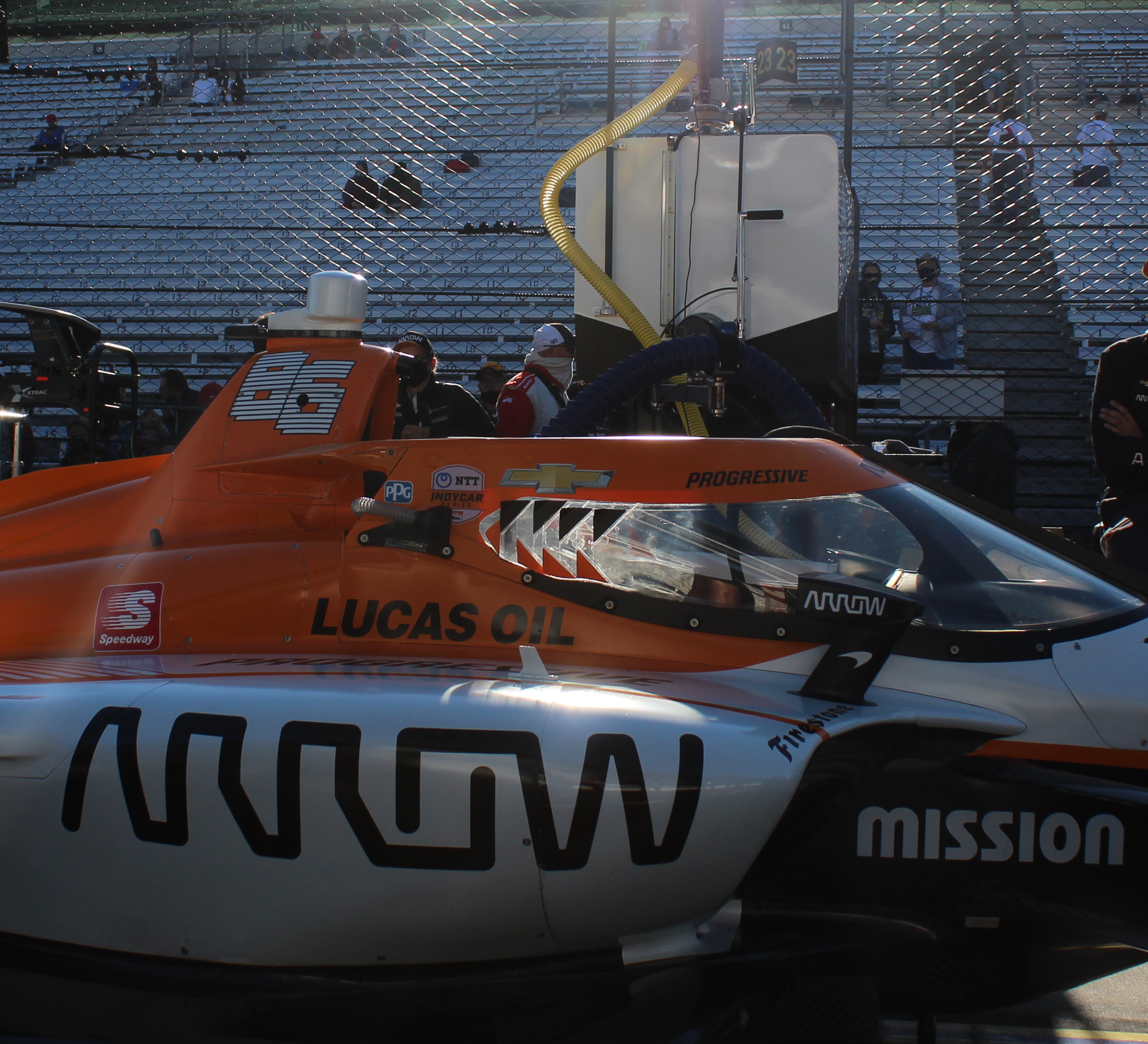
IndyCar is a major American race series for open-wheel cars. Races happen on different kinds of tracks, and teams tune the cars to match each track.
Place
Mealy-Waquay
The transcript says “Mealy-Waquay,” but it’s probably the name of a race location that got spelled wrong in the captions. The key point is that the host is flying in early for the IndyCar weekend at that track.
A practice session is when teams get time on the track before the main event. They use it to figure out how the car feels and adjust so they’re ready to race.
Penske Entertainment is the company that owns and operates IndyCar. The host uses it to explain why the series is cautious about announcing engine-regulation details until they’re fully locked down.
Homologation is the official sign-off that race rules and parts are approved. It’s how IndyCar decides what teams are allowed to change and what has to stay the same.
A “service period” is a set time window in the rules where teams are allowed to use a specific approved setup. During that window, some changes may be allowed while others aren’t.
It’s an engine that has six cylinders arranged in a V shape, uses two turbochargers to make more power, and has a total displacement of 2.4 liters. The key point here is that IndyCar’s engine package is based on this twin-turbo V6 design.
Road America is a well-known race track. The cars go very fast there, and the host is saying Turn 1 is the most exciting place to watch because you can see them coming over a hill and then diving into the corner.
“Crest that hill” means the car goes over the top of a bump or hill. The car’s behavior can change right after the crest, especially when it then has to head downhill into a corner.
“Exit curbing” is the curb at the end of a turn. Drivers sometimes ride over it to stay on the quickest path, but it can make the car bounce or feel unstable.
A “kink” is a quick bend in the track. It’s not a big corner, but it can still be fast and tricky—here the host is saying another part of the track is more exciting to watch.
Qualifying is when drivers try to set the fastest lap to decide where they start for the race. The host suggests going then because the cars are set up to go as fast as possible.
Lowest fuel means the car has less gas onboard. Less weight usually helps the car accelerate and turn faster, which is why it matters most when drivers are chasing their best lap.
This is the battery-like part that stores energy so the car can use it later. In a race car, adding it can change weight and balance, which affects how the car brakes and turns.
The motor-generator is the electric unit that can help drive the car and also recharge energy when you slow down. Because it’s working during braking and deceleration, it can change how stable the car feels entering corners.
A braking zone is the part of the track where you slow down before turning. If the car’s braking behavior changes (for example, because of the hybrid system), it can be harder to brake as late or as confidently.
Tires are what actually grip the track. The host is saying the newer cars can make it easier to overdo the grip, so the car can slide or the tires can get destroyed faster.
A chassis is the main “frame” of the race car. It’s the foundation that other parts attach to, and in IndyCar the rules can limit how much teams are allowed to customize it.
Car
Dallara DW 12
The Dallara DW 12 is the main race car chassis IndyCar teams use. The series controls most of the design, so teams can’t freely change everything—they mostly work with approved parts and options.
This means teams have to use parts that are officially provided/approved by the series or manufacturer. It limits how much teams can experiment or build their own unique setup.
Car
I R 28
The “I R 28” is the next IndyCar race car chassis that teams will move to after the current one. The key point here is that the series will still limit what teams can change, even though some parts may carry over.
Magnesium and aluminum are metals used to make wheels. The lighter the wheel, the easier it is for the suspension to control the car over bumps, so changing wheel material can change how the car feels.
OZ is a company that makes wheels. In this IndyCar discussion, it’s being named as one of the wheel brands teams have been using before the new wheel rules take effect.
BBS makes wheels. The host is saying the next required wheel spec for IndyCar will come from BBS and will still be used when the newer chassis arrives.
Term
arrow lip
An “arrow lip” is a specific wheel-edge shape/feature that can influence airflow around the wheel. The host notes it helps the car aerodynamically, and that it’s being removed on the new front wheel design.
An aeroscreen is a protective clear shield above the driver’s head in IndyCar. It’s there to help keep debris away and improve safety in crashes. When people talk about “the aeroscreen car,” they mean the newer safety-era IndyCar setup.
Scott Dixon is a top IndyCar driver. The host is arguing that he’s the best of his generation based on how many championships he’s won. The discussion is comparing his achievements to another driver’s streak.
A.J. Foyt is one of the most famous IndyCar/open-wheel drivers in American racing history. The host is using him as a record-holder reference point for championships. The idea is: how many titles would it take for Dixon to match or beat the all-time best?
In IndyCar, “hybrid” means the car can save energy and then use it later to help with acceleration. It’s not just a normal gasoline-only setup—drivers and teams manage when that extra energy gets used.
“DW12 spec” is IndyCar’s specific ruleset for a particular generation of race car. Think of it like the official blueprint the teams have to build to, so everyone’s cars are comparable.
“Manufacturer arrow kits” are IndyCar bodywork/aero parts that differ by manufacturer. They can change how much grip the car has and how it behaves in corners, even though the series rules still keep things fairly controlled.
Chevrolet is mentioned as the car’s engine manufacturer in IndyCar. Different manufacturers can have different engine behavior, so teams may need to adjust how they set up and drive the car.
A universal kit means IndyCar gives teams a more standardized body/aero package. That way, teams can’t gain huge advantages just by designing totally unique aero parts.
Custom aerodynamics are special shapes and parts on a race car that are made to help it handle better. If the rules take that away, everyone has to use more similar aero setups.
Downforce is the “push down” from the air on a race car. More downforce usually means the tires stick better in corners, so the car can go faster and feel more stable.
Term
arrow screen
“Arrow screen” here appears to refer to a specific IndyCar aero/bodywork element introduced as part of the arrow kit era. It’s discussed as a first-year change, implying it affected car behavior and competition once teams adapted to it.
They’re talking about how you win a championship—whether it’s by dominating races, being consistently near the front, or scoring in a particular way. That affects how we compare drivers from different years.
Alex Palou is an IndyCar driver. The host is saying Palou is currently driving at an especially high level, which makes the comparison to Scott Dixon interesting.
Kyle Kirkwood is an IndyCar driver. The host mentions him as someone who could potentially join the conversation about the very best drivers right now.
“Push to pass” is a button/feature in some race cars that temporarily gives you extra power so you can overtake. The rules control when and how it can be used, so teams can’t just change it however they want.
“Race control” is the officials’ command center during a race. They watch what’s happening and make sure rules are followed, including controlling certain car features.
Engine control modules are the car’s main computers for the engine. They help control things like how high the engine can rev, and the rules can restrict who is allowed to change them.
In motorsport, “compliance” means meeting the technical and software rules set by the sanctioning body. The discussion here centers on which onboard systems teams can modify versus which must remain controlled by manufacturers to stay within those regulations.
Chip Ganassi Racing is a well-known IndyCar racing team. The host is saying that the team’s whole setup has been built around a specific driver for a long time.
It means the team doesn’t just build a car once—they keep improving it and adjusting it so it feels right for the driver. The host is arguing that leaving that kind of tailored setup means starting over.
Alex Polo is an IndyCar figure the host credits with results. The point here is that results don’t necessarily mean the whole team is built around him the way it is for Scott Dixon.
Person
Pato Award
This sounds like the host is talking about Pato O’Ward, an IndyCar driver. The key idea is that the car and team have been set up around him, so switching teams would mean giving that up.
Person
Aaron McLaren
The host is talking about a rumored driver move involving someone named “Aaron McLaren.” The transcript text looks uncertain, but the idea is that the driver would be considering switching teams.
Teams often have a main driver they focus on first, and another driver who gets support second. The host is saying that even if a driver is fast, the team might still be organized around someone else as the top priority.
Andretti Global is a racing team in IndyCar. The host is comparing it to staying with the team that’s already built around you versus joining a new team and having to rebuild everything.
A charter is like a guaranteed spot for an IndyCar team to race. The discussion is about rules that restrict how many extra (non-chartered) cars can show up at most races, which affects how valuable those guaranteed spots are.
The hosts are talking about IndyCar’s planned rules for 2027. The key issue is whether teams without guaranteed spots can run extra cars, and the host thinks the decision is poorly timed.
Non-charter cars are race entries that don’t have the guaranteed charter slot. The host is saying that starting in 2027, teams without charters would be blocked from running extra cars at most IndyCar races (with the Indy 500 as the exception).
Car
DW12s
The DW12 is the main IndyCar race car chassis that teams have been using. The point here is that teams could run extra cars using the older DW12 before it’s replaced, which would help them make more money.
Term
NXT
NXT is a feeder series where younger drivers race to develop and move up. The host is saying teams might use extra funding to support those drivers instead of running extra cars.
LIVE
Welcome to the Marshall Pro podcast in your week in IndyCar listener Q&A.
Hey, we're getting back to racing after a rare weekend off.
Good old Expel Grand Prix this weekend.
Flying into Mealy-Waquay, get in super, super early Friday morning about 2 AM.
And if we sleep for a little bit and then drive up, it'd be a busy Friday morning and then early
afternoon. And then we will get busy with the practice session and then get rolling with the
rest of the weekend. And good old Road America. So looking forward to seeing hopefully a decent
amount of you there. Good friend, Christy Pradena, one of the leaders of the Prude Listener Group,
organizing a meetup, at least one there. So if you haven't yet, would strongly suggest
sending an email to pruderox at gmail.com, P-R-U-E-D-A-Y-R-O-C-K-S, pruderox at gmail.com.
Join the group and you will absolutely be clued into all that's happening within the group this
weekend and then also the little meetup as well. Gonna jump right into your questions here in a
second after saying a big thank you to our friend Jerry Siddoth who puts together the questions
each week to our show partners, the Justice Brothers, makers of mighty fine automotive chemicals,
lubricants, cleaners and whatnot. And then also torontoemotorsport.com,
torontoemotorsports, you can certainly find a lot of great modern racing memorabilia
on their site, IndyCar, sports cars, F1, you name it. We'll mention for some of you who might be
doing a little bit of fun back to back. I'll be staying over heading out to New York, doing some
Walkins Glen IMSA so might be able to see some of you there. And gonna try and get back here as
quickly as I can so potentially flying home Friday evening. If everything goes as swiftly as possible
there at Walkins, it's got a lot to do at home. It's been a many of you are really kind to ask
how things are going with my wife and just say that it has been a constant kick the nether region
over the last month plus. Man, share the stories some other time in the future. I can just tell
you this, not every doctor is your friend. Not every doctor has your best interests at heart.
Not every doctor is kind. So seeing my wife in tears today over treatment from now former doctor,
you just want to destroy the world. So hopefully doing questions here will be a little bit of a
change of pace and a positive reprieve from all that. So but thank you again for everybody who's
constantly asking really sweet things. Why don't we open the show with improbable Todd at improbable
Todd. This is we honor the memory of Dennis Reinbold. Let's celebrate the tenacity and quality of
his small independent team. What are the factors that have made dry and Reinbold racing a continual
threat for Indie victory always capable of contending against the sports big dogs?
That is a wonderful question, Todd. Few things stand out. Really what has made continues to
make Drone Reinbold excellent leadership is one of them. Dennis certainly being I'd say top of that,
but next to Dennis, not behind, not beneath, but next to Dennis. There have been some really
important people on the business side, the marketing side, the sales side, organization side,
the DeBoard family, Eric and Brett, Chase Selman is someone who's really taken on a big role there.
And so while Dennis is and has been the biggest, most identifiable name, the leader,
he like every great team and I do mean great team. Never that single person. It's always a really
strong upper tier of folks running all the different important areas. Then I would look to the crew,
the crew extending out to the engineers and such. There would of course be some evolution
from year to year, but not a lot. This isn't a place where boy, just different folks blowing
through constantly, therefore constant change, therefore constant changes in quality as variability
becomes a problem. This is a situation where really strong engineering, really strong crew,
very tight knit, decent amount of them full time employees or mostly full time,
but the standout part here to close on this and we're going to talk a little bit more about
Dennis and Amamo with the next question. Thing to stand out here just to, I appreciate.
So Indy 500, right? You always get 578 extra entries, 10 extra, whatever it might be,
a bunch of Indy only entries. And for the largest teams, they have some pretty good resources to
staff an extra car or two. They might have a sports car program and can pull over hard
core veterans from there. They have elite resources to staff those cars. For a lot of the others who
don't do it that often or one year they'll have an extra, next year they won't or maybe a small team
that's just kind of getting going a little bit, a bit of a traveling supply, maybe is the best way
to put it. Traveling supply of Indy 500 crew. Done it however many years and hey, okay, I know good
old Fred or Steve, Mike, whatever. And yep, cool. You know, you'll change a tire, you'll do air jack,
you'll be a mechanic, you'll do whatever. And they have experience and they have capabilities.
For whatever reason, maybe not at the upper echelon of the talent level, maybe at one point in time
they were and for whatever reason, gotten older, gotten tired, whatever the reason might be,
no longer with a big or highly competitive team. Month of May availability, do some other things,
bounce around, kind of crew for hire. Thing to understand about dry and rye and bold is
in so many instances, whether it's the people putting their hands on the car from a
crew standpoint, mechanical or engineering stands,
some really high caliber people committed and remain committed to dry and rye and bold.
So whether we're talking full time or they know for sure where they're going to be each May,
this isn't so much the constant evolving band of folks that blow through.
And you just kind of take who you can get to make up that staff of 12 to 15.
It's been a pretty consistent thing. So that right there is why dry and rye and bold year
after year has been so darn good. It's because they have excellent people, even if it's a quote,
Indy only scenario, and they come back year after year or they're with the team full season.
That has been the reason why they stand out compared to others who just pop in and out
at the 500.
Jeff Zerneski, it's a sad news about Dennis Ryan Bold. Does the team have a succession plan to
move forward? It does. So the the boards that I mentioned, Chase Selman,
Dennis's fight against cancer, you know, I had a long, long chat about this early in May.
He looked like hell, lost a lot of weight, sounded like hell. His voice was really low and soft
and gravelly. And you know, just speaking to him out of concern and said, honestly, I'm doing
really well. I'm on the other side of having a lot of concern.
I'm on the other side of having gone through the worst part of this. So things are looking up.
And so some of that might have been a little bit of a brave face. But
as I understand it, things took a turn for the worse and took a turn somewhat quickly.
Just sharing that for a reason. And it's because this wasn't a situation where out of nowhere,
Dennis had been in perfect health. And then all of a sudden he was gone. He'd been fighting cancer
for a couple years. And so that's the thing to know the business infrastructure in and around him
solid, dealing with what Dennis is going through. This was not something where even though it's his
name on the building and he is the one and most identifiable person, it's not a case of, thankfully,
that with Dennis's loss, all the plans for the future and all the dreams go away and all the
potential goes away, not the case at all. And this is something they obviously had to think about
and prepared for ahead of time. So Dennis certainly fully supportive of the team moving forward.
The DeBoard family that I mentioned, their expertise in the marketing sales promotion side.
Really important here because this is the thing that gives Dr. Ryan Reinbold racing a longer runway.
Known for a while that been able to identify and bring in an investor, someone who wants to do
big things, bigger things, acquire a charter or become a owner co owner of a charter wielding team.
I've mentioned here in the podcast and in print that the discussions, negotiations,
possibilities between Ryan Reinbold and Hookos hauling a racing have been ongoing.
Dennis's loss certainly doesn't make things easier, but it doesn't halt that possibility,
those discussions. The same time, I think, Hookos hauling her is the most well known team
within the paddock, within the IndyCar world in general, as really being open for business,
looking for investors, co owner, however, whatever it ends up looking like, they're the
number one team in that regard. And so as a result, anywhere from four to five potential
investors have been talking with them. So not just Dr. Ryan Reinbold, there are others, but
it is good to know that the Dr. Ryan Reinbold conversations are continuing. And I would say
if for whatever reason a deal were not to be done there, would say that it wouldn't necessarily have
to be the only team that might entertain taking on significant investment and alignment partnership,
whatever it might be called with Dr. Ryan Reinbold. And in the absence of that, I feel very
confident that between Jack Harvey and the sponsors he's been able to build great relationships with,
whether it's Connor or whomever, hopefully, but between the team, the sponsors they have been
able to find and currently have, and some really good drivers who also have the ability to bring
sponsors, even if it's just them running indie on their own. I feel like that is certainly something
they are capable of doing. All of that, Jeff, just leaves me in a very positive place, despite the
really sad loss of my friend and many people's friend Dennis, and I really love Dennis and
the relationship we had just meant so much. So just so damn sad knowing that he was working so hard
to get the team back into full-time status. His son, Derek, sent a really sweet note after his passing.
So between Dennis's family and legacy there and then also his racing family,
there's a lot to go forward for us to really, really positively remember him and celebrate him
in the future. Why don't we go to Vincent Martinez and Taylor Solmos? You always also asked about
this. Didn't mean always that. You're always asking about this, Taylor. Taylor also asked about this.
Says, sad news about Dennis, really seemed like a nice person. He says, hey, has the
silence regarding the new chassis, does that mean it's underwhelming an appearance?
Says, I would have thought the 8500. That would have been the perfect place for a launch,
or will this be another deadline delay? IndyCar project seems to encounter regularly.
And Kindly is so many of you do, closes by saying all the best to Mrs. Pruitt and to you, and
he calls them the house lines, but our two putty tats. Okay, asked and I'm told that in the coming
weeks the visuals of some sorts of the 2028 car should be shared. Now, I apologize, because
well, I'm not the one doing it, but maybe I'm the communications device responsible for it. But
I'm starting to feel for those who are familiar with the old peanuts cartoons,
I'm starting to feel like Lucy pulling the dang football away from Charlie Brown here. Oh,
yeah, no, it's definitely it's happening. Nothing. I'm told it's going to happen in the coming weeks.
My guess since we have a race this weekend, weekend off, and then mid Ohio the following weekend.
My suggestion would be in the gap between mid Ohio and Nashville, which is about two weeks.
And I do realize that there's a decent amount of World Cup going on and whatnot, but truly it's
kind of a big IndyCar void. If you wanted to infuse interesting things into the world of IndyCar,
boy, I would probably try and do that during a real kind of quiet time for everything else going
on in IndyCar. We'll see. Can't tell you whether that's the timing intended or not.
Can't tell you whether the ongoing delay has anything to do with the looks would say that
there's probably a bigger desire here to get all of the details waiting to be finalized,
truly finalized. It's going to happen. Everything's agreed to. There's no loose ends. Once that
finish line has been crossed. Now let's show the thing because we all agree on all points
that it's not only happening, but here it is. I think that's what's going on.
I would say I'm aware that on the engine side, engine regulations, I'm told they're now finally
really, really, really close to being done, which is different from being close, but still a decent
amount to work through. I think that is probably the most likely scenario, Vincent, of let's make sure
everything is locked down before we announce something. IndyCar, since it was sold, IndyCar,
since it was bought by Penske Entertainment has been absolutely unwilling to do anything
speculative, announce anything before it's a million percent concrete. They are super wary in
that regard. That's why this feels a lot like that approach to things. The motors, by the way,
and when we're talking about the engine regulations, we're not talking about the big ticket items.
It's the service period. What's open for homologation and in what timeline? Every three years, every
five, every two. It's a lot of the really, truly small things. The motors themselves,
I feel like I might have sure I've mentioned this before, but if not, I'll just share it.
The motors themselves are done. It's the, was supposed to go live in 2023 and actually before
that, but these are the same 2.4 liter twin turbo V6s that Chevy and Honda built and tested.
The same. They're done. They have been done. They've been of the amount of those that were made,
which was not a huge amount, but those have just been mothballed sitting, doing nothing
because they never came to life. That's the motor that's been chosen.
Was a lot of confusion on what it was going to be. Was it going to be half new, whatever percent new
common item, right? Will all the blocks be spec and who knows? Maybe there's been a decision to
do some common items that are not too expensive, can be somewhat easily mass produced.
But as I understand really and truly the motors that some of you might have seen or heard testing
on the IMS road course, what April ish of 2022? It's those. So not a case of we've finished the
engine regulations and now we need to go start making them truly from scratch. Could there be
some slight modifications to those kind of already existing motors? Very possibly, but I would not
think they'd be huge changes required to them if that were to happen at all. So the chassis themselves,
the first two prototypes of the IR 28, the Dallara chassis have been sitting at Dallara on
Main Street in Speedway, Indiana for a month and a half to I don't know if they got there late
April or early May, but they've been sitting there. I think I'm not sure which brand will
we'll see what goes out testing for the first time, but I don't know if it's going to be the complete car.
No, it won't have the new 2028 hybrid because that certainly is not done by any means. But I don't
know if it's going to be a Chevy or Honda in the first test car just to do some validation runs,
make sure everything works. Hearing there's question marks as to whether the 2028 gearbox
will be on that car, whether it will just be more or less the existing drive train with the
2.4 liter motor powering it, don't know, but realize the question here was when will we get to see the
new car? Told it's not too far away. There was the goal stated of it testing at the end of July
of a couple of conversations I've had with folks this week who might know. They have suggested
that that timeline might not exactly hold, but I don't have any info to say it's going to be
pushed back a day, a week, a month. I don't know, but lots to learn here. Final thing I'll mention
is apparently everyone's under some sort of NDA. You go to the manufacturers and say,
hey, what could you tell me? And they say, nothing. Nothing. We can't say a peep. So
of the things I'm able to learn, yeah, requires a little bit of interesting sourcing, but
fingers crossed, we'll get to see the car Vincent before too long. Ryan Hagemeyer,
how you doing, Ryan? Says, well, sweet of you, compliment about maintaining my coverage over
the last several months. My question is about the upcoming race at Road America. What's your
favorite spot around the track to take in the action and says, you got to pick just one? All right,
so I will pick just one. But I probably won't because that's not my personality.
And I guess I answer it that way for one reason. If you have been to Road America before,
seen it a couple of times at least, you've probably been to some fairly familiar spots
that everybody goes to really fun, popular, etc. I don't want to send you there. If you've been
to the track before, I don't want to send you there. My favorite tish spot, and you can't get as far
down as you want to from spectator area. So just saying go down as far as you can. But drivers left,
turn one. The cars come bombing down that long front straight,
crest that hill, it's downhill run towards turn one. And they absolutely fly through that corner.
So the coming at you view is phenomenal. The tail away tails away, crashing over the exit curbing,
sometimes running too late bouncing around. It is wild. Now I know most folks when they think of
like crazy speed and things to witness, you think of the kink down in turn 11, and it is something
to witness. I don't find it to be nearly as dynamic of a visual as turn one. The kink,
you can't really get on the outside. There's no real spectating spot out there. It's all in the
inside. But yeah, if you could only go to one place, and it'll get a little old after
five, 10, 15 minutes. But of every spot on the track, that to me is the most dynamic,
the craziest wildest speeds. And if you had to pick a session to do that, do that during qualifying.
Because this is where as gripped up as the cars are, as lowest fuel, as maximum attack,
that is truly something to behold. If you haven't been to the track before, I would say somewhere
in the turn five, turn six area, turn fives, fun party, bottom of the hill, everyone cuts that
hard left. Folks tend to make mistakes, run into each other, it's a bit of excitement, big crowd.
You want to just have fun. It's a really great place to go. You go up the hill,
turn six, before the bridge, some really beautiful viewing right there. So
looking back down on five, the run down into five, coming out of four, you can see across to the main
straight a little bit, you can look over to your left and see cars firing up out of Canada
Corner, really just cresting the hill there, turn 13 and whatnot. So that's maybe the best all around
viewpoint. Not nearly as dynamic though. Last thing I'll mention, and again, realizing whether
you're first time, multiple times, the inside of the carousel, midway point between turn nine,
turn 10, closer towards the exit of the carousel before they get the car pointed straight and
rock it down and then go to the kink, like that's really cool to watch if you're a photographer,
or just love filming things with your phone or whatever, some really cool visuals there,
huge wall of the greenest of green trees behind at a slow shutter speed, you get some beautiful
blurring of that behind you, but you also get to see drivers fire through there, really dancing on
the edge of adhesion quite often. And that's a very cool kind of intimate setting that I really
enjoy. And I don't, there are folks who head down there and camp and enjoy it. But I always think,
why aren't there more people here? Because it is so cool. And it does feel like a bit of a
private viewing session. So if you'd only pick one outside, drivers left turn one. If you want to
go have fun with people turn five, you want the amazing view of the best multiple vantage points,
turn six, looking back, looking all around. And then if you want to have some really cool,
similar to turn one, but in a different way, that halfway through apex to exit a turn 10 from the
inside, go see that for sure. Grant Stouter, how you doing, Grant? MP, if you could smite one thing
from the world, and it had to be any car related, what would it be? Would it be no more mailbag
questions about Cleveland, Festivus themed questions, owner's ability to hedge and dodge
questions? I'll come back to what feels like just a layup of an answer. And I'm not saying it
because it's the obvious thing. It's just, it's real. It's just also seeming like everybody's
saying it now. And that's hybrid things that the 100 plus pounds that this energy storage system
and motor generator unit bring to the quality of racing is still being sought.
We know that it ticks a really big marketing requirement for one of the two manufacturers,
that being Honda. We know Chevrolet, well, I shouldn't say we know. Chevrolet's never said this
publicly, but we know internally they don't particularly, they're not motivated or moved by
it. If it went away tomorrow, they would not object. I love seeing race cars
look like they are just flirting with danger. Drivers hailed as just
the most heroic of heroes. How can they possibly hold on to this
lightning bolt of a vehicle? And on the ovals, it's not so much of an issue, right? They're always
going to be quick on ovals, so that's fine. It's more the road and street courses where this weekend
in particular, been there with the fastest of cars and they look terrifying and the drivers who
can extract that terrifying speed are legends. They are mythologized by those of us who saw
them do those things. And I'm not saying that today's best aren't deserving of the same mythology.
But if you have seen what the cars did before and then you see what these do,
you realize that they're different things. If you've never seen the ones before, then it doesn't
matter. There's no context, no, there's no attachment to the cars of old. So I don't want to make this,
yeah, say back then it was all better, see? Just saying that the addition of the hybrid
has dulled the performance of the cars enough in the corners, under braking, the ability to attack
braking zones, fly through medium to high speed corners in the same capacity that has been
surrendered. So just going back to the first half of 2024 specification,
drivers by comparison, I don't know if I've ever heard any of them say they love this car,
but they loved that version of it way more than this one because they didn't
have to be afraid of trying too hard and the car just falling out from under them or destroying the
tires. So yeah, it's that and it's not, you know, I'm not tech averse on the opposite on the guy who
loves racing technology. Just for this purely from a wanting to see the proverbial gladiators be able
to battle at the absolute highest, highest level of their capabilities in machines that allow them
to be their full gladiatorial selves. Getting rid of the thing that has added 100 plus pounds,
that's the thing that I want to go away. The fact that it's the quote hybrid unit is a coincidence.
It's not that the hybrid itself is the enemy, it's the weight and the negative knock on effects
it's had. So that is my answer and it's probably not very original.
Darren Foster says with the new chassis coming, do you think we'll see 33 cars at Indy or will the
cost of the new equipment make it harder for small teams and one off entries to show up?
Says hope to bump into you. Road America this weekend. I share the same hope, Darren.
Should be no issues with having 33 if not 34 35 at Indy gone through brand new equipment change over
more times than I can count. And there's been a minimum of 33.
If not more each time. So if you think about the 25 full time entries, which we'll carry over next year,
you think about the many teams that do additional entries for the 500 should get you up to at least
29 30 possibly dry and rind bold.
Right should be there. So we should be all good for next year. Well past 33 then the change over
happening for 2028 and would say unless there's a change that I am unaware of.
We'll have same or same ish number of full time cars plus the two additional manufacturer
charter entries. So take those two. The dry and rind bold team has every intent to continue. So that
would involve getting new cars and all the other teams will be doing just the same by ordering
plenty of cars. So I don't anticipate having fewer than 33.
Whether it's just 33 or is it 34 35 that to me is the real question. But I don't see there's
nothing that leads me to believe there will be an issue unless a team decides to fold.
But at that point, I would say there's enough other teams that are expressing an interest to come in
or potential buyers investors that I've mentioned almost enough to you know,
four to five fill one whole hand worth plus in the NXT teams that could be interested in stepping up
if there was an opportunity to buy charters. So
it's not a concern that I have. I just don't maybe to your overarching point there and think
we're going to be talking about and 49 cars showed up for the 2020 at Indy 500. I don't think it's
going to be a crazy number. Randy Maynard, how you doing Randy? Back in the day teams either made
their own chassis or bought Reynards marches, Lola's etc. And then made them their own with new
and custom bits. I'm wondering how much lobbying teams got with the new chassis around certain
things they wanted in the new car. Nothing. So I'm not saying zero input was received or even
acted upon, but I am not aware of anything with a new car where teams have lobbied for been given
some new ability to really individualize or personalize their cars with hey, we're going to do some
little aero stuff here on our own that we're allowed to or suspension things on our own.
That is the way it used to be for sure. If not big things. I'm not aware of any of those freedoms
being granted with the new car. If that has changed, then I am totally unaware of it. So no, I think
we're truly Randy looking at a continuation of the Dallara DW 12 model by I don't mean the model
itself, but the actual regulation model of you buy it, you use it as delivered. There are some
options that come with it, right? You could put this on or take that off. But these are all factory
purchased parts in the only approved ones to use. And I do think it actually goes one step
farther in that looking at ways, are there any areas of the DW 12, any things that we could
actually carry over to the 2028 car, the I R 28. So I don't believe there's much.
I know wheels, for example, teams are getting brand new wheels next year, a year before the
new chassis comes out, going to be trading the material from magnesium to aluminum.
There's been no spec vendor for what teams are currently using been a blend of OZs and
BBS. I think OZ is probably the dominant supplier. But the new wheels that are coming that everyone
has to buy for 2027 will indeed carry over to the 2028 car made by BBS. And in a change there,
they're removing the arrow lip that you see on the front wheels that do indeed help the car a
little bit aerodynamically. But yeah, so that is one item, for example, that for sure will carry
over once the new car arrives. JJ Gertler says, Mark Dismores, Kelly Racing, IRL Dallara,
that ran twice at India's for sale and bring a trailer. Because I can chip in 150. Do you think
that's too much? Oh man, having worked on a number of those IRL Dallaras, the IR97 updated to 98
spec and whatnot, but I quite like those. So yeah, I realize they do not hold much value.
But yeah, this is something that, yeah, I don't know if I have $150, unfortunately to spare.
But I'd say get that bid in JJ, you absolutely deserve one.
All right, the last couple episodes have been long. And it's just because I had a lot to get to.
I'm going to try and not do that this episode. So let me try and fire through
a couple more items here. And then we will say farewell.
Uh, Lynn, you doing Lynn, at Lynn underscore IndyCar.
Says my buddy and I debated Dixon versus Polo. I say Dixon is way better in his career
due to the different cars he won in. He says it's Polo because he's won three straight championships.
Dixon never went back to back. I reminded him Polo's only driven this modern 2020 era
aeroscreen car. What do you think? Well, that's an awesome debate. And I love the fact that you
and your buddy are having it. Would say Alex has four championships, earned those in a five-year
span. So that's pretty insane. Would say that once he reaches, if he reaches five or six,
yeah, we do need to start talking about as I have and some of us have who've
been there for all of Scott Dixon's American career. I mean, he's the modern goat, period.
There's, it's not even a, there is no debate about that. Not my French fry, Sebastian Bourdais,
not Dario, not PT, not again, just not. Scott Dixon, the greatest of his generation,
greatest IndyCar driver of this new millennium. Just, it's a, it is what it is.
Polo though, if he can get to six, I mean, that's a thing we're, admittedly, we never thought that
was going to happen. Still needs to get to seven for Dixon to match AJ Foyt and obviously to eight
to take that all time, but no one ever thought anyone was going to get close to AJ like that.
The fact that Dixon has is just wild. And then we never, ever, ever thought anyone would get
remotely close to Dixon. Granted, Dario, when he retired, he was up, right? Three times,
5500 winner, four time champion. After he retired, Dixie obviously added three championships.
Dixie was a three time champ when Dario retired. Point being, Dixon has ascended to that spot.
Dario won't argue it at all. No, I mean, Bourdais won't argue it at all. And it's not because
they're wanting to offer false modesty or like truly they know Scott Dixon is the goat.
Your buddy does have a great point and it doesn't take anything away from Alex because he hasn't
done this in different eras, in different cars and specifications.
Obviously, he's won championships without the hybrid, has won with the hybrid. He's the only
person to win championships with the hybrid to state that correctly, I guess. But you look at
Dixon's adaptability. That's the wild thing to ponder. So you look at what he did winning
that 2003 title, similar to Palo in doing it, not immediately, but almost right off the bat in his
IndyCar career. You then look at what he did to follow that up. Right? You think about him coming
in, getting to Chip Ganassi racing and being able to win that championship just right at the
onset of his career with that team and his first move to a good team, big team, started out with
PacWest, wasn't there for super, super long, was able to get a win, though, like just blew people
away. And this is tail end PacWest when they'd really lost the things that made them a powerhouse
at one point in time. But you think about him coming into Ganassi after starting the 2002 season
with PacWest, moving over to Ganassi after they folded after about three races. And by 2003,
he's a champ. I mean, that's pretty wild. So think about what he did there, right?
Adds the 2008 championship and wins the Indy 500 in a different model, much more highly evolved.
DeLara, he won that title in 2003 in a G-Force, right? So different brands.
Obviously, Dario was, that was a pretty hard nut to crack for sure. But does indeed get ahead of Dario,
wins that championship in 2013. Dario has that terrible, terrible close to his career there. But
that is in the kind of normal DW12 spec. 2015 first year of the manufacturer arrow kits with
insane downforce. And this also, with the team having switched to Chevrolet from Honda, wins that
championship, right? So that's pretty wild. Then you look at what he does in 2018, first year of the
universal arrow kit. So done away with the insane downforce and custom aerodynamics. So insane,
insane there for what he does in 2018. Also, by the way, having returned to Honda,
then adds the 2020 championship as well, first year of the arrow screen. So again, I realize that
there was a decent gap between his 2003 and 2008 title and a somewhat decent gap again between 2008,
2013. But you look at what he reeled off. Stock Dolara, craziest arrow ever Dolara.
Brand new universal arrow kit spec bodywork Dolara. And then first ever your arrow screen Dolara.
Chassis dynamics thrown off a little bit. Not just wins the first three races of the year,
and I think adds a fourth in there as well, but leads the championship after every single race.
So the manner in which championships are earned does matter. Can't I can't argue that at all.
So I'll just close on this. Who's better? If we're talking achievements. Scott Dixon, period.
Who's better in terms of talent at their peak? Knowing that Alex is at his peak right now.
Scott Dixon at what 45 ish? Realize that he was a champion last at the age of 40 ish. But
2013, 2015. Scott Dixon. I'll take Dixon every day. I've seen that against some monsters, right?
Uh, it's not just the cars you're in. It's the eras. It's your competition.
Not as if Alex has had easy time to these titles, not at all.
But for talent and what I've seen Scott Dixon do at his peak,
I sure would love to see him and Palo go head to head. Because the only driver I can think of
right now, other than Kyle Kirkwood, we'll see if some others prove that they deserve to be mentioned
in this. But the only driver I can think of who is currently competing in IndyCar,
who could go head to head with current peak Alex Palo is Time Machine Scott Dixon.
Ten years ago, Scott Dixon. That guy scared the daylights out of everybody.
How folks today are looking at Palo. How do you solve this puzzle? This is the puzzle that can't
be solved. Dixon, that's who Dixon was and often against a deeper stack of murderers.
So with another championship or two, with some stiffer competition to get to those championships,
right? Alex has been gapping people like pretty hard with a more robust
amount of contenders to have to beat. This is where Palo enters that conversation. But I would say
you're on to something here with Dixon. I don't know if I'd say way better,
but I would say that how you win championships, who you win them against, your ability to do it in a
array of eras, different machines, all those big differences to overcome them and excel
in all of them and amass six championships in six very different cars against
the Canons, Frank Eadys, the Indreddies, the Hornishes, the Deferent, the Run Down the List,
right? The Montoyas, the Castronevases, the New Gardens, the Vists, the Powers and this like
keep going, keep going and keep going. We're a few years away from putting Alex into that
conversation, but it is achievement based and I hope he has more people that make his life
more difficult to get to those championship victories because that's where the conversation,
that's where you get codified is like, yeah, goat, absolute goat. Where do we go from here?
Andrew Miller. So I was reading the Wikipedia page for the Renaissance Center in Detroit
and only then realized the current state of that building and the fact that a major
reconstruction effort relating to the building is kicking off later this year. I presume Penske
wants to continue to host the Detroit GP downtown. Any word if a new location entirely or some sort
of revised layout will be necessary. Need to put out a little story about this interview,
Detroit GP Chairman Bud Denker, maybe two weeks ago about this. Answers to it weren't super pressing, so
apologies for not getting it out sooner, but said, yeah, for some of where the raising,
our AZ, ING, the raising of the building will take place. A lot of the placement of the things
that are getting torn down will indeed occupy where some of the current track happens to run.
So will be changes coming. I do need to listen back to the interview and find out whether he said
next year's race will be okay, but the year after won't, or if they're going to need to indeed revise
the circuitry for 2027. Daren Kings. What are the checks and balances of the teams not messing with
the onboard computers to trick them into full time, full throttle, push to pass and silly things of
that nature. So there were some significant, if I think I remember correctly, changes applied after
the Penske push to pass contra taunts in 2024. So the ability to instruct basically a
blow by and allowance for no real deactivation of push to pass, which is something that is done
from race control, there is the ability to basically say, no, it's always going to be on
that can be done in the software. That was changed, I believe, so that teams are no longer allowed to
go in and manipulate that themselves. That's other than that, the only real onboard computers
that govern anything that would need to stay within compliance would be the engine control
modules, ECM ECU, whatever a manufacturer might call theirs, things like setting of rev limits and
such. But that's not an item that teams are allowed into. That is something that both manufacturers
control heavily. So getting into the engine control modules and making any changes there,
that is not something that teams would be allowed to do. Norm Harvey says, what are your thoughts
about Scott Dixon in the silly season? Do you think he will drive with Gnasi, retire from racing,
but stay with the team in a technical role or drive for another team?
Great question. Gotten that question a lot. Can tell you this, the answer ultimately lies with Scott.
Thing you may or may not know, this has been a thing for a long time, but realize that not
everybody knows, some folks are newer fans, but Scott is famous within the IndyCarPatic for
signing very short deals, one year deals, maybe two, but he's probably had more contracts than I
think. And again, I might try and remember to ask, he might have signed more contracts than any other
driver in IndyCar history and simply because they've all been just super short duration. I don't know
the preference or I don't know why that preference has been what it is, but he's just well known
for signing a heck of a bunch of one year deals, maybe two. If there was a time where he had longer
deals than that, cool, but reputationally, that's what he's known for. Know that there's been some
speculation of late that negotiating window has passed or lapsed or something, and that should
mean that he's on the move. In the questions that I ask to people who I feel confident would know,
they've told me there are no vacancies at the team next year, and there are no plans for any
different drivers at the team next year. So unless Scott were to choose to leave,
which would surprise me, everything I understand is there are no changes expected,
and they fully anticipate running Scott for another year.
Let me just throw a couple other things because in about this, I'll just stick into the point that
if Scott wanted to leave, he's had the ability to do that quite often, never has.
He wants to leave the end of the season, he certainly could.
He's well paid, known within the paddock to be the most consistently highest paid driver.
There might be one other who knows who's gotten a higher salary on a new deal, but in terms of year
after year, most consistently the top earner for who knows, for a really long time, that is the
position Scott is understood to have held. Why does that matter? He's been doing this for a long time.
He's been at the top of his game, one of the greatest year-to-year drivers for 20 years,
23 years, 20, right? So this isn't a case of he's been on a short salary for most of his career,
and now in the twilight at 45, he needs to go and try and chase a big paycheck from another team.
Everybody loves money, and I'm sure someone would probably offer him a sweeter deal.
But this is not a guy who's been done with his money. He doesn't have a garage filled with 20
different exotic cars and extravagance. Like he's just been known to be really smart with his money,
and he's been known to be a top earner for decades now. So these are the things just to
understand. It's fun to see a little note that, oh, his negotiating window is lapsed or whatever,
and hey, that must mean, okay, again, he'll go where he wants to. But what are the motivations
to leave? That's the part that maybe we just need to fill in a little bit.
So if you've spent decades as a top earner and you save your money, you are, you probably would
not be able to spend all the money you've earned for the rest of your life. You've created generational
wealth for your family, basically. Could live wildly lavish life and still not spend it all.
So that means, even though you've got a shorter window left in your career, you're not in a spot
of desperate money in theory, unless we're talking, hey, we want to give you 20 million a year to drive
instead of the five that's rumored. That money is not going to mean anything to you, not enough
to sever a 23 year, 23, however many years it's been relationship with Ganassi, right?
Tempted by money is not the thing could be for another driver. This guy, it doesn't make any sense.
So let's just understand that. Let's also say this. He drives the number nine chip Ganassi racing
Honda. He's driven that number nine car for a really long time. He has an entire team built
around him. That car is engineered, developed, tuned to exactly what he wants and needs.
An entire organization that is yours. I realize Alex Polo has been the guy getting the results
and the championship. I get that. But this is Scott Dixon's team. It will always be his team
while he is driving. It has been built around him for decades. Are you going to leave that to go to
a team that isn't yours? Aaron McLaren is the one that's been rumored, right? Cool. That entire team
is built around Pato Award. That car been developed around Pato. Christian Lundgaard has been very
helpful in bringing the development tuning of it to a more central position. But this is a team
that already has a number one or number two driver. Signing of a Scott Dixon. Again, I mean, you'd have
to look at him and say your number one, you're right there. But this is not your team. This is
not your car. You're starting from scratch. So you go from being the guy who is chip Ganassi racing
with a car that is truly built around you too. All right, let's start over. None of these things
apply. It's not your team. Happy to have you here. But this has all been built around Pato.
Let's say Andretti Global. Cool. Got it. Again, amazing team, amazing everything. That is Kyle
Kirkwood's team built around him. Alex Polo has proven to be a pretty big headache.
How Kirkwood would be the same exact headache. So leave the team that's built around you where
your car is as perfected for you as it could be and start from scratch where none of that applies.
At an Aaron McLaren or an Andretti. Man, that sure would be a strange thing to do in the last year
or two of your career, full time career. One other thing to think about here, just trying to fill in
the let's play the common sense thing. So money is not the big point of attraction. You're giving up
an entire team built around you in a car. Everybody that lives for you shapes it exactly the way you
want it. Then you also look at and what about if we're talking Aaron McLaren specifically?
Oh, that that's just killing of a relationship. 20 plus years with Chip knowing the not exactly
warm and loving relationship between Chip and Zach Brown. You're going to murder that decades
relationship and all that you've done by going over there for a year to when again, we know the
money ain't it. And again, you're having to start from scratch and trying to tune a car that works for you.
These are just the things to run through your mind. Now, as a New Zealander, as a Kiwi,
would driving from McLaren be something that he wanted to do at least once in his career?
Ken, maybe haven't heard that from him in terms of it being like a dream that I cannot go to my
grave without having achieved. That's something to think about. And then there's also the final
component of so obviously they've got Dario still there, you know, still is that kind of mentor,
coach, you name it. I don't know the exact role. But I have to believe Scott,
with the decades of experience would indeed have a longer runway to use in retirement,
whether it's coming back for the Indy 500 alone, or just simply, hey, I'm going to hang up my helmet,
but at least an Indy car. But here's my role working within the team.
Man, that sure would seem like a crazy thing, all those things to give up
for reasons that I cannot find that make any sense. And we also know that
offers have been made to bring him over at previous contract intervals,
Aaron McLaren being the main one. So if he hasn't gone there in the past,
and Aaron McLaren actually appears to be taken a bit of a step back this season.
Long explanation here, intentionally long though, Norm, because it is awesome to see
some things mentioned and go, ah, that's the big thing, you go, cool. Let's run through the rest
of the items and answered ourselves as to whether this makes any sense. If he were to leave,
that is the part where, at least for me, and some others whom I've spoken with, we would be
spending a lot of time trying to find the thing that makes sense, because we absolutely cannot
find it right now. Where do we go to say farewell? 55 skid marks says, why won't Indy car allow
non charter teams to run at least part time? Well, the answer is they've chosen not to.
And I know that might sound like a flippant question, and it's not meant to be.
They're wanting to create value in charters. This is an attempt to inflate charter value.
I can find no sense that this makes, not right now at least, knowing that this rules coming into
play for 2027, which says zero non charter cars can run at every single race, except for the Indy 500.
You have a lot of teams who are kind of iffy on cash, who could really use the money from being
able to run extra cars at St. Pete, Arlington, Gateway, you name it. Hey, we're truly just using
up the DW12s that are going to go away and be useless, using up the spare like we're getting
everything out of them before they turn into dust. And we could use that money by running some kids
in NXT or some of the ones who are floating around in Indy cars, it is, we might have a little bit
of money to spend or a lot of money to spend. There are at least half the teams would love
the ability to put extra cars on track to generate extra income to help pay for these new Dalar IR28s.
I cannot tell you for the life of me why this decision has been made to kill that ability.
In 2027, the last year of the DW12s eligibility, when these teams have one final chance to earn
extra money with them, boneheaded decision. If you wanted to say when we get to 2028,
we only want chartered cars, not saying I'd fully understand it then as well, because they'd still
have a lot of money that they still need to put out. So maybe let this go through 28.
I had a this conversation with a team owner this week, and I said the same thing. Why on earth,
knowing the economy that we are in, knowing the expenses that are coming your way,
would this be decided and enabled at the point where you need every opportunity to make extra money?
Zero cents, unless the charters are somehow going to be, the leader circle I should say,
are somehow going to double in value, and teams are going to have three plus million per entry
being given to them, unless that's the way that this happens. And maybe there's a bigger solution
that I don't know about that's on the horizon, but yeah, this one I dumb.
TA cousins 5745, says with the recent reports, IndyCar looking into the possibility of races and
Latin American countries, what do you think it will take for IndyCar to be truly international
again? And is it worth it for IndyCar to look beyond the Americas?
No, I don't think it is. And it's not because I don't want to go to places beyond the Americas.
I have in the past, loved it, miss it. I feel like with F1 being as popular as it is and having
as many races as they do, I feel like sending another open wheel series into the universe
outside of the Americas, I just don't know if it really registers with any major appeal,
unless Formula One was on a downturn, no longer seen as cool, etc. And none of those things are
happening. It's continuing to thrive. I just I fear that IndyCar would be seen as like the
bargain basement series going to race in name the place. So doesn't feel like the timing's
right for that to do that again. As for what it would take to be international again money,
truly it's just money, who's going to pay the series a lot of money to rock up and hold a race.
And would the teams prosper from that financially as well? The issue why so many teams are against
international races, and I don't consider Mexico or Canada to be international, but like, hey,
we're going to go kind of far away. Selling of sponsors, right? The examples when this happened
with the last air quote international races in São Paulo and Brazil, like there were teams
truly, truly, truly, and I don't know why I'm using the word truly so much today.
Selling primary sponsorship in the $50,000 range, 75, like whatever they could come up with because
their North American based sponsors adds just zero interest in spending a lot of money
to promote the cars in a place, happened to be Brazil here, but pick some other place
that they didn't really have any kind of marketing reach. There were some that had full season long
sponsorships. So wherever they went, you know, that was on the car. But for those still, the many of
them that had multiple primary sponsors per year, I just kept hearing from team after team, Dennis
Ryan Bould was one of them. We, wow, we can't find anybody. There's no interest. And we're just
having to do like bargain basement rates just so it isn't like a total loss for us. And then final
one here, Ryan Genoine. What are you doing, Ryan? Says, what drivers the first domino to fall in the
silly season conversation? So that's an interesting phrasing, because if we're talking about falling
in conversation, I don't actually know exactly what that is, brother. Does that mean who gets
talked about first? Or do you mean who gets signed? I don't know if we're going to see any rush to
signings. I've been working on for a couple weeks now a silly season update. I hope to have that done
here soon. Spent about 45 minutes on the phone with one of those drivers who I think is hopefully
going to be in demand, more demand here as the season continues. But let me just read through
the list of names of those who are out of contract or have some sort of option that maybe the team
could take up or otherwise. Christian Lundgaard, Renus VK, Felix Rose, Marcus Armstrong, Mark
Sarixen, Romain Groschaw, Mick Schumacher, realized Conor Daly's only done the 500, but Conor certainly
in conversation for returning. Linus Lundquist, Callum Isla, Kyle Collette, Santino Farucci,
and there's some others. I'm not mentioning them intentionally, but there's a lot of folks. Now,
granted, I'd say at least half of those who are currently in teams will stay with those teams, but
yeah, it has been fascinating to listen to folks who are shopping for drivers or if not looking for
solutions next year, already trying to plan ahead to look to 2028. So yeah,
not knowing the signing timeline, hard to say who's going to be signed first,
but I'm just looking through the list here, so I apologize for the slight delay.
Here's the answer, and it's not an answer of an actual name, so I apologize, but we'll use this to
close the show. Everything that I'm writing in this silly season update, it's just the place that
the paddock has arrived at, and I think it's going to stay in this place for a little while.
So I just named a whole bunch of drivers, some of them are the 500 winners, many of them race
winners at a minimum, or people who've been on podiums, had front running experiences in their
career, have huge upside potential that are seen for them being rookies early in their career, but
a lot of them significant names, Drunk the Milk, etc., not one of them champions.
And here's the overarching thing, the biggest question being asked, and to which there is
no answer, which is why there is not a big stampede to sign and jump from team to team at this stage.
Who is going to beat Alex Palo? Who can we sign that is currently available, or even in the pipeline
in the NXT F2 similar? Who can we identify where we go if we sign that person? They're going to beat
Alex Palo next year, or they're young, newer, need a little bit of time to develop, but we could see
them beating Alex Palo two years from now, three if we get him in a car in 2027.
The answer, there is no answer. And again, I have asked every major team owner, team principal,
person shopping for drivers, evaluating drivers, who's out there? Who's the one? Had a couple folks
suggest a couple of names, like we think this one, we don't know, because they haven't proven it,
but we think this one or maybe that one could be a future superstar.
But do we know that they will? We do not. Have they proven it? No, they haven't. And of those who are
in the series currently, have raced at least once this year, if not full time,
that anybody in there where folks are like, that is the Palo stopper. Not a single name that I mentioned
has been said back to me as like, yep, if we get that driver, watch out Palo.
Your championships are over. That's the thing that's governing the silly season at the moment.
And honestly, I think that is the new standard. And that's the angle that I'm writing from,
because it's exactly what I see. And it's exactly what so many teams from the very top all the way
to the bottom and the middle say, yeah, that's the new metric. That's the new thing that we're
grading against. Who's going to beat this guy? And no one knew he was going to become that guy.
So that's where some of the leaps of faith on some of the younger drivers in particular or
early career IndyCar drivers who haven't been in so long that it feels like now you're kind of
baked in and that's you're going to be who you are right now forever. That's the fascinating point
here for sure, Ryan. Someone can beat Alex. Someone that I mentioned, someone that I haven't. Someone
NXT F2, who knows, super formula. F1 reserve, current F1 driver, who steps, I don't know.
Of course, there's somebody who can beat Alex. That isn't the question. A human being exists who
can do a better job than him, not on a single race, but across an entire championship.
We just don't know who that person is. And since nobody stands out as the
agreed upon single answer of the one to pursue who can be that person, there's been a somewhat
slow walk of this. I won't say there's no energy or excitement, but like
some of the teams that have very serious seats to offer like, yeah, we're going to take our time.
No rush. We'll find the person, pick the person, make the move that we feel is best for us.
Maybe it makes us a little bit better for 2027, but we keep our options open and maybe sign that
person to a one in 11 year contract, one year option. And if they do amazing, great,
we extend them. And if not, we'll keep searching. Or, hey, we're rolling the dice,
but we love what we've seen you do somewhere else. And maybe you could be the one.
That I think is ultimately the answer and why we're going to get some movement here.
July 1 is a pretty significant day in a lot of contracts where
many free agents cannot talk to other teams until July 1. But yeah,
not exactly the stampede like we had last year, not exactly the case with Will Power,
the one preeminent free agent where everyone was waiting to see what happened there.
And based on that, then made their move that simply is not happening this year.
All right, y'all, thanks again. Appreciate y'all, truly do.
Hope to see many of y'all at Road America. Send that email if you aren't already a member of the
Prood A to proodayrocks at gmail.com. And I will do my best to record a show while on the road next
week in Watkins Glen. I'm hoping we have an amazing Road America to then discuss. If by chance,
I don't get that done while on the road, please don't hate me. But I will indeed do my best to
try and get that knocked out. Until then, thank you so much for being awesome.
About this episode
Road America sets the tone for the week’s IndyCar preview, with the host urging listeners to get there early and calling out Turn 1 as the most dramatic spectator spot—especially during qualifying. The conversation then shifts to team continuity after Dennis Reinbold’s passing, including succession, crew staffing, and ongoing investor/co-owner discussions. Later, the hosts dig into IndyCar’s 2028 IR 28/engine-regulation timeline, why hybrid-era performance feels different, and how charter rules could shape 2027 entry counts. They close with “silly season” contract timing and the question of who can beat Alex Palou.
It's The Week In IndyCar Listener Q&A show, which uses listener-driven comments and questions covering a variety of topics submitted by open-wheel fans via social media.
TOPICS: Dennis Reinbold, DRR's continuation, 2028 car, and more!
If you'd like to join the PrueDay podcast listener group, send an email to [email protected] and you'll be invited to participate in the Discord chat that takes place every day and meet up with your new family at IndyCar events.