
MP 1709: The Week In Sports Cars July 7 2026
About this episode
Coverage of back-to-back endurance highlights kicks off with the Six Hours of the Glen and the chaotic, caution-heavy nature of Watkins Glen. The 31 crew’s breakthrough win is framed as the payoff of operational excellence, while rivals like Wayne Taylor Racing are criticized for losing momentum when it counts. The hosts also dig into contact and multi-car incidents across GTD Pro and GTD, plus the importance of calm driving under “cautions, precautions.” LMP2’s return to racing at Glen is praised for reigniting a tight championship battle.
It's The Week In Sports Cars show featuring DailySportsCar.com's Jonathan Grace, Stephen Kilbey, and Graham Goodwin
Every episode is graciously supported by the Justice Brothers and TorontoMotorsports.com.
NEW show stickers and memorabilia: ThePruettStore.com
If you'd like to join the PrueDay podcast listener group, send an email to [email protected] and you'll be invited to participate in the Discord chat that takes place every day and meet up with your new family at events.
Play on Podbean.com: https://marshallpruett.podbean.com/
Subscribe: https://marshallpruettpodcast.com/subscribe
Join our Facebook Group: https://www.facebook.com/MarshallPruettPodcast
[WSC]
Salem Six Hours of the Glen
"Well, gentlemen, I suppose let's start with the Salem Six Hours of the Glen. I want to get to the Crown Strike 24 Hours of Spa as well."
This is a long-distance race at Watkins Glen that lasts about six hours. Because it’s so long, teams have to manage tires, fuel, and driver changes—not just drive fast.
This refers to a specific endurance race at Watkins Glen (often branded/sponsored as the “Six Hours of the Glen”). Endurance races are typically multi-hour events where strategy, reliability, and driver stints matter as much as outright speed.
Crown Strike 24 Hours of Spa
"I want to get to the Crown Strike 24 Hours of Spa as well. Those two on coinciding weekends, it was it was a busy one coverage wise."
This is a famous endurance race at Spa that lasts 24 hours. Teams have to keep the car running and make smart pit stops for a whole day.
This is the branded name for the 24-hour endurance race at Spa-Francorchamps. In a 24-hour format, teams balance pace with durability and pit strategy over a full day of racing.
GTP
"Open the floodgates and it seems that 31 has kind of emerged in the championship battle in GTP as the favorite Graham. Yeah, I mean, it's it's as with the hypercar side of the coin, GTP, increasingly, it's"
GTP is the name of a top racing class for prototype sports cars. It’s basically the “highest level” of race cars in that series, built specifically for endurance racing.
GTP is a top prototype class designation used in modern sports car racing (notably in IMSA’s top category). It refers to purpose-built race cars designed for high performance and endurance, with rules that define eligible technology and performance targets.
BOP
"It doesn't really matter what happens on track. BOP is a factor, but it's a operational excellence."
BOP is a set of rules that tries to make different race cars compete more fairly. Race organizers may add weight or limit power so one car doesn’t automatically have an advantage.
BOP stands for “Balance of Performance,” a rulemaking approach used in multi-class racing to equalize cars with different designs. It can involve adjustments like weight, engine power, and aerodynamic limits so that competition depends more on team execution than raw hardware differences.
Jack Aitken
"We talked about Jack Aitken and how impressive he's been and how much of a step up he's had in the last 12, 18 months."
Jack Aitken is a race car driver. The hosts are saying he’s been improving a lot recently and fitting in well with his team.
Jack Aitken is a professional racing driver. In sports car and endurance racing, his results are often discussed in terms of how quickly he adapts to new teams and cars over a season.
Earl Bamber
"Earl Bamber and Fred Vesti making up that trio at these long races."
Earl Bamber is a professional race driver. Here, he’s being mentioned as one of the drivers helping a team do well in long endurance races.
Earl Bamber is a professional endurance racing driver known for competing in top-level sports car series. The hosts mention him as part of a driver lineup for long races, emphasizing consistency and points accumulation.
Fred Vesti
"Earl Bamber and Fred Vesti making up that trio at these long races."
Fred Vesti is a professional race car driver. The hosts are saying he’s part of a winning team lineup for endurance races.
Fred Vesti is a professional racing driver who competes in endurance and sports car events. The hosts are highlighting him as part of a strong trio that performs well over long races and helps secure points.
point standings
"And all of a sudden you're looking at the point standings and you're thinking it's going to be very, very, very hard to overhaul these guys."
Point standings are the cumulative leaderboard in a racing series, where teams/drivers earn points based on finishing positions (and sometimes other race results). The hosts are saying the leading trio’s points advantage would be difficult for others to catch.
Simon Man's
"the 31, tangling very briefly ever so slightly with Simon Man's Ferrari that fair way worse for the Ferrari."
Simon Mann is a race driver. The hosts are talking about a moment where his Ferrari got tangled with another car, and it could have ended the race for both.
Simon Mann is a professional racing driver (the transcript appears to say “Simon Man’s”). The hosts are referencing a specific on-track incident involving his Ferrari, and how that contact affected the outcome for both cars.
penalized
"Yeah, well, on another day because they didn't get penalized for it in the end, did they?"
A penalty is an official punishment for an on-track incident. Here, the hosts are saying the cars involved didn’t get punished, so the damage to their race was less severe.
In racing, being penalized means officials impose a consequence for an incident—commonly a drive-through, time penalty, stop-and-go, or disqualification depending on severity. The hosts are saying the Ferrari incident didn’t receive a penalty, which changed the race impact.
race control
"I've seen the hammer kind of come down from race control, you know, for not a lot more than the contact that was there."
Race control is the officials’ command center during a race. They watch incidents and decide whether drivers get penalties.
Race control is the official group that monitors the race (often via cameras and timing systems) and makes decisions about incidents. They can issue penalties when they determine rules were broken or when contact is significant enough.
Watkins Glen circuit
"And it's a shame because the Watkins Glen circuit is is amazing. But it was a good reminder of there's really no runoff there and you get punished, don't you? So easily."
Watkins Glen is a well-known race track in the U.S. The hosts are saying it’s tough because there isn’t much extra space around the track if you go off-line, so crashes can be severe.
Watkins Glen is a famous road course in New York known for its tight, flowing layout and limited room for mistakes. In this segment, the hosts emphasize that there’s little runoff, so impacts with the wall can happen quickly when drivers get it wrong.
runoff
"But it was a good reminder of there's really no runoff there and you get punished, don't you? So easily."
Runoff is the extra space beside the track that helps you slow down if you miss a corner. If there isn’t much runoff, going off the track is more likely to lead to a crash.
Runoff is the paved or gravel area next to the track that gives drivers a chance to slow down or recover if they leave the racing surface. Limited runoff increases the chance of hitting barriers or walls, which is why the hosts call it out at Watkins Glen.
multi-class race
"You're running in traffic in a multi-class race like that. You've got to be so careful, particularly in sector one."
In a multi-class race, different types of race cars compete on the same track at the same time. That means you’re often dealing with slower or faster cars around you, so it’s harder to drive cleanly.
A multi-class race features different car categories running on track at the same time (for example, faster prototypes and slower GT cars). That creates traffic management challenges—drivers must pass and be passed while still hitting braking points and corner entries precisely.
sector one
"You've got to be so careful, particularly in sector one. No, I think it's a point well made."
Race tracks are split into sections for timing. Sector one is just the first part of the lap, and the hosts are saying that’s where you need to be extra careful.
A track is often divided into sectors for timing and strategy; sector one is the first timed segment of the lap. Drivers may be especially cautious in a given sector because braking distances, traffic, and corner tightness can make mistakes more likely there.
choke points
"They're very inviting in the braking zones, but then there's kind of choke points built in."
Choke points are tight spots on the track where there’s not much room to maneuver. When cars have to squeeze through, it’s easier for them to get too close and cause problems.
Choke points are narrow sections of track where overtaking space is limited and cars can bunch up. In this segment, the hosts describe corners that tighten up and then force traffic through these bottlenecks, increasing the risk of contact.
full course caution
"We don't tune in to endurance race to watch cars burn a safety car under full course caution."
In endurance racing, a full course caution means the whole race slows down because something happened on the track. Cars follow the safety car instead of racing normally until the track is clear.
A full course caution is when race officials deploy a safety car and slow the entire field under caution rules. It’s used when there’s debris or an incident on track, and it prevents cars from racing at full speed through the affected areas.
safety car
"We don't tune in to endurance race to watch cars burn a safety car under full course caution."
A safety car is a car that leads the pack when the track is unsafe. When it comes out, drivers slow down and follow it until officials say it’s okay to race again.
A safety car is the official pace vehicle used to control the field during dangerous on-track situations. When it’s deployed, drivers must follow it and racing is effectively paused until the incident is cleared.

Chevrolet Corvette
"...d, wasn't there contact between Ford and Ford and Corvette? Jonathan, what was your kind of take on that?"
The Chevrolet Corvette is a sports car made by Chevrolet. It’s built to be fast and handle well, and it’s also used in racing. If it’s mentioned in an incident discussion, it’s probably because it was involved in the on-track situation being talked about.
The Chevrolet Corvette is a performance sports car known for its strong power, handling, and long-running role as a flagship from Chevrolet. It often comes up in motorsport and high-performance discussions because it’s widely campaigned and has a reputation for being competitive in various racing formats. In a conversation about contact or incidents, it’s likely mentioned as part of the broader on-track context involving multiple cars.
Chris Mease
"That was rather was that Chris Mease getting hit by Nikki Katzberg? We saw Nikki go back and apologize afterwards."
Chris Mease is a race car driver. In this part of the podcast, they’re talking about an incident where he got hit during the GTD Pro race.
Chris Mease is a racing driver who competes in IMSA GT categories. In this segment, he’s referenced as being involved in a contact incident during the GTD Pro action.
Nikki Katzberg
"That was rather was that Chris Mease getting hit by Nikki Katzberg? We saw Nikki go back and apologize afterwards."
Nikki Katzberg is a professional race car driver. The hosts are discussing a moment where she was involved in a collision and then apologized afterward.
Nikki Katzberg is a racing driver known for competing in IMSA GT classes. Here, she’s mentioned as the driver involved in a contact incident and then apologizing afterward.
debris
"and that caused a lengthy caution and debris was kind of all over the S's."
Debris is anything left on the track after a crash—like broken parts or pieces of a car. It’s dangerous for other drivers, so officials usually slow the race and clean it up.
In racing, debris means loose parts or wreckage on the racing surface. Even small debris can be dangerous at speed, which is why it often triggers a caution and takes time to clean up.
S's
"and that caused a lengthy caution and debris was kind of all over the S's."
“S’s” means a set of corners that curve back and forth like the letter S. These parts of a track can be hard to drive, especially when cars are close together.
“S’s” is shorthand for a sequence of S-shaped corners on a circuit. These sections are often tricky because the direction changes can unsettle the car and make traffic and incidents more likely.
LMP2
"it just feels like such a long gap for LMP2 from seeding all the way to Watkins Glen with no racing."
LMP2 is a category of race cars used in endurance racing. These cars are built specifically for long races, and the rules are designed to keep competition tight between teams.
LMP2 stands for Le Mans Prototype 2, a class of purpose-built endurance race cars designed for privateer teams. It’s a step below the top LMP1/Hypercar category in performance and cost, but it’s still highly competitive and often features spec-like components and rules that keep racing close.
Seabring
"We've seen three different winners so far in Crowdstrike, APR Daytona, United with the two car at Seabring. And now a racing, getting back in the victory lane..."
Sebring is a famous endurance race track in Florida. The surface is tough and the race is long, so it’s a good test of whether a team can manage tires and setup over time.
Sebring (spelled “Seabring” in the transcript) is the Florida circuit known for its rougher surface and long-duration endurance racing. Because the track punishes tire wear and setup mistakes, winning there is often seen as a meaningful benchmark for endurance performance.
Hammer and Tongues
"So many big teams going out at Hammer and Tongues. And I was delighted to see the AO guys pull that one out."
This is the name of a particular corner/section at the track. It’s the kind of place where drivers can run into trouble, especially when the race gets tight and tires start to fade.
“Hammer and Tongues” refers to a specific section of the Watkins Glen circuit, where cars are heavily loaded and mistakes can be costly. In endurance racing coverage, it’s often mentioned as a spot where teams can get caught out by traffic, braking, or tire degradation.

Lexus RCF GT3
"There's there's a little bit of life left in that Lexus RCF GT3 yet. It's certainly one of the old dogs on the grid, but it's been nice to see now in GTD."
This is a race version of the Lexus RC F built to GT3 rules. Even though it’s not the newest car on the grid, it can still win races if the team and driver do a good job.
The Lexus RCF GT3 is a GT3-spec race car based on the Lexus RC F. In GTD/GTD Pro racing, it’s known for being an older, proven platform that can still be competitive when the team sets it up well and the driver manages tire and traffic.
GTD Pro
"And then last weekend in Watkins Glen GTD Pro, [756.0s] Vassar still have still be able to extract the maximum performance in that car."
GTD Pro is a racing category for near-production sports cars driven by professional teams. It’s meant to be a step up from the more amateur-focused GTD class.
GTD Pro is a sports-car racing class for professional drivers running production-based GT cars. It’s designed to be faster and more factory-supported than the broader GTD class, so results often reflect both driver skill and team engineering.
Victory Lane
"But nice to see them back in Victory Lane, too, [780.6s] because it's been weird not seeing Vassar Salaf "
“Victory Lane” is the ceremonial area at a race track where the winning team and drivers celebrate after crossing the finish line. In motorsports broadcasts, it’s shorthand for a win and the post-race podium/celebration moment.
podiums
"I mean, they've had two podiums, including the win at Daytona in free races, leading the championship now."
A podium finish means you finish in the top three. When someone says a team has “podiums,” they mean it’s been finishing near the front a lot.
A podium finish means placing in the top three of a race. In endurance racing coverage, “podiums” is a quick way to summarize how often a team or car is consistently finishing near the front.
championship
"leading the championship now. Irremote Sport were good. They're kind of catching a bit of form."
A championship is the overall season competition. Instead of just one race, teams add up results across many events to see who wins the season.
A championship is the season-long points battle across multiple races. In endurance series, teams care about both individual race results and consistent points scoring to separate contenders over time.
European Le Mans series in 2028
"spec LMP2 cars, which will join the European Le Mans series in 2028. You know, there's a variety of opinions on whether or not we've got enough progress yet."
They’re talking about when the updated LMP2 race cars will start racing in the European Le Mans Series. The discussion is focused on the schedule and what it means for who gets to compete.
This segment is about the planned introduction of the new LMP2 spec into the European Le Mans Series starting in 2028. It frames the timeline and the competitive implications for teams and manufacturers.
Orica
"the moment commercially that needs to happen because it's Orica that, of course, have cornered the entire business of LMP2 right now and that needs to change around."
Orica is mentioned as the company that currently has a strong grip on the LMP2 racing category. The hosts are discussing how that dominance could change so more teams and suppliers can compete.
Orica is referenced here as the dominant LMP2 business currently “cornering” the category. In this context, it’s about who supplies or supports the LMP2 ecosystem and how that affects competition and market share.
grid spaces
"They may choose Leje because I feel like it adds to the chances of getting grid spaces. And they're really at a premium because they're going to want variety."
Grid spaces are the limited spots on the starting grid for a race. If there are more teams wanting to enter than there are spots, getting a grid slot becomes a big deal.
Grid spaces are the limited starting positions available for cars in a race. When the series is competitive and entries are capped, teams fight for those slots, which can affect who gets to race and how many cars can participate.
P3
"to talking to Orica customers, existing customers as well as tapping up some of their P3 customers and"
“P3” refers to another prototype racing category below the one being discussed. The idea is that some teams/customers in that lower tier might move into the LMP2 world.
“P3” is used as shorthand for a lower prototype class relative to LMP2 in the same endurance racing ecosystem. Here, it’s about teams potentially moving up from P3 customers toward the LMP2 market.
P2
"But interested to see how much ground they can kind of make up as they look to kind of reinstate themselves in P2. And I think as a whole, I'm delaying it by a year."
“P2” is shorthand for “position 2,” meaning second place. In a race, it tells you where a car is in the overall order at that moment.
In endurance racing, “P2” means second place in the overall race classification. It’s typically used for the current running order or target position during a stint, not just final results.
Daytona in 2028
"although I don't believe that it would be an enormous struggle for Leje, Orica, and certainly Gibson to have everything ready to go for Daytona in 2028. And I guess for the for the sanctioned test at the end of 2027."
“Daytona” is a big race event teams plan for. Saying they’ll be ready for Daytona in 2028 means they want their cars and plans to be fully prepared for that specific race.
“Daytona” here refers to the major endurance race event at Daytona, which is a key part of the North American sports-car calendar. When teams talk about being “ready to go for Daytona,” they’re usually referring to having cars, drivers, and race operations fully prepared for that specific race date.
sanctioned test
"And I guess for the for the sanctioned test at the end of 2027. But it would be tight. And debuting a formula and a ruleset with a 24-hour race"
A “sanctioned test” is an official practice test that’s approved by the racing organizers. Teams use it to check that the car works and that their plans are ready for the real races.
A “sanctioned test” is an official test session approved under the rules and oversight of the relevant racing authority. It matters because teams can use it to validate the car and procedures under conditions that are recognized as part of the official preparation pathway.
24-hour race
"and certainly Gibson to have everything ready to go for Daytona in 2028. And I guess for the for the sanctioned test at the end of 2027. But it would be tight. And debuting a formula and a ruleset with a 24-hour race, as we've seen in the past, and I'm thinking back to the first ever GTP race of LMDH"
A 24-hour race is endurance racing where the cars run for a full day. Because it’s so long, teams have to plan for reliability, driver changes, and strategy over many hours.
A “24-hour race” is an endurance format where cars run continuously for a full day, requiring multiple driver stints, frequent pit stops, and careful reliability management. Debuting a new prototype “with a 24-hour race” is especially difficult because any early teething issues are amplified over such a long distance.
IMSA
"So I think it's probably the smart move to give everyone an additional year in IMSA to kind of prepare for it. It will play out in the LMS."
IMSA is the organization that runs big sports-car racing series in North America. Here, it’s basically the championship calendar teams have to get ready for.
IMSA is the International Motor Sports Association, the North American organizer behind major sports-car championships. In this context, the speaker is discussing how teams need time to prepare for an IMSA season and related rule/formula changes.
LMS
"So I think it's probably the smart move to give everyone an additional year in IMSA to kind of prepare for it. It will play out in the LMS. Gives the teams a bit more time to look at the investment they're making"
“LMS” here is shorthand for the Le Mans-related racing scene. The point is that what teams do for IMSA will also show up in the Le Mans side of endurance racing.
“LMS” is used here as shorthand for the Le Mans series context the speaker expects the IMSA changes to “play out” in. It indicates the broader endurance ecosystem where rule changes and car readiness affect multiple events/series.
million euros a car
"It will play out in the LMS. Gives the teams a bit more time to look at the investment they're making because ultimately we're looking at a million euros a car pretty much for these teams."
They’re saying these race programs cost around a million euros per car. That kind of money is why teams are careful about timing and want more preparation time.
The speaker is emphasizing the scale of investment required for these prototype programs by citing “a million euros a car.” That cost level helps explain why teams want extra time to reduce risk when adopting new rules or debuting new cars.
Rolex 24 Hours of Data owner
"And what they don't want is in the premier championship and in their premier event, the Rolex 24 Hours of Data owner, as to be finding out early where developmental needs might be required."
This is talking about a huge endurance race (the Rolex 24 at Daytona). The point is that teams want their cars to be ready before the big race, not still figuring out major development issues.
This appears to refer to the Rolex 24 at Daytona, one of the most important endurance races in IMSA. The key idea in the segment is that teams want to avoid discovering development needs too early in their premier event.
development time
"It gives us another effectively three to six months of development time before those cars are tested in competition."
In endurance racing, “development time” is the window teams use to refine a new car before it’s tested in real competition. The segment argues that adding a few months helps teams validate the car without risking early discovery of problems at the premier event.
WC
"“...what times the WC has not had... Now, you know, we're off to Interlagos next weekend... there is not going to be a support race for the WC.”"
“WC” here means the World Endurance Championship, a major global endurance racing series. The host is comparing how its race weekends are set up versus the European Le Mans Series.
In this context, “WC” is shorthand for the World Endurance Championship, the top-level global endurance series. The speaker contrasts ELMS’s weekend package and support-race structure with what the WC has (or hasn’t) provided.
GT ranks cars
"“...there are a number of teams and drivers in the GT ranks cars as well...”"
“GT” means grand touring—race versions of regular cars that are based on production models. In endurance racing, GT is one of the main car categories that races in its own class.
“GT” refers to grand touring cars—production-based models adapted for racing. In endurance series, “GT” is a class category that competes alongside prototypes, with rules focused on keeping the cars relatively close to their road-car roots.
Interlagos
"“...we're off to Interlagos next weekend... is there is not going to be a support race for the WC.”"
Interlagos is a famous race track in São Paulo, Brazil. It’s known for being a great place to watch hard, exciting racing.
Interlagos (Autódromo José Carlos Pace) is a major racing circuit in São Paulo, Brazil, commonly used for top-level motorsport. It’s known for a challenging layout and high-energy racing, making it a notable stop on endurance and other racing calendars.
WEC
"hypercar drivers that end up in P2 cars when they're not in IMS or they're not in WEC"
“WEC” is the World Endurance Championship—one of the biggest endurance racing series in the world. It’s the European-style counterpart to other endurance championships, with multiple classes of race cars.
“WEC” stands for the FIA World Endurance Championship, the premier endurance racing series run by the FIA. It features multi-class prototype racing and is a key European counterpart to IMSA.
Canadian Tire Motorsport Park
"there isn't GTP across the border in IMS of Canadian Time Motorsport Park, but P2 is the headliner"
Canadian Tire Motorsport Park is a race track in Ontario, Canada. It hosts major sports-car and endurance races, so it’s the kind of place where you’ll see big multi-class fields.
Canadian Tire Motorsport Park (often called Mosport) is a road course in Ontario, Canada, known for its long straights and high-speed corners. It’s a common venue for endurance and sports-car racing, including IMSA events.
Spock 24
"I was lucky enough to spend a little time in Belgium for the Spock 24. 132,000 people went to ... the world's biggest race for GT3 cars"
This sounds like a transcription error for a famous 24-hour race in Belgium. The important part is that it’s a very big event, and the speaker is talking about GT3 cars and massive attendance.
This appears to be a mis-transcription of a major 24-hour endurance event in Belgium. The key point is that the speaker is referencing a huge crowd event focused on GT3 racing.
Belgium
"phenomenal circuit. Holy moly, 132,000. And in one of the hottest weekends Belgium has ever had on record and disappointing 132,000."
Belgium is the country where Spa-Francorchamps is located, and it’s referenced here to explain the extreme heat affecting spectator turnout and race-weekend conditions. Weather can significantly influence endurance racing and crowd experience.
zero to hero victory
"There was excitement all the way from beginning and a zero to hero victory for the number 80 Lion Speed Porsche."
“Zero to hero” is a motorsport shorthand for a dramatic turnaround—starting from a poor position or situation and then winning. It’s not a technical term, but it’s a common racing phrase used to describe an underdog or comeback story over the course of a race.
Spa 24
"Porsche winning that event now for the first time since 2020, which I think makes them the second winningest manufacturer at the Spa 24 of all time."
“Spa 24” is the 24-hour endurance race held at Spa-Francorchamps in Belgium. It’s famous for being challenging—lots of corners, elevation changes, and changing conditions—so teams have to manage both speed and strategy for a full day.
“Spa 24” refers to the 24-hour endurance race at Spa-Francorchamps, one of the most famous circuits in the world. It’s known for fast corners, big elevation changes, and weather swings, which is why strategy and reliability often decide the winner.
engine change
"And a win from a team that was unlikely to win had done an engine change before the event had to start the race as did a few other of its compatriots"
An engine change means the team replaced the engine because something wasn’t right. In racing, doing that can be risky because rules may add penalties, so teams try to manage it strategically.
An engine change in endurance racing means swapping the engine before or during an event, usually due to damage, reliability concerns, or setup issues. Because rules often limit how many components can be changed without penalties, teams time these swaps carefully to avoid grid or start penalties.
Pit Lane
"before the event had to start the race as did a few other of its compatriots from Pit Lane literally came all the way from the bar one position to win."
Pit lane is the area where race teams pull in to change tires, refuel, and do other service during the race. How quickly and correctly a team uses pit lane can help them move up the order.
The pit lane is the controlled lane alongside the track where teams service cars during scheduled stops. In endurance racing, pit lane execution—timing, driver changes, tire and fuel work—can be the difference between gaining or losing positions.
Superpole
"And this is in a race where Porsche had no inherent pace really, even through qualifying in Superpole, but it came to the fore in the race."
Superpole is an extra qualifying session where the quickest cars go head-to-head for the best starting spots. It’s like a knockout round that sets up how the race will play out.
Superpole is a qualifying format used in some GT/endurance series where the fastest cars from earlier sessions compete in a short, high-pressure shootout. It determines starting positions and can strongly influence race strategy, especially at circuits where overtaking is difficult.
late restarts
"And even with some late restarts had had a fairly decent little margin as well in there."
Late restarts are when the race gets going again near the end after a caution. Because everyone is bunched up, it often leads to dramatic last-minute position changes.
Late restarts are restarts that happen near the end of a race after a caution period (like a safety car or red flag). They compress the field and can create sudden opportunities—or chaos—for position changes, making the final laps especially decisive.
Mustang Challenge Invitational
"we've got news in the always packed press conference that there's yet another new attraction coming next year with the Mustang Challenge Invitational. Is that what they're calling it?"
This is a new racing event centered on Ford Mustangs. The hosts are saying it’s similar in spirit to a big endurance race weekend, but it’s scheduled to happen at Spa.
The Mustang Challenge Invitational is a special event built around Ford Mustang competition. The hosts describe it as a new attraction coming next year and compare its vibe to another major endurance-racing weekend.
24 hours of Le Mans
"It is indeed, kind of similar to what we saw at the 24 hours of Le Mans last year, but now getting to come to Spa for the first time"
Le Mans is one of the most famous endurance races in the world. It lasts 24 hours, and the hosts are saying the new event feels similar in how it’s organized and celebrated.
The 24 hours of Le Mans is the world-famous endurance race held at Le Mans in France. The hosts use it as a comparison point for the structure and excitement of the new Mustang event.
Ardennes
"Yeah, absolutely. Sound of freedom will be rattling around the Ardennes for days afterwards without a shadow of a doubt."
The Ardennes is a region in Belgium with lots of forests and countryside. The hosts are basically saying the racing atmosphere will carry on around that area after the event.
The Ardennes is the forested region in eastern Belgium and nearby countries. The hosts mention it to set the scene—linking the noise and excitement of racing at Spa to the surrounding landscape.
Le Mans Classic
"I think we should talk Le Mans Classic, because there are plenty of exciting things there. HSR very, very heavily involved."
Le Mans Classic is a track event for classic cars connected to the Le Mans name. Instead of brand-new race cars, it’s about older cars and interesting people driving them.
Le Mans Classic is a historic-racing event tied to the Le Mans brand, featuring classic cars and drivers on track. The hosts highlight it as a weekend with notable participants and a mix of drivers and executives.
HSR
"I think we should talk Le Mans Classic, because there are plenty of exciting things there. HSR very, very heavily involved."
HSR is mentioned as a group that’s very involved in Le Mans Classic. The hosts don’t explain what it stands for in this clip, but it sounds like an event organizer or partner.
HSR is referenced as being heavily involved with Le Mans Classic. In this context, it’s likely an organizing/management entity connected to the event, but the transcript doesn’t spell out what HSR stands for.
Stefan Rotel
"A couple of very prominent CEOs, Stephen, have gotten behind the wheel for this year's edition. Yes, we've had Stefan Rotel, Pierre Fion, and John Doonan all on track"
Stefan Rotel is one of the business leaders the hosts say will actually drive on track. The point is that it’s not just typical racers—big-name executives are participating.
Stefan Rotel is named as one of the CEOs who will drive for this year’s Le Mans Classic. The hosts are emphasizing that prominent executives are getting behind the wheel, which is notable for a historic racing weekend.
Pierre Fion
"Yes, we've had Stefan Rotel, Pierre Fion, and John Doonan all on track on the same, on the same bill of racing."
Pierre Fion is one of the CEOs the hosts say will be driving at Le Mans Classic. They’re highlighting that executives are taking the wheel themselves.
Pierre Fion is mentioned as one of the CEOs who will drive at this year’s Le Mans Classic. The hosts list multiple executives to underline how unusual it is to see that level of leadership directly racing.
John Doonan
"Yes, we've had Stefan Rotel, Pierre Fion, and John Doonan all on track on the same, on the same bill of racing."
John Doonan is one of the executives the hosts say will drive at Le Mans Classic. The clip is basically saying the weekend has a surprising mix of people behind the wheel.
John Doonan is named as another CEO who will be on track for this year’s Le Mans Classic. The hosts are using the shared entry list to show the event’s appeal beyond typical professional drivers.
Richard Meals
"And Richard Meals. I mean, Le Mans Classic, genuinely, I love going to illamese races."
Richard Meals is another prominent person the hosts mention as being involved with Le Mans Classic. They’re emphasizing that the weekend draws more than just regular race drivers.
Richard Meals is added to the list of prominent figures associated with this year’s Le Mans Classic on-track activity. The hosts are stacking names to reinforce that the event includes high-profile participants.

Chevrolet Monte Carlo
"So you've got John Doonan in the Wonderbred Chevy Monte Carlo from Talladega Nights, down as, is it John Bobby or Ricky Doonan either way on the entry list, which is amazing."
The Chevrolet Monte Carlo is a famous older American car model. Here it’s mentioned because it’s part of the racing entry list, showing the event includes classic-style stock cars.
The Chevrolet Monte Carlo is a classic American personal-luxury coupe that became a NASCAR-era icon. In this segment it’s specifically referenced as a “Wonderbred” Chevy Monte Carlo, tying it to stock-car culture and the kind of cars that show up on entry lists for major endurance events.

Audi R8
"But that's just one part of it. You've got Pierre Fion in an Audi R8, and then Stefan Rotel's part of the GT free pack, isn't he?"
The Audi R8 is a high-performance Audi supercar. In this segment, it’s being mentioned because an Audi R8 is on the entry list for the GT portion of the event.
The Audi R8 is a mid-engine supercar built around a performance-focused layout and all-wheel-drive traction. In endurance and GT racing contexts, the R8 name also signals a serious GT platform that can be entered alongside other GT machinery.
balance of performance
"that there was some IMSA influence there with a message from John Doonan in the press conference about collaboration on balance of performance in GT3 and GTD, between IMSA and SRO."
Balance of performance is how race organizers try to make different cars compete more evenly. They may add weight or limit power so one car doesn’t run away from the others.
Balance of performance (BoP) is a racing rule set used to equalize performance between different car models in the same class. It typically adjusts things like weight, engine output, and sometimes aerodynamics so no single design dominates.
green flag
"am I right, Jonathan, that waving the green flag for the Spartan E4 house was Pierre Fillon. That's correct. Exactly."
The green flag is the signal that indicates the race start or a restart is underway and that drivers may proceed at racing speed. In the segment, Pierre Fillon is described as waving the green flag at an SRO event, which is a ceremonial role tied to the event’s official start.
LMP 900
"To make clear, by the way, Pierre Fillon, the quickest of the three, because that Audi R8 is not an Audi R8 LMS GT3, it's an Audi R8 LMP 900 car, lapping today in under four minutes."
“LMP 900” is the name of a racing class for Le Mans-style prototype cars. It tells you what kind of rules and performance level that car is competing under.
“LMP 900” refers to a specific Le Mans Prototype class level, indicating the car is built to prototype rules and sits in a higher-performance category. It’s a shorthand for the regulations and intended performance envelope for that class.

Aston Martin DBR RS9
"Somewhere a little over that, Stefan Rotell and his driving partner in Stefan's own Aston Martin DBR RS9, gorgeous, gorgeous car."
The Aston Martin DBR RS9 is a serious race car built for endurance-style events. Here it’s being used to show how fast and impressive the cars are in that Le Mans Classic session.
The Aston Martin DBR RS9 is an endurance prototype-style race car associated with Aston Martin’s Le Mans-era racing heritage. In this segment, it’s specifically mentioned as Stefan Rotell’s car, highlighting its pace and presence in the Le Mans Classic context.
qualifying pace
"But I was taking a look at the qualifying pace in the HSR NASCAR Invitational, 35 cars, by the way, in that pole position for ex British touring car champion, Andrew Jordan."
“Qualifying pace” just means how quickly the car can do laps during the qualifying session. Faster qualifying usually means the car has a good chance to be competitive in the race.
“Qualifying pace” is how fast a car is during the qualifying session, typically measured by lap times and consistency. It’s often used as an early indicator of race competitiveness, especially when the field is tight.
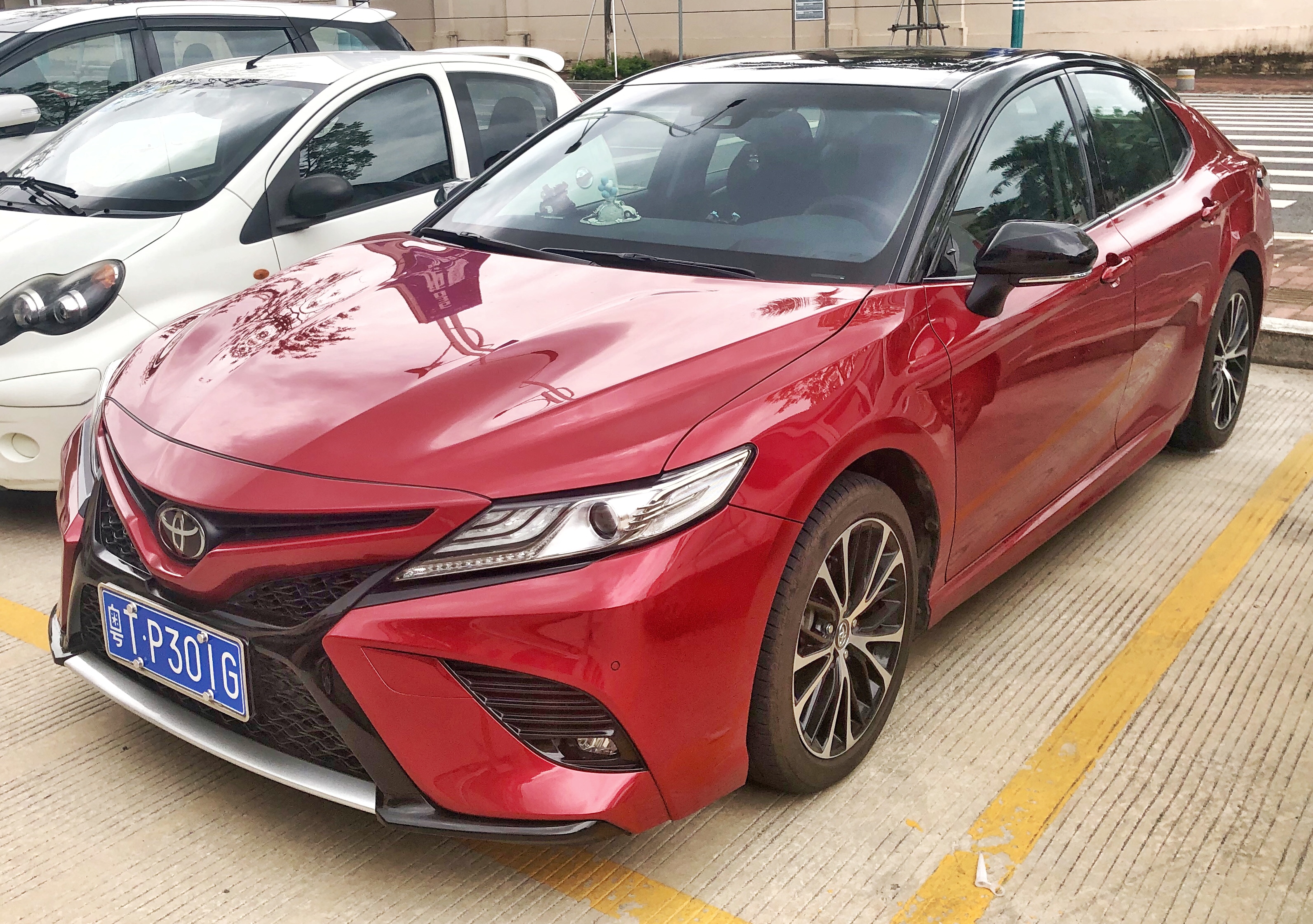
2011 Toyota Camry
"I think it's a 2011 Toyota Camry, he and his dad own."
A 2011 Toyota Camry is a regular road car model. In this story, it’s being raced in a NASCAR-style invitational, which is why it stands out.
The 2011 Toyota Camry is a mainstream sedan, but in this context it’s being used in a NASCAR-style invitational race format. That’s notable because it shows how a production-based car can be adapted for a stock-car racing environment and still run competitive qualifying pace.
Circuit De La Sartha
"It'd be pretty sweet to see them at Circuit De La Sartha, wouldn't it?"
They’re talking about a specific race track and imagining HSR cars showing up there. It’s a “wouldn’t it be cool if…” venue suggestion.
“Circuit De La Sartha” is mentioned as a hypothetical venue for HSR-style historic racing. It’s being used to illustrate the idea of bringing these cars to more tracks and audiences.
round robin
"And you know, look, what we've got the moment is a round robin of the One Mate Championship."
A round robin is a format where everyone gets to race against everyone else. Instead of a single elimination bracket, results come from multiple races.
A “round robin” is a competition format where each participant competes against the others in a scheduled sequence. In racing, it usually means multiple races or sessions that let teams accumulate results across matchups.
GT4 and GT3 cars
"So we already know that McLaren are coming with their trophy for 2027 with GT4 and GT3 cars from McLaren also invited for that race."
GT3 and GT4 are two tiers of “grand touring” race-car classes. GT3 cars are typically more heavily developed for pro/am endurance racing, while GT4 is a step down in performance and cost—often used for developing drivers and teams.
NASCAR
"But yeah, I mean, we've discussed, even on our road trips, what next after Garage 56 and NASCAR?"
NASCAR is a big U.S. racing series, mostly on oval tracks. The cars are based on production models, and it has a huge fan base.
NASCAR is a major American stock-car racing organization known for oval-track racing and tightly regulated production-based race cars. In motorsport discussions, it often represents a different racing culture and audience than endurance racing like Le Mans.
Garage 56
"But yeah, I mean, we've discussed, even on our road trips, what next after Garage 56 and NASCAR?"
Garage 56 is a special Le Mans entry that lets teams bring something unusual—often experimental—rather than a typical race car. It’s basically a “wild card” slot to showcase new concepts.
“Garage 56” is a special entry concept at the 24 Hours of Le Mans that allows an unusual, experimental, or non-standard car to compete outside the normal manufacturer categories. It’s designed to generate attention and test new ideas on Le Mans’ biggest stage.
ACO
"And actually, there's something in it here for the ACO, potentially, to extend that race meeting by another day."
The ACO is the group that organizes the famous Le Mans endurance race in France. They control a lot of the event structure and scheduling decisions.
ACO stands for the Automobile Club de l’Ouest, the organization that runs the 24 Hours of Le Mans and related endurance events. When the hosts mention “something in it here for the ACO,” they’re talking about the race organizer’s ability to reshape the event schedule.
test day
"Get the cars to do a quick qualifying run on the test day. There is time to do that on test day."
A test day is when teams practice and fine-tune their cars before the main racing. The hosts are suggesting using that day to do qualifying instead of on Saturday.
A “test day” is a dedicated on-track session (often before the main race weekend) where teams can evaluate setup, tires, and procedures. Here, it’s proposed as the time to run qualifying so the racing can extend into a longer event week.
Silverstone
"challenges with fixture congestion prior to Le Mans because Silverstone, as we all know, is back on the calendar, but that will be prior to Le Mans."
Silverstone is a famous race track in the UK. In this segment, they’re talking about when races at Silverstone happen and how that can create schedule pressure before Le Mans.
Silverstone is a major racing circuit in the UK and a frequent stop for top endurance and sports-car series. The hosts note its return to the calendar and discuss how that timing affects fixture congestion around Le Mans.
fixture congestion
"That presents some challenges with fixture congestion prior to Le Mans because Silverstone, as we all know, is back on the calendar"
Fixture congestion just means the schedule is crowded—races are close together. That makes it harder for teams to prepare and keep drivers fresh.
Fixture congestion means too many races or events packed closely together, leaving little time for travel, preparation, and recovery. The hosts use it to explain why the calendar around Le Mans is challenging when other series (like WEC) are also active.
back to back
"but now is becoming more and more regular, which is back to back. Yeah, there's four of the six races on the calendar for next year, back to back."
Back-to-back means two races happen one right after the other. That can be tough because teams have less time to travel and make changes between events.
Back-to-back refers to races occurring in consecutive weeks, which increases logistical strain and can affect car setup and driver fatigue. The segment highlights that multiple events are scheduled consecutively for the next year.
Cota
"And the Silverstone LMS race would be just before low style Lamont at Cota."
COTA is a race track in Austin, Texas. They’re listing it as part of the next season’s endurance schedule and explaining how the timing works with other series.
Cota is the Circuit of the Americas in Austin, Texas, a modern track used by multiple racing series. The segment places it in the sequence of endurance races, highlighting how events are spaced to reduce conflicts.
Fuji
"But it's just, you know, there's only so many weeks in a year... go from Fuji with the WEC pretty much straight to the LMS finale at Port-a-Male next year."
Fuji is a major race track in Japan. In the schedule they’re describing, it’s where the series goes next before the final European Le Mans race.
Fuji refers to Fuji Speedway in Japan, a well-known venue on endurance calendars. The hosts describe it as the next stop after WEC before the European Le Mans finale.
Port-a-Male
"go from Fuji with the WEC pretty much straight to the LMS finale at Port-a-Male next year."
Portimão is a race track in Portugal. They’re saying it’s the final race of the European Le Mans season.
Port-a-Male appears to refer to Portimão, a Portuguese circuit that hosts endurance events. The hosts call it the LMS finale, meaning it’s the season-ending race for the European Le Mans series.
LMEM
"I applaud that what the ACO and LMEM do in terms of not clashing with their own events so that we don't have situations where people have to, decide whether you can do full season WEC or full season LMS"
LMEM is shorthand for the organization behind the European Le Mans series. The point here is that they try to avoid putting races on top of each other so teams can plan full seasons.
LMEM refers to the Le Mans European/European Le Mans organizer (often used as shorthand in endurance circles). In this segment, it’s paired with ACO to emphasize that organizers try not to schedule their events against each other.
Formula One calendar
"including of course, the constraints that a massive Formula One calendar throws into [2755.8s] the mix, not just because Formula One's got so many races, but because Formula One also has [2761.1s] an exclusion zone before those races."
The Formula One calendar is just the season schedule of F1 races. Since it’s so busy (and has restrictions around race weekends), it can make it hard for other racing series to pick dates that don’t conflict.
The Formula One calendar is the official schedule of races across the season. Because it’s packed and includes lead-in restrictions, it can force other series to avoid certain tracks and dates, affecting entries and driver availability.
exclusion zone
"including of course, the constraints that a massive Formula One calendar throws into [2755.8s] the mix, not just because Formula One's got so many races, but because Formula One also has [2761.1s] an exclusion zone before those races."
An exclusion zone is a blocked-off time period where you’re not allowed to schedule something else. Here, it means other racing events have to avoid multiple weeks around Formula One races, not just the race weekend.
An exclusion zone is a time window where certain activities can’t happen. In this context, Formula One’s calendar setup blocks other events from using the same dates at those tracks, creating scheduling conflicts.
LMP3
"four classes to contend with, an LMP2, LMP2 Pro Am, LMP3, and LMGT3. [2866.7s] Just a [2866.7s] couple 30,000 foot view looks at what we can expect."
LMP3 is a prototype racing class in endurance events. It’s usually considered a lower-cost way to get into prototype racing and gain experience.
LMP3 is another endurance prototype class, generally positioned as a more affordable entry point compared with higher prototype categories. It’s often used by teams and drivers building experience in prototype racing.
selection committee
"So how they do the championship certainly has an effect on how favorable they are in the eyes of the selection committee."
A selection committee is the decision-making group that chooses which teams get to compete. Here, the host is saying your results in the championship can make the committee view you more favorably. So it’s not only about racing—performance can affect your chances to be invited.
A selection committee is the group that decides which teams get chosen/accepted for entry into a specific event or class. In the transcript, the host ties championship performance to how favorable teams are in the committee’s eyes. That implies results can influence opportunities beyond just points.
LMGT3
"And then we've got LMGT3, which has a habit of going down to the wire with like seven or eight cars in the mix."
LMGT3 is a GT3-based racing class used in endurance events like Le Mans. The host is saying it often comes down to the final moments, with several cars still in contention. That usually means the cars are closely matched and strategy matters a lot.
LMGT3 is the Le Mans GT3 category, a GT (grand touring) class based on FIA GT3-style race cars. The host notes it often finishes “down to the wire,” meaning multiple cars are close enough to fight for the win late in the race. That indicates strong parity and tight competition within the class.
Panis
"with what's now for us here, racing by Panis."
Panis is the name of a racing team/operation. In endurance racing, the team is responsible for running the car and supporting the drivers.
Panis is referenced as part of a racing context (“racing by Panis”), indicating a team/operation involved in endurance prototypes. In ELMS and related series, team names like this often reflect the organization running the car and managing driver development.
Ollie Gray
"You know, we talked about Ollie Gray and the amazing work he did last year and into this year…"
Ollie Gray is a driver the host says has been doing great work recently. The point is that his progress is part of the bigger story this season.
Ollie Gray is singled out for “amazing work” last year and into this year, implying a meaningful performance or development arc. In endurance racing, driver progress over multiple seasons is often a key storyline.
Stephen Hughes
"I know Stephen Hughes sat down earlier with Matishio Behr."
Stephen Hughes is mentioned as someone who interviewed a driver earlier. It’s part of the show’s coverage of the people behind the race teams.
Stephen Hughes is mentioned as having sat down earlier with Matishio Behr. This indicates the episode’s broader coverage includes driver/team interviews and context beyond just race results.
Matishio Behr
"I know Stephen Hughes sat down earlier with Matishio Behr. Now, and usually the baby driver…"
Matishio Behr is a driver the host talked about in an interview. The host is describing him as a young up-and-coming talent.
Matishio Behr is discussed in the context of being interviewed and described as the “baby driver.” That framing suggests he’s a younger talent being watched for progression through endurance racing categories.
Genesis Bible Racing
"…the baby driver, as he's now known within Genesis Bible Racing…"
Genesis Bible Racing is the name of a racing team. The host is saying a driver is known for being a young talent within that team setup.
Genesis Bible Racing is mentioned as the team context for a driver nickname (“baby driver”). In endurance racing, team branding and driver development programs are often closely tied to how drivers progress through prototype categories.
P2 High Flyers
"you talked just a few moments ago about the battle between the P2 High Flyers that I absolutely urge people to keep an eye on through this season."
P2 is a class of prototype endurance race cars. In this segment, “High Flyers” is the name of the group the host wants you to track as the season unfolds.
“P2” refers to a prototype endurance class (historically used in the Le Mans ecosystem) that sits below the very top Hypercar level. “High Flyers” here is being used as a team/entry name, and the host is urging listeners to watch their performance through the season.
Griffin Peoples
"And that is Griffin Peoples. He was not part of United Order Sports' efforts at the 24 Hours of Le Mans."
Griffin Peoples is a driver the host thinks is worth watching this season. The host also mentions he wasn’t part of a specific Le Mans entry, which makes his current rise more notable.
Griffin Peoples is highlighted as a key name in the P2 storyline the host wants viewers to track. The segment also notes his absence from United Order Sports’ Le Mans effort, implying a different development path or timing.
Request an Explanation
Heard something you'd like explained? We'll add it to this episode.
Sign in to request explanations for terms you heard.
Want to learn more?
Browse our glossary for plain-English explanations of automotive terms, jargon, and concepts.
Help improve this episode
See something that's not quite right? Our annotations are AI-generated and can sometimes miss the mark. Click the flag icon on any annotation to suggest a correction.
2 community members have helped improve this episode.