
MP 1711: The Week In Sports Cars July 16 2026
About this episode
A busy week in sports-car racing gets the spotlight, starting with IMSA news and a World Championship weekend recap. Expectations around Cadillac and rain didn’t match reality, with qualifying/track position and pit-time swings proving decisive, plus race flow shaped by cautions. Hypercar and GT storylines run through WRT’s momentum, Ferrari/BoP debate, and tire-rule strategy surprises. Off-track updates include Peugeot’s WC marketing, Genesis pace and reliability, and schedule/insurance constraints affecting future events.
It's The Week In Sports Cars show featuring DailySportsCar.com's Jonathan Grace, Stephen Kilbey, and Graham Goodwin
Every episode is graciously supported by the Justice Brothers and TorontoMotorsports.com.
NEW show stickers and memorabilia: ThePruettStore.com
If you'd like to join the PrueDay podcast listener group, send an email to [email protected] and you'll be invited to participate in the Discord chat that takes place every day and meet up with your new family at events.
Play on Podbean.com: https://marshallpruett.podbean.com/
Subscribe: https://marshallpruettpodcast.com/subscribe
Join our Facebook Group: https://www.facebook.com/MarshallPruettPodcast
[WSC]
hypercar program
"Yes, because for me, the biggest news of the last week or so is the continued form of BMW and just the transformation of the WRT hypercar program."
“Hypercar program” just means a racing team’s whole plan for competing with the fastest, top-level cars in that class. Here, they’re specifically talking about WRT’s effort in hypercar racing.
A hypercar program is a team’s racing effort focused on the top-tier “hypercar” class cars, including car preparation, driver lineup, and race strategy. In this context, the speaker is talking about WRT’s ongoing effort in that category.
post race penalty
"And it sets it up quite nicely. Post race penalty for the sister car means that the championship, whilst not quite as tight, one point in the championship standing in front of the manufacturers between Tota and BMW before a post race penalty for contact between the 20 and the 50."
A post-race penalty is a punishment that gets decided after the race, often after officials review what happened. It can move a team down the results and affect the points in the championship.
A post-race penalty is a sanction applied after the race ends, usually after officials review incidents or timing. It can change finishing positions and points, which is why the speaker connects it directly to the championship standings.
manufacturers between Tota and BMW
"Post race penalty for the sister car means that the championship, whilst not quite as tight, one point in the championship standing in front of the manufacturers between Tota and BMW before a post race penalty for contact between the 20 and the 50."
“Manufacturers” standings means the points are counted for the car brands, not only the drivers. The host is saying the points gap between the brands is tight right now.
The “manufacturers” standings are the championship points tallied by car makers (not just individual drivers). The speaker is saying the gap between the manufacturers is very small after the penalties.
pit stops
"Two pit stops that cost each car about the same amount of time, about 20 seconds. One was the 38 car missing its mark and had to be repositioned on its first pit stop."
A pit stop is when a race car pulls into the pit lane for quick service like tires and fuel. How long it takes can make the car lose or gain position on track.
A pit stop is when a race car enters the pit lane to get service—typically tires, fuel, and sometimes repairs—while the car is stationary. The timing of pit stops is crucial because it can change track position and overall race strategy.
wheel gun
"The second was a wheel gun or will not that wouldn't play on the front right of the number 12 car. And to be blunt after that moment, yes, they were there fighting back..."
A wheel gun is the tool pit crews use to quickly loosen and tighten the wheel nuts during a tire change. If it doesn’t work right, the pit stop can lose critical time.
A wheel gun is the pneumatic or electric impact tool pit crews use to quickly remove and install wheel nuts during a tire change. The host’s reference suggests a pit-stop equipment/operation issue contributed to the Cadillac team’s problems.
qualifying
"It's a hard, it's in the reason that, you know, there was much talk about how important qualifying was because it's so hard to overtake. It's such a short circuit."
Qualifying is when teams race to set the starting order for the main race. If passing is hard, where you start can make a big difference.
Qualifying is the session where teams set their starting order for the race based on lap times. The host argues qualifying matters because overtaking is difficult on a short circuit, so starting position can strongly influence results.
overtake
"there was much talk about how important qualifying was because it's so hard to overtake. It's such a short circuit."
To overtake means to pass another car on the track. The host is saying it’s hard to do here, so it’s tough to move up during the race.
To overtake means passing another car on track. The host emphasizes that overtaking is difficult in this race context, which makes qualifying and track position especially important.
track position
"So if you do lose time in track position, it's just really hard to gain it back. And then we saw the 12 car ended up in contact, I think with one of the Lexus RCFs had a spin."
Track position means where your car is on the track compared to other cars. If you fall behind because of pit timing or traffic, it can be really tough to get back in front.
Track position is where a car sits relative to others on the circuit at any moment. In endurance racing, losing track position—often due to pit timing or traffic—can be hard to recover because overtaking may be difficult.

Lexus RCF
"And then we saw the 12 car ended up in contact, I think with one of the Lexus RCFs had a spin. The 38 got a couple of penalties, which ultimately blunted its work from rear to rear a couple of times."
The Lexus RCF is a sporty Lexus with a strong V8. In this segment, it’s one of the cars that got involved in an incident that caused a spin.
The Lexus RCF is a performance coupe built around a V8 and known for its track-capable, enthusiast-friendly character. Here, the host mentions Lexus RCFs as the cars involved in contact and a spin, which affects the race’s flow and outcomes.
cooling
"But it didn't have an effect not at all on the cooling or the overall performance of the car"
Cooling is how the car keeps its engine from getting too hot. If it runs too hot, the car can lose power or have to slow down.
Cooling refers to keeping the engine and other components within safe operating temperatures. In racing, cooling can affect performance because overheating can reduce power and force the team to change strategy.
EVO kit
"of the car, which probably probably might be thinking about the EVO kit next time, whether or not they just want to wrap a banner around the front."
An EVO kit is a set of approved updates teams can add to their race car. It’s meant to improve or adjust how the car performs so it stays competitive.
An EVO kit is an official evolution package used in some racing series to update a car’s performance—often via aerodynamic parts, cooling changes, or other homologated modifications. The goal is to keep cars competitive as the season progresses.
balance of performance
"as always in the FIWall Endurance Championship, there is still despite the lack of transparency that's now part of the policy about the balance of performance."
Balance of performance is how race organizers try to make different cars compete more fairly. They may add weight or limit power so one brand doesn’t automatically have an advantage.
Balance of performance (BoP) is a set of rules used in sports car racing to equalize performance between different makes and models. It can involve adjusting things like weight, engine power, and aerodynamic limits so no single car dominates.
BAP
"It's not a BAP reason why they've failed to take the overall win. It's the nuance. It's the tiny little bits and pieces about it."
BAP here means the same thing as balance of performance—rules meant to keep different cars on a level playing field. The point is that BoP wasn’t the reason they didn’t win.
BAP is shorthand for balance of performance in this context. The speaker is saying the team’s failure to win wasn’t due to BoP adjustments, but instead due to finer details in execution or strategy.
shallow speeding
"They fall for shallow speeding."
This sounds like a small speeding violation in a restricted area. Even if it’s not huge, officials can still penalize the car.
“Shallow speeding” appears to refer to a minor or limited speeding infraction—likely in a pit lane or restricted zone—rather than a major over-speed. In racing, even small speeding violations can trigger penalties.
Alpine
"One talk was about the two French brands because they had a crack at this, Alpine almost did a WRT, taking their, taking their cars off strategy and trying to get the track position, trying to get in clear air."
Alpine is a French race-car brand. Here they’re talking about how Alpine tried a different plan during the race to get better positioning on track.
Alpine is a French sports-car brand best known in endurance racing for its LMDh/Le Mans Prototype program. In this segment, the hosts discuss Alpine’s race strategy—specifically taking cars off their planned strategy to chase track position and clear air.
clear air
"taking their cars off strategy and trying to get the track position, trying to get in clear air. Could have worked."
Clear air means you’re not running in another car’s dirty airflow. That usually makes the car behave more predictably and can help it go faster.
Clear air is air that’s not disturbed by the wake of other cars, so the car experiences more consistent aerodynamic conditions. In endurance racing, teams try to get into clear air to improve cooling and downforce consistency and to make the car easier to drive at the limit.
full-core shallow
"The 22 aspects of this race were we had was it two brief full-core shallows, maybe three, but they were tiny. It was debris, basically be sorted."
This sounds like a description of short caution periods where the race is slowed because of something on track. The hosts are saying these slowdowns were tiny, so strategy didn’t get a big reset.
“Full-course shallow” appears to be the hosts’ description of caution periods—short, full-course slowdowns—caused by debris. The key idea is that these interruptions were brief and didn’t create the kind of long neutralization that would dramatically reshape strategy.
virtual safety car
"It was debris, basically be sorted. No virtual safety car, no safety car that came in for this."
A virtual safety car is when race officials slow everyone down using rules, but without actually bringing out the real safety car. It’s a way to control danger while keeping the race moving.
A virtual safety car (VSC) is a race control procedure where cars must slow down under rules (typically via speed limits) without the physical safety car entering the track. It’s used to manage hazards while reducing the disruption of full-course cautions.
WC history
"And the other point to make is all 35 cars finished, only the eighth time in WC history that's happened. And this is not the place expected it to happen."
“WC history” means the long-term record of this racing series. They’re pointing out that it was unusual for every car to finish the race.
“WC history” here refers to the historical record of the World Endurance Championship (WEC) regarding race completion. Finishing with all cars running to the checkered flag is rare, so the hosts highlight it as a notable statistical outlier.
high down force kit
"But it wasn't at all like the car looks a lot better around this circuit [608.7s] with its new down for that high downforce aero kit they've got for the car this year."
It’s a set of race aero parts (wings, splitters, etc.) that makes the car stick to the road more. That helps it turn and stay stable, but it can make the car slower on top speed because it creates more air resistance.
A high downforce aero kit is an aftermarket or race-prep aerodynamic package (like wings and splitters) designed to increase downforce. More downforce pushes the car harder into the track, improving grip—especially at speed—at the cost of more drag.
slow puncture
"But both cars had slow punctures, which meant they had to take [623.2s] unscheduled pit stops late in the race."
A slow puncture is a tire leak that doesn’t immediately destroy the tire, but steadily loses pressure over time. In endurance racing, that can force the team into unplanned tire changes because the tire becomes unsafe or too slow to maintain pace.
tire and fuel strategy
"And we talk about Peugeot also had a punt early in the race [637.4s] with their time fuel strategy and pulled the rest"
This is how teams plan when to pit and how much fuel to use so they can stay on track as long as possible. It’s basically a balancing act between speed, fuel consumption, and when the race situation changes.
A time-and-fuel strategy is an endurance-racing approach where pit timing is managed alongside fuel usage to maximize track position and avoid running out of fuel. Teams may gamble on shorter or longer stints depending on expected safety cars, tire life, and pace.
traction out of corners
"It's never been the best in terms of its traction out of corners, [671.2s] particularly when DeResta and Melty Ackabson were wrestling that car hard"
Traction out of corners is how well the tires grip as you straighten the wheel and start accelerating after a turn. If traction is poor, the car can feel hard to control and slower coming out of the corner.
Traction out of corners refers to how well a car grips and accelerates when exiting a turn. It’s heavily influenced by tire behavior, suspension setup, and drivetrain characteristics, and it can make a car feel “skittish” or difficult to drive if traction is inconsistent.
24 Hours of Le Mans
"There are three things that matter to Toyota in this order. The 24 hours of Le Mans, they won that. The six hours of Fuji and the World Cup."
Le Mans is a super famous long-distance race in France. Cars and teams race for 24 hours, so it’s not just about speed—it’s also about not breaking and making smart decisions.
The 24 Hours of Le Mans is a famous endurance race in France where teams race for a full day, emphasizing reliability and strategy as much as outright speed. Winning it is a major goal for manufacturers because it’s one of the toughest tests of an entire race program.
Fuji Speedway
"The six hours of Fuji and the World Cup. Fuji and the World Championship. And I think that's what we're seeing."
Fuji is a well-known race track in Japan. When they say “Fuji,” they mean how the cars did at that track during the race weekend.
“Fuji” refers to the Fuji Speedway in Japan, a key venue for endurance racing. When teams talk about “the Fuji race” they’re usually referencing performance and reliability over a full event at that track.
Nick De Vries
"I don't think we saw truly what they could have had it gone perfectly. In the seven guys, Nick DeVries admitted after the race that there were some operational errors at the start of the race, which cost them time."
Nick DeVries is a professional race driver. In this segment, he’s talking about mistakes around the start of the race that cost the team time.
Nick DeVries is a racing driver who competes in top-level motorsport, including endurance events. Here, he’s cited admitting operational errors at the start that cost time, which highlights how crucial race starts and execution are in endurance racing.
operational errors
"In the seven guys, Nick DeVries admitted after the race that there were some operational errors at the start of the race, which cost them time. They did say that they weren't quite quick enough all weekend."
Operational errors are team mistakes—how they do things during the race. In long races, those mistakes can cost you a lot of time even if the car itself is fast.
Operational errors are mistakes in how a team runs the race—things like procedures, timing, or execution during critical moments. In endurance racing, even small operational issues can cost seconds or minutes and swing the result.
suspension change
"And then the eight obviously ended up having a suspension change after contact, didn't it?"
If a car hits something, the suspension can get bent or misaligned. A “suspension change” means they swap or adjust parts so the car can handle correctly again.
A “suspension change” means replacing or altering suspension components after damage—often due to contact. In racing, even small suspension damage can affect alignment, tire wear, and how the car handles through corners.
medium tyre
"They were, you know, before the resurfacing and when they were the only team on the grid that was able to get the medium tyre to work, they were fantastic that first year."
Racetracks use different types of tires that trade grip for lifespan. A “medium” tire is usually the middle choice: it grips well, but it won’t last as long as the hardest option.
In endurance racing, tire compounds are categorized by grip and durability. A “medium tyre” is typically the middle option—offering more grip than a harder compound but lasting less than the harder one.
penalties
"Stephen mentioned their operational difficulties being clean, keeping away from penalties. That's what wins your races and the other will endurance championship."
In racing, “penalties” are punishments for breaking rules. They usually cost you time or track position, which can decide races and championships.
In endurance racing, “penalties” are time or position deductions imposed for rule infringements (like unsafe driving or procedural violations). The speaker emphasizes that avoiding penalties is crucial because it directly affects race outcome and championship points.
operational difficulties
"Stephen mentioned their operational difficulties being clean, keeping away from penalties. That's what wins your races and the other will endurance championship."
In endurance racing, “operational difficulties” means problems with the team’s execution—like pit stops and following race procedures. If that goes wrong, you can lose time and even get penalties.
“Operational difficulties” in endurance racing usually refers to non-driving problems like pit-stop execution, strategy timing, communication, and staying within procedures. The host links it to being “clean” and avoiding penalties, suggesting these issues can snowball into lost time and results.
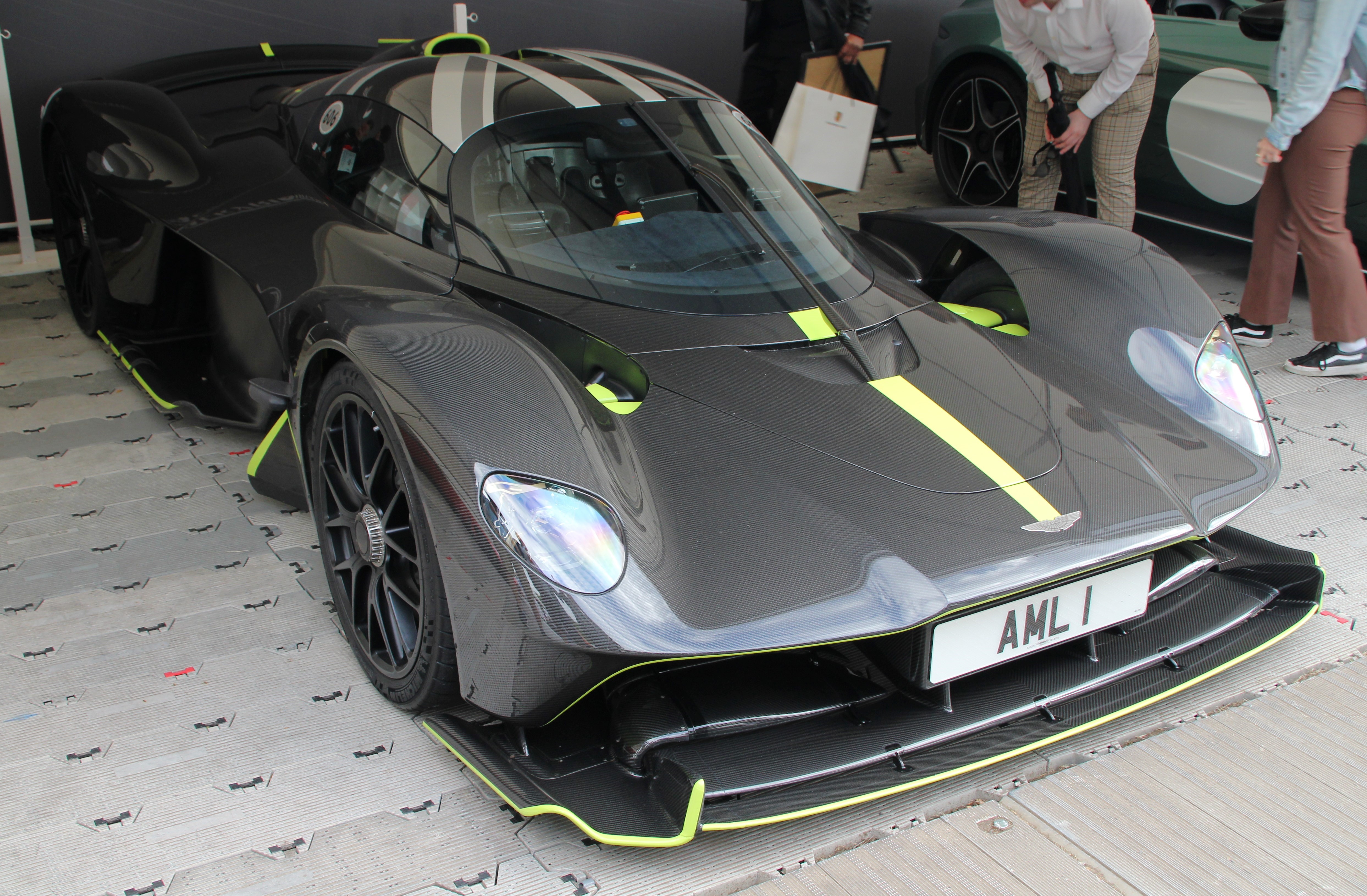
Aston Martin Valkyries
"When you are looking at where you are in terms of full race performance against the Aston Martin Valkyries and against the Genesis Magma racing cars, and we talked about the kind of the waypoints that both those teams have made, they're significantly less developed packages than the overall Toyota package."
The “Valkyrie” is Aston Martin’s race-car entry. The speaker is using it as a yardstick to show that some other teams aren’t as well developed as Aston’s team.
“Aston Martin Valkyries” refers to Aston Martin’s Valkyrie race cars competing in endurance racing. The host uses them as a benchmark for “full race performance,” comparing other teams’ development levels against Aston’s package.
Cota
"Ferrari kind of calling their way back into it, it seems. Bring it on at Cota. I'm really fascinated to see how it goes."
Cota is a race track in Austin, Texas. The hosts are saying they’re curious how the championship fight will look when the series goes there next.
Cota is the common shorthand for Circuit of the Americas (Austin, Texas), a modern road course used for major sports-car and racing events. The hosts are looking ahead to how the championship battle might play out there.
FIA
"He'll have been delighted with the first ever time in an FIA circuit-based world championship event to hear his national anthem."
FIA is the organization that governs a lot of international racing rules. When they mention the FIA, they mean the official body behind the championship regulations.
FIA stands for Fédération Internationale de l’Automobile, the governing body that sets rules for many international motorsport series. In this segment, it’s tied to the “FIA circuit-based world championship event” wording.
bronze
"Peter Dempsey. Look, let's be blunt. He's ranked as bronze. I certainly won't be next year. But you've got to go with the car."
“Bronze” is an official driver skill rating used in some racing series. It helps define who counts as a more experienced or less experienced driver for team lineup rules.
“Bronze” refers to an FIA driver rating category used to classify drivers by experience and results. These ratings affect how teams can pair drivers in endurance racing, especially in series that require mixed driver lineups.

Chevrolet Corvette
"...ate time. They did really, really well. The other Corvette, the 33 car, less good a run, but they dragged it..."
The Chevrolet Corvette is a sports car built for fast driving. People often talk about it in racing because some versions can do very well on a track. In this podcast context, it’s being discussed based on how different Corvette cars performed during a run.
The Chevrolet Corvette is a performance sports car from Chevrolet, known for combining relatively accessible ownership with serious track capability. In racing-focused discussions, it often comes up because specific Corvette entries can be strong performers in endurance-style events. It’s mentioned here in the context of how different Corvette cars performed during a run.

Ford Mustang
"...ette. Running rapidly through the rest of it. The Mustangs looked good, but not great. There was a worrying ..."
The Ford Mustang is a performance car from Ford that’s known for strong power and sporty driving. It’s also a common choice for racing and upgrades. In this episode, the Mustang is mentioned because it looked good, but the results weren’t as strong as expected and there was some concern.
The Ford Mustang is a well-known American muscle car that’s offered in multiple performance levels, from everyday driving to track-oriented versions. It’s frequently discussed in motorsport because it’s a popular platform for racing and tuning. Here, the podcast notes that the Mustangs looked good but didn’t deliver the best results, including a “worrying” element during the run.
tyre allocation change
"The Wildring. Because this race with the tyre allocation change meant that everyone could have changed all four tyres at each stop."
This is a rule change about how many tire sets teams are allowed to use. When tire rules change, teams often change when they pit and how aggressively they drive.
A “tyre allocation change” means the race organizers altered how many sets of tires teams are allowed to use. In endurance racing, that rule directly affects pit-stop timing and strategy because it changes whether teams can run fresh tires more often.
The Wildring
"The Wildring. Because this race with the tyre allocation change meant that everyone could have changed all four tyres at each stop."
They’re talking about a well-known race track in Germany that’s tough on tires. The point is that the track makes tire strategy especially important.
“The Wildring” appears to be a reference to the Nürburgring, a famous German endurance circuit known for being hard on tires. The host is tying the tire/strategy discussion to the circuit’s demands.
double stinting
"People taking double stinting half sets of tyres. I didn't expect it."
Double stinting means running the same tires for longer than usual—two race segments—before changing them. It can save tires, but the tires may get worn and slower.
“Double stinting” means using the same set of tires for two stints (two driving periods) before switching to a new set. It’s a strategy choice that can save tire sets but may reduce grip as the tires wear.
GC3
"The only real frontrunner that didn't have anything was the Aston that was really rapid on Saturday and was nowhere in the race. So I thought it was a fantastic race in GC3 and then the Manthey coming in at the end..."
GC3 is a category of race cars. When they say it was a great race in GC3, they mean the competition within that group was especially interesting.
“GC3” is a race class/category label used in sports-car competition to group cars with similar performance rules. When the host says “fantastic race in GC3,” they mean the action and results within that specific class were notable.
Manthey
"So I thought it was a fantastic race in GC3 and then the Manthey coming in at the end and doing what they normally do, just throwing into a race."
Manthey is a racing team that works with Porsche. The host is saying their car looked like it might win late in the race.
Manthey is a motorsport team/operation known for Porsche racing support and race-prep. Here, the host credits “the Manthey” with a late-race push that made it seem like they could win.
LMGT3
"to the news. We hope to bring some significant news about LMGT3. So I'll read us in the coming [1433.4s] days. Watch this space for a significant story we're working on."
LMGT3 is a racing class for sports cars that are built to GT3 rules. It’s meant to let different brands compete fairly in long races.
LMGT3 is the Le Mans-style GT3 racing category used in endurance sports-car racing. It refers to GT3-spec cars competing under rules designed to keep performance relatively balanced across different manufacturers.
mixed class racing
"The traffic because the battling was so intense [1448.0s] in GT3 was the spanner in the works that we want to see in mixed class racing. [1454.4s] All in all, for me, across the board, I give that one an 8 out of 10."
Mixed class racing is when multiple car categories compete on track at the same time. It adds complexity because faster classes must pass slower ones, creating traffic that affects lap times, pit strategy, and race drama.
CTMP
"but we can celebrate the successes and otherwise at CTMP with the [1480.1s] Imtserwell Tech Sports Goal Championship taking its now annual trip to Canada, but without, of course, [1486.4s] with the GTP cars, we had Nat Johnson on..."
CTMP is a race track in Canada. It’s where sports cars go to compete in road-course events.
CTMP refers to Canadian Tire Motorsport Park, a well-known road course in Canada used for sports-car and endurance racing. It’s a frequent venue for North American series and driver development.
GTP cars
"Imtserwell Tech Sports Goal Championship taking its now annual trip to Canada, but without, of course, [1486.4s] with the GTP cars, we had Nat Johnson on... Johnston."
GTP cars are prototype-class race cars used in top-level endurance racing. They’re typically faster and more technologically advanced than GT3 cars, so when they share events, the speed differences create major traffic and strategy effects.
Tom Dilman
"But Tom Dilman, let's forget a year ago, had his big off at that circuit, broke his back, [1530.4s] and he comes back a year later at the same circuit, wins the race. That takes a lot."
Tom Dilman is a race car driver. The hosts are praising him for coming back after a serious crash and winning the race the next year.
Tom Dilman is a race driver whose performance is highlighted here: he previously had a major crash at the circuit, then returned the following year to win. The hosts use his comeback as an example of resilience and driver value.
GTD Pro
"There are opportunities coming. In GTD Pro, it was Vasa Sullivan again?"
GTD Pro is a racing class for high-end sports cars. It’s for teams that run more serious, professional driver lineups and race-prepped versions of production cars.
GTD Pro is a top class within the IMSA WeatherTech SportsCar Championship for professional-level GT race cars. It’s meant for teams with factory or factory-supported driver lineups, using production-based cars that are heavily race-prepped.
podium
"On the podium? Finishing second and finishing on the podium overall with the Spyte the Dragon Car with Peter Hyatt."
A podium finish means finishing in the top three. It’s a big deal because it shows you were one of the best cars in the race.
A podium finish means placing in the top three of a race or class. When the hosts say “on the podium overall,” they’re emphasizing a top-tier result rather than a mid-pack finish.
one-two finish
"It was not a good race for United Autosports, must be said. They had a strong start to the season and that one-two finish from at Sebring maybe seems like quite a way ago now"
A one-two finish means the team took both first and second place. It’s a sign they were clearly the fastest overall that day.
A one-two finish means the same team (or organization) placed first and second in the same race. It’s a strong indicator of dominance because both cars beat the rest of the field.
Sebring
"It was not a good race for United Autosports, must be said. They had a strong start to the season and that one-two finish from at Sebring maybe seems like quite a way ago now"
Sebring is a famous race track in Florida. It’s known for being tough on cars, so good results there are a strong sign of team speed.
Sebring refers to the Sebring International Raceway in Florida, a staple venue on the IMSA calendar known for its rougher surface and endurance-style racing. It’s often used as a benchmark event for team performance early in the season.
sister car
"because best result for them was fifth with the 22 and the other car, the sister car, did."
A sister car is the other race car from the same team. If one car does well, you often look at how the sister car did too.
A sister car is the team’s other entry, typically sharing the same manufacturer support, engineering group, and overall strategy. In multi-car teams, comparing the “sister car” results helps gauge whether the whole operation performed well.
support championships
"There's certainly a couple of stories to read from that event. Obviously we've had a bit calendar news from the support championships, but also some feature news or feature content about the car blanche effort,"
Support championships are other races that happen during the same weekend as the main race. They’re like the “extra” series on the schedule.
Support championships are racing series that run alongside the main event during the same race weekend. They provide additional on-track action and often feature different classes of cars and driver development ladders.
car blanche effort
"but also some feature news or feature content about the car blanche effort, which seems to have some oddities around how this effort is coming together."
“Car blanche” sounds like the name of a particular motorsport project. They’re saying there are some confusing or unusual details about how it’s being put together.
“Car blanche” here appears to be a specific program/initiative name related to motorsport team or effort planning. The hosts are discussing how it’s coming together and noting there are “oddities” around its development.
Goodwood Festival Speed
"Let's talk about the Goodwood Festive Speed briefly. As always, it is a [1705.8s] world-class event."
Goodwood Festive Speed is a car event where famous cars and drivers do public runs and demonstrations. It’s a big deal for enthusiasts because you get to see rare cars in action.
A motorsport and historic-car event at Goodwood that features on-track demonstrations and hill-climb style runs. The hosts are treating it as a key weekly headline for sports-car fans.
McLaren Hypercar
"Lando Norris taking the McLaren Hypercar up the hill, a big highlight, no doubt at all."
McLaren’s hypercar is one of their most extreme, high-performance cars. Here, Lando Norris drives it up the hill at Goodwood so you can see how it behaves in motion.
The McLaren Hypercar is McLaren’s top-tier, track-focused flagship concept for the hypercar class. The key point here is that Lando Norris is taking it up the hill at Goodwood, showing it in a dynamic setting rather than just static display.

Toyota GR GT3
"to see the new Ford 2027 [1727.0s] Toyota GR GT3 up the hill."
Toyota’s GR GT3 is a race car built to compete in the GT3 class. It’s notable here because you get to see the new car run and get a feel for how it drives.
The Toyota GR GT3 refers to Toyota’s GT3-spec race car, built for the GT3 customer-racing formula. The hosts are highlighting it as a major new dynamic opportunity in Europe at Goodwood, meaning it’s being shown in a way that demonstrates real performance.

Ford GT40
"there's a great [1739.8s] comparison photo on the Goodyear channel on social media of the free Ford GT40s [1749.0s] in formation running as they did across the line in 1966 at Le Mans for the win,"
The Ford GT40 is a famous old race car from the 1960s. It’s especially known for winning Le Mans, and they’re talking about it reenacting that kind of historic moment.
The Ford GT40 is the iconic 1960s Le Mans winner that helped define American dominance in endurance racing. Here, the hosts reference multiple “free Ford GT40s” running in formation across the line in 1966 at Le Mans, emphasizing its historic racing legacy.
Andretti
"running as they did across the line in 1966 at Le Mans for the win, [1754.6s] driven by Andretti's."
Andretti refers to a famous racing driver name. Here, they’re saying an Andretti drove one of the winning Ford GT40s at Le Mans in 1966.
Andretti is referenced as the driver of the 1966 Ford GT40s at Le Mans. In this context, it points to the famous Andretti racing family’s involvement in endurance racing history.
Liam Lawson
"And I believe Liam Lawson also drove one of them at [1760.8s] some point during the weekend, the Krasayman car."
Liam Lawson is a current race driver. The hosts are saying he got to drive one of the classic Ford GT40s during the event.
Liam Lawson is a modern racing driver mentioned as having driven one of the Ford GT40s during the weekend. The hosts use his participation to underline the event’s blend of historic cars with current talent.
Toyota Gt Gr
"forward, you don't want to talk about Derek Bell going up in his Ferrari F1 car. It was absolutely fabulous. But no, I don't. Listen to the noise. What about the Toyota GT, GR GT3? I did say that. I did say that. Let's move on though, because we are on a bit of a ticking clock if you want"

Toyota Gt
"... no, I don't. Listen to the noise. What about the Toyota GT, GR GT3? I did say that. I did say that. Let's mo..."
The Toyota GT 86 is a small sports car meant to be fun and easy to drive. It’s built for handling and driver enjoyment rather than being a top-speed race car. Here, it’s mentioned as part of the conversation about different cars and their character.
The Toyota GT 86 is a compact sports car known for a lightweight, fun-to-drive layout and a focus on driver feel. It’s often discussed as an accessible performance car, especially when compared to more extreme track machines. In this podcast context, it’s mentioned alongside other race-car talk, likely as part of the broader discussion of what makes certain cars engaging.
FI World Endurance Championship
"that's been come to from what's been a really tough period for LMEM, the organisers of the [1859.4s] FIWAR endurance championship."
FIWAR is an endurance racing series. The hosts are saying it’s been having a rough time and they’re discussing what might fix it.
The FIWAR endurance championship is an endurance racing series referenced as being in a tough period. The hosts are discussing likely solutions for how it will be handled going forward.
Asian Le Mans series
"And as you'll hear in a moment, the Aegean Le Mans series as well."
The Aegean Le Mans series is another endurance racing competition. They mention it as part of the same conversation about what happens next.
The Aegean Le Mans series is another endurance racing series mentioned alongside FIWAR. The hosts are tying both series to the same broader discussion about likely structural solutions after difficult periods.
World Motorsport Council
"This is an FIA world championship. Calendars have to be ratified by the World Motorsport Council. We believe the next meeting of the World Motorsport Council is the 23rd, 24th of July."
This is the FIA group that has the final say on big racing decisions. Here, they’re the ones who approve the official race calendar dates.
The World Motorsport Council is the FIA body that formally approves (ratifies) major motorsport decisions like championship calendars. In practice, it’s the step that turns proposed dates into an official schedule.
GT World Challenge Europe
"It appears, assuming this all happens between the end of the GT World Challenge Europe season, which was at Port Amal and the race at Barcelona planned for WEC."
GT World Challenge Europe is a European racing series for GT sports cars. The discussion is about how its schedule might need to shift to avoid conflicts.
GT World Challenge Europe is an SRO-run GT racing championship featuring production-based sports cars. The hosts are focusing on how its season end and potential date changes could affect teams and drivers.
Port Amal
"It appears, assuming this all happens between the end of the GT World Challenge Europe season, which was at Port Amal and the race at Barcelona planned for WEC."
Portimão is a well-known racing venue in Portugal. The hosts are saying the GT World Challenge Europe season ends there.
Portimão is a Portuguese circuit venue commonly referenced in European racing calendars. In this context, it’s where the GT World Challenge Europe season end is said to be held.
Barcelona
"It appears, assuming this all happens between the end of the GT World Challenge Europe season, which was at Port Amal and the race at Barcelona planned for WEC."
Barcelona is where a race is planned for the WEC. It’s a famous track area used for major racing events.
Barcelona is referenced as the location of a planned WEC race. In sports-car racing, “Barcelona” typically points to the Circuit de Barcelona-Catalunya, a frequent endurance and testing venue.
SRO
"To a person, what they have said is the response from SRO, and in particular from Steph and Mattel themselves has been absolutely exemplary, that they are looking for and finding a solution."
SRO is the organization behind a lot of GT racing. Here, the hosts say SRO is working to adjust the schedule so teams and drivers can still have a good weekend.
SRO is the SRO Motorsports Group, the company that organizes and promotes many GT racing series. In this segment, they’re described as actively working to find a solution to the date clash.
Steph
"To a person, what they have said is the response from SRO, and in particular from Steph and Mattel themselves has been absolutely exemplary, that they are looking for and finding a solution."
The host mentions “Steph” as someone at SRO who’s helping handle the racing schedule problem. The excerpt doesn’t say their full name, so we can’t be sure who it is.
“Steph” is referenced as part of SRO’s leadership responding to the situation. The transcript doesn’t provide a last name here, so the exact identity can’t be confirmed from this excerpt alone.
Mattel
"To a person, what they have said is the response from SRO, and in particular from Steph and Mattel themselves has been absolutely exemplary, that they are looking for and finding a solution."
The host mentions “Mattel” as someone at SRO involved in finding a solution. The transcript doesn’t give a full name, and the spelling looks questionable here.
“Mattel” is referenced alongside “Steph” as part of SRO’s response team. The name appears likely to be a transcription error (it may be a different person’s name), and no full name is given in this excerpt.
season finale
"But the date clash for the race proper is the big issue. I wouldn't be at all surprised to see the season finale for GT World Challenge shifting to a Saturday race."
A season finale is the last race of the year for that racing series. They’re talking about moving it to Saturday so it doesn’t overlap with another big event.
A season finale is the last race of a championship season. The hosts discuss potentially moving the GT World Challenge Europe season finale to a Saturday to reduce the clash with WEC.
race format
"And the other big part of this, Stephen, and this is one with potential championship implications is race format. So in contrast to what the early guidance we were being given informally was, remember this is replacing the Qatar 1812 kilometers and the season ending race..."
Race format is how the race is structured. That includes things like how long the race is and how points are handed out, which can change who wins the championship.
Race format is the set of rules that defines how an event is run—most importantly things like race length, number of races, and how points are awarded. In endurance racing, changing the format can significantly alter strategy and championship outcomes.
Monza
"But trust us, dude, it's going to be Barcelona and Monza. And the other big part of this, Stephen, and this is one with potential championship implications is race format."
Monza is mentioned as a race location. It’s one of the most famous racing circuits in the world, known for fast racing.
Monza is referenced as another venue on the schedule. Monza (in Italy) is famous for high-speed racing and is a frequent host for top-level sports car and touring car events.
championship standings
"When you look at championship standings, it essentially means people choosing the championship now. If this happens, it's going to be harder to catch and pass the leaders."
Championship standings are the season-long score table. It shows who’s leading based on points earned in each race.
Championship standings are the running leaderboard that ranks teams or drivers based on accumulated points over the season. When race lengths or point allocations change, the standings can shift and it can become harder or easier to catch the leaders.
Asia-Lamon Series
"We said to, we also established what's going on with the Asia-Lamon Series. Important year for them, of course, too, with the potential for Pro-Am hypercar."
This is another racing series in Asia that they’re discussing. They’re talking about what’s happening this year and how it could involve Pro-Am hypercars.
The Asia-Lamon Series is the regional endurance championship being discussed alongside the main FIWL series. The hosts focus on its current season importance and how it may relate to Pro-Am hypercar participation.
Pro-Am hypercar
"Important year for them, of course, too, with the potential for Pro-Am hypercar. We were in a lot together talking to some of the players potentially involved there."
Pro-Am hypercar means a very high-end race car class where pro and amateur drivers race together. The rules usually account for the different experience levels so teams can compete fairly.
A Pro-Am hypercar is a top-tier hypercar-class race entry where professional drivers and amateur (or less-experienced) drivers compete together under the same event rules. The “Pro-Am” structure typically affects driver pairing, eligibility, and how teams are categorized for competition.
WEC
"And our current understanding, again, unconfirmed, but with high confidence on our part, is that the currently most likely scenario is a race weekend in Europe. We'll come back to that in December. And that will not be at either, at any of the race circuits that feature in the WEC this season."
WEC is short for the World Endurance Championship, a major series where cars race for long stints—often 6, 8, or 24 hours. Here, they’re talking about where the hypercar event will (or won’t) line up with the WEC schedule.
WEC stands for the FIA World Endurance Championship, a global endurance racing series. In this context, the speaker is saying the hypercar race won’t be held at the same circuits that host the WEC races that season.
Sopang
"And then two race meetings, not quite sure in terms of the timing against each other, not sure whether it's back to back quite yet, although I believe that is possible at Sopang and returning to Buraram in Thailand."
Sopang is a track/venue name mentioned as part of the racing schedule. The host is talking about when it might happen relative to another race meeting.
Sopang is referenced as a venue for one of the race meetings in the proposed schedule. The speaker is comparing timing against another event and discussing how it fits with hypercar plans.
Buraram
"although I believe that is possible at Sopang and returning to Buraram in Thailand. And Buraram in Thailand with hypercars, trust me, that's going to be worth watching. Yeah. And in a way, I'm kind of glad if that's what happens."
Buraram is a racing venue in Thailand that the host says is coming back to competition. They’re excited because it could be a great place to see hypercars race.
Buraram (in Thailand) is mentioned as a circuit returning to competition, and the host highlights it as a venue worth watching for hypercar racing. The discussion ties the track’s return to broader regional endurance events and fan interest.
grid
"I know the major question on everybody's lips is, what does this mean for hypercar? What kind of grid can we expect?"
The “grid” is the starting lineup of cars for a race. When they ask about the “grid” for hypercar, they mean how many hypercars will actually enter the race and line up.
In racing, the “grid” is the lineup of cars for an event, typically arranged by qualifying results. When the speaker asks what this means for hypercar and “what kind of grid,” they’re really asking how many cars/teams will show up and in what class structure.
Geely
"I believe that Geely is part of that now. We should explain who Geely are. Those who don't. Major Chinese operator, owner of multiple Chinese and international brands including Polestar, Volvo, Lotus, the under-taxi company."
Geely is a big Chinese car company that owns or invests in several well-known car brands. Here, the hosts are saying Geely may be one of the companies talking about what happens to an Alpine hypercar program.
Geely is a major Chinese automaker and corporate group that owns stakes in multiple car brands. In this segment, the hosts mention Geely as part of the effort to keep a hypercar program alive after Alpine exits.
BYD
"one of the most interesting one, is the involvement or otherwise from BYD. Yeah. So, believe now from some conversations that BYD did visit very shat it on, the base of the Alpine hypercar program, but weren't there to discuss taking over the hypercar program and weren't there to talk directly to Signatec."
BYD is a major Chinese company that makes electric cars and batteries. In this segment, they’re talking about whether BYD showed up to look at the Alpine hypercar project and whether it could become part of the future plan.
BYD is a Chinese automotive and battery company known for electric vehicles and large-scale battery production. The hosts discuss whether BYD visited the base of the Alpine hypercar program and what that might mean for who could take over the program.
Request an Explanation
Heard something you'd like explained? We'll add it to this episode.
Sign in to request explanations for terms you heard.
Want to learn more?
Browse our glossary for plain-English explanations of automotive terms, jargon, and concepts.
Help improve this episode
See something that's not quite right? Our annotations are AI-generated and can sometimes miss the mark. Click the flag icon on any annotation to suggest a correction.