Mustang Unbridled, with Robert Kennedy
About this episode
Robert Kennedy, author of Mustang Unbridled, dives deep into seven generations of Mustang history—how the 1962 concept and 1963 show car mythology fed into the 1964 debut, and why the Mustang name didn’t connect as directly as people assume. He shares research methods, including one-on-one interviews with key engineers, and surprising finds like rare Mustang variants and the story behind a Ford leak that shaped the Probe narrative. The crew debates V8 vs turbo/hybrid futures and reacts to the Mach-E carrying the Mustang badge. A trivia question confirms Porsche’s last air-cooled 911s ended with the 993 (1998).
The Thing About Cars hosts Robert M. Kennedy, a lifelong Mustang enthusiast and author of the comprehensive automotive history Mustang Unbridled. The conversation covers Mustang history from its 1962 concept origins through the modern S650 generation, Kennedy's research methodology, surprising discoveries during writing, and his perspective on the Mustang's evolution and future.
We welcome your support via Patreon and your questions and feedback via our website.
Mustang Unbridled
"[54.6s] Our guest for today is Robert Kennedy, author of Mustang Unbridled, or is it just unbridled?"
This episode is centered on a book called “Mustang Unbridled.” It’s mainly about the Ford Mustang—its story and why people love it.
“Mustang Unbridled” is the episode’s featured book title, and it signals the show’s focus on Ford Mustang history, culture, and development. Listeners can expect Mustang-specific context rather than a general car chat.
trivia question
"So, Robert, since you're new to the show, we asked the trivia question up front. We've got the whole length of the show for people to furiously look it up on the internet, and then we give you the answer at the end."
They ask a car trivia question early on and tell the guest they’ll reveal the answer later. It’s meant to get you thinking while you listen.
The hosts set up a trivia question about classic cars and a specific engineering milestone, then promise to reveal the answer later. This is a common podcast structure to keep listeners engaged and encourage them to research while they listen.

Porsche 911
"So our question for today, since we're talking about cars that debuted in the 1964 model year, when did the Porsche 911 stop using an air-cooled engine? Was it 1989, 1994, 1997, or do they still make some that have air-cooled engines?"
The Porsche 911 is a famous sports car, and for a long time it used an air-cooled engine. The question is asking when Porsche stopped using air cooling and switched to a different cooling system.
The Porsche 911 is known for its rear-engine layout and, for many years, an air-cooled flat-six engine. The trivia question is about when the 911 transitioned away from air-cooling to water-cooling, which is a major engineering change that affects thermal management and maintenance.
air-cooled engine
"when did the Porsche 911 stop using an air-cooled engine? Was it 1989, 1994, 1997, or do they still make some that have air-cooled engines? So our options are 89, 94, 97, or you can still get them."
An air-cooled engine uses moving air to keep the engine from overheating, instead of using coolant and a radiator. When a car switches cooling methods, it can change how the engine stays at the right temperature.
An air-cooled engine relies on airflow over the engine to remove heat instead of using liquid coolant through a radiator. The Porsche 911’s move away from air-cooling is significant because it changes how the engine controls temperature and can influence long-term durability and service.
Mustang insights
"Since then, he's proven a dynamic speaker and engaging in popular podcast guests, lucky for us. His Mustang insights have been featured in Open Road Magazine and presentations at the Motor Car Cavalcade Concorde de Elegance, Robert resides in Nebraska."
They’re basically introducing the guest and saying he knows a lot about Mustangs. It’s part of setting up what the episode is going to be about.
This segment is setting up the guest’s Mustang-focused expertise and where it’s been featured. It functions as an introduction to the episode’s main theme: Mustang history, culture, and ownership perspective.
Ford
"across the ocean and slap me on the back of the head if I ever bought a Ford. So I have that to contend with and my grandfather was strictly GM Chevy Dodge."
Ford is the automaker at the center of the episode’s personal story and brand rivalry. The speaker contrasts Ford with other brands their grandfather preferred, framing the Mustang as a historically important American car even if their family didn’t like Ford. This sets up why the Mustang topic matters to them.
GM Chevy Dodge
"So I have that to contend with and my grandfather was strictly GM Chevy Dodge. Of course."
“GM Chevy Dodge” is shorthand for multiple American automakers and their brands. GM (General Motors) includes Chevrolet, while Dodge is a separate brand within the broader Chrysler/ Stellantis family historically. The speaker uses it to explain family loyalty and how brand identity shaped their upbringing.
Opel
"Anything but Ford because the man drove an Opel and how a man living in the hinterlands of the Northeast Georgia mountains managed to find and drive Opels like that."
Opel is a European automaker that the speaker’s grandfather drove, despite living in rural Northeast Georgia. The mention is used to highlight the irony of a “no Fords” family that still had a foreign-brand preference. It’s a cultural detail that explains how their grandfather’s tastes didn’t follow simple American-brand rules.
technical specs
"So, Robert, this is the most comprehensive Mustang book I’ve ever picked up. I mean, you get everything in here from just good old fandom to technical specs to politics behind the scenes."
“Technical specs” are the car’s measurable details, like what engine it has and how big or powerful it is. The guest is saying the book includes both the fun enthusiast stuff and the real numbers. That helps you understand the car beyond just opinions.
“Technical specs” refers to the measurable engineering details of a car—things like dimensions, engine output, drivetrain layout, and performance figures. In the context of the episode, the guest’s book reportedly covers both enthusiast “fandom” and the hard data behind the Mustang. That mix is important because specs help separate marketing claims from real design choices.
chief engineer
"Jack Rausch and Steve Selene to Vaughn Gittin, Jr., Edwin Crens, the chief engineer in charge of developing the S650 Mustang. I waited for about a year and a half to speak with him."
A chief engineer is the top technical leader for a new car project. They help make sure all the engineering pieces work together and that the car meets the goals. The guest is saying they interviewed the person who led the Mustang’s development.
A chief engineer is the senior engineering leader responsible for coordinating the development of a vehicle program. In automotive projects, this role typically oversees technical direction, trade-offs, and final sign-off across multiple departments. The episode highlights the chief engineer in charge of developing the S650 Mustang as a key source for the book’s information.
one-on-one interview
"Basically, no holds barred one-on-one interview. And he finally did do that with me. We chatted for an hour and a half straight."
A one-on-one interview is when you talk to someone directly, without other people chiming in. The guest is saying the conversation was long and very detailed, and it ended up shaping the book. It’s basically how they got the inside information.
A “one-on-one interview” is a direct, personal Q&A format that can yield more detailed, candid information than group discussions. Here, the guest describes an extended, no-holds-barred interview that effectively became the backbone of the book’s content. It’s relevant because it explains how the technical and historical claims were sourced.
Fox body
"Fox body hatchback. It was my favorite toy as a little guy, even before I knew what a Mustang was. And I think as I grew up, recognizing that shape as I looked at real cars and saw real Fox bodies that did it."
“Fox body” is the nickname for a specific generation of Ford Mustangs. People use it because that era is especially popular with car fans and has lots of parts and support.
“Fox body” refers to the Mustang’s platform code-named after the Ford Fox architecture. It became a defining era for enthusiasts because it’s strongly associated with aftermarket support, parts availability, and a huge community of restorations and modifications.

Mustang Fox Body
"...tle matchbox car of a 1979 yellow Mustang little Fox body hatchback. It was my favorite toy as a little gu..."
seven generations from A to Z
"I tried very hard to not leave anything out all seven generations from A to Z, so to speak. But I do hope to revisit it someday in the future."
They’re saying the book covers Mustangs in a very complete, organized way across multiple major eras. Think of it like going through the Mustang story step-by-step, generation by generation.
The speaker is describing a comprehensive coverage approach—organizing Mustang history across multiple “generations” in a structured way. For listeners, this is a useful cue that the book likely breaks down Mustang eras by major redesigns and model evolution.
Mustang history
"We do have an audiobook version coming out so people can listen to Mustang history while driving their Mustang or working on their Mustang in the garage."
They’re talking about sharing Mustang history in a way you can listen to while you’re driving or working on your car. It’s basically a “learn the story of Mustangs” format.
The hosts discuss presenting Mustang history in an audiobook format so listeners can follow along while driving or working on their car. This frames the episode as part of a broader effort to document the model’s evolution and culture.
mid-engine versions
"Everything from the really old stuff, you know, first generation with different Boss 9 prototypes, you know, mid-engine versions and what not."
A mid-engine layout puts the engine closer to the middle of the car instead of the front. The mention here is interesting because it suggests early Mustang ideas explored different engineering approaches.
The idea of “mid-engine” versions means the engine would be placed closer to the center of the car rather than in the front. That’s a major layout change, and it’s notable because it shows how early Mustang concepts weren’t limited to the classic front-engine formula.
variants of that there were
"But I hadn't immersed myself, for example, with some of the S197s and discovering how many different variants of that there were, you know, from various tuners and aftermarket type companies."
Even within one Mustang generation, there can be many different versions. That’s why two Mustangs from the same era can feel and perform very differently.
This is about how a single Mustang generation can have many distinct variants—different trims, performance packages, and tuning paths. Understanding “variants” helps listeners see why Mustang history isn’t just one car, but a whole ecosystem of configurations.
car show circuit
"going back to the very origin of the Mustang, is this a car that made its debut kind of like on the car show circuit"
The “car show circuit” is basically the network of car events where new cars get shown to the public. The question here is whether the Mustang was introduced through that kind of hype or more through everyday market momentum.
“Car show circuit” refers to how automakers and media used public events to introduce and build buzz for new models. For a car’s debut, this can shape early public perception and even influence what features get highlighted.
GM
"I know a lot of, you know, cars, you know, you would go to like, I know what GM called it, like the auto-rama where it was like a touring car show"
GM is short for General Motors, one of the big U.S. automakers. They’re mentioned because the hosts are comparing how different companies promoted cars through big public events.
GM (General Motors) is referenced in the context of how it branded or promoted cars via events like “Auto-Rama.” This matters because it frames the Mustang’s debut strategy relative to other major automakers’ marketing playbooks.
Auto-Rama
"I know what GM called it, like the auto-rama where it was like a touring car show"
“Auto-Rama” is used as an example of a touring car show format where automakers and dealers displayed vehicles to attract buyers. It’s a useful historical marketing concept because it explains how early car culture and consumer interest were built.
mythology
"[633.7s] And then they actually created the Mustang to 1963 show car to create the mythology that the total fabrication [646.4s] that there was any connection between them. [648.8s] And that car, that was pretty neat..."
In automotive history, “mythology” often refers to how marketing narratives can shape public perception of a car’s origins. Here, the speaker explains that a 1963 Mustang show car was created to reinforce the idea that there was a connection to the earlier 1962 concept, even though the engineering link was “total coincidence.”
concept car
"[662.0s] I was at the Carlisle All Ford show in Pennsylvania, [667.3s] and they actually had the 63 prototype there, the concept car."
A concept car is basically a “show car” that’s made to show an idea. It’s not necessarily something you can buy, and it’s often used to generate excitement and attention.
A concept car is a showpiece vehicle built to explore styling, packaging, or technology ideas rather than to be sold immediately. In this segment, the “63 prototype” is described as a concept car displayed at the Carlisle All Ford show, emphasizing its role in marketing and mythology rather than production reality.
V4
"I got it. I'm fascinated by the idea of the V4. I know that you could get that in like what a sob sonnet back in the in the 60s that did Ford ever watch this in production."
A V4 is a type of engine where there are four cylinders arranged in a V shape. It’s a less common setup than the usual V6/V8, so the hosts are treating it like a surprising piece of engine history.
A V4 is an engine configuration where four cylinders are arranged in a “V” shape. The discussion is about whether Ford used V4 engines in the 1960s and how they appeared in certain markets and applications, including unusual wide-angle designs.
wide angle engine
"In fact, I know a guy who has one. It's a very small displacement wide angle engine. It's weird, but it works."
“Wide angle” means the two sides of the V-shaped engine are spread farther apart than usual. That can make the engine behave differently, but it can still run fine if it’s engineered correctly.
A “wide-angle” V4 refers to a V configuration with a wider cylinder-bank angle than typical designs. That can change how the engine balances vibration and firing order, which is why it can feel “weird” but still work—especially in niche or experimental applications.
Motorsport Park Hastings
"I was out recently at Motorsport Park Hastings in kind of Central Nebraska. It's a heck of a racetrack."
This is the race track they went to. They’re using it as the setting to explain how the Mustang performs when you’re actually running laps.
Motorsport Park Hastings is a racing venue they visited to experience how a Ford Racing–connected Mustang GTD performs. Track context matters because lap behavior, tire wear, and braking/acceleration feel can differ a lot from street driving.
closing gaps
"And yet he was closing gaps and all this sounding amazing. But you could tell just listening that it wasn't even pushing it hard."
“Closing gaps” means the GTD was getting closer to the cars in front lap after lap. It’s a sign the car is working well and the driver can push harder.
“Closing gaps” is racing language for steadily reducing the distance to the car(s) ahead. It usually implies the driver has confidence in the car’s traction, braking, and acceleration—often meaning the car is faster in key parts of the lap.
cords showing through the tires
"Oh, a lot. But I got cords showing through the tires and I still got to drive back to Dearborn on it."
That means the tires got so worn down that you could see the inside structure. It’s basically a “you really pushed it” sign, and it’s not something you’d want to do on public roads.
“Cords showing through the tires” means the tire has worn down past the tread and into the internal reinforcement (the cords). That’s a clear sign of extreme wear from hard track use—often from aggressive driving, insufficient tire management, or running the tires beyond their safe life.
number six of twenty four that were ever actually built
"It's number six of twenty four that were ever actually built as hard tops at Dearborn assembly and then shipped by rail directly to Emma's coach builders in Clearwater, Florida..."
They’re saying their car is one of only 24 ever made, and theirs is the 6th one. Cars made in tiny numbers are usually more special to collectors.
This is a rarity/production-count point: being “number six of twenty four” signals extremely limited availability. In classic-car collecting, low production numbers often increase historical interest and can affect market value.
Dearborn assembly
"It's number six of twenty four that were ever actually built as hard tops at Dearborn assembly and then shipped by rail directly to Emma's coach builders in Clearwater, Florida..."
Dearborn Assembly refers to Ford’s manufacturing facility in Dearborn, Michigan. Mentioning the plant matters for provenance—where a car was built can be part of its documented history.
Emma's coach builders
"...shipped by rail directly to Emma's coach builders in Clearwater, Florida, very similar to how they had been shipping two plus two fastbacks from San Jose to LAX..."
A coach builder is a company that takes a basic car body and does special finishing work. In this case, they helped turn the Ford hardtop into a convertible.
“Coach builders” are specialized firms that modify or finish bodies after the main manufacturer ships the shell. Here, the speaker says the Mustang hardtops were shipped to Emma’s coach builders in Clearwater, Florida, to become convertibles—an important part of the car’s build story.
Shelby American
"...from San Jose to LAX for Shelby American to turn them into GT 350s 12 years prior. That car, I run a little registry page for these classic two..."
Shelby American is the company behind many famous Shelby performance Mustangs. Here, they’re mentioned because they took certain Ford cars and turned them into GT 350s.
Shelby American is the performance company founded by Carroll Shelby that developed and built high-performance versions of Ford vehicles. In the transcript, it’s central to the story of how certain Mustangs were shipped to be converted into Shelby GT 350s.

Lamborghini Gt 350S
"...ose to LAX for Shelby American to turn them into GT 350s 12 years prior. That car, I run a little registr..."
The Lamborghini 350 GT is an early Lamborghini sports/grand touring car. In the episode, it’s mentioned because some were modified by Shelby American into GT 350 versions. So it’s connected to a specific performance conversion story.
The Lamborghini 350 GT is an early Lamborghini grand touring car from the company’s formative years. It’s brought up in the episode because Shelby American converted some of these cars into GT 350s, linking the Lamborghini’s early platform to a later performance transformation. That’s why the 350 GT shows up in discussions about unusual cross-company histories.
unrestored
"And of those 10, this one that I have is actually the lowest mileage at 8000 miles on it, unrestored. It's an incredible condition."
Unrestored means the car hasn’t been fully redone or restored to look brand new. Collectors often like that because it can keep more original parts.
“Unrestored” means the car has not been fully refurbished or cosmetically/structurally rebuilt to a like-new condition. For collectors, unrestored cars can be valuable because they may preserve original materials and factory-correct components.
V six and a four speed
"It's only got the V six and a four speed. It is not in a hurry to go anywhere."
They’re saying the car has a V6 engine and a four-speed gearbox. That usually changes how it drives—more traditional and “hands-on.”
The speaker is describing the car’s powertrain: a V6 engine paired with a four-speed transmission. This combination is often discussed in classic-car circles because it affects driving feel, originality, and how the car fits its era.
original right down to the spark plug wires
"But it's original right down to the spark plug wires. The the the the belts, the hoses, the air filter is original."
Spark plug wires help send electricity to the spark plugs so the engine can run. Saying they’re original means the car still has the same kind of parts it left with.
“Spark plug wires” are part of the ignition system that deliver high voltage from the ignition components to the spark plugs. Claiming they’re original suggests the car retains period-correct components, which matters for authenticity and originality-focused collecting.
air filter is original
"But it's original right down to the spark plug wires. The the the the belts, the hoses, the air filter is original. The only things changed on it are the battery..."
The air filter cleans the air going into the engine. Keeping it original is a sign of how untouched the car is, even though filters are usually replaced over time.
The air filter cleans incoming air before it reaches the engine, helping protect internal components and maintain proper combustion. An “original” air filter is a strong originality signal, though in practice filters are often replaced for reliability.
battery, the four tires, it's sitting on and the oil filter
"The only things changed on it are the battery, the four tires, it's sitting on and the oil filter. That's amazing."
Even if a classic car is mostly original, you still have to replace things that wear out or need service. They’re saying only a few maintenance items were changed.
Replacing wear items like the battery, tires, and oil filter is common even on low-mileage classics. The key point is that the speaker frames these as the only changes, reinforcing the car’s “original” condition beyond normal maintenance.
power top
"You know, I drop the top. It's power top and cruise around smooth and silent."
A power top is the convertible roof that you can open and close with a button instead of doing it by hand. It’s basically the “easy mode” for having a convertible.
A “power top” is a convertible roof that can be raised and lowered electrically (usually with a motor and hydraulic/electric actuators). It’s a convenience feature that makes the car feel more usable day-to-day than manual-roof convertibles.
conversion cost
"They were going to build 100 of them right off the bat. But what they ran into is the problem that a Mustang in 1977, the base price was three thousand seven hundred and two dollars. The conversion cost for MS to make a hard top, a drop top was four thousand five hundred dollars."
Conversion cost means the extra money required to change the car into a different version—like making a coupe into a convertible. In this case, it was so expensive that it made the car much harder to justify.
“Conversion cost” here refers to the added expense of turning a standard Mustang into a convertible (a drop-top/hard-top to convertible transformation). In the 1970s, these conversions could be so expensive that they effectively doubled the car’s price, changing buyer behavior and market positioning.
warranty on the body
"or you could get into one of these Mustang two convertibles that you had a warranty on the body through MS. You had a warranty on the powertrain through Ford, but it's all kind of murky"
They’re talking about warranty coverage that’s separated by what part of the car you’re using. In this case, the body and the powertrain had different warranty sources and terms.
This refers to warranty coverage split by component area—here, “warranty on the body” for the convertible conversion. The segment contrasts that with powertrain warranty coverage, emphasizing how coverage terms could be confusing or uneven for buyers.
powertrain warranty
"You had a warranty on the powertrain through Ford, but it's all kind of murky for usually between nine thousand five hundred and eleven thousand five hundred dollars."
Powertrain warranty means warranty coverage for the car’s main moving parts that make it go—like the engine and transmission. They’re saying the details weren’t super clear for buyers.
A powertrain warranty covers major drivetrain components (typically engine and transmission-related parts). The speaker notes that the Mustang’s powertrain warranty came from Ford, but the overall situation was “murky,” implying buyers didn’t fully understand what was covered and for how long.
market positioning vs buyer value
"So they had the folks who could afford one that expected, frankly, a little bit better car. And then you had the Mustang enthusiasts that desperately wanted a brand new convertible, but they couldn't justify that they're paying for three cars and getting one."
They’re basically explaining that the Mustang convertible was priced in a way that didn’t feel like a good deal. Some people wanted it anyway, but others looked at the price and thought they’d rather buy something else.
The speaker describes a mismatch between what buyers expected to get and what the Mustang convertible actually cost—especially compared to other cars with clearer warranty value. This is an example of how pricing and warranty terms can shape demand and create two different buyer groups: enthusiasts versus buyers who want a “better car for the money.”

Mustang II
"And so when I was growing up, the Mustang two was kind of the car everybody loved to hate. I think especially once the Fox came out..."
The Mustang II is a specific Mustang generation from Ford. People didn’t always like it at first, but later more enthusiasts started appreciating it—so it’s become more valuable.
The Ford Mustang II is a mid-1970s/early-1980s generation of the Mustang that many enthusiasts initially criticized. In this segment, it’s framed as the “redheaded stepchild” of the Mustang lineup—hated when new, then re-evaluated later as values rose.
redheaded stepchild treatment
"It definitely had the redheaded stepchild treatment there for a while..."
This phrase means a car gets treated like the “unwanted” one—people make fun of it or ignore it. The hosts are saying that happened to the Mustang II and the Porsche 914 before their reputations improved.
“Redheaded stepchild treatment” describes how a car can be unfairly mocked or dismissed compared to more celebrated models. In this episode, it’s used to explain why the Mustang II (and the Porsche 914) were criticized when they were new, before later reassessment.

Porsche 914
"...everybody hated on the nine fourteen, right, which is a great little car."
The Porsche 914 is a Porsche model the speaker mentions to make a comparison. The idea is that some cars get hated early, then later people realize they’re actually good and they become more valuable.
The Porsche 914 is used as an analogy for the Mustang II’s reputation. The 914 was also widely disliked at one point, but later gained appreciation and rising values—similar to how the Mustang II is described here.
values have come up recently
"And values have come up recently on that as now anything air cooled is coveted..."
This means the prices for these cars have been going up. The speaker is saying it’s happening because more people are starting to appreciate the car.
The segment points to a market shift where certain cars become more desirable over time, driving up prices. Here, it’s tied to the idea that the Mustang II is being re-evaluated as enthusiasts look for overlooked models.
Roman numeral at the end of it
"...he shares this opinion in nineteen seventy three... when that car debuted, it was such a radical change... And they they tacked on the Roman the Roman numeral at the end of it..."
They’re talking about the “II” in the Mustang II name. The idea is that Ford tried to make it sound like a fresh start, but people still didn’t like it at first.
The speaker notes that the Mustang II name uses a Roman numeral, implying it was meant to signal a “new chapter” or improvement. The discussion frames that naming choice as well-intentioned but ultimately not enough to overcome early criticism.
radical change
"...in nineteen seventy three... when that car debuted, it was such a radical change for the big horse before it."
This means the new Mustang was a big departure from what came before. The speaker is saying it changed a lot compared to the earlier, more traditional Mustang style.
“Radical change” describes a major redesign or shift in direction compared to the prior car. Here, it’s used to characterize how the Mustang II debuted as a significant departure from the “big horse” Mustang formula before it became accepted later.

Barracudas
"But all these other muscle cars, you know, whether it's four four twos or barracudas or javelins or anything like this, these were all generally being, you know, taken to a graveyard."
The speaker groups several classic American muscle cars—Barracudas included—into a category of models that were losing relevance and production support. In context, they’re describing how these cars were effectively being phased out.

Javelins
"whether it's four four twos or barracudas or javelins or anything like this, these were all generally being, you know, taken to a graveyard."
The Pontiac Javelin is referenced as one of the muscle cars that the speaker says was headed toward extinction. The broader point is that multiple competitors’ performance models were losing demand around the same time.

Plymouth Barracuda
"...e cars, you know, whether it's four four twos or barracudas or javelins or anything like this, these were al..."
The Plymouth Barracuda is a muscle car made by Plymouth. The podcast groups it with other similar cars from the same time period. It’s mentioned because people often talk about these classic performance models together.
The Plymouth Barracuda is a muscle car that’s often grouped with other Mopar performance models from the same era. The episode references Barracudas alongside similar cars to set up a broader discussion about that generation of performance vehicles. It’s mentioned as part of the lineup people associate with classic American muscle.

American Javelins
"...ow, whether it's four four twos or barracudas or javelins or anything like this, these were all generally ..."
The AMC Javelin is a muscle car made by AMC. The podcast mentions it along with other similar cars to talk about that general era of performance vehicles. It’s included as one of the examples people remember from that time.
The AMC Javelin is a muscle car from American Motors Corporation that’s often discussed alongside other performance cars from the same period. In the episode, it’s mentioned in a list of cars to describe the broader category of vehicles people associate with that era. That context suggests the Javelin is being used as an example of the kind of performance lineup that existed then.
wreck and pinion steering
"And it was advancements like the wreck and pinion steering, which would continue the hatchback, which would continue into the fox. That made it more relevant and able to survive that time period."
This is a steering system that helps the car respond more directly to steering inputs. The idea is that updating steering hardware made the car feel more modern and helped it keep going through later generations.
“Wreck and pinion steering” appears to refer to rack-and-pinion steering, a layout where a rack translates steering wheel rotation into lateral movement. The speaker credits this kind of steering tech with helping the platform evolve into later designs (they mention the hatchback and the Fox).
gilding
"Yeah, well, no, go ahead, but it also makes me think of the the thing I was hearing back when the probe was about to come out, that it was going to be a Mustang and all the car magazines were calling it the gilding."
The speaker says magazines were calling the upcoming Mustang “the gilding,” which sounds like a transcription error for “the gilding”/“the big thing”/a nickname. Regardless, the point is about how the press framed the Mustang’s arrival and expectations before it launched.

Ford Probe
"... were calling it the gilding. The thing with the probe, too, that that whole sequence happened the way ..."
The Ford Probe is a Ford sports car model. In this episode, it’s mentioned as part of a story about how a certain sequence of events played out. The focus is more on the timeline than on how it works.
The Ford Probe is a sports coupe that’s remembered for its place in Ford’s late-20th-century performance and styling push. In the episode, it’s referenced as part of a sequence of events and discussions, suggesting a specific story or timeline around the car. That’s why it’s brought up in a “what happened when” context rather than as a technical deep dive.
leaked that intention out to the automotive press
"The thing with the probe, too, that that whole sequence happened the way it did because someone inside of Ford leaked that intention out to the automotive press, knowing full well that this is going to get reported and people are not going to respond well."
This is about internal information leaks from an automaker to the media—how plans and intentions get out before official announcements. In automotive history, these leaks can shape public perception, dealer expectations, and even how quickly a company adjusts strategy.
front-wheel drive four cylinder
"...saved Mustang from becoming a front-wheel drive four cylinder powered Japanese car."
That phrase describes a smaller, more efficient setup: the engine drives the front wheels, and the engine has four cylinders. The point here is that the Mustang could have gone that route, but it didn’t.
“Front-wheel drive four cylinder” describes a layout where the engine powers the front wheels and uses a four-cylinder engine. The segment uses this as a contrast to what the Mustang became, highlighting how drivetrain and engine choice shape a car’s character and market positioning.
Watergate scandal
"He was like as deep throat was to the Watergate scandal. I had mentioned at the beginning of the interview..."
Watergate was a famous political scandal. They’re using it as a comparison—like a secret insider helped reveal the truth, which is what the speaker says happened in the Mustang story.
The Watergate scandal is a major political scandal in U.S. history, used here as a metaphor. The speaker compares a car-story “blow the lid off” moment to how “Deep Throat” helped expose Watergate, emphasizing the importance of insider information in uncovering the Mustang story.
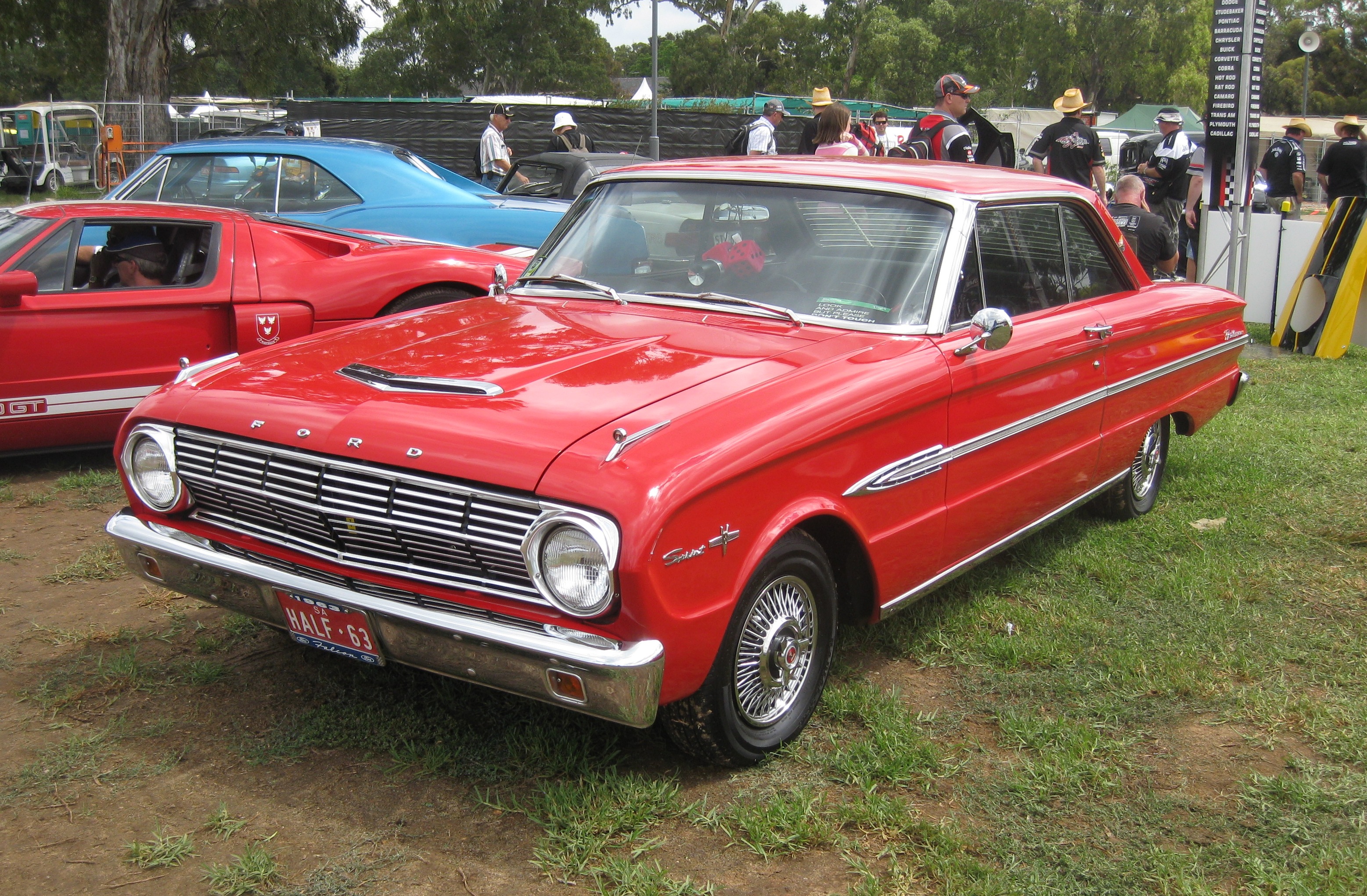
Ford Falcon
"...Mustang to the original Mustang based on the the Falcon chassis. What was Mustang to based on?"
The Ford Falcon is a Ford car line, and its basic platform (the main structure and layout) was used as a starting point for other models. The episode mentions it because the early Mustang was built using that kind of underlying foundation. That’s why people connect the two cars.
The Ford Falcon is a mid-size car platform that served as a foundation for several Ford models, including the original-generation Mustang. In the episode, the Falcon chassis is referenced to explain how the Mustang was related to earlier Ford engineering. That kind of platform sharing is a key part of how manufacturers controlled cost and development time.
platform sharing / parts sharing
"Would it share a platform... using Maverick or using Pinto... adding length to the wheelbase, adding width to the track... about 10 percent parts shared between a Pinto and a Mustang to..."
“Platform sharing” means two cars are built on similar basic foundations to save time and money. “Parts sharing” means they reuse some components, and in this segment they’re talking about how much of that happened between the Pinto and Mustang II.
Platform sharing is when two different cars use the same underlying structure (or major hard points) to reduce engineering cost and speed up development. Parts sharing is the related idea of reusing components across models; here, the hosts cite Ford internal documents suggesting roughly 10% parts shared between a Pinto and Mustang II, with some retroactive upgrades.

Ford Maverick
"Would it share a platform with the initial development process was actually looking at using Maverick or using Pinto. They ended up going with the direction that started with Pinto."
The Ford Maverick is another Ford model from the same general time period. Here, it’s mentioned as a possible alternative that Ford considered before deciding on a Pinto-based approach for the Mustang II.
The Ford Maverick was another compact Ford considered during the early planning for what became the Mustang II. The segment frames it as an alternative starting point Ford weighed before choosing the Pinto-based direction.

Ford Pinto
"...was actually looking at using Maverick or using Pinto. They ended up going with the direction that started with Pinto... about 10 percent parts shared between a Pinto and a Mustang to..."
The Ford Pinto is a smaller Ford from the same era. In this story, it’s important because Ford looked at it as a starting point for the Mustang II, and some parts ended up being shared.
The Ford Pinto is a compact car that served as a development reference point for the Mustang II. The hosts explain that Ford initially considered using a Pinto-based direction, and even after the Mustang II went its own way, some parts were shared and later retrofitted to upgrade Pinto cars.
track width
"...adding length to the wheelbase, adding width to the track."
Track width is how wide the car sits from left wheel to right wheel. A wider track can make the car feel more stable, especially when turning.
Track width is the distance between the left and right wheels on the same axle. Increasing track width can improve stability and cornering feel by widening the stance, which the hosts mention as part of Mustang II’s reworked platform.
wheelbase
"...so heavily reworked that platform, adding length to the wheelbase, adding width to the track."
Wheelbase is the length of the car’s “base,” measured from the front wheels to the rear wheels. If you increase it, the car’s proportions and how it drives can change.
Wheelbase is the distance between the front and rear axles. Changing wheelbase affects interior space, ride/handling balance, and how the car’s proportions look, which is why the hosts call out adding length to the wheelbase during Mustang II’s platform rework.
spindles
"...there's really not much that carries over directly aside from, you know, spindles and little things that typically translate from one car to the next."
Spindles are parts that help hold the wheel assembly and connect it to the suspension. Even if two cars are different overall, some of these smaller suspension/steering pieces can be similar.
Spindles are part of the steering/suspension system that connect the wheel hub to the suspension components. The hosts mention spindles as an example of smaller parts that can carry over between cars even when the overall platform is heavily reworked.
hatchback
"It's funny you say that because the the addition of the hatchback, which is the model Mustang to I had. Yeah. The hatchback gave it just enough aesthetic reference to the Pinto."
A hatchback is a car where the back opens like a door, instead of having a separate trunk lid. Here, they’re saying the Mustang II hatchback’s shape reminded people of the Pinto.
A hatchback is a body style where the rear door opens upward and provides access to the cargo area. The hosts connect the Mustang II hatchback’s shape to the Pinto’s look, suggesting the hatchback gave “aesthetic reference” between the two cars.
four eye Mustang
"...my first car was an 82 little Fox body, a little four eye Mustang. It was rusted so badly."
“Four-eye” is a nickname for a Mustang front end that has four headlights showing (two on each side). It’s just describing the car’s look.
“Four-eye” is a nickname for Mustangs with quad headlights (two per side), a styling cue common on certain Fox-body years. The host uses it to describe the look of their 1982 Mustang.
rustang
"Everybody in my class referred to it as a rustang. Well, you know, my brother had a 79, the only Mustang that's been owned in our family."
“Rustang” is a slang nickname for a Mustang that has rust. People say it when a car’s body or frame has corrosion, usually because it’s old or wasn’t cared for.
“Rustang” is a nickname for a rusty Mustang, combining “rust” with “Mustang.” It’s commonly used when people associate certain Mustangs—especially older ones—with corrosion issues, whether from age, neglect, or poor prior repairs.
four cylinder engine
"It was baby blue. It had a four cylinder engine and it had an automatic. There was nothing particularly exciting about it."
A “four cylinder engine” is a smaller engine with four cylinders. It usually means the car isn’t as powerful as the V6/V8 versions, but it can be cheaper to run and easier to maintain.
A “four cylinder engine” means the car uses an inline four-cylinder powerplant rather than a V6 or V8. In a 1979 Mustang, that typically translates to lower power but better simplicity and often lower running costs.
automatic
"It had a four cylinder engine and it had an automatic. There was nothing particularly exciting about it."
“Automatic” means you don’t shift gears yourself—the car changes gears for you. It’s usually easier to drive day to day, especially in traffic.
“Automatic” indicates the Mustang was equipped with an automatic transmission rather than a manual gearbox. For older Mustangs, the transmission choice affects driving feel, fuel economy, and how the car behaves in stop-and-go traffic.

Chevets
"And he liked to make jokes about getting smoked by Chevets. But, you know, but it was reliable, at least it didn't ever leave him on the road."
“Chevets” refers to the Chevrolet Chevette, a small, budget-friendly compact from the 1970s and early 1980s. The joke about getting “smoked” by Chevets is really about comparing performance expectations between a Mustang and a much cheaper economy car.
reliable (didn't leave him on the road)
"But, you know, but it was reliable, at least it didn't ever leave him on the road. All their fun little cars."
They’re saying the car was dependable. Even if it wasn’t fast or exciting, it was still there when they needed it.
The speaker emphasizes reliability as the main value of the car—specifically that it “didn’t ever leave him on the road.” That’s a practical ownership concept: for many drivers, dependable transportation matters more than excitement or performance.
four speed stick
"And it was bright red with a four speed stick. So you can't. Yeah."
A “four speed stick” is a manual transmission where you shift gears yourself, and there are four gears to use. It can feel more fun and connected than an automatic.
“Four speed stick” means a manual transmission with four forward gears. Compared with an automatic, a manual often gives more direct control and can make the car feel more engaging, even if the engine isn’t very powerful.
V8 engine
"OK, Robert, a friend of ours really, really disdained Ford's move to take away the V8 engine. And there was, you know, what do you think about that?"
A V8 is a type of engine with eight cylinders. People associate it with the classic “muscle car” experience—strong acceleration and a distinctive sound.
A V8 engine is an internal-combustion engine with eight cylinders arranged in a “V” shape. In muscle-car culture, the V8 is strongly associated with performance feel, sound, and power delivery—so removing it is emotionally and enthusiastically controversial.
electric market is kind of cooling
"I think we came closer to actually losing V8 Mustangs in the foreseeable future than what they might want to admit, especially after the the electric market is kind of cooling here. That being said, they seem pretty committed to to stick in with the V8 now."
They’re saying EV interest or sales momentum has slowed down a bit. That can influence whether companies keep pushing only electric cars or continue offering gas-powered options too.
“Electric market cooling” refers to a slowdown or reduced momentum in EV demand or growth compared to earlier expectations. The hosts connect this to the likelihood of manufacturers continuing to offer familiar internal-combustion options like V8s.
hybridization
"I personally love the idea of exploring hybridization. The idea like Corvette has been doing recently with with an electrified front axle to complement gas power to the back of the car."
Hybridization means using both gas power and electric power together. The electric part can help the car accelerate smoothly and use less fuel.
Hybridization means combining a gasoline engine with one or more electric motors and a battery system. The idea is to improve efficiency and potentially enhance performance by using electric torque for quicker response and better traction.
electrified front axle
"The idea like Corvette has been doing recently with with an electrified front axle to complement gas power to the back of the car. If they did something like that in the future, I think would be amazing."
This means the front wheels get help from an electric motor. That can improve grip and make the car feel more stable, especially in tricky conditions.
An electrified front axle means the front wheels receive drive from an electric motor (or motors), rather than relying solely on the gasoline engine. This can enable better traction and handling balance, and it can also support all-wheel-drive behavior without changing the rear-drive layout.
all wheel drive option
"I would love a all wheel drive option for superior handling. And admittedly, even EcoBoosts now, they make more power than GTs did in the 80s and the 90s."
AWD means the car can send power to all four wheels. That usually helps the car grip the road better, which can make it handle more confidently.
An all-wheel-drive (AWD) option means power is sent to both the front and rear axles. The hosts connect AWD to “superior handling,” because distributing torque can improve traction and reduce wheel slip during acceleration and cornering.
GTs
"And admittedly, even EcoBoosts now, they make more power than GTs did in the 80s and the 90s. And you get the superior fuel economy."
GT is a name Ford uses for a sportier Mustang version. They’re comparing older GT performance to today’s turbo engines.
“GT” is a performance trim designation commonly used by Ford, including on the Mustang. Here, the hosts compare older GT-era power to what modern EcoBoost models can produce, emphasizing how engine technology has advanced.
superior fuel economy
"And you get the superior fuel economy. So do they really need a V8 anymore?"
Fuel economy is how far you can drive on a gallon (or tank) of gas. They’re saying the newer engine approaches can help you spend less on fuel.
Fuel economy is how efficiently a vehicle converts fuel into distance, typically measured in miles per gallon (MPG) or liters per 100 km. The hosts use it to argue that turbo and electrification strategies can reduce fuel use even when performance expectations are high.
four cylinder turbo
"Yeah, I've driven some of the recent four cylinder turbo ones. You know, as rental cars in my business travels, and yeah, they were absolutely fun."
This means a smaller engine (four cylinders) that has a turbo to help it make more power. It can feel quick and fun, and it often weighs less than a bigger V8.
A “four cylinder turbo” uses a smaller 4-cylinder engine boosted by a turbocharger to make power without the size and weight of a larger V8. Turbocharging can improve acceleration and keep the engine efficient, but it also changes how the car delivers power compared with naturally aspirated engines.
V8
"Yeah, and not as much front end weight as the V8 either. But I mean, and that only improves the handling."
A V8 is a bigger engine with eight cylinders. It often makes strong power, but it can also be heavier than smaller engines.
A V8 is an engine with eight cylinders arranged in a V shape, typically producing strong power and torque. The episode contrasts V8 weight with smaller turbocharged setups, implying that less front-end mass can improve handling.
front end weight
"Yeah, and not as much front end weight as the V8 either. But I mean, and that only improves the handling."
This is how heavy the car feels at the front. If the front is lighter, the car often turns in more easily and feels more balanced.
Front-end weight refers to how much of a car’s mass is carried over the front axle. Reducing front-end weight can help balance the car, improving steering feel and reducing understeer, which is why the host connects it to better handling.
inflation-adjusted pricing
"the thing is that with inflation, though, the dollar today is worth less than a dime in 1964. If we translate the original $2,368 base price of a 65 Mustang to today, it's about twenty two thousand seven hundred some dollars."
This is comparing old prices to today’s money. The point is to see whether a car was truly affordable in its time, not just what the sticker price was.
Inflation-adjusted pricing is the idea of converting historical prices into today’s dollars so comparisons are meaningful. The host uses this to show how the original Mustang’s base price in 1964 compares to modern pricing, explaining why the car felt “cheap” back then.
launch sales
"it would have negatively impacted the the amazing launch selling twenty what a million units in twenty two months back then, just like dropping ten grand off the price tag now would dramatically increase sales."
This is how many cars get sold right when a new model comes out. The host is saying that if the price were lower, people would buy more quickly.
“Launch selling” refers to how quickly a new model sells during its initial release period. The host argues that small price changes can dramatically affect demand, using the Mustang’s early sales pace as an example of how sensitive buyers can be to affordability.
Nürburgring laps
"Yeah, plus it was never intended to be a world record breaking, you know, Nurburgring laps and all this. That was never the intent of Mustang originally. It's awesome that they can do it."
The Nürburgring is a very famous race track in Germany. People use it like a scoreboard—if a car can do a fast lap there, it gets a lot of attention, and sometimes that attention makes the car cost more.
The Nürburgring is a famous German race track, and “laps” there are often used as a benchmark for performance. When a car is marketed around Nürburgring times, it can create hype and pricing pressure even if the average buyer won’t ever drive it at that limit.
1998 Mustang convertible
"For five years, I would finish working at Porsche for the day and I would go across the street to the parking garage and get into my 1998 Mustang convertible. And I would think, God, this thing is a tank compared to the little nine elevens and boxers..."
Robert is talking about his own 1998 Ford Mustang convertible. He’s using it to illustrate that the Mustang can feel big and different compared with smaller sports cars.
A 1998 Ford Mustang convertible is part of the late-1990s “New Edge” era of the Mustang lineup. In the segment, Robert Kennedy uses it as a personal reference point to explain how the Mustang’s size and feel change compared with Porsche cars he drove earlier in the day.

Mazda MX-5 / Miata
"I used to have Mazda Miata back in the day and it was it was a ton of fun. And now you're talking about the magic word."
The Mazda Miata is a small, lightweight sports car. People like it because it’s easy to drive fast and feels nimble, even without massive horsepower.
The Mazda Miata (often called the MX-5 Miata) is a lightweight, small roadster known for being fun to drive rather than for huge power. In this segment, it’s referenced as a personal “small and sporty” preference and a past ownership experience.
power to weight ratio
"Oh, now you know, it's all about power to weight ratio. Yeah, that's absolutely. I mean, you don't need to have a thousand horsepower if you've got a thousand pounds out of the car."
Power-to-weight ratio is basically “how strong the car is for how heavy it is.” A lighter car can feel fast without needing a huge engine.
Power-to-weight ratio is how much engine output you have compared to the car’s mass. It’s a key way to predict real-world performance feel—lighter cars can feel quick even with modest horsepower.

Lotus
"That's a Lotus guy myself, so I can definitely relate. Oh, I love Lotus. Yeah, I'm sure. I've got a lawn plus two."
Lotus is a British brand strongly associated with lightweight sports cars and performance through mass reduction. The speaker explicitly identifies as a “Lotus guy,” reinforcing the segment’s theme that low weight and balance matter as much as raw power.
Mustang electric vehicle
"When Mustang came out as an electric vehicle in the shape that it has, "
They’re talking about the Mustang becoming an electric car while still looking like a Mustang. EVs can feel and drive differently than gas cars, even if the body style stays similar.
This refers to the Ford Mustang being offered as an electric vehicle “in the shape that it has,” which is a discussion point about how an EV version can keep the Mustang identity. It’s worth explaining because EVs can change packaging, weight distribution, and performance characteristics compared to gas Mustangs.

Porsche Cayenne
"I was with Porsche when we launched the Cayenne for two thousand three. ... So a four door, very heavy SUV was sacrilege."
The Porsche Cayenne is Porsche’s SUV. The point here is that when Porsche first made an SUV, many longtime Porsche fans thought it was “wrong” for the brand—similar to how some Mustang fans react to a new direction.
The Porsche Cayenne is Porsche’s four-door SUV that launched in the early 2000s. The speaker uses it as an example of how Porsche fans reacted when the brand expanded beyond two-door sports cars.
Brand heritage naming strategy
"... I wish personally, I wish that they would have named it Model E. ... And the Model E could do that in theory for electrified fords."
The hosts discuss how naming a vehicle can either honor or dilute brand heritage. They argue that using a historically meaningful “Model” name (like the proposed “Model E”) could better communicate a new direction while reducing backlash from existing fans.

Mach E
"I've driven a Mach E. I've driven a couple of Mach E's... It doesn't rumble... You know, the Mustang styling cues on the Mach E, they look good."
The Mach-E is Ford’s electric car that’s styled to look like a Mustang. The host is saying it’s a good car, but it doesn’t give the same sound and “feel” as a regular Mustang.
The speaker is talking about the Ford Mustang Mach-E, an all-electric crossover that borrows Mustang design language. They’re comparing how it feels and sounds versus a traditional gas-powered Mustang, especially the lack of “rumble” and the different sensory experience.
rumble
"It doesn't rumble... It's it's my Mustangs are slower, a lot slower. But there's a rumble."
“Rumble” is the deep, vibrating sound you often feel from a gas engine. The host is saying the electric car doesn’t naturally create that same effect.
“Rumble” refers to the low-frequency vibration and sound a gas engine produces, which you can feel through the body and hear in the cabin. The speaker is saying the Mach-E doesn’t provide that same physical/sensory feedback.
battery pack
"And it's an experience that I don't get out of anything with with a battery pack. You know, I think Robert just took took us all to church today."
A battery pack is the energy storage system in an electric vehicle, supplying power to the electric motor. The speaker is arguing that because the car is battery-powered, it doesn’t deliver the same “experience” as a traditional gas Mustang.
Mustang styling cues
"You know, the Mustang styling cues on the Mach E, they look good... the horse and the grill, the the tri bar taillights."
“Styling cues” are design elements that visually connect one model to another—in this case, Mustang design features applied to the Mach-E. The speaker lists specific cues (horse/grille and tri-bar taillights) to explain why the car looks “right” even if it doesn’t feel the same.
tri bar taillights
"The horse and the grill, the the tri bar taillights. These are things that look good."
Those are taillights made of three distinct light bars. The host is pointing out that this is a Mustang-like design detail on the Mach-E.
“Tri-bar taillights” describes a specific taillight shape/layout using three horizontal bars. The speaker cites it as one of the Mustang design cues on the Mach-E that helps it look like a Mustang.
Speedway Motors
"[2122.5s] Shoot, I went to the Henry Ford and Greenfield Village. [2128.2s] I went to the Museum of American Speed, which is run by Speedway Motors. [2136.7s] Great place, by the way."
Speedway Motors is an auto-parts and motorsports company. Here, they’re also connected to a museum, which is why it came up in the conversation about researching cars.
Speedway Motors is a specialty automotive retailer and parts company known for supporting motorsports and restoration. In this segment, it’s mentioned as the operator of the Museum of American Speed, tying the brand to automotive history preservation.
Museum of American Speed
"[2128.2s] I went to the Museum of American Speed, which is run by Speedway Motors. [2136.7s] Great place, by the way. [2139.9s] Ben to the Mustang Museum of America, the Halderman Barn Museum, even made it down into Sarasota,"
The Museum of American Speed is a car-history museum. The speaker is saying they visited it in person as part of their research for writing about automotive history.
The Museum of American Speed is an automotive history museum associated with Speedway Motors. It’s mentioned as part of the speaker’s firsthand research, reinforcing the theme of using real exhibits and archives when writing about cars.
Request an Explanation
Heard something you'd like explained? We'll add it to this episode.
Sign in to request explanations for terms you heard.
Want to learn more?
Browse our glossary for plain-English explanations of automotive terms, jargon, and concepts.
Help improve this episode
See something that's not quite right? Our annotations are AI-generated and can sometimes miss the mark. Click the flag icon on any annotation to suggest a correction.