The Volkswagen ID. Buzz is an electric van. It’s designed to carry people and gear, and it has a distinctive, van-like shape. The podcast says it’s coming back for 2027, which matters if you’re waiting for an electric van.
For an electric car, “range” is how many miles it can go before the battery runs out. They’re saying the new version doesn’t go farther than before, which could hurt sales.
“Base model” just means the entry-level version of the car. Here, it matters because the nicer paint option is now available without upgrading to a more expensive trim.
The Hyundai Santa Fe is a midsize SUV. It’s a regular family vehicle meant for everyday driving and road trips. In the podcast, it’s mentioned while talking about which Hyundai models are staying in the lineup.
The Hyundai Santa Cruz is a small SUV-like vehicle that also has a pickup-style bed for hauling. It’s popular with people who want some truck usefulness but don’t want a full-size pickup.
“Compact trucks” means smaller pickup trucks. They’re usually cheaper and easier to live with than big trucks, and the hosts are talking about that market segment.
The Ford Maverick is a small pickup truck that’s known for being cheaper than most trucks. In this discussion, it’s mentioned as the reason the compact-truck market changed.
Auto Savvy is a used-car seller. They sell cars that insurance companies previously wrote off, then they fix them up and sell them again with special paperwork.
A branded title is special paperwork on a used car that tells you it had a major problem in the past. It’s basically the car’s “history label,” and it can affect resale value and insurance.
A salvage title means an insurance company decided the car was a total loss. Even after repairs, the car’s paperwork still reflects that past damage.
Concept
fix the car yourself
The host frames buying these branded-title vehicles as requiring hands-on ownership—either repairing issues yourself or taking steps to keep the car running. This is a common reality with heavily damaged or previously written-off cars, where condition can vary widely.
An airbag is a safety cushion that pops out in a crash to help protect you. If someone steals it, the car can’t protect you the same way, and fixing it can cost a lot.
A black market is an illegal place where stolen items get sold. The idea here is that stolen airbags are being resold illegally instead of through normal repair parts channels.
Out-of-pocket cost is what you pay yourself. Here, it means the total bill for fixing the stolen/possibly damaged airbag and related damage can be thousands of dollars.
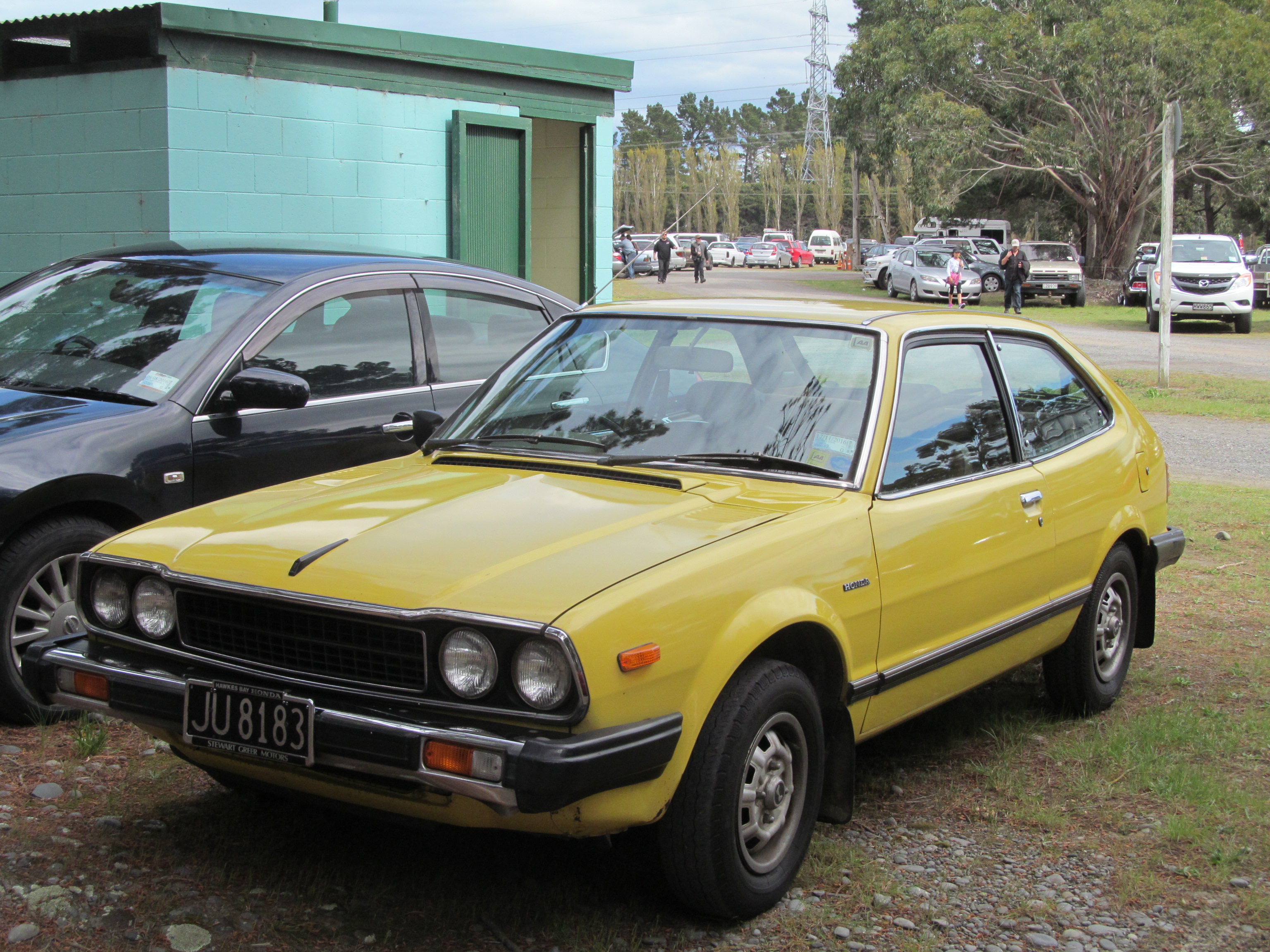
The Honda Civic is a very common Honda compact car. The hosts mention it to illustrate that if an older Civic needs an expensive repair, it might not make financial sense—especially if you’re not insured.
A steering wheel lock is a clamp that locks the steering wheel so the car is harder to steal. The hosts mention it as one of the anti-theft ideas people recommend.
Anti-theft window film is a film you put on the windows to make them tougher to break. The hosts mention it as another possible deterrent against car break-ins.
A serial number is a unique tag that helps identify a specific part. The hosts say airbags don’t have one, so it’s harder for police to tell if a replacement airbag was stolen.
Parts commonality means different cars use the same parts. If thieves can steal one shared part that fits many cars, it’s easier for them to steal and sell.
The Acura Integra is a Honda-family car sold under the Acura brand. The host is saying thieves go after it because it shares the same airbag part with other cars, making theft and resale simpler.
Platinum and palladium are precious metals used in catalytic converters to help convert harmful exhaust gases into less harmful emissions. When their market prices rise, catalytic converter theft becomes more profitable, which the host connects to the broader theft discussion.
Catalytic converter thefts are when criminals steal the catalytic converter from a vehicle, usually to sell the precious metals inside. The host notes that even though platinum and palladium prices are high, catalytic converter thefts are “down a lot,” suggesting thieves may be shifting to other targets like airbags.
Spray painting catalytic converters is a deterrence tactic: it can make stolen parts harder to resell because they’re visibly marked. The host suggests this behavior is one reason catalytic converter thefts are down.
A mesh guard is a protective cover that makes it harder for thieves to get to the catalytic converter. The host is saying some people are using this kind of protection.
“Three grand” is shorthand for roughly $3,000 in repair costs, which the host says it can take to fix the damage from theft. This highlights that even if stolen parts sell for relatively low amounts, the replacement and labor costs can be very high.
A club is a lock device you put on the steering wheel to make the car harder to steal. It doesn’t guarantee safety, but it can slow thieves down enough that they choose another car.
A Ring Doorbell is a consumer smart doorbell camera that records video when it detects motion or a person. In car-theft prevention, the value is evidence: it can capture the thief’s actions and identity even if it can’t stop the theft.
Side-impact means a crash where something hits the car from the side. Side-impact airbags are the airbags meant to protect you in that kind of crash, and the episode says thieves aren’t going after those ones.
The Lexus ES is a midsize family sedan. In 2026, Lexus is updating it so you can get it with different kinds of power—one version is hybrid and another is electric—while keeping the same basic car.
Badging refers to the brand/model nameplates and trim identifiers on a vehicle’s exterior. In this segment, the host says the electric and hybrid ES look almost identical except for the rear badging and a front design detail.
A hybrid uses two kinds of power: a gas engine and an electric motor. It can switch between them depending on how you’re driving to help with efficiency and smoothness.
Destination fees are the cost to ship the car from where it’s built to the dealership. It’s why the final price is usually higher than the base number.
Horsepower is a number that describes how much power a car’s engine or electric motor can make. Higher horsepower usually means the car can accelerate more strongly, though it’s not the only factor.
Torque is the twisting force that helps the car accelerate. “Instantaneous” means the electric motor can deliver that force right away, so the car feels quick off the line.
Front-wheel drive means the front wheels do the work of moving the car. That changes how the car grips and turns compared with cars where the power goes to more wheels.
The Mercedes-Benz 500E is a luxury sedan with a strong performance focus. The podcast talks about how power is delivered, including that a related model (the 350e) would drive the front wheels. That helps explain how the cars may handle differently.
All-wheel drive (AWD) sends power to both the front and rear axles, which can improve traction and stability. “Dual motor” means there are two electric motors (typically one per axle), allowing the car to distribute torque between wheels more flexibly than a single-motor setup.
The drivetrain is everything that sends power to the wheels. If the car sends power to different wheels (like front-only vs all wheels), it can feel different when turning.
The Toyota Crown is a Toyota sedan that’s meant to feel more upscale than a typical family car. Here, the host is saying the new Lexus ES looks similar to it and even shares similar mechanical parts, even though it’s a Lexus.
The Toyota Avalon is a Toyota sedan. The host is saying the Lexus ES used to be based on it, which helps explain why Lexus and Toyota cars can feel mechanically similar.
An executive package is a bundle of nicer comfort options. In this Lexus ES, it includes rear-seat features meant for relaxing—like a footrest, reclining, and even seat massage.
The Lexus LS is Lexus’s top, most expensive luxury sedan. The host is saying that since the LS is discontinued, the newer ES is trying to give you some of that extra space and comfort.
An infotainment system is the car’s main screen and controls for things like music and navigation. Here, it’s also used to help plan EV charging stops.
Route planning is the navigation feature that helps you plan your trip. For an EV, it can suggest where to stop to charge and how long you’ll likely need.
Charging stations are the public places you plug an electric car into to recharge it. The navigation can show them along your route and help you plan stops.
One-pedal driving is when you can slow down mostly by just lifting off the gas pedal. The speaker is saying this car doesn’t do that, so you’ll likely use the brake pedal more.
The charge port is where you plug the EV’s charging cable in. They’re saying this car makes you turn the car off and get out to open it, instead of opening it from inside.
The Ford Bronco Sport is a smaller SUV designed for light off-road driving. It’s meant to handle rough roads better than a typical commuter SUV. The podcast also points out it’s related to the Escape, which helps explain how it’s built.
The Ford Escape is a compact SUV. It’s mentioned because the Bronco Sport is built on the Escape’s underlying design. The podcast also notes that the Escape is being discontinued.
A platform is the car’s basic “skeleton” that engineers reuse across different models. If two cars share a platform, they’re built on similar underlying parts and layouts.
The Jeep Wrangler is one of the most famous off-road SUVs. In this segment, the host is basically saying it’s the obvious choice when you’re talking about off-roading.
The Ford Bronco is a bigger off-road SUV than the Bronco Sport. The host is pointing out that it’s actually much larger than the Jeep Wrangler, even if people don’t realize it.
The Nissan Armada is a big SUV meant for carrying people and gear comfortably, and it’s built to handle tougher situations than a small crossover. “Pro-4x” is a higher trim that’s usually set up for more off-road use, and the hosts are saying it works both for trips and everyday driving.
Concept
good value
“Good value” here means the SUV seems worth the money for what it can do. The hosts are saying it’s a smart choice because it works for both weekend trips and normal daily driving.
A “truck-based SUV” is built on a sturdier foundation similar to pickup trucks. That often makes it better at hauling and handling rougher conditions, which is why it’s popular for people who want one vehicle for both trips and everyday driving.
The Ford Expedition is a large SUV. It’s made for carrying people and gear, and it can be used for towing. It’s mentioned with other big SUVs because they’re similar in size and purpose.
The Chevrolet Suburban is a big SUV made to fit more people and cargo. It’s built for families who need lots of space. It’s often discussed alongside other large SUVs because it competes on size and usefulness.
The Toyota RAV4 Woodland is a special version of the RAV4 made for people who want a little more adventure capability. They’re saying it’s the best choice because it’s efficient as a hybrid and still practical.
The Land Rover Defender is a tough, off-road-focused SUV. The hosts are saying it does especially well on trails because its shape helps it climb obstacles and drop down without scraping the front or rear.
The Lexus GX is a luxury SUV that’s meant to handle rough roads and trails. In this discussion, it’s being compared to the Defender to show two different ways to do off-roading.
These are measurements of how well a vehicle can handle steep bumps and dips. If the angles are good, the front and rear are less likely to hit the ground when you go over obstacles.
The Rivian R1S is an electric SUV designed for outdoor/adventure driving. They’re comparing it to another electric off-roader and saying the results are very close.
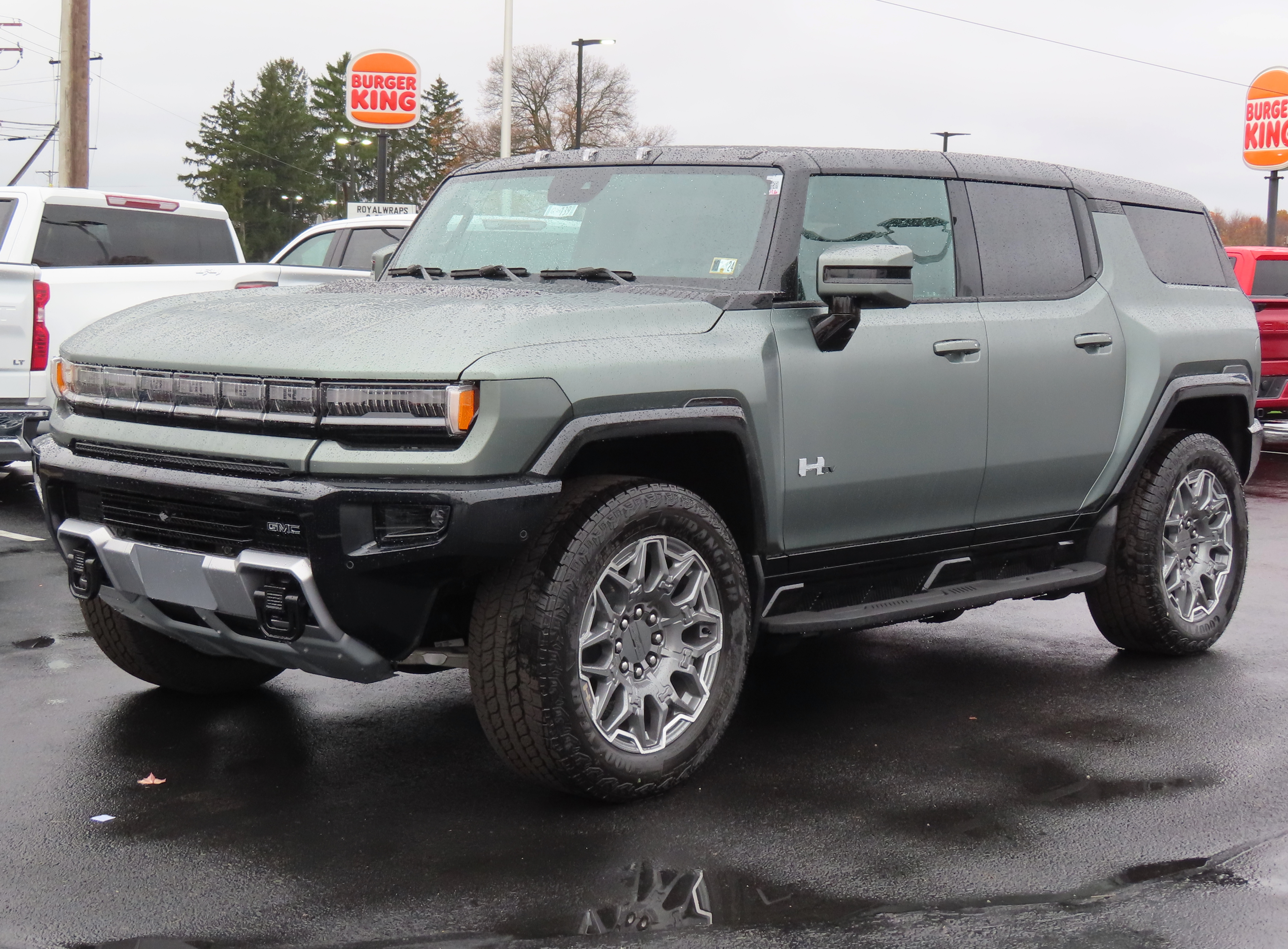
The Hummer EV SUV is an electric SUV designed for off-road driving. It’s meant to be tough and capable on rough terrain. The podcast compares it to another similar Hummer EV to see how close their off-road results are.
Term
energy efficient
Energy efficiency means how much driving you get out of the energy you put in. The host is saying a huge battery can mean you’re not using that energy as efficiently as you could.
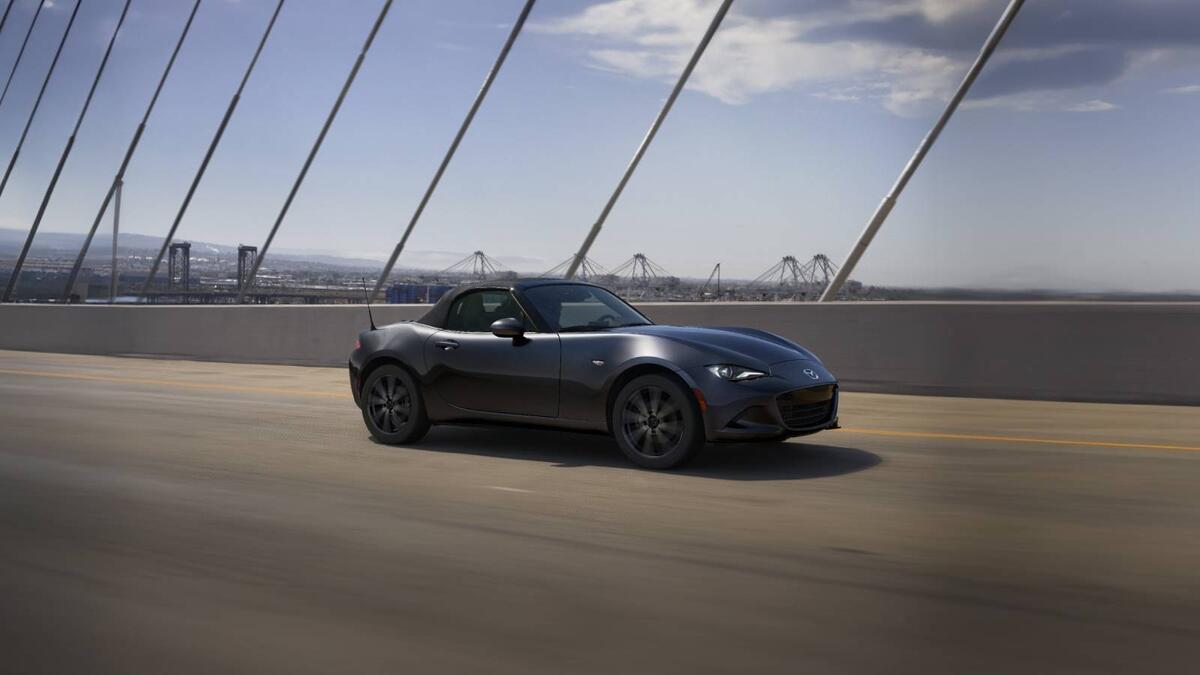
The Mazda Miata is a small two-seat sports car. It’s designed to feel quick and fun to drive, especially in corners. It comes up in comparisons because it’s very light for its size.
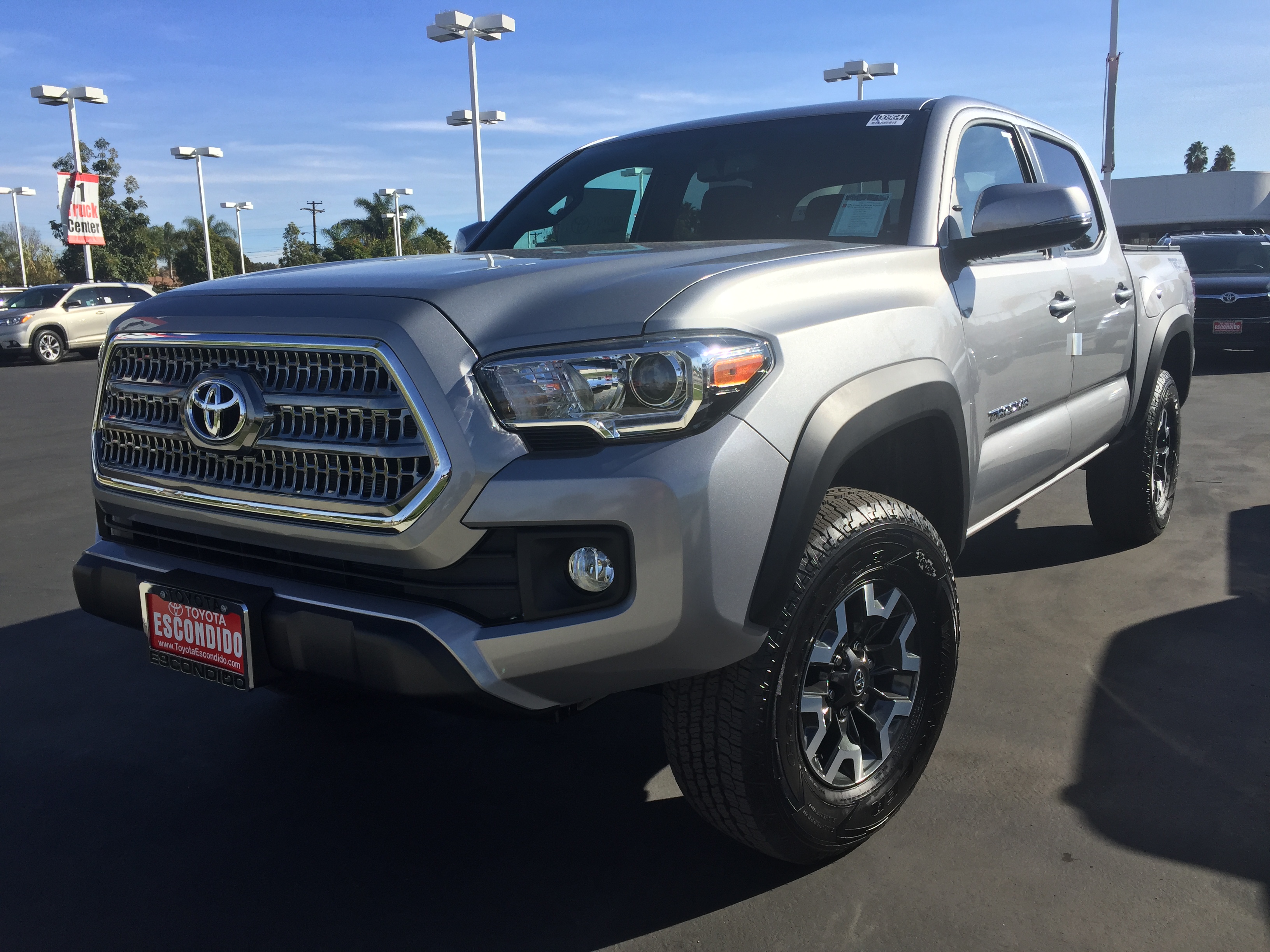
The Toyota Tacoma is a midsize pickup truck. The TRD Pro version is set up for off-road driving with more rugged equipment. It’s discussed because it’s one of the go-to trucks for people who want to drive on rough terrain.
The Jeep Gladiator is a pickup truck that’s designed to handle off-road driving. It has a truck bed like other pickups, but it’s built with off-road features. The podcast mentions it as one of the main options in the off-road midsize truck group.
The GMC Canyon Crew Cab is a midsize pickup with a larger back seat area. It’s meant to carry more people while still being a pickup for hauling. The podcast includes it when talking about off-road-capable midsize trucks.
The Ford F-150 is a popular full-size pickup truck. Here they’re talking about a visibility feature where part of the window can drop down so the side mirrors can be positioned lower, helping you see around them with fewer blind spots.
The Ford F-150 is a full-size pickup truck. It’s available in different versions, including off-road-focused models. The podcast mentions it because some trims are specifically built for rough terrain.
Blind spots are parts of the road around your car that you can’t see well from the driver’s seat. The hosts say the F-150’s mirror/window setup helps you see those areas better.
The A-pillar is the vertical metal support at the front of the car, near where the windshield meets the side window. The hosts mention it because the window feature they’re describing is near that front pillar area.
Adjustable pedals let you move the gas and brake closer or farther away. That can make it easier to drive comfortably and reach the controls without stretching.
The Ram is a full-size pickup truck. It’s built to haul and tow, and it can be configured in different ways depending on what you need. The podcast mentions it because it’s one of the main pickup choices being compared.
The Rivian R1T is an electric pickup truck built with off-road driving in mind. Here, the hosts are saying it’s the best EV truck if you want to take it off the pavement.
The Chevrolet Silverado EV is an electric pickup truck. It’s meant for people who want the usefulness of a truck but with electricity instead of gasoline. The podcast compares it to other electric trucks and focuses on how easy it is to live with.
The Hyundai Tucson is a popular compact SUV that comes in different versions, including a hybrid. Here they’re talking about it as a camping-friendly choice, mainly because of how much stuff you can carry.
The GMC Acadia is a bigger SUV meant for more passengers and more cargo. In this segment, they’re recommending it for camping because it has the space to carry what you need.
When people talk about roof capacity, they mean two things: how much weight the roof can hold when you’re not moving, and how much it can safely handle while you’re driving. That matters if you’re carrying a tent or cargo on top.
This is a Toyota SUV with a hybrid powertrain, meaning it’s designed to be efficient for trips. The hosts are talking about whether it has the right size and space for camping gear and sleeping in the vehicle.
The Mazda CX-70 is an SUV. The podcast is talking about how its hybrid system feels when you drive—especially whether it feels smooth. This matters because some hybrids can feel different depending on how the power is delivered.
A plug-in hybrid is a car that uses both gas and electricity, and you can charge it from a plug. Since it can drive on electricity sometimes, it can feel different than a regular hybrid.
The Jeep Grand Cherokee is a popular SUV from Jeep. Here it’s mentioned as the person’s previous vehicle before switching to something they found smoother.
The Genesis GV70 is a luxury SUV. It’s meant to feel more comfortable and refined than many non-luxury SUVs. The podcast mentions it as an upgrade for smoother driving.
The GMC Yukon XL is a big SUV with extra room inside because it has a longer wheelbase. The host recommends it for camping because it has space for gear and people.
The Hyundai Ioniq 5 is an electric SUV, meaning it runs on electricity instead of gasoline. It’s described as good for camping because it has a lot of space for gear and enough driving range for trips. The podcast is using it as an example of a practical EV SUV.
Power take-offs are built-in power outlets for running gear outside the car. For camping, that can help you power things like lights or chargers without bringing extra equipment.
The Kia Carnival is a minivan that’s built for hauling people and gear. The host recommends it for camping because it has practical space for luggage and supplies.
“Pro Power On Board” means the truck can supply electricity from built-in power outlets. For camping, that can run lights or charge devices without bringing a separate generator.
The GMC Sierra EV is an electric version of the Sierra pickup. The hosts are saying it works well for camping because it can provide power and still feels like a real truck.
LIVE
Whether you drive a car, need a car, or just occasionally bummer ride with friends, you've
come to the right place.
Join Jill and Tom as they break down everything that's going on in the auto world.
New car reviews, shopping tips, driving green, electric cars, classic cars, and plenty of
great guests.
This is the Consumer Guide Car Stuff podcast.
All right, this is the Consumer Guide Car Stuff podcast, and I am indeed Tom Appel,
publisher of Consumer Guide Automotive.
Thank you for joining us this week.
When you have a moment, you know the drill, check us out at ConsumerGuide.com.
That's all I'll say about that this week.
Jill.
Yes.
Jill Seminello.
How are you today?
I'm doing really well.
How are you?
I'm good.
That is Jill Seminello, a contributing editor here at ConsumerGuide.com, North American
Car of the Year juror, and prolific freelancer.
Crazy week.
Lots of use.
It has been a crazy week.
Can I talk about something entirely non-automotive for a moment?
I guess so.
All right, it's sad.
It's kind of sad, and it might be about something that not everyone knows about.
Okay.
But in 1958, a photographer by the name of Hart Kane went to Harlem, and somehow, someway
talked 57 different musical artists performing in Harlem that night, Saturday night, to show
up for a photograph very early in the morning, Sunday morning.
That photograph is now known as A Great Day in Harlem, and it is the world's greatest
document of living jazz artists at the time.
People have probably seen this poster and didn't know what it was, but it's all these
great jazz people all in one place at the same time.
1958 was for Esquire magazine.
Here's the sad thing.
Are you ready?
Because it's pretty sad.
The last living person to appear in the photograph died over the weekend.
Okay.
Sonny Rollins, a legendary saxophone player, died at the age of 95.
He was the last living person to appear in that image.
But if you've ever walked into a record store or some kind of cool restaurant or whatever,
you've seen this poster.
It's absolutely legendary.
It's a fantastic photograph.
It means so much to so many people, but yeah, we lost a great musician, Sonny Rollins, and
that kind of closes the door on this incredible photograph.
So I just wanted to mention it, and I'm trying to think.
I used to work with someone who had a huge blow up of this poster on her wall at the
office.
It was very cool, and she could name all the people in it too.
So there you have it.
Just a cool thing, a little sad.
I have no idea who this is, but I will go with your sadness.
I will post a picture of Sonny Rollins.
Okay.
We've been talking about things that I got wrong.
Okay.
Turns out the Volkswagen ID buzz will indeed return for 2027.
Okay.
We have everything but pricing, and they haven't changed much.
Nothing mechanically has changed, so range has not improved, which was a problem.
But one of the interesting things that they've done is that they made the cool two-tone paint
jobs available on the base models.
So you no longer have to pay an extra 10 grand to get the orange or the green or the yellow.
Oh, that's good.
So that is good.
That actually immediately improves affordability.
So we'll see how well that sucker sells.
I'm not hopeful at this point because the range is still an issue.
Yeah.
Yeah.
Well, and it's really funny because at the Midwest Automotive Media Association, I sat
at a table with a representative from Volkswagen, Hyundai, and a representative
from Scout, and they were talking about how media lately has been getting their news wrong.
And so they did discuss the ID buzz saying, nope, nope, it's coming back.
But the other two vehicles or the other vehicle that is not gone that I think we had previously
reported was going away because apparently there was a Reuters story that said it was
going away was the Hyundai Santa Cruz.
So it's not going away either.
So there are still two compact trucks in the segment with a Maverick and a Hyundai.
And then the other thing that apparently media have been getting a little bit wrong is the
idea that the production for the Scout vehicles is being pushed back.
And that is actually not true either.
And I mean, we will have a guest from Scout on next week, so we can dig into that a little
bit more.
But interesting that there's been a spate of news lately where, you know, it seems like
it's fact.
It seems like it's fact.
Everybody's reporting it.
But then we turns out it wasn't true.
Yeah, two things, though.
The Santa Cruz probably is gone.
They're just going to write out this particular build iteration of it and not do a new generation.
Part of the problem is it comes in a little expensive for what it is.
And since it launched, the Ford Maverick redefined what that segment is.
And one of the things that segment isn't is a crossover with a pickup bed, which is very
much what the Santa Cruz is.
So we'll see how long that lasts.
But they probably want to do something different in that segment at some point.
What was the other vehicle?
What was the other vehicle?
Well, it's not gone, but the the Scout vehicles we had
reported that they were getting pushed back or production was going to be delayed.
And that is not true.
Well, the funny thing about Scout, regardless of when they actually start
producing stuff is the vehicle has completely changed since we started having this
conversation. Remember, they were going to be electric vehicles.
That was it. And then they started talking about maybe adding an extended range version
of the vehicle, and now that's the only vehicle they're going to build at first.
So there may never be a purely electric Scout at this point.
Well, but we'll see.
But what that vehicle is has changed.
And one of the things that we learned, too, from talking to Sam, Sam
Piarani of Auto Forecast Solutions, says this is also an experiment in distribution.
Volkswagen, a major retailer of vehicles and seller of vehicles in US
is going to try to sell vehicles, not using the dealer franchise network.
Right. So that's this is an experiment there as much of anything else.
So, right. Yeah. Interesting stuff.
Maybe we got that wrong. I don't know.
Like I said, we'll have a guest from Scout next week.
We can we can get him to clarify and extrapolate.
I've got a short story here. You ready?
Hello, the end.
Now, I am brief visit to today.
I was on the the Nick DeGilio and Nick D podcast.
And one of his listeners sent me a question about a company called Auto Savvy.
Auto Savvy, A-U-T-O-S-A-V-V-Y one word.
Auto Savvy is a retailer of used vehicles
used that sells vehicles under something called a branded title.
Branded title probably doesn't mean a lot to some people in different states
because automotive titles are handled at the state level.
Here's the thing about Auto Savvy.
They're selling vehicles that are basically broken.
Insurance companies decided they weren't worth repairing.
So they're fixing it up and selling them under what's called a branded title,
which means that in the US, it's like an Illinois, it's like a salvage title.
OK, so I want to get someone from this network on the show because
to buy a car from them, I think you need to be a little brave.
I think you need to be willing to gamble
and be prepared to fix the car yourself, perhaps, or do something to keep it running.
But the cars are cheap.
That's the whole appeal here.
So Auto Savvy will probably talk about that later.
You wanted to talk a little bit about airbags.
Yeah, I did. I did.
So I live in Chicago and I'm in the city and in my neighborhood recently,
you know, I belong to a couple of like neighborhood Facebook groups.
I have been seeing a high number of posts from, you know,
people around me saying that their vehicle has been broken into
and their airbag has been stolen and they are overwhelmingly Honda vehicles.
I've seen a lot of Honda CRVs, but also Accords and Civics being broken into.
And literally, the only thing that is being taken is their airbag.
Yeah. And, you know, this is this is kind of an interesting phenomenon
because in many ways it relates back to the old Takata airbag recalls.
The old but still ongoing.
Still ongoing because we live in hell.
Yeah. And the exploding airbags from Takata.
And so when those vehicles were recalled,
there was a shortage of supplies for replacing these airbags,
which then, you know, created this vicious cycle of
airbags getting stolen to put on the black market to sell to somebody
who actually needs to replace their airbags.
And so but there's been an uptick recently of these these airbags being stolen again.
And the the replacement costs are actually pretty high
because it's not just as simple as, you know, putting a new airbag into
the little module area.
You know, it's labor, it's parts, it's, you know, all of the things.
And like if they damaged the vehicle when they took it, you know,
there's there's also some repairs that have to be made.
And so, you know, like replacing your window because they probably broke it.
And, you know, so they're saying that the total out-of-pocket
cost for repairing this is going to be anywhere from $2,000 to $3,500,
which if you have an older, you know, Honda Civic or CRV,
it may not be worth the repair.
And you're not insured. Yeah, that's rough.
So, I mean, I mean, the thing that you got to do
to is make sure you've got the the proper insurance that would cover this.
And it's really funny because I was going through, I'm like, OK, how do you
avoid this? What are the preventative measures?
And, and, you know, one of the articles I read was like Park strategically
at, you know, under under like a well lit high traffic area.
And what's funny is, again, in my neighborhood,
people are posting videos in broad daylight of people breaking into cars
and like on busy streets like Fullerton or Kedzie and like stealing airbags
because they can literally break in, you know, pop the the module off of the steering wheel,
pull out the airbag and be gone in less than a minute.
So parking strategically is not the solution.
So they're saying, you know, using a steering wheel lock or,
you know, anti theft window film and, you know, just the other thing they're saying
is if this does happen to you and you need to replace your bag,
don't like buy a cheap airbag online because that just perpetuates the thefts
to continue to happen, because probably if you're buying an airbag on eBay
or something like that, it was stolen.
And that's the problem here.
And that's that there's no serial number on the airbags.
No. So they can't be identified as stolen.
And I know the Chicago police, especially because, as you noted,
this is a big problem in Chicago right now.
It will spread.
There's no reason why it's local unless a lot of Chicagoans buy civics.
But the other problem is parts commonality.
And that's that the cards you're talking about, the Honda civics,
some accords, the Acura Integra, whatever the Acura was before that PIL.
That was the civic and some CRVs.
These vehicles all use the same airbag.
So you have this commonality, which not only makes them easy to steal
or easily easy to identify, but easy to resell because there's so much demand for them.
And one of the interesting things is I checked today.
Platinum and palladium prices are very high.
So you would think that there's still be a lot of catalytic converter thefts,
but actually they're down a lot, which I think a couple of things happen.
But I think a lot of people actually spray painted their catalytic converters paint.
And I think that there's that mesh you could wrap around some of them.
Also, I think the demand was met.
I think so many people stole catalytic converters.
There's just a lot of stolen ones hanging around in back lots.
So the big thing now, airbags, that's where the money is.
What sucks is that the people stealing these things, I mean, I don't want them to make money.
They're not making much money off of these things.
Between 50 and 200 bucks.
But as you've noted, it can cost you three grand to fix the problem.
Yeah. And if they can, like if they have a whole bunch of these Hondas parked on a street,
they can literally break into 10 vehicles in less than 10 minutes and be on their way.
And that's $2,000 for the thief.
Anything you can do to slow down the thief will make them think twice about your car.
So a club is great.
Is somehow they've got to shove that out of the way to get to the steering wheel?
Or if you could just wrap something around your steering wheel.
The problem is you'd have to do that after you park because you want your airbag to work.
Yes.
That is correct.
So kind of a deal there.
But yeah, this is a problem in the Chicago area that's going to spread.
There's nothing about it that's unique to Chicago, except the parking situation, perhaps.
But yeah, this will spread to other models too as thieves become aware of what's common
and what's easy to steal, unfortunately.
But I can't think of any great ideas to help prevent these thefts.
I mean, other than other than the club, you know, or, you know,
if you're parking in front of your house and you have a camera like a ring doorbell or something
like that, you know, you may not be able to prevent the theft, but you will be able to
get a picture of the thief who stole it.
You know, you could potentially, I mean, a lot of cameras these days are
like they're not, they're wireless, so you could put a camera in your car.
And you could get a really good picture of the thief as they're stealing your airbag.
You could put a sign in your car window saying, smile, you're on camera.
Anything like that may be a deterrent.
I know that when I've been the victim of crime previously, one of the reasons, you know,
they caught the guys that did it, but they didn't end up prosecuting because they didn't have pictures.
So anything you can do to grab a picture of whoever's committing the crime is going to help you,
maybe not initially, but eventually.
Trying to figure out how much a club costs, but I thought they were about 80 bucks.
So relatively cheap insurance.
Yeah.
So there you go. That's a problem.
It's going to be a bigger problem before it becomes less of a problem.
And unfortunately, yeah, there's a lot of airbags that need to be replaced.
So also, these are just the steering wheel airbags.
They're not stealing the passenger side ones or side airbags or side impact or knee airbags.
It's specifically the steering wheel ones because they're so gosh darn easy to get out.
Yep.
All right. New topic.
Are you ready?
I'm ready.
This one's all yours.
Lexus really late to the game here in 2026 rolling out a replacement for its popular
midsize sedan.
What's going on?
Yeah. So coming out this month, so it is June 1st today.
Hello. Hello to June.
So coming out this month, they have the all new 2026 Lexus ES.
It is both a hybrid and an electric vehicle.
And they are essentially, it's the same vehicle with just different powertrains.
So one is completely electric.
The other is hybrid.
They look exactly alike except for the badging on the back.
And then the hybrid has like a slot on the nose that denotes like this is the grill
that's letting air into the engine.
But otherwise, the vehicles are completely identical, interior, exterior, the same.
And so, you know, I just, this is the eighth generation of the ES drove it a couple of
weeks ago, really, really liked it.
I liked both models.
I mean, Lexus and Toyota do an amazing job with their hybrid powertrains.
And, you know, this is smooth, seamless.
I can see a lot of people opting for the hybrid version of it.
And, you know, the base price is going to be about $47,000.
And it is.
Now, that represents a fairly large price increase over the old one, though.
Yeah.
Well, and so what I thought was really interesting is the electric vehicle is actually the less
expensive model.
So I like just pulled up the pricing in front of me and you have the 350e premium.
So the base model is $48,895 with destination fees.
And the hybrid, like the lowest priced hybrid is $51,095.
That is interesting.
And then although the base electric is a little low on power, is it about 225 horsepower or
something like that?
Yeah.
So the base electric is 221 horsepower, but I'm going to tell you with the instantaneous
torque, I don't think that matters.
And, you know, if you go for the 500e, so it's the 350e is going to be front wheel drive,
221 horsepower, the 500e is going to be all wheel drive dual motor, 338 horsepower.
And, you know, then you've got the hybrid, which is going to be kind of in the middle
in there.
But I didn't like with the instantaneous torque, I don't think horsepower matters as much
in my opinion.
And I mean, I noticed a bigger difference between the all wheel drive and the front
wheel drive drivetrain, like when you were rounding corners and things like that,
you could feel the movement of the vehicle differently.
That was more noticeable to me than the horsepower difference, even though it's like
more than 100 horsepower different.
Any particular reason why they're still calling this a 2026 at this point?
The model year is nearly over.
Yeah.
I don't know.
I don't know if they intended for it to be out earlier.
I don't, well, you know, because I feel like when I was looking at press releases,
they were saying it was going to be out in April.
But, you know, I was listening to automotive news today and they said that the vehicles
are arriving, you know, later this month.
So I don't know if there was just a delay and when they were intending to get it out.
That was not a question I asked.
Yeah, it's an interesting question.
And manufacturers play around with model years in weird ways for different reasons.
And often we never know why they pull ahead a model year or delay one.
But there you have it.
I was looking at this car and I did this weeks ago, too.
It looks surprisingly like the Toyota Crown to me in silhouette.
And I did some checking and it is mechanically very similar to the Toyota Crown,
which makes sense because the old Toyota Avalon was the basis for the old Lexus ES.
So that relationship across brands just stayed the same, basically.
Does this vehicle, it's supposed to be roomier.
Does it feel roomier?
Oh, yeah.
I mean, the backseat is gargantuan.
I mean, I say that as somebody who's small.
But they actually in the 350E with the luxury package, they have,
or I think, yeah, the luxury trim, they have included, or no, that is the premium trim.
But regardless in 350E, they have included an executive package where they allow you,
like behind the passenger side, you can put out an ottoman and recline and there's massaging seats.
And meant for either a chauffeur driven vehicle or for if you're lounging while you're charging
or waiting in carpool or something like that.
But there is enough space that I would say an average sized adult could move the passenger seat
forward and then put that ottoman up and lounge comfortably.
Yeah, I think part of the reason that that's included too is that this vehicle now
builds the space that was also occupied by the larger LS, which has been discontinued.
Though that car was no more roomy than this was and far, far, far more expensive.
So this thing goes on sale as soon as they hit dealerships.
Yes.
It's now available hybrid or EV, there is no gasoline version.
And I think this wraps up the slow said decline animal and ultimate dismissal of the old 3.5
liter V6 that I used to love from Toyota and Lexus.
But I think that's completely gone now.
Yeah, yeah, I think you're right on that.
But I mean, this vehicle has a lot going for it.
Lots of good technology.
It's got Lexus's newest infotainment system and the battery electric version.
You have the they now have route planning in it.
So it will like if you were going from Chicago to Indianapolis,
it would tell you how many miles it would take to get there.
If you need to stop along the way and then it would show you all the charging stations
that are along the way and how long you would have to stop at the charging station.
So you don't have to fill up to 80% to get to your destination.
Like it'll tell you you only have to charge to 40% to get to your destination.
So I thought that was a real leg up and a new big improvement for Toyota Lexus EVs
because they haven't had that before.
This is new.
And there were a couple of things that I thought were a little bit weird.
One, there is no one pedal driving.
And two, I guess I've never charged a Toyota vehicle at a public charger,
but you have to turn off the car in order to open the charge port.
And you cannot open the charge port from inside the car.
You have to exit the vehicle to open the charge port.
Interesting.
Oh, and this now uses an ACS.
So this is it's Tesla ready.
So that's cool.
It'll be interesting to see how this vehicle sells.
Sedans, of course, are on the decline, but this is an all new spiffy up sedan
that's hybrid only with an electric version.
That's kind of cool.
We'll see how it does.
I've always loved the ES because it defined really what Lexus is.
It was just such a refined vehicle.
All right, we're going to take a break.
And when we come back, we talk to John Vincent of US News and World Report.
Questions or comments?
Drop us a line at carstuff at consumerguide.com.
That's carstuff at consumerguide.com.
Welcome back to the Car Stuff podcast.
And we're back.
This is the Consumer Guide Car Stuff podcast.
I'm Tom Appel.
She is Jill Seminello.
Doing good, Jill.
Still doing okay.
Okay.
Yeah, yeah.
I check multiple times because a lot can change.
The situation can change.
I will tell you, I have turned off my air conditioning.
So I'm finally warming up.
So yay.
Is it warm out?
I'm right by an open window, but nothing's moving through it.
I mean, it's like 70 degrees.
It's kind of warm.
I just am always cold.
So I would prefer to be warm.
So I'm doing better than the first time you asked me.
All right.
So you're doing good.
I'm doing really good.
I needed to ask again.
All right.
Online with us today is John Vincent.
He is Senior Editor for Vehicles Sensing It.
US Nudes and World Report.
John, I think this is your third visit to the show.
Thanks for coming back.
Absolutely.
Always fun to talk to you guys.
So you guys have done some fun stuff over there.
For the first time ever.
Tell us about what you did here.
So we put together an awards program
for the best adventure vehicles.
And we know that adventures mean different things
to different people.
For some people, it's getting from one hotel to the next.
For others, like Jill, it's flinging cars
across the desert with no GPS.
So we looked across the spectrum of everything
that's out there and came up with four different categories.
SUVs for off-roading, trucks for off-roading,
best cars for camping, and best cars for road trips.
Yeah, this is a good list.
I was going through this.
Now, I've got some questions about some of these vehicles
because I don't know how they are better or worse than others
at things like camping.
So I'm sure you've got an answer for me there.
But why don't you just walk us through the list?
Why don't we start with the best SUVs for adventure?
Okay, so to start off with, I know that all of our awards
are based on data.
They include our opinions, but our opinions are, you know,
turned into numbers and included in the data analysis.
So we don't just, you know, sit in a smoke-filled room
and say, let's make these cars the winners.
What are you suggesting about other outlets, sir?
I'm suggesting nothing about other outlets.
Okay, all right.
Okay. Yeah, usually it's just pizza.
That's what we used to do.
Let's talk about best SUVs for off-roading.
Subcompact SUV for Bronco Sport.
Bronco Sports based on the escape platform,
and the escape is going away.
And I think the better vehicle survived in the Bronco Sport.
Best compact SUV.
That's a conversation we have to have later if we have time.
Okay.
I think it's very weird that the escape is going away.
All right.
Best compact SUV for off-roading is probably the most
obvious vehicle on this list, and that is the Jeep Wrangler.
You're not going to give off road awards
without giving the Wrangler something.
No, no.
Best mid-sized SUV for Bronco.
A lot of people don't realize how much bigger the Bronco is
than the Wrangler, but it's a much larger,
more substantial vehicle than the Wrangler is.
Yeah, I fit better in it.
Large SUV.
And this one we had a lot of discussion about.
But, you know, the Nissan Amada Pro 4x.
Is a good value.
And thinking about vehicles that are good for, you know,
not just the 10 days that you're doing adventuring stuff
in them, but also the other 355 days a year
where you're taking that car to work, school, whatever.
It has to work for those as well.
So, you said there was a lot of discussion about this.
Why?
It's not a top seller in the class.
Okay.
There are some other very capable vehicles in that category,
including a bunch of truck-based SUVs,
Expedition, Tahoe, Yukon.
But, Amada, you know, when you look at the numbers,
it came out on top.
Also, I think when Nissan brought the Amada back,
they did something they needed to do
that they didn't do the first time,
which was to price it appropriately.
The first time they brought out a large SUV,
they kind of priced it right in there
with like Expedition and Suburban.
And it was new to the market.
It was new to the segment,
and it seemed relatively expensive.
I just drove the Amada Pro 4x,
and I think it came at about $84,000,
which was substantially cheaper than the competition.
It's amazing how expensive the big SUVs have gotten.
Oh, that segment's crazy.
Yeah, when you're looking at, you know, a GMC Yukon
that's $100,000, that's a tough deal to take.
Yeah, and people are paying it,
so everyone wants to be in that segment.
Yeah.
Best hybrid SUV for off-roading.
This one was a little bit of a surprise too,
but when you look at the numbers,
it comes out on top.
Toyota RAV4 Woodland.
Okay.
Hybrid gets phenomenal gas mileage,
good cargo room.
The numbers say it comes out on top.
I almost asked like,
oh, they finally did a hybrid version of the Woodland,
but everything's hybrid now.
I keep forgetting that.
Yeah, everything's hybrid.
And there's a plug-in hybrid version
of the Woodland now as well.
I didn't know that, okay.
Luxury SUV for off-roading, Land Rover Defender.
It's a light full vehicle.
For this one, it came down to kind of the Defender
and the Lexus GX.
Two very different flavors of the same thing,
but the Defender, when we looked at the numbers,
approach and departure angles really helped it out.
Okay.
And then that's what put it over the top.
Cool.
And then you have an EV.
Yes, the Rivian R1S.
Cool.
Again, a tough category because the numbers between it
and the Hummer EV off-roading were very, very close.
Or are they?
But in my mind, it kind of comes down to what,
which of those vehicles do you want to live with every day?
And I think I want to live with the Rivian.
Yeah, I drove the Hummer very recently and I found it,
you know, a nice vehicle to drive and it was quick
and it was comfortable and everything about it
was pretty cool.
But where do you put it?
It's so big and it's ponderous.
And it's not actually, it is electric and that's good,
but it's not actually energy efficient.
It just has a monstrous battery.
The battery unit weighs more than a Mazda Miata.
There's, okay, by point exactly.
Thank you.
And it's actually illegal to drive it across the
Brooklyn Bridge because it's over the weight limit.
Wow.
You know, people are doing it though.
Oh yeah.
I mean, actually a lot of SUVs are probably close to
or over the weight limit, but they do it every day.
Yeah.
Let's get in the pickups.
Midsize pickup for off-roading Toyota Tacoma TRD Pro.
Another tough category, some great competitors.
Colorado ZR2, GMC Canyon, AT4, Jeep Gladiator.
But the Tacoma just is an all around better package.
All right.
False size pickup for off-roading, Ford F-150.
You have two main off-road models of that,
the Trevor and the Raptor.
So there's kind of an off-roader for, you know, whatever your budget.
Okay.
Yeah, you've got the Ram as runner up.
Okay.
And then you mentioned the trim levels.
Okay.
Well, and I just want to say the Ford F-150 from a petite person's
perspective, like that's just my favorite truck period,
because of like the kick down windows that lower the side mirrors.
And it just, you get really good visibility and very few blind spots.
So I don't know if everyone knows what you're talking about.
The kick down windows, like at the front by the A-pillar,
they just kind of drop down, which allows you to lower the side mirrors
so that you can see over the top of them rather than like not.
Essentially, it's actually an opening in what would be the door
that allows you to see more mirror.
So I'm like, that doesn't make sense to me.
But okay.
All right, all right.
It made sense to me.
Good for short people.
We'll post a picture.
Yes.
And, you know, Jill, does the Ford still have the adjustable pedals?
It does. So does the Ram.
The Ram and the Ford are the only two pickup trucks.
That still have adjustable pedals.
Yeah, that's a huge thing.
Best electric pickup for off-roading Rivian R1T.
Another tough category.
And again, against the Hummer and Silverado EV,
but the truck that you want to live with every day.
Incredible range.
It's just a good choice.
And honestly, in that category, it's actually one of the more affordable.
That's interesting.
That's funny because it did,
everything else sneaks up on it with the off-road packages, I guess.
They do.
Yeah, interesting.
All right, what else you got, sir?
Let's go to Best Vehicles for Camping.
And this was, you know, we base everything on data,
but we look at that data and make sure that we're capturing
everything about the vehicles that is important
and making sure that the data validates what we see in real life.
So best subcompact SUV for camping.
Again, the Bronco Sport.
Subcompact hybrid SUV for camping.
Cross-trick hybrid.
It can get you there.
It's a very capable vehicle.
Best compact SUV for camping.
Hyundai Tucson.
What are the Tucson and the Tucson hybrid in the next category?
Win is cargo room.
More cargo room than RAV4 or CRV.
And they, you know, again, excellent vehicles.
Compact SUV, compact plug-in hybrid SUV, rather.
Fairly thin category.
RAV4 plug-in hybrid.
Could also have been the Hyundai Tucson plug-in hybrid.
That was, they had to have been in the mix somewhere.
And the Sportage plug-in hybrid.
Yeah.
But RAV4 numbers-wise came out on top on that one.
Mid-size SUV for camping, GMC Acadia.
GMC did very well in these awards.
You know, they talk about themselves as being like a luxury adventure brand.
When we look at the numbers on these categories, it kind of validates what
they're saying is that these vehicles are good for that stuff.
So I question for you before you continue down the list.
When you're looking at this, are you thinking in terms of like car camping,
people are sleeping in their vehicle or able to put a tent on top or just able to fit their gear
or yes to all of the above?
Yes to all of the above.
We looked at cargo space.
We looked at roof capacity, both static and dynamic.
We looked at fuel efficiency even on this one because you have to get there.
Best mid-size hybrid SUV for camping, Grand Highlander Hybrid.
And that's a vehicle that we just reclassified into mid-size.
We had it in large.
Didn't seem to fit that well in large.
So we brought it down to the mid-size category where it seems to compete
a little better with its gears in there.
Mid-size plug-in hybrid SUV for camping.
Again, it's a fairly small group now that the Jeep Grand Cherokee 4 by E is gone.
And that the winner is Mazda CX-90 P.
You have to ask you about this vehicle because I whine about it.
A lot.
A lot.
Do you find the CX-70 and the CX-90 hybrid drivetrains to be deficient in terms of smoothness
and just general progressiveness?
Okay.
Yes.
All right.
Just asking.
I didn't want to be alone.
No, you're correct.
They the inline six in the non-hybrid, non-plugin hybrid is so smooth.
When you pop into a plug-in, you realize how not smooth it is.
All right.
We're on the same page.
I feel very good about that.
And I say that as recovering Jeep 4 by E.
I remember following somebody who had purchased one, he had a, I think, a three-year lease
and he could not wait to be out of that lease on a 4 by 80.
It just, it was Grand Cherokee.
I am now out of my Grand Cherokee and into a Genesis GV-70.
Oh, well, that's smoother.
Yes, it is and faster.
Yeah.
Best large SUV for camping and that is the GMC Yukon XL, the long wheelbase Yukon,
you know, suburban in GMC clothing.
Best electric SUV for camping, Hyundai Ioniq 9, tons of cargo room, good range.
A lot of features that make it good for camping.
Also, power take-offs.
Great looking.
Best minivan for camping, Kia Carnival.
Okay.
One of the benefits of the Carnival that is tough to find in minivans nowadays is the floor is
completely flat.
Yeah.
And when you take the seats out, it's a fully flat floor.
That's handy.
Now, why, why the Carnival over any of the other minivans?
Because they all seem like they do about the same thing.
You know, the Carnival is the newest minivan in the segment.
So, feature-wise, it has more safety features and all of those things flow into our data set.
So, it kind of rose to the surface.
The other engine was a pretty close competition in that one.
The Carnival, I think, is still the only minivan you can do under 40 grand, just barely.
Yeah.
And which is saying something considering it's not built in America and it's exposed to tariffs.
Yeah, they're definitely taking a beating on that.
Yep.
Best mid-size pickup for camping, 26 GMC in.
Okay.
And that came down to size of the bed, cab.
Best full-size pickup for camping, and we went round and round over this one because the Ford
150 has a feature that makes it better than any truck out there for camping.
And that has pro-power on board.
Oh, okay.
I was going to say zone lighting.
But that's, that's cool too.
But pro-power on board with the hybrid where you can power your trailer for days at a time.
Yeah.
And they, you know, the truck just switches on occasionally to recharge the battery
and then sends power to your trailer all night.
That's a great feature for camping.
I had not thought of that.
Yeah, that's awesome.
Yeah, and that's one where, you know, the data didn't really show us that, but we looked at
how we could make the data reflect things like that.
Yeah, that's cool.
That's a great point too.
All right.
What else do you got, sir?
Best electric pickup for camping because people do that.
GMC Sierra EV.
There you go.
And, you know, it's the same basic truck as the Silverano EV, but the Sierra is just better.
Well, it's just nicer.
Yeah.
I have not driven the GMC.
I've only driven the Chevy, so this is very interesting to me.
Basically, think about it as a Silverado that doesn't have the interior of Malibu.
I will now forever think about it that way.
Let's get into road trips.
Yeah.
Best car for road tripping.
And when we were working on the data set for this one, it's 2026, so fuel economy is a huge factor
here.
Yeah.
It may not be as much in future years.
We'll look at the data, but for 2026, it had to be up there.
Best car for road tripping Kia K5.
Just a nice midsize sedan.
Just a nice midsize sedan.
Yeah.
Best hybrid car for road tripping, Toyota Prius.
Okay.
Put over the top by fuel economy and cargo space.
Oh, yeah.
With the hatchback design, it has a ton of cargo space.
Interesting.
Yeah, it's a good-looking thing, too.
It really is, and it's good driving.
It's a shame that we will probably see the Prius go away soon,
simply because Toyota has made excellent hybrid drivetrains available in everything.
So the Prius' role is somewhat diminished, but that's a shame because it's actually an excellent car.
But honestly, which would you rather have?
Would you rather have a Prius or a Corolla hybrid?
I've asked myself that question, and I think I want to go Prius.
I would be there, too.
Yeah.
So maybe Prius sticks around.
Let's hope.
And let's hope that Prius doesn't become an SUV like everything else.
Subcompact SUV for road tripping, Hyundai Kona.
Okay.
Fuel economy, cargo space.
Yeah.
Subcompact hybrid SUV, Kia Niro.
Now, the Niro is a vehicle that doesn't get much love out there.
I wasn't aware there still was a Niro.
There are two Niros still.
Oh, okay.
There's the hybrid and the electric Niro.
Okay.
Amazing mileage.
Lots of room.
Maybe not the prettiest thing to look at, but it gets the job done.
Right.
Also, I don't think it's available in all 50 states anymore.
We'd have to check on that.
Or is it, John?
Do you know?
I'm not sure.
Yeah.
That might be one of those green state kind of things.
I'm seeing a lot of Hyundai and Kia vehicles on here.
And GMC.
GMC is the big winner.
Yeah.
Across all the awards.
GMC is the big winner.
Yeah.
Compact hybrid SUV for road tripping, Kia Sportage Hybrid.
Okay.
Compact plug-in hybrid SUV for road tripping.
Rav4 plug-in hybrid for road tripping.
The Rav4 now has 50 plus miles electric only range.
That's pretty generous.
That saves you a couple of gallons of gas a day.
Yeah.
And that's about 10 bucks at prices today.
Mid-sized SUV for road tripping, GMC Acadia.
Okay.
Again, another repeat winner.
Mid-sized hybrid SUV for road tripping, Hyundai Palisade Hybrid.
Sure.
You can imagine which vehicle that this one was up against.
And, you know, it was super close between it and Telluride.
That is a nice application of a hybrid drivetrain too.
I mean, that car, that vehicle needed a hybrid and they did it so well.
I don't know why you wouldn't go hybrid.
I think, I'm not sure whether Joe would agree with me or not.
But I think the hybrid version of this vehicle is what led it to its Nactoy win last year.
Oh, interesting.
Okay.
I would agree with you.
The hybrid powertrain is just so good.
It is.
The other powertrain is fine, but the hybrid rocks.
Yeah.
It's quick.
It's very efficient.
It wasn't, in my test drive, it wasn't nearly as efficient as I thought it was going to be.
But I still broke 30 miles per gallon, which for a vehicle of that size and that power, why not?
You're moving a really big box through the air.
Yep.
Yep.
Lots of abs.
Midsize plug-in hybrid SUV for road tripping CX-90 plug-in hybrid again.
All right.
Or not the hybrid in my case.
Not the hybrid in your case.
Yeah.
Inline-six is really good.
Yes, it is.
Or if you want cargo space, you just get the CX-70, which two-row with a ton of cargo space,
then cupholders for the imaginary third row.
That's for your car camping.
Yeah.
You know, your cupholders, your bed in the back, and then you've got your cupholders on the side
for car camping.
Exactly.
One thing we did not check was to see whether Jill's Yeti would fit into any of these cupholders.
Very, very important.
The Yeti must fit.
Best large SUV for road tripping, GMC Yukon XL.
Okay.
The Yukon is kind of like a escalade for people who want to stay below the radar.
I've often thought that.
It's a great way to go, and you don't lose much in terms of mechanical refinement.
You know, it's just features.
No, you just lose chrome on the outside.
The thing is your resale value is going to be rock solid, so great way to go.
Electric SUV for road tripping, Hyundai Ioniq 9.
Okay.
Wonderful vehicle.
Yep.
And it's always close with the EV9 from Kia, but when I first drove the Ioniq 9,
it felt like the EV9 in a version 1.5.
Which is slightly better in a lot of different ways.
Best minivan for road tripping, Toyota Sienna.
Okay.
It's down to great fuel economy.
Plus, it's the only minivan you can buy that's available in both hybrid and all-wheel drive
at the same time.
Yeah.
You can get either one of those features on other minivans,
but you can't get them both together unless you buy the Sienna.
And that, not for road tripping, but just for hanging around Chicago, that's important.
Up here, where we eight to 10 days a year, we really, really, really all wish we had all-wheel drive.
That is true.
And you wish everybody else did too.
Yes.
That is also true.
Because they're in your way.
Going five miles an hour in the left lane on the highway.
Just send them to a tire shop.
That would help out a lot.
A mid-size pickup for road tripping, GMC Canyon.
GMC again?
Okay.
SUV for road tripping, Ram 1500.
With the Ram, it kind of comes down to efficiency, cabin size.
You cannot get the diesel in the Ram anymore.
So in terms of overall fuel efficiency, the GM products still win and what your best fuel economy
is going to be.
But when you run the numbers, diesel is so expensive that you're really not financially
coming out ahead anymore.
Yeah, that's a bummer.
Because GM still sells that three-liter in-line diesel.
Yep, and they sell in a lot of stuff.
Yeah, and everyone else is backed away from that.
There's no other light-duty diesels.
But yeah, it's six bucks a gallon.
You're not getting anything out of that.
Six or seven out here in Oregon.
Are you seriously?
Yeah.
Five for regular and leaded and seven for diesel.
That's rough.
Best electric pickup for road tripping, GMC Sierra EV.
All right.
Very cool.
Well, this is a really great list.
So what made you guys decide that you wanted to do something like this?
So we looked at a lot of the lists for adventure vehicles and they were for hardcore adventurers.
Right.
And we wanted to develop a list of adventure vehicles for people who don't do adventure
type stuff every day.
So these needed to be good vehicles all around and capable of adventures.
Okay.
So something kind of your everyday driver that can also do hard things.
Exactly.
Okay.
Cool.
John, we're going to link to this from our show notes,
but how can people see the whole list in one place?
Just go to usnews.com and look up the autos tab and you'll find it all there.
Sounds good.
John, thank you so much for your time today.
Thanks for the opportunity.
All right.
That was John Vincent with US News and World Report.
We're going to take a break and when we come back.
Waste time.
Waste time.
Questions or comments?
Drop us a line at carstuffatconsumerguide.com.
That's carstuffatconsumerguide.com.
Welcome back to the Car Stuff Podcast.
And we're back.
This is the Consumer Guide Car Stuff Podcast.
I'm Tom.
She is Jill.
Jill, I'm mad about something.
When aren't you mad about something?
Usually never, but I have been whining about this technological three steps backward thing
that Stellantis is doing and how we're now embracing the hemi again, yada, yada.
I just got worse hemi news from one single source.
So I don't know if it's true yet, but I'm sure it is.
Stellantis is dropping the mild hybrid system, the eTorque system from the hemi.
So just burn a little more oil, whatever.
Does it matter?
Well, the eTorque system is essentially the autostop start engine, right?
No.
You say that, but it's actually so much more than that.
The eTorque system actually applies torque at launch.
It's a belt driven system.
It's very simple.
And it's a system that General Motors used to use too called belt assist system.
But it is stop start, and you're going to get smoother stop start because torque is being applied
to the crankshaft during the start process.
But it is also the real application of torque to help the launch the vehicle,
which lowers the load onto the gasoline engine.
So an eTorque engine would return better fuel economy.
But if they do away with the eTorque,
does that mean they're also doing away with the autostop start?
That's the question.
Probably, maybe, at least temporarily.
And so, I mean, I find that, to me, less aggravating,
because I don't like autostop start.
But I feel like there were some regulations recently that were lifted
so that people do not feel, automakers should not feel compelled to put autostop start
in their vehicles.
It's no longer.
All the regulations were lifted.
Yeah, well, it's no longer going to benefit them to have that.
And it's a feature that makes people angry.
So it doesn't bother me.
Well, it depends.
If you can be angry, I am not.
It depends how people shop for a vehicle.
If they look at EPA numbers, then having the stop start system there helps.
Yeah, but if you're just going to turn it off every time you get in the car, it does not.
And I think a lot of people turn it off.
I just drove the Lincoln Navigator.
And every now and then, the stop start system would pick up a little bit
and remind me that there was one there at all.
It was super silky smooth most of the time.
No way I would turn that off.
Like, I'm getting mid- or fuel economy.
Why would I do that?
But I've been in cars where it sucked.
And we know that Subaru's aren't especially good at the stop start system thing.
But anyway, that's my rant.
Okay.
Did another step backwards.
It's quiz time.
But first, you probably want to talk a little bit about social media.
A little bit.
I will be very quick.
You can find me on all the things at my name, Jill Siminello.
And I use the hashtag Cartageur.
I post new videos to YouTube and TikTok pretty much every day.
And so I call that your daily dose of drive.
So be sure to, if you're a video specific person,
be sure to check that out.
I'm experimenting with a new hashtag to see if it helps me generate interest.
It's a hashtag nude, nude, nude.
I think you need XXX.
So we'll let, what?
XXX, XXX?
Oh, yeah, that would help too.
Probably the same vein.
Yeah.
Okay.
I'll let you know how that helps.
Cool, thanks.
All right, it is quiz time.
Are you ready?
I am ready.
Today's topic is, is it built there?
Okay.
Is it built there?
That's today's topic.
The quiz is five questions.
There's also a bonus question.
You need three total of all six questions for a win.
Okay.
The bonus question, as always, related to the topic of the day.
Okay.
Are you ready?
All right, number one, the Mercedes-Benz G-Wagon, the Galandavagon.
That's their crazy paramilitary looking thing.
Is it built in Graz, Austria?
I'm going to say yes.
Austria, it is.
Yes, by Magna Steyer, a big international company that has a very flexible
factory that builds low volume stuff.
So yes, you're on the board.
The G-Wagon is Austrian.
By the way, that sucker is expensive.
Do you know how much that starts at now?
Uh, is it like a hundred or a hundred and ten?
Hundred and sixty.
Oh my gosh, I'm way up.
Yeah.
And there's an electric version that starts at a hundred and sixty-three.
All right.
You've got one point.
Are you ready for question two?
Ready.
Is the Nissan Altima, Nissan's midsize sedan built in Smyrna, Tennessee.
Oh, I think it is.
I'm going to say yes.
It is.
Yes, you have two points.
You're in a good way.
You're doing good.
You got two of the six.
You're probably going to cruise home to an easy victory here.
Maybe.
Now you just jinxed me.
Maybe.
Jill, the Chevrolet Tahoe.
Is that built in Eugene, Oregon?
Oh, I have no idea where the Tahoe is built.
Eugene's a princess, right?
Isn't there a princess Eugene?
I don't know.
And I don't remember like any plants in Oregon.
But you know.
I'll explain.
I bet they have house plants.
Maybe house plants.
I'm going to say no.
The Chevrolet Tahoe built in Eugene, Oregon.
You're saying no.
Yes.
It's not.
You're on.
Yeah.
It's built in Arlington, Texas.
Okay.
All right.
Question four, the Porsche Cayenne.
Porsche Cayenne is a built in Bratislava, Slovakia.
The Porsche Cayenne.
You're like once upon a time it was built in the United States.
By this Porsche's mid-sized crossover.
One of the first premium mid-sized crossovers.
Also way back when, when they launched this thing,
there was like this emphasis on off-road capability.
We kind of forgot about that since.
Yeah.
With one of the very first cars I remember being driving
at the Midwest Automotive Media Association Spring Rally
in their off-road course was the Porsche Cayenne.
Yeah.
They probably wouldn't even put that in the off-road course anymore.
No.
Bratislava.
It is.
Yeah.
Volkswagen has a huge factory in Bratislava, Slovakia,
where they build the Cayenne, the Cayenne Coupe.
The Volkswagen Toreg, the Audi Q7, the Audi Q8.
And then some stuff for other brands that we don't get in the U.S.
So big factory.
Okay.
So you got one wrong there, right?
Yep.
All right.
The Subaru WRX, is that built in Lafayette, Indiana?
The WRX?
Of course, the sporty version of the small Subaru, the Impresa.
I drive by that plant every other week.
And I feel like they put the cars in front, facing the highway,
that they build at the plant.
And I'm trying to remember.
But this is cool.
Yeah.
It is.
It is very cool.
And then that campus is flipping huge.
They do that.
I wonder if they'll do that again at Belvedere.
Belvedere's got, that's in Illinois, between Chicago and Rockford.
And that's where they're going to build the Jeep Cherokee.
Or they are, I guess, building the Jeep Cherokee.
So they've got hills and stuff to park cars on.
Yeah.
That is cool from the highway.
But I'm trying to remember if I remember seeing a WRX parked there.
I think they only make SUVs there.
I'm going to say no.
You're correct.
No, they build them in Japan.
Okay.
All right.
Nice job.
You got four out of five.
The bonus question.
Are you ready?
I am never ready for the bonus question, but let's have it.
You've been talking a lot about Salt Lake City lately.
Yes.
Yes, I have offline.
Almost nonstop.
Yeah.
Just salt like this, salt like that.
I need you to tell me which of the following is not a real museum
located in Salt Lake City.
Okay.
Are you ready?
Yes.
The Butterfly Biosphere.
The Beehive House.
The Alf Bangan Ski Museum.
Or the Nelson.
I can't read this.
I should turn on my lights.
The Nelson Major Bowling Hall of Fame.
One of those is not a real museum located in Salt Lake City.
Yes.
By the way, this is according to visit Salt Lake.com.
Visit as I type.
No, I'm not typing it in.
I'm not going to cheat.
I'll read them again.
The Butterfly Biosphere.
The Beehive House.
The Alf Bangan Ski Museum.
Or the Nelson Major Bowling Hall of Fame.
Alf.
Or Alf.
Elf.
Elf.
Elf.
Elf.
Elf.
Which certainly sounds like an authentic Swedish style person who might ski if I hadn't made that up.
So I think it's got to be one of the last two.
And I've never seen the movie, but I feel like there's a movie where there's two guys that
Woody Harrelson is a bowler.
It's one of the greatest movies ever made.
King Kong.
And I feel like...
Bill Murray.
I think we're going to make something up.
Like that would be like it was the Bowling Hall of Fame or whatever.
And they were going to Utah on a road trip or something.
But I have no idea.
I've never seen it.
I think that's actually the plot of the movie.
I think that's, yeah.
So I, but, but the Alf, like you, you just kind of said if I hadn't made it up.
And so I'm like, well, it, yeah.
So did you make it up?
I don't know.
The Alf Angham Ski Museum.
Or the Nelson Major Bowling Hall of Fame.
Yeah.
I'm going to go with the Bowling Hall of Fame.
As fake?
Yeah.
Nice job.
That's the fake.
All right.
Did it figure into Kingpin at all?
No, I hadn't, I hadn't considered Kingpin.
Okay.
Fantastic movie.
Poor logic on my first, but I got it right anyway.
It's actually a deeply troubling movie filled with really troubling stuff,
but it is very, very funny.
Not my sense of humor.
All right.
Who do we have on the show next week?
Next week, we, I believe, I'm like, I want to, I want to make sure I get this right,
but I'm pretty sure it's somebody from Scout.
And I want to say it is Ryan Decker from Scout.
But let me just double, double, double triple check.
Yes.
Ryan Decker from Scout.
An all new brand.
We have a guest down from an all new brand building extended range electric pickup trucks
and crossovers.
Yes.
That'll be exciting.
All right.
Guess what we did?
We had another great show.
Yeah.
Good to have John Vincent down the show.
Always welcome.
Big thanks to John Vincent.
Thanks to you, Jill.
Thanks to Margaret.
Let's talk more about cars again.
Next week.
Next week.
Remember to check us out at consumerguide.com.
The Car Stuff podcast is produced by J-Turn Media.
To advertise on the show, please drop us a line at carstuffatconsumerguide.com.
About this episode
The Car Stuff Podcast jumps between big auto news and practical buying talk: the hosts confirm the Volkswagen ID Buzz is returning for 2027, then dig into rising steering-wheel airbag thefts—especially on Honda models—explaining the fast, hard-to-trace black-market cycle and the repair costs. Lexus ES coverage follows, including the all-new 2026 hybrid/EV lineup, pricing, and charging quirks. The episode also features their adventure-vehicle awards, with winners across off-road, camping, and road-trip categories.
Tom opens the show by acknowledging the passing of jazz saxophone legend Sonny Rollins. Sonny was the last living performer to have appeared in the 1958 Esquire magazine photo A Great Day in Harlem. The image appears on the Car Stuff Podcast Facebook Page.
The hosts discuss the return of the Volkswagen ID. Buzz retro-themed electric themed minivan for 2027. Though little changed mechanically, the Buzz may be packaged to improve the pricey van's perceived value.
Jill talks about a marked increase in airbag thefts in the Chicago area, especially among certain Honda models. The hosts address one possible way to dissuade would-be airbag thieves.
Still in the first segment, Jill reviews the all-new 2026 Lexus ES midsize sedan, which now comes only in hybrid and all-electric trim. Listen in for her take on this long-term brand staple.
In the second segment, the hosts welcome John Vincent of U.S. News to the podcast. John walked the hosts through the outlet's 2026 "Best Adventure Vehicles" list.
In the last segment, Jill is subjected to Tom's "Is it Built There?" quiz.
Hosted by Simplecast, an AdsWizz company. See pcm.adswizz.com for information about our collection and use of personal data for advertising.