The episode is described as “heavy duty” because the hosts spend time discussing semi trucks (big rigs). Semi trucks are a different segment than pickup trucks, but they share themes like chassis design, durability, and powertrain choices. This sets expectations for the kind of engineering and use-case talk listeners will hear.
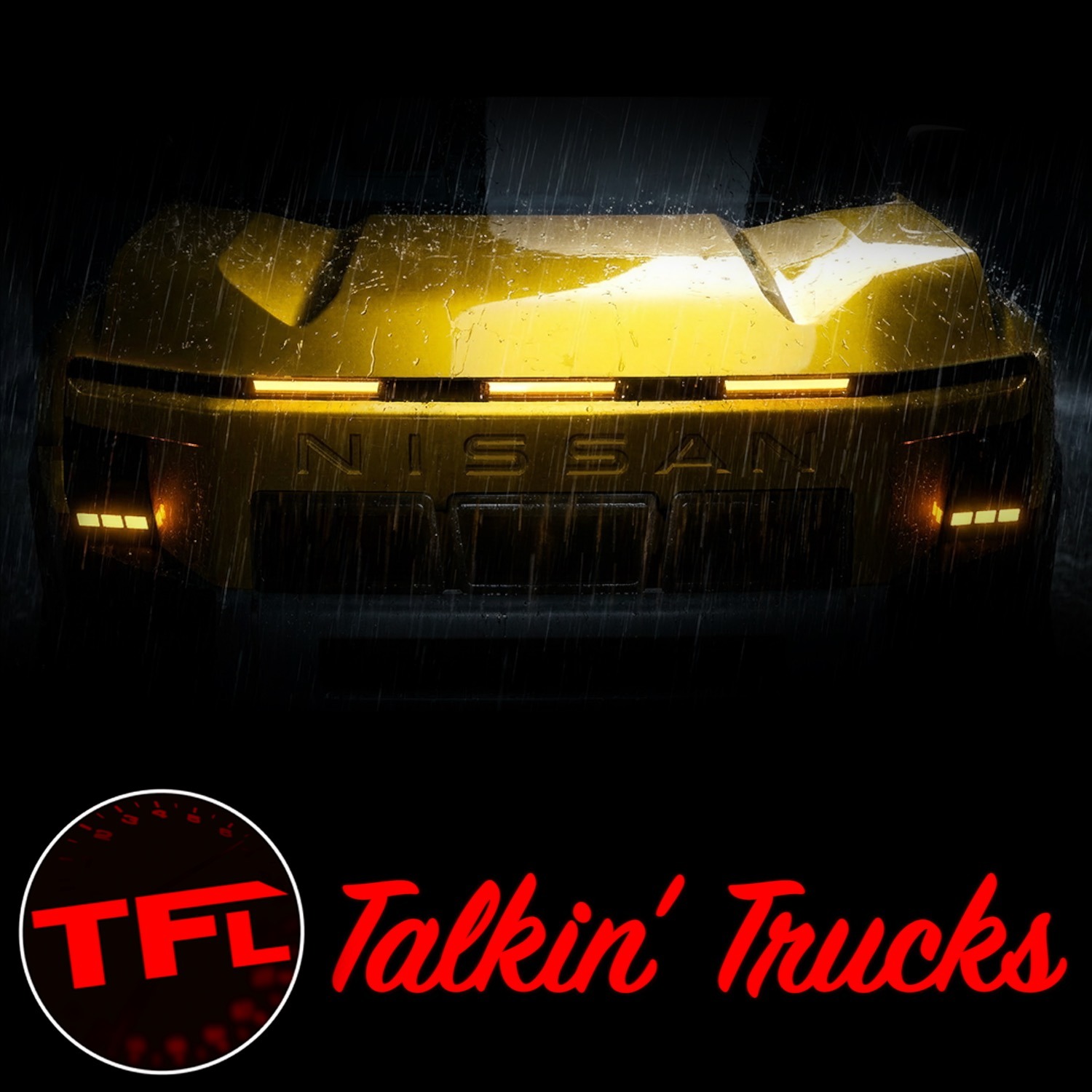
Nissan is the company behind the new truck/SUV news in this episode. The hosts say Nissan is teasing the exterior design and that it’s tied to a body-on-frame platform. That matters because it suggests Nissan is aiming at buyers who want a more traditional truck feel.
Body-on-frame means the car’s body sits on a separate metal frame underneath. Trucks like this are usually better for towing and carrying heavy stuff because the frame does most of the work. It’s also one reason these vehicles can be easier to build for durability.
They’re talking about a specific “tough off-road” category of vehicles. The idea is that Nissan wants its trucks/SUV to meet the same expectations as the big off-road names.
Topic
iGauntlet
They mention the iGauntlet as something they’ve done with the truck. It’s basically a real-world test/event that helps show how capable the vehicle is.
The Nissan Frontier is a midsize pickup truck. It’s designed for hauling and everyday driving, with a bed for tools or cargo. The podcast brings it up as part of a set of trucks being discussed for future plans.
Infiniti is Nissan’s luxury brand. The hosts are saying Infiniti could make a nicer, more feature-rich version of the Exterra idea. So instead of competing as a regular Nissan, it would compete as a more premium option.
The Lexus GX is a rugged SUV that’s built more like a truck, so it’s good for off-road use. In this conversation, they’re using it as an example of the kind of luxury off-road vehicle they think Infiniti could challenge. It’s basically a “who would win” comparison between premium off-road SUVs.
The Infiniti QX60 is a luxury SUV with room for multiple passengers. It’s meant for comfortable everyday driving, not just off-road use. The podcast mentions it mainly because the name QX60 already exists.
They’re talking about pricing the new truck/SUV cheaper than similar off-road models. The goal is to attract buyers who want the same kind of capability but don’t want to pay as much. It’s basically a “better deal” strategy.
The Ford Bronco is Ford’s off-road SUV. The hosts bring it up because it’s one of the main vehicles people compare against when shopping for rugged SUVs. They’re basically saying Nissan wants to be cheaper than the Bronco.
The Toyota 4Runner is a rugged SUV that’s known for off-road ability. The hosts are saying the new Nissan could be priced below it to attract shoppers. So it’s not just about looks—it’s about value versus a proven off-road choice.
The Toyota Tacoma is a popular midsize pickup. The hosts are saying some current Tacoma trims already have pricing that undercuts certain competitors. They’re suggesting the new Exterra could follow a similar value strategy.
Renderings are digital pictures of a car concept or future model. They’re not always the real thing, and details can change before the vehicle is actually built. The hosts are basically warning that some images might be guesses.
The Nissan Pathfinder is a family SUV with three rows. The hosts are talking about how its construction style has changed over the years, and they think a more rugged setup could make it better for off-road use.
The Nissan Rogue is a smaller SUV/crossover that’s usually aimed at comfort and good everyday fuel economy. The hosts mention it as the “more efficient” option compared with a more rugged, off-road-focused idea.
e-Power is Nissan’s hybrid-like system where electric motors do the driving. A gas engine mainly generates electricity to keep the system going, so the driving feel is more like an electric vehicle. It’s designed to be efficient without needing to plug in.
Electrified powertrains are vehicles that use electricity to help move the car. Sometimes the engine still plays a role, but electric motors do a lot of the work. That can change how the car accelerates and how efficiently it uses fuel.
A “square body” is basically a boxy, angular vehicle shape instead of a rounded, aerodynamic one. The hosts are saying the rumor images look like they’re going for a very classic, boxy style.
Neo retro means a car looks inspired by older designs, but it’s still a modern vehicle underneath. The discussion here is about whether the rumored styling would be more extreme than what GM would likely do.
The Hyundai Boulder is a concept SUV Hyundai showed to hint at what a future production vehicle could look like. In this segment, they’re highlighting that it’s built like a truck (body-on-frame).
Kia Tasman is the pickup truck Kia is talking about in this segment. They’re showing images of it, but the hosts aren’t sure it will be sold in the U.S.
The Hyundai Santa Cruz is a smaller pickup meant to be easier to live with than a big truck. The hosts are saying it didn’t sell as well as a similar small pickup, so Hyundai is backing away from it.
The Ford Maverick is a smaller, more affordable pickup that became popular. The hosts are comparing it to the Santa Cruz to show which one actually sold more.
They’re talking about the idea of testing the market without fully committing. The point is that truck buyers in the U.S. tend to reward companies that go all-in with the right truck, not a “half step.”
Car
Hyundai Tasman
The Hyundai Tasman is a pickup concept/vehicle Hyundai is positioning for markets outside the U.S., and the hosts discuss how its styling and reception could affect success. They also suggest it would likely need redesigns—such as size, styling, and possibly powertrain choices—to better fit U.S. truck buyer expectations.
The Toyota Hilux is a very well-known pickup sold around the world. The hosts are saying the Tasman could try to compete with it in countries where buyers want that kind of truck.
A plug-in hybrid is a car that uses gas and electricity. The battery can be charged by plugging it in, so you can drive some distance on electricity alone.
A range extender is like a backup generator for an electric vehicle. Instead of the gas engine directly driving the wheels, it helps keep the battery charged so you can go farther.
The Nissan Xterra is a rugged SUV. Here, they’re talking about Nissan using a V6 engine (and maybe a hybrid version) instead of switching to smaller engines right away.
A V6 is an engine with six cylinders arranged in a V shape. Here, it matters because Nissan is talking about using a V6 (and maybe a hybrid version) instead of switching away from that engine size.
“US made with US steel” means the truck is built in the United States and uses steel sourced from the United States. It’s a way for the company to emphasize local manufacturing and materials.
Ram makes full-size pickup trucks. The podcast is talking about Ram introducing a new feature or package meant to improve what the truck can do. It’s the kind of update that usually targets towing, hauling, or overall capability.
Ram is using a phrase—“pursued capable vehicle”—to describe what they’re aiming for with this truck. The idea is that the truck is built to handle real work and tough situations.
A “Hemi” is a type of big V8 engine. The “6.4 liter” part means it’s a large engine, which helps it pull hard and keep going when the truck is working.
The Power Wagon is Ram’s tougher, off-road version of a heavy-duty truck. Using its rear axle suggests the truck is being built to handle rough, high-stress driving.
The Dodge Power Wagon is a pickup truck made for serious off-road and tough work. It uses hardware designed to handle rough terrain and heavy use. In the podcast, it’s mentioned because its parts are strong enough to be used in a more capable build.
Rear axle ratio is the “gear multiplication” that helps the truck move off the line and pull. A higher number (like 4.10) usually means stronger grunt, but it can cost a bit of fuel economy at highway speeds.
Four-wheel drive means the truck can send power to all four wheels. That helps it grip the road better, especially in bad weather or on rough surfaces.
The “standard bed” is the normal-sized cargo box on the back of a pickup. The length matters because it determines how much gear you can carry or mount.
A fleet vehicle is a truck bought by organizations in bulk, like police or city departments. They often choose simpler, tougher setups so it’s easier and cheaper to keep running.
A pursuit truck is basically a police-style vehicle built for chasing and tough driving. It’s set up to handle lots of hard starts, quick acceleration, and bad-road conditions.
The California Highway Patrol is a government agency that enforces traffic laws in California. They sometimes use specialized vehicles for specific enforcement tasks.
The Tesla Semi is an electric big rig truck used to move freight. Instead of using diesel, it runs on electricity. The podcast brings it up because rules and regulations for semi trucks can affect how these trucks are deployed.
Mobile scales are tools that let officers weigh big trucks on the road. A truck outfitted with that gear can help enforce rules about how heavy semi trucks are allowed to be.
Instead of only looking at top speed, police departments test how fast a vehicle accelerates from a stop to certain speeds. It helps them compare different trucks or cars in a consistent way.
Michigan State Police is the law-enforcement agency in Michigan. They tested the truck’s acceleration to see how it performs for their kind of driving.
They’re giving a measured acceleration time from 0 to 60 mph. For a big truck, around 8 seconds is decent, but it won’t feel instant like a performance car.
An appearance package is basically a “looks” bundle. It changes things like color, wheels, and trim, but it usually doesn’t make the truck faster or more capable in a mechanical way.
Special editions are limited or themed trims that bundle styling and option content—often including unique colors, graphics, wheels, and badges—around a specific theme. The hosts connect this to Jeep’s reputation for using special editions to create distinct color schemes and identity.
They’re talking about a Toyota Land Cruiser (an older 2005 model). They kept it mostly stock, and it still handled the trails—mostly they just changed the tires.
Car
Tommy's LR3
Tommy brought a Land Rover LR3 (a 2006 model). They kept it mostly stock and mainly changed the tires so it could handle the off-road trails.
“Close to stock” means the cars are mostly the same as when they were new. They mainly changed the tires, which is one of the biggest things that affects how well a vehicle can grip on trails.
The Ford Explorer is a popular SUV. Here it’s mentioned because the hosts say some parts or the engine in the Land Rover LR3 came from the Explorer, which leads to that comparison.
They mean regular, stock 4-wheel-drive SUVs—not heavily modified ones. The idea is that you can still do a lot on trails as long as the vehicle is built for it and you have good tires.
The Subaru Outback is great for snow and rough roads, but it’s not the same as a true off-road 4x4. The hosts are saying the trail they did is too demanding for an Outback without the right off-road setup.
“Peak season” means the time of year when a destination gets the most visitors. For off-roading, that can mean more crowded trails, more traffic jams, and more difficulty finding parking or a clear line through obstacles.
Moab is a famous off-roading destination in eastern Utah, known for its extensive trail network and desert scenery. It’s commonly used as a base for exploring trails that range from beginner-friendly to very technical.
The Ram 1500 is a popular full-size pickup truck. Here, they’re talking about a special version that’s been modified to look lower and feel faster, including a supercharger. It’s basically a street-focused truck build, not a stock work truck.
A supercharger forces extra air into the engine. That usually makes the engine produce more power. So the truck feels quicker without waiting for boost to build.
This is a 5.7-liter V8 engine used in some Ram trucks. “HEMI” is the engine family name. Here, they’re saying that engine is the one getting a supercharger.
A splitter is a front add-on that sticks out a bit below the bumper. It helps guide air around and under the front of the vehicle. It also usually makes the truck look more aggressive.
Fox Factory is a company that makes performance suspension parts, like shocks. They’re involved here because they help convert the truck—especially by lowering it. So the truck’s stance and ride are part of the package, not an afterthought.
Lowering means the truck sits closer to the ground. Here, they lowered the back by four inches, which changes the look and how the suspension behaves. It can make the truck feel different over bumps, not just look different.
They lowered the front by two inches, which helps set the truck’s overall “stance.” Since the front and rear are lowered by different amounts, it can change how the truck feels when you drive. It’s more than just lowering for looks.
A towing test is when they pull a trailer and see how the truck handles the extra load. It helps show which truck is actually better when you’re working it, not just cruising empty.
Octane is about how resistant the fuel is to pinging/knocking inside the engine. If the truck is built to make big power, it often needs higher-octane gas like 91 so it runs smoothly and protects the engine.
They’re talking about the full cost of owning the truck, not just what you pay upfront. With high-performance vehicles, the ongoing costs—like fuel—can be a big part of the budget.
They drove a specific route to see how many miles per gallon they could get. It’s a good apples-to-apples test, but it doesn’t tell you everything about long-term costs.
They’re basically asking: is a gas truck or a diesel truck cheaper to run? Diesel usually gets better fuel mileage, but it can cost more to maintain, so you have to think about the long run.
Car
6.6 Duramax
Duramax is the name of a diesel engine used in some Chevy trucks. Diesel engines can get great mileage, especially when you’re not driving aggressively, but they may have different maintenance needs than gas engines.
They’re saying diesel might cost more to maintain over time, but you can’t know for sure from a short test drive. You really need years of real use to see what breaks or wears out.
They’re talking about the “total cost” of owning a truck, not just the fuel price. Diesel might save fuel, but it can cost more to keep running depending on maintenance and repairs.
ULSD is a cleaner version of diesel fuel. Because it has less sulfur, it can be more expensive to make, and that can affect the price you pay at the pump.
Diesels are popular for towing because they usually pull strongly at low speeds and can use less fuel when you’re hauling. That’s why many people choose diesel trucks for trailer duty.
Car
Cummins versus Hemi
They’re doing a head-to-head test between a diesel truck (Cummins) and a gas truck with a HEMI V8. The goal is to compare what happens when you tow—especially fuel economy.
People buy diesel trucks instead of gas ones mainly because diesels usually pull heavy loads more easily and can go farther on a tank. But if you’re not towing or driving long distances, the diesel may not be worth the extra cost.
Towing efficiency is basically how much work your truck can do while using less fuel. A truck that’s efficient for towing won’t feel like it’s struggling when you’re pulling a trailer.
An “HD truck” is a heavy-duty truck made for towing and hauling. It’s built to handle heavier loads more safely and comfortably than a lighter-duty truck.
At higher elevations, there’s less oxygen in the air, so engines don’t make as much power. That’s why a truck can feel slower or weaker in the mountains compared to flat ground.
An exhaust brake (often called a “diesel exhaust brake”) helps slow the vehicle by restricting exhaust flow, creating backpressure that resists motion. On long downhill grades, it reduces reliance on the service brakes, helping prevent brake fade and improving control.
“12 valve” usually means a particular older diesel engine design that’s known for pulling power. In this context, they’re saying their truck with that engine cost less than the newer diesel option price.
Term
Neramax option
This sounds like they mean the Duramax diesel option from GM. They’re basically saying the price difference between paying for a diesel upgrade on a new truck versus buying a used one.
A manual transmission means you choose the gears yourself using a clutch pedal and a shifter. It’s different from an automatic, where the car handles gear changes for you.
On a manual car/truck, you usually have three pedals: one for the clutch, one for the brake, and one for the gas. That’s why they’re pointing out the “three pedals” detail.
LIVE
This episode of TFL Talking Trucks podcast is heavy duty.
It's bigger than usual because we're talking quite a bit about semi trucks, which we're
excited about, but there's also really big news.
Huge news.
And when I say heavy duty, I mean the heaviest of duties, I mean big rigs.
And also there's huge news coming out of Japan.
Roman actually flew to Japan and he was there speaking with a lot of people from Nissan
and the exteriors coming back, dude.
Exactly.
That's been the Talk of the Town.
Nissan is in the news now for good reasons, which is encouraging because they've put
out some teasers of the new exteriors that they've been talking about that they were
working on for a while.
So a new exterra coming out is a huge deal.
Yeah.
And why are we talking about this on a pickup truck podcast?
Well, it's because it's body on frame.
And here there's a short clip.
This is official.
This is not even AI, dude.
This is Nissan giving us a sneak peek at what the exteriors are going to look like.
And they said this body on frame architecture that they will be using for the exterra will
spawn a total of five vehicles.
Which is cool.
So they're putting quite a bit of investment and R&D into more body on frame vehicles,
some of which are going to be very rugged.
Obviously the talk about this exterra has been at least a version of it with 35s, which
is big deal.
Yeah, it is.
So this is not just going to be kind of a half-assed attempt.
They're going to go for it, turning this exterra into a real Bronco Wrangler 4Runner competitor
from the sound of it.
Yeah.
And of course, Frontier is going to be part of this because Frontier is still here.
I mean, it's still actually, it had a good month.
Sounds sad when you say it that way.
Well, Frontier, still, it's still around.
Well, Frontier's good job.
Maybe that wasn't the perfect choice of words, but it had a great Q1.
I mean, it's been doing quite well in the sales.
It's still, it's just a super honest vehicle, really honest pickup truck that just does a
lot of work.
I mean, we've used it on the iGauntlet several times.
It's been amazing.
So the exterra, of course, the Frontier has to stay.
I mean, it makes perfect sense.
But what do you think the other three vehicles would be?
Because we have exterra, Frontier, and Nissan and Infiniti said that they will have some
vehicles as well.
Yeah, possibly a version of the exterra on their own, which could be interesting because
obviously Infiniti is a more luxury brand.
So if they make a version of the exterra, then that one will be more nicely equipped,
something along the lines of like a GX.
Dude, wouldn't be awesome to do a Lexus GX versus Infiniti.
I don't know what they would call it, QX-60 maybe?
I mean, QX, I know there is already a QX-60.
But QX something.
QX-terra.
QX-terra.
But the other cool thing that Nissan has talked about with this exterra is that it sounds
like they're targeting this to undercut in price its competitors.
So it sounds like they want to be less expensive than Wrangler, less expensive than
Forerunner and Bronco.
Dude, that would be huge.
Which would be great.
And the current frontier undercuts some of the versions of the Tacoma for sure.
I mean, so this could be really, really interesting.
And also another vehicle could be a body on frame pathfinder because in the past,
and by the way, the styling of the new exterra reminds me of the hard body, you
know, the three lights.
Yeah, the three lights it does.
It's got a little bit of hard body kind of DNA into it.
Yeah.
Now some of these are renderings.
This is not.
Yeah, this is not an official image, but from what we're told, it sounds like the
finished product should look a lot like what we're seeing here.
Yeah.
And so the pathfinder also kind of evolved via a body on frame chassis.
And then it went unibody and then body on frame.
Yes.
It was first and third gen were body on frame, right?
Yes.
So they've kind of gone back and forth a little bit.
I think the pathfinder could benefit from going back to body on frame and maybe
making things a little bit more rugged because the pathfinder Rock Creek,
Rock Creek doesn't quite fit the build.
No, it's a little bit more of a badge kind of light, light off-roader.
Yeah.
It would be really cool if the three row pathfinder would be a little bit more
off-road ready, but they have other vehicles to like, if you want something
more efficient, there's the rogue.
I mean, there's a lot of other vehicles.
And they're moving to e-power on a lot of their machines.
So electrified powertrains that use electric motors to drive the wheel and
then a gas engine to supply power and electricity to those electric motors,
which is a cool system.
So yeah, like you said, they've got more economy focused cars.
They covered that, but there's huge sales in this category of vehicle.
Obviously Bronco, Wrangler, Forerunner sell a massive amount.
So if they can target some of that with this XTERRA, I think it's going to be a
big benefit to Nissan as far as sales are concerned.
But it's also going to be a benefit to us as consumers to have another option
out there on the market, more competition.
And especially if they're targeting a lower price, maybe that's going to put
some pressure on a few other manufacturers to have to either make
their vehicles that much better or bring their prices down as well.
Yeah.
And if we continue with some news along these lines, if we go
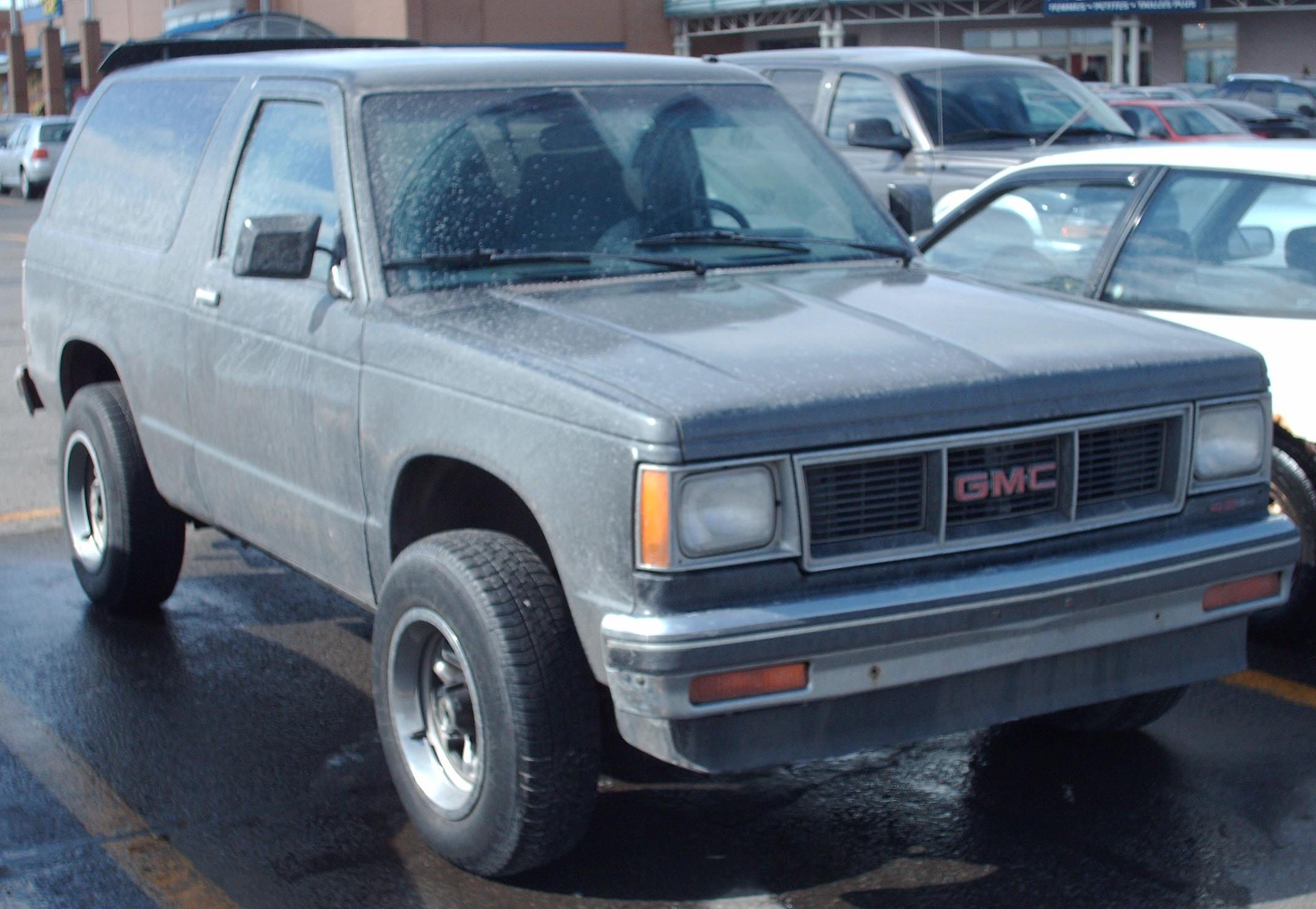
to, well, there's also news of GMC Jimmy returning as a true off-roader,
but it's just a rumor right now.
So, I mean, people have asked me, what have I heard?
What did GMC tell me?
And GMC has said nothing.
Yeah.
And it's, this has been a rumor for a while.
And I've seen a lot of AI kind of renderings that are showing basically
a modern square body that I think is a design that's maybe a little more
extreme toward the end of a neo retro kind of design than what I figured GM
would actually do.
I don't think they're going to make a modern square body.
But that would be awesome.
It would be cool.
But I don't know if, I don't, I agree with you.
I don't know if they're going.
I don't know if they're going to design a perfect brick like the square
body was back in the day with just LED lights in a new motor.
Yeah.
So unlikely, but it is very plausible that they are going to be working on a
vehicle in this category, because again, the proof is there.
The sales figures on machines like these are pretty fantastic.
So I cannot fathom why GM wouldn't want to get in on that.
And obviously they brought back the blazer name in a way that people
weren't so excited about.
So they kind of tarnished that a little bit in recent history.
So maybe Jimmy is a better name.
It's kind of, it's kind of cool, I think to dig up, to make a vehicle like this.
Yeah, I think it's still a cool name.
Yeah, I like Jimmy.
And so Cole, if you go back to back to tfl truck.com homepage, we have several
other, because several stories, let's go down a little bit and start from
like a week ago, a little bit more.
Yes, Kia.
So Kia, so in New York, Cole and I were there, we saw the Hyundai Boulder
concept, which is a body on frame SUV.
Once again, same XTERRA competitor.
And then just a few days later, Kia said, oh, by the way, we're also
going to have a body on frame pickup truck in the United States.
And we're showing images of the Tasman, but I don't think the Tasman
will come to the US, so to speak.
For a couple of reasons, because so far, Hyundai and Kia, they've dipped
their toe into the water a little bit with pickup trucks with the Santa Cruz.
And the Santa Cruz hasn't been a total failure, but compared to the Maverick,
it hasn't sold nearly as many units.
And now they're discontinuing the Santa Cruz.
So I think they've figured out that if you're going to go for it in the United
States, if you're going to make a pickup truck, you got to really commit.
Dive in head first.
You can't just dip your toe in the water.
And the reception for the Tasman has obviously not been incredible.
Well, because it's a lot controversial in its looks, in the looks department.
But here's where the Tasman is, I think.
The Tasman could be a great Hilux competitor overseas.
Sure, right?
There's other markets where the Tasman could be really interesting.
You know, it has a lot of payload in those markets, maybe even a diesel engine, right?
But coming into the US, they probably will redesign it somehow to be a little
bit more in line with some of the styling and also the size of the truck, right?
And I think they realize that that would be something they would need to do to
bring that vehicle here to the States, because if it's already got mixed
reception overseas and people in the US are pretty particular about trucks,
they're going to already have an uphill battle they're facing.
So they definitely not, if they just bring the Tasman here to the States as is,
I don't really think it's going to work.
But it would be cool if they redesign the truck or create a whole new truck to
bring here to the States and bring something new to the table.
Because if you're kind of the new kid on the block, you've got a lot of work
to do to establish yourself.
So if they could do something like bring a diesel midsize truck, which at the
moment here in the States could be unlikely, though, I mean, it would be
interesting, but unlikely would be interesting or some kind of plug-in
hybrid, maybe or something different.
I'm sensing like a range extender, too.
By the way, Nissan said V six power for the XTERRA or a V six hybrid.
So they're still staying with larger displacement V six engines for the
XTERRA for the foreseeable future.
Kia, I don't see them going to a V six when they come here.
And they said by around 2029, a pickup truck would arrive.
So by the end of the decade.
So I see them leaning into their electrification a little bit more, maybe
like a range extender or like a hybrid.
Yeah, that's what I see.
Yeah.
So one way or another, they're going to have a lot of work to do to prove
themselves as a truck brand when they come to the States, because that's not
an easy thing to do.
But also Hyundai said their pickup truck is coming, so there'll be a pair.
Um, and also they're, like you said, they're jumping in with both feet.
I mean, completely because they said it's going to be US made with US steel.
So I mean, they're really are looking into this really heavily.
And they're projecting humongous sales.
So they're being very aggressive, uh, with these little pickup trucks.
They'll have to be to make it work.
Uh, but still, this is several years in the future.
Yeah.
Yeah, this is not going to be next week.
So this is not next year.
The XTERRA is supposed to come at the end of 2028, which is unfortunate
because it needs to be out right now, right?
So in these, um, Kia and Hyundai pickup trucks are also couple three years away.
So this is not going to happen immediately.
Um, all right, let's move on to some other news.
If we can go back to our homepage, um, because several things were going on.
Let's keep moving up.
Um, well, yeah, we'll talk about Volvo semi trucks in a second because you have
an interview with an expert, right?
Yeah, exactly.
We talked a little bit to the Volvo team about some of the engineering behind
the truck, how crazy the powertrain is on that vehicle, which is all pretty cool
stuff, but I wanted to ask you about this heavy duty Ram.
I wanted to get your impressions of this.
Yeah.
So tell me about it.
Yeah.
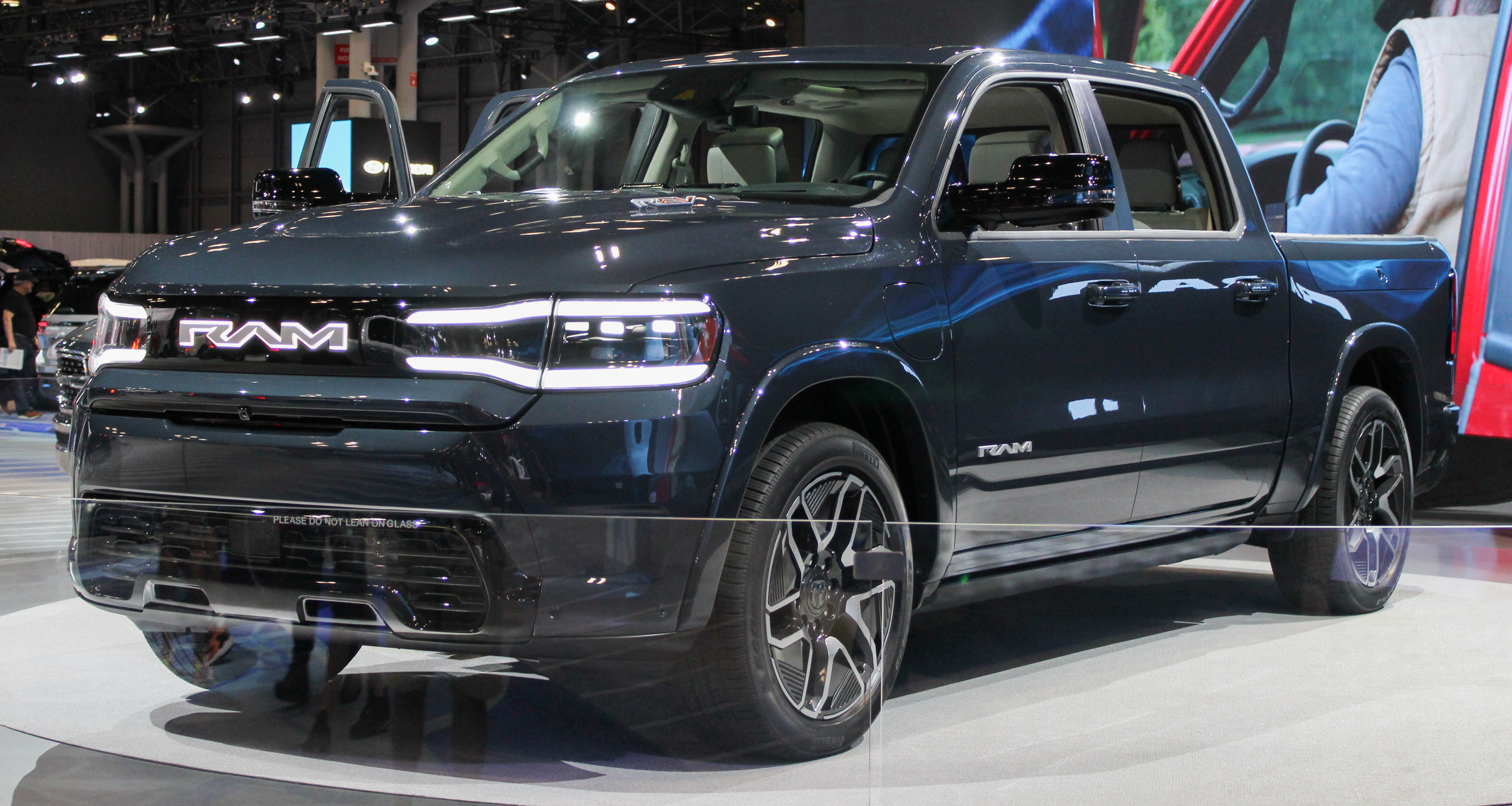
So, uh, Ram is introducing something they call pursued capable vehicle.
Basically I'm calling it a cup truck.
This is a heavy duty 2500 and there they did something interesting.
So first of all, this is not a comments.
This is, this is a Hemi 6.4 liter that they have another Ram heavy duties, but
they did something quite interesting.
Um, it's a tradesman, but they put a rear axle out of a power wagon into this.
So it's got an aggressive four 10 to one rear axle ratio.
Is it four wheel drive?
Uh, it is four wheel drive.
It's going to have, you know, a lot of accessories that police departments and
government agencies can put on this.
Um, and it's crew cab only will come as a crew cab with a standard bed.
So basically six foot four inch bed.
Um, and the interior is very basic, you know, vinyl, everything, rubber floors.
Um, it's supposed to be affordable.
We don't know how much it costs because it's kind of a fleet vehicle that they
will sell to agencies.
Um, but yeah, what do you, what do you think?
A heavy duty pursuit truck?
Yeah.
Well, that's, that's interesting.
It being a pursuit truck in particular, uh, because,
because a lot of our viewers are saying, what are you pursuing?
Yeah.
Yeah.
We, we know from driving them, especially with the Hemi can be a little bit anemic
as far as any of the gas V eight options go in a modern HD truck.
It's not to say that the six four Hemi is necessarily way down on power, but it is
the small, the smallest displacement of, but still 405 horsepower.
Yeah.
Yeah.
Which, which is not too bad.
We've seen trucks like this used for other purposes out in California.
We were, uh, working a little bit with California highway patrol and we saw a
truck that they had that was equipped for, um, basically enforcing laws around
semi trucks.
Yeah.
They basically a truck that was carrying a lot of like weight scale, like
mobile scales, all kind of gear for them all kind of gear.
Yeah.
Yeah.
To make sure that all those regulations and things are being followed.
This is kind of a different use case.
Yeah.
But look at this.
Um, if you scroll down a little bit, uh, Michigan state police tested it, uh, at
zero to 60, zero to 80 miles an hour, zero to a hundred miles an hour.
You know, uh, that's kind of what police departments test for.
I mean, there's several different, um, and look, it did an 8.4, one second, zero
to 60, which is not going to break any records.
But Hey, there is nothing faster than the police radio.
Yeah.
Well, and ultimately, I mean, neither of us are police officers, but I would
imagine there is more to pursuit vehicles than just being fast and catching
up the cars, right?
It's about collaboration, right?
Speaking with other vehicles and stuff like that.
Plenty of situations where a heavy vehicle like this is useful.
So yeah, it's pretty interesting.
Also border patrol, I think uses a power wagon sometimes and also, uh, raptors.
Yeah.
So I mean, there's different vehicles for different use cases.
Um, definitely.
All right, let's keep going.
Let's, uh, keep firing some news items here.
We have a few to get through.
So if we're going to go back to the, we spoke about this.
Oh, Jeep is doing this thing where every month they're unveiling something new
for the Wrangler and or gladiator.
And this week or this month, I should say it was this kind of retro themed gladiator.
Yeah, it's a super retro color scheme.
Most of these drops, these things that they've been releasing.
They've been dropping it on us.
Every month have been appearance packages.
Although some of them have been pretty cool.
Like the Moab 392 and the Willis 392.
Yeah.
So more affordable 392.
Yeah, which I'm happy about because I love V8s.
But this is not a V8 gladiator.
Unfortunately, no, this is just an appearance package.
Yeah, but a cool one at that.
So it's pretty interesting.
It's very bright.
It's very purple.
I say that wearing a purple and green hoodie.
Actually, you're matching kind of with this gladiator.
Yeah.
Yeah, I would do pretty well standing next to that.
So, uh, yeah, no, I think it's pretty cool.
It's the rewind.
Yeah.
So they're calling it rewind.
It's kind of 80s 80 school.
Jeep is kind of the master of special editions and color schemes.
Speaking of Moab, speaking of Utah, I wanted to ask you a little bit
preview of what you did this week because you were, you were traveling for like three days.
Yeah.
So Tommy and I partnered with Moab.
I mean, TFL really partnered with Moab partnered with Moab.
We partnered with Onyx.
You partnered with Moab.
That's crazy.
That would be exciting.
No, we partnered with Onyx to do a trip out to Moab.
Yes.
It's called a rugged adventure.
They've got a video series under the same name that they've done with several
different people on YouTube and the most recent is going to be us.
So can you give us a taste, some pictures, maybe some, what vehicles, by the way,
you brought?
Yeah.
So I have some photos.
We did a trip out to Moab, checked out some trails that are maybe a little less
traveled than some others and we brought our hundred series Land Cruiser.
And we brought Tommy's LR3.
Both of those vehicles are from same era.
The Land Cruiser's in 05 and his LR3's in 06.
And we ended up in some really pretty places.
Both of these vehicles are very close to stock.
It's primarily just tires that are changed on them.
So the trails that we went and ran and places that we saw were all places you
could go in a pretty much stock vehicle.
Now at one point, Tommy put a trail rated Jeep badge on the side of the Land Cruiser
as a prank and I didn't bring any props to prank him with because I wasn't
planning for that.
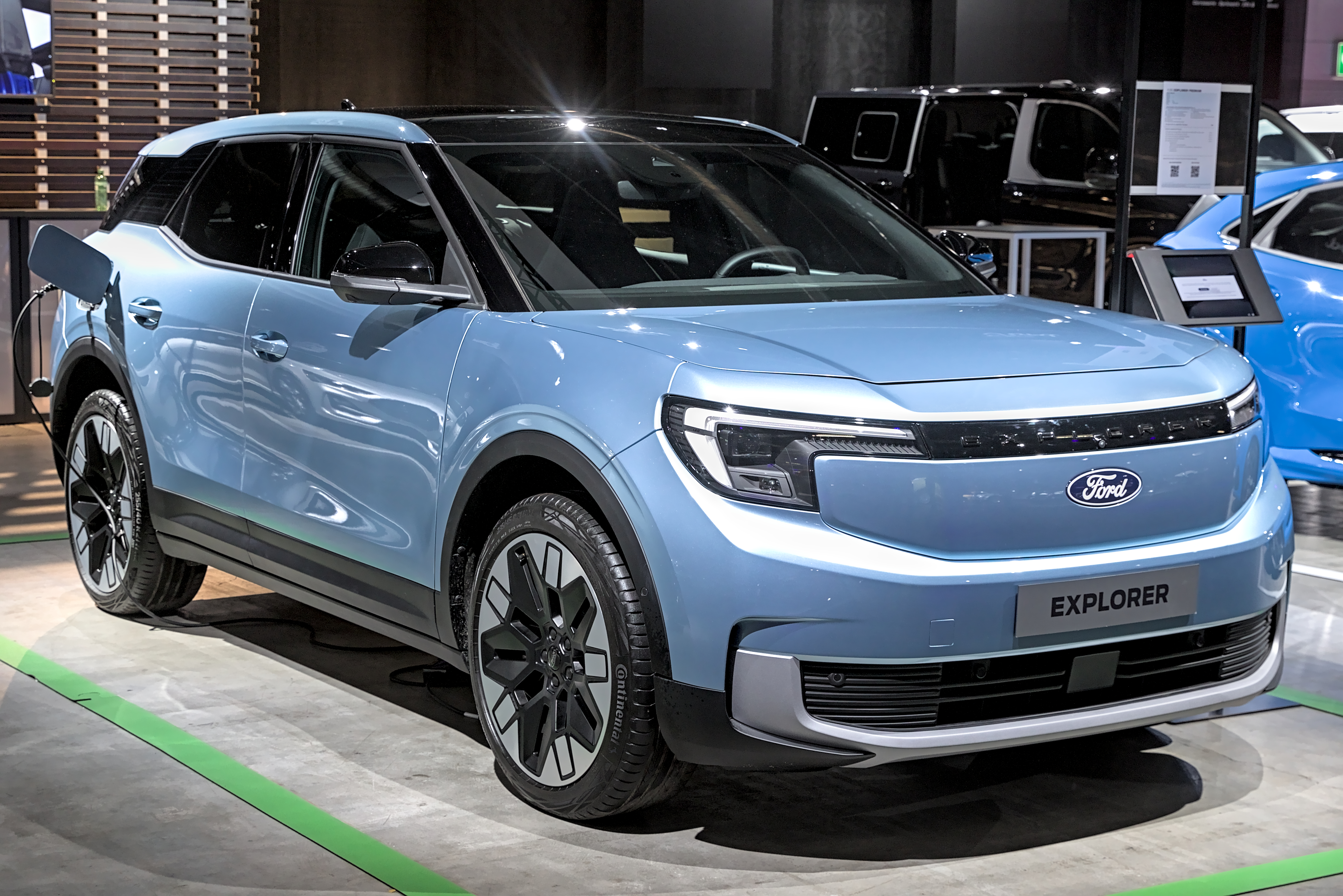
So while he wasn't paying attention, I went in and drew Ford Explorer on the
back of his LR3 because Ford owned Land Rover when this LR3 was made.
They oversaw the final development of the LR3 and his LR3 has a four liter V6
from a Ford Explorer.
So there's a lot of people that think admittedly incorrectly that the LR3 is
just a different body on a Ford Explorer.
Vehicles are very different.
But if you want to upset an LR3 owner, especially Tommy, tell him that his
Land Rover is just a Ford Explorer.
Yeah, Tommy's not here obviously right now with us in the studio.
But if he was, it would be interesting to hear what he would say.
Although putting a Jeep badge on the Land Cruiser, that's also will
ruffle many feathers for sure.
When once I started calling his LR3 a Ford Explorer, he started calling
the Land Cruiser a Sequoia.
Yeah, so a little bit of a rivalry going on there, but we ended up on
some fantastic trails, some really cool obstacles.
And it's all stuff that you could do in most factory four by fours that
are decently rugged and have a good set of tires.
Can I do it in my Subaru Outback?
No.
Okay.
But I could follow what you did because you left breadcrumbs on the app.
Yes.
And everything you took pictures.
So anybody could follow this on Onyx Offroad app.
And also the video is coming out.
Your full trip.
And it's a cool route that he planned because it avoids a lot of the
really high traffic areas.
Uh, so at, you know, at one point we were on Finns and Things, which was
probably one of the more, the more frequented trails that were along
the whole journey, but most of what we were doing was designed so that
you could go there even during peak season and still avoid a lot of the
chaos and probably check out some trails that you've never been on before.
So, but it will also take a little bit of extra time because you're traveling
further, right?
Yeah, off the beaten path.
But not, you know, not a ridiculous amount of time because we left Colorado
on Tuesday, went and ran a few things, spent the night in Moab Tuesday
night and then drove more trails on Wednesday, camped Wednesday night and
then got back here to Colorado at about 430 on Thursday.
Okay.
So even including the drive from Denver area and filming out there and
back and stopping to film, we were able to do all of that in basically three days.
That's really cool.
Yeah, that's really cool.
Uh, okay, cool.
What else do we have on our news item?
Uh, we have a couple more things going on on the, on the website at least.
Oh, yes, I did this this week.
While you were gone, I decided to do a couple of different reviews.
So, um, I was at our local friends, um, Johnson, and I saw not one, but two
brand new Ram 1500 DC six fifties supercharged 5.7 liter Hemi trucks,
which is cool.
So it's, it's a mean street truck.
It's lowered.
It's got a pretty aggressive little splitter underneath the front bumper.
Some cool decals and obviously it's supercharged, which is always good.
So I did a full kind of a walk around review first drive because this was indeed
my first experience with this package.
You saw something similar because you saw like a concept vehicle in the, in
Michigan, right?
When you and Tommy were there, you saw one of those supercharged engines.
It was, it was an early version of this vehicle, essentially.
And that was out at a roadkill nights in Detroit.
Nice.
Yeah.
But, but now it's real, um, actually, so it's a collaboration between Ram and
also Fox factory.
So Fox factory actually does the conversion.
They lowered the rear end of this truck by four inches.
They lowered the front end by two inches.
So it's really is sitting quite nicely.
I mean, for a street truck, right?
Yeah, it looks good.
It also is pricey.
It's not sure.
Supercharged anything is not cheap.
But when Cole was with me, we were doing a towing test, um, gas versus diesel towing
test at Johnson Auto Plaza.
He was eyeing this truck.
He kind of wanted to buy it.
Yeah, I could see Cole for his long commute from Denver to Boulder and back
every day benefiting from a 650 horsepower car.
Only, only premium fuel.
Yeah.
Right.
So you have to put 91 octane at least into this.
And also it costs about $91,000.
You could take out a mortgage to buy and operate this truck.
Yeah.
Well, maybe Cole, you know, when, when this podcast flies off, you know, it
accelerates into true, he's going to get a huge bonus, a huge bonus.
And he is going to go out and he's going to buy one of these by house, buy a
truck, buy a plane, all of that.
So yeah, it is, it is a very cool truck, but, uh, well, there's a video out, but
I wasn't able to drag race it because it wasn't broken in.
Yeah.
And you don't want to break one of these trucks because like we said, it's
expensive, replacing one.
Well, the dealer told me, uh, our friends at the dealership told me that
if I break it, I buy it.
I basically have bought it.
And that does not come Andre's wife approved.
No, I don't think my, uh, my wife would appreciate that.
Um, they're like, surprise, we bought a $90,000 truck.
It's a little broken, but I could fix it.
Yeah.
With more money, with more money.
Okay.
And then you and I did, uh, one of our most popular stories from this week,
actually the most popular story from this week is you and I did gas versus diesel
Chevy, uh, Denver, one hundred MPG loop, uh, with a six, six leader versus six, six
Duramax and people have told us, well, first of all, people appreciate it that
they watched it, but people told us that we should have been towing.
Sure.
I mean, they told us we should have been doing a lot of things.
Ultimately, the video was meant to be an MPG comparison and cost of fueling it.
Everyone was saying, well, what about the long-term maintenance on the diesel and
everything that's kind of a hard thing to calculate because you don't know until
you run them for 10 years.
Yeah.
And we're not going to go do that a hundred mile loop around Denver for the next 10
years to figure out which truck is more expensive to run.
Yeah, that'd be hard.
There's plenty of things that you could factor into it because yeah, a diesel in
the long run is very likely going to be more expensive to maintain.
But on the flip side, if you buy a gas-powered HD truck, there's also the
cost of therapy because your dad won't return your phone calls because you
didn't buy the diesel.
So there's, I mean, there's a lot to factor into it.
It's not really the point of the video was more just about fuel economy.
But, but here's the thing, dude, diesel fuel is currently, and actually in the
past, too, has been quite a bit more expensive than gasoline.
True.
Yeah.
And partially it's because, I mean, I'm not a chemist or an economist, but, you
know, ultra low sulfur content diesel that we have at our pumps, it takes a
little bit more to refine it, right, actually to make it so.
And it sucks because diesel engines are great as efficiency, towing trailers.
So what we did yesterday was Zach and Cole and Ian, and I'm sorry, you missed it.
But we did Cummins versus Hemi while towing.
Yeah.
So that's coming next week.
Yeah, that video is coming next week.
And we did the same actually long loop.
We went 123 miles and we're going to find out what happens.
Yeah, which will be interesting because it is a valid point.
It's a valid thing to bring up in the comments that a big reason you might
buy a diesel over a gas or is for towing efficiency.
So we want to cover that as well.
Exactly.
That being said, there are plenty of times when people are driving around an
HD truck, not pulling a trailer.
So I think it's useful to have both pieces of information.
I agree.
I agree.
But I would say I'm actually wondering, is a diesel now worth buying?
Because the fuel is so expensive.
So I would say if you're not using your diesel truck as intended for towing,
for going long distance, why buy it?
Yeah, fair enough.
Sorry, I think we might get into a fight right now.
We live here in the mountains where look, a lot of gas-powered HD trucks already
feel a little anemic.
Yeah, because of elevation.
Even at sea level, they don't, they don't feel fast.
I don't think anyone would mistake it for a hot rod.
Okay.
Here at, at altitude, it gets that much worse.
And especially on the downhill with modern diesels having that exhaust break.
That makes a massive difference.
That is nice.
Ultimately, I think you just, you just got to look inside, look, look in yourself
to decide which truck do you want the most, which one makes the most sense for
you to spend your money on and then, you know, spend your money on it or don't.
But did you know that the diesel ride a bicycle for all I care?
But did you know that the diesel engine costs about 10 grand to option?
Not, not in my 12 valve.
My 12 valve cost eight.
My whole truck costs less than.
Okay.
That's fair.
That's fair.
The Nuramax option or a used, a used truck.
Okay.
Whichever.
Um, if we had a bell, I would ring the bell right now because
car-ish podcast is back.
Yes.
And the tens of people that, that watch it and miss it are really excited about it.
It is a fun podcast.
If you haven't checked it out, um, as even Cole pointed out, who is not necessarily
enthusiastic about having to be present for every podcast we do at this company,
he said, if, if more people gave it a try, they, they might find that they would
like, I appreciate that call.
That's very kind.
And I think so I'm not on courage podcast.
I'm an outsider just listening to it.
We could have you as a guest.
I'm not asking for that.
What I am saying is I listened to it yesterday and I genuinely was laughing.
It was really fun.
Uh, I'm not just saying it because, you know, I'm part of the overall TFL team.
It was a lot of fun to listen to car-ish and more people should listen and watch
car-ish.
Nice.
I'm just saying thank you.
That's a good plug.
Okay.
Now.
Are one of our viewers, Jorge, yes, uh, sent us several images.
I wanted to show before we go finally to the semi truck story.
Jorge was in his neighborhood and he saw this wonderful Ram 1200 with a
manual transmission, a manual transmission, none the less seat.
Look at this.
It's got three pedals and a six speed manual.
And he said, why isn't this truck in the US?
I mean, that's a great question.
Where's it manufactured?
Oh, where's Ram 1200 manufactured?
I don't know.
Can you Google that really quick?
Cause I'm asking Cole, that might be a good answer to the question.
Well, also, it is a cool truck though.
Also, it's a mid-sized truck, right?
That's available in Mexico and some other markets.
And we're still, you and I are still waiting for Dakota truck.
China.
It's manufactured in China.
Well, that answers that.
Okay.
So Jorge, we're not going to see this in the United States, sadly, uh, but Ram said
that the quarter is coming, right?
True.
So, so eventually we'll see some mid-sized truck, but this truck, look at this.
It's got a flatbed.
It's a two door, six speed manual.
It's really cool.
Yeah.
Uh, yeah.
No, it's, that's a cool truck, especially having the manual transmission, the bench
seat and everything.
I think it's pretty neat, but like yourself, I am really excited to see what the Dakota
brings to the table because currently I think the, the most, the cheapest, most
affordable Ram truck, because you have to buy a 1500, right?
Yeah.
Um, it's like 40 something thousand.
So it, a mid-sized truck like this would bring that down.
So that's all I have to say.
Yeah.
Fair enough.
Should we talk a little bit about semi trucks?
You almost bought a semi truck.
How can we say I almost exactly, I almost bought a Peter built.
Yeah.
Which sounds like, obviously it could have been very cool.
It also could have been a huge investment.
I'm not sure if my wife would have appreciated that roll home in a, in a
semi also, I couldn't park this in my driveway.
If I wanted to Kenworth, I'm sorry.
Did I say Peter built?
Yeah.
That's how much I know about semi trucks.
Okay.
So we, there's this donated car auction, right?
And Denver that we frequent, because we sometimes find interesting cars.
But this week, last week, uh, this semi truck was there and look at the paint.
We're just showing a little clip here during, um, our podcast.
Dude, the paint looks great.
When the miles weren't that crazy.
Well, it was like 420,000 miles, which for a semi truck is kind of a light use.
Yeah.
Um, had new tires, right?
New tires.
It had like 250 gallons of diesel, which is not cheap, um, in this truck.
And I thought it was going to, if it was going to be like under five grand or
under eight grand at this donated car auction, that I could buy it and maybe
resell it, right?
Sure.
Or buy it and cab swap it.
Get some old school truck cab put on.
Maybe have David build me a bed, like a nice flat bed with a, with a camper on
top of it, with a big hitch that, that, that would have been sweet, but it was
too expensive.
Um, Cole and I, well, actually I was watching it and Cole and Ian and everybody
was excited, right?
Because I almost was hitting the bid button, right?
But it went for after fees for 14,000 bucks, which I couldn't kind of gamble
because it had a D F error message on it.
Yeah.
Which could end up being expensive, could be expensive and also
registering something like this could be expensive.
Um, so I didn't end up buying it, but I was so close.
I almost bought it.
Fair enough.
Yeah.
It would be, it would be cool.
It would be fun, but you could also be getting into a lot of headaches.
So it's probably for the best.
I'm sure your wife appreciates.
Not that you passed it up.
Yeah.
But I talked to our friend, Dan Atkinson.
I've, I talked to my wife's cousin who does the transport business.
He runs some semi trucks.
I talked to him.
I talked to Mike.
He gave me a lot of valuable information because he used to have a
Kenworth T680 like this truck.
Um, but not to be, but what if you wanted a new truck?
What would you do?
Well, you know, I mean a semi.
You might look into a Volvo VNR, which I say because I just drove one.
Okay.
Yeah.
Which I drove a couple of them actually.
So it was pretty cool.
So the VNR is their regional truck.
It's not a long haul truck like the VNL.
Much like this Kenworth I was trying to buy.
Yeah.
So slightly more compact, especially one of the trucks that I drove was a
day cab with a little 28 foot, um, I think it was a box trailer.
I think.
Oh yeah.
But, but a shorter one.
Yeah.
I think it was maybe a reefer.
Uh-huh.
Um, well, we have a video called, can we, can we look
it up on the truck channel?
Very compact to that one.
I also got to drive a VNR, let's see, which was it?
Maybe a six, six, 40 or a four, 40.
Can't remember which, but it was hooked up to a tank dude trailer.
A tanker.
Dude, dude, I was surprised you were driving a tanker tanker because the
center of gravity is higher, right?
Something is sloshing.
I don't know what liquid you were carrying.
Yeah.
They didn't specify, but that was interesting to drive because that truck
and trailer combo grossed out at, I think they said about 83,000 pounds,
which is a little bit more than like 80,000 allowed usually on the highway.
So you were pulling really heavy with this truck.
And the, the crazy thing about doing it is that it drives like a car.
It steers and stops and does everything so well, even with that amount
of weight behind you, admittedly, there was one point that they had us stop
on a hill and Matt the throttle and, you know, it gets the truck and trailer,
the whole thing combo moving, but you can tell when, when you're starting
from a stop, it's training on a grade.
Yeah, it's, there's a lot of weight.
That's when you feel it.
And you're also looking at this VNR is a six, six, six, 60.
It has a sleeper cab also, which is kind of interesting because
it's a little bit more regional truck, not a long haul, but you can still spend
a night or two in it.
Yeah, which is, I think my wife would appreciate that if it was a camper
also, exactly, not just a truck, but also a camper.
Yeah.
And then all of the, all the toys, the boat and the side by side behind it,
could be behind it.
Yes, that's a good split of living space to stuff that you're bringing.
The Kenworth I was looking at did not have a sleeper, unfortunately,
but I want to learn more about this truck.
Yeah.
So the nice thing here is that I have an interview with one of the main guys
at Volvo's team who can talk in detail about the truck itself, but also about
the powertrain, because that's one of the really interesting aspects of that.
So let's check that out now.
Now we've got the opportunity to do a little bit of a deep dive into
something that's not what we're typically looking at every day, because
we're here in Dublin, Virginia for the first driving event for the Volvo
VNR series of Class A trucks.
And I have Dwayne here.
Dwayne, tell me a little bit about what you do with Volvo trucks.
So my role is the powertrain product marketing manager for Volvo trucks.
So I work with our dealers.
I work with our customers.
I work with engineering to kind of package powertrains together for
different applications.
So that's kind of my role here at Volvo Trucks.
And what I find really interesting about this is these trucks and especially
these powertrains are very different from what we deal with in passenger
cars and the regular everyday pickup trucks that you go to your local dealer
and buy to have as your own personal vehicle to haul around a trailer.
And we've actually got some pretty cool displays over here where we can look
at some of the inner workings of what's going on with these powertrains.
So all of this is essentially built around this D13 engine, right?
It is.
And it starts with the truck that we were just standing in front of with some
of the aerodynamic features.
When we look at powertrain, a lot of our customers don't think about how
aerodynamic features affect the overall powertrain.
And what I mean by that is, is by reducing parasitic loss.
Yeah.
Well, as it cuts through the air just a little bit better, that's less power
that the engine has to produce.
So that allows us to use fast rear axle ratios that typically weren't ever,
well, thought of before.
This is our D13 turbo compounding engine.
This is available in a 405, 1750 torque, all the way up to a 500 horse,
1950 torque.
It makes torque, peak torque at 900 RPMs.
Really?
It's impressive.
What's the idle set at?
Idle is right at 600 RPMs.
So we're having such engagement happen at 800 RPMs.
And then it's almost immediate.
900.
Yeah.
What that allows us to do is drive, again, fast rear axle ratios that slow
down the pumping loss inside of the engine.
The loss that we look at when it takes a piston to go up and down or
revolve the camshaft or the crank, all those components take energy to
revolve inside of the engine.
So the lower we can run those as far as RPM and increase the torque, we're
able to reduce what we call pumping loss, which is that inefficiency inside of an
engine.
And as far as you'll have to excuse my ignorance, but the axle ratio that you
guys are running on these trucks, what, what is the number on that?
So most of them are going to run anywhere from as low as a 205.
Okay.
Wow.
Yeah.
Yeah.
All the, all the way up to a 352 for most situations.
So there's the 410s and 370 threes that we're used to.
Yeah.
I mean, they're still available, but not used very often.
The majority of our customers are in the low twos.
Right.
So at 65 miles an hour, this engine's running at below us a thousand RPM is
just sipping fuel.
And then the nice thing is you see over here, you know, you got the I shift
transmission, which is a fully integrated manual transmission with the,
with the engine.
Now that is a constant mesh transmission.
So, and it is automated.
So it engages and disengages the clutch automatically.
Uh, a torque converter, if you're familiar with that uses a little bit
of energy, creates heat, but it shifts the gears automatically.
This has a clutch, but no clutch pedal in it.
Yeah.
So it's, it's fundamentally very different from the automatic transmissions
that people typically think of because to your point, it's not a regular
torque converter automatic.
It's a, an automated manual transmission.
Correct.
So it, it seems and, and looking inside the internals and everything structurally,
the way that it's designed, it seems to have more in common with a regular
manual transmission than the typical automatic that you would think of.
It does.
It has a lot in common with that.
The advantage that this has, this, this new version transmission shifts 30%
faster than our previous one.
What that allows that engine to do is stay in the sweet spot just a little bit
longer when we stay in that sweet spot.
Why I mean sweet spot is where it burns the best fuel.
Uh, so that saves fuel for a long haul tractor.
Um, so that allows us to shift a little bit faster.
And with the high torque that the turbo compounding engine does, it definitely
gives us a nice fuel economy mix.
Uh, this particular engine recaptures energy that is pulled through the
exhaust strength.
So we have a standard fixed geometry turbo here.
Yeah.
Just normal we've had for decades.
Because there is also a VGT version of this engine, right?
Yes.
So you can also get a variable geometry turbo, which is kind of similar to what
we see in, in a lot of the trucks that we're testing.
And they even do their exhaust brakes using that very variability in the
turbo.
This is a very different system though.
And, and it's interesting to see a little bit of how this is structured.
This is one of the questions that I had for you.
So this is essentially using what would have been otherwise wasted energy and
actually using the secondary turbine to apply basically some, some extra power
directly to the crank, right?
It is correct.
That's essentially how it works.
So fixed geometry turbo with a waste gate, uh, extra energy is going to come
across these fins.
These are fixed.
This will go ahead and it's directs the air over the fins, turns the fins,
which turns a series of gears.
And then this is a hydraulic coupler right here.
Okay.
So inside, yeah, it kind of looks like a torque converter in there.
Um, just simply two, uh, two little fan blades and they're filled with engine
oil.
And as you mentioned, it decouples it.
So if the driver puts the, take this foot off the throttle, it doesn't back
feed into the turbo.
So now that, those gears go back down into the crank shaft, which you can see
here and here, and then on, uh, unloads the revolving assembly.
And this is something that you guys have been doing for a little while, but now
in the most recent iteration, it's more efficient than it was in the past, right?
It is.
We've done some improvements on the internals of the engine.
We went from a six-wave piston to a seven-wave piston.
So the injector is focused on the center of the cup of the piston, uh, and into
seven little small cups, lowering the surface temperature of the piston,
reducing knocks, reducing soot.
Um, we've also lengthened the connecting rod in this, this engine and shortened
the piston height a little bit.
What that does is it, uh, reduces a side thrust on the side of the liner.
And that reduces friction and reduced friction increases fuel economy.
Uh, we've also put a variable displacement oil pump in this as well.
Uh, so giving you the right amount of fuel at the right time.
So, you know, idling, we're at 15, uh, pounds of oil pressure, right?
And then we'll go up to 50 when we engage the exhaust brake.
Uh, and we've talked a bit now about some of the really interesting specific
details on this engine, but for, for folks who don't know kind of
brought it overview, this is essentially a 13 liter six cylinder inline diesel.
So that's, that's kind of the basics of, of the engine architecture, right?
Yes, it is.
It's a 13 liter, uh, six cylinder inline.
And I was seeing just from researching some of the specs on these that they
weigh anywhere in the neighborhood of 2,600 pounds when they're dressed up
and in the truck.
Is that right?
Depending on the different components on there.
Yeah, it's a little over 2,000.
It's a lot of motor.
Yeah, it's, it's a sizable, uh, sizable engine.
I've met some people that are shorter than the distance from the bottom of
this oil pan to the top of this engine entirely put together.
Do you know offhand, uh, throwing one at you, uh, out of left field a little bit
here, but run about what the oil capacity on this engine is?
Uh, 34 quarks.
Okay.
Yeah.
So again, it's the funny thing coming from our world where everything by
comparison is downsized by quite a bit into this.
All of the numbers and figures that you're dealing with are pretty massive.
The other impressive thing about these engines is the kind of miles that they
have to cover.
And that's one of the reasons that efficiency is so important,
but I'm sure you're seeing some feedback from customers, drivers,
how many miles they're bringing their trucks up to.
What would you say is an average distance that you would see on a truck
before it's typically retired?
I'm sure there's a wrench.
So the first life cycle of a truck, most drivers are going to be between,
in a long haul application, between 100 and 120,000 miles a year.
Yeah.
You know, in the first life cycle, they'll typically keep them five years.
You know, so you're close to 600,000 miles in that first cycle.
Then they'll, they'll be traded in and sold off to a next customer.
It's not uncommon to have this engine run a million miles.
Yeah.
Yeah.
Which again, whenever a regular everyday pickup truck like the Rams or the
Ford's or Chevy's that we buy gets over a million miles,
it's, it's worthy of a story.
People like to show it, show it off because it's a big deal.
In this world, it's not, that's not a huge deal.
It happens quite frequently.
Yeah.
So it's a different game.
And you talked a little bit about the long haul trucks of VNLs,
but what we're here for specifically is the VNR.
So we have some of these regional trucks in front of us.
And in general, the goal with these is that they're going to be doing
shorter distances.
One of the numbers that was quoted to us was in the realm of maybe 600 miles a day
as, as an example of a use case for one of these regional trucks.
Yeah.
Typically, I mean, and, and the miles on an annual basis are going to be a little
bit less.
Yeah.
You know, you might be anywhere from 60 to 80,000 miles on a regional haul
application, depending on whether it's doing pickup and delivery in a city
environment or regional applications where it goes, you know, 250 miles out and
250 miles back.
Yeah.
You know, the nice feature that you've had the opportunity to experience with it,
with the VNR is, you know, the hood is significantly shorter.
So the bumper to back of cab gives you a lot better maneuverability with this tractor.
Yeah.
And some improved visibility as well, because obviously there's been a lot of
changes with these trucks.
It's an all new generation of the trucks.
It is.
And one of the other numbers quoted to us in the spec sheet was 17% better
visibility potentially out of the front of the truck, which again, especially for
a regional vehicle like this, it's going to be in the city a lot.
Like, like you guys have pointed out that visibility is hugely important being able
to spot pedestrians and any other obstacles that you're coming up on.
But even for some of these regional trucks that aren't necessarily the long haul
specific vehicles, you've still got options for sleeper cabs.
So you could spend a night in it if you wanted to.
Yeah.
Most definitely, you know, depending on how often you're going to be out of away from home
will depend on the sleeper that you're looking at.
You know, we offer it a 42 and a 62 in sleeper, both in a mid roof and a high roof sleeper.
So again, depends on how far you're going to be away, but these work great for a regional truck.
And it's funny because the truck that we actually have in front of us right now is a VNR 660.
Yes.
So this is the bigger of the VNR options.
You can get a pretty compact day cab, even one that's four by two.
So instead of three axles, it would be two and a pretty compact truck.
One that we got to drive a little bit earlier and the maneuverability is surprising.
And I think actually some regular everyday pickup trucks, like what we're towing it with
at work with a car hauler that's a bumper pole, I'd be surprised.
I don't think we can make the same tight turns in our Ram 2500 with a flatbed car hauler
that you could make in some of these regional trucks.
The amount of steering angle that you're able to get on obviously these trucks not being
bumper poles. It's a completely different world and really cool thing to experience.
Yeah, we're at a 50 degree wheel cut with these trucks.
So yeah, they can turn rather tight.
And then like you were mentioning when we were talking a little bit about powertrain,
obviously aerodynamics is a huge deal on these trucks.
And that's one of the things that you notice looking at the exterior of this vehicle.
It's been updated quite a bit and it's very smooth and there are a lot of
vents on the hood on the front end, but none of this is for show.
This is all very intentional.
Yeah, it's purpose driven.
I mean the radiator is significantly or grill, I should say, is significantly larger.
And that helps out with fuel economy as well.
We don't have to engage the cooling fan as often.
Cooling fan can consume a lot of energy.
Anytime we consume energy, we consume fuel.
So that's one of the features that we look at.
Obviously we've got hood dense there to help with the cooling as well, strategically placed.
So we're not interfering with the aerodynamics of the overall truck itself.
Yeah, and there are several different configurations even within the specific models.
So there's the 300, that's the day cab.
There's the 440 and the 640, which are different mid-roof options.
And then this 660, that's a high roof.
So a lot of differences there, but also differences in the way that you expect these
trucks, because if we walk along the side, there's a lot of aerodynamics here as well,
including in between and behind the wheels and on the wheel covers themselves.
So it's not only the front of the cab that's very streamlined, but all the way back.
What we're trying to do is keep the air attached to the truck and have it transition into that
trailer. So anytime we get a break there, it's going to cause some disturbance.
And then again, it's going to consume fuel.
Yeah, and there's going to be a lot of different use cases.
I mean, some of these aerodynamic parts are options when you're configuring the truck.
But there's also a lot of different options you can do not only in the cabs themselves,
but in the chassis and the axle configuration.
So there's the 6x4 options and 6x2 as well, which in the 6x2,
you can lift up that middle axle, right?
Yes, you can lift up the front axle.
And what that's going to do is we talked about parasitic load.
It lifts this axle up, so you're not driving that.
It's more of a dummy type axle.
This is not, this is a 6x4.
But anytime we get that off the ground, it reduces the load on the engine.
Again, reducing overall fuel consumption.
And over time, obviously that has a massive impact on how much you spend,
because when these trucks are doing the kind of miles they're doing,
it adds up rather quickly, especially with fuel prices being what they are like you guys were
mentioning earlier. Fuel's not getting cheaper right now.
So any efficiency that you can chase is a huge deal.
And it sounds like a lot of these VNRs, another one of the numbers being quoted is
they're as much as 7.5% more efficient with fuel than previous trucks.
That is correct, yes.
Yeah, which again, over time 7.5% adds up rather quickly.
That's going to make a pretty big difference.
The other cool thing is as many different configurations as there are on these trucks,
they're all being built on the same assembly line,
which is an impressive process to watch come together,
because we got to tour the factory here in Virginia,
which is one of the reasons that we're at this location.
And you're seeing every different type of truck be built one after another.
It's not batches of all very similar things.
So I've got to imagine that process for manufacturing is a challenge.
The logistics is truly a dance.
I mean, you're talking anything from tank sizes to different hose configurations that attach to the trailer.
So there are multiple different variations.
These trucks are completely custom built to the customer's application and their desire.
Which is the funny thing, because there's a lot of different things that you could change
in spec on any regular car that you go to your local dealer and buy.
But there's maybe tens of thousands or hundreds of thousands,
I don't know, of combinations that you could pick between these trucks.
There is. There is multiple.
How many there are, I haven't done that calculation, but there's thousands of variations.
Yeah, and then we might as well show a little bit of the inside of this truck.
It's one of the neat things about these, and especially it being a sleeper cab,
it's got a lot of amenities inside.
Now I know ingress and egress is also a pretty important thing with these trucks too, right?
Yeah, we've got some safety handles right here.
We want to make sure that we're grabbing on both handles that are coming up.
So it's the safety feature there.
Some of the first things that I notice in this particular truck is the camera monitoring systems.
Yeah, so these are pretty interesting because it gives you a really good view
of the trailer behind you.
So even if you're like me, I don't have a CDL, I'm not a semi-truck driver,
but we drive a lot of trucks and trailers at work and we're always talking about
how good are the mirrors on one truck versus another because there's a lot of variation.
This system though is another level because it gives you a really good idea of where your
trailer is at behind you. There's even some lines that can mark where the end of the trailer is.
So a lot of pretty impressive technology.
These are also surprisingly easy trucks to get into and drive and haul the trailer with.
I would say to some degree you guys have kind of idiot-proofed the truck because I was able to
get in and drive it with relative ease.
And there's some cool features like if you're putting your truck in neutral and getting out of it,
your brakes will come on automatically when you either open the door or take off a seat belt,
right? Yes.
So there's a few areas like that where they make sure they've got you covered.
And then obviously a lot of electronics and driver assistance that goes into these as well.
Yeah, you get your cell phone charger down here. There's an infotainment,
just like you'd see in today's vehicles, the position perfect steering wheel.
So we can put this anywhere that we want. We can tilt it this way. We can bring it up towards us.
So in and out of the vehicle, very easy to, as you mentioned, egress and ingress out of the vehicle.
Yeah, and then as far as some of the other technology that's in it, you've got lane
There's a system where if the truck detects an accident, it can automatically call emergency
services up in here. So as yeah, as well as driver airbag and even side curtain airbags.
Yes. So there's a lot of built in safety technology with these trucks. And then here
in the back, because this is a sleeper cab, we've obviously got a bed here. Another one lofted up
top and some basic amenities like a microwave, small television. You've got your own climate
controls next to the bed. So you don't have to get up and do that. A little table that folds out
from the bed. So relative to some of the other options, it's not maybe the place that you would
be spending a week, but everything from curtains to get you some extra privacy to your own little
cockpit where you can relax and spend the night if you need to. Nice little home away from home.
Yeah. And the mattress is not bad. No, it's very comfortable. So it's really cool to see all of the
different options for these trucks. Again, this is a little bit of a special kind of field trip for
us because we get to test a lot of the regular everyday pickup trucks that we see on the road.
But any opportunity where I get to get into something as substantial as these trucks and drive
them and test them out, it makes it kind of a bucket list work trip because not a lot of people
get the opportunity to step into a truck like this with a trailer that's loaded up and your
entire gross weight from sort of bumper is over 80,000 pounds. That's a unique opportunity. So
we really appreciate you guys having us out and thanks again Dwayne for walking us through
powertrain. Appreciate everything going on here. Very cool. Unfortunately, I was in New York at
the auto show while you were in Virginia. I figured you were probably a little bit bummed out that
you missed out. I wanted to join you at this event because it's not super often that we get to go on
the semi-truck events, but it is really cool whenever we get the opportunity. It's obviously a little
bit outside of our typical day-to-day because we're not semi-truck specialists. You do have a CDL.
Yeah, with air brake endorsement. So I could drive the Kenworth. Well, I don't drive a semi
obviously frequently, which I mean, if you want to do something, you got to be kind of
practiced up to data night. So I wish we could do more and maybe we will. I mean, maybe we will do
some semi-truck testing because efficiency is really important, right? Yeah, we can do that.
We can do it on a gauntlet. Ultimately, a lot of folks that I think watch our videos are interested
in these trucks even if they're not necessarily semi-truck drivers because they are interesting
machines inherently. They're just huge, unbelievably powerful and it's crazy just how much tech is
making their way into some of these new trucks like these Volvos. I've realized that there's
obviously a lot of people and truck drivers especially that don't want all of that technology,
but a lot of it works pretty well. It's impressive to see just how advanced they are,
how well they drive and how easy it is really to operate some of these new trucks in a lot of
conditions. And also like you were saying, it has like adaptive cruise control system and most of
them, they have multiple levels of exhaust brake or engine braking. Yeah, they've got automatic
emergency braking with pedestrian detection, all kinds of things, a bunch of camera systems which
is really nice to your visibility of where your trailer is at and what's around you is
pretty top-notch. So some really cool stuff that they put together and put into these trucks.
They're pretty cutting edge. Yeah, and we do get some emails and comments about,
are you guys going to do more with semis? And we're always open to it, especially as electrification
is also starts to creep in into a semi truck market like Tesla Semi. They're finally almost
ready to ramp up their production with their latest iteration of the Tesla Semi. So that could
be interesting too. How does that compare to the traditional diesel trucks? Ultimately,
more or less, if it's got wheels, we're interested. Even some stuff that doesn't have wheels. You've
done boat reviews. Exactly. We've done a couple of boat reviews. And you do motorcycle reviews.
Those have wheels. Those have wheels. And so two wheels, four wheels, sometimes three wheels.
Yeah. Or 18 wheels sometimes. Yeah, everywhere from two to 18, I've reviewed. I haven't tested
anything with, I haven't reviewed anything with one wheel, to my knowledge. Hopefully we won't.
I mean, we could. Yeah. A unicycle. Would you review that? Or a one wheel. That is a thing.
Yeah. It is a little funky thing. I've seen those dudes on that single wheel.
Some of them get rippin'. And they have full gear, like helmets and really mean looking gear
on them. It is no offense. It is hard to look tough on one of those. But I appreciate it because,
you know, if you're on an actual street or road with vehicles around you. Yeah. And I'm sure it's
easy to fall off of them. That's pretty hardcore. Yeah. Yeah. Anyway. Anyway, where are we going
with this? I think we're closing it up. We're done. It's the last thing on the list. Well,
so hopefully you guys enjoyed this. But I think truly, I mean, we had a lot going on. Yeah.
This week. And so some really heavy duty stuff. So yeah. Yeah. It's pretty cool. Hopefully we'll
get another opportunity to get behind the wheel of some more semis before too long. Yeah. We have
a Jeep Gladiator video coming up next week. We have a Honda Ridgeline video coming up because
our longtime Ridgeline, the new one, not the old one, the new one, the 2026 model, we returned it.
That's how you know we're truck channels. We got two Ridgelines. Not one. Not one.
Two. It's okay to be jealous. Okay. There you go. All right. So that's all coming. And so thanks
for joining us. And we'll see you next week on this podcast as well.
About this episode
Nissan’s body-on-frame Xterra comeback is the headline, with Roman in Japan teasing a rugged new platform that could spawn up to five vehicles and target Wrangler/4Runner/Bronco buyers with a lower price. The hosts debate what other models might share the architecture (Frontier, Pathfinder, and possible Infiniti/Luxury variants) and note Nissan’s continued V6 and V6-hybrid plans. The news roundup also covers rumored GMC Jimmy revival, Hyundai/Kia body-on-frame pickups (Tasman/US plans), Ram’s pursuit-ready 2500, Jeep’s retro Gladiator appearance package, and a deep dive into Volvo VNR semi tech—plus towing vs fuel-economy talk and a near-miss on buying a used semi.
( https://www.alltfl.com/ ) Check out our new spot to find ALL our content, from news to videos and our podcasts! The wait is finally over! In this episode of TfLtalkin' Trucks, Andre and Kase break down Nissan’s massive bombshell: the official teaser for an all-new Nissan Xterra 4x4. We dive into the "The Arc" business plan, which promises five new vehicle launches, and speculate on the cryptic silhouettes that look suspiciously like a return for the Nissan Titan. Is Nissan finally ready to take the fight back to the Bronco and Wrangler? We analyze the teaser images and what this means for the future of Japanese off-roaders in America.
The truck news doesn't stop there. We discuss the debut of the Ram 1500 Pursuit and what the Hurricane engine means for law enforcement, plus Kia’s confirmed plans to bring a pickup truck to the U.S. market. Andre shares the wild story of how he almost walked away with a semi-truck, and Kase sits down for an exclusive interview with Dwayne from Volvo Trucks. It’s a deep dive into the engineering of the new Volvo VNR and the future of long-haul trucking.