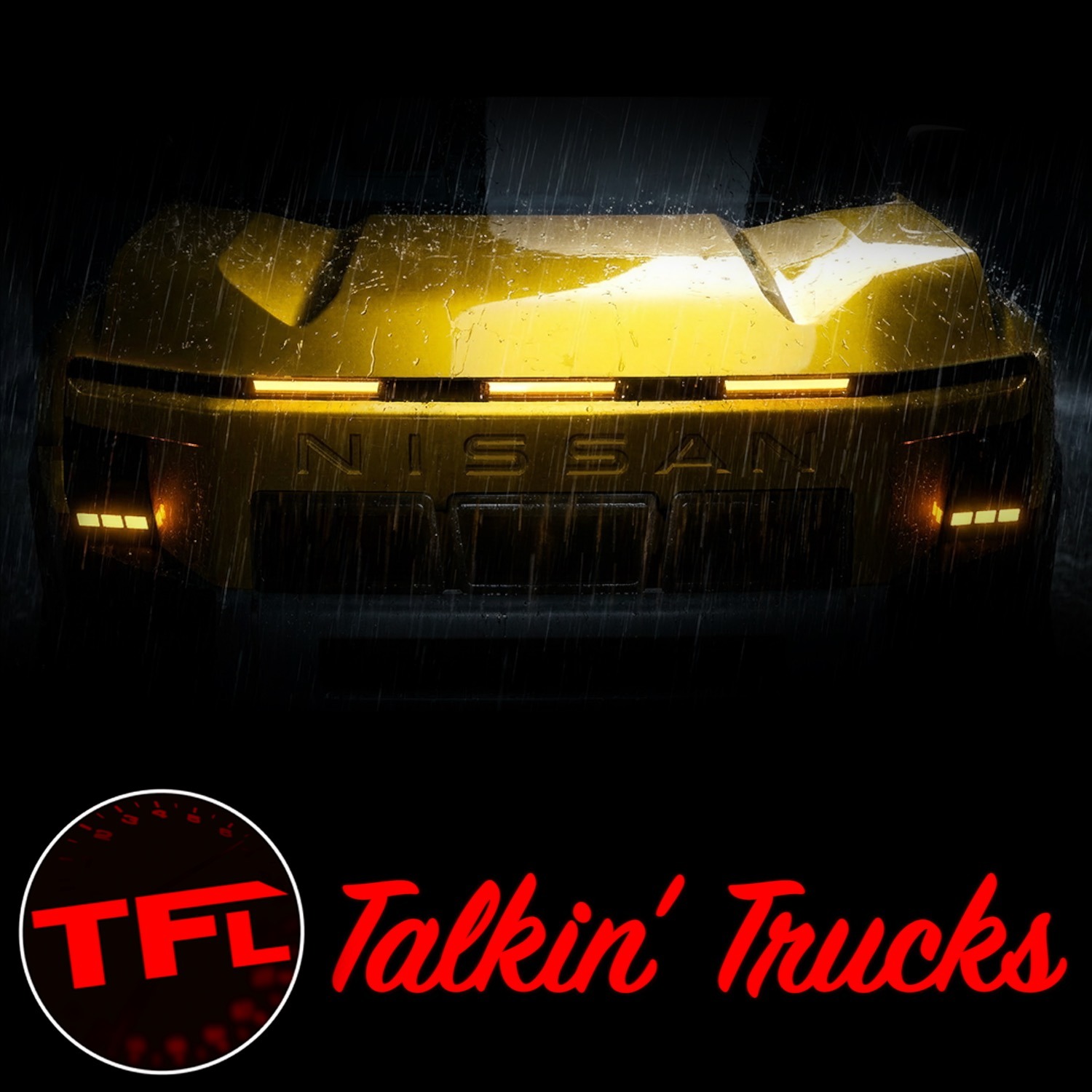
New Nissan Trucks Are Coming! | Ep. 327
About this episode
Nissan’s body-on-frame Xterra comeback is the headline, with Roman in Japan teasing a rugged new platform that could spawn up to five vehicles and target Wrangler/4Runner/Bronco buyers with a lower price. The hosts debate what other models might share the architecture (Frontier, Pathfinder, and possible Infiniti/Luxury variants) and note Nissan’s continued V6 and V6-hybrid plans. The news roundup also covers rumored GMC Jimmy revival, Hyundai/Kia body-on-frame pickups (Tasman/US plans), Ram’s pursuit-ready 2500, Jeep’s retro Gladiator appearance package, and a deep dive into Volvo VNR semi tech—plus towing vs fuel-economy talk and a near-miss on buying a used semi.
( https://www.alltfl.com/ ) Check out our new spot to find ALL our content, from news to videos and our podcasts! The wait is finally over! In this episode of TfLtalkin' Trucks, Andre and Kase break down Nissan’s massive bombshell: the official teaser for an all-new Nissan Xterra 4x4. We dive into the "The Arc" business plan, which promises five new vehicle launches, and speculate on the cryptic silhouettes that look suspiciously like a return for the Nissan Titan. Is Nissan finally ready to take the fight back to the Bronco and Wrangler? We analyze the teaser images and what this means for the future of Japanese off-roaders in America.
The truck news doesn't stop there. We discuss the debut of the Ram 1500 Pursuit and what the Hurricane engine means for law enforcement, plus Kia’s confirmed plans to bring a pickup truck to the U.S. market. Andre shares the wild story of how he almost walked away with a semi-truck, and Kase sits down for an exclusive interview with Dwayne from Volvo Trucks. It’s a deep dive into the engineering of the new Volvo VNR and the future of long-haul trucking.
( http://www.patreon.com/tflcar ) Visit our Patreon page to support the TFL team!
Advertising Inquiries: https://redcircle.com/brands
Privacy & Opt-Out: https://redcircle.com/privacy
semi trucks
"[10.0s] It's bigger than usual because we're talking quite a bit about semi trucks, which we're [14.9s] excited about, but there's also really big news. [17.6s] Huge news."
The episode is described as “heavy duty” because the hosts spend time discussing semi trucks (big rigs). Semi trucks are a different segment than pickup trucks, but they share themes like chassis design, durability, and powertrain choices. This sets expectations for the kind of engineering and use-case talk listeners will hear.
Nissan
"[23.5s] And also there's huge news coming out of Japan. [27.7s] Roman actually flew to Japan and he was there speaking with a lot of people from Nissan [35.2s] and the exteriors coming back, dude."
Nissan is the company behind the new truck/SUV news in this episode. The hosts say Nissan is teasing the exterior design and that it’s tied to a body-on-frame platform. That matters because it suggests Nissan is aiming at buyers who want a more traditional truck feel.
Nissan is the automaker behind the teased “new exteriors” and the planned body-on-frame architecture for the next Exterra. The hosts mention Roman traveling to Japan to speak with people from Nissan, emphasizing that this is real product development rather than speculation. In the context of trucks, Nissan’s move signals renewed focus on traditional, frame-based vehicles.
body on frame
"[56.3s] And why are we talking about this on a pickup truck podcast? [60.2s] Well, it's because it's body on frame. [62.5s] And here there's a short clip."
Body-on-frame means the car’s body sits on a separate metal frame underneath. Trucks like this are usually better for towing and carrying heavy stuff because the frame does most of the work. It’s also one reason these vehicles can be easier to build for durability.
“Body-on-frame” is a vehicle layout where the body is mounted on a separate ladder-like frame. This typically makes trucks and SUVs better at towing and handling heavy loads, and it can also make repairs easier because the structure is separated. The hosts connect this architecture to the next Nissan Exterra and why it matters for truck buyers.
35s
"Obviously the talk about this exterra has been at least a version of it with 35s, which is big deal."
“35s” means bigger tires—around 35 inches tall. Bigger tires can help a truck handle rough trails better by giving more clearance and grip.
“35s” is shorthand for 35-inch tires, a common off-road upgrade that increases ground clearance and improves traction on rough terrain. The hosts imply that fitting 35-inch tires is a major step toward making the Exterra more trail-capable.
rugged off-road competition segment
"turning this exterra into a real Bronco Wrangler 4Runner competitor... Frontier is still here... Nissan and Infiniti said that they will have some vehicles as well."
They’re talking about a specific “tough off-road” category of vehicles. The idea is that Nissan wants its trucks/SUV to meet the same expectations as the big off-road names.
The hosts frame Nissan’s strategy as targeting the rugged off-road SUV/pickup segment dominated by models like the Bronco, Wrangler, and 4Runner. This concept is about matching the expectations of buyers who want trail hardware, durability, and capability—not just styling.
iGauntlet
"We've used it on the iGauntlet several times. It's been amazing."
They mention the iGauntlet as something they’ve done with the truck. It’s basically a real-world test/event that helps show how capable the vehicle is.
The iGauntlet is referenced as an event or test where the hosts have used the Nissan Frontier. In this context, it functions as a real-world proving ground for durability and capability rather than a spec-sheet comparison.

Nissan Frontier
"...hree vehicles would be? Because we have exterra, Frontier, and Nissan and Infiniti said that they will have..."
The Nissan Frontier is a midsize pickup truck. It’s designed for hauling and everyday driving, with a bed for tools or cargo. The podcast brings it up as part of a set of trucks being discussed for future plans.
The Nissan Frontier is a midsize pickup truck positioned for buyers who want truck capability without going to a full-size truck. It’s mentioned in the podcast alongside other vehicle names as part of a lineup discussion—specifically how Nissan and Infiniti might approach future products. That makes it relevant when talking about what kind of trucks are being targeted and how they’re marketed.
Infiniti
"obviously Infiniti is a more luxury brand. So if they make a version of the exterra, then that one will be more nicely equipped, something along the lines of like a GX."
Infiniti is Nissan’s luxury brand. The hosts are saying Infiniti could make a nicer, more feature-rich version of the Exterra idea. So instead of competing as a regular Nissan, it would compete as a more premium option.
Infiniti is Nissan’s luxury brand, typically positioned above mainstream Nissan models. In this segment, the hosts suggest Infiniti could take the Exterra concept and sell it as a more upscale, better-equipped alternative. That’s a common strategy: reuse a platform/idea but differentiate with branding and features.

Lexus Gx
"Dude, wouldn't be awesome to do a Lexus GX versus Infiniti. I don't know what they would call it, QX-60 maybe?"
The Lexus GX is a rugged SUV that’s built more like a truck, so it’s good for off-road use. In this conversation, they’re using it as an example of the kind of luxury off-road vehicle they think Infiniti could challenge. It’s basically a “who would win” comparison between premium off-road SUVs.
The Lexus GX is a body-on-frame, off-road-capable SUV known for durability and a more traditional truck-like feel. The hosts use it as a benchmark for what a luxury, well-equipped version of an Exterra could aim to be. Comparing a “Lexus GX vs Infiniti” scenario highlights how these brands compete in the rugged-luxury segment.

Infiniti QX60
"Dude, wouldn't be awesome to do a Lexus GX versus Infiniti. I don't know what they would call it, QX-60 maybe? I mean, QX, I know there is already a QX-60."
The Infiniti QX60 is a luxury SUV with room for multiple passengers. It’s meant for comfortable everyday driving, not just off-road use. The podcast mentions it mainly because the name QX60 already exists.
The Infiniti QX60 is a three-row luxury SUV designed for families who want more comfort and upscale features than a typical mainstream SUV. In the podcast, it’s referenced as an existing model name (QX60) while discussing how an off-road-oriented comparison might be framed. That makes it relevant to the conversation about naming and positioning within Infiniti’s lineup.
undercut in price
"the other cool thing that Nissan has talked about with this exterra is that it sounds like they're targeting this to undercut in price its competitors. So it sounds like they want to be less expensive than Wrangler, less expensive than Forerunner and Bronco."
They’re talking about pricing the new truck/SUV cheaper than similar off-road models. The goal is to attract buyers who want the same kind of capability but don’t want to pay as much. It’s basically a “better deal” strategy.
“Undercut in price” means setting a lower price than direct competitors to win shoppers on value. In this segment, the hosts say Nissan/Infiniti could price the Exterra below off-road-focused SUVs like the Wrangler, 4Runner, and Bronco. That strategy can increase demand, but it also depends on how much equipment and capability you still include at the lower price.

Ford Bronco
"So it sounds like they want to be less expensive than Wrangler, less expensive than Forerunner and Bronco. Dude, that would be huge."
The Ford Bronco is Ford’s off-road SUV. The hosts bring it up because it’s one of the main vehicles people compare against when shopping for rugged SUVs. They’re basically saying Nissan wants to be cheaper than the Bronco.
The Ford Bronco is a modern off-road SUV that competes directly with other trail-focused models. The hosts mention it in the context of pricing—if the Exterra is cheaper than the Bronco, it could pull buyers from Ford’s lineup. This positions the Exterra as a value play in the off-road SUV market.

Toyota 4Runner
"So it sounds like they want to be less expensive than Wrangler, less expensive than Forerunner and Bronco. Dude, that would be huge."
The Toyota 4Runner is a rugged SUV that’s known for off-road ability. The hosts are saying the new Nissan could be priced below it to attract shoppers. So it’s not just about looks—it’s about value versus a proven off-road choice.
The Toyota 4Runner is a body-on-frame SUV built for off-road use and long-term durability. In this segment, it’s referenced as a competitor whose pricing the Exterra would aim to beat. That matters because the 4Runner has a loyal buyer base that often prioritizes capability and resale value.

Toyota Tacoma
"And the current frontier undercuts some of the versions of the Tacoma for sure. I mean, so this could be really, really interesting."
The Toyota Tacoma is a popular midsize pickup. The hosts are saying some current Tacoma trims already have pricing that undercuts certain competitors. They’re suggesting the new Exterra could follow a similar value strategy.
The Toyota Tacoma is a midsize pickup truck, and the hosts are comparing pricing “versions of the Tacoma” to the new Exterra’s potential positioning. That implies the Exterra could be priced to compete not only with SUVs, but also with buyers considering a truck. It’s a reminder that off-road shoppers often cross-shop between trucks and body-on-frame SUVs.
renderings
"Yeah, the three lights it does. It's got a little bit of hard body kind of DNA into it. Now some of these are renderings. This is not."
Renderings are digital pictures of a car concept or future model. They’re not always the real thing, and details can change before the vehicle is actually built. The hosts are basically warning that some images might be guesses.
Renderings are computer-generated images that show what a vehicle might look like, often before a real prototype or production model exists. The hosts note “some of these are renderings,” meaning some visuals may be speculative. That’s important when evaluating design claims—renderings can be directionally accurate but not final.

Nissan Pathfinder
"And so the pathfinder also kind of evolved via a body on frame chassis... I think the pathfinder could benefit from going back to body on frame..."
The Nissan Pathfinder is a family SUV with three rows. The hosts are talking about how its construction style has changed over the years, and they think a more rugged setup could make it better for off-road use.
The Nissan Pathfinder is a midsize three-row SUV whose platform philosophy has shifted over time between unibody and body-on-frame approaches. In this discussion, the hosts argue that a more body-on-frame, rugged setup could better match the Pathfinder’s “off-road-ready” expectations—especially for trims like Rock Creek.

Nissan Rogue
"It would be really cool if the three row pathfinder... but they have other vehicles to like, if you want something more efficient, there's the rogue."
The Nissan Rogue is a smaller SUV/crossover that’s usually aimed at comfort and good everyday fuel economy. The hosts mention it as the “more efficient” option compared with a more rugged, off-road-focused idea.
The Nissan Rogue is a compact crossover positioned more toward everyday efficiency and mainstream family use than dedicated off-road capability. Here, it’s mentioned as an alternative within Nissan’s lineup if you want something more efficient than a three-row Pathfinder.
e-power
"And they're moving to e-power on a lot of their machines. So electrified powertrains that use electric motors to drive the wheel and then a gas engine to supply power and electricity to those electric motors..."
e-Power is Nissan’s hybrid-like system where electric motors do the driving. A gas engine mainly generates electricity to keep the system going, so the driving feel is more like an electric vehicle. It’s designed to be efficient without needing to plug in.
“e-Power” refers to an electrified powertrain strategy where electric motors drive the wheels, while a gasoline engine acts as a generator to supply electricity. This can deliver smooth, responsive acceleration like an EV while still using gasoline for longer-range driving. The key idea is that the engine doesn’t directly drive the wheels.
electrified powertrains
"So electrified powertrains that use electric motors to drive the wheel and then a gas engine to supply power and electricity to those electric motors, which is a cool system."
Electrified powertrains are vehicles that use electricity to help move the car. Sometimes the engine still plays a role, but electric motors do a lot of the work. That can change how the car accelerates and how efficiently it uses fuel.
Electrified powertrains include systems that use electric motors and/or batteries to assist or replace the traditional engine’s job. In this segment, the hosts focus on a setup where electric motors propel the vehicle while a gas engine supports by generating electricity. This affects efficiency, driving feel, and how the vehicle behaves in different speeds and loads.
Wrangler
"Obviously Bronco, Wrangler, Forerunner sell a massive amount."
Wrangler is Jeep’s famous off-road SUV. The hosts are pointing out that this kind of rugged SUV sells a lot.
Wrangler is Jeep’s iconic off-road SUV known for its trail-focused design and strong aftermarket support. It’s mentioned here as part of the high-selling off-road SUV category.
competition and price pressure
"more competition. And especially if they're targeting a lower price, maybe that's going to put some pressure on a few other manufacturers to have to either make their vehicles that much better or bring their prices down as well."
If one brand brings out a cheaper option, other brands often have to respond. That can mean better deals or better features for shoppers.
When a new model targets a lower price, it can create “price pressure” across the market—pushing competitors to improve value through better features, incentives, or lower pricing. The hosts connect this to how additional competition can benefit consumers.
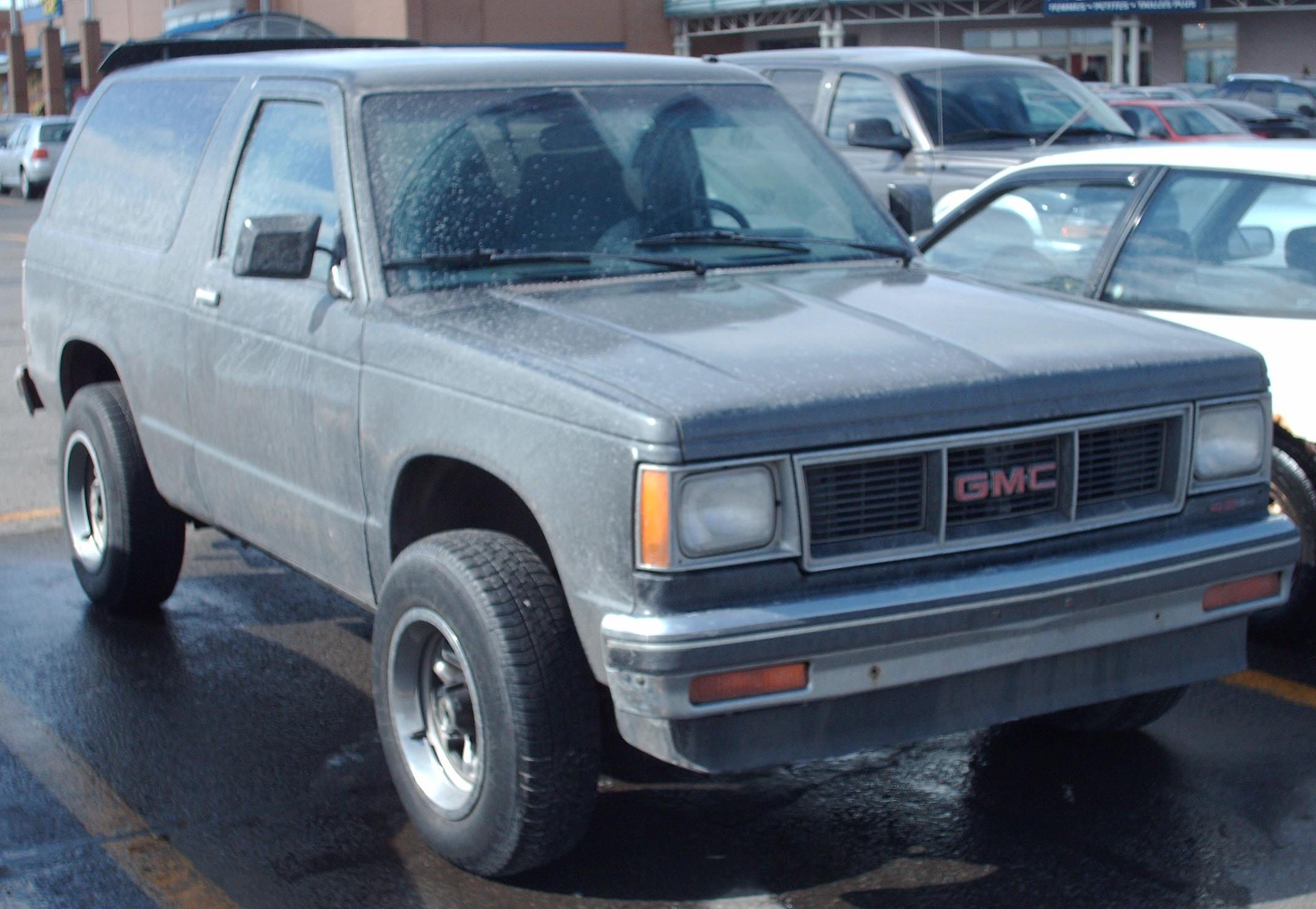
Gmc Jimmy
"there's also news of GMC Jimmy returning as a true off-roader, but it's just a rumor right now."
The GMC Jimmy is an older SUV model name. In this segment, people are talking about rumors that GMC might bring it back with stronger off-road focus.
The GMC Jimmy is a compact SUV nameplate that historically competed in the off-road and family-SUV space. Here, the hosts mention rumors of a “GMC Jimmy returning” as a true off-roader, which would be a notable shift in how the model is positioned.
square body
"I've seen a lot of AI kind of renderings that are showing basically a modern square body that I think is a design that's maybe a little more extreme toward the end of a neo retro kind of design than what I figured GM would actually do."
A “square body” is basically a boxy, angular vehicle shape instead of a rounded, aerodynamic one. The hosts are saying the rumor images look like they’re going for a very classic, boxy style.
“Square body” is a styling term associated with older, boxy truck and SUV designs—often linked to classic American body-on-frame aesthetics. In this segment, AI renderings are being described as showing a modern version of that look, which the hosts think may be too extreme for GM.
neo retro design
"I've seen a lot of AI kind of renderings that are showing basically a modern square body that I think is a design that's maybe a little more extreme toward the end of a neo retro kind of design than what I figured GM would actually do."
Neo retro means a car looks inspired by older designs, but it’s still a modern vehicle underneath. The discussion here is about whether the rumored styling would be more extreme than what GM would likely do.
“Neo retro” design is a modern vehicle styling approach that deliberately borrows cues from older eras—like boxier shapes, classic grilles, or period-inspired proportions—while still using contemporary engineering and materials. The hosts are debating whether a rumored “square body” look would fit that neo-retro direction.
GM
"[426.8s] The sales figures on machines like these are pretty fantastic. [431.4s] So I cannot fathom why GM wouldn't want to get in on that. [435.3s] And obviously they brought back the blazer name in a way that people"
GM is the big automaker being referenced here. The point is that if sales are strong in this type of vehicle, GM would likely want to compete too.
GM (General Motors) is mentioned as a major automaker that could enter the truck/SUV segment being discussed. In these conversations, “why wouldn’t GM want to get in on that?” usually points to market demand and competitive positioning.

Boulder Hyundai Boulder
"[471.1s] So Kia, so in New York, Cole and I were there, we saw the Hyundai Boulder concept, which is a body on frame SUV. [477.7s] Once again, same XTERRA competitor. [483.0s] And then just a few days later, Kia said, oh, by the way, we're also"
The Hyundai Boulder is a concept SUV Hyundai showed to hint at what a future production vehicle could look like. In this segment, they’re highlighting that it’s built like a truck (body-on-frame).
The Hyundai Boulder is a concept SUV shown by Hyundai, and in this discussion it’s specifically described as a body-on-frame design. Concept vehicles like this are often used to preview future production platforms and design direction.

Kia Tasman
"[487.1s] going to have a body on frame pickup truck in the United States. [490.2s] And we're showing images of the Tasman, but I don't think the Tasman [494.5s] will come to the US, so to speak."
Kia Tasman is the pickup truck Kia is talking about in this segment. They’re showing images of it, but the hosts aren’t sure it will be sold in the U.S.
The Kia Tasman is referenced here as a body-on-frame pickup truck Kia is showing for the U.S. market. The hosts also note uncertainty about whether it will actually come to the United States, which matters for anyone tracking Kia’s truck plans.

Hyundai Santa Cruz
"And the Santa Cruz hasn't been a total failure, but compared to the Maverick, it hasn't sold nearly as many units. And now they're discontinuing the Santa Cruz."
The Hyundai Santa Cruz is a smaller pickup meant to be easier to live with than a big truck. The hosts are saying it didn’t sell as well as a similar small pickup, so Hyundai is backing away from it.
The Hyundai Santa Cruz is a small pickup truck that Hyundai introduced as a “crossover-like” truck aimed at buyers who want truck utility without going full-size. In this segment, it’s used as an example of Hyundai’s limited sales success compared with Ford’s Maverick, leading to discontinuation.

Ford Maverick
"And the Santa Cruz hasn't been a total failure, but compared to the Maverick, it hasn't sold nearly as many units."
The Ford Maverick is a smaller, more affordable pickup that became popular. The hosts are comparing it to the Santa Cruz to show which one actually sold more.
The Ford Maverick is a compact pickup known for being relatively affordable and practical, which helped it sell strongly in the U.S. Here, it’s used as the benchmark for what “commitment” in the small-truck market looks like versus Hyundai’s Santa Cruz.
"dip your toe in the water" approach to pickups
"So I think they've figured out that if you're going to go for it in the United States, if you're going to make a pickup truck, you got to really commit. Dive in head first. You can't just dip your toe in the water."
They’re talking about the idea of testing the market without fully committing. The point is that truck buyers in the U.S. tend to reward companies that go all-in with the right truck, not a “half step.”
This is a metaphor for trying a new product category with limited commitment—offering a truck but not fully investing in scale, marketing, and product fit. The hosts argue that U.S. pickup buyers expect a serious, purpose-built truck, so partial efforts may struggle.
Hyundai Tasman
"And the reception for the Tasman has obviously not been incredible. Well, because it's a lot controversial in its looks, in the looks department... But coming into the US, they probably will redesign it somehow to be a little bit more in line with some of the styling and also the size of the truck."
The Hyundai Tasman is a pickup concept/vehicle Hyundai is positioning for markets outside the U.S., and the hosts discuss how its styling and reception could affect success. They also suggest it would likely need redesigns—such as size, styling, and possibly powertrain choices—to better fit U.S. truck buyer expectations.

Toyota Hilux
"The Tasman could be a great Hilux competitor overseas. Sure, right?"
The Toyota Hilux is a very well-known pickup sold around the world. The hosts are saying the Tasman could try to compete with it in countries where buyers want that kind of truck.
The Toyota Hilux is a globally popular pickup known for durability and strong sales in many international markets. The hosts suggest the Hyundai Tasman could be a competitor to the Hilux overseas, implying it would need to match the Hilux’s appeal in those regions.
payload
"You know, it has a lot of payload in those markets, maybe even a diesel engine, right?"
Payload is how much weight the truck can carry. If a truck has good payload, it can haul more stuff without being overloaded.
Payload is the maximum weight a vehicle can carry in addition to its own weight—typically measured as how much cargo or passengers it can haul safely. The hosts mention payload as a reason the Tasman could be attractive in certain overseas markets.
U.S. truck buyers being "pretty particular"
"...because if it's already got mixed reception overseas and people in the US are pretty particular about trucks, they're going to already have an uphill battle they're facing."
They’re saying American truck shoppers can be picky. So a truck that doesn’t fully match U.S. tastes and expectations may have a hard time selling.
This refers to the idea that U.S. pickup customers have strong preferences about styling, size, and overall truck “fit,” so a vehicle that’s merely acceptable elsewhere may struggle. The hosts connect this to why Hyundai would likely need to redesign the Tasman for the U.S. market.
plug-in hybrid
"it would be interesting, but unlikely would be interesting or some kind of plug-in hybrid, maybe or something different."
A plug-in hybrid is a car that uses gas and electricity. The battery can be charged by plugging it in, so you can drive some distance on electricity alone.
A plug-in hybrid (PHEV) uses both an internal-combustion engine and an electric motor/battery. The key difference versus a regular hybrid is that you can charge the battery from an external power source, enabling more electric-only driving.
range extender
"I'm sensing like a range extender, too. By the way, Nissan said V six power for the XTERRA or a V six hybrid."
A range extender is like a backup generator for an electric vehicle. Instead of the gas engine directly driving the wheels, it helps keep the battery charged so you can go farther.
A range extender is a small engine (often gasoline) used to generate electricity and extend the driving range of a primarily electric vehicle. It’s not the same as a traditional hybrid because the wheels are typically driven by electric motors, while the engine mainly charges the battery.

Nissan XTERRA
"By the way, Nissan said V six power for the XTERRA or a V six hybrid. So they're still staying with larger displacement V six engines for the XTERRA for the foreseeable future."
The Nissan Xterra is a rugged SUV. Here, they’re talking about Nissan using a V6 engine (and maybe a hybrid version) instead of switching to smaller engines right away.
The Nissan Xterra is a midsize SUV known for rugged, off-road-oriented styling and body-on-frame roots. In this segment, the hosts mention Nissan pairing it with a V6 (and potentially a V6 hybrid), which signals a focus on larger-displacement engines rather than downsizing immediately.
V six
"By the way, Nissan said V six power for the XTERRA or a V six hybrid. So they're still staying with larger displacement V six engines for the XTERRA for the foreseeable future."
A V6 is an engine with six cylinders arranged in a V shape. Here, it matters because Nissan is talking about using a V6 (and maybe a hybrid version) instead of switching away from that engine size.
A V6 engine is a six-cylinder configuration arranged in a V shape, typically balancing smoothness and power with better packaging than a straight-six. In this discussion, the hosts use “V6” to describe Nissan’s strategy of sticking with larger-displacement engines (and possibly hybridizing them) for the Xterra.
US made with US steel
"I mean, completely because they said it's going to be US made with US steel. So I mean, they're really are looking into this really heavily."
“US made with US steel” means the truck is built in the United States and uses steel sourced from the United States. It’s a way for the company to emphasize local manufacturing and materials.
“US made with US steel” signals a manufacturing and supply-chain strategy tied to domestic content. For trucks, this can be part of meeting buyer expectations, supporting local production, and aligning with regulations or incentives that favor domestic sourcing.

Dodge Ram
"Yeah. So, uh, Ram is introducing something they call pursued capabl..."
Ram makes full-size pickup trucks. The podcast is talking about Ram introducing a new feature or package meant to improve what the truck can do. It’s the kind of update that usually targets towing, hauling, or overall capability.
Ram (often referred to as “Dodge Ram” in conversation) is a brand known for full-size pickup trucks aimed at work and towing. The podcast references Ram introducing something described as “pursued capabl…,” which suggests a focus on capability and performance features. That kind of product talk is typically about how Ram is trying to improve what the truck can do for buyers.
pursued capable vehicle
"So, uh, Ram is introducing something they call pursued capable vehicle."
Ram is using a phrase—“pursued capable vehicle”—to describe what they’re aiming for with this truck. The idea is that the truck is built to handle real work and tough situations.
“Pursued capable vehicle” appears to be a Ram branding term describing a truck philosophy focused on capability—likely tying design, engineering, and features to real-world towing, hauling, and off-road/work use. Because it’s presented as something Ram “introducing,” it’s worth explaining as a marketing/positioning concept rather than a standard mechanical component.

Hemi 6.4 liter
"This is, this is a Hemi 6.4 liter that they have another Ram heavy duties, but they did something quite interesting."
A “Hemi” is a type of big V8 engine. The “6.4 liter” part means it’s a large engine, which helps it pull hard and keep going when the truck is working.
“Hemi” refers to Chrysler’s hemispherical combustion-chamber engine design, and “6.4 liter” points to a 6.4L V8 used in certain Ram heavy-duty trucks. In a pursuit/fleet context, the big-displacement V8 is chosen for strong low-end torque and sustained power under load.

power wagon
"Um, it's a tradesman, but they put a rear axle out of a power wagon into this. So it's got an aggressive four 10 to one rear axle ratio."
The Power Wagon is Ram’s tougher, off-road version of a heavy-duty truck. Using its rear axle suggests the truck is being built to handle rough, high-stress driving.
The “Power Wagon” is Ram’s off-road–oriented heavy-duty model known for stronger drivetrain components and a more capable axle setup. The speaker says they’re using a rear axle from a Power Wagon, which implies improved durability and gearing suited for demanding use.

Dodge Power Wagon
"...'s a tradesman, but they put a rear axle out of a power wagon into this. So it's got an aggressive four 10 to ..."
The Dodge Power Wagon is a pickup truck made for serious off-road and tough work. It uses hardware designed to handle rough terrain and heavy use. In the podcast, it’s mentioned because its parts are strong enough to be used in a more capable build.
The Dodge Power Wagon is a heavy-duty, off-road-oriented version of Ram’s pickup lineup, known for aggressive capability. The podcast specifically mentions using a rear axle from a Power Wagon into another truck build, highlighting its off-road hardware and strength. That’s why it’s brought up: it represents rugged components intended for tough driving and work use.
rear axle ratio
"So it's got an aggressive four 10 to one rear axle ratio. Is it four wheel drive? Uh, it is four wheel drive."
Rear axle ratio is the “gear multiplication” that helps the truck move off the line and pull. A higher number (like 4.10) usually means stronger grunt, but it can cost a bit of fuel economy at highway speeds.
The rear axle ratio (here described as “4.10 to one”) is the gearing between the driveshaft and the rear differential. A numerically higher ratio like 4.10 typically improves acceleration and pulling power, which is useful for heavy vehicles and stop-and-go pursuit or towing.
four wheel drive
"Is it four wheel drive? Uh, it is four wheel drive. It's going to have, you know, a lot of accessories that police departments and government agencies can put on this."
Four-wheel drive means the truck can send power to all four wheels. That helps it grip the road better, especially in bad weather or on rough surfaces.
Four-wheel drive (4WD) sends power to both the front and rear axles for better traction. For pursuit and government fleet use, 4WD helps maintain grip in rain, snow, or uneven road conditions and improves confidence during hard launches.
crew cab
"Um, and it's crew cab only will come as a crew cab with a standard bed. So basically six foot four inch bed. Um, and the interior is very basic, you know, vinyl, everything, rubber floors."
A crew cab is the pickup version with four doors. It’s meant for carrying more people, which is useful for work crews or agencies.
A crew cab is a pickup configuration with four full-size doors and seating for multiple passengers. For fleet and government vehicles, crew cab layouts are common because they allow more personnel to ride together comfortably.
standard bed
"it's crew cab only will come as a crew cab with a standard bed. So basically six foot four inch bed. Um, and the interior is very basic, you know, vinyl, everything, rubber floors."
The “standard bed” is the normal-sized cargo box on the back of a pickup. The length matters because it determines how much gear you can carry or mount.
A “standard bed” refers to a conventional-length pickup cargo bed rather than a shorter or longer variant. Bed length matters for fleet use because it affects how equipment can be stored or mounted and how the truck fits in service areas.
fleet vehicle
"Um, it's supposed to be affordable. We don't know how much it costs because it's kind of a fleet vehicle that they will sell to agencies."
A fleet vehicle is a truck bought by organizations in bulk, like police or city departments. They often choose simpler, tougher setups so it’s easier and cheaper to keep running.
A fleet vehicle is purchased in volume by organizations like police departments or government agencies, often with simplified options and pricing aimed at total cost of ownership. Because fleets buy many units, manufacturers may offer configurations that prioritize durability, upfit compatibility, and predictable maintenance.
pursuit truck
"Um, it's supposed to be affordable. We don't know how much it costs because it's kind of a fleet vehicle that they will sell to agencies. But yeah, what do you, what do you think? A heavy duty pursuit truck? Yeah."
A pursuit truck is basically a police-style vehicle built for chasing and tough driving. It’s set up to handle lots of hard starts, quick acceleration, and bad-road conditions.
A “pursuit truck” is a police or government vehicle configured for high-performance, high-durability driving—often with stronger drivetrain components, specific gearing, and accessory-ready packaging. The point is to balance acceleration, traction, and reliability for repeated hard use rather than just normal commuting.
California Highway Patrol
"We were, uh, working a little bit with California highway patrol and we saw a truck that they had that was equipped for, um, basically enforcing laws around semi trucks."
The California Highway Patrol is a government agency that enforces traffic laws in California. They sometimes use specialized vehicles for specific enforcement tasks.
The California Highway Patrol is a state law-enforcement agency that conducts vehicle testing and uses specialized equipment. Mentioning them provides context for why certain trucks are configured for enforcement and regulatory work.

Tesla Semi
"...quipped for, um, basically enforcing laws around semi trucks. Yeah."
The Tesla Semi is an electric big rig truck used to move freight. Instead of using diesel, it runs on electricity. The podcast brings it up because rules and regulations for semi trucks can affect how these trucks are deployed.
The Tesla Semi is an electric semi-truck intended for long-haul freight, with the goal of reducing emissions and changing how trucking fleets operate. The podcast mentions it in the context of enforcing laws around semi trucks, which ties into how regulations can affect adoption and operations. That makes it relevant because legal and compliance requirements can influence when and how electric trucks are used.
mobile scales / semi-truck enforcement equipment
"They basically a truck that was carrying a lot of like weight scale, like mobile scales, all kind of gear for them all kind of gear. To make sure that all those regulations and things are being followed."
Mobile scales are tools that let officers weigh big trucks on the road. A truck outfitted with that gear can help enforce rules about how heavy semi trucks are allowed to be.
Mobile scales are portable weighing systems used to measure commercial vehicle weights on the road. Equipping a truck with mobile scales and gear supports enforcement of regulations like weight limits for semi trucks.
zero to 60 / zero to 80 / zero to 100 testing
"Michigan state police tested it, uh, at zero to 60, zero to 80 miles an hour, zero to a hundred miles an hour. You know, uh, that's kind of what police departments test for."
Instead of only looking at top speed, police departments test how fast a vehicle accelerates from a stop to certain speeds. It helps them compare different trucks or cars in a consistent way.
Police agencies often use standardized acceleration tests (like 0–60, 0–80, and 0–100 mph) to compare vehicles under repeatable conditions. These tests focus on real-world pursuit and response performance rather than just peak horsepower.
Michigan state police
"Um, if you scroll down a little bit, uh, Michigan state police tested it, uh, at zero to 60, zero to 80 miles an hour, zero to a hundred miles an hour."
Michigan State Police is the law-enforcement agency in Michigan. They tested the truck’s acceleration to see how it performs for their kind of driving.
Michigan State Police is a state law-enforcement agency that tested the vehicle’s acceleration performance. Their testing criteria (0–60, 0–80, 0–100) is a clue that the truck is being evaluated for pursuit/response suitability.
8.4 one second zero to 60
"I mean, there's several different, um, and look, it did an 8.4, one second, zero to 60, which is not going to break any records."
They’re giving a measured acceleration time from 0 to 60 mph. For a big truck, around 8 seconds is decent, but it won’t feel instant like a performance car.
The host is quoting a measured 0–60 mph time (here, about 8.4 seconds). For a heavy-duty truck, that’s a useful real-world performance datapoint, but it’s not typically “sports car fast.”

gladiator
"Oh, Jeep is doing this thing where every month they're unveiling something new for the Wrangler and or gladiator. And this week or this month, I should say it was this kind of retro themed gladiator."
The Jeep Gladiator is Jeep’s pickup. It’s basically a truck version of the Wrangler, designed to handle off-road trails while still carrying stuff.
The Jeep Gladiator is Jeep’s pickup truck based on the Wrangler platform, combining truck utility with off-road hardware. Here it’s specifically tied to Jeep’s monthly special releases, including a retro-themed appearance.
appearance packages
"Every month have been appearance packages. Although some of them have been pretty cool."
An appearance package is basically a “looks” bundle. It changes things like color, wheels, and trim, but it usually doesn’t make the truck faster or more capable in a mechanical way.
An appearance package is a factory bundle of cosmetic upgrades—like exterior colors, decals/graphics, wheels, and interior trim—without necessarily changing the core mechanical performance. Automakers use them to create limited-time or themed editions that are easier to buy than full custom builds.
V8
"Yeah, which I'm happy about because I love V8s. But this is not a V8 gladiator. Unfortunately, no, this is just an appearance package."
A V8 is an engine with eight cylinders. People like them because they usually feel powerful and have a classic sound.
V8 refers to an engine with eight cylinders. In truck and off-road discussions, V8s are often associated with strong low-end torque and a more traditional “muscle” feel compared with smaller turbo engines.
special editions
"So they're calling it rewind. It's kind of 80s 80 school. Jeep is kind of the master of special editions and color schemes."
Special editions are limited or themed trims that bundle styling and option content—often including unique colors, graphics, wheels, and badges—around a specific theme. The hosts connect this to Jeep’s reputation for using special editions to create distinct color schemes and identity.
Onyx
"We partnered with Onyx. You partnered with Moab. That's crazy. No, we partnered with Onyx to do a trip out to Moab."
They say they teamed up with a company called Onyx. That company helped set up the trip and the video content for it.
Onyx is the partner the hosts mention for organizing a trip. In this context, it’s tied to the “rugged adventure” video series they’re producing around Moab trails.

Toyota Land Cruiser
"We did a trip out to Moab, checked out some trails that are maybe a little less traveled than some others and we brought our hundred series Land Cruiser. And we brought Tommy's LR3. Both of those vehicles are from same era."
They’re talking about a Toyota Land Cruiser (an older 2005 model). They kept it mostly stock, and it still handled the trails—mostly they just changed the tires.
The hosts refer to the “hundred series Land Cruiser,” specifically an 05 Toyota Land Cruiser. The point they’re making is that it’s close to stock and still capable on Moab trails, with changes mostly limited to tires.
Tommy's LR3
"And we brought Tommy's LR3. Both of those vehicles are from same era. The Land Cruiser's in 05 and his LR3's in 06. And we ended up in some really pretty places."
Tommy brought a Land Rover LR3 (a 2006 model). They kept it mostly stock and mainly changed the tires so it could handle the off-road trails.
“LR3” refers to the Land Rover LR3, and the hosts specify it’s a 06 model. They emphasize it’s also close to stock, with the main change being tires, showing how capable it can be on trails that don’t require heavy mods.
close to stock
"Both of these vehicles are very close to stock. It's primarily just tires that are changed on them. So the trails that we went and ran and places that we saw were all places you could go in a pretty much stock vehicle."
“Close to stock” means the cars are mostly the same as when they were new. They mainly changed the tires, which is one of the biggest things that affects how well a vehicle can grip on trails.
“Close to stock” means the vehicles are largely unmodified from how they left the factory. The hosts clarify that the main change is tires, which matters because tire choice often has the biggest impact on traction for off-road driving.
trail rated Jeep badge
"Now at one point, Tommy put a trail rated Jeep badge on the side of the Land Cruiser as a prank and I didn't bring any props to prank him with because I wasn't"
“Trail Rated” is a badge Jeep uses to show it’s meant for off-roading. In this story, Tommy puts that badge on the Land Cruiser as a joke.
A “trail rated” badge is associated with Jeep’s off-road certification branding, used to signal that a vehicle meets certain off-road capability criteria. Here it’s mentioned as a prank detail—Tommy puts the badge on the Land Cruiser to joke around.
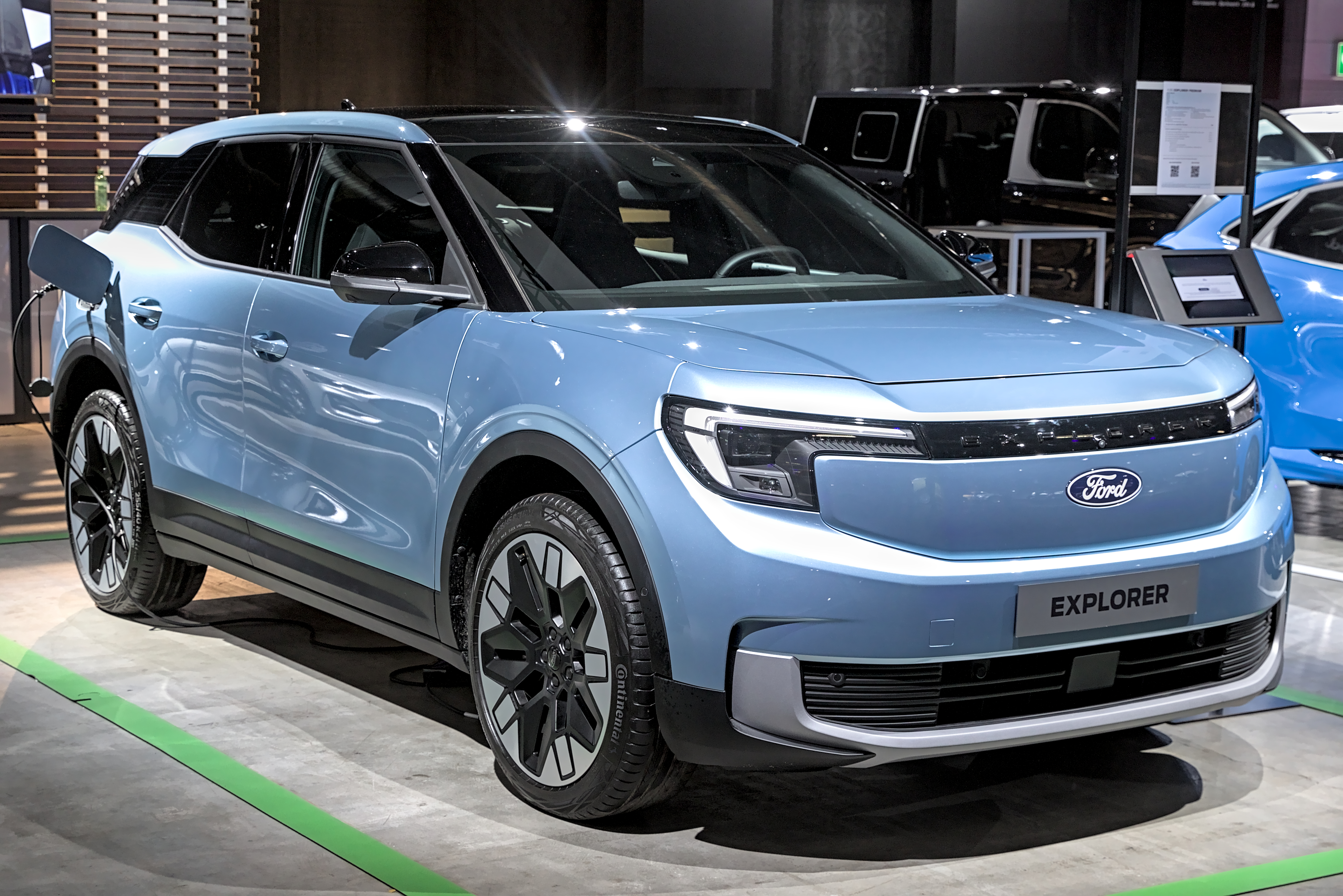
Ford Explorer
"So while he wasn't paying attention, I went in and drew Ford Explorer on the back of his LR3 because Ford owned Land Rover when this LR3 was made. They oversaw the final development of the LR3 and his LR3 has a four liter V6 from a Ford Explorer."
The Ford Explorer is a popular SUV. Here it’s mentioned because the hosts say some parts or the engine in the Land Rover LR3 came from the Explorer, which leads to that comparison.
The Ford Explorer is a mainstream SUV that, in this discussion, is used as a reference point for components used in the Land Rover LR3. The hosts claim the LR3’s four-liter V6 is sourced from or related to the Explorer, which is why some people make the “it’s just a Ford Explorer” comparison.
factory four by fours
"And it's all stuff that you could do in most factory four by fours that are decently rugged and have a good set of tires. Can I do it in my Subaru Outback?"
They mean regular, stock 4-wheel-drive SUVs—not heavily modified ones. The idea is that you can still do a lot on trails as long as the vehicle is built for it and you have good tires.
“Factory four by fours” refers to off-road-capable SUVs that come from the manufacturer with the right hardware for trails, rather than being heavily modified. The hosts suggest that many stock 4x4s can handle similar obstacles if they’re reasonably rugged and have appropriate tires.

Subaru Outback
"And it's all stuff that you could do in most factory four by fours that are decently rugged and have a good set of tires. Can I do it in my Subaru Outback? No."
The Subaru Outback is great for snow and rough roads, but it’s not the same as a true off-road 4x4. The hosts are saying the trail they did is too demanding for an Outback without the right off-road setup.
The Subaru Outback is a crossover/wagon-style vehicle known for all-weather capability and standard all-wheel drive, but it’s not typically built for serious off-road obstacles. The hosts answer “No” to doing the same trails in an Outback, implying that ground clearance, tires, and low-range/off-road hardware matter for tougher routes.
Finns and Things
"[1212.9s] really high traffic areas. [1215.0s] Uh, so at, you know, at one point we were on Finns and Things, which was [1218.7s] probably one of the more, the more frequented trails that were along"
That’s the name of a particular trail they drove. Trail names matter in off-roading because each one is different—some are easier, some are tougher.
“Finns and Things” refers to a specific off-road trail/route in the Moab area. Trails like this are often known by name because they have distinct difficulty, terrain, and line choices that affect how you plan a trip.
peak season
"[1225.0s] but most of what we were doing was designed so that [1229.3s] you could go there even during peak season and still avoid a lot of the [1233.4s] chaos and probably check out some trails that you've never been on before."
“Peak season” means the time of year when a destination gets the most visitors. For off-roading, that can mean more crowded trails, more traffic jams, and more difficulty finding parking or a clear line through obstacles.
off the beaten path
"[1241.3s] further, right? [1242.6s] Yeah, off the beaten path. [1243.7s] But not, you know, not a ridiculous amount of time because we left Colorado"
It just means they’re going somewhere that most people don’t go. On a trip like this, that usually means fewer crowds and a more unique route.
“Off the beaten path” means choosing routes or trails that are less popular and less crowded. In off-roading, that often translates to fewer people, less congestion, and sometimes more interesting or lesser-known terrain.
Moab
"[1243.7s] But not, you know, not a ridiculous amount of time because we left Colorado [1247.5s] on Tuesday, went and ran a few things, spent the night in Moab Tuesday [1253.2s] night and then drove more trails on Wednesday, camped Wednesday night"
Moab is a famous off-roading destination in eastern Utah, known for its extensive trail network and desert scenery. It’s commonly used as a base for exploring trails that range from beginner-friendly to very technical.
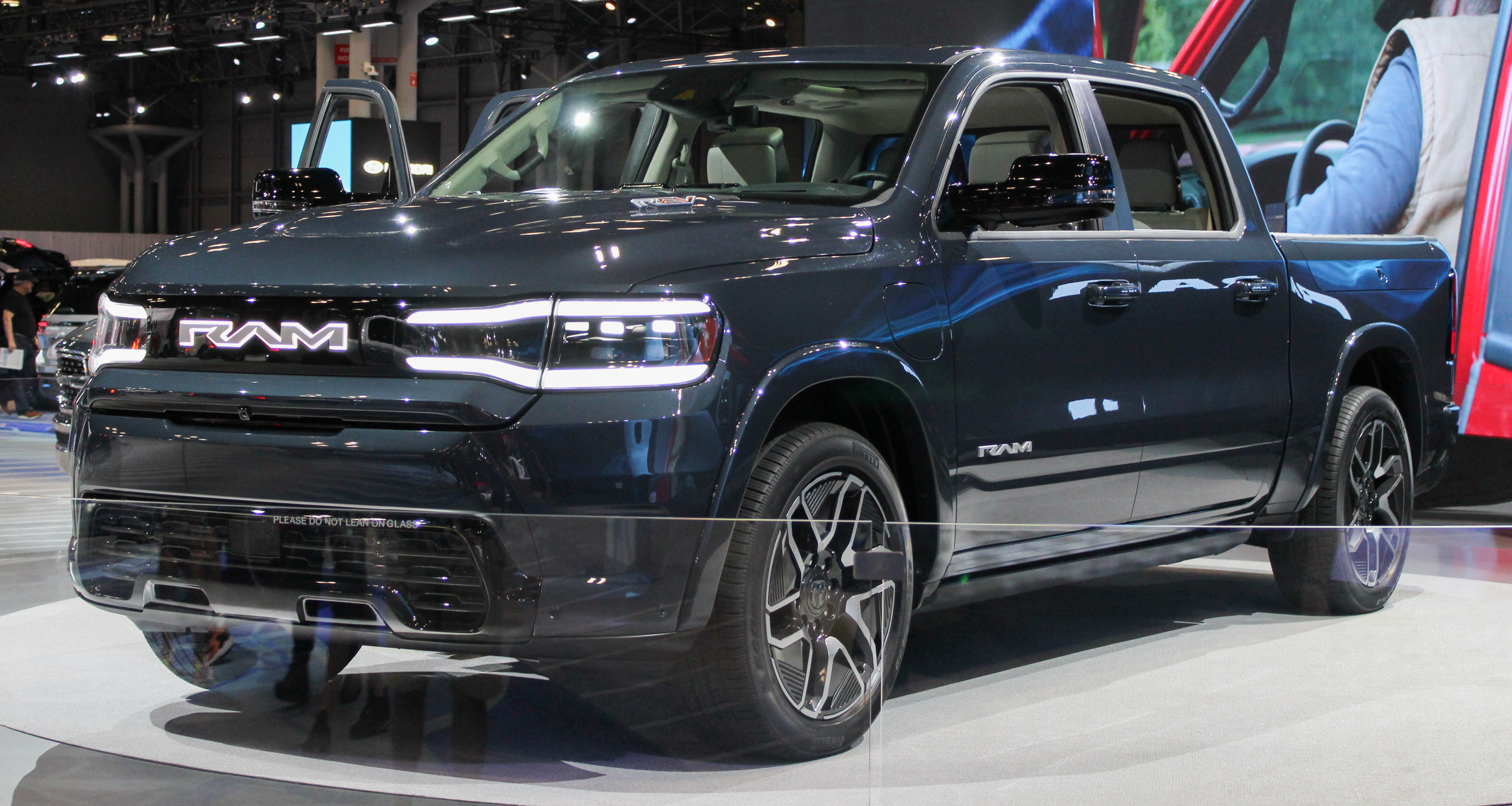
Ram 1500
"...I saw not one, but two brand new Ram 1500 DC six fifties supercharged 5.7 liter Hemi trucks..."
The Ram 1500 is a popular full-size pickup truck. Here, they’re talking about a special version that’s been modified to look lower and feel faster, including a supercharger. It’s basically a street-focused truck build, not a stock work truck.
The Ram 1500 is a full-size pickup from Ram (Stellantis). In this segment, the hosts are specifically talking about a Ram 1500 build that’s been modified for performance and stance, including a supercharged engine and lowered suspension. It’s an example of how modern trucks are being turned into “mean street” style machines.
supercharged
"...brand new Ram 1500 DC six fifties supercharged 5.7 liter Hemi trucks..."
A supercharger forces extra air into the engine. That usually makes the engine produce more power. So the truck feels quicker without waiting for boost to build.
A supercharger is an engine-mounted forced-induction device that increases the amount of air entering the engine. More air (and fuel) generally means more power, especially at lower engine speeds where turbo lag can be more noticeable. In a truck context, it’s often used to make acceleration feel stronger and more immediate.
5.7 liter Hemi
"...supercharged 5.7 liter Hemi trucks, which is cool."
This is a 5.7-liter V8 engine used in some Ram trucks. “HEMI” is the engine family name. Here, they’re saying that engine is the one getting a supercharger.
“5.7 liter Hemi” refers to Chrysler/Ram’s 5.7L V8 engine family commonly called the HEMI. The “Hemi” name is associated with hemispherical combustion chamber shapes, which can support efficient airflow and strong performance. In this segment, it’s the base engine that’s being supercharged for the truck package.
splitter
"...It’s lowered. It’s got a pretty aggressive little splitter underneath the front bumper."
A splitter is a front add-on that sticks out a bit below the bumper. It helps guide air around and under the front of the vehicle. It also usually makes the truck look more aggressive.
A splitter is an aerodynamic add-on mounted near the front bumper that extends forward and helps manage airflow under the vehicle. On street-oriented builds, it’s often used to improve front-end aero balance and increase the “planted” look. While it’s not the same as a full race aero package, it’s a common mod on performance trucks and cars.
Fox factory
"...it’s a collaboration between Ram and also Fox factory. So Fox factory actually does the conversion..."
Fox Factory is a company that makes performance suspension parts, like shocks. They’re involved here because they help convert the truck—especially by lowering it. So the truck’s stance and ride are part of the package, not an afterthought.
Fox Factory is an aftermarket suspension and off-road performance company known for shocks, struts, and related components. In this segment, Fox Factory is described as doing the conversion work for the Ram truck package, including lowering the front and rear ride height. That implies the build is engineered around suspension changes, not just cosmetic mods.
lowered the rear end of this truck by four inches
"...Fox factory actually does the conversion. They lowered the rear end of this truck by four inches. They lowered the front end by two inches..."
Lowering means the truck sits closer to the ground. Here, they lowered the back by four inches, which changes the look and how the suspension behaves. It can make the truck feel different over bumps, not just look different.
Lowering a truck reduces ride height by changing suspension geometry and/or using different springs/shocks. Dropping the rear by four inches (and the front by two inches, as mentioned next) changes the truck’s stance and can improve visual “fitment.” It can also affect ride comfort, tire wear, and how the truck handles bumps, so it’s a meaningful engineering change.
lowered the front end by two inches
"...They lowered the rear end of this truck by four inches. They lowered the front end by two inches. So it’s really is sitting quite nicely."
They lowered the front by two inches, which helps set the truck’s overall “stance.” Since the front and rear are lowered by different amounts, it can change how the truck feels when you drive. It’s more than just lowering for looks.
Lowering the front by two inches (while the rear is lowered more) creates a specific rake and stance. That can help the truck look more aggressive and can also change weight transfer and steering feel. Because the front and rear are lowered differently, it’s likely tuned for how the truck sits and drives as a package.
towing test
"But when Cole was with me, we were doing a towing test, um, gas versus diesel towing test at Johnson Auto Plaza."
A towing test is when they pull a trailer and see how the truck handles the extra load. It helps show which truck is actually better when you’re working it, not just cruising empty.
A towing test is a structured evaluation of how a vehicle behaves while pulling a trailer, typically measuring things like speed under load, braking performance, and fuel consumption. It’s especially useful for comparing powertrains because towing reveals weaknesses that normal driving doesn’t.
91 octane
"So you have to put 91 octane at least into this."
Octane is about how resistant the fuel is to pinging/knocking inside the engine. If the truck is built to make big power, it often needs higher-octane gas like 91 so it runs smoothly and protects the engine.
Octane rating indicates a fuel’s resistance to engine knock (premature combustion). If the truck is tuned for higher performance—especially with forced induction—it may require at least 91 octane to run safely and maintain power without knocking.
buy and operate this truck
"And also it costs about $91,000. You could take out a mortgage to buy and operate this truck."
They’re talking about the full cost of owning the truck, not just what you pay upfront. With high-performance vehicles, the ongoing costs—like fuel—can be a big part of the budget.
“Buy and operate” highlights total cost of ownership, not just the purchase price. For performance trucks, operating costs can include premium fuel, higher insurance, maintenance, and potentially more expensive repairs due to complexity.
100 MPG loop
"...gas versus diesel Chevy, uh, Denver, one hundred MPG loop, uh, with a six, six leader versus six, six Duramax..."
They drove a specific route to see how many miles per gallon they could get. It’s a good apples-to-apples test, but it doesn’t tell you everything about long-term costs.
A “100 MPG loop” is a controlled route/test designed to measure fuel economy under repeatable conditions. It’s useful for comparing gas vs diesel, but it doesn’t automatically predict real-world outcomes like towing loads or 10-year maintenance.
gas versus diesel
"Ultimately, the video was meant to be an MPG comparison and cost of fueling it. Everyone was saying, well, what about the long-term maintenance on the diesel and everything that's kind of a hard thing to calculate..."
They’re basically asking: is a gas truck or a diesel truck cheaper to run? Diesel usually gets better fuel mileage, but it can cost more to maintain, so you have to think about the long run.
The hosts are comparing gasoline and diesel trucks in terms of efficiency (MPG) and real-world operating costs. Diesel often wins on fuel economy, but long-term maintenance and repair costs can be harder to predict without long-term testing.

6.6 Duramax
"...with a six, six leader versus six, six Duramax and people have told us..."
Duramax is the name of a diesel engine used in some Chevy trucks. Diesel engines can get great mileage, especially when you’re not driving aggressively, but they may have different maintenance needs than gas engines.
“Duramax” is General Motors’ diesel engine family, and “6.6 Duramax” indicates a 6.6-liter diesel used in certain Chevrolet/GMC heavy-duty trucks. Diesel engines like this are often chosen for towing and fuel economy, but maintenance items can differ from gasoline engines.
long-term maintenance on the diesel
"Everyone was saying, well, what about the long-term maintenance on the diesel and everything that's kind of a hard thing to calculate because you don't know until you run them for 10 years."
They’re saying diesel might cost more to maintain over time, but you can’t know for sure from a short test drive. You really need years of real use to see what breaks or wears out.
Diesel engines can have different wear items and service intervals than gas engines, and some costs only show up after years of use. That’s why the hosts call long-term diesel maintenance “hard to calculate” without extended testing.
diesel in the long run is very likely going to be more expensive to maintain
"There's plenty of things that you could factor into it because yeah, a diesel in the long run is very likely going to be more expensive to maintain. But on the flip side, if you buy a gas-powered HD truck, there's also the"
They’re talking about the “total cost” of owning a truck, not just the fuel price. Diesel might save fuel, but it can cost more to keep running depending on maintenance and repairs.
The episode is weighing total cost of ownership between diesel and gas trucks. Even if diesel can be more efficient, maintenance and repair costs can be higher over time depending on engine complexity and parts.
diesel fuel
"But, but here's the thing, dude, diesel fuel is currently, and actually in the past, too, has been quite a bit more expensive than gasoline. True."
Diesel and gasoline don’t usually cost the same. If diesel is more expensive at the pump, it can cancel out some of the fuel-economy advantage.
Diesel fuel pricing often differs from gasoline due to refining and supply factors. In this segment, the hosts point out that diesel has typically cost more than gas, which affects how quickly fuel savings show up.
ultra low sulfur content diesel
"And partially it's because, I mean, I'm not a chemist or an economist, but, you know, ultra low sulfur content diesel that we have at our pumps, it takes a little bit more to refine it, right, actually to make it so."
ULSD is a cleaner version of diesel fuel. Because it has less sulfur, it can be more expensive to make, and that can affect the price you pay at the pump.
Ultra-low-sulfur diesel (ULSD) is a cleaner-burning diesel fuel with very low sulfur levels. The hosts suggest it takes more refining effort to produce, which can contribute to diesel costing more than gasoline.
diesel engines are great as efficiency, towing trailers
"And it sucks because diesel engines are great as efficiency, towing trailers. So what we did yesterday was Zach and Cole and Ian, and I'm sorry, you missed it."
Diesels are popular for towing because they usually pull strongly at low speeds and can use less fuel when you’re hauling. That’s why many people choose diesel trucks for trailer duty.
Diesel engines are often favored for towing because they typically produce strong low-end torque and can be more fuel-efficient under load. This is why diesel trucks are commonly chosen for heavy-duty work like hauling trailers.
Cummins versus Hemi
"So what we did yesterday was Zach and Cole and Ian, and I'm sorry, you missed it. But we did Cummins versus Hemi while towing. So that's coming next week."
They’re doing a head-to-head test between a diesel truck (Cummins) and a gas truck with a HEMI V8. The goal is to compare what happens when you tow—especially fuel economy.
“Cummins” refers to trucks equipped with Cummins diesel engines, while “Hemi” refers to Chrysler’s HEMI V8 gasoline engines. The hosts are comparing how each powertrain performs in real towing conditions to see which is better for fuel economy.
diesel over a gas
"It's a valid thing to bring up in the comments that a big reason you might buy a diesel over a gas or is for towing efficiency. So we want to cover that as well."
People buy diesel trucks instead of gas ones mainly because diesels usually pull heavy loads more easily and can go farther on a tank. But if you’re not towing or driving long distances, the diesel may not be worth the extra cost.
Diesel engines are often chosen over gas engines for towing because they typically deliver stronger low-end torque and better fuel economy under load. That can make long-distance towing less stressful on the drivetrain and cheaper to operate—if you actually use the truck the way it’s intended.
towing efficiency
"It's a valid thing to bring up in the comments that a big reason you might buy a diesel over a gas or is for towing efficiency. So we want to cover that as well."
Towing efficiency is basically how much work your truck can do while using less fuel. A truck that’s efficient for towing won’t feel like it’s struggling when you’re pulling a trailer.
Towing efficiency is how effectively a powertrain moves a trailer with minimal fuel use and less strain. Diesel engines are commonly marketed as more efficient for towing because of torque characteristics and how they maintain power at lower engine speeds.
HD truck
"That being said, there are plenty of times when people are driving around an HD truck, not pulling a trailer. So I think it's useful to have both pieces of information."
An “HD truck” is a heavy-duty truck made for towing and hauling. It’s built to handle heavier loads more safely and comfortably than a lighter-duty truck.
“HD” usually means heavy-duty trucks, which are built with stronger components for sustained towing and hauling. They often have higher-capacity cooling, upgraded brakes, and drivetrains tuned for load-carrying work rather than just everyday driving.
elevation
"We live here in the mountains where look, a lot of gas-powered HD trucks already feel a little anemic. Yeah, because of elevation."
At higher elevations, there’s less oxygen in the air, so engines don’t make as much power. That’s why a truck can feel slower or weaker in the mountains compared to flat ground.
Elevation reduces engine performance because the air is thinner, which lowers the amount of oxygen available for combustion. Gas engines are especially noticeable in this scenario, often feeling “anemic” because they can’t make as much power as they do at sea level.
exhaust break
"And especially on the downhill with modern diesels having that exhaust break. That makes a massive difference. That is nice."
An exhaust brake (often called a “diesel exhaust brake”) helps slow the vehicle by restricting exhaust flow, creating backpressure that resists motion. On long downhill grades, it reduces reliance on the service brakes, helping prevent brake fade and improving control.
12 valve
"But did you know that the diesel engine costs about 10 grand to option? Not, not in my 12 valve. My 12 valve cost eight."
“12 valve” usually means a particular older diesel engine design that’s known for pulling power. In this context, they’re saying their truck with that engine cost less than the newer diesel option price.
“12 valve” refers to a specific generation of Cummins diesel engines (commonly the 5.9L 12-valve Cummins) known for strong low-end torque and a reputation for being popular with enthusiasts. When someone says their “12 valve cost eight,” they’re comparing the purchase cost of that older diesel setup versus newer diesel options.
Neramax option
"The Nuramax option or a used, a used truck. Okay. Whichever."
This sounds like they mean the Duramax diesel option from GM. They’re basically saying the price difference between paying for a diesel upgrade on a new truck versus buying a used one.
“Neramax option” appears to be a mishearing of “Duramax option,” which refers to GM’s Duramax diesel engine option. The speaker is comparing the cost of a new diesel option (like Duramax) versus buying a used truck.
manual transmission
"Jorge was in his neighborhood and he saw this wonderful Ram 1200 with a manual transmission, a manual transmission, none the less seat. Look at this. It's got three pedals and a six speed manual."
A manual transmission means you choose the gears yourself using a clutch pedal and a shifter. It’s different from an automatic, where the car handles gear changes for you.
A manual transmission uses a clutch pedal and gear lever so the driver selects each gear. It’s often associated with more direct driver control and a different driving feel than automatic transmissions.
three pedals
"Look at this. It's got three pedals and a six speed manual. And he said, why isn't this truck in the US?"
On a manual car/truck, you usually have three pedals: one for the clutch, one for the brake, and one for the gas. That’s why they’re pointing out the “three pedals” detail.
“Three pedals” is a quick way to describe a typical manual-transmission setup: clutch, brake, and accelerator. Seeing three pedals helps confirm the truck is not an automatic.
Request an Explanation
Heard something you'd like explained? We'll add it to this episode.
Sign in to request explanations for terms you heard.
Want to learn more?
Browse our glossary for plain-English explanations of automotive terms, jargon, and concepts.
Help improve this episode
See something that's not quite right? Our annotations are AI-generated and can sometimes miss the mark. Click the flag icon on any annotation to suggest a correction.
1 community members have helped improve this episode.