The discussion dives into the future of electric vehicles, focusing on the potential of solid state batteries. With winter's impact on EV performance, the hosts explore the advantages of solid state technology, such as faster charging and better efficiency. They welcome Dr. Eric Walksman, a leading researcher in the field, who shares insights on the challenges of scaling production and the evolution of battery technology. The conversation also touches on the nostalgic aspects of car culture and the shift from traditional combustion engines to electric vehicles.
We talked to Dr. Eric Wachsman to get the real story on solid state batteries. California wants to tax you by the mile and track your car to do it. The House voted to keep the federal kill switch mandate alive. We break down how the tech works and why the architecture already exists.
"The charging stations. There was the charging stations. They're all lined up there and then there's a snake of Tesla's lined up around the corner"
Charging stations are places where electric cars can get power to run. Just like gas stations for regular cars, these stations help electric cars recharge their batteries.
Charging stations are facilities where electric vehicles (EVs) can recharge their batteries. They can vary in charging speed and technology, with some offering fast charging options.
"...and I don't even know where the other EV people go. I mean, they go somewhere."
EV means electric vehicle, which is a car that runs on electricity instead of gas. They are better for the environment and can save money on fuel.
EV stands for electric vehicle, which is a type of vehicle that runs entirely on electricity instead of gasoline or diesel. They are becoming increasingly popular due to their environmental benefits and lower operating costs.
ChargePoint is a company that has many places where electric cars can charge their batteries. They help make it easier for people to find power for their electric cars.
ChargePoint is a network of charging stations for electric vehicles, providing access to charging infrastructure across various locations. They offer different types of chargers to accommodate various EV models.
"...t cold? So they just have to be hooked up to the charger. Okay."
The Dodge Charger is a big car that looks sporty and can go really fast. People like it because it has a lot of power and is fun to drive, even though it's also a four-door car that can fit the whole family.
The Dodge Charger is a full-size sedan known for its powerful engine options and muscular styling. It has a strong following among car enthusiasts for its performance capabilities and retro-inspired design, making it a popular choice for those seeking a blend of practicality and sportiness.
"As a result, everybody wants solid state batteries because they're fine in the cold. They charge up in five minutes."
Solid state batteries are a newer kind of battery that use solid materials instead of liquids. They can charge faster and work better in cold weather compared to regular batteries.
Solid state batteries are a type of battery technology that uses solid electrodes and a solid electrolyte, as opposed to the liquid or gel electrolytes found in traditional lithium-ion batteries. They are known for their potential to offer higher energy density, faster charging times, and improved safety, especially in extreme temperatures.
"If we could just get to solid state batteries. I'll admit, I don't even really understand."
A solid state battery is a new kind of battery that uses solid materials instead of liquids. This makes them safer and potentially better for powering electric vehicles.
A solid state battery is a type of battery technology that uses a solid electrolyte instead of a liquid one. This can lead to higher energy density, faster charging times, and improved safety compared to traditional lithium-ion batteries.
"...energy density of 400 watt hours per kilogram. It's great. It's normal. Current lithium ion runs are around 200 to 300."
Energy density is how much energy a battery can hold compared to its size or weight. A higher energy density means the battery can power a vehicle longer without being too heavy.
Energy density refers to the amount of energy stored in a given volume or mass of a battery. Higher energy density means a battery can store more energy for the same weight or size, which is crucial for electric vehicles.
"...Current lithium ion runs are around 200 to 300. Okay. Full charge, five minutes."
Lithium-ion batteries are the kind of batteries you find in many electric cars and smartphones. They are good at storing energy but can take a while to charge and wear out over time.
Lithium-ion batteries are a type of rechargeable battery commonly used in electric vehicles and portable electronics. They are known for their high energy density and efficiency, but have limitations in terms of charging speed and lifespan.
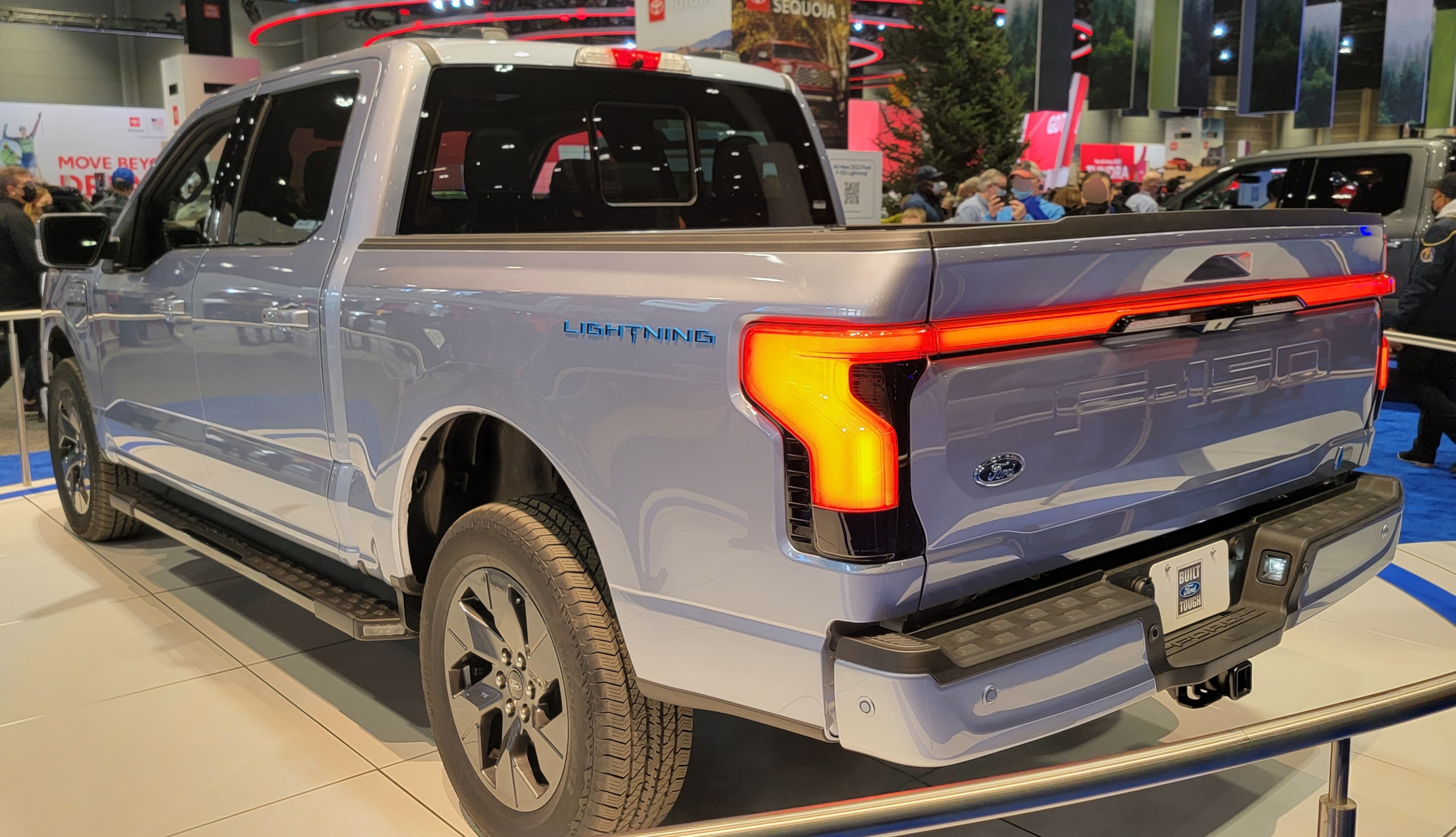
"My grandpa's F-150 had that. It's like the saddle tank, right?"
The Ford F-150 is a big truck that many people use for work or hauling things. It's known for being tough and can be customized in many ways.
The Ford F-150 is a full-size pickup truck known for its durability and versatility. It's popular for both work and personal use, often featuring various configurations and options to suit different needs.
"...the first vehicle using the technology from Donut Labs is Verge Motorcycles. And it says it's TS Pro will be the first production vehicle..."
Verge Motorcycles makes electric bikes that are different from regular motorcycles. They use new technology to make their bikes faster and more efficient.
Verge Motorcycles is a manufacturer known for its innovative electric motorcycles, particularly focusing on unique designs and advanced technology. They aim to push the boundaries of electric vehicle performance and design.
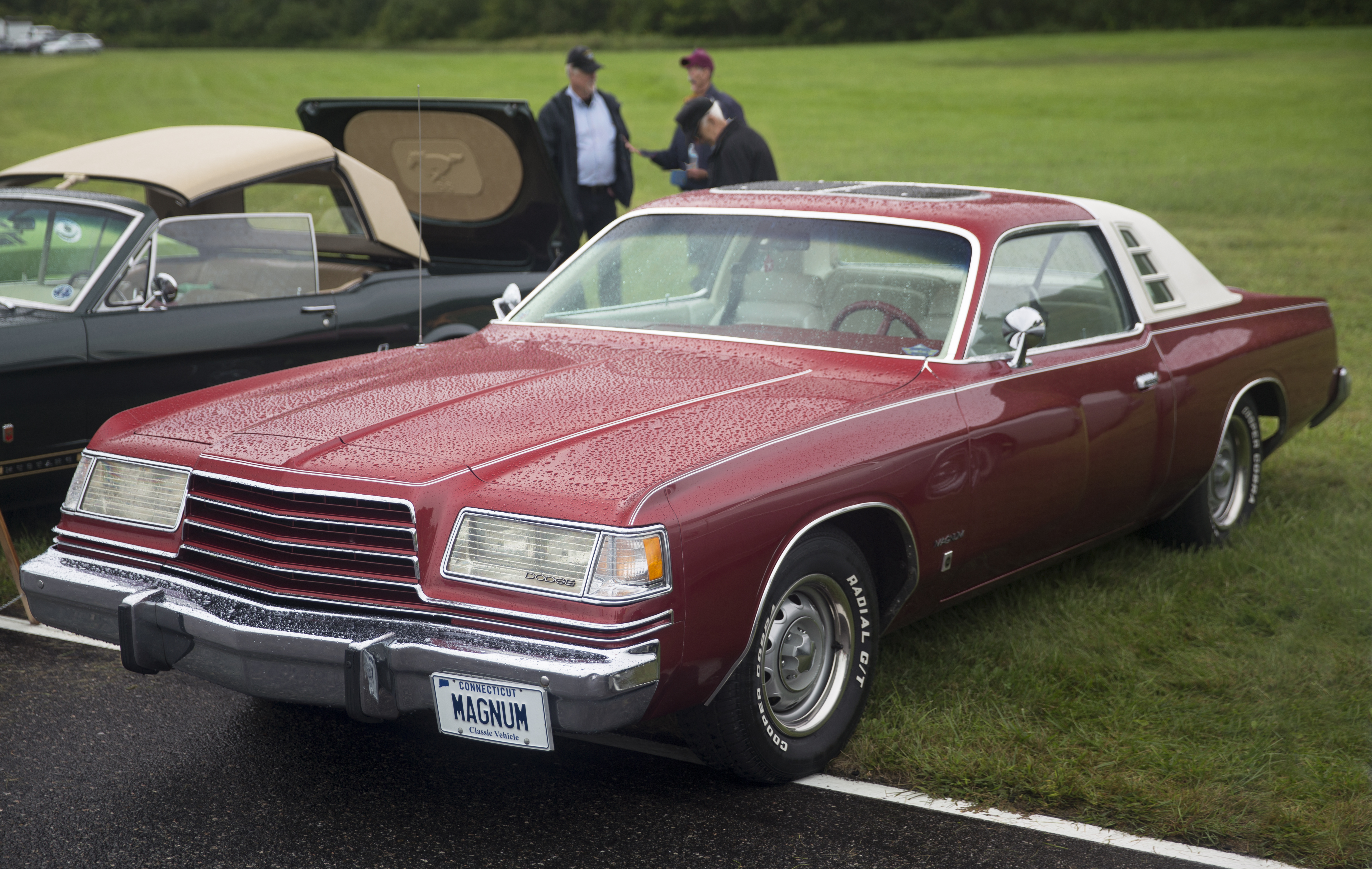
"...k in high school had my 68 Dodge Charger, the 440 Magnum. There we go."
The Dodge Magnum is a big car that looks like a wagon but can go really fast, kind of like a muscle car. It's good for people who need space for family or stuff but still want something exciting to drive.
The Dodge Magnum is a mid-size station wagon that combines the practicality of a wagon with the performance of a muscle car. It is often discussed for its unique design and powerful engine options, appealing to those who want versatility without sacrificing performance.
"So going back in high school had my 68 Dodge Charger, the 440 Magnum."
The 440 Magnum is a powerful engine that was used in some classic cars, making them very fast and strong. It's known for giving cars a lot of horsepower.
The 440 Magnum is a high-performance V8 engine produced by Chrysler, known for its power and torque. It was popular in muscle cars during the late 1960s and early 1970s, including the Dodge Charger.
"And so I went from there to a last year, the Datsun 240Z, which I put your triple Weber's on and a header and lower Tony shocks."
The Datsun 240Z is a well-known sports car from the 1970s. It's loved for being fun to drive and has a classic design.
The Datsun 240Z is a classic sports car that was produced in the early 1970s. It is known for its lightweight design and sporty performance, making it a popular choice among car enthusiasts.
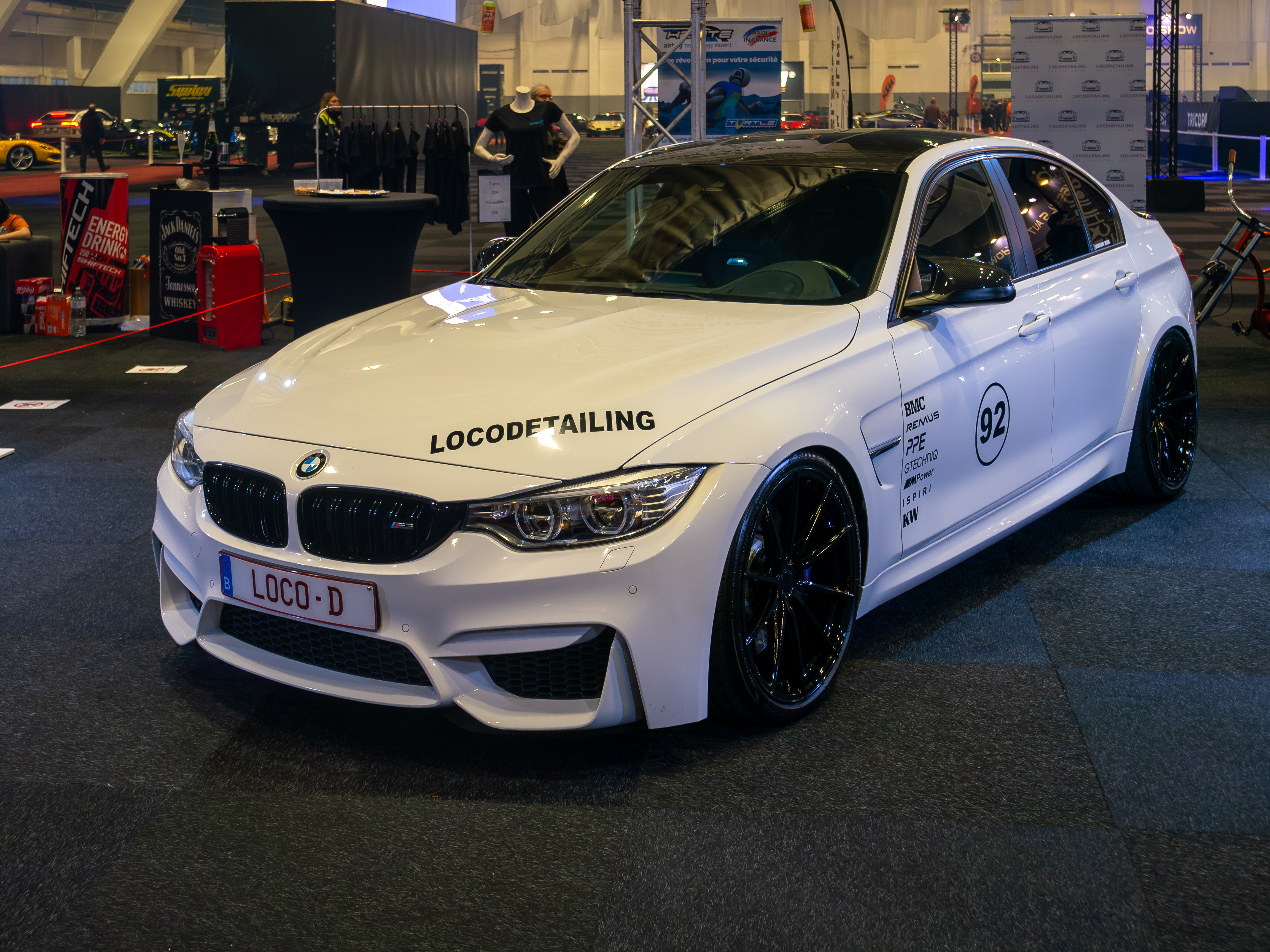
"And then from there to BMW M3 convertible, which actually I didn't do anything with that."
The BMW M3 Convertible is a sporty car that you can drive with the top down. It's known for being fast and fun to drive.
The BMW M3 Convertible is a high-performance version of the BMW 3 Series, known for its sporty handling and powerful engine. The convertible variant adds an open-top driving experience.
"Yeah. And then my first Tesla model as performance. But now I'm finally, I think I'v..."
The Tesla Model Y is a type of car that runs on electricity instead of gas, which is better for the environment. It's like a small SUV, which means it has more space inside for people and stuff, and it comes with cool tech features that help you drive.
The Tesla Model Y is an all-electric compact SUV that offers impressive range, advanced technology, and spacious interior. It's significant for its role in popularizing electric vehicles and features like Autopilot, making it a topic of interest in discussions about the future of transportation.
The Tesla Model S Performance is a fast electric car that can go from 0 to 60 mph very quickly. It's known for its high-tech features and being environmentally friendly.
The Tesla Model S Performance is a high-performance electric sedan known for its rapid acceleration and advanced technology. It represents a significant shift towards electric vehicles in the automotive industry.
"I've got my Porsche take in, which is all electric. That thing handles like a dream as a Porsche does, accelerates like crazy."
The Porsche Taycan is a high-performance electric car that offers a smooth and fast driving experience. It's designed to be both luxurious and efficient, making it a popular choice among electric vehicles.
The Porsche Taycan is an all-electric luxury sedan that combines performance with advanced technology. It is known for its impressive acceleration and handling, characteristic of the Porsche brand.
"I've got my Porsche take in, which is all electric. That thing handles like a dream as a Porsche does, accelerates like crazy."
An electric vehicle is a type of car that runs on electricity instead of gasoline. This means it can be better for the environment and can save money on fuel.
An electric vehicle (EV) is a car that is powered entirely or partially by electricity, using electric motors instead of traditional internal combustion engines. EVs are known for being more environmentally friendly and often have lower operating costs.
"I guess the question that popped up in my mind is, what's harder getting a side-draft DCUE carburetor to run right or developing a solid state battery? Because I mean, I've got books here, right here. I've read this book probably about 50 times. I'm still trying to figure out how to master the side-draft carburetor."
A side-draft carburetor is a part of the engine that mixes air and fuel for combustion. It's called 'side-draft' because it pulls air in from the side, which can make it trickier to adjust than other types.
A side-draft carburetor is a type of carburetor that draws air from the side rather than from above, allowing for a more compact design, often used in performance applications. Tuning these carburetors can be challenging due to their sensitivity to adjustments and airflow.
"That was sort of that transition going from the carbureted cars to the fuel injection to all electric."
Fuel injection is a way to get fuel into an engine. Instead of using a carburetor, it sprays fuel directly into the engine, which helps it run better and use less fuel.
Fuel injection is a system that delivers fuel into the combustion chamber of an engine, replacing carburetors in many modern vehicles. It allows for more precise control of the fuel-air mixture, improving efficiency and performance.
"But getting under the hood, you can't get under the hood because there's no engine. It does make me sad because an engine is a beautiful thing."
An engine is what makes a car move. It burns fuel to create power that turns the wheels and makes the car go.
An engine is a machine that converts fuel into mechanical energy, powering the vehicle. It is often considered the heart of the car, responsible for its performance and driving experience.
"...three times the energy density of your conventional lithium-ion batteries. We have to scale the manufacturing."
Lithium-ion batteries are the type of batteries you find in many devices like smartphones and electric cars. They are popular because they can hold a lot of energy and recharge quickly.
Lithium-ion batteries are rechargeable batteries that use lithium ions as a key component of their electrochemistry. They are widely used in consumer electronics and electric vehicles due to their high energy density and efficiency.
"...for one 100 kilowatt hour battery that goes into Tesla, I can make thousands and thousands of batteries that will go in this product."
A 100 kilowatt hour battery is a big battery used in electric cars. It tells you how much energy the battery can hold, which helps determine how far the car can go on a single charge.
A 100 kilowatt hour (kWh) battery is a measurement of energy storage capacity, commonly used in electric vehicles. It indicates how much energy the battery can store and directly affects the vehicle's range.
"...e, your negative and positive electrode. And the ions, in this case lithium, go back and forth between ..."
The Peugeot iOn is a tiny car that runs on electricity, which means it doesn't pollute the air. It's perfect for driving around the city because it's small and easy to park.
The Peugeot iOn is a small electric car designed for urban driving, offering zero emissions and compact dimensions. It is significant in discussions about electric vehicles and sustainable transportation solutions.
"...We'll collect $31 billion less in fuel excise tax revenue due to increased fuel efficiency..."
Fuel efficiency is a measure of how far a car can go on a certain amount of fuel. Cars that are more fuel-efficient use less gas to travel the same distance, which saves money and is better for the environment.
Fuel efficiency refers to how effectively a vehicle uses fuel to travel a certain distance. Higher fuel efficiency means a vehicle can travel further on less fuel, which is beneficial for both the environment and the owner's wallet.
"...in the proliferation of Z EVs over the next decade. That's a $31 billion hole in road funding."
EVs stands for electric vehicles, which are cars that run on electricity instead of gas. They are often seen as better for the environment because they produce fewer emissions.
EVs, or electric vehicles, are cars that are powered entirely or partially by electricity instead of gasoline or diesel. They are becoming more popular due to their potential for lower emissions and fuel costs.
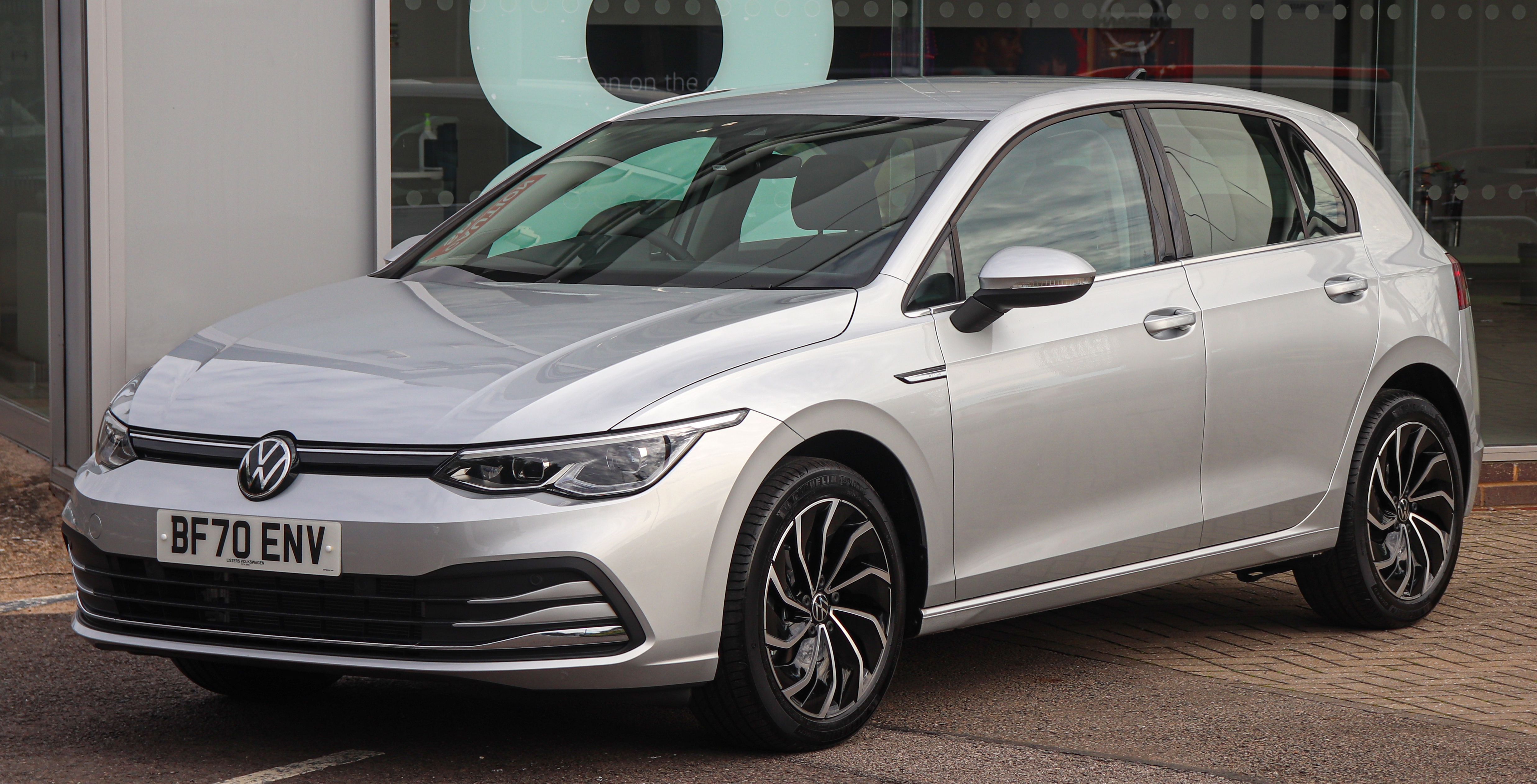
"...but they're certainly not going to do it on your 95 Golf K3 that you inherited from your grandma."
The Volkswagen Golf is a small car that many people like because it's easy to drive and has a lot of space inside. The 1995 version is from an earlier generation, which many fans still enjoy today.
The Volkswagen Golf is a compact car that has been popular for decades, known for its practicality and performance. The 1995 model is part of the third generation of the Golf, which is often appreciated for its solid build quality and driving dynamics.
"So that's going to be OBD2 and newer. I would think like 98, 99 and newer."
OBD2 is a system in cars that helps mechanics and devices talk to the car's computer. It gives important information about how the car is running and can help find problems.
OBD2 stands for On-Board Diagnostics II, a standardized system that allows external devices to communicate with a vehicle's engine control unit (ECU). It provides access to various vehicle data, including emissions and performance metrics, making it essential for diagnostics and monitoring.
"They are going to... We're going to get into the kill switch mandate. I know we're getting into the kill switch."
A kill switch is a feature that can turn off a car remotely. If a car doesn't meet certain rules, it can be locked out and won't start until the issue is resolved.
A kill switch mandate refers to regulations that require vehicles to have a mechanism that can disable the vehicle remotely, often for safety or compliance purposes. This can be used to prevent theft or ensure that vehicles meet certain operational standards.
"...but then I'm not going to register it and I'm just going to drive it around on my property."
Registering a vehicle means telling the government that you own it, so they can give you license plates and keep track of it. It's usually required to drive on public roads.
Registering a vehicle is the process of officially recording a vehicle with the government, which typically involves paying fees and obtaining license plates. This is necessary for legal road use.
"...the actual inventor of the winter tire itself with their Haka Polita line. They also have the Surpass AS01, their newest model of tire..."
Haka Polita is a type of winter tire made by Nokian that helps cars drive safely on snow and ice.
The Haka Polita is a line of winter tires developed by Nokian, designed to provide superior grip and control in snowy and icy conditions. It is recognized for its performance and safety features in harsh winter weather.
"...They also have the Surpass AS01, their newest model of tire, which is a high performance all season tire specifically for drivers..."
Surpass AS01 is a type of tire made by Nokian that works well in different weather conditions, helping cars perform better without getting stuck.
The Surpass AS01 is a high-performance all-season tire from Nokian, designed for drivers who want excellent grip and handling without sacrificing performance in various weather conditions. It aims to provide the benefits of a performance tire while maintaining versatility.
"The new round L debuted on the new 2027 IX3, which I do, I don't even know what that is."
The BMW IX3 is an electric version of BMW's popular SUV. It's designed to be eco-friendly while still offering the luxury and performance that BMW is known for.
The BMW IX3 is an electric SUV that represents BMW's entry into the electric vehicle market. It is part of their growing lineup of electric and hybrid vehicles, showcasing their commitment to sustainability and innovation.
"The roundel dates back to the early 1920s, when two aircraft companies merged. The blue and white come from the Bavarian flag, not a spinning propeller, despite that old advertisement suggested it."
The roundel is the circular logo of BMW. It has blue and white sections and represents the region in Germany where BMW was founded.
The roundel is the iconic logo of BMW, consisting of a circular design with blue and white quadrants. It symbolizes the company's Bavarian heritage and has remained largely unchanged since its inception.
"The M badge is also being updated, though BMW says that change will be just as subtle."
The M badge is a special logo used by BMW to show that a car is a high-performance version. These cars are designed to be faster and more fun to drive than regular BMWs.
The M badge signifies BMW's high-performance models, known for their enhanced power, handling, and sporty features. It's a mark of distinction that indicates a vehicle has been engineered for performance.
"Yes. The Mazda Miata now starts above 30 grand for the first time and..."
Mazda is a car company that makes cars that are fun to drive and look nice. One of their popular cars is the Miata, which is a small, sporty car that many people enjoy because it's easy to handle.
Mazda is a Japanese automaker known for producing vehicles that emphasize driving enjoyment and stylish design. The brand is often discussed for its sporty models like the Mazda MX-5 Miata, which has a reputation for being fun to drive and affordable.
"... $13,800, less than half the price of that year's Corvette, which was $32,000."
The Chevrolet Corvette is a fast and stylish sports car that many people dream of owning. It's special because it offers a lot of power and good looks without being as expensive as some other super fancy cars.
The Chevrolet Corvette is an iconic American sports car known for its high performance, sleek design, and affordability compared to other supercars. It has a long history and is often discussed for its status as a symbol of American automotive engineering.
"...mains the cheapest sports car on the market. The GR86 starts at blah, blah, who cares? All right."
The Toyota GR 86 is a small, sporty car that is made for people who love to drive. It's not too expensive and is known for being really fun to handle on the road.
The Toyota GR 86 is a lightweight sports coupe designed for driving enthusiasts, offering a balanced chassis and rear-wheel drive layout. It's celebrated for its affordability and engaging driving experience, making it a popular choice among those looking for a fun, budget-friendly sports car.
"You don't buy a Miata. The old RX7 had had some. Mazda."
The Mazda RX-7 is a special sports car that uses a different kind of engine called a rotary engine, which makes it lightweight and fast. Many car fans love it because it's fun to drive and has a unique design.
The Mazda RX-7 is a sports car famous for its unique rotary engine and lightweight design, which contribute to its agile handling. It is often discussed for its cult following among car enthusiasts and its role in the history of performance cars.
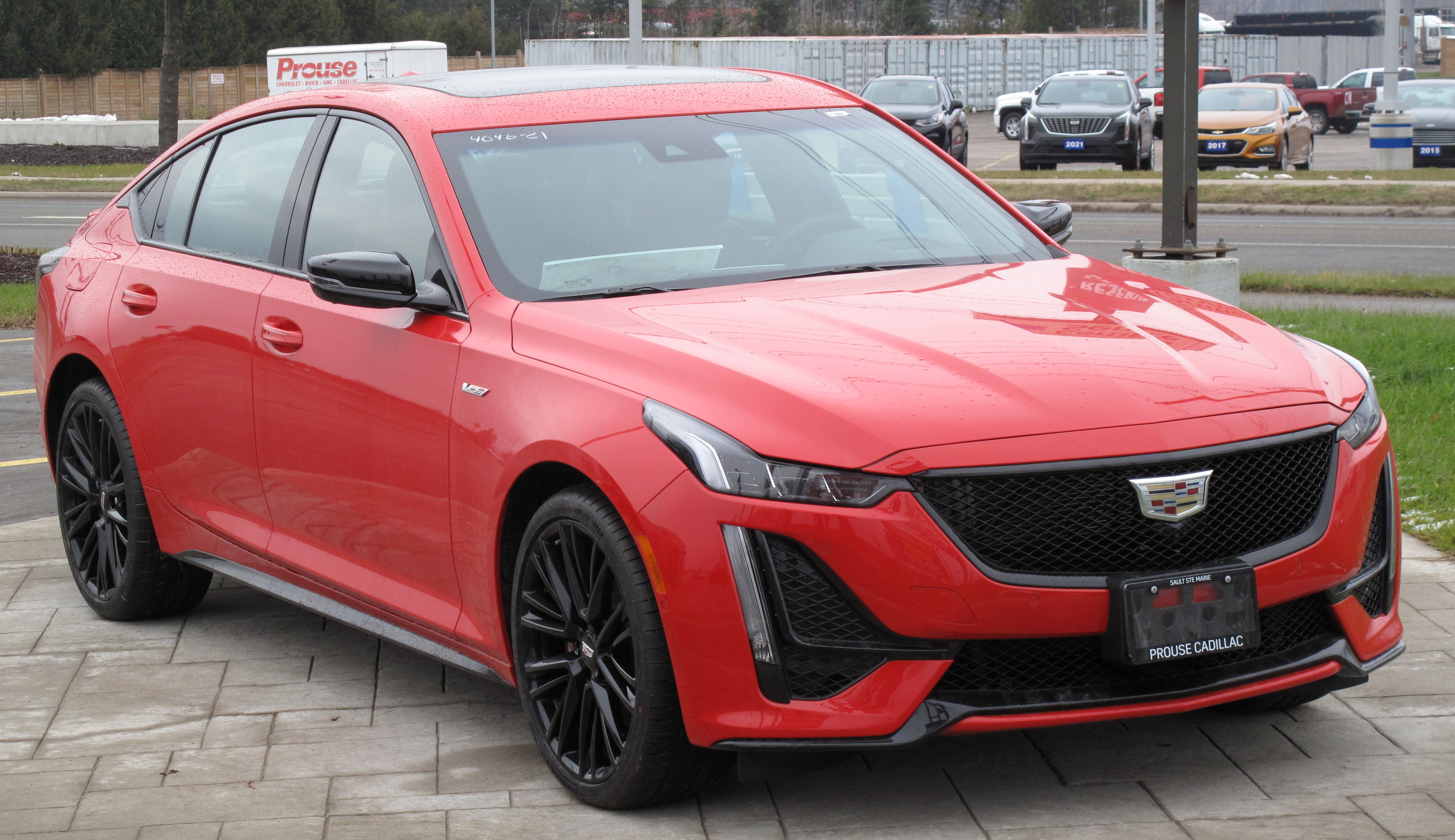
"... the one that surprises me, the Cadillac CT4 and CT5 blackling. Those are surprising."
The Cadillac CT5 is a fancy car that is comfortable and has a lot of high-tech features. It's made for people who want a nice ride with a bit of luxury.
The Cadillac CT5 is a luxury sedan that offers a blend of performance, technology, and comfort. It is significant for its role in Cadillac's lineup as a competitor to other luxury brands, often discussed for its stylish design and advanced features.
"...give you the one that surprises me, the Cadillac CT4 and CT5 blackling. Those are surprising."
The Cadillac CT4 is a smaller luxury car that is stylish and has nice features. It's made for people who want a fancy car that is also fun to drive.
The Cadillac CT4 is a compact luxury sedan that combines sporty performance with upscale features. It is often discussed for its role in Cadillac's efforts to attract younger buyers while maintaining the brand's reputation for luxury.
"I would even know what's on there. Hyundai Elantra N manual. Honda Civic Type R manual."
The Hyundai Elantra is a small car that is good for everyday driving because it's affordable and reliable. It's a great option for anyone looking for a car that won't break the bank.
The Hyundai Elantra is a compact sedan known for its value, reliability, and modern design. It has gained popularity for its affordability and extensive warranty, making it a practical choice for many drivers.
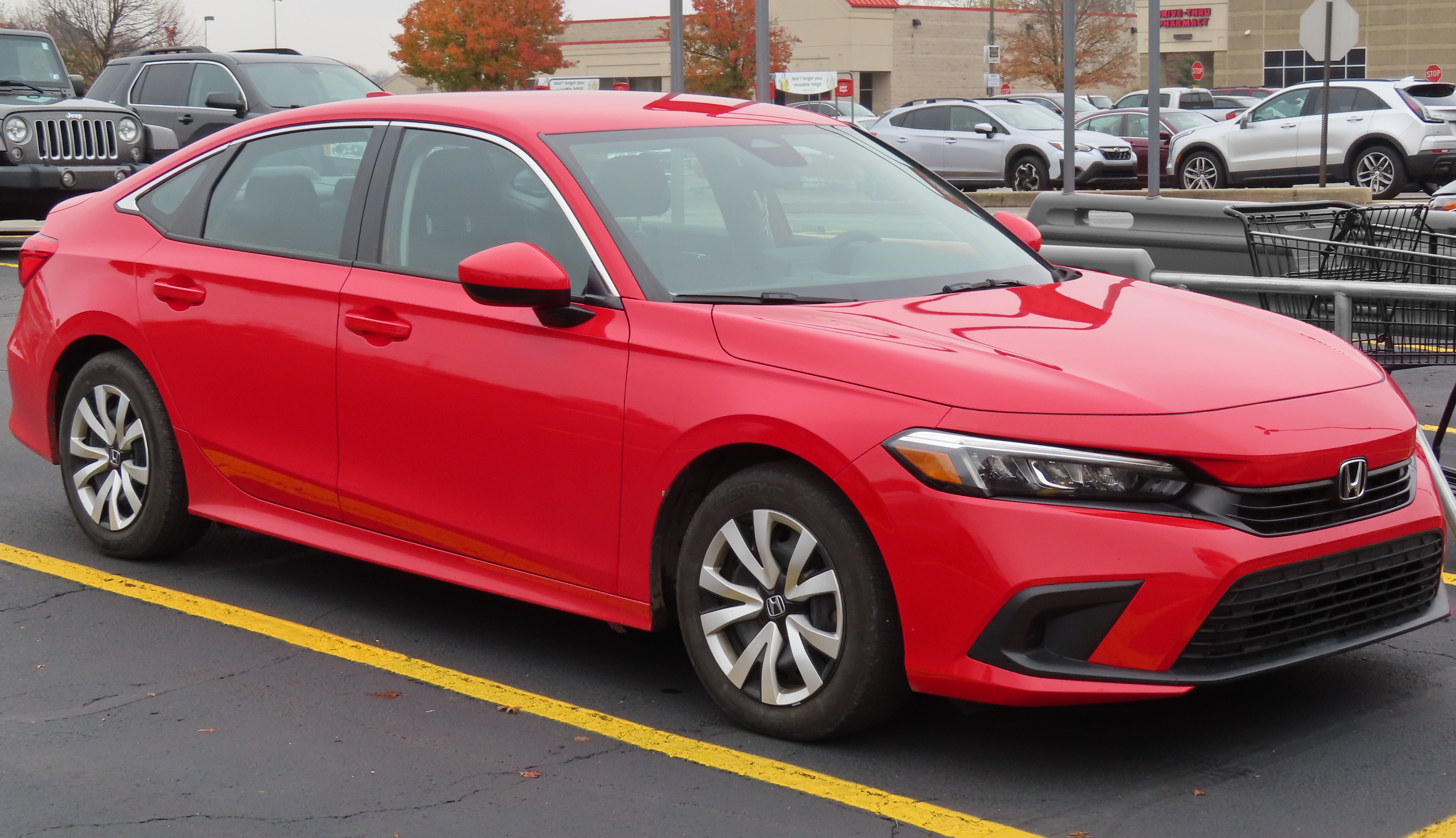
"Hyundai Elantra N manual. Honda Civic Type R manual. Civic SI manual."
The Honda Civic is a small car that many people use for everyday driving because it's reliable and saves gas. It's a good choice for anyone looking for a car that works well without costing a lot to maintain.
The Honda Civic is a compact car known for its reliability, fuel efficiency, and practicality. It has a strong reputation and is often discussed for its versatility, making it a popular choice for a wide range of drivers.
"Civic SI manual. Mustang GT manual. Nissan Z manual."
The Ford Mustang GTD is a super fast version of the classic Mustang car, built for people who want to race and have fun on the track. It has special features that make it even more exciting to drive.
The Ford Mustang GTD is a high-performance variant of the iconic Mustang, designed to deliver track-ready capabilities and advanced technology. It represents Ford's commitment to performance and innovation in the muscle car segment.
"Mustang GT manual. Nissan Z manual. Boxer, WRX, GR86, Corolla Supra manual."
The Nissan Z is a new version of a classic sports car that many people love for its speed and good looks. It's designed for drivers who want a fun and exciting experience on the road.
The Nissan Z is a modern iteration of the iconic Z sports car line, known for its performance and sleek design. It continues the legacy of its predecessors, appealing to enthusiasts who appreciate its blend of power and style.
"Nissan Z manual. Boxer, WRX, GR86, Corolla Supra manual. Wow."
The Toyota Supra is a fast and cool-looking sports car that people love for its speed and design. It's famous for being fun to drive and has a lot of fans because of its exciting history.
The Toyota Supra is a legendary sports car known for its powerful performance and distinctive styling. It has a rich history and has been revitalized in recent years, making it a hot topic among car enthusiasts and performance lovers.
"Wow. M3, M2, you can get the hand-shalter package in the ZFAR..."
The BMW M2 is a fast and sporty car made by BMW that is fun to drive. It's designed to be exciting on the road while still being practical enough for daily use.
The BMW M2 is a high-performance version of the 2 Series, offering a powerful engine and sporty handling. It's significant for its ability to deliver an exhilarating driving experience while maintaining everyday usability.
The BMW Z4 is a fancy convertible sports car that you can drive with the top down. It's stylish and fun to drive, making it a great choice for those who want a mix of luxury and excitement.
The BMW Z4 is a luxury sports convertible known for its elegant design and dynamic performance. It appeals to drivers looking for a stylish car that offers both comfort and a thrilling driving experience.
Select text to request an explanation
If you don't pay your tabs and you're driving around,
they pull you over and tow your vehicle.
What is to stop them?
What is the difference between them having the right
to tow your car and having the right to just shut it off
in the driveway?
What's the difference?
Hey guys, welcome to Overcrest.
I'm Chris and I'm Shake.
How are you today, Jacob Solberg?
Are you ready for winter to be over?
I am.
Is it when is Groundhog Day situation?
Today.
Today's Groundhog Day.
So today is actually Groundhog Day.
I think so.
I saw a meme about it and I was like,
well, that has to be some time around now.
Monday, February 2nd.
Okay.
On February 2nd, 2026,
Huxatani Philly merged at the Gobblers Nump.
No, wait, really?
In Pennsylvania and saw his shadow predicting six more weeks
of winter.
If you would have been like,
is winter going to keep going?
Yes or no?
I mean, the obvious answer is yes.
So I don't think it does anything.
Yes.
So we've got six more weeks of winter.
Wonderful.
That is just great.
But the good thing is, in addition to six more months
of winter, six more months, six weeks,
God, six more weeks of winter,
we've got some pretty good news for you.
Pretty good news for you today.
We've got a great guest that goes with this first topic,
which is, I feel like this topic keeps coming up
when it comes to EVs, right?
Like I was driving by Target the other day
and it was negative 20 degrees outside
and every single little spot was filled
and then there was a snake of cars.
You didn't say of what?
Spot of what?
The charging stations.
There was the charging stations.
They're all lined up there and then there's
a snake of Tesla's lined up around the corner
and I don't even know where the other EV people go.
I mean, they go somewhere.
They go south for the winter.
Migratory EVs.
They probably go to like a charge point station
or something like that.
They go to another place.
So I mean, is it just that the batteries
can't sustain in that cold?
So they just have to be hooked up to the charger.
Okay.
They cannot do it.
As a result, everybody wants solid state batteries
because they're fine in the cold.
They charge up in five minutes.
They can discharge faster.
They're theoretically more economical.
They're more thermally efficient.
They're just, it's kind of like the holy grail of EVs.
If we could just get to solid state batteries.
I'll admit, I don't even really understand.
I know it's a buzzword.
It is a buzzword.
It's a state bad word.
I never really understood what a solid state battery is.
Like, what's the difference?
Is this just some?
Yes. So I'm going to read you this article,
which got me excited.
And then I go, okay, I don't know that much about this.
So we, we're having a guest on.
We're going to introduce him in a minute.
Let me get through this article.
And then, and then we'll talk about it a little bit more
because I like you admittedly don't, don't know very much.
And this, I'm reading this because this is very representative
of pretty much every solid state news release
or press release I've seen over the last five, six, seven years.
Yes.
A finished start up called revolutionary doughnut lab.
Donut lab has just announced that they claim as the world's,
I think it's because they're, they're EV motors are in their wheel.
So it's in the hub.
So it's like a doughnut.
Yeah. So it's doughnut lab.
It's kind of what's a doughnut lab, like a doughnut media.
You're thinking of doughnut media.
Yeah, but I'm pretty sure they had a lab too,
which was just like a burnout pit or something.
Yeah. I wonder if doughnut media is suing doughnut lab.
I hear they're here.
They're all over suing people for using the word doughnut.
Kind of my, yeah, curiosity as well.
All right, continue.
Anyway, all right, finished start up called doughnut lab
was just announced that they claim as the world's first
production ready solid state battery.
And it's ready to go into vehicles.
These are a doughnut labs claim specs,
energy density of 400 watt hours per kilogram.
It's great. It's normal.
Current lithium ion runs are around 200 to 300.
Okay.
Full charge, five minutes.
So that's the big.
That's the big one.
Full charge, five minutes.
Cause that's go to the gas station, right?
That's about five minutes, three to five minutes
unless you've got your truck,
which probably has a 28 gallon tank.
36 Holy shit.
You know what?
You remember back in the day when you could have dual tanks?
Yeah.
Remember that?
And you had a little switch and you'd switch over.
That's still an option.
That's still a lot of trucks.
Yeah.
I thought it was gone because of evap requirements.
Like you couldn't have the dual tank.
It's all sealed.
It's all like one system.
It's just you have two of them and then you can like switch
transfer, maybe it's automated.
I was like that.
My grandpa's F-150 had that.
It's like the saddle tank, right?
You had one on one side, one on the other side.
You switch over.
I always be like, oh, we're out of gas.
And then you'd fool your buddies and then you'd hit the button.
And the, yeah, it was always great.
I just love, it's the two like gas fill up doors, right?
So you have one and then two.
And it's always just like, wait, what?
Why?
Why are there two?
I remember one time trying to park in between both sides of the thing.
And you'd go from both sides with the things.
Would that be a thing?
I don't even remember what side they're on.
Pretty sure they're on the same side.
Like, are they?
Yeah, I don't even remember.
All right.
I just hit back.
I have no idea what.
Okay.
On safety, they're not, they don't blow up temperature.
They're better in the temperatures.
The first vehicle using the technology from Donut Labs is Verge Motorcycles.
And it says it's TS Pro will be the first production vehicle
with all solid state batteries.
I think that's a really good case for this.
Yeah.
But at the same time, it's like, we have the first vehicle and it's a scooter.
I feel like that's cheating by saying it's a vehicle.
But yeah.
Donut Lab CEO Marco Letmaki at Donut Lab.
Our answer on solid state batteries is being ready to use
an OEM production vehicles is now today, not later.
It's now that's the announcement.
But solid state batteries have been here for almost,
almost here for a long time.
The question isn't whether the technology works in a lab, which it does.
It's whether it can scale.
So this was over my head a little bit.
And so I wanted to educate myself so I can, you know, actively add to my various opinions.
We sat down with Dr. Eric Walksman, professor at the University of Maryland,
one of the leading researchers in solid state battery technology.
He's been working on this for decades, spun off his own company to manufacture them.
And he's got to take on what it actually takes to get from working prototype to mass production.
This Jake, this is the guy.
Yeah, this is awesome.
Thank you so much for coming to spend time with us on the podcast.
I really appreciate you.
Happy to do it.
Well, first of all, I want to find out kind of what got you into energy.
You know, it's a very, it's a very special field these days, as we know.
But you know, back in the day, maybe it was a little bit different
when we all just had 12 volt batteries in our cars and AA batteries in our remote control cars.
Well, let's actually go further back in that.
Okay.
Got me into energy.
What started my whole career in LSD is my interest in love of cars.
So going back in high school had my 68 Dodge Charger, the 440 Magnum.
There we go.
The poly double pump, double pumper headers, Craig recess mags.
And that was it.
I was just living for the car, worked on all the time, BNM racing automatic.
And then there was one of the first oil crises.
And I had to wait in line every other day, you could fill up the tanks, right?
Of course, back then gas was cheap, but you had to wait to be able, your turn to fill up.
And so that made me think, well, you know, there's got to be something we can do better.
And I worked on a lot of different things from alternative fuels to solar to ultimately fuel cells
and batteries.
But along the way, my love of cars and my focus kind of shifted to more and more efficiency.
And so I went from there to a last year, the Datsun 240Z, which I put your triple
Weber's on and a header and lower Tony shocks.
And then from there to BMW M3 convertible, which actually I didn't do anything with that.
Because at that point, you can't modify cars at that point that much.
Yeah.
Once you get into it, yeah.
Yeah.
And then my first Tesla model as performance.
But now I'm finally, I think I've settled in.
I've got my Porsche take in, which is all electric.
That thing handles like a dream as a Porsche does, accelerates like crazy.
And it's just a beautiful car.
So it really is cars that got me an energy and driving more towards more and more efficient vehicles.
I don't want to give up on the performance to get the range and efficiency.
And so that's where I've worked on make cars better, make batteries better,
make the technology better so you can get both.
You don't have to give up one for the other.
Well, it's really interesting that you come from that history,
because I think a lot of our listeners will relate with that.
I guess the question that popped up in my mind is, what's harder getting a side-draft DCUE
carburetor to run right or developing a solid state battery?
Because I mean, I've got books here, right here.
I've read this book probably about 50 times.
I'm still trying to figure out how to master the side-draft carburetor.
They are tough.
There's a lot of tweaking.
There's a lot of tweaking on the batteries.
That was sort of that transition going from the carbureted cars to the fuel injection to all electric.
As you progress, there's actually less and less you can do yourself.
It has to be pretty much done.
With an electric vehicle, there really is nothing.
There's no maintenance.
There's nothing to do to it.
You just buy the car in the form that you want, with the options you want, and you're good to go.
There's no oil changes.
There's no radiators.
There's nothing like that, right?
So, I apologize.
My headphone keeps buzzing out on me.
No, I knew you were just fine.
Okay.
But yeah, at that point, and also, later in life, career took off.
I really don't have time to work on cars like I did in high school.
So, I'm happy to have it.
Have you missed it yet?
There's so many other things I want to do in life.
They're working on cars themselves.
No, driving them, yes.
So, I can hop in the car and have a great time driving it.
There's a winding road by my house.
I love taking that in the Porsche.
It's awesome.
But getting under the hood, you can't get under the hood because there's no engine.
There's nothing there.
There's a motor.
It does make me sad.
It does make me sad because an engine is a beautiful thing.
It's a beautiful piece of engineering.
It's a marvel what human beings were able to develop over the course of 100 years.
Oh, yeah.
Okay.
So, I think about this stuff when I drive by the Tesla chargers every day.
I know I'm in Minnesota.
Okay.
So, we've had negative 20, negative 30, and there's a line out the door.
And we've been knocking at the door of solid state batteries for a long time,
a very long time.
And that's kind of what made me think about this.
I'm like, yeah, these were solid state batteries.
This wouldn't be such a problem.
And it seems like kind of this thing where it's like we've always overlapped.
As long as I've been doing the podcast, which is about seven years,
there's always in the news solid state batteries.
They're coming.
They're coming.
They're right around the corner.
It's right here.
Are we finally getting close?
Or is this like fusion or something where we're just never going to get there?
No, we're getting close.
We have solid state batteries that work and they will achieve the desired performance.
The issue now is scaling manufacturing.
And this is sort of an issue for the US in general.
We've lost manufacturing.
And so, where are the batteries coming from?
They're coming from Asia.
They're not coming from the United States.
And so, we have to be able to compete with next generation technology.
We're never going to compete with conventional battery that you may have for your phone or
your computer and stuff like that.
That technology is gone.
The cost of manufacturing is so low in Asia that we just can't compete.
Solid state is the opportunity where as a new technology, it's manufacturing.
The US can compete if it's want to put the investment in to do it.
And there's a big difference between the investment in solid state batteries in the
United States versus investment solid state batteries, let's say in China, right?
So, I'm a professor at the University of Maryland.
I've been working on batteries for a long time.
We've developed very, very high performance solid state batteries,
twice the energy density, three times the energy density of your conventional lithium-ion batteries.
We have to scale the manufacturing.
I spun off a company, Iron Storage Systems, which is in the process of doing that.
But the first market has got to be consumer electronics.
It can't be the EV because it's the scale of manufacturing, right?
The battery that you're going to put in a cell phone is a lot smaller
than the battery you're going to put in a car.
And so, for one 100 kilowatt hour battery that goes into Tesla,
I can make thousands and thousands of batteries that will go in this product.
I can start making revenue with consumer electronics,
where I'm still trying to build that first battery for the EV.
Is there anybody that's leading the charge on this in terms of development
and getting the manufacturing going in the United States?
Is that from a private perspective, private companies,
maybe from educational institutions like yours?
And then, of course, we have governments that want to be part of this too
and dump money in and subsidize.
Is any of this happening?
All of that's happening.
But again, competing, let's say, with China as a prime example.
So a few years back, I was invited speaker to a battery conference in China.
And went there and all the invite speakers were invited to this separate private reception.
And we sat there, great meal, all the food and drink and everything else.
And then the local government gets up and makes a pitch.
Bring your battery company to China.
We'll give you the building.
We'll hire the people for you.
We'll give you billions of wands of funding for your company.
We have nothing to compare with that in the United States.
So spinning off my battery company in the United States,
yeah, we have federal grants and contracts to develop the technology.
But we don't have the funding unless we go to VCs to scale up the manufacturing.
And so you're starting a new company.
You don't have this huge amount of money that the large battery companies do in China
that's just going to invest because it's just a bottomless pit.
They can just put money in like crazy.
You've got to go to venture capitalists and you've got to go sell your soul to get whatever,
you know, a few million to get, but to get to the scale of automotive.
We're not talking millions.
You're talking billions, tens of billions of dollars.
So it's difficult to raise that amount of capital to set up the manufacturing line
that can then produce batteries that go into EVs.
So I think about this phone and I think about what it does.
Would I care if there was a solid-state battery in this phone as a consumer?
When I look at the lithium ion one, you know, it charges in on a fast charger,
what, 20 minutes, 30 minutes or whatever, and it's fully charged.
You know, I just plug it into a very, very low watt charger overnight to try and help the battery out.
But do I care as a consumer that I would have a solid-state battery in my phone?
Does it matter to me?
You would if you had one, right?
So the issue is, one, it's got greater energy density and that means it'll last longer before
charges. The charge time on your battery or the lifetime of the charge is kind of longer.
You might have noticed that.
They used to have to be charged all the time.
But you do it a smaller volume and a lighter battery.
So now the battery, the phone is thinner and lighter, okay?
It also allows it to charge faster.
So rather than charging it overnight or a few hours, it's minutes.
And the other aspect of it is the solid-state batteries are non-flammable.
So, you know, you've seen all the things about battery fires, getting rid of that safety concern.
When you get on an airplane and they say, oh, well,
but make sure you didn't leave your battery in a check-in luggage, right?
That concern goes away.
So those are all major advantages of a solid-state battery.
Lighter, smaller, and ultimately less expensive.
What kind of energy density are we talking about here in this form factor, in this size?
In the ones there, and I might have to give you metrics.
But, you know, they're typically on the order of 200 watt-hours per kilogram.
Okay.
If you want to convert that to something else, whereas a solid-state can be twice that.
So basically, one half the mass, one half the volume type thing.
So I'm definitely going to care.
That's a lot.
Okay, so when I think of a solid-state battery, my brain is like a guy who's built like a tube radio,
a tube amp, and Nixie clocks and things like that.
So that's kind of like, I understand this in a way that I feel like a solid-state battery
seems like it's just a capacitor.
You know, it seems like it's like able to charge and discharge.
I know that's wrong.
I'm hoping you can kind of explain to me what a solid-state battery works
and what's going on inside it that makes all this possible.
Sure.
So the difference between a capacitor and a battery has to do with the way the
charge goes in and out of that structure.
Okay.
A capacitor works by surface charge on the surface of your electrodes.
The charge doesn't actually go into the electrodes.
Okay.
So the battery, you have the two electrodes.
You have an anode and a cathode, your negative and positive electrode.
And the ions, in this case lithium, go back and forth between those electrodes.
And they literally go into that solid-state inside of it.
And the capacitor, they don't go inside the solid, they're just on the surface.
So a capacitor has to have lots and lots of surface because it's only the,
you know, the absorption of an ion on the surface instead of going inside of it.
And so it has to be much larger volume to get the same amount of energy.
And because it's more volume of material, the energy density is not very good because
now you've got all that material which isn't active.
It's just a surface for the ions to absorb onto.
Is a solid-state battery able to discharge faster than a lithium ion battery as well?
Is it able to deliver its power since it can charge so much faster?
It can deliver so much faster as well, I imagine?
It has the potential of discharging much, much faster.
Okay.
And what is limiting the charge rate on most conventional lithium ion batteries.
So again, I don't know how much chemistry it may go into, but you have your positive
electrode, the cathode, which is typically metal oxide.
The lithium goes in and out of that oxide within that solid-state structure.
It crosses through what's called the electrolyte in commercial batteries.
It's a liquid.
And then it goes into the anode, which right now for all commercial batteries is carbon.
And the lithium forms a complex with the carbon.
There's six carbon atoms for every one lithium.
So if you think about it, right, you're getting one lithium.
For that one lithium, you have to have six carbons.
So that's more mass volume.
It's not very useful.
With a solid state, you can go to a lithium metal anode.
So you got rid of the carbon.
You just got rid of all that mass and volume of the anode and it's just lithium metal.
Okay.
Is lithium less dense than the carbon as well?
Is it lighter?
It's not that it's lighter.
It's just that there's six carbons for one lithium.
So much less of it.
Or if there's no carbon, there's no carbon, just lithium, right?
So you still have to have the same amount of lithium regardless,
but you get rid of the six carbons for a lithium.
Okay.
So why has this been so hard?
Like why is this taking so long to develop?
So again, one of the aspects that I mentioned is just scaling for manufacturing.
The other is the choice of solid state battery technologies.
There's a lot of them out there.
You may not be familiar with that.
People tend to lump solid state in this one.
Yep, they're all solid state.
They're not.
So the lithium ion battery we have today uses a liquid electrolyte, as I mentioned,
and the ions move through the liquid.
You can think about your lead acid battery in your car, right?
If the ions move through the liquid, people are familiar with that, right?
The solid state, we've developed solid state materials where the conductivity,
the ability for ions to move is just as good as it is in the liquid, except it's in the solid.
Okay.
People have a hard time accepting that, but that's just the fact that...
That's because usually like the resistance of a solid or something,
like a copper wire is always going to be more than a liquid, right?
In the past, that's my brain.
The resistance of a copper wire, I believe, is less, but that's for electrons, not ions.
Okay, okay.
Ions are a chemical species, electrons or electrons and holes.
Electrons can go through copper wire really very, very fast,
but getting the ions to move through a solid, you have to have the right structure.
And so people have developed as alternatives to the liquid electrolyte,
all electrolytes, all electrolytes based on sulfide materials, based on halide materials,
and based on oxide materials, okay?
Each of them has a different chemical composition, a different structure,
and each of them has the ability to transport lithium ions through them,
but there are differences, right?
Well, it turns out the sulfide ones have the highest conductivity going to that aspect,
or they can be very, very low resistance.
The oxides have high conductivity, but not as high as the sulfide.
Most of the companies, for example, Toyota is making a big investment in
sulfide batteries, you might have seen some of their press releases,
they're always going to have a sulfide battery coming out.
But with the solids, in that case, they have a lot of particles of that sulfide electrolyte
in the week pressed together, and they got to put tens of megapascals,
hundreds of megapascals to squeeze that thing and maintain in contact.
With the oxides, if you think of, you can go to your kitchen, you got a plate, right?
That's a ceramic, and the oxides are like the ceramic where you make the shape,
you put in a furnace, and you have now that solid ceramic.
It doesn't fall apart if you don't press it, whereas if you had a bowl full of rights,
if you didn't squeeze it together, you know, release it, all the particles will fall out.
It's kind of like that.
So most of the battery companies thought that the particle one was more in lines of the processing
of conventional batteries, so they put all their eggs in that basket.
There's very few who've gone to the oxide ones.
Most company iron storage systems is one of them, so we then center that ceramic,
and therefore we don't have to put any pressure on it.
So again, if the first market is your cell phone, and you've got to put 100 megapascals
of pressure on it, you have to make big metal plates and springs.
And all of a sudden, the advantage it had of having the higher density goes away,
not because the battery isn't as good, but the packaging to maintain it.
It's kind of like you go and you buy the best bicycle with a really lightweight,
you know, titanium alloy, and you have the heavy chain because you don't want anybody to steal it.
Right?
It's that type of analogy for a lot of the cell cell batteries are coming out.
They're being developed right now.
It's like, well, how do you get rid of this pressure requirement to maintain contact?
And the oxides avoid that issue because they are just a centered structure
that doesn't move.
You don't have to apply the pressure to it.
And so when they are, they are a later generation.
I think they're the ultimate winner in my opinion.
So what milestone should I be watching for that tells me this is happening?
Like I see a headline.
I'm like, okay, you know, I don't, you know, I kind of pay attention to the stock market
and different things.
I haven't seen anything come up like, oh, I should invest in this company.
This seems like this is the one that finally got it.
What milestone is that that I'm looking for that tells me that solid state batteries are coming?
Get ready.
I think when you see them in consumer electronics, and I don't mean that you're going to go
to a grocery store and buy them, you know, the cylindrical ones off of the rack,
but that they made it into products like phones and things of that nature, right?
I mean, where did lithium ion batteries come from today?
It's because Sony wanted a battery for their camcorder.
It didn't start in electric vehicles.
It started in consumer electronics.
And then as they got the experience making these things and mass producing them,
they got them bigger and bigger and bigger.
And now they're in cars.
And I think that's just the normal way of evolving that technology to ultimately get into cars.
But starting with a smaller size product, where you can make lots of them start,
company can start making revenue and therefore make an impact.
And then as they have the experience, they can scale up the size of the manufacturing facility
to make EV size batteries, right?
So people are going to be lined up at the charger for a little bit longer yet.
Maybe a little bit longer.
We're not quite there.
I mean, there are companies that say, oh, yeah, we've got the EV battery.
And it's working.
And I'm not going to pick on any of the companies because I hope to be my customer someday.
But the thing is that to scale that manufacturing, again, what they call the gigascale factory,
it's just tens of billions of dollars.
And where's that money going to come from?
If it's all going from VCs, you just basically gave away the company to get the first product out.
You want a huge amount of debt.
And now you've got the interest on the debt versus if you go to a smaller battery as a first product
and you start selling them at some consumer product where they have a niche capability
that makes them more advantageous.
And now you generate revenue.
And then it's easier to start scaling manufacturing once you actually have revenue.
And so that scaling manufacturing will just have debt.
Yeah.
I always thought it was going to be this cycle I predicted of once you have government regulation
comes in and they say, OK, this is the way things are going to be.
It was going to force far more investment than what actually happened.
And now it seems like things have pulled back a little bit as with the Trump administration
and some of the even the European companies like Porsche and Mercedes, for example,
have pulled back a little bit.
Everybody's kind of like, whoa, there's a little bit of whiplash going on in the EV world right now,
which I did not think that was going to happen.
I thought the government regulations would kind of force it down.
Everybody's thrown and we'd be seeing this stuff advancing at a much faster pace than we are.
But it seems like it's going to be kind of this yo-yo effect as we go into the future.
And it's tough to see when things are going to be on the horizon.
That's the aspect of US politics.
I wouldn't say forcing it down the throat, but making the investments in the battery industry
in the United States so that we have that industry in the United States was something
was being done at the Biden administration.
And there were battery plants that were planned all over the United States
and the Trump administration just wiped them all out.
They're all gone.
They're going away.
So the only place that's going to make them is China.
And so we're losing that market, that that manufacturing capability that we would have had
in the United States under the Biden administration policies that it's going away.
It's going to go to China and we'll end up being consumers buying them from China
like we are for the current batteries instead of trying to add-
Those cars are crazy.
Those cars, I've seen some reviews of them.
They look absolutely incredible, honestly.
Right.
And so is the way to advance the US EV market to basically put such high tariffs
and not allow them into our country?
Or is it to make us competitive because you invested in our manufacturing?
I think the latter is better.
Right now, because of the trade deals, they're going into Canada.
So how long is it going to be before people start driving them across the border?
It's a great question if they're allowed to even, if the DOT will allow that.
We'll see.
I mean, it starts to get into this protectionism thing, which I never think is a good idea.
No.
I'm generally an open market kind of guy.
And we saw what the chicken tax did, right?
And I mean, that was never, that was nothing that was any good for anybody.
And at least not the consumer.
It's good for somebody's ideology, but it's never good for the consumer.
No, it's not.
The best way to do it is to invest in the manufacturing and the research
and develop technology here and commercialize it here.
Not to try and put tariffs on something to prevent something from coming in.
All you're doing is you're taking away those options from the American consumer.
As you said, those Chinese cars, they look awesome.
I haven't been in one, but from what I've seen on the web,
I'd love to give it a try and maybe buy one one day.
Yeah.
What's interesting is that you have these companies that normally make phones
making cars.
So they have this fresh perspective that's new, plus they don't have the burden of heritage.
So many major manufacturing.
I'll have the burden of heritage and marketing and all this other.
That's a whole other conversation.
Dr. Waxman, thank you for coming to hang out with me today.
I appreciate your expertise.
And I look forward to the solid state battery of my phone.
All right.
I look forward to giving you or selling you one.
That sounds good, man.
Take care of yourself.
Thank you.
Bye.
So that's interesting, right?
You think of phone.
You know, you thought of Scooter.
You laughed.
You laughed at Scooter.
I laughed at Scooter, but it makes sense that,
yeah, of course, you need to put it in small scale electronics first to make it viable, right?
Small scale so that you can scale up.
So it seems like we're a ways away.
So those lines aren't going anywhere anytime soon.
I guess what is interesting or illuminating to me is like,
this isn't some revolutionary, crazy, different, like you said,
like some crazy capacitor, magical capacitor.
It's literally the same battery chemistry.
It's just or it's same technology, I should say, with different chemistry, right?
So it's just literally it's solids, not liquids is the only differentiator.
So it kind of demystified it a lot for me, which was good.
The other thing I found like a little scary was the fact that
they're just in China, symposiums, actively recruiting companies be like,
yeah, just come over here.
We'll give you all the funding you want.
Yeah, just build them here.
It's crazy or how do you come?
It's tough.
How do you compete with that?
Like, oh, you need money.
Yeah, just come over here.
We'll give you all the money.
The thing is, is though, every time this gets in,
I don't want to get into politics.
I know, and I don't know every time this happens,
China is just print money to do it.
Their economy is not doing well.
It's not doing well.
But in the short term, it's not failing fast enough.
Exactly.
I was going to say, you know, a million won or whatever it is,
you can still transfer it over to US dollars and be pretty set.
If that's your or by gold.
That's what China is doing right now.
All right, California.
It's always California, isn't it?
Or Florida.
Or Florida.
Well, yes, California or Florida.
California's assembly has just passed AB 1421.
This is a bill that extends the state's road usage charge
technical advisory committee until 2035.
This is the committee that is,
hey, how do we make money on roads?
Okay.
This is how do we how do we tax our citizens on road?
Isn't that okay?
Well, this is committee.
Here's what's interesting.
So before I even read anything in here.
Yeah.
Generally, and historically, this is done just by gas tax.
Yeah, gas tax or toll.
On top of, yeah.
It's a usage tax.
Toil is less, right.
It's less common tolls, but you have toll roads.
But generally, it's okay.
There's a state tax on gasoline and people use the gasoline.
Therefore, it is proportionate to the amount of usage on roads.
The problem is California had pushed EVs so hard that now,
oops, that doesn't work.
So now what do they do?
Because we can't just tax electricity.
You remember talking about this years ago?
I do.
It's like, I remember saying, there's no way.
Because everybody's like, look, I don't have to pay gas.
The gas is so expensive and blah, blah, blah.
I don't have to pay the taxes.
And it's great.
It's so economical.
And then they're going to go, oops.
Now how do we pay for infrastructure?
Yeah.
Yeah.
Yeah.
Just wait until everybody's.
I just wanted to note that, yeah, they kind of dug themselves.
They just asked deep in the situation now.
Everybody's in.
So now they'll raise the taxes.
They're not going to do it right away.
So what are they doing?
How do they?
All right.
The California Transportation Commission
protects the state.
We'll collect $31 billion less in fuel excise tax revenue due to increased fuel efficiency
in the proliferation of Z EVs over the next decade.
That's a $31 billion hole in road funding.
You know what I find interesting too?
Is what are all these EVs compared to regular cars?
Oh, super heavy.
So ironically, they're doing more for the road deterioration than a gas car would.
That is very interesting and funny.
So what's a road charge from Caltrans directly?
By the way, this committee is for the research on the infrastructure to build a tax system.
That's what I skipped over that part.
That's what this committee is.
It's just how to tax the infrastructure.
So there is literally a committee for how to tax.
The infrastructure for driving.
There's a committee getting paid by taxpayer money on figuring out how to get more tax
payer money.
That is correct.
A road charge is, quote, what do we got here?
California EV adoption versus state ZV maintenance growing policy reality.
Yeah, there it is.
The adoption plateau.
Look at the tax revenue.
It's plenty.
This producer's got a chart up here if you're watching.
You can see this chart or pause it and look at it.
It's very telling.
A road charge is a system where all drivers pay to maintain the roads
based on how much they drive rather than how much gas they consume.
Think of it like a utility bill for driving.
I remember saying this and going, how are they going to know how much you drive?
Jake, how are they going to know?
Because obviously they can't just put trackers on us all, Chris.
That would be wrong.
Well, they certainly could on your Tesla, but they're certainly not going to do it
on your 95 Golf K3 that you inherited from your grandma.
So, Jake, how would they track your miles?
I know the K2 was the ski model because it's K2 skis.
I don't think a K3 exists.
No, that doesn't exist.
I'm not a skier.
I just remember it was K something.
I was like, what?
You know what was cool was the Pink Floyd edition.
You ever seen that?
No.
The Golf Pink Floyd.
Like the interior, like the seats and the radio and stuff are all like Pink Floyd themed.
Really?
It's pretty cool.
Yeah, it's really cool.
So many cool.
I know, like just one off.
All right.
Anyways, we get into that.
Me and Brian Scott, I interviewed him.
It's coming up next week.
We did this quite a bit.
It was a really good interview.
So definitely hang out for that one.
I was going to tease you that you were just old guys talking about how cool things used
to be back in your day, but I agree with everything you said.
Yeah, unfortunately, Volkswagen is not cool anymore.
And I'm going to give you another reason for that later on in this episode.
Okay, how, Jake, would they track your miles?
The 2024 pilot ran August through January and tested three methods, three.
And the drivers get to choose first, a plug-in device,
plugs in your OBD port on the dash.
It can use your GPI location or not.
So basically it's using, it's pulling it off the ECU.
How many miles are you driving?
It's just an actual mile.
So that's going to be OBD2 and newer.
I would think like 98, 99 and newer.
Second option, vehicle telematics.
Uses your car's built-in connected vehicle account from the automaker.
Third option.
Odometer photo.
Hey, Grock, generate me a photo.
You can just send Grock a photo of an odometer and just be like,
advance this odometer by only 600 miles.
These people are so stupid, man.
You snap a picture of your odometer each month and submit it from Caltrick.
God, California is so stupid, dude.
But then you know there's going to be some type of look back
where like you go to sell your car at the DMV
and you have to like register the mileage when you sold it.
And they're like, wait a minute, how did you drive 100,000 miles
in the last month since your last odometer photo?
Or the person that buys it's going to get stuck with like
leftover taxes or something.
Account managers then provided the state with only the number of miles
and the road charge.
No other information was provided to the state.
The pilot rate was 2.5 cents per mile for passenger vehicles.
At full implementation, critics say rates could hit 6 to 9 cents per mile.
What is that average per tank of fuel?
Well, that's what I was going to say.
So is this a perfect...
It's $4 a tank.
So obviously that's not right.
Well, think about per tank.
Hold on.
What I want to know is, does this equate to current like gas taxes right now?
Is that so that's...
Kind of what I was thinking is like if you...
Let's say you have...
Did the backwards do it?
Well, 30% of a tank in California is tax, right?
So that's like a dollar on it is tax.
And if you have a $20 tank or a 20 gallon tank...
You have to go gallon.
20 gallon tank is 20...
No, don't look at gallons.
Look at gallons per mile.
Okay, you're better at math than me.
You just do it.
Okay.
Let's say you have...
What do we...
30 miles a gallon, 20 miles a gallon?
What do you want to do?
Let's go with 30.
That's moderate.
30 miles per gallon, right?
And a dollar worth of that gallon is taxed.
So that means it's 30...
30...
What did we see?
Good lord.
A third of a dollar.
Someone get this guy a wheelchair.
Damn it.
Damn it.
Well, you can't just be like,
I don't know, you do it and then put me on the spot.
No, I think it's a little under from what my quick brain
math does.
It's a little under what you pay now at two and a half cents.
But if they go to nine, it's going to be about 20 to 30% more.
But it depends on how much you drive, right?
It depends on how much.
If you don't drive very much, which is...
It's three cents.
Which was great about what a gas pass was.
Quick math is three cents.
Yeah.
So it's three cents.
Three cents a mile.
Our listeners are going to murder you, Jake.
Why?
Because I'm trying to move past us because we look stupid
and we can't figure it out.
That's fine.
I'm going to make you look stupid.
It's literally $30 of tax divided into 30 miles, right?
So it's about three cents.
Three cents per mile.
Yeah.
Right here, it says 2.5 cents per mile.
But it could go up to six to nine.
Yeah.
So it could triple or double.
Yeah.
Yeah.
Which is would be...
All right.
So now we spent the last hour on that.
Good Lord.
Good thing there's...
Okay.
On privacy, Caltran notes, any participant location
or personal identical data collected in their pilot
is protected and then destroyed.
That's nice.
But we know that they're not going to do that in the rollout.
You don't get to anonymously report your taxes.
It's not going to happen.
How are they going to enforce this?
What are they going to do?
You know what they're going to do?
We're going to talk about this later.
Oh my God.
They are going to...
We're going to get into the kill switch mandate.
I know we're getting into the kill switch.
From section of the 2021 infrastructure blah, blah, blah act.
What if they say you didn't submit your mileage last month.
You have 30 days to submit your mileage
or your car is going to get locked out.
There will just be...
I don't know.
It's all Tom.
It's all Tom.
Why wouldn't they do that?
Are you telling me if you thought that they...
If you couldn't pay your tabs on time
and your tabs were 60 days late,
that rather than you be driving around
and they pull you over?
Better thought.
It's the same.
It's the same.
If you don't pay your tabs and you're driving around,
they pull you over and tow your vehicle.
What is the difference between that and they tow your...
They have the right to tow your vehicle.
They can...
Maybe after a couple of times.
Jacob, I've had my vehicle towed for expired tax.
Jesus Christ, of course you have.
Of course you have.
This is like 20 years ago.
They can tow it.
What is to stop them?
What is the difference between them having the right
to tow your car
and having the right to just shut it off in the driveway?
What's the difference?
Prove that I was using it to drive.
Well, it doesn't matter.
I just love doing laps in my backyard.
I'm not on a public roadway there for you to tax me for it
and I don't need tabs either, so there.
It's my property's cloud truck, Chris.
It doesn't leave my property,
so I'm not going to renew the tabs,
but I'm still driving it.
So it's like a farm truck.
It's a farm truck.
Or maybe it's my Farm 924.
It doesn't have to be a farm anything.
Just ripping around on my 924.
Don't turn it off.
Yeah, but you wouldn't even register that.
That wouldn't even be a registered vehicle then.
Well, then they wouldn't need this.
I'm talking about the car that you drive every day
that you need to register.
I'm going to buy a brand new Tesla that's tracked,
but then I'm not going to register it
and I'm just going to drive it around on my property.
Okay, on your brand new Tesla that you just purchased,
what is the difference that you actually have to use
to take your kid to daycare or kindergarten or whatever?
What is the difference between them turning it off
so you can't leave your driveway
and towing it away when you get caught?
I don't know, Chris.
There isn't one.
There is no difference.
It's the same thing.
Why are we arguing about that?
I'm just trying to make a point.
So you're saying this is what could happen.
This is the ultimate doom and gloom.
No, no, it's likely to happen.
It's likely to happen.
Okay, more realistically, here's the thing.
Realistically, would you be better that you have some?
Dude, they will put you in prison if you don't pay your taxes.
You're telling me that they won't turn your car off
in the driveway?
They will come and get you, drag you away
and throw you in prison if you don't pay your taxes.
Yeah, unless you answer the door,
or your wife answers the door with a shotgun
when the police officer comes up to tell you to pay your taxes.
Yeah, and then your whole family dies.
Yeah, that's what happened to the previous owner of my house.
Oh, I thought you were talking about the thing in Montana or whatever.
Oh, no.
No, that happened right here.
Oh, geez.
Well, yeah, you can't, they will come
and they will, if you have a gun.
But it's a small town, so they're like,
Martha, put down the gun.
You know, the FBI will shoot you for not paying your taxes.
All right.
Okay.
No, what I was going to...
You know who buys the most ammunition, Jake?
The government.
The IRS.
I have heard that, which is like, I don't understand that.
On the double tax concern, this is a concern.
Here's what I was going to say.
Would you rather there be some system like this
for a usage tax, or would you rather
that there is just a flat fee when you register your vehicle?
And it's like, okay, it is a passenger vehicle.
So on top of your registration fee, your tabs,
we're just going to charge you for the annual average road tax.
Would that make it better?
No, I think it's the enforcement mechanism that I don't like.
I like the gas tax because you can choose
to not participate in the system.
You could just stay home.
How?
This way, you are still going to...
If you drove zero miles, you still have to prove it to the government.
You have to take a picture of your odometer.
You have to participate in the regulation and send them.
I don't like that.
You still have to pay your tabs even if you drive zero dollars.
Why can't they just...
Why can't they just see what you plugged into your vehicle
when you charged it up and just go, oh, well, he charged,
you know, 400 kilowatts.
Just charge him tax on that.
Because...
They don't want to do that.
They want to track what you're doing.
Because you can plug in at home.
Okay, so what?
So charge the tax on that.
You already pay tax on your electricity.
You're already paying a tax.
Well, yeah, because they're trying to differentiate
between electricity for like your stove.
So you can...
Well, they can differentiate between my...
They can read my water bill and they can read my electric bill.
Why don't they just read my car charger bill?
Because that's water usage versus electricity.
I'm just saying that they're able to differentiate
between the two utilities.
So when you have a charger installed on your house,
you just have a meter on it.
What's the problem?
That way, it's a usage tax.
A charger that doesn't use the government meter.
And it's just going to tap in.
Okay, mountain man.
Well, I'm just saying.
Most people are...
You're talking about...
I'm living in the real world here.
I don't know.
No, you're not.
You're never living in the real world.
All right, let's keep going.
By point is, this just seems to be another piggyback thing
to be able to track where you're going
and what you're doing.
I don't like it.
Do you know what the problem with our podcast is now,
Chris?
We've turned into the same person.
Used to be that I'd be like,
no, we need this.
We need this.
And why are you all so negative?
And now I'm like,
yeah, well, I'm going to make my own damn charger
so that I'm going to pay the government.
And this has been the downfall of Overcrest.
This is it right here is, damn it.
You have, yeah, brought me into the budget fold.
You know who has not gone on a downfall, Jake?
Nokia and Tyre.
That's right.
Nokia and they still have traction with the original.
The original.
I don't know where I was going with that.
I got nothing.
Okay.
Nokia and Tyres has officially launched their newest tire,
of course, which is.
Wait, Jake, wait, wait, wait, what?
Mrs. Producer has sent a message to the chat.
Okay.
Do you want?
In most jurisdictions, including many Minnesota cities,
I forgot about this.
This is correct.
You cannot legally park a car with expired or missing tabs
in a driveway as they must be currently registered and operable.
Visible, unregistered vehicles and driveways are often subject to fines,
ticketing and towing, especially if they appear in-op.
Well, good thing you can't see anything up my driveway.
Good luck.
You'd have to hide it all.
Like you'd have to be, you have to hide it in shame,
like the tax dodging citizen that you are.
Again, the problem here is I don't want to disagree with you.
I just want to reinforce how upset that makes me.
Damn it.
Okay.
Nokia and tires, there's nothing to argue about there
because they are the foremost producer of the winter tire,
the actual inventor of the winter tire itself with their Haka Polita line.
They also have the Surpass AS01, their newest model of tire,
which is a high performance all season tire specifically for drivers
want the most out of their cars without having to sacrifice capability
when the roads get slick.
It offers grip of a dedicated performance tire,
but won't leave you stranded if the road or weather gets rough.
It has a 55,000 mile warranty,
offers Nokia and the tires pothole protection,
whereas if you happen to damage your tire or unprepared,
Nokia will replace it for free.
And they are great people and we have worked with them for a long time.
It's, there's something to be said about not only,
okay, it's a great product, but I really do like Nokia.
They do believe in this community.
Exactly.
Yeah, we have a lot of love for that.
I can sell you on features and benefits,
but let me instead say that we just very much really like Nokia
as well as a brand and a company.
Check them out at nokiantires.com
and check out the Surpass as well at slash surpass.
All right, so BMW has updated its logo
and hold your, hold your fire here.
Is this a meme or what is this?
No, this is true.
It's true.
The new round L debuted on the new 2027 IX3,
which I do, I don't even know what that is.
An IX3, I don't.
Yeah, because you're an old curmudgeon.
And the problem is I can't make fun of you because so am I.
No, no.
I am not a curmudgeon.
Yes, you are.
BMW keeps changing their, their numerical nomenclature because
constantly.
Why are they trying to keep us confused?
What is the benefit of that?
The IX3 is their electric X being the crossover.
Yeah, I'm sure it is.
The small one.
So it's electric, small crossover.
I think that's how you can read that.
Oh, it looks awful.
It looks terrible.
Is it electric?
I think it's electric.
I don't know, is it?
No obvious weaknesses.
A quantum leap for EVs proves what's possible
when you start from scratch with today's tech.
Okay.
Okay, so yes, EV.
IX3 actually made sense to me.
Unless you go way back and I stood for injection.
Or I stand for, you know, it's been, it's really funny that
if you talk about branding ubiquity, what Apple did with I,
it's unbelievable.
Good point, because you thought I immediately was, yeah.
I didn't think that in this case, but it is, it is unbelievable
how ubiquitous I means when it means something is techie
and future looking.
If it says I something, that's that instantly means that.
And shame on BMW for doing that.
Because now if you go on Amazon, everything's like I case,
I don't know, I don't know, it's, it's, it's everywhere.
It's on everything because it is the, it is the baseline word
for future looking tech and BMW has put it on their IX3.
Why can't they just call it an EX3?
I feel like the I like precursor to anything has to actually be
trademarked by Apple.
I don't think you can just do that.
I don't think, well, this, that's different.
The I whatever, it's like the 325, 325 I, right?
They've always had the I, it just stands for something different now.
Maybe that's what allows them to do it.
That's what I would say.
Okay, well maybe.
That's what I was getting at is they always had I,
but it used to mean injection instead of whatever this means,
electric.
Yeah, yeah.
It doesn't mean anything.
Intelligent.
Oh, it's intelligent, Chris.
Yes, there we are.
The changes are subtle.
The inner chrome ring is gone.
The black surround is now matte instead of glossy.
The blue and white quadrants of BMW lettering remain the same.
The roundel dates back to the early 1920s,
when two aircraft companies merged.
The blue and white come from the Bavarian flag,
not a spinning propeller,
despite that old advertisement suggested it.
The design has largely stayed the same since 1953.
I was pretty quite a bit of changes actually.
BMW says the update signals the start of its new class area,
a new design language that the company hopes will be a return to form
after the polarizing or return to form.
Did you just see the car that Mrs. Producer put up on screen?
Yeah.
Is this trying to get away from the China big outlook?
I will give it that.
Yes, it is.
It's a polarizing.
We see it again.
Recent models.
Let's bring that IX3 thing up again for Jake, would you?
The M badge is also being updated,
though BMW says that change will be just as subtle.
Well, I don't think that logo has changed in quite some time.
Did we ever reduce the episode
that we did for the BMW Club annual dinner?
The EMW, remember this?
It was the Eastern German BMW line.
Do you not remember this?
I vaguely remember this.
This is a render.
This is not a real car.
Is it not?
This is not even a real this.
Yeah, probably not.
I mean, most product photos these days are renders.
Published December 3rd, 2025.
Yeah. Well, all right.
Well, it looks fine.
Is there, I want to see the logo.
That's all I want to see.
Okay. Yeah, we got the logo.
Pull up the, pull up the, we've got the old logo
and then we got the new logo and we'll see how you do here.
We'll see which one you think is which.
Okay.
Well, that one is the old one because it's in an eBay ad
and that one's the new one because it's on a render.
I guess I should have picked better photos.
But I just legitimately, I can't tell the difference.
Okay.
It's the chrome ring is gone.
If you go back, it's the chrome ring.
The internal chrome ring because there's still a chrome ring, Chris.
It's just the inside chrome ring and the chrome dividers
on the blue and white.
And it's matte finish instead of glossy black.
Ooh, yes. Okay.
This is going to, people are going to make a killing on eBay
selling these new style badges forever to put on their old
shipbox.
No, they aren't.
No one's going to notice.
No one cares.
Everybody's going to do it.
How dare you even include this story?
No one cares, Chris.
I think it's, I like it when there's little subtle things
that brands do and I find it fascinating.
All right. Tell me a little bit about it.
Do you find it fascinating like the details with vehicles
and like maybe the history about how you can look back
at things in vehicles?
I do. I find it fascinating.
I do too. And that's where the common year comes in
because every receipt, every late night fix,
every roundel badge that you update,
that tells a story of your car's identity.
Most of us have it scattered.
Well done, Jake.
Or maybe nowhere at all.
Thank you. That was much better than Nokia's transition.
Appreciate that.
The common gear is an online platform built by real car
people and allows you to digitize everything in relation
to your car, your maintenance records, your build photos,
your travel log, your provenance.
It's all organized, all searchable, all in one place.
Maybe we've got decades of paperwork like Chris showed
last week, White Club Service at the Opera.
I meant to go through that and find like the most
ridiculous crap in there because there's some really
insane, just weird like air pressure was increased one PSI
on January the 4th, 1978.
So if you have records that detailed,
they do also have a White Club Service.
You can literally just bring like ship them everything,
your entire folder, or maybe it's the white legal box
of paperwork, and they will digitize it all.
They can do that on site too if you're really,
maybe you have a collection of these ship boxes
that all have a ton of records.
And by doing this, do you know what you do?
You make it less of a ship box, Chris,
because now all of a sudden you have credibility
that's been added to your vehicle.
You've got a well-documented ship box.
Yes, that is a ton of documentation under your ship box.
Okay, no, it does add value.
If you're going to go sell your car, you can show,
look, these are all the records, it's all digitized,
it's all verified.
You can go to thecommongear.com, make your free account,
and start building your car's digital legacy today.
Okay.
All right.
Now let's get on to some really, yeah, happy news.
Yeah.
I do have, it was kind of an unhappy week in car news, Jake.
I know.
I was being facetious by looking at the next 10.
Yeah.
We have, January 22nd, the United States House of Representatives
voted 268 to 164 to reject an amendment
that would have defunded the federal car kill switch mandate.
You know, I did go through and I,
and I usually, I have a bunch of different sources
that I used to go find news.
It was so bleak this week that I even went to AI and went,
please find me some positive news.
It's a bleak week.
The episode title is, this week is bleak.
This week is bleak.
57 Republicans joined Democrats to defeat it.
Most Republicans voted against this.
You know what, I dislike about a lot of these laws
and how they're presented.
The language about how this is read tells me exactly what happened.
So they, they voted to reject an amendment
that it would have defunded that,
which means this was like a package bill
that had a bunch of the crap in it.
This was just one little line.
Yeah.
Well, look at all these people that voted not to track your car.
It's like, no, I'm sure they just put it with everything else
that was like, and also we're not going to vote to poison water.
This was an amendment for this particular mandate.
It was actually.
So this wasn't a vote on the whole bill.
This was a vote on the, this particular thing.
This was in the mandate comes from section two, four,
two, two, zero of the 2021 infrastructure investment
and jobs act by an era infrastructure bill.
So this was like a shovel ready, build bridges, build roads,
build this, that or the other thing to help the economy,
whatever it is, government spending, blah, blah, blah.
And in it was this thing where you have to have
a car switch, kill switch in your car.
That's what bugs me because it's just,
and I bugs every American.
I know everyone hates this.
It's just, it's just how they do it.
It requires that by 2026, all new passenger vehicles,
including what the law cause calls
advanced drunk and repair impaired driving prevention technology.
The law directs the national highway traffic and HTSA
to develop standards for systems that passively monitor
the performance of a driver.
Really passively.
This is all the time.
It's always watching you, always.
And prevent or limit motor vehicle operation
if an impairment is detected.
Yeah.
If the NHTSA missed its November 24 deadline
for finalizing the rules,
but says it's working towards 2026 implementation,
the agency reports ongoing challenges
distinguishing between different types of impairment,
intoxication versus fatigue versus distraction
versus medical conditions.
Oh, who would have thought that a simple idea like this
would extrapolate in spider web
into a miasma of regulatory pain?
Who would have ever thought?
What if you just, what if your baseline,
you just act drunk all the time
so that when you are, you can just fake it?
That was a joke.
Some comedian was like, yeah, I went to the DMV drunk.
So then when they take my photo and I look at it,
you know, I just look drunk.
So then they look and pull me over and it's normal.
They can't tell.
Blah, blah, blah.
What's the baseline then?
Yeah, that's what I'm saying.
Like, do they baseline you?
And so it's like, right, this is the person.
The amendment to be fun was introduced by Republican
Thomas Massey of Kentucky on X.
He wrote, federal law says new cars of 2026 must monitor
drivers and shut down if the car disapproves.
Disapproves.
Your dashboard should not be the judge, jury, and executioner.
Interesting.
I don't think it's going to be an executioner.
Well, yeah, that's a little like, yeah, or just,
I don't approve.
We're going off the side rail.
The seatbelt just cinches tight and just like you can't breathe.
It just suffocates you in your car and you're just dead.
Like that's a little hyperbolic, sir.
Yeah, you were just tired on your way to work this morning.
Sorry, sir.
And it has like this nice voice.
You've been deemed.
You know what I'm picturing is,
let's see if you get this reference.
Hello, welcome to Robot Johnny.
I'm sorry, we disapprove of your total recall.
That's total recall.
And so it's going to be just Robo Johnny.
Republican, Republican.
That's Republican.
Yes.
Republicans.
You're doing really well at the baseline drunk level.
See, no one will know otherwise.
Yep.
Scott Perry of Pennsylvania backed the amendment,
arguing that that a car can shut itself down
because it thinks you're impaired.
It's no technological leap to give the government
the ability to shut it down remotely.
Well, I think I thought that was the whole point.
When you say kill switch, that is, I mean,
obviously that name isn't their official name of it, I'm assuming.
I, the kill switch.
Kill switch makes it seem like, yeah,
the whole point is that they can shut it off remotely.
Yes.
On the other side, mothers against drunk driving,
backs the mandate, projecting, could save over 10,000 lives.
You could do so much to save people's lives.
What, I have an idea.
Okay, let's do it.
What if, what if you wake up in the morning
and you walk over your mirror and there's a,
there's a psych, like an AI psychiatrist in your mirror
that detects whether you should be able to go out in a public
day because you're going to have to interact with other people.
And if you are deemed to be too depressed or too angry that day,
there is a kill switch on your front door
and you are not allowed to go outside.
I know.
In fact, in fact, what about this?
What about just, you've seen Minority Report, right?
Yeah.
Whatever, just don't, just everybody stay at home.
Nobody interact with anybody.
Nobody go anywhere.
Nobody have.
That wasn't Minority Report.
That was the other one where they all have robots that go out for them.
No, no, Minority Report.
You know that movie with the balls that come down the thing?
Yeah, with the pre-cogs.
The pre-cogs, where they just, they somehow know
that you're just going to break the law and there they are.
And the system cannot be abused because it's absolutely perfect.
Can you imagine being, let's say, can you imagine being in a state?
Okay, you're in a state.
You know what being in a state means?
Like a state of happiness or the state of Minnesota.
I would love to be in a state of eternal happiness.
I'm saying, what if you are in a state where, let's say, for example,
your kid falls down and has a compound fracture?
Okay.
So you and Nikki, bandage the kid up, you throw him in the back seat,
and you are distressed.
You are in a state and the car goes,
sorry, you're not able to drive.
I don't like what I'm seeing here.
Sorry, the car is not going to start.
Well, Chris, it's a good thing.
Well, then you should have just be patting it on the car.
Yeah, we pay good government taxes to have ambulatory services.
I hate this so much.
See, this is what I should be arguing for, but I don't.
Okay, so how does this actually work, this technology?
Well, it doesn't until you have all the tracking apps and everything else.
It works like this.
A camera watches your eyes and your eyelids in real time,
analyzing subtle changes in blink patterns, pupil dilation, gaze stability,
and micro movements that indicate intoxication.
No glasses, sunglasses, sunglasses.
That's all I have to say, mirrored sunglasses.
How wear my sunglasses at night?
So I can defeat my motor vehicle camera.
Okay, yeah.
This is purely behavioral.
The company behind it is called Smart Eye.
This is finished from, yeah, we've come to dominant play
and driving monitoring systems.
Yeah, we make it, we watch, we watch, we win your drive.
Their AI one unit runs the entire system under two watts of power
in a single self-contained package.
They won the CES 2026 Innovation Award for it, blah, blah, blah.
Oh, I'm sure they did.
Wow, what, can I buy stock in that company?
Could I have just, hey, everybody check to see if Nancy Pelosi has stock in Smart Eye one.
What's his face, the freaking zombie Republican guy from Kentucky?
As for cost, industry estimates put full driver monitoring systems at $50 to $200 per car.
Yeah.
The expensive part is the DMS infrastructure itself,
an infrared camera typically mounted on the steering column or dashboard,
infrared LEDs to illuminate your face,
and a dedicated processor to run the AI in real time.
And the software stack that interprets the data and communicates with the vehicle's other system.
And something has to interface with the government to report that you, naughty boy,
are attempting to drive your car.
I was going to say, oh, is this just like a totally self-contained system?
What's wrong with the breathalyzer interlock?
Because that's an after-the-fact thing, Chris.
That's only if you get in trouble several times.
So why don't we just ban alcohol?
There you go.
I like it.
Why not?
Yep.
Can I kill people?
Actually, I'm all for that because I'm going to start a still up in my hill.
So this is not a new thing, Jake.
If you think government-connected kill switch sounds far-fetched,
the architecture already exists, just not from the government.
And I did not know this.
Since the early 2010s, subprime auto lenders have been installing starter
interrupt devices in cars as a conditions of the loan.
Misappayment, sometimes by just a few days,
and the lender remotely disables your ignition.
By 2014, roughly 2 million vehicles had them.
One woman in Las Vegas testified to the state legislature that her car shut off
while she was driving on Interstate 15.
The steering wheel locked.
The engine was dead, and she barely made it to the shoulder.
Others have been stranded in dangerous neighborhoods at night,
unable to get their kids from the doctor.
The industry's defense?
Well, without all these devices,
these people wouldn't qualify for a loan at all.
Oh, sure.
So it's predatory, just like this other shit.
Only a handful of states regulate the practice.
Wisconsin is the only one that banned it outright.
And you know what else this reminds me of, Jake?
Is when I had a Volkswagen.
Does my truck have this?
It would if it was a diesel.
What do you mean?
When I had my Volkswagen TDI, you have to put something in it called
DEF, Diesel Exhaust Fluid.
Diesel Exhaust Fluid.
It's P. It's urea.
It's synthetic urea.
And what it does is it helps eliminate the nitrous, the NOX that comes out of the exhaust.
Makes it pollute a lot less.
Great, whatever.
It's an additional system on the car.
But because the vehicles need to be able to have this system working on the car,
when it fails, you get a countdown.
It's DEF system inoperable 500 miles till the car will not start.
Car will not start in 500 miles.
400, 300, 200, 150.
And you don't believe it's going to happen.
It happens.
Your car will start.
I remember this because you tested it.
I tested it.
I went down to zero.
Nope, I had to have it towed to the dealership.
You couldn't even just fill it up and it'd be good to go?
No, it didn't work.
It was broken.
The system was inoperable.
It was broken.
That's what the problem was.
I didn't mind putting the fluid in.
I don't care.
Oh, I thought you were saying you were like just like you wanted to prove a point.
You're like, they're not going to shut that off.
I wasn't trying to rebel.
I don't like this stuff anyways.
No, it shuts off.
Now imagine if they could just shut it off with a little button by some
smarmy looking skinny dude with no hair and glasses at a cubicle.
Why is he skinny?
I'm just thinking about this guy that I was at the IRS when I went there when I was trying to do it.
I was like, who are you personifying right now?
I remember that story on the podcast.
I don't know why you had to go to the IRS, but I vaguely remember this story.
I had to go to the IRS because to get my mortgage, I needed to refile my taxes because I did it wrong.
And I went to an office and because I had already digitally filed, I was not allowed to file again.
This is producer just typed no, which I don't know if that means no,
like don't tell the story or know that you haven't told it.
She doesn't want the IRS to come after us.
So I'm not allowed to tell the story.
No, like don't tell the story.
Okay, that's what I thought.
You're welcome.
I did end up in a federal IRS building.
Yes, being threatened by force of violence.
I love the IRS.
You guys are great.
You guys are really, really great.
Tell me a little bit about on that, Jake.
When the alcohol ban happens again, I don't know where I was going with this.
If you need a way through the woods with your moonshine,
we had the software for you.
Exactly what I was getting at.
Yes, looking for the best app for navigating your next moonshine run.
Look no further than on Exhoff Road.
I mean, it's kind of a clever ad.
I'm going to run with it.
All right, they have over center and 50,000 miles of trails,
comprehensive offline maps.
You're going to explore without worrying about cell service,
the app features trail ratings, detailed information,
a discover tool to help you find trails and routes near you.
It also includes public and private land boundaries,
you know, where you are traversing or are able to traverse,
where you can legally off-road camp, explore.
And if you want to stay connected,
the app features a cell service layer
so you can plan your route with service in mind.
Great for emergencies or staying in touch.
Mrs. Producer said she has the video.
I don't know if that's the video of me running moonshine.
No, it's not, okay.
I thought she made an AI video again of me doing something
like Jake running moonshine.
No, no, she's talking ahead.
She's talking on Ex.
Keep going, keep going.
App features.
You have a piece of mind.
There's wildfire layers.
There's also active fire and smoky area layers.
So you can always know where you were going,
where to be safe and be aware of current conditions.
You have tools like the route builder,
waypoint marking, real-time updates,
route sharing.
You're fully equipped for any adventure.
Try it for seven days.
Hit the trails with confidence.
Download on Ex off-road today.
So we announced that-
I used it this weekend, Chris.
I used it this weekend.
Yes, I did.
Beautiful, beautiful.
Last time I used it was up at my buddy Jason's land
that he has.
We were trying to like walk around and plot out
and we got lost in the woods and used on Ex
to save our butts and get us out
because there was no way to see the trees were so thick.
It was a cloudy winter day.
You're screwed.
So we opened up the on Ex
and I didn't have any internet, but it didn't matter.
So it was wonderful.
It worked really, really well.
You can do measurements between points on there.
And I was trying to see, I was like,
I wonder if I can see my buddy's house from here,
from my hill, because he lives in Hudson.
And I was like, that's a ways away from me.
And so I pointed mine and his and drew the line
and it was like 5.2 miles as the crow flies.
And then I did that and put it in 3D mode and zoomed it
and overlaid what I was looking at.
And then to get out my own house.
How many trees did you realize you had to cut down?
Maybe only one.
Maybe one.
I'll share it with you later.
Maybe only one.
Other stories that cannot be held on the record.
Other stories that cannot be told.
Hey, I have full documentation of all of that.
I do have a positive story here at the end here.
And then Driver's Club, we're going to hang out after this.
I want to tell you guys, Mrs. Producer is going to come on
and we're going to tell you guys a story
about the reel that we released today
that's saying that the rally is happening in June this year.
Not in Mexico.
Not in Mexico.
June.
Not Mexico.
I can say not Mexico.
Yes, June, no Mexico.
And we're going to tell you a little bit of a story about that.
See something that's not quite right? Our annotations are AI-generated and can sometimes miss the mark.
Click the flag icon on any annotation to suggest a correction.