
About this episode
Ferrari identity gets debated through generational picks like the F40 versus the Enzo, then the conversation turns into a “Prius of Ferraris” critique of positioning—whether Ferrari is being marketed like an appliance instead of a heritage brand. The hosts also pivot into practical car-life: rally prep oil and lifter worries, diagnosing an auxiliary fan via a temperature sensor, and a long thread on oil-pan/windage-tray fitment and clearance. Along the way, they argue about boxy JDM styling, project-car definitions, and alignment-driven tire wear.
Jake and Kris get into rally prep, a project truck that keeps finding reasons to stay parked, and the the guys debate the Ferrari Luce release that has everyone online wondering if it's a parody. Mrs. Producer brings a story off the wire. and chats her own unrealistic project car desires.
Support this show, get cool stuff:
https://www.patreon.com/overcrest
heritage quote brand
"So it's not in my mind a heritage quote brand whether they think it is is different than what the World thinks they are the world defines Ferrari by motorsport by engine by noise by power by brutality"
A “heritage” brand is a company that people associate with a long history and famous past. The host is basically saying some people see Ferrari as a legacy brand, while others see it more through racing and raw engineering.
A “heritage” brand is one whose identity is strongly tied to its history and legacy—often motorsport wins, iconic models, and long-standing design or engineering themes. The host is debating whether Ferrari is viewed that way by the public versus how the world “defines” it through racing and engineering traits.
motorsport
"World thinks they are the world defines Ferrari by motorsport by engine by noise by power by brutality Especially everybody thinks if you were to go name the first Friday that comes to your mind every single person's gonna say f40"
Motorsport just means car racing. The host is saying people often connect Ferrari to racing first, and then to what that racing reputation means for the cars.
Motorsport refers to competitive racing and other forms of auto competition (like Formula racing, endurance racing, and rallying). In the segment, the host says many people define Ferrari primarily through motorsport success and the way it translates into the cars’ character.

Macan
"after last week when we recorded I sent her photos of my Macan that's for sale and she's reposts spawns."
The Porsche Macan is a Porsche SUV. Even though it’s an SUV, Porsche tunes it to feel more like a sporty car than a typical family crossover.
The Porsche Macan is a compact luxury SUV from Porsche, known for bringing “sports car” handling and powertrain feel to a higher-riding body. In this segment it’s mentioned as the host’s vehicle that’s “for sale,” and it becomes part of an argument about what the producer thinks is attractive.
project car
"Talking about project cars. It's not a project car"
A “project car” is a car you plan to work on and improve over time, not just drive. It usually involves upgrades or repairs, sometimes both.
A “project car” is a vehicle you buy or build with the expectation that it will need work—mechanical upgrades, cosmetic changes, or ongoing maintenance—often over a long period. The host is using it as a category: the station wagon they’re driving doesn’t fit that “fun build” definition.
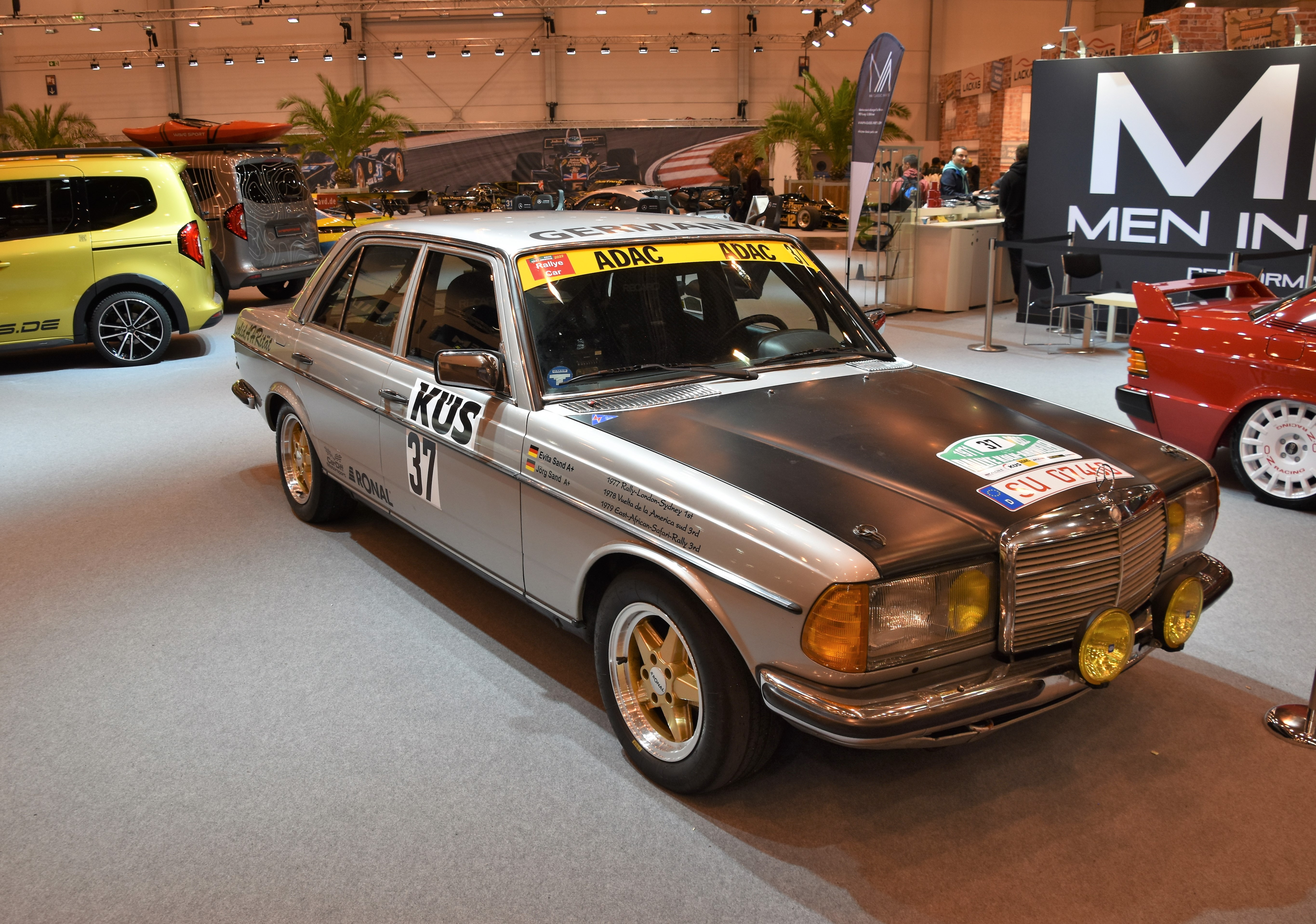
w123 wagon
"I would like a w123 or a w124 wagon with a body kit that makes it look cool"
“W123” is a Mercedes-Benz model generation. People like the W123 wagon because it’s sturdy and has a big enthusiast community, so you can modify it—like adding a body kit—without it feeling totally impractical.
“W123” refers to the Mercedes-Benz W123 generation, known for its durable, no-nonsense engineering and long-running parts availability. A W123 wagon is a popular enthusiast base because it’s roomy and can be styled heavily (like with a body kit) while still feeling like a real Mercedes.

w124 wagon
"I would like a w123 or a w124 wagon with a body kit that makes it look cool"
“W124” is a Mercedes-Benz model generation that many enthusiasts like. A W124 wagon is a good starting point if you want a classic-looking wagon you can customize with things like a body kit.
“W124” is the Mercedes-Benz W124 generation, which is especially well-known among enthusiasts for being a more modern-feeling, more refined evolution of the earlier W123. A W124 wagon is a common platform for tasteful styling and body-kit builds because it has classic proportions but better daily drivability than many older wagons.

Lamborghini Kuntosh
"Like a fancy body kit. Yes, or a Kuntosh Yeah, yep, yes, I agree 100% thank you. Okay"
The Lamborghini Countach is a famous supercar from Lamborghini. It’s known for its very distinctive look and high-performance reputation. People bring it up because it’s one of the most recognizable classic Lamborghini models.
The Lamborghini Countach is a classic, iconic supercar known for its distinctive styling and dramatic performance reputation. It’s frequently referenced in car culture because it’s instantly recognizable and has become a symbol of 1970s–1980s supercar design. The podcast mentions it in a context that sounds like a discussion of appearance and styling.

Volvo V70
"V70 R wagon in blue"
The Volvo V70 R is a sportier version of the V70 wagon. It’s still a wagon you can use every day, but it’s tuned to feel more exciting to drive than a regular V70.
The Volvo V70 R is a performance-oriented wagon from Volvo, built around a turbocharged setup and a sportier chassis than a typical V70. Enthusiasts like it because it blends “family wagon” practicality with a more aggressive, driver-focused character.

Wagon R Wagon
"Yeah, I like that V70 R wagon in blue With the orange leather interior the base..."
The Wagon R is a small wagon-style car made by Suzuki. It’s designed to use space efficiently so you can carry people and cargo even though it’s compact. The podcast brings it up as part of a wagon discussion.
The Wagon R is a small wagon model associated with Suzuki, known for its compact size and practical interior packaging. It’s often discussed in the context of kei-class vehicles where maximizing space in a small footprint is the main goal. The podcast mentions it alongside other wagons, suggesting a comparison of wagon styles and interiors.

Toyota Supra
"...inced into like a cool Japanese car Like a Celica Supra, are you looking up Kuntosha valleys right now Ch..."
The Toyota Supra is a sports car made by Toyota. It’s designed for fast driving and is popular with car enthusiasts. People bring it up because it’s a well-known performance model from Japan.
The Toyota Supra is a performance sports coupe known for its strong engine options and long-running reputation in the Japanese sports-car world. It often comes up in conversations about classic “cool Japanese” cars because it’s recognizable, enthusiast-focused, and has a history that people compare across generations. In the podcast context, it’s mentioned alongside other iconic Toyota models.

Toyota Celica
"...be convinced into like a cool Japanese car Like a Celica Supra, are you looking up Kuntosha valleys right ..."
The Toyota Celica is a sporty Toyota car, smaller than a pickup and built for driving enjoyment. It’s known as a classic “enthusiast” model from Toyota’s lineup. The podcast brings it up because it’s a recognizable Toyota sports car.
The Toyota Celica is a sporty compact car that’s historically been associated with Toyota’s performance-oriented lineup. It’s often mentioned alongside other Toyota sports models because it shares that “cool Japanese” enthusiast appeal. In the podcast, it’s referenced in the same breath as the Supra, suggesting a comparison of iconic Toyota sports cars.

Audi TT
"So that is the baseball glove interior hold on because that is a nomenclature that I specifically relate to the first gen Audi TT."
The Audi TT is a small sporty Audi with a very recognizable look. Here they’re talking about how the interior materials from early models can wear out or degrade over time.
The Audi TT is a compact sports coupe/roadster known for its distinctive “rounded” design and, in early generations, a strong focus on style. In this segment, it’s specifically tied to interior materials and how they aged.
gooey
"The interiors did not hold up. Well, they got all gooey, you know, remember how all like the early 2000s Volkswagen interiors got gooey"
They mean the interior surfaces can get sticky over time. Some older “soft-touch” coatings don’t age well, so the material can turn tacky and unpleasant.
“Gooey” here describes a common aging failure of some older soft-touch interior coatings—materials can break down and become sticky or tacky. It’s a recognizable issue because it affects how the cabin feels and can ruin resale value.
JDM
"Yeah, that's the sore. That's a import. Is that this one? I think that's a JDM [428.7s] Thing Mrs. Producers going full JDM on us, huh?"
JDM means “Japanese cars for the Japanese market.” In this episode, it’s used to say the cars being discussed are the kind of Japanese imports people get excited about.
JDM stands for “Japanese Domestic Market,” meaning cars that were originally sold in Japan (or are marketed as such). The host uses it to describe the vibe of the list—boxy Japanese coupes and imports.
body kit
"No, I think whatever I want needs to have a body kit on it to make it look awesome [505.6s] Yeah, they all have those box flares, dude."
A body kit is extra exterior styling parts added to a car, like different bumpers and side pieces. The host is saying they prefer cars that have that modified look.
A body kit is an aftermarket set of exterior parts—like bumpers, side skirts, and spoilers—used to change a car’s appearance. Here, the host says they only want a car if it has a body kit to make it look “awesome.”
box flares
"I'm gonna show Jake that he's wrong about the box flares. Here's a That one looked like it had some type of overvendor situation going on. I don't think so. I think all of these have pretty crazy box flares"
Box flares are the chunky, squared wheel-arch extensions you see on some older cars. They make the tires look wider and can also help fit bigger tires.
“Box flares” are the squared-off wheel-arch extensions some 1980s cars used to visually widen the stance. They’re often associated with styling packages and can also help fit wider tires or accommodate suspension/track-width changes.

Audi Quattro
"...so We're gonna move boxy Audi like a like a coupe quattro Yeah, I'm over it. You wanted a short wheelbase"
Audi quattro refers to Audi’s all-wheel-drive setup. It helps the car send power to more than just the front or rear wheels, improving traction. In the podcast, it’s mentioned while talking about the look and size of a specific Audi-style car.
The Audi Quattro (often written as “quattro”) refers to Audi’s all-wheel-drive system and also to models associated with that technology. In the podcast, it’s mentioned as a “boxy” Audi coupe-style reference, with the speaker focusing on wheelbase and proportions. It’s a common topic because quattro technology is a major part of Audi’s performance identity.

Volkswagen Fox
"What about a Volkswagen Fox? Oh, yeah, I like those foxes really and yeah, what's the What's the other one the dasher? Yeah, the dasher"
The Volkswagen Fox is a small older VW hatchback. People like it because it’s compact and straightforward to work on.
The Volkswagen Fox is a small, late-1970s/1980s-era Volkswagen hatchback that’s become a cult favorite in some enthusiast circles. It’s known for being simple, compact, and easy to modify compared with larger, more expensive European cars.
driven death car
"Yeah, there you go. What a downgrade. So I started working on the driven death car And I'm gonna show you what I what I got see if I can figure out this"
“Driven death car” sounds like a nickname for a car that’s not in great shape but is still being driven. People use terms like this for projects where they’re constantly fixing or swapping parts to keep it alive. In this segment, it seems tied to getting an engine to fit and work.
“Driven death car” reads like a project nickname for a car that’s being pushed hard or is in rough condition, but still gets driven. In enthusiast circles, these kinds of builds often involve swapping parts or doing experimental repairs to keep the car running. The host’s context suggests an engine-related swap or fitment project rather than a stock restoration.
oil pan
"Well, I know you got your fancy Oil pan And turn my light on and show you guys the pan install"
The oil pan is the part underneath the engine that holds the engine oil. The oil pan is important because the engine needs that oil to stay lubricated. If the oil pan is damaged or leaking, the engine can run low on oil.
An oil pan is the reservoir at the bottom of an engine that holds engine oil. It also helps protect the oil and provides a mounting surface for the oil pickup and drain plug area. Leaks or damage to the oil pan can quickly cause low oil pressure and engine damage.
3d scanned
"Yeah, because we 3d scanned in this whole thing right here Right, look at how like look how custom you made this"
3D scanning is like using a special tool to measure an object’s shape very precisely. People use it to design parts that fit correctly without rubbing or leaving gaps. In this case, it’s helping them make a custom oil pan that matches the space.
3D scanning is a process that captures the exact shape of a physical object so designers can recreate it digitally. In an automotive context, it’s often used to make custom parts that match clearances and mounting points. Here, it’s being used to create an oil pan that follows the engine bay’s contours and avoids interference.
clearance profile
"Pretend the phone is a speed bump. I'm a speed bump coming at the car. I want to see that like the clearance profile That's pretty good"
It’s basically how much space the car has under it. The host is checking whether the bottom of the car will scrape when going over something like a speed bump.
A clearance profile is the shape/height relationship of the car’s lowest points versus an obstacle, like a speed bump. It helps predict whether parts underneath (like the oil pan or subframe) will hit while the suspension compresses.
subframe
"This is the obviously the subframe so it sits just slightly below the subframe itself So we're good"
A subframe is a strong metal frame underneath the car that holds important parts. It’s part of what determines how low the car sits and what might scrape on bumps.
A subframe is a structural frame that’s mounted to the main body/chassis and carries major components like the engine, suspension, or steering. Because it sits under the car, it strongly affects underbody clearance and how low-hanging parts can be.
motor mount
"Pull I had to like drop part of the subframe down take the motor mount out and like Jack the motor up a little bit pull down pull up and like kind of like"
Motor mounts are the parts that hold the engine in place. They also help reduce vibration, and they can be involved when you have to lift or drop the engine for repairs.
Motor mounts are the brackets/bushings that attach the engine to the chassis or subframe. They support the engine’s weight and help control vibration and movement, so they often need to be removed or loosened when dropping the engine for access.
oil pump pickup tube
"Got the other oil pan in the reverse of that obviously and then I'd be like set the pan in and then Install the oil pump pickup tube with the pan in which was like my hands are all gouged up"
This tube is how the engine’s oil pump pulls oil from the oil pan. Getting it wrong can cause oil pressure problems, which is why it matters during reassembly.
The oil pump pickup tube is the tube that draws oil from the oil pan into the oil pump. If it’s installed incorrectly or obstructed, the engine can lose oil pressure—so it’s a critical part of the oiling system.
Mike Bros.
"And let's like trying to trying to figure this stuff out, but I was I said a Text message to Mike Bros. I'm like dude. Do you have a 3d scan of a ZF gearbox because"
This is the name of the person the host is texting for help. They’re asking for technical details about a transmission so they can figure out a part fitment.
“Mike Bros.” appears to be a person or shop contact the host is texting for technical information. The key automotive relevance here is that the host is asking about a specific transmission’s 3D scan.
ZF gearbox
"Text message to Mike Bros. I'm like dude. Do you have a 3d scan of a ZF gearbox because the Obviously that part that covers the flywheel and protects the flywheel from debris is no longer there anymore"
ZF is a company that makes transmissions. The host is asking for a 3D scan of a ZF transmission because they’re working around the flywheel area and need to understand the parts’ shapes.
ZF is a major transmission manufacturer, and a “ZF gearbox” refers to a ZF-designed transmission. The host is discussing how a missing/removed transmission-related cover affects access and visibility around the flywheel area.
flywheel
"Obviously that part that covers the flywheel and protects the flywheel from debris is no longer there anymore So you can look and you're just like looking at the light lightweight flywheel is just there"
The flywheel is a heavy spinning part connected to the engine. It helps the engine’s power delivery feel smoother, and it’s usually covered so debris can’t get into the moving parts.
A flywheel is a rotating mass connected to the engine that helps smooth out torque delivery and provides rotational inertia. In manual or dual-clutch setups, it also interfaces with the clutch, and it’s often protected by a cover to keep debris from contacting it.
bell housing
"You can see the ring gear and the clutch and inside the bell housing is all there No, it was part of the oil pan. It was before. Yeah, it's here. Look interesting So this is the cover it would have been like this so it covers up the the bottom of the flywheel right out it, okay?"
The bell housing is the cover area between the engine and the gearbox. It’s where the clutch area sits, so when you open things up you can see parts of the clutch system inside it.
The bell housing is the housing between an engine and the transmission/clutch assembly. It protects and contains the clutch and related components, and it’s where you can sometimes see parts like the clutch and flywheel through openings during inspection.

BMW E34
"I'm wondering I was talking to Cam Adams And he was saying some of the windage trays are differing if you if you look at this pan I don't feel like picking it up again, but it's from an E34 and it has a Integrated I think E34 pan has an integrated windage tray"
The BMW E34 is an older 5 Series generation. Here it’s mentioned because its oil pan design can include a built-in part that helps keep oil where it belongs during aggressive driving.
BMW’s E34 generation is the 5 Series platform from the late 1980s to early 1990s. In this segment, the speaker points out that an oil pan from an E34 can include an integrated windage tray, which affects how well the engine manages oil during hard driving.
windage tray
"Right. What is a windage tray Jake? ... so a windage tray is basically like baffles inside there ... prevents a lot of the oil from sloshing up and hitting the crankshaft"
A windage tray is a small baffle inside the engine’s oil pan area. It helps keep the oil from splashing around when the crankshaft spins fast, which reduces foaming and drag.
A windage tray is a sheet-metal baffle inside the engine’s oil pan area that helps control how oil moves as the crankshaft spins. It reduces oil “sloshing,” which can foam (aeration) and create extra drag, and it can also help prevent oil from splashing back up toward the crankshaft.
crankshaft
"So when your crankshaft is rotating around you it prevents a lot of the oil from sloshing up and hitting the crankshaft"
The crankshaft is the rotating shaft in an internal-combustion engine that converts the up-and-down motion of the pistons into rotational motion. Because it spins at high speed, it can churn oil; that’s why oil control features like windage trays matter.
aeration
"And so it's like and aeration Correct, and it'll foam up."
Aeration means oil gets mixed with air and starts to foam. That foam can make the oil less effective at lubricating and can add extra drag inside the engine.
Aeration is when engine oil gets mixed with air and turns into foam. Foamy oil doesn’t lubricate as effectively and can increase drag, which is why designs like windage trays try to limit oil splashing and foaming.

Volkswagen I
"It's something that bolts to the to the engine block Side region by the crankshaft. That's the way Volkswagen. I think has it as it bolts to the thing. Anyway, apparently the I have to had to get a different windage tray cam was nice enough to send me one"
The Volkswagen ID. Buzz is an electric vehicle shaped like a modern version of a classic bus. It’s designed to carry people and feel roomy. The podcast is talking about how parts are mounted and how that differs from older, gas-engine designs.
The Volkswagen ID. Buzz is an electric version of the classic “bus” concept, built as a modern EV with a spacious, people-carrying layout. The podcast reference to a component “bolts to the engine block side region by the crankshaft” sounds like a discussion of parts and mounting—likely contrasting how EV layouts differ from traditional engine setups. It’s mentioned as an EV that still aims for the familiar bus form factor.
stroke
"because the stroke is longer on the s50"
Stroke is the distance the piston travels from its lowest point to its highest point in an engine cylinder. A longer stroke changes where internal parts sit in relation to each other, which can affect clearance—like whether the bottom of the connecting rods could contact a windage tray.
connecting rods
"the bottom of your rods hitting this windage tray"
Connecting rods (often called rods) are the link between the pistons and the crankshaft. Their length and the engine’s geometry determine how close they come to nearby components, so a clearance issue could show up as contact with something like a windage tray.
FCP
"I'm not I bought like two oil changes worth of oil for all my cars from FCP Because well, there's you know, if they never open the straight of a Hormuz again"
FCP is the store the host used to buy extra engine oil. It’s basically a parts/supplies shop for car maintenance.
FCP is referenced as the supplier where the host bought extra engine oil. In enthusiast circles, this kind of parts retailer is commonly used for sourcing fluids and maintenance items ahead of events.
oil changes
"I'm not I bought like two oil changes worth of oil for all my cars from FCP"
An oil change is when you drain old engine oil and put in new oil (and often a new filter). It keeps the engine parts from grinding and helps the engine stay cool.
An oil change is the scheduled replacement of the engine oil and usually the oil filter. Fresh oil helps lubricate internal engine parts and carries away heat and contaminants so the engine can survive repeated use, including track or rally stress.
lifter
"Hopefully this is the only rally prep I have to do with that lifter doesn't tick If it does tick, I still might not fix it and might be yet one more rally with a collapsed lifter in that"
A lifter (often a hydraulic valve lifter) is part of the valve train that transfers camshaft motion to the engine’s valves. If a lifter “ticks” or fails, it can reduce valve control and potentially lead to serious engine damage, which is why it’s a big concern during prep for hard events.
dipstick
"Do you have a dipstick on that thing? That was the other thing is we were talking about the dipstick and you were confused"
A dipstick is a tool you use to check how much engine oil is in the engine. You pull it out, wipe it, put it back in, and then look at the oil level on the stick.
A dipstick is a simple measuring rod used to check the engine oil level. You pull it out, wipe it, reinsert it, then read where the oil sits relative to the marks.
Weber carburetors
"I was tinkering on the C10 and Couple things. There's only one thing to do on the C10. What's that the Weber carburetors on the C10?"
Weber carburetors are parts that help an older engine mix fuel and air. People use them for better tuning and a more responsive feel compared with some stock setups.
Weber carburetors are aftermarket carburetors made by Weber that mix fuel and air mechanically. On older engines, swapping to carburetors like these can change throttle response and how the engine “breathes,” often for a more tunable setup than stock.

Chevrolet C10
"...sy. Okay. Yeah, okay, well I was tinkering on the C10 and Couple things. There's only one thing to do o..."
The Chevrolet C10 is an older Chevrolet pickup truck. People like it because it’s a classic truck that’s popular for repairs and modifications. In the podcast, it’s mentioned as something someone was working on.
The Chevrolet C10 is a classic pickup truck from Chevrolet’s C/K series, known for its popularity in restoration and customization. It’s often discussed by enthusiasts because it’s a straightforward platform for tinkering and upgrades. The podcast references “tinkering on the C10,” pointing to hands-on ownership interest.
low compression
"Because it's low compression and it doesn't rev a lot"
Low compression means the engine doesn’t squeeze the fuel-air mixture as tightly before it ignites. That usually makes it harder to make big power and can limit how high the engine wants to rev.
Compression ratio is how much the air-fuel mixture is squeezed inside the engine before ignition. Low compression generally makes an engine less likely to make high peak power and often limits how freely it can rev, but it can be more tolerant of lower-octane fuel or forced induction depending on the build.
M90 supercharger
"I could put an M90 supercharger on it and make really respectable power for dirt cheap"
An M90 supercharger is a device that forces extra air into the engine. More air usually means more power, even if the engine isn’t naturally built to rev high.
An M90 supercharger is a specific supercharger model (commonly associated with the Eaton M90 family) that forces more air into the engine. Adding a supercharger can raise power by increasing the amount of air (and fuel) the engine can burn, even if the engine’s natural compression and rev range are modest.
manifolds
"[1335.4s] Probably should put them on anyway since I have all of the pieces [1339.4s] You have the manifolds and everything hard to find manifold. Yeah [1342.8s] Well, just put them on there"
Manifolds are the plumbing-like parts that guide exhaust and/or intake air to the engine. If you’re building or modifying an engine, the right manifolds matter because they affect fit and airflow.
Manifolds are the cast or fabricated passages that route gases to and from the engine—typically exhaust manifolds and intake manifolds. In forced-induction or swap projects, the correct manifold shape and fitment can be hard to source and can determine whether the setup works at all.
electric fuel pump
"[1349.6s] Enjoy the project enjoy doing something. Yeah, that's true [1352.6s] I had an electric fuel pump in before I do that though because otherwise it won't be able to fuel these things [1358.7s] You don't think it's just a little like diaphragm off the"
An electric fuel pump is the part that pushes gasoline to the engine. If the original fuel system doesn’t deliver enough or correctly, an electric pump can be the fix.
An electric fuel pump is a pump powered by electricity that supplies fuel under pressure to the engine. In conversions or unusual fuel setups, an electric pump can be necessary to ensure consistent fuel delivery, especially when the stock mechanical arrangement won’t work.
diaphragm
"[1352.6s] I had an electric fuel pump in before I do that though because otherwise it won't be able to fuel these things [1358.7s] You don't think it's just a little like diaphragm off the [1363.5s] Crankshaft mechanical pump, you know."
Some fuel pumps use a flexible membrane (a diaphragm) that moves to pull fuel in and push it forward. The idea here is whether a mechanical diaphragm pump could do the job instead of an electric one.
A diaphragm-style mechanical fuel pump uses a flexible diaphragm that moves back and forth to draw fuel and build pressure. It’s a common design concept for mechanical pumps, and the speaker is comparing it to an electric pump solution.
triple carbureted
"I do not think of anything I would rather not do than work on a triple carbureted [1466.2s] C10"
“Triple carbureted” means the engine uses three carburetors to feed fuel. Carburetors are older-style fuel systems, and they can be more work to keep running smoothly than newer fuel injection.
A “triple carbureted” setup means the engine uses three carburetors to mix air and fuel before it enters the cylinders. Carburetors can be finicky, so diagnosing issues and getting them tuned is often a big part of older-car maintenance.
header
"I really want to install the header first because it's a counter-flow head [1483.3s] So it's on the same side and like let's at least get the header on that I have for it"
A header is the part of the exhaust system that bolts to the engine and collects exhaust gases. Changing it usually means you may need to adjust the rest of the exhaust pipes to fit and work correctly.
An exhaust header is the front section of the exhaust system that collects exhaust gases from the engine’s cylinders and routes them toward the rest of the exhaust. The host mentions installing it first and then figuring out the exhaust routing afterward, which is typical because headers change pipe routing and clearances.
counter-flow head
"I really want to install the header first because it's a counter-flow head [1483.3s] So it's on the same side and like let's at least get the header on that I have for it"
A “counter-flow head” is a special engine head design that changes how air and exhaust move through the engine. Because of that, the exhaust piping layout has to be planned carefully so everything lines up and flows the way the design intends.
A “counter-flow head” refers to a cylinder head design where the intake and exhaust flow paths are arranged to promote better scavenging and airflow efficiency. In practice, it affects how the exhaust has to be routed from the header back through the rest of the exhaust system.

yellow 924
"Unfortunately, yeah, the other thing I would be doing is I would work to be working on getting that yellow 924 running that you've got [1517.4s] Have you try really get that running? No, I forgot it existed."
A Porsche 924 is an older Porsche sports car. Here, they’re saying they need to get their yellow one running again, likely because it has been sitting and the fuel has gone bad.
The Porsche 924 is a front-engine, rear-wheel-drive sports car from Porsche. In this segment, the host is talking about getting a specific “yellow 924” running again after it sat with very old fuel, which is a common revival task for stored classic cars.
fuel pressures
"So I need to drain the gas and then see if I can get the pump [1536.3s] To run to get it up and check fuel pressures or you start on that machine"
Fuel pressure is basically how hard the fuel system is pushing gas to the engine. If the car won’t run after sitting, checking fuel pressure helps figure out whether the pump or fuel delivery is the problem.
“Fuel pressure” is how strongly the fuel pump pushes fuel through the fuel system to the engine. Checking fuel pressure is a standard diagnostic step when an engine won’t start or runs poorly, because low or unstable pressure can point to pump, filter, or regulator problems.
Morris Motors
"Is has been delivered over in at Morris Motors in Sacramento For the Mercedes for the Mercedes."
Morris Motors is a local shop/dealer in Sacramento that’s involved in getting the car ready. They’re where the tires and setup work are being handled before the car is driven.
Morris Motors is mentioned as the place in Sacramento where the new parts/tires were delivered for a Mercedes. In this context it sounds like a shop or dealer that handles service and setup before the car is driven.
alignment
"They got the dude had like the craziest alignment on that car ...But it's all still it's all settled now. It's had an alignment the tires are on it and Sutton says it drives Beautifully"
Alignment is how the car’s wheels are aimed and tilted. If it’s off, the car can feel weird and tires can wear unevenly; fixing it makes the car track straight and handle better.
Alignment refers to setting the suspension angles (like camber, toe, and caster) so the tires contact the road correctly. A “craziest alignment” and a “massive change” implies the previous settings caused odd handling (including a weird rake) and the corrected alignment improved how the car drives.
rake
"Craziest craziest line, but he had those pads that like raised it up a bunch and Sutton's yeah, cuz it was not it like it was had a weird rake to it. Yeah, I had a weird rake"
Rake is the difference in ride height between the front and rear of a car. A “weird rake” can change weight transfer and handling balance, so correcting it (along with alignment) can noticeably change how the car feels.
Nokia
"it's like a massive massive change to the way that it was before so we got some Nokia I guess we could call them the official scout scouting tire of over."
Nokia is the tire brand being talked about here. They’re saying it’s the tire brand they’re using for their driving/scouting.
Nokia is referenced as the “official scout scouting tire” for Overcrest, meaning the tires are being used as the brand’s chosen tire for the group’s driving/scouting activities. In practice, this is a product/brand association tied to the tires they run.
tread blocks
"You know, they're just looking to cut your tires up I came back in that like entire tread blocks have been cut off by these by abused"
Tread blocks are the chunky parts on the tire that actually touch the road. If they get chopped up, the tire won’t grip as well and may need to be replaced.
Tread blocks are the raised rubber sections on a tire’s surface that contact the road. When they get “cut off” after rough roads, it’s a sign of severe tire wear or damage that can reduce grip and increase the chance of failure.
55,000 mile warranty
"Well, it does also have their 55,000 mile warranty So if you happen to damage your tire beyond repair, no key and would have replaced it for free Chris"
They’re saying the tire comes with coverage for a certain distance (55,000 miles). If you damage it too badly to fix, they’ll replace it for free.
A 55,000 mile warranty is a coverage promise tied to tire mileage, here described as replacing a tire if it’s damaged beyond repair. This is relevant because it reduces the financial risk of running tires on harsh roads.
Surpass AS01
"You're of course talking about the surpass AS01 which is their high performance all season tire specifically made for drivers We want the most out of their cars without sacrificing capability when the roads get slick"
Surpass AS01 is a specific tire model. It’s meant to work in different weather, but still give you better grip than a typical all-season tire.
Surpass AS01 is described as a high-performance all-season tire made for drivers who want strong grip even when conditions get slick. The host emphasizes it balances everyday usability with performance traction.
high performance all season tire
"You're of course talking about the surpass AS01 which is their high performance all season tire specifically made for drivers We want the most out of their cars without sacrificing capability when the roads get slick"
This means a tire that’s built to grip well, but still be usable year-round. It’s trying to be “sporty” without forcing you into only one season of use.
A high performance all season tire is designed to provide stronger grip than standard all-season tires while still being usable across multiple seasons. The key idea is balancing traction for wet/cold conditions with a sportier feel.
camber
"So I knew I had like pretty severe camber up in the front [1843.8s] Camber we bet there. Thank you."
Camber is how much the tire tilts in or out at the top. If it’s wrong, one edge of the tire gets worn down much faster than the other.
Camber is the inward or outward tilt of the tire relative to vertical. Excess camber can cause the inside or outside edge of the tire to wear rapidly—matching the host’s observation that the inside edge was down to metal cords.
toe
"I didn't realize my toe was off by like [1859.6s] The ten times what it should have been like it was really really notice just from driving at that"
Toe is whether the tires point slightly toward each other or slightly away from each other. If toe is off, the car can feel unstable and the tires can wear quickly.
Toe is the difference in direction the front wheels point compared to straight ahead (inward toe-in or outward toe-out). The host says the toe was off by a large amount—driving it caused noticeable behavior—and they compare it to a target spec (toe-in) for proper tracking.
straight axle
"Even rare [1883.9s] No, it's a straight axle. Yeah on what they call truck arms, which is what NASCAR still used up until I think the last next-gen car"
A straight axle is a truck-style suspension where the left and right wheels are connected by one rigid axle. It can limit how much you can fine-tune alignment compared with independent suspension.
A straight axle is a solid axle that connects the left and right wheels as one assembly, commonly found on trucks. The host notes that with this setup, alignment adjustability is limited and they discuss how toe can still be measured/affected even on a straight axle.
truck arms
"No, it's a straight axle. Yeah on what they call truck arms, which is what NASCAR still used up until I think the last next-gen car [1893.2s] So maybe you could adjust the"
“Truck arms” are the suspension links that hold the axle in place and control how the wheels sit. On some setups, you can tweak mounting points to help alignment.
“Truck arms” here refers to the suspension link/arm arrangement used to locate a straight axle on a truck. The host suggests you may be able to adjust things like bolt placement to influence alignment settings such as toe.
NASCAR
"No, it's a straight axle. Yeah on what they call truck arms, which is what NASCAR still used up until I think the last next-gen car"
NASCAR is a stock-car racing series. They’re mentioned here because the host says NASCAR used similar truck-style suspension setups for a long time.
NASCAR is referenced as an example of a racing series that historically used truck-like solid-axle suspension layouts. The point is to contrast how alignment adjustability and suspension design differ between traditional truck setups and newer independent-suspension approaches.

Cadillac V16
"...uilt Is that yeah, look at this thing just as the v16 our tree on isn't just enough Tars get to the rig..."
The Cadillac V16 is an old Cadillac car known for having a very large engine with 16 cylinders. It’s a rare, special model that people talk about because it was built to be exceptionally powerful for its time. The podcast is highlighting it as something impressive and unusual.
The Cadillac V16 is a historic Cadillac model famous for using a V16 engine configuration, which was extremely unusual for its era. It’s often brought up in discussions of automotive engineering because it represents a time when manufacturers pursued massive, complex engines. The podcast mentions the V16 as a standout, visually and mechanically notable machine.
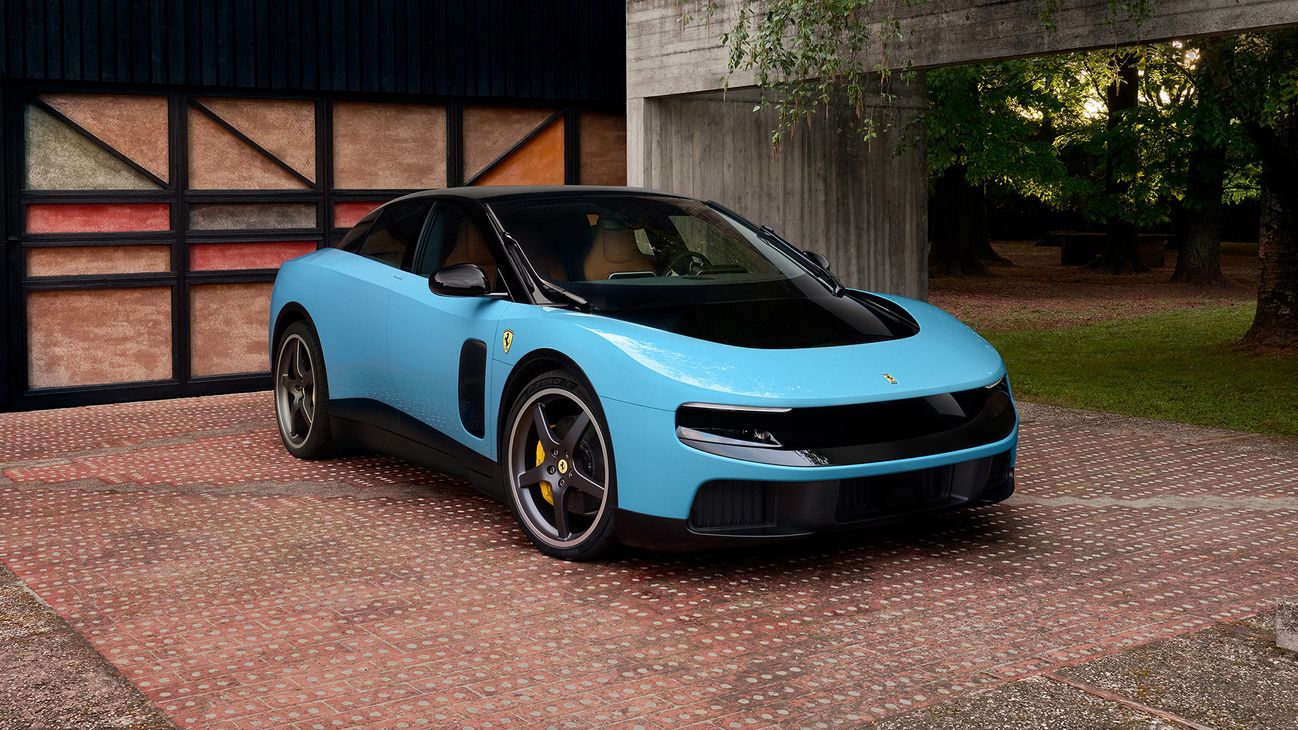
Ferrari Luce
"So it's probably a couple 100000 dollars and it just made me think of the Ferrari luce a little bit and I wanted to just have a second to talk about this thing"
They’re talking about a specific Ferrari model (they call it “luce”) and comparing it to another luxury tech/vehicle thing. The important part is that it’s a named Ferrari product, not just “a Ferrari.”
The speaker is referring to a Ferrari model called “luce,” which they compare to something else in the episode. Ferrari is the make, and the key point here is that the discussion is about a specific upcoming/covered Ferrari product rather than a generic “Ferrari.”
EV
"This is a this is an EV that is It is built to fulfill the requirements of the EU regulations for extremely wealthy"
EV means electric vehicle. It’s a car that runs on electricity from a battery instead of using gasoline like most cars.
EV stands for “electric vehicle,” meaning the car is powered primarily by an electric motor and a battery rather than a gasoline engine. In this segment, the host uses EV to frame the kind of buyer and the regulatory context being discussed.
EU regulations
"This is a this is an EV that is It is built to fulfill the requirements of the EU regulations for extremely wealthy"
“EU regulations” refers to rules set by the European Union that automakers must follow for things like emissions, safety, and other compliance requirements. Here, the speaker claims the product is built to meet those requirements, implying engineering and design choices are driven by legal compliance.
stock crashed
"What anyone on the internet is saying and you can even look like everybody's like oh the stock crashed blah blah blah everybody cares It's already recovered."
They’re talking about the company’s stock price dropping fast. The point is that online people focus on that, but the product’s buyer supposedly doesn’t care as much.
“Stock crashed” is a financial-market phrase meaning the company’s share price dropped sharply. The host uses it to contrast internet chatter with the idea that the target buyer for this product is less affected by short-term market moves.
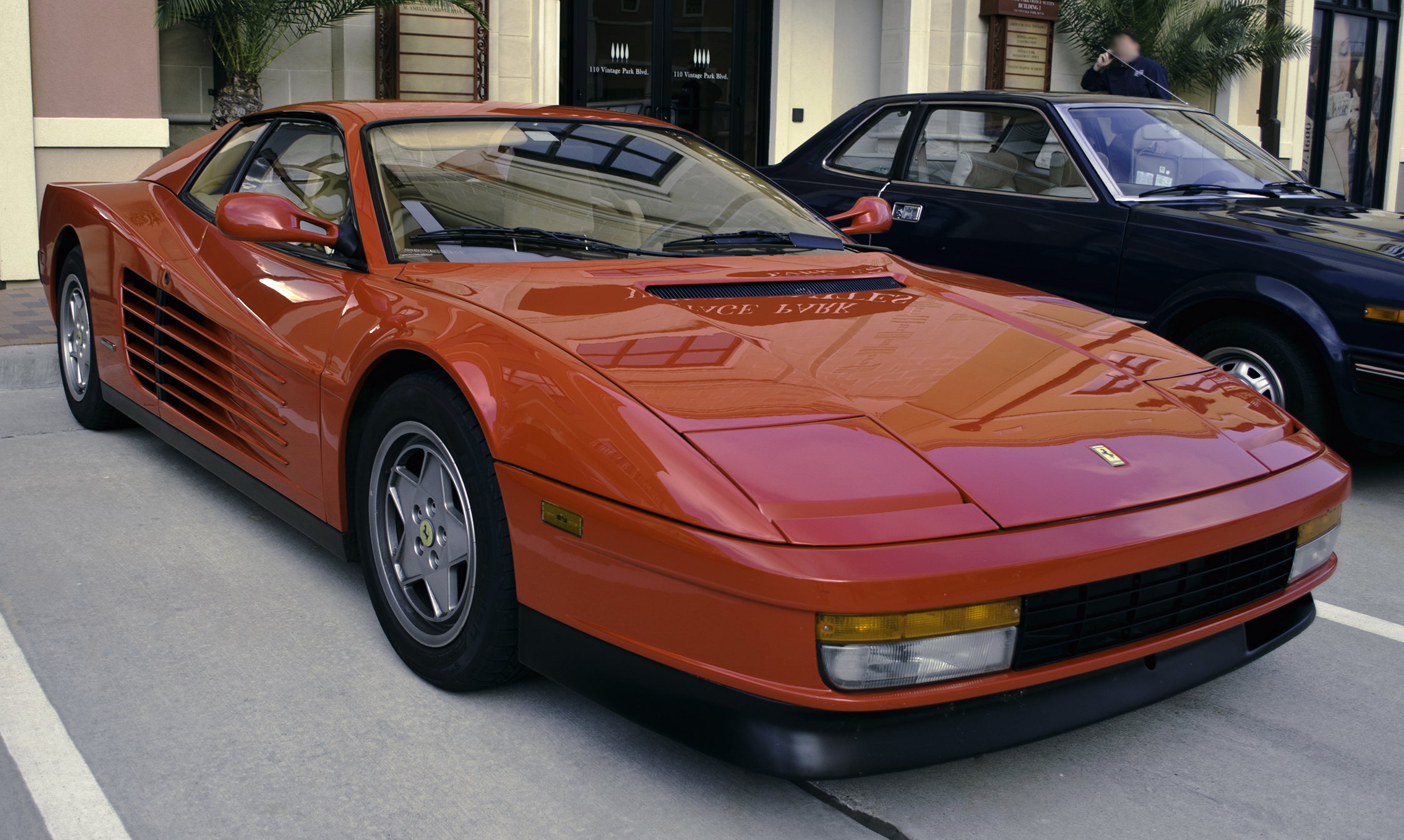
Testarossa Testarosas
"You're thinking of like the really expensive stuff Testarosa's Berlinetta's all these types of things this for example is the 400i Which is like a 2.2 with a three-speed automatic transmission hooked up to a Ferrari v12"
The Ferrari Testarossa is a famous supercar made by Ferrari. It’s known for its distinctive look and being a high-performance, collectible car. The podcast mentions it as one of the well-known expensive Ferrari models.
The Ferrari Testarossa is a classic Ferrari supercar known for its distinctive side styling and strong performance reputation. It’s often mentioned alongside other iconic Ferraris when people talk about “the really expensive stuff.” In the podcast, it’s brought up as part of a list of famous Ferrari models.
three-speed automatic transmission
"Which is like a 2.2 with a three-speed automatic transmission hooked up to a Ferrari v12"
This is the car’s automatic shifting system, and it only has three forward gears. Fewer gears can make the engine feel less “optimized” than in newer cars with more gears.
A three-speed automatic transmission is an automatic gearbox with three forward gears. Compared with modern multi-speed automatics, it typically means fewer gear ratios to keep the engine in its ideal power band, which can affect acceleration smoothness and efficiency.
V12
"Which is like a 2.2 with a three-speed automatic transmission hooked up to a Ferrari v12"
A V12 is an engine with 12 cylinders arranged in two banks that form a V shape. It’s usually known for being smooth and having a lot of power potential.
A V12 is an engine configuration with twelve cylinders arranged in a “V” shape. It’s often associated with smoothness and strong power delivery because the engine can fire more frequently than smaller-cylinder layouts.
halo car
"Okay, it is not their halo car That's another distinction here because I was not saying it has to be their halo car"
A “halo car” is the brand’s most impressive, reputation-defining model—the one that makes the company look great. It’s often not the cheapest or most typical car the brand sells.
A “halo car” is the flagship model a brand uses to build prestige and excitement, even if it isn’t the most affordable or most commonly sold. The host uses it to clarify that the argument isn’t about Ferrari’s top image-car, but about whether even non-halo models can be aspirational.
grand tourer
"Right a grand tourer. Well, this thing is the auto and I'm playing devil's advocate a little bit here"
A grand tourer, or GT, is a type of car meant for long trips. It’s usually built to be fast and comfortable, not just for racing or short drives.
A grand tourer (often shortened to GT) is a car designed for comfortable, high-speed long-distance driving. It typically balances performance with ride comfort and usability, rather than being purely track-focused.

Ferrari 400i
"You would still say like oh that Ferrari is really Great and beautiful has a v12. I want this is amazing. Very very unloved Ferrari the 400i"
The Ferrari 400i is a Ferrari grand tourer with a V12 engine. It’s being talked about as a Ferrari that doesn’t get as much love as other Ferraris, even though it still has the classic Ferrari “V12” appeal.
The Ferrari 400i is an unusual, unloved grand tourer from Ferrari’s lineup, known for its V12 and for being a more “executive” style Ferrari than the brand’s usual sports-car image. In this segment, it’s contrasted with a Corvette and framed as a car that looks rough to some people but still has the appeal of a Ferrari V12.
bad product positioning
"And that I think is the failure then because is this a case of simply bad marketing and bad product positioning?"
“Positioning” is how a company decides what the product is and who it’s for. If it’s “bad,” people may expect one thing from the car, but the brand delivers something else.
Product positioning is how a brand defines what a product is “for” and who it’s meant to serve in the market. In car terms, it affects expectations about things like performance, lifestyle, and who the car is supposed to appeal to.
bad marketing
"And that I think is the failure then because is this a case of simply bad marketing and bad product positioning?"
Marketing is how the brand explains the car to buyers. If the message doesn’t match what the car actually is, people get disappointed or upset.
In automotive discussions, “marketing” isn’t just ads—it includes how the brand frames the car’s purpose, target buyer, and value proposition. If the messaging doesn’t match the product, it can create backlash even if the car is technically fine.
Prius of Ferraris
"Maybe that's what this is. Maybe this is supposed to be the Prius of Ferrari"
It’s a metaphor: the speaker is saying Ferrari is being treated like a normal, everyday car brand rather than a special enthusiast brand. The Prius is used as the example of a practical “commuter” car.
“Prius of Ferraris” is a comparison meant to describe a Ferrari that’s positioned like a mainstream, everyday, rational choice—similar to how the Toyota Prius is often seen as an appliance-like commuter. The point is about shifting a brand’s identity from enthusiast/heritage to mass-market practicality.
Tesla
"Maybe this is supposed to be your Tesla that it just you drive and it's your appliance car, but you don't care about it"
Tesla is an electric-car brand. Here it’s being used as an example of a car you treat like a normal daily driver rather than a special enthusiast machine.
Tesla is an EV brand strongly associated with the idea of a car as a simple, everyday product—something you “just drive.” In this segment, it’s used as a comparison point for how a luxury brand might be reframed toward mainstream convenience.
appliance car
"This is supposed to be your Tesla that it just you drive and it's your appliance car, but you don't care about it"
An “appliance car” is a car you buy to do a job—get you around reliably—more than to feel special or exciting. It’s like how an appliance is chosen for usefulness, not passion.
“Appliance car” is a car-enthusiast way to describe a vehicle valued mainly for convenience and routine use, not for driving excitement or emotional appeal. It’s often used in contrast to performance or heritage-focused branding.
EVs
"Yeah, yeah, yeah, that's for free. ... how long in a world that is transitioning to EVs and is transitioning away from combustion engines"
EVs are electric cars. Instead of using gasoline, they run on electricity stored in a battery.
EVs means electric vehicles—cars powered primarily by electric motors and rechargeable batteries instead of burning fuel in an engine. The segment discusses the broader industry shift toward EVs and away from combustion engines.
combustion engines
"how long in a world that is transitioning to EVs and is transitioning away from combustion engines by and"
A combustion engine is the usual gas-engine found in most cars. It makes power by burning fuel, and the host is saying the industry is moving away from that.
A combustion engine is an internal-combustion engine that burns fuel (like gasoline or diesel) to create power. The host contrasts this with EVs, arguing that regulations are forcing brands like Ferrari to change direction.
EU is pushing
"So the EU is pushing, you know, the rules and everything else that have to do with that"
The EU is pushing rules that affect what car companies are allowed to sell. The host is saying Ferrari has to adapt because these rules are forcing the market toward cleaner cars.
This refers to European Union regulations that influence automakers’ product plans—especially emissions rules that make it harder to sell combustion-engine cars. The host argues Ferrari can’t ignore this pressure and must follow the required path.
Electric-only halo hypercar
"But then the smart choice would have been make the most ridiculously absurd Electric-only halo hypercar"
An “electric-only halo hypercar” is a flagship, image-setting supercar built exclusively with electric power. “Halo” means it’s meant to showcase the brand’s technology and future direction, not just to be a mass-market product.

Ferrari LaFerrari
"...lectric. They already did this. that Was that the LaFerrari? LaFerrari was all electric or was that hybrid? N..."
The Ferrari LaFerrari is a very expensive, high-performance supercar made by Ferrari. It uses a hybrid system, meaning it combines an electric component with a gas engine. The podcast is asking whether it’s electric or hybrid, and it’s the hybrid setup that matters.
The Ferrari LaFerrari is a modern-era Ferrari supercar known for its hybrid powertrain approach. It’s often discussed because it combines high performance with advanced electrification technology. The podcast specifically questions whether it was fully electric or hybrid, indicating the hybrid nature is a key point of interest.
hybrid
"No, it was a hybrid thing. That was their first That's the example of what you're saying."
A hybrid car uses two kinds of power: a gas engine and an electric motor. The electric part can help the car move faster and can recharge using braking.
A hybrid powertrain uses two energy sources—typically a gasoline engine and an electric motor. The electric motor can add torque for acceleration and can also help the car recover energy during braking.
mobility
"But they are putting their foot in the sand saying that they understand Where motoring is going it's going towards mobility. It's going towards style They have to do this"
Here, “mobility” basically means how people get around in the future. The speaker is saying Ferrari is trying to follow the direction the industry is moving toward, especially with electric tech.
In this context, “mobility” means shifting from traditional car ownership and combustion-only thinking toward broader transportation solutions—often including electrification and new vehicle architectures. The speaker frames Ferrari’s move as aligning with where the industry is headed.
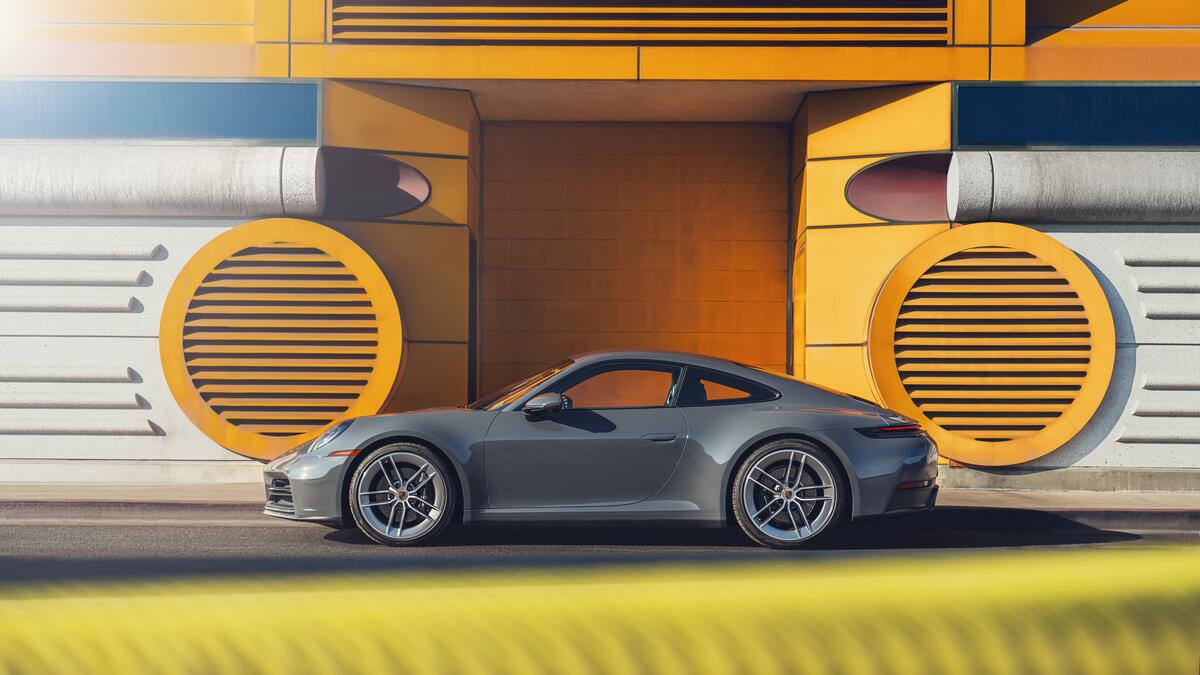
Porsche 911
"Ferrari however has always been they are at the tip of the spear the absolute cutting edge of technology When it comes to performance and motorsport that is not like Yes, we've we have a"
They mean the Porsche 911. It’s a famous sports car that Porsche has kept looking and feeling similar for decades, so it’s often seen as a “heritage” brand.
The speaker is referring to the Porsche 911, the iconic rear-engine sports car that has stayed recognizable across many generations. The point being made is that Porsche is strongly associated with “heritage” and continuity, unlike Ferrari’s more frequent technology-and-design shifts.
homage
"Storyed brand and we always have been but they never designed something because oh it's an homage to Our older shapes that looked beautiful, but it's not the cutting edge"
An “homage” is a deliberate nod to something older. Here it means the car’s design is meant to remind you of earlier Ferrari styling, rather than being completely new.
In car design talk, an “homage” means styling that intentionally references earlier shapes or motifs from a brand’s past. The host contrasts homage-based design with “cutting edge” design, implying the car’s look is more about nodding to older Ferrari cues than pushing forward visually.
cutting edge
"Every single one that's what I mean by it's always cutting edge. It's not Look at the g2. Nothing Ferrari has done. It looks like it's from the 60s a testarosa"
In this context, “cutting edge” means the car is using the newest ideas available when it was made. The host is saying Ferrari tries to look and feel modern for its time.
“Cutting edge” here is being used in an automotive sense to mean the newest design and engineering direction at the time a car was released. The host argues Ferrari’s styling and tech choices tend to align with the era’s latest ideas rather than staying purely “heritage.”
Ferrari Testarossa
"Look at the g2. Nothing Ferrari has done. It looks like it's from the 60s a testarosa You immediately think of like miami and and and drugs and white and cocaine"
The Ferrari Testarossa is a very recognizable older Ferrari. It’s famous for its bold look, and people often use it as a reference point for how Ferrari designs changed over time.
The Ferrari Testarossa is a 1980s/early-1990s Ferrari known for its distinctive styling and cultural presence. In enthusiast conversations, it often gets referenced as an example of a design era—so when the host says it “looks like it’s from the 60s,” they’re contrasting design language across decades.

Ferrari F40
"Especially everybody thinks if you were to go name the first Ferrari that comes to your mind every single person is going to say f40 Nobody's going to say a la Ferrari."
The Ferrari F40 is one of Ferrari’s most famous supercars. People bring it up because it’s known for being loud, fast, and very “old-school” in how it drives—like a race car you can use on the street.
The Ferrari F40 is a late-1980s supercar that became a benchmark for what “brutal” and “analog” Ferrari performance felt like. It’s widely remembered for its raw, race-inspired character and is often the first Ferrari model people name because it represents the brand’s peak mainstream motorsport-era image.

Ferrari Enzo
"Um, I don't know. I bet I bet anyone younger than our age would say the enzo shame on their fathers Shame shame on them"
The Ferrari Enzo is another iconic Ferrari supercar, from the early 2000s. It’s known for being a high-tech, extreme-performance “flagship” car, and it’s a common pick for people who grew up with more modern Ferrari icons.
The Ferrari Enzo (often called the Enzo Ferrari) is a 2000s-era halo supercar that helped define modern Ferrari’s high-tech, performance-first identity. The host uses it as a generational reference point—suggesting younger people may think of the Enzo instead of the F40 when naming a “first Ferrari.”
everyday Ferrari
"Unless you're saying this is the everyday Ferrari ...This is the everyday Ferrari. This is you don't have to buy a Prius now."
“Everyday Ferrari” is basically the idea of a Ferrari you could drive every day. The host thinks Ferrari is trying to sell it like that, but the design and branding feel off to them.
“Everyday Ferrari” is a marketing framing that suggests a Ferrari product meant to be used regularly—more like a daily driver than a pure weekend supercar. The speaker uses it as a contrast to Ferrari’s traditional positioning, arguing the car’s presentation doesn’t align with what enthusiasts expect from the brand.
three spoke steering wheel
"All I know it has the great three spoke steering wheel and so this is what they teased"
That phrase means the steering wheel has three main arms/spokes. Car makers often use steering-wheel design as part of the car’s “look,” especially in more premium or performance models.
A “three-spoke steering wheel” is a steering wheel design where the wheel has three main structural arms/spokes. In performance cars, steering-wheel shape and spoke layout are often part of the brand’s visual identity and can signal a particular design era or interior theme.

Prius
"This is the everyday Ferrari. This is you don't have to buy a Prius now. You can buy your Ferrari every day Ferrari"
The Prius is a common hybrid car people associate with saving gas and getting around day-to-day. The speaker is using it as a joke/comparison to say Ferrari is marketing something like a practical daily choice.
The Toyota Prius is a mainstream hybrid car associated with fuel efficiency and practical daily commuting. In this segment, the host uses “Prius” as a comparison point to criticize Ferrari’s “everyday” marketing—implying the new Ferrari is being positioned as a rational, utilitarian choice rather than a traditional supercar fantasy.
Rolls Royce
"Jake nobody buying a 600000 dollar car is deciding between this and a Prius That's no, but maybe they're deciding between this and they're like Rolls Royce."
Rolls-Royce is a luxury car brand associated with ultra-premium comfort, status, and chauffeur-style ownership. The speaker brings it up as an alternative comparison point for who might buy an extremely expensive car—suggesting buyers might be cross-shopping luxury brands rather than comparing to a mass-market hybrid like a Prius.

Porsche Cayenne
"Well, think of it this way. It's probably [3022.2s] What was the reaction [3025.0s] When the cayenne came out?"
The Porsche Cayenne is Porsche’s SUV. The hosts are using it as an example of how people react when a brand launches a big new type of car.
The Porsche Cayenne is Porsche’s SUV that helped broaden the brand beyond traditional sports cars. In this segment, it’s used as an analogy for how a major model launch can change customer expectations and sales volume.
temperature sensor on the head
"two things it's based on a Temperature sensor on the head for cooling temperature."
This sensor tells the car how hot the engine is. If it breaks, the car may turn the cooling fan on at the wrong time or not at all.
A temperature sensor on the engine “head” measures coolant/engine temperature so the car can decide when to run cooling fans. If that sensor fails, the fan control logic can behave incorrectly—either not turning on when needed or running at the wrong times.
pressure of the ac system
"It's also based on the pressure of the ac system So when you the ac first comes on it doesn't need to run the fans because it's just cold"
Your A/C uses refrigerant, and its pressure changes as it works. When the pressure gets too high, the car turns on the fans to help the A/C cool better.
The A/C system has refrigerant pressure that changes with temperature and load. Many cars use that pressure as an input to control the condenser fans—when pressure rises, the car increases airflow to help the A/C cool efficiently.
fuses
"So one of two things I tested the relay I tested the fuses everything seemed to work"
Fuses are safety devices in the wiring. If something draws too much current, the fuse blows to prevent damage.
Fuses protect electrical circuits by breaking the connection if current draw is too high. If a fan fuse is blown, the fan won’t run even if the sensors/relay are commanding it correctly.
relay
"So one of two things I tested the relay I tested the fuses everything seemed to work"
A relay is like an electrical switch controlled by the car. It helps turn big loads like cooling fans on and off safely.
A relay is an electrically controlled switch that lets the car power a high-current device (like a fan) using a smaller control signal. When diagnosing fan issues, checking the relay helps determine whether the fan isn’t being commanded to run or the fan circuit is failing.
auxiliary fan
"And then I unplugged that temperature sensor on the head and sure enough the auxiliary fan kicked on So that fan or that sensor is dead."
It’s an extra cooling fan that helps keep the car from overheating. It turns on when sensors say the engine or A/C needs more cooling.
An auxiliary fan is an extra cooling fan (separate from the main engine cooling fan) that helps move air through the radiator/condenser when the car’s sensors call for it. It’s often controlled by a relay and triggered by inputs like engine temperature or A/C system conditions.
oe oem genuine aftermarket and performance parts
"FCP euro would still be your source for oe oem genuine aftermarket and performance parts for european cars"
OEM parts are the same type of parts the car originally came with. Aftermarket parts are made by other companies, and performance parts are meant to improve how the car works.
OEM (original equipment manufacturer) parts are made to match what the car was built with, while “aftermarket” parts are made by other suppliers. “Genuine” typically means OEM-branded parts sold through official channels, and “performance parts” are intended to improve specific traits like braking, cooling, or handling.
lifetime replacement guarantee
"because That's how much they stand behind their lifetime replacement guarantee"
It’s a promise from the parts seller that if a covered part fails, they’ll replace it. The sponsor also says you can return items to get your money back.
A lifetime replacement guarantee is a warranty-like policy where the seller offers to replace eligible parts for as long as the original purchaser owns the vehicle (or under the program’s rules). In this ad, the host also mentions returning used oil/parts for a refund as part of the program.

Corvette
"broke in went to holstics home 15 miles south of flint in july of 2024 to buy two corvette seats [3581.9s] For his orange camaro [3584.1s] Okay, so it is automotive related. Okay. Got it. Wait, corvette seats to put in his"
The Corvette is a famous American sports car from Chevrolet. People often argue about it versus other sports cars like the Camaro, because it’s known for being quick and exciting to drive.
The Chevrolet Corvette is a long-running American sports car known for its performance-focused engineering and typically rear-wheel-drive layout. In this segment, it’s part of a “which car is better” debate, contrasted against the Camaro and even against European brands.
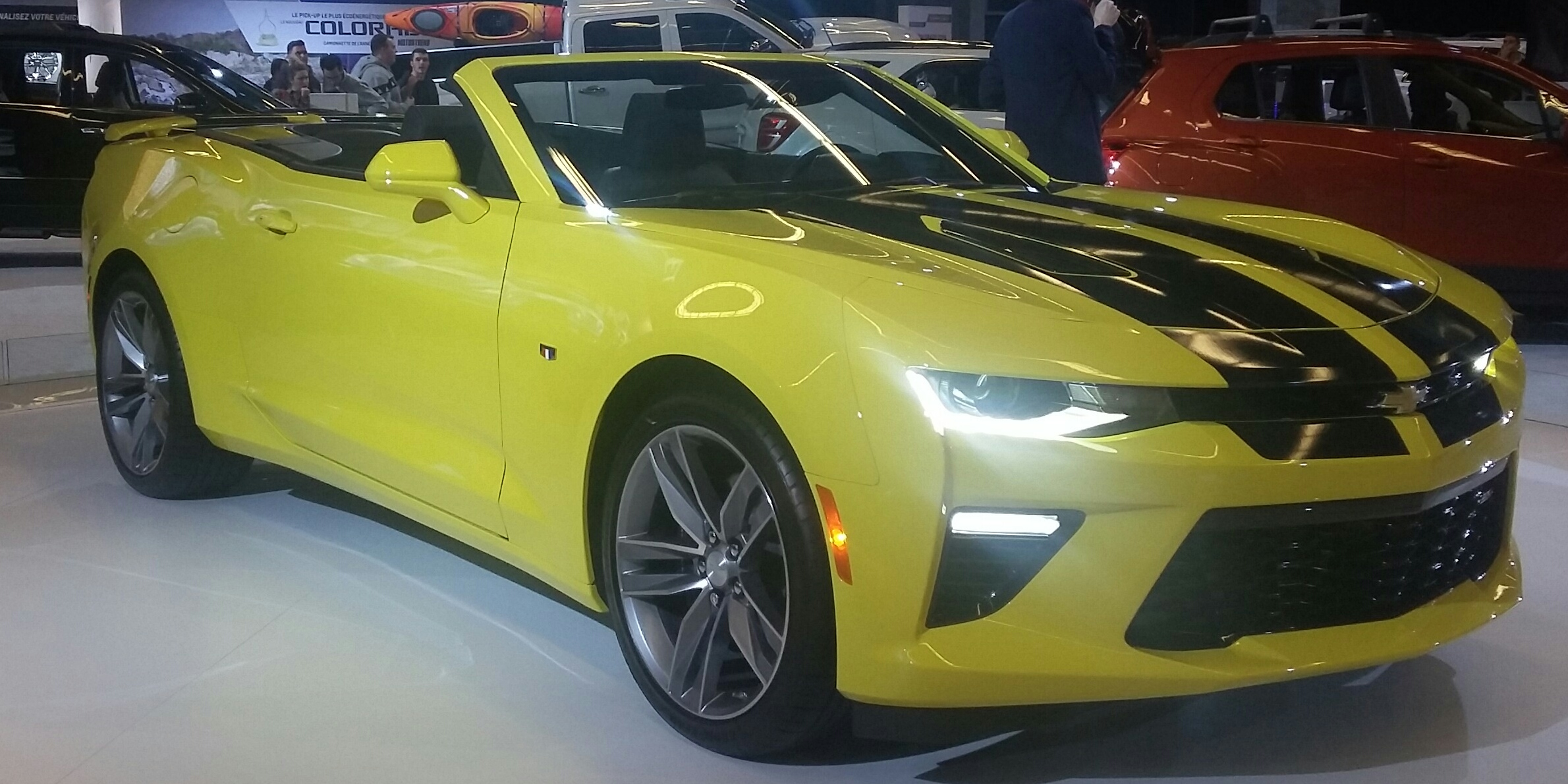
Chevrolet Camaro
"... of 2024 to buy two corvette seats For his orange camaro Okay, so it is automotive related. Okay. Got it. ..."
The Chevrolet Camaro is a performance car from Chevrolet, usually a two-door coupe. It’s known for having strong engines and a sporty look. People often mention it when talking about muscle-car style cars.
The Chevrolet Camaro is a classic American muscle car and performance coupe known for its styling and engine variety. It’s frequently discussed by enthusiasts because it offers a range of powertrains and a strong aftermarket. In the podcast, it’s brought up as an automotive-related example tied to a specific color and ownership interest.
Mercedes
"Okay. All right. They were fighting over whether [3666.2s] BMW or Mercedes was the better [3670.5s] manufacturer"
Mercedes is a German car brand known for luxury cars. In this segment, it’s being compared directly to BMW as the “better” manufacturer.
Mercedes (short for Mercedes-Benz) is a German luxury brand that’s known for comfort, engineering, and performance models. The hosts use it here as the rival brand to BMW in a manufacturer comparison argument.

Dodge Ram
"...? What is this? No, go ahead jess. This is pretty Ram put this up in their merch store"
The Dodge Ram is a pickup truck made by Dodge. It’s designed for carrying cargo and towing, and it’s a well-known truck model. In the podcast, it’s mentioned as a recognizable “Ram” brand item.
The Dodge Ram is a pickup truck line known for its capability and popularity in the full-size truck segment. It’s often discussed in terms of trucks as lifestyle vehicles as well as work tools. The podcast mentions “Ram” in a merch-store context, indicating it’s being used as a recognizable brand reference.
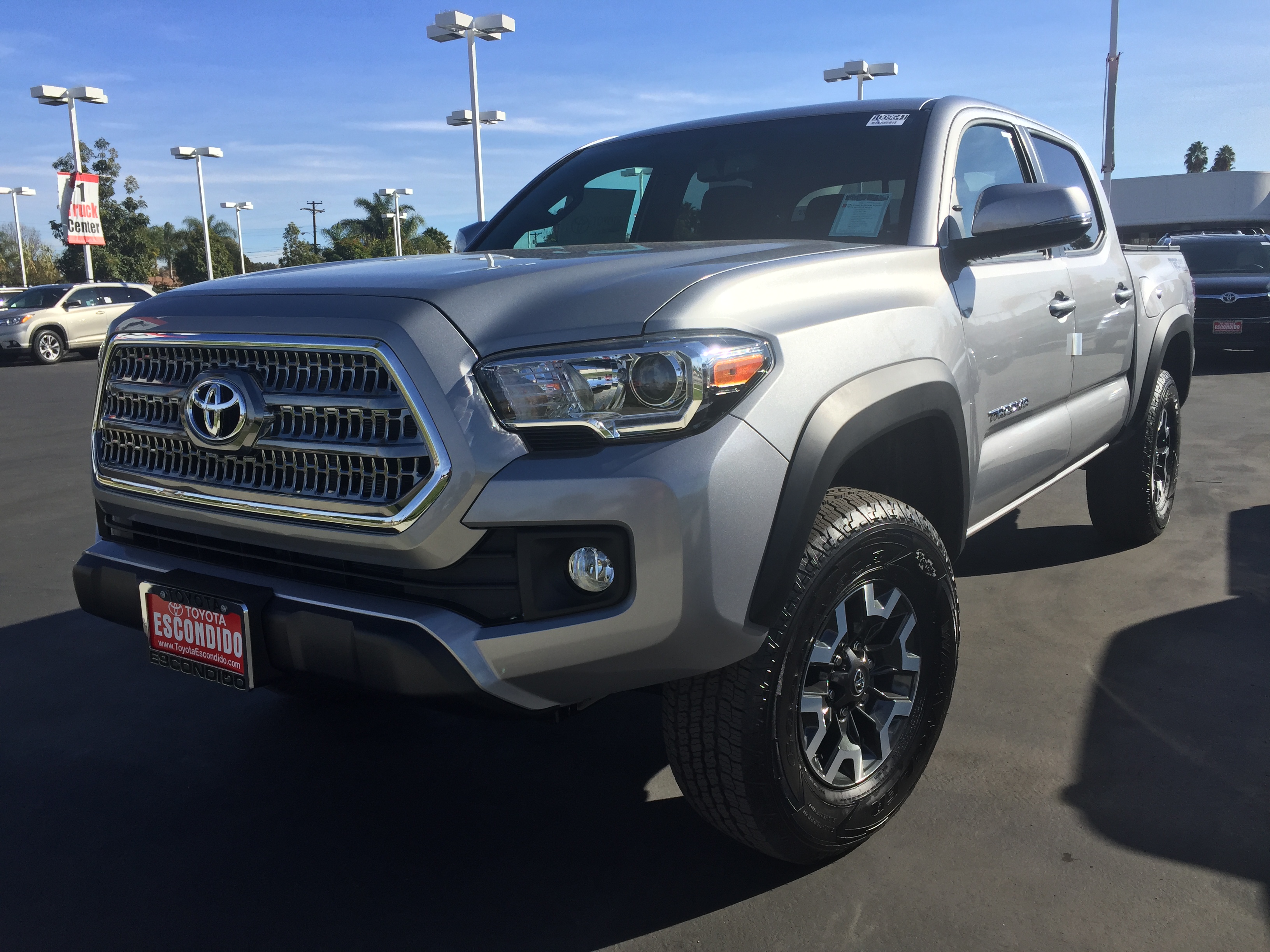
Toyota Tacoma
"merch store But that is a Toyota Tacoma Oh my gosh, you're right. It is"
The Toyota Tacoma is a pickup truck, meaning it has a cargo bed in the back. It’s made for people who want a truck that can handle daily use and some tougher driving. It’s a common, easy-to-recognize Toyota model.
The Toyota Tacoma is a midsize pickup truck designed for everyday driving plus light-duty work and off-road capability. It’s a popular choice because it’s practical, widely supported with parts, and comes in multiple configurations. The podcast mentions it as a recognizable Toyota truck in a quick exchange.
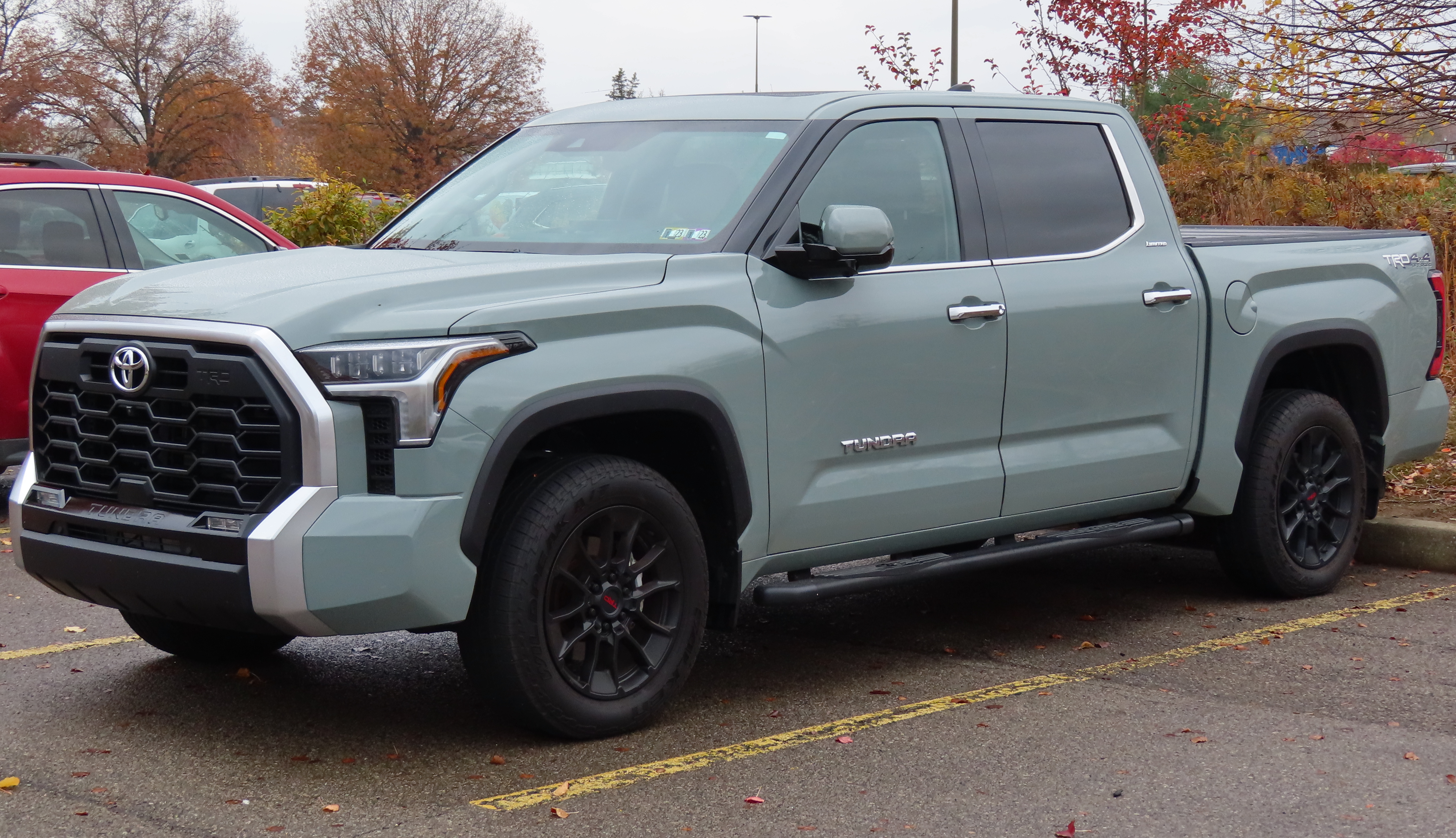
Toyota Tundra
"...ound the like exact photo That is based on of the tundra like the same angle and everything. It is so obvi..."
The Toyota Tundra is a large pickup truck from Toyota. It’s meant for tasks like towing and carrying things, and it’s built to be comfortable for longer trips. People recognize it by its big truck proportions.
The Toyota Tundra is Toyota’s full-size pickup truck, built for towing, hauling, and long-distance driving. It’s discussed in enthusiast and shopping contexts because it’s a large, capable truck with a strong presence on the road. The podcast references it by pointing out how a photo matches the Tundra’s look and angles.
Request an Explanation
Heard something you'd like explained? We'll add it to this episode.
Sign in to request explanations for terms you heard.
Want to learn more?
Browse our glossary for plain-English explanations of automotive terms, jargon, and concepts.
Help improve this episode
See something that's not quite right? Our annotations are AI-generated and can sometimes miss the mark. Click the flag icon on any annotation to suggest a correction.