
About this episode
A runaway diesel story kicks things off: the head “just started running away at the intersection,” filling the stoplight with smoke until the “fire department showed up.” The show then zooms out to 1931 Cajon Pass and the evolution of heavy-truck control—brakes fading, downshifting, and even forcing water into cylinders—before connecting it to why diesels dominated by 1955. Later, the episode explains diesel engine braking and the “Jake brake,” including how it became standard on mountain trucks.
Coming off a six percent grade in 1955, your brakes were a countdown. By the seventies, they were a backup system. The story of the man who built the thing that took the death out of the descent.
Support Overcrest. Get cool stuff.
https://www.patreon.com/c/overcrest
brakes start to fade
"They're nearly at the end of the Cajon Pass when the brakes start to fade. [187.8s] Then the brakes start to go."
Brake fade means the brakes get too hot and stop working as well. On a long downhill, that can make it much harder to slow the vehicle.
Brake fade is what happens when braking performance drops because the brakes overheat. As friction materials get hot, they can become less effective, so the pedal feels weaker and the truck needs more distance to slow down.
Cajon Pass
"They're nearly at the end of the Cajon Pass when the brakes start to fade. [187.8s] Then the brakes start to go."
Cajon Pass is a steep mountain route in California. Long downhill stretches there can overheat brakes and create dangerous situations.
Cajon Pass is a well-known mountain pass in Southern California with long grades that can stress brakes. It’s the kind of setting where brake fade and runaway-speed stories are plausible.
drop it a gear
"[191.3s] He shouts at the man next to him to drop it a gear. [194.1s] The man cuts the fuel and he works hard to pump with a hand pump to force water into the"
Downshifting to a lower gear helps slow the car using the engine. It can reduce how much you have to depend on the brakes.
“Dropping a gear” means downshifting to a lower gear ratio. That increases engine braking, helping slow the vehicle without relying as heavily on the service brakes.
engine's cylinders
"The man cuts the fuel and he works hard to pump with a hand pump to force water into the [199.7s] engine's cylinders, hoping the engine will choke and drag."
Cylinders are the engine’s chambers where the fuel burns. The idea described here is to interfere with that burning so the engine won’t keep driving the vehicle.
Cylinders are the engine’s combustion chambers where the air-fuel mixture is compressed and burned. For a runaway or overheating situation, forcing fluid into the cylinders is described as a way to disrupt combustion and slow the engine.
engine will choke and drag
"[199.7s] engine's cylinders, hoping the engine will choke and drag. [204.1s] Are we, are we going to get to any of the technical components here or also the fact"
They’re trying to make the engine struggle to keep running (“choke”), so it loses power. With less power, the engine can also slow the truck down (“drag”).
“Choke” here means starving the engine of the conditions it needs to keep running, such as by disrupting combustion. “Drag” refers to using the engine’s internal resistance (and reduced power) to slow the vehicle when fuel is cut.
pit stop
"The first car in the history of the Indianapolis 500 to complete all 500 miles without a single pit stop. Okay. He is going home from that publicity tour and it just about killed him."
A pit stop is when a race car pulls into the pits for service. Not having one means the car could go the whole race distance without needing fuel or tire changes.
A pit stop is a planned stop in the pit lane where a race car can refuel, change tires, or receive service. Finishing 500 miles without a pit stop is a big deal because it requires the car to go the entire distance on a single fuel load and avoid needing tire or mechanical changes.
Memorial Day weekend
"May 30th, 1911. It's Memorial Day weekend. The Indianapolis Motor Speedway is brand new, brand spanking new."
Memorial Day weekend is a U.S. holiday time. The hosts mention it to explain when this early Indy 500 event happened.
Memorial Day weekend is a major U.S. holiday period that often coincides with big motorsport events. Here it’s used to set the historical date for the first Indianapolis Motor Speedway running of what became the Indianapolis 500.
Indianapolis Motor Speedway
"It's Memorial Day weekend. The Indianapolis Motor Speedway is brand new, brand spanking new. And it's hosting the first running of what will become the Indianapolis 500."
The Indianapolis Motor Speedway is the track in Indianapolis where the Indy 500 race happens. The hosts are saying the track was brand new when the first Indy 500 was held.
The Indianapolis Motor Speedway (IMS) is the famous oval track in Indianapolis that hosts the Indianapolis 500. The segment emphasizes that IMS was brand new at the time of the first Indy 500 running.

Packard limousine
"He drops one of his engines into a Packard limousine and drives it from Indianapolis to the New York auto show on just $1.39."
A Packard limousine is a big, fancy car. In the story, they put a different engine into it, and that’s what makes it stand out at the auto show.
The Packard limousine is a luxury car platform that the story uses as the base for an unusual engine swap. In this segment, the key point is that a Packard is being modified to run on a different powerplant, turning it into a novelty at the auto show.

Tesla Model Hs
"... 1931. He commissions Augie Dusenberg to modify a model HS and drops in a Cummins Model U marine diesel."
The Tesla Model S is an electric car, meaning it runs on electricity instead of gasoline. In the podcast, it’s mentioned as a recognizable car name while they talk about engines and power setups. The point is to help you follow the comparison they’re making.
The Tesla Model S is a full-size electric sedan known for its battery-electric powertrain and technology-focused design. In the podcast context, it appears alongside a discussion of engines and modifications, where the name is used as part of a comparison or reference. That’s why it’s brought up—listeners recognize it as a specific, well-known vehicle when describing power and mechanical setups.
Cummins Model U marine diesel
"He commissions Augie Dusenberg to modify a model HS and drops in a Cummins Model U marine diesel."
The Cummins Model U is a diesel engine that was made for boats. Here, they put it into a car to try to set a land-speed record.
The Cummins Model U marine diesel is a diesel engine originally intended for boats (“marine” use). In this segment, it’s swapped into a car to create an early diesel land-speed attempt, showing how diesel torque and durability could be adapted for racing.
four cylinders
"The engine has four cylinders, 361 cubic inches, after he sleeves it down to fit the displacement rules, and 85 horsepower."
“Four cylinders” means the engine has four combustion chambers. That’s a basic way to describe how the engine is built.
“Four cylinders” describes the engine’s cylinder count—four combustion chambers working in sequence. Cylinder count affects how an engine delivers power and smoothness, and it’s part of how listeners can picture the engine’s basic layout.
displacement rules
"The engine has four cylinders, 361 cubic inches, after he sleeves it down to fit the displacement rules, and 85 horsepower."
“Displacement rules” are the event rules that limit how big the engine is. They’re usually based on how much space the pistons move through.
“Displacement rules” are regulations that limit engine size, usually measured as total volume swept by the pistons. By reducing displacement, the builder can compete in a specific class or avoid being disqualified under the event’s rules.
sleeves it down
"The engine has four cylinders, 361 cubic inches, after he sleeves it down to fit the displacement rules, and 85 horsepower."
“Sleeving it down” means modifying the inside of the engine cylinders so the engine is smaller. Racers do this to fit the rules about engine size.
“Sleeving it down” refers to changing the cylinder bore by installing sleeves, effectively reducing the engine’s displacement to meet rules. In racing, this is a way to comply with displacement limits while still using an existing engine block.
Daytona Beach
"He drives it down to Daytona Beach. Himself and sets the diesel land speed record at 100.755 miles an hour."
Daytona Beach is a famous place for speed attempts. In this segment, it’s where the diesel speed run happens.
Daytona Beach is a historic venue for land-speed and speed trials, where long straight stretches make high-speed runs possible. In this story, it’s the location where the diesel record attempt is carried out.
diesel land speed record
"He drives it down to Daytona Beach. Himself and sets the diesel land speed record at 100.755 miles an hour. It is the first diesel anything to crack 100."
A “diesel land speed record” is the top speed a diesel-powered car or vehicle can reach on land. Here, they’re saying this was the best diesel result.
A “diesel land speed record” is the fastest speed achieved on land by a diesel-powered vehicle. This segment emphasizes that the run was specifically for diesel engines, not just overall speed records.
Indianapolis 500
"He wants the diesel in the Indianapolis 500. Diesels are not allowed."
The Indianapolis 500 is a famous big race in the U.S. The hosts are talking about it because the rules decide whether certain cars—like diesel-powered ones—can even qualify.
The Indianapolis 500 (often called the Indy 500) is a premier American open-wheel race held at Indianapolis Motor Speedway. It’s known for strict entry and qualifying rules, which is why the segment focuses on whether a diesel car can qualify and compete for prizes.
diesels
"Diesels are not allowed. Diesels have never been against them."
“Diesels” are cars powered by diesel engines. They work differently than gasoline engines, and in this segment the race rules decide whether diesel cars are allowed.
“Diesels” refers to diesel engines, which use compression ignition instead of spark ignition. In racing, diesel eligibility rules can strongly affect which cars are allowed to compete and how teams build for speed and efficiency.
qualify above 80 miles an hour
"He just needs cars by diesel can race, but it has to qualify above 80 miles an hour, and it is not eligible for any prize money,"
To “qualify” means you have to meet the race’s entry rules before you can start. Here, the diesel car has to hit at least 80 mph in qualifying to be allowed in.
Qualifying above a set speed is a rule that determines which cars are allowed to start the race. In this segment, the diesel car must meet a minimum qualifying speed (80 mph) to be eligible, which directly affects whether it can compete.

Cummins diesel special
"The car is the number eight Cummins diesel special. It weighs 3,389 pounds, the second heaviest in the field."
This is a race car built around a Cummins diesel engine. The hosts talk about it like a specific entry in the race, including how heavy it is and whether it even qualifies under the rules.
The Cummins diesel special is a purpose-built diesel race car associated with Cummins, known for its diesel engines. In this story, it’s the “number eight” car and is discussed in terms of eligibility and weight, which are crucial in racing rules and competitiveness.
board track era
"A veteran of Duesenberg's brutal board track era, which is this, like this time where they used to race the, like on wooden planks, literally ovals."
“Board track era” means a time when race tracks were made of wooden planks. Racing on them was intense and risky, and it influenced how drivers and cars handled the track.
The board track era refers to early American auto racing on wooden plank tracks. Those tracks were known for being extremely fast but also rough and dangerous, shaping how cars were built and driven.
Duesenberg's
"A veteran of Duesenberg's brutal board track era, which is this, like this time where they used to race the, like on wooden planks, literally ovals."
Duesenberg was a well-known car maker that also built race cars. Here it’s mentioned to describe the driver’s experience in early, very tough racing.
Duesenberg was a famous American luxury and racing car brand, especially associated with high-performance early motorsport. In this segment, the speaker uses it to connect the driver’s background to the brutal early board-track racing era.
OE
"FCP Euro is an online retailer of OE, OEM, genuine [796.5s] aftermarket and performance parts for European cars."
OE parts are made to match what the car originally came with from the factory.
OE (Original Equipment) parts are made to match the specifications of the components installed on a vehicle when it was new. They’re often used as a benchmark for fitment and quality versus generic aftermarket parts.
OEM
"FCP Euro is an online retailer of OE, OEM, genuine [796.5s] aftermarket and performance parts for European cars."
OEM parts are made by (or to the specs of) the original manufacturer that supplied the car brand.
OEM (Original Equipment Manufacturer) refers to the company that makes parts for a vehicle brand, or parts made to those manufacturer specs. In practice, OEM parts are typically intended to be direct replacements with correct fit and function.
FCP Euro
"FCP Euro is an online retailer of OE, OEM, genuine [796.5s] aftermarket and performance parts for European cars."
FCP Euro is a website that sells car parts, especially for European brands. They also sell kits that bundle the parts you need for a job.
FCP Euro is an online retailer focused on European car parts. In the segment, it’s described as selling a mix of OE/OEM, genuine, aftermarket, and performance parts, plus bundled kits to simplify maintenance shopping.
one time use stretch bolts
"No more wondering if those bolts are one time use stretch [821.6s] bolts or if you need a gasket to go with that,"
Some bolts are designed to be stretched when you tighten them. If the instructions say they’re one-time use, reusing them can mean they don’t clamp tightly enough.
“Stretch bolts” are fasteners designed to be tightened by stretching the metal into a precise tension range. Some are specified as one-time use because reusing them can leave them with incorrect clamping force, which can affect sealing and long-term durability.
gasket
"No more wondering if those bolts are one time use stretch [821.6s] bolts or if you need a gasket to go with that,"
A gasket is a thin seal that helps stop leaks between two parts. It often needs replacing when you take things apart.
A gasket is a sealing layer placed between two mating surfaces to prevent leaks of fluids or gases. Many jobs require replacing the gasket because it can be crushed or deformed when the parts are tightened.
Surpass AS01
"[907.2s] That's why the new Surpass AS01 is so great. [909.9s] It offers the grip of a dedicated performance tire [912.2s] but won't be stranded if the road or weather gets rough. [916.4s] Not only does it come with a 55,000 mile warranty,"
Surpass AS01 is a specific tire model. The point they’re making is that it’s meant to feel grippy like a sporty tire, but still be practical and dependable when conditions aren’t perfect.
Surpass AS01 is a tire model positioned as a balance between high grip and real-world durability. In this segment, the hosts emphasize traction like a performance tire while also claiming it won’t leave you stranded in rough road or weather conditions.
performance tire
"[902.9s] And let's face it, a car can only perform as well as [905.7s] the tires it's on. [907.2s] That's why the new Surpass AS01 is so great. [909.9s] It offers the grip of a dedicated performance tire"
A performance tire is a tire designed to grip the road better and help the car handle more sharply. It’s usually made with rubber and tread patterns meant for better traction than regular tires.
A performance tire is built to deliver stronger grip and more responsive handling than a typical all-season tire. That usually means a stickier rubber compound and a tread/sidewall design aimed at better traction, especially during spirited driving.
55,000 mile warranty
"[912.2s] but won't be stranded if the road or weather gets rough. [916.4s] Not only does it come with a 55,000 mile warranty, [919.4s] it also offers Nokia and tires pothole protection."
This is a promise from the tire maker that the tire is covered for a certain number of miles. If something goes wrong within that mileage, you may be able to get a replacement.
A mileage warranty is a tire guarantee that’s tied to how many miles the tire is expected to last. If the tire fails within the covered mileage, the manufacturer may replace it under the warranty terms.
pothole protection
"[919.4s] it also offers Nokia and tires pothole protection. [922.6s] If he happened to damage your tire beyond repair, [924.8s] Nokia will replace it for free."
Pothole protection means the tire is designed to better handle hitting rough road bumps and holes. The goal is to reduce the chance of getting damaged or punctured.
Pothole protection refers to tire design features intended to reduce damage from impacts with road hazards like potholes. It’s typically achieved with reinforced sidewalls or internal impact-absorbing materials that help prevent punctures or structural damage.
tire replacement
"[960.2s] to replace tires as well as fuel stops? [963.2s] Yes, you would replace tires if you needed to. [965.3s] There was 30 cars, a little over 30 cars."
Tire replacement is when you stop and put on new tires. In racing or rallying, it’s done when the tires wear out or get damaged so the car can keep handling safely.
In rally or endurance-style events, tire replacement is a scheduled or condition-driven stop to swap worn or damaged tires. The need depends on grip requirements, tire wear rate, and whether the tires get punctured or cut by debris.
Detroit diesel
"Cummins and Detroit diesel and Mack and Caterpillar carved up the heavy duty market between them."
Detroit Diesel is a diesel engine brand used in trucks. The episode is saying it was one of the big companies supplying engines for heavy hauling.
Detroit Diesel is a diesel engine brand historically associated with heavy-duty trucking. In the transcript, it’s grouped with Cummins and others as a key player that divided up the heavy-duty market.
Mack
"Cummins and Detroit diesel and Mack and Caterpillar carved up the heavy duty market between them."
Mack makes heavy-duty trucks. The episode is saying Mack was one of the major players in the trucking industry at the time.
Mack is a heavy-truck manufacturer known for building trucks designed for demanding freight work. The transcript lists Mack alongside engine makers as part of how the heavy-duty trucking market was divided.
Caterpillar
"Cummins and Detroit diesel and Mack and Caterpillar carved up the heavy duty market between them."
Caterpillar is a company that makes heavy machines and diesel-powered equipment. The episode is grouping it with other big diesel players in heavy-duty work.
Caterpillar (often called “Cat”) is known for heavy equipment and diesel powertrains used in construction and industrial work. The transcript includes Caterpillar in the group that “carved up” the heavy-duty market, implying its diesel-related presence in that era.
rebuilds
"Diesel is more efficient, pulls more weight, runs longer between rebuilds. By 1955, most over-the-road tractors burn oil, not gas."
A “rebuild” is when a mechanic takes the engine apart and fixes/replace worn parts. The claim here is that diesel engines usually need that less often than gasoline engines.
In heavy-duty engines, “rebuilds” refers to major engine overhauls—disassembling and replacing worn internal components to restore performance and reliability. The transcript uses it to argue diesel engines can go longer between these costly jobs.
over-the-road tractors
"Diesel is more efficient, pulls more weight, runs longer between rebuilds. By 1955, most over-the-road tractors burn oil, not gas."
An “over-the-road tractor” is the main truck used for long-distance hauling, pulling a trailer. The episode is saying that by the mid-1950s, most of these long-haul trucks ran on diesel.
“Over-the-road tractors” are the power units used for long-distance freight hauling, typically pulling a semi-trailer. The transcript’s point is that by 1955, these long-haul trucks were mostly diesel-powered rather than gasoline-powered.
Cummins NH series
"Beside your right knee is the engine, pretty much. [1155.5s] Probably a Cummins NH series, maybe a Detroit diesel 671, maybe a Mack."
Cummins NH series is a type of diesel engine that powered older heavy trucks. The point here is that it’s loud and rough compared with modern truck engines.
Cummins NH series refers to a family of inline diesel engines built by Cummins, commonly found in mid-century heavy trucks. In the 1955 cab description, it’s used to set expectations for how these engines sounded and felt—loud, industrial, and not designed for smoothness.
slow revving cast iron beast
"Whatever it is, it's screaming at you from the moment you start the day to the moment. [1165.8s] You shut it off. [1166.6s] They're not quiet. [1174.3s] It's a slow revving cast iron beast."
This describes an older diesel engine that doesn’t spin very fast, but makes strong pulling power. The “cast iron” part means it’s built heavy and sturdy, which often makes it sound and feel rougher than modern engines.
“Slow-revving” describes an engine that reaches peak power at relatively low RPM, which is common in heavy-duty diesels built for torque rather than smooth high-speed operation. “Cast iron” points to a traditional, heavy engine construction that tends to contribute to the loud, rugged character the host is describing.
cubic inches
"The NH series in line six is around 743 cubic inches. We're going to do a best six cylinder engines of all time episode."
Cubic inches tell you how big an engine is internally—how much space the pistons move through. Bigger displacement often helps an engine make strong low-end pulling power.
Cubic inches is a displacement unit that measures the total volume swept by an engine’s pistons. The hosts use it to emphasize how large the Cummins NH series is (around 743 cubic inches), which helps explain why it can make strong torque.
inline six
"The NH series in line six is around 743 cubic inches. We're going to do a best six cylinder engines of all time episode."
“Inline six” means the engine has six cylinders lined up in a row. That design can help the engine run smoothly and make good pulling power at lower speeds.
An inline-six engine has all six cylinders arranged in a single straight line. This layout is often associated with smoothness and strong low-speed torque, which is why it’s a common configuration for heavy-duty diesels like the Cummins NH series discussed here.
turbocharger
"They bolted on a turbocharger and I got it up to 300 and eventually 350 horsepower. But horsepower is not what is working for you."
A turbocharger forces extra air into the engine. That lets the engine burn more fuel and make more power without needing to rev as high.
A turbocharger is a forced-induction device that uses exhaust gas to spin a turbine, compressing incoming air. More air allows more fuel to be burned efficiently, which is why the hosts say bolting on a turbocharger helped the NH series climb from roughly 220 horsepower into the 300–350 hp range.
torque
"But horsepower is not what is working for you. It is torque. That's right."
Torque is the engine’s “pulling strength.” It’s what helps the vehicle move and accelerate, especially when you’re not revving the engine high.
Torque is the engine’s twisting force that does the work of accelerating a vehicle, especially at low speeds. The hosts emphasize that for diesel engines like the Cummins NH series, torque is the key driver of real-world drivability rather than peak horsepower.
RPM
"And it sits in a fat band from around around 1100 to 1500 RPM. You didn't rev diesels. You don't have to."
RPM is how fast the engine is spinning. The point here is that this diesel makes strong pulling power at relatively low RPM, so it feels strong without needing to rev it out.
RPM (revolutions per minute) is how fast the engine’s crankshaft spins. The segment highlights that the NH series makes its torque in a “fat band” roughly from 1100 to 1500 RPM, meaning it delivers strong pull without needing high revs.
fuel system
"The fuel system is entirely mechanical. There's a governor, a pump, injectors and linkages."
They’re talking about how the car gets fuel to run. Here it’s all mechanical, so there’s no computer controlling it—just parts that move and push fuel.
In this context, the fuel system is described as fully mechanical—meaning fuel delivery is handled by mechanical components rather than electronic controls. That typically involves a mechanical pump, a governor, and mechanical linkages that meter fuel to the injectors.
injectors
"There's a governor, a pump, injectors and linkages. That's it."
Injectors are the parts that spray fuel into the engine. They’re responsible for delivering the right amount of fuel at the right time.
Injectors are the components that spray fuel into the engine in a controlled way. In mechanical systems, injector operation is driven by the fuel delivery hardware (pump/governor/linkages) rather than electronic signals.
governor
"There's a governor, a pump, injectors and linkages. That's it."
A governor is like a speed controller for the engine. It helps prevent the engine from running too fast by controlling fuel delivery.
A governor is a control device that limits or regulates engine speed. In a mechanical fuel setup, it helps keep the engine from overspeeding by influencing how much fuel the pump/injectors deliver.
ether
"On cold mornings, you got to start it with ether. You hand prime the fuel system."
They mention using ether as a cold-start aid. It’s a quick-igniting chemical that helps the engine catch when it’s very cold.
Ether here refers to starting fluid used to help an engine start in cold conditions. It’s commonly used because it ignites more easily than typical fuel-air mixtures when temperatures are low.

Volkswagen Beetle
"...n engine block that weighs more than a Volkswagen Beetle. The roads underneath you are U.S. or I've got to"
The Volkswagen Beetle is a small car made by Volkswagen with a very recognizable, rounded shape. In the podcast, it’s mentioned because it’s a familiar reference for how much something weighs. They’re basically saying the engine block is heavier than the whole car.
The Volkswagen Beetle is a classic compact car known for its distinctive shape and long production history. In the podcast context, it’s used as a reference point for weight—specifically comparing an engine block’s mass to the Beetle’s overall size. That kind of comparison helps listeners quickly grasp how heavy something is.
engine block
"You let it idle for 10 minutes and away you go with an engine block that weighs more than a Volkswagen Beetle."
The engine block is the big metal core of the engine. It’s where the cylinders are, and it’s usually the heaviest part.
The engine block is the main structural casting of the engine that houses key internal components like cylinders and coolant passages. Calling it out by weight emphasizes that this engine is physically large and heavy.
pistons
"I just want to show you how big these pistons are. Oh boy."
Pistons are the parts that move up and down inside the engine. They’re pushed by combustion and help turn that energy into motion.
Pistons are the moving parts inside the engine cylinders that convert expanding combustion gases into mechanical motion. The discussion focuses on piston size, implying a large-displacement engine where each piston has a lot of volume to move.
gearbox
"Engine that does not rev, the gearbox that takes both hands, both feet. [1645.9s] Sometimes, probably for me, do I want to drive a twin stick?"
A “gearbox” is the part of the truck that changes gears. It helps the engine spin at the right speed for what the truck is doing—like pulling uphill or slowing down.
In this context, “gearbox” means the truck’s transmission/gear-selection unit that determines which gear ratio the engine is turning through. The mention of “takes both hands, both feet” suggests a manual-style setup where the driver coordinates shifting with clutch and/or auxiliary controls.
twin stick
"Sometimes, probably for me, do I want to drive a twin stick? [1651.4s] If you've got a bunk, if you're lucky and the cab is safe."
A “twin stick” is a truck shifter with two levers instead of one. It helps the driver pick different gear ranges, which can make it easier to control the truck—especially on hills.
A “twin stick” is a truck’s dual-stick shifter setup, typically used to control a multi-speed transfer case or auxiliary gearbox. It lets the driver choose more gear ranges than a single shifter, which can be useful for managing speed and engine braking on long grades.
Air brakes
"At every pass he crests, he starts doing math. [1718.0s] Air brakes at the time are standard. [1720.3s] They are better than what was on the truck on Cajon Pass, but they are still cast iron drums and friction pads."
Air brakes are truck brakes that use compressed air to squeeze the brake components. They’re common on big vehicles because they can generate a lot of stopping power reliably.
Air brakes use compressed air to apply the brake force at the wheels, which is common on heavy trucks because it provides strong, consistent braking. The transcript also contrasts them with older brake hardware, emphasizing how braking feel and fade resistance depend on the system design.
cast iron drums
"Air brakes at the time are standard. [1720.3s] They are better than what was on the truck on Cajon Pass, but they are still cast iron drums and friction pads. [1726.9s] Mm hmm."
“Cast iron drums” are part of drum brakes. When you brake, pads squeeze against a spinning drum, and repeated braking can heat them up.
“Cast iron drums” refers to drum brakes, where brake shoes press against the inside of a rotating drum. Drum brakes can be more prone to heat buildup and brake fade than modern disc brakes, especially on long descents where drivers need repeated braking.
friction pads
"They are better than what was on the truck on Cajon Pass, but they are still cast iron drums and friction pads. [1726.9s] Mm hmm."
“Friction pads” are the parts that actually slow the truck down by rubbing against the brake surface. They wear out over time and need replacement.
“Friction pads” are the replaceable wear surfaces that create stopping power by rubbing against the brake hardware. In drum-brake setups, the friction material is typically on brake shoes (the transcript’s wording still points to the friction material doing the work).
6% grade
"A loaded combination at the top of a 6% grade is carrying enormous kinetic energy, Jake. You're going to ask those drums to convert that energy into heat."
A 6% grade is a way of measuring how steep a hill is. The steeper the hill, the harder it is to control your speed, and the more your brakes have to work.
A 6% grade describes how steep a road is: for every 100 units of distance traveled horizontally, the road rises or falls 6 units. Steeper grades require more braking effort to control speed, which increases heat buildup in brakes.
kinetic energy
"A loaded combination at the top of a 6% grade is carrying enormous kinetic energy, Jake. You're going to ask those drums to convert that energy into heat."
Kinetic energy is the energy a moving vehicle has due to its motion. On a downhill, a heavy vehicle’s kinetic energy must be turned into heat by the brakes (or controlled by engine braking), which is why long grades can overheat brakes.
brake fade
"Brake fade is not a warning light. It is the moment your pedal goes soft halfway down the hill and you do not know how far the pedal will go"
Brake fade is when your brakes get too hot and stop working as well. On a long hill, you might notice the brake pedal feels weak or changes, and you can’t count on the brakes to slow you the same way.
Brake fade is what happens when a brake system overheats and can’t slow the vehicle as effectively anymore. Instead of a warning light, it shows up as reduced braking—often described as the pedal going soft or feeling inconsistent on a long downhill.
runaway ramp
"After that, you have a couple of minutes to find a runaway ramp or you just run out of road. Back in the day, drivers died this way by the masses every year."
A runaway ramp is a safety escape area on steep roads. If your brakes stop working, you can steer onto the ramp so it helps slow the vehicle down safely.
A runaway ramp (also called an escape ramp) is a special downhill safety area designed for out-of-control vehicles. If service brakes fail or become ineffective, the vehicle can use the ramp’s braking surface to slow down and avoid a crash.
intermittent stabs at the pedal
"So a driver's options on a grade in 1955 are gear it down low before the top and hold your nuts as you ride the descent with intermittent stabs at the pedal to let the drums cool."
That phrase means you tap the brakes briefly, then let off, and repeat. It helps keep the brakes from getting too hot all at once.
“Intermittent stabs” means applying the brake briefly and then releasing it, repeatedly. The goal is to slow the vehicle while giving the brakes time to cool between applications, reducing the chance of brake fade.
gear it down low
"So a driver's options on a grade in 1955 are gear it down low before the top and hold your nuts as you ride the descent with intermittent stabs at the pedal to let the drums cool."
“Gear it down low” means shifting to a lower gear before the hill. That helps slow the vehicle using the engine, so you rely less on the brakes heating up.
“Gear it down low” means selecting a lower gear before descending so the engine resists the vehicle’s motion. This uses engine braking to help control speed, reducing how much the service brakes have to do and therefore how hot they get.
fuel injector
"Cummins and Detroit engines have a third lobe on the camshaft, [1925.0s] the one that activates the fuel injector."
A fuel injector is the part that delivers fuel into the engine in controlled bursts. The timing and amount matter a lot for how well a diesel runs.
A fuel injector is the component that sprays fuel into the engine in precise amounts and timing. In diesel engines, injector timing is critical because it largely determines combustion efficiency and power.
camshaft
"Cummins and Detroit engines have a third lobe on the camshaft, [1925.0s] the one that activates the fuel injector."
The camshaft is like the engine’s timing controller. As it spins, it pushes the valves open at the right times so the engine can breathe and make power.
A camshaft is the rotating shaft inside an engine that controls valve timing. It uses lobes (raised parts) to push valves open at specific moments during each engine cycle.
third lobe
"Cummins and Detroit engines have a third lobe on the camshaft, [1925.0s] the one that activates the fuel injector."
On a camshaft, lobes are the bumps that control what gets pushed and when. A “third lobe” means there’s an additional timing feature beyond the usual ones.
A camshaft lobe is the part that actuates a specific function (like opening a valve or triggering an injector). Saying there’s a “third lobe” implies an extra timing event used to activate the fuel injector.
hydraulic linkage
"Klessy's device piggybacks on that existing motion. [1930.7s] A hydraulic linkage transfers it to the exhaust valve at the top of every compression stroke."
A hydraulic linkage uses fluid pressure to move parts. In this device, it helps push the exhaust valve open by transferring motion through fluid.
A hydraulic linkage uses pressurized fluid to transmit motion and force. Here, it transfers the device’s motion to the exhaust valve so the valve can open at the right time in the cycle.
compression stroke
"A hydraulic linkage transfers it to the exhaust valve at the top of every compression stroke. [1936.4s] The valve cracks open."
The compression stroke is when the piston squeezes the contents in the cylinder. What happens during that squeeze—like valve timing—changes how the engine runs.
The compression stroke is the part of the engine cycle where the piston moves to compress the air (and, in a diesel, conditions for fuel ignition). The timing of when valves open or close relative to the compression stroke strongly affects how the engine behaves.
exhaust valve
"A hydraulic linkage transfers it to the exhaust valve at the top of every compression stroke. [1936.4s] The valve cracks open."
The exhaust valve is the valve that lets burned gases out of the cylinder. Opening it at the wrong (or unusual) time can change how the engine operates.
The exhaust valve is the valve that opens to let spent gases leave the cylinder. In this description, cracking it open at the right moment prevents normal diesel combustion and instead changes the engine’s role.
diesel becomes a power-absorbing air compressor
"The compressed air dumps out. [1939.9s] The power-producing diesel becomes a power-absorbing air compressor on demand."
The idea is that the diesel stops making power the normal way and instead gets used to push air around. The engine’s effort turns into compressing air rather than driving the truck.
This describes an engine being forced to act like an air compressor instead of producing power. By dumping compressed air through valve timing changes, the diesel’s mechanical work is used to move air rather than create combustion-driven torque.
Jacobs Manufacturing
"The nephew, as it happens, is dating the daughter of the vice president of Jacobs Manufacturing. Jacobs makes."
Jacobs Manufacturing is a company mentioned in the story. The hosts say it becomes involved because of a family connection and then sets up a new division to build the product.
Jacobs Manufacturing is referenced as the company whose vice president’s family connection drives the story. In the episode, it’s also the company that later sends a team out west and creates a new division.
Jacobs Chuck
"If you've ever tried to drill that, you have touched in Jacobs Chuck. I've seen that on old Chucks in America."
A Jacobs Chuck is a type of drill holder—the part on a drill that grips the bit. The hosts are saying you may have seen the name on older drill equipment.
“Jacobs Chuck” refers to a specific style/brand of drill chuck used to hold drill bits or other tooling. The episode uses it as a clue that the listener has likely encountered the name on older chucks in the U.S.
engine retarder
"So the Rover version, was that also for a diesel or does that for a... [2178.1s] It was for gasoline. [2179.8s] It was just an optional engine retarder, basically."
An engine retarder is a device that helps slow the car using the engine. It can reduce brake wear when you’re going downhill for a long time.
An engine retarder is an add-on (or feature) that increases braking effect using the engine, typically by creating resistance inside the engine. It’s used to slow the vehicle without relying as much on the friction brakes, especially on long descents.
engine brake
"So if you're engine, you can engine brake in a gas car way better than a diesel. [2194.4s] Let me explain why. [2195.6s] Diesel does not slow down when you lift off the throttle because..."
Engine braking is when you slow down by letting off the gas and using the engine to create resistance. On many gasoline cars, it feels stronger because the engine airflow gets restricted.
Engine braking is slowing the car by using the engine’s internal resistance when you lift off the throttle. Gasoline engines typically create more braking effect because the throttle plate restricts airflow, increasing vacuum and pumping losses.
throttle plate
"There's no throttle plate. [2202.3s] There's no restrictor. [2203.0s] No throttle plate. [2204.0s] There's nothing restricting the flow into the cylinders."
A throttle plate is a flap that controls how much air the engine gets. When it closes on a gasoline car, the engine has to work against that restriction, which helps slow the car down.
A throttle plate is a valve in a gasoline engine’s intake that restricts airflow when you lift off the accelerator. That restriction creates vacuum and helps produce stronger engine braking; diesel engines generally don’t use the same throttle-plate strategy.
runaway diesel
"Take your foot off the fuel and the engine jeeps just keeps spinning. [2211.0s] That is why a runaway diesel is a runaway. [2213.3s] Engine is not on your side."
A runaway diesel is a dangerous condition where a diesel engine keeps running uncontrollably because it continues to receive fuel/combustion even when the driver cuts the normal fuel supply. The key idea here is that diesel engines can keep spinning on internal combustion characteristics when you lift off, so the engine isn’t “on your side.”
runaway truck
"A runaway, you're talking a runaway truck, not a runaway engine. That is a whole different phenomenon."
A “runaway truck” is when a truck starts speeding up on its own and won’t slow down the way it should. It’s usually because something in the engine control isn’t working right.
A “runaway truck” refers to a vehicle that accelerates uncontrollably, usually because the engine is no longer responding normally to the throttle. In practice, this is often caused by a fuel or air control failure that lets the engine keep making power.
head gas failed
"Someone called 911. The head gas failed and it just started running away at the intersection."
They’re saying the engine’s control for how much fuel/air it gets failed. When that happens, the engine can start speeding up on its own.
“Head gas failed” is describing a throttle/fuel-control failure that prevents the engine from being controlled normally. When that control fails, the engine can keep accelerating at the intersection instead of responding to the driver.
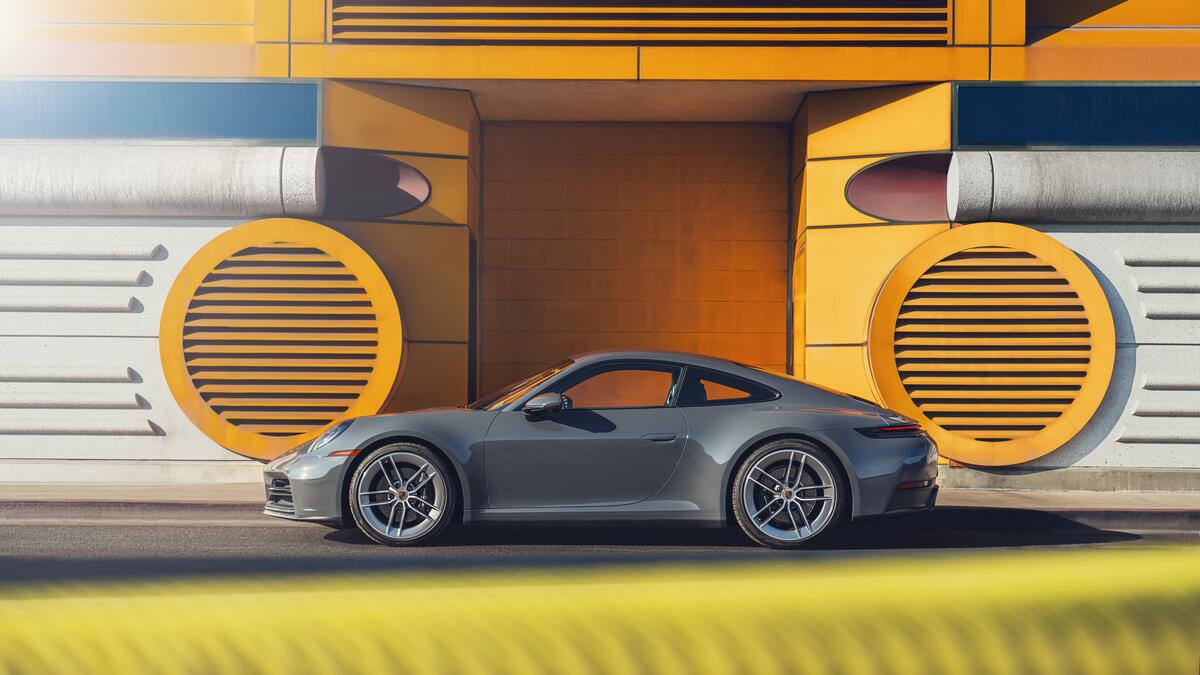
Porsche 911
"Wow, Volkswagen diesel rabble. Someone called 911. The head gas failed and it just started running ..."
The Porsche 911 is a sports car made by Porsche that’s known for strong performance. The podcast is talking about a problem where the engine didn’t behave normally and started running in an unexpected way. It’s used as a reference point for a serious mechanical situation.
The Porsche 911 is a long-running sports car famous for its rear-engine layout and performance-focused engineering. The podcast mentions “911” in a way that ties to a mechanical failure—specifically describing an engine issue and how it behaved when running. That makes it relevant as a recognizable performance car when discussing what can go wrong mechanically.
burning the engine's oil
"And dude, the amount of smoke generated from this... First because it's literally burning the engine's oil."
Sometimes a runaway diesel happens because engine oil gets into the combustion. Since the engine is using its own oil as fuel, it can keep revving and speeding up even when you try to stop it.
Burning the engine’s oil is a classic cause of diesel runaway: oil gets into the combustion process (often via a failed seal or stuck control), so the engine keeps making power. Because the engine is effectively feeding itself, it can accelerate uncontrollably until the fuel/air path is stopped.
floor
"You know, because I've already got a floor. I already have it floored because it will go any faster."
“Floored” means the accelerator pedal was pushed all the way to the floor. They’re saying they already gave it full gas, but it still surged faster than before.
In this context, “floored” means the driver pressed the accelerator pedal all the way down. That’s relevant because the speaker is describing how the vehicle kept accelerating even after they had already demanded maximum throttle.
diesel engine
"Compress release, compress release, right? [2336.2s] You're just, you're really not doing much work other than compressing and releasing. [2339.5s] You can pump a long time until your arms eventually quit. [2353.8s] That is what is happening inside of a diesel engine."
A diesel engine works by squeezing air very tightly, which makes it hot enough to ignite fuel when it’s injected. The key idea is that the engine’s work is tied to compression and combustion happening in a cycle.
A diesel engine compresses air first, then injects fuel into the hot, compressed air so it ignites. The episode’s “pumping bicycle tire” analogy is describing how, without the “air back” effect, you’re doing work in both directions—similar to how diesel combustion and compression events drive the engine’s workload.
retarding force
"The ones bolted the freight crossing of the country tonight [2368.1s] can produce more retarding force than the engine produces forward power."
Retarding force is what slows the truck down. It can come from the engine working against you, like when you downshift and the engine helps brake the car.
Retarding force is the braking effect that slows a vehicle down. In engine-braking situations, the engine creates resistance (often by controlling fuel and using internal compression) so the car slows without relying only on the brakes.
negative force on the downstroke
"So it's using both compression and also the negative force on the downstroke, [2391.0s] not just the single downstroke, I guess it would have been on the previous version."
This is the idea that, during the piston’s motion, the engine can actually fight against the drivetrain. That resistance helps slow the truck down—like engine braking.
“Negative force on the downstroke” is describing how the piston motion and cylinder pressures can oppose the crankshaft rotation during engine braking. Instead of producing net torque to move the vehicle forward, the engine’s internal forces create resistance.
blow off valves
"As we know, turbo guys do the same thing with blow off valves. [2451.1s] It's different engineering, of course, but it's the same tribal attachment to the noise."
A blow-off valve releases extra pressurized air when you lift off the throttle. It helps protect the turbo and it’s also responsible for that loud “pssh” sound some turbo fans love.
Blow-off valves vent pressurized air from the intake system when the throttle closes. That prevents compressor surge and can create the characteristic “pssh” sound people associate with turbo cars.
mountain pass
"A driver uses it properly might never touch the brake pedal at all on a mountain pass. The brake hardware stays cool and it stays ready for the moments it's actually needed."
A mountain pass is a steep downhill road. Trucks often need extra help slowing down for long stretches so they don’t overheat the brakes.
A mountain pass is a long, steep route where vehicles—especially heavy trucks—face sustained downhill braking demands. That’s where engine braking and brake heat management become especially important.
brake pedal
"A driver uses it properly might never touch the brake pedal at all on a mountain pass. The brake hardware stays cool and it stays ready for the moments it's actually needed."
The brake pedal is what you press to slow the car or truck. The speaker is saying that with the right downhill strategy, you may not need to press it much.
The brake pedal is the driver control that applies the vehicle’s braking system. In the context of engine braking, the point is that proper use can reduce or eliminate how often the driver needs to press it on descents.
jackknife
"It's a trailer that didn't jack knife. What I found interesting is that there's, uh, there's no federal regulator has ever mandated this device."
A jackknife is when a trailer swings around so the truck and trailer form a sharp angle. It’s dangerous and usually means the vehicle lost stable control.
A jackknife is a trailer instability where the trailer swings sharply toward the tractor, forming a V-shape. It’s a serious loss-of-control event often associated with braking imbalance or poor speed management on slippery or steep descents.
federal regulator
"What I found interesting is that there's, uh, there's no federal regulator has ever mandated this device."
A federal regulator is a government agency that makes safety rules. The speaker is saying nobody required this device by law—drivers and the market chose it.
A federal regulator is a government agency that sets and enforces rules for products or safety requirements. Here, the speaker claims no regulator has mandated the device being discussed, implying adoption came from the market and drivers.
cab over
"We got a cab over single. [2633.7s] It's literally a, yeah, it's literally a Jake break."
“Cab over” means the driver sits above the engine area, with the cab pushed forward. It often makes the truck shorter and easier to handle in tight spaces.
A “cab over” (cab-over-engine) truck design places the driver’s cab above or forward of the engine. This layout can improve maneuverability and shorten overall length, which is why cab-over trucks are common in certain vocational and off-road setups.
Jake break
"It's literally a, yeah, it's literally a Jake break. [2637.2s] It's a Jake break competition. ... [2647.8s] What I was going to say is that, you know, if you need to know when to use your Jake breaks,"
A Jake brake is a system that helps slow your truck using the engine. It’s useful on steep downhill grades because it can take some work off your regular brakes.
A “Jake brake” is a brand name that’s commonly used for an engine compression braking system. It helps slow the vehicle by using the engine as a brake, which can reduce wear on the regular friction brakes—especially on long descents.
articulating rock crawler
"So, you know, if you can take your 9-11 there, or if this is a full on articulating rock crawler only trail, there's a discover tool."
A rock crawler is an off-road vehicle made for rocky trails. “Articulating” means it can twist and flex so the wheels stay on the ground when the terrain is uneven.
An “articulating rock crawler” is a type of off-road vehicle built to flex its suspension so the tires can maintain contact over uneven rocks. The key idea is articulation—allowing the chassis and axles to move relative to each other while climbing or descending technical terrain.
exhaust actuator
"There is exhaust actuator to move the camshaft over. Right."
An exhaust actuator is a moving part controlled by the truck that changes how the exhaust system behaves. For engine braking, it helps the engine create more slowing force.
An exhaust actuator is a device that moves a component in the exhaust or valve system to change how exhaust gases are handled. In the context of engine braking, it can help control timing/positioning so the engine produces stronger deceleration.
compression release engine break
"There are different versions of like, so there's a compression release engine break, which is what you're talking about."
A compression release engine brake slows the truck by changing how the engine compresses air. That makes the engine fight against rotation, helping you slow down without using the regular brakes as much.
A compression release engine brake is a type of diesel engine braking that increases deceleration by releasing or controlling compression events. By managing how the engine’s cylinders compress (and how exhaust is handled), it turns engine compression into a braking force.
exhaust back pressure valve
"But isn't there also just like an exhaust back pressure valve?"
An exhaust back pressure valve is a valve that partially restricts the exhaust. That restriction can make the engine harder to spin, which helps slow the truck.
An exhaust back pressure valve is a valve used to restrict exhaust flow, which can raise exhaust pressure and increase engine braking effect. The idea is that higher resistance in the exhaust can help slow the engine during deceleration.
heavy-duty diesel
"By the time the 70s are over, you cannot sell a heavy-duty diesel without one of these."
A heavy-duty diesel is a big truck that runs on diesel fuel and is meant for hauling cargo. The episode is saying that, back then, these trucks needed extra help to slow down safely on steep downhill roads.
A heavy-duty diesel is a diesel-powered truck (or bus) built for high-load work like freight hauling. In the 1970s-era context of this episode, the key point is that these trucks needed strong engine braking to control speed on long descents.
Cummins Incorporated
"Cummins Incorporated, the company that turned Klessy down in the late 50s, acquires Jacob's vehicle systems."
Cummins Incorporated is a company that makes diesel engines for trucks. Here, they’re mentioned because they bought the technology related to the Jake brake.
Cummins Incorporated is a major engine manufacturer known for diesel engines used in trucks and other heavy-duty applications. In this episode, Cummins is described as acquiring Jacob’s vehicle systems and bringing the Jake brake back to the company Klessy founded.
exhaust brake
"You can add, by the way, an exhaust brake to your TDI trooper, [2911.9s] which is just like I'm talking about a valve after your exhaust manifold,"
An exhaust brake is a system that makes the engine slow the car down by restricting the exhaust. It’s especially useful on long downhill stretches to reduce how much you use the regular brakes.
An exhaust brake is a device that slows a vehicle by restricting exhaust flow, increasing backpressure. In practice, it’s often used on diesels for engine braking on long grades, because it reduces brake wear and helps maintain speed control.
exhaust manifold
"which is just like I'm talking about a valve after your exhaust manifold, [2917.5s] but you're right, the Jacob's systems."
The exhaust manifold is the part that gathers exhaust gases coming out of the engine. It’s like a collector that funnels exhaust into the rest of the exhaust system.
The exhaust manifold is the engine part that collects exhaust gases from multiple cylinders and routes them toward the exhaust system. When the speaker mentions a valve “after your exhaust manifold,” they’re describing where the exhaust-brake restriction is placed.
Jake brake
"I do love the mechanical aspects of the Jake brake specifically... No, no, no, just the Jake brake... I never knew until I started researching this how much people love the sound of the Jake brake."
A “Jake brake” is a diesel-truck feature that helps slow the truck using the engine. It makes a noticeable sound, and people often use that sound to tell whether the truck is using engine braking.
A “Jake brake” is a brand name that’s become common shorthand for an engine braking system on diesel trucks. Instead of using the vehicle’s brakes, it uses the engine to slow the truck by creating resistance inside the engine, which also produces a distinctive loud “chopping” sound.
engine braking
"Now, when you're out and about and you hear the Jake brake, you can judge people by the sound of their Jake brake."
Engine braking means slowing down using the engine instead of pressing the brake pedal all the time. On many diesel trucks, it can also create a loud, recognizable sound.
Engine braking is slowing a vehicle by using the engine’s internal resistance rather than relying only on the friction brakes. On diesels, systems like the Jake brake can make this effect strong and audible, which is why listeners associate it with a specific sound.
Request an Explanation
Heard something you'd like explained? We'll add it to this episode.
Sign in to request explanations for terms you heard.
Want to learn more?
Browse our glossary for plain-English explanations of automotive terms, jargon, and concepts.
Help improve this episode
See something that's not quite right? Our annotations are AI-generated and can sometimes miss the mark. Click the flag icon on any annotation to suggest a correction.