
Tommy Thomas: A Fraternity of Lunatics
About this episode
Romance, risk, and logistics collide as Overcrest talks through “cannonball” culture—why it’s so appealing, how people try to avoid trouble, and what real-world constraints look like. The guest explains why he couldn’t attempt it due to his fire-truck job, while the hosts compare their own coast-to-coast efforts, police stops, and navigation confusion. They also get into setup details like spotters/mission control, auxiliary fuel tanks, and even police-like styling and deer whistles.
Tommy Thomas spent high school talking about the Cannonball Run and the next four decades not doing it. A career driving fire trucks will do that. Retirement changed the math. Now he crosses the country with a co-driver, a trunk full of countermeasures, and a Cadillac built to look like nothing at all. We get into the laser jammers, the truckers who help and the ones who don't, the cops who go either way, and what it takes to get from one ocean to the other before most people finish a weekend.
Support Overcrest, Get cool Stuff:
https://www.patreon.com/overcrest
triple digit speeds
"like us doing really high triple digit speeds, I think it's safer than Karen going to work and putting her makeup on at 40 miles an hour."
“Triple digit speeds” means going faster than 100 miles per hour. At that speed, it takes a lot longer to slow down and mistakes are more likely to cause a crash.
“Triple digit speeds” means speeds over 100 mph (160 km/h). At those speeds, small errors become much more dangerous because stopping distances grow quickly and vehicle stability margins shrink.
cannonball thing
"this this cannonball thing is kind of like this enigma that I think a lot of car guys wish they could do. You know, it's very romantic to think that you can hop in your car, basically do all this stuff that is questionably legal with law enforcement potentially around every turn."
A “cannonball” is a reckless kind of road trip where someone tries to drive a very long distance in the shortest time. People usually drive extremely fast and may try to avoid getting stopped by police.
“Cannonball” refers to the informal, high-speed road-trip challenge where drivers try to cover a long distance as fast as possible. It’s associated with aggressive driving and often involves evading or outsmarting law enforcement, which is why it’s “questionably legal.”
law enforcement potentially around every turn
"basically do all this stuff that is questionably legal with law enforcement potentially around every turn. It's almost like takes you back to being a kid when you would do stuff just to see if you could get away with it or not."
This describes the cat-and-mouse aspect of aggressive road challenges: drivers anticipate police presence and plan around it. It’s less about a specific car feature and more about situational driving strategy under enforcement risk.
smoke screen
"And I want to get into that later, but you think you guys would come up with a smoke screen at some point, right? Yeah. Smokes key. You know, maybe some oil, you know, for some oil out of the back."
A “smoke screen” is when you create smoke to make it harder for others to see you. Here it’s being talked about as a trick people might use to avoid getting caught.
A “smoke screen” is a tactic meant to obscure visibility—typically by creating smoke so other drivers or law enforcement can’t clearly see what’s happening. In this context it’s discussed as a gadget-like idea for evading police during a high-speed run.
Red Ball to the Portofino Inn
"at at Red Ball to the Portofino Inn. We put some devices in our car and I actually bought this Cadillac."
They’re talking about a specific place they parked/stopped at during the trip. It matters because it’s where they planned to leave the car.
This is a specific parking/stop location used for the trip’s logistics. The host uses it as the reference point for where they staged the drive and where they ended up parking the car.

Ferrari Portofino
"... the location it took place at at Red Ball to the Portofino Inn. We put some devices in our car and I actuall..."
The Ferrari Portofino is a high-end sports car made by Ferrari. It’s meant for longer drives where you still want it to feel quick and exciting. The podcast mentions it in connection with an event and using the car for a specific setup.
The Ferrari Portofino is a luxury grand touring sports car from Ferrari, designed for comfortable high-speed driving while still feeling sporty. In the podcast, it’s tied to a specific location and a setup involving devices in the car, which suggests it was part of an event or test where the car’s layout and usability mattered. It’s often discussed because it blends everyday usability with Ferrari performance and styling.

Chevrolet Corvette
"...st, you know, it would have been corny. Plus that Corvette, I mean, you're sitting in there with two gas tan..."
The Chevrolet Corvette is a sports car made by Chevrolet. It’s designed to be fast and fun to drive, and the podcast mentions how it feels to sit in the car and how its fuel setup works. People talk about it because it’s a performance car you can still use day to day.
The Chevrolet Corvette is a U.S.-built sports car known for offering strong performance in a relatively accessible package. In the podcast, it’s mentioned in the context of the driver’s experience—specifically how you sit in it and the “two gas tank” detail—suggesting it came up as a memorable, practical-feeling performance car. Corvettes are often discussed because they balance everyday usability with track-capable capability.
screw in plugs
"We carry, face the flat, [392.3s] we got plugs, we got the screw in plugs, we got a floor jack, we got an impact to take the tire"
“Screw in plugs” refers to a tire puncture repair method where a plug is inserted into the hole to seal it. It’s a common roadside approach for tread punctures, but it’s not the same as a proper tire repair performed by removing the tire and patching internally.
face the flat
"because I'm carrying like, you know, we don't carry a spare tire. We carry, face the flat,"
They’re saying they don’t carry a normal spare tire. Instead, they bring tools to handle a flat quickly.
“Face the flat” appears to be a mis-transcription of a tire-flat repair kit concept—carrying tools to deal with a puncture quickly. The host contrasts this with carrying a full-size spare, implying a roadside strategy built around quick repairs.
spare tire
"because I'm carrying like, you know, we don't carry a spare tire. We carry, face the flat,"
A spare tire is the backup tire you keep in the car for emergencies. They’re saying they don’t have one, so they bring other ways to deal with flats.
A spare tire is the backup wheel carried in case of a puncture or blowout. The host explicitly says they don’t carry one, which is why they rely on plugs and other roadside tools instead.
floor jack
"we got plugs, we got the screw in plugs, we got a floor jack, we got an impact to take the tire"
A floor jack is the tool you use to lift the car when you need to change a tire. They’re saying they bring one in case of a flat.
A floor jack is a lifting tool used to raise the car so you can change a wheel or access the tire. It’s part of the host’s roadside kit, paired with other tools to handle a puncture quickly.
impact
"we got plugs, we got the screw in plugs, we got a floor jack, we got an impact to take the tire"
They mention an “impact” tool, which is basically a power wrench for loosening tight wheel bolts. It makes changing a tire faster.
“Impact” here likely means an impact wrench used to remove and install lug nuts quickly. It’s commonly used in tire changes because it provides high torque with less effort than a hand wrench.
New York
"but yeah, me and my son headed to New York. Of course, it's a 24 hour, 26 hour drive to get there."
They’re describing the experience of driving in New York, especially how hard it is to park. It affects how you plan your trip.
The host describes driving into New York and the practical challenge of parking. For road-trip planning, city rules can strongly affect how you stage a car and where you can safely leave it.
two-way taped
"There is, and I've got gadgets like two-way taped and hanging all by a thread. Only I know how to"
“Two-way taped” here refers to using tape to secure small devices in the car. In car/track contexts, taped-on gadgets are often used for temporary mounting when you don’t want to drill or permanently install hardware.
go-karts
"And my son, he raised go-karts from about each five to 10. And yeah, we've been all over the country running these sprint cards and stuff."
Go-karts are small race cars you drive on a track. People often start in them because they’re cheap, fast enough to learn real driving skills, and great for building race experience.
Go-karts are small, lightweight racing vehicles used to teach drivers fundamentals like throttle control, braking points, and racing lines. They’re a common entry point for people who later move into higher-speed motorsport or competitive road events.
sprint cards
"And yeah, we've been all over the country running these sprint cards and stuff. And he's competitive, just like me."
A sprint is a short, fast race where you try to go as quickly as possible for the whole time. It’s the opposite of a long endurance race where you manage the car and yourself over hours.
“Sprint” racing refers to short-duration, high-intensity events where drivers push hard for the whole run. In this context, the host is describing competitive karting-style events focused on speed and consistency rather than long endurance strategy.
spotters
"But we had no spotters. Like the guys who have the record, I mean, they had tons of spotters. They had people taking hits from the police to get police out of, out of in front of them."
Spotters are helpers who watch what’s happening ahead of the car. They can warn the driver about traffic or hazards so the driver can keep going fast without getting surprised.
Spotters are people positioned ahead of a driver to monitor conditions and help the driver avoid problems—like traffic slowdowns or police activity. In high-speed road runs, spotters can reduce uncertainty by providing real-time situational awareness.
mission control
"There's a thing called mission control or overwatch where you have one guy at his house with computer screens everywhere, watching everything, traffic conditions, weather, alternate routes, whatever you might need or you want to take."
Mission control is like a command center for the driver. People watch traffic and conditions on screens and help decide the best route so the driver can keep moving efficiently.
“Mission control” is an off-car support role where a team monitors the run using screens and data feeds. The goal is to coordinate route choices and timing by tracking traffic, weather, and alternate paths in real time.
overwatch
"There's a thing called mission control or overwatch where you have one guy at his house with computer screens everywhere, watching everything, traffic conditions, weather, alternate routes, whatever you might need or you want to take."
Overwatch here means someone watching from the sidelines and helping the driver make better decisions. They look for problems ahead and suggest route changes based on what they see.
In this context, “overwatch” is the same idea as mission control: a remote team watches the run and provides guidance based on live conditions. It’s about reducing uncertainty by continuously scanning traffic, weather, and route options.
countermeasures
"So, yeah, we did this whole thing on our own with just our countermeasures and John for 200 miles."
Countermeasures are things you do to deal with problems or threats. Here, it sounds like they used their own tactics to handle obstacles since they didn’t have a full support team.
“Countermeasures” are actions taken to reduce risk or avoid interference during the run. In this transcript, it’s used in the context of running without spotters, implying they used their own strategies to handle threats or obstacles.
spinning a bearing in a crank
"he had wound up like spinning a bearing in a crank. He did something, I don't know, but he had to wait like a month"
This means an engine bearing failed badly. Bearings are small parts that help the crankshaft spin smoothly; if they fail, the engine can get damaged and need major work.
“Spinning a bearing in a crank” describes a serious engine failure where a crankshaft bearing loses its oil film and overheats, allowing metal-on-metal contact. That can damage the crankshaft journals and often requires significant teardown and repair time.
sub 30
"It ran a 28-53, so we went sub 30. There's only 12 cars ever to do that."
“Sub 30” is shorthand for achieving a cross-country elapsed time under 30 hours. In Cannonball-style runs, elapsed time is the key metric, and “sub 30” indicates an extremely fast average pace.
Connecticut
"We left the reunion in Connecticut to head to the Red Ball, me and my son."
Connecticut is a state in the northeastern U.S. They’re saying they started their run there before heading out on the dash.
Connecticut is a U.S. state in the Northeast, referenced here as the starting point for their Cannonball-style run. The mention matters because it frames the route and timing decisions around regional traffic and departure logistics.
traffic
"We left about two in the morning and we learned the hard way. Don't ever think Tuesday, Wednesday or Thursday traffic is a good day because it is not. We took off on Columbus Day weekend"
They’re saying traffic conditions strongly affect how fast you can drive across the country. Their timing choices were based on avoiding bad traffic and construction.
Traffic and road conditions are treated as a major variable in their elapsed-time strategy. They specifically call out that weekday traffic patterns and construction timing can make or break a fast run.
defensive driving
"Well, I'm trying to make a low two, you know, something get defensive. Some are, some are actually cool."
Defensive driving means you drive in a way that assumes other people might do something unpredictable. You keep more space and make safer choices so you’re less likely to get into trouble.
Defensive driving is the habit of anticipating other drivers’ mistakes and positioning yourself to reduce the chance of a crash. In this context, it’s about managing lane changes and aggressive behavior from other vehicles (like trucks) to keep the drive safer.
diesel
"And there was, I remember having an old Volkswagen rabbit pickup truck. It was diesel 38 horsepower."
Diesel is a different kind of fuel and engine than gasoline. Diesel engines squeeze air more, then fuel ignites from the heat of compression, which can make them efficient on long drives.
Diesel is a fuel type used in compression-ignition engines, where the engine compresses air until it heats enough to ignite the fuel. Compared with gasoline engines, diesels are often known for strong low-end torque and efficient highway cruising.
tuck in behind a truck
"If you could find a way to get in behind a truck, they would just pull it because it weighed like 1,800 pounds. And I would just be like, Hey driver, can I, can I just tuck in behind you?"
It means staying behind a big rig to use its “wind shadow.” That can make your car work a little less and sometimes helps gas mileage on long, straight stretches.
“Tucking in behind a truck” is a driving technique where you follow closely enough to benefit from the truck’s airflow. The idea is to reduce aerodynamic drag, which can improve fuel economy on steady highway speeds.
CB radio
"I have a CB radio in my, in my Azuzu. Excuse me. And I'll try to hail people and I don't get a response,"
A CB radio is a simple walkie-talkie style radio you can use while driving. Truckers use it to talk to other drivers on the road. The host is saying they try to contact people with it but don’t always get replies.
A CB radio (Citizens Band radio) is a short-range two-way radio system used for voice communication. In trucking culture, it’s often used to “hail” other drivers and share road information. The speaker contrasts it with modern cell-phone communication.
exit ramp
"So we pull over on an exit ramp to, you know, get them out of traffic and stuff, you know, and us."
An exit ramp is the road you take to leave a highway and get to the next exit. They pulled over on one to get out of traffic. It helps explain where they were when the police approached.
An exit ramp is the curved roadway that branches off from a highway to reach an exit or local road. In the transcript, it’s where they pull over after the police lights turn off, to reduce traffic risk. The detail matters because it shows how they were positioned during the stop.
cannonballing
"Are you cannonballing? And I said, yeah, we are."
“Cannonballing” means trying to drive a long distance as fast as possible, usually with very aggressive timing. It’s dangerous because it often involves speeding and rushing. The officer is basically asking if that’s what they’re doing.
“Cannonballing” is an informal term for attempting an extremely fast, long-distance drive—often across multiple states—typically with minimal stops. It’s associated with high risk because it encourages sustained speeding and aggressive timing. Here, the police officer asks whether they’re doing it.
U-turn
"you're going to have to go down like five miles, hit a damn toll booth, hit the toll back down the other way out once you do your U-turn."
A U-turn is when you turn your car around so you’re going back the other way. The police officer tells them they’ll need to do that to get back on track. It’s part of the re-routing plan after the wrong exit.
A U-turn is a maneuver where a driver turns the vehicle around to face the opposite direction, typically using a gap or designated area. The officer’s directions include doing a U-turn after reaching the wrong exit, which is a practical navigation detail during a high-speed run. It highlights how quickly the route can change when you miss an exit.
copilot
"This is the only thing I can promise anyone is we ain't, that's why we got a copilot, man. [1595.6s] The driver is not looking at the radio."
Here, “copilot” just means a second person in the car who helps the driver. They keep an eye out and help the driver focus on driving instead of fiddling with things.
In this context, a “copilot” is a second person riding along to help the driver stay focused. Instead of the driver doing tasks like changing the radio, the copilot helps with navigation, scanning, and alerting the driver to hazards.
satellite radio
"We rarely even have the [1601.2s] music on other than barely like to hear some satellite radio or something, you know, but [1608.3s] our attention is in the mirrors and what's in front of us."
Satellite radio is a subscription audio service that broadcasts music and talk over satellites. In cars, it’s often used as background audio, but the speaker emphasizes they keep attention on driving rather than listening.
finish line
"When you [1635.0s] get to the finish line and you're just done. I mean, but, and then of course, you're adrenaline [1639.1s] kicks back up"
“Finish line” here means the end of a timed run or driving event. They’re saying once they reach the end, they’re mentally and physically wiped out.
“Finish line” implies a timed run or organized driving event where there’s a defined endpoint. The speaker describes the physical and mental toll of sustained high-speed driving until the run ends.
slam on the damn brakes
"If I hear cop, it's an instant slam on the damn brakes. [1687.8s] And people who [1692.1s] say, well, you're just giving yourself away."
This phrase means braking very hard and very quickly. The speaker is saying that when they hear “cop,” they brake immediately rather than hesitating.
“Slam on the brakes” describes an emergency-style, maximum braking input. In high-speed driving, the ability to brake decisively can be the difference between avoiding a hazard and escalating into a crash or legal consequence.
radar
"Well, I can tell you from a couple of radar [1692.1s] to experiences that you slam on your brakes. That might be the difference of you being impounded [1699.0s] yourself and your car versus a ticket."
“Radar” here means the police using equipment to detect how fast you’re going. The speaker says that when you get a radar warning, braking right away can make a big difference in what happens next.
Radar refers to police speed-detection systems that measure vehicle speed using radio waves. The speaker is describing how reacting quickly to radar alerts—by braking—can change the outcome between being impounded versus getting a ticket.
police scanner
"And we hear it on our police scanner that we have. And, uh, this last run, I didn't hear our car at all on there."
A police scanner is a radio you can use to listen to police communications. The speaker uses it to understand what’s going on around them so they can decide when to slow down or chill out.
A police scanner is a radio receiver that lets you listen to public-safety communications (often police, sometimes other services). Here it’s used as situational awareness to anticipate where enforcement or incidents are relative to the convoy/car.
I 80
"The thing that really got us was Nebraska truckers. They, those guys were so bad. I 80."
I-80 is a big highway route in the U.S. The speaker is saying that on that highway, the truckers made things worse for them.
I-80 is a major U.S. interstate highway that runs across the country, commonly used for long-distance driving. In the segment, it’s where the speaker says truckers were especially problematic during their run.
CV
"And there's like a mile of traffic in front of us. And now we hear on the CV that there was a fatality on the mountains."
“CV” is likely referring to a CVT, which is a type of automatic transmission. Instead of fixed gears, it can smoothly adjust to keep the engine in a good range, especially when you’re crawling in traffic.
“CV” here is shorthand for a car’s “continuously variable” transmission, commonly called a CVT. A CVT uses a belt-and-pulley (or similar) system to keep the engine near its efficient RPM range, which can change how the car behaves in slow traffic.
park
"So we sat there in park for an hour and a half to two hours. And now we had to go through the mountain that like snails pace following all of the other mile of traffic in front of us."
“Park” is the gear position that locks the car so it stays still. They’re saying they were fully stopped for a long time because the road was closed.
“Park” is the transmission selector position that mechanically locks the drivetrain so the car can’t roll. In this context, it emphasizes that the car was stopped for a long time due to the mountain being closed, not just slow-moving traffic.
Lambos
"but you know, the Lambos, Ferraris, Corvette, they're the ones that are on the side of the road usually."
“Lambos” means Lamborghini cars. They’re saying those kinds of cars tend to get noticed by police.
“Lambos” is a casual reference to Lamborghini vehicles. In the segment, it’s used to illustrate which kinds of cars tend to attract attention from law enforcement during rallies.
Ferraris
"but you know, the Lambos, Ferraris, Corvette, they're the ones that are on the side of the road usually."
Ferraris are expensive, high-performance supercars. They’re saying those cars tend to draw police attention.
“Ferraris” refers to cars from Ferrari, a brand strongly associated with high-performance supercars. The hosts mention it as part of a pattern: flashy, expensive cars are more likely to be pulled over during rally-style drives.
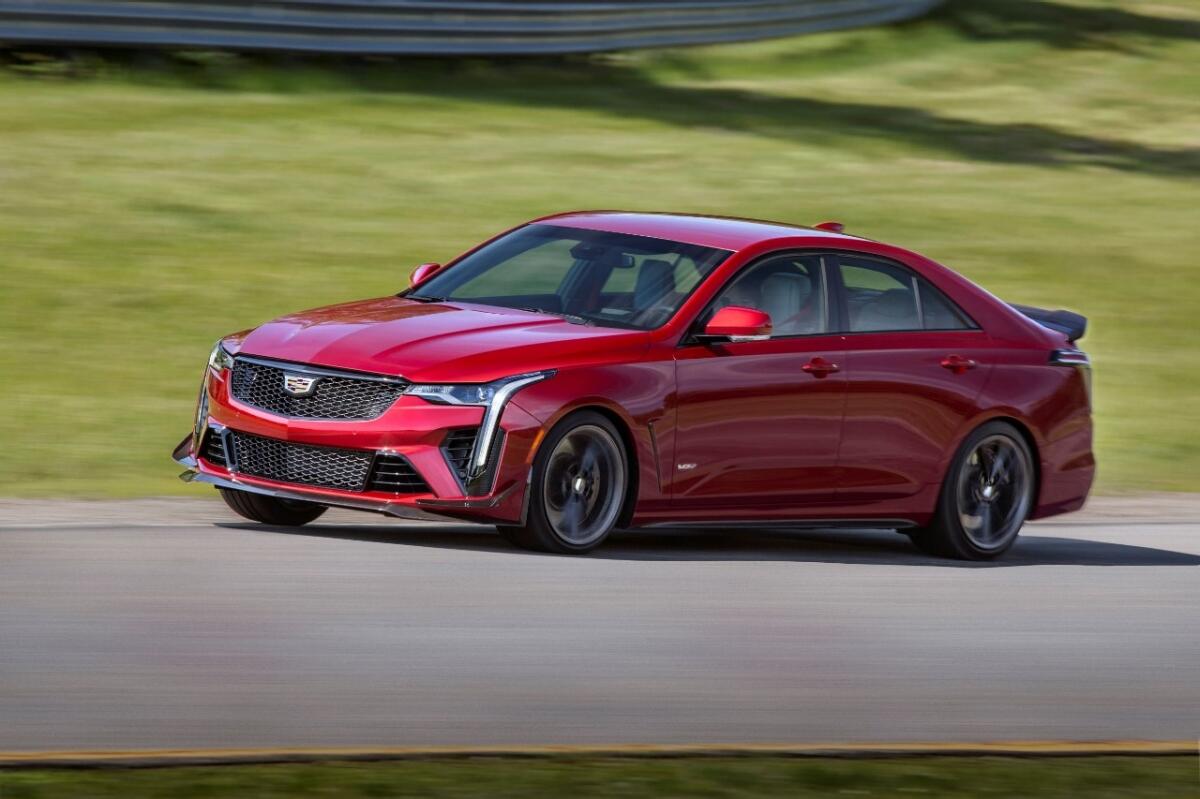
Cadillac Ct4V
"...ooks like a basic four door. It's a 2022 Cadillac CT4V Blackwing and we blacked everything out on it as ..."
The Cadillac CT4 is a luxury four-door sedan. The podcast talks about a 2022 CT4V Blackwing, which is the sportier version, and notes that it was customized with blacked-out styling. It’s brought up because it’s a compact luxury car that can also be performance-focused.
The Cadillac CT4 is a compact luxury sedan, and the podcast specifically references a 2022 CT4V Blackwing with “everything blacked out.” The mention suggests the car was customized for appearance and possibly for a particular look during the episode’s activity. It’s discussed because the CT4V Blackwing is the performance-oriented version of the CT4 line, making it a notable choice among compact luxury sedans.
deer whistles
"We even have deer whistles in the front of this thing for like a just in case. You know, some people say they work, some people say they don't, but for $20 or less, I'm going to gamble on shit. Let's try them."
Deer whistles are small add-on gadgets on the front of a car that are supposed to scare deer away. People argue about whether they really work, but the hosts say they’re cheap enough to try.
Deer whistles are aftermarket devices mounted on the front of a vehicle that are intended to deter deer by emitting high-frequency sound. Their effectiveness is debated, but the hosts treat them as a low-cost “just in case” addition for mountain driving where wildlife encounters are a risk.
ALP laser jammers
"ALP laser jammers. We got three in the front, two in the rear, and those are controversial, but [2020.2s] you got to know how to use them."
These are gadgets people put on their car to mess with police laser speed checks. The goal is to prevent the officer’s device from getting a clean speed number so you can slow down safely.
ALP laser jammers are aftermarket anti-speeding devices designed to interfere with police laser speed guns. They attempt to “jam” the laser signal so the gun can’t get a reliable speed reading, buying the driver time to slow down.
laser gun
"But if you play it smart, this damn device will tell you, you know, it makes a big [2053.6s] ass noise. It'll tell you whatever their laser gun is, whatever their LiDAR is, whatever it be,"
That “laser gun” is what police use to measure your speed from a distance. It sends a laser beam and calculates speed from how the signal comes back.
A police “laser gun” typically refers to a handheld LIDAR unit that measures vehicle speed by timing how quickly a laser beam returns from the target. Anti-jamming devices are built to disrupt that specific measurement.
LiDAR
"It'll tell you whatever their laser gun is, whatever their LiDAR is, whatever it be, [2058.8s] like a dragon or what it'll say, dragon laser, blah, blah, blah, and this and that."
LiDAR is another kind of laser measuring system. Police use it to figure out how fast you’re going by measuring how the laser bounces back.
LiDAR (Light Detection and Ranging) is a laser-based sensing method used by police to measure speed and distance. In traffic enforcement, it works by timing laser reflections, and it’s the target that laser jammers try to confuse.
dragon laser
"like a dragon or what it'll say, dragon laser, blah, blah, blah, and this and that. [2064.9s] And your goal is to get down to a speed that you're comfortable with or to speed and shut it off."
That phrase is likely the name of a specific police laser speed device. The car’s jammer/detector can recognize which one it is and warn you.
“Dragon laser” is a brand/model name reference for a specific type of police laser speed-detection system. The jammer/detector alerts the driver based on which laser system is being used.
pinpoint
"You can't just go passing by these guys with nothing, because then they're going to pinpoint [2087.1s] you and come and get you."
They’re saying the police can still accurately identify which car they measured. If the jammer doesn’t work the right way, you can still get caught.
“Pinpoint” here describes the enforcement tactic of using laser/LiDAR readings to precisely identify the target vehicle’s speed. The speaker implies that if the jammer/detector isn’t used correctly, the officer can still lock onto the car and issue the citation.
GPS
"but he got it all dialed in and he got it working with the GPS. [2223.9s] We were having to put zip codes in every hundred miles or so to get it to find a new location. [2231.1s] Now I don't have to. Now it does it automatic."
GPS (Global Positioning System) uses satellites to determine your vehicle’s location. Here, it’s used to help the setup find new locations automatically and to support the scanner/navigation workflow so the system can react based on where the car is.
Escort 360
"The other things that we run, I run an Escort 360 and a Max cam 360 in the car. [2244.4s] And I love the Escort. Everybody else says Valentine Uniden, they're all good."
Escort 360 is a device that warns you about police radar/laser. The host likes it more than the alternatives they’ve tried.
Escort 360 is a radar/laser detection system brand/model used to alert drivers to speed-enforcement threats. In the segment, the host compares it to other detector brands and says they specifically prefer the Escort 360 for their run setup.
Max cam 360
"The other things that we run, I run an Escort 360 and a Max cam 360 in the car. [2244.4s] And I love the Escort. Everybody else says Valentine Uniden, they're all good."
Max cam 360 is another alerting device that helps warn you about things like police enforcement. They’re using it together with their Escort detector.
Max cam 360 refers to a camera-based alerting device used alongside a radar detector. The host groups it with the Escort 360 as part of a multi-device setup for detecting enforcement and situational alerts during the run.
Valentine Uniden
"And I love the Escort. Everybody else says Valentine Uniden, they're all good. [2249.8s] I got a Valentine in my other car, but I just particularly like the Escort."
Valentine Uniden is another company that makes radar/laser warning devices. The host says other people like it, but they personally prefer the Escort.
Valentine Uniden is mentioned as an alternative radar-detector brand/model choice. The host contrasts it with their preference for the Escort 360, implying different alerting behavior or user experience between brands.
Waze
"We got to run Apple Maps off my phone. We were on Waze, which is going to tell you [2263.6s] invaluable for objects in the road more than anything, I think."
Waze is a navigation app that uses reports from other drivers. In this segment, the host uses it for road hazards and sometimes for alerts about police.
Waze is a community-driven navigation app that uses user reports to flag hazards and police activity. The host specifically credits it for being especially useful for “objects in the road,” and also notes it can help pinpoint police presence.
Apple Maps
"We got to run Apple Maps off my phone. We were on Waze, which is going to tell you [2263.6s] invaluable for objects in the road more than anything, I think."
Apple Maps is a navigation app on iPhones. They’re using it during the run as their route/navigation source.
Apple Maps is Apple’s built-in navigation app. The host mentions running it on their phone as part of the navigation stack for the run, alongside other alerting tools.
JBV1
"We run Highway Radar and we run JBV1. And all of these, these other two, will actually tell [2276.6s] you where police are, traffic conditions, what airplanes are in the area and who are flying them,"
JBV1 is another alerting tool/app they’re using while driving. They say it helps with situational alerts like police and aircraft info.
JBV1 is mentioned as part of a set of alerting tools used during the run. The host groups it with Highway Radar and other devices that provide police/traffic alerts and aircraft-related information.
air patrol alert
"which is crazy because my Escort used to go off all the time saying air patrol alert. Well, [2293.3s] now I know some of it's just BS when it says that because I got a thing to show me where the [2298.8s] airplanes are."
An “air patrol alert” is a warning that aircraft are nearby. The host says it used to go off a lot, but they learned some alerts were false and could verify using aircraft location info.
An “air patrol alert” is an alert message indicating aircraft activity that may be associated with enforcement or surveillance. The host says their Escort used to trigger these alerts constantly, but now they can cross-check with another device that shows where airplanes are and how far away they are.
auxiliary fuel tanks
"We got the police scanner. We got the CB radio. We do have two auxiliary fuel tanks. One is 22 gallons. The other one is 17."
Auxiliary fuel tanks are extra gas tanks added to a car. They let you drive farther between fill-ups, which matters when you’re trying to keep a long run going.
Auxiliary fuel tanks are extra fuel storage added beyond the car’s factory tank. In long-distance or high-speed runs, they reduce how often you must stop for fuel and can help you plan a route around fewer refueling interruptions.
cannonball run
"We've managed to get 16 miles a gallon on a cannonball run. And this last one that we just did was about 12 and a half."
A “cannonball run” is a long-distance, very fast driving challenge where people try to get across the country as quickly as possible. Because it’s so fast, fuel economy usually drops.
A “cannonball run” refers to an informal, high-speed cross-country driving challenge where teams try to cover a long distance in the shortest time. The segment uses it to discuss how fuel economy changes under aggressive, high-speed driving.

Porsche 911
"...etty good, though. This thing over here, this old 911 gets at best 15. At best. Yeah. Yeah. This car wi..."
The Porsche 911 is a sports car made by Porsche. It’s known for its classic look and how it drives. The podcast mentions that an older 911 can have low fuel economy, meaning it may use more gas than you’d expect.
The Porsche 911 is a long-running, rear-engine sports car famous for its distinctive design and driving feel. The podcast compares an “old 911” that gets about 15 (likely mpg) to something else, highlighting how fuel economy can vary and how older examples may be less efficient. It’s discussed because the 911’s reputation and ownership experience often come up when people talk about classic versus newer performance cars.
2022 CT4B Blackwing B6 twin turbo with a 10 speed automatic transmission
"This car will get 28 on the highway. It's a 2022 CT4B Blackwing B6 twin turbo with a 10 speed automatic transmission."
This is a 2022 Cadillac CT4 Blackwing with a twin-turbo engine and a 10-speed automatic. The automatic has lots of gears, so it can keep the engine working efficiently without you constantly shifting.
This is a 2022 Cadillac CT4 Blackwing (the speaker calls it “CT4B”) with a B6 twin-turbo setup and a 10-speed automatic transmission. The key enthusiast angle is that it’s a turbocharged performance sedan paired with a multi-gear automatic, which helps keep the engine in its power band for long-distance runs.
apples to apples
"they got pulled over once in Texas. But you know, apples to apples, I mean, like, you know, [2659.2s] everybody keeps going back and forth with the Doug and Arnie because, you know, they're the kings"
They’re saying the comparison only makes sense if the situations are basically the same. Otherwise one attempt might look better just because the conditions were easier.
“Apples to apples” is a comparison idea: you only judge attempts fairly if the conditions are similar (route, timing, support, and constraints). In long-distance driving, small differences in logistics or assistance can make results hard to compare.
run from Red Ball to Portofino
"In fact, in fact, there's the run [2724.0s] from Red Ball to Portofino. And then there's been a good couple of handfuls of people who [2731.3s] go from Red Ball to Portofino, instantly turn around and go back to Red Ball."
They’re talking about a specific “fast trip” route between two named places, and then turning around to do it again. It’s basically a repeat run with extra planning.
This refers to a named route/run pattern within the cannonball community, where people attempt a fast point-to-point trip between two named locations. The host also describes doing an immediate turnaround and repeating the run, which adds complexity and logistics.
Prudhoe Bay to Key West
"Okay. So is Prudhoe Bay to Key West or Key West to Prudhoe Bay on that spreadsheet? [2754.8s] It is not. But what a trip that would be."
That’s a super long driving route idea—from Alaska down to Florida. People talk about it like another possible “record attempt” route.
“Prudhoe Bay to Key West” describes a specific extreme end-to-end route across the U.S., from Alaska’s North Slope area down to Florida. It’s mentioned as a hypothetical entry on the same kind of route-tracking “spreadsheet” used for cannonball-style attempts.
Key West to Prudhoe Bay
"Okay. So is Prudhoe Bay to Key West or Key West to Prudhoe Bay on that spreadsheet? [2754.8s] It is not. But what a trip that would be."
This is the same Alaska-to-Florida trip idea, but driven in the opposite direction. Going one way versus the other can change conditions and timing.
“Key West to Prudhoe Bay” is the reverse direction of the same Alaska-to-Florida route. Direction matters in long-distance attempts because weather, daylight, and traffic patterns can change the difficulty.
throw the bullshit flag
"they're going to throw times out there at you. Oh yeah, man, my car runs eights or my car runs [2793.4s] elevens or, and I throw the bullshit flag on it every time until they actually go do it."
It means they don’t believe someone’s brag unless they can prove it. Here, they’re skeptical of claimed drag-race times.
This is a slang phrase for calling out exaggerated claims. In the context of the episode, it’s used to challenge people who boast about their car’s drag-racing performance without backing it up by actually running the numbers.
runs eights
"they're going to throw times out there at you. Oh yeah, man, my car runs eights or my car runs [2793.4s] elevens or, and I throw the bullshit flag on it every time until they actually go do it."
In drag racing, “runs eights” usually means the car can do the quarter-mile in about 8 seconds. It’s a brag about how fast it is on the strip.
“Runs eights” is drag-racing slang meaning the car’s elapsed time (ET) is in the 8-second range for a typical quarter-mile pass. It’s shorthand for a specific performance benchmark rather than a general statement about speed.
runs elevens
"Oh yeah, man, my car runs eights or my car runs [2793.4s] elevens or, and I throw the bullshit flag on it every time until they actually go do it."
“Runs elevens” means the car is doing the quarter-mile in roughly 11 seconds. It’s a quick way racers talk about how fast the car is.
“Runs elevens” is drag-racing slang for an elapsed time (ET) in the 11-second range, typically for a quarter-mile run. Like “runs eights,” it’s a performance shorthand used in car talk and at the track.
fast lane
"Oh yeah. And then they get in the fast lane and they're like, well, he says seventies, I'm going to do 70."
“Fast lane” refers to the lane on a multi-lane road intended for higher-speed travel, typically the left lane in countries like the U.S. The host uses it to describe aggressive driving behavior—staying in the faster lane while trying to maintain a high speed. That matters because it affects traffic flow and increases the likelihood of creating a line of slower cars behind you.
Alaska
"Yeah, you'd have to drive up Northwest through United States through the Northwest territory all the way to Alaska."
Alaska is the farthest endpoint they’re talking about. Getting there by road usually means traveling a huge distance and often crossing borders. That’s why they’re focusing on route planning and consequences.
Alaska is the endpoint in the route being discussed, and reaching it by road typically requires a long drive through Canada or a long detour through the U.S. and Canadian provinces. The host frames it as a “farthest drive” kind of challenge, emphasizing how distance and border-crossing logistics raise the stakes. For road-trip planning, Alaska is a classic example of where route feasibility dominates.
Vanishing Point event
"We do the new one that's coming up within the next year or so near future is a old movie called Vanishing Point. Kowalski taking his white challenger from Denver to deliver it to a guy who'd never got it in San Francisco."
They’re planning a real driving event based on a movie called “Vanishing Point.” The goal is to recreate the movie’s kind of long-distance drive with cars.
The hosts are talking about an upcoming event inspired by the movie “Vanishing Point.” The key idea is recreating the film’s road-trip premise as a real-world car run.

Dodge Challenger
"Kowalski taking his white challenger from Denver to deliver it to a guy who'd never got it in San Francisco."
The Dodge Challenger is a famous American muscle car. Here it’s mentioned because a movie uses a Challenger as the main car for a long, fast road trip.
The Dodge Challenger is a classic American muscle car known for its big V8 sound and long-hood, rear-wheel-drive layout. In this segment, it’s specifically referenced as the car driven in the movie “Vanishing Point,” where the protagonist takes it on a cross-country delivery run.
midlife crisis
"all these movies that I thought were so cool when I was a kid now, I'm getting to kind of relive them a little bit, man, but you know, midlife crisis. I would love to say it's a midlife crisis, but it's not."
“Midlife crisis” is a phrase people use when someone feels like they need a big change or wants to do something exciting. The speaker says it’s not really that—more like they’ve always wanted to go fast.
“Midlife crisis” is a common phrase for a period where someone feels compelled to change their life or chase thrills. In this segment, the speaker jokes about it but then clarifies it’s more about an earlier “retire crisis” and a long-standing desire to go fast.
truck run
"I've always wanted to, I try to do this when these guys did a truck run one time, but I would love to meet like just say Doug and Arnie at the Red Ball garage."
A “truck run” is basically a group drive where people coordinate routes and try to get to the destination first. It’s like a planned meetup, but with a competitive vibe.
A “truck run” here refers to a group driving event where participants coordinate routes and timing to meet up or race to a destination. It’s part of the same culture of movie-inspired car events the hosts are describing.
Red Ball garage
"but I would love to meet like just say Doug and Arnie at the Red Ball garage. We flip a coin through who gets the north route and who gets the south route."
They mention “Red Ball garage” as a place where the group would meet before heading out. It’s like the starting point for their drive.
“Red Ball garage” is mentioned as a specific meeting location for the group’s planned routes. In these kinds of events, a garage or staging area is where cars gather before departing.
Request an Explanation
Heard something you'd like explained? We'll add it to this episode.
Sign in to request explanations for terms you heard.
Want to learn more?
Browse our glossary for plain-English explanations of automotive terms, jargon, and concepts.
Help improve this episode
See something that's not quite right? Our annotations are AI-generated and can sometimes miss the mark. Click the flag icon on any annotation to suggest a correction.