
Benzes, Boats, Trucks, and Jake Has Something to Tell You...
About this episode
Hosts bounce from big-picture vehicle talk to hands-on projects: they push for a diesel truck and manual transmission, then shift to garage organizing and a dock-removal saga with real-world pricing. The conversation turns into car and boat troubleshooting—freeze plugs, vacuum-operated headlights, and carb/ignition diagnosis—plus a sponsor stretch featuring FCP Euro and a high-performance all-season tire. Between it all, they check in on listener projects, joke about selling cars, and debate Tesla as an “appliance” versus an enthusiast signal.
Kris and Jake catch up on projects, boats, and bad decisions. Then Jake says something we did not see coming.
Support this show:
https://www.patreon.com/overcrest
dump truck
"He brings a dump truck down. He then takes his little grapple arnhem and his excavator and gets to play all afternoon and just like destruct it."
A dump truck is a heavy vehicle with a bed that can tilt to unload material like dirt, gravel, or demolition debris. In this segment it’s mentioned as part of the job being done, contrasting with time spent on car projects.
excavator
"He then takes his little grapple arnhem and his excavator and gets to play all afternoon and just like destruct it."
An excavator is a big construction machine that can dig and grab things with its arm. In this story, it’s being used to demolish or move debris.
An excavator is a construction machine with a boom and arm used for digging, lifting, and demolition. The host pairs it with a grapple tool to describe how the person is tearing things down rather than working on vehicles.
grapple
"He then takes his little grapple arnhem and his excavator and gets to play all afternoon and just like destruct it."
A grapple is an attachment on a machine that can clamp onto and lift things. It’s like heavy-duty grabbing claws used for demolition or moving debris.
A grapple is a heavy-duty attachment (often with claw-like jaws) used to grab, hold, and move bulky materials such as logs, scrap, or demolition debris. Here it’s mentioned as the tool mounted to the excavator for the demolition work.
Weber carburetors
"You've got extra time, but why is that extra time not spent on your truck putting Weber carburetors on it?"
Weber carburetors are a type of fuel system that mixes air and gas for the engine. People swap them in when they want the car to run better or be easier to tune.
Weber carburetors are aftermarket-style carburetion systems made by Weber that mix air and fuel mechanically. Enthusiasts often choose them for older cars because they can improve throttle response and are popular for tuning, especially on performance builds.

yellow 924
"You've got extra time, but why is that extra time not spent on your truck putting Weber carburetors on it? Or why is it extra time not spent on the yellow 924 you have getting that running?"
A Porsche 924 is a classic Porsche sports car. The speaker is talking about a yellow one that’s not running yet and needs work, like a hobby project.
The Porsche 924 is an early-1970s German sports car known for its front-engine, rear-transaxle layout and for being a relatively affordable way into Porsche ownership. In this segment, the host mentions a “yellow 924” as a project car that needs getting running, which is why it matters to enthusiasts.
garage next to your house that's falling over
"Why is that extra time not fixing the garage next to your house that's falling over? Why are you pulling a dock out?"
They’re talking about a garage that’s getting worse and needs fixing. The point is that it’s easy to spend time on car projects, but you still have to handle important problems around the house.
This is about deferred, non-car maintenance—letting a structural problem (a garage that’s “falling over”) persist instead of paying to fix it. The host uses it to argue that some “real-world” priorities should beat car projects when time and money are limited.

G-Class Gwagon
"OK, I get it. I would rather get her a G-Wagon, I think. Yeah, but rather get her a G-Wagon than a McCann."
The G-Class is a large SUV made for off-road driving, with a very boxy, tough-looking design. The podcast mentions it as a preferred option, likely because it’s built to handle rough conditions. It’s discussed because it stands out and is known for off-road capability.
The G-Class is a rugged, boxy off-road SUV known for its durable design and ability to handle rough terrain. In the podcast, it’s mentioned as a preference over other choices, suggesting it’s valued for its character and capability. It comes up because it’s a distinctive, high-profile SUV that many people associate with serious off-road ability.

Volkswagen Golf
"...her a G-Wagon than a McCann. This is just a giant golf better. Yeah, it's a hot hatch."
The Volkswagen Golf is a small car with a hatchback body, made for everyday driving. A “hot hatch” version is a more powerful, sportier version of the same basic car. People talk about it because it’s practical but can still be fun to drive.
The Volkswagen Golf is a compact hatchback known for being practical and easy to live with, and it’s also offered in performance “hot hatch” versions. In the podcast, it’s referenced as a “hot hatch,” meaning a sportier, more powerful take on the standard Golf. It comes up because it’s a common benchmark for everyday driving that can still feel fun.
freeze plugs
"OK, I think I told you last week or whenever we talked before that I got super lucky, like the freeze plugs, which are misnomers, the casting copper plug holes, both of them burst out over the winter"
Freeze plugs are small plugs in an engine that sit in coolant passages. If the coolant freezes and expands, these plugs can pop out to relieve pressure and help prevent the engine block from cracking.
Freeze plugs are removable plugs installed in engine block water jackets to prevent damage from coolant freezing. They can pop out when the block gets too cold, which is why they’re often discussed alongside winterization.
misnomers
"that I got super lucky, like the freeze plugs, which are misnomers, the casting copper plug holes"
A misnomer is a name that’s technically inaccurate. In this context, the host is saying “freeze plugs” is a misleading label because the plugs’ behavior is more about coolant passage sealing and pressure relief than literal freezing of the plug itself.
casting copper plug holes
"like the freeze plugs, which are misnomers, the casting copper plug holes, both of them burst out over the winter"
These are openings in the engine block casting that get sealed with special plugs. If the plugs don’t hold—especially in winter—coolant can escape and cause damage.
“Casting copper plug holes” refers to the factory openings in an engine block casting that are sealed with plugs (often copper or copper-colored sealing plugs). If those plugs fail, coolant can leak or the block can be damaged during cold weather.
winterized
"which apparently I winterized it incorrectly or not sufficiently. And so everything I read was like 90 percent."
Winterizing means getting the engine ready for cold weather so it doesn’t freeze up. For many engines, that means protecting or draining the coolant so it can’t expand and crack something.
Winterizing is the process of preparing an engine or cooling system for cold weather to prevent freezing and corrosion. For boats and other engines, it often involves draining or protecting coolant so passages don’t freeze and crack components.
454
"If you had both of those pop out, one, there's 123 there's eight these plugs on a 454, right?"
“454” is shorthand for a big V8 engine displacement (454 cubic inches). The speaker is using it to talk about how many freeze plugs that engine has and what it means if they pop out.
“454” refers to the Chevrolet 454 cubic-inch V8 engine family (often called the big-block 454). The host is using it as a reference point for how many freeze plugs are on that engine and where they’re located.
bell housing
"And so two of them are actually on the back bell housing, like behind the flywheel."
The bell housing is the cover area between the engine and the transmission/drive system. It helps protect and align the parts that connect the engine to what it’s driving.
The bell housing is the housing at the back of an engine that covers and aligns the connection between the engine and transmission/drive. It’s often where access to certain components or plugs is discussed because it sits around the clutch/flywheel area.
flywheel
"And so two of them are actually on the back bell housing, like behind the flywheel."
A flywheel is a heavy spinning part that helps the engine run smoothly. It also sits near where the drivetrain connects, so it’s relevant to where certain engine plugs are located.
The flywheel is a heavy rotating component that smooths out engine power delivery and helps maintain rotational momentum. In an engine, it also provides a mounting surface for the transmission/drive connection, which is why the host mentions plugs “behind the flywheel.”
block is cracked
"And if those pop and your other ones popped, like your block is cracked. Like, yeah, it's just only 10 percent of the time you get that lucky."
If the engine block is cracked, the main metal body of the engine has a split in it. That’s a big problem because it can leak coolant and usually can’t be fixed easily.
When the engine block is cracked, the cast metal structure has split, usually due to freezing coolant expansion or severe overheating. A cracked block typically means major repair or replacement because it can’t reliably hold coolant pressure.
pressure tested
"So you ran water through it and like kind of pressure tested and tried to figure it out."
Pressure testing is a leak-check. They put fluid in the system and pressurize it to see if anything seeps out or fails.
“Pressure tested” means filling a system with fluid (often water) and applying pressure to check for leaks or weak spots. In a car/boat context, it’s a way to confirm the integrity of a component before trusting it under load.
FCP Euro
"FCP Euro is an online retailer of OE, OEM, genuine aftermarket and performance parts for European cars."
FCP Euro is a website that sells car parts, especially for European brands. The point here is that they bundle parts into kits so you can buy everything you need at once.
FCP Euro is an online retailer focused on parts for European cars, selling OE/OEM, genuine aftermarket, and performance components. The host mentions their catalog size and kit offerings as part of a shopping/maintenance convenience pitch.
OE, OEM
"FCP Euro is an online retailer of OE, OEM, genuine aftermarket and performance parts for European cars."
OE/OEM parts are made to match the original parts the car came with. They’re meant to fit correctly and work the same way as the factory component.
OE (Original Equipment) and OEM (Original Equipment Manufacturer) refer to parts made to match the manufacturer’s specifications. In practice, this usually means the part is designed to fit and function like the one that came on the car from the factory.
lifetime replacement guarantee
"Plus, every product they sell is backed by a lifetime replacement guarantee,"
They’re saying that if a part fails, they’ll replace it for the long term under their guarantee. It’s meant to reduce the risk of buying parts.
A “lifetime replacement guarantee” is a warranty-style promise that the seller will replace a product for the lifetime of the coverage terms (often tied to the original purchaser and/or the part’s expected life). The host is using it as a selling point for parts confidence and long-term ownership costs.
wiper blades
"even wear items like wiper blades, brake pads and oil filters."
Wiper blades are the rubber parts that wipe your windshield clean. If they’re old, they don’t clear water well, so you can see worse in the rain.
Wiper blades are the rubber elements on your windshield wipers that physically scrape water and debris off the glass. Worn blades can smear water and reduce visibility, especially in rain.
brake pads
"even wear items like wiper blades, brake pads and oil filters."
Brake pads are the parts that squeeze against the brake rotors to slow the car. When they wear out, braking can feel weaker and may make noise.
Brake pads are friction material that clamp against a brake rotor to slow the car down. As they wear, stopping performance can fade and you may hear squealing or get longer stopping distances.
oil filters
"even wear items like wiper blades, brake pads and oil filters."
An oil filter cleans the engine oil as it moves through the engine. If it’s not changed, the oil can get dirtier and the engine can wear faster.
Oil filters remove contaminants from engine oil as it circulates. A clogged or overdue oil filter can reduce oil flow and increase engine wear.
Mesa, Arizona
"With the opening of their distribution center in Mesa, Arizona, FCP Euro is now shipping parts from both coasts, serving most of the country in three days or less with the free shipping option."
Mesa, Arizona is where the company’s warehouse is located. A warehouse in the right place can help get parts to customers faster.
Mesa, Arizona is the location of the distribution center mentioned for FCP Euro. Distribution centers like this help determine how quickly parts can be shipped across the country.
key and tires
"The real people who are passionate about what they know, key and tires has officially launched their newest tire"
“No Key and Tires” is the tire company behind the new tire they’re talking about. They’re saying it includes extra protection if you damage a tire.
“No Key and Tires” is presented as the tire brand/company launching a new model called the Surpass AS01. In this segment, they’re emphasizing a tire program that includes protection for common damage like potholes.
surpass AS01
"It's called the surpass AS01 and what sets it apart is it's a high performance all season tire."
The Surpass AS01 is a tire meant for all seasons, but with better grip than a basic all-season. The idea is to drive confidently even when the weather gets messy.
The Surpass AS01 is described as a high performance all season tire. That means it’s designed to balance everyday all-weather usability with more grip and responsiveness than a typical economy all-season tire.
high performance all season tire
"It's called the surpass AS01 and what sets it apart is it's a high performance all season tire."
This kind of tire is made to work in different seasons, not just summer. It’s supposed to feel grippier and more responsive, while still being usable when roads are wet or a bit icy.
A high performance all season tire is built to provide stronger grip and handling feel in a wider range of temperatures than a summer-only tire. It’s still designed to handle light snow and wet roads, but it won’t match a dedicated summer tire’s maximum dry grip.
grip
"It offers the grip of a dedicated performance tire, but won't leave you stranded if the road or weather gets rough."
Grip is how well a tire can generate traction between the rubber and the road surface. More grip usually means better acceleration, braking, and cornering—especially on wet or slippery pavement.
55,000 mile warranty
"Not only does it come with a 55,000 mile warranty, it also offers no key and tires, pothole protection."
A 55,000-mile warranty means the company promises coverage for the tire up to that mileage. If the tire wears out sooner than expected, you may be able to get help or a replacement.
A 55,000-mile warranty is a coverage promise tied to mileage, typically related to tread wear or tire replacement terms. It’s meant to reduce the risk of buying a tire that wears out too quickly.
pothole protection
"it also offers no key and tires, pothole protection. If he happened to damage your tire beyond repair, no key and will replace it for free."
Pothole protection is coverage for tire damage caused by hitting potholes. If you damage a tire, the program is meant to help you replace it without paying the full cost.
Pothole protection is a tire coverage feature/program that helps pay for or replace tires damaged by impacts from road hazards like potholes. It’s designed to reduce the cost and hassle of sudden tire damage.
two motors
"I think that boat needs two motors. That boat really needs two motors. Well, it's a tight fit, but it did."
“Two motors” means the boat has two engines instead of one. That can help with power and backup, but it also means more stuff to maintain and more chances for problems.
“Two motors” implies a twin-engine setup, typically meaning two separate outboards or inboard engines. Twin setups can improve acceleration and redundancy, but they also add complexity (more parts, more maintenance, and more potential failure points).
swim back
"It's a 29 plus a three foot swim back. OK, so it's 29 feet. What's the beam?"
“Swim back” sounds like a measurement for how far something sits toward the back of the boat. They’re checking fitment so the setup works without interference.
“Swim back” here appears to refer to a measurement related to the boat’s length/fitment—likely the distance from a reference point to where the engine/gear sits. In practice, it’s the kind of dimensional check you do to see whether the engines will physically fit and how far back they’ll be mounted.
beam
"OK, so it's 29 feet. What's the beam? Um, with like that's not a member."
On a boat, the beam is how wide it is. A wider boat usually feels steadier on the water.
In boating, the beam is the width of the vessel at its widest point. It matters because a wider beam generally improves stability and affects how the boat sits in the water.
cracked block
"but I'm just saying I don't want double the headache because now I now my chances for having a cracked block would have doubled."
A cracked block means the main part of the engine that holds the cylinders is damaged. That can lead to leaks and the engine overheating, and it can be very expensive to fix.
A cracked block usually means damage to the engine’s cylinder block, which is the main metal casting that houses the cylinders and coolant passages. If the block cracks, it can cause coolant leaks, overheating, and major engine failure.
inboard
"Now, is this the inboard, right? [1007.6s] It is outboard."
Inboard means the engine is inside the boat, not hanging off the back. That usually changes both the look and how you get to the engine for maintenance.
Inboard refers to an engine mounted inside the boat’s hull, typically driving a propeller via a shaft. Compared to outboard setups, inboard packaging can look cleaner but is more involved to service and access.
outboard engines
"Now, is this the inboard, right? [1007.6s] It is outboard. [1008.9s] I do not like outboard engines. [1010.5s] I don't know."
An outboard engine is the motor bolted to the back of a boat. It sticks out from the boat, unlike an inboard motor that sits inside the hull.
An outboard engine is a propulsion unit mounted on the outside of the boat’s transom (the rear). It’s different from an inboard engine, which sits inside the hull, and it changes how the boat is packaged and how the engine looks.
inline six
"[1042.3s] No, this is great. [1043.5s] All of a sudden you do. [1044.7s] Yes, you do get your clients. [1046.1s] It's the inline six."
“Inline six” means the engine has six cylinders lined up in a row. It usually runs smoothly because the power strokes happen in a steady rhythm.
An inline six is an engine layout where six cylinders are arranged in a single straight line. It’s known for smoothness because the firing order is evenly spaced compared with many other layouts.
four cylinder
"[1047.9s] No, no, it's a four cylinder even worse. [1050.7s] That's the complaint. [1052.5s] You can't in a 16, they didn't do the V8."
A “four cylinder” engine has four cylinders. Compared with a six-cylinder, it often feels different—sometimes less smooth—because there are fewer power strokes per cycle.
A four-cylinder engine has four cylinders arranged in one or more banks, depending on the design. In this context, the speaker is contrasting it against an inline six, implying fewer cylinders and typically a different character (often less smoothness).
V8
"[1052.5s] You can't in a 16, they didn't do the V8. [1055.5s] So I know if I got a 19 or the 21 is that it has been for sale probably for"
A “V8” means the engine has eight cylinders arranged in two groups that form a V shape. People often like them because they tend to feel punchier and sound great.
A V8 is an engine with eight cylinders arranged in a “V” shape (two banks of four). It’s commonly associated with stronger low-end torque and a distinct sound compared with smaller cylinder counts.
SC
"It was an SC. I forget what year 78."
“SC” is Porsche shorthand for a specific 911 model from the late 1970s/early 1980s. Here, it means the engine Chris used came from that SC version.
In Porsche 911 talk, “SC” refers to the 911 SC model (1978–1983), which is known for its 3.0-liter flat-six and classic air-cooled character. The speaker says the rebuild used an SC engine as the basis for the motor that was built and installed.
twin plug
"So it's a short two short stroke three to it has the twin plug."
“Twin plug” means there are two spark plugs per cylinder instead of one. That can help the engine burn fuel more consistently, especially when you’re pushing it.
“Twin plug” means each cylinder has two spark plugs, which can improve ignition quality and help the engine run better—especially at higher RPM or with certain ignition timing setups. The speaker notes the rebuilt motor has the twin-plug configuration.
compression
"Ten and a half compression. I know you don't have twin plug."
Compression is how tightly the engine squeezes the fuel-air mixture before it’s ignited. More compression can make more power, but it usually requires the right fuel and careful tuning to avoid knocking.
Compression (here, “ten and a half compression”) is the engine’s compression ratio, which describes how much the air-fuel mixture is squeezed before ignition. Higher compression can improve efficiency and power, but it also increases sensitivity to fuel quality and ignition timing.
PMOs
"46 mil PMOs and he's got it all together and he got it running."
“PMOs” is a name people use for a certain type of Porsche intake/throttle setup. The “46 mil” part is the size, and it matters because it changes how much air the engine can breathe and how it needs to be tuned.
“PMOs” refers to Porsche’s fuel-injection throttle bodies/carburetor-style intake components used on some 911 setups (often discussed as part of the induction system). The speaker says the engine has “46 mil PMOs,” indicating a specific throttle/induction size that affects airflow and tuning.
tune
"it'd be cool if you came up and helped him tune this thing because he's pulling his hair out"
To “tune” an engine means adjusting it so it runs right—like getting the fuel and spark timing to match the new parts. If it’s not tuned correctly, the car can run poorly and be frustrating to sort out.
“Tune” here means calibrating the engine’s ignition and fuel delivery (and often throttle/idle behavior) so it runs correctly with the specific hardware changes. The speaker mentions Chris is “pulling his hair out,” implying the setup needs careful tuning to match the rebuilt motor.
ignition timing
"and the way that the signal with the carburetor actually changes based on your ignition timing. So you can you will what? Like if you if you advance your timing and then set the idle the same, your actual fuel mixture reading on a gauge will be different."
Ignition timing is when the spark happens inside the engine. If you change it, the engine burns fuel differently, so the car can idle well but behave weirdly when you rev it.
Ignition timing is when the spark plug fires relative to the engine’s position in the cycle. Advancing or retarding that timing changes how the engine burns fuel, which can affect idle quality and how the air-fuel mixture behaves during throttle changes.
idle
"Like if you if you advance your timing and then set the idle the same, your actual fuel mixture reading on a gauge will be different... The idle was perfect. And then you try to rev it and it was like the progression was way off."
Idle is the engine’s low-speed running when you’re not pressing the gas. You can tune it to sound smooth at idle, but still have problems when you start to rev.
Idle refers to how the engine runs when the throttle is closed and the car is essentially stationary. Carburetor tuning often targets a stable idle first, but the segment highlights that you can get idle “perfect” while other circuits (like progression) are still off.
progression circuits
"The idle was perfect. And then you try to rev it and it was like the progression was way off. I was like, the progression circuits are off."
Progression circuits are part of a carburetor that help the engine as you go from idle to pressing the gas a little. If they’re misadjusted, the car can idle great but feel wrong when you try to rev.
Progression circuits are carburetor passages that provide extra fuel as you move from idle to light throttle. If the progression is wrong, the engine can feel fine at idle but stumble or act erratically when you rev, because the transition fuel delivery is off.
wide band
"It has the updated hatchets. I'm like got my wide band on there. I'm testing it. It was all over the place."
A wideband sensor tells you whether the engine is running too rich (too much fuel) or too lean (not enough fuel). Tuning with it helps you dial in the carburetor instead of guessing.
A wideband oxygen sensor (often called a “wideband”) measures the air-fuel ratio more accurately than older narrowband sensors. It’s commonly used during carburetor tuning to verify whether the mixture is rich or lean across different operating conditions.
distributor
"And I go to the hold down for the distributor and it's tight as can be."
A distributor is an older engine part that sends electricity to the spark plugs in the right order. If it’s not mounted correctly, the timing can be off and the engine may run rough or miss.
A distributor is an ignition component used on many older engines to route high-voltage current from the ignition coil to the correct spark plug. It also helps control ignition timing, so if the distributor or its mounting is loose, the engine can misfire or lose timing.
adjust timing
"which is great because then you can like adjust timing on your phone even and play with the curves and everything else"
Timing is when the spark plug fires compared to where the engine is in its cycle. Changing it can make the engine run smoother and start better.
Ignition timing is when the spark happens relative to the engine’s position in the cycle. Adjusting timing changes how efficiently the engine burns fuel and can prevent issues like misfires or rough starting.
lost timing
"So it literally lost timing and we're fighting it the whole time."
“Lost timing” means the spark is happening at the wrong time. When that happens, the engine can misfire and feel like it’s not running right, especially when you first start it.
“Lost timing” means the ignition spark is no longer happening at the intended moment, often because the distributor shaft slips or the mounting hardware isn’t secure. That can cause misfires, poor throttle response, and difficulty starting.
all cylinders
"it really sounds like it's not running all cylinders when it's starting up."
An engine has multiple cylinders, and each one should fire. If it sounds like it’s not running all of them, some cylinders aren’t getting the spark or fuel they need.
Running “all cylinders” means each engine cylinder is firing and contributing power. If it sounds like it’s not running all cylinders during startup, that points to ignition or fuel delivery problems affecting one or more cylinders.
hit the gas
"But then it started to like fall in its face as soon as you would hit the gas."
Here, “hit the gas” means you press the pedal quickly. When that happens, the engine needs extra fuel fast—if it doesn’t get it, it can stumble or hesitate.
In this context, “hit the gas” describes a rapid throttle input—pressing the accelerator quickly. That sudden demand for airflow often exposes fueling delays (like a missing accelerator pump shot), which can make the engine “fall in its face” or hesitate.
accelerator linkages
"It's like a. OK, well, let me look at something with your accelerator linkages and even I'm going to actually play the video now"
Accelerator linkages are the rods/cables that connect your gas pedal to the engine’s throttle and fuel controls. If they’re loose or disconnected, pressing the pedal won’t properly trigger the fuel system.
Accelerator linkages are the mechanical connections that transfer motion from the gas pedal to the throttle (and, on carbureted setups, to the accelerator pump mechanism). If they’re disconnected or misadjusted, the throttle may open but the pump won’t trigger, causing hard starts, hesitation, or uneven fueling.
accelerator pump
"Oh, yeah, that's not connected. That should probably be connected to us so that you actually have an accelerator pump. You know, you need some additional fuel when accelerating."
An accelerator pump is a small fuel “booster” that adds extra gas right when you press the pedal. It’s there to stop the engine from bogging or hesitating during quick acceleration.
An accelerator pump is a fuel-delivery feature (most common on carburetors) that squirts extra fuel when you press the gas pedal. That extra shot helps prevent a hesitation or stumble right when you accelerate, because airflow increases faster than the engine can draw in fuel through the normal circuits.
advanced curve
"That's like your advanced curve is to like go. So once the idol comes up, you want the idol to stay a certain amount and then it starts to come up and it starts to run away."
The “advanced curve” is basically how the ignition timing is supposed to change as the engine revs higher. If it changes too aggressively, the engine may not run correctly at those speeds.
The “advanced curve” is the planned relationship between engine RPM and ignition timing advance in a distributor. The goal is to keep timing at an appropriate level for drivability and power; if the curve comes up too fast or “runs away,” timing can be wrong under certain RPM ranges.
centrifugal
"Yeah, as it starts to centrifugal. Got it. It's like, I got you. That's not good."
In this context, “centrifugal” means the distributor changes timing because spinning parts get flung outward as RPM goes up. That’s usually helpful, but if it advances too much, the engine can run poorly.
“Centrifugal” here refers to centrifugal advance in a mechanical distributor: as RPM rises, weights move outward due to centrifugal force. That movement advances ignition timing, which can help performance—but if it “runs away,” timing can become incorrect.
oil pan
"No, this is a dipstick too. [1867.1s] Oh, this is your new oil pan for the M3 Benz."
The oil pan is the part at the bottom of the engine that holds the engine oil. If you change it, you have to make sure it still fits and clears everything underneath the car.
An oil pan is the reservoir at the bottom of the engine that holds engine oil and helps route it to the oil pump. Changing an oil pan can be a fitment and clearance issue, especially when the car has custom underbody parts, since the pan’s position affects how close it sits to the subframe and other components.
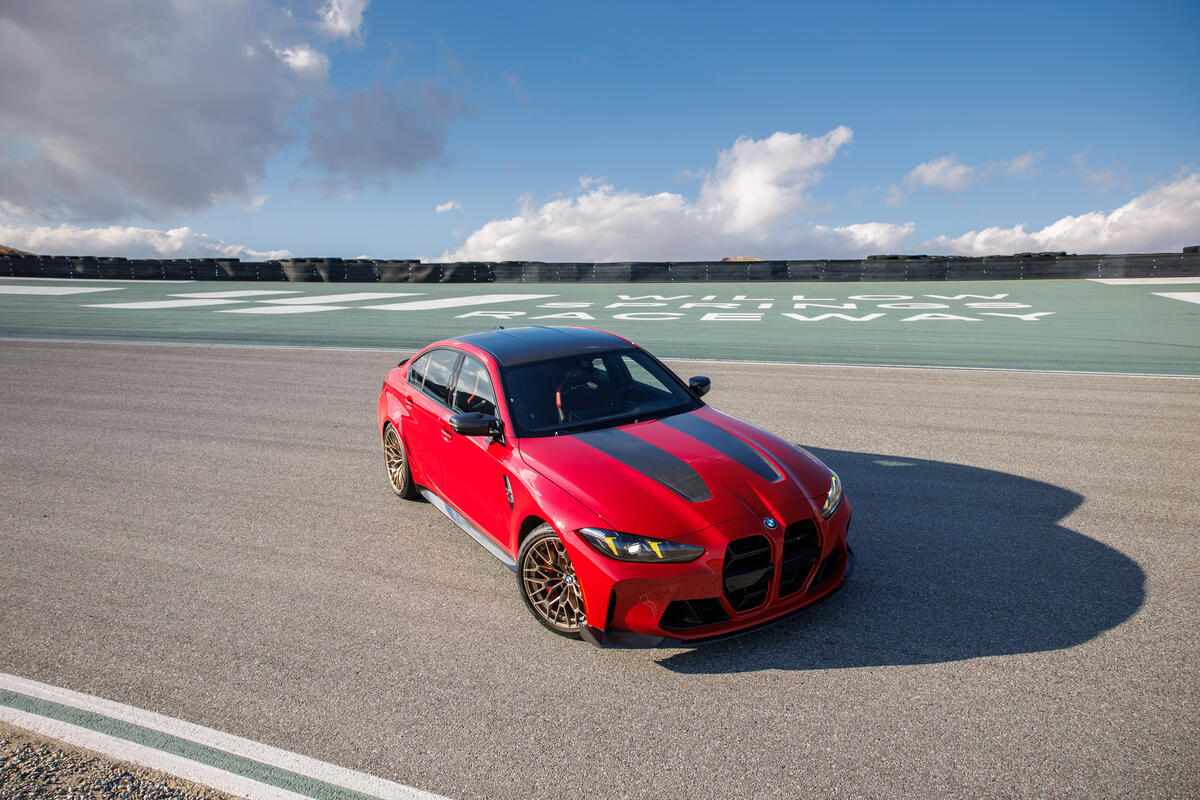
BMW M3
"Oh, this is your new oil pan for the M3 Benz. [1874.1s] And here it is."
They’re talking about a BMW M3. They’re also talking about the oil pan underneath it, which is important because it has to fit correctly with the rest of the car underneath.
The phrase “M3 Benz” is referring to a BMW M3, which is BMW’s performance version of the 3 Series. In this segment, they’re talking about an oil pan replacement/upgrade for that BMW M3, which matters because the oil pan shape and clearance affect fitment with the car’s underbody components.
3D scanned
"I 3D scanned in my oil pan as it is with my subframe and everything like that. [1891.1s] And then he overlaid my 3D scan and made me a pan that raises up my entire situation by about"
A “3D scan” captures the shape of a physical part (like an oil pan) as a digital model. In this segment, they scanned the oil pan “as it is” with the subframe, then used that digital model to design a replacement pan with different geometry.
subframe
"I 3D scanned in my oil pan as it is with my subframe and everything like that. [1891.1s] And then he overlaid my 3D scan and made me a pan that raises up my entire situation by about"
A subframe is like a strong metal support structure under the car. It helps hold parts in place, so the oil pan has to be designed to fit around it.
A subframe is a structural mounting frame that supports major components and is bolted to the car’s body. Here, they mention scanning the oil pan together with the subframe, because the oil pan’s clearance and mounting depend on where the subframe sits.
baffles
"It's got little got baffles and everything. [1915.0s] Yep, got the baffles. [1916.2s] Nice."
Baffles are small walls inside the oil pan that help keep oil from moving around too much. That helps the engine keep getting oil even when the car is turning or braking hard. The host is confirming the setup includes those baffles.
Baffles are internal plates or barriers (often in the oil pan) that help control oil movement. They reduce oil sloshing so the pickup tube stays submerged, improving oil delivery during cornering, braking, or acceleration. The host mentions “little got baffles,” then confirms “got the baffles,” tying it to the oiling setup.
lifters tick
"Yep, got the baffles. [1917.0s] I also have to do do lifters because the lifters tick. [1921.1s] They're super sticky."
Lifters are parts that help the engine open and close the valves. If they “tick,” it often means they aren’t moving smoothly or aren’t getting the right oil pressure, so you hear a tapping sound. The host is saying his lifters are sticking and causing that noise.
“Lifters” are the camshaft followers that translate camshaft motion into valve movement. When lifters “tick,” it usually means they’re not pumping up oil pressure correctly or they’re sticking, so the valve train makes a tapping noise. In this segment, the host ties the ticking to “super sticky” lifters.
pickup tube
"And here's the pickup tube. [1933.7s] Wow, that is extremely solid. [1936.8s] Super nice, dude."
The pickup tube is the part that pulls oil up from the bottom of the engine so the pump can circulate it. A sturdier, better-made pickup tube can help keep oil flowing consistently, especially when the car is accelerating, braking, or cornering hard. The host is impressed by how solid and overbuilt it is.
The oil pickup tube is the part inside the oil pan that draws oil from the sump and feeds it to the oil pump. If it’s “extremely solid” and “billet overengineered,” that implies a high-quality, rigid aftermarket piece intended to maintain oil supply under hard driving. This matters because oil starvation can quickly damage an engine.
cross member
"Although I'm not super excited on the prospect of potentially having to remove my engine. [1966.9s] I don't know if I can. [1968.3s] I was wondering, well, does your cross member that you put together?"
A cross member is a strong bar that ties the two sides of the car together. Here, the host is thinking about whether that bar can be loosened or removed so they don’t have to take the whole engine out. It’s about making the job easier.
A cross member is a structural beam that connects the left and right sides of a vehicle’s chassis or subframe. In this context, the host is discussing whether a cross member in an engine/transmission support setup can be unbolted or removed to avoid pulling the engine. That’s a practical fabrication/installation consideration.
heart top
"It does have a heart top. Yes. You could not actually bring it home as a convertible driving because you had to store that heart top."
They’re talking about the car’s removable roof. When you want the car to be open-top, you have to take that roof piece off and store it somewhere. In this car, that process is a little more complicated than it sounds.
“Heart top” here is almost certainly the convertible’s removable roof panel (often called a soft top or convertible top). It’s the part you have to store when you want to drive the car with the roof down. The host is describing why the car can’t be treated like a simple “drop the top and go” convertible—there’s a specific storage and removal process.

Ferrari 512
"“Do you know what this is?” [2129.4s] “Oh, that is a Ferrari, uh, the 12.” [2133.8s] “That's a 512.”"
A Ferrari 512 is a classic Ferrari with a powerful V12 engine. The hosts are talking about spotting one and identifying it by name.
The Ferrari 512 is a V12-powered Ferrari from the 1970s known for its big-displacement, high-performance racing heritage. In this segment, the hosts identify the car by model number while pointing out its front-end details.
tuning carbs
"“He's tuning in, tuning in about pain tuning carbs.” [2143.8s] “Dude, he, he rifled right through it, man.”"
“Carbs” are carburetors, which mix fuel and air for the engine. “Tuning carbs” means adjusting them so the engine gets the right mixture to run smoothly.
“Carbs” are carburetors, and “tuning carbs” means adjusting them so the engine gets the right fuel-air mixture. That mixture affects how smoothly the engine runs, throttle response, and overall drivability—especially on older engines that use carburetors.
carburetor throat
"“Like he had this, he hooked the, um, he had the little tube [2150.4s] and he just put it in the, the throat and then he just listened”"
Inside a carburetor there’s a narrow section where the air speeds up. The “throat” is that area, and tools are sometimes used there while adjusting the carb.
The “throat” of a carburetor is the narrow section where air speeds up and fuel is introduced. Using a small tube or tool at the throat is consistent with listening/adjusting airflow or mixture during carb tuning.
aftermarket parts
"Oh, so it has like the aftermarket. It's got like all this cool shit."
Aftermarket parts are car parts made by companies other than the brand that built your car. People use them to customize or upgrade, but some are great and some are low quality.
Aftermarket parts are components made by companies other than the original vehicle manufacturer. Enthusiasts use them to change performance, appearance, or fitment, but quality can vary widely between brands and applications.
AMG badge
"And it has an AMG badge as well. Which I'm very dubious on."
An AMG badge is a Mercedes performance logo. Sometimes it means the car is truly an AMG, but other times people add badges to make a non-AMG car look like one.
An AMG badge is the logo/emblem associated with Mercedes-AMG, the performance division of Mercedes-Benz. A badge can indicate the car is actually an AMG model, but it can also be added by owners or aftermarket body kits, which is why the host sounds skeptical.
body kit
"But it does have the body kit."
A body kit is a set of add-on parts that change how a car looks, like bumpers or side skirts. Some kits are made to give a car a sportier, more aggressive style.
A body kit is a set of exterior parts—like bumpers, side skirts, and spoilers—installed to change the car’s appearance and sometimes aerodynamics. Many body kits are aftermarket, so they can be used to mimic a higher-performance look.
import from Germany
"And it's import from Germany. So what does that mean for us?"
If a car is imported from Germany, it was originally sold there and then brought to another country. That can change what features it has and what paperwork or rules it had to meet.
An import from Germany means the car was sourced from the German market and brought to another country. That can affect what equipment it came with, how it was configured for regulations, and sometimes the documentation/history trail.
come in-house
"When did AMG come in-house? Like 90th, sure, mid 90s, mid-ish 90s."
“Come in-house” means the performance work moved from being done by an outside company to being handled inside the main automaker. That can affect how the car is engineered and built from the start.
“Come in-house” here refers to AMG shifting from being an external tuner to being integrated directly into Mercedes-Benz’s own production and engineering. That matters because it changes how the performance parts and badges are developed, approved, and built.
gearbox
"It pulls really hard. The gearbox is like daddy long legs. You need it as a tall gearbox. Just super tall."
A gearbox is the transmission that changes gears to match driving conditions. “Tall” gearing usually means the engine spins slower at cruising speed, which can feel different when you accelerate.
A gearbox is the transmission’s gear set that determines how engine speed (RPM) relates to vehicle speed. In this segment, the host is describing the gearbox’s “tall” gearing, which typically means lower RPM at highway speeds and a different feel under acceleration.
grand touring convertible
"It's a, you know, grand touring convertible situation. Suppose the Autobahn, yeah."
This means a convertible that’s meant for comfortable, long drives. It’s not just about looking cool—it’s tuned to feel smooth and easy on the highway.
A “grand touring convertible” is a convertible designed for long-distance comfort and relaxed cruising, rather than just short, sporty drives. The “grand touring” part usually implies a focus on smooth ride quality, refinement, and high-speed stability.
Autobahn
"Suppose the Autobahn, yeah. Yeah. Top down of the Autobahn."
The Autobahn is a famous German highway system. People associate it with fast, steady driving because it’s built for high speeds.
The Autobahn is Germany’s high-speed highway network, famous for long stretches where speed limits may not be posted. It’s become a cultural shorthand for sustained high-speed driving and testing how stable a car feels at speed.
headlights are inside the fenders
"The headlights are real bad. The headlights, because the headlights are inside the fenders, kind of. I mean, not kind of, they are."
That means the headlights are built into the car’s front body panels (the fenders) instead of sitting out on the bumper. Because of that design, the lenses can get foggy or look worse over time.
When headlights are “inside the fenders,” it usually means the lamps are integrated into the bodywork rather than mounted on the front bumper or a separate grille area. This can affect how easily they get foggy or aged, and it can also change how water and airflow behave around the lenses.
sealed
"And it's all sealed. Let me see here. I'll pull up a photo so you can see."
“Sealed” here means the headlight is enclosed so water and dirt can’t easily get inside. If it still looks foggy, something has changed inside—like moisture getting trapped or the lens aging.
In this context, “sealed” suggests the headlight housings are closed off from the outside environment, typically to keep moisture and debris out. If the lenses become foggy anyway, it can indicate internal condensation, lens aging, or a seal that has degraded.
headlight out
"You have to take this lord trim piece, drop sound, [2461.6s] and then you can take the headlight out."
Taking the headlight out means removing the whole light unit from the front of the car. The point here is that the design makes it more work to service.
Removing a headlight assembly is the process of taking the lamp unit out of the front of the car for service or replacement. The host is pointing out that this design is harder to service because you have to remove trim and then the headlight.
vacuum servo
"But inside the car, there's like a little knob [2466.1s] that you go like this up and down [2468.0s] and there's a vacuum servo that will move your headlights for you."
A vacuum servo is a helper that uses suction from the engine to move something for you. Here, it helps move the headlights without you having to do all the work by hand.
A vacuum servo is a device that uses engine vacuum pressure to assist movement of another component. In this context, it moves the headlights automatically using vacuum rather than a purely mechanical linkage.
flex extension
"Yeah. That's inside the headlight is like a flex extension. A flex extension inside the headlight goes like this"
They’re talking about a moving part inside the headlight that helps aim it. When it’s working, it can adjust the light pattern; when it fails, the headlight won’t aim correctly.
A “flex extension” here is the internal mechanism inside a headlight that moves parts of the lamp to change aim or direction. In many older headlights, that movement is driven by a motor or actuator that can be vacuum-operated.
vacuum operated
"Oh my gosh, no. They're vacuum operated like everything else. You know, it's pretty cool when it works,"
Vacuum operated means the car uses suction from the engine to run a mechanism. Over time, the vacuum lines can crack and cause the system to fail.
“Vacuum operated” means the system uses engine vacuum to control movement instead of an electric motor. Vacuum-operated systems are sensitive to line age, cracks, and leaks, which is why older cars can develop problems over time.
vacuum leaks
"but 30 years later, 40 years later, 43 years later. That creates a lot of vacuum leaks. Yeah."
A vacuum leak means there’s a crack or loose connection in the suction lines. Since the car uses that suction to operate certain parts, a leak can make those parts stop working right.
Vacuum leaks are unintended air leaks in the vacuum lines or diaphragms that supply vacuum to actuators. Because vacuum-operated systems depend on steady suction, leaks can cause slow, weak, or non-functional movement—like headlights that won’t adjust properly.
diaphragm
"So it doesn't really have any, the diaphragm and the headlights works."
A diaphragm is like a thin flexible sheet inside a vacuum-controlled device. It moves when vacuum pressure changes; if it can’t hold pressure, the mechanism won’t work.
A diaphragm is a flexible membrane used in vacuum-actuated mechanisms to convert pressure differences into motion. If the diaphragm can’t hold vacuum (or the system has leaks), the actuator won’t move the headlight mechanism correctly.
high wattage bulbs
"So I set Sutton a couple of like high wattage bulbs and we'll throw those in there and that'll fix that."
High wattage bulbs are replacement headlight bulbs rated to draw more electrical power, producing more light output. They can temporarily improve brightness, but they may also increase heat and electrical load, so they need to be compatible with the headlight housing and wiring.
bushings
"And the putting the new bushings in sucks. So Sutton will put the new bushings in for me."
Bushings are soft parts in the suspension that help different metal pieces move smoothly without rattling. If they’re worn, the car can feel loose or vague, so replacing them can make the ride and steering feel better.
Bushings are rubber (or sometimes polyurethane) isolators that sit between suspension components to reduce vibration and allow controlled movement. When bushings wear out, steering and ride quality can feel sloppy or imprecise, so replacing them can noticeably “tighten up” how the car drives.
H&R
"Like it's got like new struts, brand new H&R. Like H&Rs are friends over there, new H&R springs."
H&R is a company that makes aftermarket suspension parts, especially springs. Their springs can lower the car and change how it rides compared to the original setup.
H&R is an aftermarket suspension brand best known for springs and lowering setups. In this segment, the speaker says the car has new H&R springs, which typically change ride height and spring rates compared with stock.
steering box
"All the other bushings are new. The steering box is not clapped out. Like it drives really nice."
The steering box is the main gear in the steering system that turns your steering wheel input into actual steering at the wheels. If it’s worn out, the steering can feel loose or inconsistent.
The steering box is the gear mechanism that converts the steering wheel’s rotation into the movement needed to steer the front wheels (common on older designs with mechanical steering). If it’s “clapped out,” you can get play, wandering, or inconsistent steering feel.
Nokian
"Well, they will be. Nokian sent over some tires. Her friends over at Nokian."
Nokian is a tire brand. In this segment, they’re providing tires so the hosts can put them on the car and see how they perform.
Nokian is a tire brand known for winter-focused tire development and cold-weather traction. Here, Nokian “sent over some tires,” implying the episode is discussing a tire swap to evaluate handling and fitment.
Michelins
"AS01. Yeah, because the tires that were on there were Michelins, but the alignment's really bad."
Michelin makes tires. The host is saying the car had Michelin tires before, but the plan is to switch to the new tires they received.
Michelin is a major tire brand. The speaker mentions the car previously had Michelin tires, then contrasts that with the new tires they’re planning to install.
alignment
"Yeah, because the tires that were on there were Michelins, but the alignment's really bad."
Alignment is how the wheels are aimed at the road. If it’s off, the car can feel wrong to drive and tires can wear out faster.
Alignment refers to the suspension geometry settings—like camber, toe, and caster—that determine how the tires contact the road. Bad alignment can cause uneven tire wear and poor steering/handling, which the speaker links to the car being on “surpassed” tires.
spacers
"Oh, the guy had like, so he put the H&R springs on and then he had these spacers on top of the original spring paths which raised it up another two inches."
Spacers are extra pieces added to the suspension to change how high the car sits. Here, the previous owner used spacers to lift the car about two inches, which can mess with wheel alignment.
Suspension spacers are added thicknesses used to change ride height or positioning—often placed between spring seats and other suspension components. In this case, the speaker says the previous owner used spacers on top of the original spring paths, raising the car by about two inches, which can also contribute to alignment problems.
ride height
"The ride height is like set. Maybe they didn't know that they weren't supposed to use the original purchase."
Ride height is how high the car sits off the ground. Lowering or raising it changes both the look and how the suspension works.
Ride height is the distance between the car’s body and the ground, and it strongly affects suspension geometry. Changing ride height can alter handling balance, tire wear, and how the car “sits” visually.
differential
"I, we got, you know, we got the differential. Are you a rate guy or are you a level guy?"
The differential is what lets the two drive wheels spin at different speeds when you turn. That helps the car move smoothly without binding.
A differential is the gearbox component that allows the left and right wheels to rotate at different speeds while turning. The host’s mention suggests they’re discussing how drivetrain setup affects the car’s behavior and/or how it’s being tuned.
rate guy
"We got the differential. Are you a rate guy or are you a level guy?"
A “rate guy” is someone who focuses on how stiff the suspension springs are. That stiffness changes how the car rides and handles.
“Rate guy” refers to tuning suspension using spring rate (how stiff the springs are), which affects ride control and how the car responds to bumps and cornering loads. It’s contrasted here with “level guy,” implying an approach focused more on ride height/level than spring stiffness.
level guy
"Are you a rate guy or are you a level guy?"
A “level guy” is someone who focuses on setting the car’s stance—making it sit the way they want. That can affect how it feels and how it looks.
“Level guy” implies a tuning philosophy that prioritizes setting the car’s attitude/stance (front-to-rear and side-to-side level) over changing spring stiffness. In practice, that often means dialing in ride height and rake to get the desired look and basic balance.
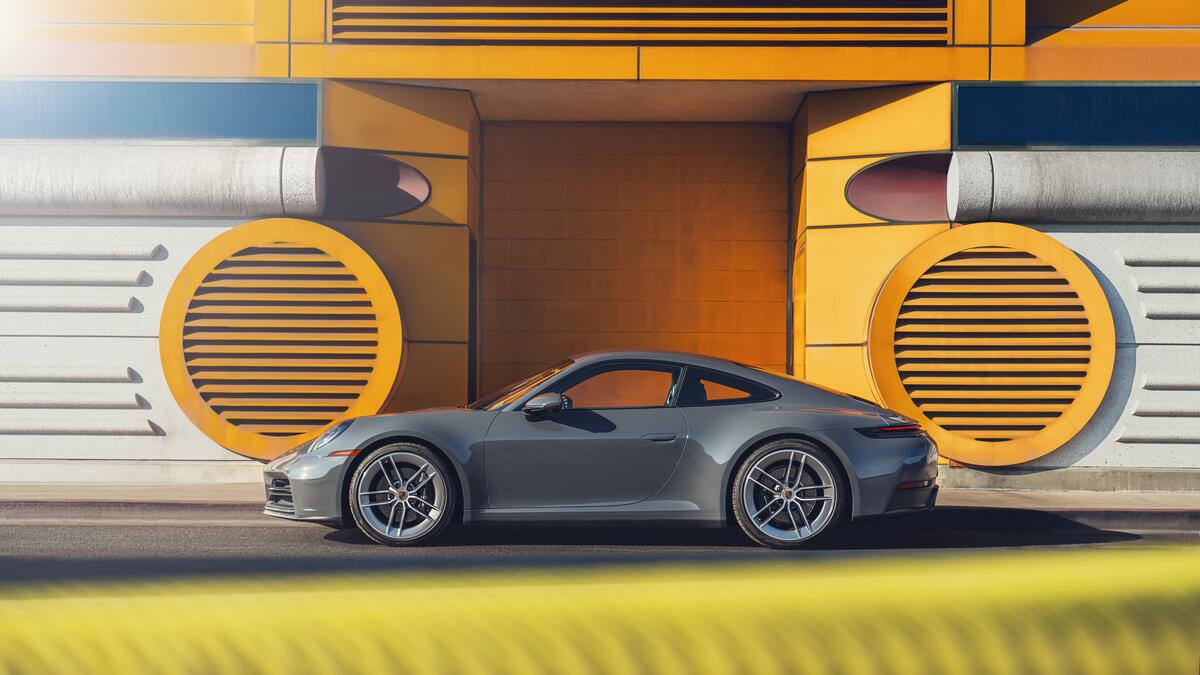
911
"Not with the 911 because I think you can get away with a little bit of rake, the way the fenders are."
The Porsche 911 is a classic sports car with a very recognizable shape. In this part, the host is saying that the 911’s body lines can handle a slight “rake” (front vs. rear ride height difference) without looking wrong.
The Porsche 911 is known for its distinctive silhouette and proportions, and small changes in stance can noticeably affect how it looks. Here, the host is talking about “rake” in relation to the 911’s body shape—how the front-to-rear height balance interacts with the car’s fender and overall lines.
belt line
"Whereas this being a very boxy car and every, like it has a very clearly defined belt line, a horizontal line, it needs to be level."
The “belt line” is the main line you see running along the side of the car, usually around the doors and windows. If that line is very straight and obvious, the car often needs to sit level so the proportions don’t look off.
The “belt line” is the body’s character line that runs along the side—often at the height of the doors and windows. Because it’s a strong horizontal reference, a belt line that’s clearly defined tends to look best when the car’s stance matches it (the host argues it should be level rather than raked).
Jaguar
"The hood is very long. It's kind of got that Jaguar-esque feel of the, you're sitting kind of towards the back of the car."
Jaguar is a car brand. Here it’s being used as a style comparison—like saying the car looks and feels a bit like classic Jaguars, with a long hood and a more rearward seating position.
Jaguar is a British luxury/performance brand known for styling cues that often emphasize long hoods and a “sit-back” driving feel. The host uses “Jaguar-esque” as a visual comparison for the car’s long hood and the sensation of being positioned toward the rear.
Request an Explanation
Heard something you'd like explained? We'll add it to this episode.
Sign in to request explanations for terms you heard.
Want to learn more?
Browse our glossary for plain-English explanations of automotive terms, jargon, and concepts.
Help improve this episode
See something that's not quite right? Our annotations are AI-generated and can sometimes miss the mark. Click the flag icon on any annotation to suggest a correction.