The Jeep Wrangler is a tough SUV made for off-road driving. Because it’s popular with owners and mechanics, it often gets repaired and upgraded when it’s been neglected.
The Nissan Rogue is a very common everyday SUV. “Getting its brakes back in order” usually means the brake parts are worn or not working as well as they should.
A “mystery leak” is when your car is leaking fluid, but you can’t immediately tell where it’s coming from. Mechanics usually check where the fluid is wet, compare fluid types, and trace it back to the source.
Diagnostics is how a mechanic figures out what’s wrong with a car. They look for clues, sometimes use a computer to read error codes, and then confirm the fix.
They’re describing a car that wouldn’t start reliably—sometimes it would, but it got worse. That kind of problem usually points to something like the battery, fuel system, or ignition not working consistently.
They’re saying that if you don’t keep up with maintenance, small problems can stack up. Eventually you end up with a long list of repairs instead of just routine upkeep.
“Serviced” refers to scheduled maintenance work like inspections, fluid changes, filter replacements, and other upkeep. Proper servicing helps prevent wear from turning into failures and can reduce the chance of unexpected noises or breakdowns.
They’re talking about a 2010 Dodge Grand Caravan and a strange noise coming from the right rear. The point is that noises often come from worn parts in the suspension or brakes, and you have to track down exactly which component is causing it.
A floor jack is a tool that lifts the car up so you can work underneath. It’s usually hydraulic, and you should use it together with a jack stand for safety.
A jack stand is a safety support that keeps the car from falling while you’re working. The jack lifts the car, but the stand is what you rely on to hold it up.
Concept
preparing for unknown noises
If you can’t tell what a noise is right away, it could be several different things. The best approach is to figure out where it’s coming from and then check the most likely causes one by one.
Low mileage means the car hasn’t been driven much. That often helps because there’s less wear, but you still need to check maintenance records and the car’s condition.
A “pre-owned auto store” is a dealership or retailer focused on used vehicles rather than new ones. The key difference for buyers is that you’re evaluating prior ownership history, condition, and service records more heavily.
Reversing in a drive-thru is risky because visibility is limited and pedestrians or other cars may be close by. It’s often discouraged since it increases the chance of collisions or property damage.
It means planning to keep the car for a long time instead of replacing it soon. Usually that comes down to regular maintenance and fixing problems early.
They’re talking about the two big parts that make the car move: the engine and the transmission. Keeping both in good shape usually means regular maintenance and not ignoring early warning signs.
A fleet maintenance system is a tool for managing car service for a group of vehicles. Instead of forgetting when something is due, it helps keep maintenance organized so cars don’t break down.
The O2 sensor checks what’s coming out of the exhaust. It helps the car’s computer figure out the right fuel mixture. If it goes bad, the car may not run right and can cause warning lights.
Diagnosing means figuring out what’s actually causing the problem, instead of just swapping parts. The idea is to use clues from how the car behaves to find the most likely culprit. That saves time and money and helps avoid unnecessary repairs.
Term
HEGO, Heated Exhaust Gas Organizer
A HEGO is basically an oxygen sensor with a built-in heater. That heater helps it start working faster, especially when the engine is cold. Faster operation means the car can adjust fuel more accurately right away.
Term
Check the brakes.
Checking the brakes means making sure they’re working safely. Winter can cause rust or parts to stick, which can make braking feel worse or make noise. A quick inspection helps prevent bigger problems later.
A fuel pump supplies pressurized fuel from the tank to the engine. When it’s weak or failing, the engine may stall, misfire, or leave you stranded because the engine isn’t getting enough fuel. Replacing it is often a fix when a car repeatedly won’t restart or runs out of fuel pressure.
A voltmeter is a tool that checks how much electrical “push” is in a wire. If it shows power and ground are present, you know the wiring is likely doing its job.
The crankshaft sensor is like the engine’s timing signal. If it’s not reading correctly, the car may start poorly or not start at all, because the computer can’t tell when to fire the spark and inject fuel.
RPM tells you how fast the engine is spinning. If the scan tool shows RPM while you crank, it usually means the engine is turning and the computer is receiving the right timing signal.
A pre-purchase inspection is when a mechanic checks a car before you commit to buying it. It helps find problems you might not notice during a quick look.
Seized parts are basically stuck in place. Rust or age can make them stop moving, so they may need extra work to free up or might have to be replaced.
Concept
Two ways to own a car (ignore issues vs address them early)
The host lays out a philosophy of ownership: driving with “blinders on” and waiting for problems to get worse versus paying attention to early symptoms. This is the underlying theme of the episode segment—how early detection can prevent catastrophic outcomes.
The segment emphasizes that an unusual chirping noise can be an early warning sign. The host frames it as a moment where what seemed like a minor issue turned into “serious work,” highlighting the value of proactive diagnosis.
The Ford Excursion is a very large SUV built to carry people and handle heavy work like towing. Because it’s based on a truck, it’s bigger and heavier than most SUVs you’ll see. The podcast is highlighting it as a classic, standout version of that model.
“400 K miles club” refers to a milestone of very high mileage ownership—here discussed in kilometers-to-miles terms. It’s used to frame the FJ Cruiser as a long-term, durable vehicle that’s approaching extreme longevity.
The alternator is what keeps your battery charged while you drive. If it starts failing, the car can lose electrical power and you may hear strange sounds or see warning lights.
The starter motor is the part that turns the engine over when you first start the car. If it’s positioned low, it can get hit by water and dirt, which can make it rust or fail sooner.
The Toyota FJ Cruiser is a tough-looking Toyota SUV. They’re saying the alternator sits low, so it gets hit by water and road grime more than you’d expect, which can lead to corrosion.
Road splash corrosion is when water, salt, and dirt get thrown up and stick to parts. If a part sits low, it gets hit more often, so it can rust and wear out faster.
Sometimes a warranty that sounds like “lifetime” is actually only for a set time and mileage. In this case, it’s described as three years and 60,000 km (or whatever comes first). After that, you may have to pay for replacements yourself.
Some warranties last for as long as you keep the car, not just for a few years. That can save you money if the same part fails later. This is why the host prefers that kind of coverage for an alternator.
A thermostat helps control how hot the engine runs by deciding when coolant should flow through the radiator. It’s a small part, but it matters because it helps the engine warm up correctly and not overheat.
They’re referencing Volkswagen because that’s where they worked on warranty claims. It’s used as an example to explain how parts suppliers get charged back when a component fails.
When a car part fails under warranty, the company needs to know who actually made that part. A vendor code is like a tracking label so the right supplier gets billed for the repair.
A warranty claim chargeback is the process where the automaker (or warranty administrator) bills the supplier for a failed component and the labor to repair it. The speaker explains that vendor codes on parts are used so the correct supplier is responsible for the cost when a covered failure occurs.
The housing is the part that holds the thermostat and directs coolant. If it leaks or cracks, you may need to replace it so the cooling system works correctly.
Car companies often don’t make every single part themselves. Instead, they hire other companies to build parts to the car maker’s exact requirements. That way, the part still matches what the car is designed to use.
The idea is that older cars can keep going if you stay on top of regular maintenance. If the body isn’t rusted out, many problems are still repairable.
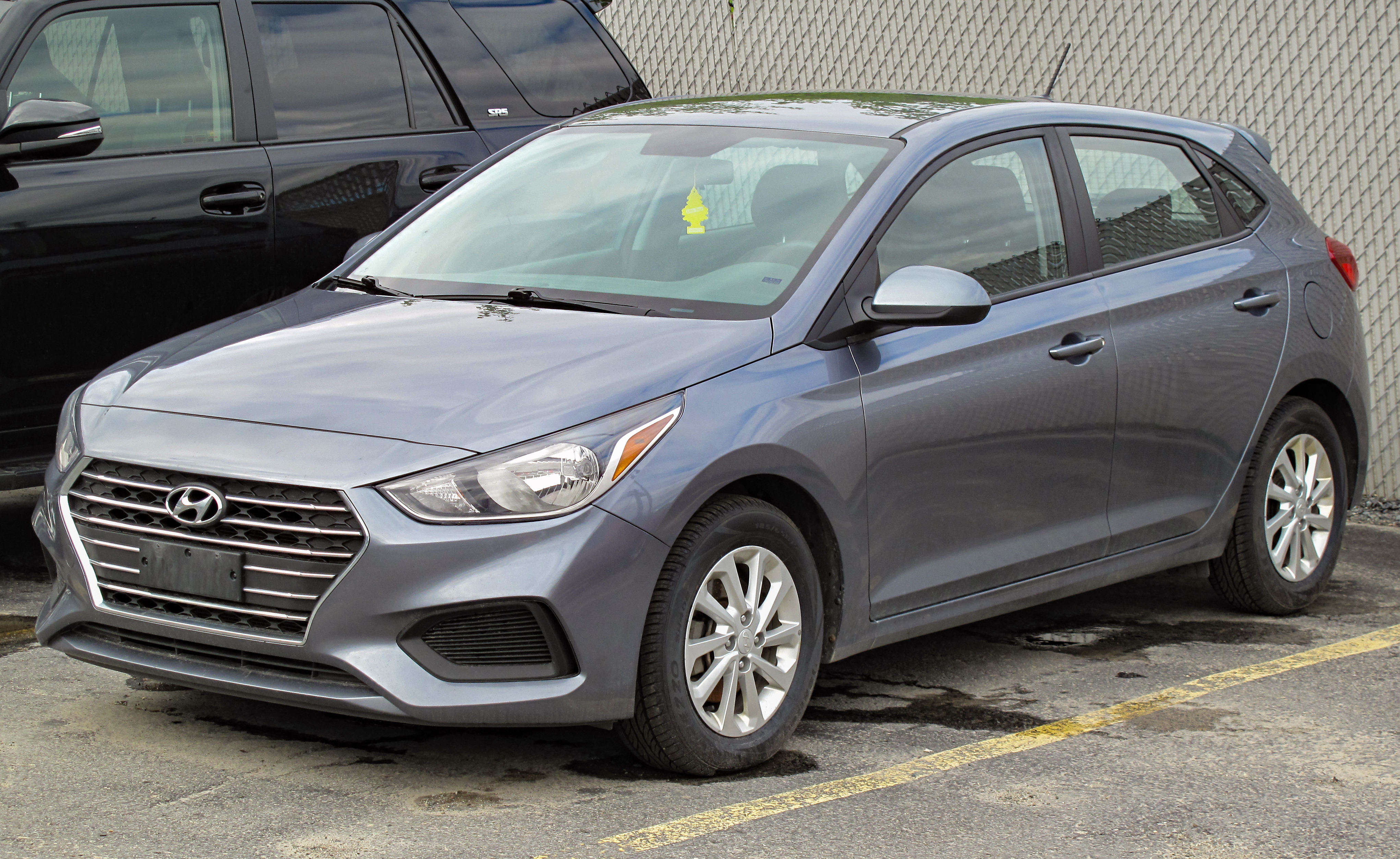
A Hyundai Accent is a small, everyday car. The point here is that even if it has problems, lots of things can be fixed with regular maintenance and repairs.
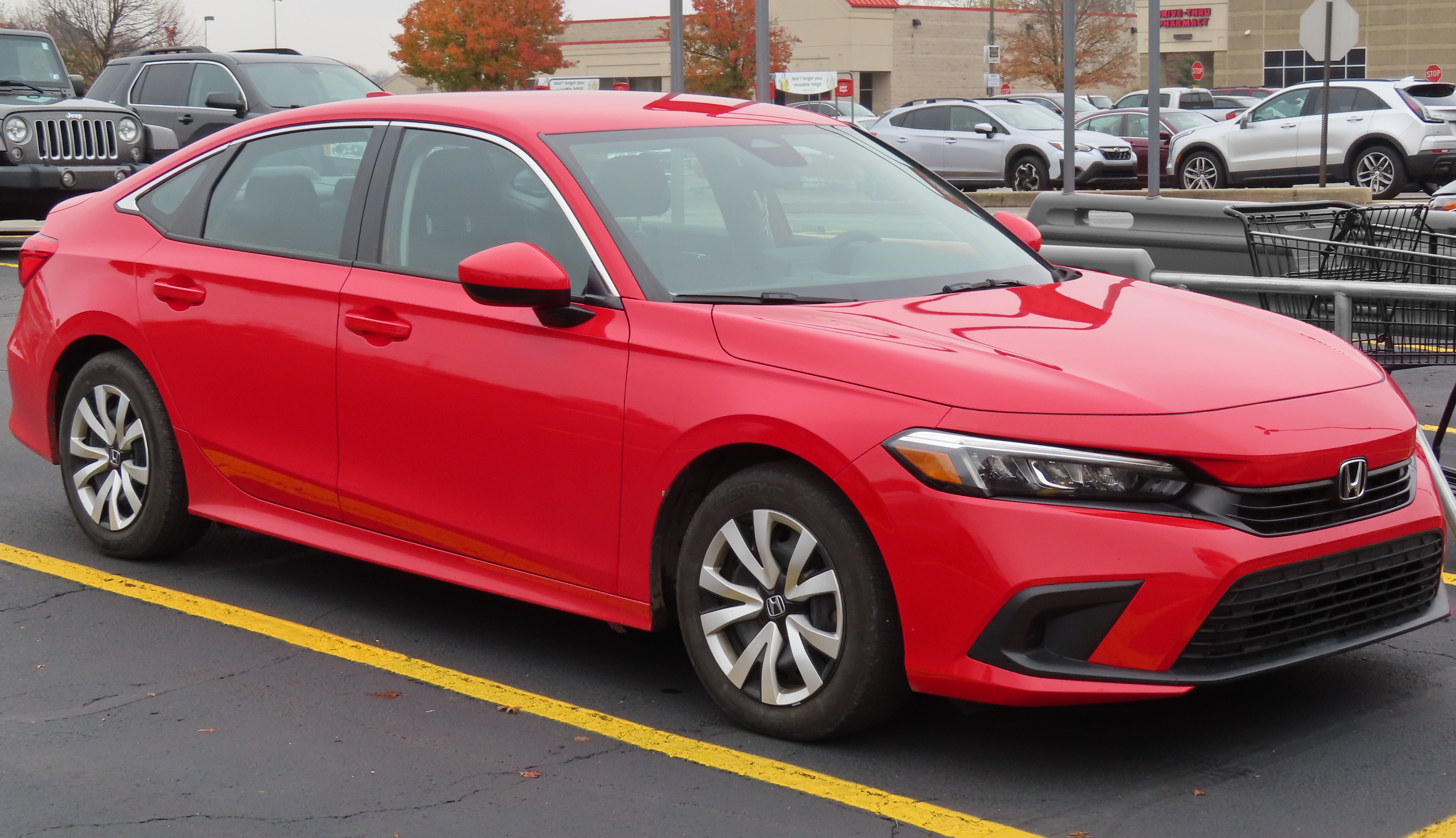
The Honda Civic DX is a simpler version of the Civic. The host is saying they had to fix the brakes because someone drove it with the parking brake on, even though the brakes were new.
Wheel cylinders are part of the brake system that help apply the brakes. If the parking brake is left on while driving, these parts can get damaged and you may have to fix that side again.
The handbrake is for when the car is parked. If you accidentally drive with it on, it can overheat the rear brakes and make them wear out or fail sooner.
Checking fluids is basic preventive maintenance that helps keep an older vehicle running reliably. Fluids like engine oil, coolant, brake fluid, and transmission fluid affect cooling, lubrication, and safe operation.
Term
summies
“Summies” means summer tires. They’re made for better grip in warm weather, and people often swap them in when the weather gets warmer.
A bumper cover is the outer part you see on the front or back of the car. Taking it off is sometimes just to change or repair the look, not necessarily to fix the engine or brakes.
An alignment is adjusting the suspension angles (like camber, caster, and toe) so the wheels point in the correct directions. After front-end work, alignment is often needed to prevent uneven tire wear and to restore straight-line steering.
Spring maintenance means doing a check-up around the start of the warmer season. The idea is to look for small issues early so they don’t turn into expensive repairs later.
That serpentine belt is the main belt that spins important accessories. If it’s not sitting right or starts slipping, you’ll often hear chirping, and ignoring it can lead to expensive damage.
Catastrophic damage means the problem can go from bad to really bad quickly. In this story, the noise was an early sign that could have led to major engine-area damage.
A “class” is basically the category your car has to fit to enter a car show. If the show is for a certain type of car, you usually can’t just bring anything—you have to match the rules.
A muscle car is an American-style performance car known for having a big, powerful engine. In this segment, they’re using the term like a category to describe a type of car.
GMC is a well-known American brand, mostly associated with trucks and SUVs. In this part of the podcast, it’s just one of the example brands being listed.
Pontiac was an American car brand that made a lot of performance cars. In this conversation, it’s just one of the example names in a list.
Topic
car show vehicles fundraising events
They’re talking about using cars at events to raise money for a cause. The cars are restored and shown so people can interact with them and help the fundraiser.
Vehicle valuation just means figuring out about how much your car is worth. People do it before selling or donating so they don’t guess and end up with a bad deal.
Concept
catastrophic outcome
In car terms, a “catastrophic outcome” means a problem gets worse fast and can cause serious damage. The takeaway is to check things early instead of waiting until it’s too late.
Sometimes a problem starts small, but if you don’t address it, it can cause other damage and become much more expensive. That’s why they’re urging you to get it checked early.
Your car’s AC system is the whole cooling setup, not just the buttons. Getting it checked can find problems early so you don’t end up with a bigger, more expensive repair later.
That’s when a shop pulls the old AC refrigerant out and then puts the right amount back in. If it’s been a while, doing this can help the AC cool properly and reduce stress on the main AC parts.
Concept
AC service interval (more than two years)
They’re basically saying don’t wait until the AC is totally broken. If it’s been a couple years, servicing it can help prevent a small issue from turning into a big one.
The compressor is the main pump for your car’s AC. If the AC isn’t serviced correctly or refrigerant is low, the compressor has to work harder and can fail.
Term
cheap stuff
They’re basically saying don’t cut corners on parts. Cheaper replacements can fail sooner, and then you end up paying again for the same job.
LIVE
Good morning folks, you're tuned into Car Connection, where the coffee is strong, the
stories are real, and the wrenches never stop turning.
I'm your host, Nile Motormouth Jenkins, coming to you from the Car Connection Workshop, where
the smell of fresh oil, a little elbow grease, is all part of our balanced breakfast.
Around here we don't just talk cars, we live them, whether it's a 25 year old Jeep Wrangler
getting a second chance at life, a Nissan Rogue getting its brakes back in order, or
a mystery leak that's got everyone scratching their heads.
This is where we roll up our sleeves and get it done, with a little wit, a little wisdom,
and a whole lot of fun.
The Car Connection isn't just about nuts, bolts, and diagnostics, it's about connection.
Connection to our vehicles, to the people who drive them, and to the community that keeps
Niagara rolling, because when you fix a car, you're not just turning a wrench, you're restoring
someone's confidence, freedom, and maybe even their sanity.
We're here every week, Monday through Saturday, with the Motormouth Morning Drive at 8am, helping
you keep your ride safe, reliable, ready for whatever road lies ahead.
So whether you're weekend wrencher, a daily commuter, or someone who just wants to understand
what that strange rattle really means, welcome aboard, stick around for shop talk, expert
advice, and a few good laughs, and maybe a flashback story or two.
Well good morning to you, and welcome aboard if you're joining us for Motormouth Morning
Drive for the very first time.
We welcome you, and you're on donut duty for the next 30 days.
Just saying, that's the initiation program that we have incorporated into the Car Connection
Workshop.
Well if you're just slipping through the drive-through, grabbing your favorite morning
bevy, and the side dish, whatever that may be, a snack, well lock that cup down, we're
going to have a swiggy together in just a few minutes, and if you're not familiar with
that, we raise a cup together, count it down 3, 2, 1, and have a swiggy together.
It's kind of like starting the day together, together.
So keep an eye on the road, and your co-pilot if you have one, slide over that pack of 16
Crayola crayons, and a brand spanking new leaf bag so that he can, it's not really a
leaf bag, it's a Car Connection Workshop laptop, yes.
And the crayons are the stylus, but you just have to press hard and take notes.
So we have a lot to get through, and a short time to get there.
Spring is trying to sprung, but it's not doing a very good job, just yet.
But at least, you know, we still got to see the snow again yesterday here on the south
shores of Lake Erie.
I'm not too sure about where you are, and where you're listening from, but you can
grab our podcast from our YouTube channel every day the morning drive uploads to our
YouTube channel, and I'll tell you where all that information is in case you're joining
us for the very first time.
How do we connect, and how do we stay connected?
Because now, with more ways to watch, listen, and engage.
You know, cars don't break when it's convenient.
You ever notice that?
They break when it hurts, and we're going to talk a little bit more about that, and
I've got some stories to tell you that are real-world stories, absolutely.
If you think that the vehicles I drive are bulletproof, it's not true.
Stuff happens, and right now we're going through the four vehicles that we use to run
errands, grab parts, and the like.
They all need stuff.
Every single one of them so far has needed stuff that has to get done, and even though
you could hop in any one of them and turn the key, we only had one that passed out,
and it was giving a very, very hard time to get it started.
You could get it started if you kind of, you know, hung in there for half an hour.
It would start, and it finally got to that point where it was inconsistent for about
a year, be a year ago this coming July, and then it just decided to go ka-fufnik, done.
Now I'm going to let you know what's going on.
So we're going to talk about that a little bit too, is how quickly things can gather
up on you with your vehicle, and all of a sudden you've got a pile of things that need
to be updated, serviced, replaced, adjusted, or just darn right kicked to the curb, one
or the other.
So let's move along this morning.
We've got our morning swiggy coming up.
We have the daily weather just right around the corner, how close is it?
As close as my hand can get to my iPhone.
And we'll see what's going on today, because yesterday I was working on a van outside, had
one last thing to do to it, and I had no room in the shop, the FJ's in there, and it's down
for the count, and parts are arriving, so I've got a lot of work to get done today.
In the broadcasting side, and YouTube, and editing videos, all that stuff has to be done
today because I lost about four hours yesterday, catching up on some mechanicals, and we shot
quite a few videos yesterday.
But you'll have to watch that video.
What did we find that was the noise in the right rear of the 2010 Dodge Grand Caravan?
It got ugly.
Really fast.
But it was sunny out, so I just backed it up to the door, threw a hunk of plywood I have
cut specifically for doing that, and then put the floor jack on there, and jack that
up, and take the wheel off, and put a jack stand jimmy under there.
Protect yourself, and yeah, the findings weren't good.
You're going to need to watch that video, because it's another one of those I had no idea.
It was an IDK.
Yeah, exactly.
I don't know.
We didn't know what the noise was.
It wasn't sticking out like a sore thumb, but it's two sore thumbs right now, and a list
of parts.
Anyhow, this morning's title, nothing stays the same.
You don't know what you don't know.
We're going to focus on that a little bit more, and I'm throwing myself into the pile
along with our four vehicles that hit the road every day, every single day, so you've
got to be prepared for that.
Well, let's say thank you to our good friends, Earl and Louise Grant at City Auto Sales and
Leasing for bringing us this morning's podcast.
And you can find us on all podcast platforms, so whether it's Podbean, or it's Apple, Amazon,
or Spotify, or any of the smaller podcast networks, type in the search bar, Car Connection
Workshop.
You'll find us.
All our programs are now instantly uploading on our YouTube channel.
So the biggest drawer in our toolbox for those joining us for the first time, we haven't
heard me say this, so people ask me, why do you say it over again?
Well, we get new people every day.
We get new subscribers every day to the YouTube channel.
They don't know the way around just yet, but they'll find it.
We've got to help them get their feet, right?
So on the homepage at carconnectionbusinessnetwork.com, you'll find everything on our homepage
you'd like in order to follow us.
Our next build, repair work, connection with our program partners, and all the platforms
that we are available to you on are on the homepage at ccbusnet.com.
That's carconnectionbusinessnetwork.com.
That's another part of Car Connection.
I've been building since 1996, creating a business network to connect community
to family owned and operated small and medium sized businesses.
So if you are a business owner, connect with me through email.
I would love to know where you are and what products, goods, and service you have.
We are re-establishing our Car Connection business network.
We had an amazing network going until that stupid COVID thing came into town.
Don't get me started on that.
There's not enough coffee to bring me back to the planet.
Trust me.
So things fell apart over the course of four or five years and now it's time to build it back.
And this is Car Connection 2.0 now with more ways to watch, listen, and engage.
So on the top right hand corner of our homepage, you'll see all the links for all the platforms.
That's a website that our very own skippy, our videographers put together.
And I think it's now been running about seven years.
It connects the business owners in Stevensville with the community.
And that's exactly what we've been doing for a long time with our Car Connection business network
is pull in the small and medium family owned and operated businesses
and connect them to the community through that website.
And it becomes a communal website.
Well, that's what Skippy's created in Stevensville.
I know a lot of folks there.
She lives there, grew up there.
Their families there.
My parents are there.
My mom passed in 2022.
My pops is still there.
He's 89.
And there's just some fantastic eateries and businesses there.
So take a moment to check out Stevensvilleontheweb.ca.
We are put down as one of the professionals and Skippy takes care of that for us as well.
And you can email me through there.
Our iHeart radio icon is there also on the top right hand corner of the page.
And our awesome online merch store is there as well.
All proceeds go to help those battling addiction
to get to a total freedom addiction campus in Canada and USA
where a new life meets them there.
It's not a program.
It's a full hardcore life change.
And they have great success with all those, all ages,
that have struggled for many years with addiction to finally break free.
So when you buy some, grab some merch in our online store,
that's where the proceeds are going to.
And Freedom Expressions has put that store together for you.
It's one part of what they do at Total Freedom.
Darien Center, New York, they have a boutique.
They have Freedom Automotive.
They have the kitchen, which is a meal takeout window.
They don't receive any government funding whatsoever and they don't want to.
So they've created ways to help those who are going through that change at Total Freedom,
get back into the working field and actually earn a wage right on the campus.
So that's part of the facility.
And all the proceeds from those separate entities,
and they have the most beautiful veggie garden,
that they use the fresh vegetables in the commercial kitchen and the takeout window.
How cool is that?
So they're self-contained.
So anything we can do to help to get that next person there, it's everything.
It's absolutely everything.
So take a look at Total Freedom, Canada and USA.
You just have to click on their logo.
But thank you to Earl and Louise Grant for coming alongside us this morning,
providing us with our morning swiggy.
Let's get into that low mileage quality vehicles at fair prices.
Earl and Louise Grant are husband and wife team over 25 years.
And let me tell you, they're car guys.
They don't bring any junk in onto their lot or into their building whatsoever.
You will find vehicles there that are absolutely spotless.
They look like new.
If you're looking for something specific,
Earl and Louise Grant can save you a thousand steps.
Why?
Well, they have the resources to find those low mileage,
top quality vehicles.
So you can buy with confidence and be treated with nothing less than honesty and integrity.
That's Citadel sales and leasing.
Greater Toronto Area's premier pre-owned auto store.
So let's have our morning swiggy together.
You ready?
Bought you a little time in case you were still sitting in the drive-thru.
And remember, never try to reverse in the drive-thru.
I'm just saying.
It gets ugly fast.
Ready on three, two, one, three, two, one.
Hmm.
Ginger really does something to it.
But I always, I can't wait for coffee.
But I start my morning with my herbals.
Seems to help.
So I'm just going to continue on that on that platform.
The honey is local.
That's in there.
It's absolutely desicc- desicc-
To what?
Desicious.
Yeah, it's amazing.
Outstanding.
Well, let's take in the morning weather and see what we're going to have thrown at us today.
We had everything and a bag of chips yesterday here on the south shores of Lake Erie.
So thank goodness the sun was shining when I had to take the wheel off that
2010 Dodge Grand Caravan.
Yeah, thank you to Niagara Block at 5,000 Montrose Road,
Niagara Falls bringing the morning weather forecast to us.
Building Canada since 1931 with building supplies,
metal, rebar, you name it, they have it there.
They don't have lumber just so you know.
It's all the heavy duty stuff when it comes to building projects.
They have everything you'll need from soup to nuts to create that outdoor
hardscape landscaping oasis that you've always wanted.
And Cathy Grimo, she has a list of contractors.
So if you need a referral to estimate the job, design the job, start the job,
and finish the job so you can enjoy that outdoor living space you've always wanted,
that's where you can get it all done.
That's at Niagara Block, 5,000 Montrose Road, Niagara Falls.
They're on our website.
They're one of our program partners and thank you to Dave, Cathy, and Dan from
Grimo for making this podcast possible for you guys, you guys out there.
So check in with them.
All our programs are available on the homepage at carconnectionbusinessnetwork.com.
Just click on their logo to meet them and thank you.
Thank you, thank you, and thank you times 10 for giving them your business.
Well, here's what we got.
Let's read it and laugh, perhaps.
We're trying to get to the 30-day fuel savings challenge
so we can put some money back in your pocket.
How about an extra 100 bucks that you could set aside?
Maybe pay down some debt with that.
How about doing the second part of the 30-day challenge
and doubling that and making it about 200 bucks?
And if you're interested in keeping your vehicle long-term, keeping that engine
transmission running forever, you are on the right podcast because that's my specialty.
I can help you to make that happener.
No problem.
Very shortly here we will have our car connection fleet maintenance system.
I got to check that out today.
That's on my to-do list.
See if we have our profile page up for that and we have special pricing for those
who are subscribed to our YouTube channel.
So if you're enjoying the videos, please do Skippy and I a favor.
We put a lot of time into it.
All the platforms, she's putting new reels up for Facebook and Instagram.
And I caught her yesterday.
I turned and she goes, oh, you weren't supposed to look.
Like at what?
At me.
I was shooting a reel.
Oh, I didn't get that meme all.
Well, here's what we got today.
If you stick around long enough, you will laugh and spill your coffee.
32 degrees right now, mostly clear.
When does making it feel colder?
About 24.
Cloudy conditions from 7 a.m. to 11 a.m.
Partly cloudy conditions expected at 1 p.m.
And today's temperature ranges from 31 degrees to 54 degrees.
Feels more like 23 degrees to 49 degrees.
So the high for today.
You ready?
54 degrees.
Oh my goodness.
We got to get to 60, at least 65 and hold it.
To do the 30 day fuel savings challenge.
What do we got for precipitation?
Well, it looks like not too shabby .05 of an inch.
Can we deal with that?
Sort of kind of maybe.
Yeah, we'll just have to put up with it until we get our own planet.
This is this is it.
This is what we got.
So all right, let's move on this morning.
We got to we got to get out of here on time today.
Otherwise the whole world is going to fall apart around me.
Around me.
I got so much to catch up on.
And that's what happens.
It's springtime.
The vehicles come in, go through them one at a time.
And you know what?
It's amazing what you find.
And you're thinking, well, I think it was doing pretty good.
Till it comes in the shop.
And then all of a sudden it's hell in a hand basket.
It's like, what?
No gravy.
Come on.
That can't happen.
OK, so here's here it is this morning's topic.
I've written it up just for you and me.
Nothing stays the same.
And that is so true.
And if you think you made it through winter with your car
without any problems.
If I were a betting man, I would say there's something not quite right.
And I think we said that on the J-beam.
Something was not quite right.
And then some other stuff.
But we just have to I just have to diagnose the the O2 sensor.
We have a HEGO, Heated Exhaust Gas Organizer.
I didn't have time for it.
We got the car back up and running.
We got this.
The snow is off.
The sun is on.
Check the brakes.
Lube the brakes up.
Did a walk around.
All the lights are good.
Fluids are right up to speed.
And what else do we take care of?
Oh, yeah, it got a fuel pump.
That's what they finally said.
I'm going to start letting you know I'm going south now.
So last summer it left stranded on the side of the road.
Well, I wasn't in it.
My friend was in there and I get a call.
Here's the address where it is.
My friend Kathy picked me up and yeah,
keys under the mat.
Okay.
So I go out there.
It's a hot steamy day in July.
I pull the back seat, get down to the wiring.
And I'm testing with my voltmeter.
I got ground.
I got power.
And then the car starts.
Okay.
So now what?
All vital signs are good.
I shut it off.
I started a dozen times without any issue.
What do you fix?
And then it hasn't done it since.
Well, apparently it may have happened.
We're not 100%.
It may have happened one more time since then.
But now it was finally like half an hour when restart, which tells me.
And then I got it to do that right here at the shop.
So then I was able to see that the crankshaft sensor,
by cranking it over and looking on my scan tool, if I see RPM, engine RPM,
then the crank sensor is reading the fact that the engine is turning over.
So I can share all that kind of stuff later.
But it just shows you how quick things can go the other way.
Because you don't know what you don't know if you're not taking the time to book your vehicle
and have someone check it over.
You'll be surprised.
And yesterday's video, you're going to want to watch that one when it comes out.
It's going to be a couple of weeks before we get to that one.
But my goodness, what we found on the back of the 2010 Dodge Grand Caravan,
there's a bunch of stuff there going on.
And it's deep.
It's elbow deep.
Yeah, not elbows up.
We don't talk about that here.
That's just dumb.
Yeah, beauty fades, but dumb is forever.
Um, yeah, so the parts, the parts cannon has to definitely be shot at the Grand Caravan
because there's lots going on.
So you'll have to watch that video and you'll see it in real time as it unfolded.
And at the end of, at the end of it and putting the wheel back on and torquing the wheel nuts,
there's now a list of things, stuff that's broken, stuff that's seized,
things that are not really working, but they're there.
You'll have to catch up with that video.
So peace of mind definitely starts with being in the know.
And here's how.
You know, there, I often talk about there's two ways to own a car and it's true.
You can own it with the blinders on and wait until like on the FJ, the 2007 FJ.
If I had not called it the way I heard it, it would have been an absolute disaster.
We just filmed that, uh, the two segments yesterday on the FJ and brought you right
into what was going on there that enlightened me that it wasn't just going to be a spring
evaluation, there's going to be some serious work that had to be done.
And what was discovered by just a chirping sound, which I've heard before, I bought that,
we bought the 2007 Toyota FJ Cruiser from the original owner out in Wolf Island out in Kingston.
Nice lady, nice family, very nice family, and, um, they inherited a vehicle through
passing of a family member, a behemoth of a vehicle, I have to say,
they're one of the original Ford excursions.
They were monstrous.
Yeah, I called those the behemoth.
So they didn't need the FJ anymore.
Thank you.
That worked out just nicely and we're taking really good care of it.
So it had 152,000 original kilometers on it when I bought it.
That was December 27th, 2013.
And now we have, uh, we're about 55,000 kilometers from 400 to be a member of the 400 K miles club.
So anyways, I, I heard this chirping was on a Sunday afternoon and I'm going,
and a, and a lady sees me in the parking lot.
I got the hood up.
Is everything an older, elderly lady?
She says, is all, is everything all right, Mr?
And I go, no, I got trubs.
She goes, oh, I think it's just a belt.
You just need to put some soap on it.
My, my husband was good for that.
He passed away many years ago, but I've heard that sound before and he would just put soap on the belt.
I go, um, I'm afraid to say, I, I would hope that the soap would be the cure.
But in this case, I believe that the problem's a little deeper than that.
She goes, well, how do you know?
I said, cause I've heard it before.
Oh, what was it?
I said, the alternator.
I said, this truck goes through an alternator about every hundred thousand K for whatever.
Well, I know what the reason is.
The alternator is down low and that's why when I tell you, don't go pounding through these puddles.
Don't do it.
Don't do it.
Your starter motor is hanging down there like low hanging fruit.
Your alternator may be down low like it is on the, uh, FJ cruiser.
It's like, it's right at the bottom of the front of the motor,
right towards the road splash side.
So the thing gets corroded, can't help it.
It just does.
It takes road splash all year round.
So what are you going to do?
So what happened was, I don't know if I should tell you or not.
No, I think you should watch the video.
You really should.
You should watch that video.
Anyhow, if I, I will tell you this.
If I had not just drove it home from where I was and parked it and then got on the phone
with the Napper guys and said, Hey, it's alternators got serious issues.
Have you got one?
I have, this is the lifetime warranty alternator.
I got smart after the first one.
First one cost me about 430.
I think it was 432, 432 bucks, boxes.
And then that one went down and that's when I said,
if I'm buying another one, I want the lifetime warranty alternator.
So that's what I did.
So this one would have cost me over $700 yikes, but it cost me nada.
That's how you have to work smart.
And if I'm working for you and teaching you, that's what I'm going to teach you.
If you got to step up to the plate and I've got another story on that too.
Coming up in just a moment.
So hang in there is you want to buy parts.
If they're opportunity to get lifetime, not like lifetime from car manufacturers,
lifetime is three years, 60,000 K, whatever comes first.
And then that's it.
You're out the door.
Lifetime is as long as you own the vehicle, as long as I own that vehicle,
that alternator is covered.
How sweet is that?
Yeah.
So even though I had to sock down the cake the first time around,
and the second time around from here on in, it's gravy.
Exactly.
So that's what I do.
I search parts.
Yesterday I spent about an hour after everything was uploaded,
ordering parts for the FJ, finding a deal.
Thermostat.
Yeah.
Toyota doesn't manufacture thermostats.
It's it's a vendor out.
Okay.
So that's what you have to know.
Parts are created by vendors.
And I know that because I did warranty for Volkswagen for quite a while.
Four years and 80 hours a week.
It was part of my job description at the time.
So anyways, vendors on every part on every automobile, there's what's called a vendor code.
So whatever the component is, there's a code on that part that I would have to
write that down on the warranty claim so they know who to charge the repair back to.
If it's an undercover, if it's a covered warranty repair.
So then the vendor has to pay back Volkswagen in this case for that failed component and the labor.
So they get charged back for that.
So that's what a vendor code is.
So I called the dealer.
I thought, you know, I like to keep the FJ all Toyota if I can.
But you know, there comes the point where you have to say, if I can buy a really good top quality part
and save a load of boxes, I'm going to do it.
It's too bad.
It's so sad.
But if they can't bring the prices down, you know what?
And I had a great conversation with the dude.
So I thought I'm online and I've got thermostats in my vision.
You have visions of thermostats and housings in my vision.
It sounds like a Christmas something.
Wasn't it sugar plum fairies dancing in your head?
That's just way too weird.
Yeah.
So I call the parts department.
Get ready for this one.
They didn't have it in stock.
They'd have to order it $165.
And I'm online while I'm talking to the gentleman in the parts department.
I go, wow, I never anticipated that one.
He goes, it is kind of pricey, isn't it?
I said, well, I'm online right now.
I said in the cheapest one you can buy is $29.
I said, but then there's a couple of manufacturers that I recognize on the site.
Either one I'd be happy with.
And he goes, oh yeah, those are good companies.
How much are those?
I said, well, the top drawer one's $65.
And the next one's $58.
I said, and then the next one is $36.
I go, Toyota doesn't make thermostats.
It's a vendor that does it for them to their specs.
That's how it works.
Yeah, they build the car, but they don't make all the parts.
Not all of them.
He goes, I'd do that if I were you.
That's what he said to me.
I go, well, I'm sorry, but you know what?
In this economy, the money ain't flying like birds.
We got to cut where we have to, and this makes sense.
I said, I'm going to have to go with that.
So I'll talk to you another time.
Yeah, thank you for calling.
Appreciate it.
Sorry we couldn't help you out.
So that's how that goes.
And that happens pretty much every day here because we're shooting video,
putting parts on, taking parts off, shooting videos, showing you what it is,
where it is, how it works, how it breaks, and what and how you could have learned
is some very basic automotive repair and service fundamentals to keep that vehicle,
your older vehicle running as long as you want.
As long as the structure isn't rotted out, everything else is changeable, repairable,
adjustable, serviceable.
That's it.
That's all you have to know.
So that brings me to your automobiles.
How are they doing?
So I've already shared the 09 J Bean.
That's a Hyundai Accent.
It had challenges.
Stuff going on.
Actually, the rocket wasn't bad.
The 99 Honda Civic DX wasn't bad.
We just had to redo the brakes on the right rear because somebody drove it
with the handbrake on with brand new brakes and wheel cylinders.
Just saying was not I, but it happened.
So I had to redo that side at the back, but that's about it.
A service, check the fluids, put on the summies.
I was sick and tired of trying every black magic goo and product known to mankind to
keep the grill black on it because it makes it look cheesy and it whited out again.
So I'm like, that's it.
I'm taking the bumper cover off, but that has nothing to do with something gone wrong.
That's just aesthetics and that's me.
I like it.
I like them to look good.
Yeah, it just makes me feel better.
Okay, it's a therapeutic thing.
So the rocket was good.
What did we get to after that?
Oh yeah, we got into the 2010 Grand Caravan.
That's got a list of stuff going on at the back.
We just fixed the entire front end.
You'll have to watch those videos.
The grand finale comes up, I believe this week on that the last segment.
I'm putting the whole front end back together.
It just has to have an alignment, but we had a noise.
So we found, we took it out, recorded the noise
and we shot that video as well.
So you could, you came along for the road test with me and Skippy was driving.
My life flashed before me just once or twice, three times actually.
And we made it through that.
And then yesterday we dove into it to see, well, what are we up against?
Well, now there's another whole list of parts on that one.
So that's a spring maintenance.
And then getting into the, I brought the FJ and I think it was Friday, late Friday,
and got going on at Saturday.
And that was when things kind of escalated into a number of items that needed to be serviced.
So you'll have to watch the videos on those, but it uncovers things.
And that's what you need to do at this time of year is not sit back and just go,
everything's got to be fine, right?
Probably not.
But you're better to be in the know than not because you don't know what you don't know.
And with the FJ, I will tell you this, if I had a just kept driving it going,
oh, it doesn't sound too bad.
Everything seems to be okay, honey.
Yeah, the, the alternator would have come away from the engine.
Attached to the serpentine drive belt while the engine's running.
So in the video, I explain all of that and you get to see what I'm talking about.
And then you'll see the catastrophic damage that would have occurred.
It's not a if it would have occurred because it was coming off.
It had broke.
Yeah, completely.
So the chirping was the belt was not in the right position exactly.
So you got to, you've got to jump on this stuff.
And I'll say this again, I've said it many times before ladies, you are fantastic at spotting,
hearing, smelling the car when something's not quite right.
And you're fabulous at describing the noises.
Fellas, they don't care.
Honestly, they don't till it breaks down.
And then you know what, every colorful metaphor they can possibly think of comes out times 10.
And then they're embarrassed, probably not.
But for you, you don't want to be stranded on the side of the road.
You know, that's a very compromising thing, especially for a woman where it happens, how it
happens. And if you don't get a good Samaritan coming along, there's kooks out there.
I'm just saying there's just a few kooks out there and we got to be careful this day and age.
So peace of mind driving starts with being in the know.
And that's why we are a prime example.
We do that same thing that we're doing right now.
We go through the vehicles that have been used all winter, check them over.
Let's get them tight and right and out the door.
And then they're taken care of.
The next series will be the vehicles we use for going to car shows and fundraising events
and helping to make awareness of nonprofit faith-based organizations like Crystal Ridge
Dream Center, serving men, women and children, meals, love and hope throughout the Niagara
region. And if you can do anything to help them.
They're struggling to keep the meals up.
Last week they actually had to put a sign on the door.
They ran out of food.
So they feed on Tuesdays.
So today is a feed day out the door, hot meals, and then Friday again.
So check them out on our website.
Any gift over $25 gets a tax receipt.
But if there's anything you could possibly do to help them,
they would really appreciate it and it would be well received and also receded.
Like I said, $25 or more in these times.
It's just showing that they're feeding about close to 300 meals from 260.
So they have a fundraiser coming up.
Check out their website.
I'm just going to buy my ticket today for the roast beef dinner.
It's being put on by the Lions Club on behalf of the Crystal Ridge Dream Center.
And I'll tell you, it will be yummy.
And then they're having a vintage record sale.
I are holding that right at the Dream Center.
That's coming up in May and it's going to be Silent Auction,
BBQ, a whole pile of stuff going on.
That's, I believe that's May, something or other.
I haven't checked it myself, but I'll probably go down to that as well.
And so the roast beef dinner is coming up quickly.
So jump on their website by simply clicking on the logo for Crystal Ridge Dream Center.
And you can interact or e-transfer to get your tickets.
It'll sell out.
I can tell you that right now.
It will sell out.
So we need to do whatever we can to help them out.
And that's what we do with our, I call them our tools and they are.
They're not toys.
They're tools.
We take the cars out.
We have to, now to get into car shows, we need a car specific to the show itself,
because it's a class.
Not the math class, thank goodness for that.
But each car show is a class now.
So if it's imports, you got to, you only way you can register, it's got to be an import.
If it's a British car show, you have to have something European.
And it could be just a European class.
So that means it's got to be a European made car.
If it's muscle cars, it has to be a muscle car.
And it may be a category, maybe Chevrolet, Pontiac, Oldsmobile, GMC.
Okay.
So this is, this is what's changed in that world.
But thank goodness in 32 years of car connection, we've had some really nice vehicles donated.
And we've brought them back to life.
And they're part of our car show vehicles fundraising events.
And we let people sit in there, have their picture taken.
And just use them to create awareness for the non-profit faith-based organizations we're
tied in with.
We're doing our bit.
And if you do your bit, we'll all be good.
So I leave you with this today.
If you haven't picked up the phone yet and booked your vehicle for any valuation.
If you want to keep that vehicle long-term like we do, you got to step, you got to put
your best foot forward.
You really do.
You got to stay on top of what you don't know.
And what I just explained to you are prime examples of a number of those items we did
not know.
And if we ignored it, the outcome would have been catastrophic.
So it's a prime example of better to know if there's something going on than not know.
Because when you don't know, that's where we've seen for, I've seen for 44 years,
a $200, what would have been a $200 repair escalates into a $5,000 repair very quickly.
So you don't want to go down that road.
Amen.
Right on.
Exactly.
So get your vehicle booked in now.
And we talked about air conditioning for I think four episodes.
So I give you the whole skinny and wrapped it up yesterday on how to use it properly.
Get that checked as well while you have it in there.
Get them to review the AC system.
And if it's been more than two years since an evac and recharge,
if the system seems to be working fine, great.
But evac and recharge it, the system needs a redo.
It will save the compressor, which I haven't priced one this year in 2026.
But I can tell you all the parts are on the rise.
This, as I explained to you, $165 for thermostat and housing comes as one piece or $36.
That's the one I ordered from a company I know.
And that's it.
$165 or 36 bucks free shipping.
There you go.
That's what you got to do to work it.
You got to work it and don't put the cheap stuff on there
because you'll end up doing the job a second time, six, nine, 12 months down the road.
We don't want to do that.
We don't do practices.
It's not a good idea.
Although sometimes a part fails and I'll say, well, the first one was a practice.
We should get it right this time.
You never know.
We get parts right out of the box.
You can see videos on our YouTube channel.
Parts right out of the box that don't work.
It's production.
So till tomorrow, we'll see you again at 8 a.m. for another motormouth morning drive.
Come along and join us.
Thank you to our certified financial planning professionals.
Tony Miele, Larry Tietro with IG Wealth Management.
50 years experience as fiduciaries.
They're my brothers from other mothers.
They are my personal certified financial planners and I can tell you this.
If you have questions, they have the answers.
They are certified financial planners.
They do tax planning, wills, estates, debt, retirement, looking over your investment portfolio.
Make sure it's performing the way it should.
And if it isn't, they'll tell you how it can be adjusted
so that your money's working hard for you, not you working hard for your money.
If you need a mortgage setting up, great rates, fantastic gals to work without
in the mortgage department of Winnipeg, fantastic people there, and more.
Life insurance, critical illness insurance, get that hour in a coffee,
leave your wallet and your purse at home.
They're not there to sell you anything.
They're there to answer your questions.
Be totally honest with them and don't waste their time.
Okay, because if you waste their time, you're taking that time away from somebody who really,
really needs it.
So if any of those areas are of interest, don't look for an opinion poll.
Get the answers from a CFP, someone who has a credential,
Certified Financial Planning Professional.
So until tomorrow morning, drive safe, keep it under 100.
Happy, healthy, motoring, peace, patience, and kindness always.
And we'll see you tomorrow.
Make it a great day.
Bye for now.
About this episode
Spring shop talk turns into a warning story about how quickly small noises and “maybe it’s fine” turns into major damage. Nile Motormouth Jenkins recounts chasing a hard-to-start issue and a right-rear rattle on a 2010 Dodge Grand Caravan—ending with a long parts list—and explains how a chirp on his 2007 Toyota FJ Cruiser pointed to an alternator/belt problem that could have become catastrophic. The episode also covers smart parts sourcing (including lifetime warranties), routine pre-season checks, and reminders to book service before problems escalate.
Peace of mind starts with knowing-because when you don't know what you don't know, problems don't wait.
In today's episode, we break down real-world shop stories where small warning signs could have turned into catastrophic failures. From an FJ Cruiser with an alternator on the verge of ripping itself apart and taking the entire front of the engine with it...to a road tested van that revealed hidden rear-end issues-you'll hear exactly how close these vehicles came to major damage.
The takeaway? Nothing stays the same. Just because your vehicle was fine yesterday doesn't mean it's fine today.
We'll walk you through:
1) Why early diagnosis saves thousands
2) What "normal vs not normal" really sounds like
3) How real inspections uncover what you can't see or hear yet
Stay ahead of the breakdown. Stay informed. Stay in control.
#CarMaintenance #AutoRepair #PeaceOfMind
Thank You to Y'all for grabbing some Motormouth Merch in our online store at (ccbusnet.com) proceeds to help those battling addiction get to a Total Freedom Addiction Campus Canada & USA where a New Life Awaits them there! You Guys Rock! Skippy & Motormouth.
More Episodes and ...project Details & Links are available at Car Connection Business Network .com (ccbusnet.com) you'll find everything on our homepage if you'd like to follow the build & repair work we do, connect with our program partners click their logo to meet them. Thank you for your support by giving them your business. Nile Motormouth Jenkins.
Help us to grow: Like, Share, Follow, Subscribe, Leave a Comment, Ring the Notification Bell of new videos, join our online Community too! We Are So grateful To You All. These little things keeps our engine running!! Skippy & Motormouth.