September saw a significant surge in EV sales as consumers rushed to benefit from expiring federal tax credits, with Ford leading the charge. The episode also marks Jim Farley's five-year anniversary as Ford's CEO, highlighting his transformative strategies and challenges faced during his tenure, including quality issues and supply chain disruptions. Additionally, the implications of the recent government shutdown on the auto industry are discussed, particularly concerning EPA operations and vehicle compliance certifications. Insights from industry experts and Farley's leadership style provide a comprehensive overview of the current automotive landscape.
Ford CEO Jim Farley says “we’ve made a lot of progress” in his time leading the automaker, which began five years ago. EV sales take off in September ahead of the end of federal tax credits. Plus, Staff Reporter Molly Boigon talks about what the federal government shutdown means for the auto industry.
"Mike, welcome back to Daily Drive. Thanks for having me. All right. Well, I had to get in my cheesy alliteration at the beginning. So, Ford's five years of Farley. Talk about some of the most notable changes at the automaker during that time. Well, there's certainly been a lot of changes in the industry. It's interesting that he came in sort of during the coronavirus pandemic still in late 2020."
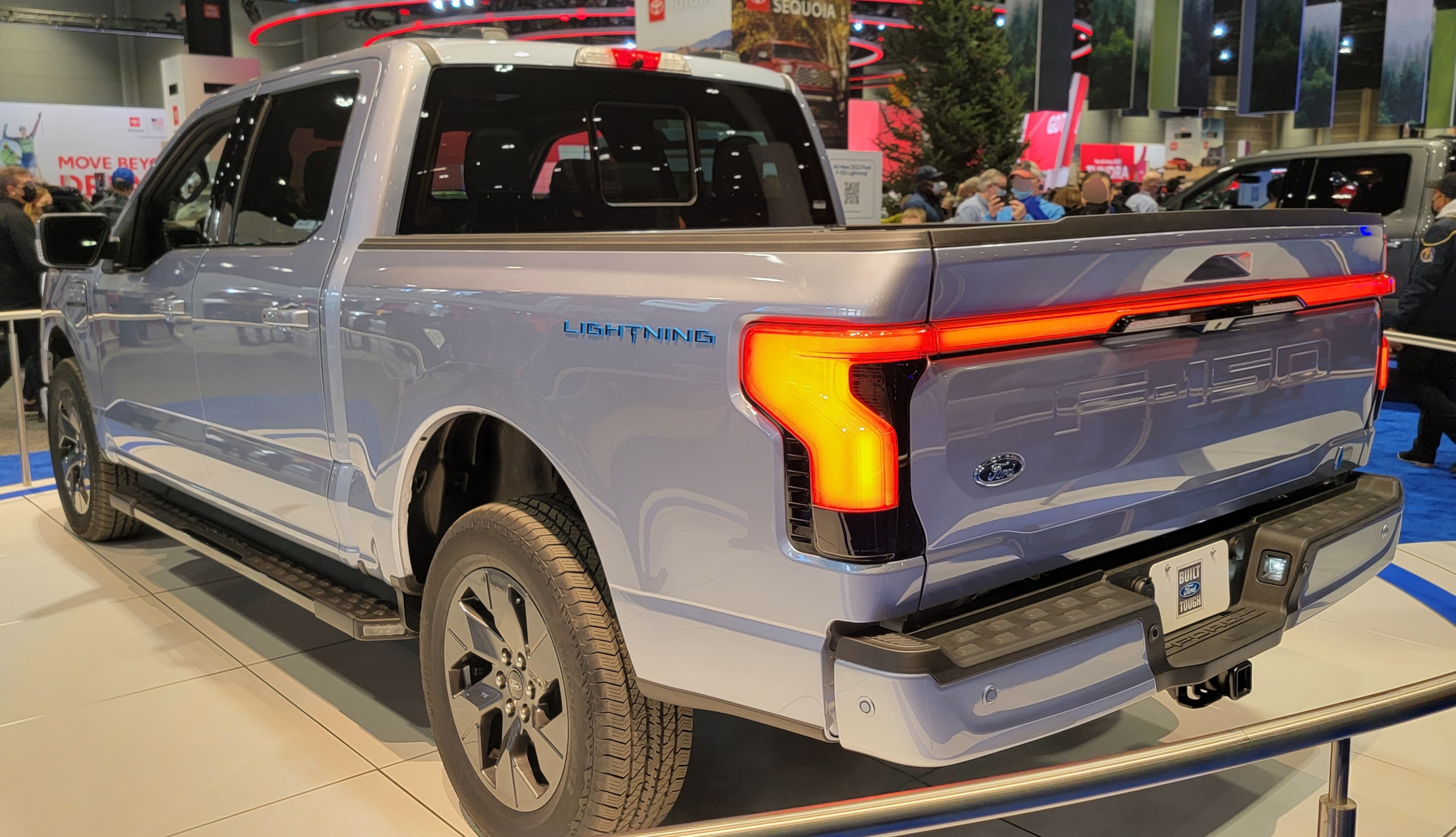
"Just a few weeks ago in Louisville, he put forth a plan to reinvent manufacturing essentially to tear up Henry Ford's assembly line for these new affordable electric vehicles. And in between, he's streamlined the product portfolio. He's cut commodity vehicles like the edge and escape and focused more on Broncos and Mustangs and F-150s. And he's really done this because he's felt it's necessary. He didn't, he told me he didn't think it was a risk. He felt it was necessary that Ford needed to have a stronger foundation than what it had when he started."
"...al strength. One aspect of the leadership dynamic F Ford that I've wondered about for quite a long time is..."
Select text to request an explanation
This podcast is brought to you by proton dealership IT experts in dealership cyber security and IT management. Interested in a free cyber security compliance or IT consultation? Visit protontex.com. That's PRO-T-O-N-T-E-C-H-S.com. Welcome to Daily Drive for Wednesday, October 1st, 2025. I'm Kellan Walker in Las Vegas. Today on the show, EV sales take off in September.
Ahead of the end of federal tax credits. ZF slashes jobs as it pushes to cut cost. And we'll talk about what the government shut down means for the auto industry. Plus, today marks the five-year anniversary of Jim Farley's time as CEO of Ford. Our own Michael Martinez talks about what he's accomplished and will hear pieces of his recent interview with Farley about his time on the job so far.
I feel that my remit at the beginning was to build a foundation that Ford did not have.
Let's run through all the news you need to know to keep up in the auto industry.
A sharp sales increase in electric vehicles and hybrids helped Ford, Hyundai and Kia post double-digit gains last month.
That's as consumers rush to take advantage of an expiring federal tax credit toward EV purchases. Ford sales rose 13% last month.
Volume was up 14% at the Ford division, but down 10% at Lincoln. The automaker sold a record 30,600 EVs, up 30%, and a record 55,000 hybrids during the third quarter.
Hyundai said its EV sales surged 153% last month, led by the Ionic 5.
US sales rose 14% at Hyundai and 11% at Kia. As of recording time, we're still waiting on September sales results today from Toyota, Honda and Subaru.
GM, Nissan, Stellantis, Volkswagen and Audi are also expected to release third quarter results today. You can find all of the latest sales results at autonews.com.
The US Department of Energy has taken a 5% stake in Lithium Americas, and a separate 5% stake in the company's Thacker Pass Joint Venture with General Motors in Nevada that is set to be the largest Lithium source in the Western Hemisphere.
The deal marks the latest private sector investment by President Donald Trump's administration. It follows US government acquisitions in Intel and MP materials.
As the government attempts to boost industries, it considers vital to US national security.
And ZF is cutting 7,600 positions at a electrified drivetrain division. The German supplier has been stepping up its restructuring efforts to deal with poor demand.
The division is ZF's biggest in terms of jobs and sales. It employs about 30,000 workers producing electric, conventional and hybrid systems.
The unit will halt development of EV-related products while shifting investments to technologies including plug and hybrid drivetrains.
And those are today's headlines. You can find more details on all those stories at autonews.com.
As you probably heard by now, the US federal government has shut down most of its operations. That's after Congress blew past its midnight deadline to pass a funding deal.
Our own Jake Nears spoke with automotive news staff reporter Molly Boygon about what it could mean for the automotive industry.
Molly Boygon, as always, welcome back to Daily Drive.
Thanks for having me, Jake.
All right, so the government has shut down at least most of its operations. What does this mean for the auto industry, especially if it drags on for an extended period of time, which sounds like it's definitely possible in this case?
Luckily, a lot of the agencies that regulate the auto industry will have what's predicted to be a kind of limited shutdown impact, but there are a few agencies that will impact the auto industry.
So perhaps most importantly is the EPA. So there are about 15,000 employees at the EPA and the agency in its shutdown plan said that it expects to retain only about 1700 of them.
So I'm no mathematician, but that's not a lot.
And in the shutdown plan, the agency also says that it will stop doing research, it will stop doing civil enforcement inspections, and it will stop issuing permits, guidance, regulations, and policies, unless they're exempted from that list for some reason.
So the concern from the auto industry is that there are two departments at the EPA that certified vehicle compliance with the Clean Air Act.
And the EPA has not specifically exempted those two divisions from the furlough. So the Alliance for Automotive Innovation wrote a letter to the EPA asking the EPA to make sure to exempt these two divisions.
Because the certification of 2026 model year compliance with the Clean Air Act is ongoing and the 2027 model year certification is going to begin soon.
So the Alliance says if those certifications are delayed, it could either delay manufacturing, or it could require automakers to store built vehicles while they wait for the certificate, and worst case scenario that could interrupt the supply of vehicles to the market, which would impact pricing, and obviously also result in significant losses for the automakers.
This is a pretty big deal, enough of a big deal for the Alliance to reach out to the EPA about it. I contacted the EPA to ask whether these two divisions would be exempted, and they declined to say specifically, and only redirected me back to the compliance plan.
So in the letter, you said it begins soon. Do we have any concrete idea of like how long this could go on before it becomes a tangible problem?
I don't have a good sense of that, except for that the 2026 model year certification is happening right now.
So people who are listening to this show know that time is money, and the longest government shutdown in history lasted for 35 days.
So if this were to go on for a month, that's a month of lost delivery, and a month of lost sales for 2026 model year vehicles, which is pretty significant.
So that's the EPA side of things. What about other government agencies that interact with the auto industry?
Yes, so another one of our favorite topics, you know, at automotive news and in the auto industry is tariffs.
So the importers will be pleased to know that they will still have to pay tariffs during the government shutdown.
The Department of Homeland Security said in its shutdown plan that U.S. Customs and Border Protection Revenue Collections is an exempted activity, which means that it will continue.
So, you know, be prepared to open your wallets and pay those tariffs.
Another agency that's obviously important to the auto industry is the Department of Transportation.
So the Federal Highway Administration and NHTSA both fall under the umbrella of the Department of Transportation, and both of those two departments or agencies plan to basically continue operations as normal.
And in particular, the Federal Highway Administration, which distributes funding for NEVY, the National Electric Vehicle Infrastructure Formula Program, said specifically that activities and personnel funded by the Infrastructure Investment and Jobs Act, which funds NEVY, will continue.
So the disbursement of those funds under NEVY should continue, and then lastly, the government through the One Big Beautiful Bill Act now law established new for entity requirements for taxpayers seeking the battery manufacturing tax credit.
So companies that are trying to manufacture battery components and get a tax credit for that now have to meet new requirements about where they're sourcing their materials and components.
The IRS was supposed to release new guidance about those foreign entity requirements and the projections that I've seen say that now that guidance is going to be delayed.
So those are some of the sort of top line impacts on the auto industry of the government shutdown, and we'll just have to see how long it goes on.
Yeah, never a dull moment in 2025, and we are especially when there are big breaking news stories related to the government, we are always on top of it.
And off quite often, it's our own Molly Boygun. Molly, thank you so much for filling us in, and I'm sure you'll be staying on top of it. Thanks again.
Absolutely. Thanks, Jake.
Coming up, automotive news Ford reporter Michael Martinez talks about Jim Farley's five-year anniversary as the automaker's CEO.
That's next on Daily Drive.
Automotive news shift podcast brings you the latest on automotive technology trends and transformation. I'm Hannah Lutz.
And I'm Molly Boygun. We're the new co-host of Shift, and we're excited to bring you new conversations with experts and industry insiders like this one with Larry Dominique, president of LD Management Consultant.
Do you believe the legacy OEMs are falling into a trap? They've got to find a way to, in some ways, build new airplane while they're still in flight.
Cutshift available every Sunday, wherever you get your podcast.
While you provide top-notch support to your team and customers every day, is anyone taking the time to ensure your sensitive data remains secure?
Just one click on a malicious link can place your entire dealership in danger. In fact, the average cost of a data breach served past four million last year.
Stay one step ahead by understanding the threats and minimizing your risk. Proton dealership by T works around the clock to provide you with support 24-7-365.
Operating out of a cutting-edge security operation center, located in the USA. Proton continuously monitors, detects and responds to your potential network issues or cyber threats.
You've got a lot on your plate. Keep your focus on where it matters most. Your customers will handle the cyber support, learn more about our comprehensive services at ProtonTax.com.
That's P-R-O-T-O-N-T-E-C-H-S.
Welcome back to Daily Drive. I'm Kellyn Walker.
Today marks five years since Jim Frawley took over as CEO of Ford. It's been an eventful half decade, which has seen the automaker trimming its product portfolio, investing heavily in electrification and continuing to deal with quality issues.
Our own Jake Nears spoke with automotive news Ford reporter Michael Martinez about the anniversary, along with clips from his recent interviews with Farley and other Ford executives.
Mike, welcome back to Daily Drive. Thanks for having me.
All right. Well, I had to get in my cheesy alliteration at the beginning. So, Ford's five years of Farley. Talk about some of the most notable changes at the automaker during that time.
Well, there's certainly been a lot of changes in the industry. It's interesting that he came in sort of during the coronavirus pandemic still in late 2020.
And after that, he's had to deal with the chip shortage, these sort of swings in regulatory policy and now tariffs. Obviously, everybody's had to deal with that, though.
But I would say the key changes under Farley at Ford that are specific to them are pretty big ones. He's taken really big swings. Some might call them risks.
He resegmented the business. Remember a few years ago, he spun out Ford Pro. He spun out Model E as the electric vehicle division and then the gas powered division Ford Blue.
Just a few weeks ago in Louisville, he put forth a plan to reinvent manufacturing essentially to tear up Henry Ford's assembly line for these new affordable electric vehicles.
And in between, he's streamlined the product portfolio. He's cut commodity vehicles like the edge and escape and focused more on Broncos and Mustangs and F-150s.
And he's really done this because he's felt it's necessary. He didn't, he told me he didn't think it was a risk. He felt it was necessary that Ford needed to have a stronger foundation than what it had when he started.
I feel that my remit at the beginning was to build a foundation that Ford did not have. I'm very proud of the team I built.
Nothing it makes me happier to see my team win on the field, whether it's market share in North America, R0, 3MIS or the billion dollar cost we took out first time in 15 years without restructuring.
So I would say I'm most proud of just watching my team excel.
And Mike, you're writing your piece about this anniversary that Farley also set out to be a thought leader in the industry. I'm curious how you think that's manifested during his time so far as CEO?
Well, I think he's certainly been out there a lot more than past CEOs Ford, even other CEOs throughout the auto industry.
And when I say out there, I guess I mean in the public eye he's talked a lot about the existential threat, the industry faces from Chinese competitors.
So he's been sort of on the record warning about that. He's talked a lot about what he calls the essential economy, which are blue collar jobs, people who build and make things.
In fact, he's hosting a conference this week in Detroit that talks all about that and how to better promote those types of jobs.
Coincidentally, that really helps his business for pro serving those commercial customers, but that's the size of the point.
He's also been a very public figure in terms of his social media. He's the first Ford CEO to be on Twitter actively and it's oftentimes it is actually him, not just a handler.
He has his own podcast where he interviews celebrities. And he goes on road trips a lot of the time, posts about it on social media.
And it does. I would say a lot of it's pretty authentic. This is something he likes to do because he feels it's important for leaders to get out and experience things and ask questions and actually learn from those questions.
I just grew up in a family, friends, education system in my early business career Toyota, where the higher curiosity I have and then constructing questions tied to that, the more I made progress, the more whatever I was working on made progress.
I just have a deep belief that whether it's again by experience road trips going to a plan, you know, talking to an entry skip level that whole way of working.
I would say the Toyota believes in deeply is very grain in my ethos and there'll be another CEO that is different and that's okay.
But for this transformational period, I do believe it's a real strength.
One aspect of the leadership dynamic F Ford that I've wondered about for quite a long time is it's not like other automakers in a lot of ways right that bill Ford talks all the time about it being a family company.
How does that work? How does that relationship with executive chair bill Ford and Jim Farley as CEO, what has that meant for the company and how does their personal relationship sort of influenced how the company is run.
You know, it's interesting because as you point out, Jim Farley is the boss, but he has a boss.
And I think he's very cognizant of that, but at the same time, it's not just a boss worker dynamic, it's a partnership, which is how he likes to describe it.
But what I think having that Ford family there obviously bill in that chair the past quarter century, 25 years or so, but just having that family Ford family person there provides a certain sense of stability that no matter who the CEO is.
There's a vision that sort of transcends whatever leaders are in place at the moment that the company is aiming to reach and Jim Farley likes to credit bill for setting that vision and for being a good sounding board.
He talks a lot about the advice he's received from Bill in the past that you don't get easy problems as CEO, you get problems that are often 51-49, do I do this or that, and you have to make the tough call.
You have to live with that tough call. Remember that's something he shared with me a few months back that Bill told him, but really he says almost everything he's done as CEO has been in partnership with Bill Ford to further that vision and also in partnership with Ford's board of directors.
We've made a lot of progress. All these decisions virtually all of them Bill and I made together.
And Bill has been quite effusive in his praise of Jim over the years. I remember speaking to him at an event and he talked about how certain CEOs tend to skew either operationally or more, again, thought leader he sort of philosophical.
And he said that Jim can sort of straddle both of those worlds that he does have big picture ideas have interesting thoughts.
But that he can execute and he can set up a company to do well organizationally operationally.
So you also spoke with other Ford executives for your piece, including COO Kumar Galhotra and CMO Lisa Madarazo.
What did they have to say about Farley's leadership and what it's meant to them?
You know, there's certain words that pop up over and over when you talk with folks and one of them is focused.
They say that Jim is really focused.
The Ford leadership and the company on results and on progress and that every day he sort of drives home the message that we have to get results.
They also say he's really curious.
That's something I've heard throughout my time covering this company, whether it's an executive or a dealer, they say, Jim Farley really does ask you questions to learn.
He will ask you questions at all hours of the day. I've talked to dealers who get texts in the middle of the night from Jim Farley asking for sales reports from their store about how things are looking.
But one thing that I thought was interesting between Lisa and Kumar was that Lisa's a new hire.
She worked with Jim at Toyota, but she's now Ford's CMO and Ford just launched this big brand campaign.
Ready set Ford. We've talked about it a few weeks ago.
And she said that this was her assignment from day one. Jim really hammered home the point to her that they really needed the brand to have a message to the public.
I knew what they were doing inside the company, but the rest of the public needed to see what the Ford brand really stood for.
And so they released this ad campaign when I was talking with Kumar a long time executive who's been elevated to COO under Farley.
He said that one of his best pieces of advice from Jim came a few years back when Kumar was leading the Lincoln luxury brand and also coincidentally had to deal with the brand.
And the key thing they said they always stuck with me and to this day is we the leadership team on the brand.
We have to be good shepherds of it. We have to decide where we want to take it because it's our brands.
And that's something that cannot be delegate to anybody outside the company.
So yeah, Jake, I think that really sort of shows how throughout his career, whether he's working with other executives or he's CEO himself.
He really is focused on being a good steward of the Ford motor company of the Ford and Lincoln brands.
And sort of practicing what he preaches, racing in vehicles himself, really being an ambassador to show folks what the company's all about.
We're getting into the back half of the decade now.
Ford still faces plenty of challenges as many automakers do.
But especially when it comes to things like quality, you know, what are some of the things that you think Farley really hopes to accomplish as CEO.
Those things are sort of persistent problems that in some cases predate him but have continued to be problems.
Yeah, we should point out here that Jim Farley's tenure has not been without its controversy or mistakes.
Quality has been a very, very, very big source spot, something he has not been able to figure out.
So I'd say cost and quality, he has all been talked about how Ford is behind the eight balls, so to speak when it comes to manufacturing costs compared to its competitors.
They've started to get a handle on that but still have a ways to go.
Quality, record number of recalls this year, you can't get around that at the same time.
The new stuff that's coming out can argue the products that Farley has had the biggest control of.
They've made progress in terms of zero months in service, three months in service, really good metrics there.
Third party initial quality surveys show they're getting better.
So still more work to do but at least some encouraging early signs.
What was interesting Jake is when I asked him this, what do you see as your biggest challenge and what do you see not necessarily a legacy question but what do you ultimately want to do for Ford?
He was pretty clear in that they needed to execute to not just get a handle around their problems but to be able to solve them for the long term.
He mentioned that Ford has been a great American company for many times throughout its career but it's been sort of a roller coaster ride where they'll make progress on one area, another area gets bad or they'll solve a problem a few years later that problem comes back.
He's hoping to sort of rise above all that and create a high margin business that returns value to shareholders and makes a good product that people can rely on that can last throughout his tenure,
no matter who the CEO is, just the fact there's this underlying foundation where the public, the Ford family, anybody else can talk about Ford Motor Company as one of the great industrial giants of the 21st century.
Michael Martinez covers Ford as well as the UAW for us at Automotive News. Mike, thanks so much for joining us again. Appreciate it.
Thanks Jake.
That's daily drive for today. I'm Kellan Walker. Thanks to Automotive News Journalist Molly Boygon and David Phillips for their reporting for today's podcast.
You can get the latest news on automaker executives, US sales results and everything happening in the auto industry at autonews.com.
Come back tomorrow for a look at the impact of the EV Tax Credit Sunset with Stephanie Valdez-Streetie, Director of Industry Insights at Cox Automotive.
We're going to still see innovation, we're going to see investment and I think at the end of the day it's going to be critical for the industry to have more affordable EVs.
We'd love to hear from you. Let us know what you think of the show on the topics we covered today.
Send us an email at dailydriveatautonews.com or leave us a voicemail at 313-444-2774.
And if you enjoy the podcast remember to like, leave a review and subscribe so you never miss an episode.
Request an explanation for:
6 cars
6 cars featured
Request an Explanation
Heard something you'd like explained? We'll add it to this episode.
Sign in to request explanations for terms you heard.
Want to learn more?
Browse our glossary for plain-English explanations of automotive terms, jargon, and concepts.
See something that's not quite right? Our annotations are AI-generated and can sometimes miss the mark.
Click the flag icon on any annotation to suggest a correction.