Production disruptions in the auto industry are highlighted as an aluminum shortage, stemming from a fire at a supplier, forces Stellantis to idle its Jeep plant. The episode also covers the ongoing trade tensions affecting chip supplies and the rising tariffs on imported vehicles and parts. Matt Babcock from Walter's Kluwer discusses the pace of digital transformation in auto lending, revealing that nearly 70% of loans are now originated digitally, while addressing the challenges faced by smaller lenders in adopting these technologies.
The fallout from an aluminum plant fire in New York spreads to Stellantis, idling its Jeep Wagoneer and Grand Wagoneer plant near Detroit. North American tariffs on cars and parts have crossed the $10 billion mark. Plus, Matt Babcock of Wolters Kluwer talks about the pace of tech adoption among auto lenders and what’s holding them back from completely going digital.
"This podcast is brought to you by AutoVision and its new AI Assistant, Avery. Avery delivers data-driven appraisals, pricing, and detailed strategies for every vehicle."
AutoVision is a company that helps people understand the value of cars and how to price them using artificial intelligence.
AutoVision is a company that provides automotive data-driven appraisals and pricing strategies for vehicles, utilizing AI technology.
"...where Ford, Stellantis, and their suppliers face production disruptions."
Stellantis is a big car company that makes many different brands of cars, like Jeep and Chrysler. It was created when two car companies merged together.
Stellantis is a multinational automotive manufacturer formed from the merger of Fiat Chrysler Automobiles and PSA Group, producing a wide range of vehicles under various brands.
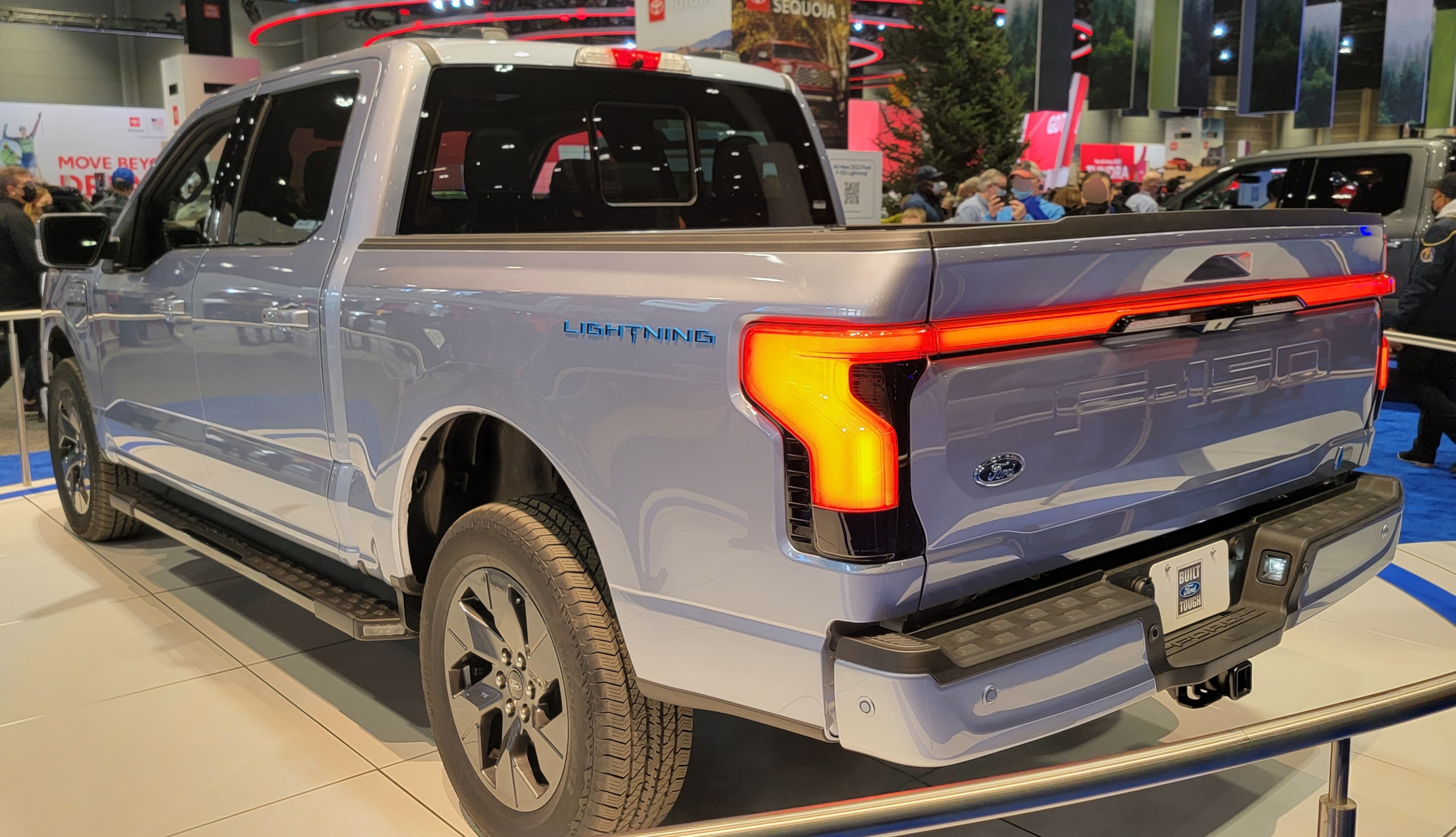
"Production of the top selling Ford F-150, which sports an aluminum body, has been cut by more than half at Dearborn Truck Assembly as the automaker grapples with a shortage of the metal stemming from the novella's fire."
The Ford F-150 is a well-known truck that many people use for work and personal use. It's popular because it's strong and has a lightweight aluminum body.
The Ford F-150 is a popular full-size pickup truck known for its aluminum body and strong performance, often leading sales in its category.
"...where Stellantis builds the Jeep Wagoneer and Grand Wagoneer. The automaker says the plant is being idle for three weeks because of a parts shortage."
The Jeep Grand Wagoneer is a larger, more luxurious version of the Wagoneer, designed for people who want a comfortable ride with lots of features.
The Jeep Grand Wagoneer is a luxury full-size SUV that offers advanced technology and premium features, catering to those seeking comfort and capability.
"...where Stellantis builds the Jeep Wagoneer and Grand Wagoneer. The automaker says the plant is being idle for three weeks because of a parts shortage."
The Jeep Wagoneer is a large SUV that can be used for both everyday driving and off-road adventures. It's known for being comfortable and capable.
The Jeep Wagoneer is a full-size SUV that combines luxury with off-road capability, making it a versatile choice for both urban and rugged environments.
"...the Netherlands is in talks with China over export controls imposed on the Chinese own chip maker Nexperia."
Nexperia is a company that makes computer chips used in many electronic devices, including cars. These chips help control different functions in vehicles.
Nexperia is a semiconductor company that specializes in producing chips essential for various electronic applications, including automotive parts.
"...Major automakers, including BMW, Volkswagen Group and Stellantis, have said the chip disruption stemming from the dispute between China and the Dutch government could quickly affect production..."
Volkswagen Group is a large car company that owns many different brands, like Volkswagen and Audi. They make a wide variety of vehicles.
Volkswagen Group is a major automotive manufacturer based in Germany, owning several brands including Volkswagen, Audi, Porsche, and Lamborghini, among others.
"...Major automakers, including BMW, Volkswagen Group and Stellantis, have said the chip disruption stemming from the dispute between China and the Dutch government could quickly affect production..."
BMW is a well-known car brand from Germany that makes luxury cars. They are famous for their sporty designs and good performance.
BMW is a German luxury vehicle manufacturer known for producing high-performance cars and motorcycles, emphasizing driving dynamics and quality.
Select text to request an explanation
This podcast is brought to you by AutoVision and its new AI Assistant, Avery. Avery delivers data-driven appraisals, pricing, and detailed strategies for every vehicle. Visit AutoVision.com to learn more about Avery, where precision meets profit. Welcome to Daily Drive for Friday, October 17th, 2025. I'm Jake Nier in Detroit, in for Kellen Walker. Today on the show, the fallout from an aluminum plant fire spreads
to Stellantis. The Dutch look to strike a deal with China over key chip maker Nexperia, and North American tariffs on cars and parts have crossed the $10 billion mark. Plus, Matt Babcock of Walter's Clure joins the show to talk about the pace of tech adoption among auto lenders, and what's holding them back from completely going digital.
The companies that aren't digital ultimately are becoming the minority, and is more and more of the lending ecosystem continues its move to digital. You know, we see adoption that continue to chug along and increase.
Let's run through all the news you need to know to keep up in the auto industry.
And from a fire at an aluminum supplier in New York a month ago is hitting Detroit where Ford, Stellantis, and their suppliers face production disruptions.
Production of the top selling Ford F-150, which sports an aluminum body, has been cut by more than half at Dearborn Truck Assembly as the automaker grapples with a shortage of the metal stemming from the novella's fire.
Now it's spreading to Warren Truck where Stellantis builds the Jeep Wagonier and Grand Wagonier. The automaker says the plant is being idle for three weeks because of a parts shortage.
UAW officials confirm that the shortage is emanating from the September 16th fire at the novellis aluminum factory in Oswigo, New York.
The Netherlands is in talks with China over export controls imposed on the Chinese own chip maker Nexperia.
The key supplier has become tangled in trade frictions between the US and China. Major automakers, including BMW, Volkswagen Group and Stellantis, have said the chip disruption stemming from the dispute between China and the Dutch government could quickly affect production as Nexperia's chips are needed for the production of parts and vehicles.
And automakers will pay 10.6 billion dollars in tariffs on vehicles and parts imported to the US from Canada and Mexico through the first 10 months of the year.
That's according to a new analysis by Anderson Economic Group. Automakers' tariff bills are likely higher than the group's estimate.
The figure only includes vehicles and parts imported from Canada and Mexico. It does not include products shipped from other nations. It also does not include 50% tariffs on steel, aluminum and a list of derivative products made up of those metals, including some auto parts and manufacturing equipment.
And those are today's headlines. You can find more details on all of those stories at autonews.com.
Coming up, how wide is the digitization of auto finance in 2025? Mike Babcock of Walter's Clure, clues us in next on Daily Drive.
Just when you think you've priced a vehicle perfectly to sell fast, the market changes, and potential profit slips through your fingers.
After all the work of scouring auction sites, tracking competitor rates, and analyzing market trends, the loss of time and money leaves you frustrated.
Meet Avery, your AI assistant from AutoVision. Avery revolutionizes how you acquire, price and sell vehicles by analyzing every detail from retail values to market trends.
And the best part? Avery doesn't just give you numbers. It explains every recommendation so you know everything that was factored in.
Picture this, faster appraisals, smarter stocking decisions, and more profitable sales, all without the exhausting legwork.
With Avery, you don't just stay competitive, you lead the pack. Ready to see Avery in action? Visit AutoVision.com.
Welcome back to Daily Drive. I'm Jake Near.
Information and software solutions provider, Walter's Clure, keeps tabs on the pace of adoption of digital contracting and documentation in the auto lending industry with its quarterly index.
Matt Babcock is a digital lending product strategist at the firm. He spoke with automotive news senior retail editor Dan Shine about how many lenders are fully digital and what's holding back the rest?
Matt, thanks for joining me on the F&I Friday edition of Daily Drive.
Of course. Thanks so much for having me, Dan. Look forward to our conversation today.
For sure. So, Walter's Clure does an auto finance digital transformation index every quarter.
Tell me a little bit about what that measures, what that's kind of looking at, and why it's important enough that Walter's Clure looks at it every quarter.
Yeah, of course. So, at a base level, the Walter's Clure digital transformation index is a key resource that tracks the rate at which the industry is advancing digitization from paper-based finance back office processes.
It's something that we see as super important. It allows the customer to realize so many benefits, recognize the value of incorporating digitized contracting and documentation workflows to increase this back office efficiency.
As well as, you know, there's been recent headlines out there about things like fraud in the automotive industry, let's say, and that's something that we also think digital is more than poised to deal with.
Got it. So, kind of what is the state of digitization as we kind of sit here today talking in kind of 2025 kind of comes to a close? How are things in the market?
All right. Well, I would say as we sort of enter the final stretch of 25, it's becoming more and more apparent that the automotive industry has made very significant strides in digitization, both on the e-contracting side as well as on the securitization side.
And more broadly even, you know, secondary markets all encompassing. So, according again to this Q3 2025 auto finance digital transformation index numbers, sorry, that's a mouthful.
We showed a four year growth rate of more than 88% being recorded for digital e-contracting adoption.
You know, obviously a very, very high number and accentuates the industry's recognition of the value of incorporating these digitized contracts to increase all of those efficiencies we spoke about.
Earlier, we're also reaching a point where I would say digital is becoming increasingly accepted as the norm.
This ultimately leads our adoption numbers to more closely follow broader auto market trends.
And fortunately for us, automotive sales have been, I would say performing actually quite well throughout the year and Q3 is well sort of outperformed expectations and many aspects as well.
So, we're able to recognize some growth on that side as well with year-to-date e-contracting being up about 7% and quarter three year-over-year growth being up about 4% again on the e-contracting side.
Sort of one final note where we sit in terms of digitization, I would say true digitization doesn't necessarily stop at origination.
Really, that only marks the beginning of the, let's say the journey for so many auto loans and leases.
It's extremely commonplace that these digital loans are going to make their way out into the secondary market through monetization activities like poll loan sale, pledging to warehouse lines, pledging to federal reserve banks and even securitization.
Just sort of briefly touch on securitization, we saw a quarter-over-quarter increase of 27% in digital automotive securitization transactions and we still show a very positive 40% growth trend over four years there as well.
So ultimately, to kind of sum this one all up, I would say that the state of digitization is in a pretty good place.
Adoption continues to increase and we're ultimately just glad to see so many institutions leverage these capabilities that create securing compliant digitized loans, allowing them to deliver customer experiences that differentiate themselves from others in the marketplace and really allow them to grow their business in efficient manner as possible.
Before we talk about overall market adoption and how many, our most companies digital now, will there be a time where Walters who are going to have to have this index because everyone is going to be 100% digital?
That is a great question, I will say we hope to get to that point and I would say we're well on our way.
So to sort of answer your question around, it sounded like you were asking about the majority and I would say our internal research has shown that the majority of automotive loans and leases that are being originated are being done so digitally and an analysis of 2024 specifically showed us that number maybe as high as almost 70%.
So this is, we're making great strides here and just to also touch on that number a little bit more and to dive a little more in depth.
I would just say one other really great thing to see is that the market adoption is not exclusive to a single type of lender.
So you'll see banks, credit unions, captives, finance companies, probably other types of lenders that I'm forgetting here.
They're all originating assets electronically now and adoption is also quite strong both in terms of direct and indirect lending and the directional split between paper and electronic is quite similar across direct and indirect.
So I'd say that market adoption of e-contracting is strong and it's not really just in one area but rather it's showing strong adoptions throughout the broader auto lending landscape.
For those companies that haven't jumped on the digital train for whatever reason, what are the challenges and the things that are holding it back?
Is it a monetary thing? Is it a costly to do this? Is it just people are afraid of technology or are they stuck in their old ways or all the above?
I would say it's a little bit of all the above. I think all of those concerns could be real. They could be realized but ultimately it's a lot of times some of the concerns may be a little overinflated.
So I would say the first thing I like to tackle when I get this question is sort of the idea that there's these digital doubters out there.
We like to call them who think maybe digital isn't the future. For my personal experience I'll say as well as there's been plenty of research and surveys.
This group seems like it's kind of on its way to extinction. There's very, very few voices out there that are saying going digital isn't the future just with where we are today.
So that's sort of the first point. But the second point is hey, that brings us to that interesting question of if everyone sees the future as digital, why does everyone just go digital today?
That's the much more interesting question that I believe you're sort of asking here and it's it really comes down to every lender's digital journey.
It's going to play out differently and naturally some lenders are going to recognize more benefit from going digital than others are coming on where they are.
So typically the companies that aren't digital, I would say fall under the bucket of maybe these smaller lenders, so think small credit unions or small community banks.
These institutions may still utilize paper for a few reasons. I would say at smaller institutions, a lot of times it's going to be more emphasis on managing the day to day and they might not have the man powered a research and fully implement a digital solution.
There could also be limited technical expertise. Perhaps they want to implement a digital solution and recognize the importance, but they don't know how.
And I'll tell you from sort of personal experience. This is maybe a bit more common than you would think.
And finally, another reason could just be that, hey, paper feels safe. It's tangible. It's simple and it's the way they've always done things.
However, I would say in reality, the recent fraudulent activity that we've seen in the auto industry shows that the security of paper can indefinitely should be called into question.
Whereas a true digital asset management platform can grant you auditable tamper proof digital chain of custody for your digitally originated loans and the legal standing to show that these loans comply with all applicable laws, which greatly limits or even eliminates the possibility of fraud.
So I would say, you know, the companies that aren't digital ultimately are becoming the minority and is more and more of the lending ecosystem continues its move to digital.
You know, we see adoption that continue to chug along and increase.
That's interesting to kind of watch that transformation as, you know, every quarter through your index. Matt, really appreciate your time. Thanks so much.
Of course, thank you very much.
Matt Babcock is a digital lending product strategist at Walters, Clour. He spoke with our own Dan Shine.
That's daily drive for today. I'm Jake Near in for Kellen Walker. Thanks to our own John Irwin for his reporting for today's podcast.
We also had reporting from Kurt Nagel of our sibling publication, Crane's Detroit Business.
You can get the latest news on retail tech, supply chain issues and everything happening in the auto industry at autonews.com.
Come back over the weekend for our weekend drive edition of the show, our own Larry Velliquette and Michael Martinez join the show,
to talk about the week's biggest news stories, including Stellantis's $13 billion investment in U.S. manufacturing.
I think you're going to see some of these moves on the fringes, filling under utilized plants that already exist.
It's not like Stellantis is building a brand new assembly plant in the United States, but they're taking advantage of the space that they already have.
I think to greater extent than they would have if it were not President Trump, if it were not the current turf situation.
We'd love to hear from you, let us know what you think of the show and the topics we covered today.
Send us an email at dailydriveatautonews.com or leave us a voicemail at 313-444-2774.
And if you enjoy the podcast remember to like, leave a review and subscribe so you never miss an episode.
Request an explanation for:
3 cars
3 cars featured
Request an Explanation
Heard something you'd like explained? We'll add it to this episode.
Sign in to request explanations for terms you heard.
Want to learn more?
Browse our glossary for plain-English explanations of automotive terms, jargon, and concepts.
See something that's not quite right? Our annotations are AI-generated and can sometimes miss the mark.
Click the flag icon on any annotation to suggest a correction.