Nexperia China has declared independence from its parent company, raising concerns about potential chip supply disruptions that could affect the auto industry. Volkswagen warns of possible production halts due to these issues, while auto supplier Dana announces a plant closure and layoffs due to falling EV demand. Annie Fallows from Capital One discusses the company's Navigator platform, designed to streamline the auto lending process for consumers and dealers, emphasizing the importance of a seamless experience in financing vehicles.
Topics:chip supply issuesnexperia independencevolkswagen production concernsev demand declinecapital one navigatorauto lending processdealer partnershipsconsumer experience
Nexperia China declares independence from its parent company as the industry braces for chip disruptions. Those concerns spark a warning from Volkswagen to its workers about possible stoppages. Plus, Capital One’s Annie Fallows talks about the company’s attempts to streamline the auto lending process with its Navigator platform.
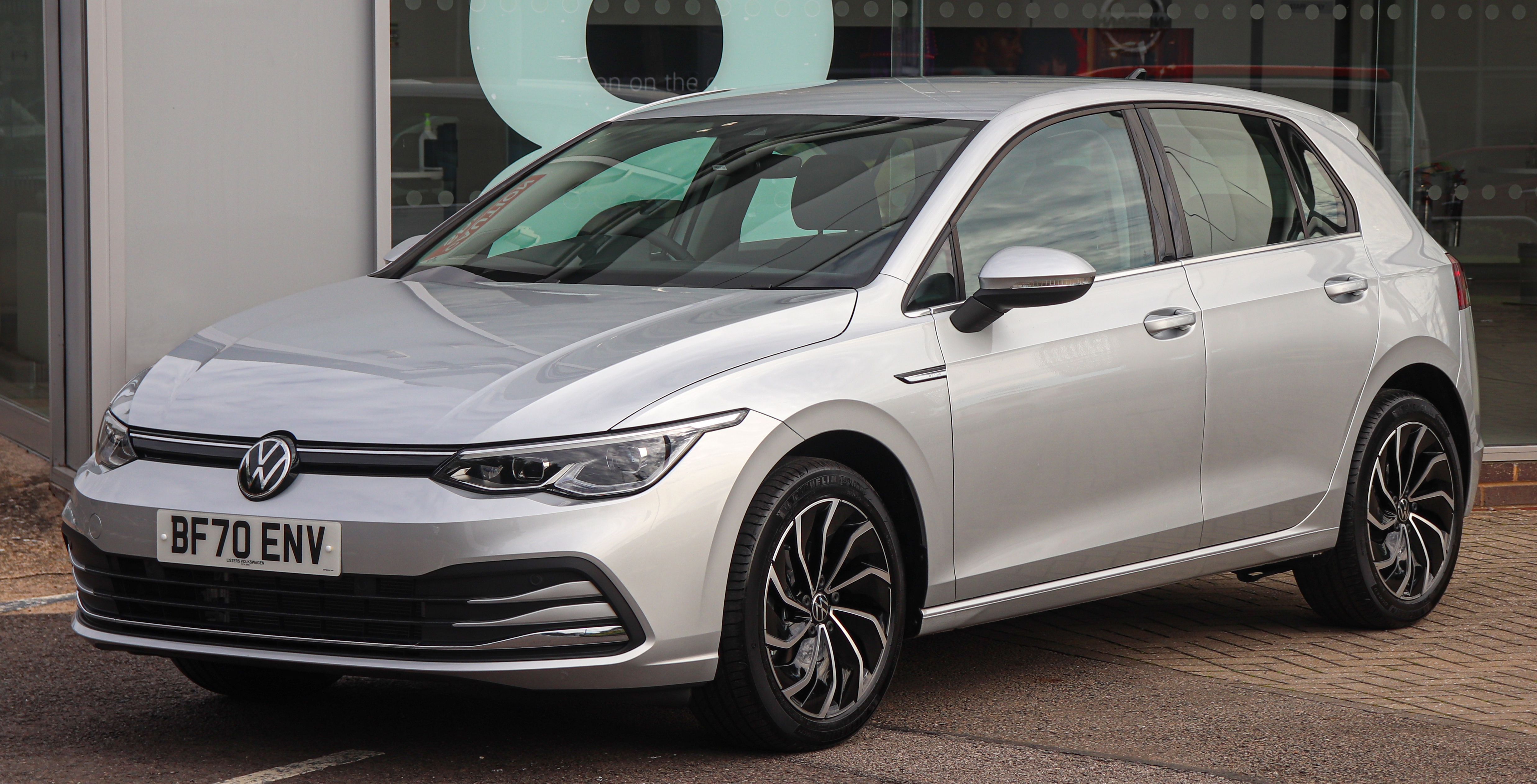
"...hitting the golf line first. Its side sources familiar with the plants."
The Golf is a small car made by Volkswagen that many people like for its good balance of size, comfort, and performance.
The Volkswagen Golf is a compact car that has been popular for decades, known for its practicality and performance.
Select text to request an explanation
Credit card fees are roting your bottom line. Page Unctions integrated smart surcharge solution offers built-in compliance tools, simplified reporting, and thoughtfully designed customer facing terminals that protects CSI. Some dealers are saving over $130,000 annually per rooftop. See it in action at payjunction.com slash auto. Welcome to Daily Drive for Wednesday, October 22nd, 2025. I'm Kellan Walker in Las Vegas.
Today on the show, next spirit China declares independence from its parent company as the industry braces for chip disruptions. Those concerns spark a warning from Volkswagen to its workers about possible stoppages, and sputtering EV demand causes auto supplier Dana to close a Michigan plant and lay off 200 workers. Plus, the Capital One's Annie Falos joins the show to talk about the company's attempts to streamline the auto lending process.
We have a number of lenders who have been excited to join in with us. You know, it's all additional opportunities for them to connect with consumers and dealers.
Let's run through all the news you need to know to keep up in the auto industry. Next spirit China arm says it's now operating independently. It's a move that deepens tensions over chip supplies critical to the global auto industry.
The announcement came just before Dutch and Chinese officials met to discuss the escalating dispute. The Dutch government recently seized control of next spirit from the Chinese parent wing tech. Beijing has blasted another lens for what the Chinese media have called, quote, economic banditry. China's commerce minister urged the Dutch to protect Chinese investors' rights while the Dutch side said it hopes for a constructive resolution.
The fallout from that next spirit dispute is already rippling through Europe's auto industry. Volkswagen is warning employees it can't rule out production halts because of supply chain disruptions tied to the chip maker's turmoil.
VW says its plants haven't been affected yet but it's bracing for possible short term impacts. German news daily build reports that stoppages could start as soon as October 29th hitting the golf line first. Its side sources familiar with the plants. VW calls that speculation for now.
Beyond the chip turmoil supply chain strains are hitting other corners of the industry. Supplier Dana is shutting down its Auburn Hills Michigan plant and laying off 200 workers. That's as EV demand fall short of expectations. The company told the state it will wind down operations through January.
Dana says the sudden drop in customer orders for electric vehicles made the plant unsustainable. Just two years ago the supplier pledged more than $50 million to expand the site for EV battery cooling parts. A bet that's now gone cold as the market slows.
And those are today's headlines you can find more details on all those stories at autonews.com. If today's news about nexperia and Dana are any indication it's probably no surprise that auto suppliers are on edge. That tracks with the findings of our latest automotive news auto industry confidence index.
Here to talk about it is our own John Erwin who covers the supply chain for us at automotive news. John welcome back to daily drive.
Thanks for having me. All right, John elephant in the room. Suppliers are feeling more stress lately. What's causing it?
Yeah, this year I think a lot of it is being driven by kind of two big factors. The first being tariffs and kind of uncertainty that's been kind of brought in place since tariffs have been rolled out and the additional costs associated with those.
And then on the other hand, you have automakers kind of rolling back some of their electrification plans and suppliers trying to sort of readjust to that.
A lot of this stuff outside of the tariffs are things that suppliers have been a bit stressed about for the early since covid. I mean, there's been a lot of inflation and labor costs and risen things like that.
I've been issues that suppliers have been talking about for a while now, but those are still there. Those are still the things that suppliers have told us in the confidence index that are issues that are very upfront for them.
But I think front of mind really more than anything is maybe the EV transition and how that's maybe not come as quickly as a lot of companies were baking on a few years ago.
Because of that, a lot of companies made big investments few years ago, the returns maybe haven't been there and a lot of companies are sort of left looking for that return, trying to get, you know, figure out where to go from here.
That's left a lot of companies looking for the price adjustments from their customers as they look to automakers look to extend their IC programs.
But whether that happens, it sort of depends on the supplier. A lot of the suppliers that we surveyed so that they're not feeling very good about their pricing power at the moment.
They're not very optimistic six months from now that that situation will improve.
So a lot of companies are feeling right now like they're maybe not making, you know, the profits they were anticipating few years ago, which coming off of those big rounds of investments and things like that.
For a lot of them is not an ideal situation to be in on top of that you have just general uncertainty about the market moving forward where things will land with tariffs and that sort of thing.
A lot of companies have had some success in pushing tariff costs up to their customers, but there's, you know, questions about how long that'll last where tariffs will ultimately settle after North American trade talks happen.
So there's just kind of a general unease about where things are at for a lot of suppliers, generally speaking, of course, there's some that are doing much better than others, but there's kind of a general sense of uncertainty, I guess, at the moment for a lot of the supply base.
And compare results from largest suppliers to what we're seeing from smaller companies.
Larger suppliers in general, again, I want to speak very generally here, but larger suppliers tend, I think, to be doing at least a little bit better on some of these fronts than smaller ones, which makes a little bit sense.
And we're talking about large, especially publicly traded suppliers like your magnozer, liars and those sorts of companies in the world, you know, those suppliers tend to be diversified.
They have, you know, a lot of access to capital, they have a lot of customers and all of that in the end kind of brings them a lot of leverage at the end of the day.
You know, they have a lot of expertise in various areas. They can lean a little bit more into, you know, one part of the business, if the others flagging a little bit.
And that gives them a little bit of power with automakers and a little bit of leverage when they're looking for, say, a price increase or some other concession.
Whereas when you look at smaller suppliers, especially once you get into, you know, smaller mama pop shops or, you know, companies in the lower tiers, a lot of them, maybe they only make one or two products, they might only rely on, you know, one or two customers.
And they might be really, really good at that thing, but, you know, if the market isn't quite where they were anticipating or they, there are other competitors and maybe automakers can turn to, they don't find themselves with a lot of leverage.
And in this moment, where there's kind of a lot of uncertainty about where things go in the future, they might not know exactly where they want to invest.
If they're even able to, if they have the capital at the moment to do that.
So, yeah, for a lot of them, the situation is a little more perilous than the bigger suppliers.
Again, kind of speaking generally here, there are certainly some smaller suppliers in, you know, in this situation where, you know, gas powered vehicles are, you know, the count for a larger share of the market moving forward.
And maybe people are anticipating a few years ago, if you're in that space and you're not super impacted by tariffs compared to other companies, you might be doing okay.
But generally speaking, a lot of those smaller companies are trying to feel out kind of where things are going moving forward. And that's easier said than done.
Good stuff, John. John Rowan, thank you so much for joining me.
Thanks so much.
You can find all of the findings and details of our Q3 auto industry sentiment index on autonews.com.
Coming up, Capital One is seeing results from its navigator platform, which is meant to streamline the auto lending process.
The head of the platform, Annie Falos, joins the show to talk about it next on Daily Drive.
Automotive news shift podcast brings you the latest on automotive technology trends and transformation. I'm Hannah Lutz.
And I'm Molly Boygon. We're the new co-host of shift and we're excited to bring you new conversations with experts and industry insiders like this one with Larry Dominique, president of LD Management Consultant.
Do you believe the legacy OEMs are falling into a trap? They've got to find a way to, in some ways, build new airplane while they're still in flight.
Catch shift available every Sunday, wherever you get your podcasts.
What if your dealership could save $130,000 per rooftop with one simple switch? Automotive leaders are under constant pressure as labor, parts, and processing costs climb.
That's why dealers are turning to pay junctions smart search charge, a cost-cutting tool built for auto with DMS integration and CSI protection in mind.
Smart search charge automates many compliance requirements with terminals that display disclosures, automatically exclude debit cards, and integrate with text-to-pay.
These features protect CSI by giving customers a clear choice, the convenience of credit or the savings of debit.
The impact? One dealership using pay junction cut its effective card in debit rate by 58%, saving over $130,000 a year per rooftop.
And now dealers making the switch to smart search charge can get even more since pay junction is offering a free month of processing to dealers and shop owners reimbursing up to $10,000 in processing fees.
When a qualified auto industry merchant activates smart search charge by visiting payjunction.com slash drive savings.
For 25 years, pay junction has built its own payment technology, specifically engineering tools that integrate payments with auto industry management software.
While providing access to tools designed to enhance the customer experience, take control of costs, streamline payments, and reinvest your savings with pay junction to gain a competitive edge for your business.
Get your free month at payjunction.com slash drive savings today.
Welcome back to Daily Drive. I'm Kellan Walker.
Capital One's Navigator platform gives dealers, lenders, and customers tools to make the auto lending process smoother for everyone involved.
Annie Fallow's leads navigator for Capital One.
She spoke with Automotive News Retail reporter John Hutter at the Auto Finance Summit in Las Vegas this month.
I guess kind of the first thing is just kind of, I think it's been a while since I've talked with you guys over at Capital One about navigator.
And I guess can talk about kind of where that's at both the customer facing one.
And then I believe you've got one that's kind of meant more on the dealer side.
Yeah, we've been on a really exciting journey. So exactly as you are saying, it's a multi-sided platform where we always work back from the consumer and the dealer needs.
And so we have Auto Navigator, which is the consumer facing version of it.
And we've been really on a journey to fully build out that shopping experience.
So we started with a real focus on pre-qualification and still believe that that's so important to the journey.
But we've built it out so that you can do trade-ins on it.
You can check inventory. We've done a lot to make the images really helpful and compelling.
And so that's our consumer facing property.
But as we did that, we developed a lot of capabilities that we felt could be really helpful to dealers too.
And so we've been on a journey to take those capabilities and then put them in dealer's hands.
And so dealers can do that whether that's on their website or in their in-store process.
And then along the way, we've had the opportunity to also bring on other lenders.
And so really it's a three-sided platform with multiple lenders, consumers and dealers.
But our core focus are what are the things where we can help bring them together so that they can get the car their dreams, the financing that makes sense for them in a seamless and enjoyable way.
For the on the dealer side of it, walk me through is it is it something that's called action button on their website?
Is it like a is it more of more integrated like in terms of sorting inventory based on findings or kind of fresh memory on how on that one works?
I know we talked a lot with you guys about the consumer facing one but on the dealer one I'm a little bit behind I think.
No, we've been on a journey and so you know we have buttons called to action as you say that you can put on the website.
But what we've been focused on building out in addition to that is wanting to enable the consumer and the dealer to continue together on that journey while maintaining context.
So I'm sure we've all had experiences you go online, you find that car or that pair of shoes or whatever the thing is that you're interested in and you enter your information and immediately what happens is your phone or your email starts blowing up.
And it's without regard to what you've actually done.
It's not about that thing that you submitted information on.
It doesn't matter that you've already pre-qualified or what have you.
And so you know for us we feel like that's a real gap in trust between consumers and dealers.
And so as we built out these different experiences that dealers can put on their website.
We both wanted to take all of those different capabilities, trade and pre-qualification and enable a full journey.
But we also wanted the consumer and the dealer to be able to pick up where they left off.
So if we've already done a pre-qual it doesn't really make sense to ask for that again.
Sure.
But a lot of times dealers don't have that whole visibility.
And so as we were building out these consumer facing experiences, we also wanted to build out a dealer facing portal where they could see all of that information
and really put them in the driver's seat to say, hey I'm looking at what you've already done.
And if you've already pre-qualified the thing that makes most sense for you now is to move you on to trade in.
Or you know I see that the car you picked up, that's a lot of car.
And I want to put some additional options in front of you that I think might make more sense for you.
And so all along the way the consumer can keep moving at their own pace.
But the dealer is always in control of what they think makes sense in their sales process.
And then that continues all the way through to in store where they can work with the consumer on the deal
and of course submit it into to fine-eating.
Talk about kind of the dealer accounts you have both on the consumer facing one because they're inventory being shown.
It's your partner dealers and then kind of the dealer adoption on the dealer facing one on the regular navigator.
So I'm pleased to say we have a network of over 17,000 dealers and we want all of them to shine.
We've partnered with them in different ways.
And so we have several thousand dealers who you can find making use of the full experience on auto navigator
and then also using different pieces of that in store.
But the thing I do want to really emphasize here is every dealer is different.
Every store is different. It's their process, it's their secret sauce.
And so what we want to be doing is just giving them the tools to make it their own so that they can use this to move a customer along in a way that's helpful.
But they're message to their branding, their process.
Is it kind of the same several thousand whose inventory are on the customer auto navigator that also they've also put it on their own websites?
Or is it kind of a different several thousand?
You know what I mean? For each one.
Yeah, we have a core set of dealers who are most bought into it, who have adopted the most things.
And so, you know, the ones you see on auto navigator are also going to be the ones who've most leaned in with our other products.
But, you know, what is interesting is you also see different people resonating with different products more.
And that's okay because that's what makes sense for their store.
You'd say it's mostly the same population, but there's a different.
There's some that are unique to each platform.
No, that's interesting. I guess could talk about where you're at with other lenders, which is interesting to me that you guys did that since it is just, you know, obviously your capital one.
But I mean, is it been difficult to get the buy-in from other lenders to join?
Yeah, so let me talk just about our philosophy on that one, which is, you know, we hold very high bar for our lending standards.
And so, you know, we never want to have any give on that because of how our underwriting works.
At the same time, as we're doing, you know, whether it's auto navigator or partnering with dealers, we know there's consumers coming who capital one may not be the right lending solution for.
And we didn't want to leave them without a way to go. That's just a poor consumer experience.
And so that's why we began partnering with other lenders so that we could get to a point where even if they're not going to be a capital one.
Finance consumer, they're going to have a great experience. They're going to be able to get pre-qualified when they're online, whether that's on auto navigator or on a dealer website.
And then they can go into the store and continue to figure out if that's the right lending solution for them.
But we think that that's very empowering for consumers.
And so that's how we've approached it. We have a number of lenders who have been excited to join in with us.
It's all additional opportunities for them to connect with consumers and dealers.
So we just think it's a big win win.
Are the other lenders on both the consumer one and the dealer one or just the dealer navigator?
Yeah, they can be on both.
What we've wanted to do, you know, specifically on the dealer one is really make sure that dealers are selecting because it's their store.
Yeah.
And so there's no point in putting a lender on if it's not going to work out in the store.
Sure, sure.
So we've wanted to put a lot of controls in their hands, but ultimately have the broadest set possible so that consumers can walk away with an option.
Okay.
Which is a consumer see multiple offers like they'll see one from capital one from the other lender or is it kind of like kind of like out and not to mention a competitor, but allies pass through product where you guys have kind of right of first refusal.
And if it doesn't fit you, then the next, you know, kind of next person up sees it or shows up on there.
So if you visit auto navigator, you know, you'll see it's capital one brand.
Right.
And so, you know, we believe people are coming there first for that.
But we want them consumers to have other choices after that.
Okay.
Does it, I mean, does it show multiple ones to the consumer once or is it just it's just kind of the sort of a best fit lender like it.
Okay.
If if it doesn't suit capital one, then the next best option or you know what I mean?
Like the most appropriate one shows up to the consumer.
We have a waterfall approach.
Okay.
If that makes sense, I think the thing that, you know, we want to be very respectful of is that it's not for us to say who is the best next lender.
Okay.
That's really a conversation that a consumer and a dealer can have together based on all of the terms of the loan.
Sure.
And so that's, that's the role we want to play.
And that's where we believe that dealers play a really important role in selecting that order.
And so we've wanted to empower them to do that.
Okay.
But that's why I guess that's sort of what I'm getting at.
The dealer, whoever the dealer selects their number two pick or whatever.
The customer would see that one option, right?
They're not seeing like all, I don't know, five other lenders at once or something like that.
Okay.
And that's the same on both sites is kind of how it works.
Talk about kind of the traffic and things like that that you've seen on both sites for consumers.
So on auto navigator, we've been on a tremendous tear.
So if you look through time, whether it's our traffic or where we show up on our, you know, SEO rankings.
You know, we are really proud of that progress.
So depending on, you know, who exactly you a benchmark us against, you know, we're now in the top five or so of players where a consumer is coming.
What is really special about it though is we've focused a lot on quality.
And so, you know, back to that comment I was making earlier where we don't believe that it's a high quality experience.
If we're just taking emails and blasting them out, that's, that's not what we want to stand for.
And so we've intentionally crafted shopping experiences that are really about enabling a consumer to get done the things that they want.
And then connect with dealers if and when that makes sense for them.
And so as a next step, because you have a question on an inventory, because you want to schedule an appointment, because you're pre-qualified and ready to take that next step.
And so as a result of that, we see that we have industry leading conversion rates, which is something that we are, you know, really, really feel about and continue to monitor closely.
So if we see, you know, even one small corner, one button where you're like, oh, that, that's not actually a high converting customer experience.
We've actually pulled back on those.
Even though we know that it could look good in the numbers, it's not the right thing to do.
And so we've been laser focused on that quality experience.
And in fact, what we see then is an extraordinarily high percentage of consumers who are coming in are then, you know, going into dealerships.
And we know that they're progressing because we see that they are then submitting in dealership applications.
Okay.
Capital One's Annie Fallows spoke with our own John Hutter at the Auto Finance Summit in Las Vegas.
That's daily drive for today. I'm Kellyn Walker.
Thanks to automotive news executive producer Jake Near, as well as our own John and John Erwin for their reporting for today's podcast.
We also had reporting from Kurt Nagel of our sibling publication, Crane's Detroit Business.
You can get the latest news on auto lending, supply chain issues, and everything happening in the auto industry at autonews.com.
Come back tomorrow for a conversation with experts about the vehicle affordability crisis and possible solutions.
For most Americans, they're dealing with cars as they need, not as they want.
And so I think it's really important to remember that.
If you'd love to hear from you, let us know what you think of the show when the topics we cover today.
Send us an email at dailydriveatautonews.com or leave us a voicemail at 313-444-2774.
And if you enjoyed the podcast, remember to like, leave a review, and subscribe so you never miss an episode.
Thanks for watching.
Request an explanation for:
1 cars
1 cars featured
Request an Explanation
Heard something you'd like explained? We'll add it to this episode.
Sign in to request explanations for terms you heard.
Want to learn more?
Browse our glossary for plain-English explanations of automotive terms, jargon, and concepts.
See something that's not quite right? Our annotations are AI-generated and can sometimes miss the mark.
Click the flag icon on any annotation to suggest a correction.