Dealer markup is when a car dealer raises the price of a car above what the manufacturer suggests it should cost. This usually happens when there are fewer cars available than people want to buy.
The used car market is where people buy and sell cars that have been owned before. Prices can change based on how many cars are available and how many people want to buy them.
Sometimes car companies offer special deals or discounts to help sell their cars. These are called automaker incentives and can make buying a car cheaper.
Tariffs are extra fees that the government charges on products coming from other countries. When car companies have to pay these fees, they might raise the prices of their cars.
and thoughtfully designed customer-facing terminals
that protect CSI.
Some dealers are saving over $130,000 annually per rooftop.
See it in action at payjunction.com slash auto.
Hey, this is Daily Drive executive producer
Jake Neer in Detroit.
On this week's bonus episode of the show,
you'll hear more of our Congress Conversations
livestream from this past Wednesday
about vehicle affordability and where pricing trends are headed
as tariffs begin to make their full impact.
Our own Hannah Lutz and Paige Hodder
spoke with several experts.
Laura Parada is president of the New Jersey Coalition
of Automotive Retailers.
Jennifer Newman is editor-in-chief
at Cars Commerce.
Shirley Jones is CFO at Car Pros Automotive Group.
And Melinda Zebritsky is experience head
of Automotive Financial Insights.
We have another audience,
a few more audience questions actually,
so thanks for sending those in.
One from Mike Finko,
how long do you project this difficult financial period
to last?
He's comparing it to 2008, 2020.
He referenced the Fed using quantitative easing.
And he's also noting that salaries are rising slowly
while average transaction prices
for vehicles are climbing fast.
So, looking into a crystal ball here, I guess,
how long do you expect this to go?
Melinda, would you like to start on this?
Well, like I mentioned earlier,
when we saw the spike in prices in 2022,
a lot of that, of course, were some dealer markups
with very low inventory spilled over into used.
Even though inventory recovered,
we didn't see prices come down.
And especially if we start having lower volume
of new car sales,
which we have had for the last couple of years,
that does spill over into a very tight used car market.
So, unfortunately, I don't have a crystal ball,
but I don't see things easing up
anytime in the next several years,
unless there are government programs that come into play,
as Laura was mentioning.
So, I just don't see things really coming down.
And that reminds me,
we wanted to go back to what the states are doing.
So, let's go there.
So, I know, Melinda, you look at nationwide
and are in Colorado.
Shirley, you're in California,
and Jenny, you also look nationwide.
So, let's start with California.
Shirley, what are you seeing on the horizon there?
I'm interested, as well as you are, Hannah,
to see what's going to come with the state incentives,
whether it's EV or for some type of,
based upon income level,
to get new consumers back into the marketplace.
So, I don't have necessarily any particular insight,
but the one thing I do really know
is that rebates have been a pivotal contributor
to selling of new vehicles.
So, I'm really excited to see if the state comes back
with some of those mandates to provide for the consumer.
Jenny, do any states stick out to you
as having strong affordability programs?
We actually have representation here today
because we've got Laura in New Jersey,
we've got Melinda in Colorado, I'm in Illinois.
Those three states, they do have incentives around EVs.
And so, I think there's a lot of talk, of course,
about the federal EV tax credit going away.
And I think consumers need to know
that there are still credits available through some states.
So, it's definitely worth digging into that.
And the other side of it, too, is automakers.
Automakers on the EV front, at least,
are helping to try to boost EV sales
in this changing environment
by offering, essentially, their own version
of the tax credit to the price of the vehicle.
So, there are a bunch of ways, I think,
that shoppers can sort of dig in
to see how they can help lower the cost
of the car they're considering.
Yeah, in New Jersey, I'll just add
that the EV incentives are helpful.
They do help get customers into the vehicle.
Unfortunately, our state has kind of lowered
those incentives over time,
which is something we have pushed back on
and said we really need to increase the incentive,
not lower the incentive,
as these vehicles become more expensive across the board.
But I know for our dealers, too,
they've really relied on the EV infrastructure incentives
as well to get chargers at their dealerships.
That's extremely important, too.
But it will be interesting to see what happens,
though, really, with the product mix
as these mandates for having deadlines
to introduce EVs at a certain threshold for sales,
how that might change things
when there's not as much pressure
to meet artificial targets, really.
And Paige, you wrote about
the $1,000 payment buyers recently.
Tell us a bit about that.
Yeah, so this is a trend I've been tracking
for a while because the idea of paying $1,000 or more
for my car kind of just blows my mind.
So 17.5% of new vehicle buyers
who finance their purchase with a loan
signed up to pay $1,000 or more a month
from January to July this year, according to Experian.
How are these high-payment buyers
shaping the auto retail industry?
Melinda, can we start with you?
Yeah, like I said, I've also been tracking this
for quite a while.
We went from the last five, six years,
it was less than 5% to now over 17%.
What's interesting with this payment group
is the big growth, like I said, really occurred in 2022.
And prior to that, the people with these $1,000 payments
I think knew what they were getting into.
As Laura was talking about, as consumer education,
I think the increase in that payment
really was more of a surprise to the 2022 and 23 buyers.
More recent ones, I think, are expecting it.
Like I said, more educated now.
They know what's out there.
But what's interesting with this
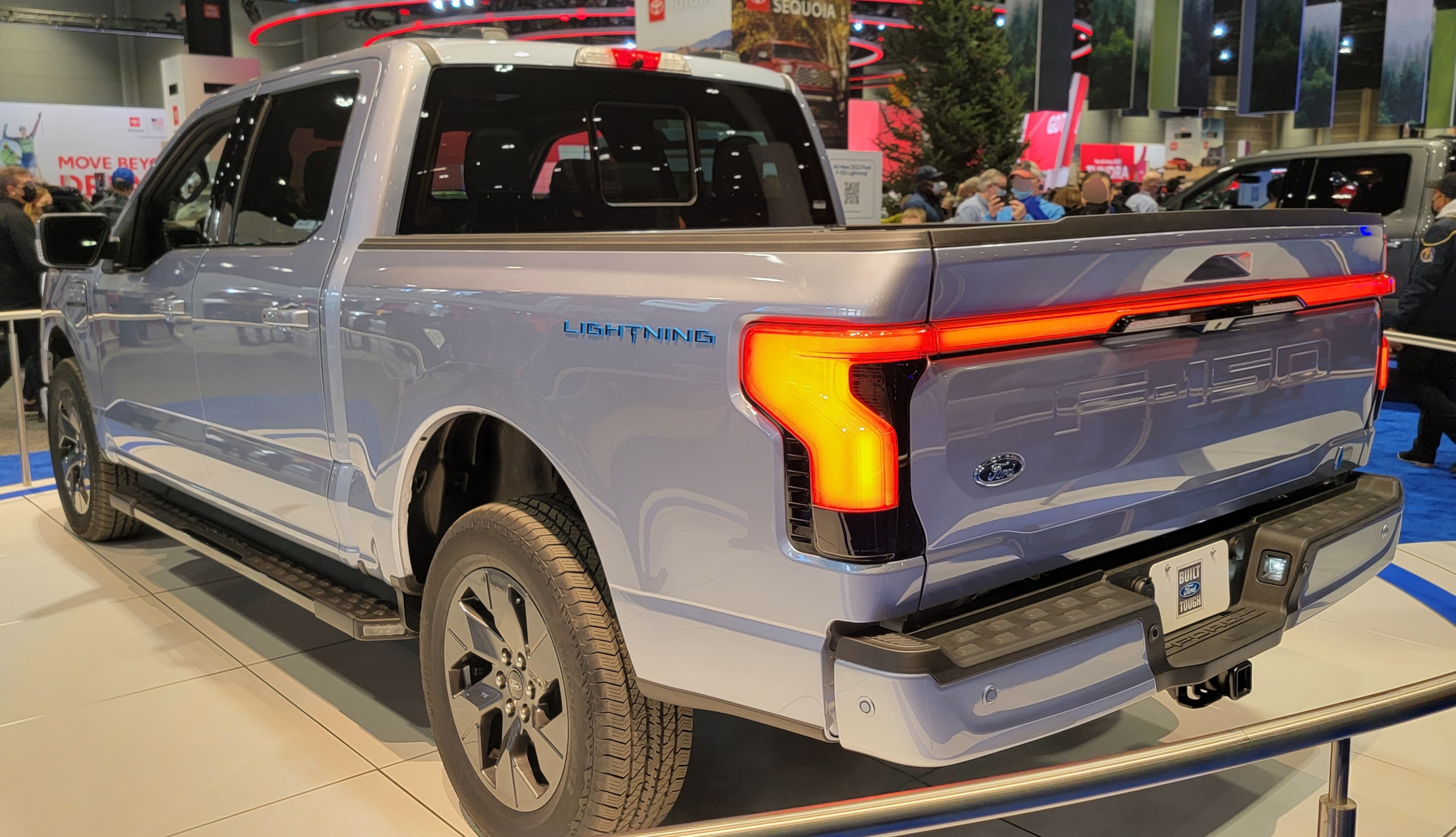
is most of these vehicles are trucks.
It's F-150s, it's the big trucks.
Those buyers aren't going away.
A lot of these are used as personal work trucks.
So it does, I think, shift the market a little bit
because of, again, it could potentially,
some of these buyers who maybe need a big truck
might not be able to afford one.
But that's what that market is, is it's truck buyers.
Are you seeing that on the ground, Shirley and Laura?
Those very high payment buyers?
Yes, yes.
And also think too with electric vehicles are more expensive.
There was a lot of pressure to push those out the door too.
But also everyone still wants the trucks and the large SUVs.
Just like Melinda was saying,
that is the hot space that everyone wants to be in.
And it drives the higher payments
and we're not seeing an end.
For some of the EV leasing was so positive
because of the incentives from the manufacturers
that you could get a really affordable payment
on some of those EVs.
It's just a very dynamic situation overall,
but we are definitely just continuing
to see higher lease payments as we've seen in the data.
Yeah, to give some insight
from the dealership's perspective,
some of those payments is coming from our luxury store
of those higher prices.
But as stated before,
with the support of the mandates of the EV credits,
we've been able to help mitigate some of those prices
where those monthly payments are not above the $1,000.
So the credits were definitely been able
to reduce those monthly payments.
And we've seen it primarily in our lease models,
but not so much our non-lease models that we're not,
I'm sorry, our luxury models.
Our luxury models is where we're really seeing
those prices above $1,000.
But for our leases, we're not seeing that impact.
For our non-luxury models,
we're not seeing that as much over $1,000.
When we come back,
we'll hear more of this conversation with experts
about the vehicle affordability crisis.
That's next on this bonus episode of Daily Drive.
What if your dealership could save $130,000 per rooftop
with one simple switch?
Automotive leaders are under constant pressure
as labor, parts, and processing costs climb.
That's why dealers are turning
to PayJunction's Smart Surcharge,
a cost-cutting tool built for auto
with DMS integration and CSI protection in mind.
Smart Surcharge automates many compliance requirements
with terminals that display disclosures,
automatically exclude debit cards,
and integrate with text-to-pay.
These features protect CSI by giving customers
a clear choice, the convenience of credit,
or the savings of debit.
The impact?
One dealership using PayJunction
cut its effective card and debit rate by 58%,
saving over $130,000 a year per rooftop.
And now, dealers making the switch
to Smart Surcharge can get even more
since PayJunction is offering a free month of processing
to dealers and shop owners,
reimbursing up to $10,000 in processing fees
when a qualified auto industry merchant
activates Smart Surcharge
by visiting payjunction.com slash drive savings.
For 25 years, PayJunction has built
its own payment technology,
specifically engineering tools that integrate payments
with auto industry management software
while providing access to tools
designed to enhance the customer experience.
Take control of costs, streamline payments,
and reinvest your savings with PayJunction
to gain a competitive edge for your business.
Get your free month at payjunction.com
slash drive savings today.
You know, looking ahead,
we're starting to wind down the year.
Obviously, as we've established,
the affordability situation is not going anywhere
anytime soon.
So what should dealers be preparing for
in the first quarter of 2026 based on current trends?
Jenny, do you want to start?
You give me the hard one.
I think we're starting to see the impact of tariffs.
And so, you know, we're seeing some automakers
be relatively upfront about those increases,
but prices are going to increase.
And so the difficulties around affordability
are going to increase unless we see some major move
by the federal government.
I was, as we were talking about all of this,
I was thinking about cash for clunkers.
I can, was it 08?
I know, sorry, Melinda, but back in 08, right?
And just thinking through,
is that a way to sort of, you know,
give a boost to affordability and what is going on right now
and bring more cars into the used side of things?
No idea.
I'm not a politician, thankfully.
So we'll stay out of that.
The last thing we want is a tight used vehicle,
BIO or vehicles on the road of, you know,
late model car park.
The last thing we want to do is pull some of those out.
You know, we need to keep the used car market.
We need to keep that volume.
I would comment from what I see in the data,
I think the areas for the dealers,
first of all, get ready for used EVs coming back.
You know, what are you going to do with those
if the consumer's wanting to trade that in?
But I think also to the point of the tariffs,
I think there will be the need for the dealer
to be able to educate the consumer
because you might walk into,
I'll just use Ford as an example.
You might walk into a Ford store.
Some of the models are impacted by tariffs.
Some of them aren't.
So having that consumer education
of being able to talk to the consumer about perhaps why.
But the other thing, yes,
get ready for those EVs coming back.
Yeah, every brand is going to be hit differently
by the tariffs, as we all know.
It's like a scale.
And we are seeing though, you know,
announcements where maybe Trump's plan is working,
where there's more investment in the United States
and, you know, changing factory focus.
And so I'm always optimistic
as the dealers are always optimistic
that we will mitigate any storm
and that we're going to survive this
like we survived every other crisis
that has occurred like COVID.
Most definitely.
In 2026, I'm looking from a lens
from the OEM, the finance companies,
collaborating and coming with some strategies
to help offset some of the tariff costs
that we might see in 2026.
To Jenny's point, she spoke briefly about cars for clunkers
and it just reminded me of maybe there's a segue
that we can do some deferred first payments
or 90 days of deferred payments.
So those are some strategies that I can see
that potentially in 2026,
that can help drive consumers back into the dealerships
and to help mitigate some of the tariff costs
that we might be seeing coming ahead of us.
Shirley Jones is CFO of Car Pros Automotive Group.
Laura Parada is President
of the New Jersey Coalition of Automotive Retailers.
Melinda Zabritsky is Experian's Head
of Automotive Financial Insights.
And Jennifer Newman is Editor-in-Chief at Cars Commerce.
You can find their full conversation
with our own Hannah Lutz and Paige Hodder
on the Automotive News LinkedIn, Facebook, or YouTube pages.
Thanks for listening to this bonus episode of Daily Drive.
We'll be back on Monday
with a brand new full episode of the show.
About this episode
Experts discuss the current trends in vehicle affordability, focusing on the impact of tariffs and rising transaction prices. The conversation features insights from industry leaders like Laura Parada and Jennifer Newman, who analyze how state incentives and consumer education are crucial in navigating this challenging market. With a notable increase in buyers willing to pay over $1,000 monthly for vehicles, the panel explores the implications for dealerships and the future of EV sales. The episode provides valuable perspectives on how the automotive landscape may evolve in the coming years.
Automotive News’ Hannah Lutz and Paige Hodder speak with experts about the state of vehicle affordability issues. The panel includes Cars Commerce’s Jennifer Newman, Melinda Zabritsky of Experian, Car Pros Automotive Group’s Shirley Jones and New Jersey Coalition of Automotive Retailers’ Laura Perrotta.